Home Blog Page 23

As Islamo-Leftist Zohran Mamdani Becomes New York Mayor, Emboldened Islamists Hit The Streets In Michigan

As Mamdani Becomes NY Mayor, Islamists Hit The Streets In Michigan

Just as New York elected its first openly socialist, pro-Palestine, terror sympathizing mayor Zohran Mamdani, the United States witnessed one of its most explosive Islam-versus-Christian street clashes in recent years, this time in Dearborn, Michigan, a city long at the center of debates over “Islamification,” Sharia law, and demographic change.

On 18 November 2025, Dearborn’s Michigan Avenue transformed into a riotous battleground after Jake Lang, an anti-Islam activist and alleged January 6 Capitol riot participant, attempted to burn a Quran in public, triggering a massive confrontation with hundreds of Muslim residents and pro-Palestinian counter-protesters.

The timing, coming just days after Mamdani’s victory in New York, has intensified national scrutiny over rising Islamist influence, demographic anxieties, and deepening ideological divisions across the country.

Quran-Burning Attempt Sparks Street Chaos

Lang held a lighter under a Quran before counter-protesters rushed in to knock it out of his hand. Moments later, he escalated by slapping the Quran with bacon, provoking outrage from the crowd.

A Muslim man ultimately snatched the Quran and fled, preventing the burning.

Lang’s group then marched toward City Hall, chanting Christian-nationalist slogans, carrying American flags, and accusing Dearborn of being “under Sharia law.”

Muslim counter-protesters yelled back, some shouting “Allahu Akbar,” with tempers boiling into multiple physical confrontations.

Journalist Pepper-Sprayed, Phone Stolen: “Total Lawlessness”

Independent videographer Cam Higby, who was covering the event, told the Dearborn City Council he was pepper-sprayed, pushed, robbed of $50, and had his phone thrown across the street – all while police allegedly stood by without intervening.

Higby said he tried to file a report on the spot but was told to “go to the station later,” after which he saw an officer on a personal phone call. He left Dearborn without filing a report, calling the situation “total lawlessness” and claiming police were ignoring crimes happening directly in front of them.

Muslims Threaten Violence After Quran Incident

Video footage shows one enraged man jumping out of his car and shouting: “I’ll f*** his life up. I’ll kill him. On my mother’s soul.”

Others called the Quran-burning attempt an act of war, saying God would punish those who desecrate Islam.

Meanwhile, some Muslim residents condemned violence but insisted the attempted burning was an intolerable provocation.

Anti-Islam (Christian) Protesters: “Deport All Muslims”

Lang’s supporters voiced equally extreme views – They called for mass deportation of Muslims, claimed Muslims “refuse to assimilate”, insisted America “must remain a white Christian country”, accused Dearborn of being “another country”, and declared Muslims “terrorists,” “animals,” and “jihadists”.

One protester said, “They want to dominate us. They hate the American way of life.”

Another said Muslims should be banned from America because they “don’t share our language, our culture, or our food.”

Police: Three Arrests, ‘Measured Response’

Dearborn Police said they intervened where necessary and made three arrests for disorderly conduct.

Chief Issa Shahin praised the force’s “measured response,” though both sides accused officers of bias. Anti-Islam protesters claimed police refused to take assault reports. Far-left group BAMN said police “protected fascists.”

City Council Meeting Boils Over

At the city council meeting later that evening. Anti-Islam activists said they were “met with violence.” Left-wing activists demanded police be harsher on the anti-Islam group. Mayor Abdullah Hammoud condemned the “hate” but praised Dearborn residents for showing restraint.

UK Activist Warns: “America Has 3–5 Years Before It’s Europe”

A UK citizen attending the protest said she left her hometown because it “became an Islamic town,” claiming women no longer felt safe, police declared no-go zones, and that immigration policies failed

She warned, “The U.S. has 3–5 years before the same thing happens here.”

A Nation Dividing on Religious Lines – As Mamdani Takes Office

The Dearborn eruption occurred just as Zohran Mamdani, a vocal pro-Palestine and DSA-aligned politician, won the New York mayoralty, symbolizing the sharp ideological realignment underway in America.

To critics, Mamdani’s election represents the mainstreaming of Islamist-aligned, anti-establishment identity politics.

To supporters, it represents the empowerment of minority communities long excluded from national leadership.

But the contrast is stark. On one side: Dearborn streets filled with Quran-burning attempts, Allahu Akbar chants, racial slurs, and open threats.

On the other: A newly elected New York mayor celebrated nationwide as a progressive standard-bearer backed by the same activist networks seen in Dearborn’s counter-protests.

As both events collide in public consciousness, America is being forced to confront a new reality – Islam, identity politics, and demographic anxiety are no longer fringe issues – they are now front and center in American street politics, city halls, and major elections.

(Source: Yahoo)

Subscribe to our channels on WhatsAppTelegram, Instagram and YouTube to get the best stories of the day delivered to you personally.

“Raise Corporate Tax Or Income Tax On Millionaires” – NYC Mayor Elect Mamdani’s “Clearest Ways” To Fund Free Buses Plan

“Raise Corporate Tax Or Income Tax On Millionaires” - NYC Mayor Elect Mamdani's "Clearest Ways" To Fund Free Buses Plan

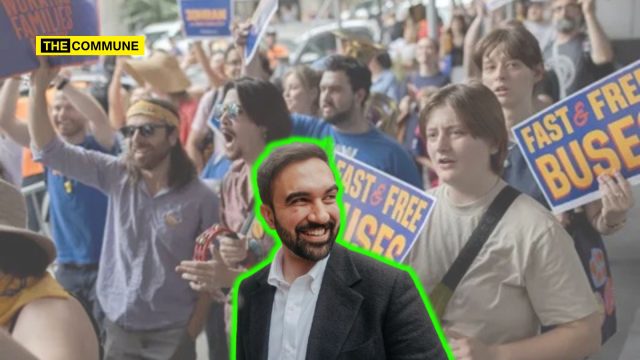
In the aftermath of his mayoral victory, Zohran Mamdani is continuing to push for his signature campaign promise: eliminating bus fares across New York City. But with Governor Kathy Hochul publicly ruling out tax increases, questions remain over how the proposal, which would require an estimated $650–700 million annually, could realistically be funded.

In a recent interview, Mamdani argued that the “clearest ways” to raise the required revenue lie in new taxes at the state level. “I think that the two clearest ways to raise that money is through the raising of the state’s corporate tax,” he said. When the interviewer reminded him that the Governor had already rejected that approach, Mamdani added that taxing “those who make more than a million dollars a year or more” would also be a viable option.

Pressed again on the Governor’s refusal, he maintained that the debate should focus on commitment, not mechanism. “If there are other ways to raise this funding, the important fact is that we fund it, not the question of how we do it, but that we do it,” he said.

A Plan at Odds with Political and Fiscal Reality

However, the path to implementation is fraught with obstacles that extend beyond political disagreement.

The most significant barrier is that the MTA is a state-controlled authority, meaning decisions on fare collection fall squarely under the jurisdiction of the Governor, not the Mayor. Following Mamdani’s victory, Governor Hochul publicly affirmed that she has no intention of eliminating bus fares, a position that analysts say makes the mayor-elect’s plan “virtually impossible” to enact.

Furthermore, the proposal runs up against the MTA’s own financial structure. The agency’s bond covenants include restrictions on changes to its funding that could impair its ability to operate and meet its debt obligations. Bus fares are a key revenue stream, and moving away from them could create “unanticipated fiscal challenges,” potentially spooking investors and complicating the agency’s ability to borrow money.

Mass transit operators across the United States are already struggling to balance their budgets, with riders being heavily subsidized. Eliminating a primary source of revenue would require not only replacing the lost funds but also ensuring the new funding source is stable and sufficient to satisfy the MTA’s legal and financial commitments.

Subscribe to our channels on WhatsApp, Telegram, Instagram and YouTube to get the best stories of the day delivered to you personally.
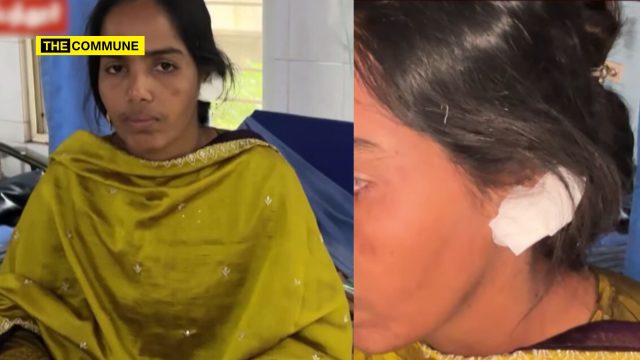
Shakeela Allegedly Assaulted By Relatives For Visiting Hindu Temple In Tirupathur; Police Register Case

Muslim Woman Allegedly Assaulted By Relatives For Visiting Hindu Temple In Tirupathur; Police Register Case

A young Muslim woman from the Nattrampalli area was allegedly attacked by her relatives for visiting a Hindu temple with a friend, leading to a police case and widespread shock in the locality.

According to police, Shakeela, who lives with her husband Farooq in Nattrampalli, visited the Melmalaiyanur temple on Amavasya (new moon day) along with her daughter’s friend Vendamani. Shakeela had reportedly gone with her husband’s consent.

When Shakeela’s extended family learned of the visit, her mother Suraiya, her brother Amir Basha, and Amir’s wife Safura allegedly confronted the two women. The trio is accused of physically assaulting Shakeela and Vendamani, inflicting severe injuries. During the assault, Shakeela’s family members allegedly snatched her jewellery.

Vendamani, who suffered serious injuries, was admitted to the Nattrampalli Government Hospital for treatment. Shakeela also received medical care following the attack.

Shakeela and her husband subsequently lodged a complaint at the Nattrampalli Police Station. Based on their complaint, Nattrampalli police have registered a case and initiated an investigation.

Police said further inquiries are underway, and appropriate action will be taken following the investigation.

Subscribe to our channels on WhatsAppTelegram, Instagram and YouTube to get the best stories of the day delivered to you personally.

Krishnagiri: POCSO Case Filed Against Abdul Kaif For Abduction And Forced Conversion Of 17-Year-Old Girl After VHP Intervention

love jihad

A disturbing case of alleged abduction, forced religious conversion to Islam, and child marriage has emerged from Krishnagiri, leading to a police investigation and strong condemnation from Hindu organisations. The incident, involving a 17-year-old girl and a 21-year-old Muslim man, has sparked allegations of ‘love jihad’ and raised serious questions about police procedure.

The Abduction and Initial Police Response

According to the complaint, Abdul Kaif, a 21-year-old from Muslimpur who ran a mechanic shop in a building owned by the girl’s father, a tempo driver, allegedly befriended the minor with “sweet words.”

The sequence of events began on 23 October 2025, when Abdul Kaif allegedly abducted the girl. Her father filed a formal complaint at the Krishnagiri Women’s Police Station on 25 October 2025. On 27 October 2025, both parties were summoned for an inquiry.

At the police station, Abdul Kaif arrived with the girl, his parents, and 15 others. The girl was reportedly wearing a burqa worn by Muslims and had mehendi applied to her hands. Following an inquiry, the police made Abdul Kaif’s family sign a statement promising that he would marry the girl only after she turned 18. Shockingly, the police then sent the minor girl away with Abdul Kaif, a decision that left her father “confused.” He later petitioned the police again on 29 October 2025, after which the girl was summoned, and he was able to bring her back home.

The Girl’s Harrowing Account

During subsequent questioning, the minor provided a chilling account of her ordeal. She stated that after Abdul Kaif took her to Bengaluru and then to Muslimpur, she was forced to sign a register on the night of 27 October 2025.

“The register had green lines and was written in Urdu, which I did not understand,” she stated. “Afterward, Abdul, his father, and his mother also signed. My name was changed. I was told a ‘nikah’ marriage would be conducted. Many people were served a meat feast. Arrangements for the ‘first night’ were made. Though I refused, I was forced into consummating the marriage.”

Formal Complaint and VHP Allegations

Following these events, the girl’s parents, with support from officials of the Vishwa Hindu Parishad (VHP), submitted a petition to the District Superintendent of Police (SP).

Their complaint alleged grave lapses: “On 27 October 2025, police did not file a POCSO case against the abductor; instead, they took signatures from us and sent the girl with him. The girl was not placed in a shelter but instead married off under Islamic rites that very night. Abdul Kaif, who violated and forcefully converted our daughter, was aided by members of the Jamaat. Police officers from the Krishnagiri Women’s station should be held accountable.”

Krishnagiri West District VHP President Santhakumar made strong statements, calling the incident part of a wider pattern. “This is happening from Kashmir to Kanyakumari. Girls are targeted, lured into love traps by deceptive jihadist groups who marry them and later abandon them through ‘talaq’ divorce after a few months,” he said.

He further demanded, “All responsible police officers—from the inspector to the rank-and-file—should be suspended for failing to place the minor girl in a shelter and instead sending her with the accused. Action must be taken under POCSO against the Muslim religious leaders and Abdul Kaif.”

Police Investigation Intensifies

Krishnagiri SP Thangadurai confirmed that a comprehensive investigation is now underway. He acknowledged that the initial police response on 27 October 2025 involved both parties signing an agreement for a future marriage and being sent away.

However, based on the new complaint alleging abduction and forced marriage, a POCSO case has been officially registered against Abdul Kaif. The girl has been sent for a medical examination.

A special investigation team led by ADSP Namachivayam is questioning Abdul Kaif’s parents and the religious leaders who conducted the marriage ceremony. SP Thangadurai also confirmed that complaints against the officers at the Krishnagiri Women’s Police Station are being investigated for their handling of the case.

(Source: Dinamalar)

Subscribe to our channels on WhatsApp, Telegram, Instagram and YouTube to get the best stories of the day delivered to you personally.

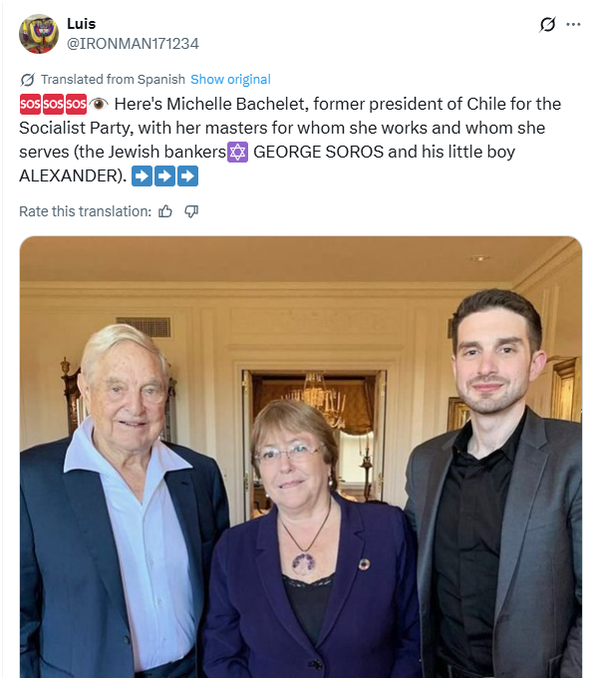
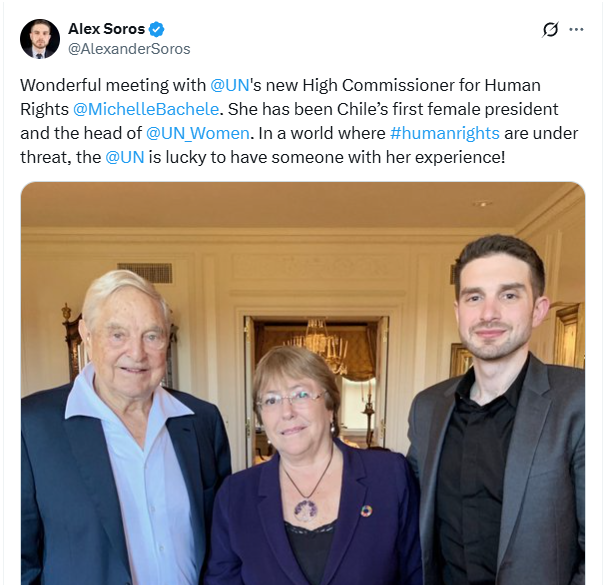
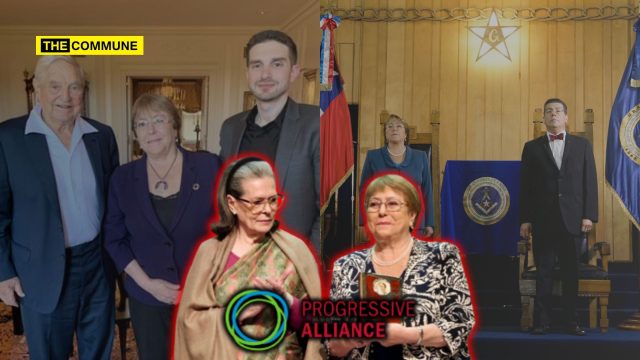
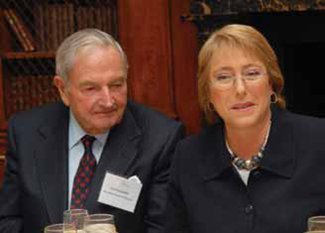
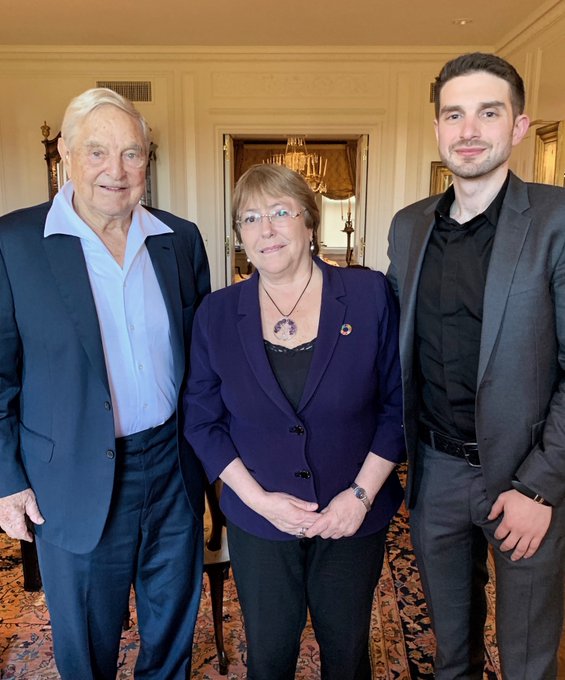
A Soros Puppet With Freemason Links And Ties To Deep State: Here’s The Full Controversial Background Of Michelle Bachelet Whom The Congress Awarded Indira Gandhi Peace Prize

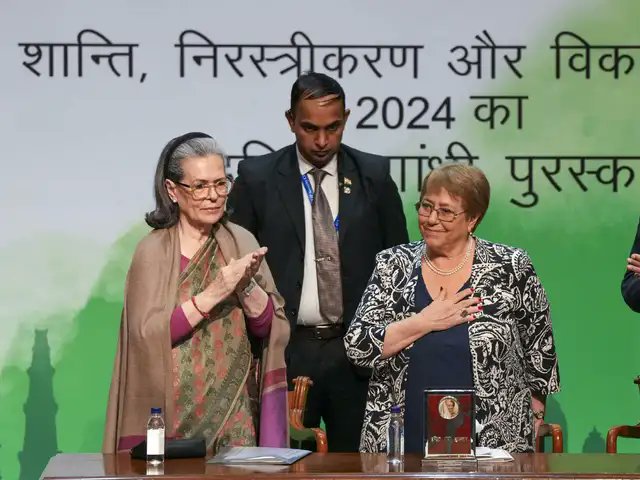
The Indira Gandhi Memorial Trust, chaired by Congress Parliamentary Party Chairperson Sonia Gandhi, has awarded the Indira Gandhi Peace Prize to former Chilean President Michelle Bachelet, sparking significant controversy given the recipient’s extensive ties to George Soros and her history of criticizing India’s stance on Kashmir.

The Award and Its Context

The Indira Gandhi Peace Prize is presented by the Indira Gandhi Memorial Trust to individuals or organizations recognized for their creative efforts toward promoting international peace and development. The trust is chaired by Sonia Gandhi, making this award a Congress-associated initiative.

A “Perfect” Pick For Congress: An Ideological Ally Against The Indian State

The selection of Michelle Bachelet is being viewed by political observers not as a mere coincidence, but as a deliberate ideological statement by the Congress party. Bachelet’s profile aligns perfectly with a political narrative that often positions itself in opposition to the current Indian government, even on matters of national security and sovereignty.

Who is Michelle Bachelet? 

Michelle Bachelet is a lifelong member of the Socialist Party of Chile, a party with a documented history of Marxist ideology and a stated goal of revolutionary transformation. Her political career is rooted in this far-left framework, which she has carried into her international roles.

Bachelet served two terms as President of Chile (2006-2010 and 2014-2018) and as United Nations High Commissioner for Human Rights from 2018 to 2022.

Her career has been marked by significant connections to global networks:

George Soros Connections

Bachelet’s relationship with billionaire financier George Soros dates back to her early political career.

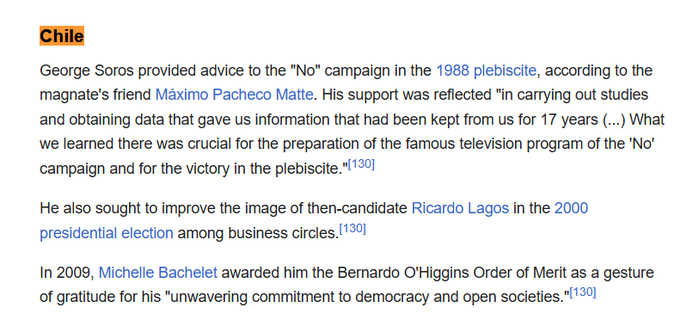
In 2009, during her presidency, she awarded Soros Chile’s highest civilian honor, the Bernardo O’Higgins Order of Merit.

Furthermore, Soros actively lobbied for her appointment as UN High Commissioner for Human Rights, a position she assumed in 2018.

Record on India and Kashmir

Bachelet’s tenure as UN Human Rights Commissioner proved particularly challenging for India:

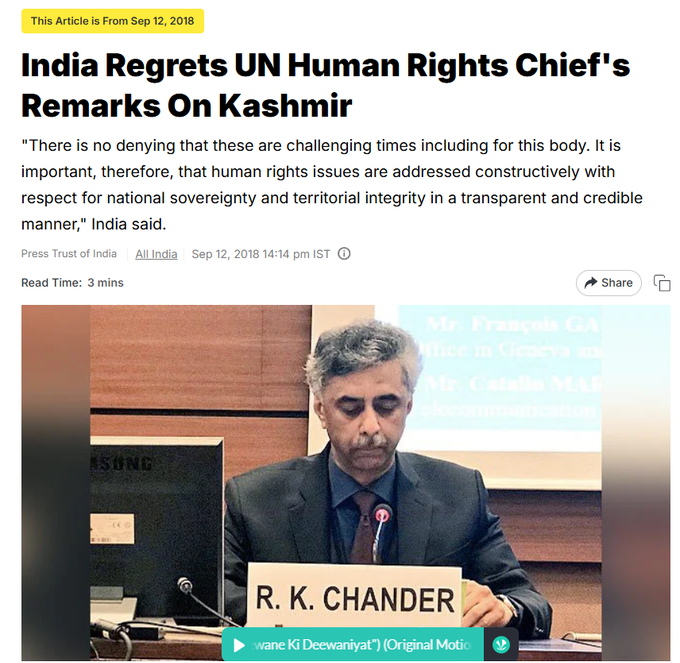
2018: Immediately upon assuming office, she began criticizing India’s position on Kashmir

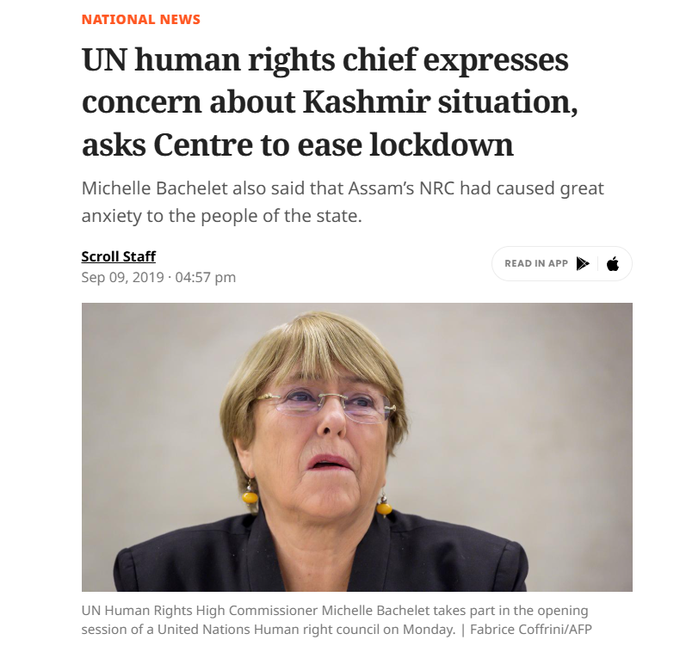
2019: She targeted India regarding the Kashmir lockdown and the NRC process in Assam

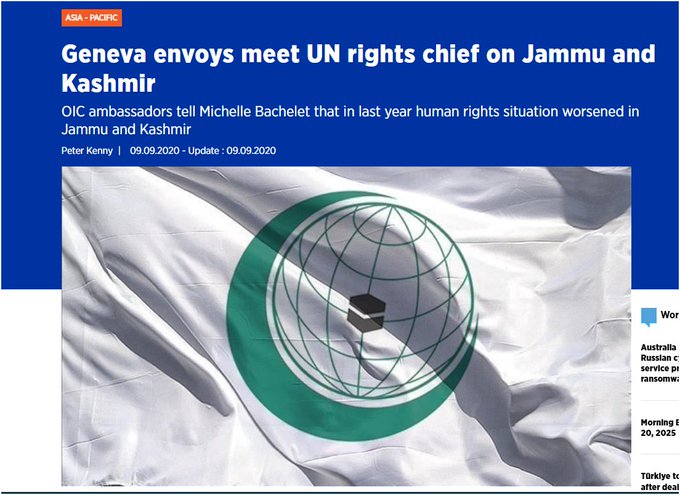
2020: Continued criticism of India’s Kashmir policy

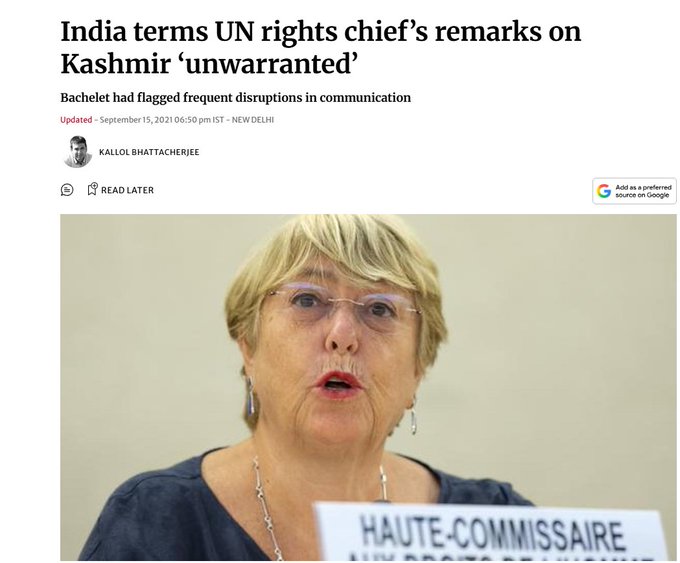
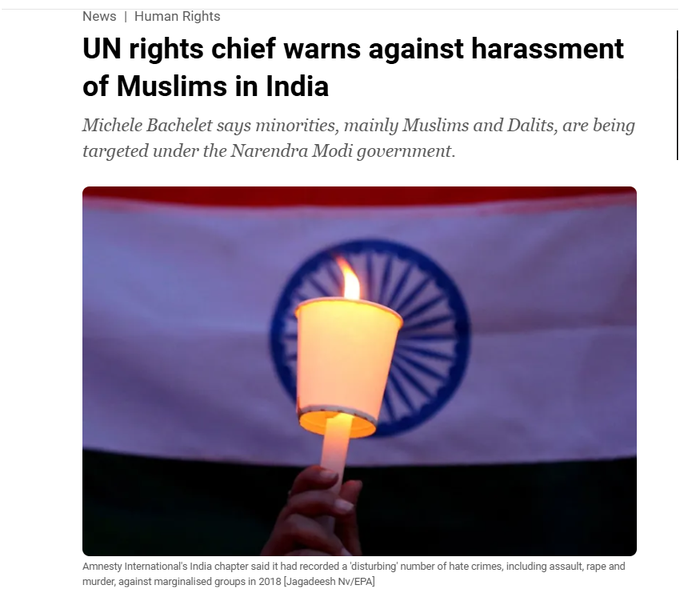
2021: Maintained consistent pressure, alleging harassment of Muslims and Dalits in India

Her persistent criticism created what observers describe as an “ecosystem” where Western media, NGOs, and UN officials coordinated against Indian government positions.

Additional Controversial Associations

Freemasonry Links
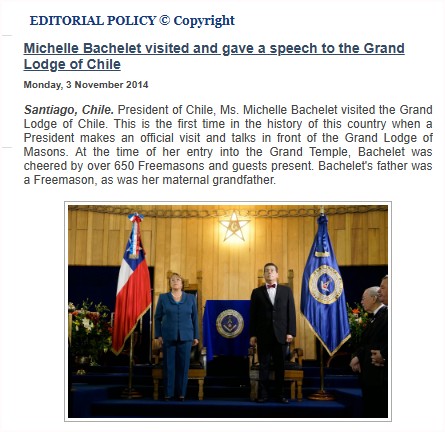
Bachelet has been associated with Freemasonry, a secret society that some analysts connect to broader “deep state” operations, with historical references to operations like “Operation Gladio” involving intelligence agencies and financial institutions.

Global NGO Advocacy
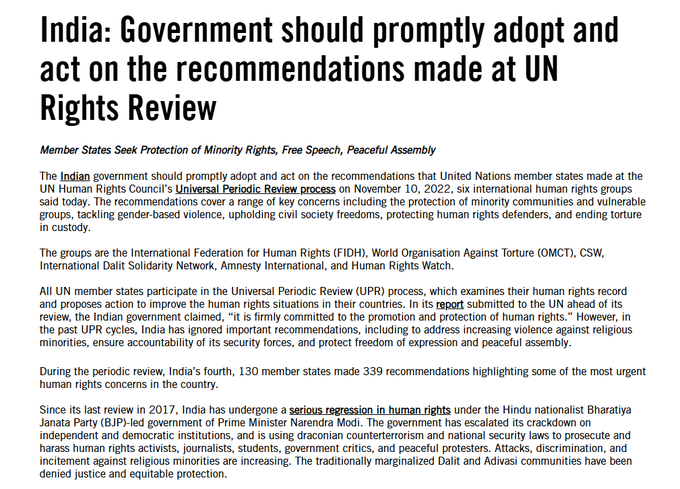
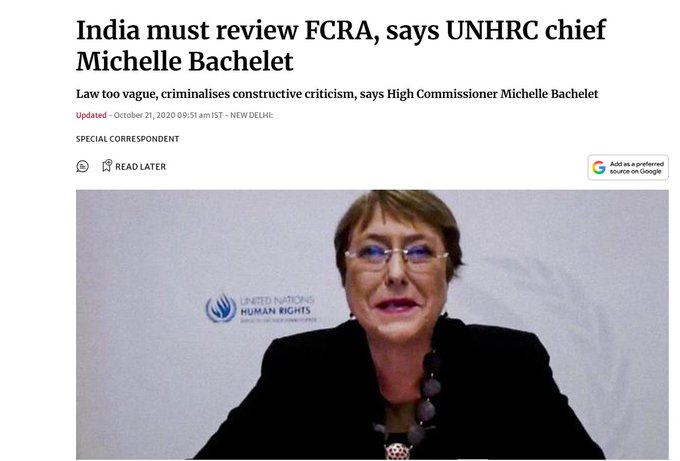
As UN Commissioner, Bachelet pressured India to ease FCRA (Foreign Contribution Regulation Act) regulations, which would enable Western-funded NGOs to operate with less oversight in India.

Vaccine Lobbying
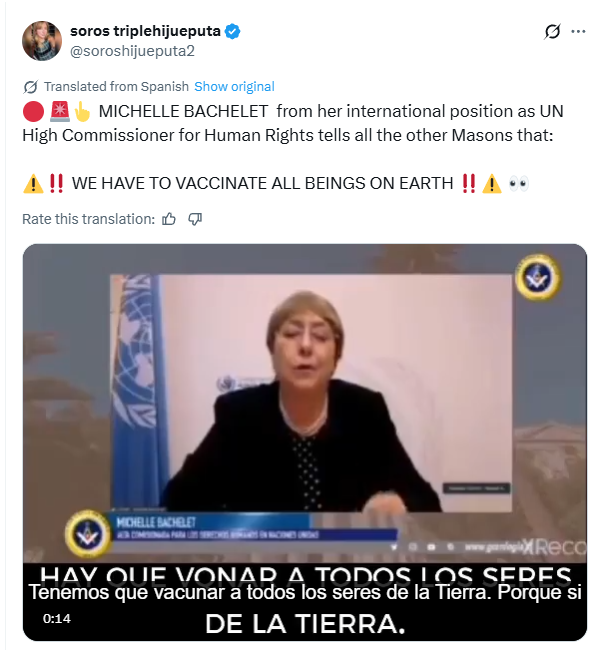
During the COVID-19 pandemic, Bachelet was accused of lobbying for global pharmaceutical companies, particularly pushing for Pfizer vaccine approvals in India.

Narcotics Allegations
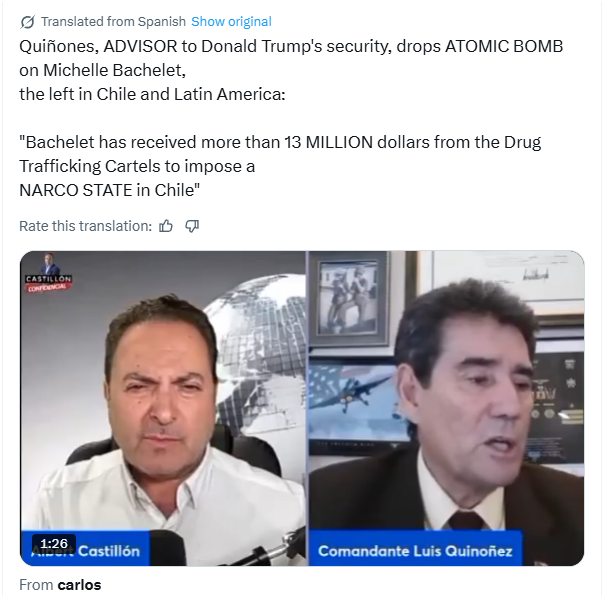
A former adviser to President Donald Trump alleged that Bachelet has connections to narco-trafficking networks in South America.

Political Network Connections

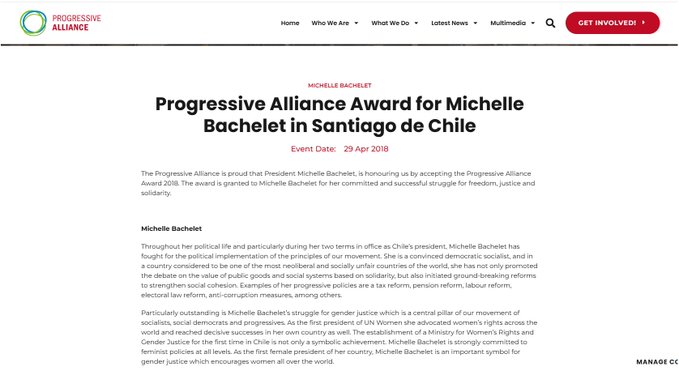
Bachelet received the Progressive Alliance award in 2018. The Progressive Alliance represents a global network of 140 political parties, including the Indian National Congress, where Rahul Gandhi holds a leadership position.

Congress And Bachelet: A Shared Narrative?

In her award ceremony speech, Sonia Gandhi praised Bachelet for her work on gender equality and social reforms in Chile, notably avoiding any mention of her controversial tenure at the UN and her direct confrontations with the Indian government. This selective celebration, critics argue, reveals a tacit endorsement of Bachelet’s anti-India stance.

So Congress selected a woman who is a George Soros puppet, hostile to India, and known for targeting India over Kashmir for the Indira Gandhi Peace Prize.

By bestowing one of India’s most famous peace prizes upon a foreign official who has consistently undermined India’s position on the global stage, the Congress party has sent a clear message. The move is seen as a political gambit that prioritizes international left-liberal approval and domestic opposition politics over unambiguous national solidarity.

The award has solidified the perception that for the Congress leadership, a “perfect” laureate is one whose international influence has been deployed to question the actions and legitimacy of the Indian nation-state itself.

(This article is based on an X Thread By The Chronology)

Subscribe to our channels on WhatsAppTelegram, Instagram and YouTube to get the best stories of the day delivered to you personally. 
SIT Files 3,900-Page Chargesheet Against ‘Mask Man’ Chinnaiah, Mahesh Thimarody, Girish Mattennavar, Sujatha Bhat & Others In Dharmasthala Case

SIT Files 3,900-Page Chargesheet Against Chinnaiah, Mahesh Thimarody, Girish Mattennavar, Sujatha Bhat & Others In Dharmasthala Case

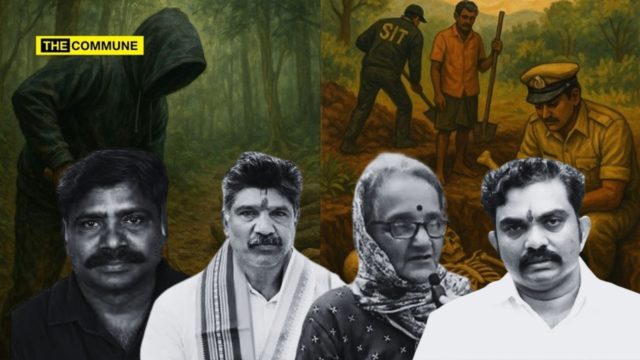
In a significant development, the Special Investigation Team (SIT) probing the Dharmasthala case has filed a comprehensive 3,900-page chargesheet against six individuals, including the original complainant, for allegedly fabricating evidence and forging documents to support false claims of multiple burials.

The chargesheet was presented before the Additional Civil Judge and JMFC CH Vijayendra in Belthangady court, Dakshina Kannada, on Thursday. The accused have been charged under multiple sections of the Bharatiya Nyaya Sanhita (BNS).

The Accused and the Charges

Those named in the chargesheet are:

  1. Chinnaiah, the primary complainant.
  2. Mahesh Shetty Thimarody, an activist and founder of the Rashtriya Hindu Jagarana Vedike.
  3. Girish Mattennavar, a former police officer.
  4. T Jayanth, a relative of a 1986 death case victim.
  5. Vittala Gowda, uncle of 2012 rape-murder victim Soujanya.
  6. Sujatha Bhat, who filed a separate false complaint.

The SIT has invoked a range of sections including 227 (giving false evidence), 228 (fabricating false evidence), 229, 230 (fabricating false evidence for capital offence), 231 (for life imprisonment offence), 233 (using evidence known to be false), 236 (false statement in declaration), 240 (giving false information on an offence), 248 (false charge to injure), and 336 (forgery) of the BNS.

How The Case Unravelled 

The case originated when Chinnaiah filed a Public Interest Litigation (PIL), which the Supreme Court rejected on 5 May 2025, seeking an investigation into the ‘burial of many bodies’ in Dharmasthala between 1995 and 2014. Undeterred, he later filed a police complaint with the same allegations.

A critical turn came when Chinnaiah gave a voluntary statement before a magistrate under Section 183 of the BNSS and produced a skull, claiming it belonged to a woman. However, the SIT’s forensic investigation debunked this claim, revealing the skull was that of a 32-year-old man.

Following this, the SIT arrested Chinnaiah for perjury on August 23. During interrogation, he allegedly confessed to giving a false complaint and voluntary statement under pressure from Mahesh Shetty Thimarody and other activists.

The Conspiracy and New Revelations

According to the SIT, Chinnaiah revealed that the skull was given to him by Vittala Gowda and his brother. He subsequently gave a second voluntary statement to the court, recanting his earlier claims.

The SIT, in a writ petition filed in the High Court, stated that Chinnaiah’s revelations pointed to the complicity of the activists, with one of them even being allegedly involved in a separate murder.

The chargesheet also details the role of Sujatha Bhat, who admitted to filing a false police complaint about her MBBS-studying daughter going missing from Dharmasthala. She told the SIT she acted under pressure from Thimarody and four other activists.

Obstruction and Further Evidence

SIT officials informed the court that some of the accused individuals obstructed the inquiry when summoned. The investigation included searches at 17 locations and the collection of statements from those in contact with Chinnaiah, pointing to a wider conspiracy.

The SIT’s report traces the journey of the skull, alleging that Vittala Gowda retrieved it from Bangalagudda in February 2024 and recorded the act on video, which was then passed to Mattennavar.

In follow-up excavations at Bangalagudda hill, the SIT recovered eight more skulls and additional skeletal remains, which have been sent for forensic examination. The team also found identification cards belonging to two individuals from Kodagu and Tumakuru at the site.

The SIT has stated that a supplementary chargesheet will be filed after receiving pending scientific reports from the Forensic Science Laboratory and other related documents. The court is now set to examine the voluminous chargesheet and take cognizance of the offences.

(Source: The Hindu)

Subscribe to our channels on WhatsAppTelegram, Instagram and YouTube to get the best stories of the day delivered to you personally. 
Supreme Court Clarifies President, Governor’s Assent Powers; News7 Tamil Falsely Claims Court ‘Returned’ Presidential Reference

In a landmark Presidential Reference opinion, a five-judge Constitution Bench of the Supreme Court has unanimously held that it cannot impose fixed timelines on Governors or the President for granting assent to Bills under Articles 200 and 201. The Court also issued a categorical rejection of the concept of “deemed assent,” calling it a judicial takeover of executive functions and “antithetical to the spirit of the Constitution.”

The opinion, delivered by Chief Justice BR Gavai and Justices Surya Kant, Vikram Nath, PS Narasimha and AS Chandurkar, answered 14 constitutional questions raised by President Droupadi Murmu under Article 143.

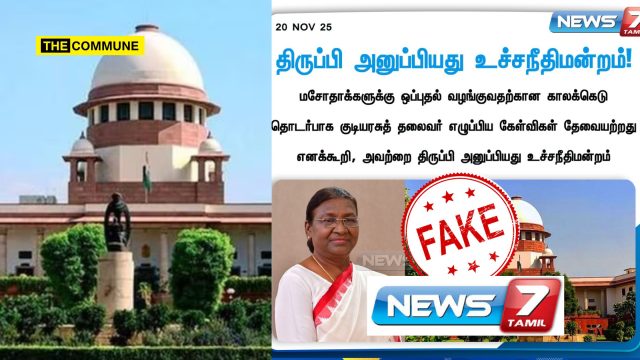
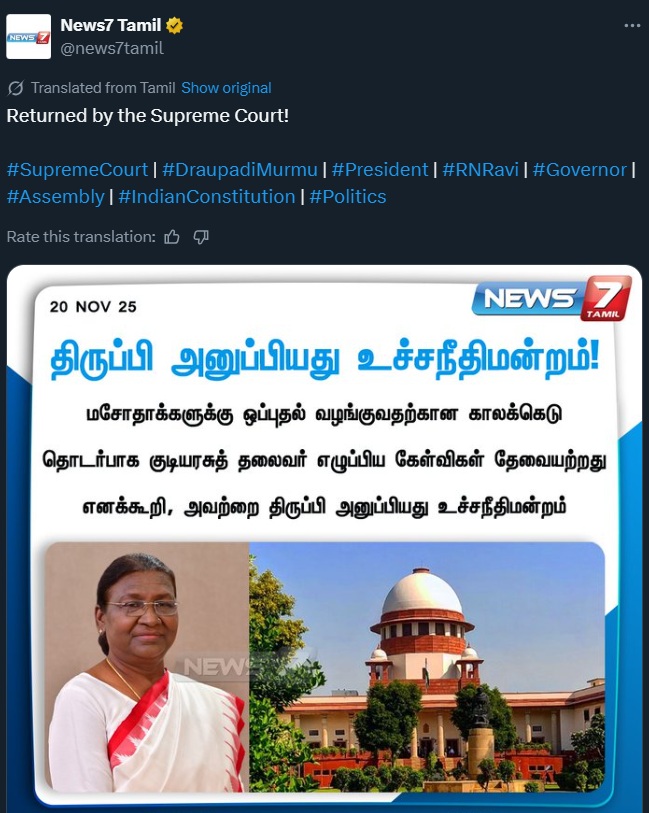
However, even as the ruling became public, News7 Tamil published a completely false interpretation of the verdict, claiming the Supreme Court had “returned” the questions and dismissed the reference – the precise opposite of what the Bench actually held.

In a news card still present on its X handle at the time of publishing this report, Dravidianist media News7 Tamil claimed: “Returned by Supreme Court” 
“The Supreme Court sent it back! The Supreme Court has dismissed the questions raised by the President regarding the deadline for assent to bills, saying they are unnecessary,” said the news card.

This statement is factually incorrect. The Supreme Court did not return the reference, did not dismiss the questions, and did not say they were unnecessary. Instead, the Court answered every one of the 14 questions, clarified the constitutional scheme in detail, and laid down binding principles.

What the Supreme Court Actually Held

1. No Fixed Timelines for Governors or President

The Court ruled that the Constitution deliberately uses elastic language and courts cannot fix strict deadlines.

2. No “Deemed Assent” Under Any Circumstance

The Court said using Article 142 to force assent or treat inaction as assent would be “a takeover” of executive functions and is impermissible.

3. “Limited Mandamus” Allowed in Cases of Prolonged Inaction

If a Governor’s unexplained delay frustrates the legislative process, courts may direct the Governor to make a decision — but cannot comment on the merits.

4. Governor’s Options Clarified

Assent, withhold + return, or reserve for President.
Withholding assent without returning the Bill is unconstitutional.

5. Actions of Governors Not Generally Justiciable

Courts cannot review the merits of the decision, only the delay.

6. Article 361 Immunity Does Not Shield the Office

Governors cannot be sued personally, but their offices are subject to judicial direction.

7. President’s Decisions Non-Justiciable

The Court cannot impose timelines on the President either.

8. No Scenario Where a Bill Becomes Law Without Governor’s Assent

The Court explicitly ruled that deemed assent is unconstitutional.

News7 Tamil’s Claim Is the Exact Opposite of the Verdict

News7 Tamil’s assertion that the Supreme Court “sent back” the reference and “dismissed the questions” is completely contradicted by the ruling itself. The Court accepted the reference, answered all 14 questions in detail, gave authoritative constitutional interpretation.

The Court did not return anything to the President.

News7 Tamil’s claim that the Court said the questions were “unnecessary” is demonstrably false. The Court in fact said the questions raised important constitutional issues requiring clarification.

Background: Why the Reference Was Made

The reference was issued in May 2025 after a previous Supreme Court bench attempted to set timelines for Governors in the Tamil Nadu Bills case. The Union Government opposed timelines; several states favoured them.

The Constitution Bench has now settled the issue, balancing the executive’s discretion with limited judicial supervision to prevent abuse.

Subscribe to our channels on WhatsAppTelegram, Instagram and YouTube to get the best stories of the day delivered to you personally.
Did Congress Allot 70 Acres Of Land To Al-Falah Trust Now Linked To Delhi Blast Terror Probe?

Did Congress Allot 70 Acres Of Free Land To Al-Falah Trust Now Linked To Delhi Blast Terror Probe?

A sprawling 70-acre private campus in the foothills of the Aravalis, Al-Falah University in Dhauj, Faridabad, has become the focal point of a massive anti-terror investigation, unmasked as the operational hub for a sophisticated “white-collar” terror module with links to Pakistan-based Jaish-e-Mohammed (JeM) and Ansar Ghazwat-ul-Hind.

The Al-Falah University, established in 2014 under the Al-Falah Charitable Trust, that was formed in 1995 and began as an engineering college in 1997, located just 30 km from the national capital, is under the scanner following the arrest of multiple doctors on its faculty and staff in connection with the Delhi car blast that killed more than 10 people and a massive haul of explosives.

In 2013, Al-Falah Engineering College received ‘A’ category accreditation from the National Assessment and Accreditation Council (NAAC). Al-Falah Medical College is also affiliated with this university.

However, the National Assessment and Accreditation Council (NAAC) on 13 November 2025 has clarified that Al-Falah University in Faridabad is not accredited and has never applied for accreditation. NAAC has issued a show-cause notice to the university for falsely displaying accreditation claims on its official website.

On 2 May 2014, the Haryana government amended the Haryana Private University Bill (2006) and granted it recognition as a private university. At that time, the state government was run by Congress and Bhupinder Singh Hooda was the Chief Minister. Through the Haryana Private University Amendment Bill (2014), approval was granted to a total of 17 private universities in the state.

Given the proximity to the national capital and the vast campus size, one but wonders whether it was the Congress government which allotted the prime property to the trust in question for a miniscule price.

Was Free/Subsidized Land Given To Al-Falah University?

As per reports in the media, according to alleged documents, the allotment was made under the banner of “promoting minority education.” Critics at the time described it as politically motivated, questioning why such a large tract of land was transferred without competitive bidding or financial consideration.

The Trust’s managing trustee, Javed Ahmed Siddiqui, had already drawn public attention for a questionable track record, raising further concerns.

Did The Grant Enable Years Of Lapses?

Since its establishment, Al-Falah University has been linked to:

  • Academic programmes run without full statutory recognition (2014–2018)
  • Student complaints over result delays and mark sheet discrepancies
  • Irregular fee hikes of nearly 28%
  • Vacant faculty positions and compromised academic quality
  • Degree-verification failures affecting job applicants in several states
  • Allegations of minimal or no reservation for SC, ST, and OBC communities despite occupying public land
  • A 2020 state inquiry found incomplete documentation, missing records, and administrative inconsistencies.

Did The Land Grant Contribute To Terror? 

Following the blast near Delhi’s Red Fort Metro station, the university has come under scrutiny after certain faculty members or former students were mentioned in terror-related investigations, prompting security agencies and the Haryana administration to launch fresh reviews of the campus, land use and regulatory compliance.

The Key Players: Doctors Turned Alleged Terror Operatives

Investigation has revealed that at least five individuals associated with the university’s medical college and hospital are central to the terror plot.

Dr. Muzammil Shakeel (aka Dr. Muzammil Ganaie): A 35-year-old doctor from Pulwama, Kashmir, he was employed at the Al-Falah School of Medical Sciences and Research Centre. His arrest on 8 November 2025 was the breakthrough, leading to the recovery of a staggering 2,900 kg of IED-making materials, primarily ammonium nitrate, from two rooms he rented in Faridabad. He is alleged to be a core member of the JeM module.

Dr. Umar Mohammed (aka Umar Nabi): Also, from Pulwama, he was the driver of the i20 car that exploded near the Red Fort metro station on 10 November 2025. He joined Al-Falah University in 2021. Investigations reveal he left the university campus immediately after Dr. Muzammil’s arrest and was in hiding for 10 days before executing the blast. A red Ford EcoSport, believed to be owned by him, has also been recovered for investigation.

Dr. Shaheen Saeed: Dr Shaheen Saeed (also reported as Shaheen Shahid or Shaheen Sayeed) was serving on the medical faculty at Al-Falah University’s Medical College in Faridabad. She was arrested on 11 November 2025. She is accused of being a key operative tasked with establishing JeM’s women’s wing, ‘Jamaat-ul-Momineen’, in India. An assault rifle, pistol, and ammunition were recovered from her Maruti Suzuki Swift car, which was frequently used by Dr. Muzammil, pointing to her active logistical role.

Dr. Adeel Ahmed Rather: From Kulgam, Kashmir, he was employed at the university and was arrested from Saharanpur, Uttar Pradesh after he was spotted putting up posters of Jaish-e-Mohammed in Srinagar on 27 October 2025. CCTV footage from the area led to his arrest in Saharanpur, in a joint operation by J&K and UP Police.

Dr. Nisar-ul-Hassan: A professor in the department of medicine, he has been reported missing since the Red Fort blast. Significantly, he was dismissed from Shri Maharaja Hari Singh (SMHS) Hospital in Srinagar in 2023 by the Jammu and Kashmir Lieutenant Governor for alleged “anti-national activities.”

The University As A Terror Base: Evidence And Planning

Investigators paint a picture of the university being used as a secure base for meticulous planning over two years.

Diaries and Coded Plans: Notebooks recovered from Dr. Muzammil’s (Room 13) and Dr. Umar’s (Room 4) campus lodgings contained coded references, names, and numbers with dates from November 8-12, with the word ‘operation’ scribbled repeatedly. This suggests the group was planning multiple synchronized strikes, with the Red Fort blast likely being one part of a larger carnage.

Logistical Hub: The module used the university’s proximity to Delhi and its campus facilities to operate under the radar. The suspects’ vehicles were parked on campus, and they coordinated movements from there.

Recruitment Scrutiny: The university’s hiring process has come under severe criticism. Both Dr. Umar and Dr. Nisar-ul-Hassan were hired despite being dismissed from their previous government positions in Kashmir for negligence and alleged anti-national activities, respectively, raising serious questions about the institution’s background verification policies.

While no institutional guilt has been established yet, the recurrence of the university’s name in such probes has intensified questions around oversight and the original decision to grant the land.

Al-Falah Trust

The institution is run by the Al-Falah Charitable Trust, headquartered in Okhla, New Delhi, with Prof Jawad Ahmad Siddiqui as its Chairperson and Chancellor. Reports have noted past legal issues for Siddiqui and that the university receives foreign funding from Arab nations, as reported in Times of India.

Jawwad (Jawad) Ahmad Siddiqui is a controversial businessman whose name has surfaced repeatedly in major financial fraud cases involving alleged “Islamic investment” schemes in Delhi. As chairman of the Al-Falah Group, Siddiqui along with his brothers was reportedly arrested and lodged in Tihar Jail for a multi-crore scam in which the company allegedly collected massive deposits from the public, particularly from Muslim households and even madrasas, under the guise of high-return halal investment schemes.

Reports from the time describe how Al-Falah promised impossible dividends of 35–40% annually and went on to collapse, leaving hundreds of small investors devastated and unable to recover their savings. Siddiqui’s family was also linked to another collapsed firm, Al-Fahad Investment, run by his brother Hamood, which similarly disappeared with depositors’ money after RBI rejected its registration. Despite this history, questions have resurfaced today as Siddiqui’s name appears to be associated, at least online, with Al-Falah University, raising concerns about how an individual previously jailed for large-scale fraud could transition into the leadership of a private university and whether the same person is involved.

The Central Question

As inquiries continue, the core issue being raised in political and administrative circles is whether it was justified for the Congress government (if it did) to give 70 acres of valuable public land free of cost/at a subsidized cost to Al-Falah Trust – an institution that would later face allegations ranging from academic violations and administrative failures to security concerns?

The Haryana government’s current investigations may determine whether the 2014 allotment served public interest or represents a case where a politically motivated decision created long-term risks.

Subscribe to our channels on WhatsAppTelegram, Instagram and YouTube to get the best stories of the day delivered to you personally.
A Propaganda Pamphlet To Be Used As A Toilet Paper: Christian-Supremacist USCIRF Peddles Fake Narrative On India Targeting Hindus

The latest United States Commission on International Religious Freedom (USCIRF) report on India stands out for its deeply biased and one-sided representation of Hindu society and issues.

Titled “Systematic Religious Persecution in India,” the November 2025 issue update reads less as an objective assessment and more as a politically motivated dossier that ignores the foundational wounds of the Hindu community to paint a picture of unidirectional persecution.

A Telling Typo: “Barbi” Masjid And Historical Erasure

The report’s lack of rigor is immediately exposed by a fundamental error: it misspells the Babri Masjid as the “Barbi Masjid.” This is not a mere typographical slip but a symptom of a superficial understanding that undermines the report’s credibility from the outset.

More egregiously, the document dedicates extensive space to the 1992 demolition of the mosque, describing it as a “16th-century mosque” and detailing the subsequent violence. However, it completely erases the reason for the centuries-long dispute. There is not a single acknowledgment of the widely held Hindu belief, backed by archaeological evidence and historical texts, that the mosque was constructed by the Mughal commander Babur in the 16th century after demolishing a pre-existing temple marking the birthplace of Lord Rama.

The report’s coverage of the Babri Masjid demolition amplifies only one side of communal conflict, laying blame exclusively at the feet of Hindu organizations. What’s blatantly missing is any recognition of historic injustices faced by Hindus, whether it is the forced exodus of Kashmiri Pandits, systematic deprivations in education, or violence against temples and festivals. Such selective storytelling undermines the credibility of the entire document.

Pathologizing Hindu Identity

At the heart of the USCIRF’s critique lies a tendency to demonize Hindu identity and aspirations. The report frames legitimate concerns such as the reclamation of temple spaces, prevention of forced conversions, and protection of indigenous cultural practices as inherently “extremist.” It conveniently ignores centuries of historical trauma, destruction of sacred spaces, and attempts at preserving a threatened civilization. By labeling movements for Hindu renaissance as exclusionary, the report erases the community’s right to pursue justice and self-respect.

One-Sided Critique of Secularism

According to USCIRF, India’s secularism fails because it does not strictly separate religion from the state. Yet, in practice, minorities receive extensive state support, whether through scholarships, separate educational boards, or official control of land and funds for religious institutions. Such privileges and protections for non-Hindu groups are never acknowledged, revealing the asymmetry in the report’s analysis.

Misrepresentation of Anti-Conversion Laws

India’s anti-conversion laws, vilified by the report, are the result of decades of aggressive, often coercive proselytization targeting vulnerable Hindu communities. Ignoring the ethical dilemma posed by incentivized conversions, USCIRF instead recasts genuine protective measures as persecution, missing the entire context behind these laws.

Textbook History Reforms Distorted

Efforts to revise school curricula to reflect a more balanced history are dismissed as communal, despite the fact that many textbooks marginalize indigenous figures and distort civilizational contributions. The report thus stifles the legitimate desire of Hindus to reclaim their narrative from decades of exclusion.

Stereotyping Hindu Organizations

The broad-brush characterization of the RSS and BJP as inherently violent and intolerant flies in the face of their vast charitable and social work, including education, healthcare, and disaster relief. Demonizing organizations that millions of Hindus consider essential to nation-building reveals either ignorance or a deliberate intent to malign.

Neglect of Demographic and Security Concerns

Measures like the CAA/NRC are targeted as exclusionary tactics in the report. From a Hindu perspective, these laws represent efforts to secure cultural survival and deal with illegal demographic changes, not vague xenophobic impulses.

Underplaying Reform and Social Progress

References to caste-based conversions mischaracterize the problems and ignore vigorous ongoing reforms in temple access, reservation policies, and community outreach that are advancing Hindu social justice – initiatives rarely recognized by the report.

Denial of Hindu Victimhood

Perhaps most disturbing is the persistent framing of Hindus exclusively as aggressors, not as victims of violence, discrimination, or targeted policies. This erasure perpetuates a narrative that dehumanizes the majority, making it harder for real dialogue or reconciliation.

External Recommendations, Internal Harm

Calling for the US to designate India a “Country of Particular Concern,” the USCIRF perpetuates neo-colonial intervention and disregards India’s sovereignty and unique context. Such recommendations only fuel division and undermine confidence in international institutions.

USCIRF’s Dubious Credibility And Extremist Alignments

Adding to its long record of bias, USCIRF’s credibility is further undermined by revelations about its own leadership. Several commissioners have been linked to hardline Christian-supremacist groups, while others maintain associations with Islamic organizations accused of supporting extremist agendas. The Commission has even positioned itself as a defender of Khalistani separatists, issuing statements that effectively endorse the rhetoric of individuals tied to terror networks. In its reaction to the killing of Hardeep Singh Nijjar in Canada, USCIRF went so far as to accuse India of “transnational repression,” echoing separatist propaganda rather than presenting evidence-based analysis. These ideological entanglements expose USCIRF as a politically motivated body wielding the language of “religious freedom” to target India while shielding extremist elements it finds ideologically convenient.

Last Word

The USCIRF’s report is a glaring example of shoddy scholarship marred by deep-rooted bias. Its selective use of facts, refusal to engage Hindu perspectives, and over-reliance on politicized NGOs reveal an intent to pressurize rather than empower. For any credible international body, accuracy, balance, and context must come first. The Hindu community and the wider world deserve better than this – an honest, fact-based discussion about pluralism, justice, and human rights in India.

Subscribe to our channels on WhatsAppTelegram, Instagram and YouTube to get the best stories of the day delivered to you personally.
Madras High Court Stops Kanchipuram Devarajaswamy Temple ‘Renovation’ Work; Hindu Munnani Intervenes After HR&CE Allegedly Violates Order

Madras High Court Stops Kanchipuram Temple Works; Hindu Munnani Intervenes After HR&CE Allegedly Violates Order

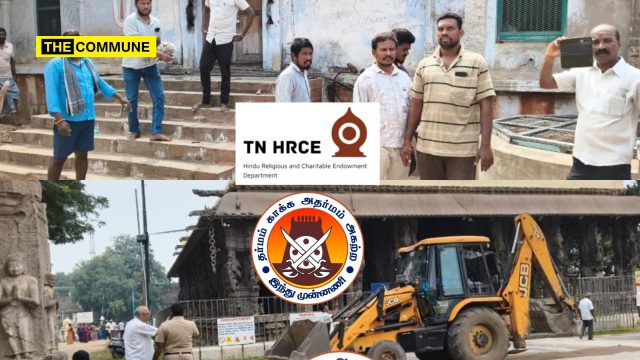
The Madras High Court has intervened to stop all renovation work at the ancient Sri Devaraja Swamy Temple (also referred to as Sri Varadaraja Perumal Temple) in Kanchipuram, following a petition alleging violations of sacred Agama rules and heritage norms. However, the Hindu Religious and Charitable Endowments (HR&CE) department, which administers the temple, has been accused of disregarding the court’s order and resuming work, leading to a confrontation with Hindu activist groups.

High Court’s Status Quo Order

On Friday, 14 November 2025, Justice PB Balaji of the Madras High Court issued an immediate order of status quo, halting all further work in the temple premises until 21 November 2025. The order came in response to a writ petition (WP No.44347 of 2025) filed by a devotee, Krishna Devaraya.

The petitioner alleged that the temple authorities were carrying out structural alterations in blatant violation of Agama principles, the religious scriptures that govern temple architecture and rituals. It was also contended that the work was illegal as the mandatory consent of the Heritage Board was not obtained – a board that, as the court noted, has not even been constituted despite prior directives.

Despite claims from the HR&CE and the temple’s executive officer that all necessary approvals were in place, the judge found that the Heritage Board’s consent was absent and other permissions were conditional. Emphasizing that the “sanctity of the temple structure is in question,” the court ordered a freeze on all activities, stating that any structural changes made now would be impossible to undo if the petition is eventually upheld.

Allegations of Defiance and Public Intervention

Despite the clear court directive, the HR&CE department allegedly resumed work on Saturday, November 15. This prompted immediate action from Hindu activists.

According to on-ground reports, on 17 November 2025 representatives of the Hindu Munnani and other affiliated organizations rushed to the temple site upon learning that the work had continued. The activists confronted the authorities, presented a copy of the High Court’s order, and demanded an immediate cessation of the “illegal” work. Their intervention successfully forced a halt to the activities for the day.

The situation remains tense as the matter is scheduled for its next hearing on 21 November 2025. The court is expected to take a serious view of the allegations that its order was violated, potentially initiating contempt proceedings against the temple administration.

Subscribe to our channels on WhatsAppTelegram, Instagram and YouTube to get the best stories of the day delivered to you personally.