Home Blog Page 224

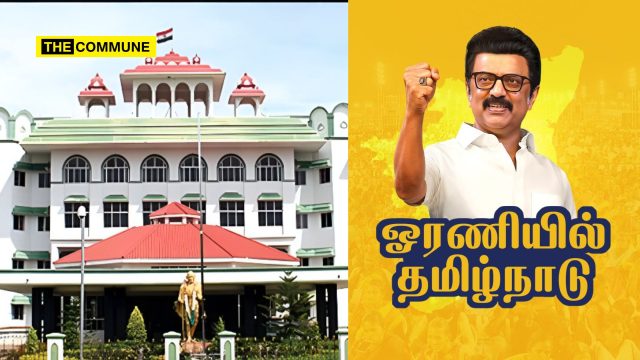
Madurai Bench Of Madras High Court Bars DMK From Using OTP Verification In ‘Oraniyil Tamil Nadu’ Campaign Over Privacy Concerns
madurai bench of madras high court dmk oraniyil tamil nadu

On 21 July 2025, the Madurai Bench of Madras High Court issued a temporary injunction preventing the DMK party from using OTP (one-time password) verification messages as part of their membership campaign titled Oraniyil Tamil Nadu. This interim order comes amid concerns over data privacy and protection, which the court has deemed necessary to examine in detail.

The case was heard by a division bench comprising Justice S.M. Subramaniam and Justice A.D. Maria Clete, who noted that ‘Oraniyil Tamil Nadu’ is a door-to-door membership initiative by the DMK, a recognized political party in Tamil Nadu. Given that the campaign involves the collection of personal data from citizens, the judges acknowledged the significance of the public interest litigation (PIL), stating that it raises critical issues about citizens’ right to privacy and the current data protection framework in place.

The bench also highlighted that digital membership campaigns by political parties are a relatively new phenomenon, and the mechanisms for data storage and processing need scrutiny to uphold both privacy rights and the freedom of political association. The court emphasized the need to determine whether individuals are providing informed consent and whether such data collection practices unfairly disadvantage smaller political parties.

In response, the court restricted the DMK’s use of OTP-based verification for the enrollment drive and issued notices seeking responses from the Central government, the Tamil Nadu state government, and the DMK. The case has been adjourned for two weeks.

The PIL was filed by S. Rajkumar, a resident of T. Athikarai village in Sivaganga district. He alleged that DMK functionaries, under the guise of promoting the ‘Oraniyil Tamil Nadu’ campaign, were collecting Aadhaar numbers and other personal details, including voter ID information, from residents in his locality. Rajkumar claimed that when his family refused to provide these documents, the party workers threatened to cut off government welfare benefits, including the monthly financial assistance received by women in the household.

Furthermore, he asserted that the DMK was collecting mobile phone numbers and sending unsolicited campaign messages linked to OTP verification. Many recipients, he said, were unaware of the implications of these messages. He also alleged that individuals were being pressured to join the party under the threat of losing access to government schemes.

According to Rajkumar, the unauthorized gathering and handling of Aadhaar data by a political party violates constitutional privacy protections. He contended that private organizations, including political parties, are not legally permitted to collect Aadhaar information for purposes outside those explicitly authorized by law. Such data collection, he argued, could lead to profiling of individuals and enable targeted political campaigning, which could undermine free and fair elections.

The petitioner therefore requested that the court prohibit the DMK and its representatives from collecting Aadhaar data for any reason. He also called for the Unique Identification Authority of India (UIDAI) and the Ministry of Electronics and Information Technology to launch a comprehensive investigation into the matter.

(With inputs from Times Of India)

Subscribe to our TelegramWhatsApp, and Instagram channels and get the best stories of the day delivered to you personally.
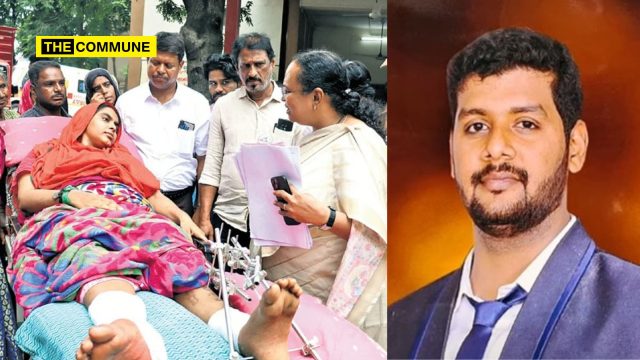
Vellore: 21-Yr-Old Nargis Alleges Attempted Murder By Husband, Khaja Rafik, Over Dowry; Appears At Collectorate On Stretcher, After Husband Pushed Her Off Terrace

dowry attempted murder vellore

In a disturbing case of dowry-related violence, a young Muslim woman from Ranipet district has accused her husband and in-laws of prolonged harassment and an attempted murder, which has sparked outrage in Vellore.

The incident involves 21-year-old Nargis, daughter of Abdul Kalam, a daily-wage laborer from Melnelli village. Her marriage to Khaja Rafik, son of Sub-Inspector Baba from Sathuperi Mullai Nagar, Vellore, was arranged by their families and took place on 8 June 2023.

At the time of marriage, it is alleged that the Nargis’s family reportedly provided 30 sovereigns of gold, ₹10 lakh to cover wedding expenses, and an additional ₹1.5 lakh for purchasing a two-wheeler. Despite this, her in-laws allegedly continued to pressure her for more dowry. According to Nargis, the abuse began soon after the wedding and included both verbal and physical harassment by her husband, father-in-law Baba (a serving police sub-inspector), and mother-in-law Shakeela.

Alleged Murder Attempt

On 3 June 2025, Nargis was reportedly taken to the terrace of the house by her husband, who then pushed her off under the instigation of his father. She suffered a severe spinal injury and a fractured leg in the fall and was rushed to the hospital in critical condition.

Despite her family’s complaint to the local police, no immediate action was taken against the accused. In a desperate move to seek justice, Nargis appeared at the Vellore District Collectorate on a stretcher, brought by ambulance, and filed a petition demanding legal action. Her presence at the collectorate created a stir, drawing public attention and media coverage. Revenue Commissioner Senthil took notice of the incident and inquired about her situation.

Speaking to reporters, Nargis emotionally recounted her ordeal, saying, “My name is Nargis. I was married on 6 August 2023, to Khaja Rafi, son of SI Baba from Sozhavaram, Tiruvannamalai. Because of that only untold cruelty happened. My in-laws gave 30 gold ornaments as dowry, and the wedding expenses amounted to over ₹10 lakhs. They kept demanding more jewelry and money, asking me to go home and ask my parents. My parents had already taken loans for everything. Despite all this, they kept bothering me. I couldn’t even tell my parents because they had taken my phone away and kept locked up at home, so I wouldn’t tell anyone outside. Their relatives were also supportive of them. Since I had no one to support me, I couldn’t tell my parents and was suffering a lot. Then, suddenly, through my parents, I told them what was happening. As soon as they came to inquire, my in-laws spoke insultingly and kicked me out of the house. After that, I stayed at home for 10 months. Then, through the Jamaat (community council), I filed a complaint about being beaten and harassed, and about not being given food. After the complaint, they made us reconcile. But when I went back, my husband challenged me, saying, “Watch what I do to you, I’ll make you suffer”. I went back, but I didn’t have peace there. The same family started creating problems again, demanding dowry, goods, and other unnecessary things. Then, we came to Vellore district. In Mullai Nagar, Sathuperi Nagar, Vellore district, my father-in-law and husband found a house and made us live there. My husband, influenced by their words, unnecessarily beat and kicked me severely. He hit me with a fan rod on my body, everywhere he could. He kicked me in my chest and stomach. While I was sleeping, he would prick me with needles. He tortured me like that. Even while eating, he would put his foot on my hand and crush it. He tortured me like this, and I couldn’t tell my parents because they had snatched my phone away. My phone is still there. I couldn’t tell anyone because they had my phone. Then, on June 3rd, he would leave me alone at night and lock me in the house, so I couldn’t talk to anyone. On, 3rd June 2025, he came back from work at 10:30 PM. He asked me, “How will your parents dare to talk with mine? We should have cut you off from them long ago.” He blackmailed me with such words. He beat and kicked me so much, even after all that. I pleaded with him, “Please leave me, I won’t make this mistake again, I won’t tell my parents. They also won’t get involved in any discussions.” But he didn’t listen to me even after all my pleas and hit me so much. At that time, he went upstairs, Anna, talking to my father-in-law on the phone. While he was on the line, I asked, “I can’t live with him. What should I do?” My father-in-law replied, “As long as she’s there, this is how it will be. We can only be peaceful if she leaves.” After hearing this, as my father told me, (thinking) What else can I say beyond this he pushed me from upstairs. I was crying and pleading, but he suddenly pushed me. He was watching me from upstairs, but he didn’t respond or call the neighbors. My legs were dangling, bleeding from the pain, and my hip was broken. Both my legs were hanging down and broken. My left leg was shattered, and my right leg was half broken. They said if they had left it for a little longer, my leg would have to be amputated. My leg barely works now. The people there called an ambulance and took me to the hospital.”

According to the survivor, after she was seriously injured allegedly pushed off a terrace by her husband she was visited by her husband and father-in-law, in the hospital. Instead of showing concern for her condition, they reportedly pressured her to stay silent about the incident. The young woman claimed she was threatened with being poisoned through medical staff if she revealed the truth, and her parents were also threatened with legal consequences. Fearful for her life, she felt she had no choice but to remain silent.

After being discharged from the hospital on 22 June, she returned home and learned more about what had happened from her family. On 8 July, she filed a formal complaint at Ariyur Police Station. Despite submitting a written complaint and being made to sign blank papers, she says the police failed to conduct a thorough investigation. Instead of hearing her side in the hospital, authorities allegedly relied on statements from her husband and in-laws. She was later asked to record a video saying her in-laws prevented police from meeting her, but claims no further action was taken no follow-ups, no arrests, no questioning.

Feeling ignored and betrayed by the system, she decided to take her case directly to the district administration. She appeared at the Collectorate, in unbearable pain, ahead of a scheduled operation. Both her legs are broken, and she is suffering from spinal injuries. One leg required a bone graft. Her physical condition has left her completely dependent on others, unable to sit, stand, or even hold light objects.

Despite her condition, she was left alone and unsupported. She expressed deep anguish that those who caused her suffering have now distanced themselves. Her parents, already struggling financially, are shouldering all medical expenses. She questioned how those responsible could simply walk away from their responsibilities after causing so much harm. She insisted that not just her husband, but the entire family must be held accountable.

Subscribe to our TelegramWhatsApp, and Instagram channels and get the best stories of the day delivered to you personally.
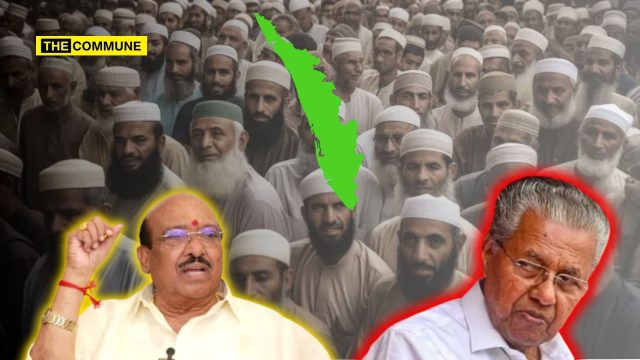
“Muslims Will Become Majority In Kerala By 2040”, Says SNDP Leader Vellappally Natesan; CPI(M) Speaks Like Muslim League

A fiery political confrontation has erupted in Kerala after Vellappally Natesan, General Secretary of the Sree Narayana Dharma Paripalana (SNDP) Yogam and prominent SNDP leader, asserted that “Muslims will become a majority in Kerala by 2040.” His comments, made on 19 July 2025 during a state-level SNDP meeting in Kottayam, sparked sharp criticism from both the Congress and its ally, the Indian Union Muslim League (IUML), who accused Natesan of fomenting communal division.

In his address at Kottayam, Natesan, notable for his influence among the Ezhava community, warned that Kerala was on the trajectory to a Muslim majority and suggested undue sway of Muslim religious leaders over state affairs: “The current situation is such that the state government should just listen to Kanthapuram and govern,” referencing Sunni cleric Kanthapuram A.P. Aboobacker Musliyar. He further claimed, “No government decision is implemented without Malappuram’s endorsement,” highlighting the demographic dominance of the Muslim-majority district.

Natesan met tough resistance from across the aisle. Opposition leader V.D. Satheesan (Congress) accused him of echoing Chief Minister Pinarayi Vijayan’s agenda, claiming, “[He] has echoed what the CPI(M) leaders in Kerala speak against Malappuram and what the Chief Minister had stated in Delhi… This hate speech is against the philosophy of social reformer Sree Narayana Guru.” Satheesan charged that the CPI(M) was trading secular credentials for political favor among majority communities.

The IUML, equally incensed, condemned the remarks as “brazen communal remarks” and urged government action. IUML leader P.K. Kunhalikutty emphasized that it’s the LDF’s duty “to act against individuals who exploit influential social organisations to cause communal divisions.” Abdul Hameed MLA, the party’s Malappuram secretary, demanded legal reprisals under statutes prohibiting incitement of enmity. Religious groups like the Samastha Kerala Jem-iyyathul Ulama also strongly rebuked the claim.

Caught in the crossfire is the ruling CPI(M), the primary beneficiary of Ezhava support. The party’s state secretariat rebuked divisive rhetoric, urging the SNDP to remain aligned with its foundational reformist values. “Social organisations are free to raise any issue concerning the people, but it should not create religious divisions and hate,” said a CPI(M) spokesperson. The party faces a delicate task, retaining Ezhava backing ahead of the 2026 Assembly polls while preserving its secular image amid rising communal tensions.

Natesan himself resisted retreat, responding defiantly to communal backlash: “Even if Kanthapuram ‘hurls a spear’ at me, I will not stop speaking out for social justice,” he told The New Indian Express.

Analysts note that SNDP represents the Ezhava community, around 25% of Kerala’s population, and its pivot towards identity-based politics signals shifting allegiances. Notably, Natesan’s son leads the BDJS, part of the BJP-led NDA, underscoring simmering interface between caste, religion, and electoral strategy in the state.

This political kerfuffle emerged days after the deaths of former CM V.S. Achuthanandan, who in 2022 alleged an extremist Muslim push for Kerala’s demographic dominance. In a state known for nonsectarian governance, Natesan’s predictions have reignited old anxieties and drawn non-BJP parties into a pitched battle of accusations and counter-accusations.

As Kerala braces for a potentially pivotal election next year, the unfolding saga, centered on SNDP leadership, CPI(M) positioning, and communal messaging, may redefine electoral coalitions. The state’s non-BJP coalition, invigorated by Congress and IUML criticism, now aims to cast the ruling Left front as tacit accomplices to divisive discourse.

(With inputs from India Today)

Subscribe to our channels on Telegram, WhatsApp, and Instagram and get the best stories of the day delivered to you personally.

From Acquitting Terror Accused To Lecturing Hindus: 6 Back-To-Back Gems Of Judiciary In 1 Week

gems of judiciary india hindus court judgements

Over the past week, the judiciary has doled out such gems of judgements that would make Hindus gape in horror. Let’s examine 6 such judgements, or rather, gems of judiciary, delivered by courts in the country that could make one wonder if we really live in a democracy with a “thriving” judiciary.

Judgement 1 – Acquitted all the accused in 2006 Mumbai local train bomb blasts

On 21 July 2025, the Bombay High Court on Monday acquitted all 12 men previously convicted for the 2006 Mumbai train blasts that killed 187 people, calling the case a textbook example of investigative and prosecutorial failure, despite claims that the accused were linked to banned terror outfits like SIMI and Pakistan-based Lashkar-e-Taiba. The bench observed that the prosecution “utterly failed” to prove that the accused committed the crime and criticized the Maharashtra ATS for not even identifying the type of bombs used. The court found the evidence unreliable, confessions likely obtained under torture, and key witness testimonies lacking credibility. With this judgement, the courts proved that no one killed the 187 people.

Judgement 2 – A tainted judge, Yashwant Varma, is still “Justice Varma”

In a striking courtroom exchange on 21 July 2025, Chief Justice of India BR Gavai reprimanded Advocate Mathews J Nedumpara for referring to Delhi High Court judge Yashwant Varma, embroiled in a cash recovery controversy, simply as “Varma.” Nedumpara, seeking urgent listing of his petition demanding an FIR against Justice Varma, was interrupted by CJI Gavai, who insisted, “He is still Justice Varma. How do you address him? Have some decorum. You are referring to a learned judge. He is still a judge of the Court.” Nedumpara replied, “I don’t think that greatness can apply to him. Matter has to be listed.” CJI snapped back, “Don’t dictate to the Court.” The clash highlighted the judiciary’s internal contradiction, insisting on ceremonial respect for a judge under serious scrutiny. Despite allegations and a pending writ filed by Justice Varma himself, the Court remained firm on maintaining titles and decorum, even as Nedumpara argued that “an FIR has to be registered.”

Judgement 3 – Preventing release of Udaipur Files movie

The Supreme Court on 21 July 2025 extended its stay on the release of the film Udaipur Files, effectively halting its release despite the Central government’s approval of six mandated cuts. A bench of Justices Surya Kant and Joymala Bagchi ruled that the stay would continue until Thursday, demanding that the filmmakers implement the Centre’s revisions, including removal of dialogues, a name change, and deletion of a scene, before considering release. The Court’s repeated intervention is seen to amount to suppressing artistic expression, particularly as the Centre, after expert review, had accepted the film with changes. While Solicitor General Tushar Mehta warned that further curbs could infringe on the filmmaker’s constitutional rights under Article 19(1)(a), the Court allowed petitioners to file objections to the Centre’s order itself. Despite meeting regulatory conditions, the film remains blocked, raising serious concerns about preemptive censorship and judicial overreach into certified artistic content.

Judgement 4 – Quashed FIRs against Indians sheltering foreign Tablighi Jamaat members during COVID lockdown

On 18 July 2025, the Delhi High Court quashed 16 FIRs against 70 Indian nationals accused of sheltering 190 foreign Tablighi Jamaat members during the 2020 COVID-19 lockdown. The court ruled that there was no evidence the accused violated lockdown rules or knowingly spread the virus. It held that the charges under IPC Sections 188, 269, and 270, the Epidemic Diseases Act, and the Disaster Management Act lacked legal basis, noting the absence of proof that any accused were COVID-positive or had defied official orders. The court further observed that the accused were stranded due to the sudden lockdown and had no means to leave the mosques. Despite serious allegations and earlier claims by authorities linking the Markaz gathering to the virus’s spread, the court concluded that no prima facie case was made out, describing the charges as exaggerated and unsupported by evidence. All cases were dismissed, effectively absolving the accused.

Judgement 5 – Told Hindus how to worship at Tirumala temple

On 21 July 2025, the Supreme Court declined to hear a writ petition seeking a direction to the Tirumala Tirupati Devasthanams (TTD) to use only indigenous cow milk for Lord Venkatesh’s worship at Tirupati. A bench of Justices M.M. Sundresh and N. Kotiswar Singh expressed disinterest in the plea, prompting the petitioner to withdraw it. Justice Sundresh remarked, “There are much more important issues than this. The true love for God lies in serving fellow living beings, and not in these things.” When the petitioner cited Agamashastras differentiating cow types, Justice Sundresh responded, “A cow is a cow,” and added, “God is the same for everybody, human beings and others also.” When told it was an essential religious practice, the judge replied, “Any ritual you do is an indication for your love of God, nothing beyond,” and quipped, “Now you will say, the Tirupati laddu has to be indigenous.”

Judgement 6 – Cannot have Nama Sankeerthanam sessions at home without Collector nod

The Madras High Court barred the use of a residential property in Chromepet for Nama Sankeerthanam sessions unless prior permission is obtained from the Chengalpattu Collector. Justice N. Anand Venkatesh issued the order while hearing a plea from resident Prakash Ramachandran, who alleged that his neighbor allowed the Global Organisation for Divinity (GOD) to conduct devotional chanting, disturbing others. The respondents defended the sessions, citing spiritual benefits and Article 25 rights. However, the judge said, “The same will apply here too. Except the change in the name of God, all other things are the same. How can you have Nama Sankeerthanam without Collector’s nod?” Emphasizing public peace, he added, “Peace is the best prayer and silence is the greatest prayer. The day people realise this truth, they will not disturb others by indulging in loud and noisy ways of praying to God.” The Chitlapakkam police inspector was directed to enforce the order.

(Based on the tweet of Nupur J Sharma)

Subscribe to our channels on Telegram, WhatsApp, and Instagram and get the best stories of the day delivered to you personally.

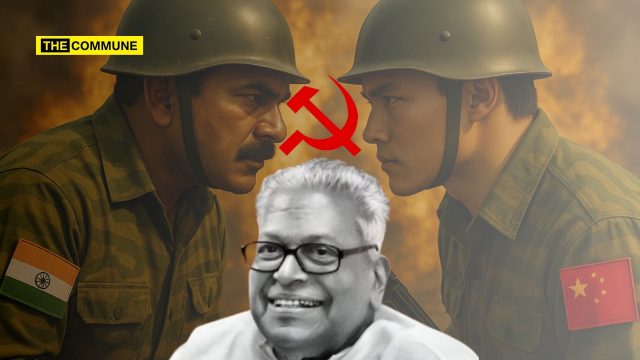
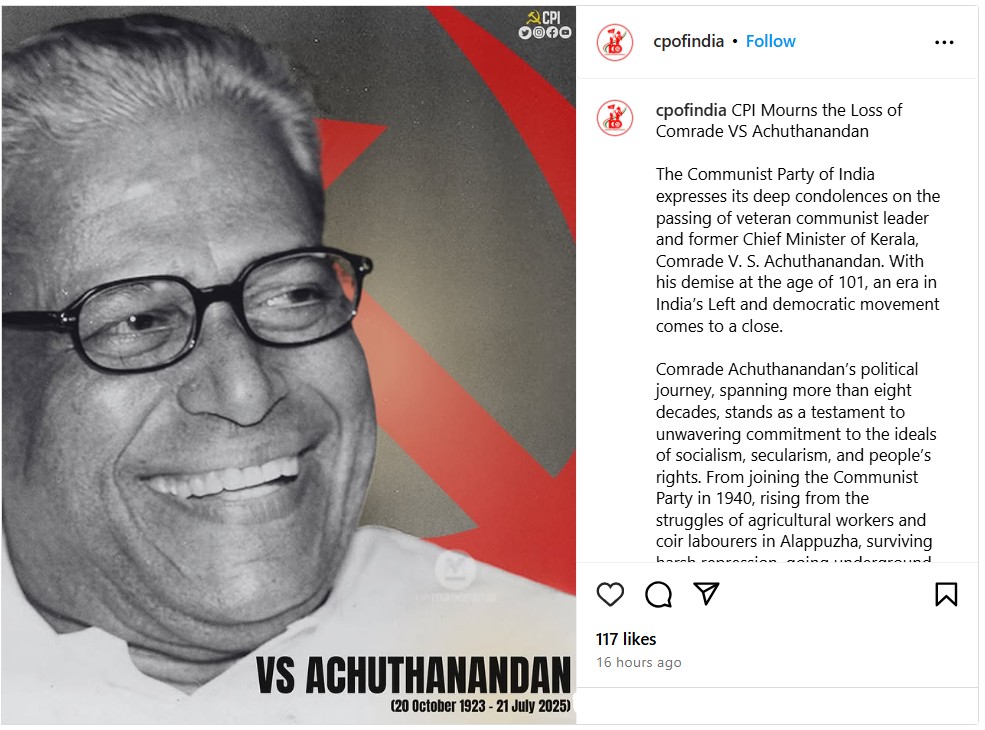
Communist Party Once Punished V.S. Achuthanandan For Supporting India During India-China War, Now Offers Him “Red Salute” In Death

The Communist Party is facing intense criticism and accusations of hypocrisy after offering condolences and a symbolic red salute to the late Comrade V.S. Achuthanandan, the iconic Communist leader and former Chief Minister of Kerala, who passed away on 21 July 2025 at the age of 101.

Achuthanandan was a founding figure of the Communist Party of India (Marxist) and the last surviving member among the 32 leaders who famously broke away from the CPI during the historic 1964 national council meeting. The split occurred because the CPI leadership supported China during the 1962 Indo-China war, an alignment that deeply divided the party.

At the time, many CPI leaders went so far as to oppose organizing blood donation camps for Indian soldiers. In stark contrast, Achuthanandan stood against this pro-China stance not once, but twice. His defiance came at a personal cost he was physically assaulted, demoted, and eventually removed from the party’s Central Committee.

Yet, now, the same CPI that once sidelined him for his patriotism has taken to social media to declare, “CPI mourns the loss of Comrade VS Achuthanandan,” sparking widespread backlash for what critics see as a shameless and revisionist gesture.

Who Was V.S. Achuthanandan?

V.S. Achuthanandan began his political journey as a trade union activist, deeply involved in workers’ and land rights movements. He played a prominent role in the historic Punnapra-Vayalar uprising and went on to become one of the most beloved and influential leaders of the Communist Party of India (Marxist) in Kerala, maintaining strong grassroots support throughout his political career. He also served as the Chief Minister of Kerala and was widely regarded as the face of the CPM in the state for decades.

A Nationalist Voice Within the Communist Ranks And the Price He Paid

During the 1962 Sino-Indian war, while the Communist Party of India (CPI) leaned heavily in favor of China, V.S. Achuthanandan stood out by taking a position that, though patriotic by today’s standards, was considered “anti-party” at the time. His support for Indian soldiers during a time of national crisis led to severe internal repercussions within the party.

At just 39 years of age and already a Central Committee member, Achuthanandan was imprisoned in Thiruvananthapuram Central Jail along with other CPI leaders, many of whom had been arrested by the Indian government due to the party’s open support for China during the war. While behind bars, he proposed a small but meaningful gesture, that jailed party members donate blood for Indian soldiers and contribute their saved rations toward the national defense fund. This suggestion was made during a routine party meeting inside the jail.

However, the proposal met immediate resistance. O.J. Joseph, the jail committee convener who would later serve in the Rajya Sabha, firmly rejected the idea. Determined to push the initiative forward, Achuthanandan raised the matter again in the next meeting. A heated debate ensued, eventually escalating into a scuffle between two factions those supporting Achuthanandan and those aligned with Joseph.

The incident didn’t stay confined within prison walls. K. Anirudhan, a fellow inmate who would later become a Member of Parliament, informed the jail warden, and news of the altercation soon reached the press. Senior Communist leaders, including Jyoti Basu, were alerted. E.M.S. Namboodiripad, one of the top figures in the party, directed K.P.R. Gopalan to investigate. As tensions rose, Achuthanandan eventually withdrew the proposal.

Yet, the controversy didn’t end there. After his release in 1965, a party worker filed a formal complaint against him for “anti-party activities.” An internal inquiry committee found him guilty, accusing him of acting contrary to the party’s ideological line. By December of that year, the Kerala state committee ratified the decision to demote him from the central leadership to a branch-level position. He was transferred to the Alappuzha district secretariat, where he spent a year in relative political isolation.

Commenting on the disciplinary action, senior Kerala CPM leader M.M. Lawrance said, “Achuthanandan acted on his own without party approval. By supporting the government, which, at the time, was cracking down on the Communist movement, he violated party discipline.”

In hindsight, Achuthanandan’s stance was one of principled nationalism. But within the rigid ideological framework of the CPI during the Cold War, his patriotic impulse came at a steep personal and political cost.

Despite this, he was elected to the Kerala Legislative Assembly multiple times – in 1967, 1970, 1991, 2001, 2006, 2011, and 2016 and served as the Leader of the Opposition thrice. Achuthanandan was also Chief Minister from 2006 to 2011. He remained a Politburo member from 1985 until his removal in 2009, when internal party disputes came to a head. Even in 2015, on the Alappuzha conference, the party passed a resolution branding him a “comrade with an anti-party mindset.”

Subscribe to our TelegramWhatsApp, and Instagram channels and get the best stories of the day delivered to you personally.
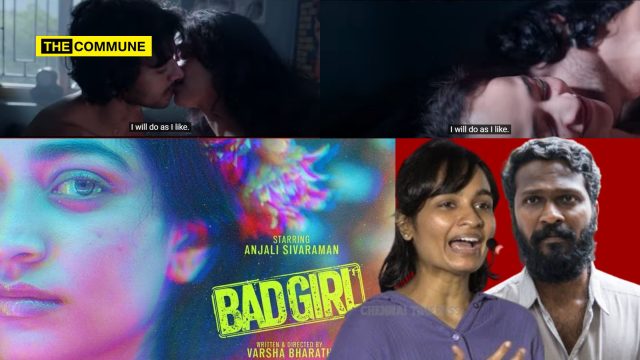
Madras High Court Calls Dravidianist Filmmaker Vetrimaaran-Backed ‘Bad Girl’ Film As Child Pornography, Asks Child Rights Body And Women’s Commission To Take Action Against Such Films

vetrimaaran bad girl madurai bench of madras high court varsha bharath

In a strong indictment of the teaser of the controversial film Bad Girl, the Madras High Court has termed the video as containing “child pornography” and directed the Union Ministry of Electronics and Information Technology to ensure its removal from YouTube within a month. The court further directed the National Commission for Protection of Child Rights (NCPCR) and the National Commission for Women (NCW) to monitor the issue and take appropriate action under existing child protection laws.

The judgment was delivered by Justice P. Dhanabal filed by three citizens who alleged that the teaser of Bad Girl, released on January 26, 2025, promotes child sexual exploitation and violates multiple Indian laws including the Protection of Children from Sexual Offences (POCSO) Act and the Information Technology Act.

Court’s Observations on Teaser

Justice Dhanabal, after reviewing the content presented by the petitioners, stated that, “The content of the teaser of the Tamil movie ‘Bad Girl’ contains child pornography and the content discloses exploitation of children (school students shown), depicted in a sexual manner.”

He emphasized that such content directly harms the well-being of children and “spoils the minds of teenage children.” The court held that the online availability of such videos without age restriction was alarming. They said, “The pictures hosted in the YouTube can be accessed by anybody and there are no restriction to the children to access and to see the said pictures. If the children see the said contents of the videos, certainly it will
spoil the mind of the children.”

Justice Dhanabal went further to underline the State’s constitutional responsibility to safeguard children under Articles 39(f) and 45 of the Constitution of India, which mandate protection against exploitation and provision of early childhood care. He said, “It is the duty of the State to protect the children in all respects… Without social responsibility, the said obscene pictures have been uploaded in the social media. Therefore, it cannot be allowed to continue.”

He also remarked that the number of potential child victims could increase as long as the video remains available online, categorizing it as a “continuing offence.”

Directions to the Government

The High Court issued the following directives:

Union Ministry of Electronics and IT must ensure removal of the teaser from YouTube within a month.

NCPCR and NCW must investigate and take further action in accordance with law.

Notably, the Court waived the requirement to implead YouTube directly, stating, “As far as the non-impleading of the You tube platform is concerned, considering the serious nature of the issue, this Court need not wait till the impleadment of the YouTube as party to the proceedings, since the first respondent is a competent authority, he can issue notice to the concerned You tube and to take appropriate action to remove the obscene
contents and the videos.” 
where first respondent is the Union Ministry of Electronics & IT.

The Court, however, refrained from directing criminal prosecution at this stage, citing the lack of specific particulars, but clarified that the petitioners are free to approach appropriate authorities.

Background on Bad Girl Film

Bad Girl is directed by Varsha Bharath and backed by Dravidianist filmmaker Vetrimaaran in collaboration with Bollywood director Anurag Kashyap. It has courted controversy since its teaser was released, portraying a Tamil Brahmin schoolgirl engaging in behaviors that critics allege are aimed at vilifying Brahmin traditions and normalizing adolescent rebellion through sex, alcohol, and drug use. The teaser includes a scene that mimics a Brahmin religious ritual in a manner perceived to ridicule it.

The film, certified U/A by the CBFC, is scheduled for release on 5 September 2025.

Following the release of the teaser, there has been widespread backlash from social activists, the Tamil Nadu Brahmin Association (THAMBRAAS), and members of the film industry, including actress Sanam Shetty and director Mohan G Kshatriyan. THAMBRAAS has already issued a legal notice against the filmmakers, alleging defamation and cultural distortion.

Subscribe to our channels on TelegramWhatsApp, and Instagram and get the best stories of the day delivered to you personally.

The Significance Of PM Modi Visiting Gangai Konda Cholapuram, The Capital Of Rajendra Chola The Conqueror

rajendra chola gangaikonda cholapuram

Gangai Konda Cholapuram, a modest town in the Ariyalur district of Tamil Nadu, is poised to witness historic celebrations this week. On 23rd July, the town will commemorate the birth anniversary of the great Chola emperor Rajendra Chola I, which falls on the auspicious Thiruvathirai (Ardra) Nakshatra. Additionally, this year marks the 1000th anniversary of Rajendra Chola’s victorious naval expedition to Southeast Asia—a milestone event that etched the Chola name into global maritime history. A series of celebratory events are being organized from July 23rd to 27th to honour these two monumental occasions.

Although today a quiet town, Gangai Konda Cholapuram was once the bustling imperial capital of the Chola Empire, surpassing earlier capitals like Thanjavur, Pazhayarai, and Uraiyur. Many are unaware that it served as the capital for over 250 years, longer than any other Chola city. Rajendra Chola, son of the illustrious Rajaraja Chola, shifted the capital from Thanjavur due to its overcrowding, brought on by the swelling Chola army, administrative officials, temple personnel, and civilians. Strategically, he also desired quicker access from the northern territories, which were difficult to reach due to the rivers encircling Thanjavur.

As part of this grand vision, Rajendra not only planned a new city but also sought to build a temple that matched the grandeur of his father’s Brihadeeswarar Temple in Thanjavur. Staying true to his flair for symbolism and power, he wanted the Kumbhabhishekam of the new temple to be performed with the sacred waters of the Ganges. To achieve this, he dispatched a military expedition under his general Arayan Rajarajan, which marched across the subcontinent, defeated Mahipala—the Pala king of Bengal—and brought back Ganga water to Tamil Nadu.

The Thiruvalangadu copper plates poetically record that “the Ganga water was collected in pots and carried on the backs of elephants, forming a bridge across the mighty river.” Rajendra himself travelled as far as the Godavari River to ceremoniously receive the Ganga water, which was then brought to his capital and used to consecrate the temple. He poured the sacred water into a special temple well and also built a lake named Chola Gangam, establishing it as a ‘Jala Sthambam’ (water pillar) to commemorate his spiritual and military conquest—an alternative to the typical ‘Jaya Sthambam’ (victory pillar).

Architectural Grandeur And Turbulent Past

The temple Rajendra constructed is a masterpiece of Chola architecture, now recognized as part of the UNESCO World Heritage Site “Great Living Chola Temples”. Sadly, the temple suffered immense damage from successive invasions, beginning with Malik Kafur’s raid in the 14th century, which destroyed the two-storied outer walls and the Somaskanda shrine. During the British colonial period, the temple was further desecrated: a rampart was built in the southeastern corner, the Mahamandapam dismantled, and its stones used to build a dam across the Kollidam River. The temple’s original two gopurams were also destroyed—only the lower portion of the second remains today. The current Nandi (Rishabha) at the entrance is a later addition; the original is lost.

The temple layout features a Mukha Mandapa, Mahamandapa, and Ardha Mandapa, leading to the sanctum sanctorum. These mandapas were reconstructed during the Vijayanagara and Nayaka periods. The Sri Vimana, rising 51 meters from the Upa Peeta, is slightly shorter than that of Thanjavur, a deliberate choice by Rajendra to honour his father. The hollow interior of the Vimana indicates adherence to the Makutagama architectural canon. The presiding deity, the Shivalingam, stands an imposing 3.3 meters tall, making it one of the tallest in India.

Sacred Shrines And Sculptural Brilliance

Flanking the main shrine are two sub-shrines known as South Kailayam and North Kailayam, both originally dedicated to Shiva. Today, South Kailayam lies vacant, while North Kailayam has been converted into a Devi shrine. A Ganapati shrine of later origin stands on the southwestern side. On the northern side, Rajendra constructed a shrine for Durga, a deity brought from the Chalukya kingdom. Also notable is the Simha Keni (Lion-faced Well), built by the Udayarpalayam Zamindar, adjacent to the sacred well containing Ganga water.

The temple is also renowned for its stunning sculptural panels. On the southern side, exquisite carvings of Gajalakshmi, Nritya Ganapati, Ardhanareeswara, Harihara, and Nataraja are seen. The Nataraja panel, in particular, is celebrated for the deity’s ethereal smile, unmatched in Chola art. The spot for Dakshinamurthy is now vacant, likely removed during invasions. On the rear side, panels depict Gangadhara, Lingodbhava, and Mahavishnu, while the northern side features dynamic depictions of Kalasamhara Murti, Durga, Brahma, Bhairava, and Kamadahana Murti.

At the base of the northern entrance steps lie two of the temple’s most captivating reliefs. On the right, a rare Gnana Saraswati panel portrays the goddess in a meditative pose holding a Japa Mala, notably without her veena—an iconographic rarity. Opposite is the Chandeswara Anugraha Murti, surrounded by a detailed visual narrative: the story of Visarasarma, a young devotee who offered milk to the Shivalinga against his father’s wishes. When his father disrupted the offering, Visarasarma’s stick miraculously transformed into an axe, slaying his father. Moved by his devotion, Shiva appeared and granted him the title of Chandeswara.

Each panel in the temple tells a full visual story, capturing not just divinity but the Bhakti ethos that was central to Chola spiritual life.

Revival and Contemporary Celebrations

Despite its historical and artistic significance, Gangai Konda Cholapuram remained in neglect for centuries, left to the care of the Archaeological Survey of India (ASI). In recent times, a group of local devotees initiated a cultural revival by installing a new Dwajasthambam (temple flagstaff) and conducting Kumbhabhishekam using Ganga water, mirroring the original consecration by Rajendra himself.

Now, with the birthday of Rajendra Chola and the millennial anniversary of his legendary conquest of the Srivijaya Empire, Gangai Konda Cholapuram is finally receiving the recognition it deserves. These celebrations mark not just a remembrance of the past, but a cultural and spiritual renaissance, affirming this historic site as a sacred destination for generations to come.

TS Krishnan is a Tamil scholar, historian and author.

Subscribe to our TelegramWhatsApp, and Instagram channels and get the best stories of the day delivered to you personally.
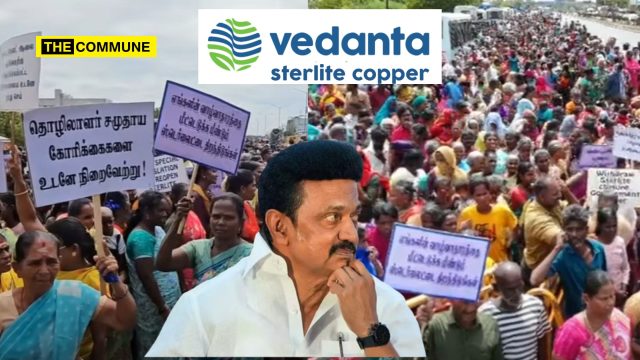
Sterlite Protest Comes Back To Haunt DMK: People Lay Siege, Demand Reopening Of Copper Plant

sterlite protest dmk

Remember the vehement Sterlite protest back in the day? Today, it seems the Sterlite copper plant continues to haunt the DMK, as public anger resurfaces in Thoothukudi. In a striking turn of events, hundreds of residents rallied outside the District Collector’s Office, demanding the reopening of the very plant that was once fiercely opposed.

Back when fringe outfits and missionary-backed groups spearheaded a campaign of blind opposition to the Sterlite facility, it was the DMK that seized the moment, turning the agitation into a political weapon to shut down the plant. But today, the tide has clearly shifted the very people of Thoothukudi are now at the forefront, calling for the revival of Sterlite.

Villagers from Pandaram Patti South, Veerapandiapuram, fisherfolk from Threspuram, and women’s self-help groups laid siege to the Collector’s Office, stating that the plant’s closure had stripped them of their jobs and economic stability.

With tensions running high, heavy police presence was stationed at the scene. Authorities allowed only select representatives to meet with the District Collector and submit a petition on behalf of the protestors.

The 2018 closure of the Sterlite Copper plant dealt a significant blow to Tamil Nadu’s economy. Once a key player in India’s copper production, its shutdown plunged Thoothukudi into joblessness and financial distress while Gujarat quickly stepped in to fill the industrial vacuum. What was once projected as an environmental victory has now come full circle, with the DMK being cornered by the consequences of a decision it once celebrated.

Mounting Protests from the Ground

On 16 June 2025, villagers from South Veerapandiapuram, Saminatham, and nearby communities gathered outside the Thoothukudi District Collector’s Office. Their demand was simple: reopen the Sterlite Copper plant and the associated thermal power station. Many of the protesters were former employees, who now struggle to survive as low-paid laborers. According to their statements, over 300 youth from these villages had worked at the plant, and the shutdown pushed them into economic instability.

Surprisingly, the call for reopening the facility has come not just from locals, but also from the Indian National Trade Union Congress (INTUC)—a key ally of the ruling DMK in Tamil Nadu. INTUC national secretary Kathirvelu openly questioned the inconsistency in allowing copper smelters to operate in other states while Sterlite remains shut. He pointed out that if pollution was the concern, it should be addressed with uniform regulations across India.

INTUC maintained that the economic cost of closure has been immense. Thousands of jobs were lost—not only within Sterlite itself but across hundreds of ancillary businesses that depended on the plant’s operations.

Wider Impact Across Industries

The plant’s closure didn’t just affect direct employees. On 6 January 2024, members of the Namakkal Lorry Owners’ and Trailer Owners’ Associations staged protests, claiming the shutdown paralyzed the logistics sector in the region. Over 6,500 trucks were impacted, and more than 600 vehicle owners had to seek alternative sources of income. Daily revenue losses were estimated at around ₹10 crore. Protesters proposed restarting the plant under strict environmental guidelines to balance development and sustainability.

In February 2025, the Thoothukudi  Contractors’ Association joined the demand, highlighting job losses for 20,000 workers and severe financial strain on 400 SMEs, with income levels dropping by 40%. They have called for a Government Order to restart operations.

On 13 May, representatives from the Thoothukudi People Livelihood Protection Association met with MP Kanimozhi, urging her to support efforts to revive the copper plant. Their appeal noted that the facility had supported 20,000+ families across 50 villages for over two decades. Around 64 contractors had invested in trucks and machinery solely to serve Sterlite’s logistics operations. When the plant was shut, many were left facing crippling debts, having mortgaged personal property to finance their businesses.

Association president S. Thiyagarajan criticized the misleading narrative that labeled Thoothukudi as the “cancer capital” due to the plant’s presence. He pointed to multiple independent environmental assessments that found no such link, yet the perception persisted, fueling protests and ultimately the closure.

Subscribe to our TelegramWhatsApp, and Instagram channels and get the best stories of the day delivered to you personally.
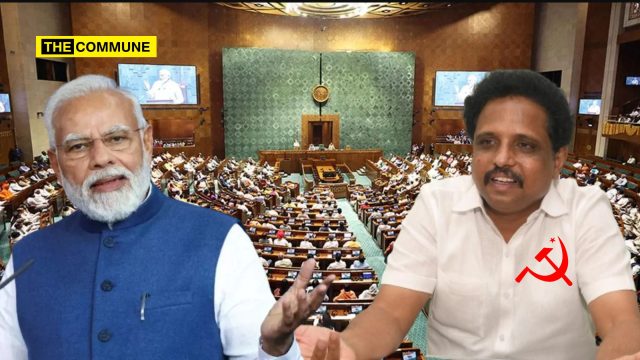
Dravidian Model CPI-M MP Su Venkatesan Pastes His Sticker Over Modi Govt Incorporating All Indian Languages In Parliament Proceedings

While the Narendra Modi-led central government has actively promoted regional languages from incorporating them into competitive examinations to expanding their use in Parliament, CPIM MP from Madurai, Su. Venkatesan has claimed that such linguistic inclusivity is a result of efforts by parties like his, which are supportive of the so-called “Dravidian Model”. However, this assertion has drawn criticism for misrepresenting ongoing initiatives spearheaded by the central government.

In a post on social media, Su. Venkatesan stated, “The Official Languages Committee of the Parliament is continuously working to Hindify the entire nation. But we, those who fight for language equality, are continuously fighting to Indianize the Parliament. The first stage of that is the right to speak in one’s mother tongue. The next stage is the right to have translations in all languages, no matter which language one speaks. Now, the parliamentary proceedings documents are available in all languages. Great joy. It is not a coincidence that this facility is not available for Sanskrit.”

However, contrary to his implication, the Lok Sabha has been steadily expanding multilingual access under the direction of Speaker Om Birla. In February 2025, the Lok Sabha introduced translation services for six new languages: Bodo, Dogri, Maithili, Manipuri, Urdu, and Sanskrit. This expanded the number of supported regional languages in Parliament from 10 to 16, reinforcing the government’s commitment to India’s linguistic diversity.

By March 2025, simultaneous interpretation was available in 18 languages during Lok Sabha sessions, making it one of the most linguistically inclusive platforms in the country surpassing even the number of commentary options for IPL matches. Live proceedings are now accessible in languages including Assamese, Bengali, Gujarati, Kannada, Malayalam, Marathi, Odia, Punjabi, Tamil, Telugu, Hindi, English, and more. Additional languages like Kashmiri, Konkani, Nepali, Sindhi, and Santhali are also in the pipeline.

Each language booth is staffed with trained interpreters, working in pairs due to the demanding nature of real-time translation. While some languages, such as Sanskrit and Urdu, have not yet been included in the YouTube livestream feed, backend interpretation is already in place.

Given these documented developments, it is misleading to credit leftist or Dravidian parties alone for these advancements. The narrative appears to be a political maneuver aimed at stickering on central government efforts, rather than an honest acknowledgment of the groundwork laid through national policy.

Subscribe to our TelegramWhatsApp, and Instagram channels and get the best stories of the day delivered to you personally.
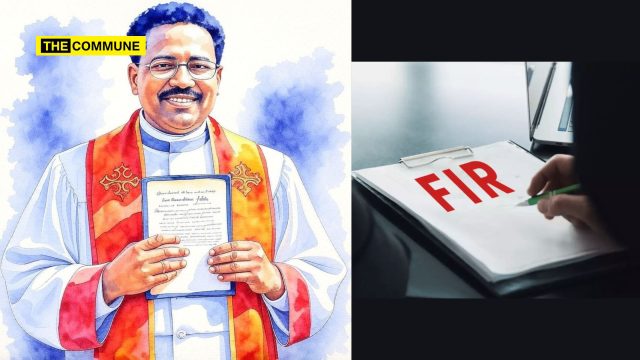
Christian Pastors Accused Of Illegally Holding Scheduled Caste Certificates In Telangana; FIR Filed Seeking Cancellation Of Certificates Held By Accused

fraud pastor christian pastors complaint filed fir scheduled caste certificate

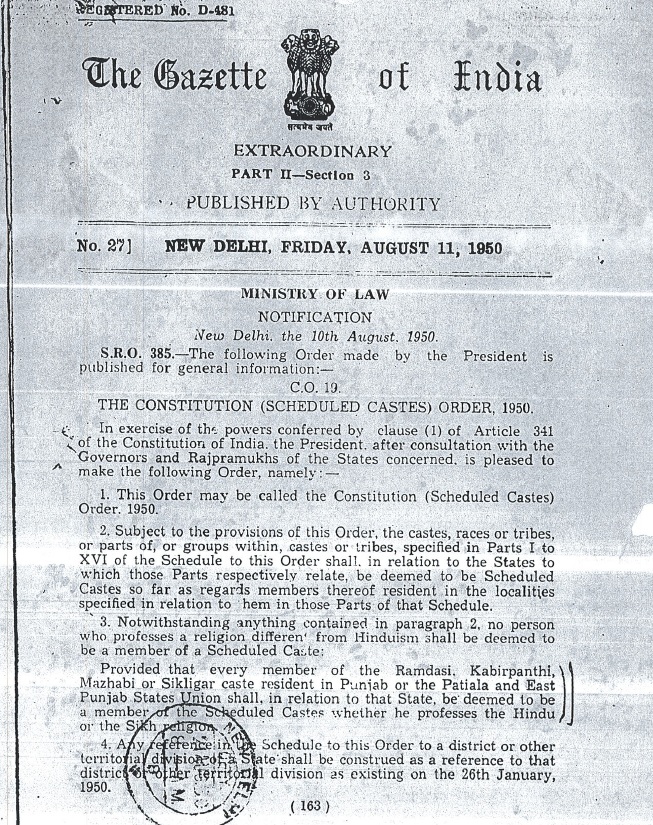
A formal complaint has been lodged with the Bhadradri Kothagudem District Collector by NGO watchdog, Legal Rights Protection Forum (LRPF), alleging that three Christian pastors in Yellandu Mandal are fraudulently holding Scheduled Caste (SC) certificates in violation of the Constitution (Scheduled Castes) Order, 1950. The organization has sought immediate cancellation of these certificates, as well as criminal and departmental action against both the beneficiaries and officials involved in their issuance.

The complaint names Muppalla Poul Dhinakar (40), Ubbani Laxmaiah (64), and Ginnarapu Jacob (45), all residents of Yellandu Mandal, who are reportedly active members of the Yellandu Mandal Pastors Fellowship. According to LRPF, these individuals have been openly professing Christianity and engaging in evangelical activities, including distributing religious pamphlets and Bibles, while simultaneously availing benefits reserved for Scheduled Castes.

It is noteworthy that one of the pastors, Muppalla Poul Dhinakar, filed an FIR with the Yellandu Police on 18 July 2025 in which he explicitly declared his identity as a Christian Pastor. In the complaint, Dhinakar stated that on 17 July 2025, he and his church members were distributing gospel pamphlets in the 21 Pit area of Yellandu when they were allegedly attacked by a group of ten individuals. The assailants reportedly tore and burned the pamphlets and Bibles, hurled caste- and religion-based insults, and attempted to incite communal disharmony.

The FIR was registered under various sections of the Bharatiya Nyaya Sanhita (BNS), including Sections 189(2), 126, 191, 196, 299, 307, and 326, along with Sections 3(1)(r)(s) and 3(2)(v) of the SC/ST (Prevention of Atrocities) Act. Those named in the FIR include Narasimha Reddy, Janakiram, Prashanth, Ramesh, Rajath Kumar, Satish Kumar, Sandeep, Pawan, Akhil, and Jayaprakash.

While the complaint was initially filed to report the alleged assault, LRPF has pointed out that the pastors’ own admission of their religious identity in the FIR establishes that they are ineligible for SC status under Paragraph 3 of the Constitution (Scheduled Castes) Order, 1950, which excludes persons professing any religion other than Hinduism, Sikhism, or Buddhism from being considered Scheduled Castes.

The complaint also referenced a 2019 circular (No. 12017/02/2018-SCD (R.L. Cell)) from the Ministry of Social Justice and Empowerment, directing states to cancel such caste certificates and take legal action against both the holders and the issuing officials.

Calling the case a “serious systemic failure,” LRPF demanded retrospective cancellation of the certificates and prosecution of the beneficiaries for alleged offences such as cheating, forgery, and fraud under BNS provisions. They also urged disciplinary action against the revenue and welfare officials involved.

Subscribe to our channels on Telegram, WhatsApp, and Instagram and get the best stories of the day delivered to you personally.