Home Blog Page 217

Atal Pension Yojna Surpasses 8 Crore Enrollments, Adds 39 Lakh New Members In FY26

Central Govt Employees To Get Additional Compassionate Pension After 80

The Atal Pension Yojana (APY) has achieved a significant milestone by surpassing 8 crore total gross enrollments with an addition of 39 lakh new subscribers in the current Financial Year (FY 2025-26) alone, the Ministry of Finance said on Friday.

This milestone comes as the social security scheme celebrates its 10th anniversary since its launch on May 9, 2015.

Launched with a vision to create a universal social security system for all Indians, APY is a voluntary, contributory pension scheme, focused on the poor, the underprivileged, and workers in the unorganised sector.

Its remarkable success is a result of the dedicated and untiring efforts of all Banks, the Department of Posts (DoP), other stakeholders and the continued support of the Government of India, the ministry said in a press note.

Pension Fund Regulatory and Development Authority (PFRDA), an administrator for the APY, has actively driven enrolments through outreach programmes, training, multilingual handouts, media campaigns, and regular reviews.

APY is meticulously designed to provide a security Shield by ensuring a guaranteed monthly pension of Rs 1,000 to 5,000 for the subscriber post-60 years of age, and the same pension to the spouse after the subscriber’s demise.

In addition, the return of the accumulated corpus to the nominee after the death of both (Husband and Wife). The scheme is open to all Indian citizens between the ages of 18-40 years.

However, people paying income tax can not be subscribers of the Atal Pension Scheme. Earlier in April this year, APY’s subscriber base reached to 7.65 crore, and women make up about 48 per cent of all, according to data from the government. Initially, the scheme was available to all citizens of India between 18 and 40 years of age. From October 2022, individuals paying income tax were exempted from the eligibility.

–IANS

Subscribe to our channels on TelegramWhatsApp, and Instagram and get the best stories of the day delivered to you personally.

Andhra Pradesh CM, Family Turn Mentors Under Zero Poverty Initiative

Leading by example, Andhra Pradesh Chief Minister N. Chandrababu Naidu and his family members have come forward to become mentors under the state government’s zero poverty initiative P4.

The Chief Minister and his family would personally adopt Bangaru Kutumbams, as the beneficiary families under the programme are called. During a review meeting held on Friday at the Secretariat on P4 initiative, the Chief Minister announced that he and members of his family would actively participate in the programme He stated that this personal involvement would inspire others and encourage more affluent citizens to come forward as mentors.

The Chief Minister reiterated that by August 15, efforts must be made to ensure the adoption of 15 lakh Bangaru Kutumbams by mentors. As of now, 5,74,811 families have been adopted and 57,503 individuals have registered as mentors. Officials informed him that an additional two lakh mentors are required to reach the goal. Palnadu district has recorded the highest number of adoptions, while Visakhapatnam has the fewest.

The Zero Poverty P4 programme is being implemented through three models. In the first model, a mentor adopts a Bangaru Kutumbam and provides non-financial assistance.

This approach does not have a time limit. The second model, titled Fund a Need, is designed to provide direct financial support to Kutumbams with specific monetary needs and is time-bound. The third model involves adopting entire villages or mandals to fulfill broader community needs and organise developmental and welfare activities. This model is aligned with corporate social responsibility and is intended specifically for corporate participation.

The Chief Minister said that the P4 initiative is evolving into a people’s movement and reiterated that the empowerment of poor families is a core objective of the coalition government. He urged officials to implement the most effective strategies across all regions to ensure the success of the programme.

He called on Telugu people around the world to become part of the initiative and advised officials to engage the AP NRT Society to involve the diaspora. He also stressed the responsibility of district collectors to coordinate with corporate organisations and encourage their participation. Emphasisng the importance of local engagement, he suggested that villages be taken as the basic unit and that NRIs and industrialists from those regions adopt local Bangaru Kutumbams. In the absence of local mentors, he directed officials to establish connections with non-local supporters.

To accommodate donors at the state level, the Chief Minister proposed the creation of a common fund that would be used to provide support to Bangaru Kutumbams. The Chief Minister directed that the survey identifying the top priorities of Bangaru Kutumbams be completed by August 10. He emphasised the need to gather feedback on both financial and non-financial assistance provided by mentors.

Officials must instill trust among mentors and ensure that all information about Bangaru Kutumbams and mentors is accurately recorded at the village and ward secretariat levels. Only then, he said, can justice be delivered to all beneficiaries. He also instructed P4 coordinators to use online platforms to raise awareness among Bangaru Kutumbams. Adopted Kutumbams are receiving timely updates through automated messages. Officials also briefed the Chief Minister on the digital promotion campaign being implemented to expand public awareness of the P4 initiative via social media and other platforms.

–IANS

Subscribe to our channels on TelegramWhatsApp, and Instagram and get the best stories of the day delivered to you personally.

99.8% Bihar Electors Covered Under SIR: ECI

bihar sir draft voter rolls objection claim

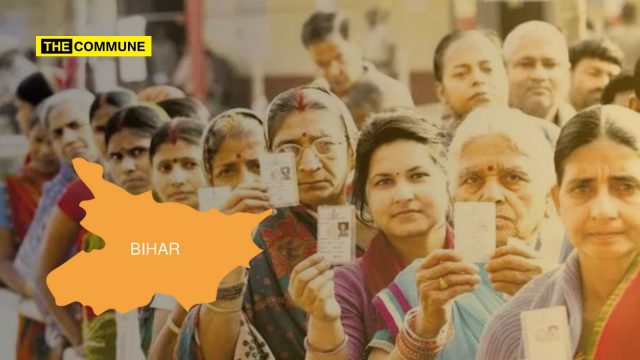
Almost 99.8 per cent of Bihar electors have been covered so far under the Special Intensive Revision (SIR) of electoral rolls, an ECI official said on Friday.

“Forms of 7.23 crore electors have been received and digitised, and names of all these electors will be included in the Draft Electoral Roll. The digitisation of forms, along with BLO reports, of the remaining electors will also be completed by August 1,” said the official.

The Election Commission of India, in a statement, said the lists of those electors who have not filled the enumeration forms or are deceased and those who have permanently migrated have already been shared on July 20 with all 12 political parties – which have collectively nominated 1,60,813 BLAs – so that errors, if any, can be rectified in the Draft Electoral Roll to be published on August 1.

The parties which have been given the lists of electors who have not filled the forms or are deceased and those who have permanently migrated, include the Congress, which has nominated 17,549 booth-level agents (BLAs) and the Rashtriya Janata Dal with 47,506 BLAs. The other parties which have been given the lists include are: Bahujan Samaj Party; Bharatiya Janata Party; Communist Party of India (Marxist); Janata Dal (United); Rashtriya Lok Samta Party; Communist Party of India (Marxist–Leninist) (Liberation); Rashtriya Lok Janshakti Party; Lok Janshakti Party (Ram Vilas); National People’s Party and Aam Aadmi Party. Sharing details of BLAs of some parties, the ECI said the BJP has nominated 53,338, Janata Dal (United) 36,550, Rashtriya Lok Samta Party 270, Rashtriya Lok Janshakti Party 1,913 and Lok Janshakti Party (Ram Vilas) 1,210.

Since June 24, the local BLOs/BLAs have reported the following: Names of approximately 22 lakh deceased electors; approximately 7 lakh electors registered in more than one location; approximately 35 lakh electors have either permanently migrated or could not be traced, and enumeration forms of approximately 1.2 lakh electors are yet to be received, said the ECI. As per the SIR order, from August 1 to September 1, any elector or political party may fill the prescribed forms and submit claims to the Electoral Registration Officer (ERO) for any eligible elector who is left out or file objections for removal of any ineligible elector, it said.

–IANS

Subscribe to our channels on TelegramWhatsApp, and Instagram and get the best stories of the day delivered to you personally.

The Grit Of Indian Soldiers In Kargil

Twenty-six years ago, a bold infiltration in the Kargil region jolted the nation, as armed intruders crossed the border and occupied key high-altitude positions on India’s side of the Line of Control (LoC) in Jammu and Kashmir.

Initially believed to be militants, the infiltrators were later confirmed to be part of a carefully planned covert military offensive—Operation Badr—conducted by the Pakistan Army.

The objective was to secure a strategic advantage in the Kashmir region, sever India’s vital link to Siachen by cutting off Indian troops, compel their withdrawal, and ultimately facilitate the occupation of all of Kashmir.

This incursion came just months after India and Pakistan had signed the historic Lahore Declaration, a bilateral agreement aimed at reducing tensions and resolving disputes through peaceful means and mutual respect for territorial sovereignty.

The summer of 1999 thus marked Pakistan’s breach of this landmark accord and India’s decisive countermeasure through the launch of Operation Vijay. The Kargil War of 1999 marked the first conventional conflict between two nuclear-armed states.

What distinguishes this war is its conduct at extreme altitudes, spanning a 170-kilometre stretch of the Himalayan frontier, where Indian troops contended not only with hostile forces but also with harsh environmental conditions.

Operating in low-oxygen environments, Indian soldiers ascended steep, icy cliffs—ranging between 8,000 and 18,000 feet—under relentless enemy fire to dislodge opposing forces and reclaim Indian territory.

This conflict was, therefore, not merely a battle against a hostile adversary, well-entrenched in fortified bunkers with weapons poised, but also a confrontation with the unforgiving forces of nature.

Despite the tactical advantage held by the enemy, Indian soldiers exhibited extraordinary perseverance, selflessness, and determination, rendering this military triumph, one of the most revered in the nation’s history.

Victory in war is not solely determined by advanced weaponry, and the Kargil conflict serves as a definitive example. Indian troops, in fact, were not equipped with adequate mountaineering gear necessary for scaling the steep, frozen inclines.

Despite these material shortcomings, they demonstrated the capacity to improvise, adapt, and overcome the obstacles before them, owing to their rigorous training in high-altitude warfare.

Yet, the decisive factor in securing this victory was the spirit of camaraderie, which uplifted morale and inspired Indian soldiers to confront the entrenched enemy positions.

This hard-won triumph still resonates through the words “Yeh Dil Maange More,” radioed by Captain Vikram Batra of the 13 J&K Rifles following the re-capture of Point 5140, the highest peak of Tololing.

Captain Batra and his men then advanced to reclaim Point 4875 in the Mushkoh Valley, significantly shifting the momentum in India’s favour. It was here that the young officer laid down his life while attempting to save a fellow soldier from enemy fire.

Beyond strategic prowess, Captain Batra embodied exceptional courage and leadership at merely 24 years of age, for which he was posthumously awarded the Param Vir Chakra, the nation’s highest military honour.

Grenadier Yogendra Singh Yadav of the Ghatak platoon was merely 19 years old when he sustained at least 15 gunshot wounds from enemy fire while ascending the cliff face during the assault on Tiger Hill.

Despite his severe injuries, Yadav continued to advance as the unit’s sole survivor, ultimately destroying enemy bunkers with grenades and engaging in close-quarter combat to eliminate opposing soldiers, thereby clearing the path for his platoon to reclaim the strategic heights.

As the youngest recipient of the Param Vir Chakra, Yogendra Singh Yadav recounts his extraordinary feat of courage with profound humility. Others, such as Major Rajesh Singh Adhikari (18 Grenadiers), Major Vivek Gupta (2 Rajputana Rifles), and Naik Digendra Kumar (2 Rajputana Rifles), led their men along the Tololing Ridge, targeting enemy bunkers, eliminating adversaries, and facilitating troop advancement—often at the cost of their own lives.

These narratives, among many others, depict valiant soldiers shielding comrades from constant enemy assault, neutralising enemy positions before succumbing to fatal injuries, and enabling the Indian Army to reclaim national territory.

Their collective sacrifice and indomitable spirit define the unmatched heroism of Operation Vijay. The morale of the Indian Army received widespread public acclaim alongside robust institutional backing, standing in marked contrast to the approach adopted by its adversary.

Pakistan’s Operation Badr was reportedly conceived in secrecy by a select group of senior military generals, excluding the Nawaz Sharif-led civilian government from the planning process.

This not only compromised Pakistan’s democratic framework but also laid bare the entrenched influence of the country’s deep state. The covert nature of the operation and subsequent diplomatic isolation led to severe embarrassment for Pakistan’s civilian leadership, which initially denied the involvement of regular Pakistani troops in Kargil, portraying the infiltrators as ‘mujahideen’.

Even after confirmation of identities of deceased Pakistani soldiers, the government refused to claim their bodies, keeping their families uninformed.

It was Indian soldiers who performed the burials of many Pakistani troops with full military honours, accompanied by Muslim clerics conducting rites in accordance with Islamic customs. Notably, the body of Pakistani Captain Karnal Sher Khan was returned with a letter from Indian Brigadier M.P.S. Bajwa, commending Sher Khan’s courage and urging Pakistan to bestow military recognition.

Although belated, Captain Sher Khan was posthumously awarded Pakistan’s highest military decoration—the Nishan-e-Haider. Twenty-five years later, the Pakistan Army formally acknowledged its involvement in the Kargil conflict, with former Prime Minister Nawaz Sharif publicly conceding the strategic misjudgment.

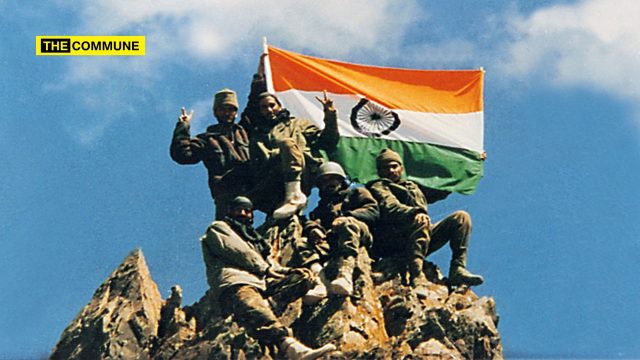
The Indian Army’s hoisting of the Tricolour atop Tiger Hill on July 4, 1999—overlooking National Highway 1D, the vital lifeline of Ladakh—following its recapture from Pakistani forces, endures as a powerful emblem of national sovereignty, safeguarded by the unwavering dedication of Indian soldiers.

It continues to stand as a profound symbol of territorial integrity, preserved through the courage and sacrifice of Indian troops. As the nation commemorates Kargil Vijay Diwas on July 26, it is a moment to honour those who laid down their lives in defence of every inch of our homeland, as well as those who continue to uphold the national flag with unwavering pride.

–IANS

Subscribe to our channels on TelegramWhatsApp, and Instagram and get the best stories of the day delivered to you personally.

Tahawwur Rana’s Kerala Visit: NIA Set To Probe Deeper Lashkar, Al Qaeda Links Beyond Mumbai 26/11

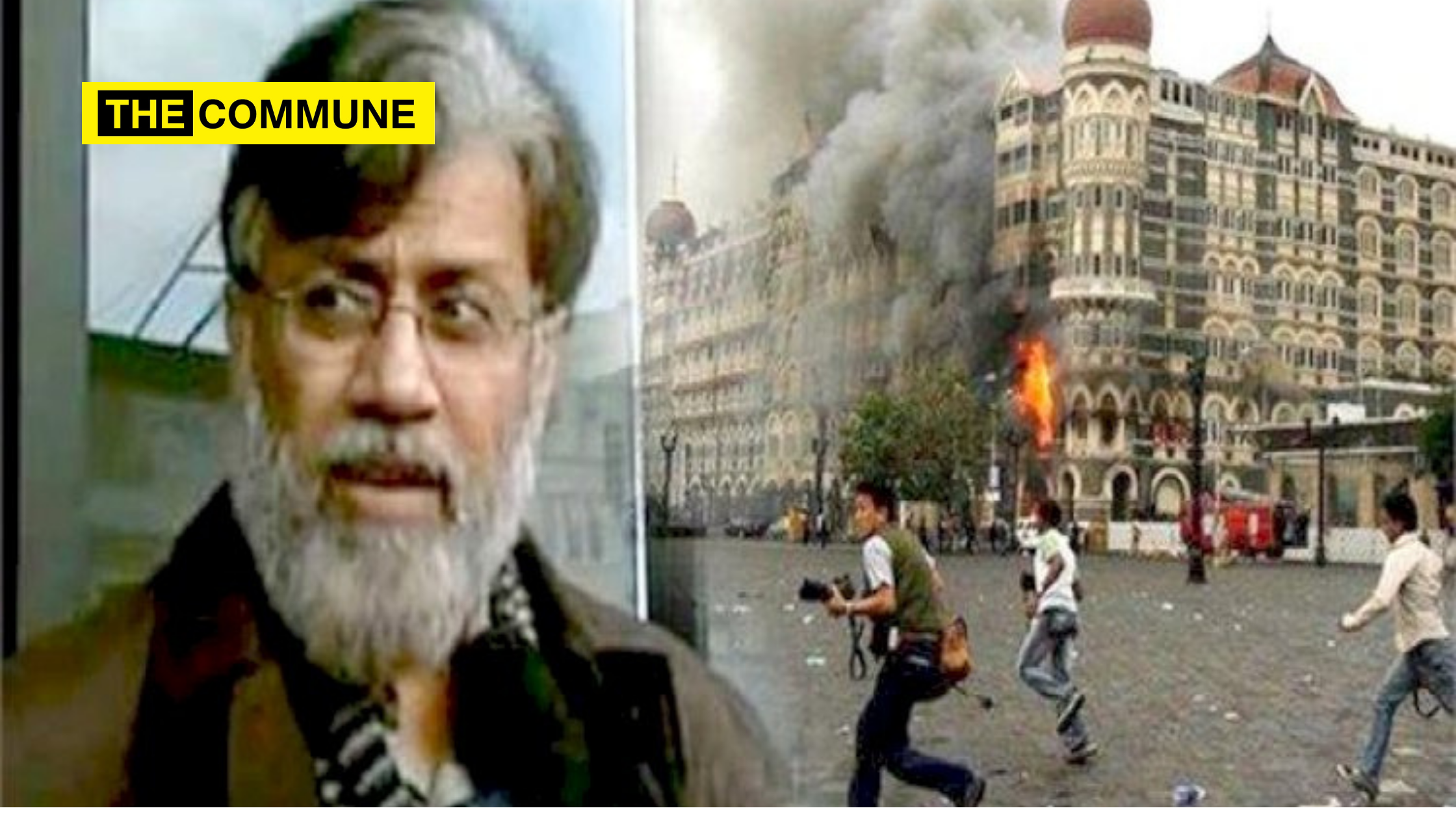
Tahawwur Rana’s admission that he was present in Mumbai during the 26/11 attacks is just the tip of the iceberg.

In a recent admission, he told the Mumbai Crime Branch that he was in Mumbai to oversee the attack.

While the Mumbai Crime Branch is focusing mainly on Rana’s visits to the city, the National Investigation Agency (NIA) will go beyond the 26/11 attack. The NIA had unearthed that Rana had not just visited Mumbai, but other places in the country as well.

One of the key visits by Rana is the one he made to Kerala. Investigations suggest that this visit was made at the behest of Ilyas Kashmiri, the then-head of Al Qaeda’s 313 Brigade.

Both Rana and his accomplice, David Headley, had a series of meetings with Kashmiri, during which the expansion plans for Jammu and Kashmir were discussed.

Preliminary investigations have revealed that Rana had visited Kerala on November 16, 2008, just ten days before the Mumbai attacks. He had told his interrogators that there was no specific reason for his visit to Kochi.

However, further investigations revealed that during his Kerala visit, he had called around 15 different numbers. There is no clarity as yet as to who Rana had called in Kerala, and the NIA is looking for answers.

The probe is currently focused on the Mumbai attacks, and once the agencies are done with that, they will move on to the other aspects regarding Rana’s trips in India.

Based on the conversations that Headley had with Kashmiri, the agencies suspect that they were planning on recruiting from Kerala. The bigger plan was to reduce the number of Pakistani terrorists in Kashmir and recruit more from within the country. Terrorists fighting in Kashmir are mainly recruited from either J&K or Pakistan.

However, in 2008, there was a surprising development in Jammu and Kashmir, when in an encounter, four persons from Kerala were gunned down.

The police said that those who were killed were Fayiz from Kannur, Abdul Rahim and Abdul Jabbar from Malappuram, and Yasin from Ernakulam. The probe found that all of them had been recruited and trained by the Lashkar-e-Taiba.

During the various conversations between Headley and Kashmir, Kerala finds a mention several times. Kashmiri at that time was planning his ambitious Ghazwa-e-Hind project, and to make that a success, he wanted to recruit from across India.

He made a specific mention about Kerala since there was already a recruitment camp and massive network in northern Kerala, which was actively sending youth to Kashmir.

The investigators suspect that Rana’s visit to the state may have been part of this larger plan. Hence, to get details about the 15 calls he made while in the state is very crucial for the investigation and also to unveil the larger agenda of the Lashkar-e-Taiba.

The ISI has always wanted the J&K battle to be a localised one, and hence, recruiting from within India suited the spy agency. It wants to convey the picture that it is the Indians themselves who feel that J&K should not be part of India. Further, having Indians on the battlefield against their own forces also gives Pakistan the deniability factor.

The Kerala-Kashmir link has been probed in the past. While the smaller details have come out, the larger picture is yet to emerge. When the NIA questioned Headley, he mostly spoke about the Mumbai 26/11 attacks and the Pakistan link to it.

He only divulged details that he had already given to the FBI following his arrest. Under the plea bargain deal he had entered into, he was required to reveal only what he had told the FBI.

However, in the case of Rana, there is no such deal in place. Hence, the NIA could dig beyond the Mumbai attacks. It would be crucial for the NIA to get more details about the Kerala module from Rana, since it would help uncover the larger network which was being controlled by Ilyas Kashmiri at the behest of the ISI.

–IANS

Subscribe to our channels on TelegramWhatsApp, and Instagram and get the best stories of the day delivered to you personally.

No Single Napoleon Or Manekshaw Will Suffice, We Need 100s Of Them: CDS Anil Chauhan On Evolving Warfare

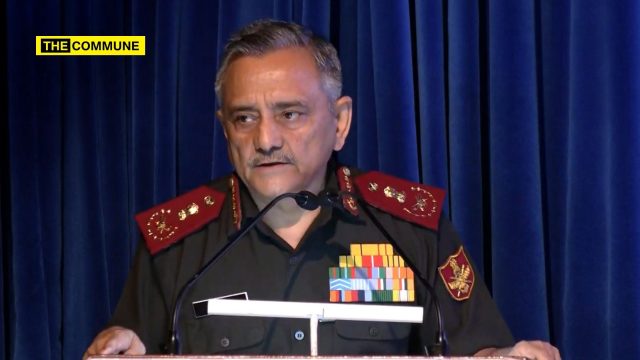
Chief of Defence Staff (CDS) General Anil Chauhan on Friday emphasised that the nature of modern warfare is rapidly transforming, asserting that India’s military preparedness must remain at peak levels “24/7, 365 days,” especially against the backdrop of the continuing ‘Operation Sindoor’.

In his address at a strategic affairs conclave in the national capital, General Chauhan underlined the evolving contours of conflict, stating that the world is on the verge of a “third military revolution”.

“This new form of warfare merges kinetic and non-kinetic means, blending the characteristics of first- and second-generation warfare with emerging third-generation techniques,” he noted.

“It is a convergence of tactical, operational and strategic domains.” Referring to India’s counter-terror operations under ‘Operation Sindoor’, the CDS said that while traditional combat strength remains critical, future battlefields will require a different breed of soldiers — “information warriors, technology warriors, and scholar warriors”.

“In the wars of the future, you won’t just need one Napoleon or one Field Marshal Manekshaw. You’ll need hundreds of them — across disciplines,” General Chauhan said, calling for a democratisation of military genius and innovation.

“That genius should reside in all of us,” he added, encouraging the younger generation to embrace multidimensional warfare. The CDS’s remarks come at a time when India continues to battle a proxy war aided and abetted by Pakistan.

Operation Sindoor, a massive counter-offensive launched in response to the barbaric Pahalgam attack in which Pakistan-sponsored terrorists gunned down 26 innocent people, mostly tourists, “remains active”, the CDS noted. General Chauhan’s vision signals a decisive shift in India’s defence doctrine — one that looks beyond boots on the ground to minds on mission.

As India modernises its armed forces, the focus is now clearly on synergy between battlefield grit and digital intellect — a necessity in the age of hybrid warfare. The call for “hundreds of Napoleons and Manekshaws” is not just metaphorical — it reflects the scale and complexity of threats India faces and the kind of leadership and innovation required to counter them.

–IANS

Subscribe to our channels on TelegramWhatsApp, and Instagram and get the best stories of the day delivered to you personally.

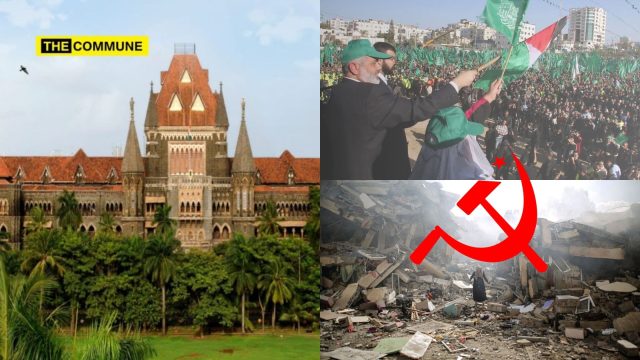
“Be Patriots. Look At Your Own Country, You Are Short-Sighted”: Bombay High Court Tells CPI-M To Protest Garbage, Not Gaza; Denies Permission For Protest

The Bombay High Court on 25 July 2025 dismissed a petition filed by the Communist Party of India (Marxist) (CPIM) challenging the Mumbai Police’s refusal to permit a protest at Azad Maidan against the ongoing conflict in Gaza, urging the party to turn its attention to domestic issues instead.

A division bench of Justices Ravindra Ghuge and Gautam Ankhad rejected the petition, remarking that instead of protesting about events “thousands of miles away,” the party should address problems closer to home.

“Our country has enough issues. We don’t want anything like this. I am sorry to say, you are all short-sighted. You are looking at issues in Gaza and Palestine. Look at your own country. Be patriots. This is not patriotism. People say they are patriots,” the Bench observed during the hearing.

The judges further suggested that the party focus on civic concerns such as waste management, pollution, sewerage, and flooding in Mumbai, noting that such issues directly impact the daily lives of citizens.

“You are an organisation registered in India. If you could take up issues like garbage dumping, pollution, sewerage, flooding. We are just giving examples. You are not protesting on those but on something happening thousands of miles outside the country,” the Bench stated.

The petition stemmed from a June 17 decision by Mumbai Police denying permission to the All India Solidarity Organisation to hold a protest against the alleged genocide in Gaza. The application was rejected on grounds that the demonstration could disrupt public order and run counter to India’s foreign policy stance.

Senior Advocate Mihir Desai, appearing for CPI(M), argued that the right to protest is constitutionally protected, even if the demonstration opposes the government’s foreign policy. He also cited previous Supreme Court rulings affirming citizens’ right to assemble peacefully at designated public venues.

However, the State, represented by the Additional Public Prosecutor, contended that the police had received objections and were concerned about potential law and order issues arising from the event.

In its ruling, the Court held that the CPI(M) lacked the locus standi to file the petition since it was not the original applicant before the Mumbai Police.

The Bench also issued a caution about the diplomatic repercussions of such demonstrations, particularly when they pertain to international conflicts.

“You don’t know the dust it could kick up… getting on to the Palestine side or the Israel side. Why do you want to do this? It’s obvious, going by the party you represent, that you don’t understand what this could do to the foreign affairs of the country,” the Court said.

The petition was accordingly dismissed.

(With inputs from Bar and Bench)

Subscribe to our channels on Telegram, WhatsApp, and Instagram and get the best stories of the day delivered to you personally.

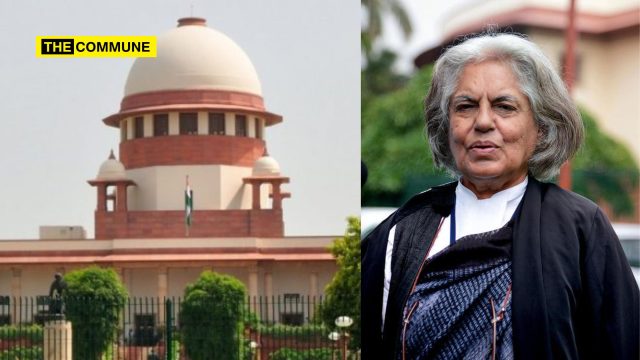
‘Sexual Autonomy Is Human Dignity’: Senior Advocate Indira Jaising Urges Supreme Court To Lower Age Of Consent To 16

indira jaising supreme court

Senior advocate and amicus curiae Indira Jaising has urged the Supreme Court to reconsider the statutory age of consent in India, advocating for it to be lowered from 18 to 16 years. Her recommendation came in the form of written submissions in the ongoing matter of Nipun Saxena v. Union of India, where she is assisting the court.

Jaising argued that the current legal provisions particularly the Protection of Children from Sexual Offences Act (POCSO), 2012, and Section 375 of the Indian Penal Code unfairly criminalize consensual sexual activity between teenagers aged 16 to 18. According to her, this blanket criminalization infringes on the constitutional rights of adolescents and fails to distinguish between consensual and coercive acts.

She emphasized that equating consensual adolescent relationships with abuse undermines the evolving autonomy and maturity of young people. Highlighting that the age of consent was fixed at 16 for over seven decades before being raised to 18 by the 2013 Criminal Law (Amendment) Act, Jaising pointed out that this change occurred without substantive debate and went against the recommendations of the Justice Verma Committee, which had advised retaining the age at 16.

Her submission also cited biological and social studies showing that adolescents today experience puberty earlier and are capable of forming informed romantic and sexual relationships. Referencing data from the National Family Health Survey, she noted that sexual activity among teens is not rare.

Jaising raised concern over a sharp rise 180% between 2017 and 2021 in POCSO cases involving teenagers between 16 and 18. She observed that a significant number of these complaints were filed by parents disapproving of their children’s inter-caste or interfaith relationships, often against the wishes of the girls themselves. Such legal actions, she warned, push adolescents into hiding, forced marriages, or unnecessary legal entanglements instead of promoting healthy, informed conversations.

To remedy this, Jaising proposed a “close-in-age” exception, which would prevent criminal charges under POCSO and IPC when both parties involved are between 16 and 18 and the relationship is consensual. She described the existing framework as arbitrary and detrimental to the best interests of children, urging the court to recognize that consensual sexual activity between adolescents in this age group should not be treated as abuse.

Drawing from international and Indian legal precedents, including the Gillick competence principle in the UK and India’s landmark Puttaswamy ruling on privacy, Jaising underscored that the right to personal autonomy includes the ability to make informed decisions about one’s own body an entitlement that should also apply to adolescents.

She also pointed to observations made by various High Courts, including Bombay, Madras, and Meghalaya, where judges have criticized the automatic prosecution of teenage boys under POCSO. These courts, she said, have called for distinguishing genuine abuse from mutually consensual acts.

In her conclusion, Jaising requested that the Supreme Court declare that consensual relationships between adolescents aged 16 to 18 should not fall under the scope of sexual abuse laws. She also advocated for reviewing Section 19 of POCSO, which mandates reporting such acts arguing that it deters young people from accessing medical assistance or counseling.

“Sexual autonomy is an essential part of human dignity,” she asserted, adding that denying adolescents the freedom to make informed choices about their bodies violates fundamental rights under Articles 14, 15, 19, and 21 of the Constitution.

(With inputs from The Hindu)

Subscribe to our channels on TelegramWhatsApp, and Instagram and get the best stories of the day delivered to you personally.

TN BJP Seeks Probe Into Mysterious Death Of Canadian Priest At Loyola College, Chennai

loyola college father chennai death bjp tn

Tamil Nadu BJP State Media Spokesperson A.N.S. Prasad has called for a thorough and transparent investigation into the mysterious death of a Canadian priest at Loyola College in Chennai.

In a press statement released on 24 July 2025, Prasad expressed shock over the passing of 55-year-old Father Omala, a Canadian national who had been serving at the church located within the Loyola College campus in Nungambakkam. “Reports indicate that the priest died under mysterious circumstances a few days ago,” Prasad stated, urging authorities to conduct a fair and detailed probe.

The priest’s family members, who traveled from Canada after receiving news of his death, have reportedly raised concerns and suspicions about the circumstances surrounding the incident. Following their arrival, a post-mortem examination was conducted at the Government Kilpauk Medical College and Hospital.

No official statement has yet been issued by Loyola College or the Chennai police. However, BJP leaders have demanded that the findings of the post-mortem and any subsequent investigation be made public to ensure accountability and transparency in the case.

(With inputs from DTNext)

Subscribe to our channels on Telegram, WhatsApp, and Instagram and get the best stories of the day delivered to you personally.
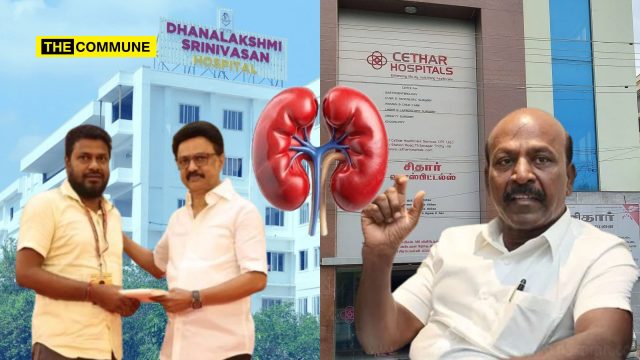
“Not Theft, It Is Malpractice, Problem Existed In 2019”, Says DMK Health Min Ma Subramanian On TN Kidney Trafficking Scandal; Blames AIADMK, Ignores Own Party’s Role

kidney trafficking ma subramanian dmk

DMK Health Minister Ma Subramanian has denied that the ongoing kidney trafficking controversy involves actual theft, instead referring to the issue as “irregularities.” In a recent press briefing, he shifted the blame onto the previous AIADMK government, claiming the alleged organ racket has been active since 2019 and was already noted in an earlier CSR. He assured that the Health Department is actively investigating the matter.

Speaking to media, Health Minister Ma Subramanian said, “He said they’re stealing human organs. To go deeper into this, we first need to understand the difference between theft and malpractice. Theft is when someone unknowingly takes a person, puts them to sleep, and removes their kidney or liver without their knowledge. This is malpractice, and it’s not new. It happened in Namakkal in 2019. In 2019, Edappadi Palaniswami himself was the Chief Minister. At that time, a police officer took action and even filed a CSR in 2019. The police officer in 2019 had instructed action to be taken, but they failed to do so. Following that, based on reports we received from newspapers and media, our departmental officials and joint directors investigated and found that wrongdoing had occurred. We gave them two weeks, led by the Project Director, to investigate and submit a report. Within the first week, a preliminary report confirmed that something wrong had happened, so we immediately suspended two hospitals. Once the full report comes in after these two weeks, we will take all necessary departmental and police actions against everyone involved.”

Responding to DMK Health Minister Ma Subramanian’s remarks, former Tamil Nadu BJP president K. Annamalai criticized him sharply through his official X handle, stating, “What happened to the power loom workers in Namakkal was ‘not kidney theft, but malpractice,’ says Tamil Nadu’s Health Minister, Mr. Ma Subramanian. Do you call it ‘malpractice’ to take advantage of someone’s poverty and steal their body parts? Aren’t you ashamed to say this? All right, then why hasn’t Dravida Anandan, the DMK functionary who acted as a middleman in this so-called malpractice, been arrested to this day? Is it enough to take some eyewash action against the hospital run by the DMK’s Manachanallur MLA, who is connected to this kidney theft? Is this the hallmark of your governance?”

His remarks come amid mounting outrage over a burgeoning kidney trafficking network allegedly linked to Dhanalakshmi Srinivasan Hospital a well-known private healthcare provider in Tamil Nadu. The hospital is under scrutiny for reportedly conducting illegal kidney transplants using organs trafficked from economically vulnerable women. The scandal has further intensified due to the hospital’s political affiliations, particularly with DMK MLA Kathiravan, the son of the hospital group’s founder, leading to accusations of political shielding and interference in regulatory oversight.

In response to these serious allegations, the Tamil Nadu Health Department has suspended kidney transplant permissions for both Dhanalakshmi Srinivasan Medical College and Hospital in Perambalur and Cethar Hospital in Trichy. The suspension was ordered by the Directorate of Medical and Rural Health Services (DMS) under Section 16(2) of the Transplantation of Human Organs Act, 1994, citing urgent public interest following a preliminary probe.

The probe was led by Dr. S. Vineeth, Project Director of the Tamil Nadu Health Systems Project, along with senior medical officers and police officials. The investigation was initiated after reports emerged about the illegal sale of kidneys from women in Pallipalayam and Kumarapalayam in Namakkal district. Field inspections and interviews were conducted in both the implicated hospitals and surrounding areas, culminating in a preliminary report that triggered the suspension orders.

The scandal, which has captured national attention, centers on the exploitation of more than 90 impoverished women, many of whom are daily wage workers. Investigators allege that these women were promised between ₹5 to ₹10 lakh in exchange for their kidneys. The traffickers allegedly used counterfeit Aadhaar cards and fabricated medical documents to facilitate the transplants. In some instances, the women were coerced under financial distress and social pressure into undergoing surgery.

The illicit operations were reportedly carried out at Dhanalakshmi Srinivasan Hospital in Perambalur and Cethar Hospital in Trichy. At the heart of the racket is M. Anandan, a 52-year-old DMK functionary from Anampalayam Perur, known locally as “Dravida Anandan.” He is accused of serving as a middleman, arranging deals, transporting donors, and forging official documents, seals, and even wearing fake government uniforms to aid the operation. Anandan is currently absconding. Authorities recovered forged documents, fake IDs, and official attire during a raid on his home.

Dr. Veeramani, the medical officer at the Pallipalayam Government Hospital, has lodged a formal complaint against Anandan, helping to expose the network.

This scandal has reignited concerns over political interference and selective enforcement. MLA Kathiravan, who represents Mannachanallur, is the son of the founder of the Dhanalakshmi Srinivasan Group, which owns the Perambalur hospital implicated in the case. The group has previously been accused of avoiding accountability in cases of medical negligence, particularly during the COVID-19 crisis. There are also claims that political influence was used to stall the long-promised government medical college in Perambalur, which would have competed with the private hospital chain. Furthermore, so-called free health camps held in Kathiravan’s constituency are now under suspicion, with some fearing they may have served as a front for identifying vulnerable kidney donors.

Despite facing multiple complaints over inadequate care, unsupervised medical interns, and even preventable deaths, the hospital has largely operated without serious regulatory consequences. This has led to widespread allegations of systemic impunity and a failure of oversight mechanisms.

Subscribe to our channels on TelegramWhatsApp, and Instagram and get the best stories of the day delivered to you personally.