Home Blog Page 197

Congress Ally VCK MP Thirumavalavan Peddles Hate Against Brahmins, Goes On A Tirade Against Hinduism Amid SC Youth Honour Killing Case
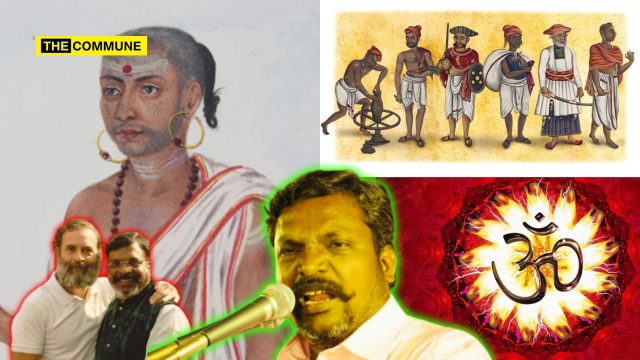
The murder of 27-year-old IT employee Kavin in a case of “honour killing” has shook the state of Tamil Nadu with citizens across the state calling out the Dravidian model which claims to have “eradicated caste.”

However, politicians have a separate tune to play – the caste system, Hinduism, and ultimately Brahmins – blame all these for every social evil one comes across every day. In line with this, VCK leader and MP Thol. Thirumavalavan, speaking at a protest gathering in Tirunelveli, launched a scathing attack on Hindu religious traditions, Sanatana Dharma, and the Brahmin community, linking them directly to the caste system and the social violence surrounding inter-caste relationships.

During his nearly hour-long address, Thirumavalavan made a series of allegations and inflammatory claims, particularly accusing Hindu society of institutionalizing caste violence and asserting that Sanatana Dharma itself justifies ‘honour killings’.

“The basic principle of Sanatana Dharma is that marriage between castes is a great crime. If someone falls in love, they should be brutally killed, this is a punishment practice that continues only in this society, in Hindu society.” he said, accusing Hinduism of promoting a code that prohibits bloodline mixing and upholds rigid caste endogamy.

He described the varna system in detail, accusing it of rigidly preserving caste boundaries. Blaming the caste system, he said, “There should be no mixing of castes. There should be no mixing of blood. This is an internal system. In English, they say endogamous. It is necessary to marry within the same caste again and again, no matter how many generations, but there should be no marriage between castes. This is not only against SC people. It is not only against the fact that a woman or a man from a Scheduled Caste should not be loved and married. In other communities other than the Scheduled Caste, they are called OBC or Shudras according to Varanashrama Dharma. Vaishyas, Kshatriyas, Brahmins should not marry alternately within these four years. Kshatriyas should not marry Vaishyas. Vaishyas should not marry Shudras. Shudras, Vaishyas and Kshatriyas should not fall in love with Brahmins and marry them. Brahmin varna should marry within the Brahmin community and only within the Brahmin community, looking at the Kulam Gotra.”

Furthering his accusation on endogamy, he said, “Sanatana Dharma is that which says that one caste should not mix with another caste, within this BC itself. It is the Sanatana Dharma that has been followed and adhered to for ages that prevents people marrying within these communities – BC/MBC. BC, MBC, SC, ST are all names created by the government for administrative convenience. That is all. It is not the name of a caste. It is the name of a list. Within the MBC, there are several hundred castes, that is a list. There are many castes in the BC. That is a big list.”

Singling out the Brahmins, he said, “As far as the Brahmins are concerned, only the Brahmins are the higher caste and everyone else is the lower caste. This is their view. Everyone is Shudra, they say. You need to understand another subtle message. Even among the Brahmins, Brahmin women are lower caste women, 100 percent Brahmin community women are Sudra caste, if you ask where all this is mentioned, it is in Manu Dharma, that is Manusmriti. There was a person named Manu. He created a set of laws that is the basic law of Hindu Dharma. The kings of that time accepted all that and implemented it as it is.”

Attacking the kings of the past, he said, “The brave warriors we talk about – Pandya kings, Chola kings, Chera kings. At one time, they all submitted to the Brahmins, believing that the mantras he says are the Vedas, the Vedas he recites are the only ones we live by, and they did whatever they told them to do. They threw away the Tamil that was inside the garbagruha and brought Sanskrit. It was the kings who did it. They had separate living quarters, they separated the Brahmins and gave them protection. They gave them everything, including cattle and land. They even gave entire villages, all those villages that end with the name “Mangalam” were those that were given to Brahmins. It was in the caste system created by those kings, that those who marry out of caste they will be murdered.”

Highlighting supposed historical atrocities, he recounted false stories such as those of Sambhuka, Ekalavya etc. He said, “They cut and killed Sambuka because he was doing penance. You are a Shudra – how can you do penance? There is a story in the Ramayana about Rama going and killing Sambuka.” “Ekalavya’s thumb was cut off because he dared to learn archery. These stories are from Ramayana and Mahabharata… Stories based on Sanatana Dharma. The life and breath principle of that Sanatana Dharma is that if you marry outside the caste, you should kill both of them and do not leave anyone alive.”

At this point he narrated how the 27-year-old Kavin was murdered in the name of caste, seemingly to connect both Hinduism and caste honour killing. He further said, “This situation of not marrying within caste and within caste did not arise yesterday. It has been there for a long time. It is there all over India.”

He also portrayed child marriage and widowhood restrictions as products of Hindu tradition. He said, “In the northern states, the custom of Sati came, which is much worse, we do not have it in Tamil Nadu, not in the southern states. If a man dies, the wife is put on the funeral pyre and burned alive. The custom of burning her alive is Sati. If she is alive after the death of her husband, she will become a bad person. This is a betrayal of her husband. Therefore, if the husband is dead, immediately after his death, she will put her on a pyre and burnt alive and worshipped. The custom of building a temple for her is a barbarity in the northern states. It lasted until the 20th century, maybe even more. It has not come to an end. It is Sanatana Dharma that says that one should not marry after the death of a husband and remain a widow. One should wear a white dress. One should not put flowers. One should not put a pottu. It is not allowed. One should not stand in public. One should not participate in any ceremonies. This is cruelty.”

He further alleged, “Manu Dharma calls marrying out of caste a crime, it promotes child marriage, it asks women to perform Sati, it prevents widow remarriage. The constitution was created with the power to destroy all that. But it allows that there is no crime if you marry outside a caste. However, you cannot call out the Agamana system as a crime. Some people are not entering temples today, not even government-run temples, some SC villages are not able to see the temple chariot pass by their village, so what is in place here, Manu Dharma as Sanatana Dharma and not Indian constitution.”

He further said, “Marrying out of caste is legally approved, it is not a crime, but Manu Dharma calls it a crime and honour killings take place based on that. So what is in place here is Sanatana Dharma and not the Indian constitution.”

Thirumavalavan praised Ambedkar as a revolutionary who replaced “terrible” Brahminical laws with the Indian Constitution. He asserted that while the Constitution criminalized caste discrimination in theory, “Sanatana Dharma is still in practice here.”

Despite acknowledging figures like Mahatma Phule and Ambedkar, he dismissed Hinduism’s capacity for reform, “The revolutionary Ambedkar, who stood alone and destroyed such reactionary traditional conservatisms that had been rooted in this land for thousands of years.”

He also said, “Sanatana politics should be dismantled all over India. Only then can we stop all these honour killings.”

Subscribe to our channels on TelegramWhatsApp, and Instagram and get the best stories of the day delivered to you personally.

One More Waqf Land Grab Comes To Light In Tamil Nadu, Villagers Protest Against Land Being Claimed As Waqf Property Near Virudhachalam

waqf protest mangalampet

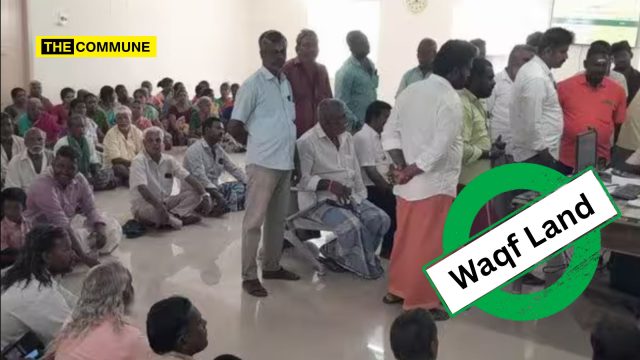
Tensions flared at the Mangalampettai (Mangalampet) sub-registrar’s office when a group of villagers protested, alleging that local land had been wrongly claimed as Waqf property and refusing to allow its registration.

The issue came to light when over a hundred residents from M. Akaram village, located near Mangalampet, in Virudhachalam assembled outside the sub-registrar’s office around 11:00 a.m. The protest, organized under the banner of the Hindu Munnani, was sparked by a land transaction involving Poomalai, son of M. Akaram resident Periyasamy, who attempted to register a land donation in his son Karthikeyan’s name. Officials refused to process the registration, citing the land as belonging to the Waqf Board.

In response, the villagers led by Hindu Munnani functionary Velmurugan, BJP union leader Paramasivam, and coordinator Kamalakannan demanded that the land be rightfully registered to the family. The group staged a sit-in protest at the office.

Authorities, including Mangalampet Inspector Parthasarathy and District Registrar Mahalakshmi, arrived at the scene to mediate. After discussions, the protest was called off and the crowd dispersed peacefully. The incident caused significant commotion in the area for a time.

Recent Instances Of Waqf Land Grabs

Kattukollai, Vellore

In April 2025, tensions flared in Kattukollai village of Tamil Nadu’s Vellore district after nearly 150 families received notices declaring their land as Waqf property, triggering protests and appeals to district authorities.

The notice, reportedly issued by an individual named Syed Ali Sultan Shah, claimed the land belonged to a local dargah and instructed villagers to either vacate the property or begin paying tax to the religious institution.

Thiruchendurai, Trichy

In September 2022, a rude shock awakened the villagers of Thiruchendurai in Thiruchirapalli District of Tamil Nadu. It had come to light that their entire hamlet which also consisted of a 1500-year-old Shiva temple had been declared as the property of the Waqf Board in Tamil Nadu.

Thiruparankundram, Madurai

Indian Union Muslim League member and Ramanathapuram MP Navas Kani, who also serves as the Tamil Nadu Waqf Board chairman, has claimed that the dargah at the Thirupparankundram Temple hill is Waqf property.

Peyazhwar Temple, Chennai

Tamil Nadu Waqf Board President Abdul Rahman announced that many Hindu temples are present on Waqf properties, including the 1000-years-old Peyazhwar Temple, on land allegedly owned by the Kutchery Road Mosque.

Balasamudram, Dindigul

In a striking parallel to the Thiruchendurai village land dispute, another property conflict involving the Tamil Nadu Waqf Board has come to light, this time in the Balasamudram Municipality of Dindigul district. With claims dating back to 2020, the Waqf Board asserts ownership over the entire municipality, leaving around 10,000 residents in limbo. Unable to sell their ancestral properties due to unresolved legalities, the community’s frustration culminated in a petition to local authorities in May 2023.

(With inputs from Dinamalar)

Subscribe to our channels on TelegramWhatsApp, and Instagram and get the best stories of the day delivered to you personally.

How Dravidianist Media Framed A DMK Councillor’s Grandson’s Murder Case As A Mere Hit-And-Run

In what can be called deteriorating journalistic values in a state that boasts of “Dravidian model”, the media which was referred to as “Redlight media” by DMK’s RS Bharathi, we come across yet another instance of the mainstream Dravidianist media in Tamil Nadu choosing to downplay or distort facts when cases involve prominent figures from the ruling DMK. Instead of transparent reporting, they reduce serious matters to neutral or vague news blurbs.

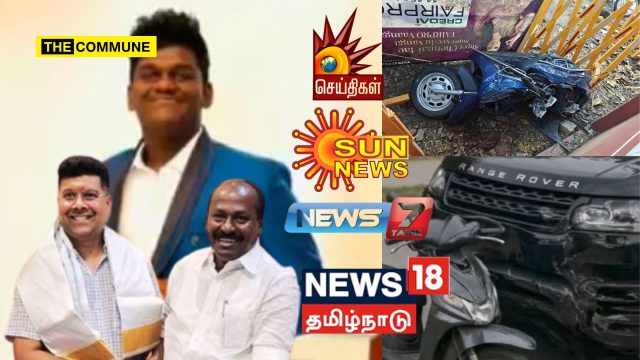
For example, the recent arrest of Chandru, the grandson of DMK member Dhanasekaran, who serves as a Corporation Councillor and chairman of a Corporation Standing Committee. Chandru was taken into custody for allegedly murdering one youth and injuring another by deliberately ramming into their motorcycle on School Road in Annanagar, Chennai. Despite the gravity of the case and the accused’s direct political connection, the Dravidianist media has conspicuously avoided mentioning any links to the DMK. This silence is not only telling it’s disturbing. The absence of critical coverage in mainstream media when it concerns the ruling party reflects a troubling erosion of journalistic accountability.

The Sun News, owned by the DMK first family often an unofficial mouthpiece, didn’t carry the story at all. Since the case entered public discourse on 30 July 2025, there have been no news cards or coverage on their platforms. Instead, they opted to spotlight another incident a case of honour killing elsewhere in the state shifting attention away from this politically sensitive crime.

Similarly, Kalaignar News, another outlet from the first family’s stable did the same by giving update only on the honour killing case for past three days.

Following suit, News18 Tamil Nadu, one of the top Dravidianist media channels, treated the news of the murder like a petty crime and omitted any reference to the accused’s political lineage. The post on X plainly stated, “They tried to attack us with stones; then, while driving the car at high speed, it collided with a bike, causing an accident, Chandru’s confession in the case involving the death of college student Nithin Sai, who was run over by a car. The only mention of the DMK functionary’s name appeared discreetly in the accompanying news card, not in the main content itself.

News 7 Tamil adopted the same approach, reporting the incident without acknowledging Chandru’s DMK connections.

This coordinated silence and soft-pedaling by the state’s major media houses is not just disappointing it’s a sign of how compromised and selective journalism has become in Tamil Nadu when power and politics intersect.

Who is DMK Functionary Dhanasekaran?

Dhanasekaran is a senior leader within the DMK in Chennai and currently serves as the Chairman of the Accounts Committee in the Greater Chennai Corporation. He holds a prominent position within the party’s top ranks.

He has been frequently seen alongside Tamil Nadu Health Minister Ma. Subramanian during advisory meetings in South Chennai.

He is also reportedly close to V. Sabareesan, a key behind-the-scenes strategist and the son-in-law of Chief Minister M.K. Stalin.

What Is The Case About?

Police in Thirumangalam, Chennai, have arrested three individuals, including the grandson of a DMK functionary, in connection with the murder of a young man and the injury of another after their motorcycle was struck by a speeding vehicle on School Road. According to initial investigations, the incident stemmed from a dispute related to a romantic relationship.

On 28 July night, 20-year-old S. Nithin Sai from Ayanavaram was killed when an SUV collided with the motorcycle, he was riding pillion near SBOA School in Anna Nagar. His friend Abishek, also 20, who was operating the motorcycle, sustained injuries in the crash.

Although the case was initially handled as a hit-and-run, police reclassified it as a murder after early findings suggested the collision was intentional. The investigation was transferred from the Thirumangalam traffic division to the Law-and-Order wing following a statement from the injured Abishek and a formal complaint filed by Nithin Sai’s father, Suresh.

Sources say Nithin Sai was a third-year college student in Mylapore. That evening, he had left home to attend a birthday celebration hosted by his friend Mohan at a nearby mall. A few juniors from his college, including a student named Venkatesh, were also present. During the gathering, Chandru, 22, reportedly called Venkatesh and verbally abused him for allegedly pursuing a girl he knew. Chandru then asked Venkatesh and his friends to meet him near SBOA School to resolve the issue.

Venkatesh and others, including Nithin, arrived on motorbikes. While most of them waited nearby, Venkatesh approached the car where Chandru and his group were seated. Chandru as mentioned above is the grandson of DMK leader Dhanasekaran, a Corporation Councillor and head of a Corporation Standing Committee. His mother is also affiliated with the DMK.

According to the First Information Report (FIR), Chandru and his associates allegedly threatened Venkatesh and claimed they intended to harm his group. They then hit one of the motorcycles, prompting Nithin and Abishek to flee the scene on their two-wheeler. The group allegedly gave chase and deliberately rammed into them, resulting in Nithin’s death and Abishek’s injury.

By 29 July night, Chandru and another accused, Haroon believed to be the driver turned themselves in at the Thirumangalam police station, accompanied by supporters. Authorities are still searching for two more individuals involved in the incident.

During questioning, Chandru claimed he had no intention of causing harm and denied driving the vehicle. Haroon, on the other hand, stated that he drove the car only to intimidate the group. All three arrested individuals were presented before a court on Wednesday evening.

(With inputs from The Hindu)

Subscribe to our channels on TelegramWhatsApp, and Instagram and get the best stories of the day delivered to you personally.

Self-Styled ‘Fact-Checker’ Mohammed Zubair Omits Maoist Background Of Man Who Shouted “Allahu Akbar” In Glasgow Flight To Peddle “Hindu Terrorist” Narrative

mohammed zubair fact-checker abhay devdas nayak maoist glasgow flight shouter

A 24-second video from a Luton-to-Glasgow flight showing a man yelling “Allahu Akbar”, “Death to America”, and “Death to Trump” before being subdued by co-passengers had gone viral on social media a few days ago. It was alleged that the man was a Pakistani Muslim attempting to bomb the plane. These posts received lakhs of views and were widely amplified.

However, these claims were promptly dismissed by self-styled fact-checkers like Alt News’s Mohammed Zubair, who stated that the man was not a Muslim or a Pakistani, but a Hindu of Indian origin named Abhay Devdas Nayak, a resident of Luton. According to their investigation, Nayak was arrested upon landing and was not charged with terrorism. Some reports also cited eyewitnesses claiming Nayak had shouted slogans to “send a message” to former U.S. President Donald Trump, who was visiting Scotland at the time.

But in his rush to debunk communal propaganda, fact-check Zubair omitted a critical piece of information: Abhay Devdas Nayak is no ordinary passenger. He is a long-time Maoist propagandist with a history of involvement in anti-state activities. Chhattisgarh Police had arrested him in 2018 for his role as a key player in the CPI (Maoist)’s propaganda wing.

According to police statements from that time, Nayak was part of the Maoist overground network and involved in distributing press releases and online propaganda for the banned group. He had travelled to more than 15 countries, including several with active rebel movements, and was reportedly part of the Coordination Committee of Maoist Parties and Organisations in South Asia (CCOMPOSA). His online pseudonym “Abhay” had been linked to Maoist literature and pamphlets found at blast sites in Bastar, including one IED incident in 2013.

Special DG (Anti-Naxal Operations) D M Awasthi stated during the 2018 investigation that Nayak was being tracked for years and had received international funding to spread Maoist ideology. While Nayak claimed to be a freelance journalist operating websites on finance and news, police recovered laptops and hard drives containing communication with known Maoist leaders like Gudsa Usendi and academic-activists arrested under the UAPA such as G N Saibaba and Rona Wilson.

Despite this well-documented Maoist history, Zubair seems to have deliberately failed to mention any of this background while asserting his innocence in the Glasgow flight incident. His portrayal of Nayak as a Hindu wantonly shouting Islamic phrases to point out that Hindus can also have “terror” intent, just to disprove Home Minister Amit Shah’s statement that No Hindu will ever be a terrorist.

Subscribe to our channels on Telegram, WhatsApp, and Instagram and get the best stories of the day delivered to you personally.
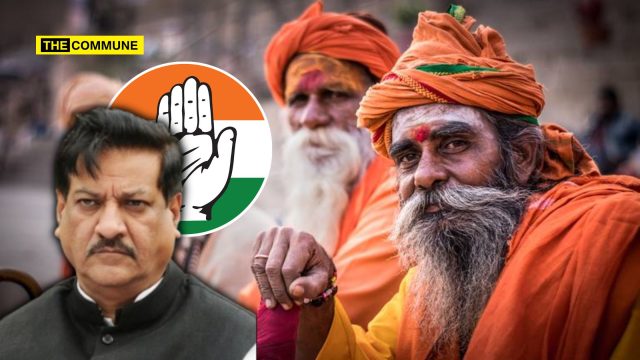
“Don’t Say Bhagwa Terror, Call It Hindu Terror Or Sanatani Terror”, Says Congress Leader Prithviraj Chavan

Senior Congress leader and former Maharashtra Chief Minister Prithviraj Chavan sparked controversy on Thursday, 31 July 2025, with remarks following the acquittal of all seven accused in the 2008 Malegaon blast case. Speaking to reporters, Chavan alleged that the investigation was deliberately weakened under the BJP-led central government and raised concerns about the handling of terrorism cases. He insisted that one must use the words ‘Hindu terror’ or ‘Sanatani terror ‘instead of ‘Bhagwa terror’.

“Someone definitely carried out the blast in Malegaon. I already knew this would be the outcome of the case because it was initiated during the UPA government, and later, the BJP came to power. The NIA weakened the case. Under whose leadership is the NIA working?” Chavan said.

He also questioned the absence of accountability for victims and survivors of terror attacks: “The government should tell us if those acquitted didn’t carry out the blast, then who did? The same thing happened in the train blast case. What answer will you give to the families of those who lost their lives?”

On the language often used in relation to such incidents, Chavan said: “Saffron (Bhagwa) is a sacred word for the 14 crore Maharashtrians. Saffron was the colour of Chhatrapati Shivaji Maharaj’s flag which was a symbol of freedom. The saffron colour was the colour of Sant Gnyaneshwar, the colour of our Warkaris, and the colour of Sant Tukaram. And this is much before independence of Bharat. What we call Maharashtra Dharam, the idea of the state comes from there. It is wrong to say saffron, political parties are using it and it is wrong. If you want to take the name of a religion, then you can say, Hindu terror or Hindu fundamentalist terror or Sanatani terror but don’t call it Bhagwa/saffron terror. Devendraji says a particular religion’s people are not terrorists. I want to humbly tell him, remind him that.”

A few days ago, Chavan accused the BJP of communalising national security by naming military operations after Hindu symbols, such as ‘Operation Mahadev’ and ‘Operation Sindoor’. He alleged the BJP was injecting religious fundamentalism into defence matters to polarise society along Hindu-Muslim lines. Chavan questioned the relevance of religious codenames and criticised Defence Minister Rajnath Singh’s speech on Operation Sindoor for lacking transparency. He also raised doubts about the government’s claim of killing over 100 terrorists and highlighted the lack of clarity on Indian fighter jet losses, suggesting the government was hiding key facts about the conflict with Pakistan.

The 2008 Malegaon blast occurred on September 29 in Maharashtra, killing six people and injuring over a hundred. The case, investigated initially under the UPA regime and later transferred to the National Investigation Agency (NIA), has remained a politically sensitive subject for over 17 years.

(With inputs from News18)

Subscribe to our channels on TelegramWhatsApp, and Instagram and get the best stories of the day delivered to you personally.
Parliament Set To Debate ST Seat Readjustment In Goa, Maritime Overhaul Bill

parliament shipping st goa bill discussion

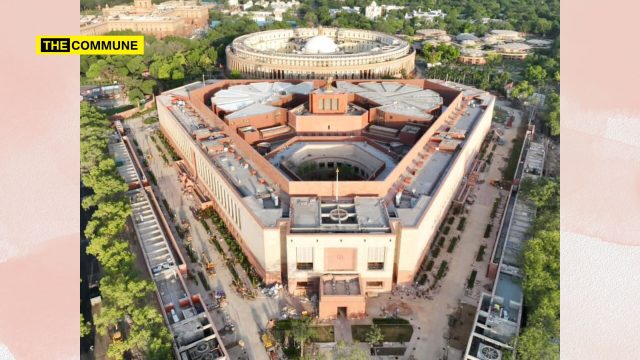
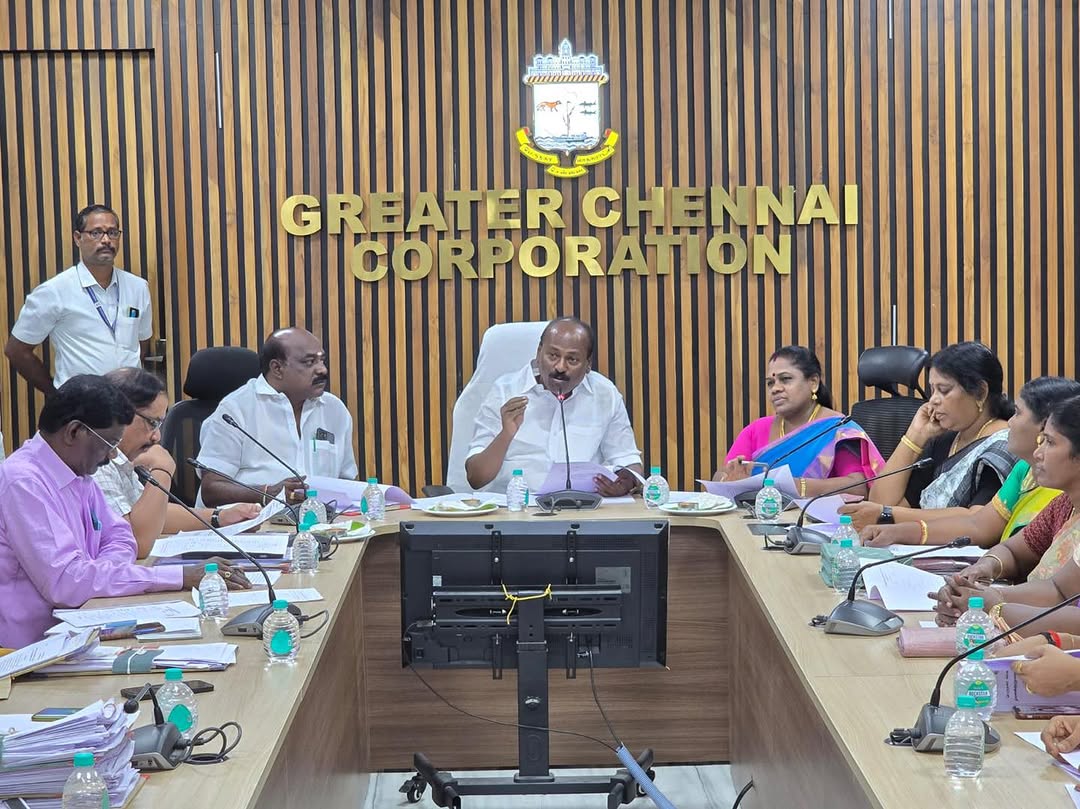
The Parliament has a list of important businesses for Friday, which includes The Readjustment of Representation of Scheduled Tribes in Assembly Constituencies of the State of Goa Bill, 2024, and ‘The Merchant Shipping Bill, 2024’.

According to the list of business in the Lok Sabha, the bills will be moved for passage. The House also has private members’ business. Minister Prataprao Jadhav will make a statement regarding the status of implementation of the recommendations contained in the 137th and 150th reports of the Standing Committee on Health and Family Welfare on Vaccine Development, Distribution Management and Mitigation of Pandemic Covid-19 pertaining to the Ministry of Health and Family Welfare.

The Lok Sabha will take up the ‘The Readjustment of Representation of Scheduled Tribes in Assembly Constituencies of the State of Goa Bill, 2024’ for further consideration. The bill was introduced by the Union Law Minister, Arjun Ram Meghwal, on 17 December 2024.

The bill aims to enable reservation of seats in accordance with Article 332 of the Constitution for effective democratic participation of members of Scheduled Tribes and to provide for the readjustment of seats in the Legislative Assembly of the State of Goa, in so far as such readjustment is necessitated by inclusion of certain communities in the list of the Scheduled Tribes in the State of Goa, according to the list of business in Lok Sabha.

Minister of Ports, Shipping, and Waterways Sarbananda Sonowal will move ‘The Merchant Shipping Bill, 2024’ to update and unify existing law to align with international maritime treaties. The legislation will consolidate the law relating to ports, promote integrated port development, facilitate ease of doing business and ensure the optimum utilisation of India’s coastline; establish and empower State Maritime Boards for effective management of ports other than major ports; establish the Maritime State Development Council for fostering structured growth and development of the port sector; provide for the management of pollution, disaster, emergencies, security, safety, navigation, and data at ports; ensure compliance with India’s obligations under international instruments to which it is a party; take measures for the conservation of ports; provide for adjudicatory mechanisms for the redressal of port-related disputes. The Bill will be tabled for consideration and passage.

In the Rajya Sabha, seven ministers will lay papers on the table concerning their ministries.

The House will also see statements made by two Ministers. Union Minister of State for Communications and Rural Development Dr Pemmasani Chandra Sekha will make the following statements regarding: (a) Status of implementation of the Recommendations contained in the 2nd Report of the Department-related Parliamentary Standing Committee on Rural Development and Panchayati Raj (18th Lok Sabha) on Demands for Grants (2024-25) pertaining to the Ministry of Rural Development (Department of Land Resources). (b) Status of implementation of the Recommendations contained in the 6th Report of the Department-related Parliamentary Standing Committee on Rural Development and Panchayati Raj (18th Lok Sabha) on Demands for Grants (2025-26) pertaining to the Ministry of Rural Development (Department of Land Resources).

Union Minister of State for Railways and Food Processing Industries Ravneet Singh Bittu will make a statement regarding the Status of implementation of Recommendations/Observations contained in the 3rd Report of the Department-related Parliamentary Standing Committee on Railways (18th Lok Sabha) on Demands for Grants (2025-26) about the Ministry of Railways.

-IANS

Subscribe to our channels on TelegramWhatsApp, and Instagram and get the best stories of the day delivered to you personally.
India’s Russian Oil Purchases ‘Irritate’ US Ties, Says Secretary Rubio

us secretary of state marco rubio russian oil india purchase

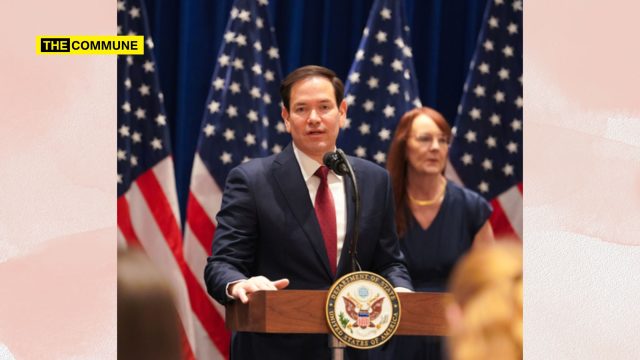
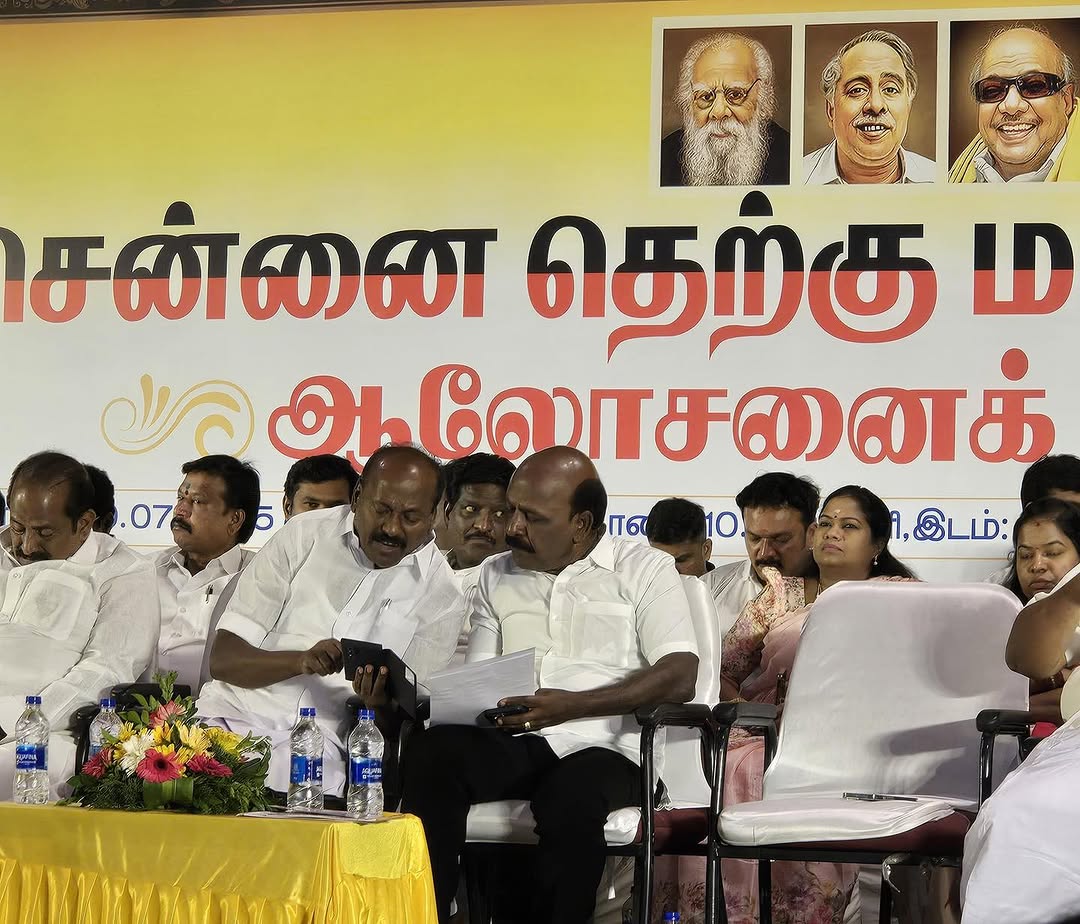
US Secretary of State Marco Rubio has said that India’s continued purchase of Russian oil remains a “point of irritation” in its relationship with the United States, even as both countries maintain strategic ties.

His remarks come a day after US President Donald Trump announced a 25% tariff and an additional penalty on Indian imports, citing India’s trade ties with Russia and high trade barriers.

“Look, India is an ally. It’s a strategic partner. Like anything in foreign policy, you’re not going to align 100% of the time on everything,” Rubio told Fox Radio. “India has huge energy needs, and that includes the ability to buy oil and coal and gas and things that it needs to power its economy, like every country does. And it buys it from Russia, because Russian oil is sanctioned and cheap, meaning they have to, in many cases, are selling it under the global price because of their sanctions. Yep. And that, unfortunately, that is helping to sustain the Russian war effort. So, it is most certainly a point of irritation in our relationship with India,” he added.

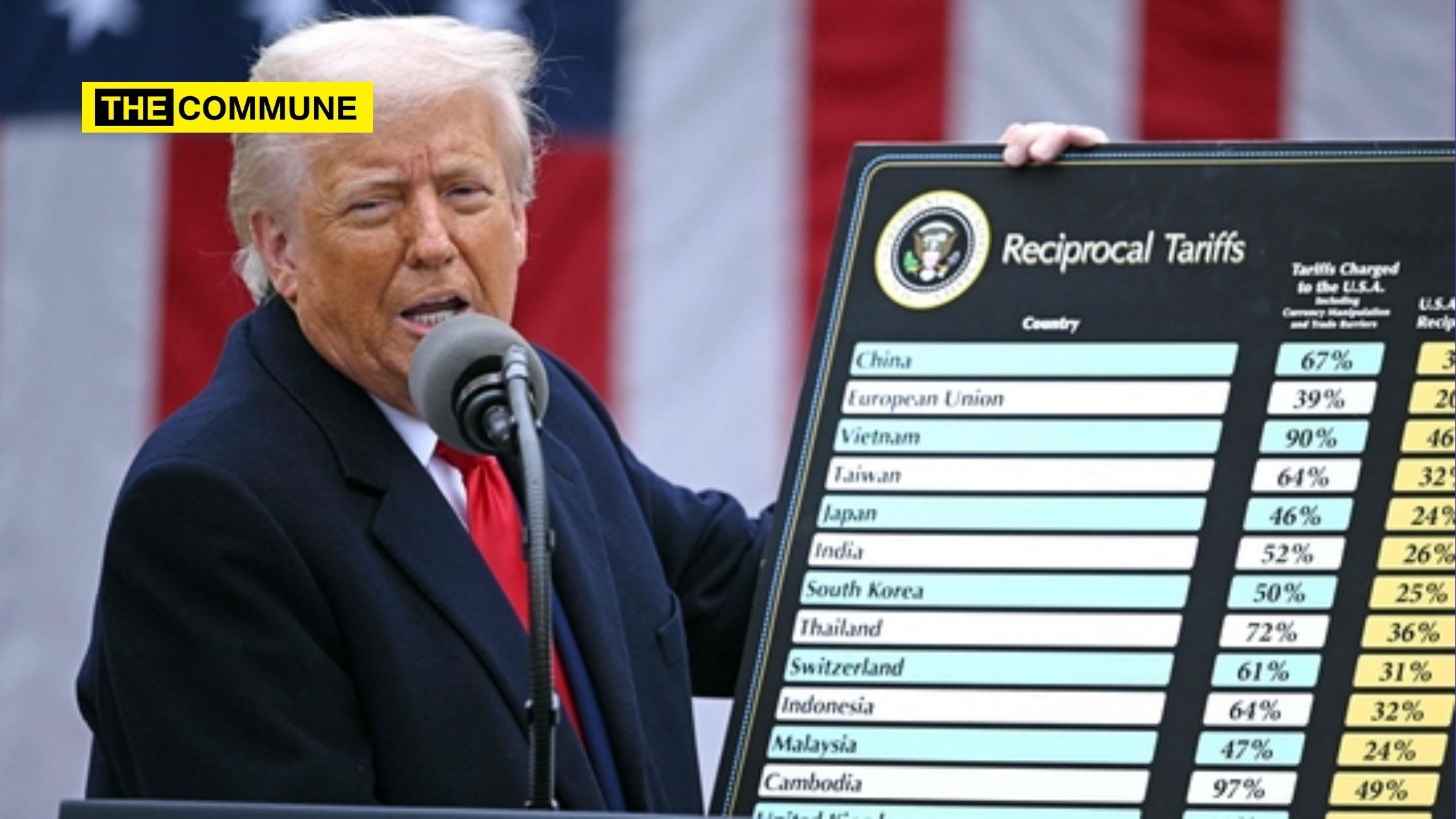
Rubio’s remarks follow President Trump’s tariff announcement, made via his social media platform, Truth Social, on Thursday. Trump stated that the US would impose a 25% tariff, with an added penalty, on Indian imports starting Friday, August 1.

“ALL THINGS NOT GOOD! INDIA WILL THEREFORE BE PAYING A TARIFF OF 25%, PLUS A PENALTY FOR THE ABOVE, STARTING ON AUGUST FIRST. THANK YOU FOR YOUR ATTENTION TO THIS MATTER. MAGA!” Trump posted. He further accused India of maintaining “the most strenuous and obnoxious non-monetary trade barriers” globally and argued that India’s tariffs are among the highest in the world.

“Remember, while India is our friend, we have, over the years, done relatively little business with them because their tariffs are far too high,” Trump said. “At a time when everyone wants Russia to stop the killing in Ukraine, these things are not good. India has always bought the majority of its military supplies from Russia and is one of the largest buyers of Russian energy, along with China,” he added.

-IANS

Subscribe to our channels on TelegramWhatsApp, and Instagram and get the best stories of the day delivered to you personally.
Trump Formalises 25% Tariff On Indian Goods, Cites Trade Imbalance

trump tariffs king india us russian oil

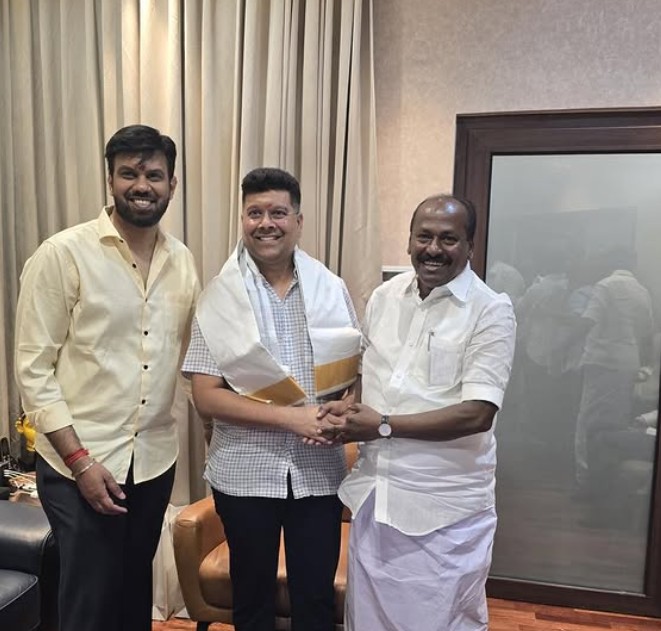
As the deadline for tariffs neared, US President Donald Trump imposed the threatened tariff of 25% on India starting Friday as the prolonged negotiations appeared to have stalled. His executive order, issued late Thursday, did not include penalty tariffs on buying Russian energy or for BRICS membership, which he had also threatened.

When Trump initially threatened the 25% tariff, India said defiantly that it “will take all steps necessary to secure our national interest”. In the order setting the tariff rates for various countries, he claimed he was acting because “large and persistent annual US goods trade deficits constitute an unusual and extraordinary threat to the national security and economy of the United States”.

The 25% tariff for India was higher than the rate ranging between 15% and 19% he imposed on most countries listed in the order, which takes effect at midnight (9.30 AM in India).

While India was one of the first countries to start negotiations with the US, the talks appeared to have foundered, and Trump made the threat of 25% on Wednesday, but later that day, he held out a ray of hope, saying, “We’re talking to India now, we’ll see what happens”. He also did not issue a formal letter to India as he had to other countries. But it appears that last-minute negotiations did not lower the tariffs.

While the negotiations were taking place, Trump repeatedly called Prime Minister Narendra Modi and India his friends. As recently as last week, he said that a deal was imminent. India’s Commerce Minister Piyush Goyal also sounded optimistic, saying last week that the negotiations were making “fantastic” progress. The part of his executive order that would apply to India said that some “trading partners, despite having engaged in negotiations, have offered terms that, in my judgment, do not sufficiently address imbalances in our trading relationship or have failed to align sufficiently with the United States on economic and national-security matters”.

The highest tariff among those in the order was for Myanmar, which was set at 41%, and the lowest was 10% for Brazil and Britain. Brazil’s rate was a surprise because Trump had threatened 50% over a dispute over Brazil’s prosecution of its former President Jair Bolsonaro.

Trump agreed to extend the deadline for Mexico in a last-minute reprieve, agreeing to continue negotiations. Canada, with which Trump is embroiled in a heated fight, did not appear on the order, but separately, he had set the tariff at 30%. Talks are continuing with China, and under a temporary arrangement set to expire on August 12, its rate is temporarily 30%, much lower than his initial threats of as much as 145%. His order set the tariff for Pakistan at 19%, and Sri Lanka and Bangladesh at 20%.

A major hurdle for India was the US’ insistence on opening the floodgates to US agriculture and dairy. That could have serious consequences for India’s agricultural sector, which employs nearly half the country’s working population. India’s statement responding to Trump’s threat alluded to this factor, saying, “The government attaches the utmost importance to protecting and promoting the welfare of our farmers, entrepreneurs, and MSMEs (Micro, Small, and Medium Enterprises)”.

While some, like the European Union and Japan, mollified Trump by offering to invest hundreds of billions of dollars in the US, India was not in a position to make offers of that magnitude. India also appears to have been caught in the heightened tension between Trump and Russia, after President Vladimir Putin refused to heed the US president’s call for a ceasefire in the Ukraine War. Trump brought up New Delhi buying Russian oil on Wednesday, and on Thursday, India was in the crossfire in a war of words between him and former Russian President Dmitry Medvedev, even though India had nothing to do with it.

In the Truth Social post attacking Mededev, he brought in India out of the blue: “I don’t care what India does with Russia. They can take their dead economies down together, for all I care”.

As he had for several months, he riled against the high Indian tariffs, having declared India the “Tariff King”, an appellation Finance Minister Nirmala Sitharaman has strongly refuted. In her budget in February, she substantially lowered the tariff on premium motorcycles that would cover Harley Davidson, the duties on which were Trump’s pet peeve since his first term.

Trump may have to take separate action on India’s pharmaceutical exports valued at $12.7 billion last year, as they form a significant portion of the generic medicines in the US, and any increase in prices would hit the already high medical costs. Asked about the penalty for buying Russia’s oil, which he had once said would be 100 per cent, by a reporter on Wednesday, he avoided answering it and instead talked of a penalty for membership of the BRICS.

If there is to be a penalty for buying Russian oil — known as a secondary tariff applying to all buyers — it will be linked to the deadline for Moscow to end the Ukraine War, which will probably be on August 7. Since China is also buying Russian energy, the imposition of secondary sanctions will be complicated as Washington and Beijing try to avoid an all-out trade war. Similarly, a BRICS penalty would also hit China.

-IANS

Subscribe to our channels on TelegramWhatsApp, and Instagram and get the best stories of the day delivered to you personally.
Drugs Worth ₹34.73 Crore Seized In Mizoram And Tripura; Three Arrested

drugs mizoram tripura seized

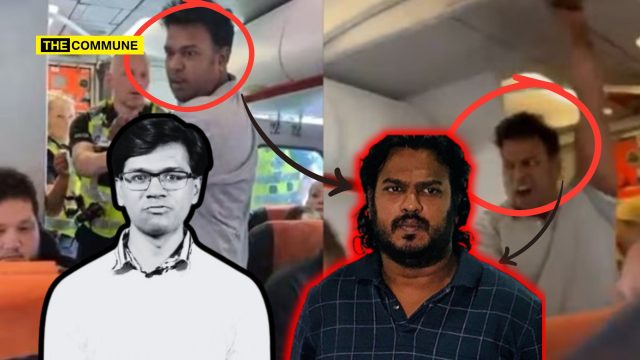
Security forces in Mizoram and Tripura have seized huge quantity of drugs valued at Rs 34.73 crore and arrested three drug peddlers in this connection, an official said on 31 July 2025.

A Defence spokesperson said that acting on secret information; the Assam Rifles troops launched an operation on Thursday at Zote areas in eastern Mizoram’s Champhai district. During the operation, the para-military personnel recovered around 11 kg of highly addictive methamphetamine tablets valued approximately Rs 33.33 crore. The recovered contraband has been handed over to the Excise and Narcotics Department, Champhai.

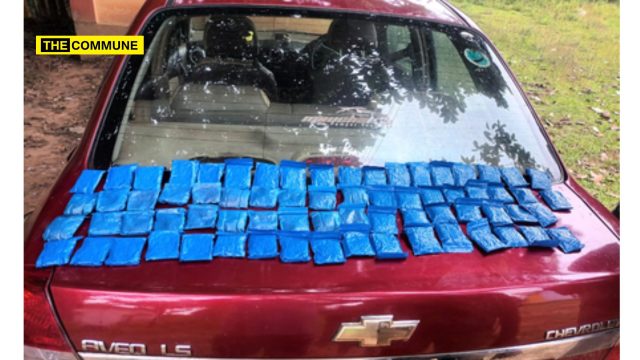
In Tripura, the Border Security Force (BSF), in a joint operation with Tripura Police, seized 14,000 methamphetamine tablets and apprehended three suspected individuals in the Sepahijala disrrict’s Salpokhar area close to Bangladesh border. Acting on specific intelligence received during the early hours, a BSF team swiftly mobilised and cordoned off a red Chevrolet Aveo car and a joint search was conducted, resulting in the recovery of 70 packets containing 14,000 methamphetamine tablets, valued at approximately Rs 1.4 crore. Three drug peddlers — Sarfraj Ahmed (resident of Meerut, Uttar Pradesh), Jubair (Moradabad, UP), and Nazrul Islam (Cooch Behar, West Bengal) — were apprehended from a nearby house.

The contraband and the suspects were handed over to Tripura Police for further legal action. The operation highlights BSF’s proactive role and unwavering commitment in preventing narcotics smuggling and ensuring the safety and security of the India-Bangladesh border, a BSF statement said.

Police officials suspect that the drugs were smuggled from Myanmar and through Mizoram and southern Assam brought to Tripura to smuggle them to Bangladesh. Myanmar’s Chin state has emerged as a major hub for drug trafficking, wildlife smuggling, and other illicit activities. The contraband is often routed through six districts in Mizoram — Champhai, Siaha, Lawngtlai, Hnahthial, Saitual, and Serchhip — which share unfenced borders of 510 km with Myanmar.

-IANS

Subscribe to our channels on TelegramWhatsApp, and Instagram and get the best stories of the day delivered to you personally.
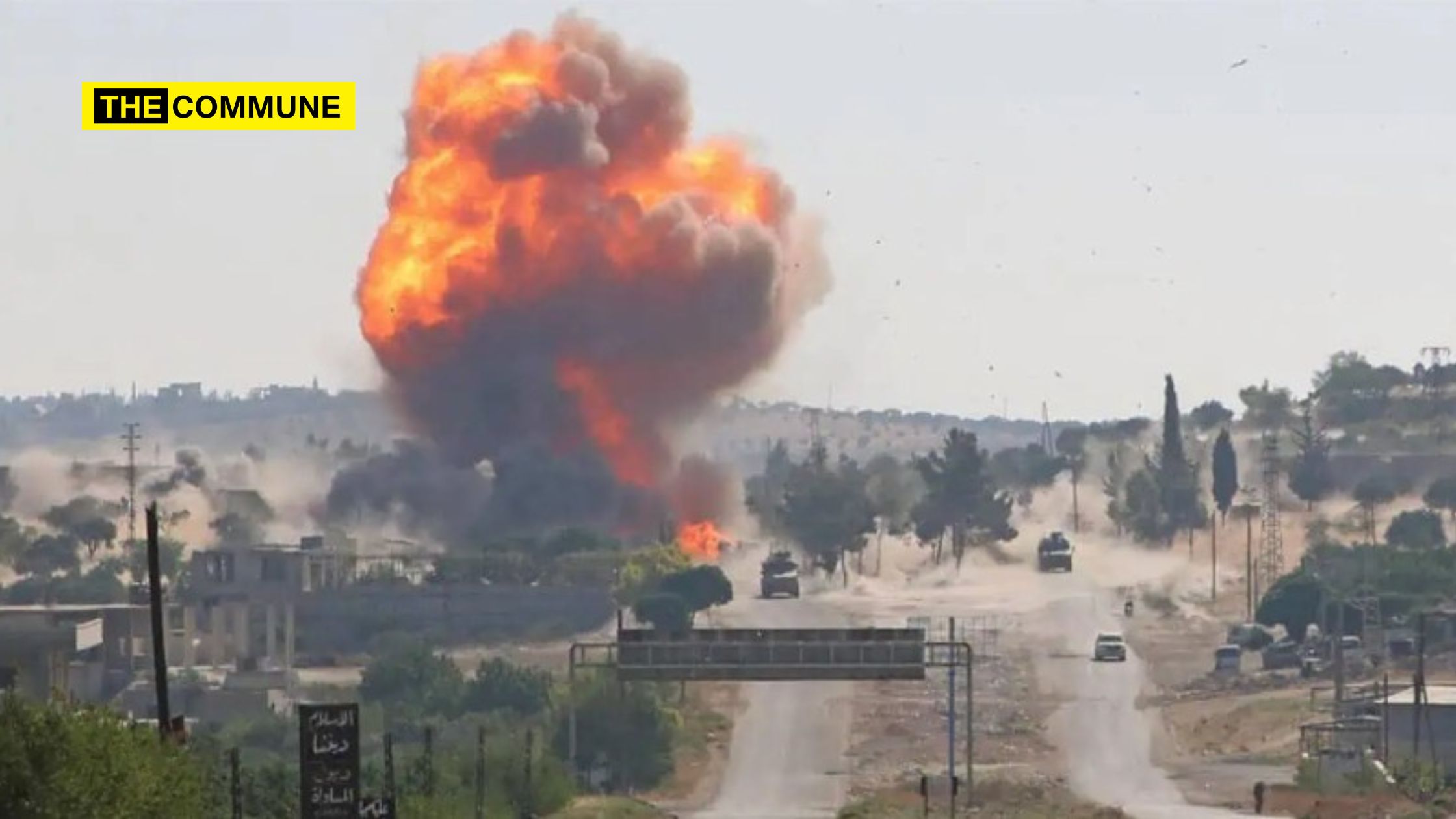
Israel Launches Heavy Airstrikes On Hezbollah Sites In Eastern And Southern Lebanon

israel airstrike hezbollah lebanon

Israeli warplanes carried out intensive airstrikes on multiple areas in eastern and southern Lebanon, targeting sites belonging to the Lebanese group Hezbollah, according to Lebanese official media and an army source.

According to Lebanon’s National News Agency, a series of Israeli airstrikes “targeted the eastern mountain range in the Bekaa region of eastern Lebanon and wide areas deep within southern Lebanon.” A source from the Lebanese army intelligence told Xinhua that Israeli warplanes carried out 18 airstrikes in less than half an hour across the region, targeting Hezbollah positions that had been hit in previous strikes.

Meanwhile, in a statement, the Israel Defense Forces (IDF) said its Air Force struck strategic weapon production and storage sites in the Bekaa Valley, eastern Lebanon, and in southern Lebanon. “Among the targets struck were explosive manufacturing sites, which were used to develop Hezbollah’s weaponry, as well as an underground site for the production and storage of strategic weapons,” the statement said. It claimed that Hezbollah tried to rehabilitate the sites and capabilities, actions that constitute a violation of the understandings between Israel and Lebanon, Xinhua news agency reported.

Israeli Defense Minister Israel Katz said in a separate statement that one of the targets of the airstrikes was Hezbollah’s largest precision missile production site in Lebanon. He stated that Israel’s policy of maximum enforcement against Hezbollah will continue, adding that the Lebanese government bears responsibility for preventing violations of the ceasefire agreement.

The ceasefire agreement between Lebanon and Israel, brokered by the United States and France, has been in effect since 27 November 2024, following more than a year of clashes related to the war in the Gaza Strip. However, Israel continues to hold five positions in the south. It occasionally carries out airstrikes in both southern and eastern areas of the country, claiming they are aimed at eliminating “threats” posed by Hezbollah.

-IANS

Subscribe to our channels on TelegramWhatsApp, and Instagram and get the best stories of the day delivered to you personally.