Home Blog Page 195

Jammu & Kashmir’s Development A ‘Tight Slap’ To Terror Justifiers: US Urban Warfare Expert

kashmir development militancy

A renowned international analyst on Friday hailed the unprecedented development in Jammu and Kashmir, especially the post-2019 transformation, stating that the massive change in a region long held hostage by instability and armed extremism is not cosmetic but foundational and denies militants the narrative they rely on.

John Spencer, Executive Director at the US-based Urban Warfare Institute, visited India recently and travelled to Jammu and Kashmir to witness first-hand how the region is “building, physically, economically, and psychologically”, towards something that is not defined by violence.

“In the 2024–25 fiscal year alone, the Indian government invested over ₹10,516 crore (approximately USD 1.3 billion) into Jammu and Kashmir. That money is being turned into projects that are connecting Kashmir to the rest of India, not just metaphorically, but physically,” Spencer wrote in an article titled ‘The Beauty of the Developing Jammu and Kashmir’ which he shared with his followers on X on Friday.

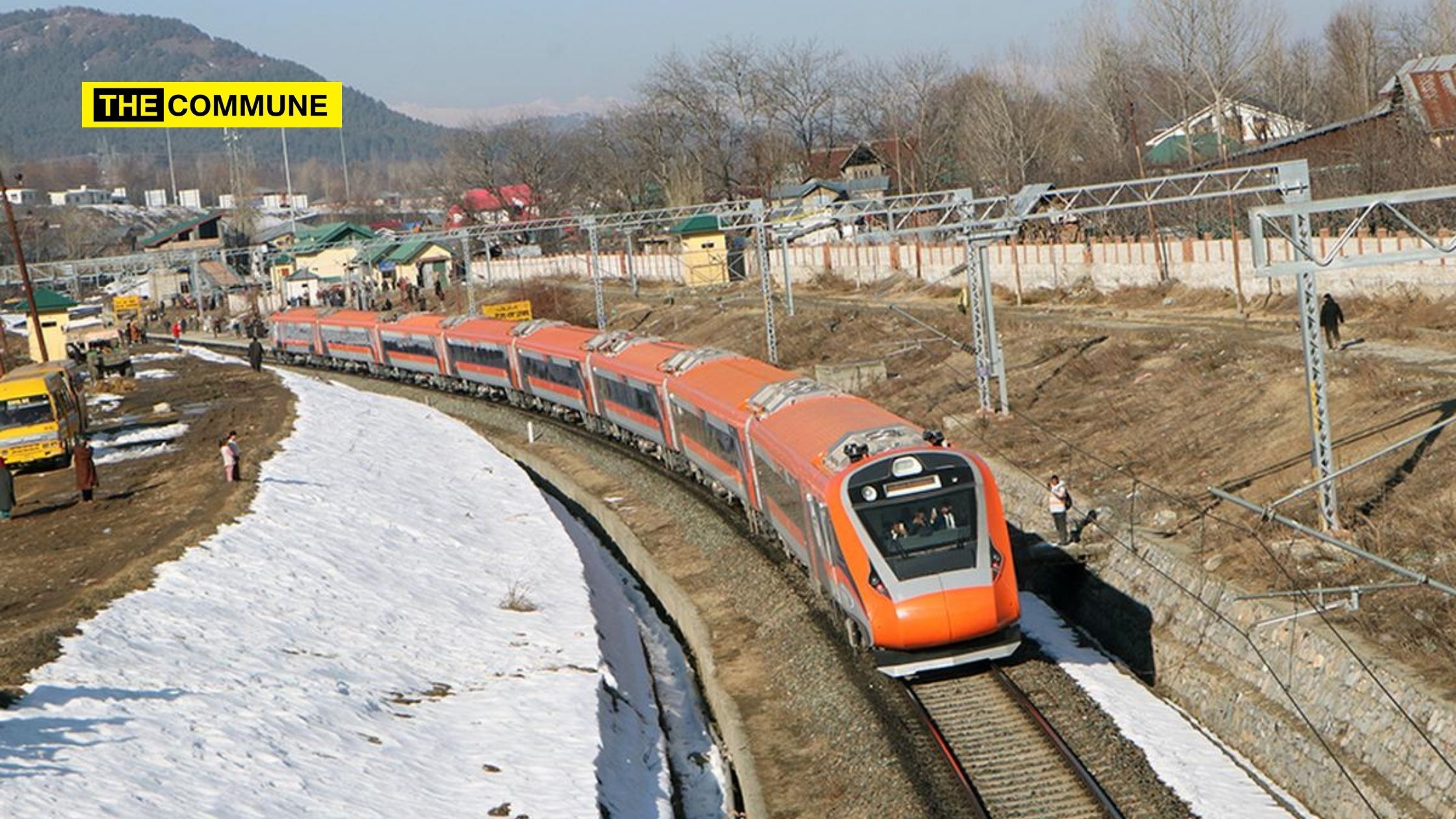
Among the most ambitious undertakings, he wrote, are the new rail and transport corridors that are knitting Kashmir into the rest of the country. “The Chenab Railway Bridge now stands as the tallest railway arch bridge in the world at 359 meters, built at a cost of ₹35,000 crore (USD 3.7 billion). It has been called the crown jewel of the Udhampur–Srinagar–Baramulla rail line, a corridor that is reshaping the region’s economic and strategic future. Nearby, the Anji Khad Bridge, India’s first cable-stayed railway bridge, links the rugged Reasi district. In February 2024, Tunnel T-50, India’s longest rail tunnel at 12.775 kilometers, was opened, cutting through the Pir Panjal range to enable year-round movement,” Spencer mentioned.

“This is not just engineering. It is statecraft in concrete and steel,” he added. The change, states the leading expert on urban warfare, happened in 2019 after India abrogated Article 370, revoking Jammu and Kashmir’s special autonomous status. “It was a bold constitutional change, and one that many observers, especially outside India, feared would lead to greater unrest. Instead, the years that followed have brought a different reality, one defined by massive investment, record-breaking infrastructure, and the visible return of public life,” said Spencer.

Roads expanded, schools were built, businesses opened and tourists returned to the Valley with more than 23 million people visiting Jammu and Kashmir in the last one year. “What was once a symbol of insurgency is becoming a destination for families, entrepreneurs, and builders. And perhaps most importantly, Kashmiris are participating in this change. It is not something being done to them. It is something many are now doing with and for themselves,” wrote Spencer. However, the transformation had its enemies, he detailed, highlighting the heinous April 22 Pahalgam attack when terrorists from a Pakistan-based terrorist group killed 26 people and wounded at least 17 others.

“The victims were pilgrims, tourists, and local residents. The massacre shocked India, triggered a brief war with Pakistan, and briefly made international headlines. But what received far less attention was why the attack happened. It was not random. It was a strategic act of terrorism aimed at disrupting the very stability that Kashmir’s development now represents. Extremist groups understand that roads, railways, tourism, and rising civilian confidence are a threat to their relevance. Violence like the Pahalgam attack is designed to halt that momentum, not through military defeat, but through fear.”

Emphasising that stability is the enemy of extremism, he lauded Jammu and Kashmir’s development insisting that every kilometre of new road, every new bridge, every child in a functioning school are nails in the coffin of a worldview that justifies bloodshed as resistance. “Kashmir’s natural beauty has long been undeniable. What I saw during my visit was something more powerful. A people reclaiming what was lost, and building what should never again be taken away. A home once lost is being found again. And this time, it is being made stronger than ever before,” Spencer concluded. –IANS /as

-IANS

Subscribe to our channels on TelegramWhatsApp, and Instagram and get the best stories of the day delivered to you personally.

India Buys Oil Based On Global Market Offerings: MEA

Saudi Arabia oil India

India sources its oil purchases based on global market offerings to meet its energy needs, Ministry of External Affairs (MEA) spokesperson Randhir Jaiswal said on Friday. In response to a question, he also said that India-Russia bilateral relations are on a strong footing.

“Our ties with any country stand on their merit and should not be seen from the prism of a third country. As far as India-Russia relations are concerned, we have a steady and time-tested partnership.”

Commenting on media reports that some Indian oil companies have stopped taking oil from Russia, Jaiswal said: “You are aware of our broad approach to energy sourcing requirements, that we look at what is available in the market and the prevailing global situation. We are not aware of any specifics.” He also indicated that India is taking the hike in tariffs announced by President Donald Trump in its stride and remains focused on moving ahead with strengthening the global strategic partnership with the US.

“India and the United States share a comprehensive global strategic partnership anchored in shared interests, democratic values, and robust people-to-people ties,” Jaiswal said in the weekly media briefing.

“This partnership has withstood several transitions and challenges. We remain focused on the substantive agenda that the two countries have committed to and are confident that the relationship will continue to move forward,” he explained.

“As far as security is concerned, I would like to say that security ties between India and America are quite strong. There is potential for this partnership to grow further under the India-US COMPACT for the 21st century,” he added.

Jaiswal also said that India has taken note of the US sanctions on six Indian companies for the purchase of petroleum products from Iran. However, he refused to comment on President Trump’s statement that India may purchase oil from Pakistan one day after announcing an energy deal with Islamabad.

-IANS

Subscribe to our channels on Telegram, WhatsApp, and Instagram and get the best stories of the day delivered to you personally.

“Wild And Irresponsible”: ECI Calls Rahul Gandhi’s ‘Vote Chori’ Claim A Political Stunt Without Evidence

rahul gandhi vote chori eci

The Election Commission of India (ECI) has strongly refuted the accusations by Leader of the Opposition in Lok Sabha Rahul Gandhi, who alleged that the poll body is complicit in “vote chori” (vote theft) to benefit the BJP. Calling the claims “baseless,” the Commission reaffirmed its commitment to upholding the principles of free, fair, and transparent elections.

In a detailed response, the ECI sources revealed that despite making repeated efforts to engage with Rahul Gandhi, the Congress leader had shown no intent to formally communicate his concerns.

A letter and an email were both sent to Gandhi on 12 June 2025, inviting him to share evidence or engage in dialogue, sources said. However, there was no response from his end, they added. Officials also pointed out that Gandhi has never submitted any letter, complaint, or formal representation to the Commission on any electoral issue so far.

The Commission expressed deep concern over the tone of Gandhi’s recent statements, which it said have not only made unsubstantiated allegations but also amounted to veiled threats directed at EC officials. “It is very strange that instead of approaching the constitutional institution through due process, such wild and irresponsible statements are being made – and now even threats are being issued. This is deplorable,” said sources.

Despite this, the Election Commission said it would not be distracted by such politically charged rhetoric. It advised all election officials across the country to remain focused on their duties and to continue working with impartiality and transparency, refusing to be influenced by what it described as “politically motivated and baseless” remarks.

The remarks from the Commission come in response to Rahul Gandhi’s press interaction earlier this week, where he claimed that his party had “open and shut” evidence of alleged electoral fraud involving the ECI. Describing the ‘evidence’ as an “atom bomb,” he warned that once it was made public, the Commission would have “no place to hide.” He reiterated that irregularities had occurred in the 2023 Madhya Pradesh Assembly elections, continued through the 2024 Lok Sabha polls, and extended to voter list ‘manipulations’ in Maharashtra. This is not the first time Gandhi has cast doubt on the EC’s functioning.

In June this year, he authored an article alleging “match-fixing” in the Maharashtra elections and suggested similar manipulation could occur “wherever the BJP is losing.” In response, EC sources clarified at the time that the Commission would only respond officially if the Leader of the Opposition submitted a formal communication – something that has still not happened.

On Gandhi’s demand for CCTV footage from Maharashtra polling stations during the closing hours of voting, the Commission had clarified that such footage is legally accessible to a competent high court if an election petition is filed. It underscored that institutional mechanisms for redressal are in place and must be followed by anyone raising concerns about the electoral process.

-IANS

Subscribe to our channels on Telegram, WhatsApp, and Instagram and get the best stories of the day delivered to you personally.

Dravidian Model: DMK Functionary Steals Hundi From Ayyanaar Temple Near Perambalur

BJP leader K Annamalai has strongly criticized the ruling DMK government, citing a breakdown in law and order and alleging that criminals now operate without fear of police or legal consequences.

In a post shared on 1 August 2025, Annamalai highlighted a viral video allegedly showing DMK functionary Thunaivendhan removing a donation box (hundi) from the Sundaramurthy Ayyanar Temple in Kolathur, Perambalur.

Shockingly, the hundi was reportedly installed by Thunaivendhan himself, not the Hindu Religious and Charitable Endowments (HR&CE) Department. When HRCE officials attempted to seal the hundi, he allegedly threatened them and walked off with the box, which contained offerings from devotees.

K Annamalai said, “DMK functionary Thunaivendhan is caught on video lifting a Hundi from the Sundaramurthy Ayyanar Temple in Kolathur, Perambalur. Ironically, this Hundi wasn’t installed by the HR&CE Department, but by Thunaivendhan himself. When officials finally acted to seal it, he resorted to threats and walked away with the Hundi and the devotees’ offerings. Under DMK rule, even temples are not spared from political loot. And this is not the first time we have pointed this out!”

In a separate post, Annamalai shared another video purportedly showing accused individuals in police custody using obscene language and taunting each other while inside a police vehicle right in front of the officers.

He said, “Under the DMK Govt, Rowdies rule the roost. Seeing rogues abuse Policemen inside a police vehicle while being transported to prison only proves that these anti-social elements have no fear of the law. Truly disheartening!”

Subscribe to our channels on TelegramWhatsApp, and Instagram and get the best stories of the day delivered to you personally.

11 Times Congress Reacted To The Chhattisgarh Nun Arrests

congress leader protest statement chhattisgarh nuns arrest

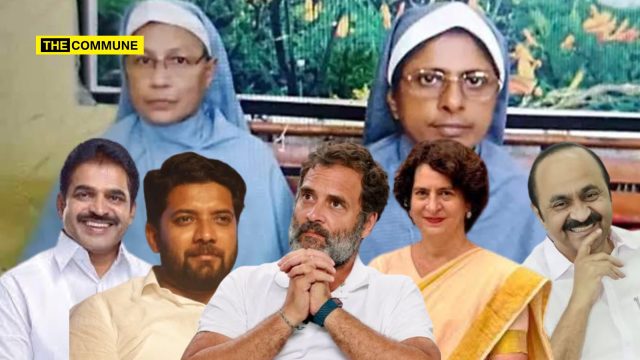
The arrest of two Catholic nuns from Kerala and a tribal woman in Chhattisgarh on charges related to religious conversion has triggered sharp criticism from the Congress party, which accused the BJP-led government of persecuting minorities.

Sister Preeti Mary and Sister Vandana Francis, both hailing from Kerala, were taken into custody on 25 July 2025, along with Sukaman Mandavi, a tribal woman. The arrests were made at Durg railway station after a Train Ticket Examiner (TTE) flagged the group for not having platform tickets. The women were subsequently booked under Section 143 of the Bharatiya Nyaya Sanhita (BNS) for alleged human trafficking and under Section 4 of the Chhattisgarh Religious Freedom Act, 1968, both of which carry penalties of up to 10 years in prison.

A local court has remanded all three in custody for 14 days, with their remand set to expire on 8 August 2025.

Political Reactions and Protests

Congress leader Rahul Gandhi condemned the arrests, calling them “a blatant act of persecution against minorities under the BJP-RSS regime.” He further described the incident as an example of “mob rule” and accused the government of systematically targeting Christian missionaries and minority groups.

Between July 25 and July 29, at least 12 Congress leaders publicly came out in support of the detained nuns. These leaders questioned the basis of the FIR, criticized the application of trafficking charges, and demanded immediate accountability from authorities.

The Kerala Catholic Bishops’ Council also issued a statement on July 27, denouncing the arrests as “baseless and unjustified.” On July 26, families of the tribal women involved stated they had full knowledge of the job placements being arranged, directly contradicting the trafficking allegations leveled by the police.

UDF Protest in Parliament

The United Democratic Front (UDF) staged a protest in Parliament, holding placards that read “Stop attacks on minorities” and “Govt’s silence is violence.” The opposition bloc warned that the arrests were part of a broader pattern of religious intolerance and misuse of legal provisions under the BJP government.

As the remand period continues, rights organizations and Christian groups are also expected to intensify their advocacy demanding the immediate release of the three women.

#1 Rahul Gandhi Condemns Nuns’ Arrest as “Mob Rule”

On 28 July 2025, Congress leader Rahul Gandhi denounced the arrest of two Catholic nuns in Chhattisgarh, calling it an act of religious persecution. In a post on X, Gandhi said, “Two Catholic nuns Sister Vandana and Sister Preethi jailed in Chhattisgarh after being targeted for their faith — this isn’t justice, it’s BJP-RSS mob rule.”

He termed the arrests part of a “dangerous pattern” of systematic minority persecution under the current regime. Gandhi added that UDF MPs protested in Parliament and demanded the immediate release of the nuns, stressing that religious freedom is a constitutional right.

#2 Priyanka Gandhi Slams Arrest of Nuns in Chhattisgarh

Congress leader Priyanka Gandhi on 28 July 2025 condemned the arrest of Catholic nuns Sister Vandana and Sister Preethi in Durg, Chhattisgarh, calling it a grave attack on minority rights. She said the detention, based on false allegations of conversion and trafficking, lacked legal basis and reflected a pattern of systematic harassment under BJP rule. Priyanka asserted that mob justice and communal targeting have no place in a democracy and demanded accountability.

#3 AICC Gen Sec Venugopal Slams Arrest of Nuns, Alleges Minority Persecution in BJP Rule

AICC General Secretary K.C. Venugopal condemned the arrest of two Catholic nuns and Sukaman Mandavi in Chhattisgarh, calling it an instance of minority persecution under BJP rule. He alleged that Bajrang Dal’s mob attack on the nuns had tacit support from the ruling establishment. The FIR, based on trafficking and forced conversion claims, was dismissed by the Chhattisgarh Christian Forum, which asserted the women were adults seeking jobs. Families also denied trafficking claims. Rahul Gandhi and other UDF MPs protested in Parliament, demanding the nuns’ release. BJP leaders defended the action as lawful under anti-conversion and trafficking laws.

#4 Kerala Congress Leader Satheesan Slams ‘Mob Trial’ of Malayali Nuns in Chhattisgarh

Kerala Opposition leader V.D. Satheesan condemned the arrest of two Malayali nuns in Chhattisgarh, calling it a “mob trial” under BJP rule. He alleged police persecution and false charges, stating the incident reflects rising religious intolerance. Satheesan also revealed that due to threats, clergy had advised the nuns to avoid wearing religious habits in public. “How terrifying is this?” he asked, adding that persecution in the name of religion or caste is unacceptable. He demanded the immediate release of the arrested nuns and called for accountability from authorities enabling such harassment.

#5 Benny Behanan, UDF MPs Condemn Arrest of Nuns in Chhattisgarh

Congress MP Benny Behanan, along with UDF MPs Francis George and N.K. Premachandran, condemned the arrest of two Kerala-based Catholic nuns in Chhattisgarh, calling it unjust and politically motivated. Behanan said they would visit the jail and meet the nuns before engaging officials to secure their release. BJP Kerala president Rajeev Chandrasekhar also distanced the party from the Bajrang Dal’s actions and asserted the nuns’ innocence, promising justice. Congress leaders accused the Chhattisgarh BJP government of enabling religious persecution. The Kerala Catholic Bishops’ Council and Kerala Ministers also extended support to the arrested nuns and their families.

#6 Shafi Parambil Slams BJP’s Cake Politics After Nun Arrests

Congress MP Shafi Parambil criticized the BJP’s outreach to Kerala’s Christian community, calling it hypocritical in light of the recent arrest of two Catholic nuns in Chhattisgarh. He remarked that while the BJP prepares Christmas cake mixes for bishops, it remains silent on the unjust detention of nuns in religious attire. “This year, when they bring cakes, people will ask questions,” he said, accusing the party of clear double standards. His comments come amid growing political backlash and community outrage over the arrests under alleged trafficking and forced conversion charges.

#7 Francis George Says Nun Arrests Undermine Constitutional Freedoms

Congress leader Francis George condemned the arrest of two Catholic nuns in Chhattisgarh, calling it a violation of fundamental rights. He questioned how escorting women for jobs at a Christian convent could be construed as human trafficking. George alleged that the arrests undermined key constitutional guarantees, including freedom of movement and religious freedom. He was part of the opposition delegation that traveled to Raipur to meet the detained nuns and demand their release.

#8 Bhupesh Baghel Protests Denial of Access to Jailed Nuns

Former Chhattisgarh Chief Minister Bhupesh Baghel criticized authorities for initially denying a Kerala MP-MLA delegation access to two arrested nuns in Durg. He warned of a sit-in protest unless the meeting was allowed. The nuns, arrested on July 25 for alleged trafficking and forced conversion, have sparked political outrage. Congress leaders accused the BJP of minority persecution, while CPI leaders were also denied access. Baghel claimed political interference, while Home Minister Vijay Sharma dismissed the allegations, calling them political drama. He said procedural delays, not denial, caused the issue, and that the meeting was later arranged.

#9 Sunny Joseph Slams BJP Over Nun Arrests, Defends Whistleblower Doctor

Congress MLA and KPCC President Sunny Joseph visited the families of the arrested nuns in Kannur and condemned their detention in Chhattisgarh, calling the charges of trafficking and conversion “baseless.” He accused the BJP government of punishing the nuns for helping the poor. Separately, Joseph alleged that the state’s show-cause notice to Dr. Harris Hasan was political vendetta after his exposure of healthcare mismanagement. He criticized the Kerala government for silencing whistleblowers instead of addressing their concerns, calling it an abuse of power and a threat to truth-telling in public service.

#10 K. Suresh Blames Right-Wing for Nun Arrests in Chhattisgarh

Senior Congress MP K. Suresh accused right-wing groups of orchestrating the arrest of two Kerala-based nuns in Chhattisgarh. He alleged that two young women had willingly joined the nuns for work, but Bajrang Dal members falsely claimed it was a conversion attempt and attacked the nuns. “After the assault, the police filed an FIR, and now both the innocent nuns and the girls are in jail,” he said in Delhi. Suresh criticized the BJP-led state government, implying complicity in the incident, and called for immediate action to release the nuns and restore justice.

#11 Congress Leader Alleges Mistreatment of Detained Nuns in Durg

Annie Peter, a Congress leader from Durg, alleged mistreatment of two detained nuns at the Durg police station. She said she rushed to the station on Tuesday morning upon hearing of their detention. “There were a lot of people that morning. In the evening, we learnt that an FIR had been registered. I asked the police to allow me to meet the two nuns. They were unable to speak,” she said. Peter suggested the nuns may have been intimidated or traumatized and criticized the authorities for not ensuring humane treatment during custody.

Pew Study: Christians No Longer Majority In UK, France, Australia

A new global survey by the Pew Research Center has revealed a significant demographic shift in religious affiliation across the world, with the number of Christian-majority countries declining over the past decade. The report attributes this shift primarily to people leaving the Christian faith, often without converting to another religion.

According to the survey, the number of countries and territories where Christians form a majority has dropped from 124 in 2010 to 120 in 2020. Despite the decline, Christianity remains the most widespread religion globally, maintaining majority status in approximately 60% of the world’s 201 nations.

However, several prominent Western countries have seen a reversal in religious demographics. Britain, France, and Australia no longer have a Christian majority, with the proportion of those identifying as atheists or religiously unaffiliated rising sharply. In these countries, no religious group now forms a clear majority.

The most notable shift in the Americas has been in Uruguay, which has become the region’s only non-Christian-majority country. The Christian population in Uruguay has dropped to 44%, while 52% of its citizens now identify with no religion. Globally, the number of countries where non-religious individuals form the largest group rose from seven in 2010 to ten in 2020.

The report also highlights the stability in Muslim-majority nations. The number of countries where Muslims form the majority has remained constant at 53 over the last decade.

In contrast, Hindu-majority countries remain limited to just two: India and Nepal. India alone is home to nearly 95% of the world’s Hindus, who represent about 15% of the global population. While Hindus form the largest religious group in Mauritius, they do not constitute a majority there.

The Pew report further noted that the number of Buddhist-majority countries stands at seven, while Israel remains the world’s only Jewish-majority nation.

The survey points to increasing secularisation, demographic transitions, and religious switching as key factors behind the shifts in religious composition across multiple regions.

(With inputs from India.com)

Rahul Gandhi Calls India A “Dead Economy”, But His Stock Portfolio Is Booming

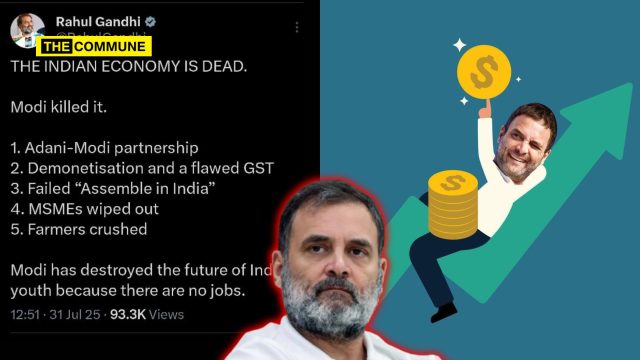
Congress leader Rahul Gandhi came under fire on Thursday after endorsing former US President Donald Trump’s controversial statement calling India a “dead economy.” Gandhi, speaking to reporters outside Parliament, said Trump was “right” and claimed, “everyone knows this except the Prime Minister and Finance Minister.”

The comment sparked a political backlash, with BJP leaders accusing Gandhi of echoing foreign criticism for political gains, even as his own financial disclosures paint a very different picture of economic performance.

Just about a year earlier, in his affidavit submitted to the Election Commission ahead of the 2024 Lok Sabha elections, Gandhi declared personal assets exceeding ₹20 crore. His affidavit revealed that over 90% of his movable wealth, ₹8.16 crore, was invested in mutual funds and stocks, sectors that have witnessed robust growth over the past year.

Gandhi’s stock portfolio, worth more than ₹4.33 crore as of March 15, 2024, spans 25 listed companies. His largest stock holding was in Pidilite Industries (₹42.27 lakh), followed by blue-chip firms like Bajaj Finance (₹35.89 lakh), Nestlé India (₹35.67 lakh), and Asian Paints (₹35.29 lakh). Other holdings included ITC, ICICI Bank, Infosys, TCS, Deepak Nitrite, and Divi’s Laboratories – stocks that have consistently delivered high returns in a growing market.

He also held mutual fund investments worth ₹3.81 crore across seven schemes, with his largest being in HDFC Small Cap Fund (₹1.23 crore), which delivered a 51.85% return in the past year. He further held sovereign gold bonds worth ₹15.21 lakh, a Public Provident Fund with ₹61.52 lakh, and immovable assets totalling ₹11.15 crore.

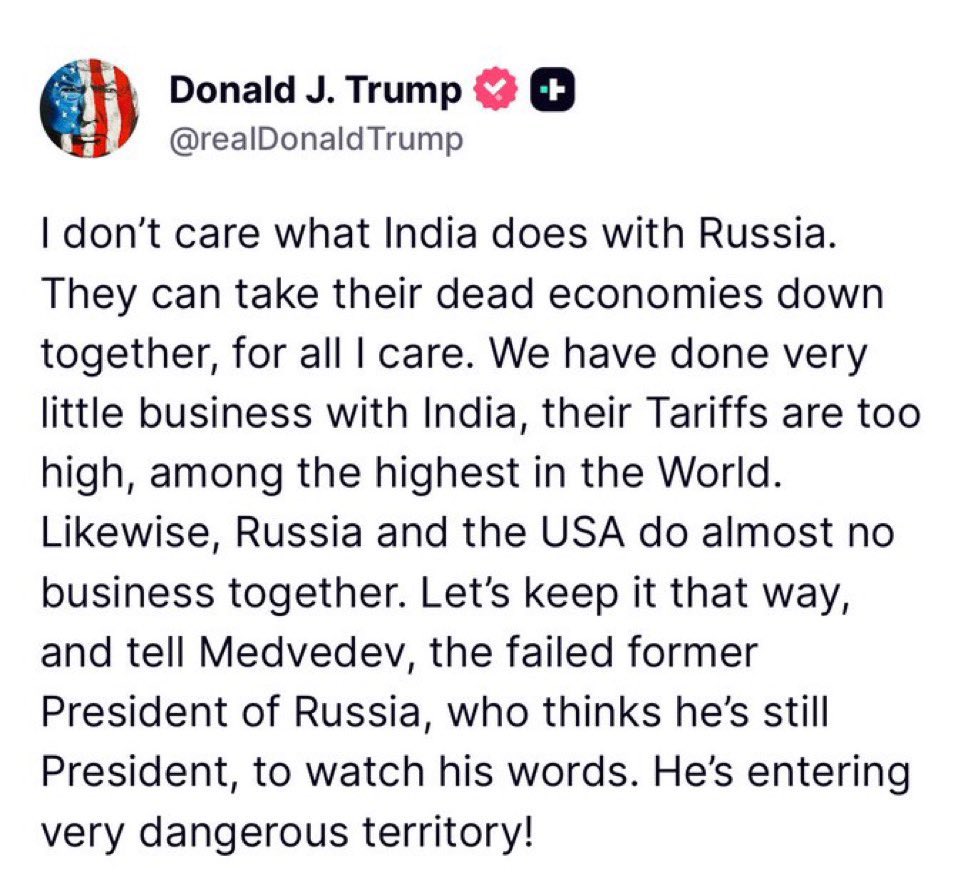
Trump’s original remarks, made on Truth Social after announcing 25% tariffs on Indian imports, targeted both India and Russia, saying he didn’t care about their economic partnership as both had “dead economies.”

Gandhi seized on the statement to attack Prime Minister Narendra Modi, blaming demonetisation and a flawed GST regime for economic distress. “MSMEs have been wiped out, farmers are crushed, and ‘Assemble in India’ has failed,” he claimed.

However, critics argue that Gandhi’s personal financial growth contradicts his narrative. With a diverse, high-performing portfolio benefiting from India’s capital markets, his financial disclosures appear at odds with his political messaging.

While Gandhi’s remarks might have intended to underline challenges in the economy, they have instead highlighted the growing chasm between rhetoric and reality, particularly for a leader whose investments have thrived within the same system he now condemns.

(With inputs from India Today)

Subscribe to our channels on TelegramWhatsApp, and Instagram and get the best stories of the day delivered to you personally.

India Becomes World’s Third-Largest Solar Energy Producer, Surpasses Japan

solar energy india

Union Minister for New and Renewable Energy Pralhad Joshi has said that India has surpassed Japan to become the third-largest producer of solar energy globally, which is a significant development in the nation’s clean energy development.

India produced 1,08,494 gigawatt-hours (GWh) of solar power, more than Japan, which produced 96,459 GWh, Joshi stated, citing data from the International Renewable Energy Agency (IRENA).

The minister has shared the update via a post on the social media platform X. “India has outpaced Japan in solar energy generation producing 1,08,494 GWh compared to Japan’s 96,459 GWh and is now the world’s third-largest solar power producer,” the Minister said. Thanks to the visionary leadership of Hon’ble PM Shri @narendramodi ji, India is leading the way in the global clean energy revolution, he further wrote.

IRENA, a global agency that supports countries in their transition to sustainable energy, provides comprehensive data and policy support for renewable energy development worldwide. The development comes as India pushes forward with its ambitious target of achieving 500 GW of non-fossil fuel electricity capacity by 2030 through a diversified energy strategy.

In addition to its solar success, India is also expanding its wind energy portfolio. Earlier last month, the minister informed the Parliament that the installed wind energy capacity in India had reached 51.67 GW as of 30  June this year.

According to data presented by the minister in a written reply in the Lok Sabha, the country’s wind energy capacity has been steadily growing over the last three fiscal years, from 2,275.55 MW added in 2023–2024 to 3,253.39 MW added in 2024–2025 and 1,637.02 MW of new capacity installed in the April–June quarter of 2025–2026. With 13,816.68 MW of installed capacity, Gujarat leads the top three states in terms of wind power generation capacity. Tamil Nadu comes in second with 11,830.36 MW. With 7,714.74 MW of installed wind power, Karnataka is the third-largest generator in the nation.

-IANS

Subscribe to our channels on TelegramWhatsApp, and Instagram and get the best stories of the day delivered to you personally.

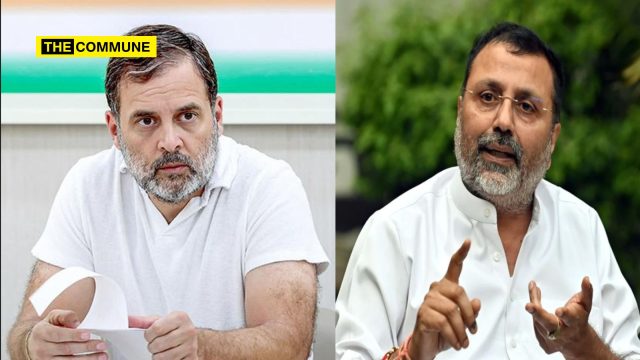
BJP MP Nishikant Dubey Exposes ‘Anti-Farmer’ Congress-US Agreement From UPA Era

nishikant dubey congress bjp farmers

BJP MP Nishikant Dubey has sharply criticized the Congress party, accusing it of double standards over a 2009 trade agreement with the United States. Dubey claimed that while Congress now tries to project itself as a champion of national interest, it had in fact compromised India’s farmers, small industries, and agricultural sectors during its time in power.

Posting on his official X account, Dubey wrote, “After eating a hundred rats, the cat goes on a pilgrimage to Hajj.”

He referred to a 2009 agreement signed between then Commerce Minister Anand Sharma and the U.S. Trade Representative, alleging that the Congress-led government prioritized American trade interests over India’s rural economy, particularly in areas like grains, dairy, poultry, and small-scale industries. He noted, “This is an agreement from 2009 between Congress government minister Anand Sharma and the US trade minister. According to this agreement, by sacrificing the interests of grain, farmers, dairy, poultry, and small industries, the Indian government was ensuring America’s interests, thereby impoverishing the common people of India?”

According to Dubey, this deal weakened India’s economic backbone, harming ordinary citizens. He contrasted this with the current Modi-led government, asserting, “This is the Modi government; agreements with America will be made only in India’s interests.”

Attached to his post was an excerpt from a trade communication, summarizing concerns raised by the U.S. side. These included:

  • Lack of response from India on the U.S. dairy certification proposal
  • Limited market access for U.S. pork, poultry, and pet food
  • Unmet requests for data on India’s avian influenza restrictions
  • High import tariffs on agricultural products

The note also mentioned a planned Digital Video Conference (DVC) on 20 November to address these issues. Although the Indian government initially appeared cooperative, the document stated that India eventually retracted prior commitments, frustrating U.S. expectations.

Original excerpts from the attached agreement read, “16. (SBU) The key United States expressed concerns were: the lack of response on the U.S. dairy certification proposal; market access for U.S. pork, poultry, and pet food; U.S. request for data on the avian influenza restrictions and assessment; and high import tariffs for The GOI agreed to hold a DVC on either agriculture products. November 19 or 20 to discuss the U.S. dairy certification proposal and market access issues although the GOI insisted it had already At the same time, the GOI addressed most of the U.S. concerns. would also address the outstanding U.S. request for data on the avian influenza restrictions and risk assessments. (Note: The DVC was held on November 20. Unfortunately, the result of discussions was that the GOI walked back from prior commitments. End note).”

Dubey used this to highlight what he sees as Congress’s inconsistent position accusing the party of having sacrificed national interests in the past, while now pretending to advocate for them.

Subscribe to our channels on TelegramWhatsApp, and Instagram and get the best stories of the day delivered to you personally.

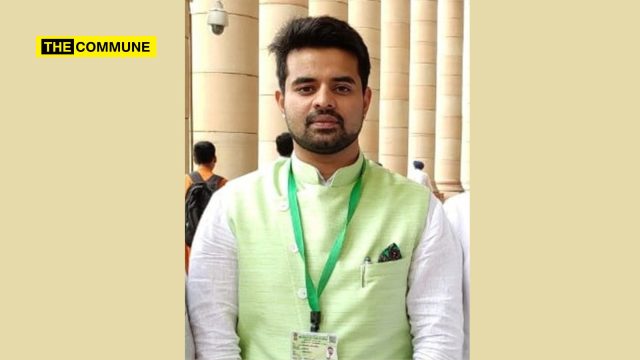
Bengaluru Court Convicts Ex-JD(S) MP Prajwal Revanna In Sexual Assault Case

The Special Court for MPs/MLAs in Bengaluru on 1 August 2025, pronounced ex-JD(S) MP Prajwal Revanna, grandson of former Prime Minister H.D. Deve Gowda, guilty in the obscene video and rape case. The verdict was delivered by Judge Santhosh Gajanana Bhat. The court is scheduled to announce the quantum of punishment on Saturday, after allowing the convict, Prajwal Revanna, and his counsel to make their final submissions on the conviction.

Prajwal Revanna was produced before the court, and as soon as the verdict was pronounced, he was seen with tears in his eyes, wiping them while seated inside the courtroom. After stepping out of the court hall, he sat down in a chair in visible despair and broke down, unable to process the shock.

The court on 30 July had deferred the judgment, citing the need for certain clarifications. After seeking inputs from both sides and issuing directions, the matter was adjourned until this day. He was arrested last year and has been in jail for 14 months. The case in question pertains to a rape complaint and other charges filed by a domestic worker from K.R. Nagar against Prajwal Revanna.

The court has reviewed 26 pieces of evidence in connection with the case. Prajwal Revanna faces three other similar cases. Videos allegedly showing Prajwal Revanna sexually assaulting women and recording the acts surfaced during the 2024 Lok Sabha election period. Following this, Prajwal fled the country. A victim from Holenarasipura initially filed a police complaint against him. Upon his return to Bengaluru on May 31, 2024, he was arrested by the Bengaluru Police. His return came after public appeals from former Prime Minister H.D. Deve Gowda and Union Minister H.D. Kumaraswamy.

Prajwal was lodged in Bengaluru Central Jail, and his multiple bail pleas were outrightly rejected by all courts. One of the videos that caused widespread outrage during the election period shows the alleged sexual assault of an elderly domestic worker at a farmhouse in Holenarasipura. In the video, the woman is seen pleading with Prajwal to spare her, stating that she had served food to his father and other family elders.

The Special Investigation Team (SIT) had filed cases under IPC Sections 376(2)(n) (repeated rape on the same woman), 506 (criminal intimidation), 354A(1) (unwelcome physical contact and advances, sexual demands), 354B (use of criminal force with intent to disrobe), 354C (voyeurism — capturing images of a woman engaged in a private act without her consent), along with relevant sections of the Information Technology Act. Police had collected strong evidence in this particular case.

They recorded the statement of the victim, collected the samples of semen of Prajwal Revanna from the clothes of the victim, and also obtained the video of the sexual assault.

-IANS

Subscribe to our channels on TelegramWhatsApp, and Instagram and get the best stories of the day delivered to you personally.