Home Blog Page 190

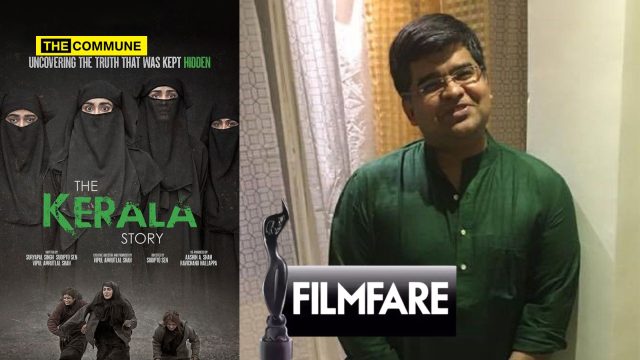
Filmfare Editor Calls Kerala Story A ‘Shit Show’ But His Own Awards Are Bought And Bartered
filmfare editor kerala story awards national award

When The Kerala Story, a film that exposed the dark reality of religious conversions and ISIS recruitment in Kerala, won the National Award for Best Film, the Bollywood elite couldn’t handle it. Leading the charge was Filmfare editor Jitesh Pillai, who took to Instagram to throw a tantrum, calling the film “dangerously divisive,” “shoddily scripted,” and “one of the worst movies ever made.”

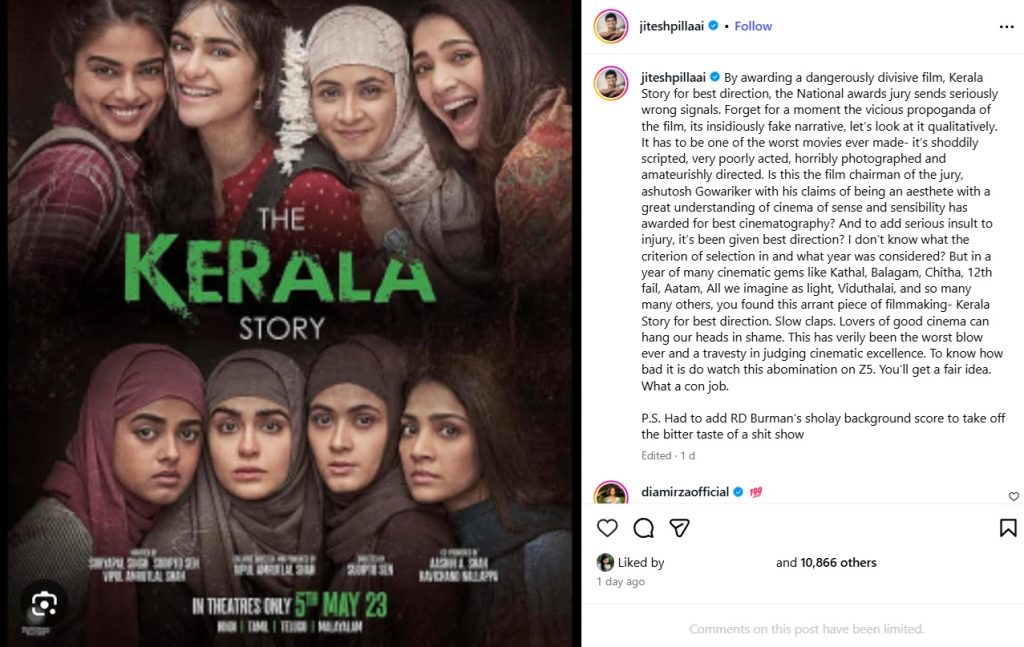
On his Instagram handle, Pillai wrote, “By awarding a dangerously divisive film, Kerala Story for best direction, the National awards jury sends seriously wrong signals. Forget for a moment the vicious propoganda of the film, its insidiously fake narrative, let’s look at it qualitatively. It has to be one of the worst movies ever made- it’s shoddily scripted, very poorly acted, horribly photographed and amateurishly directed. Is this the film chairman of the jury, ashutosh Gowariker with his claims of being an aesthete with a great understanding of cinema of sense and sensibility has awarded for best cinematography? And to add serious insult to injury, it’s been given best direction? I don’t know what the criterion of selection in and what year was considered? But in a year of many cinematic gems like Kathal, Balagam, Chitha, 12th fail, Aatam, All we imagine as light, Viduthalai, and so many many others, you found this arrant piece of filmmaking- Kerala Story for best direction. Slow claps. Lovers of good cinema can hang our heads in shame. This has verily been the worst blow ever and a travesty in judging cinematic excellence. To know how bad it is do watch this abomination on Z5. You’ll get a fair idea. What a con job.

P.S. Had to add RD Burman’s sholay background score to take off the bitter taste of a shit show”
The National Awards, judged by a government-appointed jury, didn’t play by the usual Bollywood pageant rules, and Pillai simply couldn’t digest it.

But here’s the irony: Filmfare Awards, the very institution Pillai represents, has long been accused of being a paid, rigged circus where trophies are handed out based on lobbying, star power, and cold hard cash, not merit.

Filmfare itself has a history of ignoring genuine talent while rewarding mediocrity, especially when it comes to films that challenge the Left-liberal narrative.

Ignored The Kashmir Files (2022): Despite being a cultural phenomenon, Filmfare snubbed it.

Snubbed Kerala Story (2023): The highest-grossing female-centric film of the year was conveniently left out of Filmfare’s nominations.

But rewarded Gangubai Kathiawadi (2023): A film that whitewashed a brothel madam as a feminist icon.

Why? Because Filmfare, like most Bollywood award shows, is not about merit – it’s about politics, lobbying, and money.

A History Of Paid Awards: Stars Speak, Filmfare Cringes

Let’s examine who’s talking. Jitesh Pillai, presiding over a platform that has been accused of selling awards, now lectures the public about “cinematic excellence.” But it’s not the public alleging corruption, it’s Bollywood insiders themselves.

Rishi Kapoor: “I Paid For My Award”

In his autobiography Khullam Khulla, Rishi Kapoor confessed to buying an award in 1973 for his debut film Bobby. While he didn’t name Filmfare explicitly, the timing and context left little to the imagination. “Someone told me, ‘You know, we can get this award, do you want it?’ I said yes… It will cost you Rs 30,000,” he wrote. “I regret it. I was a brat. I was 20 years old. It was wrong.”

And while he tried to suggest that maybe it didn’t reach the “original guys,” he admitted to getting the award.

Harshvardhan Kapoor Alleged Awards Are For Sale

Anil Kapoor’s son Harshvardhan was livid when he didn’t win the Filmfare Award for Best Debut, despite picking up two other awards that year. The trophy instead went to Diljit Dosanjh for Udta Punjab and Harshvardhan couldn’t stop venting about the perceived unfairness.

This added to the long-standing suspicion that Filmfare favors clout and camps over craft.

Aamir Khan & Imran Khan: “Commercial Awards Are A Joke”

Aamir Khan hasn’t attended a single commercial award show since the 1990s. Why? “Commercial film awards are of no value to me,” Aamir told Indian Express. His nephew Imran Khan echoed the same on a podcast: “They don’t directly tell you… they ask if you’re free on that day, and if you say yes, the award magically appears.”

Abhay Deol On Zindagi Na Milegi Dobara: “Shameless Demotion”

Despite Zindagi Na Milegi Dobara being a story about three friends, only Hrithik Roshan was nominated in the lead category. Abhay Deol and Farhan Akhtar were dumped into ‘Supporting Actor’ nominations – a blatant star power maneuver. “This was just shameless. So blatant. I boycotted the awards,” Abhay said.
“Just give the award to the biggest star, but don’t demote others.”

Amaal Mallik: “Sab Tera Got Nominated, Not Neerja?”

Singer and composer Amaal Mallik exposed the absurdity of music nominations in a scathing Facebook post. “You nominate Baaghi, an average album, but ignore Neerja, MS Dhoni, Airlift, Jugni?!”
“Why is Randeep Hooda in Sarbjit not nominated, but Aishwarya Rai is?”

Mallik’s outrage pointed to the fundamental rot: massive performances and content were being sidelined in favor of star names and soft PR.

What Jitesh Pillai Can’t Digest

The Kerala Story winning a National Award wasn’t about political propaganda, it was about a story, however controversial, being told through the lens of a director who dared to go against the grain. Whether you agree with the film or not, its success, commercially and culturally, was undeniable.

Pillai’s attack reeks of the elitist disdain of Lutyens gatekeepers who see the rise of non-conforming narratives as a threat to their carefully curated ideological bubble. But the public sees through it.

Jitesh Pillai and Filmfare have long presented themselves as arbiters of cinematic taste. But the reality is simpler: Filmfare is a glorified TV event built for TRPs, not artistic merit.

Subscribe to our channels on Telegram, WhatsApp, and Instagram and get the best stories of the day delivered to you personally.
TN Becoming Kidney Trafficking Hub? 52 More Victims Speak Out, Network Spreads Beyond State

tn kidney trafficking scandal

In a disturbing and deeply unsettling turn in the Namakkal kidney trafficking case allegedly linked to DMK functionaries another 52 individuals have come forward to testify that they had sold their kidneys as far back as 30 years ago. What was initially thought to be a localized crime targeting powerloom wage workers and women in the Kumarapalayam area of Namakkal district now appears to be part of a vast and vicious organ trafficking network that stretches across Tamil Nadu and beyond including Tirunelveli, Bangalore, Kerala, Chennai, and hospitals near Tambaram.

Victims Speak: Stories of Desperation, Debt, and Decay

Sujata, speaking to reporters, shared how she gave up her kidney 20 years ago due to unbearable debt. She said, “It’s been 20 years since we gave it. We only gave it for ₹30 (30,000) back then. We went and asked in Kerala. There was a debt issue of ₹50,000. We went there to pay back ₹30,000 of that ₹50,000.”

Another woman, Papathi, revealed that she underwent her kidney removal at Aravind Hospital in Coimbatore two decades ago. She said, “It’s been 20 years since I gave this. Aravind Hospital in Coimbatore. They gave ₹50 (₹50,000).” When asked if she was given any documents, she simply replied, “Nothing was given.”

Forced by Abandonment and Poverty

Gandhi and Shanthi, two women who were left by their husbands, were pushed into kidney donation under extreme financial distress.

Gandhi said, “It’s been 30 years since I gave it.” When asked where the operation was done, she replied, “Kovai Medical.” When the reporter asked how much she received, she answered, “They gave us… 45 (₹45,000).” Asked why she gave her kidney, she said, “Back then, it was very difficult. My husband left me. I had two small children. I couldn’t support them. My husband took a lot of loans and left. I couldn’t pay that debt. So, in that situation, I went and gave it.” When asked through whom she approached the hospital, she said, “That lady is no more. She passed away.”

Shanthi recalled her ordeal with similar anguish, “I gave it when I was 21. It was difficult then. Difficult even for food. We were weaving in workshop, and it became debt. My husband left me unable to pay the debt. So, because I couldn’t pay the debt, I gave it for this. They only gave ₹30,000 there. They spoke about ₹30,000, but they only gave ₹20,000-₹25,000 to our hands.”

Tragedy and Death After Donation

Another victim, Bakiyammal shared how her husband succumbed to illness after donating his kidney. She said, “Only my husband gave it. He couldn’t bear the debt, so he gave his kidney. Then his body became very weak. He couldn’t bear the pain for these three years and passed away.”

Other victims echoed that they gave up their kidneys to clear debts but are now suffering long-term health consequences.

One woman said, “I gave it because of hardship. My husband passed away. It’s been 30 years since I gave it.” Asked how much she received, she said, “I gave it for one lakh.” Asked where, she replied, “In Chennai.” Pressed for the hospital name, she said, “Tambaram. If you go a little distance from Tambaram bus stand, there’s a big hospital. We went through a boy from Vepanai.” Asked about her current health, she admitted, “There’s still some pain now.”

When reporter asked another woman, “How much did you give for your kidney?” She answered, “₹30,000.” Again, she was asked, “Which hospital?” She revealed, “In Bangalore.” he asked, “Do you know which hospital in Bangalore?” She said, “Rexide… In Bangalore.” When asked, “Did you give it for debt?” she acknowledged and said, “I gave it for debt.”

Another female victim recounted her experience when questioned. When asked how much she was paid for her kidney, she replied, “₹35,000.” She said she had undergone the procedure in Tirunelveli. When the reporter asked which hospital it was, she responded, “I’ve forgotten the hospital name now. It’s been a long time.” The reporter then asked through whom she had gone to give her kidney, to which she answered, “She has passed away now, hasn’t she?” confirming that the woman who facilitated it was no longer alive. When asked if she had to submit any documents or an Aadhaar card, she replied, “They didn’t ask for anything like that back then. There was no Aadhaar card then.”

The Price of Poverty: ₹5,000 for a Kidney

Raju, another victim, lamented his ordeal as he gave it for mere ₹5,000. “I gave it in 2000. I was 40 then, now 64. It’s been 25 years. I gave it for a debt of ₹5,000. Back then, we were weaving, and there was no weaving wage. Even if we wove, the wage was only ₹200-₹300 then. So I gave it for a ₹5,000 debt.”

Pain, Disability, and Lifelong Regret

One woman explained how the surgery left her crippled, “Now I can’t weave. My hands and legs feel like they’re cramping. I can’t sit on the floor. I can only sit if it’s elevated like this. I can’t sit on the ground. Even if I go to the bathroom, I can’t sit there.”

Another woman shared her account, saying, “They gave about ₹30,000–₹40,000 for the kidney.” When asked where the procedure took place, she replied, “They gave it in Coimbatore.” When pressed further about the hospital’s name, she admitted, “I don’t know the name of that hospital.” Recalling her condition post-surgery, she said, “My body was fine then. Now it’s difficult.”

In a particularly shocking case, Kamala, an elderly woman, revealed that she had sold her kidney just six years ago. Describing the pain she continues to endure. When asked how she was taken to the hospital, she explained, “There’s a woman named Ponnayi here, along with her.” When the reporter clarified, “You went through a broker?” Kamala nodded, “They took me.” Asked about her current physical state compared to before the surgery, she replied with visible distress, “My body aches.” When the reporter asked again, “Your body aches?” she confirmed, “Yes, it aches where they took it. I can’t work easily. My hands and legs feel tired. My legs feel tingly.”

Crushed by Poverty, Crippled for Life

One elderly man, Subramani broke down while speaking to the reporter, overcome with the weight of his past. “My wife and son have lost their lives. I have seven children in Namakkal Periyar Math. I’m just stumbling here and there, that’s all. Leg pain.” The reporter gently asked, “How much did you give?” The man replied bitterly, “For just ₹20,000, nothing more.” Trying to get clarity, the reporter asked, “In which city did you give it?” “In Bangalore,” he said. “And how is your body now?” “Now I can’t sit up and get up,” he said, “Only life remains.”

Another elderly woman, Lakshmi, overwhelmed with emotion, said, “I gave it 30 years ago.”  He asked, “In which city?” “In Coimbatore,” she answered. When asked, “Why did you give your kidney?” she replied, “It was due to many difficulties, so we gave it. That’s all.” “Did you go through a broker?” the reporter questioned. “Yes, sir,” she confirmed. “Do you know the hospital?” she said softly, “It was a kidney center.” Finally, the reporter asked, “How is your body now compared to before?” Lakshmi said, “I had four surgeries. I can’t. I can’t even speak.”

These harrowing testimonials lay bare the long-running horror of organ trafficking in southern India. With more victims coming forward, the depth and geographical spread of the alleged kidney trade network are now undeniable. Many are still suffering from chronic pain, financial ruin, and physical incapacity all while the system that exploited them remains largely unpunished.

Authorities face increasing pressure to act decisively and bring justice to the voiceless victims whose bodies still bear the scars of desperation.

Subscribe to our channels on TelegramWhatsApp, and Instagram and get the best stories of the day delivered to you personally.

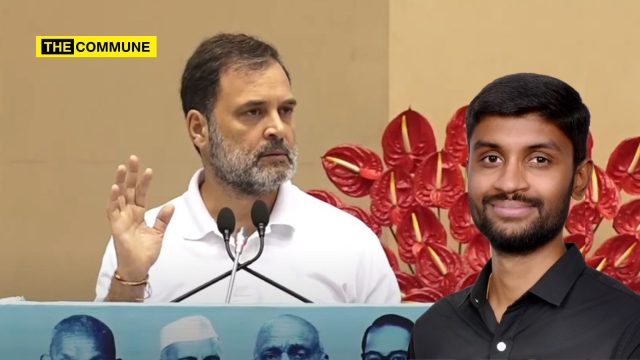
Dravidianist Journo Arvind Gunasekar Attempt To Buttress Congress Scion Rahul Gandhi’s Comments About Jaitley Fall Flat

It’s baffling how a so-called “neutral” journalist can use their position under the guise of balance, only to blatantly shield their preferred politicians even when they’re caught red-handed making false claims. The extent to which some in the media will stoop to defend their political favourites is truly remarkable. One such figure is pro-Congress and Dravidianist journalist Arvind Gunasekar.

At the 2025 Annual Legal Conclave, Lok Sabha Leader of Opposition and Congress MP Rahul Gandhi made a rather bizarre claim. He alleged that the late senior advocate and former Law Minister Arun Jaitley had once threatened him for opposing the farm laws. Rahul Gandhi said, “I remember when I was fighting the farm laws, Arun Jaitley ji was sent to me to threaten me. He told me “if you carry on opposing the govt, fighting the farm laws, we will have to act against you”. I looked at him and said “I don’t think you have an idea who you are talking to’”

The problem? Arun Jaitley passed away in 2019, while the farm laws were only introduced in Parliament in 2020. And now, in 2025, Rahul Gandhi claims to have been threatened by someone who was no longer alive at the time the laws were introduced. This clear contradiction was immediately pointed out and mocked widely.

However, Arvind Gunasekar, unable to bear the criticism of his political idol, rushed to his defense with a weak attempt at damage control. He tweeted that, “I think Rahul Gandhi meant Land Acquisition Act, 2015. Congress spearheaded the protests against the proposed Land Acquisition Act, 2015. Remember, then Union Finance Minister Arun Jaitley urged the States to pass the similar Land Acquisition Bills in their respective Assemblies and get President assent under Article 254(2) as then BJP Government couldn’t pass the Bill in the Parliament. Rahul Gandhi said the same in 2024 too.”

But the problem with this justification is simple: Rahul Gandhi very clearly and repeatedly said “farm laws” during his speech. The Land Acquisition Act, though it may affect landowners including farmers, is not categorized as part of the “farm laws.” The act pertains to land acquisition for public purposes such as infrastructure, security, and industrial development not specifically to agricultural policy reform.

This kind of spin, aimed solely at propping up political leaders under the pretext of journalism, hasn’t gone unnoticed. Social media users were quick to call out this blatant and dishonest defense.

Subscribe to our channels on TelegramWhatsApp, and Instagram and get the best stories of the day delivered to you personally.

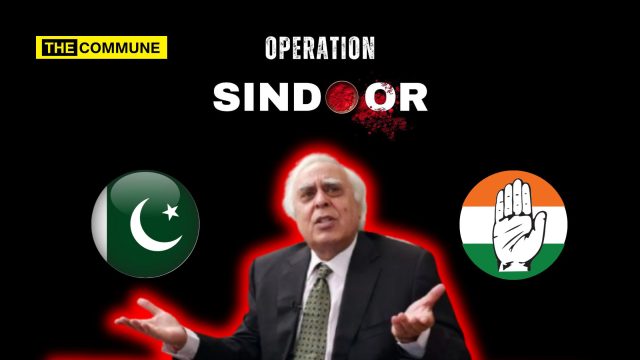
“War Was Stopped Because India Cannot Defeat Pakistan”, Says Congress Leader Kapil Sibal Buttressing Pak

kapil sibal congress pakistan war propaganda

In a recent episode of Dil Se, senior Congress leader Kapil Sibal in conversation with Rajya Sabha MP Sanjay Raut, Congress MP Gaurav Gogoi, and TMC Rajya Sabha MP Sagarika Ghose, made a series of statements that not only questioned India’s security apparatus but also dangerously aligned with Pakistan’s propaganda. His remarks came at the heels of the parliamentary debate on Operation Sindoor. His statements went beyond political criticism, they undermined India’s military operations, cast doubt on our defence preparedness, and echoed Islamabad’s talking points. This article dissects Sibal’s statements to expose how they serve Pakistan’s interests more than India’s.

“How did [terrorists] manage to come 400 kilometers inside without anyone knowing?”

Sibal repeatedly insinuated that India’s security forces were incapable of stopping terrorists. He was also kept repeating this statement a few times during the conversation and it seemed as if he was trying to push Congress MP Chidambaram’s allegation that Pahalgam’s terrorists were “homegrown“.

Sibal and his panelists forget that 26/11 Mumbai terror attacks took place under Congress rule (UPA). Despite warnings from intelligence, no action was taken and the terrorists sailed undetected from Pakistan to Mumbai. Congress members like Sam Pitroda said “Hua to hua” – what happened, happened.

By framing the issue as India’s “failure” rather than Pakistan’s state-sponsored terrorism, Sibal shifts blame away from Islamabad.

“In 2014, when our government left, at that time, the total deaths of civilians and security personnel was 189. In 2016, it increased to 257. It became 357 in 2017, it became 452 in 2018, 283 in 2019, 321 in 2020, 254 in 2021. This means that terrorism increased after 2014. After 2019, it increased even more. What does this mean? That neither 370 nor Pulwama nor Balakot nor surgical strikes had any effect, did they work?”

Kapil Sibal conveniently forgets mentioning the countless bomb blasts and terror attacks that hit capital cities and smaller towns across the country.

2004

  • Dhemaji School Bombing (15 August 2004) – ULFA bombed an Assam school on Independence Day, killing 18 (mostly children).

2005

  • Ram Janmabhoomi Attack (5 July 2005) – Five terrorists attacked Ayodhya’s Ram temple. 5 terrorists, 1 civilian, and 3 CRPF personnel killed.
  • Shramjeevi Express Blast (28 July 2005) – RDX explosion on Patna-Delhi train killed 14, injured 62.
  • Delhi Serial Bombings (29 October 2005) – Diwali-eve blasts killed 67, injured 200+.
  • IISc Bangalore Shooting (28 December 2005) – Gunmen attacked IISc, killing 1 professor, injuring 4.

2006

  • Varanasi Bombings (7 March 2006) – Blasts near Sankat Mochan temple killed 28, injured 100+.
  • Mumbai Train Bombings (11 July 2006) – Seven bombs on local trains killed 200+, injured 700+.
  • Malegaon Bombings (8 September 2006) – Cemetery blasts killed 37+.

2007

  • Samjhauta Express Bombings (18 February 2007) – Firebombing of Delhi-Lahore train killed 70 (mostly Pakistanis).
  • Mecca Masjid Blast (18 May 2007) – Hyderabad Mosque bombing killed 9, injured 58.
  • Shingar Cinema Blast (14 October 2007) – Ludhiana explosion killed 6, injured 42.
  • UP Court Bombings (23 November 2007) – Six blasts in Lucknow, Varanasi, and Faizabad courts.

2008

  • CRPF Camp Attack, UP (1 January 2008) – Militants killed 7 CRPF jawans.
  • Jaipur Bombings (13 May 2008) – Nine bicycle bombs killed 71, injured 185.
  • Bengaluru Blasts (25 July 2008) – Eight bombs killed 1, injured 8.
  • Ahmedabad Bombings (26 July 2008) – Twenty bombs killed 56, injured 200.
  • Delhi September Bombings (13 & 27 September 2008) – Five blasts killed 30; later market blast killed 2.
  • Assam Serial Blasts (30 October 2008) – Coordinated attacks killed 88, injured 500+.
  • 26/11 Mumbai Attacks (November 2008) – 10 LeT terrorists killed 166, injured 300+.

2009

  • Guwahati Serial Blasts (January–April 2009) – Multiple attacks by ULFA:
  • 1 January 2009: 6 killed, 67 injured before Chidambaram’s visit.
  • 4 January 2009: BW militants derailed goods train in North Cachar Hills.
  • 25 March 2009: Grenade attack in Tezpur injured 13.
  • 31 March 2009: Motorcycle bomb in Guwahati killed 1, injured 10.
  • 6 April 2009: Maligaon blast killed 6.

2010

  • Pune German Bakery Bombing (13 February 2010) – Bomb killed 18, injured 60+ (including foreigners).
  • Varanasi Ghat Blast (7 December 2010) – IED at Dashashwamedh Ghat killed 2-year-old, injured 25.

2011

  • Mumbai Triple Blasts (13 July 2011) – Zaveri Bazaar, Opera House, Dadar attacks killed 21.
  • Delhi High Court Bombing (7 September 2011) – Briefcase bomb killed 11, injured 50+.

2012

  • Attack on Israeli Diplomat (13 February 2012) – Car bomb injured diplomat’s spouse.
  • Pune Blasts (1 August 2012) – Four low-intensity blasts on JM Road.

2013

  • Hyderabad Blasts (21 February 2013) – Twin IEDs in Dilsukhnagar killed 18, injured 130.
  • Bangalore Bombing (17 April 2013) – Low-intensity blast injured 17 (12 police).
  • Bodh Gaya Blasts (7 July 2013) – Nine explosions at Buddhist shrine, minor injuries.
  • Patna Rally Bombings (27 October 2013) – Six bombs at Modi’s rally killed 5, injured 83.

2014

  • Chennai Train Bombing (1 May 2014) – Twin blasts killed 1, injured 14.

These were the many terror attacks that took place during the UPA era. And to top it all, there was absolutely no response following the dastardly 26/11 attacks because “no response is also a response” according to Congress.

The panelists kept repeating the lie that the terrorists did not ask the tourists’ religion before gunning them down.

“I give you my opinion, why Operation Sindoor was stopped? We have 31 squadrons in our country right now. The Air Force had an operation, our sanctioned strength is 42 squadrons. And in these 31 squadrons, your Mig 21, your Mirage 2000, Mig 29 and Jaguars are all being phased out. So, in just a few months, we will be left with 29 squadrons and Pakistan has 25 squadrons. We have 522 jets. Pakistan has 450 jets and China has 1300 jets. So, this means that our defence, air force, is almost equal to them.  Secondly, we have Rafale because we have one Rafale and one Su-30 MKI. Rafale is a 4.5 generation aircraft. But the aircrafts that they have are J10 and J17. China has these, so they can use them. So it is a superior aircraft or an equal aircraft. Now China is manufacturing the fifth-generation aircraft called J20. Our fifth-generation aircraft which AMCA is developing, and its production will take place in 2035, in 2028 and in 2035. By then, China will have the fifth generation and now they are developing the sixth generation. Meaning that if this fight had gone further, then certainly no one would have won. So, they would not have been able to fight. They should have raised these issues in the House – how to increase our Air Force system and I am not saying this. This was said by the Air Chief Marshal Amarpreet Singh.”

Rather than asserting India’s military superiority or strategic resolve, Sibal sounded more like a spokesperson for Rawalpindi’s narrative of Indian overreach and strategic weakness. Neither he nor the panelists lauded the military efficiency of the indigenous arms that were deployed during Operation Sindoor. Yes, we need to improve but Sibal also does not bother to mention that it was Pakistan that came begging to India to stop the war after we hit their nuclear bases.

“During the parliamentary debate, it suddenly seemed as if those three terrorists were killed during the debate so that the ruling party could claim, ‘Look, we killed them.'”

This cynical statement trivializes the lives of security personnel and paints the Indian government as manipulators, an accusation that mirrors exactly the kind of conspiracy theories promoted by Pakistan’s disinformation cells.

Kapil Sibal’s rhetoric dangerously echoes Pakistan’s propaganda on Kashmir and terrorism, consistently undermining India’s strategic position. By repeatedly questioning the competence of India’s security forces and military operations, he erodes public trust in our armed forces while ignoring Pakistan’s well-documented role in sponsoring cross-border terror. His selective outrage focuses solely on blaming the Indian government while never holding Pakistan accountable for attacks like 26/11, Pulwama, or Uri. If Sibal genuinely cared about national security, he would unequivocally condemn Pakistan’s state-sponsored terrorism, stand firmly behind our armed forces instead of casting doubt on their capabilities, and refrain from exploiting terror attacks for political gain. Until he makes these fundamental changes, his statements serve only to amplify Pakistan’s anti-India narrative rather than India’s security interests.

Subscribe to our channels on TelegramWhatsApp, and Instagram and get the best stories of the day delivered to you personally.

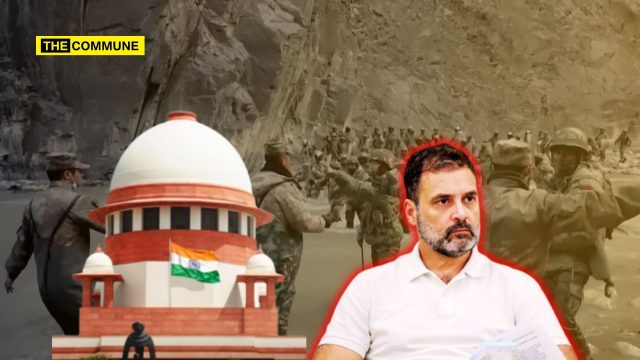
“A True Indian Would Not Say This”, Supreme Court Knocks On Rahul Gandhi’s Head Over Remarks Against Indian Army During 2020 Galwan Valley Clash

The Supreme Court on Monday, 4 August 2025, stayed the criminal defamation proceedings against Congress leader and Leader of Opposition Rahul Gandhi over his alleged derogatory remarks about the Indian Army, made in the context of the 2020 Galwan Valley clash with China. The Court, while granting interim relief, also expressed strong disapproval of Gandhi’s comments during the hearing.

The bench, comprising Justice Dipankar Datta and Justice A.G. Masih, passed the stay order while hearing Gandhi’s Special Leave Petition (SLP) challenging the Allahabad High Court’s refusal to quash the defamation case.

Senior Advocate Dr. Abhishek Manu Singhvi, appearing for Rahul Gandhi, submitted at the outset, “If he can’t say these things which are published in the Press, he can’t be a leader of opposition,” arguing that the remarks were part of his duty as a political leader to raise concerns. However, the bench did not appear entirely convinced.

“Whatever you have to say, why don’t you say in the Parliament? Why do you have to say this in the social media posts?” Justice Datta asked.

Expressing further disapproval, Justice Datta questioned the basis of Gandhi’s claim that Indian territory had been occupied. “Tell Dr. Singhvi, how do you get to know that 2000 square kilometres of Indian territory were occupied by the Chinese? Were you there? Do you have any credible material? Why do you make these statements without any…If you were a true Indian, you would not say all this.”

Responding to this, Singhvi said, “It is also possible that a true Indian will say that our 20 Indian soldiers were beaten up and killed and that it is a matter of concern.”

Justice Datta replied, “When there is a conflict across the border, is it unusual to have casualties on both sides?”

Singhvi submitted that Gandhi was only pointing to a lack of proper disclosure and attempting to raise concerns over suppressed information. While conceding that the petitioner could have “worded the comments in a better manner,” Singhvi argued that the complaint was merely an attempt to harass Gandhi for fulfilling his role as an opposition leader.

He further pointed out that under Section 223 of the Bharatiya Nagarik Suraksha Sanhita (BNSS), a prior hearing of the accused is mandatory before a court can take cognisance of a criminal complaint, a requirement allegedly not followed in the present case.

Justice Datta, however, noted that the Section 223 argument had not been raised before the High Court. Singhvi admitted to this lapse, stating that the earlier challenge was primarily based on the issue of locus standi of the complainant.

The bench agreed to examine this point and issued notice on the SLP. An interim stay on the defamation proceedings was granted for three weeks.

Senior Advocate Gaurav Bhatia appeared on caveat for the complainant, Uday Shankar Srivastava, a former Director of the Border Roads Organisation (BRO).

The defamation complaint, pending before an MP-MLA court in Lucknow, stems from statements allegedly made by Gandhi on December 16, 2022, during the Bharat Jodo Yatra. According to the complaint, Gandhi repeatedly claimed that the Chinese army was “thrashing” Indian soldiers in Arunachal Pradesh and accused the Indian press of silence on the issue. The complainant argued that such remarks were defamatory and demoralising to members of the armed forces and their families.

The Lucknow court had earlier taken cognisance of the complaint, finding prima facie that the statements appeared capable of defaming the Indian Army. Gandhi’s challenge to that order was rejected by the Allahabad High Court on 29 May 2025. Justice Subhash Vidyarthi of the High Court ruled that freedom of speech does not include the right to defame the Army.

The Supreme Court’s interim stay offers temporary relief to Gandhi, but the Court’s oral observations signal that the broader legal and political implications of the case remain under scrutiny.

(With inputs from Live Law)

Subscribe to our channels on Telegram, WhatsApp, and Instagram and get the best stories of the day delivered to you personally.
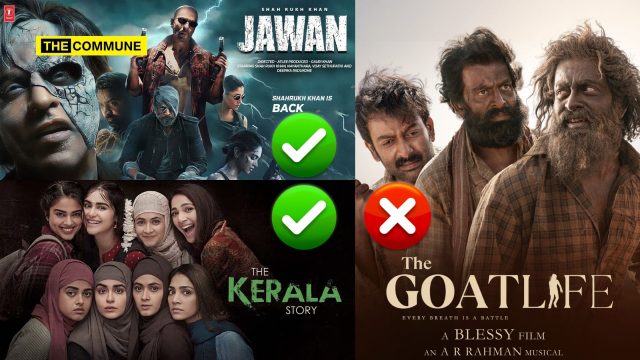
When Jawan Wins And Aadu Jeevitham Doesn’t, The Award Is The Joke

Aadu Jeevitham may not be everyone’s movie; I haven’t seen it yet and won’t. However, from the visuals and few snippets that you get to see by chance, one can definitely say that the movie had performance and cinematic aesthetics much better than Atlee’s Jawan starring Shah Rukh Khan.

I verified on Google if Aadu Jeevitham was not eligible for the 2023 list. According to a jury, it was on their list and wasn’t considered, and they had their reasons for doing so. It’s evident that Prithiviraj’s political motive was the reason for this treatment.

His political motive is his choice. I personally will troll him, question him, and ignore him on his political motive. But I have a choice regarding his movies. I cannot watch Empuraan, I watched the awful Salaar, and I liked the movie Guruvayoor Ambalanadayil. I will appreciate his efforts for Aadu Jeevitham. I liked Jana Gana Mana for its theme, even with its forced political agenda.
Likewise, the government also has its agenda and choice. If anyone uses an entertainment platform for political motives, any government can respond in political terms.
Prithviraj is mature enough to understand this. Every time he imposes his political motives in his films, he would have known the consequences. I don’t think he will come out and say anything about Aadu Jeevitham. I believe he will continue to make more movies with political motives.
However, he should consider whether he should use this industry for his political reasons. He should rather come into politics and stand by his agenda. That’s what heroes in movies do. Moreover, people watch movies for entertainment, not for enlightenment. This is not the medium for anyone’s political intentions.
At the same time, Aadu Jeevitham deserves a mention. To be on the list and then award SRK for Jawan is pathetic jury service. It’s said that Ashutosh Gowariker, director of Swades, was on the jury and influenced this award. I’m not sure if he watched Swades or Jawan to make this decision.
Ironically, awarding Jawan is not just tone-deaf — it’s outright foolish. Atlee, through Shah Rukh Khan, laced the film with subtle digs at the current regime. So if the goal was to sideline those against the BJP, the jury failed miserably there too. Pathetic.
The government uses different yardsticks for DMK-supporting actor Surya and Prithviraj. Surya has made baseless and one-sided arguments against policies and was awarded for his Soorarai Pottru, an average film where facts were distorted to peddle Dravidian propaganda. On the other hand, Prithviraj is denied even recognition. Why is that?
The government proclaims that it treats everyone equally and provides merit-based recognition; it should stop saying that. Or they should treat entertainment as entertainment. There are several other cases against Prithviraj, and they should go the legal way against him. Using this jury isn’t dharmic.
After all, we’re not like Congress, that’s what we continue to say in parliament.
Moving on to The Kerala Story. The facts behind Kerala Story deserved a movie, no doubt. It deserves to be made tax-free and some state governments did. The awareness about the issue was required. The film got a good response, especially from Kerala no matter the noise from the secular leftists.
Even if it was one girl’s story, it’s justified. Every life matters. Aadu Jeevitham was also one man’s story, so this movie was totally justified.
However, giving Kerala Story the highest recognition with national award for Best Direction? Seriously? It was a mediocre movie with abysmally low standards of screenplay, worse than standard serials. The overall acting was pathetic.
Maybe it deserved an award in the public interest awareness category. But to be awarded the best movie among all others is insulting everyone in the industry and anyone who goes to the theater to watch a movie. This is like making Pratibha Patil the President of this country.
I wouldn’t be surprised if another mediocre moviemaker, Vivek Agnihotri, gets the best director award, or The Kashmir Files gets best film, or Surya in Kanguva gets best actor. We should even award Mohanlal the best actor in Empuraan to compensate for this backlash.

This article is a reproduction of a Facebook Post by Suresh Kumar.

Subscribe to our channels on Telegram, WhatsApp, and Instagram and get the best stories of the day delivered to you personally.
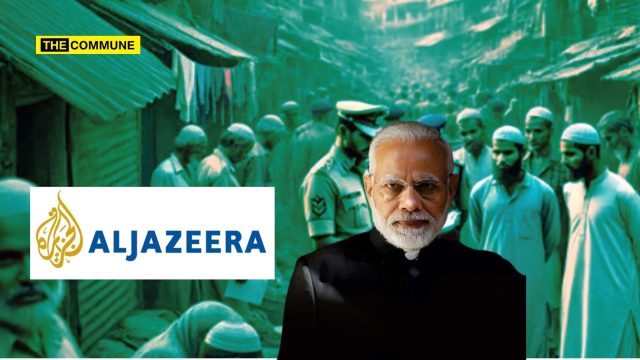
How Al Jazeera Bulldozes Truth: Turns India’s Deportation Of Illegal Bangladeshis Into “Othering Of Muslims In Modi’s India”

illegal bangladeshi india modi al jazeera

In a recent segment by Al Jazeera’s The Listening Post, the network once again peddled its now-predictable narrative, that India, under Prime Minister Narendra Modi, is engaged in a systematic campaign to expel, dehumanize, and erase Muslims, particularly Bengali Muslims. This time, the pretext was the National Register of Citizens (NRC) and the deportation of illegal immigrants. But as is often the case with Al Jazeera’s coverage of India, the truth takes a back seat to ideological distortion.

At the heart of the episode is a wildly exaggerated claim: that India is engaged in the “expulsion of Bengali Muslims,” with mass deportations, “bulldozer justice,” and mainstream media complicity supposedly forming the core of a fascist Hindu project.

The host says, “…the deportations are just one byproduct of a larger BJP political project, one that often abandons due legal process, weaponizes citizenship, and has Muslims asking themselves, is there a place for them in India in 2025? Having spent more than 10 years under the rule of Prime Minister Narendra Modi and his party the BJP, Indian Muslims have repeatedly been otherred, treated as some kind of enemy within.”

The piece conveniently omits the core fact that the NRC is a legal and constitutional exercise designed to identify illegal immigrants, not to target Muslims. Moreover, Indian law provides mechanisms for redress, appeals, and documentation, none of which are acknowledged by Al Jazeera’s selectively outraged journalists.

Deliberate Omission and Manufactured Outrage

Al Jazeera’s framing rests on three misleading assumptions:

  1. That Bengali Muslims are being expelled for being Muslim, not illegal immigrants.
  2. That Indian media uniformly supports state crackdowns.
  3. That the Indian state is engaged in systemic “othering” of Muslims.

What they never mention is that thousands of Bengali-origin Hindus, Nepali migrants, and even tribal communities have also been flagged during the NRC process. The issue is not religion; it is illegal immigration, and that too in a border-sensitive state like Assam, which has long witnessed demographic shifts due to cross-border migration.

This is a fact not lost on the Assamese people, regardless of religion, who have consistently voiced concerns about illegal influx, a fact that predates the Modi government by decades. But in Al Jazeera’s ideological filter, every legal administrative measure becomes “Hindutva fascism.”

The IndiGo Flight Incident: Where Was Al Jazeera Then?

Al Jazeera’s moral outrage is also stunningly selective. Just days ago, a disturbing video went viral of one Muslim man slapping another on an IndiGo flight during a panic attack. Hussain Ahmed Majumdar, a Muslim hotel worker from Assam, was physically assaulted mid-flight by Hafijul Rahaman, also Muslim. The incident was widely reported in Indian media, with IndiGo banning the perpetrator and law enforcement getting involved.

But here lies the hypocrisy: Al Jazeera has been eager to frame nearly every communal or legal conflict in India as “Hindus attacking Muslims.” What narrative would they have crafted for this event? That Modi is causing Muslims to slap each other on flights?

Not Journalism But Activism

Al Jazeera is no stranger to double standards. While it never hesitates to attack India’s internal policies, even when they are constitutional, legal, and due-process-based, it remains silent on its own country of origin’s glaring human rights record. The outlet, funded by Qatar, a monarchy that bans political parties and criminalizes dissent, has no moral ground to lecture the world’s largest democracy.

The Listening Post’s reporting claims to be a watchdog of media and state power. But in truth, it has become a propaganda organ weaponizing journalistic tropes to peddle soft Islamism, project victimhood, and vilify sovereign nations that refuse to play to their ideological script.

A Word on Citizenship and Democracy

India’s Representation of the People Act, 1950 clearly defines the criteria for voter registration: ordinary residency, not religious identity. Migrant workers, whether from Bihar to Tamil Nadu or Assam to Maharashtra, can register to vote where they live and work. This was reaffirmed recently by the Election Commission of India in response to P. Chidambaram’s false claims about voter manipulation in Tamil Nadu.

But for Al Jazeera, facts and legal frameworks are irrelevant. They prefer narratives that pit Hindus and Muslims against each other, manufacture outrage over “bulldozer justice,” and whitewash illegal immigration by calling it cultural genocide.

Subscribe to our channels on Telegram, WhatsApp, and Instagram and get the best stories of the day delivered to you personally.
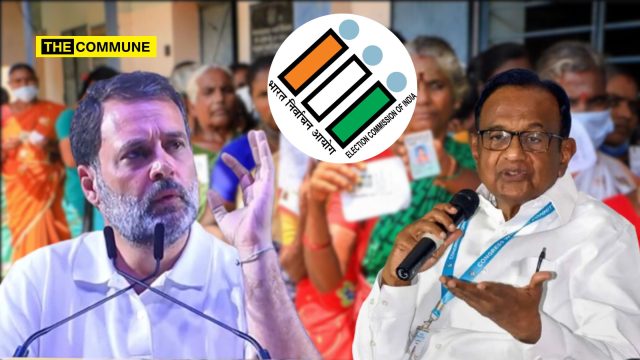
ECI Busts Congress MP P Chidambaram And Rahul Gandhi’s Allegations Of Electoral Roll Manipulation

eci rahul gandhi chidambaram

On 3 August 2025, the Election Commission of India (ECI) firmly rebutted allegations made by Congress MP P. Chidambaram, who claimed that voters were being shifted and migrant workers were being added to Tamil Nadu’s electoral rolls in a questionable manner. The ECI labeled these accusations as “misleading and without foundation.”

ECI Busts P Chidambaram’s Claim

In a strongly worded response, the Commission criticized Chidambaram for spreading misinformation regarding the Special Intensive Revision (SIR) process, which is a nationwide exercise. The statement read, “There is no need for political leaders to spread false information with respect to the SIR exercise being conducted by ECI at national level. It has come to the notice of the ECI that such information is being deliberately peddled in the media with a view to obstruct the exercise.” The EC went on to say that such statements appear to be intentionally circulated in the media to disrupt and discredit the process.

Addressing the issue of voters who have moved permanently from Bihar to other states, the EC clarified that accurate data would only be available once the SIR is completed. It emphasized that, under the Indian Constitution and the Representation of the People Act, 1950, individuals are eligible to register as voters in the constituency where they ordinarily reside. The EC also rejected claims of 6.5 lakh voters being added in Tamil Nadu, stating that SIR has not yet begun in the state, and linking it to the Bihar exercise is baseless.

It added, “As far as voters who have permanently shifted from Bihar to other states and are ordinarily resident in those states, the exact figures can be known only after the SIR has been conducted. The Constitution of India read with RP Act 1950 envisages Enrollment of voters with respect to the constituency in which they are ordinarily resident. It is for the voters to come forward and get enrolled in the constituency where they are eligible. But, it is noticed that some false figures are being floated about enrollment of 6.5 lakh voters in Tamil Nadu. SIR has not yet been rolled out in T.N. It is therefore absurd to connect the SIR exercise in Bihar with TN. Such peddling of false statements with respect to SIR should be avoided.”

EC Clarifies Legal Framework on Voter Registration

The Commission issued five key points to counter the Congress leader’s claims:

  • Article 19(1)(e) of the Constitution gives every citizen the right to live and settle anywhere in India.
  • Section 19(b) of the Representation of the People Act, 1950, allows individuals to be registered in a constituency where they are ordinarily residents.
  • Section 20 of the same Act defines “ordinary residence.”
  • A person originally from Tamil Nadu living in Delhi has the right to register as a voter in Delhi.
  • Similarly, a migrant from Bihar residing in Chennai is eligible to vote in Chennai if they meet residency requirements.

Earlier in the day, Chidambaram took to social media platform X (formerly Twitter) to criticize the ECI for what he described as a suspicious increase in Tamil Nadu’s electoral roll by 6.5 lakh migrant workers, while simultaneously removing about 65 lakh names from Bihar’s voter list, labeling them as “permanently migrated.” He called this trend both “alarming and illegal,” and accused the Commission of interfering with the democratic rights of Tamil Nadu voters. He questioned why migrant workers couldn’t simply return to their home state to vote during elections, as many do for festivals like Chhath Puja.

The SIR exercise is getting curiouser and curiouser While 65 lakh voters are in danger of being disenfranchised in Bihar, reports of “adding” 6.5 lakh persons as voters in Tamil Nadu is alarming and patently illegal Calling them “permanently migrated” is an insult to the migrant workers and a gross interference in the right of the electorate of Tamil Nadu to elect a government of its choice Why should the migrant worker not return to Bihar (or his/her home state) to vote in the State Assembly election, as they usually do? Does not the migrant worker return to Bihar at the time of the Chhath puja festival? A person to be enrolled as a voter must have a fixed and permanent legal home. The migrant worker has such a home in Bihar (or another state). How can he/she be enrolled as a voter in Tamil Nadu? If the migrant worker’s family has a permanent home in Bihar and lives in Bihar, how can the migrant worker be considered as “permanently migrated” to Tamil Nadu? The ECI is abusing its powers and trying to change the electoral character and patterns of States This abuse of powers must be fought politically and legally @CMOTamilnadu he asked.

Chidambaram alleged that this move was aimed at altering the electoral demographics of Tamil Nadu and accused the EC of misusing its authority, calling for political and legal resistance.

ECI Busts Rahul Gandhi’s Claim

Similar to Congress MP P. Chidambaram, the official Congress social media handle also amplified Rahul Gandhi’s recent claims, asserting that the 2024 Lok Sabha elections were manipulated. Referring to alleged discrepancies, the Congress post peddled, “How is the Lok Sabha election stolen? Out of 6.5 lakh voters, we found 1.5 lakh to be fake. It’s all documented; we obtained physical papers from the Election Commission. The election system in India is dead. Remember, the Prime Minister of India holds office with a very slim majority. If 15 seats were rigged and we suspect the number to be much closer to 70 to 100. If 15 seats hadn’t been rigged, he wouldn’t be the Prime Minister of India. And we’ll prove to you that the Lok Sabha can be and was rigged. The institution that holds, protects, and defends this has been taken over. I now have 100 percent proof.”

In response to these statements, the Election Commission of India issued a firm rebuttal, accusing Rahul Gandhi of spreading unverified and misleading narratives. The Commission stated, “Shri Rahul Gandhi has repeatedly made unsubstantiated and misleading allegations, including baseless claims such as “vote chori,” and has threatened lakhs and lakhs of hardworking election officials across the country. It appears that these unfounded allegations are intended to discredit their impartial and transparent hard work, attempt to exert undue pressure on the election machinery, and even threaten them without even filing an appeal against electoral roll or even an EP against the conduct of elections as per law.”

The EC further revealed that Rahul Gandhi was invited to discuss these concerns in a formal setting on 12 June 2025, but he did not respond to the invitation. It added, “when the Election Commission extended an invitation to Shri Rahul Gandhi for an interaction on 12 June 2025, there has been no response from him so far.”

EC Clarifies Election Procedures Were Followed

To address the controversy, the Election Commission clarified that during the preparation for the 2024 Lok Sabha elections, both draft and final voter rolls were shared with all political parties, including the Indian National Congress. These lists were open to challenge under Section 24 of the Representation of the People Act, 1950, yet very few objections were raised by the Congress across all 36 states and union territories.

Additionally, following the elections, only eight election petitions were filed by INC candidates under Section 80 of the Representation of the People Act, 1951, suggesting limited formal contestation of the results.

Subscribe to our channels on TelegramWhatsApp, and Instagram and get the best stories of the day delivered to you personally.

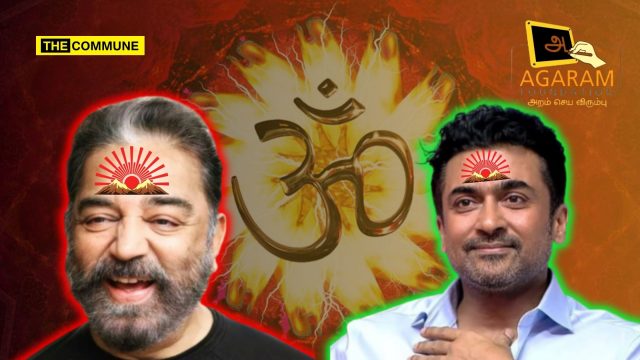
DMK Stooge MP Kamal Haasan Derogates Sanatana Dharma, Peddles Anti-NEET Propaganda At Fellow DMK Stooge Actor Suriya’s Agaram Foundation PR Event

What was billed as a celebration of 15 years of social service by the Agaram Foundation turned into a carefully curated public relations event for actor Suriya and his political allies. While the event aimed to highlight educational initiatives for underprivileged students, the presence of actor-politician Kamal Haasan and the nature of Suriya’s own speech made it difficult to ignore the underlying political messaging and image management at play.

Actor-politician and Makkal Needhi Maiam chief Kamal Haasan, now Rajya Sabha MP at the mercy of the DMK, on Sunday 3 August 2025, abused Sanatana Dharma during his address at the 15th anniversary celebrations of the Agaram Foundation in Chennai, calling education “the only weapon that can break the chains of dictatorship and Sanatan”.

What DMK Stooge Kamal Haasan Said

Speaking at the event organised by actor Suriya’s education charity, Haasan emphasised the transformative power of education and called for deeper investment in knowledge systems and social empowerment.

“Don’t take anything else in your hands, only education. We cannot win without it, because the majority can make you lose. Majority fools (Moodargal) will make you lose; knowledge alone will seem defeated. That’s why we must hold on to it (education) firmly,” he said.

Haasan drew a clear line between performance in cinema and service to society, saying, “In cinema, we are crowned for our performances. But in social work, we are given a crown of thorns. It takes a strong heart to accept that crown. No one else will do this for us, we have to do it ourselves.”

He praised the Agaram Foundation for providing educational support to underprivileged children, stating, “True education and unconditional love are hard to come by. Apart from our mothers, institutions like Agaram Foundation are among the few places where we can still find them.”

Taking a direct swipe at the NEET policy implemented in 2017, Haasan said the exam had crushed the dreams of medical aspirants from marginalised communities in Tamil Nadu. “You can’t see doctors of such a batch next year. There is a reason for what I’m saying, as after 2017, they are unable to continue their efforts. Now do you understand why we oppose NEET? Since 2017, that law has made such children unable to get education,” he said.

“Even Agaram Foundation, despite its best efforts, cannot help students beyond a point because the law doesn’t allow it. To change the law, we need strength and that strength can only come from education,” he added.

Sharing a recent conversation with Tamil Nadu Chief Minister M.K. Stalin, Haasan said, “Yesterday, I told the Chief Minister that NGOs were not asking for anything like money, they’re only asking for permission to work. He assured me that steps are being taken in that direction. I am proud to be involved in this cause.”

Concluding his address, Haasan offered a reflection on leadership: “Leadership is that which disappears (with time) into the society and not that stands and rules. It took me 70 years to understand this.”

Haasan’s invocation of “Sanatan” also echoes a the DMK scion’s derogatory statements to “eradicate Sanatana Dharma in 2023 at a conference by that name which caused an uproar all across the country. Udhayanidhi Stalin had stated that ‘Sanatana Dharma’ must be eradicated like diseases caused by mosquitoes, linking it to caste discrimination. While multiple cases were filed against him, the Supreme Court later barred the registration of further cases on the matter.

DMK Stooge Suriya Makes His PR

Suriya’s speech was packed with emotional appeals, crafted in a tone of humility and gratitude, but layered with subtle self-promotion and political signaling. His repeated emphasis on how alumni of Agaram are now “giving back” through volunteerism, and how ₹300 a month could change a life, served dual purposes – maintaining the foundation’s crowd-funded image while elevating Suriya as a selfless philanthropist.

“I ask with all due respect… contribute at least ₹300 per month so that the right student can reach the right student and their life will also change like this,” Suriya pleaded, subtly shifting the focus from systemic educational failures to individual generosity – a tactic often used to draw attention away from government accountability.

Suriya said, “More than 6,000 students from extremely humble backgrounds have received an education and gone on to achieve great things. Many were orphans. Today, our former students are running the programme with empathy and social awareness.” He further added, “in 2026, there will still be first-generation students.” – While he says this, he does not question the reality of the so-called Dravidian Model that he supports. Why will there be first-generation students in the 21st century if the Dravidian model has done wonders?

With this event, we have seen two leading Kollywood actors hosting “educational support” events, each carefully crafted to serve personal agendas under the guise of social service. Both talk about NEET and why it must be abolished, the importance of education, social equality, and women’s empowerment – clearly aligned with political narratives, especially as the hosts, want to build up on their PR image.

While actor Vijay, has now formally entered politics was touted as “younger Kamaraj”, Suriya portrayed him as a selfless crusader for education, with supporters likening him to a “living Abdul Kalam” – a transparent attempt at image-building. While one used the platform for direct political positioning, the other indulged in high-gloss PR, reinforcing the idea that both events, though cloaked in the language of upliftment, were ultimately about self-promotion.

While Suriya makes great claims about the foundation, it is noteworthy that Agaram Foundation, a “non-profit” organization ironically applies its own stringent selection criteria to determine which students deserve financial aid. Despite promoting the cause of educational equality, Agaram uses a rigorous scoring system to shortlist applicants, directly contradicting its stated mission.

Subscribe to our channels on Telegram, WhatsApp, and Instagram and get the best stories of the day delivered to you personally.
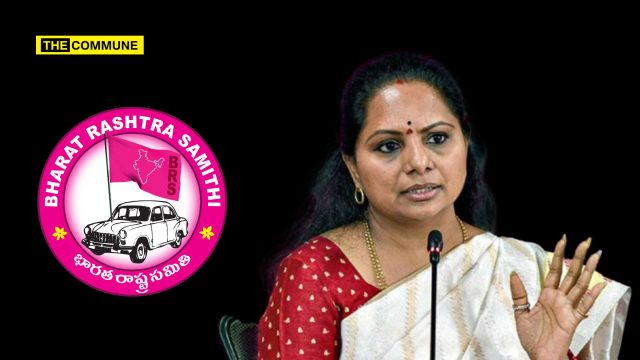
Rift Deepens In BRS As Kavitha Accuses Party Insiders Of Malice

brs kavitha rift attack

The rift within the Bharat Rashtra Samithi (BRS) widened further on Sunday with party President and former Telangana Chief Minister K. Chandrasekhar Rao’s daughter and MLC K. Kavitha launching an open attack against party MLA and former minister G. Jagadish Reddy.

Kavitha blamed some “insiders” for derogatory comments made by suspended Congress MLC Chintapandu Naveen alias Teenmaar Mallanna against her.

Talking to media persons, she alleged that a top leader of BRS was behind the comments, and that is why the BRS leaders remained silent. In a personal attack on Jagadish Reddy for his certain comments, she called him “Lilliput”.

Kavitha remarked that the leader “who survives only in the shadow of KCR (as Chandrasekhar Rao is popularly known)” destroyed the BRS in the Nalgonda district.

“If KCR is not there, who are you?” she asked. Jagadish Reddy had reportedly made certain remarks about her position, recognition, and deviation from the party.

“Another small leader who joined the party later is also questioning my credibility. Telangana society will not spare such leaders,” Kavitha said.

Kavitha said that some leaders stooped so low to encourage derogatory comments against her. “Your efforts to sideline me and make me lonely will be paid back as I believe in Karma,” she said. Kavitha, who heads the Telangana Jagruthi, seen as the cultural arm of the BRS, has been targeting a section of senior leaders, including her brother and BRS Working President K.T. Rama Rao, since her confidential letter to KCR was leaked a few months ago.

Calling KCR a “god”, she had remarked that he is surrounded by devils. Meanwhile, Jagadish Reddy responded to Kavitha’s comments. He wrote on X that he salutes her for her knowledge about his journey in the Telangana movement. He also said he expressed sympathy for her efforts to use the words spoken by KCR’s enemies.

Responding to BJP MP C.M. Ramesh’s comments on the BRS-BJP merger, Kavitha said his comments were taken out of her leaked letter written to KCR. The BRS MLC said that the government has not yet given her permission for a dharna over the demand for 42 per cent reservation for BCs and hoped that the High Court would protect her rights.

The High Court will be hearing, on Monday, the Telangana Jagruthi’s petition for direction to the government to give permission for a 72-hour hunger strike. She said that the hunger strike would follow the Gandhian path of peaceful resistance.

Stating that there are 112 BC castes in Telangana, she said that the idea behind the 72-hour dharna is to give 40 castes every day an opportunity to express their problems. Kavitha said if Congress was sincere in its fight for 42 per cent reservation for BCs, its leaders, Rahul Gandhi and Priyanka Gandhi, should have raised their voice in the Parliament.

She slammed the BJP for not approving the two Bills sent to the Centre by the state for 42 per cent reservation of BCs in education, employment and local bodies.

-IANS

Subscribe to our channels on TelegramWhatsApp, and Instagram and get the best stories of the day delivered to you personally.