Home Blog Page 185

Krishnagiri: Dalit Women Accuse Local DMK Leader Nagaraj Of Caste Abuse And Sexual Favors Over Land Rights
krishnagiri dalit women dmk

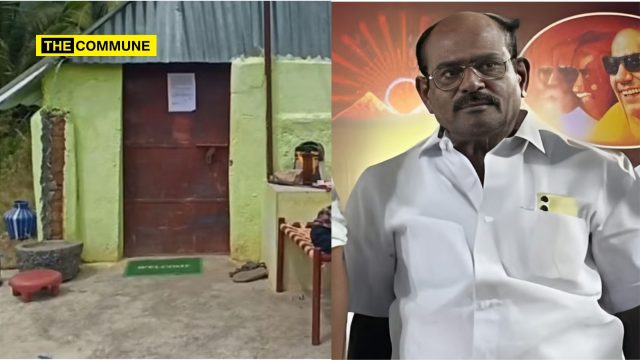
In a disturbing incident from the Thatrahalli area of Krishnagiri district, two Scheduled Caste women have accused Nagaraj, a local DMK functionary, of caste-based abuse, sexual harassment, and coercion in exchange for land rights (patta). The women allege that Nagaraj exploited their vulnerable status being widowed or abandoned and threatened them with eviction if they failed to comply with his demands.

Tamil Selvi, a 30-year-old widow and mother of four (three daughters and one six-year-old son), and Muniyammal, a single mother of two, are among the women who have not received official land ownership (patta) despite residing in Thatrahalli for over 30 years. While others in nearby dwellings have been granted land rights, these women claim they were deliberately excluded.

According to their statements, Nagaraj had repeatedly summoned them over the past five years, demanding they clean toilets at his home. When they refused, he allegedly used caste slurs and threatened them with eviction. The women said they were told not to approach authorities regarding the patta, or they would be forced to vacate their homes.

Speaking to the media, the women expressed deep fear for their safety. Tamil Selvi said, “My husband’s name is Ramraj, he has passed away. We’ve been living here for about 30 years. There were no problems when we lived in a thatched hut. The Krishnagiri District Chairman, who is from the DMK party, started causing problems. He called me to work at his house, to clean his bathroom. I told him I couldn’t come because I have children to take care of and I can’t leave them. He then said, “You are a ****, low-caste woman. You won’t listen to me. I will see how you stay in this place. I will make sure you vacate this house. You won’t be allowed to stay here.” He started threatening me daily. At night, they throw stones at my house and break things. They bang on my door and cause many problems. Everyone in this town knows about the troubles we, with our four children, are facing.”

Muniyammal said tearfully, “He says, “When I call you, you have to come. Everyone else here comes when I call them, why don’t you?” It’s really hard to sleep here with children. At night, some unknown people who are drunk come and create a ruckus. They took my signature, saying a land title deed (patta) has come. They asked me to sign and I did. A week later, when I went and asked about the patta, because everyone else got it but we didn’t, they said my name wasn’t on the list. When I asked why they took my signature, they said, “Nagaraj said that you will not be given a patta.” (He threatens me saying), “I will throw any amount of money at you. Come to me, and I will build you a house. If you don’t come, I won’t let you stay on this land.” He has been threatening me like this for five or six years.”

They further alleged that Revenue Department officials, without prior notice, arrived late at night to carry out eviction-related actions, adding to their distress. The women have called for immediate intervention and strict action against Nagaraj for harassment, abuse of power, and caste-based discrimination.

(With Inputs From Malai Murasu)

Subscribe to our channels on TelegramWhatsApp, and Instagram and get the best stories of the day delivered to you personally.

Karnataka: 22-Year-Old Lingayat Seer Forced To Step Down After Identity Revealed As Former Muslim

lingayat seer step down muslim

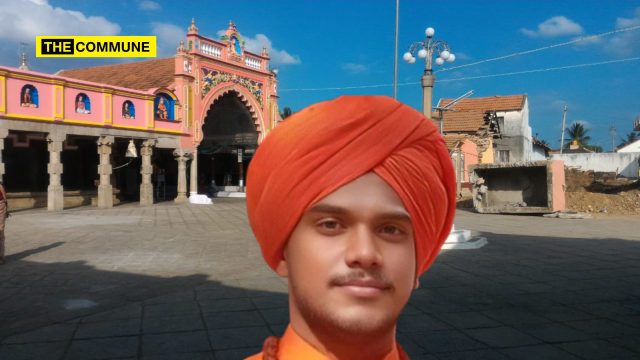
A 22-year-old Lingayat seer, known as Nijalinga Swamy, has stepped down from his position at a newly established math in Karnataka’s Chamarajanagar district following objections from local residents after his birth identity as a Muslim was revealed.

Originally named Mohammed Nisar and hailing from Shahpur in Yadgir district, the young man had formally embraced the Lingayat faith five years ago. Under the spiritual guidance of Basavaprabhu Swamy of Basavakalyan, he adopted the name Nijalinga Swamy and devoted himself to the teachings of 12th-century reformer Basavanna, whose philosophy centres on personal devotion to Shiva, equality, and social justice.

He was recently appointed as the head of Gurumalleshwara Shakha Mutt in Chowdahalli village, a religious centre established by a local resident currently living abroad. For over a month, the young seer led rituals and preached Basavanna’s teachings to the local community.

The situation changed when a group of local youths reportedly obtained his SSLC (10th grade) certificate, which listed his birth name and religious identity. The disclosure led to protests from some villagers, who objected to a person of Muslim origin leading a Lingayat mutt.

Facing increasing pressure, Nijalinga Swamy announced his decision to resign from the position to avoid further controversy. Speaking to reporters, he stated that he had never hidden his background and had embraced Lingayatism out of genuine spiritual belief.

“I will continue to follow and spread Basavanna’s teachings wherever I go,” he said, after returning to his hometown in Yadgir.

No official statement has yet been issued by the math or local authorities.

(With inputs from News18)

Subscribe to our channels on TelegramWhatsApp, and Instagram and get the best stories of the day delivered to you personally.

Locals Protest As Vinayagar Temple Demolished During Aadi Festival In Thiruvallur

vinayagar temple demolished

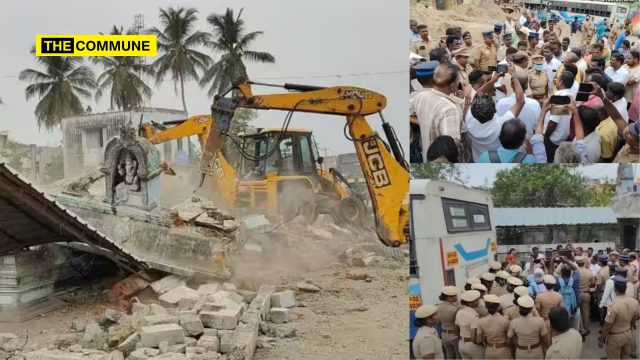
A Vinayagar temple was demolished under tight police security as part of an ongoing road expansion project in Chinnakavanam, near Ponneri in Thiruvallur district, despite strong objections from local residents.

The road widening aims to link Adani Port in Kattupalli (near minjur) to the Chennai-Kolkata National Highway, passing through Pazhaverkadu (Pulicat). As part of the plan, the stretch between Peruvayal and Pazhaverkadu is being expanded, covering areas including Elaimbedu, Chinnakavanam, Medur, and Thirupalaivanam.

Numerous homes in Chinnakavanam have already been cleared to make way for the project. However, when it came to the Vinayagar temple located along the planned route, local residents protested its removal. They had requested that the temple be relocated to a new site with proper compensation before any demolition took place.

Despite the appeals, officials from the Revenue and Highways Department arrived with three bulldozers and began the demolition process under significant police protection to prevent disturbances. Locals, citing the ongoing Aadi festival with 10 days still remaining, pleaded for a postponement, but the authorities declined.

Protesters were detained by the police and held temporarily at a nearby wedding hall. The temple idol was carefully removed before the structure was razed using bulldozers.

(With inputs from Dinamalar)

Subscribe to our channels on TelegramWhatsApp, and Instagram and get the best stories of the day delivered to you personally.

Nagapattinam: Govt-Aided School Teacher Maryam Francis Suspended For Alleged Casteist Remarks Against Students

govt aided school teacher casteist remarks students suspended

A government-aided school teacher in Nagapattinam was suspended on Tuesday following allegations that she made derogatory remarks against students belonging to a particular community during a classroom session.

The incident took place on 1 August 2025 at a minority-run school located near VOC Road. According to sources, Maryam Francis, a Tamil teacher for Class XI, made comments referring to the community background and traditional occupations of some students. The students reported the remarks to their parents, sparking outrage.

In the days that followed, parents and members of the affected community demanded action against the teacher. As no action was initially taken, nearly a hundred members of the Thevar community, led by the Mukkulathor Puligal Katchi, staged a protest on 3 August 2025 and marched to the office of the Superintendent of Police. The protestors dispersed after police officials assured them that appropriate steps would be taken.

A formal petition was subsequently submitted at the Velipalayam police station. Based on recommendations from the school education department, the school administration issued an order suspending the teacher on Tuesday.

(With inputs from Times Of India)

Subscribe to our channels on Telegram, WhatsApp, and Instagram and get the best stories of the day delivered to you personally.
Hindi Bibles Distributed To North Indian Workers In Thoothukudi; Complaint Filed Alleging Religious Conversion Attempt

Image Source: Dinamalar

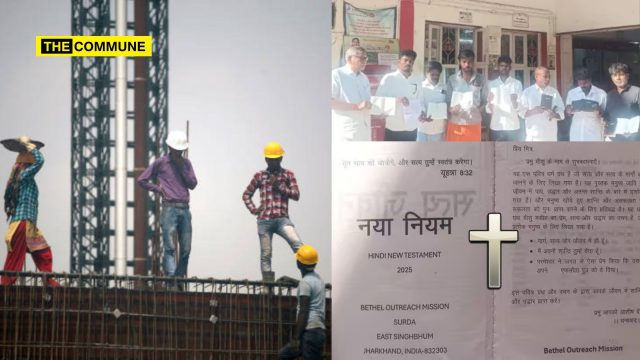
Over 2,000 migrant workers from northern Indian states engaged in the construction of the thermal power plant and the Kulasekarapattinam rocket launch pad in the Udangudi area of Thoothukudi district are reportedly residing in various temporary settlements.

Amid this, members of a Christian group, Bethel Outreach Mission from Jharkhand, distributed Hindi-language Bibles and religious pamphlets to the migrant workforce.

Hindu Munnani has raised objections, alleging that the materials were intended to promote religious conversion among the workers. The groups have demanded action against those involved.

Led by the Tamil Nadu state vice president of the Hindu Munnani, Jayakumar, a formal complaint was submitted via the Tiruchendur post office on Monday. Copies of the Hindi Bibles and pamphlets were also included in the submission, which was addressed to both the Chief Minister of Tamil Nadu and the Union Home Minister.

(With inputs from Dinamalar)

Subscribe to our channels on Telegram, WhatsApp, and Instagram and get the best stories of the day delivered to you personally.

Punjab On High Alert As Sophisticated Pakistani Drones Resume Cross-Border Smuggling Of Drug And Arms

Post Operation Sindoor, there was a lull in rogue drones entering Indian territory. However, recent sightings in Punjab of drones once again put the security agencies on high alert.

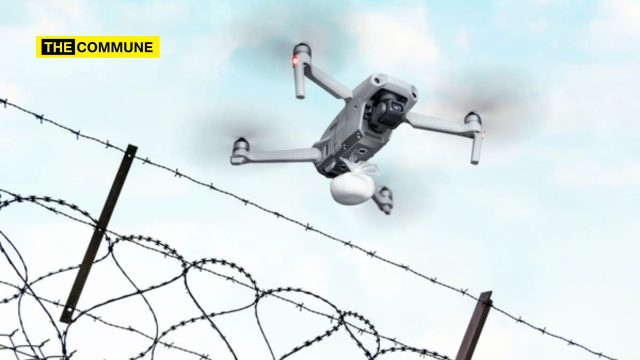
The problem, however, this time is that the drones are different and far more capable than the ones that were being sent in earlier. They fly at higher altitudes and are capable of penetrating Indian territory more deeply. Recently, three pistols and over 1 kilogram of heroin were seized after the Border Security Force (BSF) intercepted six Pakistani drones near the International Border in Punjab’s Amritsar district. Four packets containing three pistols and a heroin packet with 1.070 kg of heroin were seized.

Reliable input and keen observation followed by swift action of troops once thwarted attempts of Pakistan-based smugglers to pump drugs and arms in Punjab,” the BSF had said in a statement. In the days to come, the BSF would have its hands full as the smugglers from Pakistan would go all out to send in a consignment. For a few months after India’s offensive to avenge the Pulwama attack, these smugglers had taken a back seat. However, they have come back in full flow with more sophisticated drones. These drones have the capability of flying at higher altitudes before they descend in India. They do not take a straight route, but fly zigzag as it helps avoid detection. The smugglers also ensure that it crashes on Indian soil after the consignment is delivered, so that the data retrieval is harder. The smugglers have been using advanced Chinese-made drones, and this has made it harder to detect.

India is planning to deploy more interceptors capable of tracking drone details in real time since the current mechanism in most places is limited to detecting the drone mainly by sound and visual spotting. To add to the problem, the ISI has been encouraging terror groups to use drone technology heavily to aid infiltrations. The drones are being used to help get real real-time assessment based on the situation, while infiltration bids are being made. Further, these drones are also being used to get information about any pitfalls at the time of infiltration. This information comes in handy for the ISI to avoid the Indian security personnel and ensure unhindered infiltration.

The ISI has enhanced the scale of this technology as it realises that the Indian armed forces are on a state of very high alert post Operation Sindoor. During Operation Sindoor, the Jaish-e-Muhammad and Lashkar-e-Toiba had lost plenty of their cadres. Hence, in a recent meeting with the ISI held in June, these terror groups decided to not only ramp up recruitments, but also increase infiltrations. In the current situation, the terror groups from Pakistan are fading it impossible to infiltrate into Indian territory. Due to a very high alert, infiltration is impossible, and hence, there is over-reliance on the use of sophisticated drone technology to infiltrate India. For the Indian security agencies, this would remain a challenge with the borders it shares with Pakistan, both at Jammu and Kashmir as well as Punjab.

-IANS

Subscribe to our channels on TelegramWhatsApp, and Instagram and get the best stories of the day delivered to you personally.
JMB Revival In Bangladesh Linked To ISI, Al-Qaeda Sparks Infiltration And Radicalisation Fears In Bengal, Northeast

The Jamaat-ul Mujahideen Bangladesh (JMB) was once a dangerous terror outfit operating out of Bangladesh, threatening India’s national interests. However, since the past eight years, it had gone down considerably, and there were no signs of any activity from this proscribed terror group.

With Sheikh Hasina’s ouster, many radical groups have run amok, and this has led to the revival of several terror groups, including the JMB. The Indian Intelligence agencies have warned that the JMB is being revived in a big way, and this poses a direct risk to states in the northeast and West Bengal.

The revival of the JMB is dangerous because it uses a large number of refugees and those who infiltrate illegally as its foot soldiers. This means that the group, as per the wishes of the ISI and Jamaat-e-Islami, is currently indulging in aiding a large number of illegal infiltrations. Further, the JMB is also seeking the support of Al-Qaeda as part of its revival plan. Al-Qaeda is important as it has a wider reach and can spread its ideology more quickly. The JMB, on the other hand, is focused largely on the ground operations. After Muhammad Yunus was made the caretaker of the interim government in Bangladesh, the Jamaat, at the insistence of the ISI, called the shots. Since then, several ISI officials have visited Bangladesh and spoken with the leaders of these groups.

The ISI wants the terror groups to act as one and not become counterproductive to each other. For instance, it wants the JMB to focus solely on India with the help of the Ansarullah Bangla Team (ABT) and Al-Qaeda. Al-Qaeda is more than happy to work with these groups, as they were the ones behind the 2002 Church bombings in Gopalganj and the 2004 attack on the UK and US embassies. Now, coming specifically to their plans for India, the JMB is building a strong group of foot soldiers.

It is recruiting by the dozens from camps that house illegal immigrants and Rohingya Muslims, both from Bangladesh and Myanmar. With Myanmar too troubled, the JMB would have no problem in roping in those who are fleeing the nation. Once they are pushed into India, the JMB has instructed them to take up small work in areas which are dominated by Muslims from Bengal. This would avoid any suspicion. Further, they have also been told not to mingle with the local public and to go about their work in small industries. However, there would be frequent meetings to discuss plans and how to go about them. These meetings would be held in various places and would comprise smaller groups to avoid detection.

The JMB is not new in India. The Burdwan blast that took place in 2014 was the handiwork of the JMB. At that time, investigations pointed out how the outfit works. Most of them found in the bomb making factory were illegal immigrants. Hence, a similar textbook would be in play this time as well, the Intelligence assessment says. Today, the JMB is taking advantage of the porous India-Bangladesh border in West Bengal and Assam. Since the border is vulnerable and due to the worsening situation in Bangladesh, it becomes easier for the JMB to infiltrate its cadres. For India to tide over this problem, it would need cooperation from the Bangladesh government, just like the way Sheikh Hasina did when she was in power. However, this time around, the situation is different, and the Yunus regime tilts more towards Pakistan, and relations with India have remained cold.

-IANS

Subscribe to our channels on TelegramWhatsApp, and Instagram and get the best stories of the day delivered to you personally.
VCK, CPI(M), CPI Leaders Urge Stalin To Enact Special Law Against Honour Killings In Tamil Nadu Similar To Rajasthan And Haryana

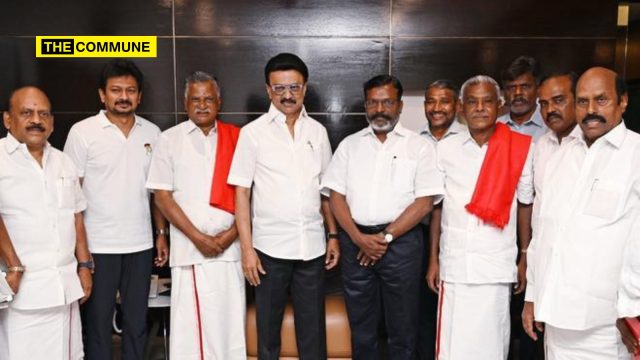
Viduthalai Chiruthaigal Katchi (VCK) President Thol Thirumavalavan, Communist Party of India-Marxist state Secretary P. Shanmugam, and Communist Party of India (CPI) state Secretary R. Mutharasan on 6 August, submitted a joint representation to Chief Minister M.K. Stalin, pressing for the enactment of a special law to curb caste killings and ensure protection for inter-caste and inter-faith couples in Tamil Nadu.

The delegation met Stalin at his residence in Chennai, where they also enquired about his health following his recent hospitalisation and week-long stay in a city hospital. The Chief Minister was discharged only a few days ago. In their detailed memorandum, the leaders expressed concern over the recurring incidents of violence and murders involving inter-caste and inter-faith couples in the state. They said such attacks highlighted the urgent need for targeted legislation to address caste killings, going beyond the scope of general criminal provisions.

“Hundreds of lives have been lost to caste-based violence in Tamil Nadu over the past decade. These are not isolated crimes committed solely by individuals or families, but often the outcome of social pressure, intimidation from dominant caste groups, extra-legal ‘katta panchayats’ (kangaroo courts), and entrenched notions of caste purity and family honour,” the representation said.

They pointed out that in most cases, these killings were booked merely as murders under Section 302 of the Indian Penal Code or Section 101 of the Bharatiya Nyaya Sanhita, without acknowledging the caste-based motivation and coercion behind the crime. Citing reports and recommendations from rights agencies, as well as private member bills introduced in Parliament and the Tamil Nadu Assembly, the leaders also referred to similar laws passed in states like Rajasthan and Haryana, which recognise honour killings as a distinct and aggravated offence.

They urged the Chief Minister to take immediate steps to draft and pass a state-specific law that would impose stringent penalties on offenders, dismantle extra-legal caste forums, and establish protection mechanisms for couples facing threats. The leaders said such a law would send a strong message against caste discrimination, reaffirm Tamil Nadu’s legacy as a State committed to social justice, and safeguard the constitutional rights of citizens to choose their partners freely, irrespective of caste or religion.

-IANS

Subscribe to our channels on TelegramWhatsApp, and Instagram and get the best stories of the day delivered to you personally.

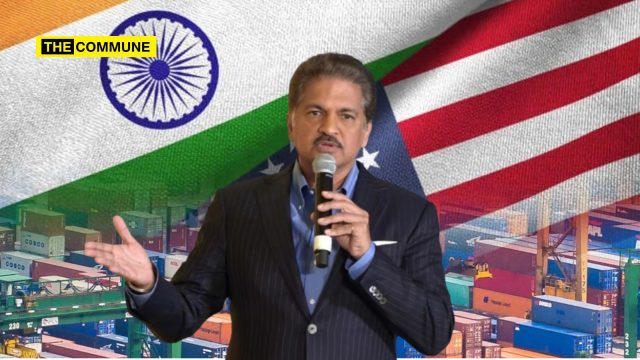
Anand Mahindra Urges India To Turn US Tariffs Into Opportunity For Transformation

Top industrialist Anand Mahindra on 6 August, said that we should be moved to make our own nation greater than ever in the wake of 50 per cent tariffs the US has imposed on the country, and India should seize this moment to shape a virtuous consequence for itself.

The “law of unintended consequences” seems to be operating stealthily in the prevailing tariff war unleashed by the US, according to the Mahindra & Mahindra (M&M) Chairman.

“The EU may appear to have accepted the evolving global tariff regime, responding with its own strategic adjustments. Yet the friction has nudged Europe to rethink its security dependence, leading to higher defence spending in France and Germany. In the process, Germany has moderated its fiscal orthodoxy, which may well catalyse a resurgence in Europe’s major economies. The world could gain a new engine for growth,” he wrote on social media platform X.

In Canada, long hampered by notorious internal trade barriers between its provinces, steps are now being taken to dismantle them, bringing the country closer to a common market and enhancing economic resilience. “Both these ‘unintended consequences’ could become long-term positives for global growth. Shouldn’t India too seize this moment to shape a virtuous consequence for itself? Just as the 1991 forex reserves crisis triggered liberalisation, can today’s global ‘Manthan’ over tariffs yield some ‘Amrit’ for us?” asked Anand Mahindra.

He said that India should radically improve the ease of doing business and must go beyond incremental reform and create a genuinely effective single-window clearance system for all investment proposals. “While states control many investment regulations, we can begin with a coalition of willing states aligning with a national single-window platform. If we demonstrate speed, simplicity, and predictability, we can make India an irresistible destination for global capital in a world seeking trusted partners,” the industrialist said.

Tourism is one of the most underexploited sources of foreign exchange and employment, he said. “We need to dramatically accelerate visa processing, improve tourist facilitation, and build dedicated tourism corridors around existing hotspots, offering assured security, sanitation, and hygiene. These corridors can serve as models of excellence, encouraging other regions to emulate and raise national standards,” he noted.

A broader action agenda is to build on liquidity and support for MSMEs; infrastructure investment acceleration; a manufacturing push via enhancement and expansion of the scope of PLI schemes; and rationalise import duties so that duty on manufacturing inputs is lowered and assists in improving our competitiveness, he said. “Let the unintended consequences we create be the most intentional and transformative ones of all. We cannot fault others for putting their nations first. But we should be moved to make our own nation greater than ever,” said Anand Mahindra.

-IANS

Subscribe to our channels on TelegramWhatsApp, and Instagram and get the best stories of the day delivered to you personally.
India’s Key Exports To US Escape Trump’s Tariff Hike—For Now

As US President Donald Trump on 6 August announced to impose 50 per cent tariffs on imports from India, shipments worth more than $30 billion involving pharmaceuticals and certain electronic items such as smartphones, semiconductors, and energy are so far secure from higher duties as these are still under an exemption list.

India exported drugs and pharmaceuticals as well as electronics products (mostly smartphones) to the tune of $10.5 billion and $14.6 billion in FY25, constituting 29 per cent of its overall outbound shipments to the US. Petroleum exports, worth $4.09 billion in FY25, are also currently secure from Trump’s fresh tariffs thanks to energy being on the exemption list as well. Indian exports to the US stood at $86.51 billion in FY25. Trump has not yet included these key industries in the new tariffs that are slated to come into effect in the next 21 days.

India’s exports to the US have increased since January this year, as a result of this exemption, because there are no duties on these goods. From January to June 2025, the US’s percentage of India’s merchandise exports increased from 17-18 per cent to over 20 per cent. This growth reflects front-loading by exporters ahead of the tariff hike in August and the tariff exemptions on smartphones and drugs, which were spared from the 10 per cent baseline duty introduced in April, according to industry experts.

Although India’s total exports grew less than 2 per cent in Q1 FY26 and contracted more than 4 per cent in Q4 FY25, according to Commerce Ministry data, exports to the US made up roughly 23 per cent of India’s total shipments in the June quarter of FY26 and the first quarter of FY25.

However, there are still risks because Trump has threatened to impose tariffs of up to 200 per cent on drugs made abroad, and depending on future US decisions, smartphone exemptions might also be removed. India’s exports to the US totalled $25.52 billion in Q1 FY26, an increase of almost 23 per cent from the previous year. For the quarter, total trade was $32.41 billion, and for FY25, it exceeded $86 billion, as per commerce ministry data.

-IANS

Subscribe to our channels on TelegramWhatsApp, and Instagram and get the best stories of the day delivered to you personally.