Home Blog Page 182

TN Muslim Munnetra Kazhagam Executive Abdul Hakeem Arrested By Tamil Nadu Police For Sexually Harassing Women

tmmk abdul hakeem

Tamil Nadu Police have arrested Tamil Nadu Muslim Munnetra Kazhagam (TMMK) executive for Sexual Harassment of Woman.

Abdul Hakeem, managing director of a company and state treasurer of the economic wing of Tamil Nadu Muslim Munnetra Kazhagam (TMMK), has been arrested for allegedly sexually harassing a woman employed at a private fertilizer manufacturing firm in Ayankovilpattu near Villupuram.

Police investigations indicate that Abdul Hakeem sent inappropriate messages via WhatsApp and is accused of sexually harassing over ten women.

(With Inputs From Polimer News)

Subscribe to our channels on TelegramWhatsApp, and Instagram and get the best stories of the day delivered to you personally.

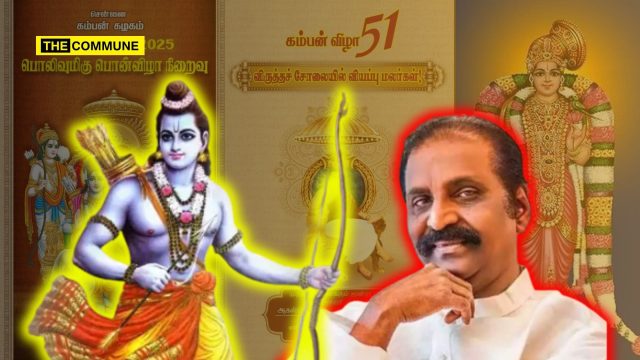
“Lord Rama Lost His Mind After Losing Sita, Not Guilty Under IPC 84, Kamban Saved Him”, Says Sexual Harassment Accused Vairamuthu Who Also Derogated Andal

lord rama kamban vairamuthu ipc

On 6 August 2025, we reported that sexual harassment accused Vairamuthu was going to be awarded the Kavi Chakravarthy Kamban Award by DMK MP Jagathrakshakan’s Azhwar Research Centre.

Speaking at the Chennai Kamban Kazhagam event during the organisation’s 51st year celebrations, Vairamuthu stirred controversy yet again by speaking extensively on how the Tamil epic Kamba Ramayanam reshaped the portrayal of Lord Rama, offering a literary redemption for the deity in contrast to earlier depictions in Valmiki’s Ramayana – how he did this was through his interpretation of Lord Rama’s actions in the Ramayana, drawing parallels between the Vali episode and the legal defence for acts committed by persons of unsound mind under Section 84 of the Indian Penal Code.

Vairamuthu approached the topic by saying, “I had a desire for fame. It was only after I became famous that I realized why this fame is an unwanted desire. When you think you want fame, you have to prepare yourself for slander and humiliation. Defamation and slander are the remains of fame. Only if you are ready to accept these remains of fame can you desire fame. There is no such thing as fame alone. Do you know what that fame does to you? It lulls you to sleep. Sometimes sleep itself becomes intoxicating and kills you. That is what happens. When that fame comes, slander comes.”

Then he jumped on to Kamban. He said, “The one who wiped out this slander is Kamban. The one who wiped out the slander that happened to Rama. Kamban. Do you know why he wrote the poems? That is the reason he writes poems. I am taking this epic and writing it. A poet inserts a head, ears, eyes, into the poem but inserts the words into the heart. What crime did he commit or was committed against him? They asked Variyar, what crime was committed against him? He was born in the Raghu dynasty. Rama should have called him Rama Surya. Why did they call him Ramachandra? Rama Surya is the Raghu dynasty. Why did they call him Ramachandra? Variyar said that he was the one who would kill Vali from hiding and bear the consequences. He was called Ramachandra. Surya has no shame, Chandra has shame. Rama was shamed. So he was called by comparing him to Chandra, said Variyar. Variyar failed to forgive Rama’s crime and shame. Variyar is not ready to forgive. Valmiki did not forgive him either. Every question Valmiki’s Vali asks is like shooting an arrow from the front and it coming out from the back. He asks, “What kind of a royal family are you from? You are not from a royal family. You are a sinner disguised as an ascetic. Who is saying this? Valmiki’s Vali looks at Rama and says, “You are a sinner disguised as an ascetic. An old well covered with grass, if I step on it thinking it is grass, I will die. I will drown. I will be destroyed. You are that well.

He further continues, “The next question he asks is, “Why did you kill me? I am from the monkey family. The sages will not use my skin. And the ascetics will not eat my flesh. Then why are you trying to kill me?” All these questions are not in Kamba Ramayanam. It is in Valmiki Ramayanam. Both Valmiki and Vali are not ready to forgive. After seeing that sword/arrow has entered his body, every word Vali speaks seems like an unforgivable punishment, but Kamban saves Rama, comrades. That is where we realise how much importance was given to poets like us. He says, “You have made a mistake. What mistake have you found in me?” Vali asks, “What wrong have you found in me?” Then he asks, “You did one thing in your country. You did another thing in the forest. You gave your kingdom to your brother in your country. You gave my kingdom to my brother in the forest. Oh, you sinner, you have done two different things. You gave the kingdom that you should rule, to your brother. You gave the kingdom that I should rule, to my brother. How have you done this? But it’s okay, that’s where you changed your mind.”

Then Vairamuthu explains the verses. He says, “If you see the strength, beauty, extension, depth that can be found in this word, you should pay close attention to it. The action, like a bewilderment, is what this bewilderment means. I have seen that the word is the most powerful thing in the world. The word is, not people, not the constitution, not the government, not power, not money, but the word is most powerful. Because this word I have been using this word for 5 thousand years, and it will be ruled for another 50 thousand years. This word does not belong to me. I am completely accepting it. Do you know how much I take a word that does not belong to me? I take that much. The speed of the word is faster than the speed of the light. It takes eight minutes and 20 seconds for the first ray from the sun to touch this earth. The sun’s ray does the work it should do in eight minutes and 20 seconds, but for the earth and the sky. If a poet writes, he touches the sun and returns to the ground in two words. The word is faster than the sun. He said that word. He acted in bewilderment. What is bewilderment? Bewilderment means awe. Another word is bewitchment. This is the word. Beauty is bewitchment. The mind is bewitched. Rama, who separated from Sita, lost his mind.”

This is where he makes even more derogatory interpretations. Vairamuthu explains the Tamil poet Kamban’s Kambaramayanam, saying Kamban “saved Rama” by portraying him as having lost mental clarity after being separated from Sita. This, he claimed, was akin to the IPC’s provision that a person of unsound mind cannot be held criminally liable. He says, “ The crime committed by a person who has lost his mind is not a crime. The Indian Penal Code Section 84 of the Indian Penal Code says that a person who has lost his mind due to a mental disorder cannot be held guilty of an act committed by him. The message of Section 84 of the Indian Penal Code is that whether Kamban knows this or not, he does not know the law. He knows society, he knows psychology. With this forgiveness, a criminal named Rama is also freed. He forgives Rama and makes Rama a human being. Rama becomes a human being at that place, while Kamban becomes a god. The character is a human being; the creator is God. This is the difference between a character and a poet.”

Subscribe to our channels on TelegramWhatsApp, and Instagram and get the best stories of the day delivered to you personally.

“There Will Be Bloodbath”: Senior DMK Leader RS Bharathi’s Son Calls For “Civil Movement” After “Defeating BJP”

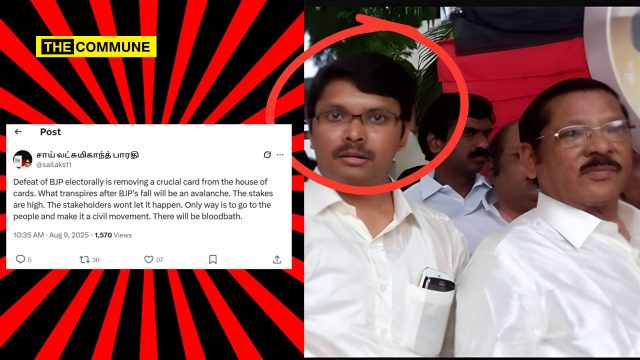
In a provocative and inflammatory social media post, Sai Lakshmikanth Bharathi, son of senior DMK leader and Organizing Secretary RS Bharathi, sparked outrage by suggesting that defeating the BJP through electoral means was difficult due to its current popularity, and that the only alternative was to mobilize the public in a “civil movement” — a move he warned would lead to a “bloodbath.”

The remark stirred controversy, as it sharply contradicted the DMK’s frequent claims of upholding constitutional and democratic processes. Critics argued that the statement exposed a willingness to resort to dangerous and undemocratic tactics when electoral victory seemed uncertain.

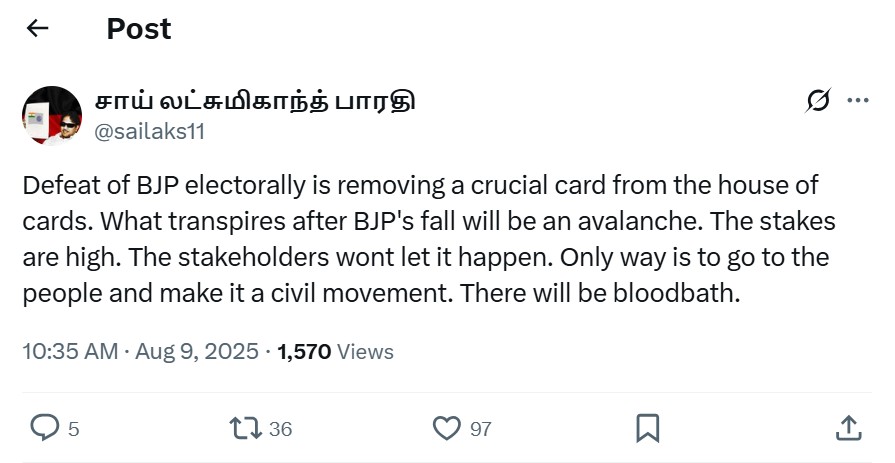
Posting from his official X account, Sai Lakshmikanth Bharathi wrote,
“Defeat of BJP electorally is removing a crucial card from the house of cards. What transpires after BJP’s fall will be an avalanche. The stakes are high. The stakeholders wont let it happen. Only way is to go to the people and make it a civil movement. There will be bloodbath.”

It remains unclear whether he was referring to the Bihar elections expected in November 2025 or the 2026 Tamil Nadu Assembly polls. However, the overt hint at violent consequences drew widespread condemnation across social media platforms.

Subscribe to our channels on TelegramWhatsApp, and Instagram and get the best stories of the day delivered to you personally.

VCK, Communists & NTK Backtrack After Valliyur ‘Honour Killing’ Claim Falls Apart As Arrested Men Belong To Same Caste

valliyur murder

It appears that left-leaning parties in Tamil Nadu often choose simple political posturing over addressing the serious issue of caste-based violent killings, particularly in cases such as honor killings. Recently, parties like the Viduthalai Chiruthaigal Katchi (VCK), Communist factions, and the Naam Tamilar Katchi created an uproar, claiming a murder in Valliyur, Tirunelveli was an honour killing. However, when investigations revealed that the killing involved individuals from the same caste and was rooted in a personal rivalry, these parties quickly withdrew their protests, abandoning the issue.

This comes at the backdrop of similar case unfolded earlier in Tirunelveli, where a young man named Kavin was brutally murdered for loving a woman from a different caste. This case generated widespread outrage and support. Leaders from Kavin’s community presented clear demands and cooperated with the government to ensure justice. Only after these demands were met did Kavin’s family receive his body, while social media was filled with condemnations of the honor killing.

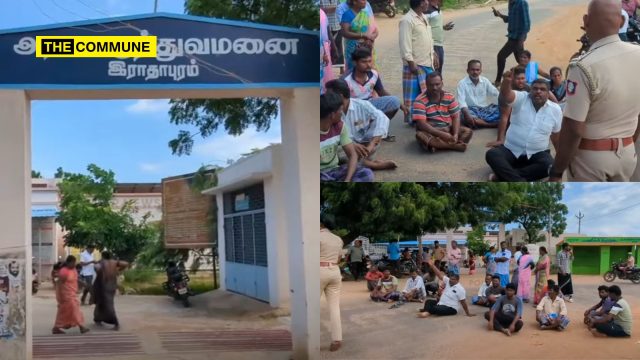
In contrast, the murder case in Valliyur brought to light a different kind of complexity in its background. The victim, Prabhudas, a 27-year-old contractor from Thanganer village in the Sanganeri panchayat near Radhapuram, Tirunelveli district, was found dead by the roadside after going missing for two days. His friend, Tamilarasan, who was with him during the incident, was found unconscious and later hospitalized. Initial police investigations suggested an accident, but Tamilarasan’s recovered testimony confirmed that Prabhudas was hacked to death by a gang.

Members of the Viduthalai Chiruthaigal Katchi and Naam Tamilar Party clashed with police, claiming Prabhudas was an honor killing victim from their caste. They blocked roads and demanded justice, accusing certain groups of plotting to suppress their community’s progress. Prabhudas’s grieving parents joined protests, lamenting the loss and demanding accountability.

The police arrested four individuals Vinoth, Lingusamy, Maharajan from Kudankulam, and Arunkumar from Thisayanvilai in connection with the murder. Crucially, all arrested belonged to Prabhudas’s own caste.  According to police, the victim, Prabhudas, was murdered out of vengeance. The killers’ motive stemmed from a previous relationship between Prabhudas and a woman who had allegedly taken her own life after he threatened her with compromising photos. The perpetrators killed him after learning that he is currently engaged to someone else. The assailants were relatives of the woman and harbored enmity over her death and marriage arrangements. The investigation made clear that this was not an honor killing in the traditional caste-oppression sense but a murder arising from personal rivalry within the same caste.

Upon this revelation, political parties that initially protested quietly withdrew, raising questions about their genuine commitment to combating caste violence. The incident underscores the complex realities of caste in society: while some seek justice and equality, others may exploit caste identity for political gain or personal vendettas.

Subscribe to our channels on TelegramWhatsApp, and Instagram and get the best stories of the day delivered to you personally.

“IAS Officers Running Parallel Govt”, Madras High Court Slams TN Govt U-Turn On Tamil Scholar Housing Scheme “Kanavu Illam”

Madras High Court Rules Service Registers Of Public Servants Not Fully Exempt From RTI Disclosure ias officers kanavu illam

On 8 August 2025, the Madras High Court raised concerns about whether IAS officers are effectively running a parallel government in Tamil Nadu, expressing disappointment over the state government’s sudden reversal on its promise to allot houses to selected Tamil scholars under the ‘Kanavu Illam Scheme,’ as previously assured to the court.

Justice N. Anand Venkatesh observed that such decisions appeared to be driven by bureaucrats who failed to grasp the cultural and emotional value of the scheme. He added that former Chief Minister M. Karunanidhi would never have permitted such a move. The observations were made while hearing a petition filed by lyricist R. Vairamuthu, who challenged the cancellation of a house allotment granted to him under the scheme.

During the hearing, senior advocate Xavier Arulraj pointed out that in an earlier case filed by Tamil Nadu’s first woman IPS officer, Thilagavathy, the Advocate-General had assured the court that new restrictions in the scheme would apply prospectively, ensuring that all 10 pre-selected beneficiaries would still receive their houses. Instead of honouring this assurance, the state filed an appeal, and a division bench stayed the interim order of the single judge, he said.

Justice Anand Venkatesh remarked that such actions were typical of IAS officers who “run a parallel government” and treat sensitive cultural matters like allotting houses to eminent writers without emotional understanding, relying only on bureaucratic authority. He cautioned that allowing IAS and IPS officers to effectively run the state could lead to serious governance issues.

When the court resumed in the afternoon, Additional Advocate General J. Ravindran took strong exception to the judge’s remarks, stating that Tamil Nadu is governed by Chief Minister M. K. Stalin and not by bureaucrats.

(With inputs from Times Of India)

Subscribe to our channels on TelegramWhatsApp, and Instagram and get the best stories of the day delivered to you personally.

Rift Within TVK? Former IRS Officer Arunraj Once Considered Close To Vijay Now Allegedly Getting Snubbed Inside Party, Details Inside

tvk vijay arunraj income tax officer

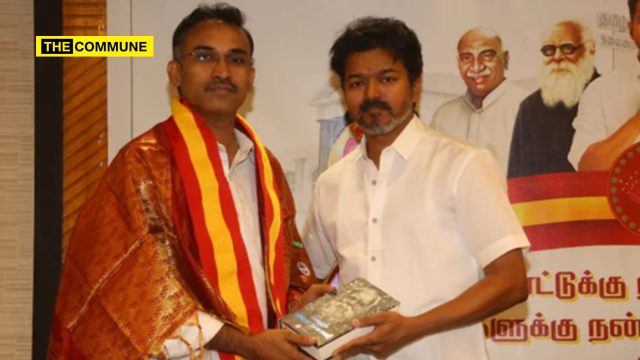
Arunraj, a former Income Tax Department officer once considered a close confidant of actor-turned-politician and Tamilaga Vettri Kazhagam (TVK) leader Vijay, is reportedly facing internal resistance within the party over his political ambitions.

According to party sources, Arunraj, who played a role in bringing key figures like strategist John Arogyaswamy and political aide Aadhav Arjuna into TVK, had been entrusted with the post of General Secretary for Policy and Publicity after resigning from his government service.

During his tenure in the Income Tax Department, Arunraj is said to have been aware of and indirectly supported the raids conducted at Vijay’s residence, while also reporting to senior officials about his proximity to the actor.

Now seeking to contest from his home district of Salem, Arunraj is allegedly encountering strong opposition from the local district secretary and other administrative leaders in Panayur, who are blocking his bid.

Once regarded as an influential insider within Vijay’s political circle, Arunraj is now described by associates as disheartened over the pushback, signalling growing tensions in TVK’s internal dynamics ahead of potential electoral moves.

Subscribe to our channels on Telegram, WhatsApp, and Instagram and get the best stories of the day delivered to you personally.

DMK Govt’s New State Education Policy Is A Recipe For Disaster Spelling Doom For Students

state education policy SEP 2025 dmk Tamil Nadu Sees Sharp Rise In School Dropout Rates, Slips Behind Southern Peers: UDISE+ Report

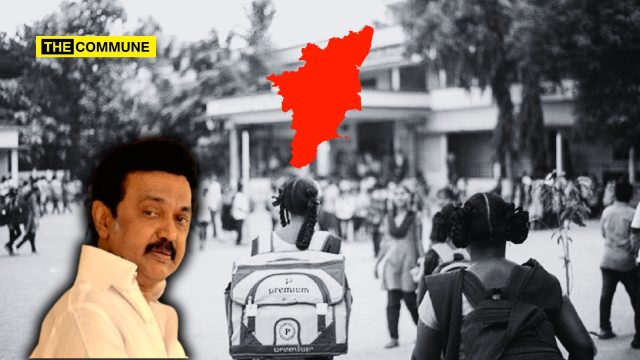
The DMK government’s freshly released Tamil Nadu State Education Policy 2025 is being touted as a “future-ready” blueprint by the Dravidian Stocks. But a closer reading reveals it to be an ideologically loaded, poorly conceived, and dangerous recipe for disaster that will worsen learning outcomes for lakhs of children.

Beneath the lofty talk of “equity” and “holistic learning” lies a toxic combination of failed experiments and recycled ideas from the National Education Policy (NEP) 2020 — ideas which the DMK has selectively borrowed while rejecting its workable solutions. The policy’s most glaring blunders are its retention of the No Detention Policy (NDP) up to Class 8, the scrapping of the Class 11 public examinations, and its obsession with political symbolism over academic rigour.

The Ghost Of Samacheer Kalvi Still Haunts TN

This is not the first time the DMK has pushed a sweeping education overhaul without considering ground realities. The Samacheer Kalvi (Uniform School Education) system introduced under the late M. Karunanidhi was sold as a measure to bring “quality” education to all. In reality, it diluted syllabus content to the lowest common denominator, eroding competitiveness and widening the gap between Tamil Nadu’s students and their peers from other states in national-level exams.

A decade later, survey data shows that the state is still struggling with poor foundational skills, especially in Mathematics and even in reading basic Tamil. Instead of learning from the Samacheer Kalvi debacle, the new SEP doubles down on similar “feel-good” policies that sound progressive on paper but sabotage rigour.

No Detention Policy: Proven Failure, Yet Retained

The No Detention Policy, retained for Classes 1–8, has been widely discredited. While the SEP dresses it up as “child-friendly” and “supportive,” the reality is that automatic promotion without mastery has devastated learning levels across India.

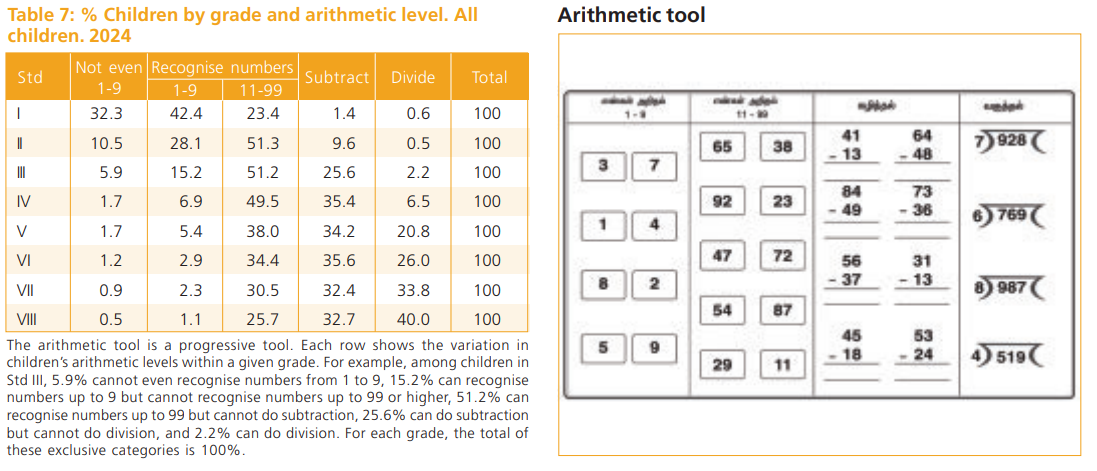
ASER 2024 found that only 43% of Class 5 children in Tamil Nadu could read a Class 2-level text; just 35% could do simple division.
NAS 2024 showed Grade 8 students in Tamil Nadu scoring below the national average in Mathematics and Science.

PARAKH’s latest competency data for TN reveals that in Class 8, only 40% achieved minimum proficiency in Mathematics, with rural and disadvantaged groups faring far worse.
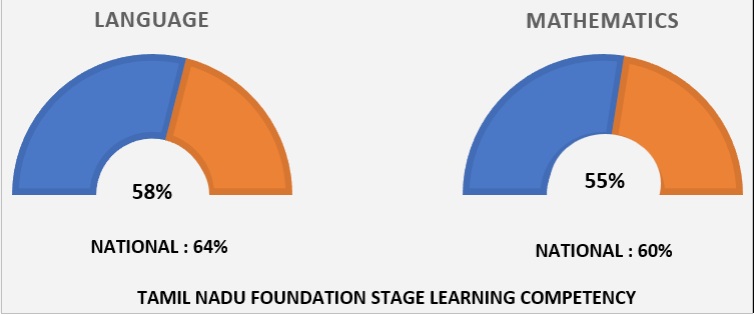
 

Promoting students without holding them accountable for learning milestones has not “reduced stress” — it has locked them into a cycle of ignorance, making later remediation nearly impossible.

Scrapping Class 11 Boards: One More Nail In The Coffin

The decision to abolish the Class 11 public exam is another catastrophic move. The SEP calls Class 11 a “preparatory year” for Class 12, but in practice, it will encourage both students and teachers to skip serious learning in this crucial phase as the syllabus of Class 11 is crucial for competitive exams like NEET, JEE, etc.

With only Class 10 and 12 as “high-stakes” checkpoints, much of the Class 11 syllabus will be sidelined in favour of last-minute rote cramming for the Class 12 boards. This undermines subject depth, critical thinking, and analytical ability — skills already in short supply, as evidenced by Tamil Nadu’s Grade 9 NAS scores (Math: 32%, Science: 36%, Social Science: 35%).

High On Ideology, Low On Innovation

The policy repeatedly invokes “social justice” and “equity” — ideals worth upholding — but in practice, this rhetoric is used to justify watering down academic benchmarks. In fact, the so-called “innovations” in the policy are almost entirely lifted from NEP 2020: competency-based assessment, digital integration, vocational exposure.

What the DMK has added is a political framing that prioritises linguistic imposition (mandatory Tamil even for non-Tamil students) and ideological content over proven, evidence-based strategies to improve quality. Instead of addressing teacher accountability, classroom effectiveness, and syllabus standards, the SEP is preoccupied with cosmetic changes.

The Looming Disaster

The data is unambiguous: Tamil Nadu’s students are already slipping in national proficiency indicators. By retaining failed policies like NDP, removing critical exams, and focusing on political posturing instead of pedagogy, the DMK government is laying the groundwork for a generation of underprepared graduates.

If Samacheer Kalvi was the first major blow to Tamil Nadu’s academic competitiveness, this State Education Policy is poised to be the final, crushing hit. The state risks producing students with high pass percentages on paper, but woefully inadequate skills for higher education, employment, or national-level competition.

In short, the SEP is not a roadmap for educational excellence — it’s a recipe for disaster. And unless the government course-corrects, the real losers will be Tamil Nadu’s children, condemned to an education system that values optics over outcomes.

Vallavaraayan is a political writer.

Subscribe to our channels on TelegramWhatsApp, and Instagram and get the best stories of the day delivered to you personally.

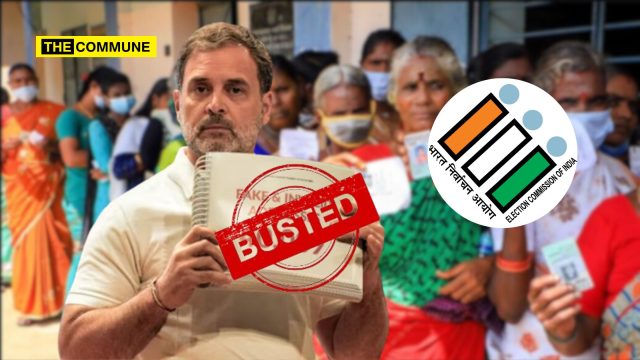
Rahul Gandhi Cries Foul Over ‘Vote Chori’, But Congress’ Own Record On Electoral Fraud Tells Another Story

rahul gandhi vote theft vote chori

While Congress scion Rahul Gandhi launched a tirade, against the Election Commission of India (ECI), accusing it of colluding with the BJP to ensure his party’s defeat armed with poorly researched data from his team that was swiftly debunked by fact-checkers. Yet, he conveniently overlooks the fact that Congress itself has repeatedly been caught undermining India’s electoral process, indulging in the very malpractices he accuses others of.

The same congress faced accusations of widespread election fraud, including creating fake voter IDs, illegally seizing polling stations, and rigging the election. Below is a non-exhaustive record of such incidents:

Fabrication of 8.5 Lakh Fake Voter IDs in Telangana

In December 2024, former PCC General Secretary Bakka Judson exposed that Congress had created 8.5 lakh fake voter IDs in Telangana to sway local body elections. He alleged that such fraud was also happening in Kerala and Karnataka, calling it an act of sedition. Judson accused Telangana CM A. Revanth Reddy of orchestrating the scam, with the IDs created by morphing photos, altering phone numbers, and deleting genuine voters aged 18–35 from the rolls. He further claimed that Deputy CM Mallu Bhatti Vikramarka’s wife helped secure bail for the accused.

Booth Capturing in Bihar

In February 2019, senior Congress leader Kirti Azad admitted publicly that in Bihar, Congress workers routinely engaged in booth capturing for party leaders, including his own father and himself, before EVMs were introduced.

Rigging Youth Congress Organisational Elections in Kerala

In November 2023, Kerala Police investigated allegations that fake voter IDs were used in Youth Congress internal elections. State president Rahul Mamkootathil was questioned, and four aides were arrested. Laptops, phones, and 24 fake voter IDs were seized. The BJP and CPI(M) demanded a full probe and even a CBI inquiry into possible implications for general elections.

Lokayukta Action Against Former Congress MLA for Fake Voter IDs

In August 2022, the Lokayukta found former Sultanpur MLA Majra Jai Kishan guilty of creating fake voter IDs for non-residents using his own address. The Delhi LG directed police to register an FIR for damaging the integrity of the electoral process.

Massive Fake Voter ID Scandal in Karnataka

Just before the 2018 Karnataka polls, nearly 9,746 fake voter IDs were discovered in an apartment in the Raja Rajeshwari Nagar constituency. Congress MLA Munirathna and 13 others were booked after the Election Commission’s investigation. Two trunks of suspicious voter forms, laptops, and a printer were seized. While Congress initially accused the BJP of planting evidence, the FIR named the Congress MLA as a key accused.

Despite this documented history ranging from voter fraud to booth capturing Rahul Gandhi now attempts to portray himself as a victim of electoral malpractice. Yet, as history shows, Congress has long been a practitioner of the very tactics he decries, from Indira Gandhi’s authoritarian excesses to modern-day voter manipulation.

(With inputs from OpIndia)

Subscribe to our channels on TelegramWhatsApp, and Instagram and get the best stories of the day delivered to you personally.

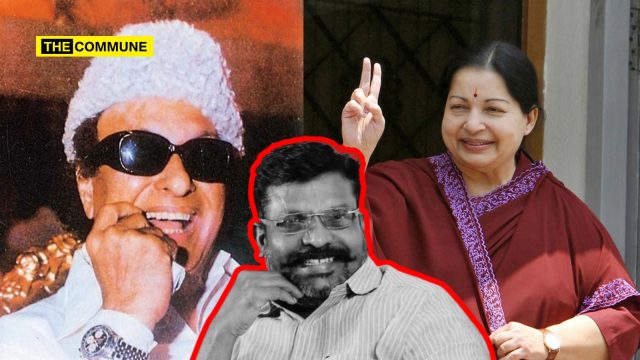
“MGR Brought Brahminical Culture Into Dravidian Movement, He Made A Brahmin Woman A Leader Of Dravidian Movt”: VCK MP Thirumavalavan Criticizes AIADMK Founder MGR

mgr jayalalithaa brahminism dmk admk vck thirumavalavan

Viduthalai Chiruthaigal Katchi (VCK) leader and MP Thol. Thirumavalavan’s recent speech at a DMK-organised event in Ambattur has stirred intense political discussion, after he questioned why certain Tamil nationalist groups target former Chief Minister M. Karunanidhi but refrain from criticising other Dravidian stalwarts like M.G. Ramachandran (MGR), C.N. Annadurai (Anna), or J. Jayalalithaa.

Speaking on the occasion of the seventh death anniversary of Karunanidhi, Thirumavalavan accused some Tamil nationalist outfits of misdirecting their criticism, saying they avoid mentioning leaders such as Anna, while focusing solely on “Kalaignar” Karunanidhi. He said, “Have any of the various organizations that have recently emerged today, in the name of speaking about Tamil nationalism, without telling the people who the real enemy of Tamil nationalism is, to the extent of saying that the enemy of Tamil nationalism is DMK, Kalaignar, to the extent of saying that if a monument is erected to him, we will come and destroy it to the extent of expressing hatred, and repeatedly saying that this is the one who started the corruption, at least for one day, spoken about MGR, or about Jayalalithaa Ammaiyar, why… and I would like to say very specifically, have they spoken anywhere about Kalaignar’s teacher Anna? Have they criticized him? I don’t know why Anna is not criticized,
but why is Kalaignar being targeted, this raises a question.”

He further said, “Kalaignar is Anna’s younger brother, Anna Periyar’s child. Anna spoke the same politics that Periyar spoke, he didn’t say anything new. Anna was the one who reflected Periyar. But Anna’s Tamil was sweeter, Anna’s Tamil was deeper,
Anna’s Tamil was more eloquent than Periyar’s Tamil.
But Anna spoke what Periyar spoke. Furthermore, this greatness called Periyar was revealed only by Anna, otherwise it might have been hidden.”

In his address, the VCK chief alleged that MGR had introduced “Brahminical influence” into the Dravidian movement, and pointed out that Jayalalithaa, a Brahmin woman, had led the movement for years. However, he also acknowledged MGR’s role in preventing national parties like the Congress from gaining ground in Tamil Nadu, which, he argued, indirectly stopped the BJP from making inroads.

He said, “A national party benefitted by the emergence of MGR. MGR criticized Kalaignar, sowed the seeds for hate politics, was responsible for infiltrating Brahminism into the Dravidian movement, and even though there are criticisms that he paved the way for a Brahmin woman to become the leader of the Dravidian movement, one advantage that came out of it is that – national parties were prevented from gaining a foothold here.”

He further said, “This political environment, whether DMK or AIADMK, continued for more than 50 years. The Congress was not allowed to grow here, and more importantly, the BJP did not gain a foothold. Although there are many reasons, if the Congress had gained strength here, the BJP would have grown against it. Because, where there is a national party, the BJP will easily reach the same position as the Congress. People do not compare with state parties; they will compare only with national parties. The rise of MGR is one reason why the Congress did not gain strength here and has shrunk. The political contest here was whether it is MGR or Kalaignar, later changed to Jayalalithaa-Kalaignar. But Kalaignar has always been the central point, the central politics – This is the politics of Tamil Nadu.”


View this post on Instagram


A post shared by NewsTamil24x7 (@newstamil24x7digital)

Subscribe to our channels on Telegram, WhatsApp, and Instagram and get the best stories of the day delivered to you personally. 

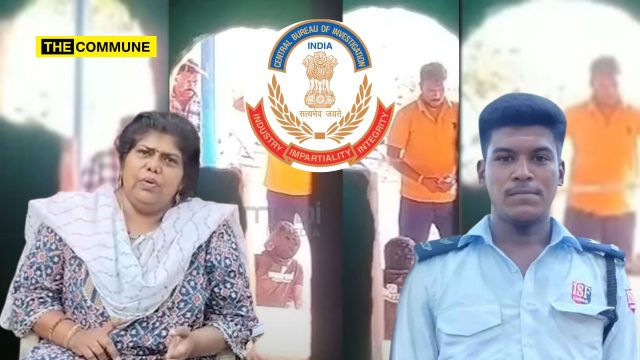
Ajithkumar Custodial Death Case: CBI Probe Finds Nikitha’s Complaint False As Car Never Left Temple Parking Area, Police Knew Beating Could Kill Him

ajithkumar custodial death case cbi

Fresh twists have emerged in the controversial custodial death case of 27-year-old temple security guard Ajithkumar, with the CBI’s probe revealing that the original theft allegations against him were unfounded. The agency’s findings reportedly show that Ajithkumar never left the temple’s parking area, and that members of a special police unit who assaulted him were aware that their brutal third-degree methods could prove fatal.

Ajithkumar was taken into custody following a theft complaint lodged by Dr. Nikitha, who claimed jewellery kept in a car parked at Madapuram had been stolen. During interrogation, special police personnel allegedly beat him with sticks and plastic pipes. He later died in custody, sparking outrage and protests across Tamil Nadu.

The case stemmed from an incident on 27 June 2025, when complainant Nikitha and her mother arrived at the Bhadrakali Amman Temple in Madapuram for worship. She reportedly handed over her car keys to Ajithkumar to park the vehicle. It is alleged that Ajithkumar gave the key to an auto driver Aravindh nearby to park the vehicle before the temple’s parking lot. CCTV and witness statements examined by the CBI indicate that Ajithkumar returned the keys within (5) minutes, and that the vehicle was never taken outside the temple premises afterward.

This contradicts Nikitha’s initial complaint, which alleged that Ajithkumar, along with an auto driver, and another person Arun had driven the car to Vadakarai. CBI checks of CCTV footage from key routes showed no such movement, instead recording Nikitha herself driving the car. The agency concluded that the vehicle remained at the temple until it was retrieved by her.

A CBI team, headed by DSP Mohit Kumar, has been investigating the case for the last 23 days.

More damningly, the CBI’s investigation revealed previously that five special police personnel identified as Raja, Anand, Sankara Manikandan, Prabhu, and Kannan took Ajithkumar into their custody, suspecting him of theft. When he denied involvement, they allegedly became enraged and subjected him to a severe beating, fully aware that such violence could lead to death.

According to the updated FIR signed by ADSP Sukumaran, Ajithkumar was first taken to the Thiruppuvanam Government Hospital, then to Sivaganga Hospital, and finally brought by Raja and Sankara Manikandan to Madurai Government Rajaji Hospital at 11:15 p.m. on 28 June 2025, where doctors declared him dead on arrival.

Following these findings, charges in the case were amended on 30 June from Section 196(2)(a) of the BNSS to Section 103(1) of the BNS. The original complainant, Kannan who was found to be an adversary in the case was removed, and direct eyewitness Naveen Kumar has been added as the new complainant.

Subscribe to our channels on TelegramWhatsApp, and Instagram and get the best stories of the day delivered to you personally.