Home Blog Page 181

“Can Activists Bring Back Rabies Victims?”, Asks Supreme Court, Orders Removal Of All Stray Dogs In Delhi-NCR
supreme court stray dogs rabies new delhi ncr

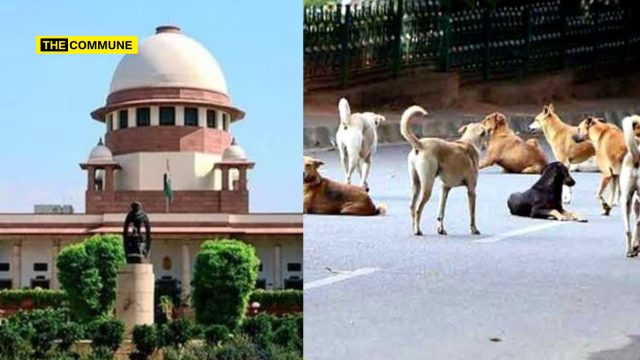
In a sweeping directive aimed at curbing the rising menace of stray dog attacks, the Supreme Court today ordered that all stray dogs in Delhi-NCR be shifted away from residential localities to dedicated shelters. The top court warned that any organisation obstructing the exercise would face the “strictest action.”

The bench of Justice JB Pardiwala and Justice R Mahadevan issued the order while hearing a matter prompted by a news report on the increasing number of rabies-related deaths following stray dog attacks. “We are not doing this for us, it is for the public interest. So, no sentiments of any nature should be involved. Action should be taken at the earliest,” Justice Pardiwala said.

The court made it clear that it would hear arguments only from the Centre, shutting out petitions from dog lovers or other groups. “Pick up dogs from all localities and shift them to shelters. For the time being, forget the rules,” the judge told amicus curiae Gaurav Agarwala.

Solicitor General Tushar Mehta informed the bench that a site in Delhi had been identified for relocating stray dogs, but the plan was stalled after animal rights activists obtained a stay order. Reacting sharply, the bench remarked, “All these animal activists, will they be able to bring back those who have fallen prey to rabies? We need to make streets absolutely free of stray dogs.”

The court also rejected proposals for adoption of strays, citing concerns that dogs could be released back on the streets. “No one will be allowed to adopt a stray dog,” the bench clarified.

Civic authorities in Delhi, Noida, Ghaziabad, and Gurugram have been directed to immediately construct shelters equipped with professionals to handle dogs, conduct sterilisation, and provide immunisation. The shelters must be escape-proof, with CCTV surveillance, and no dog once removed should be released.

The court instructed authorities to start a helpline for reporting dog bites and to round up all stray dogs, sterilised or unsterilise, from all neighbourhoods, prioritising vulnerable areas. “However, what is important, and without which the entire exercise would go futile, not a single stray dog should be released and if we know that this has happened, we will take stern action,” the bench warned.

The order also highlighted a shortage of rabies vaccines, directing the Delhi government to publicise details on vaccine availability, stock levels, and the number of patients treated monthly.

According to Municipal Corporation of Delhi data, 49 rabies cases and 35,198 animal bite incidents were recorded in the capital between January and June this year. Rabies, which is nearly always fatal once symptoms appear, kills around 60,000 people globally each year – India accounts for 36% of these deaths, according to the WHO.

Solicitor General Mehta summed up the court’s stance: “We cannot sacrifice our children just because of a few dog lovers.”

(With inputs from NDTV)

Subscribe to our channels on Telegram, WhatsApp, and Instagram and get the best stories of the day delivered to you personally.
Kerala Woman Ends Life After Her Boyfriend Ramees And His Family Allegedly Forced Her To Convert To Islam

kerala islamic conversion

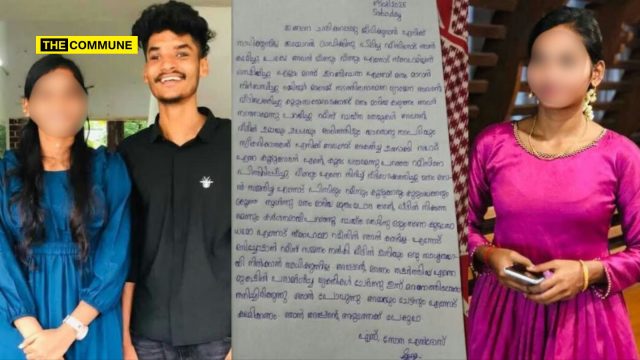
The family of 23-year-old Sona Eldos, a resident of Kothamangalam in Kerala’s Ernakulam district, has accused her boyfriend Ramees and his family of harassment and pressuring her to convert to Islam for marriage. Sona died by suicide on Saturday, 9 August 2025, and her family alleges that sustained mental torture and religious pressure led to her death.

According to the family, Sona, a Christian, had been in a relationship with Ramees, a native of Paravoor, since their college days. They claim Ramees’s family insisted that she leave the church and convert to Islam as a precondition for marriage. While Sona had reportedly agreed at one stage, her relatives allege that harassment and cruelty continued.

Sona’s brother, Basil Eldos, told local media that after their father’s death 40 days ago, the family had planned to wait a year before the wedding. However, he alleged that Ramees took Sona to his house, where she was confined to a room and beaten in the presence of family members and friends.

On the day of the incident, the family claims Sona was again told to change her religion and proceed with a registered marriage. When she refused, Ramees allegedly told her she was “better off dead.” The family says Sona left behind a suicide note stating she was being forced to convert and detailing instances of alleged abuse, including being locked in Ramees’s house.

Police said the note, reportedly sent to Ramees’s mother, contained serious accusations against him. Initially, a case of unnatural death was registered, but following the family’s complaint, charges of abetment to suicide and causing bodily harm were added.

Ramees, who works as a temporary employee at Nedumbassery Airport, is currently in police custody and being questioned. Officials said further action, including possible arrest, will follow based on the investigation.

Sona’s family has called for a thorough probe, alleging that her death was the result of sustained mental and physical abuse linked to religious conversion pressure.

(With inputs from Janmabhumi)

Subscribe to our channels on Telegram, WhatsApp, and Instagram and get the best stories of the day delivered to you personally.
Infrastructure Spending Stalls: Tamil Nadu’s Capex Falls To ₹4,155 Cr In Q1

tamil nadu dmk capex infrastructure spending

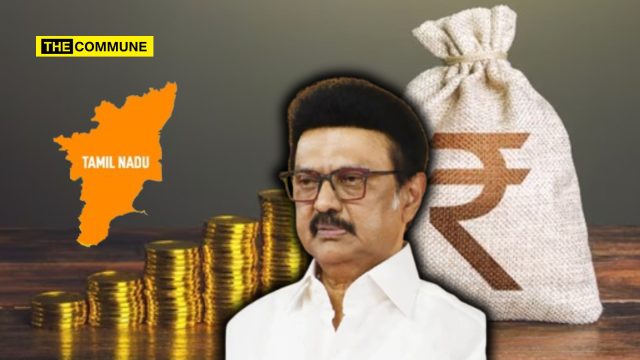
Tamil Nadu recorded an 18% decline in capital expenditure (capex) in the first quarter of the 2025-26 financial year, according to provisional data from the Comptroller and Auditor-General (CAG).

Capex, which funds the creation of fixed assets such as roads, bridges, irrigation structures, schools, hospitals, and investments in public sector undertakings, fell to ₹4,155.74 crore in April–June 2025 from ₹5,041.90 crore in the same period last year.

A report by ICICI Bank Global Markets noted that Andhra Pradesh registered the highest capex growth in Q1 FY26 at 267%, followed by Haryana (103%) and Gujarat (65%). Uttar Pradesh saw a 42% increase, while Karnataka recorded a 16% rise. Maharashtra and West Bengal posted a 28% drop each, and Telangana’s capex declined by 22%.

Overall, states’ capex grew 28% year-on-year in the quarter, following a 22% decline in the same period of FY25, the report said.

In contrast to the fall in capital spending, Tamil Nadu’s own tax revenue rose 14.5% to ₹43,070.45 crore in Q1 FY26, up from ₹37,605.43 crore a year earlier.

The state’s revenue expenditure, which covers salaries, pensions, maintenance, interest payments, subsidies, and welfare grants, stood at ₹79,054.68 crore in April–June 2025, compared with ₹83,636.73 crore in the same period last year.

(With inputs from The Hindu)

Subscribe to our channels on Telegram, WhatsApp, and Instagram and get the best stories of the day delivered to you personally.
Hindu Munnani Stages Protest In Madurai Demanding Arrest Of Dravidianist Lawyer Vanchinathan

hindu munnani vanchinathan

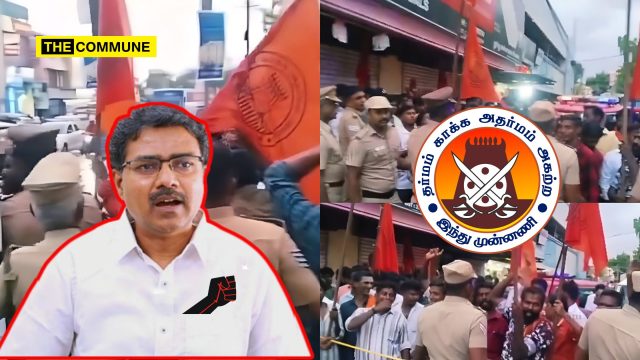
The Hindu Munnani organized a large-scale protest in Madurai’s Thiruparankundram area calling for the arrest of Vanchinathan, the Dravidinist lawyer who has been in the news making casteist allegations against Justice GR Swaminathan. Vanchinathan is known for his communist leanings and support for Dravidian ideologies.

The demonstrators accused him, along with the fringe group Madurai Madha Nallinakka Makkal Kootamaipu, of consistently spreading anti-Hindu narratives, insulting Hindu beliefs, and spreading misinformation about the Hindu Munnani in connection with recent local incidents such as Thiruparankundram claimed by Muslim fundamentalist.

A significant crowd gathered for the protest, expressing strong condemnation of the alleged defamatory activities. However, police intervened and detained several participants involved in the demonstration.

This protest appears to be a counter-response to an earlier rally organized by Madurai Madha Nallinakka Makkal Kootamaipu, which took place near the Puthur bus stand. That group had demanded legal action against individuals accused of inciting violence during a Hindu Munnani event in Madurai and had also called for the charges against lawyer Vanchinathan to be dropped.

During that protest, tensions escalated when a few individuals on motorbikes reportedly shouted slogans against the group and fled. Members of the alliance later confronted the police, expressing concerns about their safety and demanding greater protection.

Subscribe to our channels on TelegramWhatsApp, and Instagram and get the best stories of the day delivered to you personally.

Kanyakumari Pastor Accused Of Sexually Assaulting Teen At Bible School, Arrested Under POCSO; Second Abuse Case Since 2008, No Police Action Yet

kanyakumari pastor abuse teen church

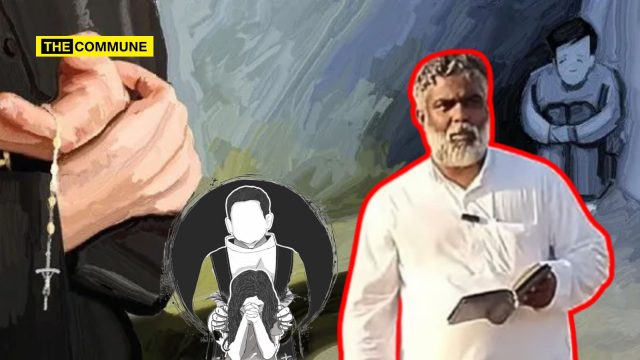
A shocking allegation has emerged from Kanyakumari district involving the reported sexual abuse of a 17-year-old boy during a Vacation Bible School (VBS) run by a Pentecostal Church. The case leads one to question the alleged political protection for certain religious groups and long-standing systemic inaction by authorities in Tamil Nadu under the DMK government.

What Happened?

According to the account, the minor attended a VBS program where he was allegedly sexually harassed overnight by a 55-year-old religious preacher named Varghese, after asking him alone to stay back while telling the others to leave. The boy reportedly returned home visibly distressed, with facial swelling and an inability to speak. For days, he avoided eating and suffered emotional trauma before revealing the incident to his parents.

The parents, initially hopeful for justice, allegedly faced resistance from local church officials and were discouraged from approaching the police. Two months later, failing to obtain any internal resolution, they sought police assistance.

He was arrested about a week ago under POCSO Act after the Thuckalay Police registered a case under the Act.

Repeat Offender

Disturbingly, this isn’t the first accusation against Varghese. Records indicate a similar complaint was filed against him in 2008 by a married woman who alleged sexual exploitation under the guise of “spiritual counselling.” However, no FIR was registered at the time, with sources claiming the matter was “settled” quietly due to political pressure.

That earlier complaint allegedly, was never formally registered as an FIR due to political influence during the then DMK government under M. Karunanidhi, a time when significant foreign funding was said to be flowing into church infrastructure in the state.

It is alleged that Varghese’s phone contains images and videos of several minors and women allegedly abused by him, yet no action has been taken against him.

Church-DMK Govt Nexus?

It is alleged that there seems to be a “pattern of impunity” for certain church-affiliated individuals in Tamil Nadu, with serious accusations that complaints involving Christian religious preachers often fail to result in FIRs, allegedly due to political and police pressure over the years; that the DMK government is “overly influenced” by church networks that are said to deliver consolidated votes during elections, and that Christian institutions exercise strong social control including through burial rights over their members, using them as leverage to suppress dissent.

It is alleged that the incident was “not an isolated assault” but part of a decades-long lack of accountability for crimes involving certain religious leaders. Contrast this instance with any incident allegedly involving Hindus. Critics argue that one can observe swift action when accusations involve Hindu preachers. It is alleged that for over 40 years, such offences have rarely led to prosecution and that victims often remain silent for fear of social consequences.

Is there a possible link between the continued political influence of church leadership in Tamil Nadu to their ability to direct block votes? Has this resulted in preferential treatment for Christian religious institutions in matters of policing and governance? Critics argue that the state government ought to take burial grounds used by churches under state control, arguing that this would remove a key source of coercive authority from religious institutions.

(With inputs from Maridhas)

Subscribe to our channels on Telegram, WhatsApp, and Instagram and get the best stories of the day delivered to you personally.
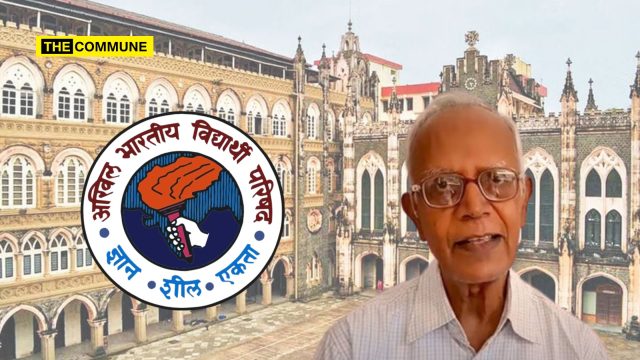
St Xavier’s College Cancels Stan Swamy Memorial Lecture After ABVP Protest

abvp protest st xavier's college mumbai stan swamy memorial lecture

St Xavier’s College in Mumbai cancelled its annual Stan Swamy Memorial Lecture on Saturday after the Akhil Bharatiya Vidyarthi Parishad (ABVP) protested against the event. The students’ organisation had objected to the lecture, alleging that it glorified Maoist Pastor Stan Swamy, who was an accused in the Elgar Parishad–Bhima Koregaon case.

The lecture, organised by the college’s Department of Inter-Religious Studies (DIRS), was scheduled to be delivered virtually by Fr. Prem Xalxo, associate lecturer at the Faculty of Theology, Pontifical Gregorian University. The planned topic was “Migration for Livelihood: Hope Amidst Miseries.”

Earlier in the week, the ABVP sent a letter to the college administration opposing the event and calling on the state government to take action. The organisation stated that Stan Swamy had been declared a main accused in the Elgar Parishad–Bhima Koregaon case and charged under the Unlawful Activities (Prevention) Act (UAPA).

Stan Swamy, a Jesuit priest and tribal rights activist from Jharkhand, was arrested by the National Investigation Agency in October 2019 and remained in custody until his death in a Mumbai hospital in 2021.

College officials stated that the lecture series is usually held on 9 August 2025 to coincide with World Indigenous Day, with past lectures focusing on the history and development of indigenous communities. They said the topic for this year’s lecture was related to migration but acknowledged that the naming of the series after Stan Swamy had become the contentious point. They maintained that from the Jesuit perspective, Swamy was accused but had not been convicted of any crime at the time of his death, and that Indian law presumes innocence until proven guilty.

The college administration said the DIRS promotes a philosophy of “respecting the other” and expressed concern that controversies of this nature could negatively impact international higher education relations.

(With inputs from Indian Express)

Subscribe to our channels on Telegram, WhatsApp, and Instagram and get the best stories of the day delivered to you personally.
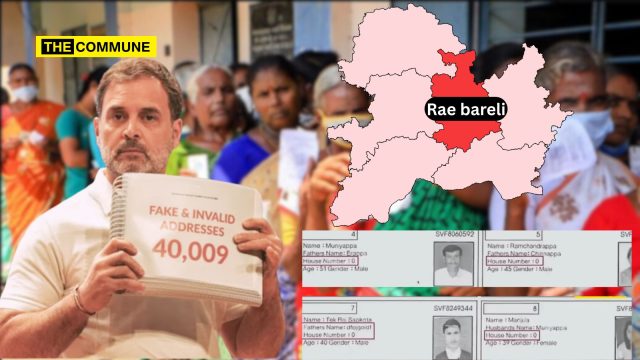
Did Rahul Gandhi Do ‘Vote Chori’ In Rae Bareli? Report Reveals

rahul gandhi rae bareli

Recently, Congress scion Rahul Gandhi accused the Election Commission of inflating voter rolls with fictitious entries, citing irregularities like voters registered under “House Number 0.” He presented data from Mahadevapura in Bangalore Central, Karnataka, describing the situation as a major conspiracy to aid the ruling BJP.

However, an on-ground investigation has revealed that similar irregularities exist in Gandhi’s own constituency of Rae Bareli, Uttar Pradesh. Voter records there also show numerous entries under “House Number 0,” with several addresses listing dozens of voters similar to the examples Gandhi cited as suspicious.

In Rae Bareli’s voter list, one entry shows 27 people registered at a single residence, while two other addresses list 18 voters each. These patterns mirror the alleged discrepancies Gandhi highlighted elsewhere as signs of electoral malpractice. Rae Bareli has long been associated with the Gandhi family, previously represented by Sonia Gandhi and now by Rahul Gandhi.

This revelation raises a critical question, if such patterns are used to suggest voter fraud in constituencies won by the BJP, do they indicate the same in Gandhi’s own seat?

Experts Offer Context

Election experts clarify that in rural regions, many homes lack official numbers, often leading to “House Number 0” entries in the rolls. Similarly, large numbers of voters at one address are not unusual in India due to joint family structures, rented accommodations, or shared housing, particularly in semi-urban and rural areas. The Election Commission routinely updates records to correct such issues.

Despite this, Rahul Gandhi has criticized the Election Commission’s Summary Intensive Revision (SIR) process, which is specifically designed to clean up these kinds of anomalies. Even after being asked, he has declined to file a formal complaint.

Allegations Reflect Back on Gandhi

During a press briefing, Gandhi claimed that 80 individuals were registered under one address in Mahadevapura, which he pointed to as evidence of electoral fraud. Yet, in Rae Bareli, similar groupings appear at one polling booth, 27 voters are listed under House No. 8, and at two other booths, 18 voters each are registered at House Nos. 80 and 4.

This presents a political irony Gandhi’s accusations are now being echoed in his own constituency. In India’s large and complex voter system, such cases are not unusual. The Election Commission continues efforts to verify and update electoral rolls as part of standard procedure.

In states like Bihar, the SIR initiative is part of this broader effort to maintain accuracy in the rolls. Yet, Gandhi has been a vocal critic of this process and has actively campaigned against it. He also declined to submit a written complaint when the Commission requested one.

Mahadevapura Claim Questioned

Further undermining Gandhi’s claims, the assertion that 80 “fake voters” were listed at a single Mahadevapura address has been challenged. The Booth Level Officer, Muniratna, explained that the property in question is a rental where occupants frequently change. Voter registrations are often based on temporary rental agreements, and some entries may remain even after tenants leave. The Election Commission has already marked many of these for removal.

What began as Rahul Gandhi’s attempt to expose alleged electoral fraud has turned into a case of unintended self-implication. The very patterns he labeled suspicious are present in his own constituency, suggesting that these issues may be more systemic than conspiratorial.

(With inputs from OpIndia)

Subscribe to our channels on TelegramWhatsApp, and Instagram and get the best stories of the day delivered to you personally.

TN Kidney Trafficking Scandal: Investigation Confirms Private Hospitals, Middlemen Exploited Labourers

tn kidney trafficking scandal

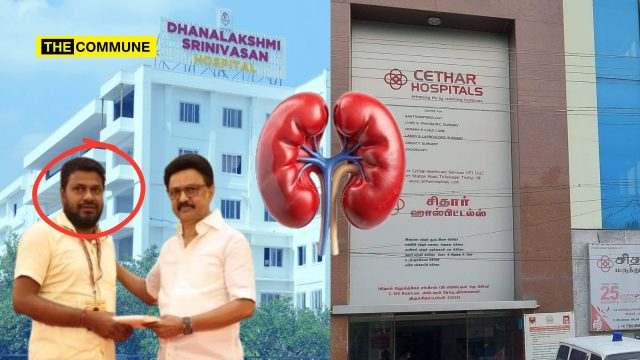
An official investigation into the TN kidney trafficking scandal mainly centered in Pallipalayam, Namakkal district has exposed major irregularities in organ transplant procedures carried out at two private hospitals Dhanalakshmi Srinivasan Hospital in Perambalur and Cethar Hospital in Trichy. The detailed report, recently submitted by a government-appointed committee, confirms that kidney transplants were performed using fraudulent methods and recommends strong action against the institutions involved.

Key Findings and Recommendations

Following alarming reports of poor laborers being exploited for their organs, particularly power loom workers from Namakkal, the Tamil Nadu government initiated a probe on 22 July. The committee, headed by Health Project Director Vineeth and including senior health officials like Dr. Marimuthu and Dr. Meenakshi Sundari, investigated the suspected illegal kidney transplant operations.

Their findings revealed blatant violations of the Human Organ Transplantation Act, 1994. It was discovered that documents for kidney donation and transplant surgeries were improperly prepared. Private hospitals collaborated with brokers to illegally obtain organs from impoverished donors in exchange for money. Transplant coordinators within the hospitals manipulated paperwork to legitimize the procedures. As a result, the committee has recommended revoking the transplant authorization granted to both hospitals and urged a full-scale investigation by the Directorate of Medical and Rural Health Services.

Involvement of Middlemen

The probe also identified two individuals Dravida Anandan and Stanley Mohan as brokers facilitating these unlawful transplants. The committee has advised filing FIRs and legal action under relevant sections of the BNS 2023 Act against them.

Structural Reforms Proposed

To prevent such exploitation in the future, the report proposes major structural reforms:

  • Restructure the current District Accreditation Committees involved in organ transplant approvals.
  • Establish one State-level Committee and four District-level Committees to oversee and regulate transplant procedures more effectively.
  • The Directorate of Medical Education should develop and implement Standard Operating Procedures (SOPs) to ensure consistent and lawful operations across all approval committees.
  • Make video-recorded interviews mandatory for all transplant approval applicants to enhance transparency.
  • Enforce disciplinary measures against staff who approved surgeries without due diligence.
Additional Measures for Transparency and Accountability
  • Hospitals must retain all medico-legal documents for 10 years, with a circular issued to the Revenue, Police, and Health Departments.
  • Transplant forms should be made available in both Tamil and English to ensure better understanding among the public.
  • All hospitals authorized to conduct transplants should display clear banners stating that organ donations must not be made in exchange for money or under coercion. These banners must also include contact details of the official to whom complaints can be reported.
Monitoring and Awareness Initiatives
  • The Human Organ Transplant Approval Committee will be required to audit rejected cases biannually, under the supervision of the Director of Medical and Rural Welfare Services, and submit a consolidated report to the government annually.
  • If a recipient cannot appear before the approval committee due to medical reasons, a video consultation must be arranged.
  • District Collectors across Tamil Nadu have been asked to initiate awareness campaigns about the legal aspects of organ donation.
  • Awareness workshops on the Human Organ Transplantation Act are to be organized across the four approved zones in the state.

(With Inputs from ETVBharat)

Subscribe to our channels on TelegramWhatsApp, and Instagram and get the best stories of the day delivered to you personally.

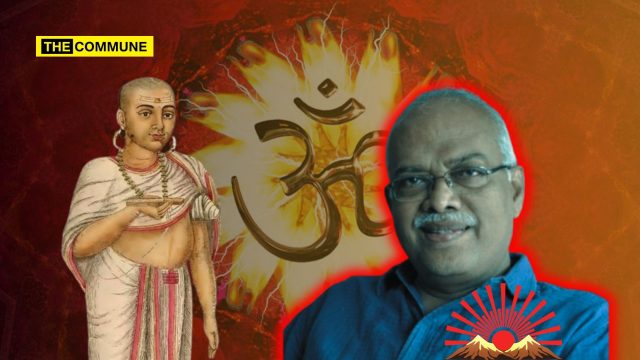
“DMK Never Promised To Eradicate Caste, Only Said It Must Change” TN Planning Commission Vice Chairperson Jeyaranjan Blames Brahmins & Hinduism For Social Divisions

dmk jeyaranjan brahmins dmk hinduism caste

In a video interaction on Minnambalam’s YouTube channel, Tamil Nadu State Planning Commission Executive Vice Chairperson  Jeyaranjan’s words buttressing the DMK and the Dravidianist movement went viral. This video is from about 10 months ago and in it, Jeyaranjan launched a lengthy defence of the DMK and the Dravidian movement while repeatedly attacking Brahmins, Hinduism, and ancient Hindu texts.

On the subject of caste politics, Jeyaranjan criticised DMK’s detractors for questioning the party’s record while allegedly sparing AIADMK. On the question of why caste exists despite 75 years of DMK being in existence given the Justice party was created to “eradicate” caste.

He said, “… in the OBC category, out of around 120–110 communities, why are some being identified separately and put in compartments? Why is this being done? Like for example, earlier, BC (Backward Classes) people were ahead in some respects. Why give them separate reservations now? First, the government effort is to give education to everyone, right? But if women are found to be lagging in education, you have to identify that and give them what they need. Second, when it comes to caste, who created it 2000 years ago? Whose responsibility is it to abolish it? Do you understand the game being played here? When we asked, they said “DMK created caste.” If DMK is going to abolish it, first ask: Who actually created caste? Would the one who created it willingly give it up? Would the people who have been practising it for so long simply stop? But the responsibility, they dump it only on DMK. The blame goes only to DMK. Why?”

He then resorted to shielding the DMK for beign blamed for eveyrthing bad in society. He said, “Whatever is done, it is DMK’s job to find a solution. But no one talks about who created the problem. If you talk about that, actually, this problem itself would not exist. So if you ask me. “What about the people talking like this, what are they doing?”, I’ll give you the reason.”

At this moment, the anchor buttressed saying, “Those who ask why there is a colony now (in this day and age), are not asking why there is an agraharam (old Brahmin settlement) to this day.”

Jeyaranjan replied, “Shouldn’t you be asking, “Who created it in the first place?” and go and question them directly? Instead, you’re pointing at someone else and saying, “This person isn’t right.” See, you then ask him, “If you say it’s wrong, what will you do about it?” Why? You are the ones who created it, practised it, and are still sustaining it. When in power, you should ask, was it created by governance, or by ideology? Who created that ideology? Who created the concept of God? Who created religion? From that, who wrote everything down as the Vedas and Shastras? Who built a whole system from it? Who created caste hierarchy? Who created untouchability? Who branded a section of people as “avarna” (outcast)? Who executed the person who said “This is wrong”? Who killed crores of people? And even now, when people say “It can’t be destroyed” (referring to Sanatana Dharma which is eternal) how did that come about? We should be talking about all that, right? Why won’t they talk about it? That’s the question that needs to be asked. Logically, properly — if there’s anyone qualified to speak about these matters, that’s what they should be asking.”

When asked why DMK which is in power and has been in power not done anything to change this, he said, “No, no, when we said we would change it, we only said “it should be changed,” not “we will definitely change it,” right? If you want it changed, you have to do it when you come to power. But if you yourself won’t change, how will anything change?”

Jeyaranjan repeatedly portrayed DMK as unfairly burdened with solving caste problems, likening former Chief Minister M. Karunanidhi’s political struggles to religious martyrdom: “Kalaignar carried that burden until the day he died. Like someone carrying a cross to the point of death — that’s how it was. Why was he hated? For what reason was he considered an enemy? Why is this movement considered the enemy by some people?”

Subscribe to our channels on Telegram, WhatsApp, and Instagram and get the best stories of the day delivered to you personally. 
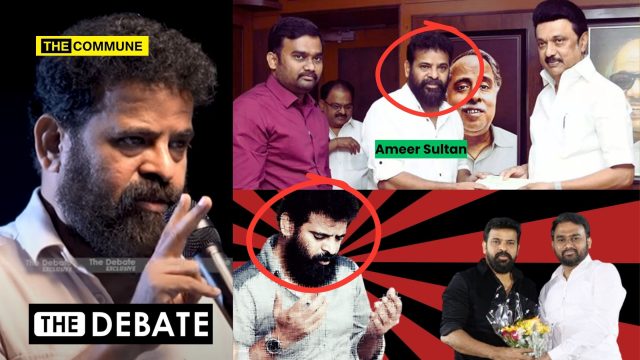
“Islam Is The Best Medicine”: Drug Case Accused Islamist-Dravidianist Filmmaker Ameer Sultan Bashes Sanatana Dharma And Glorifies His Religion

At a discussion forum organized by Dravidianist propaganda YouTube channel called “The Debate” filmmaker Ameer made pointed attacks on Sanatana Dharma and Brahmins. Positioning himself as an outsider to caste due to his Muslim upbringing, Ameer accused “Aryans” of creating the caste system, linked honour killings to Hindu epics, and openly backed the DMK as the “more positive” force in Tamil Nadu politics. His remarks, laced with sweeping generalisations and provocative claims, also took aim at cultural practices like Vinayagar Chaturthi, portraying them as dominated by “intermediate castes” while alleging Brahmins stay aloof.

Ameer begins his speech by preaching about Islam saying “In this discussion forum with students present, there’s a difference between the other speakers and me. They grew up in the caste hierarchy. I am an exception. They grew up within the caste hierarchy. I grew up looking at the caste hierarchy from outside. Since I was born into a Muslim family, whatever my father taught me is supreme. We’re workers at the lower rung, load-bearing labourers. That’s where I born into and grew up… Even though I was born into an Islamic family, we did not reside in a Muslim-dominate area. We lived amidst the labourers. From my early days, most of my friends have been load-bearing labourers, tricycle drivers, bullock cart drivers, rickshaw drivers.. Since I grew up with them, all of them were my brothers and relatives. So I never had any concept of caste…

Ameer said “Caste was inserted by man. Which man? The Aryan (referring to Brahmins). Sanatana Dharmam. He is only imposing caste here. Why is he imposing? Like he said – Those born from heads – Brahmins, shoulders – Kshatriyas, thighs – Vaishyas, legs – Shudra. In colloquial Tamil during our early days they used to say “why are you behaving like a fourth caste person?”. I came to know of its meaning only after I turned 25. So, this disgusting caste was given by Sanatanam. That Sanatanam is what is keeping him and he keeps talking about caste pride. Those who accept this ideology is the one who is all over the world – he is there as Election Commissioner, a judge in Supreme Court, an astronaut in NASA (hinting at Shubhanshu Shukla), works in Google. But he’s holding on to his caste which means that there is no bigger fool than him in the world. You can’t see them as educated people.

He also says that honour killing have roots in Ramayana and Mahabharatha and feels proud that he hasn’t read them.

He further goes on to quote EV Ramasamy Naicker (hailed as ‘Periyar’ by his followers) saying “Islam is the best medicine to eliminate racial discrimination.”

He further goes on to buttress DMK saying no political party in electoral politics would openly comment on honour killings and caste atrocities as they’ve to get votes at the end of the day.

Both DMK and AIADMK helped in uplifting our lives. There will be positives and negatives. Among them, the one with more positives is the DMK and Dravidian Movement.“, he said.

He further went on to say “Who conducts and heads the Vinayagar Chaturthi celebrations? The dominant community in that area. The one who is above (Brahmins), the so-called upper caste – you can’t see them in the Vinayagar Chaturthi processions. He won’t do piercing. He will never come to Palani Thaipoosam. You can’t see them there. He won’t walk without slippers. I’ve seen them. I grew up nearby the Vaigai River. Those who bring Molappari will have to cross my house to immerse it in the river. I’ve seen people from across but I’ve never seen people from that (Brahmin) community near that aathu (river side). Their “aathu” (referring to Brahmin’s home) is different. I am talking about Vaigai River. Their “aathu” is different. But they use the intermediate caste.

Those who say “Hindus unite” are not talking about this – the person who hacked was a Hindu, the person who died was a Hindu. Does any media talk about that? No. This is the politics. This is what you students should understand. The caste you’re given – you did not ask for it, the religion you’re born – you did not ask for it. But they’ve given you these and someone is asking you to live by it. This is what you have to understand.“, he said like a proselytizer.

Who Is Ameer?

Ameer Sultan, a Tamil filmmaker known for his Islamist-Dravidianist leanings, has faced growing scrutiny over his close ties with Jaffer Sadiq, a former DMK NRI Wing official accused of running an international drug-trafficking network. Dubbed Sadiq’s “bestie,” Ameer was named in an ED chargesheet alleging money laundering through films and was summoned by the NCB in April 2024 in connection with the smuggling of pseudoephedrine worth ₹2,000 crore. In October 2024, a special court summoned both Ameer and Sadiq as part of the ongoing money-laundering case. More recently, Ameer was accused of participating in a coordinated smear campaign against Justice G. R. Swaminathan, aligning with the DMK’s broader ideological ecosystem.

Subscribe to our channels on TelegramWhatsApp, and Instagram and get the best stories of the day delivered to you personally.