Home Blog Page 18

Kerala: Historic Shiva Temple Locked After SDPI Allegedly Threatens Officials; Hindu Groups Protest

Kerala: Historic Shiva Temple Locked After SDPI Allegedly Threatens Officials; Hindu Groups Protest

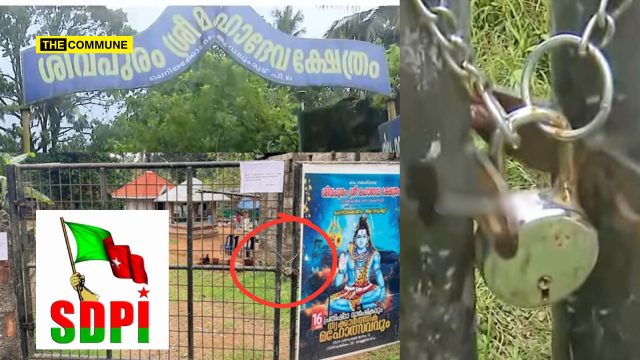
A historic Shiva temple in Kerala has become the epicenter of a major religious and political controversy after its main gate was locked by municipal authorities following alleged threats and intimidation by activists of the Social Democratic Party of India (SDPI), which is the political arm of the banned terror organization PFI.

The Aralummoodu Shivapuram Sree Mahadeva Temple in Balaramapuram, a place of worship established over 80 years ago by the ancestors of freedom fighter Ramanathan Nair, has been sealed, halting ongoing renovation work and disrupting daily rituals. The action has drawn fierce protests from Hindu organizations and raised serious questions about the safety of the minority Hindu community in the area.

According to reports, the controversy erupted when the temple, based on the findings of a traditional ‘devaprasnam’ ritual, began renovation work. It was at this juncture that individuals alleged to be SDPI activists intervened. They reportedly threatened the Balaramapuram municipal secretary, demanding that the temple work be stopped as it was “illegal.”

The intimidation did not stop there. A police officer from the Special Branch also called the temple committee and threatened them to halt the renovation. Facing this pressure, the municipal secretary eventually locked the main gate of the temple and posted a notice stating, “This is municipal land; entering without permission is forbidden, violators will be prosecuted.”

A Pattern of Intimidation

The incident reveals a deeper pattern of intimidation. Hindu Aikya Vedi state secretary K. Prabhakaran, who is leading the protest at the temple site, stated that the municipal secretary admitted to them that he was threatened by four SDPI men. “When pressed about which group, he wouldn’t say at first, then admitted it was SDPI, that SDPI men threatened him, spoke in a threatening tone, and forced the closure,” Prabhakaran said.

He also stated that the municipal secretary, when confronted, admitted that four men from the SDPI had threatened him, forcing his hand. “They are not local residents, they are outsiders,” Prabhakaran stated, adding that the same SDPI group had previously targeted the old Gopan Swami Samadhi.

The intimidation reportedly extended beyond the municipal office. Police officers were also threatened, and a Special Branch police officer subsequently called the temple committee, threatening them to stop the renovation.

Local Harmony Disrupted, Hindus “Live in Fear”

Protesters and local devotees emphasize that the local Muslim community has historically lived in harmony with the temple. They point out that Muslim residents have traditionally participated in temple festivals like the ‘kanji vezhuthu’ (rice-porridge offering) and have had no objections to the temple’s presence or its renovation.

The lockout has sent shockwaves through the local Hindu community, who now say they live in “fear day and night.” Protesters have drawn stark comparisons, asking, “Is this Afghanistan, is this Taliban, or is this Pakistan?”

Hindu organizations are questioning if Kerala is becoming “Afghanistan, Taliban, or Pakistan,” where they are being targeted. They allege that the municipality’s action is selective, as numerous illegal settlements in the vicinity, including an area known as Thakkapalli, have been left untouched, while only the ancient temple is being targeted.

Suspicions of Political Backing and Sustained Protests

Protesters have raised suspicions of political backing for the SDPI’s actions, pointing to the ruling CPM as a possible force “behind the effort to disrupt religious harmony.” They also allege a double standard in enforcing encroachment laws, noting that numerous illegal settlements in the vicinity, including Thakkapalli, have been left untouched due to political patronage, while only the temple is being targeted.

In response, devotees and Hindu groups, including the Hindu Aikyavedi, have begun a continuous protest camp on the temple grounds, conducting chanting protests (namajapa) and vowing to agitate until the temple is reopened. They have issued a stern warning to the government and local authorities, holding them responsible for all consequences if the lock is not removed immediately and the “injustice” against the Hindu community is not rectified.

Subscribe to our channels on WhatsAppTelegram, Instagram and YouTube to get the best stories of the day delivered to you personally.

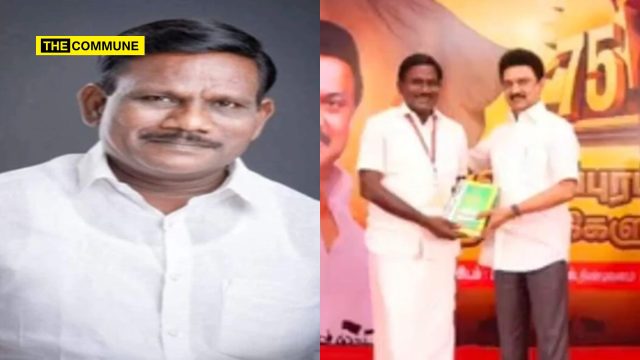
DMK Functionary Thiruvakkarai Baskaran Booked For Rape, Sexual Assault

DMK Functionary Thiruvakarai Bhaskaran Booked For Rape, Sexual Assault

A senior functionary of the ruling Dravida Munnetra Kazhagam (DMK) in Tamil Nadu has been accused of a horrific cycle of sexual assault, blackmail, and death threats, leading to a registered FIR and a manhunt by the police.

The accused, Thiruvakkarai Baskaran, who holds the position of Villupuram Central District DMK Union Secretary, is currently absconding after a case was filed against him at the Kottakuppam All Women Police Station.

The complainant, Vijayalakshmi (35), a resident of Thiruvakkarai village in Vanur taluk, outlined a harrowing six-month ordeal in her official complaint. According to her, she was first introduced to Baskaran, a former panchayat president, when she sought his assistance in purchasing construction materials to build a house.

Exploiting this connection, Baskaran allegedly began to harass her. The complaint details that he sexually assaulted her by issuing threats. In a deeply disturbing escalation, he is accused of videotaping the assault and using the recording as leverage to blackmail and threaten her repeatedly over the following months.

In her heart-wrenching complaint, the victim stated, “I am married for 15 years and have a son. I was building a small house and went to seek help from a leader. He introduced me to functionary Bhaskaran. He came to me and, misbehaving, forced himself on me and ruined my life. He took advantage of the fact that my husband is not with me and I live alone.”

The victim further alleged that the DMK functionary recorded a video of the assault and used it to blackmail and threaten her repeatedly for six months. “For the past six months, he has taken a video and kept it. He assaulted me again, and again, and again. He threatened that if I did not comply, he would leak the video publicly,” she recounted.

The opposition parties, the AIADMK and the BJP, have launched a fierce attack on the MK Stalin-led DMK government, accusing it of shielding criminals within its ranks.

The AIADMK staged protests in Villupuram, demanding immediate action and justice for the victim. Meanwhile, the BJP slammed the government’s “failure” to protect women.

(Source: Tamil ABP Live)

Subscribe to our channels on WhatsAppTelegram, Instagram and YouTube to get the best stories of the day delivered to you personally.

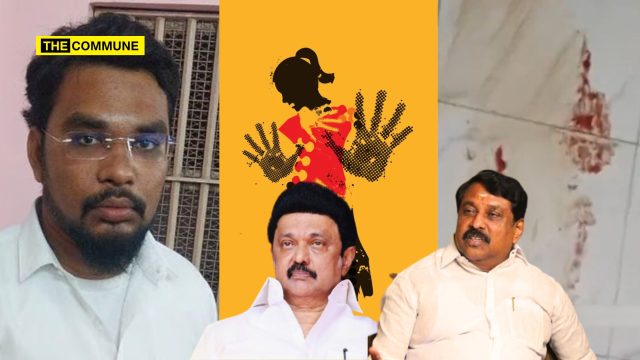
Woman Allegedly Stabbed After Sexual Assault Attempt At Virudhunagar Dargah; BJP TN Chief Nainar Nagenthran Slams Stalin Govt For Repeated Failure On Women’s Safety

A 22-year-old woman from the Narikudi area in Virudhunagar district was injured in a knife attack after an alleged sexual assault attempt inside the Narikudi Jumma Mosque on Friday, 21 November 2025. According to police, Abdul Aziz, a resident of Veerachozhan near Tiruchuli and employed as the Asrath at the mosque, allegedly tried to sexually assault the woman when she approached him seeking prayers for health-related issues.

Police said the woman screamed for help, after which Aziz allegedly attacked her with a small knife, stabbing her on the neck, hands and other parts of the body. The woman managed to run out of the mosque and raise an alarm. Passersby apprehended Aziz and handed him over to the Narikudi police. She was admitted to the government hospital in Tiruchuli for treatment. Police officials confirmed that Aziz has been arrested and a detailed investigation is underway. The incident has created tension in the Narikudi area.

Tamil Nadu BJP president Nainar Nagenthran issued a statement condemning the incident. He said it was shocking that a woman who had gone to the dargah with her child for a holy-water ritual had faced such an attack. He said he prayed for her recovery.

Nagenthran said that if sexual offenders were targeting women “from school to mosques,” it indicated that criminals did not fear the law under the current government. He said reports of previous allegations against Aziz raised questions about how he had been appointed to the post.

Nagenthran also questioned the silence of DMK’s women’s wing members and other party leaders. He asked whether this was due to concerns about losing support from the Muslim community. He urged Chief Minister M.K. Stalin to act without compromise, ensure strict punishment for the accused, and deliver justice to the victim.

(Source: Vikatan)

Subscribe to our channels on WhatsAppTelegram, Instagram and YouTube to get the best stories of the day delivered to you personally.

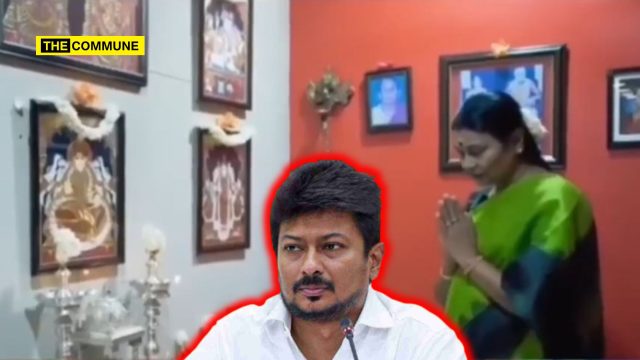
Udhayanidhi Abuses Sanskrit As A Dead Language, His Mom Durga Stalin Chants Sanskrit Slokas & Mantras Daily

Udhayanidhi Abuses Sanskrit As A Dead Language, His Mom Durga Stalin Chants Sanskrit Slokas & Mantras Daily

Tamil Nadu’s Deputy Chief Minister, Udhayanidhi Stalin, sparked a fresh controversy on Friday, 21 November 2025, by describing Sanskrit as a “dead language,” a remark that has drawn sharp criticism from the BJP and highlighted a stark contrast between his public statements and his family’s private religious practices.

The DMK leader made the comment while addressing a book release event in Chennai, where he criticized the Union government’s allocation of funds for language development.

“It is condemnable that the Union government has allotted a mere ₹50 crore for Tamil development, while a dead language like Sanskrit is being granted ₹2,400 crore,” Stalin stated, questioning the central government’s priorities.

This is not the first time Udhayanidhi Stalin has stirred a major controversy with his comments on Sanatana Dharma. In September 2023, he called for the “eradication” of Sanatana Dharma, comparing it to diseases like dengue and malaria that must be eliminated.

A Stark Contrast: Public Rationalism vs. Private Piety

The Deputy CM’s repeated public stance against elements of Hindu tradition stands in sharp contrast to the deeply religious practices observed within his own household. There is proof of his own mother Durga Stalin visiting temples. There are even videos of his mother, Durga Stalin, and her large and elaborate puja room at the Stalin residence and is a devout practitioner who chants Sanskrit shlokas and mantras daily as part of her worship.

This dichotomy has not gone unnoticed by political opponents and observers, who point to a perceived “double standard.” This only proves that Udhayanidhi preaches rationalism for the world, and practices religion for his own house, eradicate Sanatana Dharma for the world, practise Sanatana Dharma in his own house.

Subscribe to our channels on WhatsApp, Telegram, Instagram and YouTube to get the best stories of the day delivered to you personally.

Lured, Coerced, Converted: Inside 47 Cases Of Missionaries Converting And Exploiting Tribals Across India

Proselytisation haryana madhya pradesh children attempting to convert christianity sultanpur forced conversion missionary

On 2 November 2025, in Shivnagar, Ratlam (Madhya Pradesh), tribals were reportedly pressured to convert through so-called “faith healing” sessions. Acting on a complaint from tribal resident Kailash Ninama, who alleged he was coerced to convert in exchange for promised healing, police arrested four individuals: Vikram Ninama, Jagdish Ninama, Mangilal Ninama, and Guddu alias Gudda Maida.

This report documents 47 incidents of tribal conversions recorded between 2021 and 2025, focusing on cases where economically vulnerable tribal families were allegedly lured or coerced into adopting Christianity.

#1 Four Held in Ratlam for Pressuring Tribals to Convert Through Faith Healing – 02 November 2025

In Shivnagar, Ratlam (Madhya Pradesh), four individuals were arrested after a complaint by tribal resident Kailash Ninama. The accused, Vikram Ninama, Jagdish Ninama, Mangilal Ninama, and Guddu alias Gudda Maida, were allegedly holding weekly “healing prayers” at a residence. Participants were told that praying to “Lord Jesus” would cure their ailments. Kailash Ninama stated he was manipulated into attending and later pressured to convert as a condition for healing. Police registered an FIR under relevant sections for inducing and deceiving people into conversion and arrested all four accused.

#2 Tribal Family’s Religious Change Causes Dispute in Jharkhand Village – 02 November 2025

In Tirla Kalyanpur village, Jharkhand, a tribal family Parmeshwar Munda, his wife Pokil Devi, and their son, adopted Christianity, causing unrest. The issue came to light when Parmeshwar, previously of the Sarna faith, immersed his traditional Sarna flag and clan deity into a river. Villagers held meetings to persuade the family to return, but Parmeshwar refused. Locals alleged he was influenced by Ram Kumar Mahli, who promised a disease-free and peaceful life through conversion. No legal action was reported in this incident.

#3 Gang Targeting Tribals for Conversion Arrested in Mirzapur – 30 September 2025

In Mirzapur, Uttar Pradesh, a gang led by Dev Sahayam Daniel Raj was arrested for targeting tribal families. The group allegedly lured people through “healing prayer meetings” and offers of financial aid. Around 70 people were reported to have already been converted, with 500 more being prepared. The gang focused on poor and tribal populations, using promises of economic help. Investigations revealed Daniel Raj was linked with the Indian Missionaries Society from Tamil Nadu and managed eight evangelists. Police arrested five members.

#4 Man Arrested for Converting Dalit and Tribal Communities in Gujarat – 28 September 2025

In Nadiad, Kheda district (Gujarat), Steven Macwan was arrested for converting Dalit and tribal people to Christianity by offering inducements. He was caught conducting a program where 59 individuals, including nine minors, were being converted. Macwan had been engaged in these activities for nearly three years and was suspected of receiving foreign funds. The local court remanded him to seven days of police custody following his arrest.

#5 Tribal Leader Threatened After Opposing Alleged Paid Conversions – 03 September 2025

In Bocharda village, Banswara (Rajasthan), tribal leader Kamlesh Damor was threatened after opposing alleged forced conversions. A group had reportedly offered tribal families ₹5,000 per month, free education, and medical treatment to convert. When Damor and other activists brought the accused, R.P. Patresh, to the police station, Patresh’s supporters arrived with sticks, assaulted the activists, and threatened Damor with death. A formal complaint was lodged at the Kasarwadi Police Station.

#6 Tribal Family Pressured to Convert Before Housing Construction – 01 July 2025

In Sugiyaa, Ramgarh (Jharkhand), tribal resident Sarwan Birhor alleged that his neighbours pressured his family to convert from Hinduism to Christianity to allow the construction of a house under a government scheme. Despite receiving an advance of ₹30,000, neighbours repeatedly obstructed construction, demanding conversion first. Birhor reported that several other families in the village had already converted months earlier. He submitted a formal complaint to the Mandu Block Development Officer.

#7 Widespread Conversion Mafia Uncovered in Rajasthan – 29 June 2025

Reports from multiple districts in Rajasthan, including Dungarpur and Kota, revealed large-scale conversion activities targeting poor and tribal communities. Methods included offers of monthly salaries, ration, clothes, housing, and cash payments from ₹3-8 lakhs for converting families. In a tragic case from Kota, a student committed suicide, leaving a note stating she was pressured to attend church for free tuition. In other areas, sewing machines and free books were used as inducements to attend religious gatherings.

#8 Tribal and Dalit Communities Convert in Bartalla Village – 27 May 2025

In Bartalla village, Giridih (Jharkhand), 40 people from tribal and Dalit communities converted from Hinduism to Christianity, continuing a trend that began a decade prior. Residents were reportedly influenced by claims that Christian prayer sessions could heal illnesses. A young tribal woman, Bhula, who converted in 2018, encouraged her relatives to follow. Converts stopped participating in Hindu traditions, causing concern among the local Hindu population. No legal action was reported.

#9 Preachers Arrested for Conversion Attempt in Odisha Village – 06 April 2025

In Jali village, Keonjhar (Odisha), seven Christian preachers were detained for attempting to convert the local tribal community. The group used loudspeakers and microphones to propagate their message and made derogatory remarks against Hinduism, which angered villagers. Authorities seized vehicles, auto-rickshaws, and loudspeakers used in the programme. A First Information Report (FIR) was registered, and the seven accused were taken into police custody. Two other individuals were reported to be at large.

#10 Conversion Programme Targeted 150 Tribals in Rajasthan – 06 March 2025

In the Karoti area of Sirohi District (Rajasthan), a religious conversion programme was organized at an agricultural well, targeting 100-150 tribal men and women. Four accused were promoting Christianity and giving misleading information against Hinduism. Bibles were found in their possession. The preachers told villagers they could cure illnesses through their religion and openly stated they were not afraid of any law. Police registered an FIR and took the four accused into custody.

#11 ‘Hallelujah’ Event Used in Attempt to Convert Tribal Families – 24 April 2025

In Chadhasahi village, Sundargarh (Odisha), around 20 Christian missionaries organized a “Hallelujah” event to convert 11 tribal families. They made villagers bathe in a stream, gave them new clothes, and prepared for a conversion ceremony. The plan was to convert over 100 people by offering food and clothes. Local social activists learned of the event and intervened to stop the attempt. The missionaries had arrived in three vehicles from nearby towns. No police action was reported in this account.

#12 Mission School Accused of Converting Tribal Students – 23 April 2025

In Takhatpur, Chhattisgarh, the Douglas Memorial School was accused of converting poor tribal children enrolled under the pretext of free education. The children were allegedly taught Christianity and pressured to convert, with some being trained to become pastors to propagate conversions in other tribal areas. The accusations included the misuse of missionary funds to promote religious conversion under the guise of education and healthcare. A complaint was registered with the Bilaspur Collector.

#13 Man Attempted to Convert Tribal Family with Inducements – 03 April 2025

In Shyampur Tappa, Sehore (Madhya Pradesh), Kailash Barela attempted to persuade a tribal family to adopt Christianity by offering inducements. The family resisted, leading to a dispute. Other villagers and Hindu organizations were informed. Locals claimed that Kailash had been targeting tribal families in the area for religious conversion over several years. Police registered an FIR against Kailash Barela under multiple legal sections.

#14 Tribals Targeted in Udaipur Conversion Raid – 16 February 2025

In Udaipur (Rajasthan), police raided a house in Munged Bhagora Fala following a complaint by an MP. Tribal residents were allegedly being converted to Christianity by missionaries who lured people with incentives. The incident highlighted reports that a large section of the ST-SC and tribal communities in Rajasthan has been targeted for conversion. Police detained the house owner couple along with 11 others for questioning. An anti-conversion bill was reportedly being proposed in the state assembly.

#15 Bhil Tribe Targeted by Missionaries in Raisen – 09 February 2025

In Ghetakchar, Raisen (Madhya Pradesh), Christian missionaries from Bhopal were accused of conducting religious conversions in a Bhil tribal hamlet. They allegedly lured villagers with promises of healthcare, education, and money. Hindu organizations reported the activities to authorities. Religious texts and conversion-related documents were seized. Allegations also included encroachment on forest land prior to the conversion activities. Police took the missionaries into custody for investigation.

#16 Hostel Warden Forced Tribal Girls to Read Bible – 28 January 2025

In a tribal girls’ hostel in Khargone (Madhya Pradesh), warden Rita Kharthe was accused of forcing class 4 and 5 students to read the Bible and perform Christian prayers at night. The students were also made to do hostel chores like washing utensils. Fifteen students left the hostel due to harassment but were beaten upon returning. During the investigation, Bibles and prayer notebooks were found. The warden was immediately removed, and the Block Education Officer recommended strict action.

#17 Missionaries Arrested for Converting Tribals in Betul – 21 January 2025

In Bhaisaghat, Betul (Madhya Pradesh), Christian missionaries Saibu Thakre and Ravi Tandrilkar were arrested for luring tribal villagers with promises of government jobs, free medical treatment, employment, and money to convert to Christianity. Villagers were prohibited from performing Hindu rituals and pressured to abandon their faith. A witness, Ramprasad Dhadse, reported the inducements and coercion to the police. An FIR was registered, and the two accused were arrested.

#18 Mass Conversion Centre Uncovered in Sidhi Village – 19 January 2025

In Mayapur village, Sidhi (Madhya Pradesh), a house behind a secondary school served as a centre for mass religious conversions. Tribal and socially backward community members were gathered and encouraged to convert from Hinduism to Christianity. Christian religious books were found at the site. The accused, Babulal Jaiswal, was arrested for organizing and promoting these conversions, which caused local unrest and concern among Hindu organizations.

#19 UP Court Jails Christian Couple for Attempted Conversion – 24 January 2025

A special court in Ambedkar Nagar, Uttar Pradesh, sentenced Pastor Jose Pappachan and his wife Sheeja to five years’ imprisonment and a ₹25,000 fine each on 22 January 2025 for allegedly attempting to convert Dalit and tribal residents under the state’s anti-conversion law. The case stemmed from a 2023 complaint claiming the couple targeted poor families and organised a mass conversion event. The Allahabad High Court later granted them bail, ruling that distributing Bibles or holding community meals does not constitute allurement. Christian groups criticised the verdict, noting rising arrests under Uttar Pradesh’s amended 2024 law.

#20 Prayer Meeting Attempted to Convert 40 Tribals – 01 December 2024

In Amarai Sanjay Nagar, Madhya Pradesh, a prayer meeting at Shivkumar Jharwade’s house attempted to convert around 40 tribal men, women, and children. When police and activists arrived, a scuffle occurred. Three boxes of Bibles were found inside the locked house. Some attendees stated they joined voluntarily. An FIR was registered under the Religious Freedom Act against Shivkumar Jharwade, Rachna Goswami, Priyanka Pillai, and Pratibha Maravi.

#21 Case Registered Against 10 for Tribal Conversions – 28 December 2024

In Kerpani, Burhanpur (Madhya Pradesh), ten individuals were accused of conducting Christian prayer sessions in a pandal at a local house. Tribal villagers were promised healing from illnesses, free medical treatment, and other incentives to convert from Hinduism. The accused pressured them to leave Hindu practices. The Nepanagar police registered an FIR under the Religious Freedom Act against the ten accused individuals.

#22 Tribal and Dalit Communities in Banka Shift to Christianity – 27 December 2024

In several villages of Shambhuganj block, Banka (Bihar), hundreds from Scheduled Caste, Tribal, and Extremely Backward Class communities abandoned Sanatan Dharma for Christianity. Most were illiterate and lived in poor conditions. Converts reported experiencing cultural, mental, and physical peace, recovery from chronic diseases, and freedom from supernatural fears. No legal action was reported in connection with these conversions.

#23 Three Arrested for Attempting Tribal Conversions in Odisha – 26 December 2024

In Gobardhanpur, Balasore (Odisha), three individuals—Gobind Singh, Subasini Singh, and Sukanti Singh—were caught attempting to convert tribal families to Christianity. Villagers and a local organization, Debsena, tied them to trees and beat them before handing them over to Nilgiri police. A Christian conversion event with a “Merry Christmas” cake was found at an accused’s home. The three were taken into police custody.

#24 Coaching Center Used to Convert Tribal Children – 16 September 2024

In Betul (Madhya Pradesh), a coaching center was used to conduct religious gatherings aimed at converting tribal and poor children. Pastor Rajo Thomas, Jyoti, and Pooja Gohe were accused of subjecting minors to mind-influencing sessions under the guise of coaching. Around a dozen children were present. An FIR was registered under the Madhya Pradesh Religious Freedom Act and the Atrocities Act against the three accused.

#25 Christian Couple Accused of Targeting Tribals in Odisha – 09 September 2024 

In Joda, Kendujhar (Odisha), a Christian couple from Jharkhand was detained for attempting to convert local tribal residents in Banspani village. They allegedly lured tribal families and children with food and chocolates to attend prayer meetings, promising freedom from illness and poverty. The activities caused local tension after it was discovered several families had already converted. Joda police detained the couple for questioning.

#26 Tribal Gathered for Conversion Program in Lakhia – 28 July 2024

In Lakhia, Ratlam (Madhya Pradesh), tribal residents were gathered in a makeshift church in a field for Christian prayer sessions. Accused Prabhu Machar, associated with an NGO from Delhi, was found conducting prayers, allegedly persuading 200-300 people to convert under the pretext of healing and spiritual benefits. An FIR was registered, the accused was taken into custody, and religious materials were seized.

#27 Missionary Accused of Luring Tharu Tribals in Lakhimpur Kheri – 04 July 2024

In Krishnanagar, Lakhimpur Kheri (Uttar Pradesh), Pastor Prem Bahadur Rana was accused of persuading Tharu tribal villagers to convert to Christianity. Locals claimed missionaries have long been active in the Indo-Nepal border area, luring poor tribal and Nishad families with money, marriage promises, and assurances of healing. Several conversions were reported to have already occurred. No police action was noted.

#28 Conversion Attempt on Tribal Family Under Pretext of Healing – 21 November 2023

In Mamaria, Khunti (Jharkhand), Christian missionaries gathered to pray for a disabled child from a Sarna tribal family and attempted to convert them during the session. The child’s uncle, Chhotan Bhengra, noticed and opposed it. Villagers alerted local police and administration, who inspected the site and assured action to prevent the forced conversion.

#29 Tribals Lured with Cash and Grain to Convert – 09 September 2023

In Khandavad, Sehore (Madhya Pradesh), unnamed Christian community members attempted to convert tribal villagers by offering inducements of ₹20,000 in cash and half a quintal each of wheat and rice to those willing to convert. The accused had a history of luring villagers with money. Police registered an FIR and investigated the incident.

#30 Court Sentences Three for Luring Tribals into Christianity – 19 July 2023

In Bisouli, Jhabua (Madhya Pradesh), a court sentenced Father Jam Singh, Pastor Ansingh Ninama, and assistant Mangu Bhuria to two years of rigorous imprisonment and a ₹50,000 fine each. On 26 December 2021, they had called tribal members Tetia Baria and Surti Bai to a prayer meeting and persuaded them to convert through promises of free education and medical treatment.

#31 FIR Against Pastor for Luring Tribal Family – 23 January 2023

In Hatuniya, Indore (Madhya Pradesh), an FIR was registered against Pastor Rai Singh and six associates for attempting to convert a tribal family. The pastor had given a tribal man, Man Singh Bilwal, water and medicines when he was ill, claimed the Christian God healed him, and then asked him to remove Hindu idols. The missionaries offered money, religious books, and promises of free education and health facilities for conversion. Police took some accused into custody.

#32 Two Pastors Attempted to Convert Tribal Family – 28 June 2023

In Chandli, Giridih (Jharkhand), pastors Ramlal Hansda and Sanjay Marandi organized a prayer meeting at a tribal family’s home and attempted to convert four family members: Gondwa Baske, Pradeep Baske, Sheila Marandi, and Chhotki Marandi. The pastors, from Deoghar and Bihar, were detained by police for attempting the conversion.

#33 Nepali Missionaries’ Secret Conversion Meetings in Supaul – 27 June 2023

In Basantpur Block, Supaul (Bihar), Nepali Christian missionaries conducted secret meetings at the homes of previously converted families to lure poor Dalit, Mahadalit, and Tribal communities. They showed how adopting Christianity had supposedly improved lives. Participation required prior registration, and victims were targeted with promises of better living standards, food, and education. No police action was reported.

#34 Three Arrested for Attempting to Convert Tribal Villagers – 12 June 2023

In Hardhi Tola, Shahdol (Madhya Pradesh), three individuals—Raja Mungeria, Lal Chand Baiga, and Dharmendra Baiga—were arrested for luring tribal villagers into collective religious conversion through inducements. This followed a recent similar case in the district. Police registered an FIR under the Madhya Pradesh Religious Freedom Act and arrested the accused.

#35 40 Tribals Rescued from Forced Conversion Attempt – 13 May 2023

In Shahdol (Madhya Pradesh), police rescued around 40 tribal villagers who were confined in a house in Ghraula Mohalla. Members of the Christian community were allegedly persuading them to convert. Neighbors alerted police, who found a large quantity of conversion-related literature. Four accused from Balaghat, Umaria, and Pali were detained.

#36 Three Arrested for Forcing Tribals to Convert in Dewas – 08 May 2023

In Mansinghpura, Dewas (Madhya Pradesh), three people, including a woman, were arrested for luring and persuading members of the tribal community to convert to Christianity through inducements and religious teachings. Hindu organizations informed police after receiving information. The three accused were subsequently arrested.

#37 200 Tribals Targeted for Conversion at Jodhpur Church – 18 March 2023

In St. Andrews Church, Jodhpur (Rajasthan), approximately 200 rural tribal and poor Hindus, including women and children, were reportedly being motivated to convert to Christianity during a 7-day prayer program through offers of money, scooters, and jobs. Police evacuated all people from inside the church.

#38 Dozens of Tribals in Palamu Convert Under Missionary Influence – 19 October 2022

In Devi Mandap Tola, Palamu (Jharkhand), around two dozen tribal and Dalit villagers were converted to Christianity under the influence of a woman employed at a Christian missionary hospital. She persuaded them that conversion would bring peace, health, and protection from illnesses and supernatural fears, with some promised free education and employment. No legal action was noted.

#39 Tribal Areas of Chhindwara Targeted for Conversion – 26 September 2022

In Chhindwara (Madhya Pradesh), reports emerged of Christian missionaries influencing tribals in Harrai, Batkakhapa, and Tamia to convert to Christianity. Converted tribals were also accused of encouraging original tribal members to change their religion. No specific police action was reported.

#40 Missionaries Accused of Luring Families into Conversion – 16 March 2022

In Banapidhi village, Jharkhand, six families from tribal and other communities were lured into prayer and healing sessions under the pretext of illness treatment and gradually converted. Missionaries claimed the conversion happened earlier to avoid legal consequences. Tribal leaders warned such activities threaten tribal identity. No police case was reported.

#41 Tribals Pressured to Convert in Betul – 13 March 2022

In the Hamalapur area of Betul (Madhya Pradesh), tribals Deendayal Dhurve and Manoj Sahu were called under the pretext of treating an illness and pressured to convert during a prayer session. A pamphlet was given, and it was claimed that Hinduism treats tribals as inferior. A verbal dispute escalated into a physical fight. Police filed an FIR covering forced conversion and assault.

#42 Four Missionaries Arrested in Betul for Forced Conversion – 19 February 2022

In Udama Village, Betul (Madhya Pradesh), four individuals—Saibu Ivne, Vijay Jadhav, Ruthbai Jadhav, and Denny Maul—were arrested for attempting to convert tribal families by luring them with false promises and encouraging them to abandon their original religion. Bibles and religious literature were seized. Two accused were from Maharashtra. All four admitted to the allegations during questioning.

#43 22 Tribal Families Converted in Garhwa – 01 February 2022

In Hesatu Village, Garhwa (Jharkhand), 22 Korwa tribal families, previously of the Sarna religion, were converted to Christianity. A large church was constructed on government land, allegedly with foreign funds, and locals were invited to services. Some villagers claimed hardships eased after converting, while media suggested a systematic targeting of tribals. No police action was reported.

#44 Four Individuals Caught Pressuring Tribals to Convert – 12 January 2022

In the Ichhawar area, Sehore (Madhya Pradesh), four Christians were accused of pressuring tribal families to convert by offering free education, jobs, medical treatment, and financial support. The complainant and witnesses stated the accused used religious items for persuasion. Police registered an FIR and initiated an investigation.

#45 Over 150 Tribal Families Face Coercive Conversions – 06 December 2021

In Mahua Toli, Ranchi (Jharkhand), over 150 tribal families of Sarna faith were reportedly converted to Christianity through persistent inducements and promises of facilities from missionaries. Converted residents were seen attending prayers at a local church. Villagers stated missionaries offered various benefits and family assistance. No legal action was noted.

#46 Six Detained During Forced Conversion of Tribal Family – 20 November 2021

In Ganjhudi Tola, Ramgarh (Jharkhand), six individuals, including one woman, were detained by villagers when they attempted to convert the tribal family of Karma Karmali. The accused offered false promises, including the birth of a son, targeting the family which had four daughters. Villagers opposed the attempt and contacted Kuju police.

#47 Nurse Removed After Attempting to Convert Tribals During Survey – 22 May 2021

In Bajna, Ratlam (Madhya Pradesh), Nurse Sandhya Tiwari, a member of a Rapid Response Team conducting a door-to-door health survey for COVID-19, was accused of promoting Christianity under the survey’s pretext. Following the incident, the Block Medical Officer removed her from her duties.

Subscribe to our channels on WhatsAppTelegram, Instagram and YouTube to get the best stories of the day delivered to you personally. 
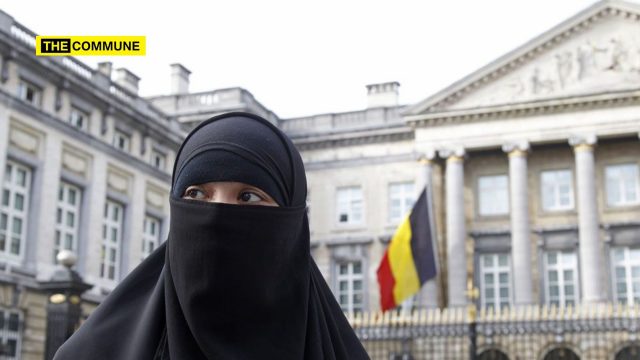
15 Incidents Reveal Deepening Islamist Radicalisation In Belgium

On November 16, 2025, Nizar Trabelsi, a former Tunisian footballer, was arrested in Belgium for plotting a suicide terror attack on a NATO linked air base and later sentenced to 10 years in prison. In this report, we look at 15 incidents that highlight the growing influence of radical Islamist ideology in Belgium from November 2020 to November 2025.

#1 Belgium Pays Compensation to Former al-Qaeda Terrorist Nizar Trabelsi – November 2025 

Belgium paid €350,000 in compensation to former al-Qaeda member Nizar Trabelsi after the European Court of Human Rights ruled that his 2013 extradition to the U.S. was illegal. Trabelsi, a former Tunisian footballer, was originally arrested in September 2001 for plotting a suicide bombing on the NATO-linked Kleine-Brogel air base. He was convicted and sentenced to 10 years in prison in Belgium. The compensation sparked public outrage, as critics argued that a convicted jihadist should not receive taxpayer-funded damages.

#2 Three Arrested Over Plot to Assassinate Belgian Prime Minister – November 2025 

Belgian police arrested three suspects in connection with a planned jihadist attack targeting the Prime Minister. Authorities seized an improvised explosive device, steel ball bearings, and a 3D printer believed to be used for assembling a drone-based explosive. Investigators said the suspects were in the advanced stages of planning.

#3 Brussels Court Convicts ISIS Fighter for Yazidi Genocide – November 2025 

A Brussels court convicted Sammy Djedou, an ISIS militant, of genocide and crimes against humanity committed against the Yazidi community from 2014 onward. Tried in absentia, Djedou was accused of participating in mass killings, rape, and enslavement of Yazidi women. Belgium proceeded with prosecution despite earlier reports that he died in a 2016 airstrike. This marked Belgium’s first genocide conviction related to the Yazidi genocide.

#4 Belgium Moves to Ban Muslim Brotherhood and Extremist Groups – July 2025 

Belgium introduced a law enabling the government to ban groups deemed threats to democratic order, specifically naming networks tied to the Muslim Brotherhood and Samidoun. Officials argued that foreign-backed extremist organisations undermine national security. Civil liberties groups warned the legislation could overreach, but the government insisted it was necessary to curb radicalisation.

#5 Three ISIS-K Members Charged Over Terror Plot in Brussels – July 2024 

Belgian authorities charged three suspected members of ISIS-K after nationwide raids uncovered a terror plot. Police seized digital evidence showing communication with international ISIS networks. The arrests came months before the Paris Olympics, prompting speculation the cell may have considered timing attacks with the event.

#6 Four Suspects Planned Attack on Brussels Botanique Concert Hall – March 2024 

Police arrested three minors and one adult involved in an ISIS-inspired plan to attack the Botanique concert hall. The group communicated through encrypted channels, discussed methods aligned with Islamic State propaganda, and sought weapons through the dark web. The adult suspect was charged with participating in a terrorist group, while minors were placed under juvenile anti-terror supervision.

#7 Belgium Records 41% Surge in Terrorist Threats in 2023 

Belgium’s Coordination Unit for Threat Analysis (CUTA) reported 332 extremist or terrorist threats in 2023, up from 236 in 2022—a 41% spike. Over 40% were linked to Islamist extremism. Authorities noted an increase in anonymous online threats and “copycat” radicalisation inspired by global conflicts.

#8 Tunisian ISIS Gunman Kills Two Swedish Fans in Brussels – October 2023 

Abdesalem Lassoued, a Tunisian national living illegally in Belgium, opened fire on Swedish football supporters, killing two men. He fled the scene but was later located and shot by police. Belgium raised the terror alert to its highest level for days. Investigators found Lassoued pledged allegiance to ISIS shortly before the attack.

#9 Eight Convicted for Role in 2016 Brussels Bombings – July 2023

Eight men, including Salah Abdeslam and Mohamed Abrini, were convicted for involvement in the 2016 suicide bombings that killed 32 people at Brussels Airport and Maalbeek metro station. The trial, one of the largest in Belgian history, concluded with convictions for mass murder and participation in a terrorist organisation.

#10 Seven Arrested in ISIS Terror Plot in Belgium – May 2023 

Belgian police arrested seven Islamic State supporters during raids across the western region. Authorities said the suspects were planning an attack on “a Belgian institution,” though details remain classified. They are being investigated for attempted assassination and terrorism-related charges.

#11 Eight Islamist Extremists Arrested in Raids Across Belgium – March 2023 

Police raided multiple homes across three cities, arresting eight individuals linked to radical Islamist circles. Investigators said the suspects were in early stages of organising a terror attack. The raids formed part of a coordinated counter-terrorism operation across Europe.

#12 Police Officer Stabbed to Death in Brussels Terror Attack – November 2022 

A police officer was fatally stabbed near Brussels North station by an assailant shouting “Allahu Akbar.” Another officer was injured before a nearby patrol shot the attacker. Authorities later confirmed the killer had been flagged for extremist tendencies.

#13 Iranian Diplomat Convicted in 2018 Bomb Plot – February 2021 

Iranian diplomat Assadollah Assadi was sentenced to 20 years in prison for masterminding a 2018 plot to bomb a rally near Paris. Assadi delivered explosive materials to Belgian-Iranian operatives before being arrested in Germany. The case strained EU–Iran relations.

#14 Belgium Bans Halal Slaughter Without Pre-Stunning – January 2021 

Belgium officially enforced a ban on halal and kosher slaughter without pre-stunning, following court rulings upholding regional laws in Flanders and Wallonia. Muslim organisations condemned the ban as discriminatory, while animal rights groups celebrated it as a humane reform.

#15 Two Teenagers Arrested for ISIS-Inspired Stabbing Plot -November 2020 

Two male minors were arrested in Eupen and La Calamine over an ISIS-inspired plan to attack police officers with knives. Authorities recovered a video in which the teens pledged allegiance to Islamic State. Both were charged with attempted terrorist assassination and involvement in a terrorist organisation.

Subscribe to our channels on WhatsAppTelegram, Instagram and YouTube to get the best stories of the day delivered to you personally.
Let Me Peddle Propaganda: DMK’s Unofficial Mouthpiece TNM’s ‘Explainer’ On Coimbatore & Madurai Metro Pushes Half-Truths While Hiding The Real Story

The News Minute’s six-minute video in the Let Me Explain series on the Coimbatore and Madurai Metro issue is not an explainer, it is curated political messaging wrapped in the tone of “analysis,” padded with a full one-minute emotional appeal for subscriptions.

In a video supposedly “explaining” a major infrastructure dispute, TNM’s Pooja Prasanna spends nearly 20% of its runtime begging for money while spending 0% of its effort on verifying the most basic facts.

The result? A half-baked, rage-bait video that camouflages opinions as “facts”.

Let’s analyse the video point by point.

A Manufactured Crisis: Calling It a “Rejection” Without Reading the Letter

Pooja Prasanna’s entire video is constructed on one pillar: “The Centre rejected the metro proposals.”

Except, it didn’t.

The Centre returned the proposals for clarifications with a detailed, three-page list of technical objections, which TNM never even mentions. Why? Because it destroys their neat political storyline.

They amplify the ruling state government, the DMK’s talking points and tweets, but ignore the fact that the letter explicitly says the DPRs need revision, not rejection.

CMRL issued a clarification within 90 minutes, which TNM did not bother to incorporate or even acknowledge in the video.

MOHUA flagged severe issues in ridership projections, Right-of-Way dimensions, and physically impossible alignments – none of which appear anywhere in TNM’s video.

If this is an explainer video from a portal that asks for funding from viewers to support “independent journalism” for a “healthy democracy”, well, it is just shamelessly asking people to fund their lies and propaganda.

Population Criteria: The Convenient Half-Truth

TNM acts as if population was the only reason raised and even then, misrepresents the policy. They harp endlessly on 2011 census data but never disclose the fact that the policy criteria were one of several remarks, not the deciding factor.

Cities like Agra and Bhopal were also initially returned because of population and were later approved after corrective revisions.

The Tamil Nadu DPR inflated numbers beyond believable limits, including Coimbatore’s fantasy 6 lakh daily ridership – higher than Chennai’s actual ridership with 4× the population.

Population was barely a footnote. TNM turned it into the story’s hero.

The Most Damning Technical Failures Are Conveniently Hidden

TNM completely sidesteps the biggest, most embarrassing flaw in the Tamil Nadu DPR – 79% of Coimbatore’s proposed metro alignment has a Right-of-Way below the mandatory minimum.

What didn’t make it to the TNM video:

The central government’s letter points to specific corridors where construction is physically implausible:

  • On the Old Post Office Road (Coimbatore Junction to Ramakrishna Mills), the RoW is a mere 7 meters.
  • On Nawab Hakim Road, the RoW is between 10-12 meters.
  • On Big Bazaar Street and Oppanakara Street, the RoW varies from 12 to 22 meters.

The state government has proposed a metro line through streets that are too narrow to build it. The Centre has essentially asked, “How do you plan to construct an elevated metro in a space where there is physically no room for it?”

Metro pillars cannot be built on roads that can’t hold them. You cannot pass a multi-ton rail system through roads that physically cannot fit it.

But Pooja Prasanna mentions none of this. Because once you include these facts, the narrative collapses.

The Ridership Scandal: Silence, Because It’s Inconvenient

TNM loudly shouts “political vendetta” but quietly conceals the most farcical metric in the DPR:

Coimbatore Metro DPR claims 6,00,000 daily riders.

For context, we have Chennai Metro (approx 10 million people) having a ridership of 4,00,000 daily and Bengaluru Metro (approx 13 million people) having a ridership of 5,00,000 daily.

The Fairy Tale Timeline

The state government promised a three-year completion for a 34-km project, most of which requires complex land acquisition. Given Tamil Nadu’s own abysmal track record with land acquisition (see: Parandur Airport), this timeline is a fantasy. The Centre called out this delusion.

Yet TNM wants people to believe the Centre is “anti-Tamil” because it questioned a blatantly inflated fantasy number.

What we saw was stenography for propaganda.

The Hypocritical Plea for Funds Amidst Shoddy Work

TNM has the audacity to spend over one minute, a sixth of the video’s runtime, begging for subscriptions and funds. They preen about being “independent” and not taking money from governments yet are willing to become an unpaid propagandist for one.

If they want people to fund their “independent journalism,” perhaps they should start practicing it. Independence means chasing down the full story, not just parroting the talking points of a state government. It means reading the Central Government’s three-page letter instead of just the Chief Minister’s inflammatory tweet. The video was a perfect example of how to launder political propaganda under the guise of “news and explanations”.

Not an Explanation, An Exploitation.

The News Minute did not “explain” anything. They exploited the public’s legitimate desire for development to fuel a partisan fire. They took a legitimate process of technical scrutiny; a process applied to metro projects in BJP-ruled states like Uttar Pradesh (Agra) and Karnataka (Bengaluru) and twisted it into a saga of discrimination.

The real story was never about a rigid population rule. It was about a state government submitting a shoddy, unworkable DPR, and a media ecosystem rushing to defend that incompetence with cries of victimhood.

TNM just pushes propaganda. And in doing so, they fail their viewers, every single time, and also fail the very principles of journalism they claim to uphold.

Subscribe to our channels on WhatsAppTelegram, Instagram and YouTube to get the best stories of the day delivered to you personally.
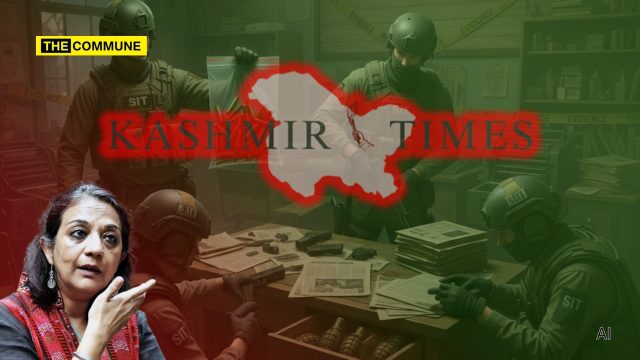
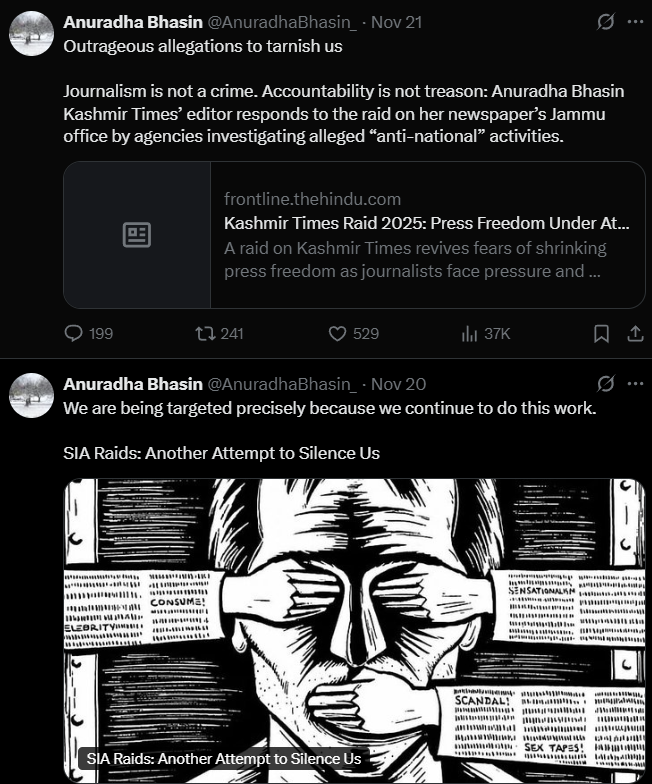
After ‘Doctor’ Terrorists, Here Comes ‘Journo’ Terrorists: AK-47 Cartridges, Pistols And Grenades In Kashmir Times Office, Editor Cries Foul

On 20 November 2025, the Jammu and Kashmir Police’s State Investigation Agency (SIA) conducted extensive raids on the offices of the historic Kashmir Times newspaper in Jammu.

The operation, based on specific intelligence, has unearthed a cache of alarming materials and opened a new front in the Union Territory’s ongoing security operations, targeting what officials describe as a “parallel power structure built on grievance and curated narratives.”

The SIA has registered an FIR naming Anuradha Bhasin, the Executive Editor of the publication, for allegedly “indulging in anti-national activities and spreading disaffection against the country.” Bhasin is expected to be questioned extensively about her links and activities.

The Raid: More Than Just an Office Search

While the raid itself was prompted by suspicions of disaffection and threats to sovereignty, the physical findings have added a grave, tangible dimension to the case. According to news reports, the search of the Kashmir Times premises yielded:

  • Live AK-47 cartridges
  • Pistol rounds
  • Grenade levers

These discoveries in a media office have raised profound and disturbing questions. Bhasin has previously claimed the associated Srinagar office was “shut for years” after being sealed by authorities in 2020 for illegal occupation of government premises. The recovery of weaponry in Jammu now casts a long shadow over these claims, forcing a stark dichotomy: either the office was not as disused as claimed, or a deeper, more dangerous nexus has been operating under the guise of journalism, one that India’s agencies may have ignored for too long.

She’s now crying foul for the action taken by the SIT.

The Bhasin Dossier: A Record of Narrative Confrontation

The current action against Anuradha Bhasin and the Kashmir Times is not an isolated event but the culmination of a long-documented record that, according to security analysts, aligns more with a strategic information campaign against the Indian state than with conventional journalistic dissent.

A review of her public interventions reveals a consistent pattern:

2019: Bhasin moved the Supreme Court, petitioning against the security and communication clampdown following the abrogation of Article 370. Her petition framed the situation exclusively as a “state blackout,” conspicuously omitting the context of Pakistan-backed terror threats that necessitated the security restrictions.

2023: She authored an op-ed for The New York Times that portrayed India as an authoritarian state, a piece that was instantly weaponized by anti-India lobbies abroad. In it, she accused the government of systematic press repression and ominously warned that the rest of India may soon resemble Kashmir.

2022-25: Her book, A Dismantled State, was later listed among banned secessionist literature for its portrayal of India as an “occupier state.”

2020: The sealing of the Kashmir Times’s Srinagar office for illegal occupation of government premises was systematically packaged and amplified globally as a clear case of “press persecution.”

This pattern, experts argue, is not mere dissent but a form of “strategic narrative intervention” designed to shape a very specific, grievance-centric view of Kashmir on the global stage.

The Political Echo Chamber: Instant Amplification

The SIA’s action was met with immediate and predictable condemnation from certain political quarters, underscoring the symbiotic relationship between this media narrative and a particular brand of Kashmiri politics.

Almost in lockstep with the news of the raid, Iltija Mufti, daughter of former Chief Minister Mehbooba Mufti, took to social media, decrying the act. She wrote, “Kashmir Times is one of those rare newspapers in Kashmir that not only spoke truth to power but refused to bend or buckle under pressure & intimidation. Raiding their offices under the guise of carrying out anti national activities is preposterous & reeks of high handedness. In Kashmir every outlet of truth is being choked by invoking the anti national slur. Are we all anti nationals?”

This amplification follows a well-established playbook championed by Mehbooba Mufti herself, a leader who has repeatedly made statements that run counter to the national security narrative, including warning that “bodies will burn” if Article 35A was touched, refusing to hold the Indian Tricolour until the J&K flag was restored. Following the Delhi Red Fort metro station suicide bombing, she shifted the blame to Delhi instead of the radical modules behind the attack.

Critics note that this political chorus never has a word of condemnation for groups like The Resistance Front (TRF), Lashkar-e-Taiba (LeT), their ISI handlers, or the hawala pipelines that fund terror.

The Bigger Picture: Information Warfare in a Stabilizing Kashmir

The crackdown occurs at a time when the ground situation in Kashmir is showing significant signs of stabilization. Tourism is at a post-370 high, stone-pelting incidents have dramatically declined, and the terror infrastructure is under unprecedented pressure as normal politics slowly returns.

For the old ecosystem, a network of political elites, activist-journalists, and their international amplifiers, this stability is a direct threat. Their influence and relevance were predicated on a perpetual cycle of grievance manufacturing.

The predictable cycle has been:

  1. A terror strike occurs.
  2. Pakistan and its proxies gain.
  3. Indian security agencies respond.
  4. Outlets like Kashmir Times publish “democracy is dying” editorials.
  5. Political figures like Mehbooba Mufti amplify them.
  6. Western media republishes the narrative.
  7. Radical networks receive the narrative oxygen to sustain themselves.
  8. The cycle restarts.

This is not seen as coincidence by security planners. It is viewed as a form of information warfare, running parallel to the physical conflict.

The discovery of weapons in a media office marks a potential escalation. It blurs the line between narrative and physical militancy, forcing a fundamental question: Is the Kashmir Times case about a “free press,” or is it about unmasking the intellectual wing of a failed separatist project, now fighting for survival through any means necessary?

The message from the security establishment is clear: New India will not bleed to protect the careers of old elites. In this view, the age of narrative impunity is over, and accountability is not censorship; it is an assertion of sovereignty.

(This article is based on an X Thread by Zeba Zoariah)

Subscribe to our channels on WhatsAppTelegram, Instagram and YouTube to get the best stories of the day delivered to you personally.
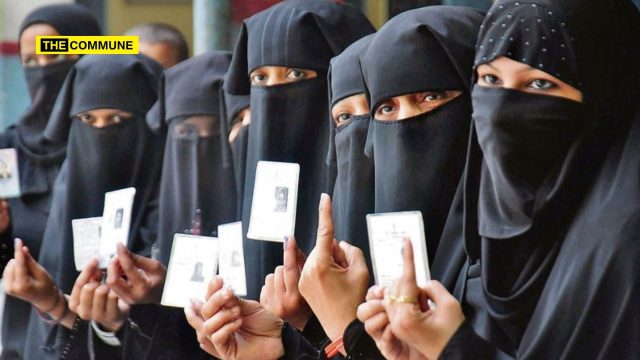
12 Cases Of Burqa-Enabled Voter Fraud Across India

On 6 November 2025, during polling for the Bihar Assembly elections, a video from Siwan went viral on social media. In the clip, a woman identified as Tabassum Khatoon is seen admitting that she wiped off the indelible ink from her finger immediately after voting so that she could attempt to cast another fraudulent vote while remaining covered in a burqa.

This report compiles 12 major incidents from 2022 to 2025 in which individuals identified by election officials or caught on video, allegedly attempted to cast fraudulent votes while concealing their identity under a burqa during elections held across different Indian states.

#1 Burqa Voter Verification Row in Bihar (2025)

A video from Siwan, Bihar, recorded during the 2025 Assembly elections, went viral on social media on 6 November 2025. In the clip, a Muslim woman named Tabassum Khatoon claims that she wiped off the indelible ink from her finger immediately after voting so that she could allegedly cast a fake vote again while covered in a burqa. The incident triggered sharp reactions from opposition parties, who protested over voter verification procedures for burqa-clad voters.

#2 Burqa-Clad Women Allegedly Involved in Fake Voting in Seelampur (2025)

On 5 February 2025, during the Delhi Assembly elections, a controversy erupted in the Seelampur constituency after allegations surfaced that women wearing burqas were being used to cast fake votes. According to claims made at the polling booth, some voters reported that their votes had already been cast before they arrived. Following these accusations, clashes broke out among workers of the BJP, AAP, and Congress. Supporters exchanged blows and engaged in heated arguments, leading to chaos at the booth. The incident drew attention to election-day security lapses and the need for stricter identity verification procedures.

#3 Burqa-Clad Fake Voter Caught During Bihar Bypoll (2024)

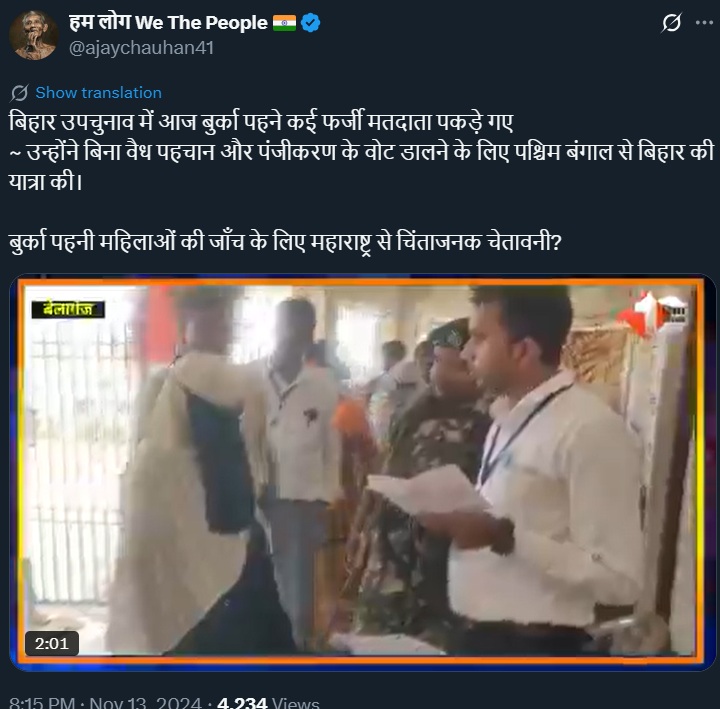
On 13 November 2024, during the Bihar by-election in Gaya, election officials detained a woman wearing a burqa who allegedly attempted to cast a vote without valid identification or registration. According to officials, the woman had travelled from West Bengal to Bihar specifically to participate in fraudulent voting. A video of the incident quickly went viral on social media, showing the woman admitting that she had come to cast a fake vote while hiding her identity under a burqa.

#4 Burqa-Clad Women Seen Defending Illegal Voting During Purnia Polls (2024)

On 27 May 2024, during the Bihar Lok Sabha elections, a video from Purnia went viral on social media showing a Muslim woman defending instances of underage girls allegedly casting fake votes while wearing burqas. In the clip, she complains that some “Muslim girls were caught by the administration for voting in burqas,” and argues that the girls had come “just out of curiosity” and had not committed a major offence.

#5 15 Burqa-Clad Women Arrested for Alleged Fake Voting in Uttar Pradesh (2025)

On 23 May 2025, during the Uttar Pradesh municipal elections, authorities arrested 15 women in the Khirabag area of Mau after they allegedly attempted to cast fake votes while wearing burqas. Election officials detained the women at the polling booth and handed them over to the police. According to officials, the group was found carrying counterfeit Aadhaar cards, and two of the accused were identified as minors. The incident unfolded during voting across 38 districts.

#6 Three Burqa-Clad Women Arrested for Alleged Fake Voting in Madhubani (2024)

On 22 May 2024, during the fifth phase of the Bihar Lok Sabha elections, police arrested three women wearing burqas along with one man at Booth No. 85 located inside the Hakkaniya Madarsa in Devra Bandhauli, Jale Assembly constituency (No. 87) in Madhubani district. According to officials, the four were attempting to cast fraudulent votes using false identities. The man, identified as Mohammad Sanaullah, was allegedly coordinating the fake voting attempt. All four were detained directly from the polling station.

#7 Minor Girl Caught Attempting Fake Vote in Burqa During Sambhal Polling (2024)

On 7 May 2024, during the third phase of the Lok Sabha elections, security personnel in the Kundarki Assembly segment of the Sambhal constituency detained a minor girl who arrived at Booth No. 398 wearing a burqa and allegedly attempted to cast a vote using the voter slip of a 40-year-old woman.

The incident raised immediate concerns about impersonation and booth-level malpractice. The BJP accused the presiding officer, Shamim Ahmad, of facilitating fake voting at the booth.

#8 Burqa-Clad Woman Arrested for Alleged Fake Voting in Rampur (2023)

On 18 November 2023, police in Rampur, Uttar Pradesh, arrested a Muslim woman wearing a burqa for allegedly attempting to cast a fake vote using her sister-in-law’s identity. According to officials, the woman admitted during questioning that she had been sent by her father-in-law and mother-in-law to vote fraudulently on behalf of the relative.

#9 Four Burqa-Clad Women Detained for Alleged Fake Voting Attempt in Sambhal (2023)

On 4 May 2023, during the municipal elections in Chandausi, Sambhal district of Uttar Pradesh, police detained four women who allegedly attempted to cast fake votes while wearing burqas. Authorities reported that the women arrived at polling booths carrying forged identification documents. During verification, officials discovered inconsistencies, leading to their detention. One of the four was identified as a minor.

#10 Two Burqa-Clad Women Caught Attempting Fake Voting in Rampur (2022)

On 14 February 2022, during the second phase of the Uttar Pradesh Assembly elections, two Muslim women, identified as Rani and her daughter Muskan were detained in Rampur for allegedly attempting to cast fake votes while wearing burqas. The incident took place at a polling booth set up inside GRP College in the Rampur City Assembly constituency. According to election officials, one of the women had already managed to cast an illegal vote before being caught. Both were immediately handed over to police.

#11 Video Shows Burqa-Clad Women Allegedly Preparing for Fake Voting in Uttar Pradesh (2022)

In March 2022, during the Uttar Pradesh Assembly elections, a video went viral on social media showing several young Muslim women gathered inside a room with multiple forged Aadhaar cards visible around them. In the clip, voices can be heard accusing the burqa-clad women of planning or attempting to cast fake votes using these counterfeit documents.

The footage triggered widespread debate online, with many users raising concerns about organised impersonation attempts and loopholes in identity verification during elections. Authorities later stated that the video was being examined to determine its authenticity and the individuals involved.

#12 Woman Caught Attempting to Cast Dead Co-Wife’s Vote in Burqa During Amroha Polls (2019)

On 21 April 2019, during the second phase of the Lok Sabha elections, a woman in Amroha’s Hasanpur area was detained for allegedly attempting to cast a vote in the name of her deceased co-wife while wearing a burqa to conceal her identity. Election officials grew suspicious during verification and alerted police, who detained her at the polling booth. A case was subsequently registered, and legal action was initiated.

Subscribe to our channels on WhatsAppTelegram, Instagram and YouTube to get the best stories of the day delivered to you personally. 
When Justice Sleeps, Indira Jaising Wakes Up: The Lawyer Who Intervenes For Serial Killers, Terrorists, And Rapists

indira jaising

The Supreme Court’s recent decision to acquit Surendra Koli in the last pending Nithari case has not only reopened debate about India’s criminal justice system but also brought renewed focus on one of the case’s most prominent lawyers: senior advocate Indira Jaising.

Jaising, whose midnight intervention in 2014 halted Koli’s execution hours before he was to be hanged, is today being hailed by some as vindicated and criticised by others as part of a broader pattern of intervening in favour of convicts in heinous crimes and terrorism cases. Her legal work, from the Nithari killings and the Yakub Memon hearing to the Nirbhaya controversy and the push to lower the age of consent has become the subject of intense political and ideological contestation.

Nithari: Midnight Stay, and an Acquittal 11 Years Later

On the night of 8 September 2014, as jail authorities in Meerut prepared to hang Surendra Koli, Jaising rushed to the residence of the then Chief Justice–designate H.L. Dattu seeking an urgent stay of execution. A special late-night hearing was convened, and the Supreme Court stayed Koli’s hanging pending a review of his death sentence.

At the time, Koli had been convicted in multiple cases arising out of the Nithari killings in Noida and described as a “serial killer” by the Court itself. Over the next decade, however, the evidentiary foundations of those convictions were gradually dismantled.

In October 2023, the Allahabad High Court acquitted Koli in 12 Nithari cases, finding that his 2007 “confession” was neither voluntary nor reliable and that recoveries of skulls and bones could not be legally linked to him.

On 10 November 2025, ruling on a curative petition in the final case, relating to the murder of a minor girl, the Supreme Court reached a similar conclusion. It held that the same “structural infirmities” infected the confession and recoveries across all Nithari prosecutions and that conflicting outcomes on identical evidence would amount to a “manifest miscarriage of justice”. The Court recalled its own earlier order upholding his conviction and ordered Koli’s acquittal and immediate release.

Reacting to the verdict, Jaising told The Times of India that investigations in the case were “flawed as a whole” and reiterated her long-held position that no execution should take place until every legal remedy, including curative review has been fully exhausted.

Yakub Memon: The 3 AM Hearing

Less than a year after the Koli stay, Jaising appeared again in a dramatic late-night death penalty matter’ this time in the 2015 case of Yakub Memon, convicted in the 1993 Mumbai serial blasts.

On the night of 29-30 July 2015, as Memon’s execution approached, a group of senior lawyers including Indira Jaising, Prashant Bhushan, Anand Grover and Vrinda Grover went to the Chief Justice’s residence seeking an urgent hearing. A three-judge bench of the Supreme Court assembled around 3:20 AM to hear their plea that Memon be granted 14 days after the rejection of his mercy petition before any execution, in line with earlier precedent.

The bench ultimately rejected the plea around dawn, and Memon was hanged later that morning as scheduled. Still, the intervention reinforced Jaising’s public image as one of the country’s most visible and persistent death-penalty opponents.

Nirbhaya: “Forgive the Rapists” Tweet Sparks Outrage

In January 2020, as the four men convicted in the 2012 Delhi gang-rape and murder (the Nirbhaya case) came close to execution, Jaising again courted controversy; this time outside the courtroom.

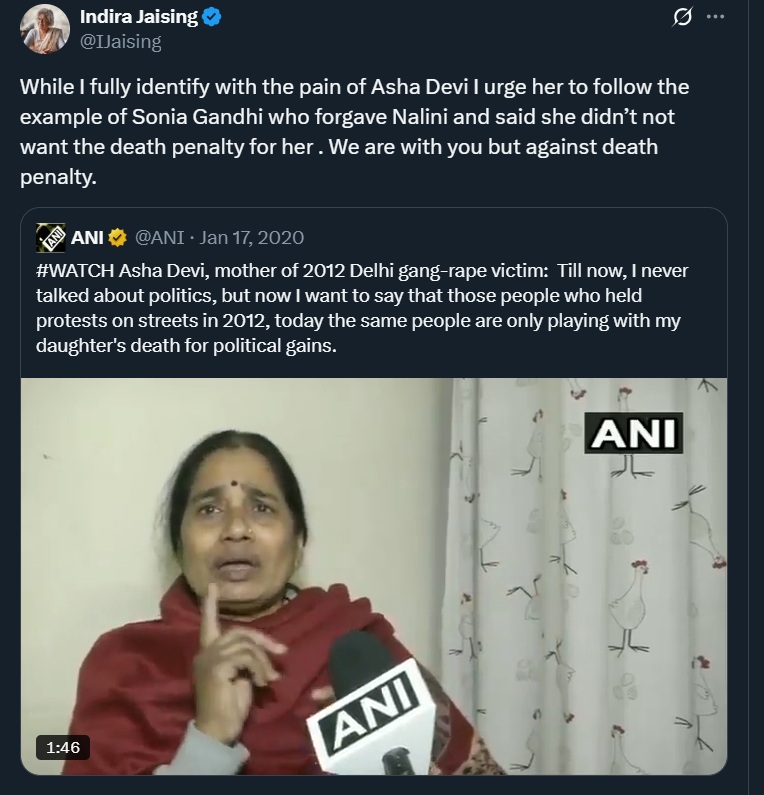
In a publicly shared tweet, she said she fully identified with the pain of Nirbhaya’s mother, Asha Devi, but urged her to “follow the example of Sonia Gandhi who forgave Nalini and said she didn’t want the death penalty for her,” adding that “we are with you but against the death penalty.”

Asha Devi reacted sharply, telling the media she was shocked by the suggestion and asking, “Who is Indira Jaising to give me such a suggestion?” She accused “people like her” of helping rapists and obstructing justice for victims.

The episode again highlighted Jaising’s abolitionist stance and triggered a broader debate on whether public advocacy against capital punishment in such cases is principled or insensitive to victims’ families.

Afzal Guru Case: Questions Over Legal Defence and a Push for Curative Review

Another prominent intervention by Indira Jaising came in the highly sensitive Parliament Attack case, involving Mohammad Afzal Guru, who was convicted for his role in the 2001 terror strike on India’s Parliament and sentenced to death.

Guru’s conviction and sentence were upheld by the Supreme Court in 2005, and his mercy petition was rejected by the President in 2013. However, in the years preceding the execution, a segment of civil-society activists and lawyers, including Jaising, mounted a sustained campaign questioning aspects of his trial.

As per court records and contemporary reporting, Jaising issued a legal certificate allowing Afzal Guru to file a curative petition, the final judicial remedy available after the dismissal of review petitions. She argued that Guru had been denied adequate legal representation at crucial stages of the trial and that there existed a “constitutional error” requiring judicial correction.

Her steps formed part of a wider legal and activist push that claimed procedural deficiencies in the case. Critics, however, viewed the move as an attempt to delay or derail the execution of a convict held guilty by both the trial court and the Supreme Court in a high-profile terror case.

Although the curative petition was ultimately dismissed, the episode added to Jaising’s profile as one of India’s most active lawyers challenging death-penalty cases including those involving individuals convicted of terrorism.

The Age-of-Consent Debate: Redrawing the Line at 16

Most recently, Jaising’s role as amicus curiae in a batch of petitions concerning the Protection of Children from Sexual Offences (POCSO) Act has stirred fresh controversy.

In July 2025, she urged the Supreme Court to effectively lower the statutory age of consent from 18 to 16 in cases of consensual sexual activity between adolescents close in age. She argued that the present framework “criminalises consensual sexual activity between children in the age group of 16–18 years” and violates their right to autonomy and privacy.

The Union government strongly opposed any change, warning that reducing the age of consent would dilute child protection and could be misused by sexual predators. Child-rights groups and several commentators have similarly argued that grooming and exploitation risks are high in this age bracket and that POCSO’s safeguards should not be weakened.

Pattern Or Principle?

Taken together, these episodes have led some political commentators and critics to notice a “pattern” in Jaising’s interventions: they point to her role in securing a midnight stay for Koli, seeking procedural delays for Yakub Memon, publicly appealing for mercy for the Nirbhaya convicts, and pushing to lower the age of consent, and it is noteworthy that her activism tends to benefit convicts in grave crimes or potentially weakens protections for minors.

She seems to be a part of a broader ecosystem of lawyers who frequently challenge death sentences, oppose stringent security laws and advocate reforms that, in their view, favour accused persons over victims.

However, Jaising and her supporters frame the same record very differently. In interviews and written pieces, she has consistently described herself as a human-rights and constitutional lawyer whose opposition is not to victims but to what she sees as irreversible punishments, flawed investigations and laws that criminalise adolescents’ consensual relationships.

In the wake of Koli’s acquittal, she argued that the case exposed “flawed” investigative processes and reinforced the need to ensure that no one is executed before all legal remedies are exhausted—especially where confessions and recoveries are later found unreliable.

On POCSO and the age of consent, she has maintained that her concern is with teenage couples being pulled into the criminal system due to parental or social pressure and has called for a narrow “close-in-age” exception rather than a blanket dilution of child-protection law.

Indira Jaising – A Polarising Figure in India’s Justice Debates

As India continues to grapple with questions of how to balance victims’ rights, due process, child protection and the death penalty, Indira Jaising has become one of the most polarising figures in that debate.

The Supreme Court’s reversal in the final Nithari case has now added a new layer to that story. For some, it strengthens her long-standing argument that the justice system can make catastrophic mistakes. For others, it does little to change their unease over a lawyer whose most visible battles have been fought on behalf of those the public already believes guilty.

Either way, as the country revisits the Nithari case and debates the future of death penalty and child-protection laws, Indira Jaising’s courtroom interventions and the questions they raise will exist as long as the ecosystem that supports her exists.

Subscribe to our channels on WhatsAppTelegram, Instagram and YouTube to get the best stories of the day delivered to you personally.