Home Blog Page 176

How India Became Global Smartphone Manufacturing Hub

iphone apple india global smartphone manufacturing

India has surpassed China to emerge as the leading supplier of smartphones to the United States, driven by the government’s ‘Make in India’ initiative, Apple’s relocation of its operations to India, and US importers frontloading their inventory amid tariff uncertainties.

Analysts say that the US hiking tariffs on India has led vendors to front-load inventory, which means buying far more inventory than usual and changing their sourcing plans. Further, government support since 2017 through the Make In India program and strategic integration into global value chains (GVCs) due to the Production-Linked Incentive (PLI) scheme drove Indian success.

The total volume of “Made-in-India” smartphones grew 240 per cent YoY. Apple has scaled up its production capacity in India over the last several years and has dedicated most of its export capacity in the country to supply the US market so far in 2025. India’s shipments to the US account for approximately 44 per cent of all its smartphone imports, up from 13 per cent last year.

Meanwhile, China’s share of smartphone exports to the US declined to 25 per cent. China accounted for 61 per cent of smartphones exported to the US in the second quarter of 2024. India is now the world’s third-largest exporter of mobile phones, clocking $20.5 billion (CY2024) worth of exports.

Alongside China and Vietnam, India is now a major player in global electronics manufacturing, with companies shifting production to diversify supply chains. Trump imposed a 50 per cent tariff on India and a 30 per cent tariff on China, while the two countries negotiated a trade deal, and a 20 per cent tariff on Vietnam.

Most of the decline in US smartphone shipments assembled in China has been picked up by India, mainly due to Apple’s ‘China Plus One’ strategy. India now boasts 300 mobile manufacturing units, a significant increase from just two in 2014. In FY14, 26 per cent of mobile phones sold in India were locally made, which has surged to 99.2 per cent being manufactured domestically, according to government data.

Though Apple has started manufacturing and assembling Pro models of the iPhone 16 series in India, the tech giant is still dependent on established manufacturing bases in China for their scaled supply for Pro models. Samsung and Motorola have also increased their share of US-targeted supply from India, although their shifts are significantly slower and smaller in scale than Apple’s.

-IANS

Subscribe to our channels on TelegramWhatsApp, and Instagram and get the best stories of the day delivered to you personally.

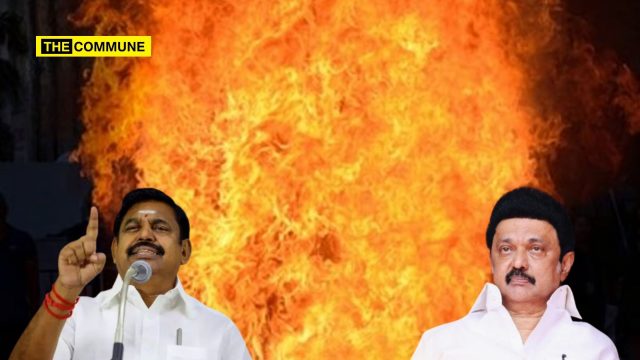
Thoothukudi College Blast: EPS Slams DMK, Demands Stalin’s Response On Law and Order

AIADMK general secretary and Leader of Opposition in Tamil Nadu Assembly Edappadi K. Palaniswami on Wednesday expressed shock over the explosion of what he described as a “country-made bomb” allegedly brought in by students of the Government Polytechnic College in Thoothukudi.

He accused the DMK regime of presiding over a deteriorating law and order situation and urged Chief Minister M.K. Stalin to “step out of his denial zone” and respond to questions on public safety. The incident occurred on Tuesday during the lunch break when two first-year Diploma (Mechanical) students — M. Mathavan (16) of P&T Colony and M. Murali Karthick (16) of Indra Nagar, Thoothukudi — allegedly set off firecrackers inside their classroom.

According to sources, the crackers were of the type used for fishing in ponds. Mathavan sustained severe injuries to his right hand, while Murali suffered injuries to his right eye. Both were admitted to the Thoothukudi Medical College Hospital. While Palaniswami alleged that the blast involved a “country-made bomb” and reflected a collapse in campus security, Thoothukudi Superintendent of Police Albert John clarified that the explosion was caused only by firecrackers.

He appealed to the public not to spread false or misleading information about the incident. In a strongly worded social media statement, the AIADMK leader drew parallels with recent violent incidents involving students.

“From knife fights among school children to machetes in school bags, and now a bomb explosion in a government college — this is the grim reality in Tamil Nadu today,” he said. He contrasted the present situation with what he called the “educationally progressive” image of the state under the previous AIADMK regime, claiming it was now “drifting under the so-called Stalin-model governance.”

Palaniswami criticised what he alleged was the DMK government’s tendency to downplay such incidents as “personal issues” and called it shameful.

“The presence of deadly weapons in an educational institution reflects a collapse in governance. Why is there hesitation when questions come from the people?” he asked, accusing the Chief Minister of remaining silent when confronted with uncomfortable queries on law and order.

The AIADMK leader demanded that the state provide immediate medical care for the injured students and conduct a thorough probe into the blast. He also called for stringent legal action against those responsible and measures to prevent such incidents in the future.

“It is time to reclaim the state from a regime that has allowed weapons and explosives to enter our institutions,” Palaniswami said, warning that public confidence in the government’s ability to maintain safety was rapidly eroding.

-IANS

Subscribe to our channels on Telegram, WhatsApp, and Instagram and get the best stories of the day delivered to you personally.
BJP Flags Voter Fraud In Wayanad, Rae Bareli, Diamond Harbour And Other Opposition Bastions

vote chori voter fraud indi alliance rahul gandhi congress opposition

BJP leader and former Union Minister Anurag Thakur on Monday launched a sharp attack on several key leaders of the I.N.D.I.A. bloc, accusing them of protecting illegal immigrants to sustain what he termed a “ghuspaithiya vote bank.”

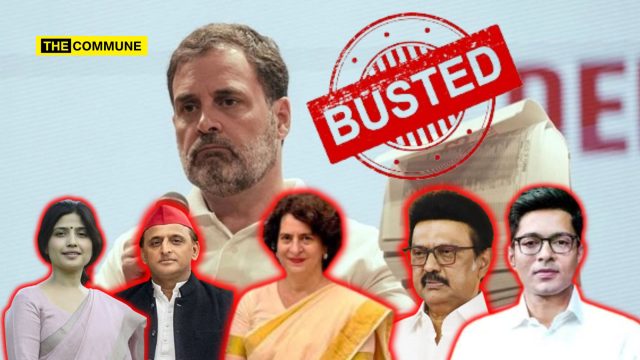
Addressing a press conference in the capital, Thakur alleged that constituencies represented by senior opposition figures, including Congress leaders Rahul Gandhi and Priyanka Gandhi Vadra, Samajwadi Party leaders Akhilesh Yadav and Dimple Yadav, Tamil Nadu Chief Minister M.K. Stalin, and Trinamool Congress MP Abhishek Banerjee, contained lakhs of “doubtful voters.”

According to Thakur, these included duplicate entries, fake addresses, forged family links, manipulated ages, and mass voter additions.

The BJP cited constituency-wise figures:

  • Wayanad (represented by Rahul Gandhi, earlier by Priyanka Gandhi Vadra): 93,499 doubtful voters, including 20,438 duplicates and 17,450 with fake addresses.
  • Rae Bareli (Rahul Gandhi): over 2 lakh doubtful voters, including 71,977 with fake addresses.
  • Diamond Harbour (Abhishek Banerjee): nearly 2.6 lakh doubtful voters, including 1.55 lakh with fake addresses.
  • Kannauj (Akhilesh Yadav): 2,91,798 doubtful voters.
  • Mainpuri (Dimple Yadav): 2,55,914 doubtful voters.
  • Kolathur (M.K. Stalin): nearly 20,000 doubtful voters.

Thakur claimed that in Diamond Harbour, BJP workers had found instances of the same individual appearing on the electoral roll multiple times under different father’s names.

He accused Congress leader Rahul Gandhi of being a “propaganda king” and alleged that his party’s political survival depended on shielding illegal immigrants.

Challenging the opposition, Thakur said, “If they demand resignations from others over alleged voter fraud, they should first resign from their own seats where such massive irregularities exist.”

The allegations come amid heightened political sparring between the BJP and the I.N.D.I.A. bloc ahead of the next round of state and national elections. Opposition parties are yet to respond to the BJP’s claims.

(With inputs from Ritam)

Subscribe to our channels on Telegram, WhatsApp, and Instagram and get the best stories of the day delivered to you personally.
Queensland Amusement Park Squatting On ₹200 Crore Worth Temple Land, Allegedly Destroying Govt Records With Insider Help To Grab Property

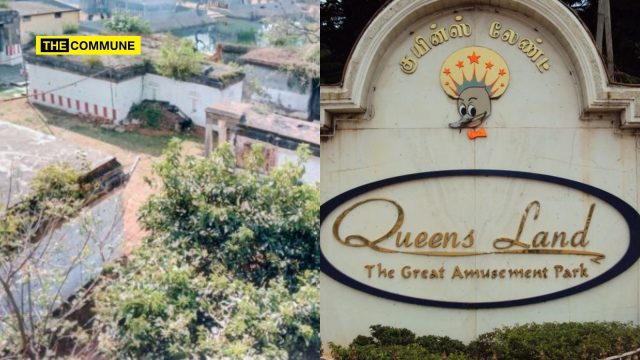
A long-running dispute over 177.7 acres of prime temple land near Poonamallee – home to the historic Kasi Viswanathar and Sri Venugopalaswamy Temples, has taken a serious turn, with allegations that Queensland Amusement Park is destroying government records to solidify its hold on the property, allegedly with the help of officials.

Background

Selvaraj, popularly known as ‘Oorvasi’ Selvaraj founded the Oorvasi Soap Company, Queensland Amusement Park, and King’s Engineering College. Politically well-connected, he served as Vice President of the South Chennai unit of the Indian National Congress from 1990 to 1997, and later, as MLA from Srivaikuntam in 2006. At the time, sworn affidavits ranked him as the third-richest MLA in the Tamil Nadu Assembly—behind only Karunanidhi and Jayalalithaa. Selvaraj passed away in 2009, and his wife, Nalini Selvaraj, is now a prominent Christian evangelist.

Selvaraj had leased the temple land in 1991 under the pretext of carrying out farming activities.

The land, located on the Chennai–Bengaluru National Highway, was leased in 1991 to the late “Oorvasi” D. Selvaraj for farming purposes. Instead, the site was converted into a large commercial amusement park and, a kilometre away, the St. John’s International Residential School, both operating in defiance of multiple court orders.

In 2008, a local court upheld the Hindu Religious and Charitable Endowments (HR&CE) Department’s eviction notice, ruling that the lease had been violated. An appeal was dismissed in 2013. Yet, more than a decade later, neither Queensland nor the school has vacated the premises, and the temples remain in a dilapidated state.

Legal Dispute And Court Relief

While the HR&CE Department had issued an eviction notice in 2008—later upheld by a local court and with an appeal dismissed in 2013—the case took a fresh turn in June 2022.

The Madras High Court set aside an HR&CE notice to Queensland Amusement Park seeking its eviction from 21.06 acres of land at Pappanchatram in Sriperumbudur Taluk, on grounds that an appeal over ownership rights was still pending before the Commissioner of Land Administration (CLA).

Justice V.M. Velumani observed that the rights to the land would be governed by the outcome of the pending appeal, in line with an earlier October 29, 2021 High Court order.

The petitioners—Nalini Selvaraj and others—argued they had leased the land from HR&CE in 1995, but the government had declared it ‘anatheenam land’ in 1997, leading the Revenue Department to demand rent. The temples’ request for patta had been rejected by the Assistant Settlement Officer in Tirupattur and twice by the Kancheepuram Collector, prompting the matter to be taken up before the CLA.

Amid the dispute, the park management offered to provide alternative land to the government in exchange for retaining the land it occupies.

Fresh Allegations Of Tampering

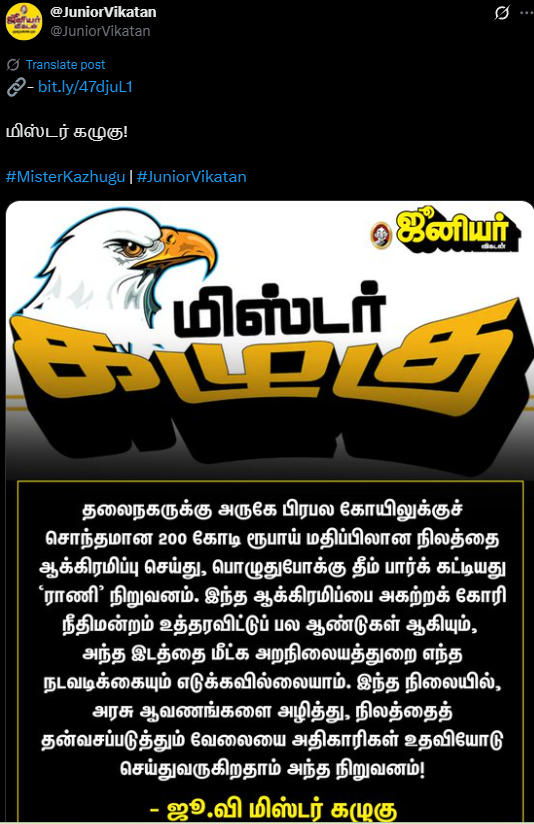
The latest claim, reported by Junior Vikatan, is that the company is now actively destroying or altering government documents to erase evidence of the temple’s ownership, allegedly with the cooperation of officials in the HR&CE Department. Critics say the inaction by the department over the years, despite repeated petitions from priests and devotees, raises troubling questions about collusion.

Temples In Ruin While Commercial Entities Profit

While the amusement park and school flourish, the temples they displaced are struggling to survive. There is no compound wall, the structures are crumbling, and cattle freely wander into the premises. The priests’ quarters, marriage halls (mandapams), and once-active community spaces lie in ruins.

Doraiswamy Gurukkal, priest at the Kasi Viswanathar Temple since 1974, recalled when Sri Chandrasekhara Saraswathi Swamigal of the Kanchi Kamakoti Mutt would stay at the temple for 15 days each year. “Now goats and cows roam where great saints once performed pooja,” he laments.

Both temples together own the 177.7 acres, part of a larger tract originally donated in the 19th century by zamindar Venkaiah, who built the shrines. The land was intended to provide sustainable income for maintenance and daily rituals. Today, however, priests report earning as little as ₹300 per month from the HR&CE, with arrears of five years.

Questionable Safety Record

Queensland has faced its share of controversies beyond the land dispute. In January 2014, a giant wheel malfunction injured 18 people; the case was filed but never followed up publicly. In another incident a year later, a schoolboy drowned in the park’s pool. Despite these incidents, and the fact that the park was ordered to vacate, it continues to operate.

The central question now is whether authorities will investigate the allegations of document destruction and collusion, or whether the ₹200-crore land grab will remain yet another unresolved chapter in Tamil Nadu’s long list of temple land disputes.

Subscribe to our channels on Telegram, WhatsApp, and Instagram and get the best stories of the day delivered to you personally.
Pakistan Fails IMF Targets Again, Validating India’s Concerns Over Repeat Bailouts

With Pakistan failing to meet three out of the five targets fixed by the International Monetary Fund for the second review of the $7 billion bailout package, India’s stand has been vindicated that Islamabad has been a prolonged borrower, with a very poor track record of implementation and adherence to the IMF’s programme conditions Pakistan’s Federal Board of Revenue missed two major fiscal targets as it failed to collect 12.3 lakh crore rupees in total revenues and generate 50 billion rupees under the much-hyped Tajir Dost Scheme aimed at taxing retailers.

The scheme is reported to have turned out to be a dud, leaving the unorganised economy unchecked, according to a report in Pakistan’s Express Tribune newspaper. The fiscal operations summary released by Pakistan’s Ministry of Finance also shows that the provinces fell short of saving the targeted 1.2 lakh crore rupees in the last fiscal year, which ended in June, due to higher expenditures. India has opposed the loans as inflows from international financial institutions, like the IMF, could be misused by Pakistan for military and state-sponsored cross-border terrorist activities.

However, the IMF’s response is circumscribed by procedural and technical formalities. “This is a serious gap highlighting the urgent need to ensure that moral values are given appropriate consideration in the procedures followed by global financial institutions,” India’s representative Parameswaran Iyer said at the last meeting of the IMF.

Last September, the Executive Board of the IMF approved a 37-month Extended Arrangement under the EFF for Pakistan in the amount of SDR 5,320 million (or around $7 billion). While there was an immediate disbursement of $1 billion, the meeting on Friday was called to review the funding programme for Pakistan. He highlighted that Pakistan has been a prolonged borrower from the IMF, with a very poor track record of implementation and adherence to the IMF’s programme conditions.

India has highlighted that had the previous programmes succeeded in putting in place a sound macroeconomic policy environment, Pakistan would not have approached the Fund for yet another bailout. Such a track record calls into question either the effectiveness of the IMF programme designs in the case of Pakistan or their monitoring or their implementation by Pakistan. Pakistan’s military’s deeply entrenched interference in economic affairs poses significant risks of policy slippages and reversal of reforms. Even when a civilian government is in power now, the army continues to play an outsized role in domestic politics and extends its tentacles deep into the economy.

In fact, a 2021 UN report described military-linked businesses as the “largest conglomerate in Pakistan”. The situation has not changed for the better; rather, the Pakistan Army now plays a leading role in the Special Investment Facilitation Council of Pakistan. India flagged the Pakistan chapter of the IMF Report on Evaluation of Prolonged Use of IMF Resources. The report noted a widespread perception that political considerations have an important role in the IMF lending to Pakistan. As a result of repeated bailouts, Pakistan’s debt burden is very high, which paradoxically makes it a too-big-to-fail debtor for the IMF.

-IANS

Subscribe to our channels on TelegramWhatsApp, and Instagram and get the best stories of the day delivered to you personally.
US Terror List Exposes Pakistan’s Double Game, Counters China’s CPEC Ambitions

The United States formally designating the Balochistan Liberation Army (BLA) and the Majeed Brigade as Foreign Terrorist Organisations (FTO) and US President Donald Trump announcing US investment in oil exploration in Balochistan not only reinforces America’s commitment to counter international terrorism but also limits China’s ability to use security concerns as a justification for expanding its physical presence in the region under the cover of protecting the China-Pakistan Economic Corridor (CPEC), a renowned international analyst reckoned on 13 August 2025.

US Secretary of State Marco Rubio on Monday designated the BLA and its front organisation the Majeed Brigade as FTOs, asserting that action taken by the Department of State demonstrates the Trump Administration’s commitment to countering terrorism.

Last month, Washington had officially designated The Resistance Front (TRF) as a FTO and Specially Designated Global Terrorist (SDGT) validating India’s longstanding stance that the TRF is not an indigenous militant group, but a proxy for the Pakistan-based jihadi organisation Lashkar-e-Taiba (LeT), which was established to cover up Pakistan’s continued patronisation of terrorism in Jammu and Kashmir. These back-to-back designations, John Spencer, the Executive Director at the US-based Urban Warfare Institute, wrote on 13 August show that the United States under President Trump is committed to confronting terrorism wherever it occurs.

“They also highlight Pakistan’s double standards. Islamabad continues to shelter and enable LeT, Jaish-e-Mohammed, and other anti-India terrorist groups while demanding global sympathy for its own insurgencies. The same state that claims to be a victim of terrorism has been one of its most consistent sponsors,” Spencer wrote in an article titled ‘Why US Terrorist Designations in Balochistan Matter for India and the Region’ which he also shared with his followers on X.

The leading American defence analyst believes that the Trump administration’s “firm approach” to both TRF and BLA confirms that New Delhi’s warnings about Pakistan’s duplicity are gaining traction in Washington. “For the United States, the designations serve multiple interests. They strengthen America’s credibility as a global leader against terrorism, they counter China’s push to expand its security presence in Pakistan, they safeguard prospective US energy and mineral investments in Balochistan, and they contribute to stability along critical maritime and trade routes in the Arabian Sea. These moves also align US and Indian objectives in exposing and isolating Pakistan’s support for militant groups,” said Spencer.

Located on Pakistan’s southwestern edge, bordering Afghanistan to the north, Iran to the west, and the Arabian Sea to the south, Balochistan is the largest province in Pakistan, covering half of the country’s area and home to just about 12 million people. “Its terrain combines rugged mountain ranges, desert plateaus, and a 770-kilometre coastline that includes the deep-water port of Gwadar. The province is rich in natural gas, coal, copper, gold, and rare earth minerals. Despite this abundance, it remains one of the poorest and least developed regions in South Asia, with high unemployment, low literacy, and minimal infrastructure,” Spencer highlighted. Balochistan, located at the tri-junction of South Asia, the Middle East, and Central Asia, is one of the most geopolitically and economically significant regions in the world. With over 1,000 kilometres of coastline along the Arabian Sea and proximity to key maritime seamless trade routes, it is a natural gateway to Central Asia, Europe, and the Middle East. Earlier this month, leading Baloch human rights defender Mir Yar Baloch had written an open letter to India’s Public and Government sector companies, urging Indian partnership to unlock the “vast potential” of Balochistan as beneath its rugged terrain lies untapped treasure: trillions of dollars worth of rare earth minerals, gold, copper, oil, coal, lithium, and natural gas and, despite this immense wealth, decades of exploitation and occupation have left the region underdeveloped.

“For India, Balochistan’s unrest is both a moral and strategic concern. Morally, the Baloch people deserve international attention for the severe abuses they face, including enforced disappearances, extrajudicial killings, and systematic denial of political rights. Strategically, instability in Balochistan undermines the China-Pakistan Economic Corridor (CPEC). Growing discontent over Chinese exploitation of the province’s mineral wealth has triggered repeated BLA attacks against Chinese nationals and Pakistani security forces,” asserts Spencer.

“In response, China has opened talks with Pakistan to form a joint security venture to protect its investments and personnel. Reports indicate that Beijing is keen to place its own security forces on the ground in Pakistan, following a model it recently operationalized in Myanmar under the pretext of safeguarding infrastructure projects during that country’s civil war,” he adds. However, the urban warfare expert emphasised, lasting peace in Balochistan will only come when Pakistan abandons military repression in favour of political dialogue, equitable resource sharing, and respect for rights. “Until that day, Balochistan will remain a fracture in Pakistan’s sovereignty, a pressure point for China’s regional ambitions, and a vivid counterpoint to Pakistan’s rhetoric on Kashmir,” he believes.

-IANS

Subscribe to our channels on TelegramWhatsApp, and Instagram and get the best stories of the day delivered to you personally.
BJP’s Amit Malviya Alleges Sonia Gandhi Was On Voter Rolls Before Gaining Indian Citizenship

BJP IT Cell chief Amit Malviya on 13 August 2025 alleged that Congress leader Sonia Gandhi was registered as a voter in India even before she became an Indian citizen. His remarks came after the Congress criticised alleged irregularities in the voters’ list and opposed the ongoing Special Intensive Revision (SIR) of electoral rolls in Bihar.

“Sonia Gandhi’s tryst with India’s voters’ list is riddled with glaring violations of electoral law. This perhaps explains Rahul Gandhi’s fondness for regularising ineligible and illegal voters, and his opposition to the SIR,” Malviya claimed in a post on X.

According to Malviya, Sonia Gandhi’s name first appeared on the electoral rolls in 1980  three years before she obtained Indian citizenship, when she still held Italian citizenship. At the time, the Gandhi family lived at 1, Safdarjung Road, the official residence of Prime Minister Indira Gandhi.

Until then, the voters registered at that address were Indira Gandhi, Rajiv Gandhi, Sanjay Gandhi and Maneka Gandhi. He said the electoral rolls for the New Delhi parliamentary constituency were revised with 1 January 1980, as the qualifying date. During this revision, Sonia Gandhi’s name was added at serial number 388 in polling station 145.

“This entry was a clear violation of the law, which mandates Indian citizenship for voter registration,” Malviya alleged. Following an outcry in 1982, her name was deleted, but it reappeared in 1983. Malviya pointed out that in the fresh revision that year, Sonia Gandhi was listed at serial number 236 in polling station 140, with 1 January 1983, as the qualifying date even though she was granted Indian citizenship only on 30 April 1983.

“In other words, Sonia Gandhi’s name entered the electoral rolls twice without meeting the basic citizenship requirement first in 1980 as an Italian citizen, and then again in 1983, months before she legally became a citizen of India,” he said. Malviya also questioned why it took her 15 years after marrying Rajiv Gandhi to accept Indian citizenship. “If this isn’t blatant electoral malpractice, what is?” he asked, while attaching an extract from the 1980 electoral rolls to his post.

-IANS

Subscribe to our channels on TelegramWhatsApp, and Instagram and get the best stories of the day delivered to you personally.

Terror Threat Scribbled Near Jagannath Temple; Puri Police On High Alert

The Puri Police are on their toes after graffiti threatening an attack on the famous Jagannath Temple at the sacred coastal town was spotted on the walls of a small temple near the 12th-century shrine on 13 August 2025.

An unknown person has written ‘Terrorist will destroy the Temple’ in Odia language on two locations of the wall of Budhi Maa Thakurani temple, located on the southern side of the temple near Balisahi entrance of the Puri Parikrama Prakalpa marg (Heritage Corridor) in the holy coastal town. The graffiti also contained the name of Prime Minister Narendra Modi and some unverified phone numbers.

Speaking to media persons, Pinak Mishra, DIG-Cum- Superintendent of Police, Puri said that efforts are on to identify and nab the accused person. “It was found that some objectionable posts have been written regarding the Jagannath Temple. We have taken cognisance of this incident. Our special team has already started an investigation to ascertain when and who wrote this. We have been taking the issue seriously as it is related to the security of Jagannath Temple,” said Puri SP. Mishra also stated that police have been examining the CCTV footage of the temple and surrounding areas to identify the accused person. He also informed the media persons that the police team investigating the issue has already got some clues on the matter.

The Puri SP noted that everything will be cleared on the issue after the identification and apprehension of the accused person. The police suspect that the graffiti was written on Tuesday night. Meanwhile, some locals claimed that a mentally unstable person was spotted earlier scribbling random matters in the locality during the past couple of days. It is pertinent to mention that pilgrims, senior servitors and locals had raised serious objections last month over security lapses at the Puri Jagannath Temple after some unknown persons were seen entering the 12th-century shrine, scaling the Meghanada Pacheri, the outer boundary wall of the temple, during the Rath Yatra festival.

-IANS

Subscribe to our channels on TelegramWhatsApp, and Instagram and get the best stories of the day delivered to you personally.

EC: No Objections Filed By Parties Yet In Bihar Voter List Revision

eci electoral roll

The Election Commission (EC), in its routine bulletin on the contentious Special Intensive Revision (SIR) drive in Bihar, said on 13 August 2025 that none of the political parties have filed any objection or complaints so far, regarding inclusion or exclusion of electors from the voters list. More than 17,000 individuals approached the poll panel directly to register their complaints, EC further informed in its bulletin.

A total of 74,525 new electors have requisitioned the poll panel for inclusion of their names in the voting list. Out of these, six individuals who turned 18 after the publication of draft rolls on 1 August, have submitted their forms through Booth level Agents (BLAs).

Besides the new voters seeking entry into Bihar’s electoral rolls ahead of Assembly elections slated later this year, what has caught the attention of all is the absence of any claims and objections, particularly by the Opposition parties, particularly in light of their stiff resistance to voter verification drive in the poll-bound state, a month ago. The Election Commission also informed that the claims & objections will be disposed by the concerned ERO/AERO after the expiry of 7 days after the verification of eligibility documents.

“As per SIR orders, no name can be deleted from the draft list published on 1st August 2025 without passing a speaking order by the ERO/AERO after conducting an enquiry and after giving a fair and reasonable opportunity,” it said in the official statement. Notably, the poll panel published its draft electoral rolls on 1 August and has kept a window of one month for people and parties to bring their complaints regarding inclusion or exclusion from the draft list.

The Rashtriya Janata Dal (RJD) has 47,506 booth level agents (BLAs), the Congress has 17,549 and the Left has over 2,000, all adding up to over 67,000. The ECI concluded the enumeration phase of the SIR, from 24 June to 25 July. More than 7.24 crore electors – out of a total of 7.89 crore – submitted their enumeration forms, till the culmination of revision procedure.

-IANS

Subscribe to our channels on TelegramWhatsApp, and Instagram and get the best stories of the day delivered to you personally.
CBI Arrests Rape Accused In 2021 Bengal Post-Poll Violence Case After Years On The Run

The Central Bureau of Investigation (CBI) informed on 13 August that it has arrested an absconding accused in a rape case related to post-poll violence after the 2021 West Bengal Assembly Elections.

According to a press statement issued by CBI, the Central agency registered the case on 30 August 2021. “It was further alleged that on 4 May 2021, the accused entered the house of the victim and committed rape on her,” the CBI statement read.

The CBI had filed a charge sheet against the accused on 5 May 2022, before the Court of Ld. Special Judge SC/ ST(POA) Act, Tamluk, Purba Medinipur. The accused was granted bail on 25 September 2024, by the Calcutta High Court The probe agency then filed a special leave petition (SLP) at the Supreme Court challenging the aforesaid order of the Calcutta High Court. Despite service of notice, neither the accused nor his advocate appeared before the Supreme Court.

“Thereafter, on 02.08.2025, a non-bailable warrant of arrest was issued against the accused and CBI was directed to produce him before the Supreme Court of India on 13.08.2025,” the CBI statement read. After concerted efforts and on the basis of technical inputs, the accused, who had been hiding near a mosque at Ilaychipur in Uttar Pradesh’s Ghaziabad, has been arrested and will be produced before the Supreme Court on Wednesday, as per the CBI statement. The arrested accused was identified as Usman Ali @ Ara @ Mir Usman Ali. Recently, the CBI has become active on the pending case of violence in West Bengal, which occurred after the 2021 Assembly elections.

In July, a Trinamool Congress legislator and two councillors of Kolkata Municipal Corporation (KMC) were named as accused in the supplementary charge sheet in the 2021 post-poll violence case. The ruling Trinamool Congress, however, has claimed that it is a ploy by the BJP to put pressure on the ruling party leaders before the crucial Assembly elections in the state next year.

-IANS

Subscribe to our channels on TelegramWhatsApp, and Instagram and get the best stories of the day delivered to you personally.