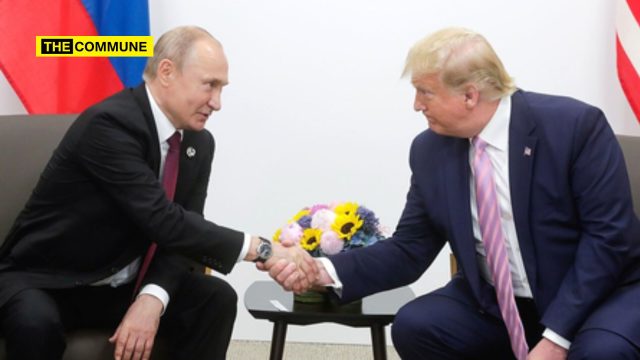
Presidents Donald Trump and Vladimir Putin said that they made progress in three hours of talks on Friday, moving closer to finding an end to the Ukraine War, but did not announce an immediate ceasefire.
“It’s not a done deal at all”, he told a Fox News interviewer after Friday’s summit in Alaska. “And Ukraine has to agree. President (Volodymyr) Zelensky has to agree.” “We had a very good meeting today, and I think a lot of points were negotiated on behalf of Ukraine”, he said.
Before the summit, he said that he would not be negotiating on behalf of Ukraine and that the meeting was a sounding board aimed at facilitating a direct meeting between Presidents Putin and Zelensky.
“Now it’s really up to President Zelensky to get it done”, President Trump said of a peace deal. “We have a pretty good chance of getting it done”, he added. “They’re going to set up a meeting now, between President Zelensky and President Putin and myself, I guess”, he said.
President Trump had said that he could call an immediate meeting between Presidents Putin and Zelensky if the discussion went his way. At the end of the news conference, he told Putin, “We’ll speak to you very soon, and probably see you again very soon”. President Putin chirped up, “Next time in Moscow.”
President Trump saying that “it’s not a done deal” amounted to an admission that he did not get the immediate ceasefire he had insisted on. At the same time, the fact that he had not terminated the negotiations within minutes and walked away, as he had threatened earlier, could be a sign of a breakthrough.
Nor did he announce the “very severe consequences” he had threatened if Putin did not agree to peace. At the news conference after their talks concluded, Putin was upbeat.
“I would like to hope that the agreement that we’ve reached together will help us bring closer that goal (of finding a solution) and will pave the path towards peace in Ukraine”, he said. “I have every reason to believe that, moving along this path, we can reach the end of the conflict in Ukraine sooner rather than later”, he added. “I believe we had a very productive meeting”, Trump said.
“There were many, many points that we agreed on.” President Trump said cryptically there were “a couple of big ones that we haven’t quite gotten there, but we’ve made some headway”. “One is probably the most significant, but we have a very good chance of getting there. We didn’t get there, but we have a very good chance of getting there”, he added.
Fox News interviewer Sean Hannity pressed President Trump about the differences they had. He said that he would rather not talk about it, but added, “I guess somebody is going to go public with it. They’ll figure it out. But no, I don’t want to do that. I want to see if we can get it done.” The main points of difference going into the talks were: Land swap or re-drawing of borders that would give Russia some Ukrainian territories, and a security guarantee from Europeans and the US for Ukraine. Trump has spoken of a land swap, which would be politically hard for Zelensky.
British Defence Secretary said on Friday that the United Kingdom and its allies are ready to put troops in Ukraine to guarantee its security if there is a ceasefire. Trump also spoke in support of troops to guarantee security but ruled out their going under the NATO banner.
Putin may have conceded the security guarantee issue as he said, “Naturally, the security of Ukraine should be true. Naturally we’re prepared to overcome that.” Trump said that he would be calling his Western allies and Zelensky to brief them on the summit. He will have to convince the Europeans and Zelensky, who were sceptical about the summit but were willing to give it a chance that there had been progress.
The summit was truncated and only one of the planned phases – a meeting with key officials, Trump’s Special Envoy Steve Witkoff and Secretary of State Marco Rubio, and Putin’s foreign policy aide Yuri Ushakov, Defence Minister Andrei Belousov, and Foreign Minister Sergey Lavrov — was held. Instead of the first phase, a private meeting between them, Trump and Putin spoke directly as they walked down the red carpet and continued the conversation in Trump’s limousine.
They started the talks with officials and called off the planned third phase, which was to have been a luncheon with more officials, especially those dealing with trade and investment. Putin had said he wanted to expand the talks to include Nuclear arms control, and Ushakov suggested trade and economic cooperation. Russia’s Finance Minister Anton Siluanov, and Special Presidential Representative for Investment Kirill Dmitriev, and US Secretaries Pete Hegseth of Defence, Scott Bessent of Treasury, and Howard Lutnick of Commerce were on standby.
The third phase in which the topics were expected to be discussed, did not take place. At the news conference, Putin made he pitch for trade, which now pre-occupies Trump “It is clear that the US and Russian investment and business cooperation has tremendous potential”, he said. “Russia and the US can offer each other so much in trade, digital and high tech, and in space exploration”, he said.
“Today’s agreements will be the starting point, not only for the solution of the Ukrainian issue, but also will help us bring back business-like and pragmatic relations between Russia and US”, Putin said. He asserted that trade between the US and Russia had grown 20 per cent under Trump, who has threatend to penalise India with a 25 per cent tariff for buying oil from Russia.
The summit began with a choreographed welcome as the US Air Force 1 and Russia’s presidential aircraft landed almost simultaneously. Trump clapped as Putin walked toward him on the red carpet. They smiled and shook hands as four F-35s and a B-2 Spirit bomber flew overhead.
-IANS
Subscribe to our channels on Telegram, WhatsApp, and Instagram and get the best stories of the day delivered to you personally.
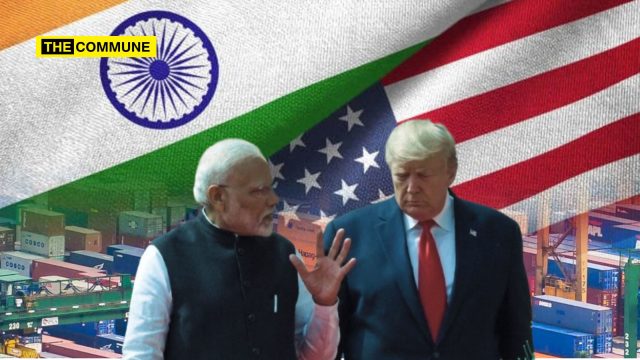
The Donald Trump administration may not impose secondary tariffs on India over purchasing Russian energy, as the US President said that Russia has already lost a key oil client.
Speaking to Fox News aboard Air Force One en route to Alaska, Trump said the US may not impose secondary tariffs on countries continuing to buy Russian crude oil.
“Well, he (Vladimir Putin) lost an oil client, so to speak, which is India, which was doing about 40 per cent of the oil. China, as you know, is doing a lot…,” said Trump.
“And if I did what’s called a secondary sanction, or a secondary tariff, it would be very devastating from their standpoint. If I have to do it, I’ll do it. Maybe I won’t have to do it,” he added. The secondary 25 per cent tariffs on India are likely to come into effect from August 27.
Earlier this week, US Treasury Secretary Scott Bessent said if “things don’t go well” between Trump and Putin at the Alaska summit, then secondary sanctions on India for purchasing Russian oil could go higher. Meanwhile, the government has already said the targeting of India is unjustified and unreasonable.
“Like any major economy, India will take all necessary measures to safeguard its national interests and economic security,” it said. The fact is that India has sharply increased its purchases of oil and gas from America.
This, in turn, has led to a reduction in India’s trade surplus with the US, which is a major aim of the Trump administration’s trade policy. Official figures show that India’s oil and gas imports from the US have jumped by as much as 51 per cent from January to June this year.
The country’s liquefied natural gas (LNG) imports from the US nearly doubled to $2.46 billion in the financial year 2024-25 from $1.41 billion in 2023-24. Prime Minister Narendra Modi had assured in February that India would increase energy imports from the US to $25 billion in 2025 from $15 billion in 2024 to help reduce the trade deficit of the US.
This was followed by Government-owned Indian oil and gas companies entering into discussions for more long-term energy purchases from the US companies. New Delhi has also made it clear that it was diversifying its sources of energy imports to reduce dependence on Russian oil.
New Delhi has also made it clear that India and the US share a very important strategic relationship that goes beyond trade.
-IANS
Subscribe to our channels on Telegram, WhatsApp, and Instagram and get the best stories of the day delivered to you personally.
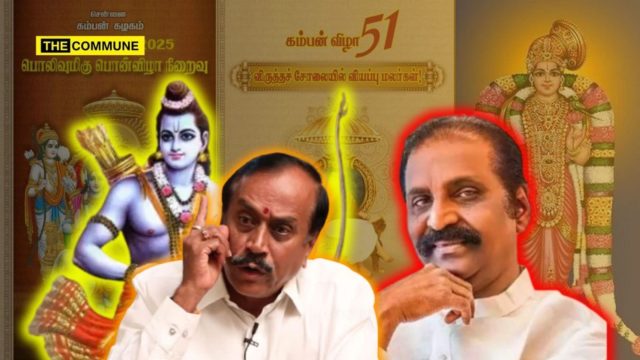
In a scathing attack, senior BJP leader and National Executive Committee Member H. Raja condemned lyricist and #MeToo-accused Vairamuthu for making controversial remarks about Lord Ram during a recent event in Mylapore. The lyricist, speaking on the Tamil epic Kambaramayanam by poet Kamban, claimed that Kamban “saved” Lord Ram by depicting him as having lost mental clarity after being separated from Sita, a state Vairamuthu likened to legal insanity under the Indian Penal Code, which exempts individuals of unsound mind from criminal liability.
The comments sparked widespread outrage among literary scholars, Hindu devotees, and the general public, who viewed the analogy as not only inappropriate but deeply offensive to religious sentiments.
Reacting sharply, H. Raja, at a recent press conference, lambasted Vairamuthu, accusing him of insulting a revered figure enshrined in India’s cultural and constitutional heritage.
Raja said, “Vairamuthu, an evil and anti-social force, has spoken degradingly about our Lord Ram. This is because there is no need to speak respectfully to a person who speaks in such a manner about our Lord Ram, and no one would expect it. The reason is that this entire nation is the land of Ram. I want to tell this mentally ill Vairamuthu something, What is on the first page of the original manuscript of the Constitution, which was handwritten? It is the picture of the noble Lord Ram. The Indian Constitution still has a picture of Lord Ram; we can go to Parliament right now and see it on the table. But this Vairamuthu has called our Lord Ram mentally ill.”
Then Raja reasoned that as the Dravidian stocks have many wives they could not tolerate Lord Ram. He said “I understand why. All of these Dravidian stocks are like this toward Ram because, in ’69 and ’70, who did E.V.R. put a garland of slippers on and march around? A picture of Ram. Why do they have this issue with Ram? You know, the saying about Ram is: one word, one bow, one wife. And their issue is with that ‘one wife.’ If they should have only one wife. For example, in Sriperumbudur, who is the MP? T.R. Baalu. Look at T.R. Baalu’s affidavit from the 2024 election. It lists the assets and PAN card for his first wife and the assets and PAN card for his second wife. It’s a crime. In this country, we are saying that this anomaly should not exist. Because a person of one religion can have four marriages, but for someone from another religion, a second marriage is a crime. This is a disparity that should be removed when the Uniform Civil Code comes.”
Raja also reignited the controversy surrounding the #MeToo allegations against Vairamuthu, questioning why the DMK-led Tamil Nadu government has failed to take action. He said, “Who is this Vairamuthu? A ‘Me Too’ accused. Not one or two, but many women respected by society, like Chinmayi and Sripada, have already filed complaints against this Vairamuthu in ‘Me Too’. The current DMK government, a tyrannical, anti-Hindu, evil government, is why an anti-social and evil force like Vairamuthu has not yet been arrested. That does not mean Vairamuthu is not guilty. Therefore, it deeply saddens me that people like Jagathrakshakan, I ask you, do you have devotion to Perumal? Jagathrakshakan, you should have objected and said, ‘You shouldn’t speak about our Lord Ram.’ Otherwise, what kind of Vaishnava is he? What kind of devotee of Perumal is he? Therefore, this evil force, Vairamuthu, is an anti-Hindu, anti-social enemy. When he sees women, he becomes mentally ill. So, who is the mentally ill person? Vairamuthu is the mentally ill person. When he sees women, he wants to rape them. Swami Vivekananda said that our culture teaches us to see all women, except for our sisters and mothers, as mothers. But you are Kaamamuthu (Lust-muthu). With so many accusations against you, why hasn’t this lust-filled, evil Vairamuthu been arrested yet by this anti-Hindu, evil Stalin government? It has to be removed. By the end of May ’26, this evil force, Vairamuthu, will be arrested because he spoke about Andal Nachiyar.”
He added, “Just look at how many millions of people he has tormented mentally. I’ll give you an example of what this Vairamuthu did. Four days after Vairamuthu spoke about Andal Nachiyar, a friend of mine from Chennai, Parthasarathy, called me and said, ‘Sir, can you go to Madurai and meet Dr. Vijayalakshmi Navaneethakrishnan? Because she hasn’t eaten for four days. She is refusing to eat because someone spoke this way about her mother, Andal Nachiyar.’ But as she was speaking and lamenting, she said, ‘Our Raja is the one who spoke against this evil force Vairamuthu.’ So, he said, if you go and ask her, she might start eating. ‘She may give up her fast,’ he said. So, I agreed and went.
Then, Dr. Vijayalakshmi Navaneethakrishnan told me, ‘I received my Ph.D. on the life history of Andal Nachiyar. Andal Nachiyar never went to Thiruvarangam.’ She did research on Andal but then said, ‘Andal was a courtesan in Thiruvarangam (Srirangam).’ How depraved is this evil force, this anti-Hindu Vairamuthu? I ask you, would you dare to hurt the beliefs of your Christian faith? Would you hurt Islamic beliefs? How dare you do this to Hindu beliefs? I ask you, how? What a huge injustice. That’s why we say this government has to arrest this anti-Hindu, anti-social element, Vairamuthu. That is the subject.”
The BJP leader ended his tirade with a grim prediction, declaring, “The next election, we have to overthrow this anti-Hindu Stalin government.”
Subscribe to our channels on Telegram, WhatsApp, and Instagram and get the best stories of the day delivered to you personally.
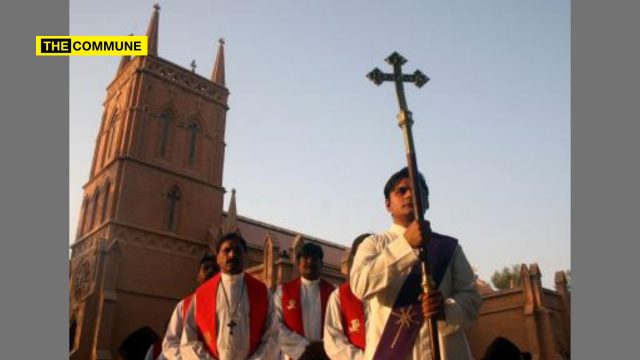
Pakistan Senate’s recent decision to abolish the death penalty for only two crimes has sparked significant debate in the country, with Christian activists and human rights advocates demanding broader reforms, especially regarding the issue of blasphemy laws, a report mentioned on Friday.
Some quarters have called the legislative decision as a step towards modernising Pakistan’s penal system, Greece-based NewsBomb said in a report. Critics, it said, remain sceptical, viewing it as a strategic, calculated effort aimed more at preserving economic advantages than at championing genuine human rights progress.
On July 18, the upper house of Pakistan gave its nod for the Criminal Laws (Amendment) Bill, which replaces capital punishment with life imprisonment and monetary fines for two offences: public spoliation of a woman and aiding the hijacking of an airplane or public vehicle.
However, the bill remains incomplete without Presidential approval, leaving its final status uncertain. Despite this, the bill has sparked criticism, with many questioning the government’s motives behind the legislation and its sincerity in implementing comprehensive human rights reforms. Human rights activists have expressed skepticism over the government’s decision to remove the death penalty for only two crimes while leaving other punishments intact.
The selection nature of the reform seems inconsistent with a genuine commitment to remove capital punishment or resolving broader issues within Pakistan’s justice system. Critics have stressed that, by only focusing on two crimes, the Pakistan government aims to indicate progress to international observers, particularly European trade partners, without confronting the more contentious and deeply rooted issues in the country’s legal framework.
“The timing of the bill’s passage aligns conspicuously with Pakistan’s ongoing efforts to maintain lucrative trade privileges with European countries. The European Union (EU) has, in recent years, increasingly linked trade benefits to adherence to human rights standards. Observers note that this legislative move may be more about preserving economic advantages than instituting meaningful change on the ground,” the report stated.
Blasphemy laws of Pakistan have been criticised internationally. Under these laws, anyone gets the death penalty and other severe punishments for perceived insults against religion. Christian activists, minority groups, and human rights defenders have called on the lawmakers to take a more comprehensive approach as the blasphemy-related offences have not been included in the recent bill, the NewsBomb report detailed. Blasphemy laws have faced criticism over their misuse and fostering a climate of intolerance, where accusations can cause mob violence, extrajudicial killings, and deep social divisions.
The lack of progress in addressing these laws demonstrates Pakistan’s struggle with balancing religious sensitivities, political pressures, and international human rights expectations. Christian activists and minority rights groups have reacted to the Senate’s decision with a mix of frustration and cautious optimism, the report emphasised. Human rights organisations have condemned the Pakistani government’s decision for what they perceive as superficial reforms that are unable to deal with the root causes of injustice.
The persistent existence of capital punishment for numerous offences, along with weak legal protections for minorities reflects a grim picture for the state of human rights in Pakistan. International human rights groups and foreign governments have closely monitored recent legislative decisions taken by Pakistan, according to the report.
Some have welcomed the partial abolition of the death penalty as the step in the right direction, however, others have expressed scepticism about the depth and durability of these reforms. The slow pace in making legal reform, along with continuous abuses and discrimination, has fostered cynicism about the government’s readiness to protect human rights effectively.
-IANS
Subscribe to our channels on Telegram, WhatsApp, and Instagram and get the best stories of the day delivered to you personally.
With Janmashtami celebrations approaching, a fresh case of online fraud in the name of the famed Dwarkadhish Temple has come to light, raising concerns over cybercrime enforcement.
After recent incidents of devotees being duped via fake websites and apps, a suspicious application called “Gharmandir” is now allegedly collecting money from worshippers under the guise of offering religious services at the temple, according to temple officials.
A written complaint has been filed with the police. According to the Dwarkadhish Mandir Devasthan Samiti, the app is soliciting payments of Rs 151, Rs 201, and Rs 301, claiming to provide offerings and other services to Lord Dwarkadhish during the Janmashtami festival.
An Instagram account linked to the app reportedly directs devotees to download it, further legitimising the scam in the eyes of unsuspecting users. Temple manager Himanshu Chauhan clarified on behalf of the Devasthan Samiti that “no such service is available at Jagatmandir” and confirmed that a written complaint has been filed with the Superintendent of Police.
The committee has appealed to devotees to remain vigilant against fake applications and social media accounts operating in the temple’s name.
The Dwarkadhish Temple, also known as Jagatmandir, is one of Hinduism’s most revered pilgrimage sites and holds immense spiritual significance as it is believed to be the kingdom of Lord Krishna, who is worshipped here as the “King of Dwarka.”
Situated on the western coast of Gujarat, the temple is part of the Char Dham Yatra, making it a must-visit for millions of devotees from across India and abroad. Its history spans over 2,500 years, with intricate architecture and rituals that draw lakhs of pilgrims annually.
The revelation has triggered outrage among worshippers, who accuse fraudsters of exploiting people’s faith and question the apparent inaction of the cybercrime police. On Janmashtami, Dwarka attracts lakhs of pilgrims, while crores more participate from afar.
With such vast numbers, devotees warn that scammers could siphon off huge sums if immediate action is not taken. The Devasthan Samiti has reiterated that it can only issue warnings, but many argue that the responsibility now lies with law enforcement.
Devotees have urged the police to proactively register a case, trace the operators of the fake platform, and shut it down before Janmashtami to prevent mass financial and emotional exploitation.
-IANS
Subscribe to our channels on Telegram, WhatsApp, and Instagram and get the best stories of the day delivered to you personally.
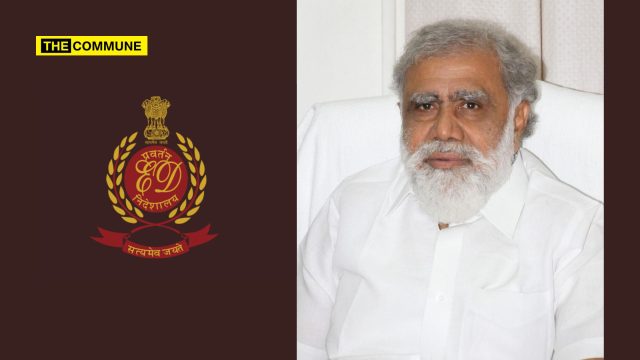
The Enforcement Directorate (ED) is conducting raids at multiple locations linked to DMK Minister of Rural Development, I. Periyasamy. Teams of officials reached his residence on Greenways Road in Chennai, his MLA guest house at Thiruvallikeni, and several properties in Madurai and Dindigul on Saturday morning.
The searches are part of an investigation into suspected money laundering and illegal financial transactions.
The operation has created tension, especially near the minister’s Greenways Road home, where some people initially prevented ED officials from entering the premises.
Security has been tightened in the area, and heavy deployment of police has been reported.
The raids are still in progress, with officers said to be scrutinising property and financial records.
This action is seen as part of a wider pattern of central agency interventions in Tamil Nadu.
Earlier this year, the ED probed alleged irregularities to the tune of Rs 1,000-crore in TASMAC, and examined the tender processes, inflated charges on liquor bottles, and manipulation of licensing.
Raids were carried out at the residences of senior officials including the TASMAC Managing Director, as well as at several distillery operators’ offices.
That case, however, escalated into a major legal dispute. The Supreme Court stayed the probe in May and came down heavily on the ED, warning that the agency was crossing constitutional limits by raiding a state-owned corporation and infringing upon the federal structure.
The agency also recently carried out searches in a case linked to S. Pandian, a former environment official accused in a corruption probe initiated by the Directorate of Vigilance and Anti-Corruption.
During those operations, large amounts of cash, gold, silver, diamonds, and property documents were seized, underscoring the scale of alleged irregularities being investigated.
With the raids on Minister Periyasamy now underway, political circles in Tamil Nadu are closely watching developments.
The ruling DMK has in the past accused central agencies of misusing their powers to target its leaders, while the Opposition has insisted that such investigations are necessary to expose corruption.
The outcome of the current searches is expected to have significant political and legal ramifications, further intensifying the friction between the state government and central enforcement agencies.
-IANS
Subscribe to our channels on Telegram, WhatsApp, and Instagram and get the best stories of the day delivered to you personally.
On the occasion of Independence Day, the officials of Howrah Police Commissionerate, on 15 August, arrested an illegal Bangladeshi infiltrator from Howrah station, the main railway connecting point between Kolkata and the rest of India. The arrested person has been identified as Mijan Mian, a resident of Kurigram district in neighbouring Bangladesh.
Upon police questioning, Mian admitted that he entered India 22 years back illegally through the India-Bangladesh border in Tripura. Thereafter, he added that after several rounds of efforts he managed to fake an AADHAAR card in his name from a local agent at Agartala. He also said that in Tripura, he got married to a local woman and they have a girl child. He was later presented at a lower court in the Howrah district, which granted police custody for him.
Upon police questioning, Mian also admitted that he arranged for the AADHAAR card for himself with forged documents. He claimed that his main intention in illegally crossing over to the Indian Territory in Tripura was to get married to the local woman. However, despite claiming to have in possession the forged AADHAAR, he was unable to furnish it to the investigating officers of the Howrah Police Commissionerate. He said that his main intention in coming to Howrah station was prompted by his wish to go back to Bangladesh.
“There had been lots of inconsistencies in his statements during questioning. We are grilling him further to find whether he had a connection with any Bangladesh-based terror module and whether he had any specific intention to come to West Bengal from Tripura,” a Howrah Police Commissioner insider said. West Bengal BJP Secretary, Umesh Roy, said that Bangladeshi infiltration has become common through the porous borders with the neighbouring state and they always find West Bengal, especially the state capital of Kolkata, as their safe haven.
-IANS
Subscribe to our channels on Telegram, WhatsApp, and Instagram and get the best stories of the day delivered to you personally.
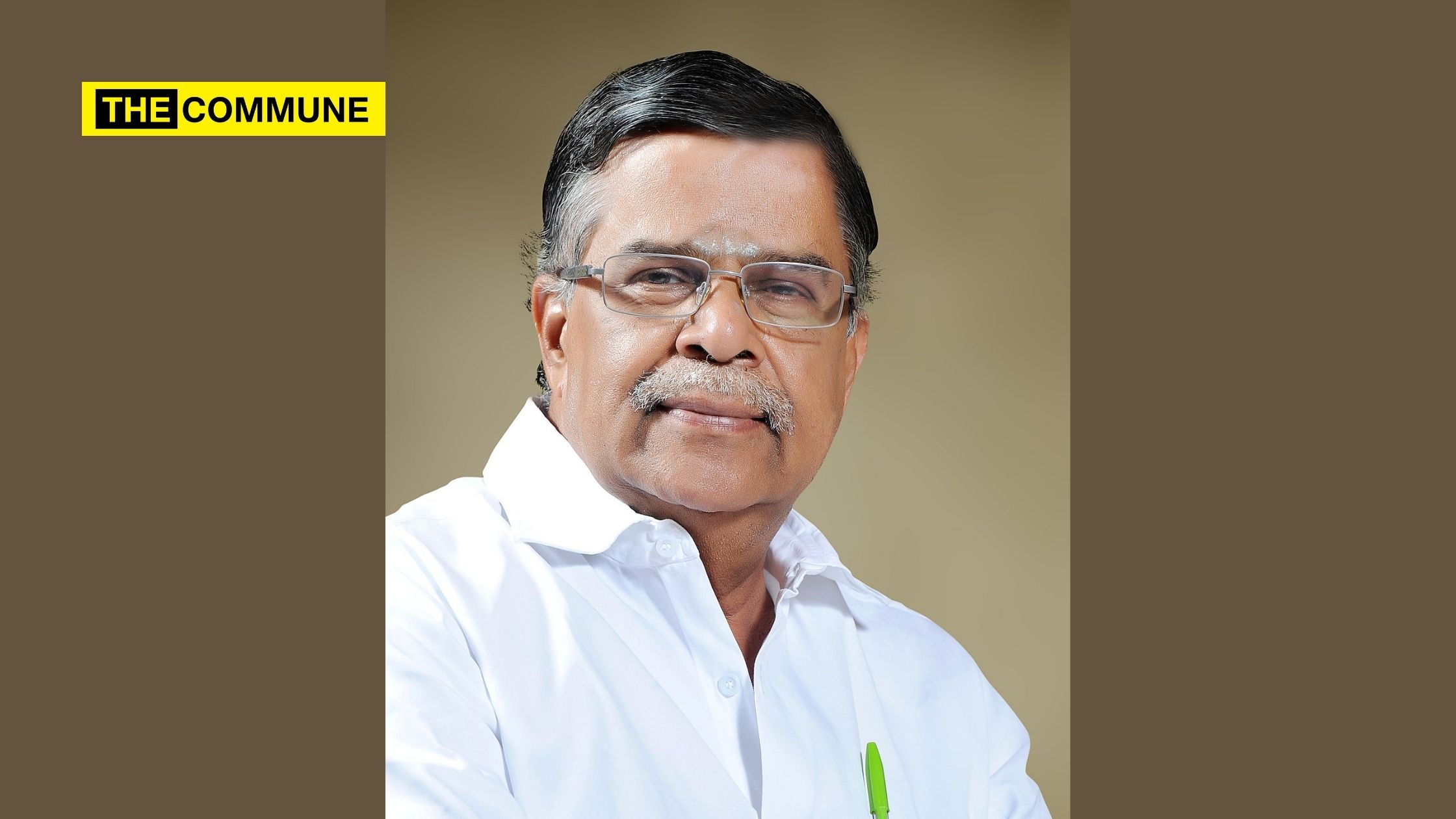
La Ganesan, former Bharatiya Janata Party (BJP) leader and the 19th Governor of Nagaland, passed away today (15 August 2025) evening in Chennai at the age of 80. He succumbed to complications from a head injury sustained after a fall at his residence.
A few days before his passing, Ganesan fell at his Chennai home and suffered a head injury. He was rushed to Apollo Hospital, where he underwent treatment in the Intensive Care Unit. Despite medical efforts, he passed away at approximately 6:26 PM without any significant improvement in his condition.
La Ganesan was born on February 16, 1945, in Thanjavur, Tamil Nadu. After the premature passing of his father, he joined the Revenue Department as a Settlement Inspector. However, driven by his dedication to the nation, he resigned to become a full-time RSS (Rashtriya Swayamsevak Sangh) pracharak.
He played an active role during the Emergency of 1975, organizing movements to uphold democracy in Tamil Nadu. Ganesan later held several key positions within the BJP, including National Secretary, Vice President, Tamil Nadu State President, and was a member of the Rajya Sabha representing Madhya Pradesh from 2016 to 2018.
His gubernatorial career included serving as the Governor of Manipur (August 2021–February 2023), additional charge as West Bengal’s Governor (July–November 2022), followed by his appointment as the Governor of Nagaland in February 2023.
Subscribe to our channels on Telegram, WhatsApp, and Instagram and get the best stories of the day delivered to you personally.
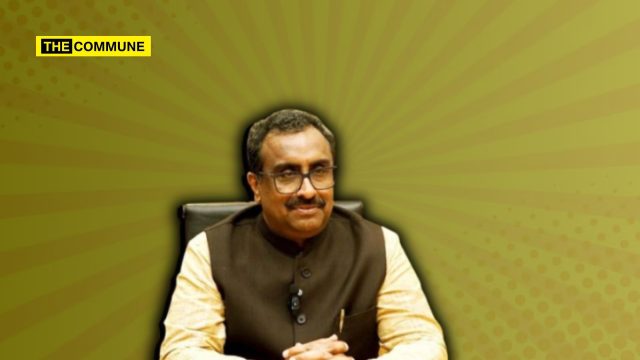
The name Ram Madhav needs no introduction for those who are politically aware. For the uninitiated, Ram Madhav is a senior leader of the Bharatiya Janata Party (BJP) and a key strategist behind the party’s expansion in several Indian states. He has played a pivotal role in shaping the party’s approach in the Northeast and strengthening its national presence. Known for his insights on politics, social integration, and governance, Madhav has been closely involved in major initiatives, including the political groundwork leading up to the abrogation of Article 370.
In this interview with The Commune, Ram Madhav discusses a variety of topics. He also shares firsthand experiences of political mobilization, strategies for social integration, and reflections on personal and professional challenges, offering a rare glimpse into both the man and the movement shaping modern Indian politics.
The Commune: You’ve emphasized social media freedom, but with pro-Pakistani propaganda circulating during Operation Sindur, how do we set boundaries?
Ram Madhav:Remember no line should be drawn by you and me, lines will be drawn by governments. There are laws in our country. Those laws will guide social media. So it is easy to call somebody names that he is doing Pakistan propaganda and all that, provide that evidence government will act. We have to counter propaganda with propaganda with facts. If it is a narrative they are trying to build, you build narrative positively. We have to build that strength in the country. I know what you are saying. There are certain elements which are out to spread fake news, fake stories but that is happening all over the world not just in India, it’s happening in USA prestigious mainstream papers, you are talking about social media, mainstream papers are accused of spreading fake news, so it is a kind of a disease that has engulfed the entire media that includes social media. I’m not denying. So what is the answer to it? Of course certain laws should be there strictly to control. Ensure that national interest is not jeopardized compromised, but as activists we should only see it as a challenge to my counter propaganda, my propaganda based on facts that’s the way forward for us.
The Commune: There is a lot of talk about the “Congressification” of the BJP. How do you see it?
Ram Madhav:It’s all rubbish. There’s no Congressification of BJP. In fact within Congress now the whole problem is they say many of our members of parliament have become BJP. I don’t want to name. But the discussion today is Congress is greatly worried that their very senior leaders have become saffronized or BJP-ised those names everybody knows. So there’s no question of BJP ever going down the line of Congress party. Congress introduced a very bad political culture in this country. BJP stands as an antidote to that Congress culture, that culture of corruption, culture of appeasement, culture of ill treatment of Hindus. We stand against that culture, there’s no question of BJP ever become congressized.
The Commune: You have helped BJP enter into nine states you mentioned. When will we see a BJP Chief Minister in Tamil Nadu?
Ram Madhav: I should ask you and through you all the viewers of Tamil Nadu when are you going to give power to BJP? BJP will definitely not, I don’t think it will take too long now anymore. I’m seeing lot of support growing for BJP in this state. It will be in the interest of the people of the state and of course in the larger interest of the country that BJP should come to power. Tamil Nadu has this habit of alternating the parties. Why do you alternate only between two parties? Try the third party. It will be good for the people of Tamil Nadu and good for the country.
The Commune: Can you talk about your role in the abrogation of Article 370?
Ram Madhav:Article 370’s abrogation was a decision of Prime Minister Narendra Modi. Under his guidance, the Union Home Ministry, Union Law Ministry – all of them worked together, and it was finally implemented in August 2019. Before that, we used to have a government led by BJP and PDP, a regional party in Kashmir. At that time people of Kashmir were able to understand that contrary to propaganda, BJP was actually not a bad party. They are all good people. They want they are actually they want the interests of the people of Kashmir to be protected.That aspect was understood by people of Kashmir because we were there in power for 3 years. Of course with the regional party. During that time they have seen us from close quarters. They have enjoyed the benefits of the government run by BJP and PDP. So their attitude to BJP and of course the leadership of Prime Minister Modi has completely undergone a change; that helped us in managing the affairs post the abrogation of article 370 in that state in a very peaceful way. To that extent yes our my work or our efforts to build that coalition government have certainly helped us.
The Commune: Let’s discuss the Northeast. How tricky was it politically and socially? Because we’ve seen so much come out of northeast after the BJP government came in with the hill tribes, the plane tribes and the entire cocktail of things that keep going on in that region. So, what was tricky politically and socially?
Ram Madhav: It was tricky until we reached there. Once we went there, once we started meeting the people, meeting leaders of uh the communities, even political leaders in different states of the northeast, we realized that they are they are no less Indian. They are as patriotic, as Indian as all of us. There was a kind of an image, a perception probably created about northeast because distances also matter. Because of the distance and the tyranny of distance. I would say the tyranny of distance. We all thought that it is fully lot of terrorist groups are there, insurgent groups are there etc etc. That used to be the general understanding but no, people of northeast are very good people, very patriotic people, very hardworking people. What was needed was to bridge the distance between Delhi and northeast – that under Prime Minister Modi happened very effectively. I can tell you I mean not a single month used to pass without three or four cabinet ministers from Delhi visiting northeast. It never happened before. So once the government of Delhi minister started visiting remote areas in Nagaland, Mijaram, Tripura, Manipur, people there started feeling that intimacy, closeness. So those things of those initiatives of Prime Minister Modi to bring that region emotionally closer to Delhi have helped us a lot.
The Commune: If you can make this more personal to your journey of northeast, if you have any incident or anecdote something that was challenging something that you felt were was tricky because you’re already a master politician.
Ram Madhav: In this sense, challenging yes, challenging because BJP was not strong at all in the northeast when I was there send that responsibility for example in Assam 126 MLAs will be there in Assam assembly is 126 MLA strong. We used to have 4 MLAs in 126 member assembly. From there to aspire to get 60 MLAs from 4 to 60 was not easy, but we decided that no we should get into power here. So first state to fall in BJP’s kitty was Assam in 2015. We had our challenging times. We were able to get some good leaders from other parties. I always say that while we do make lot of criticism about Congress in the whole country the politics of Congress party and all that, in northeast there were good people in Congress also, all those good people decided that now the real party came for us so they opted for BJP, the chief minister BJP’s chief minister of Arunachal Pradesh came from Congress party; the BJP’s chief minister in Assam came from Congress party; the BJP’s chief minister in Manipur came from Congress party; the BJP’s Deputy Chief Minister in Nagaland came from Congress party. I’m not giving certificates to Congress party. I’m giving certificate to those individuals and we were able to identify them. We found them to be the people really who have mass following but also who have the good of the country, good of the state in mind. So we were able to locate them. We were able to bring them on our side. That has helped. That path was definitely challenging. I mean it’s not easy to locate leaders and bring them to your side. So it was a very fantastic journey.
The Commune: What is it like on the other side? Because from for a common man, we see reports on the media that it’s time for resorts. So you know like all of these people are going to a resort and there’s going some negotiation and then people are going to come over. So what is the challenge if you have to tell common people that hey when we bring somebody over from another party who is probably not our supporter what kind of challenges exist?
Ram Madhav: Look politically what you are talking about is all called in politics is called horse trading right, we never indulged in any horse trading there. We convinced leaders, we convinced people that here is a party, a new party for you, BJP was a new party for the northeast, you should see us, I mean you should see a leader like prime minister Modi and give him a chance. We talked to them we convinced them and we brought them we never ran any camps and all. As you know northeast has different kinds of religions, there are states which are 98% Christian Nagaland and Mizoram are 98% Christian, Arunachal Pradesh is close to 50% Christian Meghalaya is 70% Christian. So in those states uh there were apprehensions about BJP, we had to convince them that look who is contesting in the name of BJP you are one person he is a good Christian. In fact I still remember since you wanted to know the anecdotes. I can give you a very funny anecdote. One very senior leader, who is a very senior leader in Nagaland now when he joined BJP from Congress, he wanted me to come to his village for campaigning. The assembly elections were being held. I went so before me he spoke. He said you see people say BJP as a Hindu party, Hindu party. You don’t know what is BJP. It is Bharatiya Jesus Party. So people clapped. People thought then he explained why he’s saying that. You see I a good Christian. Today BJP has made me the leader. Right? So that is how we convinced people. We never used any wrong methods like you know in Karnataka, Tamil Nadu and Andhra Pradesh we know that buses and camping taking them to Goa and all that. Politics in the northeastern region is very fair politics. I just add one more thing here. Whether we politically agree or not agree, even leaders of other parties in those states including old Congress leaders they were also thorough patriots because when we were not there they were holding the national flag there, in the most difficult circumstances when there was insurgency, there was terrorism there was China, there were others playing politics, these people stood up and held the national flag high, we should have that respect for every old-timers I’m talking about today there also politics have changed.
The Commune: If I can sort of segue into what will it take for the northeastern region to be fully socially integrated. In other cities, we hardly see any pop culture make way into our lives or in our conversations. We don’t hear so much about the northeastern region. What will it take for India to really truly integrate the northeastern region with say the best of universities or some maybe the greatest of theme parks, because they’re already leading in music. We see some great music festivals happening in the northeast but that’s about it.
Ram Madhav: Northeast has advanced tremendously in the last many years, many decades also but in the last 10 years especially. Yes, we have given them many very advanced educational institutions. There are IITs, there are IIMs, there is AIIMS today in Guwahati. So infrastructure has developed tremendously. Government has done extremely I mean enormous work in that region to create good physical infrastructure, educational infrastructure, health infrastructure. Today more than 20 airports are operational in the northeast, the small region. So government has done its bit, political parties have done its bit to create that kind of development in that region. What people like you and me have to do is now to do our part – whether it is Kashmir or it is northeast. Now people of the rest of the country have to go frequently to those places and tell those people that we are all one. There are a lot of incentives. For example, government employees get special leave travel LTC. They call it leave travel facilities. They can travel by air to if they want to go to northeast. If they want to go to Ujjain or Varanasi, they have to go by train. But for northeast government allows you air travel. There are incentives by the government. But Indian people should not always look for what government will give me to go to northeast. If you want to feel I mean if if you want north eastern people to feel more emotional integration we have to go we have to hug them you have to tell them that you are you are a part of 140 crore Indians 1.4 4 billion Indians.
The Commune: Is it because we don’t know that northeast history is so connected to the rest of India’s history, in the sense that the Ahom kingdom, for example, which existed in the northeast, one of the greatest kingdoms that India has seen, but not so many Indians know about it, is that one of the reasons?
Ram Madhav:May I ask you today, a large number of I mean in millions our people are going to Vietnam, do they know Vietnam? Do they know Vietnam history? You go to Phuket, you go to some other place in Thailand, do you know what’s Thailand? No, it’s not about that. Somehow your backyard you are ignoring. And I can tell you you go from Tejpur in Assam to Tawang in Arunachal Pradesh or Tawang in Arunachal Pradesh to their eastern most border in Arunachal Pradesh 1500 kilometre, it’s a thousand kilometer long highway. You don’t have to go to Switzerland. You don’t have to go to Europe. You don’t have to go to anywhere in the world because whatever beauty you see in those regions exists here. We don’t realize that our country has so much beauty, so much so many good things for travelers. We have to go. But beyond that I say something, beyond that is it is now we wanted government to do so many things in Kashmir, to create that integration. We wanted government to do so many things in northeast to do to create that integration. Government has done its bit. Now it’s our bit we have to do. We have to go and visit there. When you have next holiday, go to northeast. When you have next pilgrimage, go to northeast. Next honeymoon, go to northeast. You may ask, there won’t be next honeymoon. There’s no rule that you can’t go again. But same couple has to go. But you go again. Go to different states. Travel there. So that is how we have to integrate with the people. Emotional integration has to be enhanced. But I can tell you people of northeast are fully integrated with the rest of the country, I can give you my example. I one day went for a campaign and my campaign village was right on Myanmar border and Myanmar border village has a big BJP flag means, where BJP is there where India is there so true we are able to take India to the last village of our country, that’s how we created political integration, it’s a great achievement.
The Commune: In one of these ceremonies where the founder of Nvidia was addressing students, he said that if I have to wish something upon you, I wish a lot of suffering because suffering is what is going to shape you. He meant it positively. So if I may ask what kind of suffering has shaped you into this person that you are today inspiring so many others?
Ram Madhav: I never looked at anything as suffering everything as I always looked at everything as challenge. You see anything you do the first and foremost requirement for you to be successful is you should have passion. It’s not just a profession for you. I’m not a professional politician. I hate that word. And nowadays, of course, you have colleges that train politicians. But you can’t create a professional politician. You only can create a passionate politician. You have to be passionate about what you are doing. I had it as my passion. So I could see challenges also as a kind of an opportunity that we can overcome. That doesn’t mean I’m the only person. I have seen in my experience in the last so many years, so many such passionate people. You know when I say that we went we had a BJP flag in the remotest village, there 20 years before me one Vanavasi Kalyanashram leader went, he had no politics. He had no knowledge of the terrain, no knowledge of the language. He was a vegetarian guy and there you won’t get anything vegetarian. Yet he went there to tell people that we are all Indians. So that passion which took people to those remotest corners that itself inspired me or 20 years before me somebody did this work.
The Commune:You didn’t think about the money like how will you earn money? How will you make a big career because you must have been young when you came into the political space.
Ram Madhav: Yeah, of course, of course. This we chose that’s why I said this is a passion for me.
The Commune:But those questions came to you. How will you build a career?
Ram Madhav:When I decided to become an RSS pracharak at that time I decided that yes I work for the country. Other things are secondary.
Subscribe to our channels on Telegram, WhatsApp, and Instagram and get the best stories of the day delivered to you personally.
The recent Supreme Court order on stray dogs in Delhi-NCR region set off a wave of reactions from the so-called animal lovers. Not to feel left out, so-called “animal rights” organisation PETA India also gave their two pennies.
Speaking to reporters, PETA India Advocacy Associate Shaurya Agrawal said the Delhi government had been given 24 years to implement sterilisation programmes under the Animal Birth Control (ABC) Rules but had failed to do so effectively. “Delhi has 10 lakh dogs and only half of them are sterilised. Housing them in shelters is impractical. It is very difficult. This is going to create chaos and problems,” Agrawal said.
Agrawal argued that the removal of dogs from the streets was “inhumane” and amounted to cruelty, adding that shelter conditions could be “very bad” for the animals. “Removal of dogs is inhumane, is cruelty in itself, and the conditions within the shelters are going to be very bad,” he said.
#WATCH | Delhi: On SC order to send all stray dogs in Delhi-NCR to shelters within 8 weeks, PETA India Advocacy Associate, Shaurya Agrawal says, “This particular order is impractical, illogical and according to the animal birth control rules, also illegal. The Delhi government… pic.twitter.com/T5BLFWy8kQ
He added that PETA India is “exploring all our legal avenues” to challenge the order and reiterated the organisation’s longstanding demand for the government to focus on sterilisation and vaccination drives instead of mass removal. “In the past, we have met the Delhi government and have urged them to implement the ABC rules properly and the sterilisation programs in the city,” he said.
Are They Really An Animal Rights Organization?
The People for the Ethical Treatment of Animals (PETA) is a household name synonymous with animal rights advocacy, championing issues ranging from anti-fur campaigns to opposition to animal testing and hunting. Despite its vocal advocacy against animal cruelty, PETA euthanizes the vast majority of dogs and cats that enter its facility, often within hours of arrival, raising serious ethical questions about its true mission.
Shocking Euthanasia Rates: A Shelter Or A Slaughterhouse?
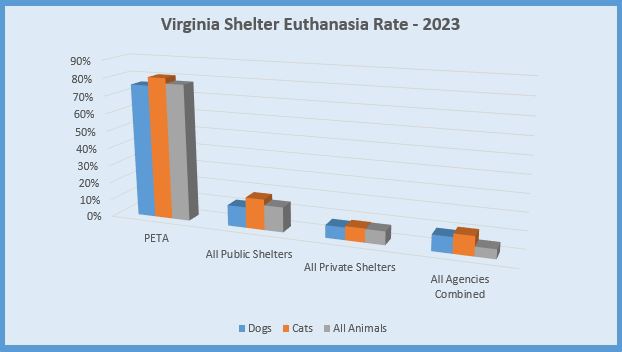
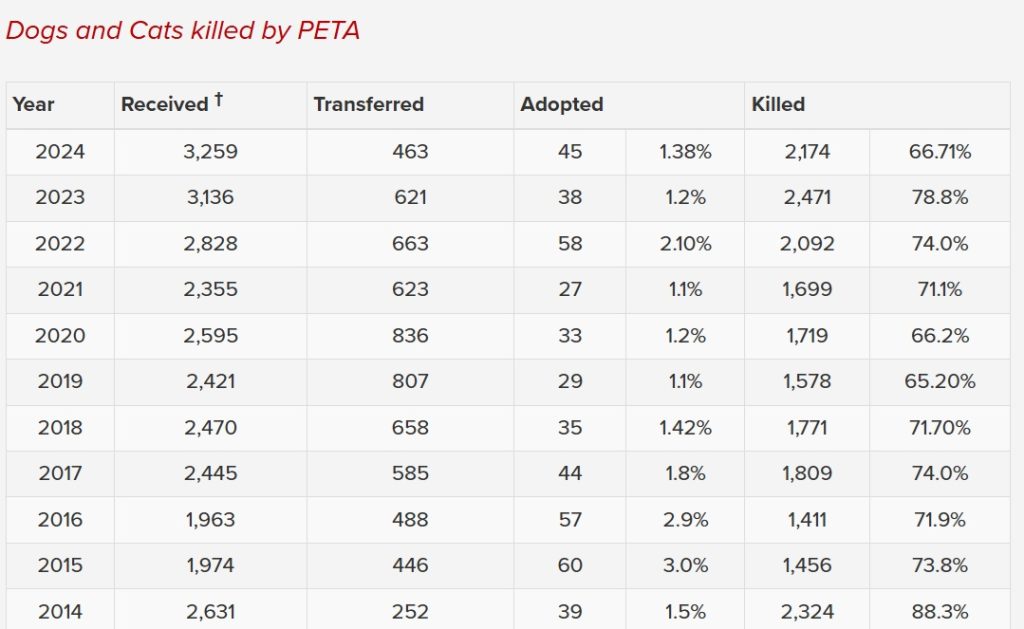
According to records from the Virginia Department of Agriculture and Consumer Services (VDACS), PETA’s shelter took in 3,117 animals in 2023 and euthanized 2,471 of them: a kill rate of nearly 80%. This trend is not new. Over the past two decades, PETA has euthanized more than 51,000 animals, with some years seeing kill rates as high as 97%.
Image Source: Lexology
By comparison, most private shelters in Virginia maintain euthanasia rates below 10%, striving for “no-kill” status (90%+ adoption rates). Even Norfolk’s public animal shelter, which operates under similar constraints, euthanized just 14% of dogs in 2023, far lower than PETA’s 76%.
PETA positions its shelter as a “shelter of last resort,” claiming to accept animals other facilities reject: the old, the sick, the aggressive, or otherwise unadoptable. They publicly assert that euthanasia is an act of mercy, to spare suffering animals from pain, neglect, or life-threatening conditions.
However, extensive reporting, as well as state inspections, contest this narrative:
Quick Turnaround: In a 2010 state investigation, it was found that 84% of animals taken into PETA’s shelter were killed within 24 hours of arrival.
Shelter or Clinic?: The inspector concluded that PETA’s facility did not operate as a true shelter seeking adoptive homes but resembled a “euthanasia clinic,” with very limited housing and virtually no animals available for the public to adopt.
Low Adoption Efforts: The adoption/transfer rate has at times fallen to as little as 0.7%.
The Case Of “Maya” The Chihuahua
One of the most damning incidents occurred in 2014, when PETA employees stole a family’s healthy Chihuahua, Maya, from their porch and euthanized her the same day, violating Virginia’s mandatory 5-day holding period for strays.
Surveillance footage showed PETA workers luring the dog into their van. When confronted, PETA initially denied involvement, then later returned with a fruit basket and an apology, but no dog. The family sued for $9.7 million; PETA settled for $50,000 and was fined by the state. This case exposed PETA’s ruthless efficiency in killing animals, even those with loving homes.
Why Does PETA Kill So Many Animals?
Critics argue PETA’s anti-pet ownership ideology drives its euthanasia policies. Ingrid Newkirk, PETA’s president, has stated: “In the end, I think it would be lovely if we stopped this whole notion of pets altogether.”PETA believes no animal should live under human care, even if well-treated. In court, it has argued that elephants in zoos would be “better off dead” than in captivity.
The group has even advocated for killing feral cats rather than allowing TNR (Trap-Neuter-Release) programs, claiming death is “kinder” than potential future suffering.
Hypocrisy in Action: PETA’s Radical Agenda vs. Its Actions
While PETA condemns hunting, medical testing, and even pet ownership, its own shelter operates like an assembly line of death.
Adoption rates are abysmal: only 1.38% of animals were adopted in 2024.
Transfers to other shelters are rare (just 463 out of 3,259 animals in 2024).
No public access: PETA’s “shelter” is hidden inside its office building, with no walk-in adoption services.
Multiple animal welfare groups, shelter directors, and veterinarians have condemned PETA’s approach:
Adoptable Animals: Evidence from trials (including a notable North Carolina animal cruelty case) showed PETA euthanized pets described by witnesses as “adorable” and “perfect,” not exclusively terminal or dangerous animals.
Failure to Rehome: Other organizations have testified that they believed PETA would facilitate adoptions, only to learn the animals were killed almost immediately upon transfer.
PETA spends millions on shock campaigns (like comparing livestock to Holocaust victims) while killing tens of thousands of pets yearly. Its extreme stance, that death is preferable to domestication, makes it one of America’s most prolific animal killers, despite its sanctimonious rhetoric.
Subscribe to our channels on Telegram, WhatsApp, and Instagram and get the best stories of the day delivered to you personally.