Home Blog Page 17

Leaked Audio Catches DMK Ward Secretaries Threatening Metro Water Engineer In Chennai

Leaked Audio Catches DMK Ward Secretaries Threatening Metro Water Engineer In Chennai

A leaked audio clip purportedly featuring two DMK ward secretaries threatening a Chennai Metro Water assistant engineer over a domestic water connection in Purasaiwalkam has triggered serious allegations of extortion, political intimidation, and systemic corruption in the city’s civic services.

The controversy revolves around a newly constructed house on Sundaram Lane in the Purasawalkam area (Ward 99). According to reports, the homeowner had legally obtained a Metro Water connection. However, the audio suggests that local DMK ward secretaries, identified as R.M. Ranganathan (Ward 89) and Sekar (Ward 90), intervened because they had not received an illicit payment. It is alleged that they pressured a Metro Water engineer to pause or revoke the newly granted connection at a house on Sundaram Lane.

Leaked Audio Reveals Direct Threats

In the audio, a voice identified as Ranganathan is heard berating the engineer for issuing the connection: “Be careful, sir, you’re doing something very wrong. It won’t end well. You’ve just joined—if we make use of our two letter pads tomorrow, you’ll be punished.”

He is heard repeatedly demanding that the ongoing work be stopped, saying he is “roaming on the line” in the area and questioning “who gave you so much courage.”

“What a foolish thing you’ve done… who gave you so much courage, sir? Did a councillor tell you?”

They go on to insist that the connection was given without proper basis, and the most direct threats follow: “We will get the minister to ensure you don’t stay in peace… You will be disgraced with Metro Water itself.”

He also refers to prior neighbourhood demands, claiming residents “insisted a lot,” and that he had photos ready to send to higher officials “to safeguard your job.”

BJP President Slams DMK, Calls It ‘Commission Culture’

Releasing the audio, BJP state president Nainar Nagendran claimed the incident reflected a “commission-driven mindset” entrenched within the ruling DMK. He alleged, “A commission model that threatens the officer who performs his duty—government! An audio recording has surfaced that is shocking: in Chennai’s Purasaivakkam area, two DMK circle secretaries openly threatening an assistant engineer because residents who received Metro Water connections are not paying bribes. Moreover, it is highly condemnable that they have threatened the government employee by saying that to safeguard his job, he must immediately disconnect the connection. Furthermore, openly and vulgarly threatening that if the connection is not disconnected, “We’ll get the minister to screw you” and “I’ll destroy Metro Water”—this reveals the collective arrogance of DMK members. On one side, DMK ministers who fail to provide the people with any basic amenities and merely sing the praises of Gopalapuram; on the other side, DMK brethren who threaten government employees who properly perform their duties, force them to stop work, and plan to siphon off the people’s money through bribes and commissions. The DMK, which thus bands together in a single line to loot and plunder Tamil Nadu, is a danger to all of us!”

Subscribe to our channels on WhatsAppTelegram, Instagram and YouTube to get the best stories of the day delivered to you personally.

Madurai Bench Of Madras High Court Expands Scope Of Thiruparankundram Karthigai Deepam Row, Seeks Responses From HR&CE And Waqf Board

Madurai Bench Of Madras High Court Expands Scope Of Thiruparankundram Karthigai Deepam Row, Seeks Responses From HR&CE and Waqf Board

The Madurai Bench of the Madras High Court has broadened the scope of a legal dispute concerning the location for lighting the Karthigai Deepam on Thiruparankundram hill by making the Hindu Religious and Charitable Endowments (HR&CE) Department and the Tamil Nadu Waqf Board parties to the case. The court has adjourned the hearing to 27 November 2025, directing all parties to file their responses.

The litigation stems from a batch of petitions challenging the decision of the Subramaniya Swamy temple authorities to light the ceremonial lamp at the ‘Deepa Mandapam’ near the Uchipillaiyar temple. The petitioners, including Rama Ravikumar and Solaikannan of the Hindu Makkal Katchi, have contested this, alleging that the ‘Deepa Mandapam’ is traditionally used for the ‘Moksha Deepam’ ritual and cannot be used for Karthigai Deepam.

They have claimed that the Karthigai Deepam was historically lit on an ancient stone pillar located about 15 metres away from the Sikandar Badushah Dargah on the hilltop, arguing that this location offers greater visibility.

Justice GR Swaminathan, who is hearing the petitions, had previously taken suo motu cognizance to include the Dargah authorities and the Archaeological Survey of India (ASI) in the proceedings. In a significant step, the judge personally inspected the contested spots on the hill on 19 November 2025.

During the hearing on Monday, arguments intensified. The counsel for the Dargah cited a subordinate court judgment from 25 August 1923, which declared that the Nellithope and the entire hilltop where the mosque and its flag staff are situated belong to the Muslim community. He further pointed to historical precedents from 1862 and 1912, where attempts to light the deepam at the summit were interdicted by the magistrate on grounds that it was not customary and due to apprehensions of a breach of peace. The Dargah’s counsel argued that the petitioners’ remedy lies before a civil court.

These contentions were supported by another advocate, who appeared in support of the temple authorities’ decision to use the Uchipillaiyar temple site. This advocate also sought an interim direction for police protection at the hilltop.

However, the petitioners’ counsels opposed these arguments, maintaining that the stone pillar is situated at a distance from the Dargah and that lighting the lamp there would not disturb religious harmony.

Arguments on Custom, Property and Worship Law

An intervenor argued that under the Places of Worship (Special Provisions) Act, the site must remain as it existed in 1947, meaning the Deepam should be lit at the earlier location. Justice Swaminathan clarified that the Act applies only to places of worship and not to property disputes.

Another intervenor raised concerns about communal harmony ahead of elections. The judge said such apprehensions were unrelated to the legal question before the court.

Appearing for the All Caste Archakas’ Association, advocate Vanchinathan argued that the temple administration’s decision to light the Deepam near the Uchipillaiyar Temple had already been affirmed by a Division Bench and did not warrant interference. He reiterated that there was an existing order recognising Dargah ownership of the hill’s summit.

Justice Swaminathan noted that Thirupparankundram hill has multiple peaks and remarked that maintaining social harmony is the responsibility of the government, not the court.

The judge then impleaded the HR&CE Commissioner and the Tamil Nadu Waqf Board as respondents, directing all parties including temple authorities, the Dargah, ASI, intervenors, and newly added respondents, to file counter affidavits.

The case has been adjourned to November 27 for further hearing.

(Source: The New Indian Express)

Subscribe to our channels on WhatsAppTelegram, Instagram and YouTube to get the best stories of the day delivered to you personally.

The Dark Truth Of Dravidianism: How Tamil Nadu’s Feudal Elite Engineered A Century Of Anti-Brahmin Hate

We have a comfortable habit in India. When we see a fissure in our society, we instinctively look for a foreign hand. We hunt for the colonial scholar or the missionary. We find a Max Muller or a Robert Caldwell. We pin the blame on them. We tell ourselves that they divided us. We tell ourselves that they manufactured hate where none existed.

This is a convenient lie. It is a great alibi.

Consider the Dravidian movement. The standard critique is well known. Bishop Caldwell fabricated the “Dravidian” race theory. G.U. Pope distorted Tamil texts to sever them from their Vedic roots. The conclusion follows that the visceral anti-Brahmin hate in Tamil Nadu is merely the product of a Christian colonial conspiracy.

This thesis is deeply problematic. It is a half-truth that shields the real culprits. It exonerates the key actors within Tamil society itself. It masks the face of the local elite. The landed gentry. The mercantile aristocracy. The dominant agrarian communities. These were the forces that funded, nurtured, and weaponized this hate for their own administrative dominance. The missionary provided the grammar. But the venom was indigenous.

The Anxiety of the Feudal Elite

To understand the origins of this divide, one must look not at the church pulpit. Look at the ledger of the Zamindar and the warehouse of the merchant. For centuries, social power in the Tamil country rested with the land. The feudal overlords held sway over the village economy. These powerful communities were the “Sons of the Soil.” They were the custodians of the great temples. They were the patrons of the arts.

The Brahmin was a priest, a minister, or a scholar. He possessed ritual status. But his material existence often depended on the grants and patronage of the landholding elite. He was a dependent.

The advent of the British administration fundamentally altered this equation. Power began to shift from the village granary to the urban secretariat. It shifted from the land to the file. The Brahmin community had a long tradition of literacy and scholarship. They adapted to this shift with speed. They entered the civil service. They entered the judiciary. They entered the legal professions in disproportionate numbers. They became the new intermediaries between the state and the subject.

The old feudal elite watched this transformation with acute anxiety. Their traditional dominance was slipping. They were the kings of the soil. But they were becoming subjects of the administration. They faced a new rival. This rival did not owe his position to their patronage. He owed it to his utility in the colonial bureaucracy.

The “Dravidian” racial theory offered the perfect weapon for this elite to strike back. It was not that they blindly accepted a foreign theory. They actively appropriated it. It served a vital political function. By framing the Brahmin as an “Aryan invader,” the indigenous elite could delegitimize his newfound administrative authority. If the Brahmin was a racial alien, he had no right to rule or adjudicate over the “indigenous” populations.

This narrative allowed the powerful land-owning and mercantile castes to cloak their own feudal privilege in the language of victimhood. They focused the anger of the masses on the “Aryan” minority. This successfully deflected attention from their own economic dominance. The peasant was told his enemy was the priest who owned no land. He was told the enemy was not the landlord who owned the village. It was a brilliant, strategic diversion.

These elites were not atheists seeking to dismantle Hinduism from the outside. They were often deeply religious. They maintained the very temples and rituals they claimed to be liberating. They were Janus-faced. In private, they upheld the strictest orthodoxies. In public, they funded the platforms that spewed venom against the Brahmin community. They were the financiers of the movement. They were the patrons of the libraries. They were the organizers of the conferences. The hate did not bubble up from the streets. It trickled down from the palaces and the mansions of the indigenous aristocracy.

A Pioneer in the Wilderness: Reality Check India

Historians and sociologists have often glossed over these uncomfortable truths. They prefer to focus on the “social justice” rhetoric of the movement. There has been a significant gap in analyzing the raw, visceral nature of the hate propaganda itself. In this regard, the commentator/blogger (and of course, Discourse Analyst) known as Reality Check India stands as a pioneer.

It is no exaggeration to say that not a single scholar has ventured into these questions as deeply as he has. Academia has largely sanitized the Dravidian discourse. They treat it as a benign subaltern movement. Reality Check India has painstakingly documented the primary sources. He has dug up the plays, the speeches, and the forgotten pamphlets. These documents reveal the movement’s darker psychological underbelly. He has excavated the cultural production of hate that others have ignored. He provides an analytical framework that is essential for understanding the true nature of this divide.

The “Criminal Passion”

Drawing on the framework of Jean-Paul Sartre, Reality Check India characterizes this phenomenon not as a mere political opinion. He calls it a “criminal passion.” The anti-Brahminism of the Dravidian movement shares the psychological structure of classic anti-Semitism.

It is a hate that is not based on experience. It shapes experience. It is a choice. The hater chooses to be impenetrable to reason. When confronted with logic or facts, they do not engage. They sneer. They intimidate. Or they retreat into a “passionate” silence. This passion was cultivated in the drawing rooms of the “second-hand haters.” These were the elite who found that this hate gave them a distinct personality. It was a way to distinguish themselves from the “Aryan” rival who was competing for the same government posts and legal influence. And most importantly, it gave them the platform for rallying the “lower” and more backward castes on their side while simultaneously retaining their ‘apex’ status in the Tamil society’s hierarchy.

The Cultural Production of Hate

The hate was not abstract. It was manufactured and distributed through specific cultural products funded by the elite. Reality Check India provides a compelling analysis of the plays that shaped this consciousness. They were not artistic endeavors. They were strategic instruments of division.

Consider the 1930 play Pankajam allathu Paarpana Kodumai (“Pankajam or the Brahmin Atrocity”). As Reality Check India notes, this was a masterclass in driving a wedge between the communities. The play depicts Brahmins not as priests. It depicts them as leeches exploiting the generosity of wealthy mercantile patrons. Specifically, the Nattukottai Chettiars. It portrays Brahmin agents cheating patrons of their land. It shows them scheming to keep other groups in poverty. This was a strategic narrative. It was designed to sever the traditional financial patronage that these wealthy groups extended to Brahmins.

Then came Iraniyan Allathu Inayattra Veeran (“Hiranyakashipu, the Matchless Hero”) in 1934. Here, the “Colonial Conspiracy” theory falls flat. This was a homegrown distortion. The play rewrites the Narasimha Avatar. It turns the demon king Hiranyakashipu into a Dravidian hero. It turns the Avatar into a fraud.

The subtext is highlighted by Reality Check India. It introduced fictional narratives involving the use of Brahmin women to entrap Dravidian men (the sexualisation of the Brahmin female and the emasculation of the Brahmin male in Dravidian folklore is something we shall delve into in the future as it is outside the remit of this particular essay). It deployed vile stereotypes to characterize the community as cunning and treacherous. This was not the language of social justice. This was the language of elimination. And it was funded, staged, and applauded by the local elite.

The Glorification of Violence

This ideology did not stop at words. It created a culture where violence against the specific community was not just tolerated. It was celebrated.

A stark example cited by Reality Check India is the case of “Acid” Thiagarajan. This was a man who threw acid on a Brahmin lawyer. In a normal society, such an act would be universally condemned. In the Dravidian ecosystem, he was celebrated. He was given a platform at conferences and honored.

The metaphors used to rally support for such figures were not calls to the proletariat. They were signals to the cadre that violence had the sanction of the leadership. The message was clear. The “Aryan” is not a citizen with rights. He is a target.

The Blindness of the Hindutva Lens

This brings us to a critical error made by modern observers. This is particularly true for those looking from the North or through the lens of Hindutva. There is a tendency to view the Dravidian movement through a simplistic binary of “Hindu vs. Anti-Hindu.” The assumption is that because the movement attacked Brahmins and Sanskrit, it must have been an atheist, anti-religious project. They assume it was driven by forces external to Hinduism.

This lens is not just inadequate. It is blinding. It renders the observer incapable of understanding the complexity of Tamil society. The uncomfortable reality is that the staunches of Hindus among the Tamils were the very creators of the Dravidian movement. The patrons of the anti-Brahmin discourse were often the same men who endowed the great temples. They funded the festivals. They maintained the strictest caste rituals.

These were not rootless atheists. They were the feudal dominant caste elites. They viewed themselves as the true custodians of the religion. They were protecting it from what they termed “Aryan corruption.” To view them as merely “anti-Hindu” is to misunderstand the nature of the power struggle. It was a civil war within the fold. It was a battle for the control of the sacred and the secular assets of the land. The Hindutva lens reduces this 120-year-old project to a simple case of “atheism.” It fails to see that the rot originated from the pious, not the profane.

The Conspiracy Exonerates the Criminals Involved

Why then does the “Christian Colonial Conspiracy” theory persist with such tenacity? Why do so many who claim to fight for Dharma today cling to the idea that Bishop Caldwell or the Church are solely responsible for the Dravidian divide? The answer lies in the psychological need for absolution.

For the modern descendants of the non-Brahmin elite, the “Christian Conspiracy” is a convenient laundry service. It washes away the sins of their ancestors. Many of these descendants now wish to align with nationalistic or Hindutva politics. This theory allows them to construct a narrative of victimhood. It suggests their forefathers were merely innocent dupes. They were tricked by cunning white missionaries into hating their Brahmin brethren. This is a grand act of exoneration. It scrubs the blood off the hands of the indigenous elite.

If the hatred was purely a colonial injection, then the grandfather who funded the anti-Brahmin printing press is not guilty. He was just misled. If the division was purely a missionary plot, then the community that ostracized the Brahmin is not complicit. They were just brainwashed. It effectively absolves them of the responsibility for birthing, sustaining, and propelling this hatred for over a century.

By pointing the finger at the foreigner, they avoid looking in the mirror. They avoid the painful admission that the “Dravidian” movement was not an imposition from London or Rome. It was a strategy hatched in the verandas of Thanjavur and Chettinad. It allows them to pretend that they were always the defenders of the faith. It hides the fact that they were the financiers of the very movement that tore the social fabric apart.

Conclusion

We must stop hiding behind the “Christian Conspiracy.” Yes, the colonial scholars planted the seeds of distortion. But the tree was watered by local hands. The fruit was harvested by local leaders.

The hate that permeates the political discourse of Tamil Nadu is not a foreign import. It is a homegrown product. It was manufactured by the indigenous elite to preserve their feudal hold on power against an administrative rival.

As long as we blame the outsider, we will never confront the truth. The rot is not in the history books written by the British. It is in the politics practiced by our own. One can even go to the extent of saying that it is in the very soul of the Tamil Society.

Yours truthfully,

Nishkala

Subscribe to our channels on WhatsAppTelegram, Instagram and YouTube to get the best stories of the day delivered to you personally.

21 Documented Incidents Reveal Evangelical Conversion Push In Rajasthan

Proselytisation haryana madhya pradesh children attempting to convert christianity sultanpur forced conversion missionary

On 6 November 2025, a controversy erupted in Kota, Rajasthan, after Pastor Chandi Vargesh and several other church pastors conducted “spiritual sessions” at Birsheba Church that allegedly resulted in the conversion of local Hindu residents to Christianity. A video of Vargesh proclaiming that Christianity would soon replace “Satan’s rule” went viral on social media, triggering protests from Hindu organisations. Representatives submitted a memorandum to the District Collector and filed a complaint at Borkheda Police Station. Police have registered an FIR and begun an investigation into the allegations.

In this report, we have compiled 21 incidents from January to November 2025 documenting how evangelical groups allegedly lured or coerced poor and tribal villagers into converting to Christianity.

#1 Forced Conversions at Birsheba Church Trigger Statewide Outrage (4-6 November 2025)

In Kota, Rajasthan, Pastor Chandi Vargesh and several pastors brought from Delhi conducted “spiritual satsangs” at Birsheba Church between 4-6 November 2025. Locals alleged that Hindu individuals were converted through pressure tactics. A video of Vargesh declaring Christianity would replace “Satan’s rule” went viral, sparking protests by Hindu organisations. A memorandum was submitted to the District Collector, and a complaint was filed at Borkheda Police Station. While the church claimed the programme had official permission, police reviewed the video and registered an FIR. An investigation was launched into allegations of forced conversion and provocative statements.

#2 Illegal Conversion Racket Busted; Five Arrested in Nainapur (7 October 2025)

On 7 October 2025, Rajasthan Police uncovered a conversion racket in Nainapur where five accused – Prashant Jatav, Rohit Jatav, Ramnarayan Bairwa, Mahesh Meghwal, and Keshav Bedada targeted poor Hindu families. Investigators recovered conversion literature, pen drives, and propaganda material promoting Christianity while spreading false statements against Hinduism. Residents stated they were pressured with money and fear tactics to convert. The operation revealed structured planning by the group. Police registered an FIR under Sections 196(2) and 299 of the BNS. All five were arrested, produced before the court, and subsequently sent to judicial custody.

#3 Pastor and Son Accused of Pressuring Villagers in Sriganganagar (6 October 2025)

On 6 October 2025 in Khatalbana, Sriganganagar, Pastor Baggu Singh and his son Amandeep were accused of luring villagers into Christianity by promising miraculous healing. Victim Satnam Singh reported that the pastor declared he would be cured only if he converted. Singh alleged the pastor insulted Sikhism and its Gurus, threatened his son Sukhwinder, and conducted conversion rituals inside a house-church. Baggu Singh was previously booked in 2024 for offering ₹1 lakh for conversions. Hindumalkot Police registered an FIR; Amandeep was arrested while Baggu absconded. Pawan Singh was arrested for assaulting Satnam near the police station.

#4 Police Seize Christian Literature at Mass Conversion Meeting in Dholpur (28 September 2025)

On 28 September 2025, a large gathering at the home of Ratan Singh in Surajpura, Dholpur, was found to be a planned conversion meeting attended by over 100 villagers. Complainant Vijay stated that the organisers told locals to destroy home temples and discard idols. The accused—Ratan Singh and associates—allegedly made derogatory remarks against Hindu deities and used external funding to lure poor families. When Vijay objected, they attempted to attack him. Police seized Christian books from the scene, registered an FIR, and detained one accused while an investigation continued into the organised activity.

#5 Conversion Attempt Sparks Tension at Prayer Gathering in Bharatpur (28 September 2025)

On 28 September 2025 in Sevaar, Bharatpur, a prayer meeting held inside a private home was reported as a covert conversion operation. Local residents alerted Bajrang Dal, whose members found a large crowd gathered. They alleged that conversion attempts were underway under the guise of prayer, prompting slogans and protests. The main organiser fled before police arrived. According to Bajrang Dal coordinator Shubham Saintra, the meeting was part of an organised evangelism module targeting Hindu families. Police dispersed the gathering and initiated an inquiry into the activities conducted inside the premises.

#6 Police Seize “Target Papers,” Arrest Two in Anupgarh Conversion Case (23 September 2025)

On 23 September 2025, Sandeep from Anupgarh reported that two men, Paul Barjo and Aryan, were coercing him to convert. During investigation, police recovered documents detailing conversion targets, success records, and operational plans, confirming an organised effort. The accused allegedly focused on Hindu and Sikh families, using false promises of miraculous healing and problem-solving to influence victims. After five days in police remand, the court ordered judicial custody for both. A third accused, Vinod Kumar, remained absconding. Police stated his arrest was imminent.

#7 Christian Conversion Centre Busted in Bharatpur’s Subhash Nagar (14 September 2025)

On 14 September 2025, police in Subhash Nagar Colony, Bharatpur, exposed a conversion centre operated by Hariom Koli and Yogesh Koli. Poor Hindu families were gathered and lured with ration, clothing, money, and job promises. Inside, police recovered Bibles, holy water, and conversion material. Witnesses said women and children were being encouraged to adopt Christianity through inducements and emotional pressure. One accomplice fled with additional materials before police arrived. Officers arrested Hariom and Yogesh and seized all documented items from the centre during the raid.

#8 Church Disguised as School Found Converting Tribals in Dungarpur (14 September 2025)

On 14 September 2025, villagers in Jelana, Dungarpur, discovered that a building advertised as a school was secretly operating as a church for three years. Local Hindu groups found tribals being instructed to offer Christian prayers inside the premises. The operators allegedly misled families by presenting religious conversion as educational support. Community leader Gopalram Maharaj stated that ongoing conversion activity had targeted multiple tribal households. Police presence was recorded, though no arrests were immediately confirmed. Investigations into the misuse of the school cover continued.

#9 Man Offered Money and Benefits for Conversion in Banswara (6 September 2025)

On 6 September 2025, RP Patresh and his group attempted to convert residents of Bocharda, Banswara, by offering ₹5,000 monthly support, free education, and medical benefits. When Congress district president Kamlesh Damor arrived with workers to oppose the efforts, the accused assaulted them and issued death threats. Patresh’s supporters allegedly stormed the police station with sticks to intimidate the complainants. Kamlesh filed an FIR at Kesarawadi Police Station. The conversion network was described as organised and targeting vulnerable families.

#10 Forced Conversions of Children Exposed in Alwar Missionary Hostel (3 September 2025)

On 3 September 2025, Alwar Police raided a missionary hostel in Syed Colony, Udyog Nagar, rescuing 52 children reportedly forced into Christian practices. The facility, operated by Tamil Nadu-based “Naya Jeevan Sanstha,” housed children aged 6–17 from Alwar, Hanumangarh, and Delhi. Victims said Father Amrit and caretaker Sonu Rayasikh pressured them to abandon their religion. Police recovered Bibles and conversion material. Both accused were arrested, and the children transferred to safety. A formal FIR was registered.

#11 Pastor Bajinder Ran Major Conversion Event in Bharatpur (22 August 2025)

On 22 August 2025, police raided a large evangelist gathering at Sonar Haveli in Atal Bund, Bharatpur, where Pastor Bajinder Singh, already jailed in Punjab for a rape case, conducted a mass conversion event via video displays. Around 350 attendees were provided food, cash, and “healing promises.” Women were given ₹500 each to convert. Police seized objectionable material and religious books and arrested three organisers. Bajinder was later brought on a production warrant. Authorities also examined foreign funding linked to his accounts.

#12 Conversion Operation Found in Sikar’s Shanti Nagar Church (13 August 2025)

On 13 August 2025, Sikar Police uncovered conversion activities inside Shanti Nagar Church, where Pastor Shelvan and members kept diaries listing targeted Hindu families. Residents found people being pressured to accept Jesus during a prayer meeting. Police seized diaries, religious books, and conversion material. Both the church group and Hindu organisations filed cross-complaints, after which police detained suspects and initiated an investigation.

#13 Secret Conversion Plot Uncovered in Bikaner’s Valmiki Basti (27 July 2025)

On 27 July 2025, police in Valmiki Basti, Bikaner, detained a group led by Ajit Kumar running a secret conversion module inside a rented house. Around 15–20 residents were being persuaded to convert using promises of protection and statements promoting extremist ideas. Police recovered Bibles, conversion literature, violent notes, and links to earlier exposed modules in Bengla Nagar. Twelve individuals were detained, and questioning was launched.

#14 Mass Conversions at Dausa’s Agape Fellowship Church (29 June 2025)

On 29 June 2025 in Dausa, VHP and other Hindu groups protested outside Agape Fellowship Church, alleging thousands of conversions had been conducted over the years. Pastor Thomas George reportedly used prayer sessions to influence economically vulnerable residents and later performed rituals at hidden locations where Hindu symbols were removed. Police received a formal complaint and launched an inquiry into allegations of long-running conversion activity.

#15 Woman Dies by Suicide After Forced Conversion Pressure in Bharatpur (15 June 2025)

On 15 June 2025, 25-year-old Manja from Talimpur village died by suicide after recording a video accusing her husband Laxman, mother-in-law Ramdei, and brothers-in-law Arun and Rohtash of forcing her to convert to Christianity while also demanding dowry. Married on 21 January 2015, she discovered her in-laws secretly practiced Christian rituals. She alleged pressure to abandon Hindu worship and fulfil dowry demands including ₹1 lakh and a Bullet motorcycle. Police treated the suicide video as primary evidence and registered an FIR.

#16 Pastor Accused of Coercing Family Through “Alcohol Cure” in Ajmer (24 May 2025)

On 24 May 2025, a youth from Foysagar Road, Ajmer, alleged a pastor from Kundannagar lured him with claims of curing alcohol addiction. The pastor administered a liquid, forced him to attend a Bible centre, removed Hindu deity photos from his home, and discouraged regular worship. He reportedly influenced the victim’s wife and sister-in-law, leading the sister-in-law to convert. Police received a formal written complaint and began an inquiry.

#17 Foreign Missionary Booked for Converting Bhil Families in Kota (21 April 2025)

On 21 April 2025 in Kaithoon, Kota, police booked foreign national Colleen and organiser Joy Mathew for conducting conversion programmes among the Bhil community. Bajrang Dal workers claimed the duo gathered tribal families for conversion without permission. Police registered an FIR under Section 13 of the Foreigners Act, detained the accused, and verified their involvement in unauthorised religious activity.

#18 Sirohi Evangelist Event Disrupted; Four Detained (6 March 2025)

On 6 March 2025, police disrupted a conversion event at Anwar Nagauri’s agricultural well in Revdar, Sirohi, where 120–150 Adivasis were gathered. Preachers claimed they could cure illnesses and that “no law applies to them.” Police detained four individuals and seized Bibles. Later, villagers gathered at the police station demanding release of the accused. Police sent them home and continued the inquiry.

#19 Secret Tribal Conversion Drive Busted in Udaipur (16 February 2025)

On 16 February 2025 in Udaipur, police raided the home of Chhaganlal Bhagora, who had gathered 11 tribal people for conversion through prayer meetings and inducements. In another linked incident in Bikaner, missionaries organised a covert conversion event in Bangla Nagar targeting tribal families. Police detained all 11 participants along with the house-owner couple and seized conversion materials.

#20 Evangelical Group Arrested for Conversions in Kasarwadi (24 January 2025)

On 24 January 2025, Kasarwadi Police arrested Shailendra Dodiyar and five others for attempting to convert Mangilal’s family by offering money and insulting Hindu deities. The group had been distributing Christian books to ST families across the settlement. Police seized conversion material and registered an FIR.

#21 Five Arrested for Offering Cash to Force ST Families into Christianity in Banswara (9 January 2025)

On 9 January 2025, Banswara Police arrested five men—Tolsingh Garasia, Suresh Pitar, Pappu Humarmal, Rajesh Badra Garasia, and Makna Singh Garasia—after discovering a late-night gathering of ST families. The accused offered ₹1 lakh per person, monthly allowance, clothes, and household items to force conversions. They allegedly insulted Hindu deities and conducted Christian rituals. Police filed charges and seized religious material.

Subscribe to our channels on WhatsApp, Telegram, Instagram and YouTube to get the best stories of the day delivered to you personally.
Burqa Decides Ballots, Hindus Become Minority In Kerala’s Congress Stronghold Thrikarippur

As Kerala gears up for its high-stakes local body elections, all eyes are on key battlegrounds like the Thrikarippur locality in Kasaragod district. This area, split into North and South Thrikarippur, serves as a fascinating microcosm of the state’s complex demographic and political dynamics.

A recent video of women covered from head to toe in the Islamic attire of burqa while filing nomination at Thrikarippur, it was reported that the entire UDF (Congress) team was made up of these women. That brings us to the question of the changing demographics in Kerala, especially in this region in Kasargod.

The Locality: A Tale of Two Halves

Thrikarippur is administratively divided into two separate census towns: North Thrikarippur and South Thrikarippur. Together, they form a significant population center with an estimated 59,700 residents in 2025. This reflects substantial growth from the 2011 census figures, underscoring the area’s development.

How the Demographics Define the Landscape

The most defining characteristic of Thrikarippur is its religious composition, which sharply differs between its northern and southern halves. As per the 2011 census the demographics is as follows:

South Thrikarippur is a clear Muslim-majority area, with Muslims constituting 53.88% of the population. Hindus are a significant minority at 45.46%, with very small populations of Christians and other groups.

North Thrikarippur, in contrast, presents a more balanced picture. Here, Hindus form a slim majority at 53.08%, while Muslims make up 45.23% of the population.

This demographic split is crucial for understanding the political undercurrents in the region, where community-based voting often plays a pivotal role.

A Distinct Social Profile

Beyond religion, Thrikarippur exhibits other notable social indicators. South Thrikarippur has an astonishingly high sex ratio of 1225 females per 1000 males, significantly above the state average. The locality is also highly literate, aligning with the Kasaragod district’s average of over 90%, indicating a well-educated and engaged electorate.

The Political Crucible

The demographic divide directly fuels the political contest. The region is a high-stakes battleground where the three major fronts in Kerala—the CPI(M)-led Left Democratic Front (LDF), the Congress-led United Democratic Front (UDF), and the BJP-led National Democratic Alliance (NDA)—are locked in a fierce triangular contest.

The UDF, and specifically the Indian Union Muslim League (IUML), draws its core strength from the Muslim-majority areas, making South Thrikarippur a key stronghold. The party has historically held significant influence in Kasaragod and views maintaining control here as a matter of pride. Meanwhile, the BJP is working to make inroads, particularly in the Hindu-majority North Thrikarippur and in areas where the political competition is direct, hoping to capitalize on its position as the main opposition in several local bodies.

When the Political Battle Unfolds

This ongoing political struggle is set to culminate with the upcoming local body elections. Kasaragod district, including Thrikarippur, will vote in the second phase on December 11, 2025. The results, to be declared on December 13, will determine the future governance of these localities and provide a critical preview of the political mood ahead of the state assembly polls in 2026.

In essence, Thrikarippur is more than just a locality; it is a dynamic and closely watched arena where Kerala’s demographic realities and intense political rivalries intersect, making it a key bellwether in the state’s continuously evolving political narrative.

Subscribe to our channels on WhatsAppTelegram, Instagram and YouTube to get the best stories of the day delivered to you personally.

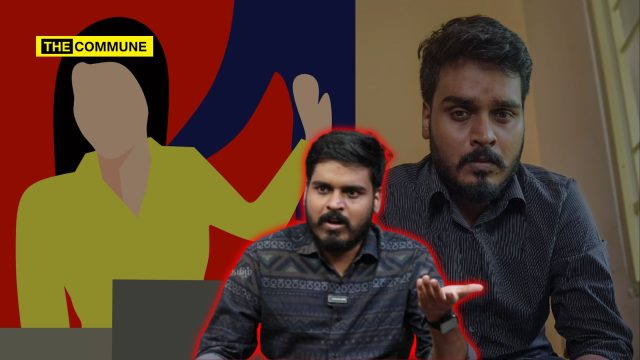
EVR Follower For A Reason: Dravidianist Degeneracy Film ‘Dude’ Director Keerthiswaran, Who Preached Respect For Women In His Film, Rudely Insults Woman Netizen Who Called Him Out For Normalizing Sexual Insults Against Women

Dravidianist debut filmmaker Keerthiswaran is experiencing a rapid, self-inflicted fall from grace. Fresh off the commercial success of his film Dude, the director has managed to reveal an astonishing level of arrogance and a deeply problematic ideology, proving that financial earnings are no substitute for artistic integrity or basic decency.

The controversy ignited when Keerthiswaran responded to a viewer’s private, constructive criticism with a sneering, dismissive message: “(laughter emojis)… go and have some life rather than sliding into my DMs.”

This is not the response of a confident artist open to dialogue, but the petulant retort of an immature individual intoxicated by early success. A filmmaker’s relationship with their audience is sacred; when a creator scorns those who paid to watch their work, it reveals a profound contempt for the very people who empower him. This incident alone “says enough about his mindset,” as the netizen rightly pointed out.

Dravidianist Degeneracy ‘Dude’

The director of Dude, Keerthiswaran, has unabashedly proclaimed his ideological loyalty to E.V. Ramasamy Naicker (hailed as “Periyar” by his followers) while defending a film that tramples upon the sanctity of marriage, romanticises extra-marital affairs, and parades moral decay as “progressive values.”

The film’s plot revolves around Agan, a man who willingly gives up his wife to another man and later pretends to be the father of her child. The story — which would anywhere else be called a moral collapse — is being celebrated by a section of gen-z Dravidianists and leftists.

Speaking to the media over its alleged commercial success, “This film is creating debates. What I feel is this is Tamil Nadu. In this state, many ‘elders’ (periyavunga) have lived. One ‘periyavar’ (referring to anti-Hindu bigot EV Ramasamy Naicker) has also lived. They’ve said so many things. We’re just followers of them and talking about it. In Tamil Nadu, these statements are not new. Many have told this before. We as next-gen are carrying it forward and will continue to talk about it. But it will be conveyed entertainingly within cinema that is accepted by audience in large scale, that’s my wish.”

Keerthiswaran went on to say that he will “continue to make such films”.

The Ideological Mask Behind Dude

However, this toxic arrogance is merely a symptom of the deeper moral decay championed by Keerthiswaran himself. In defending his film, which glorifies a man who abandons his wife to another man and then engages in a charade of fatherhood, treats extramarital affairs as empowerment, portrays moral collapse as “progress”, mocks the very idea of commitment, responsibility, or emotional integrity, markets nihilism as next-gen ideology; the director proudly proclaimed his ideological allegiance to E.V. Ramasamy Naicker (Periyar). He brazenly stated that he is a “follower” carrying forward this legacy, packaging these “messages” as entertainment for the masses.

He proudly positions himself as a disciple of E.V. Ramasamy Naicker, a man who openly advocated for women to remove their uteruses to “escape slavery,” promoted sexual irresponsibility as liberation, and built an anti-Hindu ideological empire under the guise of rationalism.

Commercial Success Does Not Justify Degeneracy

Keerthiswaran hides behind box-office numbers as though they cleanse the film’s intellectual bankruptcy. “People accepted it,” he boasts, ignoring the fact that social media discussions, reviews, and even theatre reactions have been deeply divided.

By his own admission, he wants to continue making films that push this ideological agenda. Tamil cinema has room for experimentation and even radical reinterpretations but not for juvenile provocation dressed up as social commentary.

A Film That Says Nothing, From A Director Who Cannot Hear Anything

The truth is simple: Dude isn’t disruptive. It isn’t courageous. It isn’t progressive.

It is a shallow, shock-chasing film built on borrowed slogans and hollow rebellion.

And when confronted with honest criticism, Keerthiswaran’s response shows exactly what kind of filmmaker he is, one who demands applause but collapses at the slightest pushback.

A director who celebrates a “Periyarist” rejection of tradition but cannot tolerate feedback from a woman proves not ideological sophistication, but hypocrisy.

When Arrogance Outgrows Talent: The Keerthiswaran Problem

Keerthiswaran wanted controversy; he has earned it.
He wanted to provoke debate; instead, he exposed his own inability to participate in one.

He wanted to position himself as a next-gen thinker; instead, he revealed an outdated ideological rigidity wrapped in cinematic immaturity.

If Dude is the standard he plans to “continue” delivering, Tamil cinema deserves and demands much better.

(Source: News18)

Subscribe to our channels on WhatsAppTelegram, Instagram and YouTube to get the best stories of the day delivered to you personally.

The Fall Of Madvi Hidma: Inside The Violent Legacy Of India’s Most Wanted Maoist

The Fall Of Madvi Hidma: Inside The Violent Legacy Of India’s Most Wanted Maoist

On 18 November 2025, Madvi Hidma was neutralised in a joint security operation in the Maredumilli forest region of Alluri Sitarama Raju district, near the Chhattisgarh–Andhra Pradesh border. Andhra Pradesh Police reported that six Maoists were neutralised in the hour-long encounter, including the top commander suspected to be Hidma.

Who Was Madvi Hidma?

Madvi Hidma, born in 1981 in Puvarti village of Sukma district, Chhattisgarh, was one of the most powerful and feared commanders of the CPI (Maoist). A Class 10 dropout, he joined the Maoist movement as a teenager and rose rapidly through the ranks. Operating under several aliases, including Hidmalu, Hidmallu, Santosh, and Deva, he eventually became the commander of the PLGA’s Battalion No. 1 and the youngest member of the CPI (Maoist) Central Committee.

Police and intelligence agencies link Hidma to 25–26 major Maoist attacks between 2005 and 2024, which resulted in the deaths of around 260 security personnel and 76 civilians in Chhattisgarh. His operational notoriety made him the most sought-after Maoist insurgent in India.

Hidma also carried a combined bounty of ₹1.80 crore across six states: ₹50 lakh from Maharashtra, ₹40 lakh from Chhattisgarh, ₹25 lakh each from Andhra Pradesh, Telangana, and Odisha, and ₹15 lakh from Madhya Pradesh. He topped the National Investigation Agency’s list of most-wanted Maoist leaders.

In this report, we take a look at his deadly history in which he killed several of our armed forces members and politicians alike.

#1 76 CRPF Personnel Killed in Dantewada Ambush (6 April 2010)

On 6 April 2010, Maoist insurgents linked to Madvi Hidma carried out one of the deadliest attacks in India’s counter-insurgency history at Chintalnar in the Tadmetla forest region of Dantewada district, Chhattisgarh. A large contingent of armed Maoists ambushed a CRPF patrol moving through dense terrain, overwhelming the unit with coordinated firepower. The encounter resulted in the deaths of 76 security personnel, marking the single highest loss of life for Indian forces in any Maoist attack till then. The strike demonstrated Hidma’s capacity to mobilise mass cadres and execute high-casualty operations deep inside extremist strongholds.

#2 Congress Convoy Massacred in Jhiram Ghati (25 May 2013)

On 25 May 2013, a returning Congress convoy was ambushed at Jhiram Ghati in the Darbha Valley of Sukma district, Chhattisgarh, in an attack linked to Madvi Hidma. Between 150 and 250 Maoists blocked the road by felling trees and detonated a powerful IED—estimated at 27–30 kg—under the fourth vehicle using a 200-metre wire. Senior leaders including Mahendra Karma and Nand Kumar Patel were killed, while former Union Minister V.C. Shukla later succumbed to injuries. A total of 27–32 people died.

#3 Sukma Burkapal-Chintagufa Ambush Kills 25–26 CRPF Personnel (24 April 2017)

On 24 April 2017, Maoist fighters under Madvi Hidma executed a major ambush on the CRPF’s 74th Battalion between Burkapal and Chintagufa in Sukma district, Chhattisgarh. An estimated 200–300 guerrillas attacked with automatic weapons and improvised explosive devices, hitting a road-opening party engaged in providing cover for road construction. The encounter resulted in the deaths of 25–26 CRPF personnel, marking one of the deadliest blows to security forces that year. The attack revealed the extensive operational planning, reconnaissance, and geographical command exercised by Hidma’s Battalion No. 1 within the Maoist organisational structure.

#4 22–23 Security Personnel Killed in Bijapur Ambush (3 April 2021)

On 3 April 2021, security forces launched a major anti-Maoist operation in the Bijapur area of Chhattisgarh, targeting a suspected meeting led by Madvi Hidma. The forces, drawn from the CRPF, DRG, and STF, were ambushed by a well-prepared Maoist unit, triggering a prolonged gunfight across forest terrain. The attack left 22–23 personnel dead and around 30–33 others injured, marking one of the most devastating Maoist strikes in recent years. Reports indicated that the Maoists suffered over a dozen casualties, though official confirmation varied.

#5 Bheji–Injaram Ambush Kills 12 CRPF Personnel (11 March 2017)

On 11 March 2017, Maoist cadres carried out a high-intensity ambush along the Bheji–Injaram axis in Sukma district, an operation attributed to Madvi Hidma’s direction through Battalion No. 1. The insurgents attacked a CRPF patrol, killing 12 personnel before looting their weapons and fleeing into the forest. The ambush highlighted the Maoists’ capacity to conduct rapid, coordinated strikes and retain battlefield advantage through superior terrain familiarity. Intelligence briefings identified Hidma as the key strategist, reinforcing his reputation as a central architect of many of the most lethal operations conducted in southern Chhattisgarh.

#6 17 Personnel Killed in Minpa Ambush (2020)

In 2020, Madvi Hidma reportedly directed another major strike in the Minpa-Burkapal region of Chhattisgarh, resulting in the deaths of 17 security personnel. The ambush was widely covered by national media and identified as part of a coordinated Maoist effort to target patrol teams in the densely forested and insurgency-prone zones of south Bastar. The attack reinforced Hidma’s profile as one of the most tactically skilled and dangerous Maoist commanders, capable of orchestrating high-casualty engagements even in heavily monitored conflict zones.

Subscribe to our channels on WhatsApp, Telegram, Instagram and YouTube to get the best stories of the day delivered to you personally.
Malappuram District Kalolsavam Awards First Prize Given To ‘Veerannatyam’ Play Derogating Hindu Epics Ramayana And Mahabharata

Malappuram Kalolsavam Awards First Prize To ‘Veerannattyam,’ A Play Alleging Hindu Culture Oppresses Women

Malappuram district has become the centre of a major controversy after a school drama that allegedly portrayed Hindu epics in a derogatory manner won the first prize at the Malappuram Revenue School District Kalolsavam held at Wandoor earlier this week.

The play, titled “Veerannattyam” and performed by students of AKM Higher Secondary School, was awarded the top prize in the High School drama category. The content of the play has sparked widespread protests from Hindu organisations, which claim that it portrayed Hindu culture as inherently anti-women.

Content of the Play Sparks Outrage

According to protesters, the drama’s central theme suggested that Hindu culture oppresses women, and it contained dialogue implying that the Ramayana and Mahabharata are “anti-women” texts. Characters such as Urmila, Draupadi, Gandhari and other women from Hindu epics were reportedly portrayed as powerless, marginalised and oppressed. Critics argue that the play encouraged schoolchildren to declare Hindu culture as regressive.

Video clips circulated from the performance include lines questioning the value of Hindu epics and asserting that “there are no irreplaceable female heroes among us,” further fuelling the backlash.

Protests From Hindu Organisations

Hindu Aikyavedi and other cultural groups have launched strong protests, accusing the organisers of promoting anti-Hindu sentiments in a state-run school festival. Social media discussions have amplified concerns, with cultural leaders calling the award “a deliberate endorsement of anti-Hindu narratives in the education system.”

Local reports also highlight that the drama was directed by Rafeeq Mangalakkery, and the performance was watched by hundreds of people during the festival.

Comparisons With Earlier Controversies

The controversy intensified after several activists pointed out alleged inconsistencies in the Kerala Education Department’s handling of religiously sensitive content. They drew parallels to the case of “Kithab”, a play advocating Muslim women’s rights including the right to give the call to prayer, which was blocked from being performed at a state-level event after government intervention.

Hindu groups argue that while content referencing the Quran or Bible is quickly restricted, performances that allegedly mock Hindu texts appear to face no institutional resistance. They also cited past incidents, such as the controversy at St. Teresa’s Church, Ernakulam, where the Education Department intervened after a student’s hijab sparked disputes, to question what they see as selective enforcement.

Similar Cases Cited by Critics

Protesters have also pointed to earlier instances where works accused of anti-Hindu sentiment received state-level recognition:

The novel “Meesha”, which faced allegations of portraying Hindu customs negatively, received a literary award.

The film “Vedane”, criticised for being against Indian culture, won the State Film Award for Best Lyricist.

These examples, they say, indicate a larger pattern of rewarding content that attacks Hindu traditions while restricting other religious critiques.

Competing Play Placed Second

Adding to the frustration among cultural critics, a play based on the life of the historical figure Iravi, widely praised by reviewers for its performance quality, reportedly received only second prize in the Higher Secondary category. Protesters allege that “Veerannattyam” won first prize because of its anti-Hindu messaging rather than artistic merit.

Demand for Action

There is growing public demand from Hindu organisations for action against those responsible for making underage girls perform what they describe as vulgar or abusive lines on stage. Many insist the Education Department should clarify how such content was approved for a district-level school competition.

Subscribe to our channels on WhatsAppTelegram, Instagram and YouTube to get the best stories of the day delivered to you personally.
Panruti Gets Long-Awaited Train Halt As Railway Minister Ashwini Vaishnaw Clears BJP Leader Ashvathaman’s Petition

In a significant development for rail connectivity in Tamil Nadu, the Union Ministry of Railways has approved a stoppage for the Tirupati-Mannargudi Pamani Express at Panruti station. The move fulfills a long-standing demand of the residents of Panruti in Cuddalore district and marks the third such success for Tamil Nadu BJP State Secretary, A Ashvathaman, in leveraging his access to the Union Railway Minister.

The approval was formally communicated via a letter from Union Minister Ashwini Vaishnaw to Ashvathaman. “Kindly refer to our discussion regarding train stoppage at Panruti station for public convenience. You would be pleased to know that stoppage of train no. 17407/17408 Tirupati – Mannargudi Pamani Express at Panruti station has been approved,” the minister’s letter stated.

The decision has been met with widespread appreciation from the local populace. Ashvathaman extended heartfelt thanks on behalf of the people of Panruti. He emphasized that the new halt would benefit “thousands of daily travellers, students, small traders, and devotees visiting Tirupati.”

This achievement is part of a pattern of successful interventions by the BJP state secretary. In a single day in March 2024, Ashvathaman had presented two petitions to Minister Vaishnaw during his Chennai visit, requesting stops for express trains at Ulundurpettai and Kuthalam. The minister had immediately instructed officials to act, and the Railway Board approved the halts the same night.

The latest approval for Panruti follows a petition submitted by Ashvathaman in September 2024, which was endorsed by 1,000 individuals, urging the halt of express train services at the station.

Subscribe to our channels on WhatsAppTelegram, Instagram and YouTube to get the best stories of the day delivered to you personally.
Vellore: Christian Schools Accused Of Forcing Students To Watch Missionary Propaganda Nun Biopic, Viral Video Shows Priest Allegedly Leading Students To Cinema

Vellore: Christian Schools Accused Of Forcing Students To Watch Nun Biopic, Viral Video Shows Priest Allegedly Leading Students To Cinema

A controversy has broken out in Vellore district after several private Christian educational institutions in the Katpadi area were accused of compelling students to watch The Face of the Faceless, a newly released film depicting the life of a Christian nun.

A video showing a priest escorting students into a Katpadi cinema hall (Vishnu Cinemas) went viral on social media last week, sparking widespread debate and criticism. It is alleged that the children were shown the cinema over the weekend.

Hindu Munnani state executive member Mahesh said it was unlawful for private school administrations to take children to cinema theatres without obtaining parental consent. He questioned whether the Tamil Nadu government had approved or recommended the screening of a religious film for school students.

Mahesh said that the School Education Department must clarify its stance and urged the District Education Officer and School Education Minister to take disciplinary action against the schools involved.

Questions Over Consistency in Government Response

Hindu Munnani leaders also noted that in previous years, the School Education Department had taken strong action in government schools when speakers delivering spiritual or philosophical content were deemed inappropriate. They questioned whether the same standards would be applied to private Christian institutions alleged to be promoting religious content.

Motivational Speaker Mahavishnu Controversy

In September 2024, a controversy erupted in Chennai after motivational speaker Mahavishnu from the Paramporul Foundation addressed students at government schools in Ashok Nagar and Saidapet during Teacher’s Day celebrations. His talk included references to rebirth, karma, ancient Gurukula education, mantras with supernatural abilities, and philosophical ideas about past-life actions shaping present circumstances. A school staff member objected, saying he was invited only for a motivational session, leading to a heated exchange that went viral. Dravidian groups criticised the speech as unscientific, prompting School Education Minister Anbil Mahesh to visit the school, order an inquiry, and promise severe action.

Stark Contrast with September 2024 Incident

This muted response stands in sharp opposition to the government’s reaction to the Mahavishnu controversy. “You came to my area, spoke, and left; you have insulted my teachers. So, I’m stressing at this point that I will not let you off lightly,” the minister had famously declared, promising severe action.

Calls for Inquiry

The Hindu Munnani demanded an immediate investigation into how multiple Christian-run schools allegedly coordinated the screening and whether students were pressured to attend. It also sought clarification on whether fees were collected for the movie screening and if parents were informed in advance.

(Source: Dinamalar)

Subscribe to our channels on WhatsAppTelegram, Instagram and YouTube to get the best stories of the day delivered to you personally.