Home Blog Page 1698

Netizens complain of power cuts in multiple parts of Kerala while Bhoomi Poojan was underway

Many parts of Kerala faced power cuts as the ground breaking ceremony for the grand Ram Temple at Ram Janmabhoomi was telecast live.

Many on Twittter complained of facing power cuts and expressed disappointment about not being able to view the foundation stone laying ceremony at the Ram Janmabhoomi.

All India Convenor of Prajna Pravah J Nandakumar alleged that the it was an attempt by the Communist government in Kerala to deny the right of Keralites to watch the Bhoomi Poojan event.

Many others too expressed outrage over the Kerala government alleging that they had resorted to unannounced powercuts in a deliberate attempt to prevent people from watching the event at Ram Janmabhoomi.

People from West Bengal too complained of powercuts while the Bhoomi Poojan was underway. In one of the videos, it was alleged that the saffron flags that were kept outside to commemorate the event was taken down by one person. However, the authenticity of this video has not been verified.


Ram Lalla returns from forced exile

On November 9, 2019, a five-judge bench of the Supreme Court headed by the Chief Justice of India Ranjan Gogoi presented the verdict on the historic dispute of Ramjanmabhoomi (birth place of Sri Ram) and the ownership of the land at Ayodhya. The verdict stated that the 2.7 acres of land constituting the inner courtyard of the disputed land would belong to the Hindus and a trust would be constituted to deliberate upon and construct a Ram temple. The Wakf Board would be provided a compensation land parcel of five acres outside the premises. The title plea of Nirmohi Akhara, which had claimed equal parts of the erstwhile Babri Masjid land, was completely dismissed.

This verdict overruled the Allahabad High Court ruling which had divided the land equally among the three parties in 2010. But, in the same dispute both the Allahabad High Court and the Supreme Court also accepted the existence of a temple that pre-dated the Babri Masjid. However, the Allahabad High Court had gone a step further and acknowledged the disputed land as the birthplace of Sri Ram based on faith and the religious sentiment of Hindus. The latest Supreme Court verdict creates a historic precedent by correcting a wrong committed close to five hundred years ago, when the Mughal ruler Babar had destroyed the existing temple and built a mosque in its place.

Interestingly, in the year 1886 FEA Chamier, the then judge of a district court in Faizabad also observed in his verdict, “It is most unfortunate that a masjid should have been built on land specially held sacred by the Hindus, but as that event occurred 356 years ago, it is too late now to remedy the grievance.” Hence, the essential question that plagued the whole issue was, “on whom lies the onus of being the bigger entity and dropping the claim”? Throwing light on the issue, Swami Chinmayananda had once said, “there are only two kinds of people in our country – those who were Hindus and those who are Hindus”. The forefathers of Islamic people in India were Ram worshipping Hindus, and hence Muslims today must give up their claim to the land. In that context, the verdict of the Supreme Court has upheld justice without any bias whatsoever.

For the Hindus, the city of Ayodhya is far greater than just a piece of land. It is the birthplace of an icon, an avatara purusha, the very embodiment of the God being worshipped in a human manifestation. The fact that the sanctity of the place holds even today, despite the centuries of invasion by religious and colonial forces, shows the unswerving devotion and sacrifice of the people in following their traditions and culture. Thousands and lakhs of Hindus have struggled and withstood the onslaught of Islamic and Christian evangelism to hold onto and preserve all parts of the rich cultural heritage.

Could a similar fate ever be considered for the holy cities of Mecca or Medina? Or would it even be possible for Hindus to possess land there, let alone build a temple? The forces of imperialistic ideologies have dealt a cruel hand in India, destroying several temples and snatching by means of violence, religious property. For an idol-worshipping community, this is akin to removing the very anchor of their faith and denigrating the gods who were worshipped. In 1949, few Hindus stood up to this act and placed a Ram idol in the inner courtyard of the temple.

In 1992, after half a decade of mobilising and raising a call to reclaim what was rightfully the Hindus’ ancestral property, a revolutionary act occurred, albeit without the sanction of the courts. Communal tensions peaked and the country was thrown into a Hindu-Muslim strife. Comparing that with the outcome of the verdict, it shows how we have matured as a country. Though security was beefed up in all places, not a single report of violence or discord was reported. The maximum shrill was from the pseudo-liberal community online, who couldn’t accept that both the faithful Hindus and Muslims of India had accepted the verdict with dignity.

To take it a notch further, under the auspices of the National Security Advisor, several leaders of the Hindu and Muslim communities met together to deliberate on the way forward and on how to support each other in the path for reconstruction and rehabilitation. Truly, those centred in spiritual strength have shown clarity of thought and response, over those centred only on political opportunism.

The Bharatiya civilisation has seen not just this one upheaval lasting five hundred years, but thousands of strife and onslaughts lasting over several millennia. The living dynamism and the intrinsic tolerance of the community is proof of the wisdom of our seers and spiritual scientists. Through every bend and turn in this civilisation, we have only become stronger and wiser. This verdict is monumental for several reasons, including the fact that it sets precedent to correct some historic wrongs and wipe the mistakes of the past. Several Hindu pilgrim points such as the Kashi Vishwanath temple and Krishna janmabhoomi at Mathura still lay under the premise of non-Hindu property. It remains to be seen if course correction would be effected for the other places as well. Until then, it is about time that the judiciary snapped itself out of the colonial stupor and deliver judgments based on evidence.

As the days past the judgement show, majority of Indians are willing to embrace the truth for what it is. A passage in time where the whole ecosystem has conspired to put India First.

This article was republished from Standpoint India with permission. Read the original article here.

Jain community donates silver bricks to Ram Mandir

The ground breaking ceremony for the construction of a grand Ram Temple in Ayodhya took place today. The temple is being seen as a symbol of unity with contributions coming in from different communities.

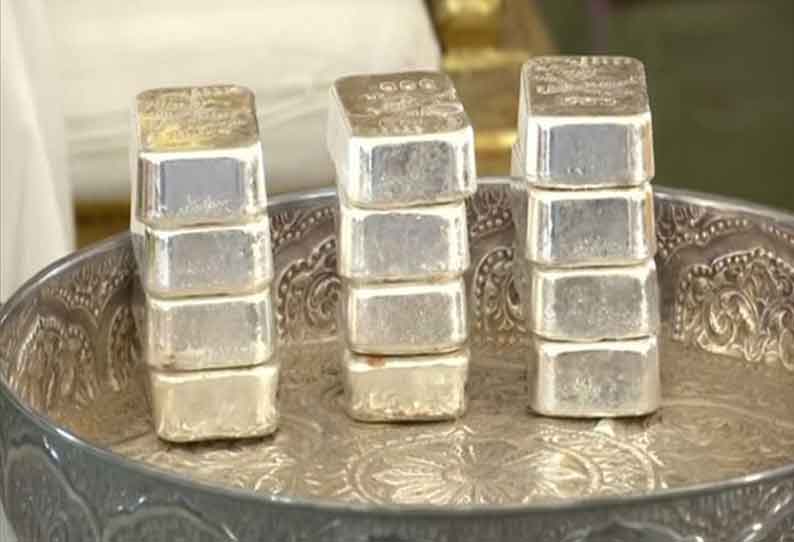
In this light, the Jain community from Gujarat has donated a silver brick for the construction of the Ram temple.

Jain saints had presented this silver brick to to representatives of Rashtriya Swayamsevak Sangh (RSS) and Vishwa Hindu Parishad (VHP) in Ahmedabad on Sunday.

“The Jain community, along with the whole country is excited about the construction of the mega ram temple in Ayodhya. With this contribution, we are expressing our excitement. On August 5, our community will perform thousands of chants and wish for the completion of the construction work of the temple. The whole community will light diyas at their homes to express happiness.”, one of the Jain saints was quoted saying.

They had collected 18 kgs of silver from with the contribution of many Jains and will be giving more during the construction of the temple.

Libbies, radical Islamists, left and EVR boys have a meltdown over Ram Mandir Bhoomi Poojan

With Prime Minister Narendra Modi laying the foundation stone for the grand temple for Lord Ram, self-proclaimed ‘liberals’ and ‘seculars’, Hindu hating radical Islamists (not all Muslims), and the peculiar species that calls themselves as “Periyarists” have been upset over the Hindus getting back what is rightfully theirs after centuries long struggle.

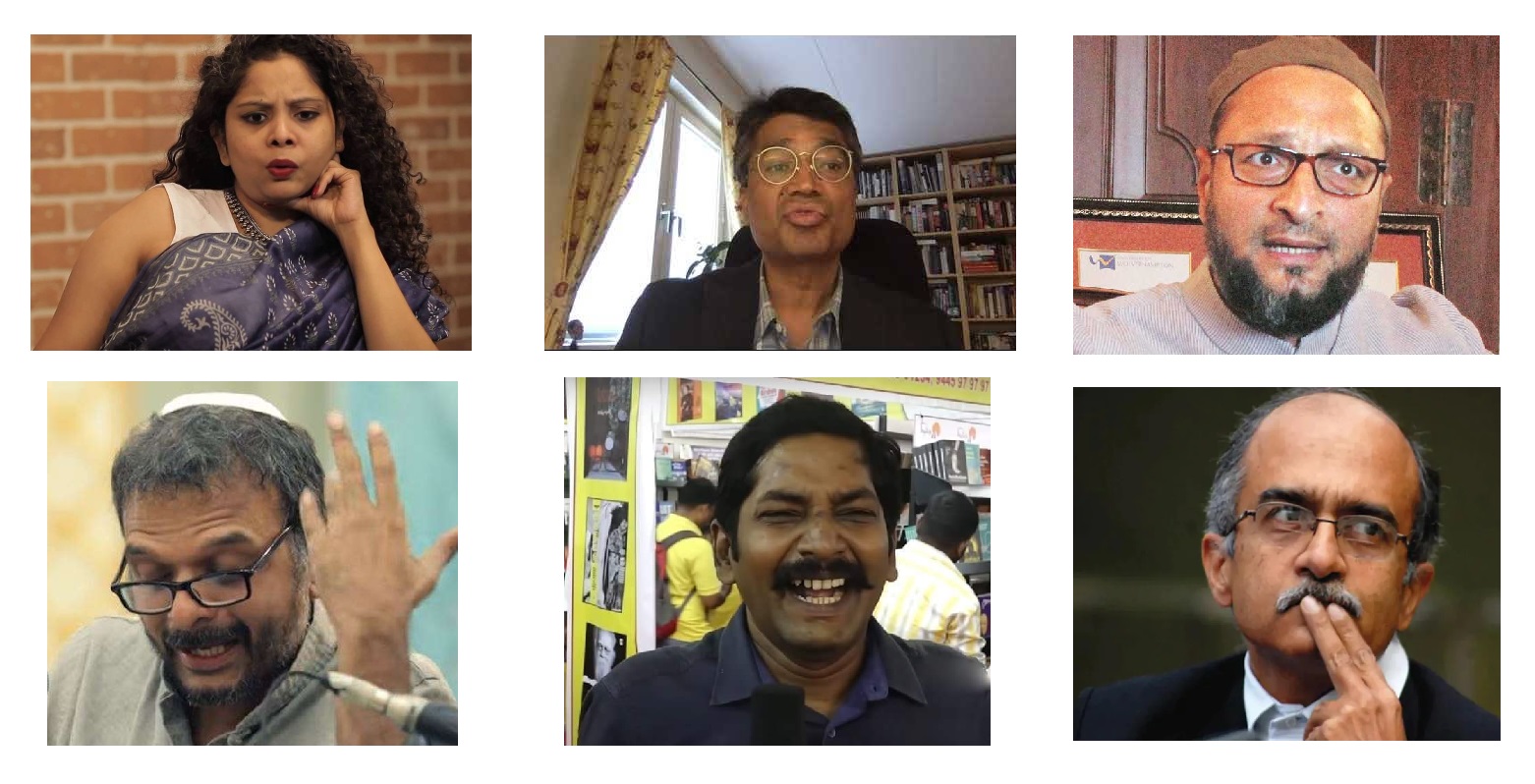
While some like Ramachandra Guha have kept mum so far on the Ayodhya ground breaking ceremony (so far) by tweeting about the one year completion of abrogation of Article 370, other rabid elements like Rana Ayub and Ashok Swain went about with their usual Hinduphobia.

This is what the closet jihadi masquerading as journalist tweeted:

In her article Rana Ayub said that the inauguration of the Ram temple is meant to allay the Indian middle class and the poor who have suffered from the lockdown and its economic impact.

She went on to call August 5 as “another day in the continuing erasure of India’s syncretic culture, another day of blood and soil in India, with a Modi emboldened by the world’s inaction.”

She also tweeted “our collective shame” as the Bhoomi Poojan started.

Ashok Swine.. sorry Ashok Swain, another closet jihadi normalized the destruction of temples and Hindu kingdoms by Islamic invaders saying that building a temple does not make a nation stronger and went on to add that not only these temples vanished but their kingdoms were gone too.

https://twitter.com/ashoswai/status/1290912959397535745

Vidya Krishnan, journalist who writes for The Hindu, The Atlantic, and The Caravan magazine went on to call it a day of mourning as billions of Hindus celebrated. She hid behind the “As a Hindu, I am ashamed” to get acknowledged as the ‘secular Indian’.

AIMIM Chief and Hyderabad MP Asaduddin Owaisi called it as a day of defeat of democracy and secularism and success of Hindutva

The motor mouth lawyer who is considered as a nuisance by the Supreme Court itself tweeted this:

And, this is what the woke Carnatic singer TM Krishna who does everything apart from good singing said – “A shameful day”

On the other hand, the unique breed called “Dravidianists” or “Periyarists” went on to trend #LandOfRavana and #TamilPrideRavanaa without even realizing that Ravana was a north Indian Brahmin king born to Sage Vishrava and princess Kaikesi, a man who was well versed in Vedas and also a devout devotee of Lord Shiva.

The foul mouthed “Periyarist” and DMK bootlicker Savukku Shankar called Lord Ram as a “property used for begging”.

https://twitter.com/savukku/status/1290884587334144002

It was expected that these inimical elements will cry foul over this civilizational victory and it does give immense joy to see them twist and turn with uneasiness. But, it also invokes a sense of pity on them.

Here is something that will help these people cope with their burns (inside and outside).

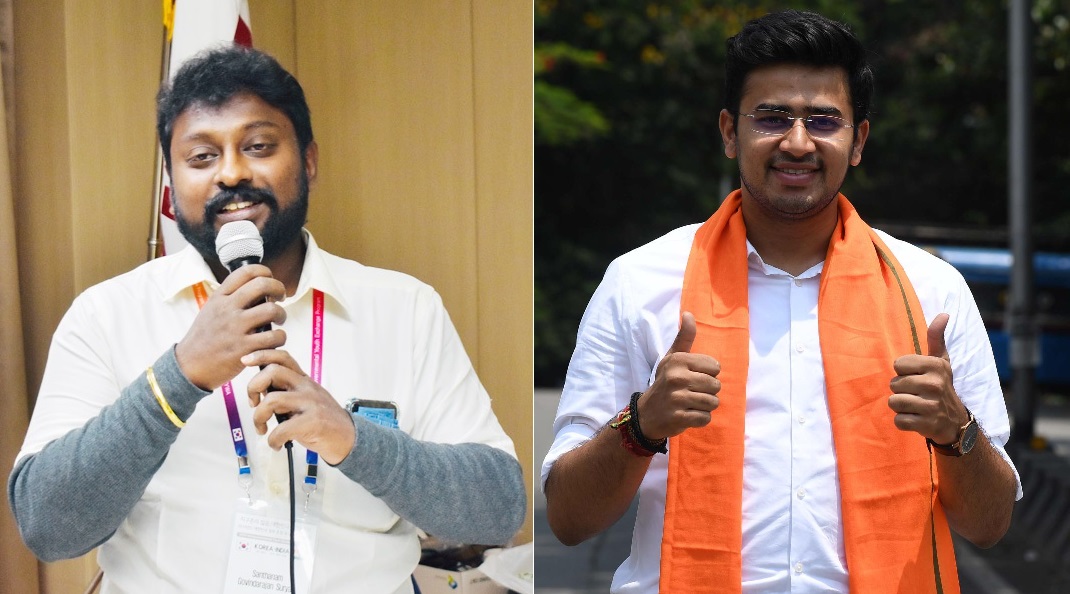
Surya calls Suryah: BJP MP Tejasvi Surya sends birthday wishes in Tamil to TN BJP leader SG Suryah

Tejasvi Surya, the young BJP MP from Bangalore South constituency flaunted his Tamil writing skills through his birthday wishes to his fellow party-mate and BJP Tamil Nadu leader SG Suryah.

In his tweet, Tejasvi Surya wished him good health and happiness in Tamil.

In response to Tejasvi’s tweet, SG Suryah candidly thanked him.

The friendship between the Suryas sent a ripple across Twitter yesterday.

This is not the first time the BJP buddies showed their camaraderie on social media. The TN BJP leader wished the Bengaluru South MP on his birthday in November 2019.

These are some of the other instances when the two leaders flaunted their friendship.


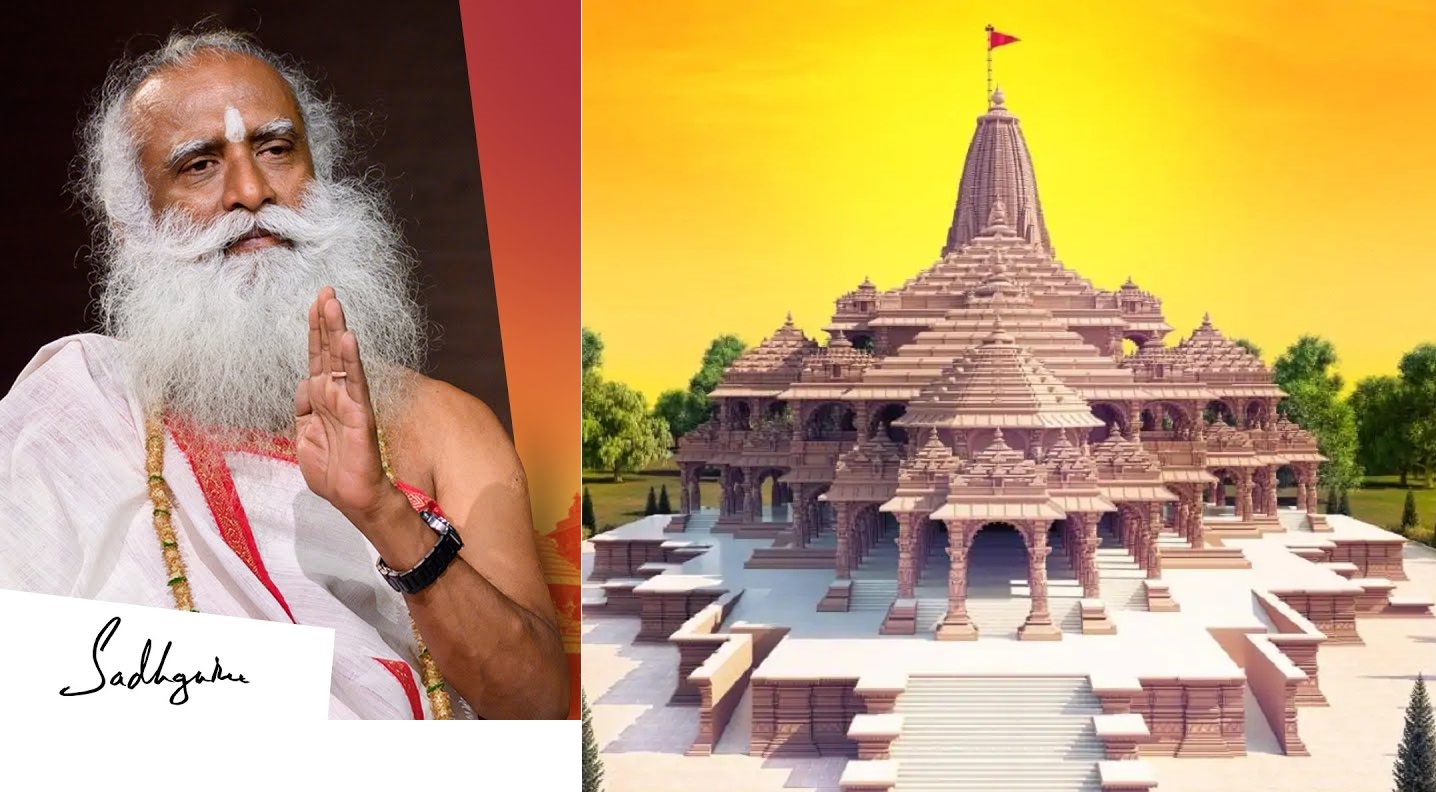
“A wound that had been unnecessarily festering put to rest”: Sadhguru on Ram Janmabhoomi

A day before the ground-breaking ceremony at Ayodhya, Sadhguru, Founder, Isha Foundation, tweeted, “Peaceful Resolution of #RamTemple dispute put to rest a wound that had been unnecessarily festering. A lot of minds & hearts are cooler now. May the whole nation celebrate this resolution and resurrection of spirit of nationhood and unity,” referring to the Supreme Court’s verdict on Ayodhya that has paved the way for temple construction on a long-disputed land. He added that the resolution of the conflict would put an end to “unnecessary friction going on endlessly between two communities.” Sadhguru was responding to a question on the relevance of the temple and of Rama in contemporary India.

“The temple is important because in many ways – at least in the northern part of the country – Rama is their spirit. So it is not just another temple. It is a resurrection of India’s spirit because it is not just one particular denomination or religion (that) looks up to Rama. There’s a whole lot of people who belong to other religions who also want to emulate him, who also eulogise him in many ways,” Sadhguru said.

Referring to Rama as an icon and not God, Sadhguru stressed, “It’s very important that he is a man. If he becomes a God, you’ll hang him on the wall and forget about him. Nobody ever tries to emulate a God, you must understand this. God means he’s beyond emulation. So it’s extremely important that he is a man.” He said that Rama is celebrated because he went through severe trials and tribulations in life and yet remained untouched by them. “His passion for the wellbeing of his people was limitless to a point of self-sacrifice which is eulogised in so many ways through Ramayan. Absolute passion for everything, total dispassion for myself – this is what he encapsulates,” said Sadhguru adding that this was a quality worth emulating.

On 9 November 2019, the Supreme Court of India delivered its verdict on the disputed site at Ayodhya and paved the way for the construction of a Rama Temple. It also allocated a 5-acre plot to the Sunni Waqf Board to build a mosque.

The foundation stone ceremony for the Rama temple will be held tomorrow at Ayodhya in the presence of Prime Minister Narendra Modi and less than 200 invited guests. Iqbal Ansari, one of the litigants in the dispute, received the first invitation for the foundation stone ceremony. Ansari, while accepting the invitation termed it as “Lord Ram’s wish”.

“I will return to Ayodhya.. when the construction of Ram Mandir will begin”: PM Modi arrives in Ayodhya after 29 years

The entire country is in euphoria as the foundation stone for the Grand Ram Temple is set to be laid by Prime Minister Narendra Modi.

People are reminiscing about the Rama Janmabhoomi Movement that happened in the 1980-90s and the leaders who participated in it.

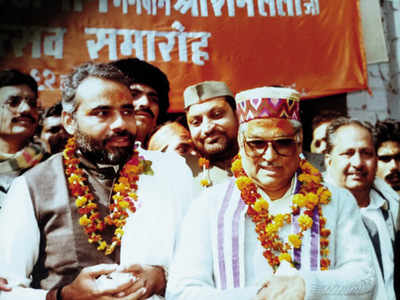
A photo taken in 1991 when the current Prime Minister Narendra Modi visited the Ayodhya Ram Janma Bhoomi with BJP senior leader Murli Manohar Joshi has gone viral on social media.

Narendra Modi with Murli Manohar Joshi

The photo is said to have been taken by Mahendra Tripathi, who ran a studio near Rama Janma Bhoomi.

In an interview with the Times of India, he had said, “Prime Minister Narendra Modi came here in 1991 with senior leader Murli Manohar Joshi (Rama Janmabhoomi). I was the only photographer working for the Vishwa Hindu Parishad in Ayodhya at the time, so I had the rare opportunity to photograph both of them.”

Tripathi said that Murli Manohar Joshi had introduced Narendra Modi as the BJP leader from Gujarat amongst some local journalists who were present at the time.

When journalists asked Modi about when he would return to Ayodhya, Modi supposedly said “I will be back when the construction of the Ram Temple begins”.

And destiny has made him to keep his word.

He has returned to Ayodhya as the Prime Minister of India to lay down the foundation stone for the grand Ram Mandir.

Ram Lalla to get dress made out of gold threads

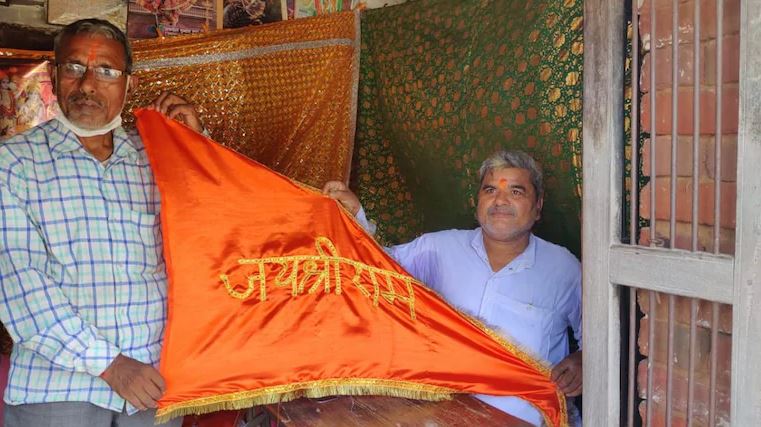
Special costumes have been made to adorn the baby Rama statue during the groundbreaking ceremony for the Ram Temple.

Brothers Sankarlal and Bhagavatlal ‘Pahaadi’ who run the ‘Babulal Tailors’ have donated 2 clothes embroidered with 9 stones and embroidered with gold thread.

The family which has been in the business of sewing clothes for deities and for a few seers has been sewing clothes for the idol of Ram Lalla in Ayodhya for the last few decades. Their father Babulal started stitiching the clothes for Ram Lalla since 1985.

For the Bhoomi Poojan event, they have meticulously stitched

They have sewn clothes for Ram in saffron and green colours. The dress is made of velvet and has navratnas (9 precious stones) sewn with gold thread. The green colour one would be worn by Ram Lalla on the Bhoomi Poojan day followed by the saffron one the next day.

These clothes were stitched in front of the idol of Lord Ram, the brothers were quoted saying in the Economic Times.

The idols of Lakshman, Sita, Bharat, Shatrughan, Hanuman and the Saaligraam will also be having dress stitiched from the same cloth.

Shankarlal is assisted by his nephews Pawan Kumar, Sanjay Kumar and Shravan Kumar. His son Rajveer who is in class 7 will assist him in the business as soon as he finishes class 8.

500-Year-old vow of Suryavanshi Kshatriya families gets fulfilled

When Ram Mandir in Ayodhya was demolished by the barbaric army of Babur 500 years ago, Kshatriyas belonging to Suryavanshi race in Ayodhya and adjoining 105 villages took a vow not to wear turban and leather shoes.

The ancestors of these Kshatriyas took an oath to rebuild the Ram Temple which was destroyed by Babur. The turban (pagadi) is a symbol of pride for the Kshatriyas and not wearing it was a constant reminder that the vow to build the Ram Mandir remained unfulfilled.

Suryavanshi Kshatriyas took from that day to not use umbrellas or wear pagadi and wear leather shoes until the Ram temple was rebuilt. They have not worn their pagadis even for panchayats and marriages. All these Kshatriya families consider themselves as descendants of Bhagwan Ram.

However, their vow will meet a fruitful end on the historic day of 5 August 2020, when the foundation stone will be laid for the grand temple of Lord Ram.

Historicity behind this Vow

When the Mughals attacked Aydhoya they faced fierce resistance under the leadership of Thakur Gaj Singh to save the temple. However, after a fierce battle, they lost to the Mughals and Gaj Singh pledged not to wear a turban and shoes until the temple was rebuilt.

Today, Thakur Gaj Singh’s vow has been redeemed and the pledge taken by the ancestors of Suryavanshi Kshatriya made 500 years ago has been fulfilled.

The butterfly effect of ₹200

Many will be aware of what Butterfly Effect is. It’s a chain of events that gets triggered by one incident in the past and the impact of that one original incident wouldn’t have been fathomed initially. This is about one such butterfly effect moment in India.

In 1978, a man called Mohammad Ahmed Khan, a very affluent and well to do lawyer in Indore stopped giving the alimony money of ₹200 per month to his divorced wife Shah Bano. His wife was 63 years old and had five children. He had infact lived with two wives for many years and then divorced Shah Bano who was his first wife. Shah Bano then approached the local court. Mr. Khan argued that since he had divorced his wife, under the Muslim Personal Law, he was not under obligation to pay for maintenance or alimony. But the local court directed him to pay ₹25 per month to Shah Bano. The cases then went to High Court. High court directed him to pay ₹179 per month to Shah Bano as alimony. The case then went to Supreme Court. The Supreme Court in a landmark judgement asked him to pay ₹200 per month to his old divorced wife for herself and her children’s maintenance.

This caused a huge uproar and protests from the Muslim community who saw the Supreme Court as interfering in their personal laws while actually, it was not. Maintenance is not personal law whereas divorce is. However the All India Muslim Personal Law Board and other groups started applying pressure on the then Central Government. Prime Minister Rajiv Gandhi who had a whopping 413 seats in Lok Sabha was under pressure from his “advisors” and inner circle to bring a law to overturn the Supreme Court judgement. He was advised that if this was not done, then the party would lose in the next Lok Sabha elections as Muslims won’t vote for the Congress. The Rajiv Gandhi government brought an amendment to law through an act of Parliament that over turned the Supreme Court’s judgement of paying a monthly maintenance amount to divorced Muslim women. The Congress still lost the Lok Sabha elections in 1989 is a different matter.

This over turning of Shah Bano Supreme Court judgement by the ‘secular’ Congress government created another furore and uproar in the country, but this time, it was from the Hindus, civil society, women groups and others. The ‘secular’ Congress government was seen as caving to fundamentalists and playing open and active minority appeasement politics. Hence, once again Rajiv Gandhi’s advisors advised him, now to placate the Hindus, to open the doors of the locked Babri Masjid and allow daily shilanyas to be performed. The ‘secular’ Congress government did the same. Till then the Ayodhya movement hadn’t gathered much steam as BJP did not involve itself directly into the movement. It may sound quite unbelievable now. But then BJP had no high stake Hindu cause in its manifesto till then. Uniform Civil Code was more of a constitutional and legal reform and the abrogation of Article 370 was more of a nationalist position.

Seeing the blatant interference of the ‘secular’ Rajiv Gandhi government into religious affairs of the citizens in Shah Bano case and then in Babri Masjid, BJP picked up the cause of Ram Mandir as part of its political agenda and manifesto in the 1989 elections. BJP was pushed into doing this because, the Hindus were repeatedly being taken for a ride on the Ayodhya issue due to the interference of a certain section of politicians, self-proclaimed intellectuals and historians with ulterior motives who were twisting and turning at every point to conceal the truth. Rajiv Gandhi commenced his 1989 election campaign from Ayodhya promising Ram Rajya. He did this to placate the anger of Hindus triggered by overturning of Shah Bano judgement. This is the misunderstanding that our politicians, media and even most citizens have on being neutral or secular. Being neutral means being objective. It does not mean doing something for one group to compensate for what was done to another group. Being secular means the government not interfering in the religious affairs of anyone. It does not mean appeasement. Playing appeasement is neither secularism nor neutrality.

Thus, it is this non-payment of a meagre amount of ₹200 a month by a man to his divorced wife that paved the way for a chain of events to happen – Congress’s over turning the judgement, Congress opening the locks of Babri Masjid for Hindus to pray there, BJP taking Ram Mandir as an election issue, BJP growing strong and big in North India and winning a lot of seats in 1989 and 1991 elections, VP Singh government going back on its word to solve the dispute, Advani commencing Rath Yatra, Advani being arrested by Lalu Prasad in Bihar, VP Singh government falling, Chandrashekhar government trying to solve the issue, Congress toppling his government, Mulayam Singh Yadav government firing and killing Kar Sevaks in UP, BJP under Kalyan Singh winning a majority in UP, Babri Masjid being demolished, Bombay riots, Bombay blasts by Dawood group, a Hindutva government forming for the first time in Maharashtra, Vajpayee becoming Prime Minister courtesy Ram Temple movement, Godhra train burning of Hindus, Gujarat riots, Modi becoming the leader and becoming Prime Minister twice, a strong Ram Mandir propenent Yogi Adityanath becoming CM of Uttar Pradesh, Shri Parasaran representing Ram Lalla in court and finally Lord Ram returning back to his throne from exile.

In a way, it looks as if Lord Ram chose to return from exile through a Muslim woman, thus standing as a testimony to the ethos of this great land.