Home Blog Page 1678

DMK’s propaganda against farm laws busted, party protests against the very same things it promised in 2016

Ever since the Centre passed the three farm bills, the opposition parties in Tamil Nadu especially the DMK and its allies like the VCK and Communist parties have been protesting against the laws that seeks to empower farmers by providing them avenues for realizing better prizes.

After the initial protest announced by the DMK in September failed to gain steam, it relaunched its protest against the farm laws once again on December 5 in the wake of the protests by ‘farmers’ from Punjab in Delhi.

Party chief M.K. Stalin, his son and DMK’s youth wing secretary ‘actor’ Udhayanidhi Stalin and other senior leaders have been participating in protests condemning the farmer empowerment laws.

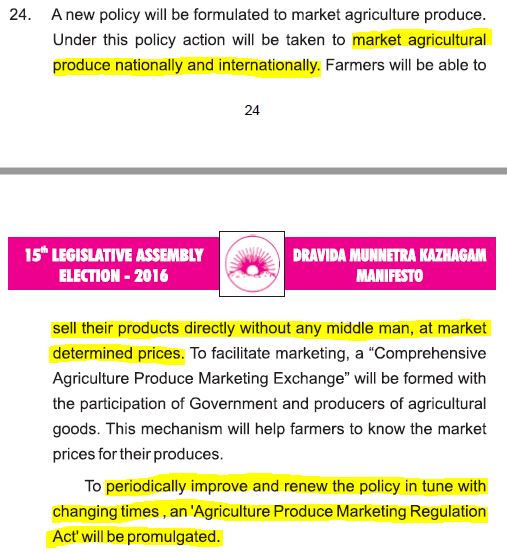
However, it has been found that they are protesting against the very same things that they promised in their manifesto in 2016.

In its 2016 manifesto for the Assembly Elections, the DMK had promised to formulate a new policy to help farmers market agricultural produce nationally and internationally.

It had stated that it would bring in a policy that will enable farmers to sell their produce directly without the interference of any middlemen at market determined prices.

It had also stated that it would review the Agriculture Produce Marketing Regulation Act with changing times.

Source: DMK Election Manifesto 2016

This is exactly what the recently enacted farm laws seeks to do. Through the new farm laws, farmers have been empowered by giving them the choice to sell their produce where they get a better price. Those who want to sell in the APMC can continue to do so and those wanting to explore the market have been given the choice to. The middlemen commission and patronage structure will disappear as farmers have the choice to sell directly to anyone at the farm gate.

Senior Journalist R. Rajagopalan has also pointed this double talk of DMK.


The suppressed thoughts of Ambedkar

'Congress Press Knows Only How To Criticise, Rebuke And Revile Me': Ambedkar Was Aware Of Media Bias

Ever wondered why people always associate only works like “Annihilation of Caste” and “Riddles in Hinduism” with Ambedkar?

Ever heard of the book “Thoughts on Pakistan”, or “Pakistan or Partition of India”, or “Buddha, China and Communism”?

No?  Don’t worry, you are not alone. These pieces of art by Ambedkar are deliberately concealed from mainstream discourse for a number of reasons. But the two major reasons why these books were hidden from the public at large are as follows-

1) Due to Ambedkar directly challenging the crux and edifices that the two major Abrahamic faiths are based on,

2) Due to Ambedkar desecrating the diktats of Communism.

Let us analyse two major questions at this juncture.

1) So what exactly were Ambedkar’s views on the major “minority” religion of the world at that point in time – Islam and why was he more brutal towards the assessment of its theology as compared to even Hinduism?

2) Why did Ambedkar choose to remain inside the Dharmic fold by moving to Buddhism out of Hinduism?

In Page 220 of his book “Pakistan Or Partition of India” Ambedkar writes as follows,

Islam has all the evils(social evils) that Hinduism does and something more.

Something More?” What does he mean by this?

Ambedkar substantiates this “something more” by exposing the caste system prevalent in Islam. Islam according to him, characterises Muslims into 3 categories  –

  1. Ashraf
  2. Ajraf
  3. Arzal

Ashraf” means “noble” and the people associated with this Caste are those Hindus who happen to hail from “Upper Castes” and later converted to Islam, “Ajraf” refers to those that belonged to the “lower caste” of Hindus and later became Muslim, and finally the lowermost category of Islam the “Azrals” who were the former “untouchables” among Hindus who went on to embrace Islam eventually.

Often the Azrals are not allowed to enter mosques and while the Ajrafs can enter the mosque, they could never aspire to become the priest or the Maulvi of the Mosque.

There is an internal hierarchy within the “noble” Ashraf class too in the form of Sheiks, Sayyids, Pathans, Moghuls, etc.

But quite astonishingly despite these hierarchies inside Indian Islam, it is overlapped by an overall hierarchy in World Islam.

The Arabs have a different idea of hierarchy which goes in a particular order-

  • Ashrafs,
  • Mawaalis

The Arabs claim themselves to be the real Ashrafs or the “nobles”, while the Persian (Iraq, Iran, Syria) Muslims are the inferior “Mawaalis” and the Indian/African/European/Oriental Muslims being the Ajraf Muslims who are not necessarily inferior to the Ashrafs but definitely sub-ordinate to them. To this date, only the “Ashraf” (Arabs) can get to be priests inside the Kaaba of the Great Mosque of Mecca.

But beyond all of these hierarchies inside Islam, the greatest untouchables according to its theology are the “Kafirs” or the non- believers who are according to Ambedkar “equated to urine, sweat and faeces as per the doctrines of the religion”.

The above reasons are precisely why Ambedkar summarises Islam the following way,

“The universal brotherhood of Islam is not the universal brotherhood of mankind”

It had always been Ambedkar’s position that conversion to any Abrahamic faith from the Hindu fold “de-nationalises the citizen” which means that the moment a Hindu becomes a part of an “imported religion”, he shall lose all sense of nationality and ultimately shift his loyalty to an entity that does not belong to his Mother land. This phenomenon, Ambedkar believed was an issue of national security.

Precisely for this reason, in Chapter 5 of his book “Pakistan or Partition of India” Ambedkar calls for the removal of Muslims from the Indian Army as he believes that an increased number of Muslims in the army shall cost India dearly in its future pursuits towards security.

One can only imagine what would have been the reactions to such an appeal had the same been made by Hedgewar, Guruji Golwalkar or Veer Savarkar. But since it was Ambedkar in this case, the entire story ended up being white-washed.

But after all, Ambedkar was proved to be right in 1948 when the Muslim commanders of the Raja Hari Singh’s Kashmir Army reneged on him by joining hands with the invading Pakistani Pathan forces thus leading to the takeover of what we know today as “Pakistan Occupied Kashmir”.

Ambedkar was once again proven right when Punjab was partitioned with a major chunk of it given away to Pakistan solely because of the 3 Christian candidates of the Parliament voting in favour of the Muslim League.

But now that we have looked into Ambedkar’s views on foreign faiths, let us segway into the core crux of this article, “Did Ambedkar want the abolition of Hinduism?”

Before answering this question, we shall have to ask ourselves, “Why did Ambedkar convert to Buddhism?” It was an unconventional option to choose, but nevertheless it proves a significant point which is to say that regardless of Ambedkar’s justifiable disappointments with the Hindu faith, he chose to remain in the Dharmic fold by choosing to move to Buddhism.

Upon being asked by an English reporter as to why he chose to take this route instead of the conventional option of choosing an Abrahamic faith, Ambedkar replies ” By moving to Buddhism from Hinduism I am simply moving from one room of the house to another as opposed to moving to a different house altogether”.

This shows the affiliation the man had with Indic faiths and how he understood the significance it posed on the Indian society at large.

At the end of the day Ambedkar only called for the “Annihilation of Caste” and not the “Annihilation of Hinduism”.

Ambedkar once along with a dear friend of his, the RSS affiliate Dattopant Tengadi met with several Hindu Mutt Saints including the famous Shankaracharya Mutt where he kick-started major reforms to eliminate systemic untouchability prevalent in the country. Ambedkar always was of the impression that the Indic faiths were malleable and hence could be reformed with enough beating.

In fact during the Constitutional Assembly debates of 17th September 1949, as Chairman of the Drafting Committee, Ambedkar called for Sanskrit to be made the official language of the Union of India owing to its rich cultural and spiritual significance to this land and also because of its innate capabilities to serve as a tool to bind the souls of India’s majority.

But unfortunately, owing to lack of majority, the proposal had to be turned down by the assembly. That day marked the beginning of the promotion of English, a language known to hardly 2% of the Indian population then, as the recognised language for all official communications of the State.

Addititonally, the definition of a Hindu as authored by Ambedkar in Article 25(2) of the Indian Constitution is as follows,

Hindus shall be construed as including a reference to persons professing the Sikh, Jain, or Buddhist religion.

This simply goes on to substantiate how Ambedkar saw the derivatives of Hinduism, namely Sikhism, Jainism and Buddhism merely as smaller parts of a greater whole. Therefore, he draws a clear parallel between who is a Hindu and who isn’t and at the same time making himself a Hindu as per constitutional standards.

Additionally, some believe that it was based on earlier proposals made by Dr. Ambedkar in the Constituent Assembly that led to the provisions of the Hindu Marriage Act, 1955 which gives a woman the right to obtain instant divorce if her husband is to convert to a religion that is NOT Hinduism, Sikhism, Jainism or Buddhism.

All of these give us a revelation that an honest analysis of the persona that was Dr. Bhimrao Ramji Ambedkar would help us understand that he was not even close to being a “Hindu-hater” as depicted by those academics and scholars of Modern Indian history in top institutions and think-tanks across the length and breadth of India and the world.

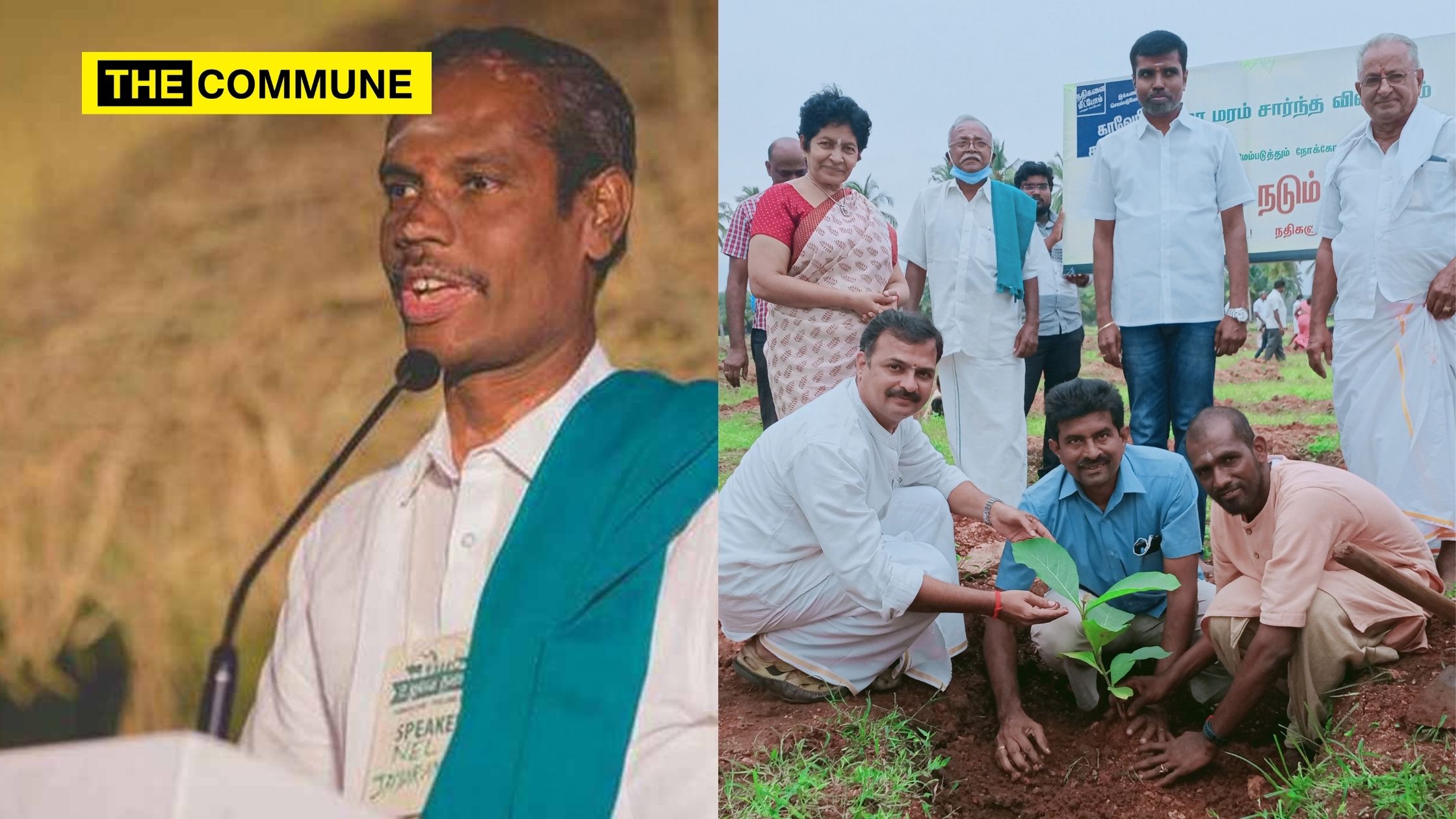
Cauvery Calling pays tribute to Thiru. Nel Jayaraman with plantation drive in Erode

Cauvery Calling volunteers organized a plantation drive in Erode today in memory of Thiru. Nel Jayaraman who dedicated his life to the restoration of traditional paddy varieties and was a tireless supporter of Isha’s grassroots ecological initiatives. The event was inaugurated by Thiru. S. Nallasamy, President of Lower Bhavani Farmers’ Welfare Association (Irrigation Farmers Welfare Association). Around 3,500 saplings were planted on 12 acres of farmland belonging to Thiru. K.S. Rajeshwaran of Sivalingapuram village in Gulur Panchayat of Erode district.

Paying tribute to Thiru. Nel Jayaraman, Cauvery Calling Field Co-Coordinator [Tamil Nadu], Thiru. Tamilmaran said that Thiru. Nel Jayaraman had offered invaluable support to Isha’s ecological initiatives including Project GreenHands and Sadhguru’s river revitalization effort. Thiru. Jayaraman had raised and distributed 10,000 timber saplings to farmers free of cost in partnership with Project GreenHands. He said Thiru. Jayaraman had also supported the Rally For Rivers initiative on river revitalization. “We are planting these saplings today in his memory and in gratitude for his service to farmers for whom he toiled tirelessly,” said Thiru. Tamilmaran.

More than 100 people including youth, college students, Isha volunteers and members of voluntary organizations operating in Erode district, participated in the plantation drive.  Commercially valuable timber such as teak, blackberry, sandalwood and rosewood were planted on the farmland. The species will substantially enhance farmer income and have a significant ecological impact.

The plantation drive in Erode was part of ‘Maram Nada Virumbu’ platform launched by Cauvery Calling to involve the general public in sapling plantation. The platform offers first-hand experience in sapling selection and planting to the general public. The Erode drive was the second event after the initiative was launched last month. The first plantation drive was held in Karur district on 18 November.

Cauvery Calling is a movement launched by Sadhguru, Founder of Isha Foundation, to revitalize river Cauvery. It promotes tree based agriculture on private farmlands in the Cauvery basin. Its 12-year mission is to enable over 50 lakh farmers to plant 242 crore trees on their own farmlands in the river basin for economic gain. This will substantially increase farmer income by 3 to 8 times, enrich soil in the basin, improve water tables and augment Cauvery’s source flow levels.

Dalit Christians treated as untouchables in Pondicherry archdiocese

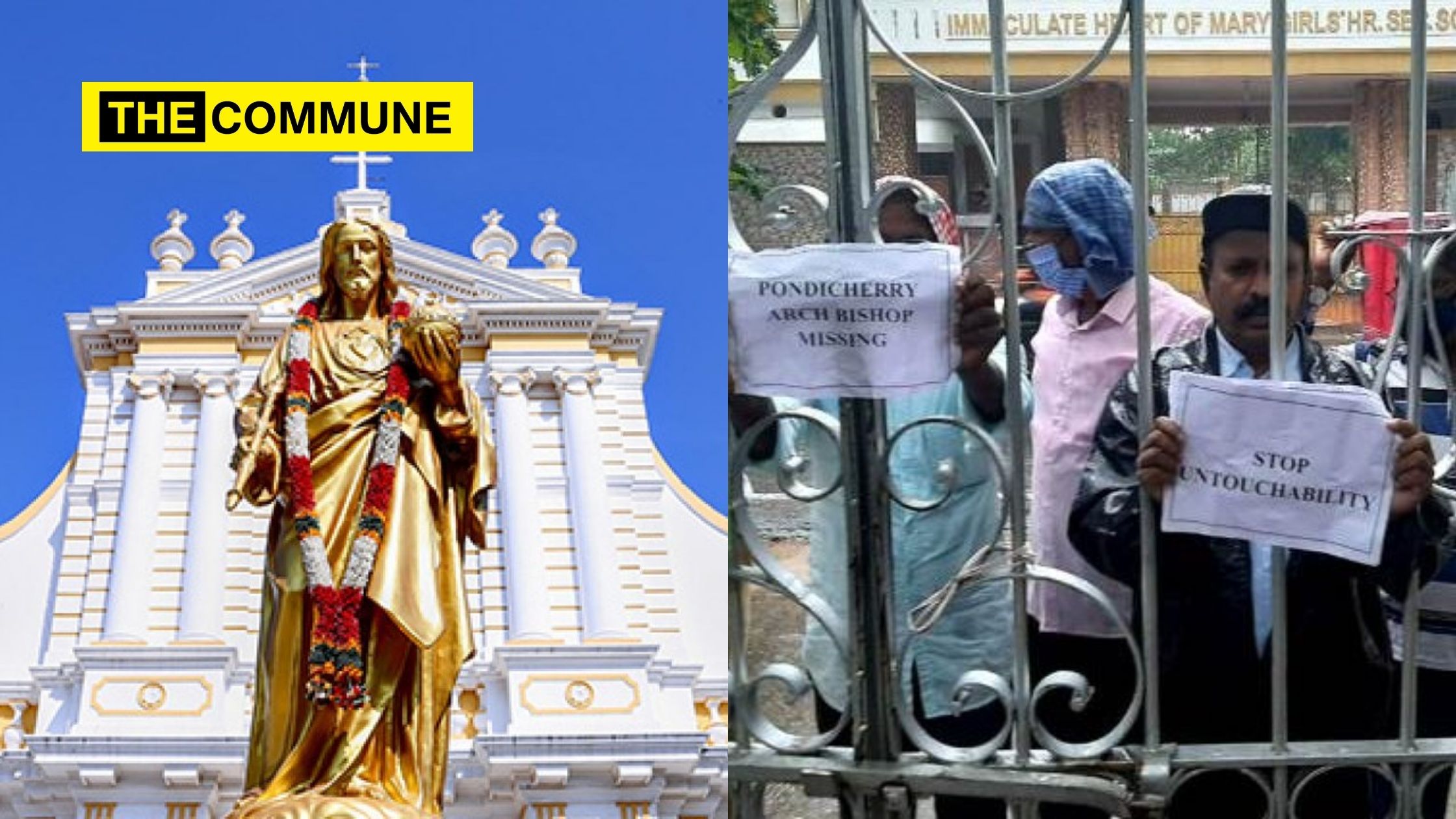
On December 3, the headquarters of the Archdiocese of Pondicherry-Cuddalore witnessed a tense situation when a group of Dalit Catholic leaders tried to meet priests from their community.

Tamil Nadu state leader for Dalit Christian Liberation Movement, Mary John, was joined by a few priests and were in a peaceful dialogue with the archdiocesan administration to end untouchability in the archdiocese.

However, the archdiocesan procurator Father Gregory Louis Joseph stopped the leaders at the gate of the Archbishop’s House. Later, the the Dalit priests approached the police and opened the gate with the help of the them.

“We, the Dalits, have every right to meet our priests,” John was quoted saying in Matters India. The Dalit priests’ representatives had earlier tried to meet the archbishop on November 30.

John said that they had come to have a dialogue with the diocesan administration to eradicate caste discrimination and the untouchable practices in the archdiocese especially in the appointment of the Dalit priests.

Apparently, the term of the incumbent procurator expired following which the Dalit priests requested the archbishop to appoint one of the priests from their community to the post but were denied by the ‘college of consulters’ who met the very next day to discuss it.

The Dalit priests mention that the archdiocese has 42 posts, including that of the procurator, which remain out of bounds for them.

When the priests met the archbishop again, the were informed that Father Albert Felix had taken over from December 1 after Father Gregory resigned on November 13.

The archbishop on November 24 had sent a circular informing that he was going on leave for 2 months due to health reasons. He appointed the Vicar General Father A. Arulanandam as the archdiocesan administrator in his absence. The archbishop’s circular, dispatched by Father Gregory, who was the procurator, quoted a letter from Propaganda Fide that the appointment of the new procurator was suspended for 2 months.

Later, a letter signed by 23 Dalit priests, was sent to the apostolic nuncio expressing their concerns about the absence of the archbishop. They alleged that the archbishop went on leave following an unprecedented meeting of the college of archdiocesan consulters without the archbishop during which they had reversed the prelate’s decision on the procurator.

The Dalit priests’ representative liken their condition like a sheep herd without a shepherd. “We cannot also approach the vicar general as his administrative powers are not clear under the Canon Law,” they were quoted saying in Matters India.

The Dalit leaders had first written to the archbishop in March urging him to end the highly polarized casteism and untouchability plaguing in the archdiocese. A few Dalit priests had met the archbishop on March 9 and appealed him make transfers and appointments of priests on the basis of equality and fraternity pointing out that no Dalit priests serve parishes dominated by Non-Dalit Catholics.

John alleged that Dalit people’s welfare were constantly undermined and sidelined from attaining positions of power and authority.

(Source: Matters India)

Ministry of Commerce and Industry and Ministry of AYUSH decides to set up an AYUSH Export Promotion Council

The Ministry of Commerce and Industry and the Ministry of AYUSH have decided to work together to set up an Export Promotion Council to boost AYUSH exports. The decision was taken recently in a joint review of AYUSH trade and industry by Shri Piyush Goyal, Minister of Commerce and Industry and Shri Shripad Naik, Minister of AYUSH.

It was also decided in the review that the entire AYUSH sector will work together to achieve price and quality competitiveness to boost AYUSH exports. The review was held through video conference on 4th December 2020, which was attended by nearly 50 industry and trade leaders from the AYUSH Sector. More than 2000 stake-holders of the AYUSH Sector also attended the e-event through live streaming on virtual platforms.

Secretary AYUSH initiated the discussions with a presentation on the action taken on the recommendations of the previous meeting by the Ministry of AYUSH. He also briefed about the various other initiatives taken by the Ministry of AYUSH to mitigate the COVID19 situation and to promote AYUSH industry. He spoke about the emerging opportunities for promotion of AYUSH sector and listed a few hurdles that deserved attention.

In the open forum that followed, officials from Ministry of Commerce and Industry, RIS, BIS and Invest India and AYUSH industry representatives shared their thoughts. The efforts put in by the Ministry of AYUSH to take AYUSH- based solutions to the public in the wake of COVID19 came in praise from all.

Minister Shripad Naik highlighted the growing global interest in AYUSH- based solutions for disease resistance and treatment during the difficult times of the Covid -19 pandemic. He stated that trade and commerce in the AYUSH Sector needed to upscale quickly in order to meet the growing demands from India and abroad, and to serve the larger number of people who are now looking up to these systems for maintaining their health. He also recollected various steps taken by the Ministry during the pandemic to add protection to the people from the dreaded Corona virus. He told the participants that the AYUSH immunity protocols and the National Clinical Management Protocol for Covid 19 for Ayurveda and Yoga were timely interventions which provided relief to large sections of the population. The emerging evidence of a correlation between the low Covid -19 mortality rates and largescale adoption of AYUSH prophylactic solutions by the population is significant for the public health practice in the country.

Minister Piyush Goyal, praised the frontline role played by the AYUSH Sector in  the fight against Covid -19. The protection offered by the AYUSH systems to the common people during the pandemic time neutralised the scepticism that many people had about the efficacy of the medicines and products offered by these systems. The spurt in exports of AYUSH products in the recent months is a direct reflection of their growing popularity in many countries. The standardisation of the HS codes related to export will be considered on priority as a step to promote exports. He called upon the AYUSH Ministry to work in coordination with the Commerce and Finance Ministries to achieve this early. The Commerce Minister also advised the industry leaders to work simultaneously on the quality and pricing of their products, so that they become increasingly competitive in the global market. He supported the concept of an AYUSH Export Promotion Council and said that the Commerce Ministry would be happy to support the same. The continued support of Commerce Ministry would be available to the AYUSH Sector on all matters of trade promotion, and special meetings with the functionaries of the Ministry would be arranged as and when required, to discuss any important issue. Evolving appropriate standards which could win international recognition was another advice from the Commerce Minister. He also assured that AYUSH will figure appropriately in the “Brand India” activities being presently undertaken. He underlined the need for the industry and the Government to work together in various aspects of branding and promotion.

From the meeting it was decided that, Ministry of AYUSH and Ministry of Commerce and Industry will work together for establishing an AYUSH Export Promotion Council (AEPC). The proposed AEPC can be housed at Ministry of AYUSH and the standardisation of HS code for AYUSH will be expedited.

Ministry of AYUSH will also work in collaboration with Bureau of Indian standards to develop international standards for AYUSH products as well as services. Ministry of AYUSH and the AYUSH industry will identify best practices/ success stories and promote them amongst the public.

AYUSH industry will work on ensuring quality and standards of AYUSH products as well as to become price-competitive and will be part of Brand India activities.

(Published from PIB)

DMK and VCK goons attack IMK leader Arjun Sampath, prevent him from paying respects to Babasaheb Ambedkar

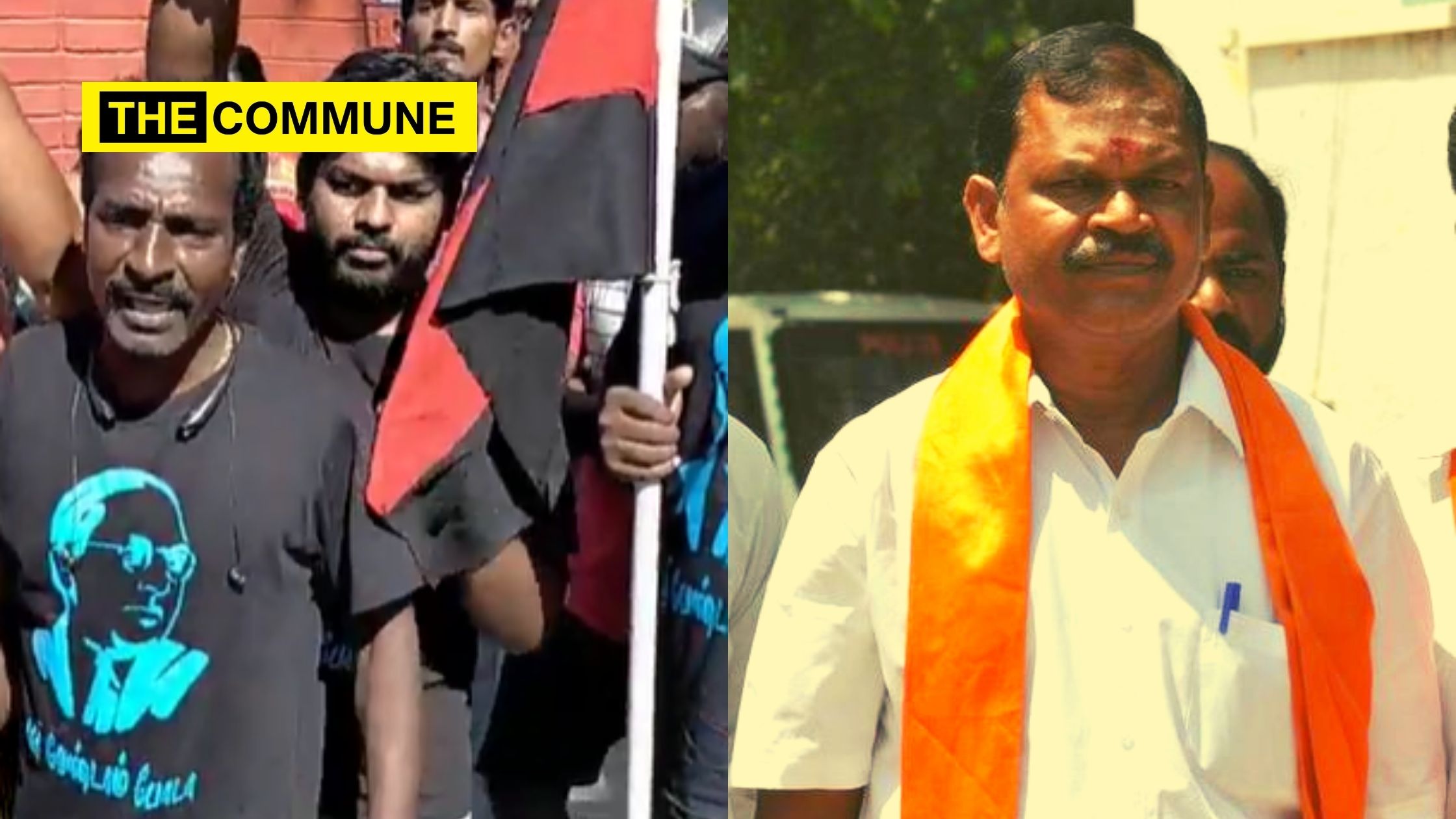
Cadres belonging to the Dravida Munnetra Kazhagam (DMK) and Thol. Thirumavalavan’s Viduthalai Chiruthaigal Katchi (VCK) gheraoed and tried to prevent Indu Makkal Katchi head Arjun Sampath from paying respects to Babasaheb Ambedkar’s statue at the memorial located in Raja Annamalai Puram in Chennai.

A group of VCK and DMK cadres wearing blue shirt and black t-shirts had locked the gates and kept shouting slogans like “We will uproot Sanatana Dharmam, we will eradicate saffron” while aggressively charging at the IMK members who had come to pay respects to Babasaheb Ambedkar on the occasion of his death anniversary. Many members belonging to the DMK carrying DMK flags were also present at the venue.

Two members belonging to Muslim community bearing VCK’s flag allegedly tried to snatch Arjun Sampath’s saffron shawl that was worn around his neck.

A few members belonging to ‘Periyarist’ organizations and Communists surrounded the IMK leader and kept raising inciting slogans.

One of the members can be heard saying that those who chant ‘Bharath Mata ki Jai’ will never be allowed inside.

However, Arjun Sampath along with cadres of the IMK managed to get inside with the help of police and paid respects to Dr. Ambedkar’s statue.

Speaking to The Commune, Arjun Sampath said “These so called flagbearers of social justice are practicing a kind of untouchability by preventing me from paying respects to Babasaheb. They should be ashamed of themselves to use Babasaheb’s name. He is not a leader of the VCK or the DMK. He is a leader for all Indians”

He added that such undemocratic and ruthless behaviour of VCK and DMK goons will not prevent them and that they would be visiting 5 places where Ambedkar’s statue has been kept to pay respects.

“IMK follows the principle of Babasaheb where as these VCK goons follow the principles of EVR [known as ‘Periyar’ by his followers]”, the IMK leader said.

He said that the VCK head should monitor and control his cadres who are bringing disrepute to Babasaheb’s name. He also urged the Tamil Nadu government to take action against such miscreants added that the IMK is always ready to engage with the VCK on forums of dialogue and not in violence.

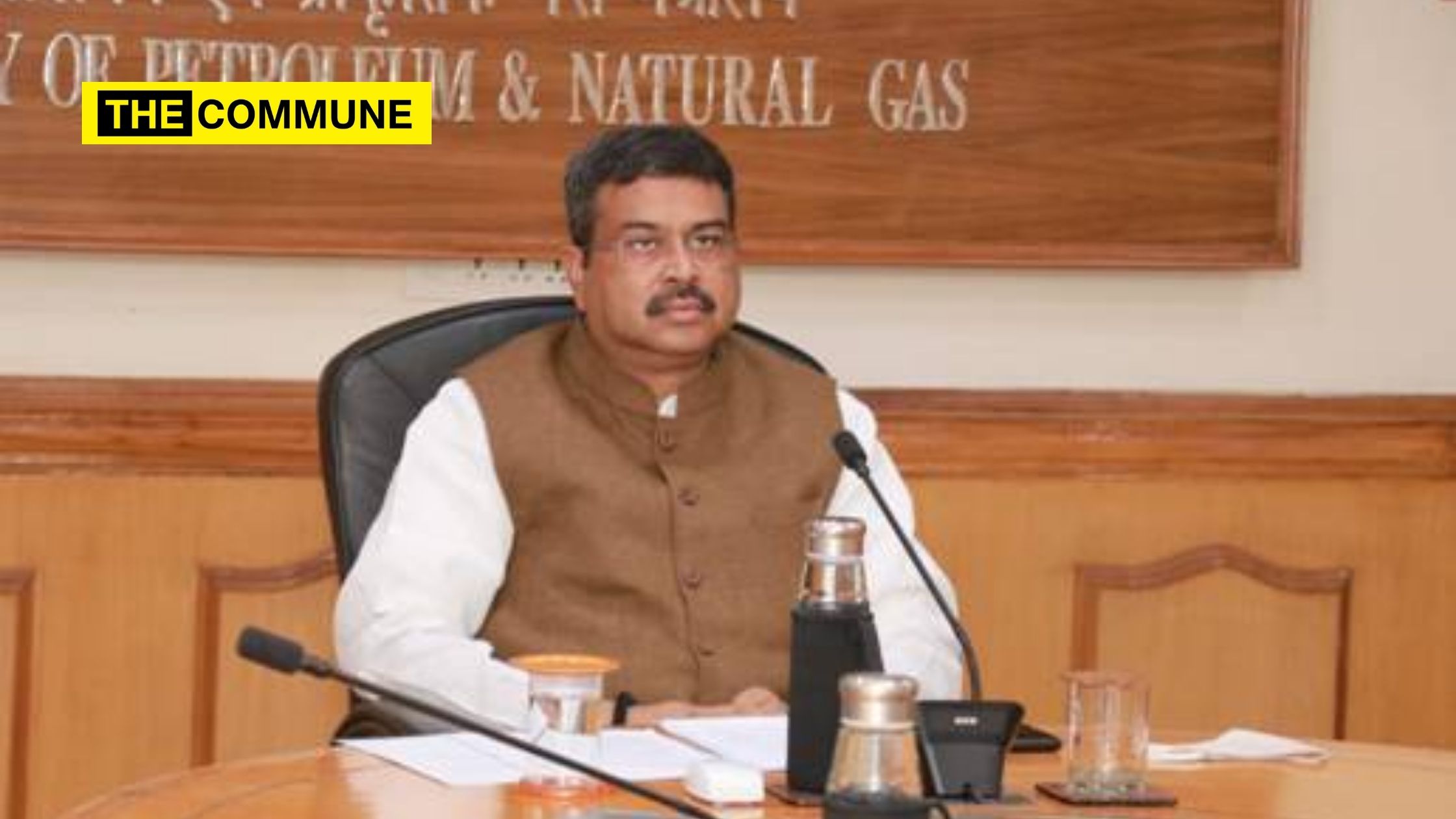
Shri Dharmendra Pradhan gives “Innovate for India” mantra to the Scientific Community; asks them to create competitive advantage for India

Minister of Petroleum & Natural Gas and Steel Dharmendra Pradhan has appealed to the scientific community to Innovate for India (I4I) and create competitive advantage to make India Aatmanirbhar. Speaking at the curtain raiser for the 6th India International Science Festival 2020, being organized by the Ministries of Science & Technology, Earth Sciences, Health & Family Welfare, Government of India, he called upon the scientists to create products and services which can compete with the best in the world. The theme of the event was “Self-reliant India and Global Welfare.”

Underling the role of science and innovation in the development of any society, Minister Pradhan said that the COVID19 pandemic has once again demonstrated that we have to develop and strengthen our institutional and industrial capacity in scientific knowledge and innovation in all areas. Outlining Prime Minister Narendra Modi’s vision of ‘Aatmanirbhar Bharat’, he said an Aatmanirbhar Bharat is a Bharat which does not only fulfills its own requirements but also is a beacon of hope for the global community, true to the spirit of ‘Vasudhaiv Kutumbukam.’

Minister Pradhan said that India’s strive to achieve self-reliance cannot be possible without the appropriate use of science and technology for economic development and societal benefit. Through a robust R&D ecosystem, we could develop state-of-the art products and services, make existing systems and processes more efficient. He appealed to the scientific community to integrate India’s rich ancient legacy in advanced scientific concepts and mathematics with modern scientific methods of investigation, to unravel the secrets behind many of these practices and scientifically establish them.

Appreciating the scientific community for driving India’s stride in various areas like space exploration, agriculture, Pharma, the Minister appealed to them to work even more towards solving real life industry and social problems.

Not just a municipal election: Telangana’s political landscape is changing

With the dust settling in for the GHMC elections and polling numbers coming in, the true scale of the Bharatiya Janata Party (BJP) victory is further baffling many analysts. The GHMC limits are split into 6 zones – and the BJP is the only party to have won at least 1 seat in each of the 6 zones. The ruling Telangana Rashtra Samiti (TRS) did not win a single seat in the Charminar zone. The TRS won 33 out of the 55 seats from just two zones – Kukatpally and Serlingampally; and remaining 22 are spread over the other 3 zones.

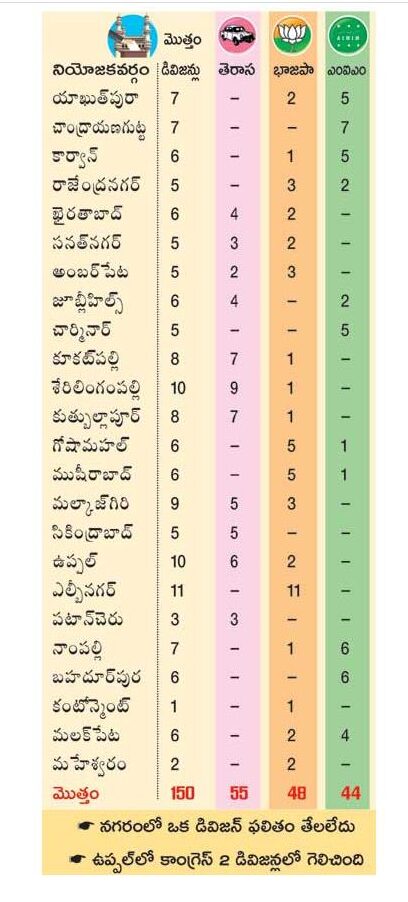
However, there is one more statistic that is very devastating for the TRS party. The GHMC area covers 24 MLA constituencies. The TRS did not win a single ward in a whopping 13 of these constituencies. In contrast, the BJP won at least 1 ward in 18 of these constituencies. This is a huge leap from its disastrous performance in both the 2009 and 2016 GHMC elections.

Source: Ee Nadu

Though the above graphic is in Telugu (sourced from Ee Nadu), it is easy to get an overview based on the colours and symbols of the party. The numbers represent the wards won by that party in each assembly constituency. There is yet another interesting statistic that needs to be observed.

Except for the Jubilee Hills constituency, the TRS did not win a single ward seat in any of the 10 constituencies that the All India Majlis-e-Ittehadul Muslimeen (AIMIM) won wards in! Though the TRS and MIM have been telling that they are not in alliance, these numbers tell a very different story!

This loss for the TRS is largely due to the bungling of many local issues. Fresh in the memory of people is the tardy response of the state government to the unprecedented Hyderabad floods that struck the city recently. The Chief Minister did not even bother to visit the affected areas. A cash incentive of ₹10,000 was announced but the distribution was so tardy and riddled with so much controversy that nothing useful came out of the whole exercise. The general inaccessibility of many corporators (43 of sitting corporators lost in this elections), their continuing influence over land grabbing and corruption (even the Mayor was entangled in serious allegations of land grabbing) contributed a lot to this defeat.

In addition to these local factors, there was also widespread discussion on certain state level factors – such as the tightening grip of the family rule in Telangana; the shoddy response to the COVID testing right from the beginning of the crisis, and the general arrogance of the TRS leadership in dealing with questions and criticism.

The BJP was smart enough to deftly handle both the local and state level issues in this campaign. Even though they had only 10 days to decide on the candidates and strategies – the BJP’s aggressive campaign hit the right chords at many places. Whilst highlighting the local issues and potential solutions to them, the BJP also played well at highlighting the arrogance of the TRS leadership (primarily the family of K. Chandrasekhara Rao!). The entire state leadership was focused only on this election – and this is the first time they had multiple star campaigners because of which the party was able to cover larger area with greater impact.

The party of course benefitted from the experience of its national leadership too. With Shri Bhupender Yadav overseeing the election, it was apparent how serious the central leadership was taking this election. Campaigns by Amit Shah, J.P.Nadda, Yogi Adityanath, Smriti Irani, Tejasvi Surya, etc bolstered the cadre like never before.

The TRS didn’t back down a bit on this front – the entire state cabinet was involved in the campaigning. Nearly all the 100 MLAs of the TRS were also involved in the campaigning. KCR’s son KT Rama Rao was in charge of the whole exercise – and therefore this loss stings more than ever. Slowly and surely, the BJP has occupied the principal opposition space in Telangana now. It remains to be seen how the party will take this position forward.

By the way, there has been one more casualty because of this election. The state Congress President, Uttam Kumar Reddy, has finally resigned after the disastrous performance of the party. Within hours of him resigning, multiple groups within the party have begun lobbying for the post based on caste compositions. Until the Congress party comes out of this ridiculous groupism and age-old strategies, there is no hope left of revival of that party!

This is also the first time that the TRS has lost a position of power after the formation of the Telangana state in 2014. With TRS losing the public mandate in GHMC, the focus has now shifted towards electing the Mayor. The TRS needed 67 seats to win the Mayor seat on its own. They now have no option but to ally with the MIM to retain the Mayor seat in GHMC.


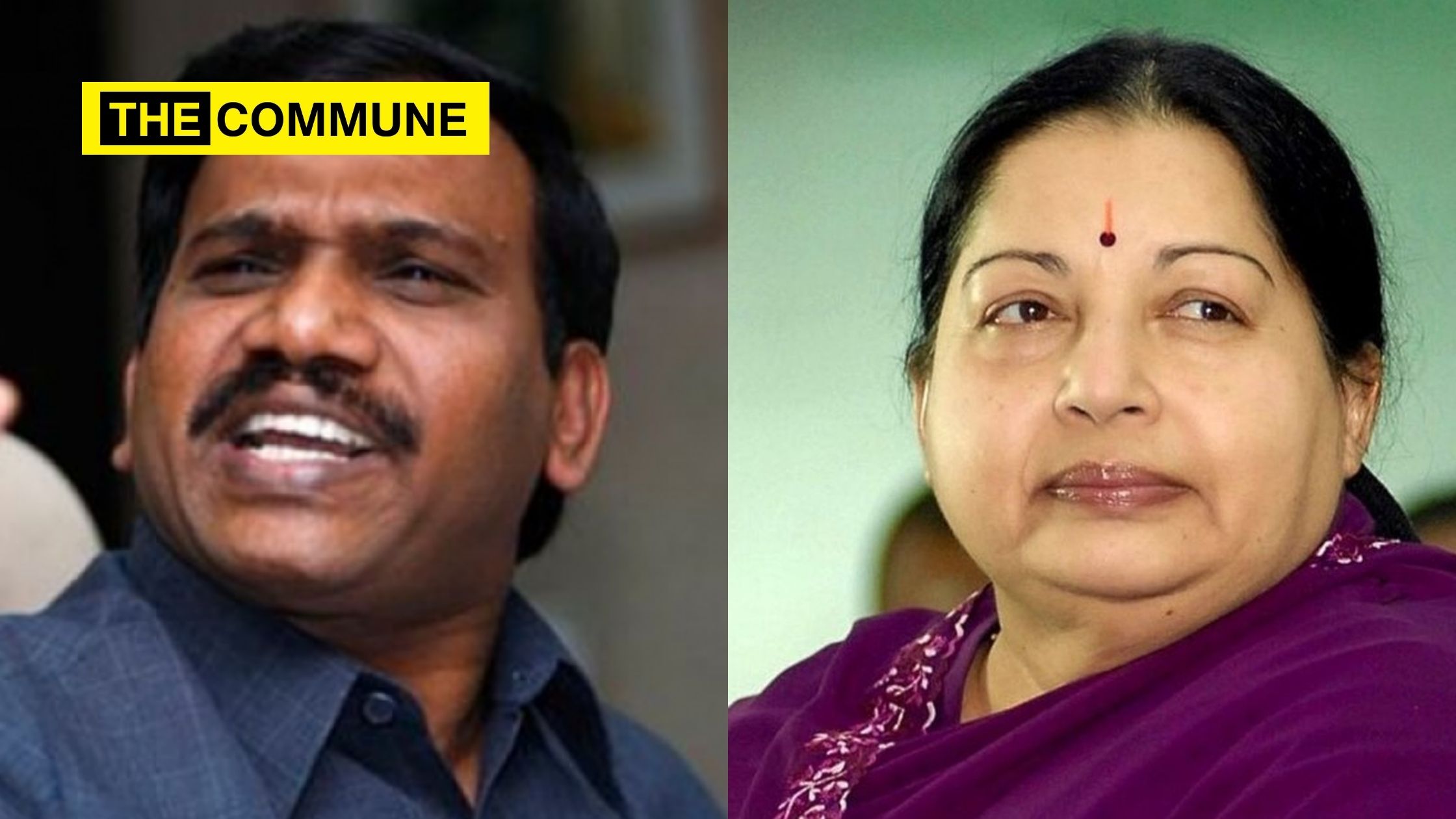
DMK MP A.Raja derogates late AIADMK leader Jayalalithaa on her death anniversary, calls CM EPS in singular

DMK MP from Nilgiris and 2G spectrum corruption accused A. Raja on the occasion of death anniversary of former Chief Minister of Tamil Nadu J. Jayalalithaa, made crass and derogatory remarks on her by calling the late leader as ‘Aatha’ derogatarily while speaking at a press meet.

Couple of days ago, Chief Minister Edappadi K Palaniswami during a press meet mentioned about DMK’s cases of corruption like the 2G spectrum case, Sarkaria Commission mentioning the party as one that indulged in scientific corruption, etc. Speaking about the 2G spectrum case CM Palaniswami said “2G spectrum case.. The biggest scam ever. A corruption to the tune of Tamil Nadu’s entire budget. He had said “everyone knows where A. Raja will be if the 2G case comes to a conclusion”.

A. Raja, who was the Telecom Minister in the Congress-led UPA regime is one of the prime accused along with DMK MP and the party’s women’s wing secretary Kanimozhi in the 2G spectrum corruption case that resulted in an estimated loss of ₹1,76,000 to the state exchequer. Though they have been acquitted by the special CBI court in Delhi, they are likely to be dragged to the Supreme Court in the next few weeks.

In response to this, on December 3, DMK MP A. Raja who is also a Deputy General Secretary of the party challenged CM Edappadi K. Palaniswami for a open debate in the presence of media at Fort. St. George (Tamil Nadu Secretariat).

“Your ‘Amma’ [Jayalalithaa] is a convict. ₹100 crores was seized from your Amma. ₹10 crores was seized from your Chinnamma [Sasikala]. The same Chinnama whose feet you licked and became Chief Minister is still in jail. The judgement says that Chinnamma is not the main convict but was made one by ‘Periya’ Amma [elder-referring to Jayalalithaa. Despite the you accuse of DMK, Stalin and 2G which is not appropriate. Either apologize or call me for a open debate at the Fort”, Raja said during the press meet on December 3.

Again on December 6, while meeting the press after participating in a protest against the farmer empowerment laws Raja spoke about the Chief Minister in a disrespectful manner. He said “I had called him [CM Palaniswami] for a debate 3 days back. You [media] please go ask him about Raja’s challenge. Please ask him if he is not ashamed. Tell him it doesn’t seem to befit the position he holds and urge him to call me for a debate.”

Responding to a reporters question, Raja said “Enforcement Directorate did not ask me anything. Who asked me? Who spoke about 2G corruption, Sarkaria commission? ED? Who spoke? You [in singular] only told right? CM only told right? I had told that we never did any corruption, we are not a corrupt party, we have the judgement, I told. I told that you only had indulged in corruption. I told that your ‘Aatha’ [in a derogatory slang] did corruption and went to jail.”

The DMK MP went on to call the late AIADMK supremo Jayalalithaa as “an unforgivable bandit who abused and murdered the Constitution” adding that she called Sasikala, Sudhakaran, Ilavarasi to her home to create shell companies and swindle money through them. Raja said that Jayalalithaa was an ‘asingam’ [a disgusting thing] in politics.

“You guys are running around with that “Aatha’s” photo. What is the meaning of that? Does it mean that you will also indulge in corruption like your “Aatha”.” DMK leader A. Raja asked and left.

The DMK leader even shared this video as a tweet with the caption “ஆத்தா மாதிரியே ஊழல்” (Corrupt just like Aatha)

Many DMK leaders like TRB Raaja too followed suit.

https://twitter.com/TRBRajaa/status/1335273939304476672

These distasteful remarks of A. Raja calling CM Palaniswami in singular and derogating the late leader Jayalalithaa has not gone down well with the general public. Many say that Raja’s remark is an expression of his fear about the 2G case being speeded up and the entry of Rajini into politics.

DMK leader A.Raja is not only know for being the prime accused in the 2G case but is also know for his foul language. Earlier, in a public meeting, he lambasted at a fellow cadre of the DMK and called him a ‘dog’ for raising slogans in the middle of his speech.

All States choose special borrowing window to meet the GST implementation shortfall

gst registration rates pm modi insurance premium

All the 28 States and 3 Union Territories with legislature have decided to go for Option-1 to meet the revenue shortfall arising out of the GST implementation. Jharkhand, the only remaining State, has now communicated its acceptance of Option-1. All the 3 Union Territories with Legislative Assembly who are members of the GST council have already decided in favour of Option-1.

The Government of India has set up a special borrowing window for the States & Union Territories who choose Option-1 to borrow the amount of shortfall arising out of GST implementation. The window has been operationalised since 23rd October, 2020 and the Government of India has already borrowed an amount of Rs.30,000 crore on behalf of the States in five instalments and passed it on to the States and Union Territories, who chose Option-1. Now the State of Jharkhand will also receive funds raised through this window starting from the next round of borrowing. The next instalment of Rs.6,000 crore will be released to the States/UTs on 7th December, 2020.

Under the terms of Option-1, besides getting the facility of a special window for borrowings to meet the shortfall arising out of GST implementation, the States are also entitled to get unconditional permission to borrow the final instalment of 0.50% of Gross State Domestic Product (GSDP) out of the 2% additional borrowings permitted by the Government of India, under Atma Nirbhar Abhiyaan on 17th May, 2020. This is over and above the Special Window of Rs.1.1 lakh crore. On receipt of the choice of Option-1, the Government of India has granted additional borrowing permission of Rs.1,765 crore to the State Government of Jharkhand (0.50 % of Jharkhand’s GSDP).

The amount of additional borrowing permission granted to 28 States and the amount of funds raised through special window and released to the States and Union Territories so far is annexed.

(Published from PIB)