Sultanpur police on Monday arrested five people, including four women, on allegations of attempting to convert villagers to Christianity in Nurpur village of Dhammaur area.
Police identified the arrested persons as Ram Keval Bharti, Kunta Devi, Nirmala Bharti, Janki Kori, and Shyam Kali Kori. Officials said they were found conducting a prayer meeting where a black LED screen and a pen drive containing Christian sermons were being used. They were also accused of distributing Bibles and other religious material.
According to reports, members of a Hindu organisation allegedly linked to the Rashtriya Swayamsevak Sangh (RSS) intervened in the meeting, leading to an argument. The group later informed police, after which Manoj Kumar Singh, a local RSS functionary from Dhammaur, lodged a complaint.
Based on the complaint, police registered a case under the Uttar Pradesh Prohibition of Unlawful Religious Conversion of Religion Act along with other relevant sections, said Dhammaur station officer Anju Mishra.
The incident comes amid a series of recent cases filed under the anti-conversion law in Uttar Pradesh, where police have been instructed to act strictly on complaints of forced or fraudulent religious conversions.
The dust around the Namakkal kidney trafficking scandal is yet to settle and allegations of liver trafficking have begun to be heard in the same district of Tamil Nadu.
In another disturbing case linked to alleged illegal organ transplantation, the Directorate of Medical and Rural Health Services (DMS) has directed health authorities in Namakkal district to investigate an alleged incident involving the sale of a liver by a 37-year-old woman from Pallipalayam. The woman reportedly underwent the procedure at a private hospital in Chennai, allegedly to clear her mounting debts.
According to officials, the case came to light through media coverage. While no formal complaint has been received so far, the DMS has taken the reports seriously and initiated a preliminary inquiry.
Media reports suggest that the woman was taken to Chennai by middlemen who initially promised her ₹8 lakh in exchange for donating a kidney. However, after being deemed unfit for kidney donation, she was reportedly persuaded to donate a portion of her liver instead, for ₹4.5 lakh.
The woman further alleged that her gall bladder was also removed during the procedure without her knowledge or consent. She had agreed to sell her organ in a desperate attempt to repay a high-interest loan. Having separated from her husband, she was the sole caregiver for her children at the time of the incident.
Speaking to the media on 18 August 2025, Health Minister Ma Subramanian confirmed his awareness of the case. He stated that two agents had already been booked in connection with a separate kidney trafficking case. The minister also emphasized that any additional hospitals found to be involved in organ trading would face strict action.
This case follows the recent exposure of an organ trafficking network in Namakkal district, which specifically targeted handloom workers, coaxing them into selling their kidneys. In response, the health department established a committee led by S. Vineeth, Project Director of the Tamil Nadu Health System Reform Programme, to investigate the matter.
Based on the findings of this committee, kidney transplant licenses of two hospitals, Cethar Hospital in Tiruchy and Dhanalakshmi Srinivasan Hospital in Perambalur, have been suspended due to their alleged involvement. Authorities have confirmed that further investigations are underway to uncover the full extent of the racket in the district.
As anticipated, Rajinikanth’s latest dud offering Cooliesaw a noticeable drop in box office performance by its fifth day, 18 August 2025 (Monday). According to Sacnilk reports, the film has grossed ₹385 crore worldwide, slightly less than the ₹400+ crore figure claimed by producer Sun Pictures. Signs of a downturn were already evident by Sunday, and the trend continued into Monday, with poor theater occupancy and lukewarm ticket sales on platforms like BookMyShow.
On Monday, Coolie, which also features major stars like Nagarjuna, Aamir Khan, Upendra, and Shruti Haasan, managed to sell only 62,000 tickets on BookMyShow between 6 AM and 3 PM. This translates to roughly 16,000 tickets per hour, or about 118 tickets per minute a notable slowdown for a superstar-led film.
Day 5 Occupancy: Heavy Drop
On its fifth day, the film recorded an overall morning occupancy of just 23.5% for the Tamil version, nearly halving from Sunday’s 45.4%. The drop was even more significant for the Hindi version, titled Coolie: The Powerhouse, which reported only 6.3% occupancy a staggering 64% drop from the previous day.
Morning Show Occupancy (Tamil Version):
Day 1 (Thursday): 81.95%
Day 2 (Friday): 63.8%
Day 3 (Saturday): 46.5%
Day 4 (Sunday): 45.47%
Day 5 (Monday): 23.5%
Morning Show Occupancy (Hindi Version):
Day 1 (Thursday): 25.3%
Day 2 (Friday): 30.2%
Day 3 (Saturday): 17.2%
Day 4 (Sunday): 17.7%
Day 5 (Monday): 6.3%
In terms of ticket sales, Coolie sold only 62,000 tickets on its first Monday just about 30% of what Amaran achieved on the same day. For comparison, Leo sold 480,000 tickets and Jailer topped the charts with 638,000 tickets on their respective first Mondays.
Box Office Trend: Steep Drop Over the Weekend
Coolie‘s box office momentum began to falter by Sunday, with estimated collections between ₹35-36 crore on Day 4, a significant drop from the ₹65 crore it raked in on opening day. A 65% fall in collections over just four days is rare for a film headlined by a major star like Rajinikanth, especially with minimal competition, War 2, being the only notable release and receiving mixed reviews.
On Sunday, the Tamil version of Coolie saw 64% occupancy, while the Hindi version managed only 42.6%.
Is ‘Coolie’ Headed Towards a Hit Status?
Made on a reported budget of ₹350 crore, Coolie has already recovered around 55% of its cost within three days. However, to be considered a true hit, it would need to reach ₹700 crore in net domestic collections an increasingly unlikely goal given its current pace and declining public interest.
Hindi Version: Underwhelming Numbers So Far
The Hindi version of Coolie has had a slow run at the box office so far. Its four-day net total stands at ₹19.70 crore, translating to around ₹23.24 crore gross. The film is struggling in the Hindi belt, with competition from War 2 eating into its screen count.
Coolie Hindi Version Daily Box Office (Net):
Day 1: ₹4.5 crore
Day 2: ₹6.3 crore
Day 3: ₹4.25 crore
Day 4: ₹4.65 crore
Total (Net): ₹19.70 crore
Total (Gross): ₹23.24 crore
Despite its stellar cast and hype, Coolie is facing challenges at the box office, with mixed word-of-mouth and a sharp drop in audience turnout raising concerns about its long-term performance.
Congress leader Rahul Gandhi has been making dramatic accusations after accusations of voter fraud and “vote theft/vote chori” against the Election Commission of India (ECI). All those claims fell apart within a few hours as multiple claims he presented were challenged by verified information and on-ground investigations.
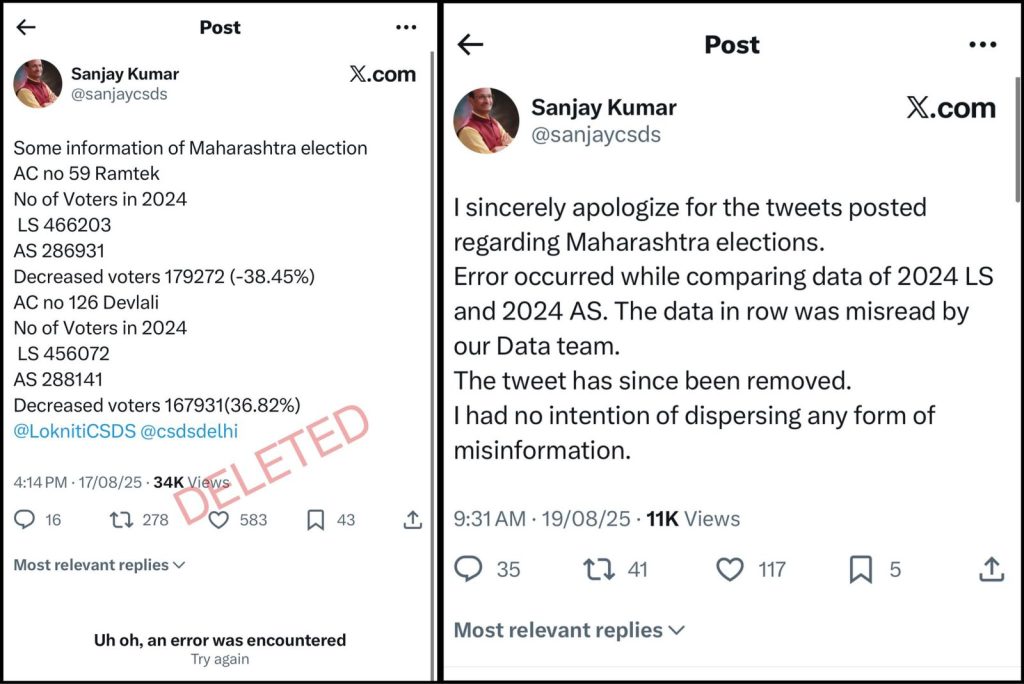
In such a situation, Lokniti-CSDS Co-director Sanjay Kumar has apologised after posting erroneous data regarding the Maharashtra Lok Sabha and Assembly elections on social media, two days after his tweets sparked controversy.
On 17 August 2025, Sanjay Kumar posted explosive figures suggesting a 38% drop in voters in Maharashtra’s Ramtek and Devlali constituencies between the 2024 Lok Sabha and Assembly elections.
Ramtek (AC 59): Alleged decrease of 1,79,272 voters (-38.45%)
Devlali (AC 126): Alleged decrease of 1,67,931 voters (-36.82%)
The tweets drew attention as opposition parties, particularly the I.N.D.I. Alliance, have been alleging large-scale voter discrepancies in Maharashtra. Social media users accused Kumar of furthering these claims with unverified numbers.
Following fact-checks that disproved the figures, Kumar deleted the posts and issued an apology on 19 August 2025. In a statement on his X handle, he wrote: “I sincerely apologize for the tweets posted regarding Maharashtra elections. Error occurred while comparing data of 2024 LS and 2024 AS. The data in row was misread by our Data team. The tweet has since been removed. I had no intention of dispersing any form of misinformation.”
I sincerely apologize for the tweets posted regarding Maharashtra elections. Error occurred while comparing data of 2024 LS and 2024 AS. The data in row was misread by our Data team. The tweet has since been removed. I had no intention of dispersing any form of misinformation.
Critics online alleged that the episode was part of a larger attempt to undermine the Election Commission by circulating unverified data. Some pointed to Kumar’s past election analyses, accusing him of bias against the Bharatiya Janata Party.
The apology is in, and Sanjay Kumar is out. Incidentally, when was the last time this protégé of Yogendra Yadav ever got anything right? In all his projections in the run-up to every single election, the BJP is supposedly losing—and when the reverse happens, he turns up on TV… https://t.co/QXJvUi6d3B
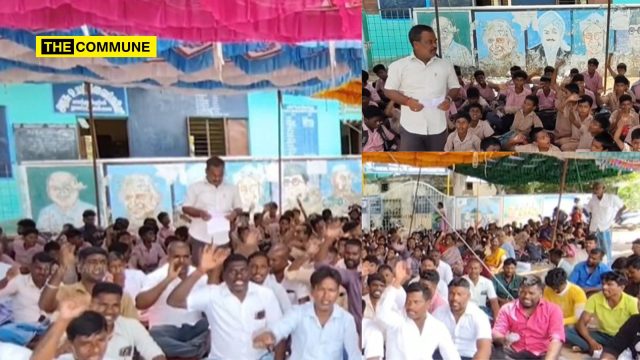
On 18 August 2025, students and local fishermen organized a sit-in protest outside the school in Samanthanpettai Fishing Village near Nagapattinam, urging authorities to construct a dedicated building for the village’s high school.
Originally established in 1931 as a municipal primary school, the institution was upgraded to a middle school and then to a high school in 2021. Currently, the school accommodates 189 students, 127 in high school and 62 in primary classes all within the same premises.
For the past four years, residents have been calling for a separate facility for the high school, citing overcrowded classrooms and the inability to implement smart classroom infrastructure due to limited space.
In support of this long-standing demand, students boycotted classes, and fishermen joined the protest outside the school. Discussions were held with Nagapattinam Taluk District Magistrate Nilayatakshi, who assured the protesters that a separate high school building would be constructed, though she noted that it would require time to complete.
Despite the assurance, both the students and fishermen continued their protest. According to District Principal Education Officer Ravichandran, the issue has been officially brought to the attention of both the District Collector and the state’s education department.
The demonstration had a significant impact on the local economy as well over 3,000 fishermen refrained from going out to sea, resulting in more than 250 boats remaining docked along the shore.
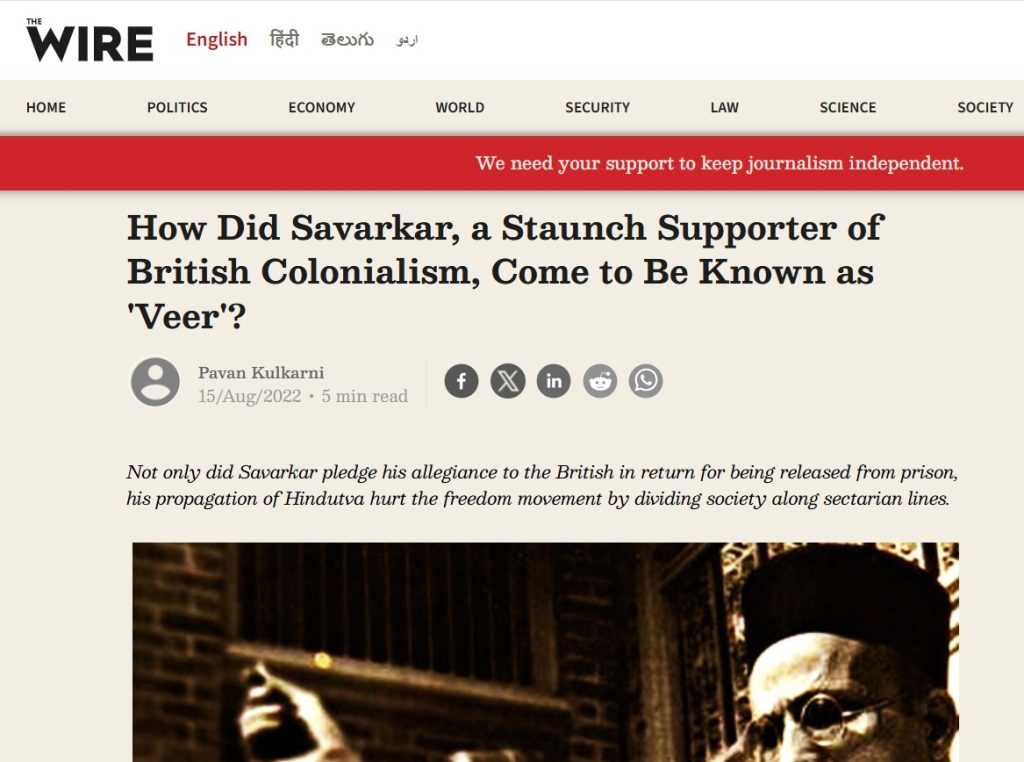
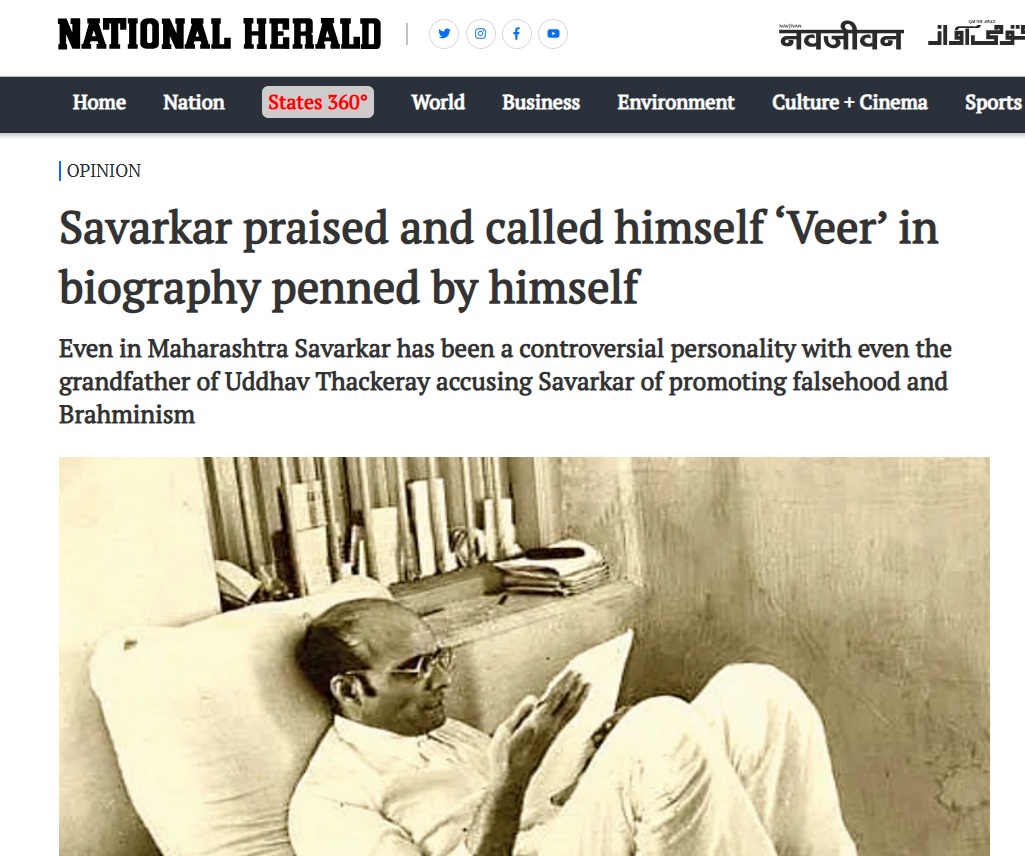
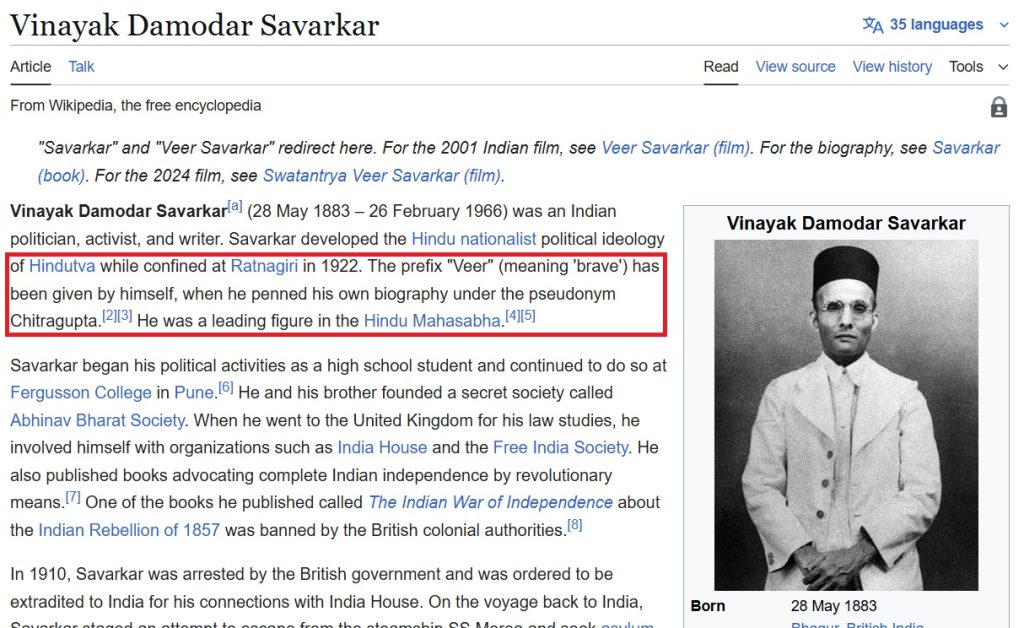
For decades, a favorite propaganda line of the Left and Congress ecosystem has been that Vinayak Damodar Savarkar bestowed upon himself the title Veer (brave) or Swatantryaveer (brave freedom fighter). According to this claim, Savarkar wrote his own biography under the pseudonym Chitragupta and slyly referred to himself with this honorific. This narrative has been gleefully repeated in Congress outlets like National Herald and then picked up by portals such as Wikipedia and the likes of The Wire & Scroll to brand Savarkar as vain and self-promoting.
But a closer look at the primary sources shatters this Goebbelsian lie.
The Origin of the Propaganda
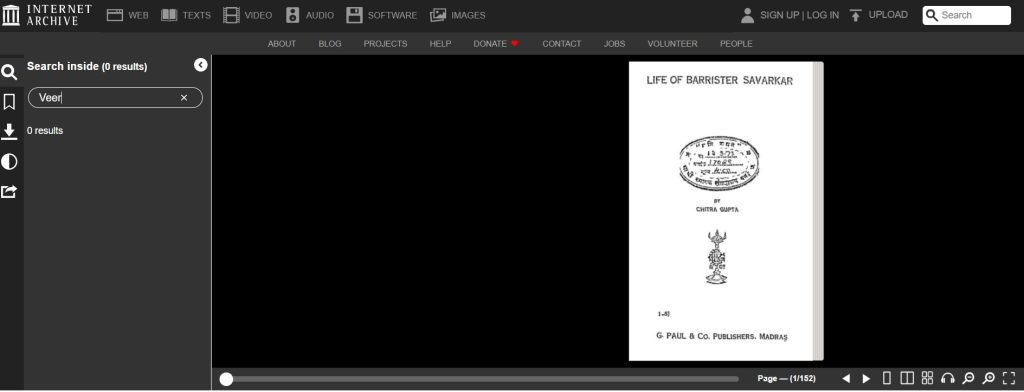
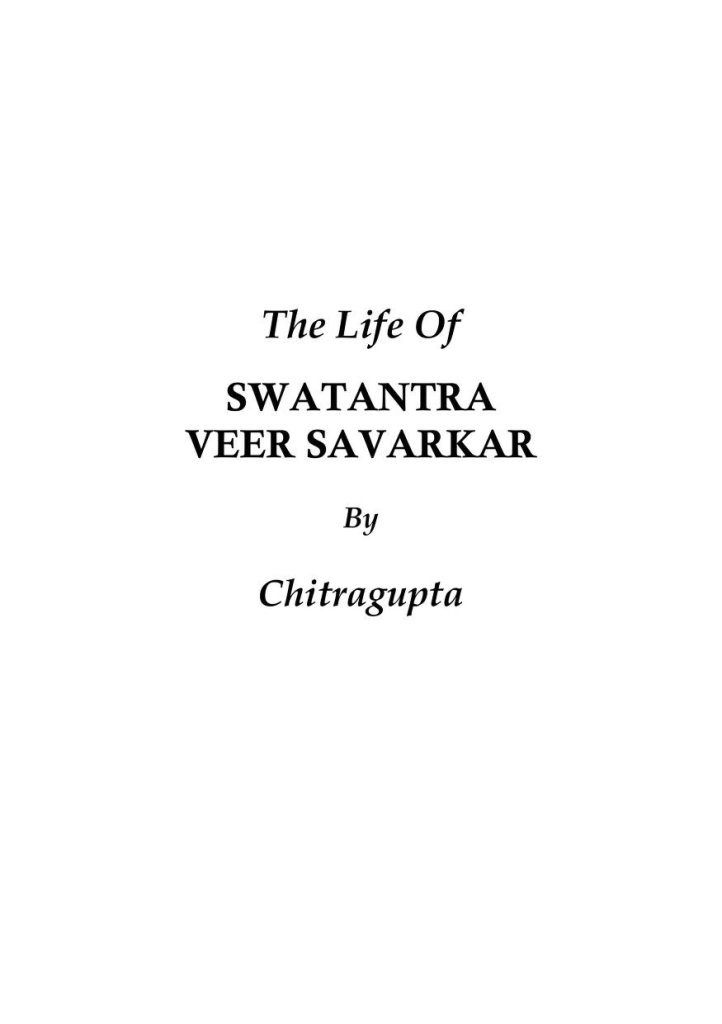
The entire accusation hinges on a single book: The Life of Barrister Savarkar, published under the pseudonym Chitragupta. Leftist commentators insist that Savarkar himself wrote this work, and in the process “crowned himself” Veer.
Yet the very text proves the opposite. The original edition makes no reference whatsoever to the title Veer or Swatantryaveer. Not once.
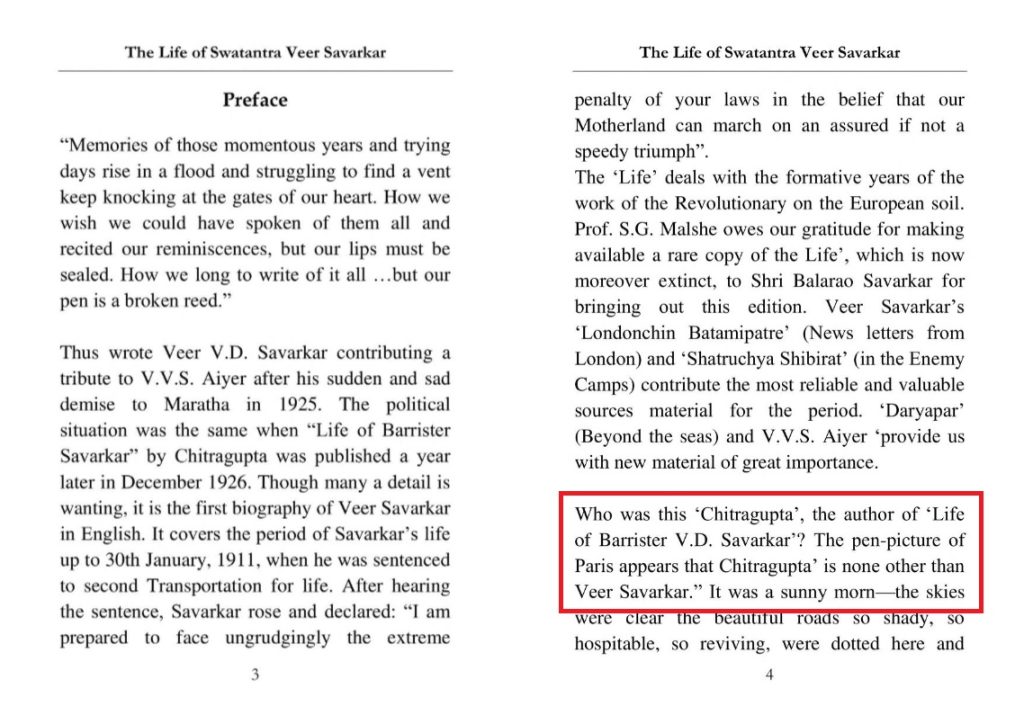
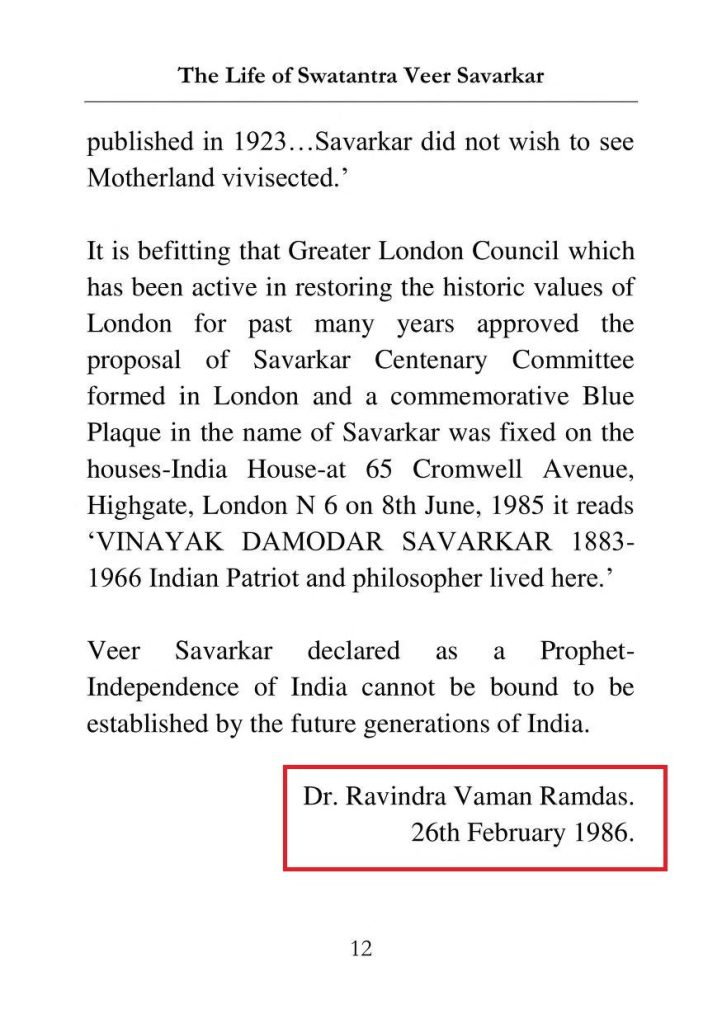
The only time such a title appears is in a much later edition, published in 1986, decades after Savarkar’s death. There, in the preface written by Dr. Ravindra Vaman Ramdas, one finds the speculation: “Who was this Chitragupta, the author of The Life of Barrister VD Savarkar? The pen-picture of Paris appears that Chitragupta is none other than Veer Savarkar.”
In other words, the Veer title was not self-assigned by Savarkar but inserted in a retrospective preface written long after his death.
Additionally, Dr. Ramdas speculates that “Chitragupta” might have been Savarkar himself, (he uses the word ‘appears’) – this is his personal opinion, not a fact.
There is zero historical evidence that Savarkar wrote under this pseudonym. In fact, some scholars initially believed “Chitragupta” was C. Rajagopalachari, as the book was published in Madras (Chennai).
Evidence Proves Was Title Bestowed by Others
The propaganda also ignores the contemporary evidence that the title Swatantryaveer was already in circulation years before the Chitragupta biography.
In February 1924, Balarao Savarkar’s Ratnagiri Parva (authored under the pseudonym Kavi Vaishampaayan) and Wamanrao Joshi, dramatist of Ranadundubhi, both referred to Savarkar as Swatantryaveer.
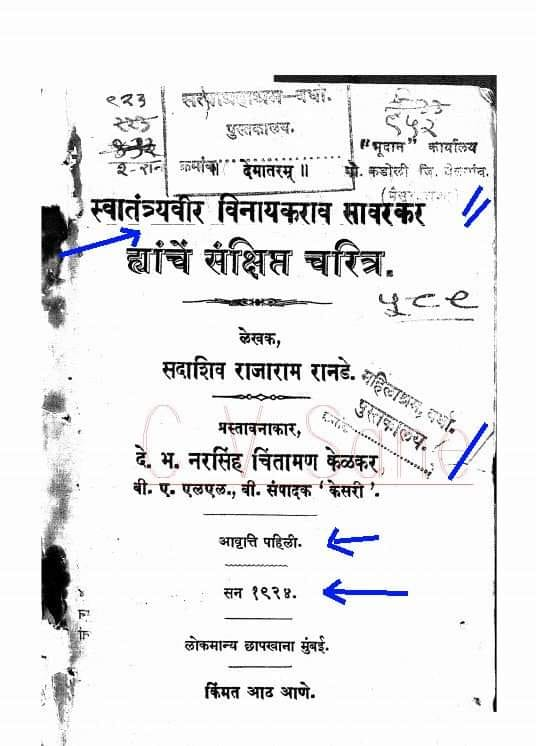
On 15 August 1924, a biography of Savarkar written by Sadashiv Rajaram Ranade, with a preface by N.C. Kelkar (Tatyasaheb – a prominent freedom fighter and associate of Bal Gangadhar Tilak), consistently uses the title Swatantryaveer page after page. This book was published immediately after Savarkar’s release from Ratnagiri jail, when he was under strict political restrictions.
Image Source: QuoraImage Source: Quora
The Ghadar Party, a revolutionary group active in the US and Canada, referred to Savarkar as a brave leader in their 1917 Urdu publications demanding his release from British imprisonment.
After the arrest of 27 years young master of indian revolutionaries at London in 1910, many of his core associates disappeared & continued Savarkar brothers “Abhinav Bharat” in the name of “Gadar party” in America.
The text reads, “Giving rebellious speeches at places like Nasik and Pune in India from January 1906 to May 1906
Since Veer Savarkar was in Europe during those days, a telegram was sent to London for him, and he was arrested at Victoria Station on 31 March 1910.
He was tried and finally a decision was given to send him back to India. Although according to English law, he could have been sent to India only in some way. His case should have been held in London. But who would listen to the pamphlets? The British themselves are law makers and give their own judgments. “Veer Savarkar” proved with a very strong argument that his case should be held in England only.
But no one listened to him. But the benefit of this was that his case was published in all the newspapers of Europe. The matter became international. The evils of the British rule in India started becoming famous in the whole of Europe. Finally, he was put on the ship “Moriya” to be sent back to India.
Seeing this cruelty, Veer Savarkar became very angry. He tried a few tricks, but nothing worked. When the ship reached Marseille, he got an idea and Savarkar went to the bathroom on the pretext of taking a bath. The guards were standing at every door unaware. Savarkar took off his clothes, applied soap on his body and came out forcefully from the small window.
– Savarkar teacher Guruvarya Chandrashekhar Sane”
This predates the Chitragupta biography by nine years, demolishing the claim that Savarkar invented the title for himself.
These written records demonstrate that the honorific was bestowed by peers and admirers, not by Savarkar himself.
How the Leftist Media Perpetuated the Lie
Despite clear evidence, left-leaning journalists and historians continued spreading misinformation. The most notorious ones include:
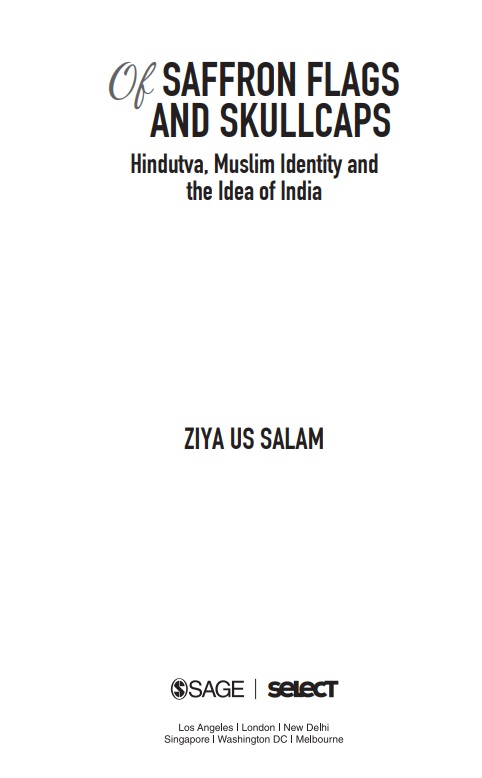
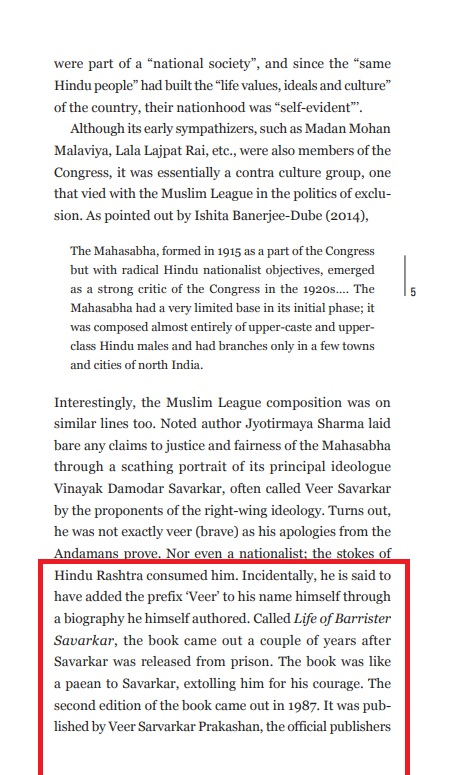
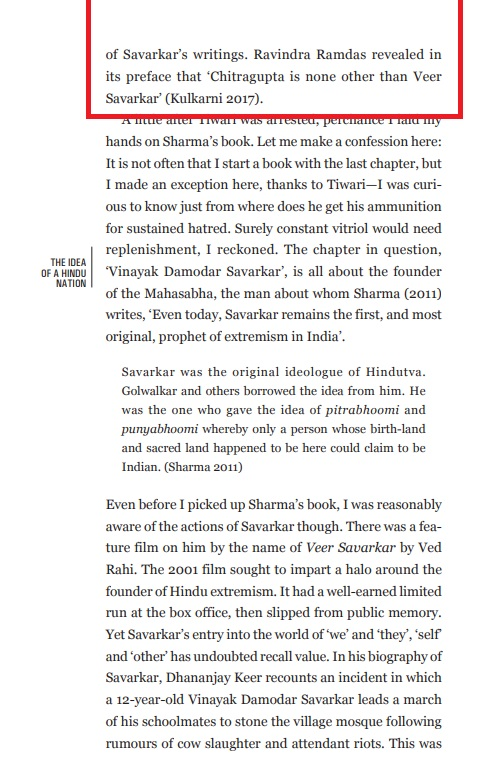
Ziya Us Salam (2018) – In his book Of Saffron Flags and Skullcaps, he vaguely claimed that Savarkar “is said to have added” the prefix ‘Veer’ himself, without providing any proof.
Pavan Kulkarni (The Wire, 2022) – Wrote an article titled “How Did Savarkar, a Staunch Supporter of British Colonialism, Come to Be Known as ‘Veer’?”, falsely asserting that Savarkar glorified himself in the Chitragupta biography. He writes, “A book titled Life of Barrister Savarkar authored by Chitragupta was the first biography of Savarkar, published in 1926. Savarkar was glorified in this book for his courage and deemed a hero. And two decades after Savarkar’s death, when the second edition of this book was released in 1987 by the Veer Savarkar Prakashan, the official publisher of Savarkar’s writings, Ravindra Ramdas revealed in its preface that “Chitragupta is none other than Veer Savarkar”.
National Herald (2020) – Published an article by Raju Parulekar, who misquoted the book’s title as ‘The Life of Veer Savarkar’ (the original was ‘The Life of Barrister Savarkar’), further muddying facts.
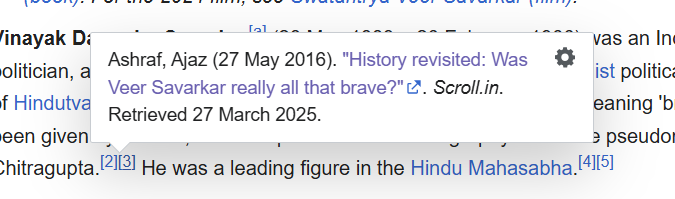
Wikipedia’s False Citation – The Wikipedia entry on Savarkar uncritically repeats the claim, citing The Scroll and National Herald – neither of which provides primary evidence.
How the Myth Was Weaponised
Despite the textual evidence, Leftist publications like National Herald, The Wire, Scroll, etc spun the story that Savarkar invented the title himself. Wikipedia and other portals lazily cite this secondary claim instead of examining the primary text.
The tactic is classic: repeat a distortion until it becomes accepted as “history.” What begins as a speculative remark in a 1986 preface is weaponised into a character-assassination tool, branding Savarkar as arrogant, vain, and self-glorifying.
The Left’s attempt to smear him with this falsehood only exposes their method: take a stray remark, twist it out of context, and repeat it endlessly until it masquerades as fact.
The truth is simple: Swatantryaveer was not self-assumed vanity – it was the recognition of a nation.
(This article was based on an X thread by Amit Schandillia)
Subscribe to our channels on Telegram, WhatsApp, and Instagram and get the best stories of the day delivered to you personally.
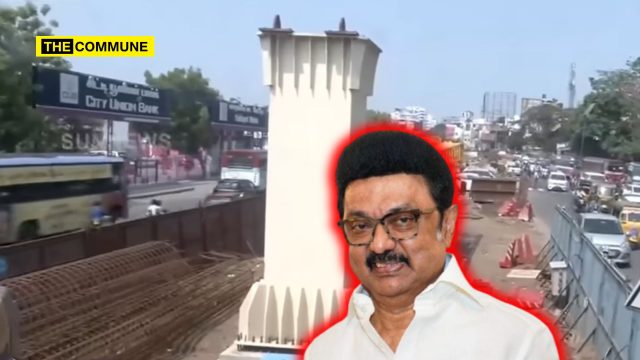
The Tamil Nadu Highways Department’s 3.2-km Teynampet-Saidapet flyover project has raised eyebrows due to its staggering construction cost of ₹195 crore per kilometre – nearly 50% higher than similar elevated corridors built by the National Highways Authority of India (NHAI).
Cost Comparison: Teynampet-Saidapet Flyover vs. NHAI Projects
NHAI’s 6-lane Elevated Corridors (TN & other states): ₹120-130 crore/km
Let’s take a look at the costing of the recently completed flyovers in Tamil Nadu.
The 4-lane Koyambedu flyover that was completed in 2021 cost ₹95 crore/km
The 4-lane Medavakkam flyover that was completed in 2022 cost ₹100 crore/km.
The 6.9km 4-lane Madurai-Natham Road also cost ₹100 crore/km.
Inflated project cost to accommodate bribery?
The average per km construction cost of 3.2 km Teynampet-Saidapet flyover project in Chennai pegged at Rs. 195 crore. Total project cost is Rs. 621 Cr.
State officials cite soil stabilisation (due to an underground metro tunnel), utility relocations on congested Anna Salai, and specialised construction techniques to reduce load on pillars. However, industry experts question the justification, as:
NHAI projects follow stricter design and higher standards but remain cheaper.
Even upcoming NHAI corridors (e.g., Maduravoyal-ORR, ORR-Sriperumbudur) are priced at ₹160 crore/km, still 18% cheaper than Teynampet’s ₹195 crore/km.
The Teynampet flyover’s budget has surged 29% in two years. It was pegged at ₹482 crore in April 2022, which increased to ₹525 crore in March 2023 and then jumped further to ₹621 crore in 2024.
Highways authorities argue that micro-piling, geosynthetic reinforcements, and metro tunnel safety measures inflated costs. However, critics point out that state-funded projects should typically be cheaper than NHAI’s PPP models, raising concerns over estimation accuracy and transparency.
While the Teynampet flyover promises to cut travel time from 40 minutes to 10, its exceptionally high cost compared to national standards has sparked debate over fiscal prudence in infrastructure spending. With 30% work completed, scrutiny over expenditure is likely to intensify.
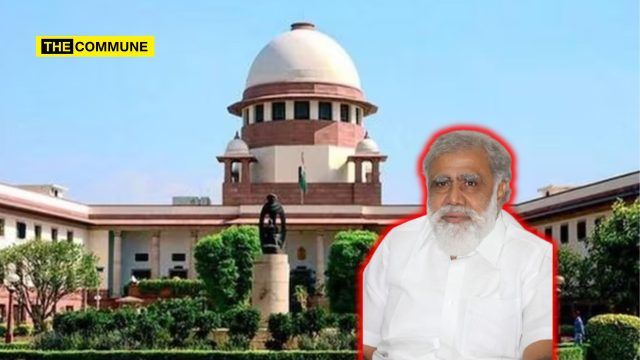
The Supreme Court on Monday stayed a Madras High Court order that had reversed the discharge of Tamil Nadu Rural Development Minister I Periyasamy, his wife P. Suseela, and two sons – Palani MLA P. Senthilkumar and P. Prabhu – from 2012 disproportionate assets (DA) case and directed them to face trial.
A Bench led by Justice Dipankar Datta issued notice to the Tamil Nadu government on the petition filed by Periyasamy and his family, who had challenged the High Court’s April 28 ruling. The case has been tagged with another petition filed by the Minister that is already pending before the apex court.
The High Court, through a suo motu intervention by Justice N. Anand Venkatesh, had earlier set aside a 2017 trial court order that discharged the Minister and his family, and ordered that the DA case proceed to trial.
Periyasamy, represented by senior advocate V. Giri and advocate Ram Sankar, argued that the case was politically motivated and foisted on him during the AIADMK regime in 2012. He submitted that similar allegations relating to his income between 1996 and 2001 had been dismissed in 2017, with neither the High Court nor the Supreme Court interfering.
The petition contended that the prosecution had manipulated figures by duplicating calculations of income tax returns, thereby inflating the net income. It claimed that the Income Tax Department had already scrutinised and accepted the family’s returns, and that no undisclosed properties or money were found.
The case, registered by the Directorate of Vigilance and Anti-Corruption (DVAC) in 2012, accused Periyasamy and his family of amassing assets disproportionate to known sources of income. The Minister has insisted that his wife and sons are majors with independent earnings.
In March 2023, a Special Court for corruption cases had discharged him, citing lack of sanction under Section 197 of the Code of Criminal Procedure. However, the High Court later revived the case, ruling that the discharge was improper.
The apex court also noted that it had earlier, in April 2024, stayed proceedings in a separate corruption case involving Periyasamy. That case concerned the alleged allotment of a Tamil Nadu Housing Board plot in 2008–09 to a security officer of then Chief Minister M. Karunanidhi, when Periyasamy was Housing Minister.
The Supreme Court will now hear both petitions together.
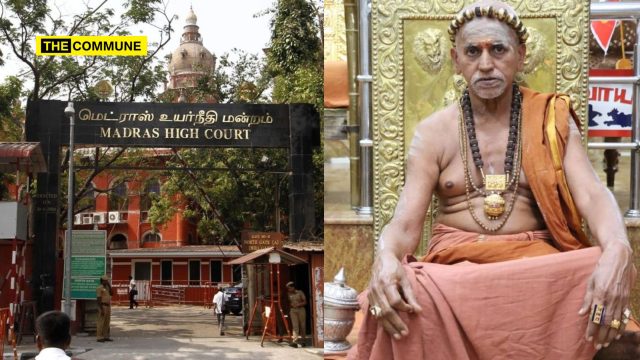
The Madras High Court has directed the police not to initiate any harsh measures against Madurai Adheenam in connection with a case filed over alleged inflammatory and provocative statements. The controversy arose after he claimed that a road accident involving his vehicle was actually an assassination attempt, supposedly carried out by individuals wearing skull caps and beards, with a possible link to Pakistan.
The incident occurred while he was en route to attend the Saiva Siddhanta conference held in May at Kattankulathur, near Chennai. Following this, a petition was filed and a FIR registered by the Cyber Crime Wing of the Greater Chennai City Police lodged by advocate R. Rajendiran, on 24 June, citing various provisions of the Bharatiya Nyaya Sanhita (BNS). These include Section 192 (intentional provocation to incite riots), Section 196(1)(a) (inciting religious hatred), Section 353(1)(b) (spreading public mischief), and Section 353(2) (issuing false statements to fuel communal tensions).
Madurai Adheenam approached the High Court seeking to have the case quashed. The matter was heard by Justice Satish Kumar, who granted the police time until 15 September to submit their response. In the interim, the court ordered that no stringent action be taken against Adheenam.
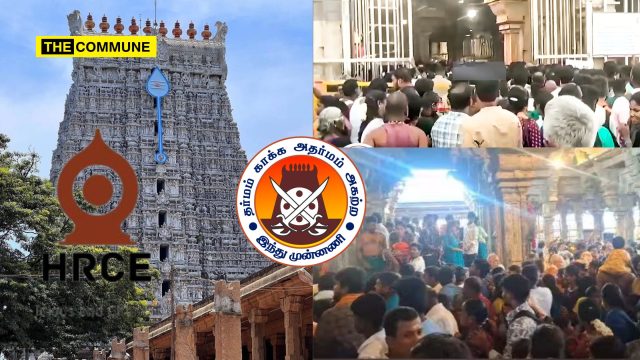
The Hindu Munnani has strongly criticised the Tamil Nadu Hindu Religious and Charitable Endowments (HR&CE) Department for allegedly enabling select individuals to bypass regular queues at the Arulmigu Subramania Swamy Temple in Tiruchendur by using the Shanmuga Vilasam entrance reportedly through VIP referrals or monetary influence. This has led to growing resentment among the general devotees and even sparked tension between pilgrims and police.
With the temple witnessing unusually high footfall due to a string of holidays including Independence Day, Aadi Krithigai, and Krishna Jayanthi crowd pressure peaked recently. On one day alone, over 1.2 lakh devotees visited the temple. Pilgrims queued from as early as 1 AM, standing in both the general and ₹100 special queues for hours before getting darshan.
However, frustration escalated when around 6:30 AM, a crowd of more than 500 devotees waiting near the Shanmuga Vilasam Mandapam observed a small group being allowed through a newly installed iron gate by security guards. When the rest were denied entry, tempers flared. The crowd reportedly forced open the barricade and surged into the mandapam. Police arrived shortly after and struggled for an extended period to disperse and control the situation.
Reacting on social media, Hindu Munnani condemned the HR&CE’s alleged misuse of the VIP darshan route, posting on X, “Long wait for darshan in Tiruchendur – Devotees protest… Yesterday, while the public was waiting in line for darshan at the Tiruchendur Arulmigu Subramaniya Swamy Temple, some members of the public noticed that a few people were being let into the temple for darshan through the Shanmuga Vilasam gate. The public demanded that they also be allowed in and attempted to enter the temple by jumping over the barricades. For some time now, there have been regular complaints from the public on social media, often accompanied by videos, alleging that officials from the Hindu Religious and Charitable Endowments (HR&CE) department make lakhs of devotees wait in line while only a select few are taken on a separate path for “VIP darshan.”
Yesterday, as people were waiting in line for darshan, they saw some people being allowed into the temple through the Shanmuga Vilasam gate. In response, thousands of people jumped the barricades and attempted to enter the temple, demanding to be allowed in as well. In the ensuing chaos, if anyone had been injured, who would have taken responsibility? A few months ago, a devotee who was waiting in line suffocated to death in this very same Tiruchendur temple. The public is now questioning why the HR&CE department has not taken any action against the individuals who are reportedly accepting money or VIP recommendations to escort a select few for darshan. They are also asking whether the officials themselves are complicit in this practice.
Devotees are asking whether appropriate action will be taken against the HR&CE officials who make devotees wait for hours, causing them hardship and provoking them to protest. Will action be taken against the HR&CE officials who make devotees wait for hours and provoke protests at Tiruchendur? Is it enough for Minister Sekar Babu to be called “Seyal Babu” (Active Babu), or will he actually take action?”
திருச்செந்தூரில் தரிசனத்திற்கு பல மணி நேரம் காத்திருப்பு – பக்தர்கள் போராட்டம்..
நேற்று திருச்செந்தூர் அருள்மிகு சுப்ரமணிய சுவாமி திருக்கோவிலில் தரிசனத்திற்காக பொதுமக்கள் வரிசையில் காத்திருந்தபோது சண்முக விலாசம் வாயில் வழியாக சிலரை கோவில் தரிசனத்திற்கு அனுப்புவதை கண்ட பொதுமக்கள்… pic.twitter.com/HoPDh2VuBM

 In other words, the Veer title was not self-assigned by Savarkar but inserted in a retrospective preface written long after his death.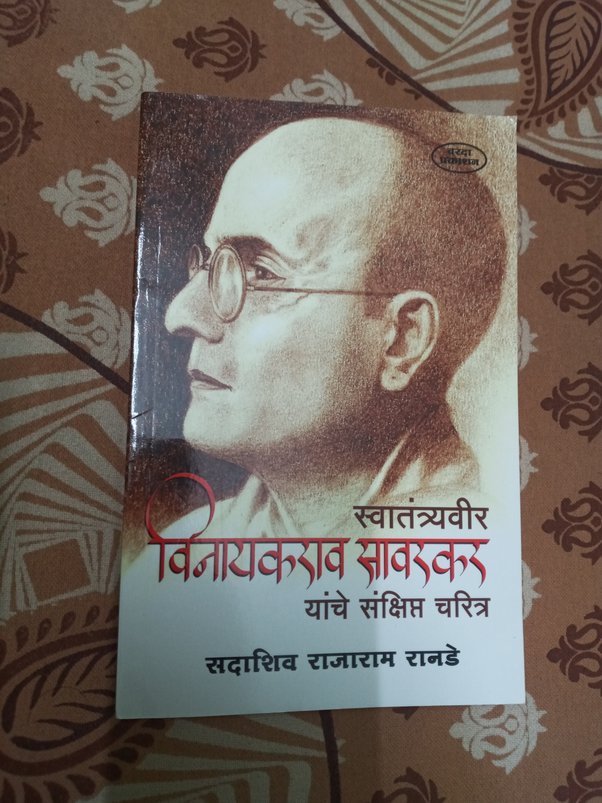
 How the Myth Was Weaponised