Home Blog Page 165

Supreme Court Dismisses NCPCR Petition Challenging Reduced Marriage Age For Muslim Girls, Upholds Order Allowing 15-Year-Old Muslim Girl To Marry

The Supreme Court on Tuesday dismissed a plea filed by the National Commission for Protection of Child Rights (NCPCR) challenging the position that a minor Muslim girl can marry a person of her choice after attaining puberty.

A bench of Justices B.V. Nagarathna and R. Mahadevan questioned the locus standi of the child rights body in filing the special leave petition (SLP) against the Punjab and Haryana High Court order that had held that a Muslim girl can marry a person of her choice after attaining the age of 15.

The counsel representing the NCPCR argued that the SLP raised a question of law whether a minor Muslim girl can enter into a valid marriage on the basis of personal law. However, the apex court rejected the child rights body’s plea, observing that the impugned order sought to extend protection to the two individuals and the NCPCR had no locus standi to challenge such an order.

Dismissing the plea, the Justice Nagarathna-led Bench said it would not keep open the question of whether the age of marriage for a Muslim girl under the personal law conflicted with other laws of the land, including the Protection of Children from Sexual Offences (POCSO) Act.

“If the High Court, in exercise of its power under Article 226, seeks to extend protection to two individuals, the NCPCR has no locus standi to challenge such an order,” it observed. Earlier, the Supreme Court had issued notice to the government and others on the NCPCR’s plea to decide upon the question of law, clarifying that its decision not to stay the impugned order of the Punjab and Haryana High Court may not be used as precedent.

It had opined that if the P&H High Court judgment — which held that a Muslim girl aged 15 years can enter into a legal and valid marriage as per personal law — was stayed, the girl might be restored to her parents against her wishes. The plea filed by the NCPCR said the Punjab and Haryana High Court erred in ignoring the fact that sexual intercourse with a minor girl below the age of 18 years is sexual assault as per the Protection of Children from Sexual Offences (POCSO) Act and this legal position cannot be changed due to marital status of the child and that whether on the facts and in the circumstances of the case and in law.

In August last year, Solicitor General Tushar Mehta stated that diverse views were being taken by different HCs across the country, resulting in the filing of multiple special leave petitions before the apex court on the same issue and pleaded for an urgent adjudication.

The P&H High Court order came on a habeas corpus petition filed by a 26-year-old man against the detention of his 16-year-old wife in a children’s home in Panchkula. It had noted that such a marriage would not be void in terms of Section 12 of the Prohibition of Child Marriage Act 2006.

-IANS

Subscribe to our channels on TelegramWhatsApp, and Instagram and get the best stories of the day delivered to you personally.

“Are They Mentals?”, Asks DMK MLA John Ebenezer During Public Interaction In RK Nagar When Women Complained About Not Getting ₹1,000

john ebenezer dmk

DMK’s R.K. Nagar MLA, J. John Ebenezer, has stirred controversy after a video surfaced showing him making derogatory remarks towards local residents, reportedly asking, “Are they mental?” during a heated exchange. The incident occurred when he was visiting his constituency to encourage participation in the upcoming “Ungaludan Stalin” (With You, Stalin) government outreach camp.

As part of the campaign, Ebenezer was explaining the scheme’s benefits and government services to residents. During his visit on 19 August, a woman confronted the MLA, questioning why she had not received the ₹1,000 payment under the Magalir Urimai Thogai (Women’s Rights Grant) scheme.

More women from the locality joined in, expressing frustration that despite most residents receiving the benefit, several women on their street were left out. In response, some DMK cadre accompanying the MLA reportedly remarked that those left out lived in well-built, multi-storey homes and therefore did not qualify for the grant.

A local youth also raised the same concern, stating that no one in his area had received the financial assistance. Ebenezer replied that the issue could be resolved at the upcoming camp, where they could submit a petition for inclusion.

However, the youth pushed back, questioning the timing and sincerity of the initiative. He asked whether residents would only be heard close to elections and expressed skepticism over receiving any funds before the current government’s term ends in seven months.

This exchange escalated tensions, with Ebenezer reportedly stating that women who own homes or use school buses would not be eligible for the grant. When tempers flared further, the MLA allegedly insulted the residents by calling them “mentals.”

Residents claim that Ebenezer also seized and destroyed a phone belonging to a person who was recording the incident. The video, however, had already begun circulating, triggering outrage in the area and sparking criticism against the MLA’s conduct.

(With inputs from Samayam Tamil)

Subscribe to our channels on TelegramWhatsApp, and Instagram and get the best stories of the day delivered to you personally.

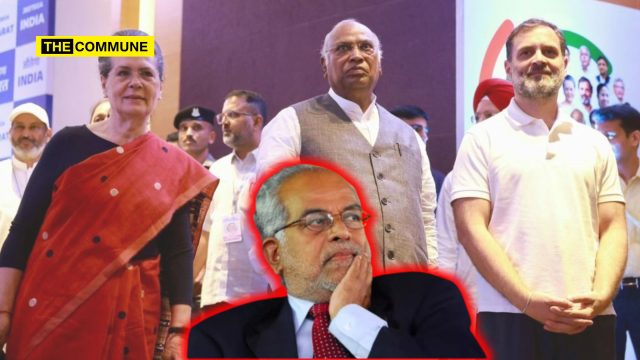
Struck Down Anti-Naxal Operation, Dismissed Higher Compensation For Bhopal Gas Tragedy Victims, Against India Selling Arms To Israel: The Politics Of Former Supreme Court Judge And INDI Alliance’s Vice President Candidate Sudershan Reddy

justice sudershan reddy vice president vp candidate opposition indi alliance congress

The Opposition I.N.D.I. bloc has nominated former Supreme Court judge, Justice Sudershan Reddy, for the Vice Presidency. It is noteworthy that the NDA has nominated CP Radhakrishnan who is presently serving as Governor of Maharashtra.

This is being hailed by its leaders as a masterstroke. They present him as a “progressive jurist” and a “champion of the Constitution.”

Who Is Justice Sudershan Reddy?

Born on 8 July 1946, into a farmer’s family in Akula Mylaram village (then in Rangareddy district, now Telangana). He obtained his law degree from Osmania University, Hyderabad, in 1971. In his early law days, he enrolled as an advocate with the Andhra Pradesh Bar Council, handled writ and civil cases in the Andhra Pradesh High Court and served as a Government Pleader (1988-90). He then worked as Additional Standing Counsel for the Central Government (1990). He acted as the legal adviser and standing counsel for Osmania University.

At 79 years old, Justice Reddy is among the oldest candidates for the Vice Presidency.

Justice Reddy was appointed Chief Justice of the Guwahati High Court on 5 December 2005 and served there for a relatively short period before being elevated to the Supreme Court of India on 12 January 2007, during the UPA-1 regime under PM Manmohan Singh. He was in office for 4.5 years until his retirement in July 2011.

A closer examination of his ‘landmark’ judgments and statements reveal a troubling pattern of judicial overreach and decisions that, critics argue, have actively undermined national security and denied justice to victims of one of the world’s worst industrial disasters.

Politically Aligned To Congress?

As soon as the news of his candidature was made public, Justice Sudershan Reddy told Times of India, “What is wrong in accepting it? INDIA bloc represents 60% of the country’s population and talks of ideals of the Constitution.”

Well, for someone who has been a judge for all these years, Justice Reddy seems to be unaware that this is not how governments are formed. He did not focus on the number of MPs in Parliament, reflecting a perspective where, in a first-past-the-post electoral system, the key factor is the number of seats a party or organization wins, as this determines the formation and fall of governments. Justice Reddy described the contest as a battle of ideologies, revealing that his own ideology, possibly the same even during his tenure as a Supreme Court judge, aligns with a party that is against nationalistic ideas, against nationalist forces, those questioning the army’s bravery, those supporting Pakistan, or those attempting to create anarchy. By entering politics under this banner, he chose to become the candidate of this ideological faction.

The Salwa Judum Verdict: A Judicial Blow to National Security

Justice Reddy’s most infamous contribution is authoring the 2011 verdict in the Nandini Sundar vs. State of Chhattisgarh case, which effectively hamstrung the state’s efforts to combat a violent Maoist insurgency.

In this ruling, Justice Reddy declared the state’s policy of creating Special Police Officers (SPOs) from local tribal youth, a critical component of the anti-Naxal strategy. as “unconstitutional“. He ordered the immediate disarming of these forces, labeling them a threat to the “rule of law”, he also disbanded the Salwa Judum.

During the Salwa Judum movement, many civilians who worked as SPOs later joined the District Reserve Guard (DRG), which became a crucial counter-insurgency force. Police and security officials maintain that these local recruits brought invaluable knowledge of the terrain and communities, enabling more effective operations against Maoists. By ordering the disbandment of these forces, Justice Reddy’s ruling arguably prioritized legal principles over the immediate safety and well-being of vulnerable tribal populations, leaving them exposed to violent attacks. Several thousand Adivasis were murdered by Naxalites following this judgement.

The Catastrophic Consequences of the Salwa Judum Judgement

Demoralized Security Apparatus: The verdict instantly invalidated a key tactical framework. The District Reserve Guard (DRG), now hailed for its success in eliminating top Maoist leaders like Basavaraju, is built on the very foundation of local knowledge that the SPO program pioneered. Justice Reddy’s judgment sought to dismantle this model at its peak. It is the same DRG comprised of tribal youth SPOs who have been helping India completely eradicate naxalism.

Endangered Lives: By ordering the state to “disarm” these local fighters, the judgment left thousands of former SPOs and their families exposed and vulnerable to brutal retaliation by Maoist forces they had been fighting.

Ignored Ground Reality: From the comfort of the Supreme Court, Justice Reddy philosophized about “constitutional morality” while dismissing the life-and-death reality on the ground. The state of Chhattisgarh was grappling with an existential threat from an ideology that seeks to overthrow the Indian state through violence. His judgment prioritized a theoretical purity of law over the practical security of millions of citizens living under the shadow of Naxal terror.

This verdict was seen as a dangerous and ivory-tower decision that cost lives and prolonged a bloody conflict.

Refusal To Reopen Bhopal Gas Tragedy Case

If the Salwa Judum verdict showed a disconnect from ground realities, his role in the 2012 Bhopal gas tragedy curative petition revealed a shocking indifference to justice for the common Indian.

Justice Reddy was part of the five-judge Constitution Bench that unanimously dismissed the CBI’s curative petition seeking harsher punishment for the accused in the 1984 disaster that killed over 15,000 people.

The technicality used? A “lapse of 14 years.” This, despite the Attorney General arguing the petition was filed based on facts “which shook our conscience” and was necessary for justice to prevail in the public interest.

By hiding behind procedural delay, the bench, including Justice Reddy, let the convicted officials of Union Carbide India, including Chairman Keshub Mahindra, escape with a mere two-year sentence for a crime of such monstrous negligence. For the over victims and their families, this decision was a final, judicial betrayal. It signaled that the lives of thousands of ordinary Indians were not worth revisiting a procedural timeline for. Critics argue that the handling of this petition failed to ensure strict accountability for one of the world’s worst industrial disasters, in which over 15,000 lives were lost and thousands maimed. His involvement in upholding diluted sentences for the accused has been interpreted by some as favoring corporate interests over victims’ rights.

Urged Defence Ministry to Halt Arms Exports to Israel

In 2024, a group of prominent citizens, including former Supreme Court judge Sudarshan Reddy, urged India’s Defence Ministry to cancel all existing licenses and stop future military exports to Israel amid the Gaza conflict. Citing International Court of Justice rulings declaring Israel in violation of the Genocide Convention, the letter argued that supplying arms would breach India’s obligations under international law and Article 21 of the Constitution. Signatories also included Justice Ruma Pal, Arundhati Roy, Prashant Bhushan, and social activists. The letter called for transparency in licenses and an immediate halt to all military shipments.

An Ideologue, Not a Neutral Arbiter

His own speech, such as the 2020 K.G. Kannabiran Memorial Lecture, reveal a deeply ideological mindset. He lambasts “neo-liberalism” and mourns the “death of democratic institutions,” framing complex economic and security challenges through a rigid, activist lens.

The Vice President’s role is that of a neutral, non-partisan constitutional authority who chairs the Rajya Sabha and must uphold the dignity of the House above political fray. Justice Reddy’s record shows a man given to strong, divisive ideological pronouncements, making him ill-suited for a role that demands impartiality and restraint.

Single Party Rule Not Good For Democracy

In 2018, Justice Reddy criticized single-party dominance as harmful to democracy. Speaking at a seminar on Indian democracy and the judiciary, organized by the Chandra Rajeswara Rao Foundation on the late Communist leader CR’s 104th birth anniversary, he emphasized that the Central government should not interfere in Supreme Court judgments. Justice Reddy urged political leaders to respect court verdicts and avoid actions that could undermine the judiciary.

Administrative Shortcomings – Goa Lokayukta Resignation

Justice Reddy became the first Lokayukta of Goa in 2013, but resigned after only six months, citing personal reasons. While such reasons are private, the brevity of his tenure raises questions about his ability to sustain leadership roles in politically sensitive positions – will he do something similar if (a big if) he becomes the Vice President, who chairs the Rajya Sabha and navigates complex political negotiations?

He also has a stamp of approval from the left-leaning community with keywords ticked off – social justice, civil liberty and what not.

It is no surprise that Justice Reddy is the chosen candidate for the post of Vice President for the I.N.D.I bloc.

Reddy Was Part Of Andhra HC Bench That Struck Down Muslim Reservation Order

Justice B. Sudarshan Reddy, heading a five-judge Andhra Pradesh High Court bench, declared the state government’s July 12 order granting 5% reservation to Muslims in education and employment as ultra vires. He held that Section 11(2) of the Andhra Pradesh Commission for Backward Classes Act, 1993, mandating consultation with the Commission before revising the Backward Classes list, was violated. Justice Reddy emphasized the need to identify the “creamy layer” and directed the government to reconstitute the Commission within three months, seek its opinion, and follow an objective, criterion-based process for determining backwardness and reservations.

Justice B. Sudershan Reddy’s controversial verdicts, especially in the Salwa Judum case, tilted the balance away from on-the-ground necessities to an idealistic interpretation that left many citizens more vulnerable than before. Recent years have shown the risks of excessive reliance on judicial activism at the cost of pragmatic governance.

In a democracy battling both violence and institutional decay, India needs a Vice President who is mindful of both constitutional values and practical solutions.

Whether he will win the approval of the Parliament is something we have to wait and watch.

Subscribe to our channels on Telegram, WhatsApp, and Instagram and get the best stories of the day delivered to you personally.

Bihar Draft Voter List Sees 52,000+ Claims Filed By Individuals, But No Objections From Political Parties Yet: ECI

eci electoral roll

With 13 days still left for filing claims and objections, the Bihar Chief Electoral Officer’s office has received 52,275 applications directly from individual voters regarding inclusion or exclusion of names in the state’s draft electoral rolls, the Election Commission of India (ECI) said on 19 AUgust, adding that no political party has filed any complaint so far.

According to the poll panel, so far, 1,765 applications have been disposed of by the Electoral Registration Officers (EROs). As per the rules, claims and objections are decided seven days after the verification of supporting documents is completed. Significantly, the Commission underlined that not a single political party has submitted any complaint or objection even after 19 days of the publication of the draft rolls on 1 August.

The ECI said that since 1 August, as many as 1,73,016 new electors who turned 18 after the Special Intensive Revision (SIR) exercise have filed forms for inclusion in the voter list. While the draft rolls were published on 1 August, the Commission has provided a one-month window for individuals, parties, and their 1.6 lakh booth-level agents (BLAs) to raise objections or submit corrections. Of these, the RJD has 47,506 BLAs, the Congress 17,549, and Left parties over 2,000, together accounting for more than 67,000. The Commission said it has been regularly urging political parties to participate actively in the revision exercise and report any cases of disenfranchisement.

“Submit your claims and objections to rectify any errors in the draft electoral roll of Bihar published on August 1. So far, not even a single claim or objection has been submitted by any political party,” the EC said in a statement.

The ECI also highlighted that between 23 June and 25 July, during the BLA revision drive, the Congress raised its tally by 105 per cent to 17,549; the RJD marginally by 1 per cent to 47,506; the JD(U) by 31 per cent to 36,550; and the BJP by 3 per cent to 53,338. During the enumeration phase of the SIR held from 24 June to 25 July, more than 7.24 crore electors out of a total of 7.89 crore submitted their details. The draft rolls, however, showed about 65 lakh voters missing. These included 22 lakh deceased (2.83 per cent), 36 lakh (4.59 per cent) who had permanently shifted or could not be traced, and seven lakh (0.89 per cent) found enrolled in more than one place, the ECI data revealed.

-IANS

Subscribe to our channels on TelegramWhatsApp, and Instagram and get the best stories of the day delivered to you personally.

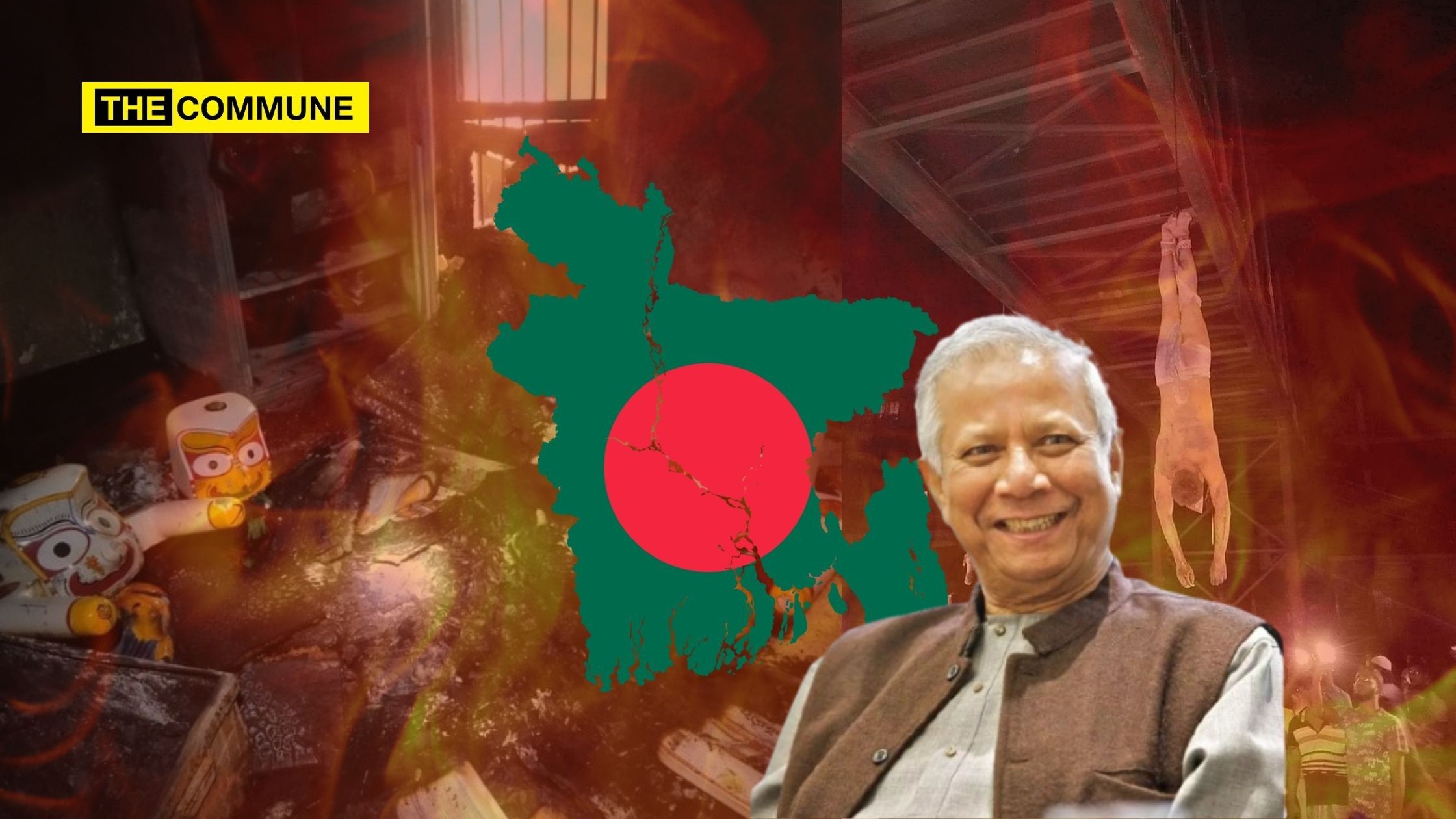
Bangladesh: Interim Govt Targets Awami League Figures; Shariful Islam Arrested, Top Cops Booked

In the ongoing crackdown on Awami League leaders under the Muhammad Yunus-led interim government in Bangladesh, police have taken another party member, Shariful Islam, into custody on charges linked to last year’s July demonstrations.

The City Cyber Division of the Counter Terrorism and Transnational Crime (CTTC) Unit of the Dhaka Metropolitan Police (DMP) arrested the Awami League leader during a raid in the Wari police station area in the capital on 18 August evening, local media reported. According to the police, Shariful has been accused in connection with multiple cases related to last year’s July protests, and legal action against him is underway.

Islam previously served as Secretary of Science and Technology Affairs for Dhaka South City Awami League and was also the Organising Secretary of Wari Thana Awami League, Bangladesh’s leading Bengali daily Jugantor, reported. On the other hand, the International Crimes Tribunal (ICT) on Monday issued arrest warrants against former Inspector General of Police (IGP) Mohammad Javed Patwary and four other senior police officials in connection with the alleged 2016 murder of seven people in the Patartek area of Gazipur district. The order was passed by a three-member bench of the tribunal, following a petition submitted by the prosecution seeking the warrants. Among the accused are Monirul Islam, former chief of the Counter Terrorism and Transnational Crime (CTTC) unit of Dhaka Metropolitan Police, and former Superintendent of Police (SP) and Additional Superintendent of Police (ASP) of Bogura district.

However, the authorities did not disclose the names of the other accused, reportedly to facilitate their arrest. Analysts reckon the developments as a major political vendetta being pursued by the Yunus regime, as several cases were filed against the former Prime Minister Sheikh Hasina, her party members and the working officials during her tenure on frivolous grounds immediately following her ouster in August 2024. The unceremonious exit of Hasina last August was globally seen as a major setback to the democratic set-up in the country. The interim government has also received massive criticism for providing shelter to radical and extremist Islamic outfits.

-IANS

Subscribe to our channels on TelegramWhatsApp, and Instagram and get the best stories of the day delivered to you personally.

PM Modi Unveils Bold Vision For ‘Viksit Bharat’ With Reforms In Energy, Jobs & Exploration Missions

pm modi opposition sco summit

Prime Minister Narendra Modi on 19 August highlighted the government’s landmark initiatives, such as the National Critical Minerals Mission, Mission Sudarshan Chakra, Viksit Bharat Rozgar Yojana and National Deep Water Exploration, which are driving India as the fastest-growing economy towards ‘Viksit Bharat’.

The Prime Minister’s statement on X social media platform came in response to an article written by Minister of Petroleum and Natural Gas, Hardeep Singh Puri, elaborating how the major reforms undertaken by the PM Modi have accelerated India’s growth on the path to achieve the ‘Viksit Bharat’ goal.

The minister said, “Prime Minister Narendra Modi’s unprecedented 12th Independence Day speech was remarkable for its sweep and scope. The speech which unleashed a Brahmastra – aimed at accelerating India’s path to Visit Bharat reminded us, the world is watching an ancient civilisation transform into a modern power – not by abandoning its roots but by drawing strength from them.”

Puri, in an article titled the ‘Red Fort Charter’, stated that “from energy security to employment, PM Modi laid out a blueprint for wide-ranging reform. The speech was remarkable not merely for its sweep but for its scope — next-generation reforms that are bold, and capable of reshaping the destiny of 1.4 billion people — with a clarity of vision that the nation has never witnessed before.”

He further stated that India’s clear assertion of sovereignty over critical technologies, announcement of National Critical Minerals Mission, focus on nuclear energy, unveiling of Mission Sudarshan Chakra, bold tax and legal reforms, PM Viksit Bharat Rozgar Yojana and National Deep Water Exploration Mission with other far-reaching reforms and measures will triple India’s domestic hydrocarbons production to 85 million tonnes by 2032.

The Petroleum Minister further pointed out that energy security had long been the Achilles’ heel of India’s growth. For decades, hesitation and “no-go” classifications throttled exploration and deepened import dependence. Under PM Modi, India has reduced “no-go” areas for Exclusive Economic Zones by almost 99 per cent, freeing 10 lakh sq km for exploration and production (E&P).

“Coupled with Open Acreage Licensing Policy (OALP), this has opened a vast canvas to Indian champions and global majors alike — our hydrocarbon basins will no longer lie dormant but be harnessed for national progress,” the minister wrote.

The National Deepwater Exploration Mission, announced from the ramparts of the Red Fort, sets an ambitious frontier agenda in the Bay of Bengal and the Arabian Sea. It aims to unlock 600-1,200 million metric tonnes of oil and gas reserves through the drilling of nearly 40 wildcat wells. For the first time, India will systematically open up its complex offshore frontiers from the Bay of Bengal to the Arabian Sea with a framework that de-risks investment by allowing recovery of up to 80 per cent of costs in the case of dry wells, and 40 per cent upon commercial discovery, he added.

-IANS

Subscribe to our channels on TelegramWhatsApp, and Instagram and get the best stories of the day delivered to you personally.

BharatNet Powers Rural Connectivity: 2.14 Lakh Panchayats Ready, 21,748 Mobile Towers Commissioned

In a bid to improve digital infrastructure in rural areas, 2,14,325 gram panchayats (GPs) have been made service-ready under the BharatNet project in the country, the Parliament was informed on 19 August 2025. Till June, 21,748 mobile towers have been commissioned in the country under various government-funded mobile projects, Union Agriculture Minister Shivraj Singh Chouhan said in a written reply in the Lok Sabha.

The project for saturation of 4G mobile services for providing 4G mobile services in uncovered villages in remote and difficult areas of the country is also under implementation at a total cost of Rs 26,316 crore, he added. For providing high-bandwidth capacity internet/broadband connectivity and mobile services to remote and rural villages and islands in the country that currently lack coverage, a number of steps and projects have been taken up by the Department of Telecommunications (DoT).

Various optical fibre cable projects are in the works, such as commissioning of submarine optical fibre cable between Chennai and Andaman and Nicobar Islands (2,312 km), commissioning of Submarine OFC connectivity between Mainland (Kochi) and Lakshadweep Islands (1,869 km), and creation of 225 Km OFC network in Lakshadweep Islands, which have facilitated faster roll out of fixed line broadband/internet services, mobile services (4G/5G) and other high-speed data services in the islands.

“The infrastructure created under the BharatNet project is a national asset, accessible on a non-discriminatory basis to the Service Providers, and the same can be utilised to provide broadband services, such as Fibre to the Home (FTTH) connections, leased lines, dark fibre, backhaul to mobile towers, etc,” the minister informed. For the provision of high-speed internet/data and mobile services in uncovered remote and rural areas of the country, various targeted schemes/projects have been implemented. These are Comprehensive Telecom Development Plan (CTDP) for mobile connectivity in the North Eastern Region, Comprehensive Telecom Development Plan for Islands (Andaman and Nicobar and Lakshadweep Islands), the scheme for providing mobile services in Left Wing Extremism (LWE) affected areas, schemes for providing mobile services in Aspirational Districts, the scheme for providing mobile services in the border villages and other priority areas, 4G Saturation scheme to provide mobile coverage in all uncovered villages, etc.

-IANS

Subscribe to our channels on TelegramWhatsApp, and Instagram and get the best stories of the day delivered to you personally.

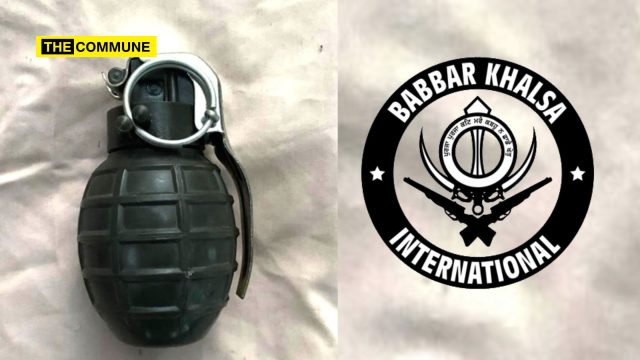
Punjab Police Busts Pro-Khalistani Militant Group BKI Orchestrated From Abroad; Grenades, Weapons Seized

Punjab Police’s Counter Intelligence of Jalandhar recovered one hand grenade following the arrest of two operatives of the pro-Khalistan militant organisation Babbar Khalsa International from Rajasthan a few days back, Director General of Police Gaurav Yadav said on 19 August 2025.

One of the two operatives was identified as Ritik Naroliya, and the other was a juvenile The accused’s disclosures led to the arrest of their aides, Vishavjit from Kolkata, while he was trying to abscond to Malaysia and Jackson from the state’s Nakodar town, which led to the recovery of the hand 86P grenade.

All accused were acting on the directions of Canada-based BKI masterminds Zeeshan Akhtar and Ajay Gill, said the DGP. Accused Vishavjit and Jackson retrieved two hand grenades from Beas through their associates in the last week of July, from which one grenade was exploded in a liquor shop in SBS Nagar 10 days back by other members of this module. A first information report (FIR) has been registered in Amritsar.

On the eve of Independence Day, Counter Intelligence of Ferozepur foiled a major terror plot being orchestrated by Pakistan’s ISI-backed terrorist Harwinder Rinda with the arrest of two operatives of BKI. Those arrested have been identified as Harpreet Singh, alias Preet, a resident of Tarn Taran, and Gulshan Singh, a resident of Amritsar. Police teams had also recovered two 86P hand grenades and one 9MM pistol along with five live cartridges from their possession. The development came two days after Punjab Police busted a BKI terror module with the arrest of five operatives, including three juveniles, from Tonk and Jaipur districts of Rajasthan and recovered one 86P hand-grenade and one .30 bore pistol from their possession.

DGP Yadav had said preliminary investigations have revealed that the arrested accused persons were working under the directions of their foreign-based handlers sitting in Britain, the US and Europe. Probe has also revealed that the arrested accused were actively conspiring to target government buildings and police establishments using grenades to disturb the peace and harmony of the border state.

-IANS

Subscribe to our channels on TelegramWhatsApp, and Instagram and get the best stories of the day delivered to you personally.

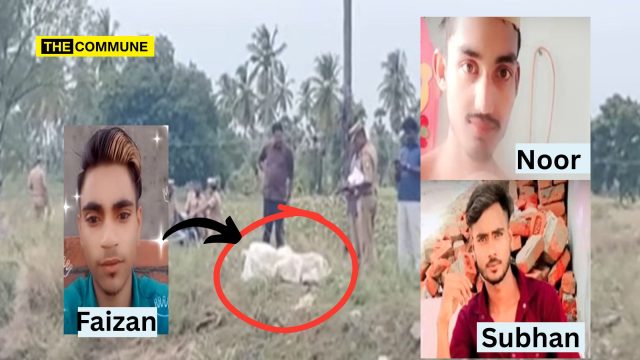
Erode: Elder Brother Noor Kills Younger Stepbrother Faizan Over Obsession With Wife, Enlists Brother-in-Law Subhan’s Help, Dump Body In Canal

erode noor faizan

Police in Erode district have arrested two men after the body of a 22-year-old was found stuffed in a sack and dumped in an irrigation canal near Chithode in Attayampalayam. The incident has created tension in the area.

Police said the deceased, identified as Mohammed Faizan from Uttar Pradesh, had been working in a local cotton mill along with his stepbrother Mohammed Noor, 25, and Noor’s brother-in-law, Subhan, 18. Investigators revealed that Noor and Subhan allegedly killed Faizan after he repeatedly harassed Noor’s wife and attempted to initiate an inappropriate relationship with her despite warnings.

The case came to light when residents noticed a foul smell from a sack floating in the canal and alerted authorities. Police who recovered the decomposed body confirmed foul play as the remains had been bound with multiple sacks and clothes.

During inquiry, police initially suspected the victim was a migrant worker after identifying his features. Enquiries at nearby factories led officers to Noor, who had falsely told his employer that his brother had returned to their native village in Uttar Pradesh. CCTV footage later showed Noor, Faizan and Subhan walking near the canal on the night of the murder.

Investigators said Noor confessed that his brother’s persistent harassment of his wife led him and Subhan to lure Faizan to the canal, where they bludgeoned him with stones before dumping the body. Items from the cotton mill were used to conceal the remains.

Both Noor and Subhan have been remanded in judicial custody and lodged at Coimbatore Central Prison. Police said Subhan had previously posted a video on Instagram portraying himself as a criminal who had secured bail in another case, and they are probing his background further.


View this post on Instagram


A post shared by @subhanmalik730012


View this post on Instagram


A post shared by @subhanmalik730012

Authorities confirmed that a murder case has been registered and that investigations are continuing.

Subscribe to our channels on Telegram, WhatsApp, and Instagram and get the best stories of the day delivered to you personally.
Dravidian Model Governance: Greater Chennai Corporation Fakes Civic Fix With AI Image, Leaves Resident’s Complaint Unresolved

gcc ai image complaint

The Greater Chennai Corporation (GCC) is facing sharp criticism after it allegedly manipulated images using artificial intelligence to falsely claim that civic issues raised by residents had been resolved, instead of actually addressing them.

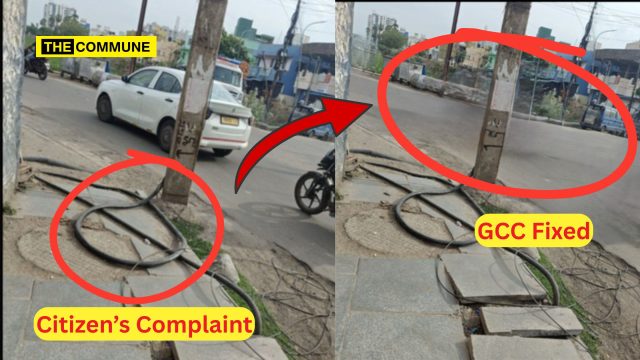
The controversy erupted when a resident from Pallikaranai posted a complaint on X, highlighting exposed electric cables along Sunnambu Kolathur Road, which posed a serious safety risk to school children. In response, GCC officials closed the complaint on their portal by uploading an altered photograph of the location. The image, edited with a basic AI eraser tool commonly found on smartphones and computers, appeared to show the issue as resolved.

However, the manipulated photo retained the original electric wires the very subject of the complaint while unrelated elements such as vehicles were digitally removed. The poorly edited image also included visible shadows and smudges, common indicators of AI tampering.

P. Kannadasan, the complainant, expressed his disappointment, stating that the corporation was closing grievances without taking any real action. In the past, GCC’s portal allowed residents to escalate unresolved complaints to the regional deputy commissioner, but that option was missing in this instance.

Manoharan, the Assistant Executive Engineer (AEE) for the Perungudi zone, claimed he was unaware of the complaint. He explained that the road falls under the Highways Department and said he had referred the issue accordingly. “I didn’t use any AI tools. The corporation will handle the cable removal on its own,” he added.

Perungudi Zonal Chairman S. V. Ravichandran responded by emphasizing that the government is committed to resolving public grievances. “Any isolated incidents like this will be investigated, and officials responsible will face consequences,” he assured.

Despite these statements, civic activists pointed out that this is not an isolated case. According to Jayaram Venkatesan, convenor of Arappor Iyakkam, GCC handles around 100 complaints daily across multiple platforms, and there have been recurring instances of complaints being closed without resolution. “The corporation must not make it seem like filing complaints is a waste of time,” he warned.

(With inputs from Times of  India)

Subscribe to our channels on TelegramWhatsApp, and Instagram and get the best stories of the day delivered to you personally.