Home Blog Page 1606

Are We Building A Nation Of Losers?

The plight of young India is such, that if a stranger asked us to name the battles we won, we’d be at a loss for words. Surely the history classrooms we sat in as children have a thing or two to do with this unfortunate situation.

An under-developed sense of civilisational identity, which is a direct result of the above function, continues to confuse and distort the perceptions of otherwise smart Zoomers (Generation Z).

The indicators are all around us, pointing at the same conclusion – that learners today are growing up with a handicapped worldview of their own history.

The Battle of Hydapses, Battles of Panipat, Haldighati, Plassey, Buxar – all occasions when defending Indian forces were crushed by their invading counterparts – casually find their way to the sections we mark as ‘important’ and then learn by-heart for reproduction in exam papers. Instances when we won and pushed our greatest enemies back by centuries, if not decades, are simply excluded.

Yet, the thinker in us seldom stops to wonder – We are still around. We must have won something.

The point

First, we must see how history lessons on lost battles can impact a nation’s collective psyche.

If I had to put it in two crude words, I would use ‘slave mentality’. The phrase shows up whenever a discussion on different knowledge environments in India is triggered. For instance, the ailing education infrastructure, private investment in Research & Development, the puny number of patents filed, and so on.

In 2019, BusinessLine reported India’s Principal Scientific Advisor Prof. K VijayRaghavan admitting that our “R&D spend in percentage of GDP has been stagnant over the last two decades”. He also said that we lag far behind other nations like South Korea, China, Israel and the US.

India’s position on the Global Innovation Index, although steadily rising, is number 52. A comparison with China’s number 14 and Vietnam’s number 42 makes it clear that even the much-to-be-achieved argument is now an understatement. Data from World Intellectual Property Organisation shows the US filed around 597,000 patents in 2018 while China filed 1.4 million. India filed only around 50,000 and a little more than 13,500 of them received grants.

Statistics bear testimony to the fact that investment in knowledge has not been post-independent India’s top priority. This is peculiar for a country that has had a rich history of developing and leading world innovation. It is a different story that those parts of history are neither formally taught nor required to be learnt for exams.

Connecting the dots

India’s disinterest in investing in innovation and creation of indigenous technologies has been well established. But there’s a silver lining to it. Our history lessons may have injected ‘slave mentality’ into our minds but have not been able to dumb us down. India is still the country of ‘jugaad’ or quick fixes. Her penchant for innovation comes out in innumerable shades and colours, cutting across different variables like poverty or social exclusion.

However, the big question is – why do we restrict ourselves to little ‘jugaads’ instead of investing in scalable innovations?

Obviously, it is a behavioral problem. For decades our institutions of knowledge have been teaching children more about colonial masters and lost wars than India’s erstwhile position as the global leader in trade and innovation. Chapters on our resistance against invasions, and victories thereof, are shockingly (or not) missing.

Way forward

The solution, however, is of inclusion rather than exclusion. An immediate and urgent overhaul of the history curriculum, which is sucked dry of diversity, must include chapters from the period of resistance and from different parts of the country. Children must know that invaders did not casually stroll into India and start ruling. Our ancestors fought back with courage and valour and successfully protected their lands for a thousand years before falling. A thousand years that we know nothing of.

To put it in perspective, we don’t know who the Ahoms from Assam are – they ruled for six hundred years. We don’t know the terrific story of how King Marthanda Varma from Kerala defeated the Dutch East India Company, which was the most powerful colonising force of that time. Neither do we know of the Umayyad Raids, which the Gurjara-Pratiharas successfully doused. The valour of Rajputs remains shrouded in mystery. The tale of the great Tamil emperor Rajendra Chola, who sailed an entire army across the sea to Indonesia, defeated the ruler, and returned without conquering it is unknown even to modern Tamils.

The absence of diversity in mainstream history textbooks has never become a talking point among activists that jump at every opportunity to fight social injustice. The first step is to become aware of the existence of a history we didn’t think could possibly exist. The second is to start teaching it. The third is for education institutions to acknowledge the problem and revamp their curriculum. Deleting chapters on democracy will not help.

This is a ticking time bomb that went off long ago. For damage control to work, social will must take the front stage.

This article was republished from Standpoint India with permission. Read the original article here.

‘No power in the world can touch even one inch of India’s land’: says Rajnath Singh during his Ladakh visit

Union Defence Minister Rajnath Singh visited Pangong Tso in Ladakh on Friday to address the tensions between China and India. Addressing troops at Lukung near the Finger 4 area of Pangong Tso, he said, “Our character has been that we have never tried to hurt the self-respect of any country. If anyone tries to hurt the self-respect of India, we will not tolerate it and will give a befitting reply”. This comes one day after the Army and the Ministry of External Affairs described the ongoing talks as “intricate and complex”.

Addressing the issue between the two countries, Rajnath Singh said that he could not “guarantee” to what extent there would be a resolution, underlining that no power can take away an inch of Indian territory. He added that, “How far will it be solved cannot be guaranteed. But I definitely want to assure that no power in the world can touch even one inch of India’s land. No one can take possession of it”.

The Pangong region has been one of the main stand off areas between the two South Asian neighbours, ever since the Galwan valley attacks in May, and talks have been going on between the countries for quite some time now.

He was accompanied by Chief of Defence Staff General Bipin Rawat and Army Chief General M.M. Naravane. They also witnessed a battle drill exercise.

Source: The Print

DMK Panchayat President from Thoothukudi asks for reopening of Sterlite Copper

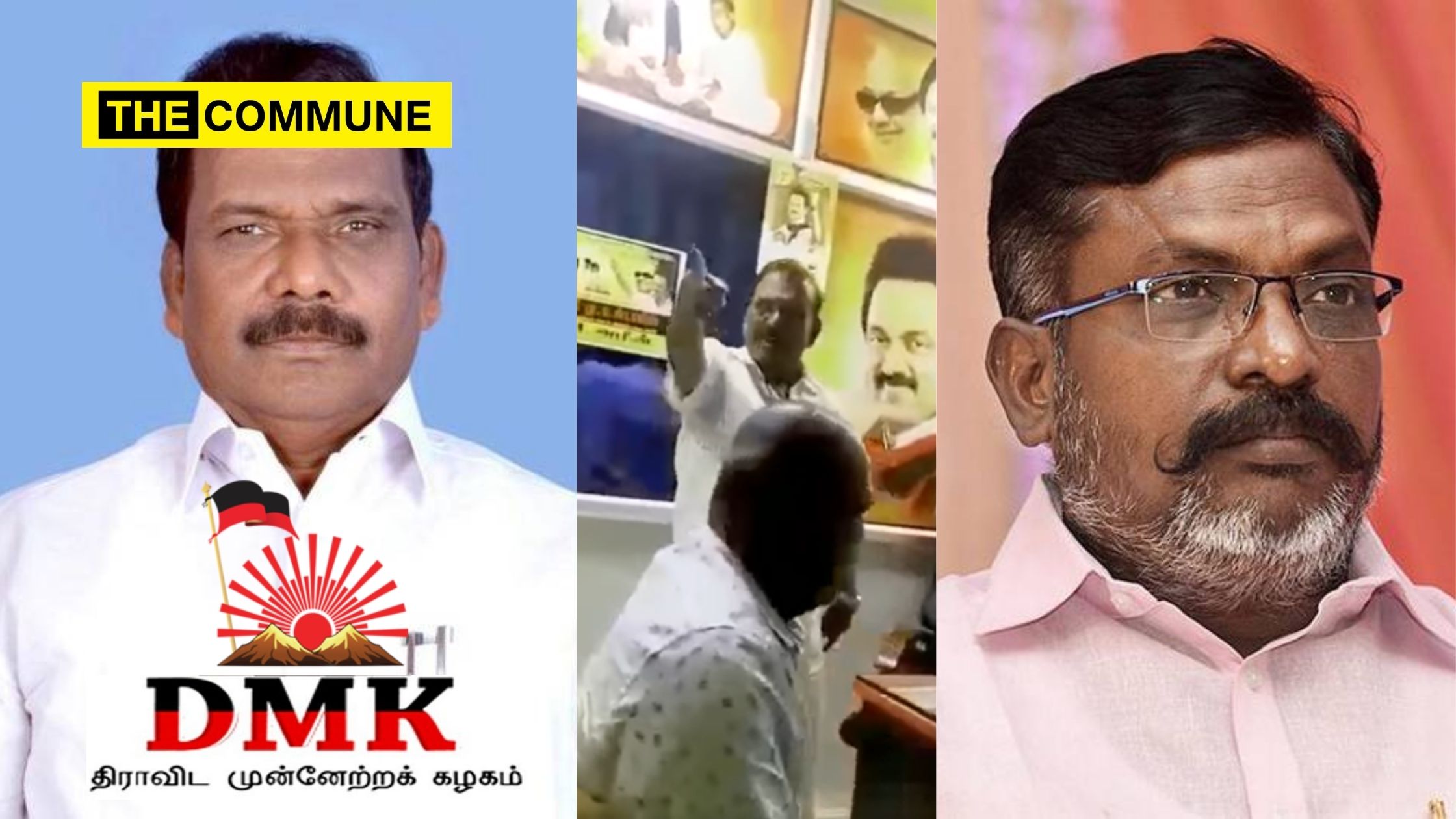
Anburaj, the Panchayat President belonging to DMK party from Thoothukudi district, has written to Chief Minister Edappadi K. Palaniswami requesting to take action for the reopening of Sterlite Copper factory at Thoothukudi.

In the letter dated 14th July 2020, the Rajavinkovil Panchayat President has written saying that the villagers of his panchayat gave up agriculture a long time back and that their lives were dependent on the industries surrounding the region.

Rajavinkovil Panchayat President letter to CM Palaniswami

He stated that the people of his panchayat earned their livelihood through the direct and indirect jobs generated by industries. He added that Sterlite Copper had become ‘an integral part of the people of his villages by staying with them through their thick and thin’.

He said that their lives and livelihoods had been hit hard due to the closure of Sterlite Copper Plant in Thoothukudi.

The letter said that people of the villages had to do odd jobs to sustain themselves and with the coming coronavirus, they have been left in lurch without any work.

Mr. Anburaj in his letter further stated that when Sterlite Copper factory was functional, they had provided free healthcare, drinking water facilities, education and tree planting activities in their villages.

‘Environmental activist’ Nityanand Jayaraman, evangelist Mohan C. Lazarus, Fathima Babu and Samarendra Das of the London based Foil Vedanta group spearheaded the protests against Sterlite Copper.

Nityanand Jayaraman
Evangelist Mohan C Lazarus
Fathima Babu
Samarendra Das

The protests were supported by DMK and other opposition parties.

It is to be noted that it was the DMK government that had given a go ahead for the expansion of Sterlite Copper at Thoothukudi

https://twitter.com/badboybala_63/status/1215637711324794881

The Sterlite Copper plant in Thoothukudi was shut down in May 2018 following widespread violence in Thoothukudi that led to the loss of 13 lives.

Sterlite has an  an annual production capacity of 4 lakh tonnes per annum, accounted for 40% of the country’s total copper production. Since its closure, the domestic production and exports of refined copper declined drastically from 378,555 tonnes in 2017-18 to 47,917 tonnes in 2018-19. Other small scale industries dependent on the factory lost business. Jobs that were directly and indirectly dependent on the factory evaporated. Since then, there has been demand from the residents of Thoothukudi and those affected for the reopening of the plant.

Australian activewear company Lorna Jane fined for anti-virus claims

The activewear company Lorna Jane has been slammed with a fine of $39,960 by the Australian Therapeutic Goods Administration (TGA).

The company claimed that its LJ Shield technology could “protect and prevent” people from COVID-19.

Doctors said that the company was “exploiting” the fear of the people by marketing their clothing line in such a manner.

The Therapeutic Goods Admin Media Release states that, “this kind of advertising could have detrimental consequences for the Australian community, creating a false sense of security, and leading people to be less vigilant” about the ongoing pandemic.

According to the company’s website, “it is applied as a water-based, non-toxic mist and permanently adheres to our garments. Any bacteria that comes in contact with the fabric is terminated when in contact with the LJ Shield particles.”

Medical experts confirmed that the fabric cannot protect the wearer against COVID-19.

COVID-19 is caused by a virus called SARS-CoV-2, not a bacteria. According to WHO, it is an infectious disease caused by a newly discovered coronavirus.

According to TGA, 1989, any type of COVID-19 reference in the marketing or promotional strategy for a product will be restricted.

Read how you could protect yourself from  COVID-19 here.

Image source: Current Affairs


How Did ‘Periyar’ View Tamil And Tamil society?

E.V. Ramasamy Naicker, popularly hailed as Periyar by his followers, is known for founding the Self-Respect Movement and Dravidar Kazhagam. He is considered as the father of Dravidian movement and a harbinger of social justice who advocated atheism and rationalism. However, his atheism and rationalism was primarily directed towards Hinduism only and not towards other religions. The rationality in that kind of atheism still puzzles many thinking individuals. Over the years, a saintly image has been constructed around EV Ramasamy Naicker portraying that he was the crusader of Tamils and Tamil society. But history records show otherwise.

The first person to start politics of hatred and violence even before Mohammad Ali Jinnah was Periyar. While Jinnah divided Indians on the basis of religion, Periyar incited hatred by exploiting linguistic differences and the English invented racial differences of Aryan-Dravidian. He proposed a separate Dravidistan along the lines of Pakistan and tried to collude with Jinnah too on the same. However, Jinnah saw him as a threat to his own plans and showed EVR the finger.

Many in Tamil Nadu, celebrate him as the leader of Tamils and protector of Tamil rights. But his entire life has been contradictory to these claims. At the very outset, he himself was not a Tamilian but a Kannadiga. If one reads the speeches and editorials of Periyar in his mouthpieces Viduthalai and Kudiarasu, it would be evident as to what his views on Tamil and Tamilians were. Following are some historical records about Periyar that many do not know or consciously hide from the mainstream.

#1: Periyar considered Tamil to be a barbarian language.

In an editorial article of Viduthalai dated October 11, 1967, Periyar called Tamil as a “kaatumiraandi mozhi”, meaning barbarian language. He mentions Tamil as a barbarian language not once but several times during the course of his lifetime. He wanted Tamil to be discarded at home and advocated the use of English as the medium of communication. He went to the extent of saying that ‘Tamil is a language that is not even useful for begging’.

#2: Periyar ridiculed Silappadikaram.

Silappadikaram, the great Tamil epic written by Ilango Adigal and belonging to the ancient Sangam literature, was called by Periyar as an Aryan propaganda tool. In a speech made on March 30, 1951, he shuns Silappadikaram as a text filled with Aryan concepts. One of the finest and richest literature ever produced by mankind, he considered it to be a treasure of superstitions and slavery of women.

#3: Periyar brutally criticized Kamba Ramayanam.

Kamba Ramayanam, the Tamil version of Ramayana that is revered in Tamil Nadu was denounced by Periyar as a ‘storehouse of falsehood’. He opined that literature like Kamba Ramayanam betrayed the Tamil race. He said that the popularity of literature like Kamba Ramayanam and Silappadikaram showed that Tamil people had no intelligence and self-respect.

#4: Periyar called Tamil society as backward and irrational.

During October and November 1967, Periyar wrote several articles describing that Tamils were backward and irrational. He said that Tamils invented only backward elements like grinding stone, cotton wicks, oil lamps, bullock cart, palm leaf, mantras, yogic power etc which had no practical utility. He even mentioned that Tamils had no concept of time and that it was adopted from the English society. To him, Tamils were a bunch of people, who had no racial feeling, no self-respect, no nationalism and no humaneness.

#5: Periyar was a harsh critic of Tamil scholars.

In the edition of Viduthalai dating March 16, 1967, he observed that Tamil scholars and pundits deserved to be imprisoned for life and hanged as they did not create anything that led to society’s progress. He described the World Tamil Conference as a “census to enumerate fools”.

#6: Periyar referred to the ancient Saivite and Vaishnavite Tamil literature as rubbish.

Tamil Saivite literature like Tevaram, Tiruvasagam and Tirumandiram which are part of the Thirumurai, a collection of songs in praise of Hindu God Shiva was called as rubbish by Periyar. Divyaprabandham, which is considered as the Tamil Veda and Periyapuranam written by the renowned saint Sekkizhar that elaborated the lives of 63 Nayanmars were called by Periyar as instruments that harmed the Tamil society.

#7: Periyar equated Thirukkural to excreta.

While Thirukkural has been a revered work across the world, Periyar called it “feces placed in a golden plate”. Though he praised Thirukkural in the beginning, he started condemning it in his later years. The issue of Viduthalai dated June 1, 1950, had a writing of Periyar that condemned Thirukkural for carrying ideas opposed to ‘rationalism’. When a few people asked him if Thirukkural too would be gone, what literature the Tamils would be left with, he responded saying:

 I am saying remove the excreta emanating bad smell from the room… and you are asking me if we remove this excreta what should we replace in its place?

#8: Periyar maligned freedom fighter and Tamil poet Subramania Bharathi.

In the journal Ticutar, he besmirched Bharathiyar for describing Mother Tamil as a sister of Sanskrit in his poems. He indirectly referred to Bharathiyar as a rat living in agraharam. He said that:

They say Bharati is an immortal poet. Even if a rat dies in an agraharam, they would declare it to be immortal. Why should this be so? Supposedly because he sang fulsome praises of Tamil and Tamil Nadu. What else could he sing? His own mother tongue, Sanskrit, has been dead for years. What other language did he know? He cannot sing in Sanskrit.

All these comments and views of Periyar on Tamil and Tamil society makes one really wonder whether Periyar was a champion of Tamils or was he an anti-Tamil bigot and a rabble rouser? Though his comments may have had certain historical and sociological context, to revere him as a demigod whose views and integrity are beyond questionable realm is humbug.

Recently, there has been a lot of hullabaloo over the rabid Youtube channel called Karuppar Koottam for their vile and vulgar portrayal of Hindu Gods and Hindus. Public outrage over their comments on Hindu God Murugan and Kanda Sashti Kavasam led to a crackdown on the trash-talkers.

However, the genesis of these venomous elements in today’s society can be traced to this demagogue called E.V. Ramasamy Naicker who in the name of rationalism perpetrated nothing but hatred. It is the seeds of hatred sown by him that has taken the form of Karuppar Koottam.

References:

  1. Viduthalai, Madras, October 11, 1967
  2. Viduthalai, Madras, March 16, 1967
  3. Viduthalai, Madras, June 1, 1950
  4. https://swarajyamag.com/politics/ten-things-about-periyar-dravidian-parties-dont-want-you-to-know
  5. https://shodhganga.inflibnet.ac.in/bitstream/10603/61790/14/14_chapter%207.pdf

Hope orbiter to liftoff on Monday

A United Arab Emirates’ Mars orbiter is set for liftoff on 20 July, 2020. 

The launch was initially decided to be on 15 July, 2020 from the Tanegashima Space Center, Japan.

It was delayed due to bad weather at the launch site in southern Japan.

The orbit is named Amal, or Hope. It is the Arab’s world’s first interplanetary mission.

If the mission is successful, it is likely to put UAE on the map of the space industry.

The orbit is expected to land on Mars in February 2021 as UAE will celebrate 50 years of its formation.

It will carry three instruments that aim to study and monitor the atmosphere and climate conditions of Mars. It is scheduled to circle around Mars and will provide a whole view of its atmosphere during different periods of time.

“I’m looking forward to a successful launch,” Japanese Foreign Minister Toshimitsu Motegi said. He said the scheduled launch of a Japanese rocket carrying UAE’s Hope probe “is a symbol of our firm relations between Japan and UAE.”

Japan and UAE are known to maintain friendly ties and it is has only increased the past few years when Japan went one step higher in trade and defense relationships with UAE. Now, they wish to expand into the space industry.

Two other Mars missions are planned in coming days by the U.S. and China.

Japan has its own Martian moon mission planned in 2024.

Source: AFP


Scientists discover new metal-eating bacteria by accident

Scientists have discovered a new type of bacteria by accident that could potentially eat metal. They have alleged that this bacteria has been existing for over 100 years but it has never been proven to eat metal until now. This has been accidentally discovered by the Caltech University’s microbiologists after performing experiments using the bacteria in a chalk-like Manganese.

Dr. Jared Leadbetter, professor of environmental microbiology at Caltech in Pasadena, left a glass jar covered with the substance to soak in tap water in his office sink and left the vessel for several months when he went to work off-campus. When he returned, Leadbetter found the jar coated with dark material. “I thought, ‘What is that?’ ” Leadbetter explained in a press release. “I started to wonder if long-sought-after microbes might be responsible, so we systematically performed tests to figure that out.”

This dark coating has found to be oxidized Manganese which had been generated by this new bacteria. This is said to be found in freshwater aquifers and groundwater. The bacteria can use manganese for a process called chemosynthesis, which converts carbon dioxide into biomass. Scientists believe the findings will help them better understand groundwater, and water systems which can become clogged by manganese oxides.

Source: CNN

Roshni Nadar Malhotra succeeds Shiv Nadar as the Chairperson of HCL, becomes the country’s richest woman

Roshni Nadar Malhotra, the only daughter of Shiv Nadar, succeeds her father in becoming the CEO of HCL. This 38-year old is now the richest woman in the country. She had previously served as the CEO and Executive Director of the company. Shiv Nadar is touted to continue as the company’s Managing Director and Chief Strategy Officer.

“The Board of Directors has appointed Ms. Roshni Nadar Malhotra, Non-Executive Director as the Chairperson of the Board of Directors and the Company w.e.f. July 17, 2020, in place of Mr. Shiv Nadar who expressed his desire to step down from the position of the Chairman. Mr. Shiv Nadar would continue to be the Managing Director of the Company with the designation as the Chief Strategy Officer of the Company,” the company’s release said.

It is to be noted that Roshni has played an integral part in the last few years in building HCL as a brand. She was elevated to the position of CEO only a year after her time in HCL. She is the 54th most powerful woman in the world according to Forbes World’s 100 Most Powerful Women list of 2019 and has a current net worth of ₹36,800 crores.

Roshni has a Masters in Business Administration from Kellogg School of Management, USA, with a focus on Social Enterprise Management and Strategy. She is also an alumnus of the World Economic Forum’s ‘Forum of Young Global Leaders initiative. She also runs The Habitats Trust, which seeks to protect and conserve wildlife habitats, that was set up in 2018.

Source: Business Insider, The Statesman

India says Pakistan and China have no locus standi over construction of Diamer-Bhasha Dam In PoK Gilgit-Baltistan

India conveyed its strong protest to Pakistan’s decision to build the Diamer-Bhasha upon the Indus River in Gilgit-Baltistan, part of Pakistan Occupied Kashmir (PoK).

Pakistan is planning to build this dam with the help of China. On Thursday (July 16) India called this a continuous attempt by Islamabad to bring about material changes in Indian territories under its illegal occupation.

Touted to be the country’s biggest dam, The Diamer-Bhasha Dam once completed would generate 4,500-megawatt with a presumed value of $15 billion.

On Wednesday Pakistan Prime Minister Imran Khan gave the green signal to build the China-backed mega project in Gilgit-Baltistan undermining India’s strong protest.

Asked about the development at the weekly briefing, Ministry of External Affairs (MEA) Spokesperson Anurag Srivastava said, “The entire Union territory of Jammu and Kashmir and the Union territory of Ladakh, have been, are, and will be an integral and inalienable part of India. We have strongly protested against the construction of this dam to the government of Pakistan”.

The MEA spokesperson further added, “This dam will lead to submergence of a large part of land of the Indian union territories of J&K and Ladakh and we condemn the continuous attempts by Pakistan to bring about material changes in Indian territories under its illegal occupation.”

India has always maintained any such projects in the Indian territories under Pakistan’s illegal occupation has no locus standi.

The Pakistan army which is the key backer of the China-Pakistan Economic Corridor (CPEC) is responsible for making the Pakistan government in May sign ₹ 442 billion contract with a joint venture of a Chinese state-run firm and a commercial arm of Pakistan’s powerful military for the construction of the Diamer-Bhasha dam.

Though this dam project isn’t a part of the CPEC project per say, it does seem like its extension considering that China is backing the project with 70% stake.

The Water and Power Development Authority of Pakistan signed the contract for the development of the Diamer-Bhasha dam and it will be a joint venture between Power China and Frontier Works Organisation (FWO) on a 70-to-30 ratio.

Michael Kugelman, deputy director at the Asia program in Washington, D.C said, “These moves will bring one more tension point to an India-China relationship that is already more strained now than it has been for several decades”.

Alice Wells, who was Trump administration’s senior diplomat for South and Central Asia, had warned Pakistan that Chinese investments under the CPEC are designed as a debt trap for Pakistan and in the long run, the high costs and alleged lack of transparency in contracts could cost Pakistan its sovereignty.

Wells had tweeted, “Hopefully, not at the cost of Pakistan’s sovereignty, environment, the sustainability of debt or corruption. This is a good time to renegotiate BRI terms that, in hindsight, were disadvantageous or one-sided,”.

In the last four years, China has been openly challenging India in different fronts. China’s expansionist strategy now includes Kashmir and its actions are more visible. Also, it has created tensions in Doklam in North Sikkim and Galwan Valley in the Ladakh.

Consular access given to Kulbhushan Jadhav by Pakistan neither meaningful nor credible, MEA says

The Ministry of External Affairs in a statement said that the “Indian Consular Officers were not given unimpeded, unhindered, and unconditional access” to Kulbhushan Jadhav, the Indian national who was abducted by Pakistan army on charges of espionage.

India recently requested the Pakistani side for an “unimpeded, unhindered and unconditional consular access” to Mr. Kulbhushan Jadhav on 13th July. Pakistan was asked to ensure that the meeting is held in an atmosphere free from fear of retribution and without the presence of any Pakistani official. Pakistan was also requested to not record the meeting.

Pakistan’s Foreign Ministry had agreed and assured to organize this consular access. Two Consular Officers of the High Commission proceeded to the meeting with Mr Jadhav. However, neither the environment nor the arrangements made for the meeting were as assured.

MEA Spokesperson Anurag Srivastava said that Pakistani officials were present in an intimidating manner and in close proximity to Mr. Jadhav and other Indian Consul Officers, despite protests from the Indian side.

He said that there was a camera that recorded the conversations.

Mr. .Anurag Srivastava noted that Mr. Kulbhushan Jadhav was visibly under stress and had indicated the same to the Consul Officers.

He said that the arrangements did not allow for a free conversation between the officer and Mr. Jadhav. The Consular Officers could not engage Mr Jadhav on his legal rights and were prevented from obtaining his written consent for arranging his legal representation. It is on this basis that the Indian Consul Officers came to a conclusion that the consular access given by Pakistan was neither credible nor meaningful. The officers later left the venue after lodging a protest

The MEA Spokesperson said that Pakistan’s continues to approach the matter in an insincere and obstructive way, completely in violation of its assurances at the International Court of Justice to fully implement the 2019 judgement. He said that it failed to act in accordance with its own ordinance. Minister of External Affairs has informed Mr. Jadhav’s family of these developments, Mr. Srivastava said.

He reiterated that India was committed to bring back Jadhav safely and that the future course of action will be decided based on yesterday’s events. He said that India had requested Pakistan more than 12 times to provide unhindered and unconditional consular access to Mr. Jadhav who has been incarcerated in Pakistan since 2016. Unimpeded, unhindered and unconditional consular access is required as it forms the basis for an effective review and reconsideration of the judgement given by the military tribunal.

In May this year, Pakistan passed an ordinance to comply with the orders of the International Court of Justice.  It inter-alia envisaged the Consular Officer of the High Commission of India filing a petition before a High Court for the relevant review and reconsideration. Hence, the consular access and contact between Jadhav and Indian Consul Officers become crucial. He said that any conversation between them must take place in privacy in the absence of any Pakistani official or recording by Pakistan as only then will Mr. Jadhav be able to speak freely without worrying about facing torture as he remains in Pakistan’s custody after meeting. It is evident that Mr. Jadhav has been intimidated repeatedly in the past, including in being made to express his alleged disinclination to seek a review.

Source: AIR News