Home Blog Page 1580

YSRCP candidate distributes Tirupati laddoos for free during election campaign

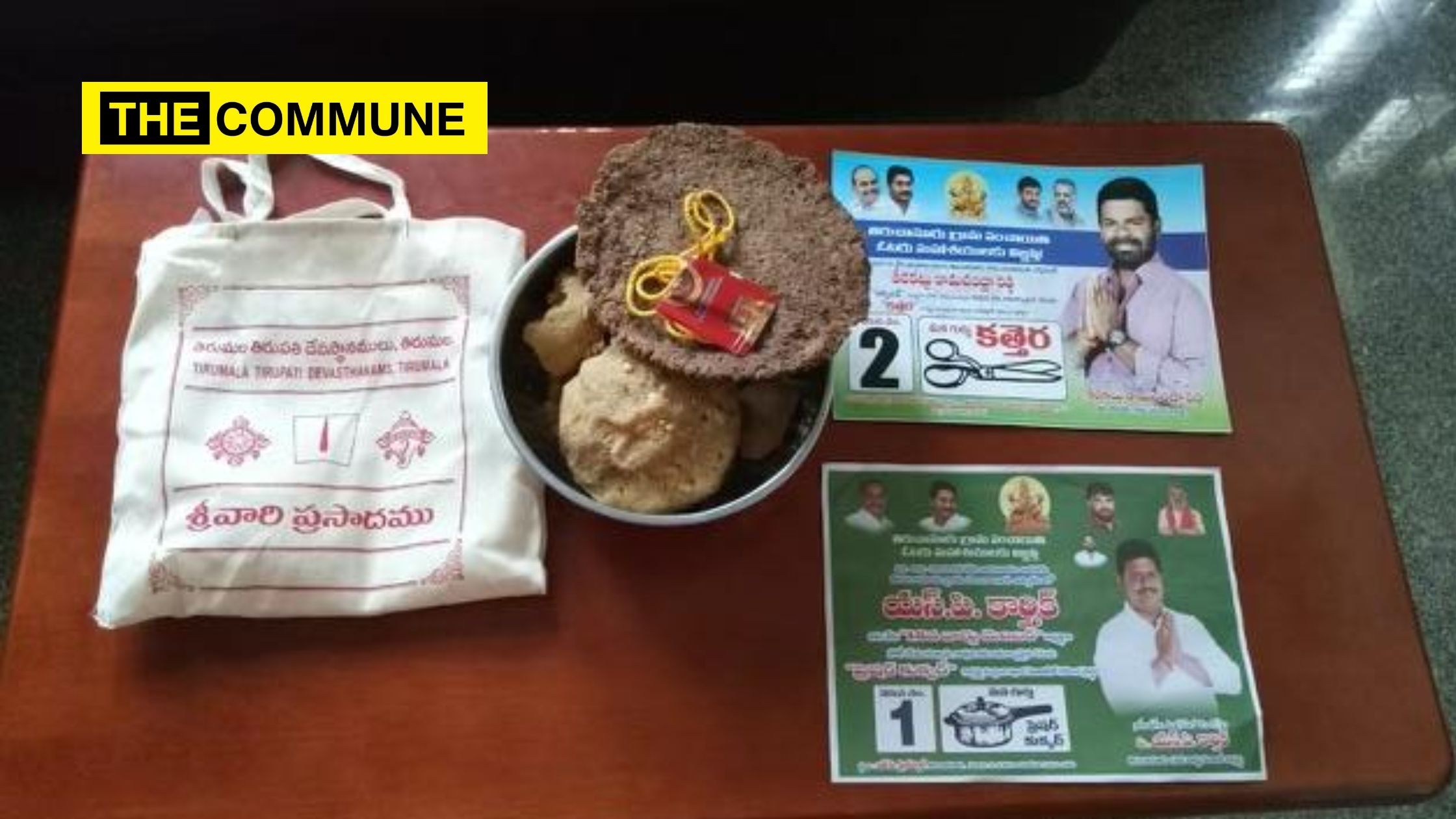
The ruling Yuvajana Sramika Rythu Congress Party (YSRCP) in Andhra Pradesh has courted controversy by distributing Tirupati Laddus to voters during the panchayat election campaign in Tirupati.

Panchayat elections are being held in Andhra Pradesh where the YSRCP , led by Chief Minister Jaganmohan Reddy, is in power. Here, for the past one month, panchayat elections are being held in several phases.

Usually, political parties resort to induce voters through cash, liquor and biryani during their campaigns. However, in Thondavada, near Tirupati, people were given Tirupati laddus along with voter slips of the YSRCP thereby insisting them to vote for the party. Around seven lakh laddus has reportedly been distributed asking the people to vote for the YSRCP.

Videos have surfaced on social media in which persons can be seen distributing the laddus to voters. It has been alleged that the YSRCP is using the newly-launched PDS door-delivery vehicles in Thondawada panchayat to distribute the laddus among voters.

Nara Lokesh, the son of Telugu Desam Party’s chief Chandra Babu Naidu called for the disqualification of the candidate and registration of a case for hurting religious sentiments. The BJP too condemned the YSRCP.

BJP leader Vishnuvardhan Reddy said in a tweet “Is there anything more shameful than this? The TTD should immediately register a case on the matter and we demand the State Election Commission to take immediate action.”

Click here to subscribe to The Commune on Telegram and get the best stories of the day delivered to you personally.

 

Australia seeks India’s support on global policy to regulate big tech cos like Facebook

Australia Facebook

Australian Prime Minister Scott Morrison in his latest talks with India’s Prime Minister Narendra Modi, discussed the nation’s latest media policy against technology giants like Facebook and proposed a partnership with India, reports Economic Times.

The Australian Government has been engaged in discussions with technology behemoths like Facebook and Google, who control the biggest social media platforms, to legally make them pay local news outlets for using their content.

Australia has pioneered a legislative code titled News Media and Digital Platforms Mandatory Bargaining Code Bill 2020, which Facebook has not welcomed.

Recently, Facebook had threatened to block Australian publishers and individuals from sharing news stories on its platform because it did not agree with the law that was passed, as the legislation allowed media organizations to demand compensation for Facebook’s use of their stories.

Immediately the Australian PM Morrison called the threat made by Facebook ‘arrogant’ and ‘disappointing’ and pushed that Facebook must revoke the move.

As well as India, Australia is also holding talks with Canada, and, as per reports, Australia will try to further extend this partnership and build consensus on the issue with other countries.

Italy’s competition watchdog, the  Italian Competition and Market Authority, has only recently fined Facebook €7 million (approximately $8.45 million) for failing to comply with a previous order related to improper use of its subscribers’ data.

In related news, tech giant Google, which had earlier threatened to pull its search engine offerings from Australia, has now come to a realisation that the move could be potentially disastrous and has now softened its stance. Google has reportedly brokered several deals with large media companies like Rupert Murdoch’s News Corp.

BJP MP Tejasvi Surya had written to the Centre in September last year, urging the government regulate big  tech companies and review the review the IT Intermediary Guidelines Rules. The MP from Karnataka had also raised he issue during zero hour in Parliament last month. 

Click here to subscribe to The Commune on Telegram and get the best stories of the day delivered to you personally.

Mumbai police arrest BJP minority cell chief for allegedly being an illegal Bangladeshi migrant

bjp mumbai illegal bangladeshi

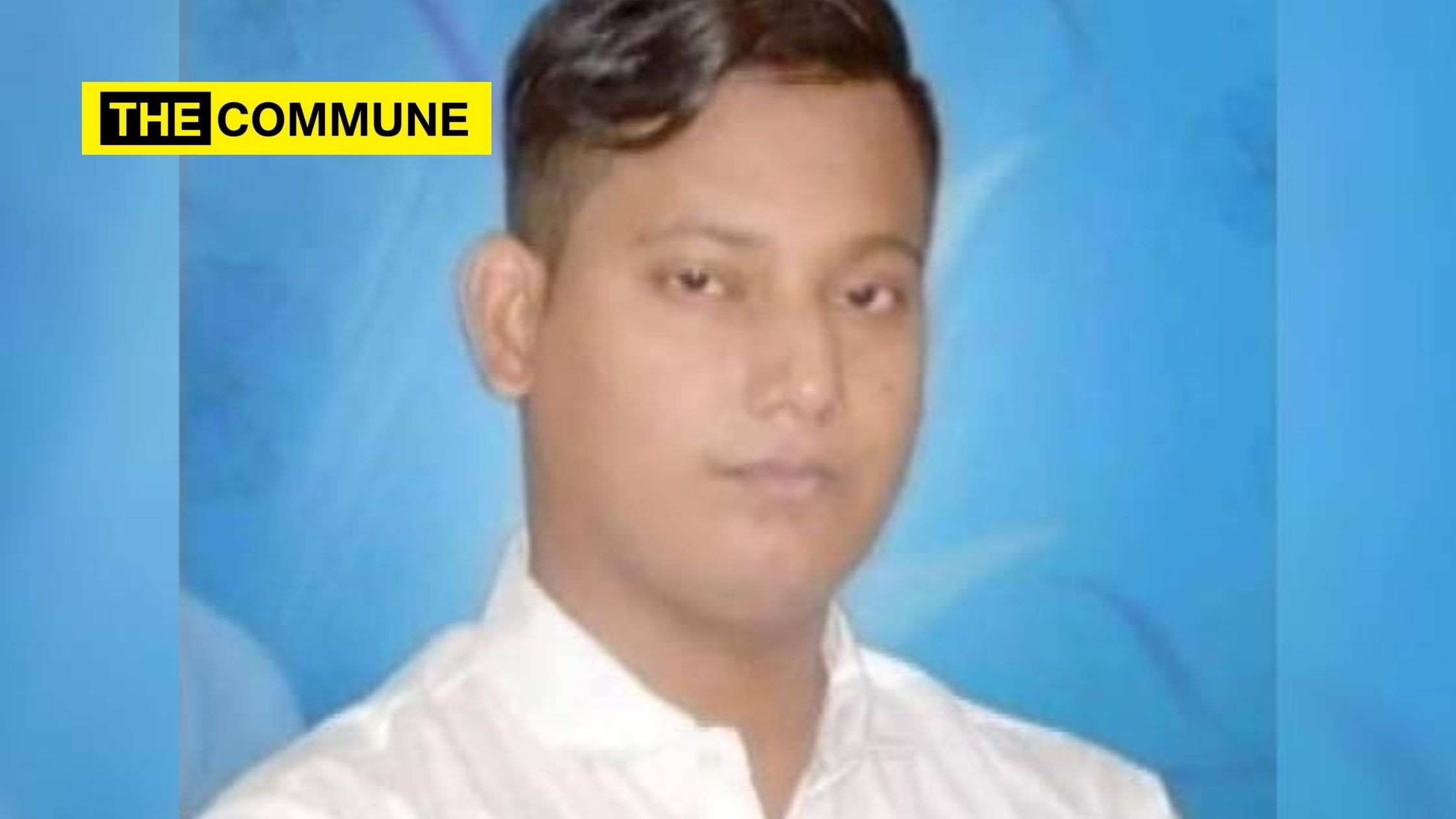
Police have arrested Rubel Jonu Shaikh, president of the north Mumbai minority cell of the Bharatiya Janata Party (BJP), for living illegally in the country for years. According to the police, 24-year old Shaikh is allegedly a Bangladeshi immigrant living in Malad illegally for around ten years.

Shaikh was arrested by Malvani Police in a crackdown on illegal immigrants. He was booked under various sections of the Indian Penal Code, Passport (Entry into India) Act and Foreigners Act. The investigations conducted by the police revealed that he is in fact a Bangladeshi national who has been living in Mumbai illegally since 2011. Police also allege that the accused had prepared fake PAN cards and Aadhaar cards with the help of forged documents.

Shaikh is the chairman of minority cell of the party’s north Mumbai youth wing, according to the police report.

According to reports, Rubel Jonu Sheikh’s documents showed that he was a resident of Malapota gram panchayat in West Bengal’s 24 North Parganas district. His school’s name was shown as Bolganda Adarsh High School in West Bengal’s Nadia district.

However, when a police team went to Malapota gram panchayat and inquired about him, the panchayat did not have records of any resident named Rubel Jonu Sheikh.

When authorities tried to verify the documents at the Nadia district collector’s office, it was found that the school-leaving certificate held by Rubel Jonu Sheikh was issued in someone else’s name. The investigation has also found that the school mentioned in his documents does not exist in Nadia.

The Congress and Nationalist Congress Party (NCP) have demanded a probe after the arrest.

NCP spokesperson Mahesh Tapase wrote a letter to Maharashtra home minister Anil Deshmukh and sought an investigation into Sheikh’s connection with Bangladesh. He also hit out at the BJP and asked how the party could appoint Sheikh as an office-bearer without verifying his identity.

Congress general secretary and spokesperson Sachin Sawant said, “On one hand, the BJP is bringing Citizenship Amendment Act for the action against illegal residents, on the other, its own office-bearers are proved to be Bangladeshis. The party should clarify if they have made some special provision in the Act for their own people. Is this some type of jihad in the party?”

Click here to subscribe to The Commune on Telegram and get the best stories of the day delivered to you personally.
DMDK calls for applications to field candidates in 234 constituencies, party cadres baffled

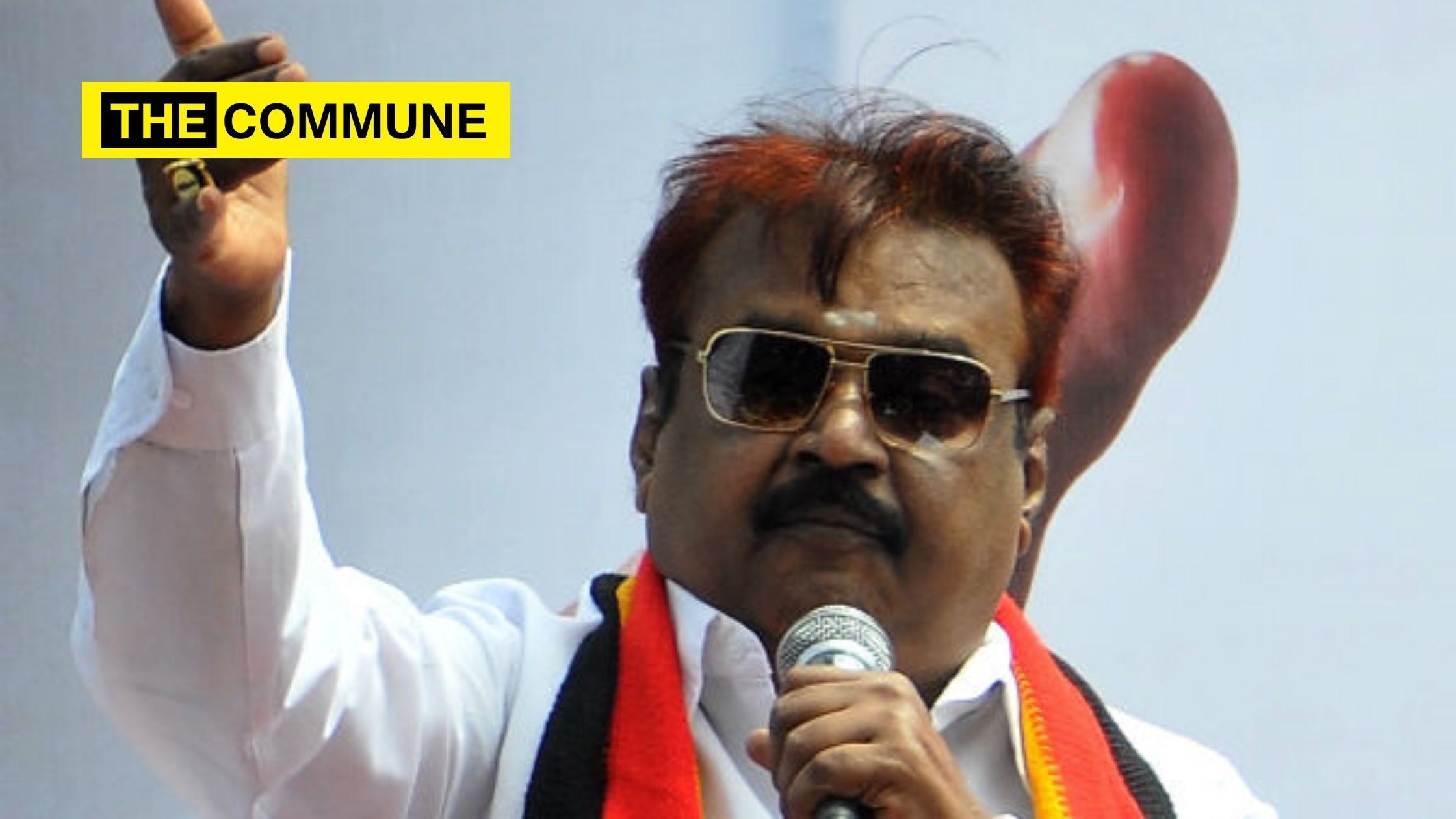
With speculations about the AIADMK  allocating 10 seats for its existing alliance partner DMDK, the latter has called for applications to field candidates in 234 constituencies, catching many of its cadres by surprise.

Though the DMDK leadership has decided to continue with the AIADMK alliance, talks on coalition and seat sharing has not yet begun leaving the de-facto leader of the DMDK and party chief Vijayakanth’s wife Premalatha dissatisfied.

In light of this, Tamil Nadu Fisheries Minister D. Jayakumar has said that talks will begin soon with the DMDK. It is expected that Vijayakanth’s party would get anywhere between 10 to 15 seats and would work towards increasing the winnability of the candidates in these seats.

Amidst this, the DMDK leadership has made an announcement calling for applications to field candidates in all the 234 constituencies.

As per the announcement, party office bearers and volunteers wishing to contest in the Assembly elections in Tamil Nadu and Pondicherry can receive the applications from the party head office at Koyambedu in Chennai, from 25th to 5th March. Those who want to contest from the general constituencies in Tamil Nadu have to pay ₹15,000, and ₹10,000 for contesting from reserved constituency. The amount is ₹10,000 for general constituency and ₹5,000 for a reserved constituency in Puducherry.

However, baffled party cadres are of the opinion that the party would anyway be getting only 10-15 seats and questioned the need for collecting money in the name of receiving applications for 234 constituencies. They also said that the days of the DMDK contesting in all seats are long gone and that the party has to come to grips with reality.

Click here to subscribe to The Commune on Telegram and get the best stories of the day delivered to you personally.
Farmer from Kodaikanal grows ‘black carrots’

In Kodaikanal, a farmer has created a record by cultivating black carrots. Ashir, a farmer from Kodaikanal, Pambarpuram, Dindigul district, has been cultivating mountain vegetables. These black carrots last 90 days, just like regular orange carrots. China is said to be the origin of this carrot. These carrots are lightly salted with a sweet flavor.

In general, carrots are a low-calorie vegetable. They are also rich in fiber, vitamin K, vitamin C, and potassium. Black carrots have more antioxidants than other carrots. If you eat 100 grams of black carrots you will get only 36 calories from it. Those who want to lose weight are advised to include black carrots in their diet. Black carrots are black in color due to the high concentration of the pigment anthocyanin.

Black carrots are high in fiber. This helps digestive organs to gain strength. Black carrots prevent problems such as flatulence, constipation, and diarrhea and helps increasing the body’s immunity. Black carrots have the ability to fight bacteria and viruses that can cause flu in humans. It is high in Vitamin C, which helps the white blood cells in the blood to function effectively.

The pigment anthocyanin in black carrots helps the body fight cancer cells. Black carrots also help to increase eyesight. It is also good to take black carrot juice. However, it is said that if you have too much black carrot, you are more likely to get skin allergies and high blood pressure.

Click here to subscribe to The Commune on Telegram and get the best stories of the day delivered to you personally.

Air India plane crash lands in Vijayawada, flight and crew safe

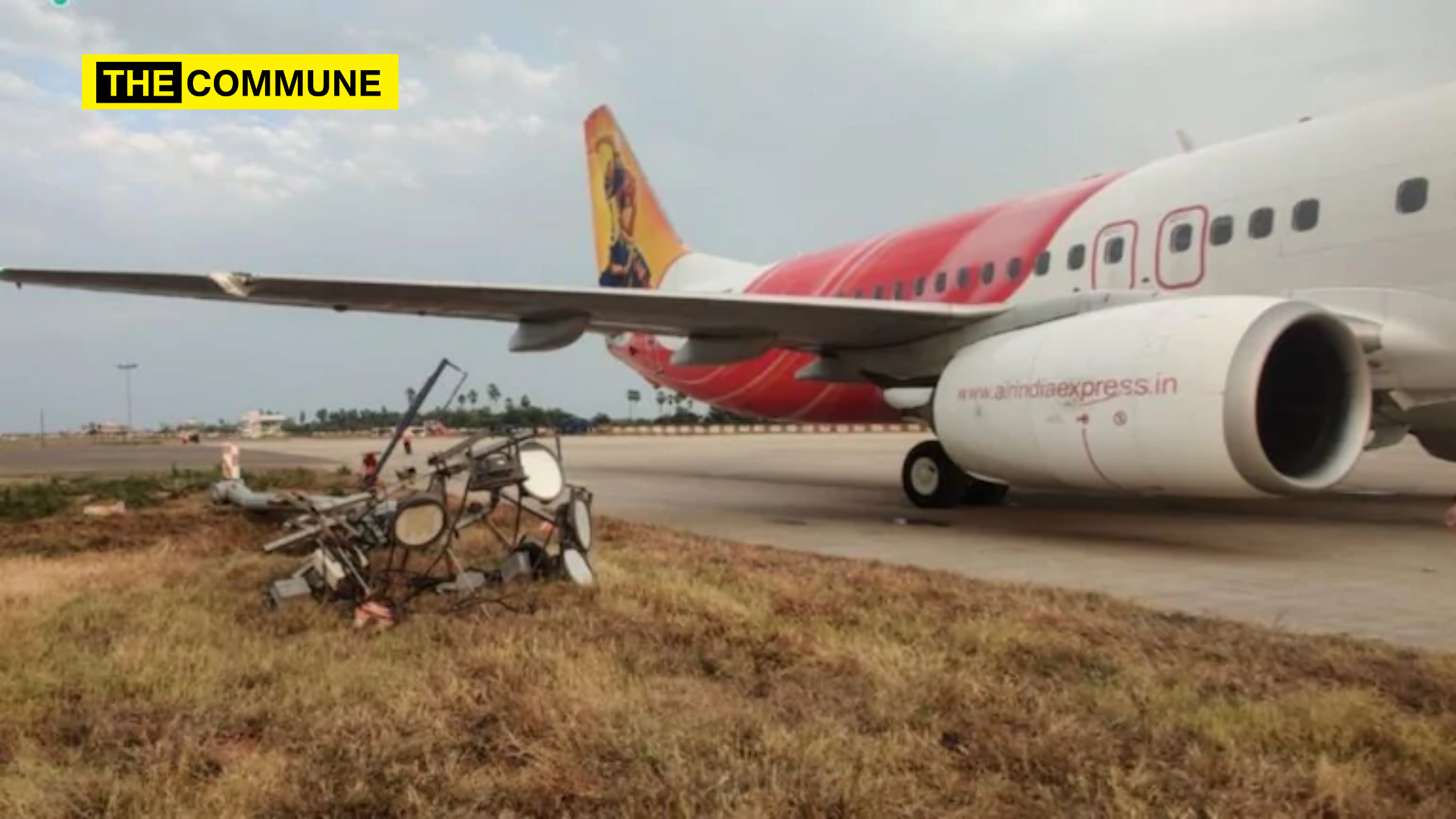
An Air India Express flight carrying 64 passengers was on its way to Trichy via Vijayawada, Andhra Pradesh from Doha when it lost control and crashed into an electric pole on the runway. In this accident, the electric pole also tilted and fell down. The pilot maneuvered the plane to a halt, saving those on board.

This is the third such incident after the Kozhikode airport crash involving Air India Express flying from Gulf countries to southern states of India.

Following this, the passengers and crew immediately left the plane. The incident created a tense situation at the Vijayawada airport. Airport officials are investigating the crash. “All 64 passengers on board the flight and the crew are safe,” Vijayawada International Airport director G Madhusudan Rao said. “It landed safely and was being taken towards taxiway when one of the wings accidentally hit the lamp-post located on one side. The aircraft was halted and all the 64 passengers disembarked. Everybody is safe and there are no injuries to anybody,” he added.

Air India Express is a wholly-owned subsidiary of Air India, and has a market share of 7.1% in the country, according to company information on its website. The low-cost carrier operates a fleet of 24 Boeing 737- 800 Next-Generation aircraft.

Click here to subscribe to The Commune on Telegram and get the best stories of the day delivered to you personally.
In Quad meet, India and other nations discuss their vision for the Indo-Pacific, emphasise ‘rules-based’ world order

india quad indo-pacific

Dr. S. Jaishankar, Minister of External Affairs participated in the Third India-Australia-Japan-USA Quad Ministerial Meeting held on 18 February 2021, with his counterparts Foreign Minister Marise Payne, Foreign Minister Toshimitsu Motegi, and Secretary of State Antony Blinken.

The Ministers highlighted their shared attributes as political democracies, market economies and pluralistic societies. They recognized that the changes underway in the world makes a strong case for their countries working closely together. It was important for the international community that the direction of changes remains positive and beneficial to all.

The Ministers emphasized their commitment to upholding a rules-based international order, underpinned by respect for territorial integrity and sovereignty, rule of law, transparency, freedom of navigation in the international seas and peaceful resolution of disputes.

Their productive exchange of views on regional issues included a reiteration of their common vision for a free, open and inclusive Indo-Pacific region, with clear support for ASEAN cohesion and centrality. It was noted that the Indo-Pacific concept had gathered growing international support, including in Europe.

The Ministers discussed ongoing efforts to combat the COVID-19 pandemic, including vaccination programmes. They expressed their commitment to cooperate in addressing this challenge, enhancing access to affordable vaccines, medicines and medical equipment. India’s efforts at providing vaccines to 74 countries was recognized and appreciated.

The Ministers exchanged views on responding to climate change and furthering cooperation in areas such as maritime security, HADR, supply chain resilience and counter-terrorism.

In the discussion pertaining to recent developments in Myanmar, the upholding of rule of law and the democratic transition was reiterated by India. Noting that regular Quad consultations hold value, the Ministers agreed to continue these useful discussions.

(With inputs from MEA press releases)

Click here to subscribe to The Commune on Telegram and get the best stories of the day delivered to you personally.

PM Modi to visit Assam and West Bengal on 22 February

modi assam west bengal

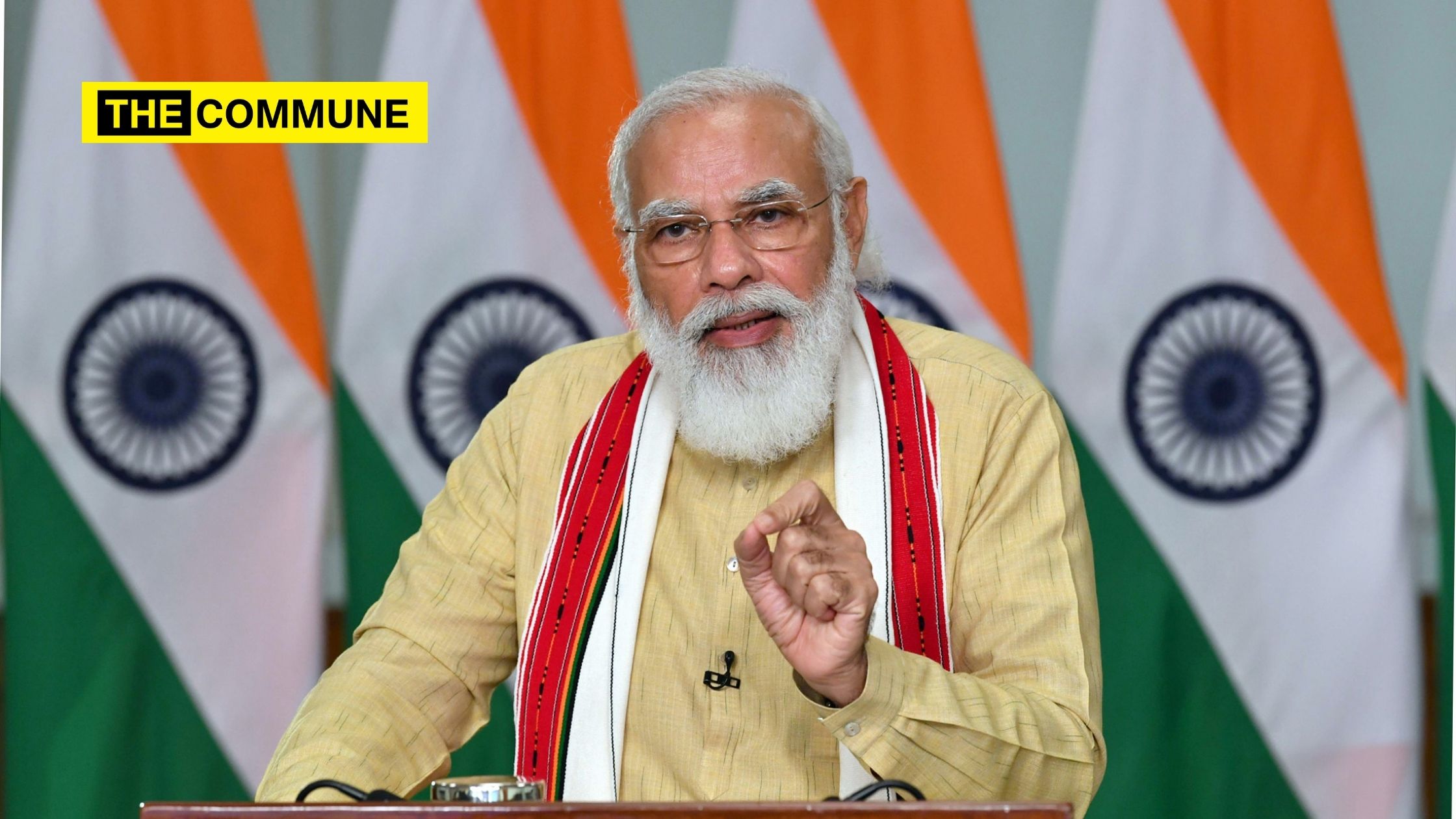
Prime Minister Narendra Modi will visit Assam and West Bengal on 22 February, 2021. At around 11:30 AM, PM Modi will attend an event organized at Silapathar in Dhemaji, Assam, where he is expected to inaugurate important projects of the oil & gas sector. He will also inaugurate and lay the foundation stone for Engineering Colleges during the event.

The same day, at around 4:30 PM, Prime Minister will attend an event in hooghly, West Bengal, where he will inaugurate several railway projects in the state.

The PM’s visit and the inauguration of the mega-projects are significant as both states are bound to go the polls in the coming weeks.

PM to inaugurate oil & gas projects in Assam

According to a press release from the PMO, the PM will dedicate to the nation the INDMAX Unit at Indian Oil’s Bongaigaon Refinery, Oil India Limited’s Secondary Tank Farm at Madhuban, Dibrugarh and a Gas Compressor Station at Hebeda Village, Makum, Tinsukia. He will also inaugurate the Dhemaji Engineering College and lay the foundation stone for Sualkuchi Engineering College. The oil and gas sectors projects are expected to usher in an era of energy security and prosperity, and open bright avenues of opportunity for local youth. The projects are in line with the PM’s vision to drive Eastern India’s socio-economic growth.

The INDMAX unit at Indian Oil’s Bongaigaon Refinery leverages the technology developed indigenously by Indian Oil-R&D to produce a higher LPG and high-octane gasoline yield from heavy feedstocks. The unit will increase the Refinery’s crude processing capacity from 2.35 MMTPA (million metric tonnes per annum) to 2.7 MMTPA. Its commissioning will also significantly enhance LPG production from 50 TMT (thousand metric tonnes) to 257 TMT and the Motor Spirit (Petrol) production from 210 TMT to 533 TMT.

Oil India Limited’s Secondary Tank Farm has been built for safe storage of about 40,000 Kilo Litres of Crude Oil, and the separation of formation water from Wet Crude Oil. The ₹490 crore project will also have a Dehydration unit with an operating capacity of 10,000 Kilo Litres per day.

The Gas Compressor Station at Makum, Tinsukia will increase the nation’s crude oil production capacity by nearly 16500 Metric Tonne per annum. Built at a cost of ₹132 Crore, the station comprises 3 Low-Pressure Booster Compressors and 3 High-Pressure Lifter Compressors.

The Dhemaji Engineering College has been built on 276 bighas of land, at the cost of about ₹45 Crore. It is the seventh Government Engineering College in the state and will offer B.Tech courses in Civil, Mechanical and Computer Science. The Sualkuchi Engineering College, whose foundation stone will be laid, will be built on 116 bighas of land at a cost of about ₹55 crore.

PM will flag off new metro rail projects in West Bengal

Prime Minister Modi will inaugurate the extension of Metro Railway from Noapara to Dakshineswar, and flag off the first service on this stretch. This 4.1 km extension has been constructed at a cost of ₹464 crore, fully funded by the Central Government. It will decongest road traffic and improve urban mobility. This extension will ease out access to the two world famous Kali Temples at Kalighat and Dakshineswar, for lakhs of tourists and devotees. The two newly built stations namely Baranagar and Dakshineswar have modern passenger amenities and are also aesthetically designed and decorated with murals,  photographs, sculptures and idols.

He will also inaugurate the third line between Kalaikunda and Jhargram over a  stretch of 30 km of the 132 km long Kharagpur-Adityapur Third Line Project of South Eastern Railway, which was sanctioned with an estimated cost of ₹1312 crores. The four stations between Kalaikunda and Jhargram have been redeveloped by constructing four new station buildings, six new foot over bridges and eleven new platforms, along with renovation of the existing infrastructure. It will help ensure seamless movement of passenger and freight trains on Howrah-Mumbai Trunk route.

The Prime Minister will dedicate to the nation the doubling of Azimganj to Khargraghat Road section, which is a part of the Howrah – Bandel – Azimganj section of Eastern Railway, which has been laid at a project cost of about ₹240 crore.

Modi will also dedicate to the nation the fourth line between Dankuni and Baruipara (11.28 kms) of Howrah – Bardhaman Chord Line and the third line between Rasulpur and Magra (42.42 kms) of Howrah – Bardhaman Main Line, which serves as a principal gateway into Kolkata. The third line between Rasulpur and Magra has been laid at a cost of ₹759 crores, while the fourth line between Dankuni and Baruipara has been laid at a project cost of ₹195 crores.

These projects, it is believed, will ensure better operational fluidity, less journey time and enhanced safety of train operations, as well as boost the overall economic growth of the region.

(Published from PIB)

Click here to subscribe to The Commune on Telegram and get the best stories of the day delivered to you personally.
Chinese netizens target Indian embassy with hate-messages as China stokes anger and grief to inspire nationalism

india china border sikkim Indian embassy China soldiers
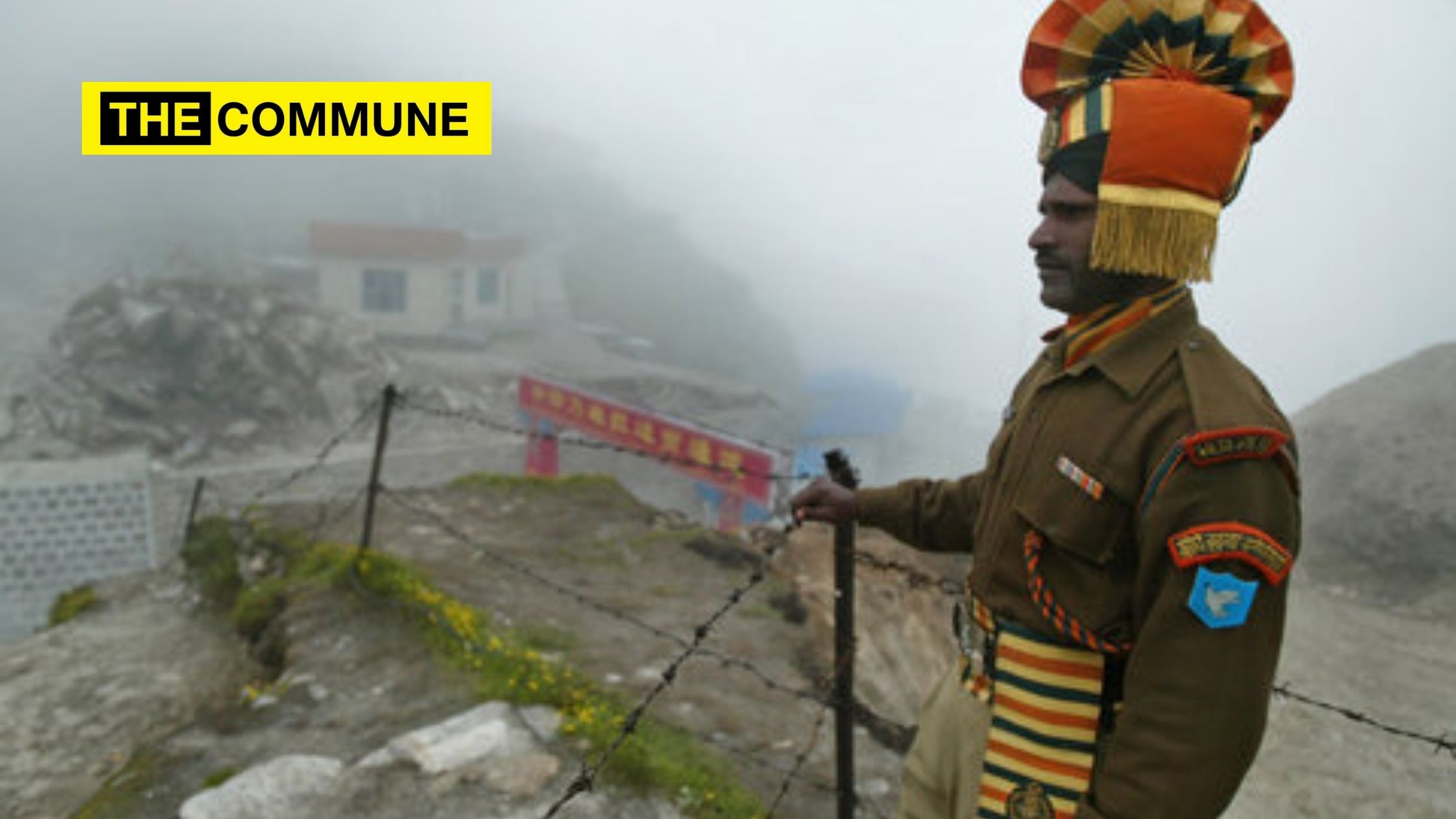
An Indian soldier standing guard at a border crossing between India and China in Sikkim
Image Credits: Diptendu Dutta/Agence France-Presse — Getty Images

A day after China officially acknowledged that its People’s Liberation Army (PLA) did suffer casualties at the bloody Galwan valley clash against the Indian Army, a barrage of hate messages targeted the Indian embassy’s Chinese social media account, reports Hindustan Times.

Chinese citizens wrote hateful and abusive messages, blaming New Delhi for the military stand-off and the death of their four PLA soldiers, whose names and stories were revealed by China yesterday, more than eight months after the June 2020 skirmish. Chinese state-run media too had painted the Indian Army as aggressors in the nearly nine-month military stand-off.

Thousands of abusive messages were posted on Chinese micro-blogging platform Weibo, after the communist government admitted that Chinese soldiers did die, albeit after eight long months. There is also strong evidence suggesting that the one-party state is hiding the real casualty figures.

Unlike Twitter, which is banned in China, Weibo is highly censored. The regime often uses the Chinese social media to keep an eye on its own people and quash any dissent. 

Given that high numbers of hate messages were allowed to be posted on the site, it is believed that the Chinese state is running a campaign to hide the fact from the Chinese populace that it has disengaged its troops in Ladakh. 

The acknowledgement of the deaths of the Chinese troops, and the awarding of honours and merit citations to the dead and injured soldiers, is nothing but an attempt to stir nationalistic feelings.

Two of the deceased soldiers, Chen Hongjun and Xiao Siyuan, who went to the Northwest Normal University and Henan Agricultural Vocational College, will be publicly eulogised by students and teachers in mourning activities. Already, photos of the four dead PLA soldiers allowed to circulate online had evoked a strong reaction from Chinese citizens and hundreds of millions of Chinese just learnt about their soldiers dying in a battle.

The Chinese government seems set to mine people’s emotions by allowing state media outlets to publish photos of the deceased from when they were young students.

This excerpt from a Global Times editorial puts it best on how the Chinese regime is stoking nationalistic fervour:

Back to the Galwan Valley clash last year, given the tense situation at that time, avoiding a comparison of casualties was more conducive to the stability of the border situation. Now that the round of border standoff has ended, we must make public the heroes’ deeds so that all Chinese people could admire and commemorate them to understand the weight of peace.

Reading between the lines, it is clear that emotions are running high among Chinese netizens over the soldiers’ deaths, and it is these emotions that the Chinese government seeks to exploit and turn into nationalistic zealotry. 

Furthermore, in viral propaganda videos purportedly released by the Chinese military, Chinese soldiers are shown to be outnumbered by Indian troops. The videos are meant to give the Chinese people the impression that it was the Chinese troops that showed restraint and valour while taking on aggressive Indian servicemen.

However, in another video which first surfaced on Twitter in May 2020, a Chinese colonel can be seen posturing aggressively and yelling at Indian troops, clearly indicative of the fact that it was the Chinese troops who provoked the stand-off. 


Click here to subscribe to The Commune on Telegram and get the best stories of the day delivered to you personally.
5 killed, 2 injured in separate blasts in Kabul

kabul blasts
Featured Image: Three explosions targeted Kabul city on Saturday | Image credits: TOLO News

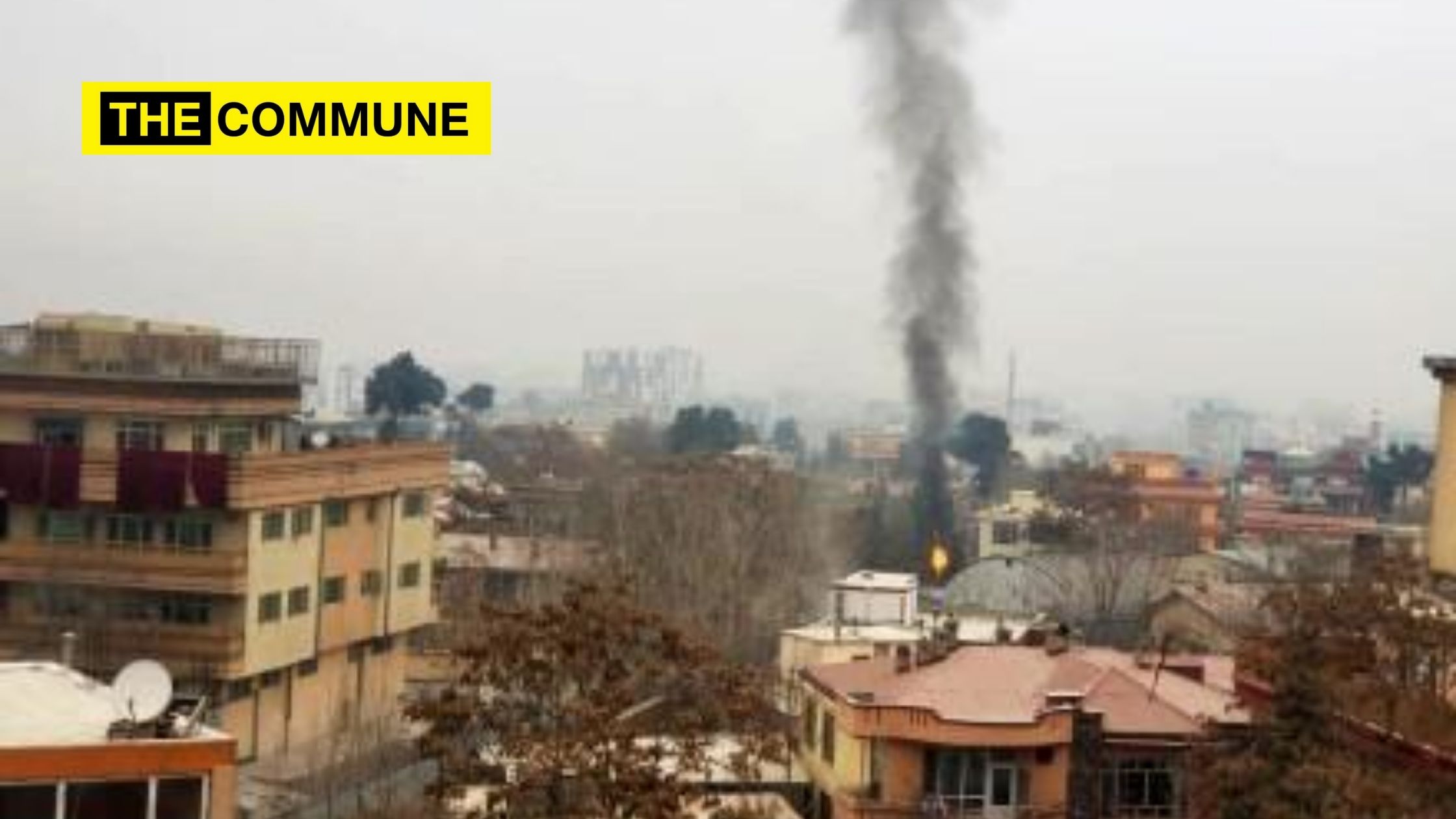
Afghan police officials confirmed that three separate bomb blasts shook the city of Kabul on Saturday, leaving at least five people dead and wounding two others.

The first explosion targeted a corolla vehicle, at around 8 AM in Darulaman Road in the west of Kabul, injuring two  people.

The second explosion occurred at around 8:15 AM in the Kart-e-Parwan area in Kabul’s PD4. The blast also targeted a corolla vehicle and killed three people, including a woman.

The third explosion in the Pul-e-Wahdat area in Kabul’s PD3 at roughly 1:20 AM, killing two people.

While no terror group has claimed responsibility for the blasts, the conflict-ridden region is home to the Islamic State (IS) of Khorasan and the Taliban. Between January 20 to February 19 this year, 51 people were killed and 70 wounded in security and crime incidents in Afghanistan. 66 security and crime incidents happened in Kabul during this time that indicates a slight increase in security and crime incidents in Kabul compared to a month before.

39 IED explosions, 8 cases of assassination and armed attacks and 20 crime incidents happened in Kabul between January 20 to February 19.

A country-wide rise in bombings, targeted killings and violence on the battlefield comes amid stalled peace negotiations between the Taliban and the civilian Afghan government.

Tensions in Afghanistan are high amid a string of targeted killings. Some are claimed by the local Islamic State affiliate, but many go unclaimed, blamed by the government on the Taliban who have denied responsibility for most attacks.

IS claimed that it carried out 82 attacks in Afghanistan in 2020, killing or wounding 821 people, including 21 assassinations. However, the perpetrators of many targeted killings are unknown.

Click here to subscribe to The Commune on Telegram and get the best stories of the day delivered to you personally.