A tragic incident at Seventh Day Adventist Higher Secondary School in Ahmedabad on 19 August 2025 has ignited widespread anger and prompted a police investigation a Hindu student was fatally stabbed by a junior Muslim student on the school premises. The suspect has been arrested, and authorities are probing the circumstances surrounding the incident.
According to initial reports, the Muslim student has attacked the Hindu student during school hours, and the victim later died during medical treatment that same evening. The victim’s family and local community members have held protests, expressing deep dissatisfaction with the school administration’s handling of the situation.
The victim’s family has accused the school of gross negligence. They allege that staff delayed taking the injured student to the hospital, which may have worsened his condition. Additionally, the family claims that instead of prioritizing medical assistance, school staff attempted to clean the crime scene, possibly compromising key evidence. Police are investigating these claims, including who may have tampered with the scene a potentially serious offense under Indian law.
School’s Controversial Past
This isn’t the first time the school has faced scrutiny. In 2016, the institution drew criticism after a teacher, Moses Adla, allegedly physically assaulted a fourth-grade student during an examination. Reports suggested the teacher pulled the student by the hair and hit him, causing facial injuries. Following parental protests, the school suspended the teacher. At the time, locals claimed he had previously assaulted several other students. A police case was filed at Khokhara police station.
In October 2024, the school again made headlines when it reportedly took around 200 students on an unauthorized field trip without notifying or seeking approval from the District Education Office. The incident was considered a violation of government rules, prompting the department to issue a legal notice and file a complaint with police.
Allegations of Harassment and Religious Bias
Following the recent student’s death, further serious allegations have emerged. The victim’s grandfather told the reporters that his grandson had been facing harassment by fellow students for weeks. This was reportedly communicated to the school administration in advance, but no preventive action was taken.
Additional claims have surfaced from a school cab driver, who allegedly filmed instances of Hindu students being targeted by Muslim peers. According to him, these videos were shown to school officials, but they failed to respond appropriately. There are also unverified allegations from parents that students were pressured to convert to Christianity or Islam, with complaints of religious harassment dating back several months.
Some parents further claim the Moral Science curriculum subtly encourages conversion, and others allege that certain staff members offered academic promotions in exchange for bribes, reportedly as high as ₹2 lakh.
The deceased student’s grandfather also alleged that some Muslim students once misled vegetarian Hindu students by offering them non-vegetarian food disguised as paneer. When this came to light, it caused significant unrest among the affected families. However, the school administration allegedly did not take any formal action in response.
Management and Oversight
The school is managed by the Seventh-day Adventist Church Organisation, which operates under the Ashlock Trust, part of a global educational network headquartered in Silver Spring, Maryland, USA. The Adventist network oversees over 7,800 educational institutions worldwide.
The school adheres to the policies and religious principles of the Seventh-day Adventist Church, and religious doctrine is said to influence school regulations and educational content.
The school’s principal, G. Immanuel, has also come under fire. Parents allege that he was made aware of earlier bullying and violent incidents but failed to intervene. The school is affiliated with the Council for the Indian School Certificate Examination (CISCE) and the Gujarat Board. Notably, Emmanuel also serves as the President of CISCE, raising concerns over a potential conflict of interest. Critics argue that this dual role may hinder impartial investigation or disciplinary action.
No official statement has been issued by Principal Emmanuel regarding the current case. The police investigation is ongoing, and authorities are expected to release further information as it becomes available.
The Dharmasthala “mass burial” issue exposed several leftist media and Dravidianist propaganda artists. The case unravelled within weeks of the allegations being made public.
As the masked man confessed to the SIT that a gang approached him in Chennai in December 2023.
“They asked me how many bodies I had buried when I worked in Dharmasthala. I told them the truth: that I had legally buried the bodies of pilgrims who came for salvation, through the police and gram panchayat,” the complainant stated. “But the gang insisted that I should say that the bodies were buried illegally. They pressured me… they changed my mind.”
The masked man revealed that the gang brought him to Karnataka, trained him on what to say in court, and even provided him with the skull and bone fragments he submitted as evidence which forensic reports later confirmed belonged to a man who died 30 years ago. He further confessed that he was instructed to coordinate his false testimony with another complainant, Sujatha Bhat, who had filed a missing person report for her daughter.
The SIT has since confirmed that the skull and bone fragments were of men who had died decades earlier, undermining the complainant’s earlier claims. Excavations at 17 sites identified by him yielded no evidence of mass graves. At one site, partial skeletal remains were found but were confirmed to be male, dating back 30 years.
As the case crumbled, political attention turned to identifying the “gang” behind the conspiracy. BJP MLA from Udupi, Yashpal Suvarna, and Independent MLA G. Janardhan Reddy publicly named Congress MP Sasikanth Senthil as the key conspirator. They alleged that Senthil, who served as Dakshina Kannada Deputy Commissioner, orchestrated the plot using leftist and Islamist networks he cultivated during his administrative tenure.
Now, you can identify two big players in this entire script – Sasikanth Senthil and The News Minute.
So, did Sasikanth Senthil connive with TNM to target the Dharmasthala temple and its administration?
Sasikanth Senthil x TNM – An Association That Already Existed
If we take a look at whether TNM and Sasikanth Senthil have already been involved, you can find a few video interviews of Senthil from the time of Karnataka Assembly elections in 2023.
At this time, Senthil was the Congress war room head. Subsequently, he got a ticket for the 2024 Lok Sabha elections – guess how.
Senthil was one of the brains behind scripting the “40% commission sarkar” narrative which helped the Congress to come back to power. This successful strategy reached the AICC top leadership’s notice, and he was given the ticket. And surprisingly for a first timer, he even won the election. How was this possible? Also, TNM played that able sidekick’s role very well to amplify this 40% commission sarkar narrative. Here’s an example:
Here’s where TNM comes into the picture – position him as a great person, grassroots leader, amplify his Dalit image and make it more humane.
In a series of interviews with TNM, Senthil was able to establish this as a “fact”.
Building The Persona: The Making Of A Crusader
From the outset, TNM positions Sasikanth Senthil not merely as a politician, but as a principled crusader – the “righteous underdog” who sacrifices a prestigious bureaucracy post for the ideals of democracy and social justice.
Senthil’s resignation from the IAS is portrayed as an act of supreme moral courage. The interviews repeatedly return to this story, cementing him as a man of principle who “sacrificed” a powerful post for the sake of democracy.
The interviews repeatedly frame Senthil through his Dalit background, intellectual gravitas, and purported courage in standing up to the “fascist” machinery of the BJP and RSS.
Instead of neutral scrutiny, TNM constructs a sympathetic, even heroic, mythos around Senthil, building him up as a visionary of equity, a voice for the subaltern, and a lonely warrior on an ideological battlefield. His personal anecdotes, philosophical musings, and sweeping critiques are presented uncritically, offering the audience a neatly packaged, morally superior protagonist.
Leading Questions, Softballs, And Unquestioned Narratives
At the heart of these interviews is TNM’s interviewing style, which can only be described as leading, prompting, and at times overtly softball. Senthil is asked repeatedly about his “politics” and why he “fights”, not to examine or challenge, but to facilitate and expand his narrative. Questions accept his premises at face value: his characterizations of the BJP, his reading of the Congress revival, and his harshest indictments of current governance all flow unimpeded.
When Senthil makes incendiary allegations on EVMs being unreliable, the government being “fascist,” or institutions being “captured”, the interviewers never counter, ask for evidence, or present a balancing view. TNM forgoes any semblance of critical journalism, choosing instead to echo Senthil’s language, accept sweeping generalizations, and allow speculative predictions about the fall of political opponents.
Even controversies, like flaws within the Congress or DMK, or nuanced debates over communal issues, are gently skirted. Senthil is allowed to dismiss allied failures or deflect probing questions with jargon-laden philosophies, while crucial aspects of his partisan role are left undisclosed to the audience.
Connecting The Dots: From Studio To Dharmasthala
This established modus operandi is crucial context for the Dharmasthala alleged mass burial issue. When reports surfaced, TNM was at the forefront, weaving a sensational narrative targeting the Dharmasthala temple administration, a story that now stands completely exposed as a fabrication. The so-called whistleblowers and accusers have publicly confessed that they lied.
The question that now screams for an answer is: who was the architect of this lie?
Given TNM’s documented history of being that loyal sidekick and mouthpiece, as well as acting as an uncritical megaphone for Sasikanth Senthil’s ideology, a deeply troubling possibility emerges. Were they not just aligned in ideology but also in action?
Did Sasikanth Senthil, the politician TNM so carefully positioned as an intellectual crusader against “hierarchies,” provide the political impetus and the ideological framework for the story? Did he feed TNM the unverified allegations, secure in the knowledge that their “journalists” would never ask him for proof, just as they never had before? Did TNM, in turn, willingly become the propaganda arm, launching a calculated attack on a Hindu institution based on nothing but the word of a political ally they were committed to promoting?
The synergy is unmistakable. The same outlet that built Senthil’s persona through leading questions and softball interviews appears to have used the very same tactics to build a fictional narrative around Dharmasthala. They took unsubstantiated claims, refused to apply journalistic rigor, and presented them as a definitive indictment, all to serve a political narrative and target a perceived ideological opponent.
What TNM Did
Is Sasikanth Senthil behind the Dharmasthala conspiracy? We don’t know.
Is the “Chennai gang” referred to by the ‘masked man’ Chinnaiah somehow connected to those at TNM and the Congress MP? We don’t know.
Did The News Minute and Congress MP Sasikanth Senthil hatch an elaborate plan to settle scores with Dharmasthala temple management? We don’t know.
Anybody can allege anything through conjectures and weave a compelling narrative.
And that is exactly what TNM did in the Dharmasthala case. Weave a story without any proof.
Subscribe to our channels on Telegram, WhatsApp, and Instagram and get the best stories of the day delivered to you personally.
The Dharmasthala “mass burial” claims crumbled in a matter of weeks as the ‘whistleblower’ and the lady whose alleged daughter went allegedly missing years ago in the holy town confessed that what they had said was a lie.
While the likes of The News Minute tried to push the propaganda to a level, they were ably aided by a group of YouTubers in the Tamil media space.
Several of them had begun by talking about the Sowjanya murder case back in March/April 2025.
Following this most of them received gag orders from the court that prevented them from peddling lies against the revered Hindu institution – Dharmasthala.
Despite this, there were many who kept pushing conspiracy theories and all kinds of concoctions that were alienish in concept – it was very clear that what was being said was purely to generate views and confuse the viewer. Let us take a look at a few such YouTubers who aided in keeping the lie afloat.
With a blatant disregard for factual accuracy and verification, Karthik, the host, repeatedly builds entire videos around unconfirmed rumors, graphic allegations, and speculative theories, often presenting them as breaking news. He frequently admits that key claims such as the discovery of human remains lack official confirmation, yet he dedicates significant airtime to detailing them. This “report first, verify later” approach prioritizes sensationalism over truth, misleading viewers and spreading unverified information that can cause public panic, harm reputations, and distress families of missing persons.
Furthermore, the content actively interferes with serious criminal investigations. By disclosing specific, unverified details and speculative narratives, he is prejudicing public opinion. He also exploits emotional and sensitive topics for engagement and monetization. He manipulatively focuses on the anguish of grieving families, uses horror-movie language, and juxtaposes tragic themes with jarring advertisements. This not only trivializes human suffering but also commercializes tragedy, reducing serious allegations to clickbait fodder.
Another major issue with these videos is the politicization and polarization of the issues. He frames the entire issue as a political battle, amplifying partisan accusations without providing balanced reporting. He also violates ethical and legal boundaries, including potential contempt of court by discussing topics covered by gag orders and engaging in defamatory speculation about individuals. His rhetoric encourages distrust of authorities and subtly promotes vigilante sentiments, which can have dangerous real-world consequences. Here is a look at how many videos he has posted on the issue and the clickbait cover pictures and headlines:
Nakkheeran & Damodaran Prakash
Nakkheeran and Damodaran Prakash have severely maligned the Dharmasthala institution by presenting unverified, graphic allegations as established facts. They sensationalized claims of mass murders, sexual violence, and institutional cover-ups without providing credible evidence or official corroboration. By naming specific individuals, including temple administrators and political figures, they engaged in defamatory storytelling that pre-judges guilt and undermines due process.
Their use of horrific, detailed narratives including unverified stories of acid attacks, child victims, and organ theft, exploiting emotional triggers to provoke public outrage. This irresponsible framing not only damages the reputation of the temple and its associated individuals but also risks inciting communal tension and vigilante action. Their content disregards journalistic ethics, judicial boundaries, and the basic necessity of verification, substituting truth with conspiracy-driven entertainment.
Jeeva Today
Jeeva Today posted only one video but it was damaging enough. He once again made unsubstantiated accusations like the other YouTubers. The channel repeatedly presented the whistleblower’s claims as verified truth, weaving together decades-old unrelated cases to construct a false narrative of systematic abuse and murder linked to the temple. Using graphic language, clickbait titles, and exaggerated victim counts, Jeeva amplified baseless theories of a high-level cover-up involving police, politicians, and the judiciary. The channel’s reliance on speculative storytelling over factual reporting eroded public trust in institutions and prejudiced ongoing investigations. By framing the temple administration as guilty without evidence, Jeeva not only maligned a respected religious institution but also endangered the possibility of a fair legal process.
P.S: It has been brought to our notice that Jeeva Today posted several videos making unsubstantiated allegations about the temple administration.
Jeeva today posted only one video is wrong @TheCommuneMag . I remember seeing 3-4 a compilation of few here, tried adding dates. Channel has close to 9.6L subs and the guy without any concern goes on blaming institution, trustee and temple. https://t.co/pLg47wPhAgpic.twitter.com/YB3PDM6zBt
Roots Tamil contributed to the defamation of Dharmasthala by politicizing the allegations and spreading unverified claims under the guise of political commentary. The channel hosted discussions that framed the issue as a partisan battle, accusing BJP and RSS leaders of orchestrating a conspiracy without providing proof. It By blurring the lines between allegation and fact, Roots Tamil reinforced a toxic narrative that the temple and political entities were complicit in horrific crimes. This approach not only damaged the institution’s standing but also polarized public discourse and undermined the integrity of the investigation.
Edison Vlogs
Edison Vlogs engaged in reckless sensationalism by portraying themselves as heroic investigators uncovering a “D-Gang” operating within Dharmasthala.
While the channel posted only 2 videos, including an “interview of a key witness, he presented unverified claims of hundreds of murders and burials as fact, using dramatic visuals, speculative narration, and emotionally charged language to heighten fear and anger. By detailing alleged secret investigations, naming locations, and speculating about victim counts, Edison Vlogs not only spread misinformation but also jeopardized the safety of sources and the integrity of the official probe. The channel’s self-aggrandizing style and conspiracy-laden content misled viewers, eroded trust in lawful institutions, and caused significant reputational harm to the temple and its community.
News I Tamil
News I Tamil exacerbated the damage through highly inflammatory and unsubstantiated reporting, claiming thousands of murders and a systematic cover-up at Dharmasthala. The channel relied on anonymous sources, manipulated emotional anecdotes, and presented speculative numbers like 4,000 or 9,000 victims without any factual basis. By directly accusing temple authorities and political figures of involvement in rape and murder, and by mixing in communal elements such as targeting Brahmin women, the channel fueled social hostility and distrust. Its disregard for judicial gag orders, sensationalized storytelling, and monetization of tragedy demonstrated a clear abandonment of journalistic ethics, further harming the institution’s reputation and public trust.
Yoot Evidence
The Yoot Evidence channel’s videos were also indulging in blurring the line between allegation and verified fact. The core failure lies in its treatment of the whistleblower’s claims – graphic, unverified accounts of hundreds of burials, torture, and sexual violence – as established truth. By narrating these horrific details without forensic or legal corroboration, the video primes viewers to accept these allegations as undeniable reality, pre-judging the case and undermining the principle of ‘innocent until proven guilty’.
Furthermore, the videos construct a vast conspiracy narrative by guilt-by-association, linking the current allegations to decades-old, unrelated missing persons cases without any forensic connection. This bundling of tragedies creates a false impression of a long-running, systemic conspiracy. This is compounded by the use of inflated, un-sourced numbers (“hundreds of bodies,” “400-500 missing women”), which magnify the scale of the alleged crimes without evidence.
Despite acknowledging a court gag order, the video strategically implies the involvement of the temple administration and political networks through leading questions and suggestive framing, creating a perception of a cover-up while technically avoiding direct naming. This feigned neutrality masks a clear accusatory stance.
Ask Raghulan
One of the poorest videos in terms of information – the YouTuber doesn’t even know that the place in question is Dharmasthala and not Dharmashala. We bet he doesn’t know where the latter is located.
He pushes the unverified facts as established facts, without providing a single piece of credible evidence. This baseless narrative is designed purely to provoke outrage and fear. He repeatedly undermines India’s democratic institutions, pre-judging the investigation and judiciary by declaring a cover-up before it has even concluded. This erodes public trust in law enforcement and the courts. Furthermore, the commentary escalates into incitement by openly calling for violent vigilantism, wishing for a “dictator for a day” to execute the accused, thus explicitly rejecting the rule of law and due process. The content is saturated with harmful conspiracy theories, including baseless claims of government censorship and international espionage, and promotes a generalized distrust of all religious institutions.
Saravanan Decodes
The videos from “Saravanan Decodes” represent a severe and dangerous escalation in the irresponsible coverage of the Dharmasthala case. Saravanan openly defies legal authority by knowingly violating a court-issued gag order, first attempting to circumvent it and then misleadingly claiming it was “removed” to justify publishing highly prejudicial content. The content itself is egregiously sensationalist, employing graphic, horror-movie-style descriptions of unverified sexual violence and murder purely for shock value and emotional manipulation. He completely abandons any pretense of journalistic impartiality by presenting the whistleblower’s allegations as undeniable fact, conducting a full “trial by media” and directly implicating the temple administration and specific individuals in monstrous crimes without evidence.
Furthermore, the videos weave decades of unrelated cases into a vast, unverified conspiracy theory involving organ theft, murder, and a complete systemic cover-up by police, investigators, and even the judiciary. This narrative is designed to poison public opinion, incite outrage against the accused, and irrevocably undermine trust in all state institutions.
Paari Saalan
The Paari Saalan interview with Varun, while posing as a thoughtful discussion, blurs historical facts, religious rules, and unverified allegations into a single, misleading narrative. It uncritically amplifies the whistleblower’s grave claims of mass burials and sexual violence, presenting them as plausible truth despite the lack of forensic or judicial verification. Furthermore, Paari Saalan irresponsibly links decades-old, unrelated missing persons cases to the temple administration, implying a long-running conspiracy without any evidence.
They directly accuse the Dharmadhikari family of suppressing crimes and wielding excessive power, blending historical context with speculative allegations. By emphasizing the temple’s Jain origins and its shift towards Hinduism, the narrative injects a communal undertone, framing the issue as one of religious and financial dominance rather than focusing on factual inquiry.
Sha Boo Three
RJ Sha’s content often conflates unrelated historical cases, such as the Saujanya (2012) and Padmalatha (1986) incidents, weaving them into an unverified grand conspiracy tied to the temple administration. This not only misleads viewers but also prejudices public perception against the institution. The channel also misrepresents legal processes, criticizing gag orders as suppression of free speech rather than necessary judicial measures to ensure a fair investigation. Furthermore, the videos risk inciting communal and regional tensions by framing the issue in divisive terms, such as highlighting the whistleblower’s ethnic identity or suggesting broad-based corruption across all government and media institutions.
Overall, the entire set of YouTubers in Tamil Nadu, used the unverified claims made by the masked man as gospel truth, tarnished the image of Hindu institutions, made outlandish claims – be it the “gory details”, the numbers of allegedly dead/missing women, and what not. These videos were made purely for driving engagement and monetization.
Several other prominent Tamil YouTubers such as Madan Gowri, Bogan, etc had been posting videos on the Sowjanya murder case and connecting it to the Dharmadhikaris of Dharmasthala. Owing to court orders, the videos were removed, yet some still remain.
Despite the court orders, these videos in Tamil Nadu have been peddling the anti-Hindu Dravidianist narrative and portraying all Hindu institutions as evil and dangerous.
Subscribe to our channels on Telegram, WhatsApp, and Instagram and get the best stories of the day delivered to you personally.
Actor Joseph Vijay, now parading as a politician, loves to project himself as a messiah of morality. Like a typical DMK lackey, he has been trying to brand RSS as a “divisive force” in Tamil Nadu.
It is hardly surprising he speaks that way — after all, he, his party, and his inner circle all come from the same mould – be it his father, his advisor Aadhav Arjuna (son-in-law of Lottery Martin), his another advisor is Jhon Arockiasamy, or his association with Atlee.
But if Vijay truly wants to speak of divisive forces in Tamil Nadu, he need not look beyond the missionaries and evangelists of his own religion. For decades, their actions—cloaked in the garb of charity and faith—have fractured communities, grabbed lands, and stoked enmity.
Let’s take a look one by one.
Conversions: Preying On The Vulnerable
Missionary groups in Tamil Nadu have long been involved in aggressive proselytization, uprooting native people from their culture.
From Perambalur and Virudhunagar villages to Theni and Madurai, reports have shown evangelists luring poor children with gifts, coercing families with promises of healing, and exploiting vulnerable communities like the Narikuravars.
1. May 2022 – Devendra Kula Vellalar Family Harassed To Convert
A woman tried to set herself on fire in front of the Ramanathapuram District Collector Office demanding action against few people in her village for forcing her and her family to convert to Christianity.
2. May 2024 – Converting Children Without Knowledge Of Parents
Missionaries reportedly targeted young, innocent children in the districts of Theni and Madurai in Tamil Nadu, attempting to convert them to Christianity without their parents’ knowledge by promoting the teachings of Jesus Christ. The Hindu Munnani effectively halted this activity.
3. August 2024 – Bibles Given To Govt School Students
Christian missionaries were distributing sweets and Bibles to schoolchildren near Perambalur Government Higher Secondary School and the District HQ Hospital. Hindu Munnani activists intervened, accusing the missionaries of attempting to lure children into conversion.
4. January 2025 – Mass Conversion Attempt At Tiruchuli
Christian missionaries reportedly conducted a door-to-door campaign in villages of Tiruchuli Union, including Kulasekaranallur, Konapanendal, Manjampatti, and Madathupatti, aiming for mass conversions. The Hindu Munnani intervened, halting the alleged conversion efforts.
5. February 2025 – 27 Missionaries Apprehended For Denigrating Hinduism
Hindu activists and local villagers in Thanjavur’s Peravurani apprehended over 27 Christian missionaries accused of spreading religious propaganda and denigrating Hinduism among students and the public at the gates of Peravurani Government School. They were subsequently handed over to the police for further action,
6. March 2025 – Christian Nun Enters Govt Hospital To Convert
A Christian nun allegedly visited the Tirunelveli Government Medical College Hospital, and attempted to convert patients by claiming that “Jesus will cure your illness.” The Hindu Munnani raised concerns and called for legal action against such activities.
7. July 2025 – Missionary Converts Narikuravars In Trichy
Christian missionary Vincent was reportedly proselytizing the Narikuravar, a semi-nomadic tribal community, in Madurapuri panchayat. Upon intervention by Hindu Munnani activists, the local police issued a warning to Vincent and advised him to leave the area.
8. July 2025 – Group Arrested For Funding Of Conversion Activities
Three individuals, including a man from Tamil Nadu, were arrested for allegedly funding a religious conversion ring associated with a Christian missionary group. The police suspect that they received financial assistance from abroad.
These are not isolated missteps but a systematic attempt to weaken cultural roots and engineer demographic change.
These conversions don’t just divide communities but break bonds within the family as well. Those who get converted don’t stop at following their new religion but also go on to force their ideology onto other members of the family and the community. And once a large community gets converted, the real native identity of an entire community gets erased.
Church Planting And Land Grab
Church planting has increasingly become a front for systematic land encroachment, cultural erasure, and demographic aggression. What begins with a makeshift cross or a small prayer hall on common or sacred land soon balloons into a sprawling church complex, complete with claims over surrounding areas. From forest hills and poromboke lands to temple pathways and water bodies, nothing has been spared. These encroachments are not accidental—they are part of a calculated expansionist strategy by certain evangelical groups, leaving behind a trail of communal friction and legal battles.
1. Vajragiri Hill Encroached
Large swathes of Vajragiri Hill near Chengalpattu, home to a 1,500-year-old Shiva temple, have been encroached upon by Christian missionaries, who have built a church, erected crosses, and painted “Long Live Mary” across the sacred site. Devotees have been obstructed from accessing the temple as ancient paths were blocked with barricades and rubbish. Despite repeated complaints, the Forest and Revenue Departments have failed to act, forcing locals to protest. With nearly 60 acres of forest and poromboke land under illegal occupation, Hindu Munnani has now petitioned the Supreme Court seeking eviction of the encroachers and restoration of the temple’s sanctity.
2. Pathirakaliamman Temple Vs CSI Church
A four-decade-long land dispute between the Pathirakaliamman Temple and a CSI church in Subramaniapuram, Vembar, escalated when members of both sides demolished a wall marking the boundary.The police booked 27 individuals under various sections, with the dispute recently settled in favor of the temple.
3. Cuddalore Devanathaswamy Temple Encroached
St. Joseph Matriculation Higher Secondary School in Cuddalore was found to have occupied land legally owned by the historic Devanathaswamy Temple for over five years, despite clear directives from the Madras High Court to vacate.
These are instance that highlight how they eat into Tamil Nadu’s hills, villages, and heritage—slowly redrawing boundaries not just on the map, but in the cultural soul of the state.
Hate Speech By Pastors
If grabbing land is how missionaries seize territory, then hate speech is how their pastors poison minds. Figures like Ezra Sargunam, Mohan C Lazarus, George Ponnaiah, and Bishop Sam Esudoss have made it their life’s mission to spit venom at Hindu gods, mock centuries-old traditions, and brand native culture as evil—all under the garb of preaching. This is not spirituality, it is a calculated campaign to humiliate and divide.
Mohan C Lazarus
Mohan C. Lazarus, the controversial Christian preacher behind Jesus Redeems, has repeatedly targeted Hinduism with hate speech. In 2018, he referred to Tamil Nadu temples as “in the clasp of Satan” and “habitats of devils,” and mocked Hindu deities, prompting FIRs under IPC Sections 153A and 295A from BJP and VHP functionaries. In 2021, the Madras High Court quashed criminal proceedings against him but warned that his extreme rhetoric could incite hatred, violence, and bloodshed, emphasizing that religious expression must not harm the rights or sentiments of others. In 2022, Lazarus publicly called other faiths “evil” and urged people to turn away from them, with journalists covering these statements receiving threats from his assistants.
Ezra Sargunam
Ezra Sargunam, the late founder of the Evangelical Church of India (ECI), was known for his provocative and often inflammatory remarks against Hinduism.His speeches and actions have sparked significant controversy and backlash over the years.
In a viral video, Sargunam called Hinduism “an artificial religion” created under British rule and urged followers to physically attack anyone defending it, saying they should be “punched until they bleed.” His statements drew widespread condemnation for inciting violence and threatening communal harmony.
Sargunam allegedly made derogatory remarks about the Vanniyar community during an event in Chennai. The Perambalur court summoned him in connection with these comments, which were deemed offensive and degrading
George Ponnaiah
Father George Ponnaiah, a Catholic priest in Tamil Nadu, was arrested for allegedly spreading hate and enmity between religious groups through his speeches
He said that the Tamil Nadu government provides us with free footwear so that we do not get rash or scabies from stepping on Bharat Mata, and that Bhuma Devi is a dangerous woman.
He warned Hindus saying, “We (minorities) were 42% once and now we are 62% of the total population in Kanya Kumari. Soon, our population will cross 70%. We will continue to increase our population and no one can stop it. We tell this as a warning to Hindus. We do not fear BJP or RSS. You cannot stop us.”
He further stated that Prime Minister Narendra Modi’s and Home Minister Amit Shah’s final years will be miserable. “If the God we believe in is still alive, we shall watch Amit Shah and Modi being devoured by dogs and worms”, he had said.
Last Word
Will Joseph Vijay have the guts to call out the very forces that his own religion shelters? The real agents of division in Tamil Nadu are the missionaries and evangelists of his own faith—spreading hate, enforcing conversions, breaking families, and splitting communities. From Mohan Lazarus urging Hindus to be humiliated, to Ezra Sargunam inciting violence, and church-backed land grabs that swallow sacred hills, it is Vijay’s cult that undermines social harmony.
Subscribe to our channels on Telegram, WhatsApp, and Instagram and get the best stories of the day delivered to you personally.
Irony died a thousand deaths with the Communist government of Kerala inviting DMK president and Tamil Nadu Chief Minister M.K. Stalin to attend the Global Ayyappa Summit (International Ayyappa Convention), scheduled at Pamba, the base station for the sacred Sabarimala temple.
This has to be seen as a deliberate insult to crores of Ayyappa devotees, because the DMK’s very foundation is soaked in anti-Hindu venom.
How EVR Insulted Ayyappa And Ayyappa Devotees
EV Ramasamy Naicker (hailed as ‘Periyar’ by his followers), is the ideological fountainhead of today’s DMK.
EVR reserved some of his vilest words for Lord Ayyappa and his devotees.
He sneered at lakhs of Ayyappa pilgrims as “agents of filth and disease,” accusing them of polluting cities and spreading illness in the name of devotion. He mocked their discipline, alleging that Ayyappa bhaktas were hypocrites who flouted rules, smoked openly in the streets, and created chaos while pretending to be pious.
“The Ayyappan season has begun, and under the guise of devotion, these so-called devotees are polluting cities, creating health hazards, and spreading diseases among local residents. Claiming moral superiority, they garland themselves and proclaim righteousness while indulging in all kinds of immoral behavior. Laws prohibit smoking in public places, yet they flout them completely, roaming with beedis in their mouths. Even while riding two-wheelers, they puff smoke creating trouble for people around them.“, EVR said.
Most offensively, Periyar ridiculed the sacred legend of Lord Ayyappa’s birth (from the union of Lord Shiva and Mohini, the female form of Lord Vishnu). With hate-filled contempt, he described it as a “perverse unnatural act,” sneering that Ayyappa was “born of a man with another man.”
“The story told about this birth is such that even those with good sense and virtue should feel ashamed to hear it. This is a description of unnatural behavior, a man born from a man. Does nature allow this? No other living beings behave like this.“, EVR had said.
DMK’s Anti-Hindu Rhetoric
The Dravida Munnetra Kazhagam (DMK), headed by M.K. Stalin, has long carried the legacy of anti-Hindu rhetoric of the Dravidianist ideology. Stalin himself has publicly questioned Hindu rituals and traditions, and his party cadre often deride Hindu practices as “superstitions.”
Udhayanidhi Stalin, his son and Tamil Nadu minister, notoriously likened Sanatana Dharma to “malaria and dengue” and called for its eradication—triggering nationwide outrage and a slew of legal complaints.
DMK MP A. Raja has made repeated incendiary statements targeting Hinduism. At a Dravidar Kazhagam event, he went as far as calling Hinduism a “menace to India and the world,” likening it to HIV or leprosy as a social stigma spread through caste.
“You are a Shudra until you remain a Hindu. You are a prostitute’s son until you are a Shudra. Until you are a Hindu, you are a Panchama (Dalit) and until you are a Hindu, you are an untouchable.”, DMK MP A. Raja had said.
CPI(M) Mimicking The DMK Playbook
Recently, the DMK organized an “International Murugan Conference” to parade itself as a patron of Tamil religious traditions to cover up the “Karuppar Koottam” episode of 2020 where DMK-supporting Dravidianists unleashed abuses on Hindu God Murugan and the sacred hymn of Kandha Sashti Kavasam.
Now, after the humiliating backlash from 2018 Sabarimala protests—when lakhs of devotees rose up against the LDF government’s assault on temple traditions—the Kerala Communists are desperate to whitewash their image. Their solution? The same DMK trick: stage Hindu conferences for optics, while continuing to pander to their vote-bank politics.
An Insult To Ayyappa Devotees
But with a Hindu resurgence sweeping across India, they are scrambling to wear a mask of “inclusivity.” These conferences are nothing but political tokenism—designed to hoodwink devotees while continuing their old agenda in practice.
By inviting him to preside over a convention of Ayyappa devotees, the Kerala Communist government has done more than insult Hindu society—they have directly mocked the devotion of millions of Ayyappa bhaktas, platforming and elevating a person who carries forward EVR’s visceral contempt for Lord Ayyappa.
Subscribe to our channels on Telegram, WhatsApp, and Instagram and get the best stories of the day delivered to you personally.
The recently concluded conference of actor-turned politician Vijay’s Tamilaga Vettri Kazhagam in Madurai attempted to position him as the “next MGR“. If one thought this was a new direction he was taking at brand and image building, think again.
If we pause to take a look at the filmography of Vijay over the past decade or so, there is a recurring pattern – where he portrays himself as a saviour of the masses as well as political rhetoric where he is positioned as the only heir of MGR – for both his cinematic and political legacy.
Vijay tried to reiterate this at the conference in Madurai on 21 August 2025. The massive banner on the stage had 3 photos – Vijay flanked by Annadurai and MGR on both side.
Annadurai is not just a reference to him being rooted in the Dravidian ideology but also the year 1967, the year in which DMK came to power. MGR’s reference harks back to 1977, when the AIADMK-led alliance stormed to victory in the state elections. These two years have been references in Vijay’s political speeches and press releases saying that 2026 will be a repeat of what happened in 1967 and 1977.
However, a closer analysis of history, political acumen, and ground reality reveals a stark truth – Vijay is, and can only ever be, a pale imitation, a ‘wannabe’ who fundamentally
misunderstands the very legend he seeks to emulate.
Vijay Trying To Launch Himself As Political Hero: A Look At His Filmography From 2010
Sura (2010) – While this was a forgettable film for all kinds of reasons, Vijay plays a fisherman who fights against a corrupt politician trying to take over his village’s land. It has a saviour theme because he defends the livelihood of poor fishermen against exploitation. He makes indirect political statements, focusing on corruption and social justice.
Velayudham (2011) – He plays a common man who turns into a vigilante superhero to fight crime and corruption. In this, he is strongly portrayed as a protector of the people and the film is peppered with themes of justice and empowerment of the common man.
Thuppakki (2012) – Vijay plays an army officer battling terrorists to protect the city, a social protector guarding people and city from terrorism threats. The film highlights patriotism and national security.
Thalaivaa (2013) – Vijay plays a young man who enters politics to fight social injustice and corruption. The saviour/political hero theme is very strong; he becomes a political leader fighting for the oppressed. He makes explicit political statements with added elements of leadership, social reform, and grassroots empowerment. This is when he got belt treatment from Jayalalithaa for having the title Thalaivaa – Time To Lead. Vijay had to prostrate and submit himself in servitude at Kodanadu for this film to get released. This man submitted his self-respect just so that his film could get released and he has the audacity to talk about self-respect and being a slave today.
Kaththi (2014) – In this film, he plays dual roles with one being a social activist fighting for farmers’ rights. Given the theme, it shows him standing against corporate exploitation. He makes direct political statements on corporate greed, farmer issues, and social justice.
Theri (2016) – Vijay is a former cop protecting his daughter and fighting criminals. He portrays a savior of his family with broader social justice undertones. Some social themes around corruption, women and child safety and law enforcement. Again turns to vigilantism to uphold justice.
Mersal (2017) – Vijay plays triple roles, including a doctor fighting medical corruption. The saviour image is very strong in this one as he fights for the common man’s right to healthcare. His introduction scene has an MGR song playin. The father character is shown as a “Tamil” and he stirs that sentiment too. He made explicit political statements with critiques of government policies especially GST and healthcare corruption. In a notable and controversial scene, Vijay’s character Vetri addresses the media, questioning why Singapore, which levies only 7% GST, is able to provide free healthcare to its citizens, whereas India, which levies 28% GST, cannot. He also criticizes the high GST on medicines and points out inconsistencies such as the lack of GST on liquor.
Sarkar (2018) – Vijay plays a business tycoon who returns to vote and fights political corruption. The political critiques of this film resulted in a lot of controversy. The ruling AIADMK government accused it of attacking their welfare schemes, viewing the theme against freebie culture as a direct insult. Protests led to demanded cuts in scenes and dialogues. Additionally, a character portrayed as a corrupt politician was seen as a negative depiction of V.K. Sasikala, further intensifying political backlash and legal challenges.
Bigil (2019) – This film potrayed him as as an inspiration and champion of women’s empowerment. In this film also there are mnay MGR references through songs and mannerisms.
Master (2021) – Vijay plays a professor confronting a criminal exploiting children; he is shown as the protector of the vulnerable, advocating education and justice.
Leo (2023) – Vijay plays a fiery character with strong justice-driven motives. However, the film glorified violence – something MGR would have abhorred.
The Greatest of All Time (2024) – Vijay plays a Special ATS character but sadly the film seemed to promote drinking and smoking – MGR would be rolling in his grave!
MGR’s Political Legacy
MGR’s rise in Tamil Nadu was a product of decades of political struggle, not just cinematic popularity. He built his political career through grassroots engagement, navigating complex alliances, and demonstrating deep political acumen.
Multiple Election Battles And Real Political Work
The 1967 DMK victory was a grand alliance of forces, Swatantra Party (Rajaji), Communists, Forward Bloc, Muslim League, united under the powerful oratory and intellectual heft of C.N. Annadurai and a cadre of fierce leaders like Karunanidhi. MGR’s own 1977 victory came after 15 years of rigorous political apprenticeship within the DMK. He contested three key elections before becoming Chief Minister in 1977, demonstrating his resilience and political acumen.
Unlike a star persona relying purely on fame, MGR built his political career through grassroots engagement, understanding policy, and navigating complex political alliances. His split from the DMK was not just personal but ideological, which led to the formation of the AIADMK party that dramatically shifted Tamil Nadu politics.
MGR’s victory was facilitated by his ability to unite disparate political entities, including the Congress party and various social groups, under his leadership. His political success was a combination of calculated alliances, his charisma, and a genuine connection to the aspirations of the Tamil people. This strategic coalition-building showcased MGR’s statesman-like qualities and long-term vision.
MGR was deeply respected for his sincere dedication to the welfare of the people. His background reflected a true political passion, starting from being an actor, he used his popularity responsibly to build political capital, but his commitment to politics was unwavering. His leadership inspired loyalty and mass support, which were rooted in more than just his star power.
The Depth Of Political Experience
MGR’s politics was forged in the fiery debates of the Dravidian movement. He understood policy, administration, and the grit of political organizing. In stark contrast, Vijay’s party lacks any depth. It has no seasoned spokespersons, no clear policy framework beyond vague populism, and a core support base of fans who, when asked about policy, can only chant “Thalaivar” – quiz them on basic issues with the present government or what can be rectified – you’ll hear crickets. This encapsulates the intellectual vacuum at TVK’s core.
The Substance Of The Symbol
MGR’s popularity was undeniably built on his film image, but it was cemented by a perceived authenticity and a narrative of betrayal that resonated emotionally with the masses. When he broke from the DMK, he carried an aura of a wronged hero. Vijay, however, enters a fray where he is just one among many celebrities. His attempts to spark a similar emotional wave fall flat, as he is competing not just with established parties but with the legacies of Rajinikanth, Kamal Haasan, and other stars whose fans he has alienated.
Vijay’s Political Venture: A Contrasting Reality
While MGR was a hero to everyone in the state because he carried his charisma from the silver screen to the political arena, working for the people and gaining their trust over the decades, Vijay lacking in political experience aims for the CM chair with just one election and no groundwork done by him, on his own. As mentioned above, the voter base is primarily his teenager fans who are enamoured by his onscreen persona – they are still in that bubble that believes he will carry it to the ground.
Limited Political Experience and Organizational Strength
Unlike MGR, Vijay’s political journey is in its infancy. His influence largely comes from his cinematic fame rather than a robust political network or ideology. His party and movement lack veteran politicians, credible spokespersons, or policy experts to effectively translate popularity into political power. This nascent stage of political organization makes it difficult for Vijay to sustain serious political momentum.
Celebrity Versus Political Leader
Vijay’s attempt to portray himself as a savior or messiah can largely be seen in his movies mentioned above where he plays characters who fight injustice, corruption, and inequity. These saviour roles strongly echo MGR’s cinematic legacy of championing the underdog, but they remain within the realm of fiction rather than grounded political achievements.
Mismatch In Political Substance
While Vijay’s roles and speeches promote ideals of social justice and change, there remains a lack of clear political framework and policies behind his real-world political initiatives. His public messaging is fragmented, a copy-paste job, repeats like a broken tape in the recorder and occasionally sways between populist echoes and entertainment-driven rhetoric, which contrasts starkly with MGR’s cohesive political ideology and sustained governance record.
His political statements and moves often attract skepticism regarding his ability to navigate the realpolitik of Tamil Nadu’s fiercely competitive political stage. MGR stood for a strong Tamil Nadu, despite being of Malayali origin, he stood for Tamilians and equally patriotic. However, Vijay seems to be sowing seeds of hate and secessionism right at the infancy stage of his party.
The Insurmountable Hurdles: Why TVK Is Doomed to Fail
Let’s take a look at why TVK is bound to fail. A new party thrives on alliances. MGR had them. The BJP or other smaller parties would only ally with TVK if it could transfer votes. TVK has no leverage to demand seats because its actual vote share is a big unknown. It is a party with no bargaining power.
While there is a lot of hype at the moment, we are not sure how it will be once Vijay starts canvassing full time. Will the hype translate to votes? Only time will tell. Will the traditional DMK, ADMK, BJP voters shift base – unlikely. It is only likely that the fresh batch of first-time voters who will vote for TVK.
TVK’s votebank is scattered – it is that vote of the indecisive voter, a vote that is insufficient to win seats in a first-past-the-post system. His core vote is limited to a fraction of his film’s audience, which translates to maybe one lakh votes, that is basically, electorally insignificant.
The Imitation Game is Over
Vijay’s political project is based on a fundamental misreading of history. He sees MGR’s stardom but is blind to his three decades of political grinding, his strategic mind, and the unique historical moment he captured. Vijay possesses the celebrity but none of the substance. He has the ambition but none of the alliance-building skill. He has the fans but none of the broad-based coalition needed to win.
MGR was a political phenomenon who used his stardom as a tool. Vijay is a star pretending to be a politician, using politics as an extension of his brand. The Madurai conference, with its empty boasts and lack of concrete agenda, proved this. He can mimic the words and the poses, but he can never replicate the context, the struggle, or the genuine political capital that made MGR a legend. The throne of MGR remains occupied by his legacy, and Vijay’s attempt to claim it only reveals him as a pretender, forever in the shadow of the original.
Kaathavaraayan is a political writer.
Subscribe to our channels on Telegram, WhatsApp, and Instagram and get the best stories of the day delivered to you personally.
On August 17, The Hindu published a headline screaming that Indians are losing “trust” in the Election Commission. But what the newspaper deliberately concealed behind its sensationalism was a grossly flawed survey design and methodology that make its sweeping claims completely baseless.
The survey behind the headline wasn’t pan-India. It covered only six states—Assam, West Bengal, Kerala, Uttar Pradesh, Madhya Pradesh, and Delhi—with 500 respondents per state. Assam and UP were given equal weightage, despite huge differences in population and demographics. These limitations were hidden in fine print, while the headline loudly claimed a nationwide truth. And the paper expected readers to take it at face value.
Far from a nationwide study, the survey covered only six states—Assam, West Bengal, Kerala, Uttar Pradesh, Madhya Pradesh, and Delhi—with a limited sample size of 500 respondents per state. Assam and Uttar Pradesh were bizarrely given equal weight despite their vastly different populations, fatally compromising the results. The paper failed to disclose these critical limitations in its headlines or reporting, misleading millions of readers about the survey’s true scope.
The Hindu also ignored the religious makeup of these states, four of which have significant Muslim populations, a key factor that was nowhere acknowledged or analyzed. It did not question why these six states were chosen or scrutinize the sample design and weighting that remain undisclosed behind closed doors.
Even more damningly, The Hindu deliberately overlooked glaring contradictions in its own sourced data: while over 97% respondents in Assam and West Bengal reportedly have the necessary documentation for voting, 45% still fear “vote cutting.” This disparity was not investigated but instead presented uncritically as unquestioned truth.
On the very day The Hindu published this misleading story, Rahul Gandhi launched his Bihar Yatra with claims of “vote chori” (vote theft), leveraging the badly reported survey to fan political flames. The Hindu’s reckless amplification of the agenda without demanding transparency or verifying facts makes it complicit in spreading misinformation.
By failing its readers in this manner, The Hindu not only betrayed journalistic standards but encouraged distrust in democratic institutions without any credible basis. This is a shameful exhibition of irresponsible journalism, reducing a respected paper to a conveyor belt for unchecked narratives.
The Hindu owes its readers an explanation for why it amplified unverified claims from a flawed survey and chose to ignore critical context that would have told a very different story.
Dilip Mandal has sharply criticized The Hindu for irresponsibly reporting on the Lokniti-CSDS survey that claimed a loss of trust in the Election Commission. He pointed out the paper’s failure to highlight the survey’s limited scope, flawed methodology, and ignored contradictions in the data. Mandal condemned the newspaper for amplifying unverified claims without scrutiny, misleading readers, and fueling political narratives without demanding transparency from the survey agency. His critique highlights a severe lapse in journalistic standards and calls attention to media accountability in the face of politicized data.
Dear Editors of The Hindu,
Say sorry to your readers.
On the morning of August 17, you @the_hindu published survey findings of @LoknitiCSDS with a screaming headline claiming that Indians are losing “trust” in the Election Commission.
Lord Manjunatha is far more than a deity—he is the living embodiment of faith, reverence, and an eternal spiritual bond, consecrated in the sacred crucible of Dharmasthala. But this sacred temple town was dragged through the mud by the usual suspects of leftist media, with The News Minute leading the charge.
In an unmistakably malicious attempt to defame Hindus and their religious institutions, it spearheaded a campaign of baseless allegations, fabrications, and selectively distorted reporting.
While repeatedly brandishing the victim card under the guise of free speech, they sought to portray themselves as authorities on ‘exposing’ the Dharmasthala Temple management—an obvious attempt to provoke local Hindus into questioning their reverence for the temple by fabricating a scandal.
Before we get into the nitty-gritties of what and how they reported, here’s a primer that exposes their agenda.
In 2025 alone, The News Minute pushed out more than 24 full-length reports on the Dharmasthala issue without even proven allegations of sexual assault or rape being reported.
Some of the reports include:
In glaring contrast, their reporting on the Anna University sexual assault case lays bare the truth—they are not The News Minute, but The New Murasoli, the DMK’s unofficial mouthpiece masquerading as a news outlet.
On one hand, TNM took the words of a ‘masked man’ at face value, eagerly amplifying baseless claims and peddling propaganda without a shred of proof. Yet when confronted with incontrovertible evidence implicating a DMK man as the perpetrator in the Anna University sexual assault case, it went into protective mode—downplaying the facts and shielding the party it favors.
Coming back to our topic, let’s now take a closer look at how The News Minute tried to smear the Dharmadhikari Veerendra Heggade–run Dharmasthala temple and shame Hindus about their faith.
Reporting – Facts Or Fiction?
Their “reporting” or rather concerted campaign started on 5 July 2025 when the masked man made his appearance.
The portal continued reporting on the daily developments via news articles while preparing for video interviews and explainers later in July 2025. While all their videos and explainers are presented as a neutral conversation/report, they contain several problematic elements that favour the anti-Dharmasthala narrative.
The daily exhumations were covered by their reporter Shivani Kava and one could also see Pooja Prasanna doing ground reports with Kava a few times.
Dhanya Rajendran, the editor-in-chief of the leftist portal, also chipped in during the South Central podcast episodes.
Let Me Explain ❌ Let Me Peddle Propaganda ✅
In the first offering on 10 July 2025, Pooja Prasanna used speculation and sensationalism to begin the reporting series.
The report presents a simplistic and arguably incorrect view of police procedure to cast the authorities in a negative light. Prasanna says, “The response should be immediate and that’s not an opinion. That’s how the law works.”
This is a mischaracterization. While police must investigate serious claims, a claim of this magnitude requires meticulous planning, warrants, and expert involvement. Deliberation is not “dereliction of duty”; it is a necessary step to ensure the investigation is forensically sound and legally defensible. Portraying caution as incompetence or complicity is misleading.
While discussing legal challenges to reporting is valid, Prasanna presents every gag order as an illegitimate tool to suppress truth, without adequately exploring the legal principle of protecting against defamation until a claim is proven.
The video does not ask basic journalistic questions: How could hundreds of murders and burials occur over 20 years in a major pilgrimage center without a single other person noticing? How does one man alone manage this? Where are the missing persons reports for hundreds of individuals? And how come he had a change of heart all of a sudden after 20 years? What’s the motive of the ‘masked man’?
Shifting The Narrative From ‘If’ To ‘How’ By Linking Old Cases
In the video that was published a week later, on 18 July 2025, the title and the opening statements prime the viewer to accept the premise that there is a mystery with hidden bodies, moving the discussion from “if” it happened to “how” it happened.
The report strategically links the new, unproven allegations to older, genuine tragedies (the Sowjanya case, the 1993 disappearances, alleged Ananya Bhat murder). This creates a powerful emotional and narrative connection, implying a pattern and a cover-up that spans decades. While asking if there is a pattern is valid, presenting them together as evidence for the new claim is a form of guilt by association. The existence of past unsolved crimes does not prove the current mass burial allegation.
Shivani Paints, Pooja Blurs The Picture For Propaganda
Instead of asking the right questions, the “evidence” of the skeletal remains is accepted without any critical questions.
The Panchayat vice president’s explanation (unclaimed bodies, suicides) is presented and undercut by stating it “has already been challenged as an attempt to intimidate.” Pooja Prasanna and Shivani Kava do not investigate the validity of his claims about documented procedures for unclaimed bodies, instead framing his statement purely as a threat. They use the “possibility” as a narrative device to imply truth.
While the discussion of gag orders is important context, it doesn’t prove the underlying allegation is true.
Prasanna and Kava presuppose the truth of the core allegation, frame skeptics as complicit, leverage past tragedies for emotional impact, and openly position themselves as an advocacy organization fighting a legal battle. This prioritizes narrative setting over the meticulous, evidence-based, and neutral verification that such a serious allegation demands.
Pooja Prasanna and Shivani Kava, with this kind of “journalism”, blur the lines between advocacy and reporting.
Gram Panchayat VP Interview
Pooja and Shivani interviewed Shrinivas Rao, the Gram Panchayat Vice President of Dharmasthala who explains that all unclaimed bodies are officially documented and disposed of lawfully. Records of burials (including suicides near the Netravati River) have been maintained since the 1980s, with receipts and official approvals. The panchayat denied any clandestine burials and challenges the whistleblower to provide proof.
But Pooja Prasanna’s questions are loaded and framed to imply guilt or incompetence. For example, persistently asking about rape and murder victims presupposes that such bodies were handled by the Panchayat, a claim he is explicitly denying. This is not neutral questioning; it’s an attempt to force a specific admission.
The duo of Kava and Prasanna repeatedly demand that the Vice President produce detailed police and medical reports (autopsy details, cause of death) that he has clearly stated are held by the police department, not the Panchayat. The Panchayat’s role, as he explains, is to dispose of the body after the police have completed their documentation (UDR number, post-mortem). Badgering him for documents he does not possess is a fundamental misrepresentation of the process.
The Vice President provides context for the high number of bodies (e.g., high pilgrim footfall, suicides, river accidents), but the reporters dismiss this context in favor of a more sinister narrative. He offers a plausible explanation for the statistics, that Dharmasthala attracts a large number of people in distress seeking spiritual solace, some of whom die by suicide or accident. Prasanna tries to act smart by asking, “Why here and why not in Kukke Subramanya?”.
TNM claims they are the go-to portal for anything south – Prasanna exposes her ignorance about the pilgrimage site and the local beliefs and rituals. It is a deeply held local belief that those who pass away in the sacred town of Dharmasthala attain salvation. Similar to how Hindus believe that dying in Kashi, being cremated there, or having one’s ashes immersed in the holy waters of Ganga grants moksha—the liberation from the cycle of birth and death. Does TNM not know this? A visit to the temple or speaking to the people or reading some books on the temple town will tell them but hey who cares about research!
It is even more telling of her that she chose to name another Hindu pilgrimage site and not of any other religion.
The Vice President goes on to explain that practices were less formalized before 2006, and burials might have occurred in various locations based on police direction. Instead of treating this as a historical explanation for why bodies might be found in non-cemetery areas, the reporters treat it as a “gotcha” moment, as if he is admitting to the mass burial conspiracy.
While applying scrutiny to the VPs statements, Pooja Prasanna fails to do the same to the main allegation and the masked man. They treat the masked man’s extraordinary claims as an established premise about which we detail in the upcoming sections.
Masked Man Lawyer Interview
They also carried interviews of the masked man’s lawyer KV Dhananjay. This interview was published on 19 July 2025. It is puzzling how a man who says he was “born into what is considered the lowest caste and worked as a sanitation worker” could reach out to a senior Supreme Court lawyer, why does it sound so easy? Or is there some other ‘hand’ at work here?
All through the interview, TNM allows the negative narrative is well absorbed. Dhananjay shifts the burden of proof on the police and the state by saying “If he is lying, prove it by digging. If you don’t dig, it means he’s telling the truth.” The burden of proof always lies with the accuser. The state is under no obligation to disprove every fantastical claim; it is the claimant who must present credible evidence to justify an intrusive and sensational investigation. Imagine if tomorrow someone wearing a mask alleges that bodies are buried beneath The News Minute’s office in Bengaluru—should the police be expected to raid the premises on their own, or should they first demand proof from the accuser?
The entire justification for the witness’s story is an “appeal to emotion” – he is “wrecked with guilt,” driven by “fear of God.” While this is a possible motive, a journalist should treat it as a claim, not a fact. Dhananjay insists we must take it as “prima facie true” but that is neither a journalistic standard nor a valid basis for rigorous investigation
The entire premise that “powerful people” (implicitly the Jain religious leadership) are behind this and are shielding the investigation is treated as a given, not an allegation. No evidence is presented for this central pillar of the story. Dhananjay speculates that in the 15 days, the “accused” might be moving bodies. This is pure conjecture presented with no evidence, yet it serves to poison the well; if nothing is found, he can claim the evidence was moved, not that it never existed.
Dhananjay is an advocate. His job is to present his client’s case in the most persuasive way possible. The journalist’s job is to interrogate that case. In this interview, the journalist effectively becomes the lawyer’s junior partner, allowing him to control the narrative entirely. The segment begins and ends with a promotional plea for subscriptions, framing this advocacy as “responsible and sensitive reportage,” which it is not.
Shabbir Ahmed & Justice Chandru Interview
Not to be left behind, Shabbir Ahmed brings in DMK supporting casteist retired Justice Chandru to amplify TNM’s victim card about the legal gag order. Justice Chandru called the ex parte gag orders as unconstitutional and contrary to Supreme Court precedent. He argued that reputation should be protected through damages, not censorship, and distinguishes between legitimate postponement orders to protect fair trial rights and blanket bans on publication. Chandru also condemns the routine use of expansive “John Doe” orders, which in this case targeted nearly 9,000 links, as “extraordinary” and “unjustified”. He stresses that such gag orders violate both the public’s right to information and the media’s right to report, particularly in cases like Dharmasthala where allegations are of grave public interest.
The P In Dhanya Rajendran’s Podcast Stands For Propaganda
The News Minute podcast South Central, although seems like a healthy discussion, on closer examination favours the narrative that TNM has been building so hard.
First, the discussion conflates unrelated issues – an unproven mass burial claim, decades-old unsolved murders, and statistical suicide data – into a single ominous storyline. This creates a false impression of causality, implying that past crimes and suicide rates make the new allegation plausible.
It relies heavily on anecdotes and local sentiment as substitutes for evidence. Prasanna says “locals say it is very possible” and this is used to lend weight to extraordinary claims, validating belief over verifiable proof.
The podcast assumes malice from authorities by default. The absence of extensive CCTV or police hesitation to exhume bodies is framed as evidence of guilt or complicity, inverting the burden of proof and ignoring alternative explanations like negligence or procedural caution.
The gag order debate is contextually weaponized. Instead of being examined as a broader media-law issue, it is presented as proof that the temple has “something to hide,” reinforcing a conspiracy-driven frame.
The core claim itself goes unexamined. The logistical impossibility of secretly burying hundreds of victims in a bustling pilgrimage town is never questioned, allowing the allegation to stand unchallenged.
Digging Difficult Because Of Terrain
Apart from taking the masked man’s statements/allegations as “Gospel Truth”, they make many excuses to re-affirm that the burial sites were in difficult terrain and it was tough on the excavators to dig and exhume the bodies and that they needed to dig deeper, because the weather was not conducive and what not. So how did the masked man manage to bury them if the terrain was so tough? What did he do when he was asked to bury during rainy days? Why did it not strike them to ask the masked man the same questions?
And guess what, they parked an “exclusive” interview of the masked man (wonder what prodded him to speak to them) behind a paywall.
However, there is a YouTube video of the interview which is yet another attempt at legitimising the narrative.
Begging For Public Funding To Support Their Lies
The News Minute has been constantly doing the “jholi bichana” to viewers for funds to “support independent media” and their constant coverage from the ground in Dharmasthala. Every single video of theirs has this QR code flashed and viewers gaslighted to literally extort the viewers “We are bringing you this major breakthrough; now pay us to continue.”
They even flashed the bowl asking viewers for money to help pay “legal bills” to fight gag orders.
Then there’s these posters too plastered across their social media handles.
Premature Celebration When Skeletal Remains Were Discovered
TNM posted 2 videos, a short one reporting the “presence of skeletal remains” on 31 July 2025 and a longer “explainer” on 2 August 2025. These two videos are perfect examples of what can be seen as premature celebration to the news of skeletal remains found in one of the excavation sites.
In the video published on 31 July 2025, the most significant issue with the reporting is the immediate framing of the discovery of partial skeletal remains as a validation of the whistleblower’s entire story. They called it a “major breakthrough” – a highly sensational and conclusory term. Finding partial remains at one of 13+ sites confirms that a body was buried there. It does not confirm the core allegations of “hundreds of bodies,” “women and girls,” or “sexual assault.” The cause of death, identity, and date of burial are all completely unknown at this stage.
“…there might be the truth to it” – Shivani Kava, explicitly connects the find to the whistleblower’s most shocking claims, stating the discovery lends credibility to his story about burying victims of sexual assault. As with every other video, this report continues the unethical practice of linking this new discovery to unrelated, past tragedies to heighten emotional impact.
They continue to accept the whistleblower’s claims as a given and uses them as the framework for all analysis, without applying basic journalistic scrutiny. There is no mention of the most obvious and likely explanation provided by the Panchayat VP himself in their own previous interview: that these could be old, unclaimed bodies buried officially before the cemetery was built. The possibility that this is a tragic but routine burial is completely excluded from the narrative.
That the whistleblower masked man came out of guilt to help find the “100s of buried girls/women” – the reporter duo create drama, a sympathetic framing that discourages skepticism about his motives.
In the video published on 2 August 2025, Pooja Prasanna uses the discovery of partial remains (which later was found to be that of a male who died 30 years before the masked man’s tenure) to declare the whistleblower’s allegations as proven and to validate the entire “conspiracy of silence” narrative.
Starting the episode with “Dharmasthala soil has finally spoken up.” This is a dramatic and conclusive opening statement. Prasanna and TNM jumped the gun when the partial remains were found. She also says, “His allegations can no longer be dismissed as easily.” This frames the discovery as a definitive victory for the accuser’s side, moving the goalposts from “extraordinary claim requiring extraordinary proof” to “you can’t dismiss this now”, preemptively shutting down skepticism.
It must have been an egg-in-face moment for TNM when the truth about the remains surfaced. There seems to be no report on that on their website.
Prasanna asks a series of highly speculative “what if” questions that are designed to imply wrongdoing without evidence. The segment questioning why the Panchayat buried bodies in forest areas decades ago is presented as a major revelation. However, it lacks crucial context: What were the standard procedures for unclaimed bodies in rural Karnataka 20-40 years ago? Was this practice unique to Dharmasthala, or was it common in other towns with limited cemetery space and large forested areas? The reporter’s sarcastic tone (“is the panchayat claiming they trekked dangerously?”) dismisses the practical realities of the past in favor of present-day judgment. Why didn’t she ask the same question to the masked man – did he trek dangerously to bury those bodies he claims to have buried?
The report completely omits the most plausible explanations for the found remains: that they could be from an unclaimed body or a suicide that was buried following the (perhaps informal) procedures of the time. It immediately jumps to the assumption that the find validates the murder and cover-up allegation. To update our readers, the skull that the masked man submitted at the court turned out to be belonging to a man, contrary to the claims that women and young girls had buried there and the skeletal remains across all the sites that have been dug up so far, only one skeleton remain and that two that belongs to a man and it’s been almost near fully decomposed. The skull was examined at two hospitals and both the tests confirmed that it belonged to a man who died 30 years ago. A few bone fragments were found at only one place and that also belonged to another male. Some ID cards were found at another place that also belonged to a male who had reportedly clearly died of illness.
The skeletal remains with the masked man turned out to be that of a male but TNM tried to establish through “their sources at SIT” that it was not verified when the whole Kannada media was reporting the truth.
How TNM’s Propaganda Fell Like A Pack Of Cards
After all this build-up, the entire fraud narrative collapsed like a pack of cards, reinforcing the truth that baseless allegations can never stand without evidence.
Let’s take a look at how the lie unravelled:
No evidence found by SIT in the locations identified by the masked man
The skull/remains he brought with him to make the “confession” after his conscience did not let him sleep for 15+ years, turned out to be that of a male. Skeletal remains found in the excavation areas also turned out to be that of a male as mentioned above.
Masked man confesses that he was forced to make such allegations; he also said that he was trained by a gang in Chennai who made his say all this.
A woman claiming to be the first wife of the “masked man” in the Dharmasthala burial case has denied his allegations, accusing him of lying for financial gain and recalling years of domestic abuse during their marriage. She asserted that he worked as a sweeper and had no links to the alleged crimes, while villagers in Mandya confirmed his local background, civic work, and financial disputes before he abruptly left in 2014.
As the case crumbled, political attention turned to identifying the “gang” behind the conspiracy. BJP MLA from Udupi, Yashpal Suvarna, and Independent MLA G. Janardhan Reddy publicly named Congress MP Sasikanth Senthil as the key conspirator. They allege Senthil, who served as Dakshina Kannada Deputy Commissioner, orchestrated the plot using leftist and Islamist networks he cultivated during his administrative tenure.
The MLAs have pointed to Deputy CM D.K. Shivakumar’s own previous remark about a “larger conspiracy” and are now demanding the SIT have the courage to probe Senthil’s involvement, questioning if his status as a sitting Congress MP will grant him immunity.
Ananya Bhat’s alleged mother Sujatha Bhat confesses on television that all that she said was a lie; she goes on Republic Kannada to reveal that Aanya Bhat was not her daughter at all.
Sujatha Bhat’s brother states that his sister was lying and he was not aware of any daughter of hers nor the fact that she was married.
And the latest news is that the masked man is identified as one Chinnaiah (Chinnayya) from Mandya is arrested by SIT and custody is being sought.
Ever since the masked man and Sujatha Bhat’s confessions made the news, the TNM gang is missing, absconding, and preparing to peddle a new propaganda.
Last Word
The News Minute’s coverage of the Dharmasthala issue has been less about facts and more about framing. They repeatedly amplifed unverified claims, downplayed counter-evidence, did not ask the right questions, selectively invoked past tragedies, and painted gag orders as proof of guilt. By doing so, TNM has acted not as a neutral observer but as an advocacy outlet pushing a predetermined agenda. Their reporting has blurred the line between investigation and propaganda, weaponizing grief, faith, and suspicion to undermine a Hindu institution that commands deep respect across Karnataka and beyond.
The pattern is clear: while other crimes involving political actors are given minimal coverage, TNM has churned out more than two dozen stories on Dharmasthala in just a few months, turning a sacred site into the stage for their ideological theatre. This is plain narrative-building aimed at eroding trust in Hindu religious institutions. And like all such attempts against Dharma, it will ultimately fail because facts, history, and faith cannot be buried under manufactured suspicion.
Hydra is a writer with interests in exposing media bias.
Subscribe to our channels on Telegram, WhatsApp, and Instagram and get the best stories of the day delivered to you personally.
In a sensational twist to the Dharmasthala mass burial case, the Special Investigation Team (SIT) has arrested the “masked man” whose explosive allegations of mass graves had rocked Karnataka for weeks. He has now been identified as C.N. Chinnaiah alias Chennaiah, a native of Chikkaballi village in Mandya district.
Chinnaiah first surfaced in June 2025, claiming that he had buried bodies at 17 different locations in Dharmasthala. He even produced skeletal remains, including a skull, as supposed proof. His accusations ranging from murders to secret burials sparked large-scale excavations, drew national and international attention, and cast a shadow over the revered Dharmasthala temple.
Initially, the SIT refrained from arresting him after he sought protection under the Witness Protection Act, citing threats to his life. But once forensic examinations debunked his claims, his protection was revoked. Multiple cases, including filing false accusations, were registered. He was arrested, medically examined at Belthangady Government Hospital, and produced before court.
Sources said he has since confessed that his allegations were fabricated, and the SIT is now seeking his custody for further interrogation after already questioning him for more than 19 hours.
For weeks, Chinnaiah’s face was hidden behind a mask. On Friday, his photograph from years ago, when he worked as a sanitation worker in Dharmasthala, surfaced in the media, finally revealing his identity. Broadcasters including Asianet Suvarna News confirmed him as the same whistleblower who accompanied investigators during the high-profile digs.
Image Source: Asianet Suvarna News
False Allegations, Wasted Resources
His claims triggered frenzied excavations across Dharmasthala, but no evidence of mass burials was found. Forensic tests showed that the skull and bone fragments he produced were decades old and unrelated to his accusations.
Legal experts have noted that his fabricated testimony not only wasted precious investigative resources but also deeply distressed families of missing persons who briefly believed they might receive closure. The allegations, they said, also appeared designed to tarnish the reputation of Dharmasthala and its temple administration.
Chennai Gang Link
In a startling confession, Chinnaiah reportedly told the SIT that he was coerced by a Chennai-based gang in December 2023. He said the group pressured him to claim that legally sanctioned burials of pilgrims had actually been secret illegal graves.
The gang, he alleged, trained him to depose falsely in court, handed him old skeletal remains to use as “evidence,” and even coordinated his narrative with another complainant, Sujatha Bhat, who had filed a missing person case for her daughter.
Ex-Wife’s Testimony
Adding to the collapse of his credibility, Chinnaiah’s former wife spoke to reporters and accused him of lying for financial gain. Married to him from 1999 to 2006, she claimed he was abusive toward her and their two children, and that he worked as a sweeper in Dharmasthala, cleaning toilets.
“To avoid paying alimony, he lied in court about being unemployed during our divorce. He betrayed me,” she said, stressing that she had deep respect for Dharmasthala and that her husband’s claims were baseless.
Villagers Confirm Background
Residents of Chikkaballi village in Mandya corroborated parts of her account. They identified him as the youngest son of a grama panchayat employee, who had worked in civic jobs and at a local brick kiln. They recalled that the community even built him a house, which he later tried to claim solely for himself. He had also defaulted on a cattle loan and abruptly left the village in 2014.
SIT Investigation Continues
With Chinnaiah’s arrest and confessions, the SIT is now probing the alleged role of external actors, including the Chennai gang, in scripting and propagating the false narrative. Notices are expected to be issued to others connected to the case as the investigation deepens.
Subscribe to our channels on Telegram, WhatsApp, and Instagram and get the best stories of the day delivered to you personally.
In a dramatic turn of events, the Special Investigation Team (SIT) has arrested the anonymous whistleblower who had claimed that hundreds of bodies were buried in Dharmasthala. The man, who for weeks appeared in public with his face covered and sought protection under the Witness Protection Act, has now been identified as C.N. Chinnaiah alias Chennaiah, a resident of Chikkaballi village in Mandya district.
Chinnaiah first made headlines in June when he led investigators to 17 locations in Dharmasthala, claiming he had buried bodies there. He also produced skeletal remains, including a skull, as “evidence.” His allegations of mass burials shook Karnataka, raised questions about missing persons cases, and cast a shadow on the revered Dharmasthala temple, attracting both national and international attention.
Arrest After Witness Protection Revoked
Initially, police refrained from arresting him because he had sought protection under the Witness Protection Act, claiming he feared for his life. However, after forensic inquiries reportedly disproved his claims, the SIT revoked his protection and registered multiple cases, including for filing false accusations. He was then arrested and subjected to medical examination at Belthangady Government Hospital before being produced in court.
According to sources, Chinnaiah is believed to have confessed that his allegations were fabricated. SIT officials are now seeking his police custody to continue interrogation, after having already questioned him for over 19 hours.
Old Photo, New Identity
For weeks, Chinnaiah’s identity remained hidden. On Friday, his photograph, taken years ago when he worked as a sanitation worker in Dharmasthala, surfaced in the media. Asianet Suvarna News and other outlets revealed him to be the same “masked man” who had been accompanying investigators since June 2025.
Image Source: Asianet Suvarna News
Serious Fallout of False Allegations
The allegations had triggered a frenzy of excavations at multiple sites. However, officials found no evidence to support his claims. Forensic tests revealed that the skull he produced was not linked to the alleged burials, and skeletal remains recovered from two sites were not connected to the charges he made.
Legal experts and observers have pointed out that his false claims not only wasted valuable investigative resources but also inflicted deep emotional distress on families of missing persons, who believed they might finally find closure. The incident also raised serious concerns about attempts to malign the reputation of Dharmasthala and its temple administration.
Chennai Gang Allegedly Trained Him
A few days ago, the masked man confessed to the SIT that he was coerced by a gang in Chennai in December 2023 to fabricate allegations of illegal mass burials.
“They asked me how many bodies I had buried when I worked in Dharmasthala. I told them the truth: that I had legally buried the bodies of pilgrims who came for salvation, through the police and gram panchayat,” the complainant stated. “But the gang insisted that I should say that the bodies were buried illegally. They pressured me… they changed my mind.”
The complainant revealed that the gang brought him to Karnataka, trained him on what to say in court, and even provided him with the skull and bone fragments he submitted as evidence which forensic reports later confirmed belonged to a man who died 30 years ago. He further confessed that he was instructed to coordinate his false testimony with another complainant, Sujatha Bhat, who had filed a missing person report for her daughter.
Ex-Wife’s Testimony
Following this revelation, media personnel found his former wife in Karnataka. Speaking to the media, the woman stated that she married the masked man in 1999 and was together with him for seven years. During this period, she alleged, he physically assaulted her and their children. The couple has a son and a daughter. She claimed that he worked as a sweeper in Dharmasthala, performing tasks such as cleaning toilets, and denied any knowledge of alleged murders, rapes, or burials linked to the case.
“To avoid paying alimony, he lied in court about being unemployed during our divorce. He betrayed me,” she told reporters, adding that her mother took care of the children after their separation. She emphasized her respect for Dharmasthala, asserting that her husband’s claims about crimes in the temple town were false.
Residents of Chikkaballi village in Mandya taluk corroborated aspects of her account, stating that the masked man was a native of Mandya, the youngest of four siblings, and the son of a grama panchayat employee. According to villagers, he was employed in civic work and at a local brick kiln, and the community even built a house for him, which he later sought to transfer into his name. They added that he availed a bank loan to buy cattle but failed to repay it and left the village abruptly in 2014.
Subscribe to our channels on Telegram, WhatsApp, and Instagram and get the best stories of the day delivered to you personally.

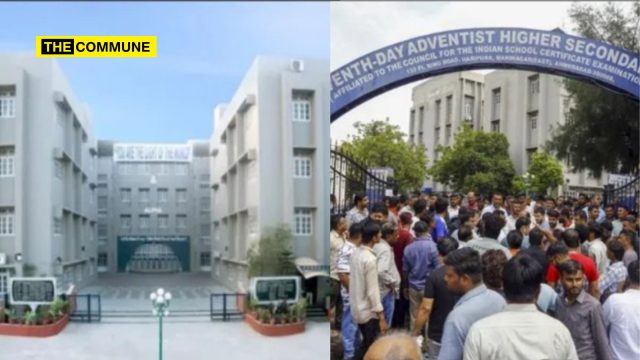
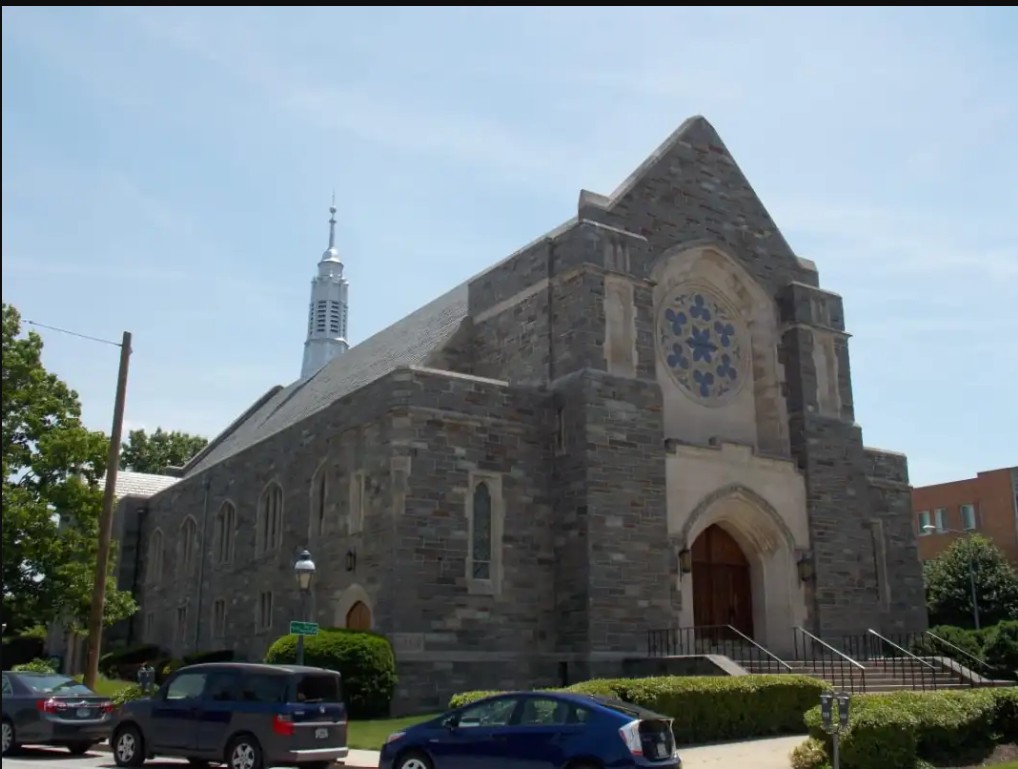
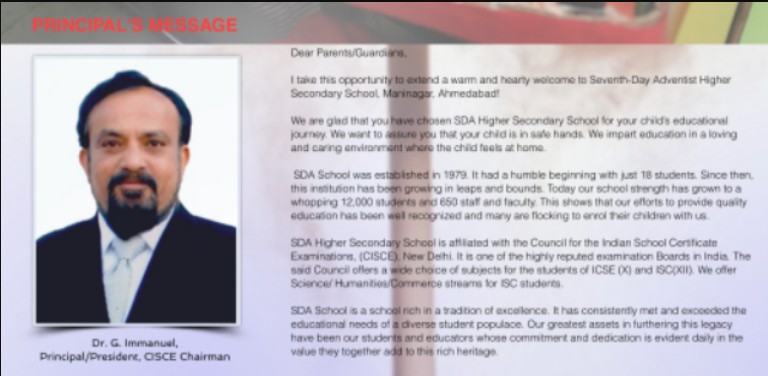
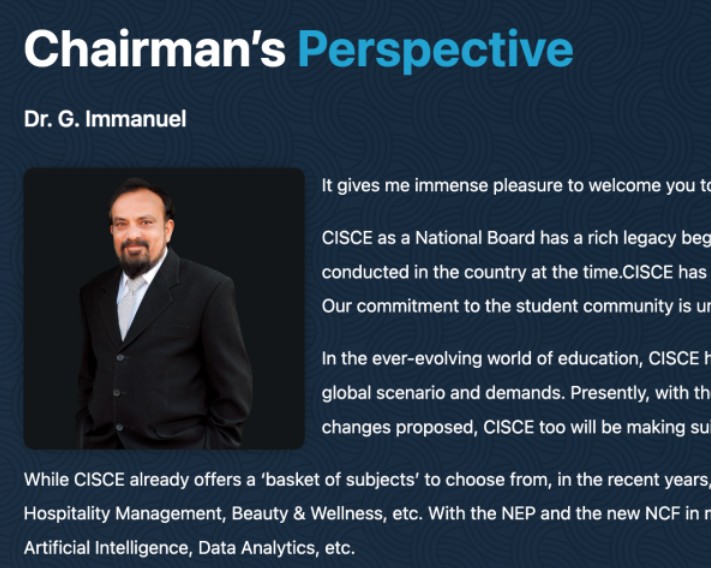
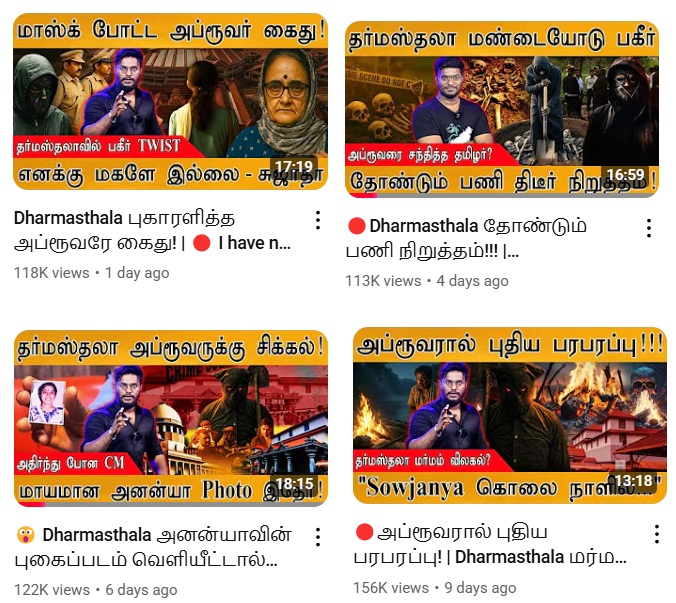
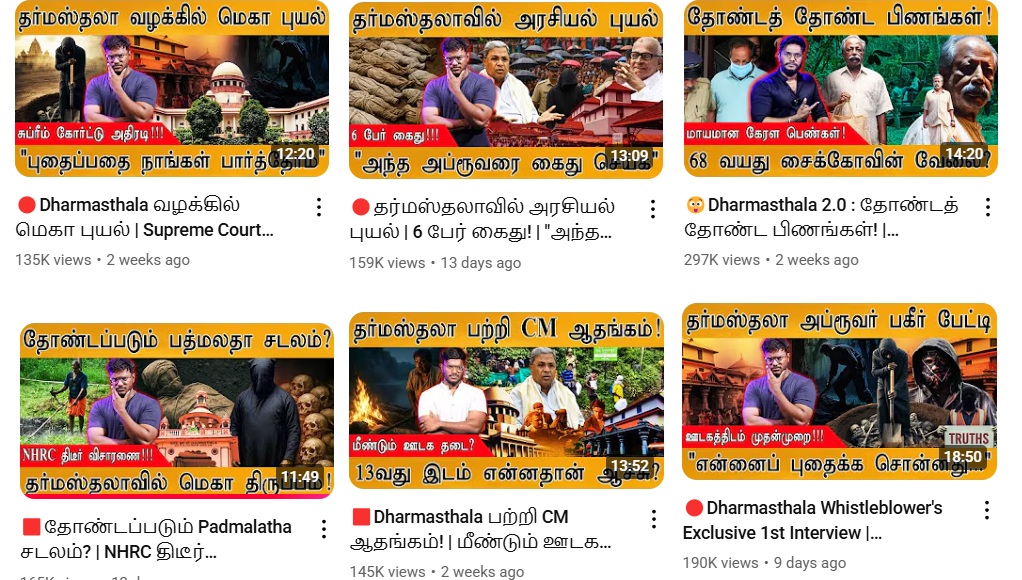
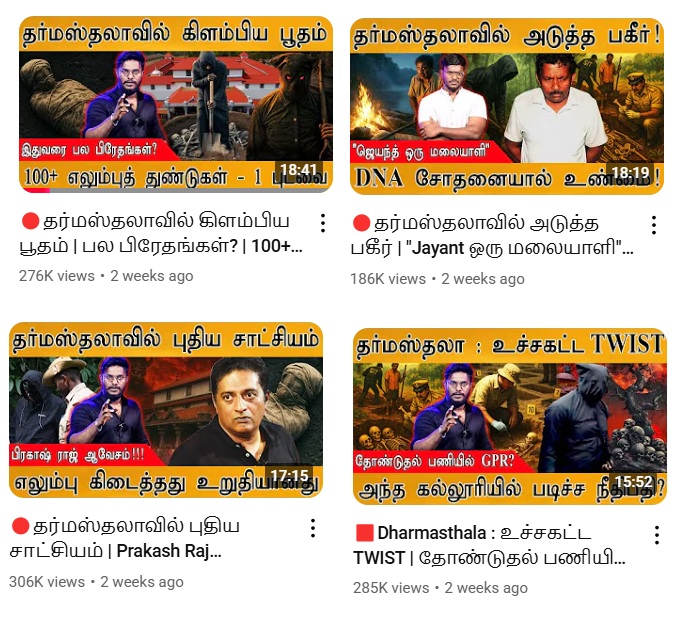
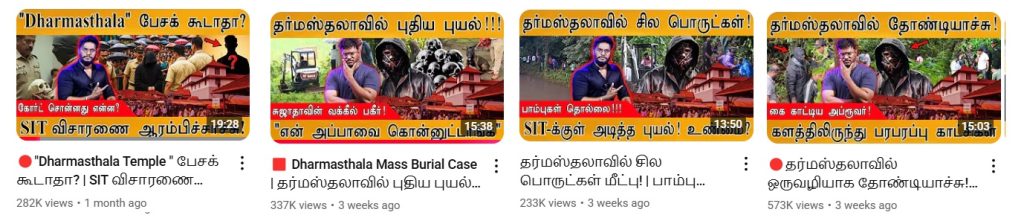
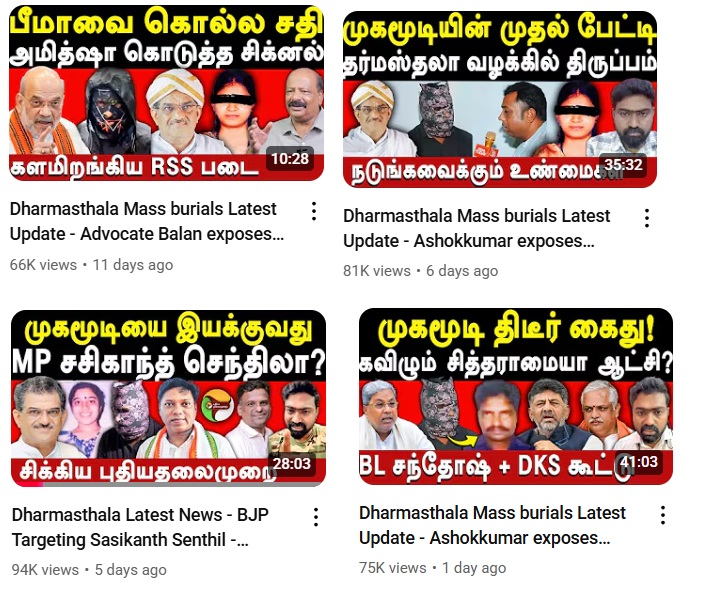
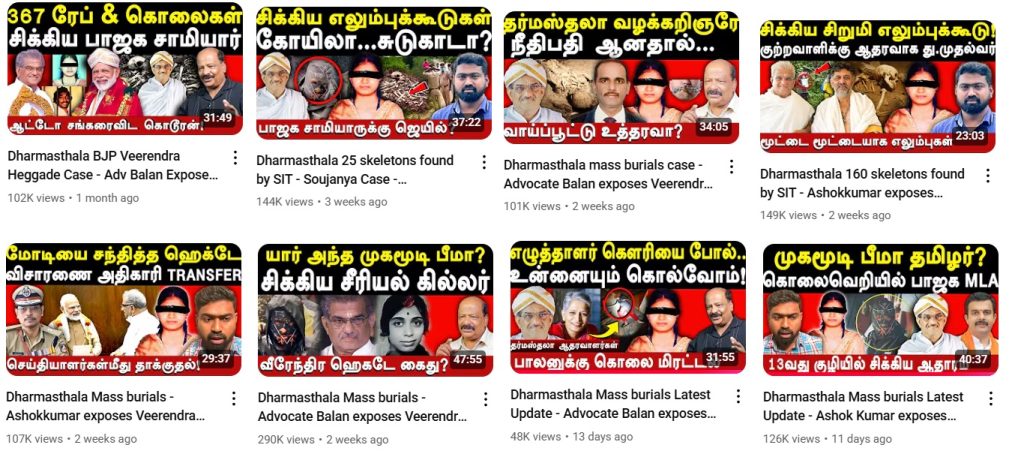
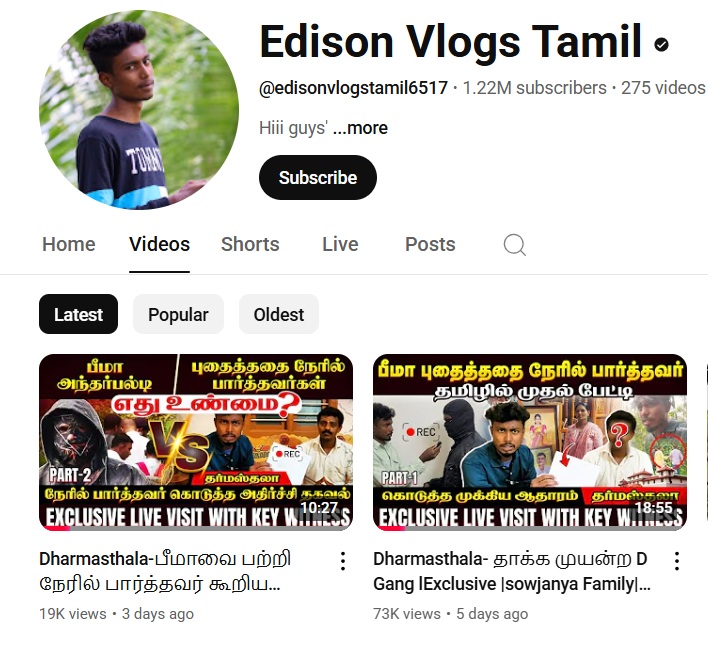
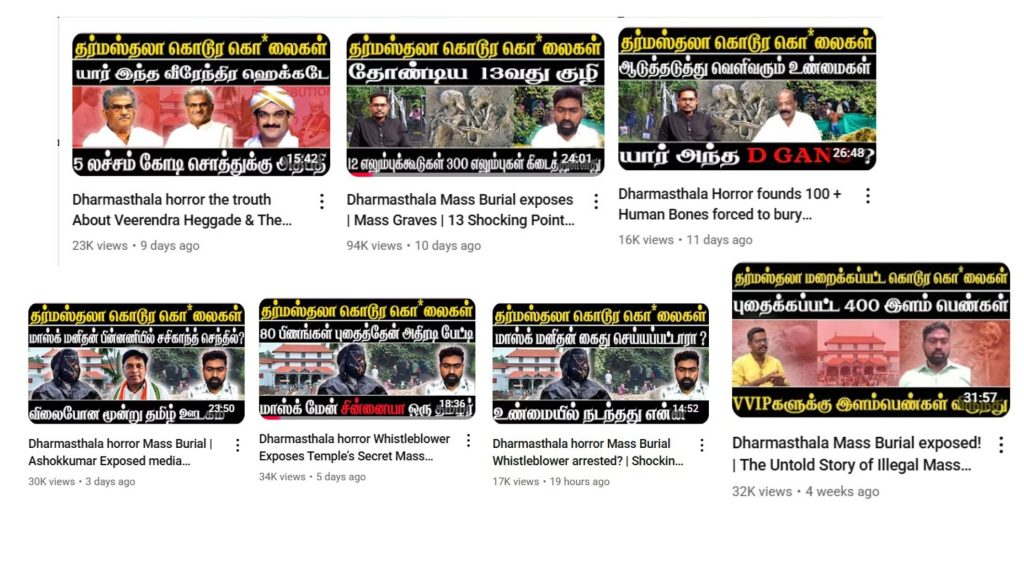
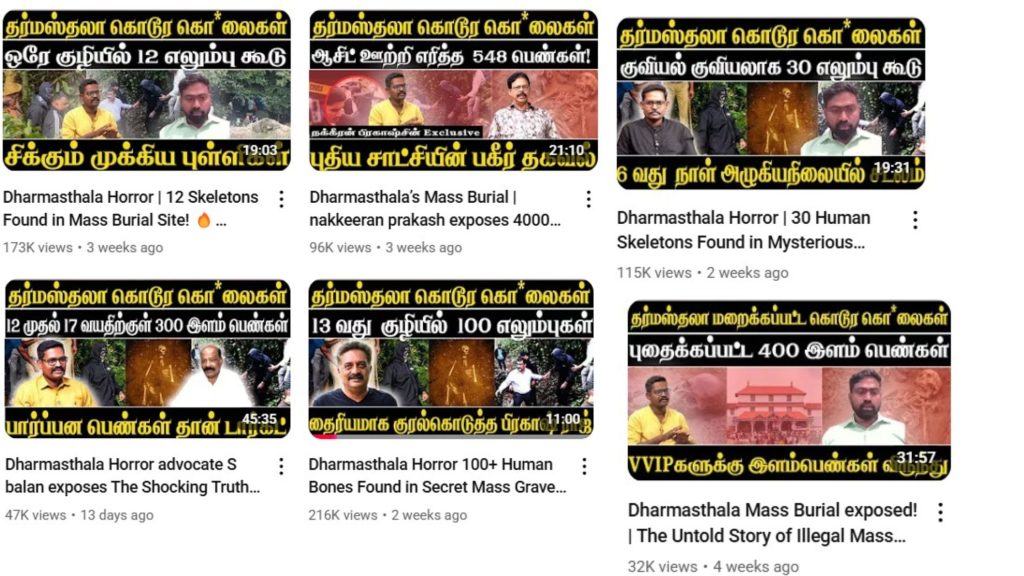
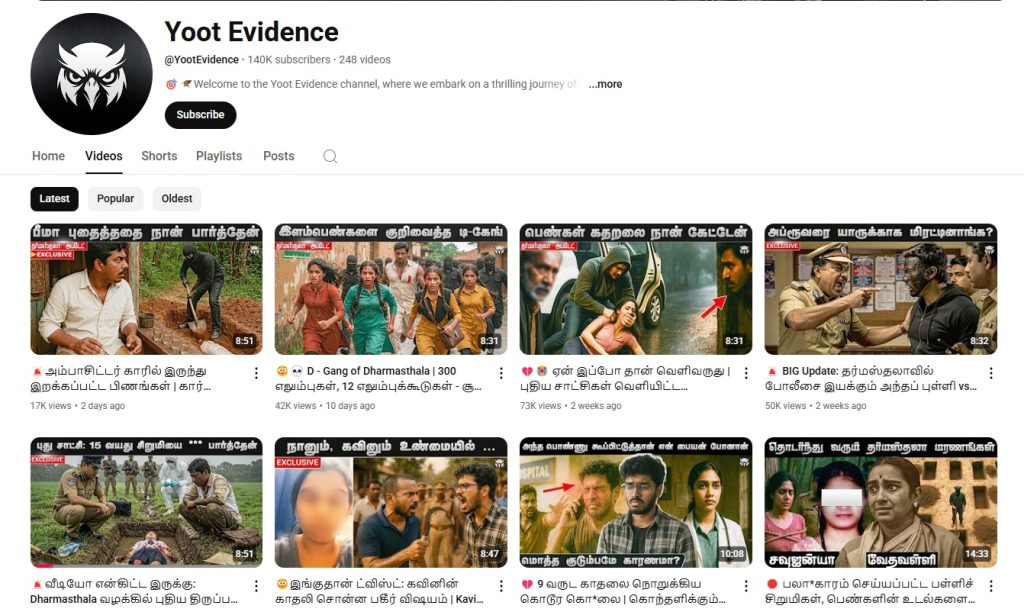
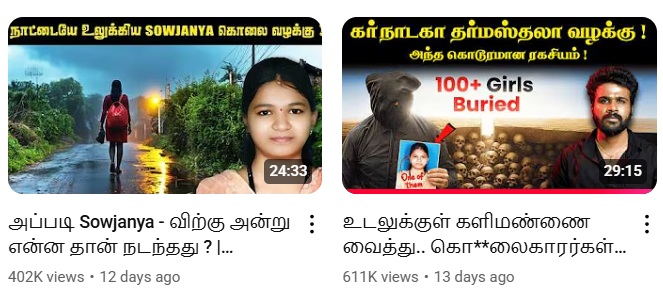
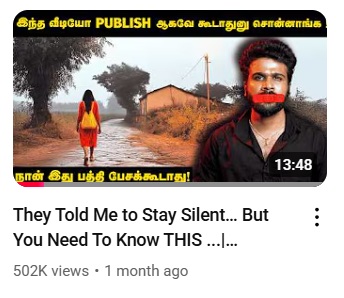
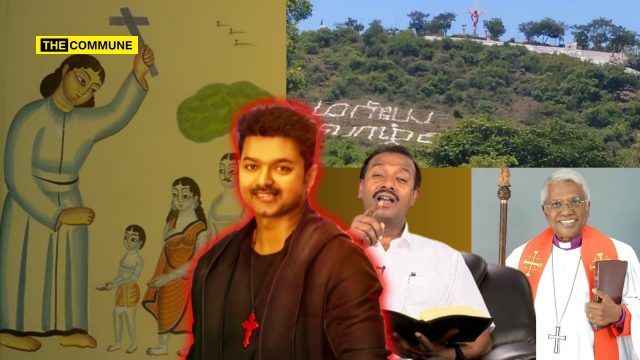
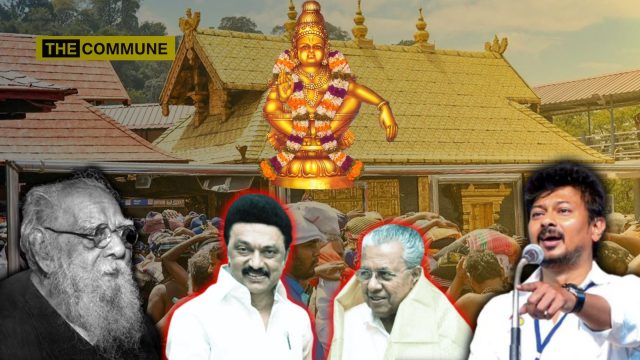
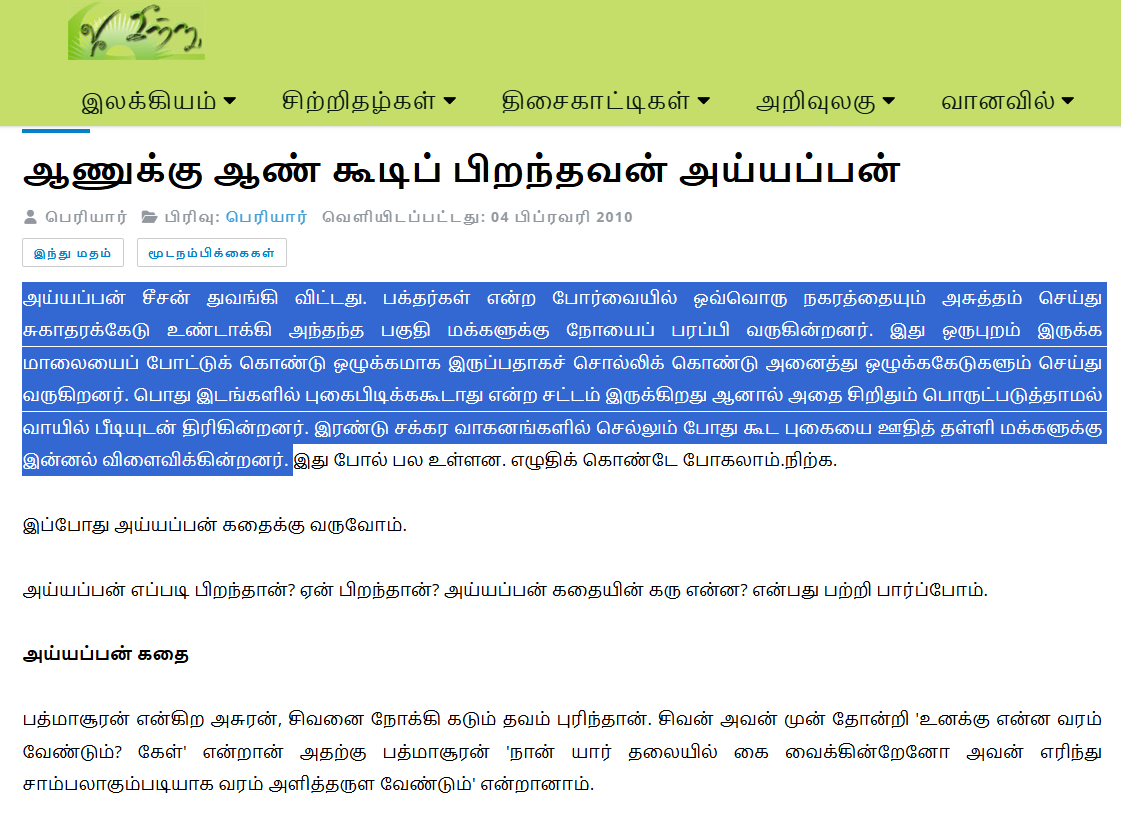
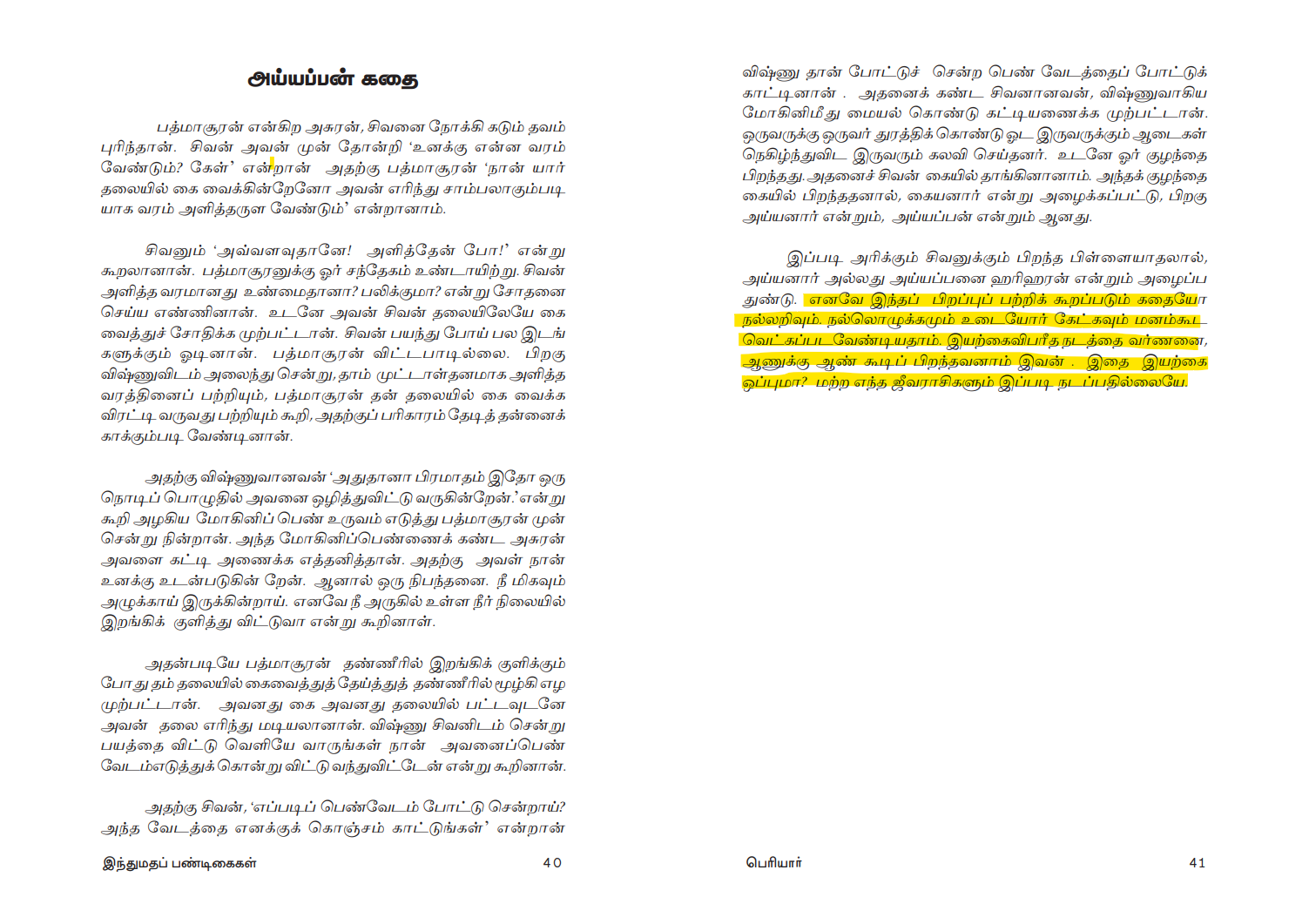
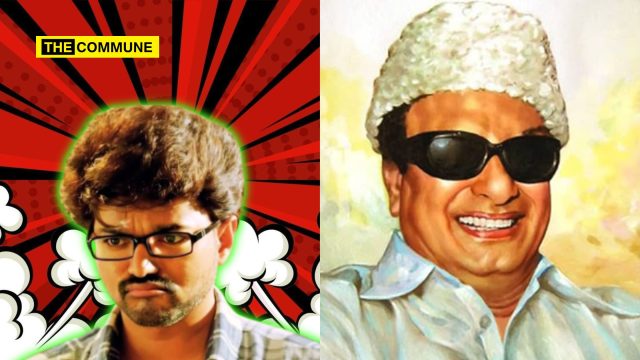
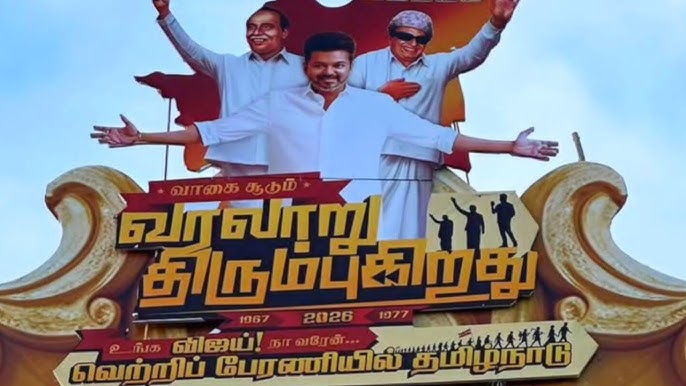
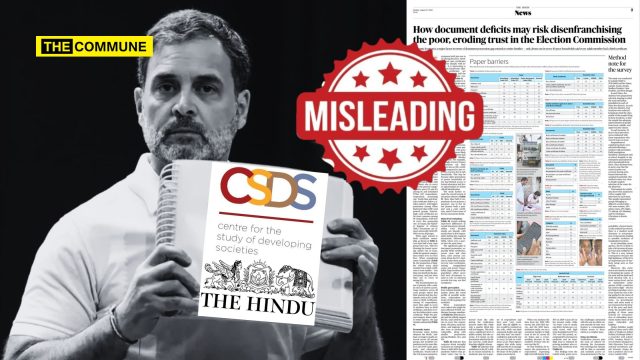
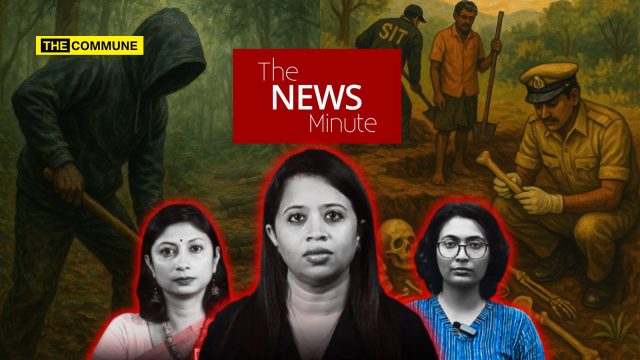
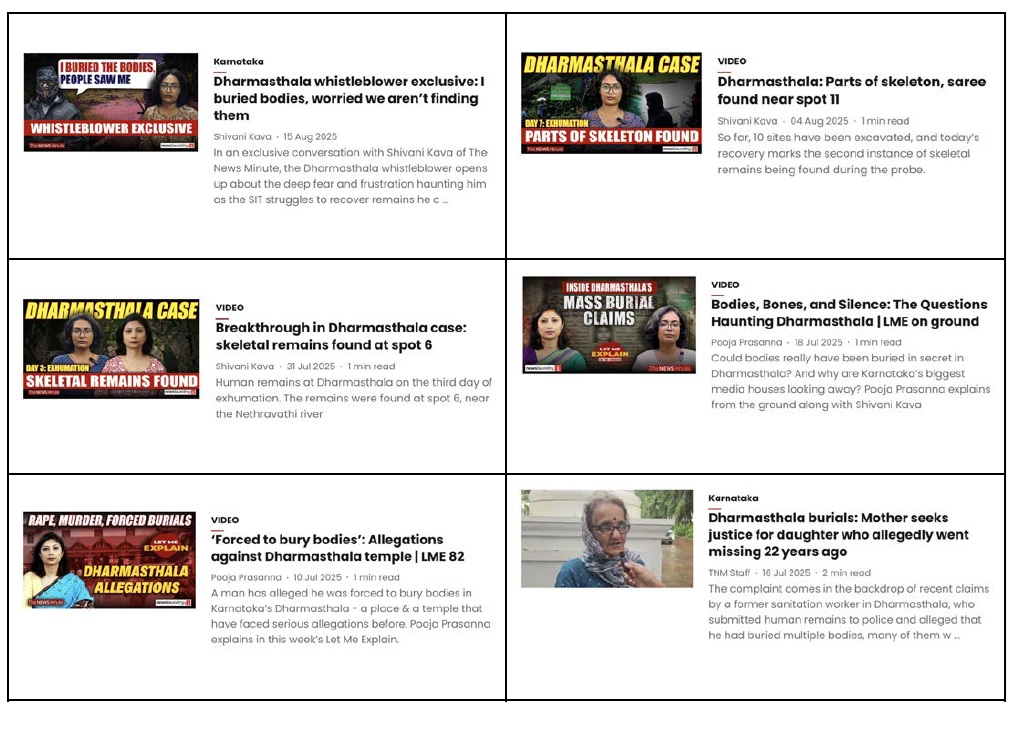
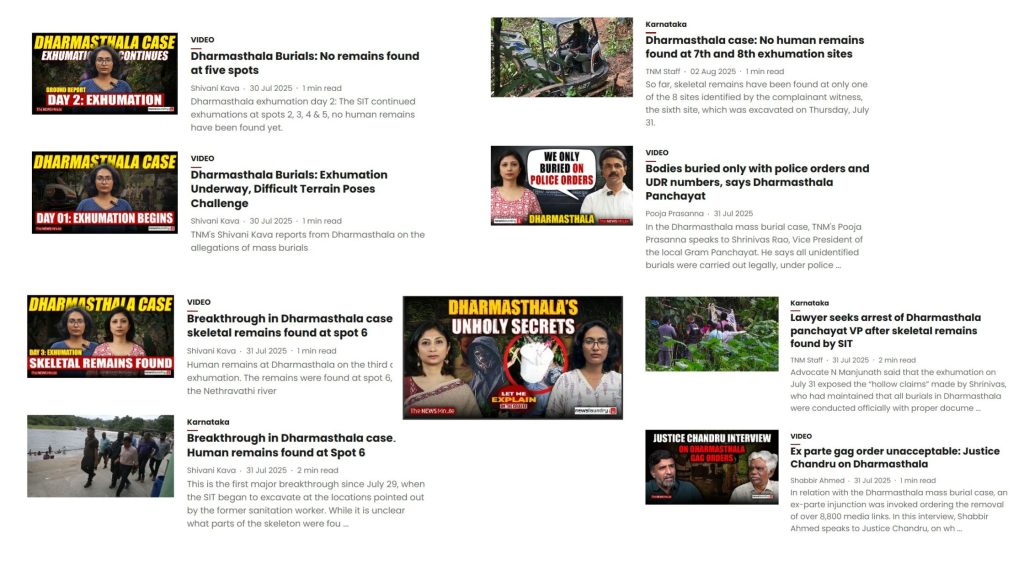
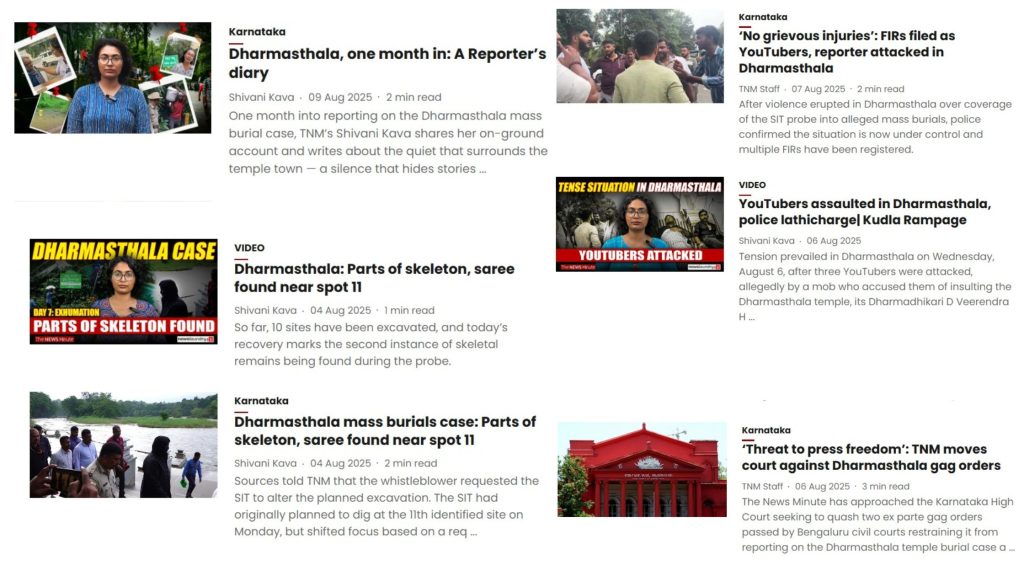
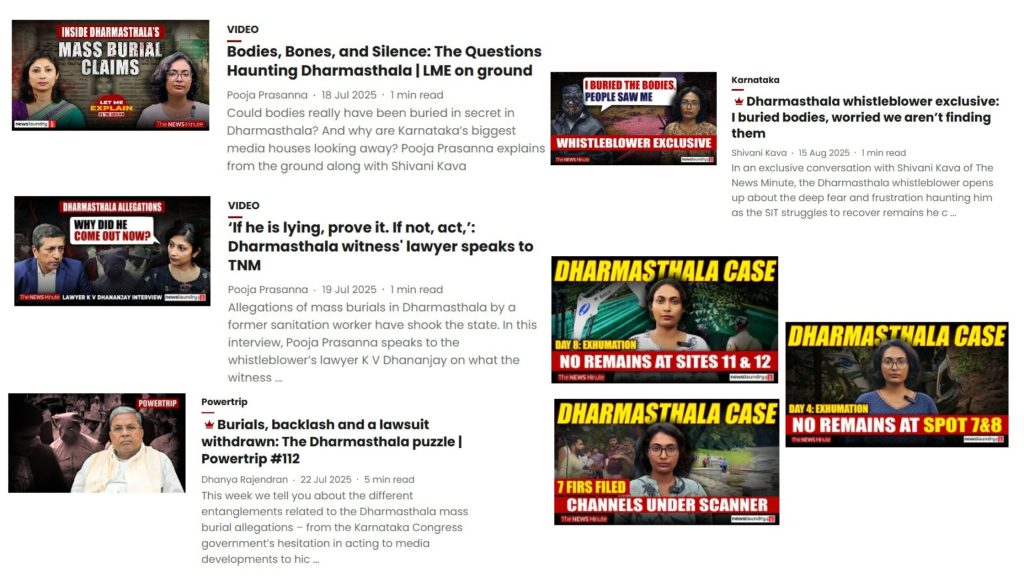
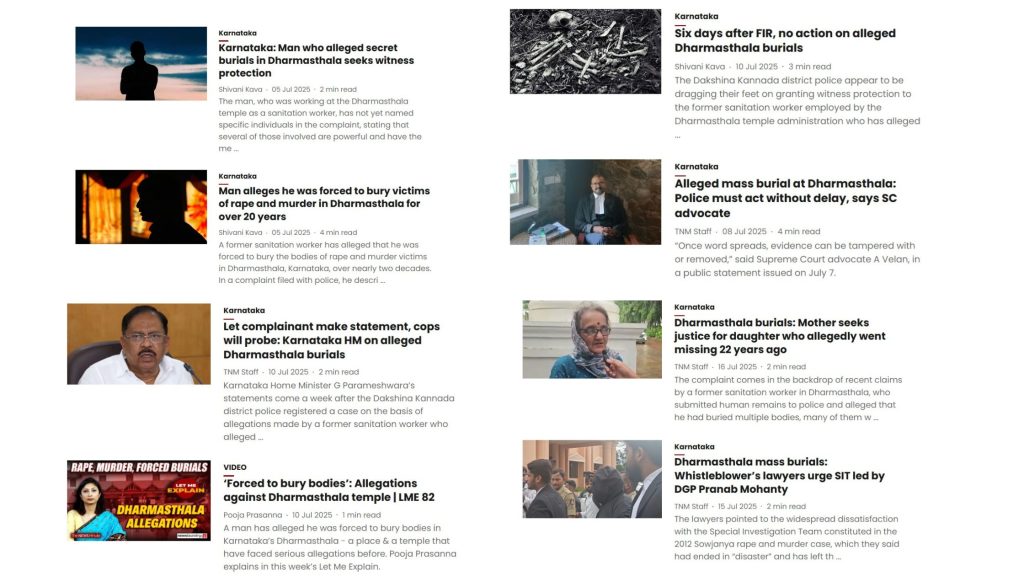
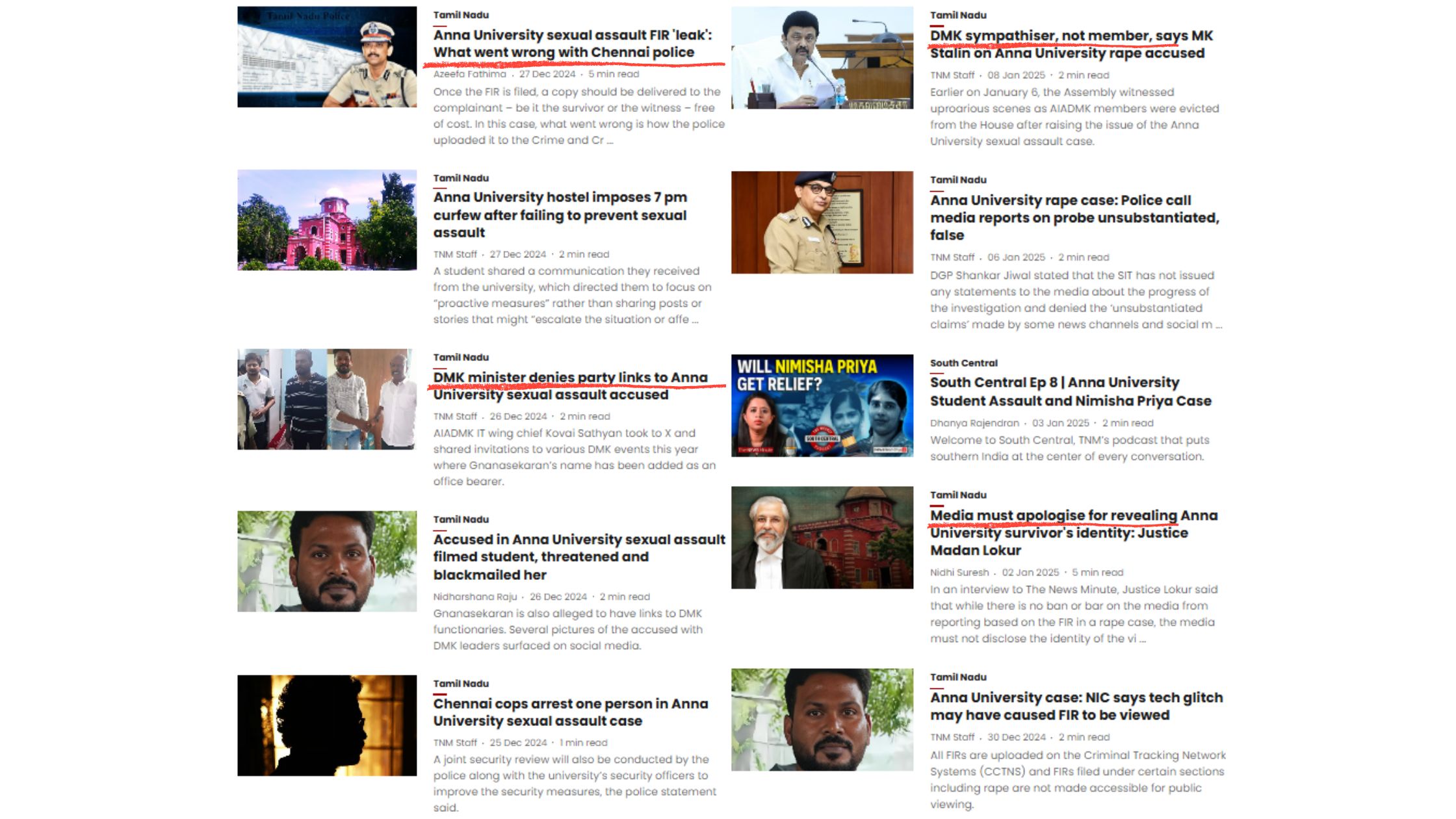
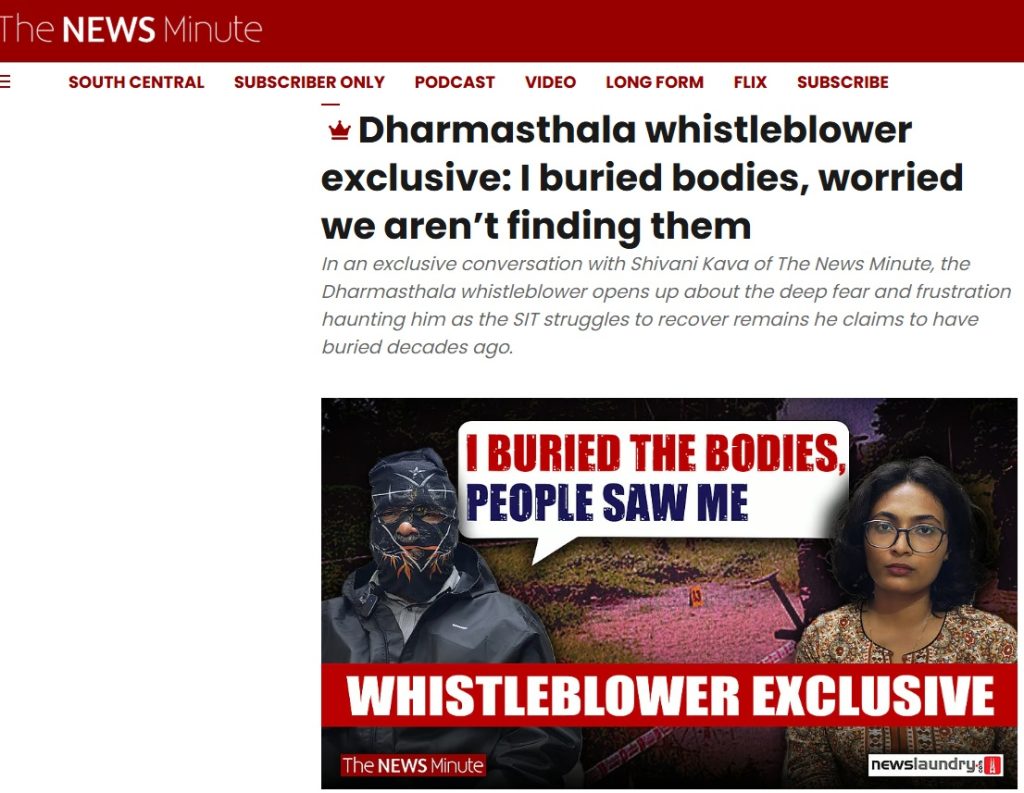
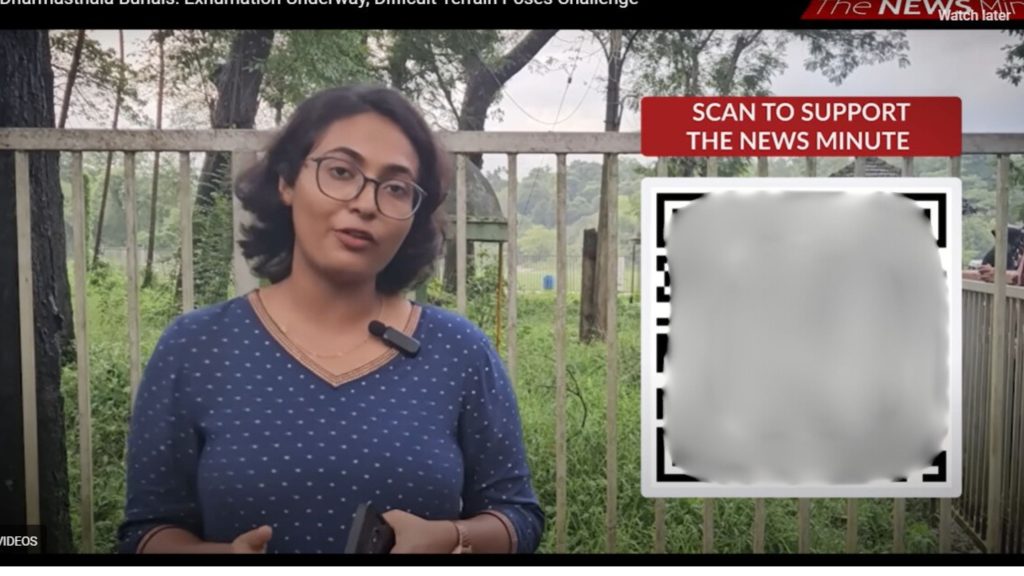
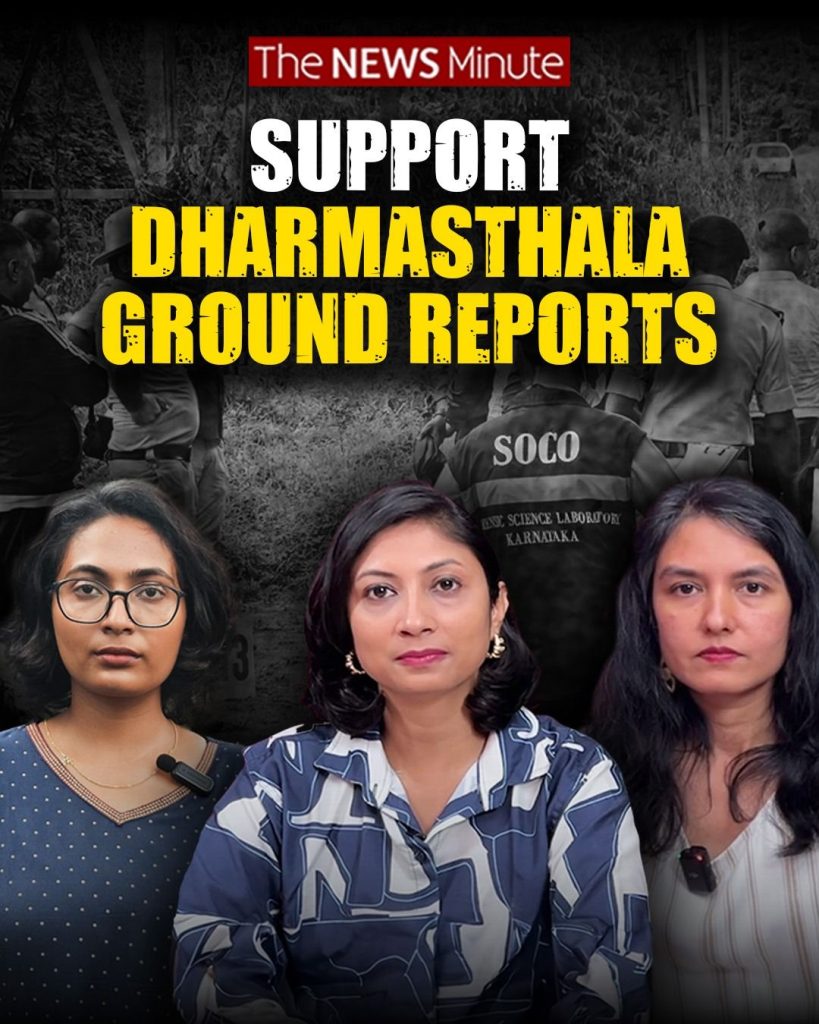
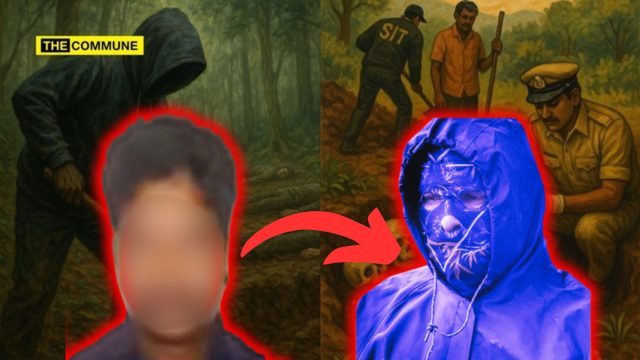
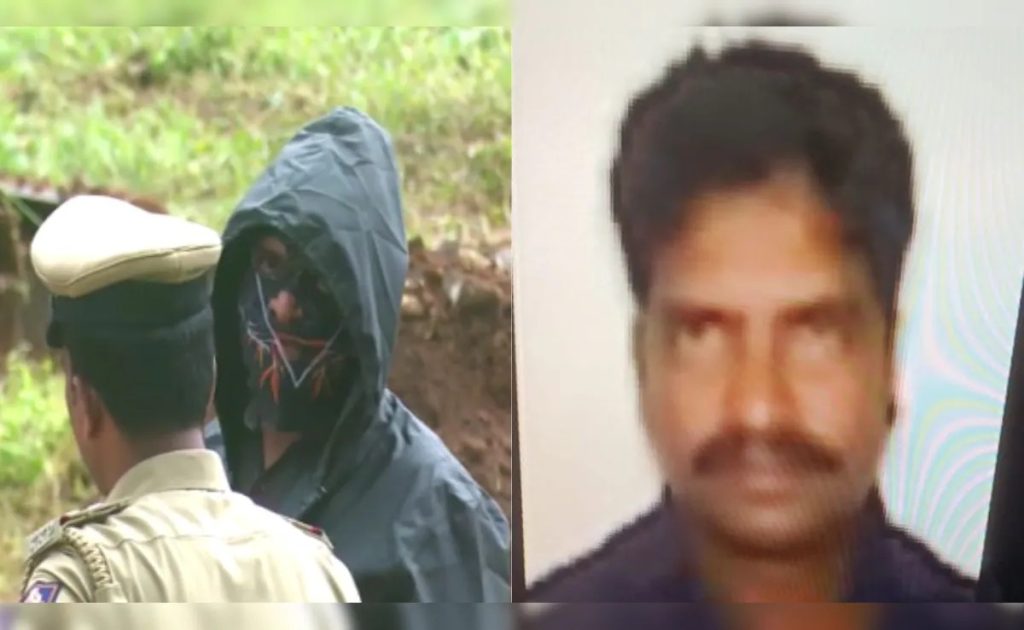
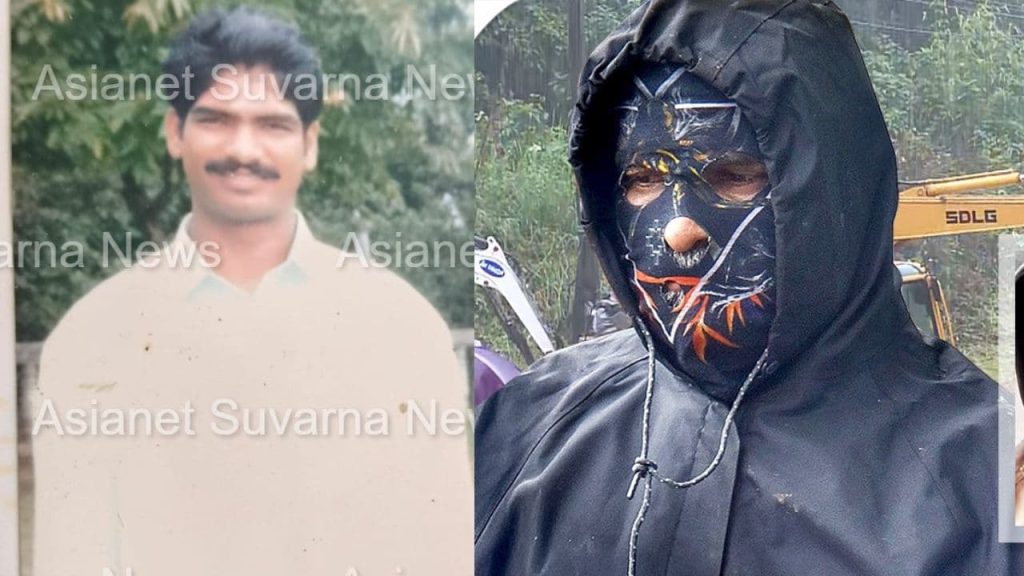
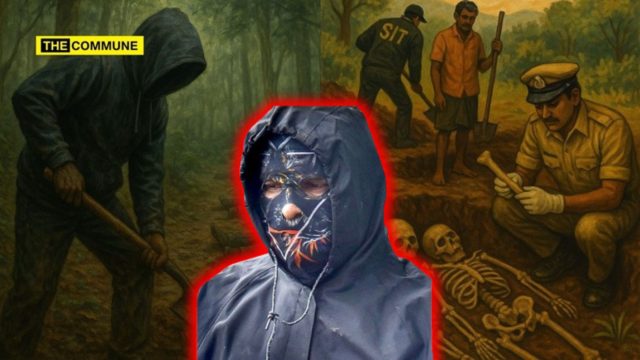

Did The News Minute Conspire With Congress MP Sasikanth Senthil To Tarnish Dharmasthala Temple? Read Till The End To Know What TNM Did
The Dharmasthala “mass burial” issue exposed several leftist media and Dravidianist propaganda artists. The case unravelled within weeks of the allegations being made public.
As the masked man confessed to the SIT that a gang approached him in Chennai in December 2023.
“They asked me how many bodies I had buried when I worked in Dharmasthala. I told them the truth: that I had legally buried the bodies of pilgrims who came for salvation, through the police and gram panchayat,” the complainant stated. “But the gang insisted that I should say that the bodies were buried illegally. They pressured me… they changed my mind.”
The masked man revealed that the gang brought him to Karnataka, trained him on what to say in court, and even provided him with the skull and bone fragments he submitted as evidence which forensic reports later confirmed belonged to a man who died 30 years ago. He further confessed that he was instructed to coordinate his false testimony with another complainant, Sujatha Bhat, who had filed a missing person report for her daughter.
The SIT has since confirmed that the skull and bone fragments were of men who had died decades earlier, undermining the complainant’s earlier claims. Excavations at 17 sites identified by him yielded no evidence of mass graves. At one site, partial skeletal remains were found but were confirmed to be male, dating back 30 years.
As the case crumbled, political attention turned to identifying the “gang” behind the conspiracy. BJP MLA from Udupi, Yashpal Suvarna, and Independent MLA G. Janardhan Reddy publicly named Congress MP Sasikanth Senthil as the key conspirator. They alleged that Senthil, who served as Dakshina Kannada Deputy Commissioner, orchestrated the plot using leftist and Islamist networks he cultivated during his administrative tenure.
Now, you can identify two big players in this entire script – Sasikanth Senthil and The News Minute.
So, did Sasikanth Senthil connive with TNM to target the Dharmasthala temple and its administration?
Sasikanth Senthil x TNM – An Association That Already Existed
If we take a look at whether TNM and Sasikanth Senthil have already been involved, you can find a few video interviews of Senthil from the time of Karnataka Assembly elections in 2023.
At this time, Senthil was the Congress war room head. Subsequently, he got a ticket for the 2024 Lok Sabha elections – guess how.
Senthil was one of the brains behind scripting the “40% commission sarkar” narrative which helped the Congress to come back to power. This successful strategy reached the AICC top leadership’s notice, and he was given the ticket. And surprisingly for a first timer, he even won the election. How was this possible? Also, TNM played that able sidekick’s role very well to amplify this 40% commission sarkar narrative. Here’s an example:
Here’s where TNM comes into the picture – position him as a great person, grassroots leader, amplify his Dalit image and make it more humane.
In a series of interviews with TNM, Senthil was able to establish this as a “fact”.
Building The Persona: The Making Of A Crusader
From the outset, TNM positions Sasikanth Senthil not merely as a politician, but as a principled crusader – the “righteous underdog” who sacrifices a prestigious bureaucracy post for the ideals of democracy and social justice.
Senthil’s resignation from the IAS is portrayed as an act of supreme moral courage. The interviews repeatedly return to this story, cementing him as a man of principle who “sacrificed” a powerful post for the sake of democracy.
The interviews repeatedly frame Senthil through his Dalit background, intellectual gravitas, and purported courage in standing up to the “fascist” machinery of the BJP and RSS.
Instead of neutral scrutiny, TNM constructs a sympathetic, even heroic, mythos around Senthil, building him up as a visionary of equity, a voice for the subaltern, and a lonely warrior on an ideological battlefield. His personal anecdotes, philosophical musings, and sweeping critiques are presented uncritically, offering the audience a neatly packaged, morally superior protagonist.
Leading Questions, Softballs, And Unquestioned Narratives
At the heart of these interviews is TNM’s interviewing style, which can only be described as leading, prompting, and at times overtly softball. Senthil is asked repeatedly about his “politics” and why he “fights”, not to examine or challenge, but to facilitate and expand his narrative. Questions accept his premises at face value: his characterizations of the BJP, his reading of the Congress revival, and his harshest indictments of current governance all flow unimpeded.
When Senthil makes incendiary allegations on EVMs being unreliable, the government being “fascist,” or institutions being “captured”, the interviewers never counter, ask for evidence, or present a balancing view. TNM forgoes any semblance of critical journalism, choosing instead to echo Senthil’s language, accept sweeping generalizations, and allow speculative predictions about the fall of political opponents.
Even controversies, like flaws within the Congress or DMK, or nuanced debates over communal issues, are gently skirted. Senthil is allowed to dismiss allied failures or deflect probing questions with jargon-laden philosophies, while crucial aspects of his partisan role are left undisclosed to the audience.
Connecting The Dots: From Studio To Dharmasthala
This established modus operandi is crucial context for the Dharmasthala alleged mass burial issue. When reports surfaced, TNM was at the forefront, weaving a sensational narrative targeting the Dharmasthala temple administration, a story that now stands completely exposed as a fabrication. The so-called whistleblowers and accusers have publicly confessed that they lied.
The question that now screams for an answer is: who was the architect of this lie?
Given TNM’s documented history of being that loyal sidekick and mouthpiece, as well as acting as an uncritical megaphone for Sasikanth Senthil’s ideology, a deeply troubling possibility emerges. Were they not just aligned in ideology but also in action?
Did Sasikanth Senthil, the politician TNM so carefully positioned as an intellectual crusader against “hierarchies,” provide the political impetus and the ideological framework for the story? Did he feed TNM the unverified allegations, secure in the knowledge that their “journalists” would never ask him for proof, just as they never had before? Did TNM, in turn, willingly become the propaganda arm, launching a calculated attack on a Hindu institution based on nothing but the word of a political ally they were committed to promoting?
The synergy is unmistakable. The same outlet that built Senthil’s persona through leading questions and softball interviews appears to have used the very same tactics to build a fictional narrative around Dharmasthala. They took unsubstantiated claims, refused to apply journalistic rigor, and presented them as a definitive indictment, all to serve a political narrative and target a perceived ideological opponent.
What TNM Did
Is Sasikanth Senthil behind the Dharmasthala conspiracy? We don’t know.
Is the “Chennai gang” referred to by the ‘masked man’ Chinnaiah somehow connected to those at TNM and the Congress MP? We don’t know.
Did The News Minute and Congress MP Sasikanth Senthil hatch an elaborate plan to settle scores with Dharmasthala temple management? We don’t know.
Anybody can allege anything through conjectures and weave a compelling narrative.
And that is exactly what TNM did in the Dharmasthala case. Weave a story without any proof.
Subscribe to our channels on Telegram, WhatsApp, and Instagram and get the best stories of the day delivered to you personally.