Home Blog Page 153

“No Charges To Be Framed”: Supreme Court Halts Trial Against Ashoka University Professor Ali Khan Mahmudabad Over Facebook Post On Operation Sindoor
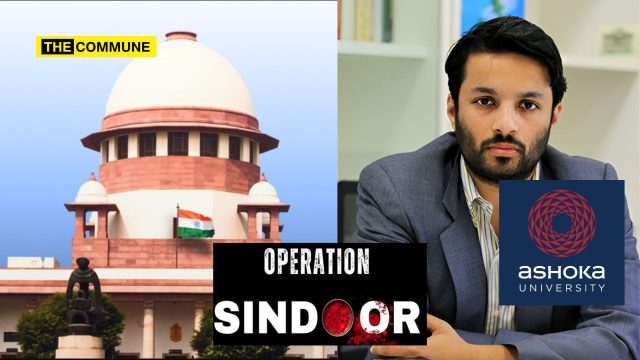
supreme court Halts proceedings Against Ashoka University Professor Ali Khan Mahmudabad Over Facebook Post On Operation Sindoor

On 25 August 2025, the Supreme Court halted the trial against Ashoka University professor Ali Khan Mahmudabad in connection with a Facebook post he had written on Operation Sindoor.

A Bench led by Justices Surya Kant and Joymala Bagchi directed that no charges be framed against Mahmudabad and that the trial court should not take cognisance of the chargesheet already filed. The order stated, “No charges shall be framed in pursuance of the chargesheet filed with relation to FIR No. 147… No cognisance shall be taken of the chargesheet filed in FIR No. 147.”

The decision followed submissions from Additional Solicitor General SV Raju, who informed the court that two separate FIRs had been registered against Mahmudabad. He explained, “While a closure report was filed in one matter, a chargesheet was filed in the other because the offences were considered to be made out.”

Representing Mahmudabad, Senior Advocate Kapil Sibal criticised the proceedings, describing them as harassment. He argued that respondents are simply persecuting people in this country, while stressing that a Special Investigation Team (SIT) constituted earlier was expected to place its findings before the Court.

Mahmudabad had approached the apex court seeking to quash the two FIRs filed over his Facebook posts relating to Operation Sindoor, India’s military action against Pakistan following the Pahalgam terror attack of 22 April. In his post, he had condemned Pakistan-backed terrorism and war in general, while adding that the recognition given to Colonel Sofiya Qureshi, who fronted India’s press briefing on the operation, should translate into ground-level change. He further commented that right-wing groups in India ought to raise their voices against incidents of mob lynching.

Two complaints were filed against him for these remarks. The first FIR, lodged by Yogesh Jatheri, invoked provisions of the Bharatiya Nyaya Sanhita (BNS), including Sections 196 (promoting hatred), 197 (acts prejudicial to national integration), 152 (threatening sovereignty, unity, and integrity of India), and 299 (culpable homicide). The second FIR was based on a complaint from Haryana Women’s Commission Chairperson Renu Bhatia, which alleged offences under Sections 353 (public mischief), 79 (insult to modesty), and 152 of the BNS.

Following these cases, Mahmudabad was arrested by the Haryana Police and placed in judicial custody. When the matter first reached the Supreme Court on 19 May, the Bench refused to quash the FIRs but granted Mahmudabad interim bail. At that stage, the Court also replaced the Haryana Police with a Special Investigation Team to carry forward the inquiry.

The judges had noted at the time that some of Mahmudabad’s language in the posts could bear “dual meanings,” but later criticised the SIT for trying to expand its probe beyond the two FIRs. In the July hearing, the Court reprimanded the SIT, instructing it to restrict its investigation strictly to the two posts under question.

The Court also made it clear that Mahmudabad should not be summoned again since he had already cooperated with investigators and handed over relevant electronic devices. The SIT was directed to conclude its inquiry within four weeks, focusing solely on the two social media posts. Importantly, the Bench clarified that Mahmudabad remained free to publish articles or express views on social media except on issues that are currently sub judice before the Court.

(With inputs from Bar and Bench)

Subscribe to our channels on TelegramWhatsApp, and Instagram and get the best stories of the day delivered to you personally.

Sudarshan Chakra Will Be India’s Own Iron Dome: CDS Gen Anil Chauhan

sudarshan chakra iron dome cds anil chauhan

Chief of Defence Staff (CDS) General Anil Chauhan on Tuesday addressed the inaugural edition of Ran Samwad, the Indian Armed Forces’ first-ever Tri-Service seminar held at the Army War College in Mhow.

The seminar, themed “Impact of Technology on Warfare”, brought together military practitioners, academics, think tanks, and industry experts to discuss the future of warfighting and national security preparedness. Speaking on the occasion, General Chauhan highlighted the growing importance of indigenously developed technological systems to meet emerging strategic challenges.

He referred to Prime Minister Narendra Modi’s Independence Day address in which the PM mentioned the development of the Sudarshan Chakra, a futuristic defence shield likened to Israel’s Iron Dome.

“A second aspect for discussion in this seminar is the Sudarshan Chakra, India’s own Iron Dome or Golden Dome,” said the CDS. “The Prime Minister mentioned this on 15th August, stating that the Sudarshan Chakra will enhance India’s strategic defence and is expected to be rolled out by 2035. The aim is to develop a system to protect India’s strategic, civilian, and nationally important sites,” he added.

The system, he explained, will serve both as a shield and a sword, combining detection, acquisition, and neutralisation capabilities. “It will require the development of robust infrastructure and processes, using both soft and hard skills, including kinetic and directed energy weapons,” General Chauhan said. On the broader theme of the seminar, the CDS emphasised the need for a strategic shift in both military thought and practice.

“Serious research needs to be conducted on all dimensions of war, including leadership, motivation, technology, tactics, and strategy. This is crucial as India’s stature grows,” he said.

Calling for a forward-looking national approach, he stated, “As a Viksit Bharat, we need to be Sashakt, Surakshit, and Aatmanirbhar, advanced not only in technology but also in ideas and practice.” General Chauhan also underlined the importance of involving wider society in the discourse on national security.

“There is a need to increase awareness across all segments of society regarding doctrinal and conceptual aspects, the academic pursuit of how war is fought, and the practical aspects of war-fighting techniques and tactics,” he said.

Ran Samwad focused on two critical themes: Emerging Technologies and Impact on Future Warfare, and Reforms in Institutionalised Training to Catalyse Technological Enablement. The seminar aims to generate actionable outcomes toward building future-ready armed forces, aligned with India’s long-term national security vision.

-IANS

Subscribe to our channels on Telegram, WhatsApp, and Instagram and get the best stories of the day delivered to you personally.
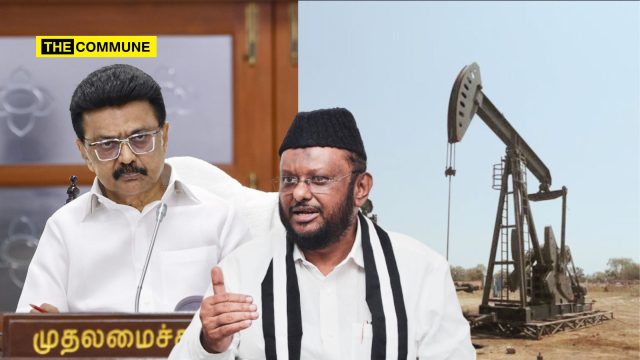
DMK Ally Islamist Party Opposes ONGC’s Oil Exploration In Ramanathapuram That Could Reduce India’s Oil Bills

ramanathapuram oil exploration

M.H. Jawahirullah, MLA from Papanasam and leader of the Manithaneya Makkal Katchi, has publicly called on Tamil Nadu Chief Minister M.K. Stalin to revoke the environmental clearance recently granted to ONGC for drilling hydrocarbon test wells in Ramanathapuram and Sivaganga districts.

In a strongly worded post on his official X account, Jawahirullah expressed his shock over the state government’s decision to approve hydrocarbon exploration activities that, he claims, contradict earlier promises made by the Chief Minister to protect the Cauvery delta.

He pointed out that an amendment made in 2020 allegedly influenced by Vedanta relaxed the Environmental Impact Assessment (EIA) norms for hydrocarbon test wells. Under this amendment, such projects no longer require central government approval, detailed environmental studies, or public hearings. Citing this amendment, the State Environmental Impact Assessment Authority (SEIAA) granted ONGC clearance on 11 March 2025.

Jawahirullah also criticized the manner in which the approval was handled. Instead of uploading the clearance document to the Union government’s new PARIVESH portal, it was posted to the outdated environmentclearance.nic.in website, which he alleged was an attempt to keep the approval process under the radar and away from public scrutiny.

Recalling Stalin’s earlier declarations that hydrocarbon projects would not be allowed in Tamil Nadu and that the Cauvery basin would be safeguarded like “the pupil of an eye” Jawahirullah said this recent approval goes against those very assurances and has deeply disappointed farmers, environmentalists, and local residents alike.

He warned that the new hydrocarbon wells could cause irreversible damage to farmlands, groundwater resources, and coastal ecosystems. He further emphasized that these areas fall under the protections of the Cauvery Basin Protection Act, 2020, making such approvals not only ecologically harmful but also legally questionable.

Jawahirullah also mentioned the DMK government’s own expert committee, headed by Professor Sultan Ismail, which submitted a report in 2022 detailing the environmental and agricultural harm caused by hydrocarbon drilling. However, that report has yet to be made public. He demanded its immediate release and called for any policy decisions to be based on its findings.


This latest outburst by Stalin’s Islamist ally exposes the dangerous nexus between vote-bank politics and obstruction of national interest. At a time when India is striving to cut down its massive oil import bill and achieve greater energy security through domestic exploration, the DMK’s partners are openly campaigning against a project of strategic importance. What is framed as “environmental concern” is in reality a political weapon to stall development, appease pressure groups, and deny Tamil Nadu the economic benefits of responsible hydrocarbon exploration. By allowing such forces to dictate policy, Stalin risks not only undermining India’s energy independence but also cementing the image of the DMK as a party that bows to parochialism over national progress.

Subscribe to our channels on TelegramWhatsApp, and Instagram and get the best stories of the day delivered to you personally.

Farmer Suicides Drop 50% Under NDA, RTI Shows Stark Contrast With UPA Years

farmer suicide nda upa

In a country where the slogan ‘Jai Jawan Jai Kisan’ echoes through political speeches and patriotic songs, a grim reality persists in the fields as farmers continue to take their own lives in staggering numbers.

A recent Right to Information (RTI) query filed by Pune-based businessman Praful Sarda has laid bare the scale of India’s agrarian distress, revealing that 2.58 lakh farmers died by suicide between 2004 and 2022. The data paints a stark contrast between two political regimes.

During the United Progressive Alliance (UPA) rule from 2004 to 2014, India recorded 1,70,505 farmer suicides. In comparison, the National Democratic Alliance (NDA) period from 2015 to 2022 saw 88,117 such deaths—a reduction of nearly 50 per cent. While the decline is statistically significant, the numbers remain deeply troubling.

Maharashtra emerges as the epicentre of this crisis, accounting for 40,852 suicides during the UPA years and 31,492 under the NDA. Karnataka, Andhra Pradesh, and Madhya Pradesh follow closely, with tens of thousands of cases each.

“Notably, Bihar and West Bengal reported zero farmer suicides during the NDA period, a detail that raises questions about regional disparities in agricultural policy and reporting standards,” the activist told IANS. Sarda, who unearthed the figures through his RTI application, did not mince words.

“The death of 2.58 lakh farmers exposes the failure of our system,” he said. “Farmers are still troubled by debt, cost, market and weather. Governments kept changing, speeches kept changing, but the fate of farmers did not change.” The causes behind these suicides are tragically familiar: crushing debt, inadequate minimum support prices (MSP), erratic weather patterns, crop failures, and limited access to modern technology.

Despite a slew of central schemes—from PM-KISAN to crop insurance and soil health cards—many farmers remain outside the safety net. The benefits, Sarda argues, are reaching only a fraction of those in need. Experts warn that India may be inching towards an “agricultural emergency.”

The numbers suggest not just a policy failure, but a systemic breakdown in how the country supports its food producers. While the NDA government has succeeded in reducing the suicide rate, the persistence of the crisis in key states underscores the need for deeper reform.

The Maharashtra government must urgently shift its focus from populist schemes like Ladka Bhau and Ladki Bahini to initiatives that genuinely address the agrarian crisis—starting with a robust and targeted Kisan Bachao Yojna.

While the government, in response to my RTI query, listed several schemes such as short-term crop loans, PM Fasal Bima Yojana, the National Agriculture Market (NAM), and the distribution of neem-coated urea, the ground reality tells a different story.

These programmes, though well-intentioned on paper, have failed to reach the majority of farmers who continue to struggle with debt, crop losses, and market exploitation, the activist lamented. The disconnect between policy and implementation is stark. Farmers are not receiving the promised benefits, and the support mechanisms remain inaccessible to those who need them most. If the government truly wishes to uplift the backbone of rural Maharashtra, it must go beyond announcements and ensure that every scheme is farmer-centric, transparent, and effectively delivered.

More inclusive, responsive, and localised interventions are not just necessary—they are long overdue, activist Sarda opined. In the end, the RTI doesn’t just reveal statistics—it tells a story of lives lost, of promises unmet, and of a nation that must confront the uncomfortable truth behind its slogans. Until the farmer’s plight is addressed with urgency and empathy, the fields will continue to bear witness to a tragedy that no democracy can afford to ignore.

-IANS

Subscribe to our channels on TelegramWhatsApp, and Instagram and get the best stories of the day delivered to you personally.

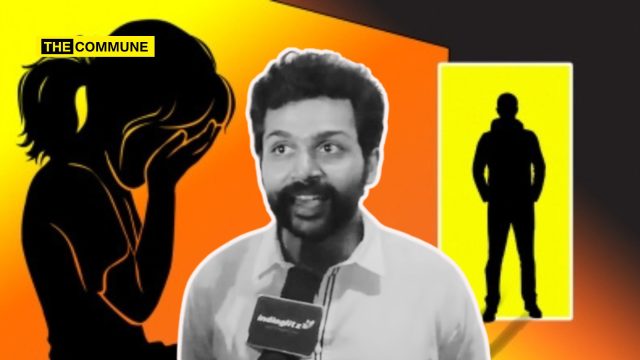
Dravidian Model: DMK Stooge Actor Karthi Says “TN Govt Schools Are Excellent”, Five Teachers Transferred From Kinathukadavu Govt School Following Sexual Harassment Allegations, POCSO Cases Filed

actor karthi dravidian model sexual assault government govt schools dmk harassment pocso

In a major fallout amid sexual harassment allegations made by girl students on social media, five teachers at a government school at Kinathukadavu in Tamil Nadu’s Pollachi were shifted to different schools on Monday.

The move comes after inquiry teams from the School Education Department and the District Child Protection Unit (DCPU) intervened following public outrage. The controversy broke out after three girl students uploaded two videos on social media, accusing their botany and music teachers of misbehaving with them.

In the videos, the students — faces covered for anonymity — alleged that the music teacher touched them inappropriately during dance practice sessions, while the botany teacher engaged in unwelcome physical contact under the guise of patting them as encouragement.

The students further claimed that another teacher often came to class under the influence of alcohol. They said the videos were made public only after repeated complaints to school authorities went unaddressed. However, the school management maintained that they had not received any formal complaint of sexual harassment from the students.

The videos quickly gained traction online, sparking widespread condemnation and drawing the attention of the education department. Officials from the DCPU and School Education Department visited the school and launched an inquiry into the allegations. Subsequently, police registered cases under the Protection of Children from Sexual Offences (POCSO) Act against the two teachers accused of sexual harassment.

Officials confirmed that further investigation is underway to establish the veracity of the charges and collect evidence. Meanwhile, the education department transferred all five teachers named in the students’ allegations to different schools in Vettaikaranpudur, Thondamuthur, Pollachi, Othakalmandapam, and Kulathupalayam.

Officials said the transfers were a preventive measure to ensure a safe environment for students and to facilitate a fair probe. The incident has sparked a debate on student safety and the accountability of school administrations.

Child rights activists have demanded strict enforcement of safety protocols in schools, while local residents and parents have urged authorities to set up grievance redressal mechanisms that allow students to report harassment without fear.

Authorities have assured that the inquiry will be carried out in a time-bound manner and appropriate action will be taken based on the findings.

-IANS

Subscribe to our channels on TelegramWhatsApp, and Instagram and get the best stories of the day delivered to you personally.

Supreme Court Constitutes SIT Led By Justice Chelameshwar To Probe Allegations Against Vantara

"Let The Past Not Haunt The Future": Supreme Court To Hear Challenges To Places Of Worship Act supreme court allahabad high court panchayat recount vantara waqf amendment posh babri masjid facebook post

The Supreme Court on Monday ordered the constitution of a Special Investigation Team (SIT) under the chairmanship of retired apex court judge Justice Jasti Chelameswar to probe into alleged illegal wildlife transfers, the unlawful captivity of elephants and other allegations against the Vantara wildlife facility in Gujarat’s Jamnagar.

A Bench of Justices Pankaj Mithal and Prasanna B. Varale was dealing with two public interest litigations (PILs) that levelled wide-ranging accusations, not only against Vantara but also casting aspersions on statutory authorities and even courts. Ordinarily, such pleas “warrant dismissal in limine”, observed the Justice Mithal-led Bench.

However, noting allegations that statutory authorities and even courts were unwilling or incapable of discharging their mandate — particularly in the absence of verified facts — the apex court said it was appropriate “in the ends of justice to call for an independent factual appraisal which may establish the violation, as alleged, if any.”

Apart from retired Supreme Court judge Justice Jasti Chelameswar, the SIT comprises former Chief Justice of Uttarakhand and Telangana High Courts Justice Raghavendra Chauhan, former Mumbai Police Commissioner Hemant Nagrale, and senior IRS officer Anish Gupta as members.

As per the top court’s order, the SIT has been tasked to examine issues including acquisition of animals from India and abroad, particularly elephants; compliance with the Wildlife (Protection) Act, 1972; International Convention on Trade of Endangered Species of Flora and Fauna (CITES) obligations; standards of veterinary care and animal welfare; allegations of creating a vanity or private collection; misuse of water or carbon credits; and allegations of financial irregularities and money laundering.

The Justice Mithal-led Bench clarified that the exercise is “only to assist the Court as a fact-finding inquiry” and “shall not be construed to have cast any doubt on the functioning of any statutory authorities or the private respondent-Vantara.”

“This order neither expresses any opinion on the allegations made in the petitions nor this order be construed to have cast any doubt on the functioning of any of the statutory authorities or the private respondent Vantara,” it said.

Asking the SIT to submit its report by September 12, the Supreme Court said the two PILs will be listed on September 15 to consider the SIT findings. The PILs were filed just days after thousands of residents in Maharashtra’s Kolhapur staged protests against Vantara, an animal rescue and rehabilitation centre managed by Anant Ambani—son of industrialist Mukesh Ambani—and supported by Reliance Industries Limited and the Reliance Foundation.

The demonstrators called for the return of a 36-year-old elephant named Mahadevi, also known as Madhuri, to her original home in Nandani village in the Karvir region of Kolhapur district. In July, Madhuri was transferred to Vantara in compliance with a Supreme Court order.

The petitioner-in-person, advocate C.R. Jaya Sukin, urged the apex court to constitute a Supreme Court-monitored committee to investigate the alleged illegalities surrounding Vantara’s operations, ensure the return of all captive elephants to their rightful owners, rescue wild animals and birds, and declare the high-powered committee constituted by the Tripura High Court as unconstitutional.

The plea alleged that these elephants were moved to Vantara without legal clearance, in violation of the Wildlife Protection Act, 1972, and in contempt of previous Supreme Court orders. It said, “Central Zoo Authority confirmed Vantara do not have 38H clearance on 21.10.2022, all of the Elephants and Wildlife moved to Vantara, Jamnagar, Gujarat, is in contravention of the Wildlife Protection Act 1972 and Vantara being contempt of the apex court order.”

The plea further alleged that elephants were forcibly taken from temples and private owners by an NGO in collusion with state forest departments and the Animal Welfare Board of India (AWBI), under the pretext of preventing cruelty. Moreover, the PIL alleged that several endangered animals were “smuggled” into Vantara, not only from India but also internationally.

As per the petition, these transfers allegedly took place under the guise of rescue and rehabilitation but “may have been traded for commercial purposes rather than genuine conservation efforts”. It added that multiple channels fed animals into Vantara: private entities like the Madras Crocodile Bank Trust in Tamil Nadu, the Association for the Conservation of Threatened Parrots in Germany, and Mexico’s Fauna Zoo; state-owned zoos like Sakkarbaug Zoo and Assam State Zoo; and state forest departments dealing with human-animal conflicts.

In an official statement, Vantara had said the decision to relocate Madhuri was made under judicial authority, and its role was limited to providing care, veterinary support, and housing as an independent rescue and rehabilitation centre. “At no stage did Vantara initiate or recommend the relocation, nor was there any intent to interfere with religious practice or sentiment,” the statement added.

-IANS

Subscribe to our channels on TelegramWhatsApp, and Instagram and get the best stories of the day delivered to you personally.

Australia, Switzerland Join India And Other Countries In Suspending Postal Deliveries To US

australia us postal deliveries india switzerland

Postal services in Australia and Switzerland have become the latest to announce a suspension of deliveries to the United States, joining a growing list of countries halting shipments in response to the Trump administration’s sudden tariff changes.

The move comes ahead of new levies set to take effect on Friday, August 29. Several other countries, including India, the United Kingdom, France, Sweden, Germany, Italy, and Denmark, had already declared similar pauses in shipping goods to the United States.

Australia Post on Tuesday confirmed that it will “temporarily partially suspend postal sending to the United States (US) and Puerto Rico, effective 26 August 2025, until further notice.” The agency said the decision was necessary due to “recent significant changes the US Government has made to customs and import tariff rules for parcels sent to the US.”

It explained that the changes include the suspension of the De Minimis exemption for inbound goods valued below $800 and a requirement that tariffs be prepaid before items arrive in the US. As a result, Australian businesses will be unable to send products to American customers using Australia Post from Tuesday onwards.

Until now, parcels worth less than $800 (about AUD 1,230) entered the US tax-free, a loophole heavily relied upon by Australian retailers selling abroad, according to local media reports. That exemption will formally end on August 29, when all low-value parcels will be subjected to tariffs or flat fees. The decision, laid out in an executive order signed on July 30, has left many postal services around the world scrambling to comply.

In a parallel move, Swiss Post of Switzerland announced it will no longer accept postal consignments destined for the United States, with the exception of urgent express mail such as official documents and certificates. The agency said on Monday that it would temporarily halt parcel deliveries, citing new US customs regulations that obstruct the regular shipping process.

It added that the decision mirrors those taken by other European postal operators. Swiss Post noted that the US government’s sudden removal of the $800 exemption has created major uncertainty for global carriers. It is currently considering ways to allow limited consignments, such as gifts exchanged between private individuals valued at up to $100, to resume.

The postal service is also exploring alternative methods outside traditional postal networks to keep some flows of goods moving. Recently, India also confirmed that it will suspend the majority of parcel shipments to the US beginning August 25, with exceptions only for letters and small gifts.

France’s La Poste complained that the abrupt policy shift gave them no time to reconfigure digital systems to handle the new customs requirements. Meanwhile, the United Kingdom’s Royal Mail said it would suspend shipments starting Tuesday to ensure all deliveries cleared before duties come into force. According to CBS News, the new rules stem from a decree signed by President Donald Trump in July.

Beginning August 29, all international parcels previously covered under the de minimis rule will be subject to import duties. The only exemptions will be for letters, books, documents, and small gifts worth less than $100.

-IANS

Subscribe to our channels on Telegram, WhatsApp, and Instagram and get the best stories of the day delivered to you personally.
“Merely Posting ‘Pakistan Zindabad’ Without Denouncing India Is Not Seditious”: Himachal High Court Grants Bail To Vendor

pakistan zindabad himachal high court sedition india

The Himachal Pradesh High Court has granted bail to a street vendor who was accused of sedition under Section 152 of the Bharatiya Nyaya Sanhita, 2023 (BNS) for allegedly sharing a Facebook post with the words “Pakistan Zindabad.” A Single Judge Bench of Justice Rakesh Kainthla observed that “merely posting ‘Pakistan Zindabad’, without denouncing India, was not seditious,” and noted that the complaint did not allege any intention to bring hatred or discontent toward the government established by law in India.

The petitioner, a poor and illiterate fruit vendor, had allegedly shared an AI-generated image of the Prime Minister with the phrase “Pakistan Zindabad,” which was deemed inflammatory. His counsel contended that the petitioner, being illiterate, could not operate social media, and that the Facebook account was managed by his son. It was further argued that the informant had access to the petitioner’s mobile phone and had shared the controversial content.

The court heard that the petitioner had been in custody since June 8, 2025, and sought regular bail. The petition was opposed by the Additional Advocate General, who highlighted the strained India-Pakistan relations at the time of the post and claimed that “writing Pakistan Zindabad was anti-national.”

In its analysis, the Court referred to multiple Supreme Court judgments, including Ajwar v. Waseem, (2024) 10 SCC 768, which held that while considering bail, courts must weigh “the nature of the accusations made against the accused, the manner in which the crime was alleged to have been committed, the gravity of the offence, the role attributed to the accused,” among other factors. The court also relied on Vinod Dua v. Union of India, (2023) 14 SCC 286, noting that sedition laws “applied to such activities which were intended, or which tend to create disorder or disturbance of the public peace.”

Citing Javed Ahmad Hajam v. State of Maharashtra, (2024) 4 SCC 156, the Court emphasized that “the intention of causing disorder or inciting people to violence was the sine qua non of the offence.” The bench noted that there was no evidence suggesting that the petitioner intended to incite hatred or public disorder, and that hailing another country without denouncing India did not amount to sedition.

Given that the police had seized the electronic device and filed the charge sheet, the Court found no need for custodial interrogation. Consequently, the Court allowed the petition and ordered the release of the petitioner on bail of Rs 50,000 with one surety of the like amount.

(With inputs from SCC Online)

Subscribe to our channels on Telegram, WhatsApp, and Instagram and get the best stories of the day delivered to you personally.
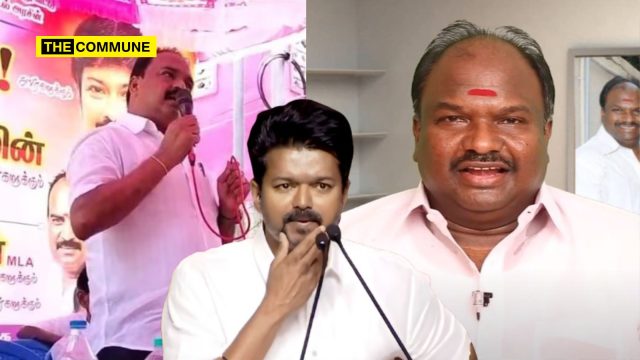
After Calling CM Stalin ‘Uncle’, DMK MLAs Launch Personal Attacks On TVK Chief Actor Vijay

stalin uncle dmk tvk

Actor-turned-politician Vijay is facing a barrage of backlash after addressing Chief Minister M.K. Stalin as “Uncle” during the second state-level conference of his Tamilaga Vettri Kazhagam (TVK) in Madurai. The comment has triggered sharp and highly personal responses from ruling DMK members, particularly two sitting MLAs who launched scathing verbal assaults.

During a land title distribution event in North Chennai the Thiruvottriyur DMK MLA K.P. Shankar mocked Vijay’s political ambitions, saying, “Today, those who are like Vijay (the actor), living like squirrels, don’t know anything. What would he know? All he knows is whether to go with Trisha or with Keerthy Suresh, nothing else. True governance is about feeling the struggles of the people and acting for them in education and healthcare. This Dravidian model rule is governing with these two, education and healthcare, as its two eyes.”

Shankar didn’t stop there. He took a personal dig, accusing Vijay of being incapable of taking care of his own parents or his wife, raising doubts about his ability to serve the public. “The same Vijay who now calls the CM ‘uncle’ once stood beside his father at Jayalalithaa’s residence in Poes Garden,” he pointed out.

He went on to say, “If our current Chief Minister were like Jayalalithaa, he would have stripped Vijay of clothes and made him run. But Stalin is a forgiving man, and so he let it slide.”

Adding to the controversy, another DMK MLA, V. C. Chandhirakumar, compared Vijay to a barking dog. “I’ll tell you one thing, sir. A dog barks at the sun. But the sun doesn’t get angry at the dog for it. That’s all. We know it’s a dog. Why should we take it so seriously? We are the sun. We are giving light to the whole world. So we’ll just keep doing our job,” he said. Without naming Vijay directly, Chandrakumar implied that reacting to such criticism was beneath the ruling party, comparing Stalin to the sun, which “shines on the world without getting involved in petty squabbles.” He also added, “I’ve just given a metaphor that a dog barks at the sun. If you choose to take it personally, I’m not responsible for that.”

The remarks, widely shared on social media, have sparked a fresh wave of political tension as Tamil Nadu approaches the 2026 assembly elections, with Vijay’s emergence clearly rattling the established players.

Subscribe to our channels on TelegramWhatsApp, and Instagram and get the best stories of the day delivered to you personally

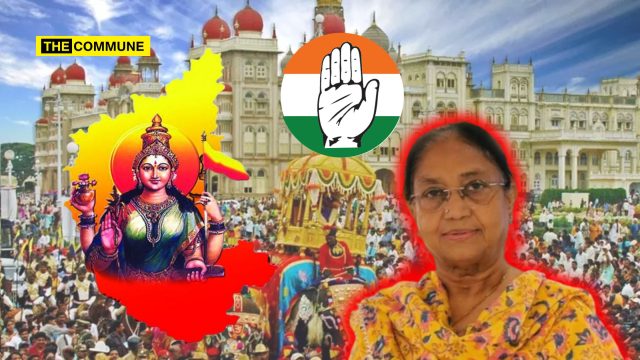
Karnataka Congress Govt Invites Author Banu Mushtaq, Who Opposed Worship Of Kannada Language As Maa Bhuvaneshwari To Inaugurate Dasara Chamundeshwari Pooja

banu mushtaq dasara festival kannada bhuvaneshwari

The Karnataka government has invited International Booker Prize-winning Kannada author Banu Mushtaq to inaugurate this year’s Mysuru Dasara celebrations, triggering a political controversy over faith and tradition.

Mushtaq, 77, will formally open the festivities on 22 September 2025, ahead of the grand Vijayadashami procession scheduled for 2 October 2025. Chief Minister Siddaramaiah announced her selection, describing it as a historic recognition of her literary achievements. Mushtaq’s acclaimed short story collection Heart Lamp, translated by Deepa Bhasthi, won the Booker Prize earlier this year for its portrayal of the lives of Muslim women in Karnataka.

The decision has drawn objections from some BJP leaders, who argued that the religious nature of the Dasara inauguration requires participants to publicly declare their belief in Goddess Chamundeshwari.

BJP MP Tejasvi Surya said that while he respected Mushtaq’s stature, the inauguration involves offering prayers at Chamundi Hills, and the faith of the chief guest should be made clear. He shared a 2023 video of Mushtaq where she is heard saying, “Sir, you spoke about the Kannada language, literature, and culture on that platform. As a minority woman, I am presenting my understanding of the Kannada language before you. Whether you like it or find it difficult, I don’t know. To grow Kannada as a language, for Banu Mushtaq to speak in Kannada, your family did not even give her the opportunity to speak in Kannada at home. You have made Kannada the ‘Kannada Bhuvaneshwari.’ Wearing red and yellow turmeric kumkum flags, why did you smear turmeric kumkum and take her away and seat her on a bench? Where should I stand? What should I see? How should I get involved? My exclusion didn’t start today; it began long ago. Today, it is coming to completion, that’s all. Please think about this because wherever a woman is worshipped as a goddess, when you seat a woman on a bench, the goddesses will be pleased. But here, you have seated Kannada Amma (Mother Kannada) in a temple and made her sit on a bench, how are you mistreating women, showing cruelty and violence? You are also abusing the Kannada language in this way. You are answerable to me; I am responding to a wall that should have answered me. My answer to you: make Kannada the Bhuvaneshwari, pull the chariot of Kannada, hold the festival of Kannada, organize the Kannada parishad (council), whatever you do, how many barriers do you need to exclude me at such a crucial time?”

Responding to the controversy, Mushtaq has declined to comment on the BJP leaders’ remarks but confirmed that she intends to attend the inauguration.

Siddaramaiah highlighted Mushtaq’s contributions beyond literature, noting her involvement with farmers’ organisations, Kannada agitations, and progressive movements. He called her selection a significant moment, particularly as a woman invited to inaugurate the centuries-old festival.

The Mysuru Dasara Mahotsava traditionally begins with prayers at Chamundi Hills, followed by ten days of cultural and religious events culminating in Vijayadashami.

(With inputs from MoneyControl)

Subscribe to our channels on TelegramWhatsApp, and Instagram and get the best stories of the day delivered to you personally.