The Samasta Kerala Sunni Students’ Federation (SKSSF), affiliated to Samastha (EK Faction), an influential body of Sunni (Shafi‘i) scholars and clerics in Kerala has demanded a new ‘Malabar state’ be carved out from Kerala, reports Organiser.
The SKSSF was formed on 19 February 1989 and is known for its puritanical views on the religious aspects of Islam. It is well known for always politically backing the Muslim League.
The SKSSF mouthpiece Satyadhara’s editor Anwar Sadique Faisi triggered a massive controversy when he wrote a post on social media platform Facebook calling for the creation of a new ‘Malabar state’ out of Kerala. This demand is due to the Muslim majority in the Malabar region. According to Faisi, Kozhikode should be the state capital of the newly carved Malabar state.
The demand has been making the rounds for the past few decades.
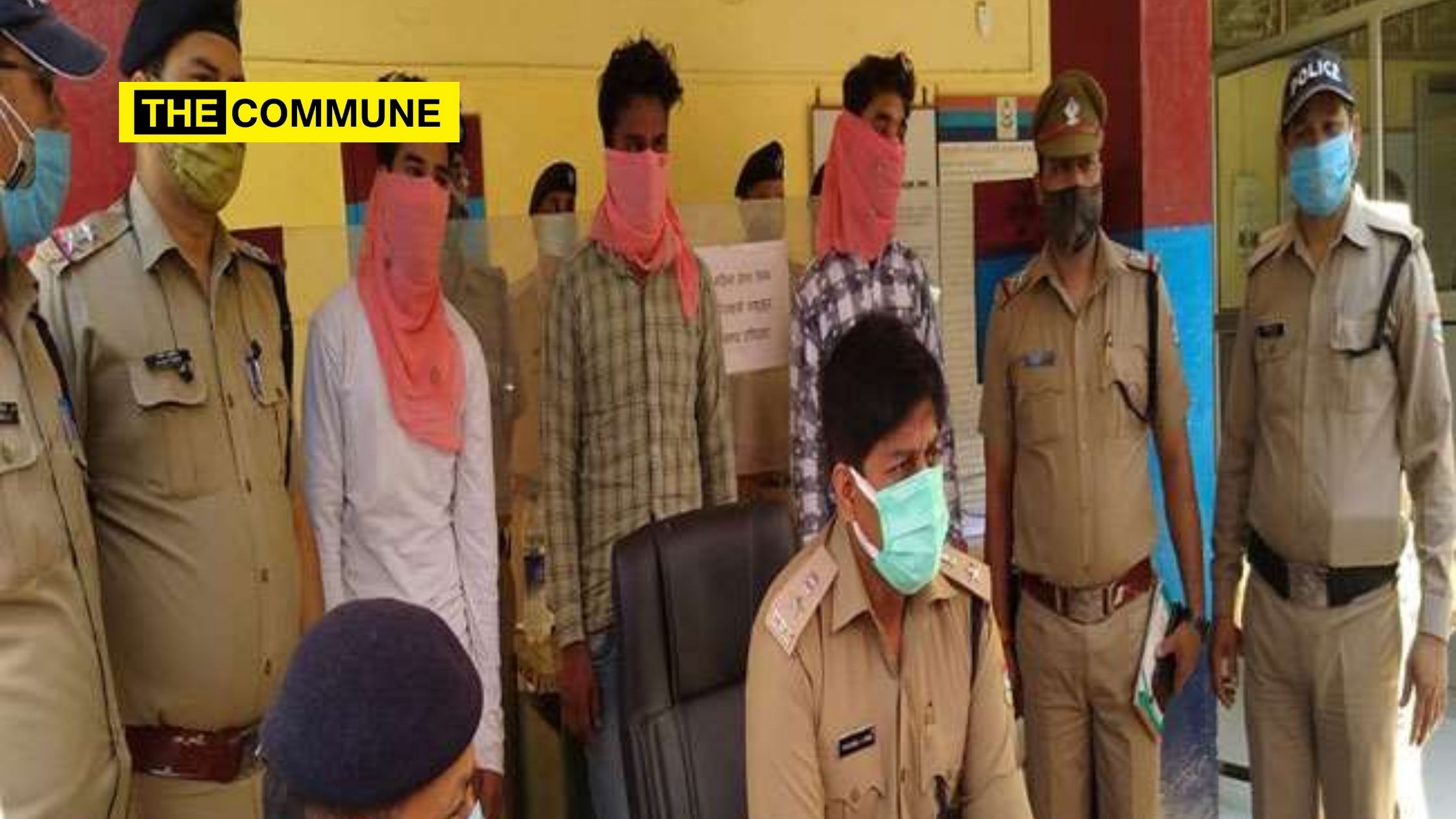
Recently, two Muslim men belonging to the Islamic group Popular Front of India (PFI) were arrested in Uttar Pradesh for allegedly planning to conduct terror attacks, with police also recovering weapons and explosives from the accused.
Faisi says that Malabar is not given any importance by the Kerala government and lags behind in the education and healthcare sectors, when compared to other areas in the state. He adds that he wants the ‘Telangana model’ of agitation for the creation of a new state. Faisi, in his Facebook post, appealed to all religious-political-cultural associations to stand united for demand for the creation of the Malabar state.
Faisi is not the only one who wants a new Malabar state to be carved out of Kerala. Other Muslim organisations have also made similar demands for the bifurcation of the Muslim-majority Malappuram district in Kerala in the past.
Click here to subscribe to The Commune on Telegram and get the best stories of the day delivered to you personally.
In a major embarrassment for Pakistan Prime Minister Imran Khan Niazi, his planned address to the Sri Lankan Parliament has been cancelled.
During his scheduled two-day trip from 22 February to the island country, Imran Khan was to address the Parliament and to save face, the Speaker Mahinda Yapa Abeywardena had requested for cancellation on the pretext of Covid-19.
Besides his now cancelled speech on February 24, Imran Khan is to hold meetings with Sri Lankan President Gotabaya Rajapaksa and Prime Minister Mahinda Rajapaksa and attending an investors’ conference.
This information was confirmed by Sri Lanka’s daily Express who had quoted Foreign Secretary Jayanath Colombage. However, Naizi’s itinerary had included a speech which must have previously been agreed by the Sri Lankans with media reports giving different reasons for the cancellation of Khan’s address.
However, the Covid is just a reason because some people within the Sri Lankan government feared that if Imran Khan’s speech might harm ties with India.
Already India is not very happy with the cancellation of a deal over the East Container Terminal in Colombo port.
Also, experts note that Imran Khan using the platform to raise Kashmir issue might anger New Delhi.
Imran Khan has been raising the issue of treatment of Muslims and Islamophobia at many global platforms and the Sri Lankan government was concerned about the Pakistan PM raising the rights of Muslims in Sri Lanka.
There is already a lot of anger in Sri Lanka over the Easter terror suicide bombings attack in 2019 in which 267 people were killed, including at least 45 foreign nationals. The ripple effect of this attack also was felt by the tourism industry which this island nation depends a lot on.
However, it is also true that Muslims have faced discrimination in Sri Lanka. During the height of Covid, the government made it compulsory that anyone who had died due to complications of Covid will be cremated and this rule was applicable to Muslims who bury their dead.
Earlier this month the government exempted the Muslims from cremation and allowed them to bury their dead after a global outcry over the issue.
Imran Khan had welcomed the Sri Lankan government’s decision and said, “We welcome Sri Lankan PM Mahinda Rajapaksa’s assurance given in Sri Lankan Parliament today, allowing Muslims to bury those who died from Covid-19,”.
Click here to subscribe to The Commune on Telegram and get the best stories of the day delivered to you personally.
In a significant boost for the Bhartiya Janata Party (BJP) in the state of Kerala, “Metro Man” E. Sreedharan, is set to join the party ahead of the Assembly Elections in the state.
'Metro Man' E Sreedharan to join BJP. He will formally join the party during its Vijay Yatra that will be led by Kerala BJP chief K Surendran from 21st February.
Elattuvapil Sreedharan is a retired officer of the Indian Engineering Service and earned the title the “Metro Man” for his groundbreaking work in building the public transport in India, particularly the Delhi Metro. In 2003, he was named Asia’s Heroes by the TIME magazine.
However, Sreedharan as an engineer was responsible for developing the Konkan Railways which has been called one of the most difficult railway projects in the world.
As per reports, Sreedharan will formally join BJP during the party’s Vijay Yatra led by Kerala BJP chief K Surendran from 21 February.
Sreedharan was born in Karukaputhur what used to be the Madras Presidency and later became the state of Kerala.
His achievement and success have led him to be the advisor to several Metro projects in India, and a member of the United Nations’ High-Level Advisory Group on Sustainable Transport.
He holds a degree in civil engineering from the Government Engineering College, known now as JNTUK, in Kakinada, Andhra Pradesh. Before that, he studied at the Victoria College in Palghat.
Sreedharan started as a lecturer of civil engineering at the Government Polytechnic, Kozhikode, then joined the Bombay Port Trust as an apprentice. Next, he cleared the Indian Engineering Service Exam in 1953 and joined the Southern Railway in December 1954.
He quickly moved up the ladder because of his performance and reportedly, in 1964, against a six-month target set by the railways to repair a bridge that had washed away by a cyclone, he managed to repair it and finish the restoration work in 46 days.
He also had worked on Kolkata Metro, and was instrumental in Cochin Shipyard Limited’s turnaround.
However, he became famous when he was given the task of developing the Delhi Metro and true to his testament he finished projects before deadlines, and within 16 years. Known for his honesty and professionalism, he made sure there was no corruption and the labours who worked on the project received their salary on time.
Any contractor caught cheating was instantly replaced and took an uncompromising stand on safety and quality of the Delhi Metro.
At present, Delhi Metro is only one of the few Metro projects in the world that are profitable and has made totally changed how people in Delhi and the National Capital Region (NCR) commuters every day.
Sreedharan was later offered advisory roles in Kochi Metro, Jaipur Metro, Lucknow Metro, Coimbatore Metro and proposed projects in Visakhapatnam and Vijayawada.
He is the recipient of several national and international honours for his work, including Padma Shri in 2001, Padma Vibhushan in 2008, and the French government’s Chevalier de la Légion d’honneur in 2005.
Click here to subscribe to The Commune on Telegram and get the best stories of the day delivered to you personally.
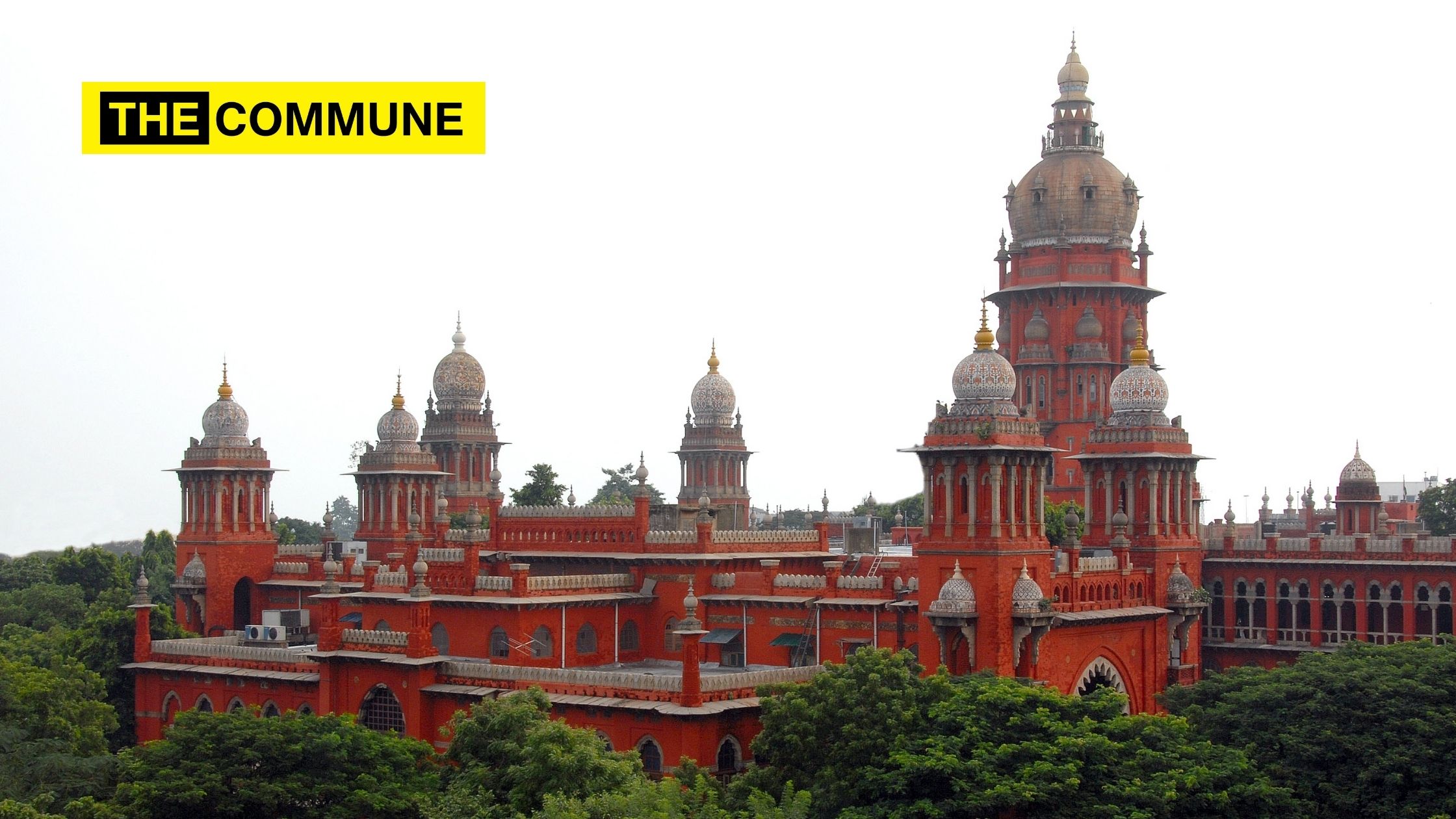
Senior practicing advocate of Madras High Court N Vijayaraghavan has authored a new book titled “Sam Manekshaw’s Beloved Armed Forces”, reports Organiser.
Madras High Court judges G R Swaminathan and P T Asha released the book on 14 February in a videoconference function. Noted Chennai-based Tamil publishers Kalaimagal Publication published the book.
Speaking about the book, Justice Swaminathan said, “Advocate Vijayaraghavan has written this book with complete details on Sam Manekshaw. It is a wholesome book. All youths should read this book to understand the sacrifice of our defence forces which are incomparable. It would help to have faith in the nation and patriotism. We need more books on our defence forces to motivate them and to have respect for their yeoman service to the nation.”
In his foreword to the book, R Sankaranarayanan, Additional Solicitor General of India, Madras High court said, “The author of this book has tweaked the work by keeping company of the one and only Sam Manekshaw, the irrepressible Field Marshal. The anecdotal run of the work with Sam Bahadur whose life and times was full of it ― as he called himself a ‘jolly good fellow who lived life to the hilt ―is in racy, pacy genre, keeping the readers in thrall. I for one was and readily agreed to pen this foreword.”
Sankaranarayanan adds, “The book is on the three defense forces namely Army, Air Force and Navy. Author Vijayaraghavan has conceded that he was no authority on the subject and his work was more of a compilation than a dissertation. In fact, he has covered extensively almost every topic of interest to laymen and men in uniform –why some join the armed forces, how women have come to the fore and Absent dialogue between the armed forces, bureaucrats and political establishment – borrowing from the recent work of Mr Anit Mukherjee which is a dissertation by an author with matchless pedigree, as a soldier turned research analyst, alluded to the wars of 1947, 1962, 1965 and 1971 and 1999 –flagging off the gallant efforts of the men on the ground with brilliant interludes with a Sam Manekshaw connect, the social and political backdrops, the manufacture, procurement and acquisition of armaments and efforts at indigenization and to wind up the empathetic attitude the ordinary Indian needs to show towards men in uniform et at. The sweep is wide and coming from a common man’s perspective, it engages the attention of the discerning and interested very well.”
He says, “This is a work on our proud Armed forces with a thoughtful and lovely Sam Manekshaw spin, making it a colorful production that would and should appeal to every proud Indian. This book was written in catchy prose and has been brought out in style, easy on the eye.”
The author in his preface writes, “To be honest Sam Hormusji Framji Jamshedji Manekshaw, it was, who drew me in. My first, middle and end reading for this work was on Sam, Sam and more of Sam alone. The rest followed, as if on cue. Sam lived his life full. He readily said so, And kept saying so, even after he quit the forces , though once a Field Marshal always is a Field Marshall. His epic leadership role in the Indo-Pak war of 1971 which resulted in the birth of Bangladesh, alone gets pride of place oftentimes. But he was more than that said conflict. He breathed life and vigour into the forces, and loved his men, on and off the borders. So much, that he openly confessed that he never ever punished even one soldier despite court-martial proceedings. He claimed that he somehow ‘identified evidence sufficient to exculpate the delinquent’. That was he.”
The author also intends to bring out the book in Tamil.
Click here to subscribe to The Commune on Telegram and get the best stories of the day delivered to you personally.
While India is being hailed globally for alleviating the pain and grief caused by the Wuhan coronavirus pandemic by supplying the world with its affordable and easy-to-store vaccines, there is a campaign being orchestrated by a section of the media to discredit the nation’s “vaccine maitri”.
In a bid to embarrass the Modi administration, certain politicians and a section of the mainstream left-liberal media are disseminating misinformation about the Indian-made vaccines supplied to various nations around the world as part of India’s vaccine diplomacy.
On Tuesday, some of the left-liberal media outlets and yesteryear politicians claimed on social media that South Africa had rejected the 1 million AstraZeneca COVID-19 vaccine doses supplied by the Serum Institute of India (SII) earlier this month under a commercial deal and further said that South Africa had asked for the doses to be taken back.
A report published by Economic Times claimed that South Africa wanted to return the one million COVID-19 vaccine doses received from Serum Institute of India. The report claimed that South Africa had decided to return the vaccine a week after the country said it would put on hold the use of AstraZeneca in its vaccination program after it showed reduced protection against the South African variant of the coronavirus.
A report by the Economic Times claiming that South Africa asked SII to take back COVID vaccines
Other news outlets soon picked up the story. The report had stated that South Africa had paused the rollout of Indian-made AstraZeneca coronavirus vaccine doses after preliminary trial data showed they offered minimal protection against mild to moderate illness from the country’s dominant COVID-19 variant.
The country was likely to administer Johnson & Johnson COVID-19 vaccines from Wednesday, a Reuters report said.
A report by Reuters
The Hindu too reported with similar claims that Serum Institute of India has been asked take back the one million COVID-19 vaccine doses the company had sent in early February.
A news report by The Hindu
The far-left propaganda website ‘The Wire’, which has a history of peddling fake news, put out a report on similar lines, saying that Indian vaccines would be sent back.
Report by The Wire
In a strange turn of events, BJP leader and Rajya Sabha MP Subramanian Swamy also fell prey to the same misinformation and tweeted a report by The Hindu claiming that South Africa had asked SII to take back the vaccines.
Subramanian Swamy’s tweet
As could be expected, Pakistan too celebrated India’s supposed ‘failure’. Citing a Forbes report, Pakistan Tehreek-e-Insaf, the ruling party in the terror-beholden, military-run rump state ‘hoped’ that India did not put World at risk by supplying such vaccines. Of course, Pakistan completely ignored the fact that the debt-ridden country had earlier this month secured ,via the global COVAX alliance, 7 million doses of the same India-made vaccines to protect Pakistanis from the Chinese virus.
A tweet by the Imran Khan-led PTI
Did South Africa ask the Serum Institute to take back the vaccines?
Responding to these media reports, the South African government has categorically refuted the news peddled by the media, saying that no such proposals have been made to the SII to take back the vaccines.
While South Africa had paused the rollout of AstraZeneca coronavirus vaccine doses this month after one of the trials had shown that the SII vaccine offered lesser protection against the South African COVID-19 variant, it did not ask for the India-made vaccines to be taken back.
The South African government had agreed to purchase COVID-19 vaccines developed by Johnson & Johnson to combat the South African variant. The South African administration, after procuring the J&J vaccine, had decided to share the excess vaccines supplied by India to other African countries via the African Union (AU).
Speaking in the parliament, South Africa’s Health Minister Dr Zweli Mkhize said, “I would like to clarify a few media reports that said we had returned the vaccines to India. We have not returned the AstraZeneca vaccines to India”.
Mkhize added the AstraZeneca doses that were purchased are now offered to the African Union platform, of which SA is also a member. He further said that the AU would distribute to those countries who have already expressed interest in acquiring the stock.
He stated, “I also wish to put it on record once again that the vaccines have not expired and that the expiry date of April was established through our quality control processes – a wrong impression was created that the vaccines have expired – this is simply not true”.
Click here to subscribe to The Commune on Telegram and get the best stories of the day delivered to you personally.
The Jal Jeevan Mission announced by Prime Minister Narendra Modi on 15th August, 2019 with the aim to provide tap water connection to every rural household by 2024 has reached a new milestone by providing 3.53 Crore rural household tap water connections.
As on 15th August 2019, out of 18.93 Crore rural households, 3.23 Crore (17%) had tap water connections. The untiring efforts of States/ UTs have helped Jal Jeevan Mission provide 3.53 Crore tap water connections. Further, every family living in 52 districts and 77 thousand villages are getting assured tap water supply in their homes. Now 6.76 Crore (35.24%) i.e. more than 1/3rd of rural households are getting potable water through taps.
Goa has become the first State in the country to provide 100% tap water connection followed by Telangana. States/ UTs are now competing with each other and focusing on the target to ensure that every household in the country gets safe drinking water adhering to the core principle of ‘equity & inclusiveness’.
Jal Jeevan Mission is working in partnership with the States with an aim to provide potable water in adequate quantity and of prescribed quality on regular and long-term basis. Extensive planning exercise was undertaken by the States/ UTs following ‘bottom-up approach’. Accordingly, they have firmed up the Action Plan to provide tap water connection to every rural household. While implementing, States are giving priority to water quality-affected areas, village in drought prone and desert areas, Scheduled Caste/ Scheduled Tribe majority villages, aspirational districts and Sansad Adarsh Gram Yojna villages.
Jal Jeevan Mission journey so far has been filled with challenges and disruptions as the entire world battled with CoVid-19 pandemic. All developmental and construction work has got badly affected during lockdown in most parts of the country. Hand washing has become the most important tool for safety of individuals to fight the pandemic. States/ UTs continued building water supply infrastructure following precautions like social distancing and using masks. Continuous work despite CoVid-19 proved to be a boon for the villages, which provided employment to the migrants who had returned to their villages. The labour force which returned to their hometown were skilled in construction work and had in the past worked as masons, plumbers, fitters, pump operators in the cities.
Potable water supply to water quality-affected habitations is a top priority under Jal Jeevan Mission. Efforts are made to ensure safe drinking water to all quality-affected villages especially Arsenic and Fluoride affected rural habitations. JJM gives highest priority to potability of drinking water, which will reduce water-borne diseases and improve health of people. States/ UTs are upgrading water quality testing laboratories and opening them to public enabling them to get their water samples tested at nominal rates.
(Published from PIB)
Click here to subscribe to The Commune on Telegram and get the best stories of the day delivered to you personally.
The Union Cabinet, chaired by the Prime Minister Narendra Modi approved signing of the Comprehensive Economic Cooperation and Partnership Agreement (CECPA) between India and Mauritius on February 17, 2021.
The India-Mauritius CECPA will be the first trade Agreement to be signed by India with a country in Africa. The Agreement is a limited agreement, which will cover Trade in Goods, Rules of Origin, Trade in Services, Technical Barriers to Trade (TBT), Sanitary and Phytosanitary (SPS) measures, Dispute Settlement, Movement of Natural Persons, Telecom, Financial services, Customs Procedures and Cooperation in other Areas.
CECPA provides for an institutional mechanism to encourage and improve trade between the two countries. The CECPA between India and Mauritius covers 310 export items for India, including food stuff and beverages (80 lines), agricultural products (25 lines), textile and textile articles (27 lines), base metals and articles thereof (32 lines), electricals and electronic item (13 lines), plastics and chemicals (20 lines), wood and articles thereof (15 lines), and others. Mauritius will benefit from preferential market access into India for its 615 products, including frozen fish, speciality sugar, biscuits, fresh fruits, juices, mineral water, beer, alcoholic drinks, soaps, bags, medical and surgical equipment, and apparel.
As regards trade in services, Indian service providers will have access to around 115 sub-sectors from the 11 broad service sectors such as professional services, computer related services, research & development, other business services, telecommunication, construction, distribution, education, environmental, financial, tourism & travel related, recreational, yoga, audio-visual services, and transport services.
India has offered around 95 sub-sectors from the 11 broad services sectors, including professional services, R&D, other business services, telecommunication, financial, distribution, higher education, environmental, health, tourism and travel related services, recreational services and transport services.
Both sides have also agreed to negotiate an Automatic Trigger Safeguard Mechanism (ATSM) for a limited number of highly sensitive products within two years of the Signing of the Agreement.
The Agreement will be signed by the concerned from both the countries on a mutually convenient date and will come into force from 1st date of the following month.
Prime Minister Narendra Modi addressed the NASSCOM Technology and Leadership Forum (NTLF) on February 17 via video conferencing.
Speaking on the occasion, the Prime Minister lauded the IT industry for their resilience during the Corona period. “When the chips were down, your code kept things running” said the Prime Minister. He noted 2 percent growth in the sector and addition of 4 billion dollars in revenue amidst the apprehensions of de-growth.
The Prime Minister noted that today’s India is eager for progress and the Government understand this feeling. He said aspirations of 130 crore Indians inspire us to move forward with rapid speed. He emphasized that expectations related to the new India are there from the private sector also as they are from the government. He said that the Government is aware that restrictions are not conducive for the development of the future’s leadership. The Government is working to free the tech industry from unnecessary regulations.
The Prime Minister listed the steps taken in recent times such as National Communication Policy, policy to make India Global Software Product Hub and Other Service Provider” (OSP) guidelines which were issued during Corona period. He noted that inclusion of Information services into 12 champion service sectors has started bearing fruit. Recent liberalization of maps and geo-spatial data will strengthen the tech start up ecosystem and the wider mission of Aatmnirbhar Bharat. .
The Prime Minister emphasized that young entrepreneurs should have the freedom to leverage the new opportunities. The Government has full faith in the start up and innovators, said the Prime Minister. Steps like self-certification, use of IT solutions in Governance, data democratization through Digital India have taken the process forward.
Talking about centrality of transparency in Governance, the Prime Minister noted people’s growing trust in the government. He said that governance has been brought to dashboard from the files for proper monitoring by the citizens. He also mentioned improvement in process and transparency in Government procurement through GeM portal.
The Prime Minister stressed the need for use of technology in governance. He gave examples of geo tagging of infrastructure products, houses of poor and such projects so that they can be completed on time. He talked of use of drones in mapping village households and reduction in human interface to improve transparency especially in tax related matters. The Prime Minister called upon the start-up founders not to restrict themselves to just valuations and exit strategies. “Think how you can create institutions that will outlast this century. Think how you can create world class products that will set the global benchmark on excellence”, the Prime Minister said. The Prime Minister also asked the tech leaders to emphasize imprint of Make for India in their solutions. He called upon them to establish new parameters of competiveness to maintain momentum and Indian technological leadership. He also emphasized culture of excellence and institution building.
The Prime Minister, asked them to think about giving world class products and leaders in the run up to 100 years of Independence in 2047. Decide your goals, Country is with you, said the Prime Minister.
The Prime Minister said that it is the responsibility of the tech industry to give proactive technological solutions for 21st century challenges to India. He asked them to work for solutions in water and fertilization requirement of agriculture, health and wellness, tele medicine and education and skill development. He said steps like National Education Policy and Atal Tinkering labs and Atal Incubation Centre are promoting skilling and innovation and need industry support. He also called for paying attention to the outcomes of their CSR activities and pushed for focusing the activities towards backward areas and digital education. He also drew attention to the opportunities that are emerging in tier-2 and tier-3 cities for entrepreneurs and innovators.
(Published from PIB)
Click here to subscribe to The Commune on Telegram and get the best stories of the day delivered to you personally.
In yet another embarrassing encounter, DMK found itself tongue-tied at a Gram Sabha meeting, as the party cadre stood frozen and unable to answer the volley of questions that were being raised by a youngster.
In the meeting, the youngster had asked the party member whether DMK would be abolishing the culture of alcohol that was rampant in the state. Despite repetitive questioning, the party member found himself unable to answer the questions thrown by the public.
The citizen went on to say that the entire purpose of a Gram Sabha was to address the queries and complaints of the public and that it was irresponsible on the DMK’s part to be unresponsive over his question. He added that the DMK being the opposition party was the one that was supposed to push for the ban of alcohol in the state and that promising the same only on coming to power is not the right approach. He then asked for a remedy for the sorry state caused due to alcoholism in the state and demanded that the incumbent DMK MLAs resign since they had not fulfilled their previous election promises.
This caused a lot of hassle amongst those who had gathered for the meeting. A vide of the youngster questioning the DMK members has now gone viral on social media.
Click here to subscribe to The Commune on Telegram and get the best stories of the day delivered to you personally.
Union Minister for Road Transport and Highways and Micro, Small and Medium Enterprises (MSME) Nitin Gadkari, while addressing a press conference on Tuesday (16 February) , said that the Chennai Port-Maduravoyal Expressway project is being redesigned by Larsen & Toubro and it will likely have two flyovers and the new design is expected to be ready in a month, reports TheNewIndianExpress.
“I held discussion with the consultants. As far as the traffic snarls and pollution are concerned, we will find solutions to them,” he added.
Even during the pandemic, the Central government has gone full speed ahead with infrastructure projects. Minister Gadkari said that the government planned three green expressways. The 250-km Bengaluru-Chennai Expressway is divided into 10 packages.
According to the Minister bids have been received for eight and the estimated cost of this project is about ₹15,000 crore.
“The travel time between Chennai and Bengaluru would be reduced to two-and-half hours with all the safety features once the expressway is ready,” he said.
The second one is the 277-km Chennai-Salem Expressway which will be constructed at a cost of ₹7,500 crore. “NHAI is in the process of seeking environmental clearance and after that land acquisition will be initiated,” said Gadkari.
The third expressway is a newly declared National Highway Chittoor-Thatcher Road named NH 716B (160km). “It will facilitate access to the city and decongest Chennai roads. This will also pass through industrially developed areas and will cost ₹4,000 crore,” the minister said.
Gadkari told the press that as many as 23 projects for 1,100 km at the cost of ₹23,000 crore are under progress.
“We want to make India the number one automobile manufacturing hub in the world. This is where the role of Tamil Nadu is very important. I suggest the State government to establish scrapping clusters, preferably near to the port, in future, so that it can create more employment potential,” he said.
On the importance of the FASTag system, Gadkari said, “We are going to incorporate GPS-based technology. In Tamil Nadu, installation of this technology is being done on an experimental basis in certain places.”
Click here to subscribe to The Commune on Telegram and get the best stories of the day delivered to you personally.