Home Blog Page 1464

AYUSH Ministry and AIIMS decide to set up a Department of Integrative Medicine
Ministry of AYUSH and AIIMS have decided to initiate work on setting up a Department of Integrative Medicine at AIIMS. This was decided in a joint visit and review by Vaidya Rajesh Kotecha, Secretary, AYUSH and Dr. Randeep Guleria, Director, AIIMS of the Centre for Integrative Medicine and Research (CIMR) at AIIMS, New Delhi. The CIMR receives notable support through the Centre of Excellence Scheme of the Ministry of AYUSH.

Dr. Gautam Sharma, Head, CIMR and senior officers of AYUSH Ministry were also present during the visit. The cutting edge research activities being held by CIMR in the Yoga and Ayurveda disciplines were reviewed and the research outcomes were seen to be impressive. Ministry of AYUSH and AIIMS decided to extend the duration of the research collaboration at CIMR and also to extend the scope of collaborative activities.

Considering the research work, other activities and accomplishments of CIMR, it was felt that setting up a dedicated OPD and IPD beds for CIMR could be the next steps in the growth and development of CIMR. Both Secretary AYUSH and Director AIIMS agreed that considering the increased interest of patients at AIIMS in the CIMR and the growing body of research work of the Centre it could be feasible to further develop it into a standalone Department for Integrative Medicine at AIIMS in the short-term future. This may be developed with dedicated faculty and staff to make it into a permanent Department at AIIMS.

Secretary AYUSH assured that the Ministry of AYUSH will strive to continue its support to CIMR till the dedicated Department is developed. The notable research outcomes of CIMR and the encouraging results of the new initiatives in COVID 19 research through integrative research point towards an integrative approach being the need of the hour and towards the significant public health benefits it can lead to.

It was decided that CIMR, AIIMS may develop an integrated protocol with Ayurveda and Yoga for study on Post COVID treatment. The Ministry of AYUSH could collaborate in the same through the Extra Mural Research Scheme.

The progress in establishing the Integrated AYUSH cancer care facilities at the National Cancer Institute at Jhajjar, Haryana was also reviewed. It was decided to follow it up and expedite the process for early establishment and functioning of the center.

The team of senior functionaries visited CIMR and also attended a presentation on COVID 19 research works at the CIMR. Secretary AYUSH and Director AIIMS complemented the CIMR staff for developing it as a state of the art research unit and producing high quality treatment and research outcomes.

(Published from PIB)
Cabinet approves Atmanirbhar Bharat Rojgar Yojana

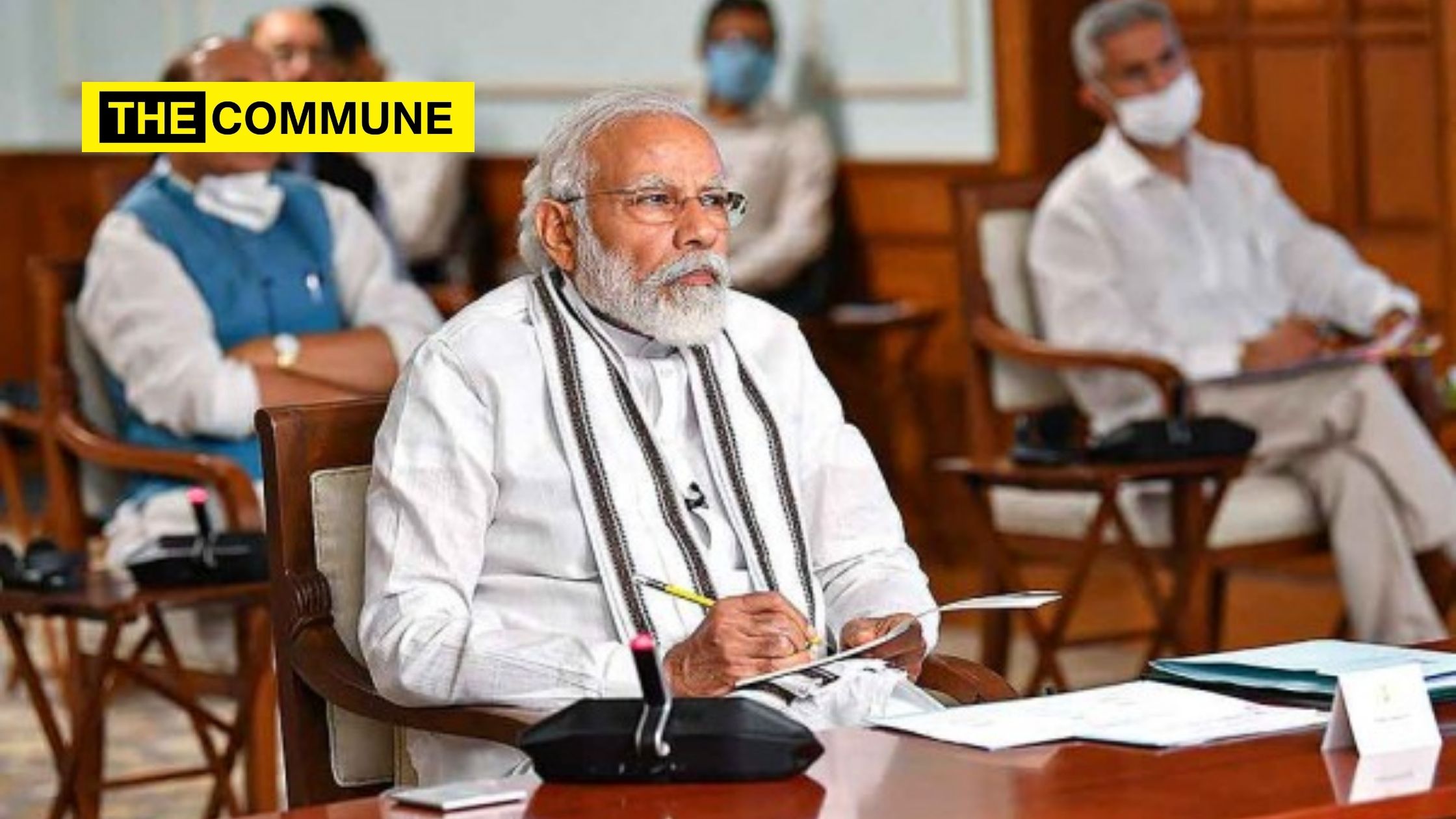
The Union Cabinet chaired by the Prime Minister Narendra Modi, gave its approval for Atmanirbhar Bharat RojgarYojana (ABRY) to boost employment in formal sector and incentivize creation of new employment opportunities during the Covid recovery phase under Atmanirbhar Bharat Package 3.0.

Cabinet has approved an expenditure of ₹1,584 crore for the current financial year and ₹22,810 crore for the entire Scheme period i.e. 2020-2023.

Government of India will provide subsidy for two years in respect of new employees engaged on or after 1st October, 2020 and upto 30th June, 2021.

Government of India will pay both 12% employees’ contribution and 12% employers’ contribution i.e.  24% of wages towards EPF in respect of new employees in establishments employing upto 1000 employees for two years,

The Central government will pay only employees’ share of EPF contribution i.e. 12% of wages in respect of new employees in establishments employing more than 1000 employee for two years.

An employee drawing monthly wage of less than ₹15000/- who was not working in any establishment registered with the Employees’ Provident Fund Organisation (EPFO) before 1st October, 2020 and did not have a Universal Account Number or EPF Member account number prior to 1stOctober 2020 will be eligible for the benefit,

Any EPF member possessing Universal Account Number (UAN) drawing monthly wage of less than ₹15000/- who made exit from employment during Covid pandemic from 01.03.2020 to 30.09.2020 and did not join employment in any EPF covered establishment up to 30.09.2020 will also be eligible to avail benefit,

EPFO will credit the contribution in Aadhaar seeded account of members in electronic manner.

EPFO shall develop a software for the scheme and also develop a procedure which is transparent and accountable at their end.

EPFO shall work out modality to ensure that there is no overlapping of benefits provided under ABRY with any other scheme implemented by EPFO.

(Published from PIB)

Cabinet gives nod for Submarine Optical Fibre Cable Connectivity between Kochi and Lakshadweep Islands

The Union Cabinet chaired by the Prime Minister Narendra Modi, has given its approval for Provision of Submarine Optical Fibre Cable Connectivity between Mainland (Kochi) and Lakshadweep Islands (KLI Project).

The Project envisages provision of a direct communication link through a dedicated submarine Optical Fibre Cable (OFC) between Kochi and 11 Islands of Lakshadweep viz. Kavaratti, Kalpeni, Agati, Amini, Androth, Minicoy, Bangaram, Bitra, Chetlat, Kiltan&Kadmat.

The estimated cost of implementation is about ₹1072 crore including operational expenses for 5 years. The Project would be funded by Universal Service Obligation Fund.

The present approval for Provision of Submarine Optical Fibre Cable Connectivity will vastly improve telecommunication facility in the Lakshadweep Islands by providing large bandwidth.

The submarine connectivity project will have vital role for delivery of e-Governance services at the doorstep of citizens, potential development of fisheries, coconut based industries and high-value tourism, educational development in term of tele-education and in health care in terms of telemedicine facilities. It will help in establishment of numerous businesses, augment e-commerce activities and provide adequate support to educational institutes for knowledge sharing.

Bharat Sanchar Nigam Ltd. (BSNL) has been nominated as Project Execution Agency and Telecommunications Consultant India Ltd. (TCIL) as the Technical Consultant of the Project to assist Universal Service Obligation Fund, Department of Telecommunications. The ownership of the asset under the project will rest with USOF, the funding agency, under DoT. The project is targeted to be completed by May 2023.

(Published from PIB)

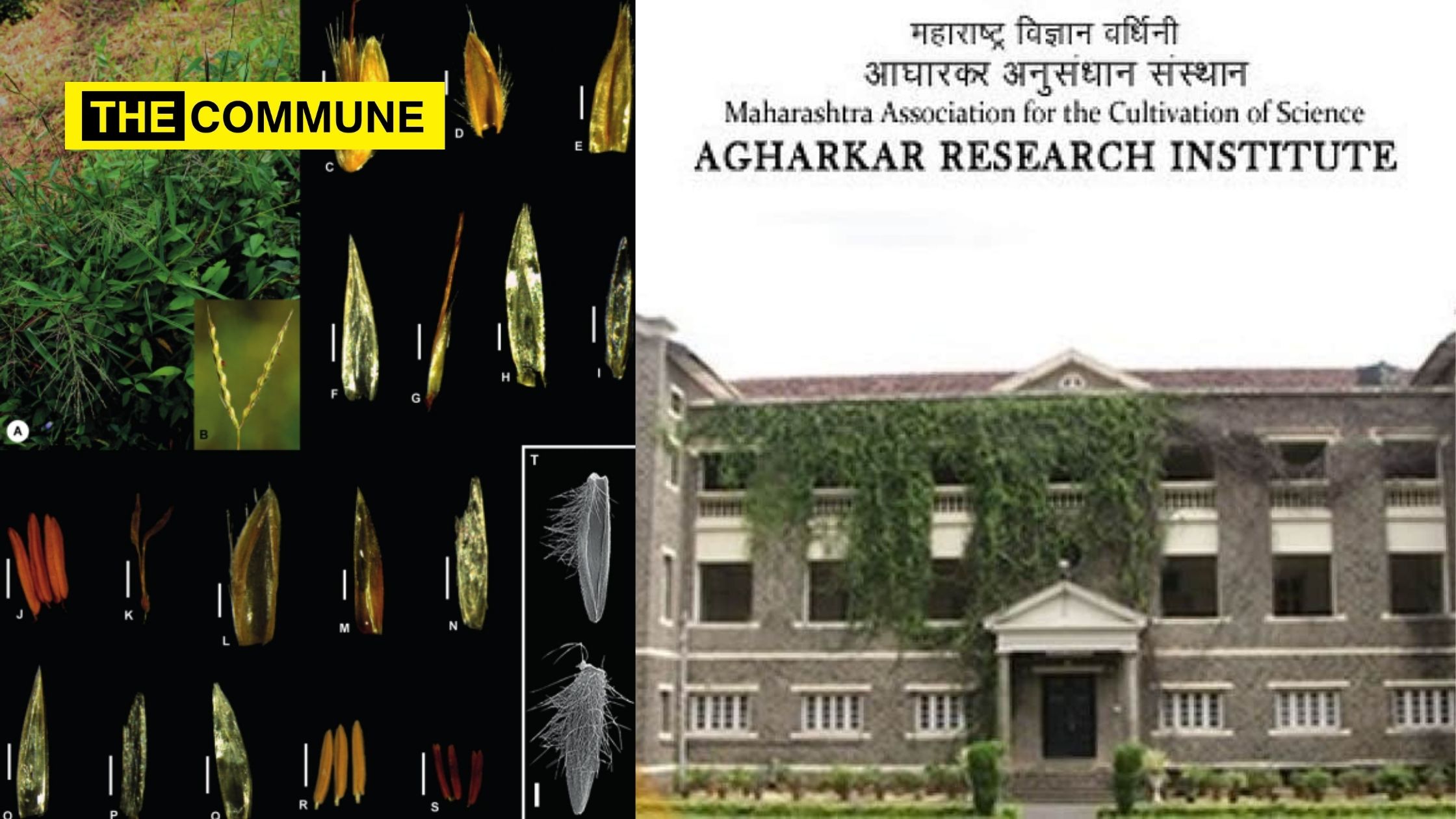
Tough to spot new species of Indian Muraingrasses identified by scientists in Western Ghats

A new species of Indian Muraingrasses known for their ecological and economic importance, such as fodder, have been spotted by scientists in Goa in the Western Ghats, one of the four global biodiversity hotspots of India. The species has adapted to survive harsh conditions, low nutrient availability, and blossoms every monsoon.

Globally 85 species are known from Ischaemum, of which 61 species are exclusively found in India. The Western Ghats have 40 species with the highest concentration of the genus.

Agharkar Research Institute (ARI), Pune, an autonomous institute of the Department of Science & Technology, has been exploring the biodiversity of the Western Ghats for last few decades.

A team led by Dr. Mandar Datar and Dr.Ritesh Kumar Choudhary from ARI has been working on relationships among different groups of plants and their evolutionary development (plant taxonomy and phylogeny) of Indian Muraingrasses (Genus Ischaemum) to document the diversity and report novel species. The team discovered a novel species named Ischaemumjanarthanamiifrom plateaus of Western Ghats of Goa, and a research paper describing this species was published recently in Annales BotaniciFennici, a Finland based journal.

During their explorations on lateritic outcrops (habitats where portions of freely exposed bedrocks protrude above the soil level due to natural reasons) of Goa, the ARI team collected an interesting specimen of the species. Careful observations and critical morphological studies identified the species as a novel one. The species was named Ischaemumjanarthanamiiin honour of Prof. M. K. Janarthanam, Professor of Botany, Goa University, for his contribution to the Indian grass taxonomy and documentation of the floristic diversity of Goa state.

The first collection of this new species was made in the 2017 monsoon. The population was kept under observation for the next two years to confirm the consistency of its characters. Morphological and molecular data of the species were used to confirm the novelty of the species.

Ischaemumjanarthanamii grows on low altitude lateritic plateaus in the outskirts of Bhagwan Mahavir National Park, Goa. The vegetation is exposed to extreme climatic conditions like desiccation in drier months and soils with low nutrient availability. However, withstanding these, the species has adapted to survive harsh conditions and blossom every monsoon.

(Published from PIB)

BSNL, in partnership with Skylo, to introduce worlds’ first satellite-based narrowband-IoT network in India

BSNL, in partnership with Skylotech India, announced today a breakthrough in satellite-based NB-IoT (Narrow Band-Internet of Things), in pursuance of the  Prime Minister Narendra Modis vision of a truly Digital India  starting with fishermen, farmers, construction, mining andlogistics enterprises. With this solution, India will now have access to a ubiquitous fabric of connectivity for millions of yet unconnected machines, sensors and industrial IoT devices.

This new ‘Made in India’ Solution, which is indigenously developed by Skylo, will connect with BSNLs satellite- ground infrastructure and provide PAN-India coverage, including Indian seas. The coverage will be so vast that it will not leave any dark patch within the boundary of India, from Kashmir & Ladakh to Kanyakumari, and from Gujarat to the North East, including the Indian seas.

“The solution is in line with BSNLs vision to leverage technology to provide affordable and innovative telecom services and products across customers segments”.He further added:Skylo would also help provide critical data for the logistics sector to enable effective distribution of COVID-19vaccine in 2021and will be a big contributor in service to the nation.” P.K.Purwar, CMD, BSNL was quoted saying in the press release.

Parthsarathi Trivedi, CEO and Co-founder, Skylo, said: For centuries, industries, including agriculture, railways and fisheries, have been operating offline, and havenot had the opportunity to take full advantage of the latest advancements in AI&IoT until today.This is theworlds first satellite-based NB-IoT network and I am proud to launch this capabilityin India first to transform lives and our domestic industries”.

Shri VivekBanzal, Director (CFA), BSNL Board, said, Successful POCs have already been conducted by BSNL and Skylo in India and we will soon approach various user groups before the New Year 2021 begins.

This breakthrough announcement is very timely because it comes during the ongoing Indian Mobile Congress 2020. This new technology supports the Department of Telecom and NITI Aayogs plan of bringing indigenous IoT connectivity to India’s core sectors. Examples of where this technology has already been tested successfully include, Indian Railways, fishing vessels, and enabling connected vehicles across India.

A small, smart, incredibly rugged box, the Skylo ‘User Terminal’ interfaces with sensors and transmits data to the Skylo Network and into peoples hands. The accompanying Data Platform provides an immersive, visual, experience for industry-specific applications on mobile or desktop. Itgives users the ability to take immediate and appropriate action, no matter where they are. This new digital machine connectivity layer will serve as a complement to smartphone-centric mobile & Wi-Fi networks, and covers India’s full geography to bring online new applications for the first time.

(Published from PIB)

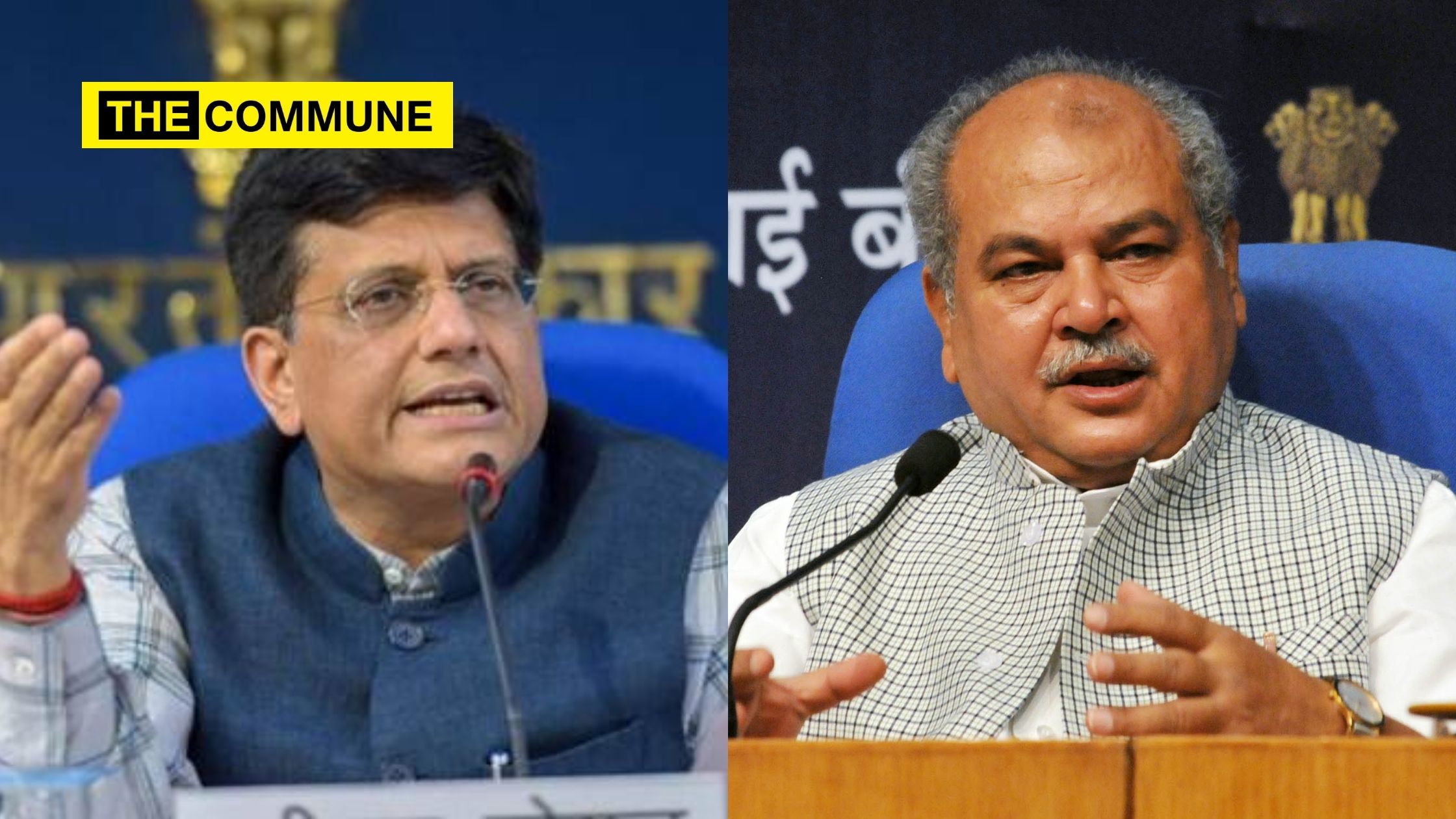
MSP and APMC will remain: Union Minister Piyush Goyal

In order to find an amicable solution to the ongoing protests over the newly enacted farm laws, Union Ministers Piyush Goyal and Narendra Singh Tomar outlined the various suggestions that have been given to farmers in a proposal to address their concerns about the Farm Acts. They were speaking to media at a Press Conference in New Delhi today.

The Farmers Produce Trade and Commerce (Promotion and Facilitation) Act 2020 and Farmers (Empowerment and Protection) Agreement on Price Assurance and Farm Services Act 2020 and the Essential Commodities Amendment Act 2020 are the biggest agricultural reforms in the country so far. The reforms will provide farmers market freedom, encourage entrepreneurship, access to technology and they will transform agriculture.

The Ministers said that Union Government is willing to give assurance on MSP and procurement and added that the government wants to ensure a level playing field in transactions inside and outside the existing APMC Mandis. Government has said that the farmers can approach civil courts in disputes besides the SDM courts and that the Government is willing to address concerns regarding penalty for stubble burning and in the proposed electricity amendment Bill. It has also assured that farmers land will be protected under the new farm Acts.

Both the Union Ministers spoke about the various measures that the Modi government has taken since its inception to improve the lot of farmers and towards strengthening the Agriculture sector. They said the latest Acts were reforms undertaken after many rounds of consultations with stakeholders. They give the farmers freedom to sell anywhere and strengthen farmers with a protective legal framework when dealing with private companies. Agriculture Minister gave an example of a farmer from Maharashtra who got immediate payment from the trader after the grievance was successfully addressed under the new laws. They said when the Centre makes a law it is for the whole country. The Central Government is well within its Constitutional Rights while making laws on Agricultural trade. The Budgetary allocations for agriculture have seen a significant rise from 2014-2020 and this shows the commitment of the Govt. towards farmers and the rural sector. An allocation of 75,000 crore has been made for just PM Kisan initiative under which farmers get ₹6000 per year of direct income support. ₹1 lakh crore Agri Infrastructure has been set up for the development of farm gate infrastructure. Neem coated urea scheme was introduced by Modi Govt. for reduced use of chemicals and improved soil health. The Modi Government announced MSP hikes based on the recommendations of the Swaminathan Commission and on the formula that farmers must get at least 1.5 times the cost of production. The Government has also ensured greater procurement and greater payment to farmers. Under the PM Kisan Maan Dhan Yojna, farmers are given pension support. Farmer Producer Organisations (FPO’s) bring farmers together and provide them with a greater say in their future. 10,000 such FPO’s are being created.

All these initiatives are aimed towards the farmer whose welfare and whose income occupies the central place in the Government’s schemes for Agriculture.

(Published from PIB)

Cabinet approves setting up of Public Wi-Fi Networks, will provide public Wi-Fi service with no license fee

The Union Cabinet chaired by the Prime Minister Narendra Modi gave its approval for the proposal of Departmetn of Telecommunications for setting up of Public Wi-Fi Networks by Public Data Office Aggregators (PDOAs) to provide public Wi-Fi service through Public Data Offices (PDOs) to accelerate proliferation of Broadband Internet services through Public Wi-Fi network across length and breadth of the country. There shall be no license fee for providing Broadband Internet through these public Wi-Fi networks.

The proposal will promote the growth of Public Wi-Fi Networks in the country and, in turn, will help in proliferation of Broadband Internet, enhancement of income and employment and empowerment of people.

This Public Wi-Fi Access Network Interface will be known as PM-WANI which will be operated by different players.

The Public Data Office (PDO) will establish, maintain, and operate only WANI compliant Wi-Fi Access Points and deliver broadband services to subscribers.

The Public Data Office Aggregator (PDOA) will be an aggregator of PDOs and perform the functions relating to Authorization and Accounting.

An App Provider will develop an App to register users and discover WANI compliant Wi-Fi hotspots in the nearby area and display the same within the App for accessing the internet service.

A Central Registry will maintain the details of App Providers, PDOAs, and PDOs and the C-DoT will maintain the Central Registry intially.

“This is expected to be more business friendly and in line with efforts for ease of doing business.COVID-19 pandemic has necessitated delivery of stable and high speed Broadband Internet (data) services to an increasingly large number of subscribers in the country including areas which do not have 4G mobile coverage. This can be achieved by deployment of Public Wi-Fi. Further, the proliferation of public Wi-Fi will not only create employment but also enhance disposable incomes in the hands of small and medium entrepreneurs and boost the GDP of the country. Proliferation of Broadband Services through public Wi-Fi is a step towards digital India and consequential benefit thereon. ” the press release released by the PMO said.


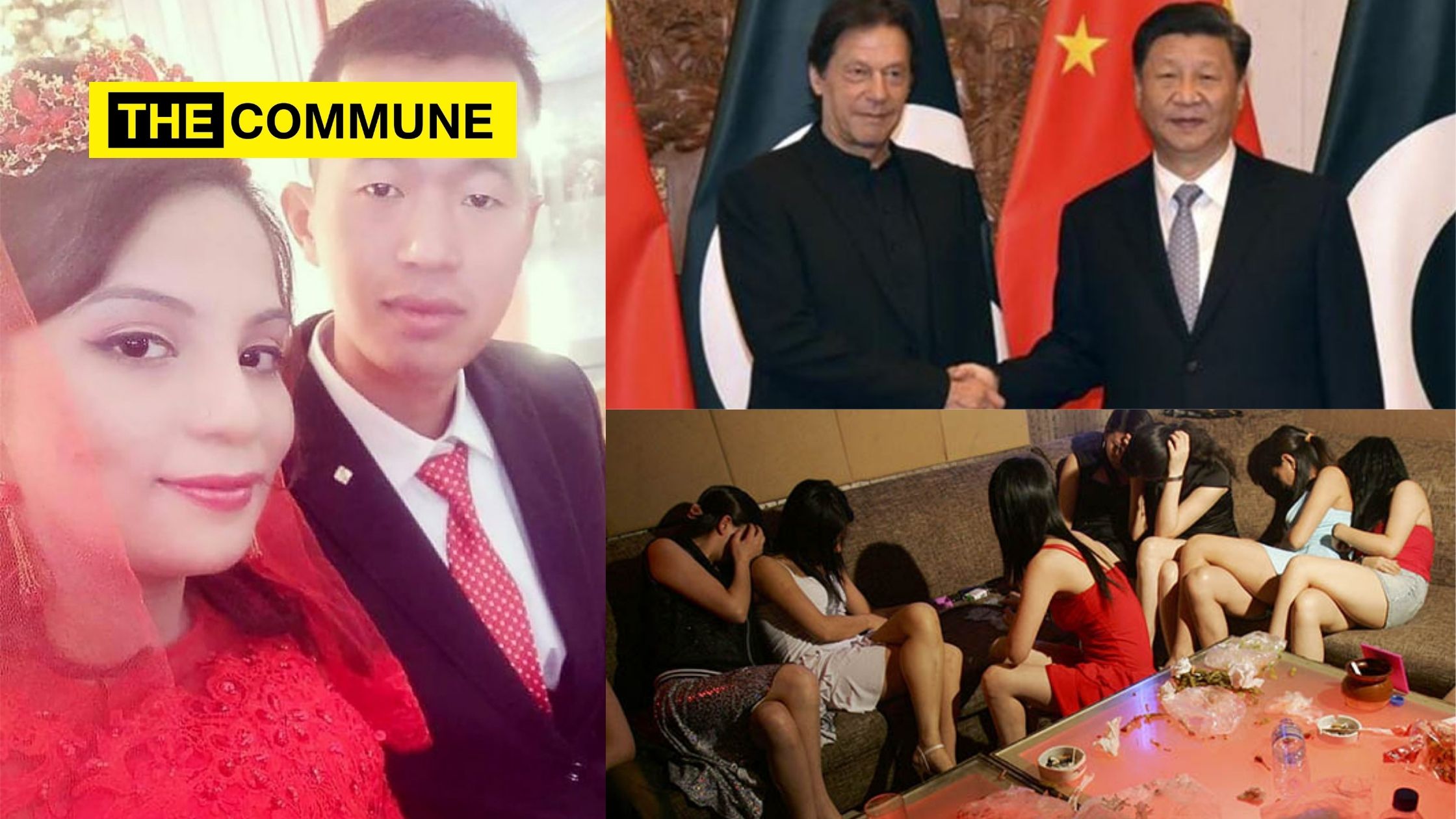
Hindu and Christian women from Pakistan ‘marketed’ as ‘concubines’ to China through fraudulent marriage, says top US diplomat

According to a very troubling revelation made by a top US diplomat for religious freedom, Ambassador-at-Large Samuel Brownback, Hindu and Christian women in Pakistan are being ‘marketed’ as ‘concubines’ under the pretext of marrying them to wealthy Chinese men.

Brownback told reporters on Tuesday (December 10) that Pakistan is selling girls who belong to the religious minorities as “forced brides” for Chinese men. Christians and Hindus are a minority in Pakistan and often targets of majority Sunni Muslims and Hindu and Christian girls are an easy target to be sold as concubines or as brides into China.

Due to years of the one-child policy imposed by China, there is an acute imbalance in the sex ratio and given the cultural preference for a male child, many Chinese couples would either have undergone abortion or simply abandoned the girl child after giving birth.

This skewed sex ration has led to Chinese men importing women from other countries as brides, mistresses and labourers. As per Brownback, “Once married in China, these women are often isolated, neglected, abused and, at times, sold as prostitutes.”

According to Brownback, this was happening “because there’s not effective support and there’s discrimination against religious minorities that make them more vulnerable.

In November of this year, Ambassador-at-Large Brownback also spoke about the plight of Ahmadi Muslims and raised concern on Pakistan “because of the harshness of the persecution atmosphere and the number of people getting killed or the inability for the Ahmadi Muslims to function in the country, because they – the Pakistanis won’t let them register as Muslims.”

And it is not just Hindus or Christians, even poor Muslim woman in Pakistan are lured in to the Chinese trap.

The New York Times in November 2019 had covered a story of one Rabia Kanwal who was married to a Chinese man. Rabia was married to Zhang Shuchen who she thought was a wealthy farmer in China. He had paid $14,500 to a Chinese broker in the hopes of bringing home a Pakistani bride. He had told Rabia’s family that he was Muslim and used Chinese-Urdu dictionary to communicate and strike a bond with the family. After the marriage, Zhang had taken her to China. His house was located in the Henan province. The girl upon reaching was shocked to find that the man turned out to be duck farmer with not even a toilet at his home. The report notes that at least 150 women were brought to China as brides under false pretenses and in some cases were forced into prostitution.

He mentioned this as one of the reasons for designating Pakistan as a country of particular concern (CPC) under the International Religious Freedom Act.

The US Commission on International Religious Freedom (USCIRF) had also recommended placing India also on the CPC, citing the Citizenship Amendment Act (CAA). However, Secretary of State Mike Pompeo rejected the recommendation to designate India as a violator of freedom of religion on Monday (December 7).

Brownback, however, said that Washington was watching the Indian situation closely and “these issues have been raised in private discussions at the government, high government level, and they will continue to get raised”.

The main issue of contention is that CAA expedites citizenship for Hindus, Christians, Buddhists and Sikhs fleeing religious persecution in neighbouring Islamic or Muslim majority countries. However, the laws also do not prevent Muslims from getting citizenship after following the usual procedures.

Brownback reservations are in fact quite unfounded as the US has a legal provision similar to the CAA which is known as the Specter Amendment. This law allows individuals to get asylum and there is a sizeable budget tucked into this bill to help non-Muslim minorities from Iran and other no Christian countries, while pointedly excluding Muslim.

When he was asked why Pakistan is on the CPC list and if there is a double standard in Pompeo giving not giving the same designation to India, Brownback said, “Pakistan has half of the world’s people that are locked up for apostasy or blasphemy,”.

The countries that are on CPC in addition to Pakistan are China, Myanmar Eritrea, Iran, Nigeria, North Korea, Saudi Arabia, Tajikistan and Turkmenistan.

Antitrust lawsuit filed against Facebook, calls for unwinding of its acquisitions of WhatsApp and Instagram

An antitrust lawsuit has been filed against social media giant Facebook by the Federal Trade Commission (FTC) and 48 other states on Wednesday (Dec 9), and if this antitrust lawsuit is a success, it could lead to the court-ordered breakup of the company, The Wall Street Journal reported.

Antitrust motions are filed when a company indulges in monopoly and the FTC has accused Facebook of buying and freezing out small startups to choke competition.

The suit also sought to end Facebook’s control over WhatsApp and Instagram and called for unwinding its acquisitions of WhatsApp and Instagram, two of its landmark deals.

“Facebook recognizes that its continued ownership and operation of Instagram and WhatsApp…neutralizes their direct competitive threats,” the FTC lawsuit states.

“Facebook continues to monitor the industry for competitive threats, and likely would seek to acquire any companies that constitute, or could be repositioned to constitute, threats to its personal social networking monopoly.” the suit added.

The FTC is seeking “divestiture of [Facebook] assets, divestiture or reconstruction of businesses (including, but not limited to, Instagram and/or WhatsApp), and such other relief sufficient to restore the competition that would exist absent the conduct alleged in the Complaint.”

“Facebook’s actions to entrench and maintain its monopoly deny consumers the benefits of competition,” said Ian Conner, director of the FTC’s Bureau of Competition. “Our aim is to roll back Facebook’s anticompetitive conduct and restore competition so that innovation and free competition can thrive.”

In a tweet sent out by New York Attorney General Letitia James says, “#BREAKING: I’m leading a bipartisan coalition of 48 attorneys general in a lawsuit against @Facebook to end its illegal monopoly. We are taking action to stand up for the millions of consumers and many small businesses that have been harmed by Facebook’s illegal behavior.”

PM Modi lays foundation stone for new Parliament building

Prime Minister Narendra Modi laid the foundation stone for the new Parliament building being built as part of the Central Vista Project on Thursday (December 10).

The rituals of the ‘bhoomi pujan’ at the site of the new Parliament building were performed by the pundits belonging to the Sringeri Math in Karnataka which was followed by a ‘sarva dharma prarthana’ (inter-faith prayer).

Lok Sabha Speaker Om Birla, Parliamentary Affairs Minister Pralhad Joshi, Urban Development Minister Hardeep Singh Puri, Rajya Sabha Deputy Chairman Harivansh, TATA Trusts Chairman Ratan Tata also offered prayers during the ceremony.

Tata Projects Ltd has been given the contract for the project. “It is an impressive project and I wish it all success. I am privileged to be invited to the foundation stone laying ceremony,” Mr. Ratan Tata, Chairman Tata Trusts was quoted saying in a ANI report.

Prime Minister Narendra Modi called the day as a milestone in India’s democracy. He said that many new facilities are being made available  in the new Parliament House, which will increase the efficiency of the MPs and change the work culture.

He said that democracy in India is a way of life and is embedded in the nation’s soul. ” India’s democracy is a system developed through centuries of experience.”, the Prime Minister said.