Home Blog Page 1433

Bengal Elections: Behind The Numbers

Enough has been said about BJP’s defeat in West Bengal. But still the violence perpetrated by TMC goons wrecks havoc in the state. Even after winning elections by a landslide, TMC goons have unleashed violence on those who did not vote for them. What is the reason behind it? Is Chief Minister Mamta still not confident about her future that she has let loose her goons on her political opponents?

Once a party wins an election they will be elated and will start working on the blind spots i.e the constituencies and the voter cohorts who did not voted for them. They start engaging with them in the form of increasing the membership, appease the communities by providing ministerial births, government benefits etc. But if the same group of voters/constituencies are not voting for the party in more than 2 election cycles (i.e 10 years) then the party might stop engaging much with them and will continue the status quo of engagement which happened before the elections. But TMC is not doing these. Instead it focuses too much on BJP. In Bengal this is the first time that the BJP has tripled the vote share in the Assembly elections. Even though BJP has increased its vote share, the TMC has been unhurt with respect to its seats won or vote share. Yet, they are engaging violently with BJP. It either shows the lack of confidence TMC has on Bengalis or else TMC knows it has hit its peak which is making it go crazy as there is no way they can do that again.

Let us now look at the major points arising out of the results and analyze.

1.BJP increased its vote share from mere 10% to 38%. In 2016 BJP got 29 lakh votes, they increased it to 2.28 crore votes in 2021. A whopping 2 crore votes more. It all happened in one election cycle. It is not a small feat. Never ever has any party seen such a growth. Even Delhi CM Arvind Kejriwal took 2 elections at Assembly level to increase his vote share.

2.Usually when a wave election happens it will hit the opponent very hard like Congress, Communists. When compared to 2019 Lok Sabha elections BJP just lost 2 lakh voters in a wave election against it. BJP is the only party which has withstood many wave elections against it either by holding on to its previous vote share or seats. Examples are Madhya Pradesh, Rajasthan and Chhattisgarh. However, they bounced back very quickly in the next election.

3. BJP lost around 56 seats in margin of less than 15000 votes.

Vote Margin 10000-15000 5000-10000 1000-5000 less than 1000
Seats lost 15 19 19 3

If one adds up these seats to the current tally of 77, it will come to 133.

4. If BJP adds 20000-25000 votes more in the above 36 seats along with additional 20 seats, they can cross 148 which means they have to add around 11 lakh to 15 lakh i.e 5-7% more with current vote percentage. Which is very feasible for BJP since it added 2 crore more votes in 2021 when compared to 2016.

5. The main reason why BJP missed the mark was due to women voters not voting for the party. If BJP can come up with schemes specifically for women voters it can do wonders. There are existing templates for the BJP to do that. They can take a leaf out of Orunudoi scheme of Assam, flavors of Kanya Dhan scheme of Karnataka, free washing machine scheme announced by ADMK in TN etc.

6. 38% of votes which BJP has got is, all from Hindu community only. When we extrapolate it, it can be deciphered as below

  • Out of 80% people who voted we can subtract 15-20% of minority voters so it means that 65-60% of Hindus voted.
  • In that 60-65% BJP has got 38% i.e around 58-63% of Hindus votes which is a humongous number. This has sent a shiver down the spine of Mamata and has made the TMC go bonkers.

7. Jim Crow Law of Bengal: Bengal is the only state in India which follows the principles of Jim Crow. Jim Crow Law is one of the starting points of American civil rights movement. Using Jim Crow Laws, the US govt segregated African Americans and it made sure African Americans are underrepresented in all fields in the US. Similarly Congress, Communists & TMC follow the template of threatening opposite party booth workers, intimidating voters so that they will not be able to vote freely and if it does not work out then they go on a killing spree so that nobody will sit in opposition. It is now the onus of BJP higher ups to break this cycle and make sure its workers stay put and defend their rights.

8. Defeat of sitting CM Mamta Banerjee in her seat is no ordinary thing. In the history of Bengal this is the first time the incumbent CM has been defeated but the party won massively. So it shows the vulnerability of TMC in the future elections. Contrary to what the media portrays, it is not BJP which is nervous but the head of the TMC, Mamta who is biting her nails. It makes the first family of TMC more angry and seems to have allowed the violence for the past few days.

9. The media narrative which is happening now looks like a redux of the BJP defeat in UP Lok Sabha by-polls in 2018. At that time many argued that the results cannot be taken as referendum on PM Modi entirely.

The BJP has faced this trial by fire many times (Delhi in 2015, Bihar in 2018, etc). But when the smoke clears  everyone will realize that it is the BJP which has emerged stronger making Mamta more vulnerable. Also it is to be noted that BJP always performs well when it is the underdog.

So what are the minimum things BJP can do in West Bengal to increase its vote by 5-7%

1.Formulate the CAA rules. Don’t wait for next election cycle. Create the basic rules of CAA by 2022 and start giving citizenship documents to Matuas. Even if West Bengal government blocks it, start giving citizenship to a small percentage of Matua community people in other states. It can create a tremendous good will among Matuas which can help in further consolidation.

2.Announce schemes targeting women voters at Central level and start implementing it. Schemes like Orunudoi of Assam, Flavors of Kanya Dhan scheme of Karnataka, Madhya Pradesh, Free washing machine announced by ADMK in TN etc., can really help in gathering more women votes for BJP.

3. Run a campaign targeting Bengali youth residing in different states. Not all are supporters of left ideology. There are huge silent Bengali youths who are angry with the current violence unleashed by TMC.

4. There are multiple ways to win any election. The BJP can either focus on spreading across all constituencies or follow the Assam approach of focusing only on favourable constituencies. So instead of giving a lot of efforts in convincing Bhadralok communities, focus can be given on other areas around Kolkata. Bhadralok communities will rally behind the party which wins. First they were with Congress then communists and now with TMC. So focusing on voter sections who will give high yield like women voters, youths etc will be fruitful. Even if BJP wins additional 40 seats, entire Bhadralok communities will start supporting BJP in lock stock and barrel.

5. It is better not to focus and split Muslim communities. Consider that they will vote en bloc and devise a strategy to overcome it like Assam BJP. As usual Muslims’ demand will sky rocket now and the TMC will not be able to complete support or oppose their demands. This will put both the Muslims and the TMC in a catch 22 situation which will automatically result in splitting of votes.

After the Bihar election everyone wrote off BJP and the Modi-Shah magic. But they know that they lose a battle to win a war. The BJP has sown its seeds and watered it well. Its political dividends for the next election will be greater than that of 2021.

As of now, the BJP State and Central team should focus on supporting booth level workers physically and financially to safeguard themselves from violent attacks by TMC goons.

Click here to subscribe to The Commune on Telegram and get the best stories of the day delivered to you personally.
The larger design behind the DMK government’s move to reduce milk price

One of the first orders that MK Stalin signed after taking oath as Chief Minister was to reduce the price of Aavin milk by ₹3. This was also one of the promises mentioned in the DMK’s manifesto for the Assembly elections. Many especially the party’s sympathizers in the media have been showering praises saying that this will provide relief to the poor and middle class consumers. However, there seems to be a larger design behind the DMK government’s move.

The ₹3 increase and decrease

Back in August 2019, the Tamil Nadu Government had come up with a revised price for Aavin milk by increasing the price of all its milk packets by ₹3. This price rise was done as a result of increasing the milk procurement prices from dairy farmers and other milk producers. Thus, the Maximum Retail Price (MRP) of 500 ml of Toned Milk (blue packet) was increased from₹18.5 to ₹21.5 and that of the Standardized Milk (green packet) was increased from 20.5 to 23.5. These two packets are the ones which see more sales.

Source: www.aavinmilk.com

It is good that the DMK has alongside increased the milk procurement price from farmers for cow’s milk and buffalo’s milk by ₹4 and ₹6 respectively. But, now that the DMK government has decreased the prices at the consumer’s end, it will certainly have a bearing on the milk procurement price from the dairy farmer at some point of time as the state cannot afford to bear the losses given its fiscal status.

So, is reducing the price of milk by ₹3 worth the trouble for Aavin? Let’s see.

₹180 vs ₹22 crores

Consider that a family of 4 in Chennai buys 2 packets (1 litre) of Aavin Toned Milk per day. Earlier, the family had to pay ₹43 per day for a litre which is ₹1290 for 30 days. With the new price, the family has to pay ₹1110 (₹18.5*2*30). So, the family just saves ₹180 per month with this new price.

However, the ₹3 reduction in price will have a disastrous impact on Aavin. According to the Annual Policy Note 2020-21 of the Animal Husbandry, Dairying and Fisheries Department, AAVIN sold an average 12.05 lakh litres of milk per day in Chennai metro alone during 2019-20. For convenience sake let us consider the 12.05 lakh litres to be Aavin’s Toned Milk. In a month, Aavin was getting ₹155.445 crores as revenue. With the ₹3 reduction, AAVIN will face a loss of more than ₹21.69 crores.

Now, can a family in urban area afford to spend ₹180 rupees extra in a month? Sure, they can. But can AAVIN put up with a minimum loss of atleast ₹21.69 crores in the long run. Ofcourse, it cannot.

The state government will put in the tax money (the money paid by you and me) and try to close a hole that will only keep enlarging.

So what explains this move of the DMK government? Let’s see that too.

Welfare politics or providing backdoor entry for DMK family’s business?

Aavin is one of the largest milk brands in Tamil Nadu which retains more than 50% of the milk sales in all the districts of the state, except Chennai. It has proposed to increase the milk sale in the Chennai metro alone to 13.00 LLPD during the year 2020-2021. The earlier Tamil Nadu government under AIADMK in its policy note for 2020-2021 had set a goal of increasing the market share of brand Aavin from 30% to 35%. But the Tamil Nadu government has been able to set such ambitious goals for AAVIN only in the last few years. Before that, the company was in shambles making losses.

During the 2006-2011, the company posted a cumulative net loss of ₹109 crores. On the other hand, it made a cumulative net profit of ₹231 crores from 2011-20. With increasing revenue, it has been able to spend on its marketing and brand building efforts making it more appealing and lucrative for consumers with more value added products.

Source: www.aavinmilk.com
www.aavinmilk.com

Apart from Aavin, the only other reputed and sought after brand is Hatsun’s Arokya which has been able to be the leader in the market despite selling its milk at a marginally higher price than Aavin. There are other private players too in the business – Heritage, Thirumala, etc. But of late, there is another brand that is trying to evolve as a competitor to Arokya and Aavin – Cavin.

Cavin’s milk is the dairy brand of CavinKare owned by C.K. Ranganathan, a member of the Karunanidhi clan. He is the husband of Thenmozhi who is the granddaughter of Karunanidhi from the Padmavathi branch.

The move of the DMK government has been taken keeping in mind its urban voters interest. In order to quell the fear of dairy farmers about fall in procurement prices, they have increased it by ₹6. But with this move, Aavin’s unit economics would be going for a toss. Once Aavin plunges into a state of despair meeting the fate of public sector units like Air India, BSNL, etc., it will definitely benefit private players and since the DMK is in power, it is but natural that Cavin would be trying to capture the market through backdoor.

Unit economics not mindless populism should decide policy decisions

It is important that the fair price of a product is paid by its consumers. If consumers pay less, government agencies like Aavin will not be able to survive because unit economics will not be at play. The finances of the company will be stretched with the government frequently trying to resuscitate it with tax money. This will affect procurement by government eventually pushing the farmers into the hands of the private players who will be readily waiting to ‘milk’ the situation.

Pricing is not just about price. It is about ensuring a stable ecosystem where the policy prioritizes farmer interests above everything else.

Click here to subscribe to The Commune on Telegram and get the best stories of the day delivered to you personally.
Piles of biomedical waste found lying unattended on the roadsides of Tenkasi

As the number of cases of coronavirus continues to increase day by day, there is a risk of further spread due to the prevalence of unsanitary conditions. This has become a major hazard, especially in Tenkasi, where medical waste was found to have been dumped on the sides of the road.

In the Tenkasi district, biomedical waste has been dumped in several places along the road leading to Tenkasi-Ayakkudi. Of these, some bundles are burnt and some bundles are not burnt, leading to concerns that they may cause health problems. Used syringes, needles, IV sets, expired and used medical waste are dumped on the side of the road frequented by pedestrians on the way to Ayakkudi.

As such medical waste continues to be dumped in the area, it has now increased the number of cases of corona positive results being reported. Social activists have demanded that the district administration take stern action against those who dump health waste in such places without proper disposal during this time of such a worldwide pandemic.

Click here to subscribe to The Commune on Telegram and get the best stories of the day delivered to you personally.
‘Periyar soil’ goes for a toss, Stalin receives prasadam and blessings from Tirupati Devasthanam

The Dravida Munnetra Kazhagam which swears by atheism advocated by E.V. Ramaswamy Naicker (known as ‘Periyar’ by his followers) is know for attacking Hindu faith. However, post the Karuppar Koottam episode in which a YouTube channel run by ‘Periyarists’ attacked Lord Murugan, the DMK has been flaunting its Hindu credentials. The recent assembly elections were no different. The DMK President even went on to lift a vel, the spear weapon of Lord Murugan.

However, his wife Durga Stalin is a devout Hindu and had frequented many a temple in the state, offering prayers for her husband’s victory in the elections.

Some say that it was her prayers that helped DMK leader Stalin become the 13th Chief Minister of Tamil Nadu. Meanwhile, following his victory, the pundits from the Tirumala Tirupathi Devasthanams led by Executive Officer AV Dharma Reddy visited the household of MK Stalin. The pundits chanted Veda mantras and offered prasadams of Lord Balaji to Stalin and his wife. A sacred thread was also tied in Stalin’s hand by one of the pundits.

Chief Minister Stalin and his wife Durga Stalin performed several pujas and were blessed by Vedic scholars. They were also presented with several prasadams from the temple.

https://twitter.com/Dharma2X/status/1391547097644552193

Click here to subscribe to The Commune on Telegram and get the best stories of the day delivered to you personally.
Chennimalai Murugan Temple helps out the hungry amidst lockdown by distributing food packets

Many states are enforcing lockdowns as the second wave of corona virus infection spreads across the country. A full lockdown will be imposed in Tamil Nadu from May 10 to 24. Even before that, devotees were banned from entering places of worship.

Devotees have been banned from worshipping at temples and places of worship and permission of festivals have been denied. But it has been reported that regular pujas, including rituals, will continue without devotees. In this situation, donations are being made regularly at the famous Chennimalai Murugan Temple located in Erode district.

As the devotees are not allowed to enter, the food cooked for annadhanam using the donations made are being packed in sacks and taken in packets to the foothills and distributed by the temple staff to the needy and the poor who are suffering without any source of income. Thus, at least 100 people benefit daily.

The Chennimalai temple is one of the temples under the control of the HR&CE Department. It is common for people of Christian and Islamic religions to pretend to be doing community service. Hindu temples are state-run and feed tens of thousands of people every day without much ado.

Click here to subscribe to The Commune on Telegram and get the best stories of the day delivered to you personally.
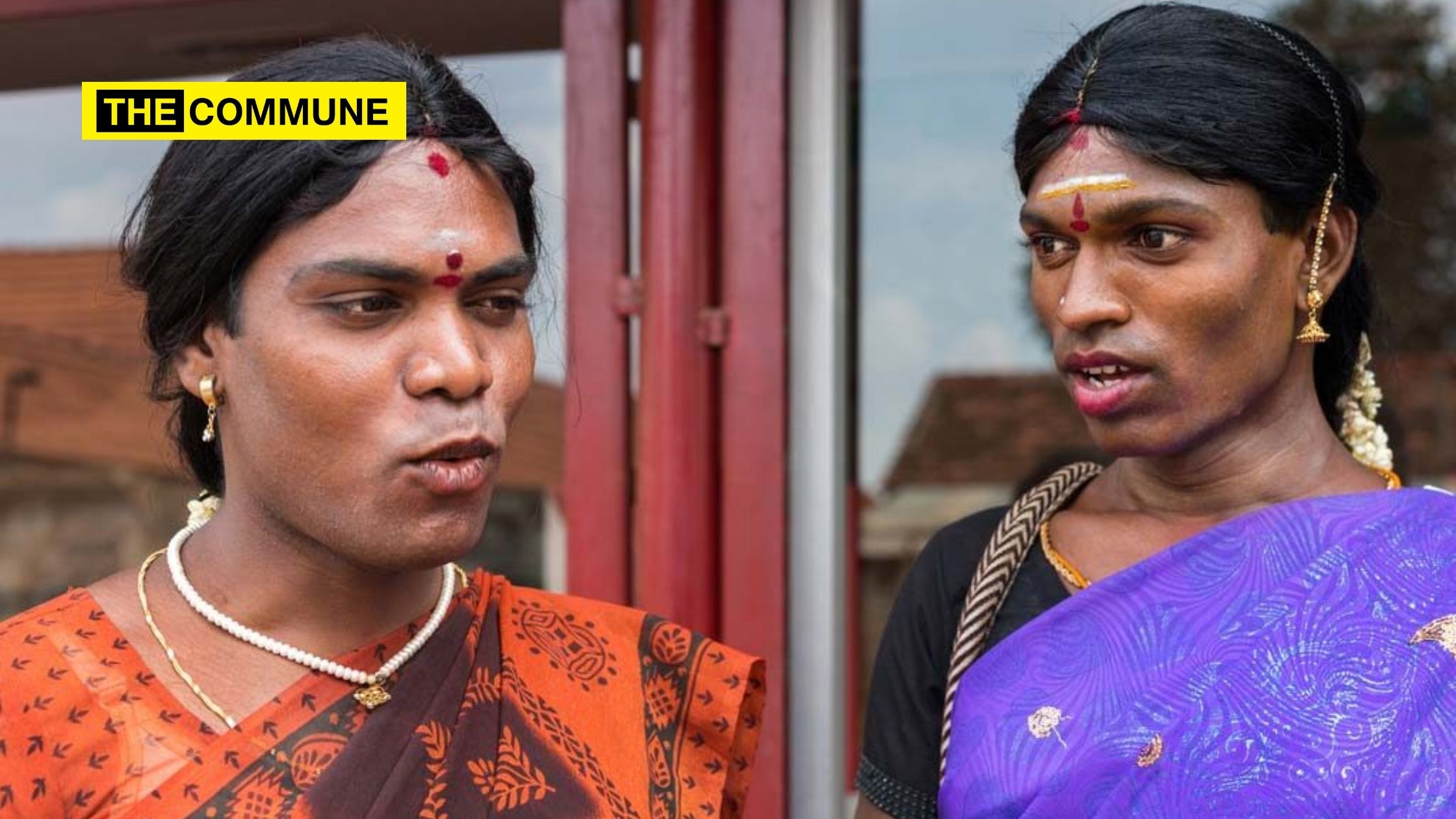
Village named after Collector Umanath comes to light after he gets appointed as CM’s Personal Secretary

The villagers of Viralikkadu near Coimbatore still remember the name of Umanath IAS, who was recently appointed as the Chief Minister’s personal secretary, and had even given his name to their village thanks to the help he rendered to them while posted in their district.

Viralikkadu is under the Karumathampatti municipality of Coimbatore district. More than a hundred families live in the area. Until 2011, the people of the area did not have a patta. No action had been taken by the government for the people who have been living there for 30 years. There was no action taken despite them having repeatedly petitioned the government authorities asking for a patta.

In 2011, the people of the Viralikkadu village submitted a petition to Umanath seeking a patta, who was the District Collector of Coimbatore at the time. After considering this, Umanath ordered the issuance of patta to the 80 families residing there ending the plight of the people of the village.

Although Collector Umanath did his job as a government official, the people named the area ‘Collector Umanath Colony’ in his honour. Also, all government documents have been changed to ‘Umanath Colony’.

Umanath has moved on to take various responsibilities since 2011 after that, but the area has been carrying the name ‘Collector Umanath Colony’ for the last ten years. The people of ‘Collector Umanath Colony’ are happy that Umanath, who helped their hometown, has now taken on the important responsibility of being the Chief Minister’s Personal Secretary.

In light of this, the people of the area say, “We had been struggling without a patta for 30 years. In honour of Collector Umanath who granted our request and granted the patta, we named the area ‘Collector Umanath Colony’. His name appears in government documents ranging from the Aadhar card to the ration card that has been issued to us. ”

Click here to subscribe to The Commune on Telegram and get the best stories of the day delivered to you personally.
Writers, journalists and digital publications condemn TN media for complete blackout of West Bengal post poll violence

Writers Aravindan Neelakandan, Dravida Mayai Subbu, senior journalist ‘Kolahala’ Srinivas along with the several digital media publications and Nationalist Journalist Welfare Association have condemned the print and television media of Tamil Nadu for the complete blackout of post-poll violence carried out by Trinamool Congress goons in West Bengal.

Here is the text of the full letter.

Elections are an important element of democracy. Success and failure in it are part of it. It is natural in politics for the parties that win to celebrate their victory while those who trail accept the public mandate.

But the actions of Mamata Banerjee’s Trinamool Congress is concerning. Unspeakable atrocities are being committed on innocent cadres of opposition parties. Violence, murder, arson and sexual assault have become common. Those who did not vote for the TMC are being hunted down by TMC goons.

Ordinary innocent people are forced to leave their hometowns. As refugees in their own country, they seek refuge in neighbouring states. Such heart wrenching scenes took place during the Partition of India.

A civilized society must oppose and question such barbaric acts of violence. Everyone, including young people, should ask questions on all platforms. This anarchy must be brought to light and the public be made aware.

The media has a lot of responsibility to question and expose such atrocities. But these acts of violence are being deliberately not given attention by the Tamil print and visual media which is unfortunate.

The Tamil Nadu print and television media which jumps in to cover isolate incidents of crime happening in a corner in northern states, have purposefully shied away covering the post-poll violence in West Bengal. 

This unreasonable silence shakes our conscience. We condemn the atrocities unleashed by the Trinamool Congress in West Bengal.

  1. Dravida Mayai Subbu (Writer, Senior Journalist)
  2. Kolahala Srenivaas (Writer, Senior Journalist)
  3. Aravinda Neelakandan (Writer, Senior Journalist)
  4. Mediyaan – mediyaan.com
  5. Vijayabharatham Nationalist Weekly – www.vijayabharatham.org
  6. Kathir News – kathir.news
  7. Orey Naadu Magazine – oreynaadu.com
  8. Thamarai – thamaraimedia.com
  9. Dhinasari – dhinasari.com
  10. News Guru – newsguru.news
  11. Tamilthamarai – tamilthamarai.com
  12. Swaraj Tamil – www.com
  13. Avatar News – avatarnews.in
  14. The Commune – www.thecommunemag.com
  15. Shree TV
  16. Enge Bharatham
  17. Sudesi Magazine
  18. Illayabharatham
  19. Kongu Nanbargal Sangam
  20. Nalayabaratham
  21. Hindu Murasu
  22. National Journalist Welfare Association
  23. Prakatanam

Click here to subscribe to The Commune on Telegram and get the best stories of the day delivered to you personally.

US Navy seizes huge cache of weapons in Arabian Sea likely bound for Yemen

Yemen US navy Arabian sea weapons
Featured Image: The seized cache of arms and weapons laid out on the deck of the USS Monterey.
Credits: Twitter/US 5th Fleet

The US Navy announced on Sunday that it seized an arms shipment of thousands of assault weapons, machine guns and sniper rifles hidden aboard a ship in the Arabian Sea, apparently bound for Yemen to support the country’s Houthi rebels.

According to a US defence official, the Navy’s initial investigation found that the vessel came from Iran, again tying the Islamic Republic to arming the Houthis despite a United Nations arms embargo. Tehran has denied giving the rebels weapons in the past and has not yet commented on the US’ new allegation.

The guided-missile cruiser USS Monterey discovered the weapons aboard “a stateless dhow” in an operation that began Thursday in the northern reaches of the Arabian Sea off Oman and Pakistan. A dhow is a traditional Mideast sailing ship. US sailors boarded the vessel and found the weapons, most of them wrapped in green plastic, below deck.

When laid out on the deck of the Monterey, the scale of the find was revealed.

Sailors found nearly 3,000 Chinese Type 56 assault rifles, a variant of the Kalashnikov. They recovered hundreds of other heavy machine guns and sniper rifles, as well as dozens of advanced, Russian-made anti-tank guided missiles. The shipments also included several hundred rocket-propelled grenade launchers and optical sights for weapons.

The Navy’s Mideast-based Fifth Fleet did not identify where the weapons originated, nor where they were going. However, an American defense official said the weapons resembled those of other shipments interdicted bounded for the Houthis.

Based on interviews with the crew and material investigated on board, the sailors determined that the vessel came from Iran, said the anonymous official.

“After all illicit cargo was removed, the dhow was assessed for seaworthiness, and after questioning, its crew was provided food and water before being released,” the Fifth Fleet said in a statement.

The seizure marks just the latest in the Arabian Sea or Gulf of Aden involving weapons likely bound to Yemen. The seizures began in 2016 and have continued intermittently throughout the war, which has seen the Houthis fire ballistic missiles and use drones later linked to Iran. Yemen is awash with small arms that have been smuggled into poorly controlled ports over years of conflict.

This recent seizure appeared to be among the biggest.

“The unique blend of materiel recovered by the USS Monterey appears to be consistent with the materiel from previous interdictions, which have been linked to Iran,” said Tim Michetti, an investigative researcher who studies the illicit weapon trade.

Since 2015, the UN Security Council has imposed an arms embargo on the Houthis. Despite that, UN experts warn “an increasing body of evidence suggests that individuals or entities in the Islamic Republic of Iran supply significant volumes of weapons and components to the Houthis.”

Click here to subscribe to The Commune on Telegram and get the best stories of the day delivered to you personally.

India, EU announce comprehensive Connectivity Partnership in direct challenge to China’s debt traps and BRI

India EU

In a major victory for India, the European Union (EU) on Saturday (8 May) announced a comprehensive Connectivity Partnership to support resilient and sustainable connectivity projects in India, to counter the imperialistic ambition of China’s Belt and Road Initiative (BRI).

The EU also has plans for a comprehensive Connectivity Partnership with other nations and regions like Africa, Central Asia, and the Indo-Pacific reports Economic Times

This will be part of the implementation of the partnership alignment with the EU-India 2025 Roadmap.

This could not have come at a better time when India is dealing with the Wuhan virus. This connectivity partnership will give India its very first such connectivity initiative with any foreign partner covering three geographical zones.

What is even more important is that it gives smaller and economically weaker nations an alternative to the BRI that has pushed several nations into debt traps.

India-EU partnership covers digital, energy, transport, and people-to-people sectors and will allow the pooling of resources, norms, and several expertise to serve the needs of the next generation of sustainable and quality infrastructure.

The partnership is a significant game-changer for the private sectors from both sides.

The document on the partnership read, “In order to facilitate large-scale private investments in sustainable connectivity, the two sides express their commitment to implementing relevant international standards, to ensure a level playing field for companies and to ensure reciprocal access to markets.”

In September 2019, the EU had signed a similar partnership with Japan. 

Click here to subscribe to The Commune on Telegram and get the best stories of the day delivered to you personally.
Five arrested in Bengaluru for black marketing of Remdesivir

Remdesivir

In two separate incidents, Bengaluru Police have arrested five persons for selling Remdesivir injections at eight to ten times more than the prescribed rates of the antiviral drug.

Bengaluru North division police arrested these five persons in two separate incidents. In the first case, four persons were arrested from the Mahalakshmi Layout police limits, while another person was arrested from the Sriramapura police station limits, the police said on Saturday.

The police identified the accused individuals as Shivakumar, 32, a bank manager in the cooperative sector; Darshan, 29, a medical representative; Girish, 30, a lab technician, and Nagesh, 43, a vegetable vendor.

The accused bank manager used the gullible vegetable vendor to sell these vials by making the buyers believe that he was in possession of them as one of his relatives had died of Covid-19 recently. He gave the impression to the buyers that the family was in possession of these medicines and all he wanted was to sell them at a price at which he had reportedly purchased them.

“The lab technician working in a hospital used to send customers to him,” the police said.

The fifth accused arrested from the Sriramapura police station limits has been identified as Nayaz Ahmed, 30, an employee with an online pharmaceutical delivery company.

The police said that all the accused persons were selling the drug for as high as ₹35,000 to ₹40,000 per vial.

In the Sriramapura case, the medicine delivery boy had purchased vials at MRP from a commissioning agent stating that he wanted the medicine to treat his brother.

In Karnataka, the price of Remdesivir ranges between ₹899 and ₹5,400 per vial. According to the available statistics, the retail price (MRP) per vial for various brands of Remdesivir is ₹5,400 for Hetero company, ₹4,700 for Mylan, ₹4,700 for Jubliant, ₹5,400 for Dr Reddy’s, ₹4,000 for Cipla and ₹899 for Zydus.

Click here to subscribe to The Commune on Telegram and get the best stories of the day delivered to you personally.