Home Blog Page 143

“Are You Not Part Of Our Republic? You Can’t Say ‘My State, My State’, Don’t Suppress Opportunity For Rural Students”: Supreme Court Rips Apart DMK Govt Over Not Establishing Navodaya Schools In TN

"Are You Not Part Of Our Republic? You Can’t Say ‘My State, My State’, Don’t Suppress Opportunity For Rural Students", Supreme Court Pulls Up DMK Govt Over Navodaya Vidyalayas

The Supreme Court on Monday, 15 December 2025, questioned the DMK government in Tamil Nadu on its continued opposition to the establishment of Jawahar Navodaya Vidyalayas (JNVs) in every district, observing that such resistance to a Central education scheme was “not in the spirit of federal cooperation” [The State of Tamil Nadu vs. Kumari Maha Sabha].

A Bench of Justices BV Nagarathna and R Mahadevan was hearing the DMK government’s appeal challenging a Madras High Court judgment that had directed the State to set up Navodaya Vidyalayas in every district.

During the hearing, the Court took exception to the State’s position when it was informed that one of the grounds for opposing the scheme was the alleged imposition of Hindi. The Bench asked the State to refrain from turning the issue into a political or linguistic dispute and instead focus on student welfare.

“We are federal society. Don’t convert this into a language matter. Don’t suppress an opportunity for rural students,” the Court told the State.

When the State’s counsel complained of Central “imposition” of schemes, Justice BV Nagarathna reminded Tamil Nadu of its constitutional position within the Union.

“Are you not part of our Republic?” she asked.

The Bench observed that education falls under the Concurrent List and that the Central government’s scheme was aimed at improving educational access and standards.

“There is nothing wrong in the Central government wanting to invest in education. Only meritorious students are admitted there. Why do you resist schools? Education is in the concurrent list. This is enhancing standards,” Justice Nagarathna said.

Senior Advocate P Wilson, appearing for Tamil Nadu, argued that the State had serious objections to the Navodaya Vidyalaya scheme. He submitted that the Navodaya model required the State to provide 30 acres of land in every district and to maintain the schools for three years.

The Bench questioned the basis of the resistance and asked why Tamil Nadu was opposing a scheme meant to expand educational opportunities.

Wilson responded that Tamil Nadu already possessed a strong public education infrastructure and followed a two-language policy under a State law. He said the Navodaya Vidyalaya scheme envisaged a three-language formula, which conflicted with the Tamil Nadu Tamil Learning Act, 2006.

The Court cautioned against politicising the issue.

“Don’t bring in politics into this. You are coming in the way of providing education to meritorious students. What is wrong in having more schools?” Justice Nagarathna demanded.

Wilson maintained that the scheme gave States the option to accept or reject participation and asserted that Tamil Nadu’s educational standards were higher than those of Navodaya Vidyalayas.

The Bench, however, appeared unconvinced.

When Wilson reiterated that Tamil Nadu’s refusal was rooted in its language policy, Justice Nagarathna said the matter could not be reduced to language politics.

“Why this mental block? If economically backward students are given the opportunity, why are you preventing that?” she asked.

Wilson argued that the State could not be compelled to provide land or financial support for a scheme that conflicted with its policies.

“They want to impose Hindi on us,” he said.

Justice Nagarathna responded that while the State’s language law would be respected, it could not be used to deny children educational opportunities.

“If you have a language policy, you say so, we will modify the scheme accordingly. But don’t suppress an opportunity for rural students,” she said.

The Court noted that the Union government had already sanctioned 650 Navodaya Vidyalayas across the country, with Tamil Nadu being the only State that had not cooperated.

Accordingly, the Bench directed Tamil Nadu to identify land required for establishing Navodaya Vidyalayas in each district within six weeks.

“We modify the interim order of stay granted by this Court on 11 December 2017 by directing the petitioner-State to identify the requisite extent of land necessary for establishing a Navodaya Vidyalaya in each district. The said exercise shall be carried out within a period of six weeks and a status report shall be placed before this Court,” the order said.

The Court clarified that its directions were limited to initiating the process and did not amount to enforcing the entire scheme.

“We are just asking for an exercise. We are not laying any foundation stone today,” Justice Nagarathna said.

Wilson insisted that the State could not be compelled to provide resources for a Central scheme, adding that the Union government still owed Tamil Nadu ₹3,548 crore under another education programme, the Samagra Shiksha Abhiyan.

Justice Nagarathna said such disputes should be resolved through dialogue rather than confrontation.

“We are a federal society. You discuss all this with them. Don’t convert this into a language matter. If you come one step forward, they will also come one step forward,” she said.

Wilson reiterated that the Navodaya system amounted to thrusting the Hindi language on Tamil Nadu.

Justice Nagarathna clarified that the Court was not adjudicating on the language issue.

“We have said nothing on the language. There can’t be such an adversarial attitude. This is in the interest of the students,” she said.

The Court then directed representatives of the Tamil Nadu government and the Union Ministry of Education to hold consultations on implementing the scheme and posted the matter for further hearing after six weeks.

In its earlier judgment, the Madras High Court had held that Navodaya Vidyalayas did not violate the Tamil Nadu Tamil Learning Act and that the State’s blanket refusal curtailed students’ right to choose educational institutions. It had directed the State to provide temporary accommodation for 240 students in each district within two months.

Tamil Nadu subsequently approached the Supreme Court, asserting that education policy fell within its exclusive domain and that its two-language policy was incompatible with the Navodaya model.

Justice Nagarathna concluded the hearing with a call for cooperation rather than confrontation.

“You can’t say ‘my State, my State’. This is a federal country. Don’t lose this opportunity. It’s an opportunity for your students,” she said.

Source: Bar and Bench

Subscribe to our channels on WhatsApp, Telegram, Instagram and YouTube to get the best stories of the day delivered to you personally.

The Real Story Behind Dhurandhar: How Congress-Era De La Rue Scam Compromised India’s National Security With Pakistan Taking Advantage With Fake Currency

The 2025 Hindi film Dhurandhar frames India’s fake currency battle as a familiar intelligence-versus-terror-state narrative. Public records and investigative files, however, reveal a far more uncomfortable reality. According to Central Bureau of Investigation (CBI) documents, parliamentary records, intelligence assessments, and enforcement agency findings, the most damaging vulnerabilities in India’s currency security system emerged not across the border, but within India’s own decision-making apparatus.

Taken together, these records point to a chain of policy decisions and administrative compromises that, according to investigators, left India’s currency system vulnerable for years—conditions later exploited by Pakistan-based counterfeit networks.

Part I: The Architectural Gamble – The 2004 Monopoly Contract

Official records trace the origins of this controversy not to a Pakistani printing press, but to policy decisions taken in New Delhi in 2004. P Chidambaram, upon becoming Finance Minister in the first United Progressive Alliance (UPA) government, oversaw a critical decision. In July 2004, his ministry authorised the Reserve Bank of India (RBI) to enter into exclusivity agreements for certain banknote security features.

By September 2004, a contract was signed. The British firm De La Rue, a global leader in currency printing and security which had a long historical association with printing Pakistani currency, was granted an exclusive contract to supply a colour-shift security thread for Indian banknotes. This thread, a key anti-counterfeiting feature, changes colour when viewed from different angles.

Subsequent CBI findings and internal file notings flagged two structural problems with the contract from the outset. First, they noted that De La Rue did not possess a granted patent for this specific security thread technology at the time the monopoly agreement was signed. The company’s patent application was reportedly filed in June 2004, published in 2009, and only granted in 2011. This meant the legal basis for granting a monopoly on proprietary technology was arguably absent in 2004.

Second, reports citing internal memos stated that the contract lacked stringent exit clauses, locking India into a single-supplier arrangement without a clear mechanism to disengage if performance or security concerns arose.

What makes the arrangement more consequential is that internal objections surfaced early and repeatedly. By 2006, RBI internal notes allegedly flagged that De La Rue did not hold a valid patent. By 2007, the Security Printing and Minting Corporation of India Limited (SPMCIL) was said to have raised similar concerns about the patent status. Despite these internal red flags, the exclusive arrangement with De La Rue continued without competitive bidding.

The CBI’s January 2023 First Information Report (FIR) did not name Chidambaram as an accused. However, critics and reports argue that the architecture of single-vendor dependency in a critical national security area, established during his tenure, created a systemic vulnerability. The allegation, as framed in media analyses, is that this decision inadvertently allowed security features to stagnate, making them easier for counterfeiters to replicate over time.

Part II: The Enabler’s Signature – The 2013 Extension

Nearly a decade later, the issue re-emerged in a more serious administrative form. The original De La Rue contract had expired in 2009 but was kept alive through temporary extensions. In June 2013, Arvind Mayaram, then serving as the Finance Secretary in the Ministry of Finance, signed off on a three-year extension for De La Rue to continue supplying the colour-shift thread.

This act is the central focus of the CBI’s FIR No. RC0102023A0002, registered on January 23, 2023. The agency alleged that Mayaram, along with unknown officials of the Finance Ministry and representatives of De La Rue, entered into a criminal conspiracy.

The FIR lays out a set of procedural violations that investigators consider central to the case. They claimed the extension was granted in violation of established procedures. The agency alleged there was no mandatory security clearance from the Ministry of Home Affairs (MHA), and no approval was taken from the Finance Minister, despite internal file notings that explicitly required both. The FIR further alleged that Mayaram ignored earlier warnings about the patent issue and failed to apprise the political leadership of the associated risks.

Mayaram has publicly denied any wrongdoing. His defence, as reported, centred on the argument that continuity of supply was essential to avoid disrupting currency production, a matter of national importance. He maintained that all decisions were taken in the interest of the country and with due diligence.

However, the CBI’s central question, as reflected in its probe, was why continuity was prioritised over strict procedural compliance in a domain directly related to currency security. The FIR pointed out that De La Rue had already been under a cloud. In 2010, the MHA under then-Home Minister Pranab Mukherjee had reportedly blacklisted the firm after intelligence inputs and quality concerns, including allegations of supplying substandard paper and falsifying test certificates. The CBI’s case implied that granting a long-term extension in 2013, after this blacklisting and without fresh security clearance, was a serious procedural lapse.

The FIR also referenced suspicious financial transactions, noting that agencies had discovered that a De La Rue executive, Anil Raghbeer, had received approximately ₹8.2 crore in his offshore accounts in 2011, purportedly beyond his known salary. While the FIR did not directly link this to Mayaram, it cited these transactions as part of the broader suspicion of undue favour.

Part III: The Systemic Blind Spot – Warnings and Delays

Viewed chronologically, the record reflects a pattern of repeated warnings that failed to trigger corrective action. The sequence of events, as pieced together from media accounts citing investigative documents, is as follows:

2006-2007: Internal RBI and SPMCIL memos reportedly flag De La Rue’s lack of a valid patent.

2010: Security agencies raise concerns about De La Rue also supplying Pakistan. The MHA blacklists the firm after quality scandals.

2012: P Chidambaram returns as Finance Minister. Reports suggest the blacklisting was relaxed to a “restricted” category to allow “essential continuity” of supply.

June 2013: Arvind Mayaram signs the three-year extension, which the CBI alleges was done without security clearance or minister’s approval.

January 2023: The CBI registers its FIR, naming Mayaram, unknown officials, and De La Rue representatives.

The gap between the alleged acts and the formal investigation over a decade forms another layer of the story. Complaints and allegations had circulated for years in media and political circles. The CBI’s FIR came only in 2023, and as of late 2025, no chargesheet has been filed, leaving the legal outcomes pending.

Part IV: The Pakistani Nexus – Javed Khanani’s Shadow Network

Parallel to this administrative timeline in India, a covert financial war was being waged. This brings into focus the real-world counterpart to Dhurandhar’s villain: Javed Khanani.

Khanani was no cinematic caricature. Described as a soft-spoken, bespectacled businessman from Karachi, he was the co-owner of Khanani & Kalia International (KKI), a massive hawala (informal money transfer) network. In 2008, the U.S. Treasury Department designated KKI as a “significant transnational criminal organization,” alleging it laundered money for narcotics traffickers and terrorist groups, including those linked to Lashkar-e-Taiba and Jaish-e-Mohammed.

Indian and international intelligence assessments, as reported over the years, described KKI as a key financial switchboard for Pakistani deep-state networks. Its role in the Fake Indian Currency Note (FICN) ecosystem was alleged to be critical. Investigative reports based on interrogations of captured operatives like Lashkar’s Abdul Karim Tunda described a pipeline: high-quality counterfeit notes printed in state-protected facilities in Pakistan, smuggled via Dubai, Nepal, and Bangladesh, and distributed within India. The proceeds from this FICN, along with other illicit funds, were allegedly cycled and settled through hawala networks like KKI.

The sophistication of the counterfeit notes was a major concern. Reports indicated that by the early 2010s, these “near-perfect” fakes, often printed on high-quality security paper, were flooding India, with annual inflows estimated by agencies to be worth ₹1,500-2,000 crore. This was characterized not as mere crime but as a form of economic warfare, funding terrorism and undermining monetary stability.

Part V: Convergence and Consequence

The troubling question that emerged from investigative journalism was whether India’s domestic procurement decisions inadvertently aided this external threat. The conjecture, often raised in analyses, was this: India’s long-term reliance on a single foreign supplier (De La Rue) for a key security feature, coupled with alleged delays in upgrading and diversifying sources, may have allowed Pakistani counterfeiters time to study and replicate security threads with alarming accuracy. While no public evidence proves a direct leak from De La Rue to Pakistan, the simultaneous decline in De La Rue’s reliability for India and the rise in quality of Pakistan-origin FICN raised uncomfortable suspicions.

The dramatic break in this cycle came with India’s demonetisation in November 2016. The overnight invalidation of ₹500 and ₹1,000 notes rendered vast stockpiles of FICN worthless, disrupting the entire smuggling and financing network. Reports at the time noted a sharp fall in FICN seizures in the following year.

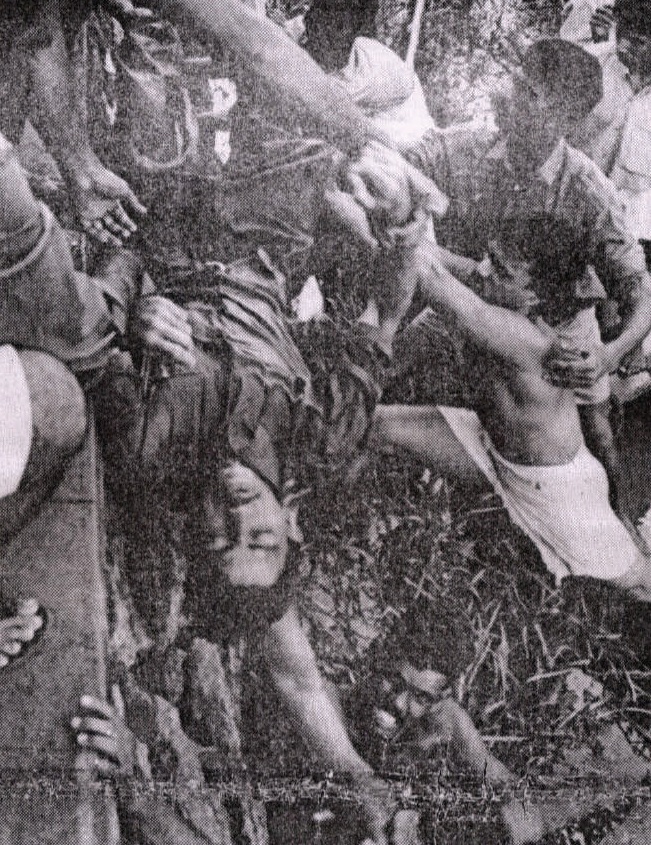
In a stark postscript, just weeks after demonetisation, on 4 December 2016, Javed Khanani was found dead after a fall from an under-construction building in Karachi. Pakistani police called it a suicide, while his family termed it an accident. No thorough medico-legal autopsy was widely reported. In intelligence and financial circles, as reported by journalists covering the region, whispers suggested his death was linked to the massive financial disruption and liabilities caused by demonetisation, though no evidence of foul play was officially established.

The Unresolved Thriller

Dhurandhar offers a cathartic, fictional conclusion. The real story, as documented in CBI files and investigative reports, remains open-ended and legally unresolved. It presents a complex picture where allegations of procedural bypasses and monopolistic contracts in Delhi intersect with a shadow war of terrorism finance orchestrated from Pakistan.

The CBI’s case against Arvind Mayaram is sub judice; he maintains his innocence. P Chidambaram is not named in the FIR, though his ministerial decisions are scrutinized in the court of public opinion. The broader allegation that emerges from this assemblage of reports is not of outright treason, but of a bureaucratic and political complacency that may have, over a decade, left a critical national security system, currency integrity, exposed.

This is a half-told tale: a thriller where the villains are not cartoonish foreigners, but the gatekeepers of the system itself, and where the climax is not a heroic raid, but a slow, grinding investigation battling against time, politics, and the weight of files. It is a story that underscores how economic warfare is often enabled not just by enemies abroad, but by vulnerabilities at home.

Source: Businessworld

Subscribe to our channels on WhatsAppTelegram, Instagram and YouTube to get the best stories of the day delivered to you personally.

Anna University Sexual Assault Case: Madras HC Revokes Goondas Act Against Convict Gnanasekaran

DMK Worker By Day, Biriyani Seller By Afternoon, Burglar By Night: Report Reveals Shocking Details Of Anna University Sexual Assault Culprit Gnanasekaran

On Monday, December 15, the Madras High Court annulled the application of the Goondas Act against Gnanasekaran, the prime accused in the sexual assault case reported at Anna University.

The law permits preventive detention without bail for a period extending up to one year.

A division bench consisting of Justice B. Velmurugan and Justice M. Jothiraman was adjudicating a plea submitted by Gnanasekaran’s mother, Gangadevi. Gnanasekaran had been taken into custody by the Greater Chennai Police on December 25 in connection with the alleged sexual assault of a female student within the Anna University premises on December 23. Investigators have also alleged that he recorded the incident and used the footage to intimidate the survivor.

During the proceedings, the Additional Public Prosecutor informed the court that the preventive detention law had been invoked solely on the basis of the sexual assault case, in which Gnanasekaran had already been sentenced to life imprisonment, with a minimum non-remittable term of 30 years. The prosecution further stated that he was involved in 29 other criminal cases, including offences related to theft

A Mahila Court in Chennai on 28 May 2025 convicted Gnanasekaran, declaring all charges against him proven. The court sentenced Gnanasekaran to life imprisonment along with a fine of ₹90,000. The court ordered that the sentence of 30 years must be served in full, concurrently, with no provision for sentence reduction.

The Incident & Arrest

The case pertains to an assault on December 23, 2024, when Gnanasekaran, a Kottur resident who ran a biryani stall near the campus, reportedly entered the university premises and sexually assaulted a female student in a secluded area. He also allegedly assaulted her male friend, filmed the incident, and later blackmailed the duo.

Following a complaint, the Greater Chennai Police arrested Gnanasekaran.

Profile Of Gnanasekaran

Gnanasekaran, a 37-year-old now-terminated DMK functionary from the Kotturpuram area in Chennai, reportedly worked as a roadside biryani vendor. He is reported to have two wives, one of whom he married under compelling circumstances after she became pregnant while they were both in school. Remarkably, both his first and second wives lived with him at his Kotturpuram house.

One wife is a contract worker, believed to be a professor at Anna University, which granted him unimpeded access to the campus—a connection he reportedly exploited to carry out his criminal activities there. Gnanasekaran is facing charges for multiple offences.

A resident of Kotturpuram had told a private YouTube channel that Gnanasekaran and his friends shared sexual photos of women through Facebook and WhatsApp groups.

Additionally, Gnanasekaran’s affiliations with the ruling DMK party have come to light, with photos of him alongside prominent DMK leaders, such as Deputy Chief Minister Udhayanidhi Stalin and Minister Ma. Subramanian. These connections have fueled speculation that his political ties may have played a role in attempting to cover up his actions.

Criminal History And Background:

A repeat offender with a long criminal history, Gnanasekaran has been booked for shocking activities that span over a longer period before the Anna University incident, with numerous charges pending against him.

  • Total Pending Cases: 14 with convictions in 6
  • Previously Filed Cases: Gnanasekaran has been involved in at least six criminal cases before this incident, including allegations of molestation, trespassing, theft, and other serious charges.
  • Prior Offenses: He is accused of molesting multiple individuals in separate incidents, including one woman within Anna University and one woman who is the daughter of a Tehsildar. However, many of the victims have not come forward to file formal complaints.

Anna University Sexual Assault Incident:

  • Victim: A second-year engineering student inside the college.
  • Incident Location: Anna University campus, Chennai.
  • Details: Gnanasekaran, along with an accomplice, attacked the victim and her boyfriend at a secluded spot on the campus. He filmed the assault victim without consent and threatened to release the footage unless the victim complied with his demands. The perpetrator forced the victim to strip, harassed her, and then sexually assaulted her.
  • FIR Details: Gnanasekaran’s actions included:
    • Voyeurism – recording private moments of the girl with her boyfriend and threatening to leak the footage to college authorities and the victim’s parents.
    • Sexually assaulting the girl and recording the same
    • Forcing the victim to choose between expulsion from the university or “spending time” with him and another man.

Connection To DMK And Alleged Political Protection:

  • DMK Affiliation: Gnanasekaran was a DMK functionary with documented ties to the party, despite official claims from DMK leaders denying his affiliation.
  • Party Role: He was reportedly a Deputy Organizer for the Saidapet area, as confirmed by party leaflets and the DMK mouthpiece Murasoli.
  • DMK Ties: He has been photographed with senior DMK leaders, including Deputy Chief Minister Udhayanidhi Stalin and Minister Ma. Subramanian, showing his strong political connections.
  • Political Interference: Gnanasekaran’s past offenses were allegedly covered up with political backing. For instance, it is alleged that in the current sexual harassment case, the DMK circle secretary Shanmugam reportedly intervened during a police inquiry to protect Gnanasekaran from being arrested immediately.

Additional Allegations And Investigations:

  • Criminal Record: Apart from the recent sexual assault case, Gnanasekaran has a shocking history of criminal activities, including trespassing, theft, and molestation.
  • Unlawful Activities: He was involved in illicit activities, such as selling alcohol and drugs in the Saidapet area, where he had ties to the deceased rowdy ‘Gym’ Ezhumalai, according to AIADMK IT Wing head Kovai Sathyan.
  • Use of Campus Access: His wife’s position as a temporary sanitation worker at Anna University allowed him unrestricted access to the campus, which he reportedly exploited to target victims and plan assaults.
  • Cover-Up Allegations: Despite clear evidence linking Gnanasekaran to the DMK, certain party elements have attempted to downplay or cover up his affiliation. Controversy surrounds the leak of the FIR, which contained sensitive details about the victim’s identity.

Subscribe to our channels on WhatsAppTelegram, Instagram and YouTube to get the best stories of the day delivered to you personally. 
“Murugan May Have 2 Wives But Light Should Be Lit At 1 Place Only”: Dravidian Model HR&CE Tells Madras HC In Thirupparankundram Deepam Case

The ongoing legal dispute over lighting the Karthigai Deepam at the Deepathoon atop the Thirupparankundram hill took a sharp turn at the Madurai Bench of the Madras High Court on Monday, 15 December 2025, when counsel for the Hindu Religious and Charitable Endowments (HR&CE) Department mounted a forceful challenge to the single judge’s order permitting the ritual. Arguing that the stone pillar was never intended for Karthigai Deepam and that its nature could not be altered under law, the counsel for HR&CE made a controversial remark saying “Murugan may have two wives, but light should be lit at one place only”. 

A Division Bench of Justice G Jayachandran and Justice KK Ramakrishnan was hearing appeals filed by the Hazarath Sultan Sikkandar Badhusha Avuliya Dargah, the Tamil Nadu government, the HR&CE Department, and other parties opposing the single judge’s directions. The single judge had earlier held that the stone pillar was not located on land belonging to the Muslim community and that lighting a lamp at the pillar would not infringe upon their rights.

Appearing for the Joint Commissioner, HR&CE, Senior Advocate N Jothi submitted that the Deepathoon was never intended for lighting the Karthigai deepam and that its nature could not be altered under law.

Referring to Section 4 of the Tamil Nadu Temple Entry Authorisation Act, Jothi stated that the powers to frame regulations vested with the trustees. When the Bench enquired whether a board was in place, he confirmed that an elected–nominated board was functioning.

Placing reliance on a 1981 book authored by an archaeology expert, Jothi said, “This particular gentleman says exactly about lighting of lamp. This book should’ve been placed before the court earlier.” Reading out passages, the counsel stated that the first photograph in the book depicted the Thirupparankundram hill where the lamp was ordered to be lit, and that similar pillars existed at Swamiyar Malai, about 20 kilometres away.

“All pillars unfinished. Page 4, another pillar. Page 5, front of two pillars. Last page, same type of thoon. Same design of pillar with same podium and height. Pillar of same type at different places. They’re not made for Karthigai deepam,” Jothi submitted.

The counsel further referred to another scholarly work by Venkataswami, stating that Digambara saints from Madhya Pradesh used to reside on hilltops and used such pillars only for illumination during night congregations. “These pillars were not for Karthigai deepam but for light by the Munis,” he said.

Jothi argued that no lamp had ever been lit on the Deepathoon and warned against changing its character. “Nature of pillar cannot be changed,” he submitted.

“The petitioners cannot ask Karthigai deepam to be lit at every pillar,” he said, adding, “What’ll happen if order is allowed. It says light lamp at two places. Does it happen anywhere? Murugan may have two wives but light should be lit at one place only.”

He alleged that the petitioners had caused serious disturbance to officials. “They caused commotion and gave nightmare to officers,” Jothi said, urging the court to allow the appeal. “This practice should be heavily condemned. The appeal should be allowed and heavy costs should be imposed on them. Payable to Murugan itself,” he added.

The Bench also heard submissions from counsel representing the Dargah, who argued that the single judge had erred in holding that the Dargah had not demonstrated how it would be affected. Another counsel emphasised that Thirupparankundram was a multicultural complex and that adjudication of title and custom required civil proceedings, not a writ petition.

Seeking a solution-oriented approach, the Bench observed that repeated litigations and incidents necessitated clarity through demarcation of boundaries. The court also posed a query on whether the parties would have any objection if the Archaeological Survey of India were to issue a notification permitting the activity, to which counsel responded that any such action must be “in accordance with law.”

The matter has been posted for further hearing on Tuesday, 16 December 2025.

Source: LiveLaw

Subscribe to our channels on WhatsAppTelegram, Instagram and YouTube to get the best stories of the day delivered to you personally. 
Thirupparankundram Karthigai Deepam Row: Dargah Says Court Orders Have Made Enjoyment Of Its 1920-Granted Land ‘Nearly Impossible’

thirupparankundram karthigai deepam sikandar murugan dargah

The Madurai Bench of the Madras High Court on Monday (15 December 2025) heard extensive arguments in a batch of appeals challenging a single judge’s order directing the lighting of a lamp at the stone pillar (Deepathoon) atop the Thirupparankundram Hills.

A Division Bench comprising Justice G Jayachandran and Justice KK Ramakrishnan was hearing appeals filed by the Hazarath Sultan Sikkandar Badhusha Avuliya Dargah, the Tamil Nadu government, the Hindu Religious and Charitable Endowments (HR&CE) Department, and other parties opposing the single judge’s directions.

The single judge had earlier held that the stone pillar was not located on land belonging to the Muslim community and that lighting a lamp at the pillar would not infringe upon their rights.

Minority Community Facing Difficulty: Dargah Submits

Senior Advocate T. Mohan, appearing for the Dargah management, submitted that the minority community was facing serious difficulty in enjoying its land, which was granted to the Dargah as early as 1920.

Referring to earlier litigation relating to animal sacrifice at the hills, Mohan said that judicial orders had previously curtailed the Dargah’s rights. He stated that the earlier judgment did not allow the setting up of toilets, electricity supply or water supply on land belonging to the Dargah.

He further said that prayer at the Nellithope area, which belongs to the Dargah, was not permitted earlier on the ground that it might affect the footfall of devotees visiting the Kasi Viswanathar temple.

“Now I can say that crowd is likely to occupy the pathway leading upto the Dargah. It can’t be that minority community is put to so much difficulty to enjoy their land given to them in 1920 and daggers drawn at every stage to defend ourselves against these incursion by them,” Mohan said.

Dargah Not Given Adequate Opportunity: Mohan

Mohan also contended that the Dargah was not initially made a party to the proceedings and was impleaded at a later stage. He submitted that the Dargah was not afforded sufficient opportunity to represent its case.

While the court orally observed that it was not concerned with procedural issues in the single judge’s order, Mohan argued that even procedural unfairness could vitiate an order.

The Bench responded orally, “You take it that all those aspects would be considered. You need not waste time on that. Other seniors have pointed it out. What we now have to look at is whether there’s any legal error.”

Mohan, however, took exception to what he described as the fast-tracking of proceedings.

“As per the writ rules, any respondent would be given eight weeks to file a counter affidavit. The Dargah, which was impleaded as a party, was entitled to eight weeks’ time,” he said, adding that the single judge restricted the time to three days.

“The learned judge thought it fit to restrict it to three days. It’s arguable whether he can (restrict) and secondly, the power must be reflected at least in the docket order which directs me to file a counter,” Mohan said.

He also alleged that his objection to the maintainability of the writ petition was not heard and that he was “cut off from the video conferencing facility itself.”

Mohan further stated that the single judge had visited the site and issued an open invitation to all parties, but the Dargah was not a party to the litigation on that day.

“There Should Be Real, Tangible Interest”

Mohan argued that the single judge had “set up a new case” not found in any pleadings.

“It was nobody’s case that the Dargah was attempting to take over,” he said, adding that the judge relied on pleadings of other parties to sustain the petitioner’s representation.

“You can’t use someone else’s representation to sustain a representation. That’s post facto justification,” Mohan said.

He also questioned the emphasis placed on the distance between the Dargah and the pillar.

“The petitioner in his pleadings has mentioned in two places at 15 meters and 20 meters. This controversy of distance is not something that should’ve engaged the court,” he said.

“Judge simply goes saying it’s a different area. That’s not the point. It’s not for you to come and assert the right. It’s for the temple to take an appropriate decision,” Mohan said.

“There should be a real, tangible interest. Not sentimental interest. Then all the Hindus of Tamil Nadu can file a case saying they’re interested in Ayodhya. Where will it stop? We’ve to draw a line so the courts are not flooded,” he added.

Mohan also took strong objection to the single judge’s observation that opposition to lighting the lamp was at the instance of “certain vested interests.”

Allegation of Vested Interests

Mohan submitted that the petitioner had claimed to be a member of Hindu Makkal Katchi but did not disclose this in the affidavit.

“We find it from his Twitter handle that he claims this and we have stated it in the counter,” Mohan said.

“He says give police protection and ensure law and order. All this is noted. There are some third parties who want to stir the pot,” he said.

“As far as Madurai is concerned, there have never been any problems between the people, the Muslims and Hindus of that area. It’s some vested interest who wants to stir the pot once in a while,” Mohan added.

“If every devotee were to have his own opinion in how something should be done, there won’t be an end to it,” he said.

Mohan argued that if the petitioners were asserting a custom, it must be proved before a civil court, referring to an earlier judgment relating to animal sacrifice.

“When it comes to my custom, I’ve to go to the civil court. But when they assert a custom, the writ court gives directions,” he said.

State and HR&CE Submissions

Senior Advocate R. Shunmugasundaram, appearing for the State HR&CE Department, submitted that the Commissioner had informed the court that he was willing to consider the devotee’s representation on the issue.

Senior Advocate A.K. Sriram, appearing for a party opposing the lighting of the lamp, submitted that the single judge did not examine the merits of the Executive Officer’s order and rejected it merely on jurisdictional grounds.

“The judge said that the Trust board had merely sailed along with the order of EO. But trust board was not made a party. Without making it a party, order won’t stand the test of law,” Sriram said.

He also submitted that the petitioners had not stated from which date the Deepam was allegedly lit at the Deepathoon.

“The temple administration had obtained opinion from the Sthanikars of temple regular place of lighting of deepam in 2013. Four Sthanikars offered opinion saying lamp being lit at Uchi Pillaiyar temple and that it’s not against agamas,” he said.

Sriram contended that Supreme Court rulings on expert opinion in such matters were not considered.

Pillars Not Meant for Karthigai Deepam: HR&CE

Senior Advocate N. Jothi, appearing for the Joint Commissioner, HR&CE, submitted that Section 4 of the Tamil Nadu Temple Entry Authorisation Act relates to the powers of trustees to frame regulations.

When the court asked whether an elected board existed, Jothi confirmed that an elected-nominated board was functioning.

Referring to a 1981 book authored by an archaeology expert, Jothi said, “This particular gentleman says exactly about lighting of lamp. This book should’ve been placed before the court earlier.”

He read passages stating that the book’s first photograph depicted Thirupparankundram hill, where the lamp was ordered to be lit, and that a similar pillar existed at Swamiyar Malai, 20 km away.

“All pillars unfinished. Page 4, another pillar. Page 5, front of two pillars. Last page, same type of thoon. Same design of pillar with same podium and height. Pillar of same type at different places. They’re not made for Karthigai deepam,” Jothi said.

He further cited another work by scholar Venkataswami, stating that Digambara saints from Madhya Pradesh used to reside in hills and used such pillars for lighting during night congregations.

“These pillars were not for Karthigai deepam but for light by the Munis,” Jothi said.

He cautioned that changing the nature of the pillars was prohibited under law.

“Nature of Pillar Cannot Be Changed”

Jothi argued that no light had been lit on the pillar so far and that its nature could not be altered.

“The petitioners cannot ask Karthigai deepam to be lit at every pillar,” he said.

“What’ll happen if order is allowed. It says light lamp at two places. Does it happen anywhere? Murugan may have two wives but light should be lit at one place only,” he said.

He alleged that the petitioners caused “commotion and gave nightmare to officers.”

“This practice should be heavily condemned. The appeal should be allowed and heavy costs should be imposed on them. Payable to Murugan itself,” Jothi said.

Entire Hill Premises Belong to Dargah: Counsel Argues

Another counsel for the Dargah submitted that the single judge wrongly held that the Dargah had not shown how it would be affected.

“The entire premise would be Dargah campus. I’m not able to find out what the judge meant by Dargah campus,” the counsel said.

He argued that adjudication required civil proceedings with adequate time.

“To prove title, party must be given sufficient opportunity to collect all materials and place it before court. The court would’ve appointed a commissioner with an expert,” he said.

While the court observed that a judge’s local inspection was permissible, the counsel argued that the judge’s conclusions post-visit could not substitute proper adjudication.

Court Seeks Solution-Oriented Approach

Referring to a 1996 judgment, the counsel argued that temple activities should remain 15 metres away from the Dargah boundary.

The Bench orally asked, “15 meters away from that place anywhere in the hillock, if some activity of the temple is to be carried out, you have no objection?”

The counsel replied that there was no ritual in existence.

The court observed, “We want to arrive at a solution because several incidents are happening, several litigations. First you demarcate, once it’s demarcated…”

The counsel responded, “If the court gives a declaration, I can’t say anything. But this cannot be gone into in a writ petition.”

“For 2000 years, there was no such practice. Not mentioned in 1862 order. Each time they’re changing their stance,” he added.

Another counsel submitted that Thirupparankundram was a multicultural complex.

The court finally asked, “If the ASI gives a notification saying permit them (petitioners) to do, then there’s no problem?”

The counsel replied that it must be “in accordance with law.”

The matter is scheduled for further hearing on Tuesday, 16 December 2025.

Source: LiveLaw

Subscribe to our channels on WhatsAppTelegram, Instagram and YouTube to get the best stories of the day delivered to you personally. 

“Pillars Do Not Belong To Hindus”: Dravidian Model HR&CE Tells Madras HC That Deepathoon Atop Thirupparankundram Hill Is A Jain-Era Column

Thirupparankundram Deepam Row: HR&CE Tells Madras High Court Hilltop Structure Is Not A Deepathoon but A Jain-Era Column survey stone

The HR&CE administration of the Thirupparankundram Subramania Swamy Temple on 15 December 2025 informed the Madurai Bench of the Madras High Court that the structure located atop the Thirupparankundram hill was not a Deepam (lamp) pillar, but a pillar dating back to the Jain period, erected as a marker of Jain habitation in the region.

Senior advocate N Jothi appearing for Joint Commissioner HR&CE department made submissions during the hearing of an appeal challenging an earlier order permitting the lighting of the Karthigai Deepam, stating that the temple administration stated that the pillar in question did not have any historical or religious function connected to the lighting of ceremonial lamps. The argument was advanced as part of the HR&CE’s challenge to the order passed earlier by Justice GR Swaminathan.

Senior advocate Jothi submitted that photographic evidence and related materials had been placed before the High Court to substantiate the claim that the pillar was a Jain-era structure. According to the submission, similar pillars were historically erected to denote areas inhabited by Jain communities, and the hilltop structure at Thirupparankundram fell within that category.

They argued that earlier studies and examinations conducted during previous hearings had also failed to establish that the structure was a Deepathoon. It was submitted that no conclusive evidence had emerged in prior proceedings to show that the pillar had ever been used for lighting lamps as part of temple rituals.

The question of whether the structure constituted a Deepathoon has been one of the central points of dispute in the case. They contended that the absence of evidence supporting its identification as a Deepathoon was significant, and that the clarification that it was a Jain-era pillar could materially affect the course of the litigation.

The appeal before the Madurai Bench seeks the complete setting aside of the earlier order permitting the lighting of the lamp atop the hill. During the course of arguments, the temple administration also reiterated its position that decisions relating to temple administration and religious practices should not be interfered with by the court, and that the issue ought to fall within the domain of the Hindu Religious and Charitable Endowments Department and the temple authorities.

The temple administration further argued that in the appeal proceedings, only certain parties had been impleaded, while others with a direct stake in the matter had not been made parties, contending that such selective impleadment was improper.

The case has attracted wide attention across Tamil Nadu and beyond, with the dispute over the hilltop structure being raised in public forums and even in Parliament. During earlier stages of the controversy, political parties, including the DMK, had taken strong positions on the issue, including attempts to move resolutions relating to the conduct of the judge who passed the original order.

The High Court is expected to continue hearing arguments from all sides before reserving orders. The acceptance or rejection of the temple administration’s claim that the structure is a Jain-era pillar is likely to play a key role in determining the outcome of the appeal.

Subscribe to our channels on WhatsAppTelegram, Instagram and YouTube to get the best stories of the day delivered to you personally. 

“Illegal Church Not Demolished Despite Court Order”: BJP Leader SG Suryah Slams DMK Govt Over “Selective” Enforcement Of Court Orders

BJP Leader SG Suryah Slams DMK Government Over “Selective” Enforcement Of Court Orders

Tamil Nadu BJP Youth Wing president SG Suryah has slammed the DMK government for selectively enforcing court orders, alleging that demolitions were carried out swiftly when poor residents were affected, while similar judicial directives were ignored when minority vote-bank considerations were involved.

Speaking during a public debate, Suryah referred to the large-scale demolition drive carried out in Anakaputhur earlier this year and contrasted it with the stalled demolition of a church building in Chrompet despite a High Court order.

“The same DMK government that is now going around demolishing 750 houses says it is doing so because there is a High Court order, and so they are demolishing 750 houses,” Suryah said. “The very people living there said, ‘We are going to file an appeal in the Supreme Court. Until that judgment comes, please do not implement this order.’ But the government replied, ‘That is not possible; the High Court has given its judgment, so we are demolishing,’ and they went ahead and demolished 750 houses, forcing thousands of people to sit on the streets.”

Referring to events in Anakaputhur in May 2025, Suryah said the demolitions had displaced hundreds of families. In that operation, Tambaram Corporation authorities carried out eviction and demolition of nearly 600 concrete houses in areas such as Quaid-E-Millath Nagar, Stalin Nagar, Chamundeswari Nagar, Shanthi Nagar and Moogambi Nagar, citing High Court directions to remove encroachments along the Adyar River as part of flood mitigation measures.

According to official records, 593 unauthorised houses were identified for removal in Anakaputhur alone, with more than 300 structures demolished within the first few days of the operation. The drive was carried out under heavy police presence, with relocation tokens issued for alternative housing in Keerapakkam, Thailavaram, Perumbakkam and Navalur. However, several residents claimed they had lived in the area for decades and alleged that they had been promised pattas shortly before demolition notices were issued.

Suryah alleged that the DMK government adopted a different approach in Chrompet.

“Just two days ago, in Hasthinapuram in Chromepet, there was an illegal church, that is, a church constructed in violation of law,” he said. “In 2023, a court judgment came saying that this church must be demolished because it has been built on government land. Two days ago, corporation officials went there. But since all the local organisations and groups came together and protested, and for the sole reason that they want minority votes, the officials returned without implementing the court’s order and without demolishing that church.”

The church in question, belonging to the India Evangelical Church on Hasthinapuram Rajendra Prasad Road in Chrompet, has been the subject of prolonged litigation. In 2023, the Madras High Court ordered its demolition for being constructed without mandatory approvals. An appeal filed before the Supreme Court was dismissed, leaving the High Court order intact.

After the structure remained standing, a contempt petition was filed, following which the High Court directed that the church be demolished by 5 December 2025, warning that senior officials would be summoned if the order was not complied with. Tambaram Corporation officials subsequently moved to carry out the demolition under heavy police deployment, but the exercise was stalled due to protests by church members, local residents and traders, who occupied the premises and staged demonstrations.

Drawing a comparison between the two cases, Suryah accused the DMK of double standards.

“So, in Anakaputhur, when poor people are affected, they will immediately demolish houses. But when there is a problem involving their vote bank, they will immediately refuse to demolish and will not honour those very same court orders,” he said. “That is their position.”

The DMK government has maintained that demolitions in Anakaputhur were carried out in accordance with court directions and flood-mitigation requirements, while officials have stated that the Chrompet demolition will proceed once law and order concerns are addressed.

Subscribe to our channels on WhatsAppTelegram, Instagram and YouTube to get the best stories of the day delivered to you personally. 
Karur Idiyappam Vendor Fakir Mohammed Arrested Under POCSO For Alleged Sexual Abuse Of Three Minor Girls

Karur Idiyappam Vendor Fakir Mohammed Arrested Under POCSO Dor Alleged Sexual abuse Of Three Minor Girls

A 43-year-old idiyappam (string hopper) vendor has been arrested under the stringent Protection of Children from Sexual Offences (POCSO) Act for allegedly confining and sexually abusing three minor girls in the Karur industrial estate area. The accused has been identified as Fakir Mohammed, a married resident of the locality.

According to police, the incident occurred on the afternoon of the day before yesterday. Fakir Mohammed is accused of luring and locking three schoolgirls, aged 12, 10, and 7, all from the same neighbourhood, inside a house where he allegedly subjected them to sexual abuse.

The crime came to light after the 12-year-old survivor confided in her parents about the ordeal. Her father subsequently filed a formal complaint at the Karur All-Women Police Station.

Following the complaint, Inspector Sumathi led an investigation that resulted in the swift arrest of the accused. Fakir Mohammed was produced before a local court, which remanded him to judicial custody.

A case has been registered under relevant sections of the POCSO Act. Further investigation is underway, police officials confirmed.

Source: Dinamalar

Subscribe to our channels on WhatsAppTelegram, Instagram and YouTube to get the best stories of the day delivered to you personally. 
From Thrissur To Munambam, BJP Makes Electoral Inroads Across Religious Demographics In Kerala

NDA Scores Major Breakthrough In Munambam; BJP Gains Ground In Kerala Local Body Polls

Recent local-body election results in Kerala have highlighted a series of BJP victories marked by cross-community voter support in select wards, reflecting the party’s expanding electoral footprint beyond traditional demographic boundaries. Official results and contemporaneous reporting show BJP candidates winning in Hindu-, Muslim- and Christian-majority localities, driven by a mix of candidate acceptance and constituency-specific issues.

Muslim Candidate Wins in Hindu-Majority Thrissur Ward

In Thrissur Municipal Corporation, BJP candidate Mumtaz Chinju won the Kannankulangara ward (Division 35), a division widely described in local reporting as having a Hindu-majority population. Mumtaz Chinju, a Muslim candidate, defeated candidates from the Congress and the Left, turning a ward that had previously been held by the Congress. She was the only Muslim candidate fielded by the BJP in the Thrissur Corporation election and has been associated with the party for several years.

Contrast this with 2021 polls when CPM fielded a Hindu candidate Nandakumar in a Muslim-majority taluka of Ponnani – As per Census 2011 data for Ponnani Municipality, about 68.31% of the population are Muslims and 31.02% are Hindus, making Muslims the clear majority. For the wider Ponnani taluk, Census data shows Muslims at about 59.85% and Hindus at about 39.44%

Protests erupted in parts of Malappuram and Kozhikode districts over the CPI(M)’s candidate selection for the upcoming Assembly elections. In Ponnani, hundreds of party supporters staged a march opposing the decision to field CITU national secretary P Nandakumar, demanding that local leader TM Siddique be named instead. Protesters carried banners and raised slogans questioning the leadership’s decision.

The fact that a Hindu-majority locality and the BJP members accepted the party’s decision to field a Muslim candidate and was also voted in by the majority Hindus tells a lot about the party and its supporters. Yes, Nandakumar won the Ponnani seat, but we need to take into account the initial protests too.

Senior BJP Leader Secures Kozhikode Corporation Seat

In Kozhikode Corporation, BJP leader Navya Haridas has continued to maintain a strong local-body presence. She previously contested the Wayanad Lok Sabha by-election against Congress leader Priyanka Gandhi and is a two-term councillor of the Kozhikode Corporation, having won the Karaparambu division in the 2015 and 2020 municipal elections. Reports indicate that she has once again secured electoral support at the municipal level, with detailed ward-wise results still being compiled.

Despite her previous loss or her projection to the national scene by contesting in an MP seat, Haridas has made a mark in the ground with her strong presence. Haridas was also made Mahila Morcha chief in July 2025.

Christian-Majority Munambam Votes BJP

A significant result emerged from the Munambam ward of the Pallipuram panchayat in Ernakulam district, an area with a substantial Christian population. BJP candidate Kunjumon Augustine won the seat. The victory is widely seen in the context of a prolonged local dispute involving the Kerala Waqf Board, which had declared over 400 acres of land in Munambam as Waqf property, a move that affected an estimated 500 families, many of them Christian.

Local and national reports indicate that residents felt the ruling Left Democratic Front (LDF) and opposition United Democratic Front (UDF) did not adequately address their concerns. In contrast, the BJP-led National Democratic Alliance (NDA) at the centre actively supported the residents, with the Union government passing the Waqf (Amendment) Act, 2025, which aimed to address similar land issues. The Munambam result is seen as a direct reflection of this political alignment on a pressing local issue.

BJP – A Party That Is Making Inroads Despite Demographic Divide

These results present specific instances where BJP candidates from minority religious backgrounds won in areas where the majority of voters belong to a different religion. In Thrissur, the win suggests voter support for a local party worker transcending communal identity in that ward. In Munambam, the outcome underscores how a potent socio-economic issue – land rights – can influence voting behaviour, leading a community to support a party traditionally not its primary political home.

While these are localized victories within Kerala’s complex political landscape, they provide concrete examples of the BJP making electoral inroads in specific wards through a combination of local candidate credibility and issue-based mobilization.

Subscribe to our channels on WhatsAppTelegram, Instagram and YouTube to get the best stories of the day delivered to you personally.
“Hindu-Muslim Homes Share A Common Wall, Who Is Venkatesan Or Thoothukudi MP Kanimozhi To Speak For Us?” Thirupparankundram Residents Slam INDI Leaders Over Karthigai Deepam Issue, Announce Massive Protest If DMK Govt Doesn’t Implement Court Order

“Hindu-Muslim Homes Share A Common Wall, Who Is Venkatesan Or Thoothukudi MP Kanimozhi To Speak For Us” Thirupparankundram Residents Slam INDI Leaders Over Karthigai Deepam Issue, Announce Massive Protest If DMK Govt Doesn’t Implement Court Order

Residents staged a fast agitation in Thirupparankundram on Saturday, 13 December 2025, demanding that the Karthigai Deepam be lit at the ancient stone lamp pillar (Deepathoon) atop the Thirupparankundram hill.

The protest followed ongoing restrictions surrounding the lighting of the lamp at the historic site. After the Madras High Court limited the number of participants in the agitation to 50 people, several households across the temple town expressed solidarity by hoisting yellow flags associated with Lord Muruga. The flags bore the image of the Seval (rooster), a symbol traditionally associated with courage and the dispelling of darkness.

In a parallel show of support, traders near the Thirupparankundram bus stand lit lamps in front of their shops as a symbolic gesture, urging authorities to permit the lighting of the lamp at the hilltop pillar during the Karthigai Deepam festival.

Speaking to reporters, local residents emphasised that there was no dispute between the temple town residents and the nearby Dargah. “The Dargah side has no problem at all with us. There is no issue between us. We all live in unity,” one resident said.

Addressing concerns raised about the proximity of the Dargah, located about 15 metres from the lamp pillar, and the possibility of law and order issues, the resident rejected such fears. “Our houses and their houses are side by side, sharing the same common wall. We have never had any fights over the Dargah. Why would we come here now to create trouble?” he said.

He further stated that Thirupparankundram had no history of communal unrest. “Tell me, has there ever been a riot here all these years? There has never been any such incident. Some outsiders come here, make statements, and leave. Some Nawas Kani from somewhere comes here, says something, and leaves. The MP sitting in Thoothukudi is speaking – what are you doing? Venkatesan, who has no connection to Madurai, is speaking about this. MPs who have no connection to Madurai are speaking about this,” he alleged, adding that the matter involved the implementation of the judicial order rather than politics.

The resident urged authorities to act impartially, stating that relations between the local Hindu and Muslim communities had historically been harmonious. “We are like brothers, brothers-in-law, uncles and relatives. There is no issue between us and the Muslims here,” he said.

Warning of escalation if the authorities failed to implement the court order, the resident said villagers from 52 surrounding villages would be mobilised for a large-scale protest. “If this is not implemented and something happens, we will inform all 52 villages and gather everyone. The protest will intensify,” he said.

He also warned of a possible boycott of future elections if their demands continued to be ignored. “If this continues, we will boycott the Assembly elections. No one from the village will vote. This is the decision of the village council. Everyone here is united, across parties,” he added.

Subscribe to our channels on WhatsAppTelegram, Instagram and YouTube to get the best stories of the day delivered to you personally.