Home Blog Page 140

Madurai Bench Of Madras High Court Upholds Disqualification Of Panchayat Chairperson For Concealing Conversion To Christianity While Contesting As Hindu SC

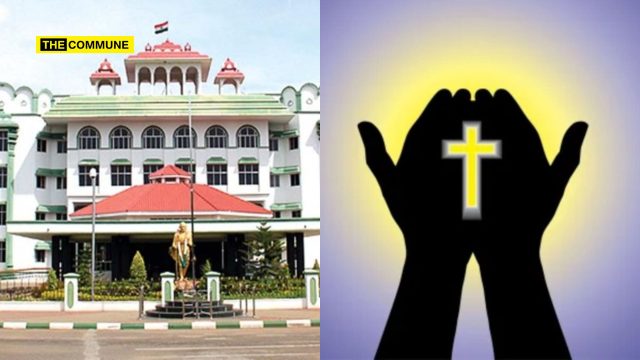
The Madurai Bench of Madras High Court has upheld the disqualification of Therur Town Panchayat Chairperson Amudarani after it was found that she had concealed her conversion to Christianity while contesting elections under a Scheduled Caste (SC) reservation.

The case was initiated by Ayyappan, a DMK councillor from Therur, Kanyakumari district, who filed a petition challenging Amudarani’s election. He argued that she had converted to Christianity in 2005 but contested the 2022 polls by claiming to belong to the Hindu Pannadiar community, a Scheduled Caste.

Single Judge Victoria Gowri, while hearing the petition earlier, had observed that a person from a Hindu SC background who converts to Christianity or Islam cannot continue to claim SC benefits. She ruled that Amudarani’s candidature itself was invalid and ordered her disqualification, remarking that “a person should not enjoy two privileges at the same time.”

Amudarani subsequently filed an appeal. However, a Division Bench comprising Justices G.R. Swaminathan and K. Rajasekhar upheld the earlier order, noting that documentary evidence confirmed her baptism and acceptance of Christianity.

The Bench observed that while the Constitution guarantees the fundamental right to practice and convert to any religion, concealing such a conversion in order to continue availing SC benefits amounted to fraud on the Constitution.

“The order of the Single Judge is confirmed, and the appeal is dismissed,” the judges declared.

(With inputs from Hindu Tamil)

Subscribe to our channels on TelegramWhatsApp, and Instagram and get the best stories of the day delivered to you personally.

“Brahmins Profiteering At Expense Of Indian People”, Says Trump’s Trade Advisor Peter Navarro On India’s Russian Oil Purchases

navarro brahmins russian oil

US President Donald Trump’s trade advisor Peter Navarro has renewed his sharp criticism of India, accusing New Delhi of indirectly funding Russia’s war in Ukraine by purchasing discounted Russian crude, refining it, and exporting it for profit.

In an interview with Fox News, Navarro doubled down on his “laundromat” characterization of India, arguing that the practice was sustaining Moscow’s war machine.

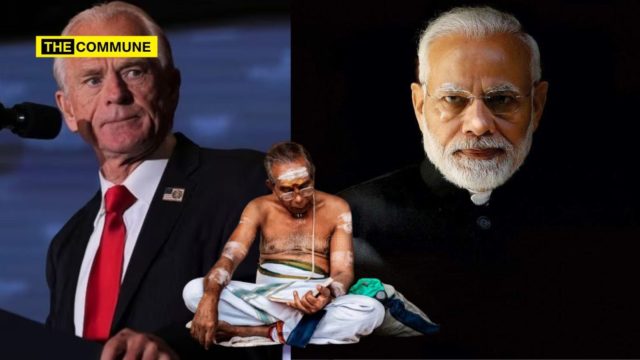
“India is nothing but a laundromat for the Kremlin…You got Brahmins profiteering at the expense of the Indian people. We need that to stop,” Navarro said, alleging that refiners were reselling Russian oil at a premium to Europe, Africa, and Asia.

He added, “It kills Ukrainians…And what do we have to do as taxpayers? We’ve got to send them more money.”

Navarro claimed that India had purchased little Russian oil before Moscow’s full-scale invasion of Ukraine in 2022 but is now a major buyer. “Before Putin invaded Ukraine, India didn’t buy Russian oil to speak of—very, very small amounts. What happened? Now, Russian refiners provide discounts, India refines it and then sells it at a premium…It fuels the Russian war machine.”

The Trump aide also defended punitive tariffs imposed on Indian exports, calling India “the Maharaja of tariffs.” He said, “25% of the 50% is because India is the Maharaja of tariffs. They have the highest tariffs in the world. They won’t let us sell to them. So who gets hurt? Workers in America, taxpayers in America, Ukrainians in cities getting killed by Russian drones.”

Navarro accused Indian refiners of working with “silent Russian partners” and using “American trade dollars” to bankroll the Kremlin. In a post on X, he wrote, “India uses our dollars to buy discounted Russian crude. This isn’t just about India’s unfair trade; it’s about cutting off the financial lifeline India has extended to Putin’s war machine.”

The Trump administration has escalated its rhetoric against India’s ties with Moscow, with Navarro earlier dubbing the conflict “Modi’s war.” “India, you’re the biggest democracy in the world, okay? Act like one… side with the democracies…(instead) you’re getting in bed with the authoritarians,” he said.

Navarro also questioned New Delhi’s deepening engagement with both Russia and China. “[PM] Modi’s a great leader…I don’t understand why he’s getting into bed with [Vladimir] Putin and Xi Jinping, when he’s the biggest democracy in the world,” he said.

The comments come as Prime Minister Narendra Modi visits Tianjin, China, for the Shanghai Cooperation Organisation (SCO) summit. He has already met President Xi Jinping and is expected to hold talks with Russian President Vladimir Putin later today.

(With inputs from Hindustan Times)

Subscribe to our channels on TelegramWhatsApp, and Instagram and get the best stories of the day delivered to you personally.

Dharmasthala Mass Burial SIT Probe: Sujata Bhat Confesses Daughter ‘Ananya’ Never Existed

sujatha bhat ananya bhat dharmasthala confession

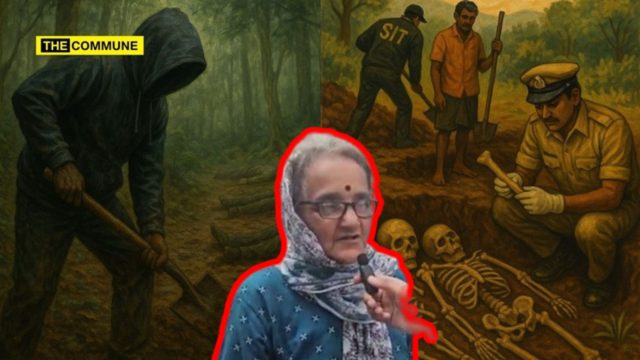
The Special Investigation Team (SIT) probing the “mass burial” allegations in Dharmasthala has said that Sujata Bhat, who claimed her daughter went missing during a college trip to the temple town, has admitted that her story was fabricated.

According to investigators, Sujata underwent two rounds of questioning. On the first day she was allowed to present her version, but during the second round the SIT confronted her with evidence contradicting her claims. Officials said she confessed to lying about two key points: her surname and the existence of a daughter named Ananya Bhat.

Her shifting accounts had drawn attention on regional television and social media platforms. She initially alleged that her daughter, a medical student, disappeared during a college trip to Dharmasthala. She later told a YouTuber that the daughter never existed, before again reversing herself by saying she had been pressured by a channel to deny the claim. The latest confession marks her third major turnaround in recent weeks.

Pattern of Deception

Sujata’s confession follows the recent arrest of another key figure in the case – CN Chinnaiah, alias Chennayya, the masked man whose dramatic allegations sparked the massive investigation. He appeared in public with a human skull and alleged that mass burials had taken place in Dharmasthala. The SIT later found that he had made false statements and arrested him on charges of perjury.

Investigators carried out extensive digging and searches following his allegations, but the results have been limited. More than 50 days into the probe, human remains have been recovered from only two locations near a river. Around 100 bone fragments were found, which forensic experts suggest may correspond to just one or two individuals rather than the large numbers claimed.

Chinnaiah’s former wife and associates had described him as a “habitual liar”, further weakening his testimony.

Despite the recent revelations about fabricated claims, Dharmasthala has been shadowed by mysterious disappearances for decades. The first recorded case dates back to 1987 when 17-year-old Padmalatha was found dead, with her family alleging rape and murder. The case was never solved. In 2012, another 17-year-old, Soujanya, was found raped and murdered a day after being declared missing.

Sources indicate that Sujata’s family may be involved in a property dispute with the temple administration, potentially providing motivation for the false allegations. Police are now working to determine the complete scope of the deception and what legal actions to pursue against those who provided false information.

Despite these setbacks, investigators emphasize that their work continues. The SIT remains committed to examining all credible evidence and following legitimate leads regarding any actual crimes that may have occurred in Dharmasthala.

(With inputs from NDTV)

Subscribe to our channels on TelegramWhatsApp, and Instagram and get the best stories of the day delivered to you personally.

PM Modi In Tianjin For SCO Summit, Meets Xi Ahead Of Key Talks

pm modi opposition sco summit

Prime Minister Narendra Modi is in Tianjin, China to attend the Shanghai Cooperation Organization (SCO) Summit on Monday, marking a significant diplomatic engagement with regional powers.

The SCO summit will see participation from key regional leaders, including Chinese President Xi Jinping and Russian President Vladimir Putin. Prime Minister Modi, President Xi, and President Putin will all share the stage at the multilateral event, underlining the significance of regional cooperation at a time of global uncertainty.

Later today, PM Modi is also expected to hold a bilateral meeting with Russian President Vladimir Putin, with whom India continues to maintain a close strategic and energy partnership despite global tensions. The SCO Summit itself will focus on combating the “three evils” of terrorism, separatism, and extremism, a founding priority of the organization. An agreement signing ceremony is scheduled for this afternoon, followed by a leaders’ joint statement.

This is PM Modi’s first visit to China in seven years and comes as India and China cautiously rebuild ties following a prolonged border standoff. PM Modi is scheduled to return to India later tonight, concluding a high-stakes diplomatic visit.

Ahead of the summit’s official opening, PM Modi held a bilateral meeting with President Xi on Sunday, their first in nearly ten months. The two leaders discussed ways to stabilize and enhance India-China relations, following the recent breakthrough on border management protocols.

Both sides have reportedly agreed to new patrolling norms along the 3,500-kilometer Line of Actual Control (LAC), signaling a thaw after four years of heightened tensions. This meeting is particularly notable as it comes just months after their last interaction on the sidelines of the BRICS Summit in Kazan, Russia in 2024.

Officials say the Tianjin meeting aimed to build on that momentum by focusing on economic collaboration, regional security, and managing strategic competition in Asia.

-IANS

Subscribe to our channels on TelegramWhatsApp, and Instagram and get the best stories of the day delivered to you personally.

Trump Claims Tariffs Brought In ‘Trillions’ After Appeals Court Rebuke

trump tariffs king india us russian oil

US President Donald Trump claimed his tariffs brought in “trillions of dollars” to the US economy, after a federal appeals court ruled that he overstepped his presidential authority by imposing them without congressional approval. Trump took to Truth Social to defend his trade agenda.

In a post, he declared, “Prices are WAY DOWN in the USA, with virtually no inflation. With the exception of ridiculous, corrupt politician-approved ‘Windmills,’ which are killing every State and Country that uses them, Energy prices are falling, big time. Gasoline is at many year lows. All of this despite magnificent Tariffs, which are bringing in Trillions of Dollars from Countries that took total advantage of us, for decades, and are making America STRONG and RESPECTED AGAIN!!!”

Trump’s remarks come after a significant legal blow to his administration’s trade policies. On Friday, the US Court of Appeals ruled that Trump had overstepped his presidential authority by unilaterally imposing so-called “reciprocal tariffs” during his time in office.

The court emphasised that the power to levy tariffs lies “exclusively” with Congress as part of its constitutional authority over taxation and trade. The court specifically addressed Trump’s use of the 1977 International Emergency Economic Powers Act (IEEPA), stating that while it grants the President certain emergency powers, it does not provide the authority to impose tariffs or taxes.

The ruling, however, will not take immediate effect and has been stayed until October 14 to allow the administration to seek an appeal. In response to the decision, Trump indicated he would take the matter to the US Supreme Court, arguing the ruling undermines presidential powers necessary to protect national economic interests. Notably, tariffs on steel and aluminium, enacted under a separate legal statute, will remain in effect.

-IANS

Subscribe to our channels on Telegram, WhatsApp, and Instagram and get the best stories of the day delivered to you personally.

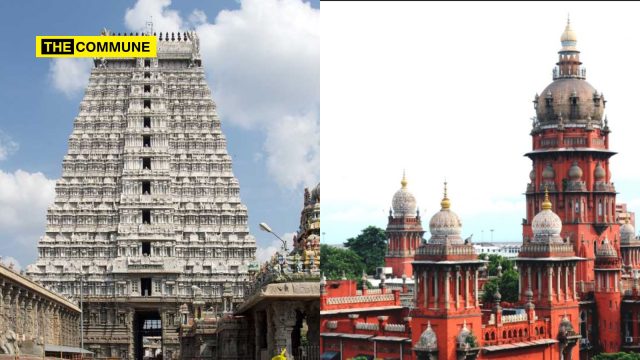
Madras High Court Bars DMK Govt’s HR&CE From Constructing Commercial Complex Near Tiruvannamalai Temple Gopuram

The Madras High Court has ruled that no construction activity will be permitted near the Arunachalesvara Temple gopuram in Tiruvannamalai. The court also directed the Hindu Religious and Charitable Endowments (HR&CE) Department to submit a report detailing alternative sites for development.

This direction comes in response to several petitions challenging a 2023 order by the Tamil Nadu government, which had approved the construction of a ₹6 crore worth commercial complex directly in front of the temple’s Rajagopuram. Petitioners argued that such a project would obstruct religious festivals and impede the free movement of devotees.

During the most recent hearing on Thursday, the HR&CE Department informed the court that it has no plans to proceed with the commercial complex at the original location. Instead, it requested additional time to explore other options for providing amenities to devotees.

The court granted the department two weeks to file its report on potential alternatives. It also advised officials to consider whether any government-owned land located farther away from the Annamalaiyar Temple could serve as a suitable site for the complex.

In a firm stance, the bench made it clear that no construction whether on temple property or state-owned land will be allowed near the temple.

The judges further suggested that this is an opportune moment to consider establishing temple management institutions similar to Tirupati Devasthanams to oversee the maintenance of large temples in Tamil Nadu and enhance facilities for pilgrims.

The matter has been adjourned to 7 September for further proceedings.

(With Inputs From IE Tamil)

Subscribe to our channels on TelegramWhatsApp, and Instagram and get the best stories of the day delivered to you personally.
SC Seeks Centre’s Reply On Plea To Recognise Ram Setu As National Heritage Site

The Supreme Court on 29 August issued notice on a plea filed by BJP leader Subramanian Swamy seeking a direction to the Union government, to decide, in an expeditious manner, his representation for declaring ‘Ram Setu’ a monument of national importance.

Issuing notice, a bench of Justices Vikram Nath and Sandeep Mehta sought responses from the Union Ministry of Culture, the Director of the Archaeological Survey of India (ASI), and the Tamil Nadu Regional Director of the ASI in the matter.

Earlier, Swamy had filed a plea before the apex court seeking a direction to the Union government to engage the Geological Survey of India as well as the Archaeological Survey of India to conduct a detailed survey of the site and to ensure its protection, recognising it as a site of religious and historical significance.

In January 2023, the Supreme Court had disposed of Swamy’s application, allowing him liberty to submit additional material. However, according to the latest writ petition, no decision or action has yet been communicated by the Union government. Following a fresh representation to the Union Minister of Culture on May 13, Swamy has now filed this Public Interest Litigation (PIL), urging the apex court to direct the Centre to take a time-bound decision and comply with the previous orders to safeguard the site. Senior advocate Vibha Datta Makhija, assisted by advocate Satya Sabharwal, represented Swamy before the apex court.

Ram Setu, which is also known as Adam’s Bridge, is a chain of limestone shoals between Pamban Island or Rameswaram Island, off the south-eastern coast of Tamil Nadu, and Mannar Island, off the north-western coast of Sri Lanka. According to Indian mythology, the bridge was believed to have been constructed by Lord Rama with the help of his allies to cross over to Sri Lanka. The UPA government, in 2007, had proposed the Sethusamudram project, under which an 83-km-long deep-water channel was to be made by extensive dredging and removal of the limestone shoals, to link Mannar with the Palk Strait. After interim directions were issued by the Supreme Court on Swamy’s petition, the government resorted to another plan to link Mannar with the Palk Strait.

-IANS

Subscribe to our channels on TelegramWhatsApp, and Instagram and get the best stories of the day delivered to you personally.
India On Track To Become World’s Second-Largest Economy In PPP By 2038: EY Report

If India keeps economic engines running at their current pace, by 2038, the country is expected to overtake the United States to become the world’s second-largest economy in purchasing power parity (PPP) terms second only to China.

According to a report in India Narrative, citing an EY report, that would be more than a change in rankings. It would mark the arrival of a new economic heavyweight with the power to shape global markets, influence the rules of trade, and set the tone for the 21st century’s growth narrative. India may become the world’s second-largest economy in PPP terms by 2038, with a projected GDP of $34.2 trillion based on the IMF’s projected average growth rates for 2028 – 2030, according to an EY report.

India is emerging as one of the most dynamic among the world’s five largest economies, with strong economic fundamentals including high savings and investment rates, favorable demographics, and a sustainable fiscal position, states the August 2025 issue of EY Economy Watch. Among the largest economies, India stands out with a median age of 28.8 years in 2025, the second-highest savings rate, and a government debt-to-GDP ratio projected to decline from 81.3% in 2024 to 75.8% by 2030 unlike peers where debt levels are rising.

As per the IMF, India’s economy could reach $20.7 trillion (PPP) by 2030, the report points out. Compared to the US, China, Germany, and Japan, India is uniquely placed. While China leads in overall size with a projected $42.2 trillion economy (PPP) by 2030, its ageing population and rising debt are challenges. The US remains strong but faces high debt levels exceeding 120% of GDP and slower growth rates. Germany and Japan, though advanced, are constrained by high median ages and heavy reliance on global trade. In contrast, India combines youthful demographics, rising domestic demand, and a sustainable fiscal outlook, giving it the most favorable long-term growth trajectory, the EY report points out.

In economics, PPP stands for Purchasing Power Parity. It’s a way to compare the economic output and living standards of different countries by adjusting for differences in price levels. Despite global uncertainties such as tariff pressures and slowing trade, India’s resilience stems from its reliance on domestic demand and increasing capabilities in modern technologies, the EY report explains.

Commenting on India’s position, DK Srivastava, Chief Policy Advisor, EY India, said, “India’s comparative strengths, its young and skilled workforce, robust saving and investment rates, and relatively sustainable debt profile will help sustain high growth even in a volatile global environment. By building resilience and advancing capabilities in critical technologies, India is well-placed to move closer to its Viksit Bharat aspirations by 2047.”

India’s trajectory is reinforced not just by demographics but also by structural reforms and resilient fundamentals. High saving and investment rates are fueling capital formation, while fiscal consolidation is improving sustainability. Reforms such as GST, IBC, financial inclusion through UPI, and production-linked incentives are strengthening competitiveness across industries. At the same time, public investment in infrastructure and adoption of emerging technologies like AI, semiconductors, renewable energy are setting the stage for long-term resilience, the report further states. India is also projected to become the third-largest economy in market exchange rate terms by 2028, overtaking Germany.

While US tariffs may affect nearly 0.9 per cent of India’s GDP, their impact on GDP growth can be contained to just 0.1 percentage point with appropriate countermeasures like export diversification, stronger domestic demand, and advancing trade partnerships, the report added.

-IANS

Subscribe to our channels on TelegramWhatsApp, and Instagram and get the best stories of the day delivered to you personally.
Over 2 Lakh Voter Claims From Electors, Just 117 from Parties: ECI

eci electoral roll

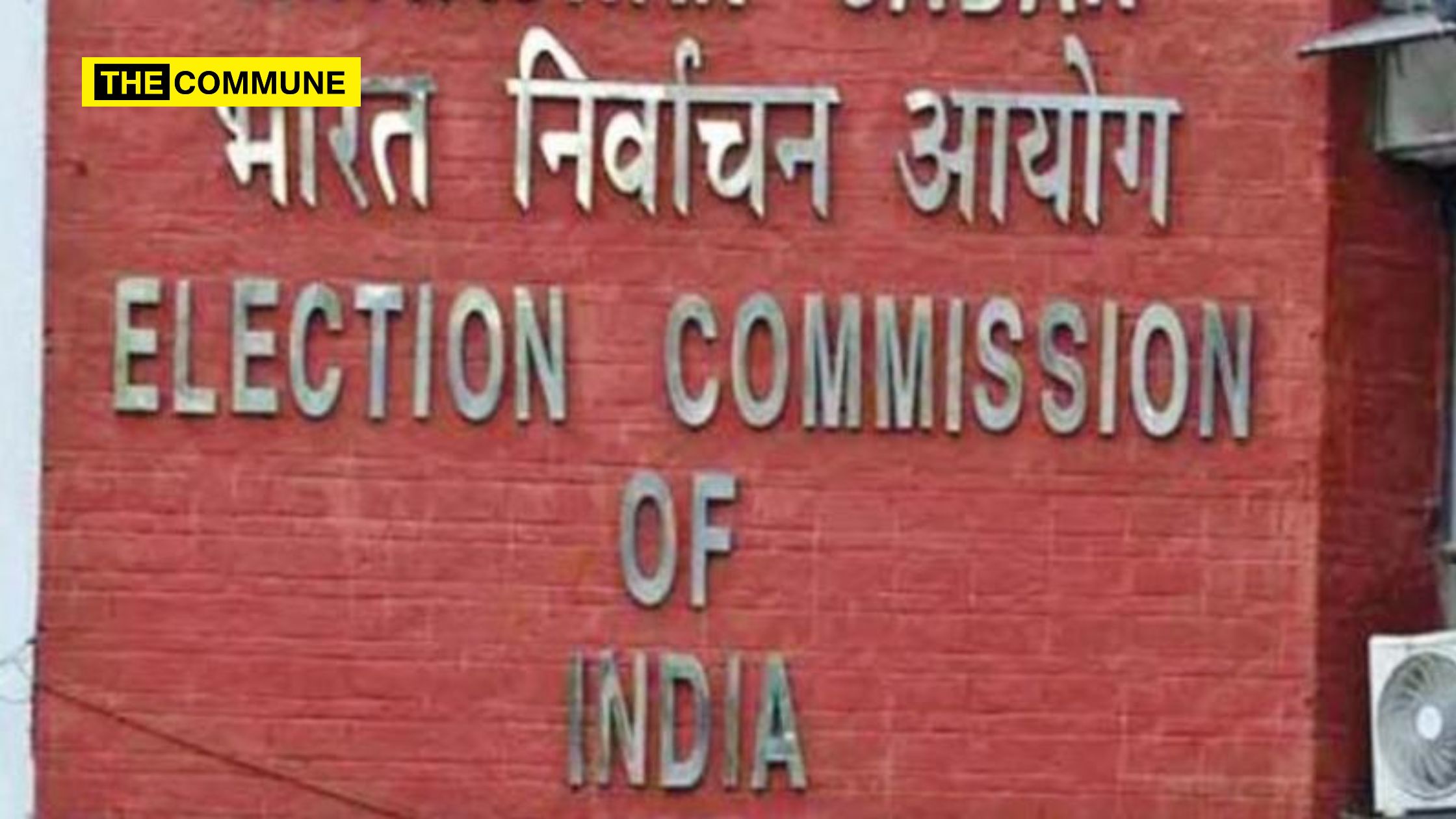
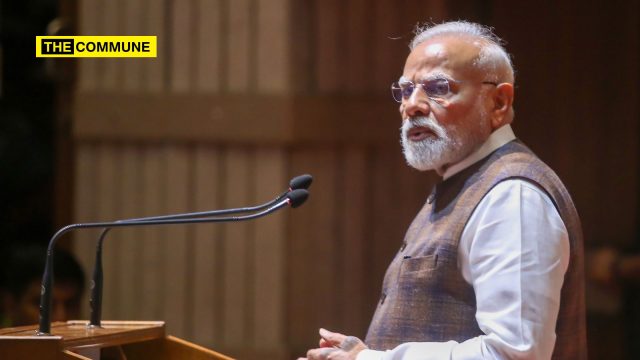
Despite repeated allegations of “vote theft” and “voter list manipulation” from the opposition parties, the Election Commission of India (ECI) on 29 August revealed that only 117 claims and objections were received from political parties during the period from 1-29 August.

This contrasts sharply with the nearly 2,12,000 claims and objections submitted directly by electors. The ECI’s latest bulletin, dated 29 August, shows that out of 117 claims and objections submitted by political parties, a significant majority (108) came from the Communist Party of India (Marxist-Leninist) (Liberation) alone. The Rashtriya Janata Dal (RJD) filed nine objections, while all six recognised national parties, including the Bharatiya Janata Party (BJP), Aam Aadmi Party (AAP), Bahujan Samaj Party (BSP), Communist Party of India (Marxist), Indian National Congress (INC), and the National People’s Party, filed a total of zero claims and objections.

This data was released amid ongoing criticism from opposition parties like the Congress and RJD, who have alleged that the SIR process is a “conspiracy” to steal votes and disenfranchise eligible citizens. The SIR began on 24 June with the draft electoral roll published on 1 August. The period for filing claims and objections is set to end on 1 September, with just three days left for submissions.

The ECI stated that generic complaints, without the prescribed forms, are not counted as valid claims or objections. The bulletin also provided additional data, noting that the Election Registration Officer (ERO) received zero claims from any person other than electors of a specific Assembly Constituency, as per Section 2(g) of the Representation of the People Act, 1950.

Furthermore, a total of 2,11,650 claims and objections were received directly from individual electors to address the inclusion of eligible voters and the exclusion of ineligible ones. The ECI also recorded 11,36,565 forms from new electors who have attained 18 years of age or above. The ECI emphasised that no name can be deleted from the draft list without a speaking order from the ERO/AERO after a proper inquiry. Aggrieved persons can submit their claims in Form 6 along with a copy of their Aadhaar card before the deadline.

-IANS

Subscribe to our channels on TelegramWhatsApp, and Instagram and get the best stories of the day delivered to you personally.
US Economist Richard Wolff Warns Of Global Shift As BRICS Surpasses G7 In GDP

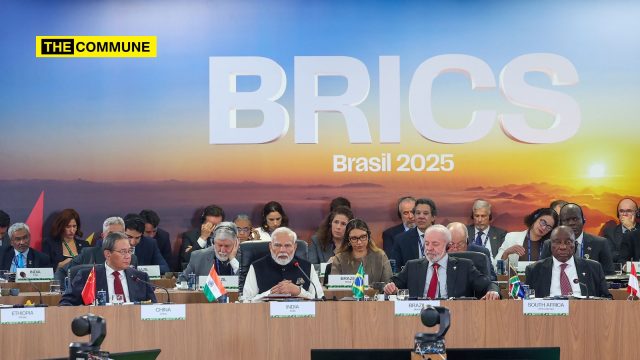
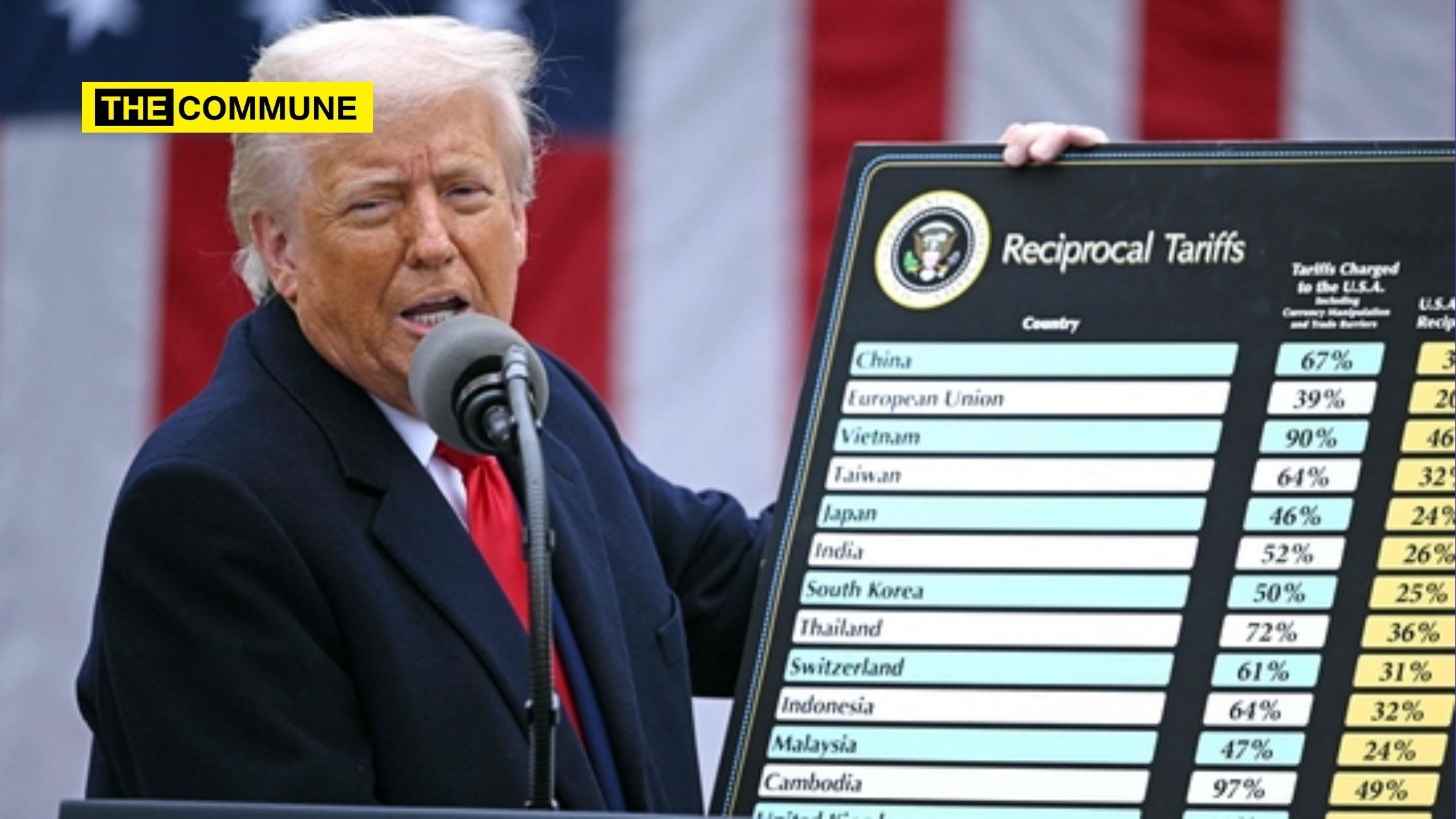
Leading US economist Richard Wolff has warned that a significant global economic shift is underway, noting that BRICS nations have surpassed the G7 in global output, with BRICS at 35 per cent and G7 at 28 per cent of the world GDP.

Wolff asserted that India’s refusal to stop buying Russian oil despite US pressure showed how the balance of power is shifting. “India is now, according to the United Nations, the largest country on earth. The United States telling India what to do is like a mouse hitting its fist on an elephant,” he said.

Wolff noted in a podcast that China has reduced its US Treasury holdings as US debt reaches $36 trillion, which could pose serious challenges to the US dollar. If that trend continues, the US may face higher borrowing costs or domestic spending cuts, which could further weaken its global position, he added. The economist criticised US tariffs as an ineffective strategy that could bring India and other BRICS members closer together. “What you’re doing is developing the BRICS to be an ever larger, more integrated and successful economic alternative to the West,” he explained. Wolff slammed the Trump administration’s claim that tariffs can revive US manufacturing.

He said, “No company that is currently manufacturing something in Brazil or China or India is going to decide to spend a fortune to move production back to the United States.” According to him, US tariffs run the risk of excluding American exporters from overseas markets without the creation of new domestic jobs. The Trump administration imposed an additional 25 per cent tariffs on India starting Wednesday, bringing the total levies to 50 per cent. Prime Minister Narendra Modi has ruled out any compromise that threatens the interests of India’s farmers and small businesses. India has termed the US tariffs “unjustified and unfair”. Meanwhile, PM Modi and Chinese President Xi Jinping will hold a bilateral meeting on the sidelines of the Shanghai Cooperation Organisation (SCO) Summit in Tianjin on Sunday. This is PM Modi’s first visit to China in the last seven years.

-IANS

Subscribe to our channels on TelegramWhatsApp, and Instagram and get the best stories of the day delivered to you personally.