Home Blog Page 13

Pro-Congress Pro-Islamist X Handle ‘Dr Nimo Yadav 2.0’ Withheld In India After Years Of Fake News, Defamation And Anti-India Narratives
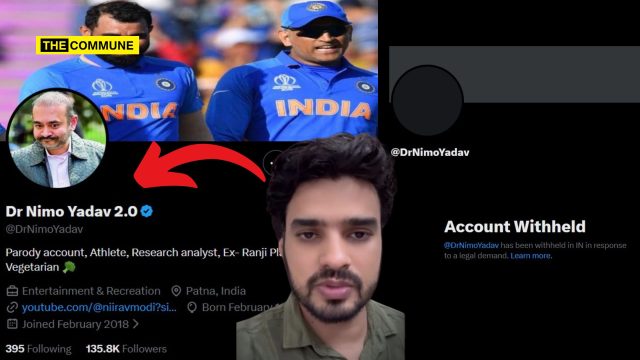
Pro-Congress Pro-Islamist X Handle ‘Dr Nimo Yadav 2.0’ Claims Livelihood Gone After Govt Withholds Account

X account operating under the handle “Dr Nimo Yadav 2.0” and related variants have, over the last few years, repeatedly spread misleading, fabricated and defamatory content targeting India’s institutions, the Prime Minister, the armed forces and specific communities. Several of these posts have since been debunked by fact‑checkers or contradicted by longer, original footage; the handle Nimo Yadav 2.0 has now been withheld in India following a legal demand, as shown in the screenshot of the account’s status.
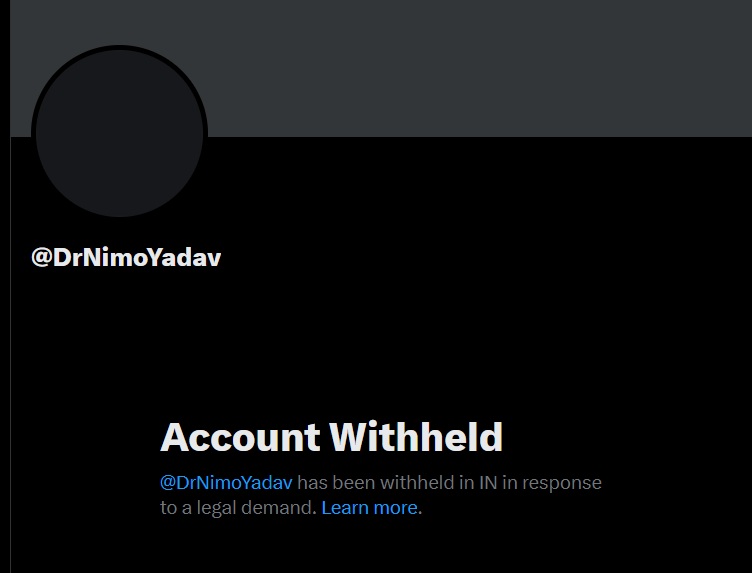
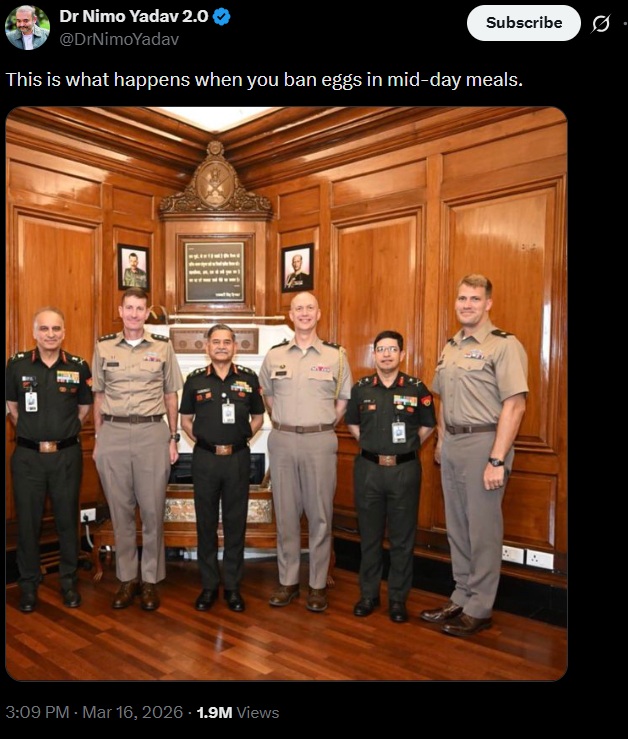
This came after the handle posted a defamatory post on the Indian Armed Forces bodyshaming our officers.

In March 2026, the account shared a group photograph of Indian and foreign military officers and captioned it:

“This is what happens when you ban eggs in mid‑day meals.”
Following the ban, he posted a video on his Instagram handle asking people to support him.


View this post on Instagram


A post shared by Dr Nimo Yadav (@niiravmodi)

Let us now take a look at the lies and fake news the handle has spread over time.

Lying About the Darbhanga Abuse Case

In August 2025, at a Congress rally in Darbhanga, Bihar, a man used abusive language against Prime Minister Narendra Modi from the party’s stage. To protect Congress from the fallout, Nimo posted a collage claiming that the abuser was in fact a BJP worker, circulating a photograph of a man wearing a saffron scarf and suggesting both images showed the same person.
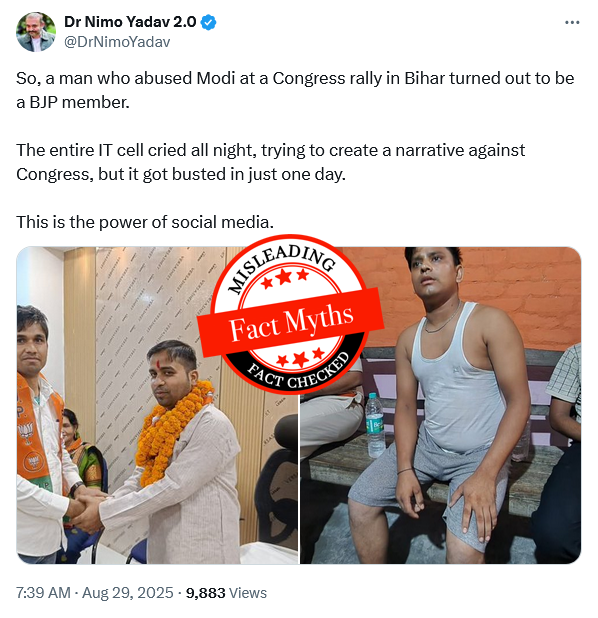
Subsequent verification showed that the person in the saffron‑scarf image was Nek Mohammad Rizvi from Madhya Pradesh, unrelated to the Darbhanga incident. Rizvi filed a police case over the misuse of his photograph. The allegation that the abuser was a BJP worker was baseless.

Fabricating a Story around the Gorakhpur “chicken bone” Incident

In August 2025 in Gorakhpur, a real incident occurred where a bone was found in the food at a restaurant. Local TV carried a 14‑minute video from the restaurant showing the argument and the bone itself. Nimo, however, constructed an elaborate fictional story: he claimed that Ujjawal Singh, a “jobless Sanghi Rajput”, had planted the bone in his vegetarian plate to skip paying the bill and used this fabricated anecdote to attack both the man and the wider Rajput community.
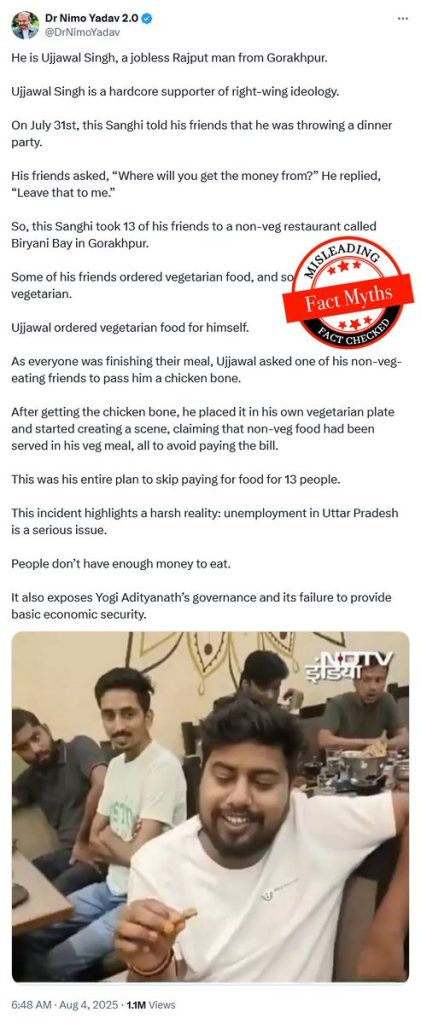
The longer video record clearly contradicted Nimo’s version: there was an actual bone in the dish, and no evidence of a staged scam. The post smeared a named individual and communalised the issue.

Framing a Maharashtra Religious Procession as a Rajasthan Aravalli Protest

In December 2025, Nimo shared a video of a massive crowd with the caption: “These are the farmers of Rajasthan protesting against BJP govt to Save Aravali Hills. Trust me, No media is covering this.”
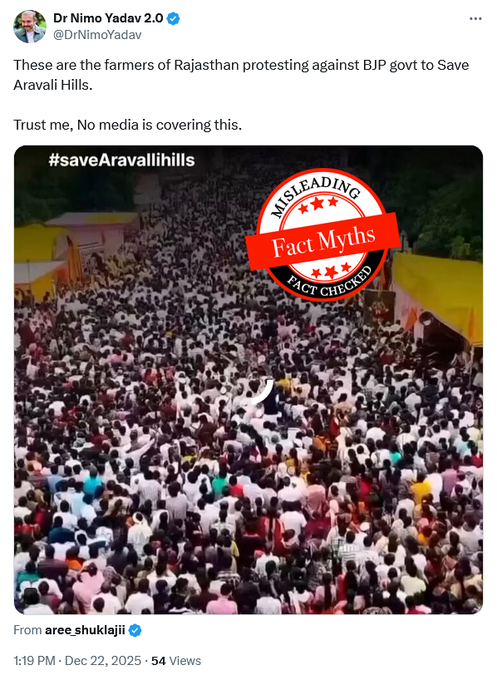
Fact‑checks showed the clip was actually from Buldhana, Maharashtra, depicting a Gajanan Maharaj palkhi procession, not any Aravalli environmental protest. The post was a straightforward attempt to manufacture an anti‑BJP agitation where none existed.

Fake Narrative About Japan’s PM and US tariffs

Nimo also used foreign politics as a prop. In one tweet, he attributed a quote to Japan’s Prime Minister Shigeru Ishiba, claiming he resigned because the US imposed a 15% tariff on Japanese imports and he “failed” as PM, and then contrasted this with an invented claim that the US had imposed a 50% tariff on India while Modi campaigned in Bihar.
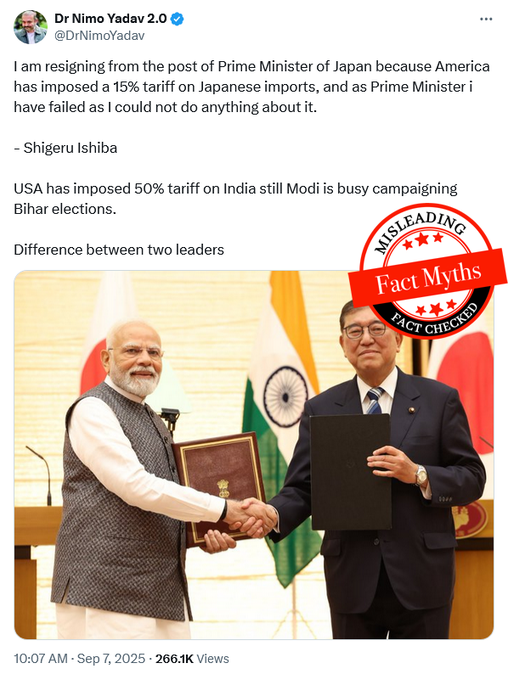
In reality, the Japanese PM’s resignation was tied to domestic electoral setbacks and internal party dynamics, not US tariffs, and there was no such 50% tariff episode on India matching the narrative. The quote attributed to Ishiba is not found in credible records; it is a fabricated contrast designed to demean India’s PM.

Misrepresenting the Nitin Nabin–Modi clip

Another viral post from Nimo showed BJP president Nitin Nabin and Narendra Modi at a function, with the caption claiming that Nabin “mistakenly came in between Modi and his camera frame” and that Modi “pushed his boss from the frame so hard,” mocking their relationship.
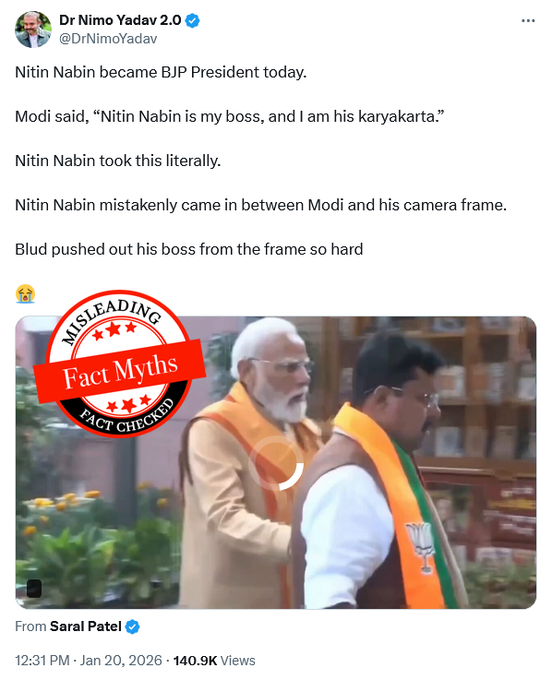
Full video from the event shows the opposite: Modi was guiding Nabin forward to offer flowers at the statues of Syama Prasad Mukherjee and Deendayal Upadhyaya. The clip Nimo used was selectively edited and falsely captioned to portray an insult where none existed.

Teleprompter lie and age‑based smears

Nimo and its related handle (“Dr Nimo Yadav Commentary”) have repeatedly pushed the line that Narendra Modi is mentally unfit or senile. One post claimed Modi stopped his speech during a rally because the teleprompter failed, using it to argue that he is dependent and unfit to lead. Another suggested that age is “catching up” with Modi because he allegedly forgot what he was about to say, concluding “it’s time for Narendra Modi to hang up his boots.”
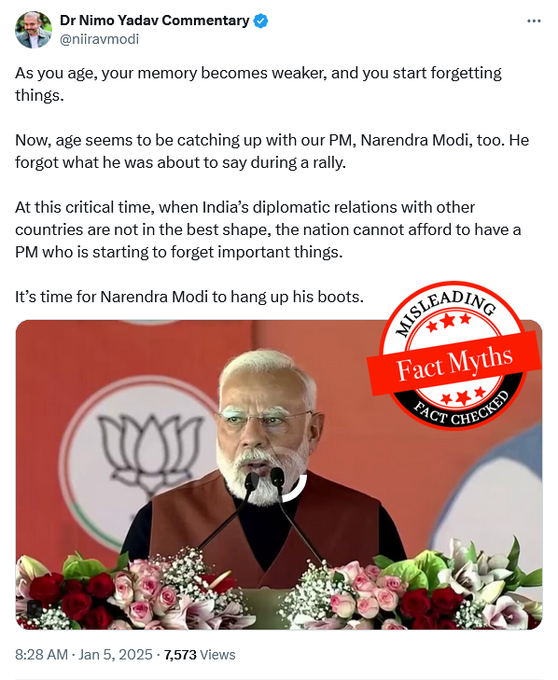
Reports and fuller footage from the teleprompter episode show that he paused due to loud “Modi, Modi” chants from the audience, not because of a malfunction. The posts rely on half-truths and mockery, not fact.

Weaponising Cricket and Inventing Political Motives

Nimo also repeatedly tried to inject political motives into cricket:

In one post, he claimed that Rohit Sharma and Virat Kohli deliberately lost a match against New Zealand as a symbolic protest against the BJP government over the Indore water contamination incident, thanking them for “showing spine”. There is zero evidence that Team India threw a match as political protest; it is fantasy packaged as insider information.
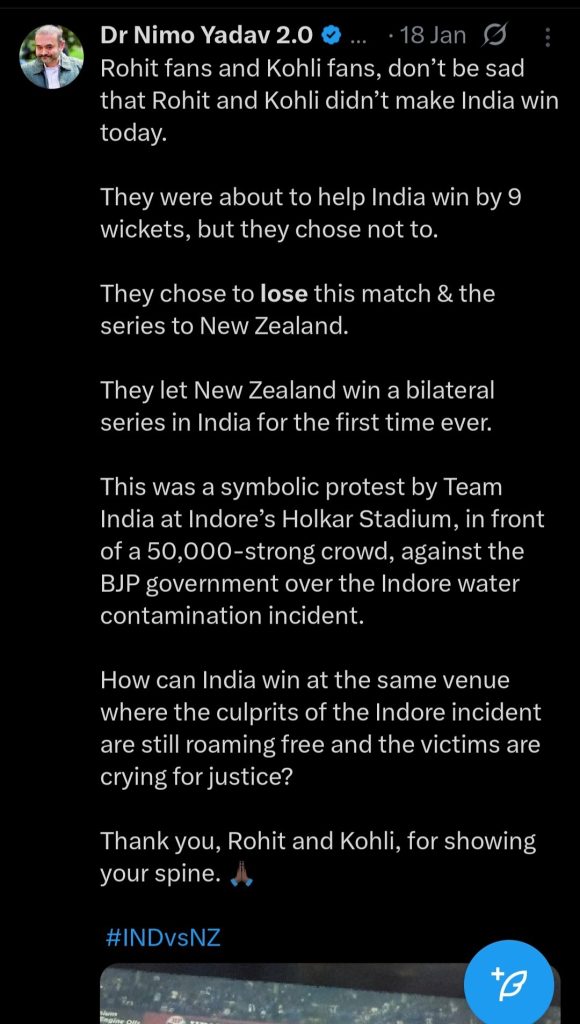
Image Source: X

In another, he spun a routine, friendly on‑field interaction between Rohit Sharma and Wasim Akram into a story of “GCs” (general category Hindus) uniting against Modi and “breaking rules” in protest over a UGC move, implying that players were part of some caste‑political rebellion.
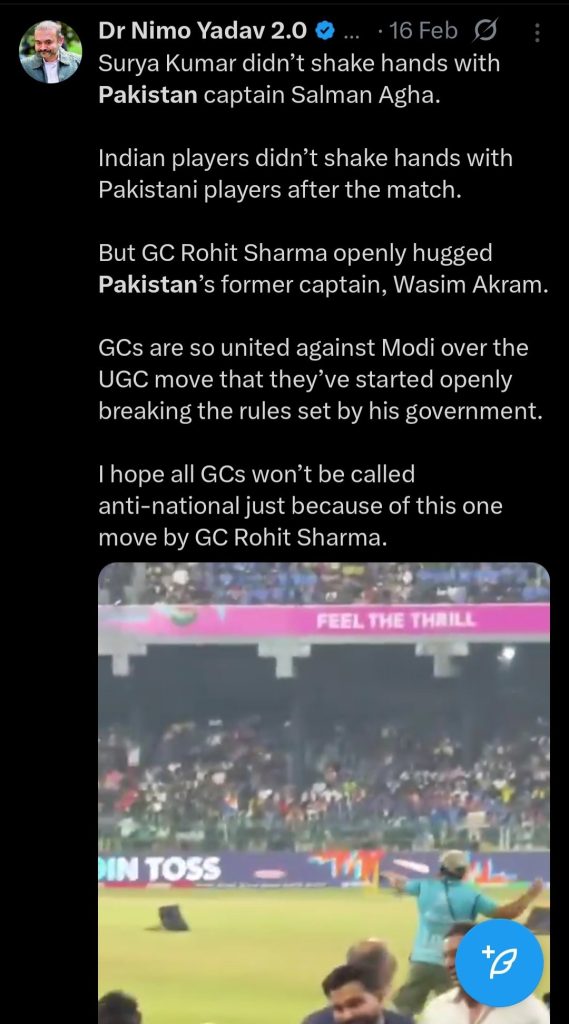
Image Source: X

These are not just bad takes; they ascribe seditious or communal intent to Indian players without proof, risking backlash and social tension.

Serial “Turncoat” Persona and Identity Faking

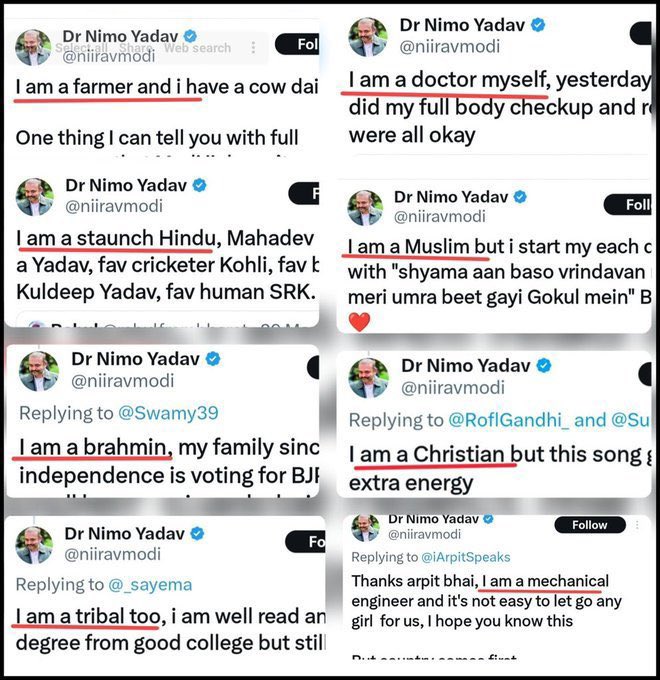
Last but not the least, he kept changing his profession and his religion at the drop of the hat. Here is a collage of all his claims. Some old replies from one of his handles shows Nimo repeatedly claiming mutually contradictory identities:

  • “I am a farmer…”
  • “I am a doctor myself…”
  • “I am a staunch Hindu…”
  • “I am a Muslim…”
  • “I am a Christian…”
  • “I am a Brahmin…”
  • “I am a tribal too…”
  • “I am a mechanical engineer…”

This is not normal political rhetoric; it is deliberate identity‑shifting to infiltrate different conversations and pose as “one of us” to multiple communities at once. It shows that deception is a core method, not an accident.

Congress and its supporters crying on social media and giving press meets that these handles were banned in India because they spoke “truth” are misleading themselves. This is not censorship out of nowhere; it is the predictable outcome of an account that treated disinformation and defamation as a full‑time job.

(This article is based on an X Thread By Vishal Maheshwari)

Subscribe to our channels on WhatsAppTelegram, Instagram and YouTube to get the best stories of the day delivered to you personally.
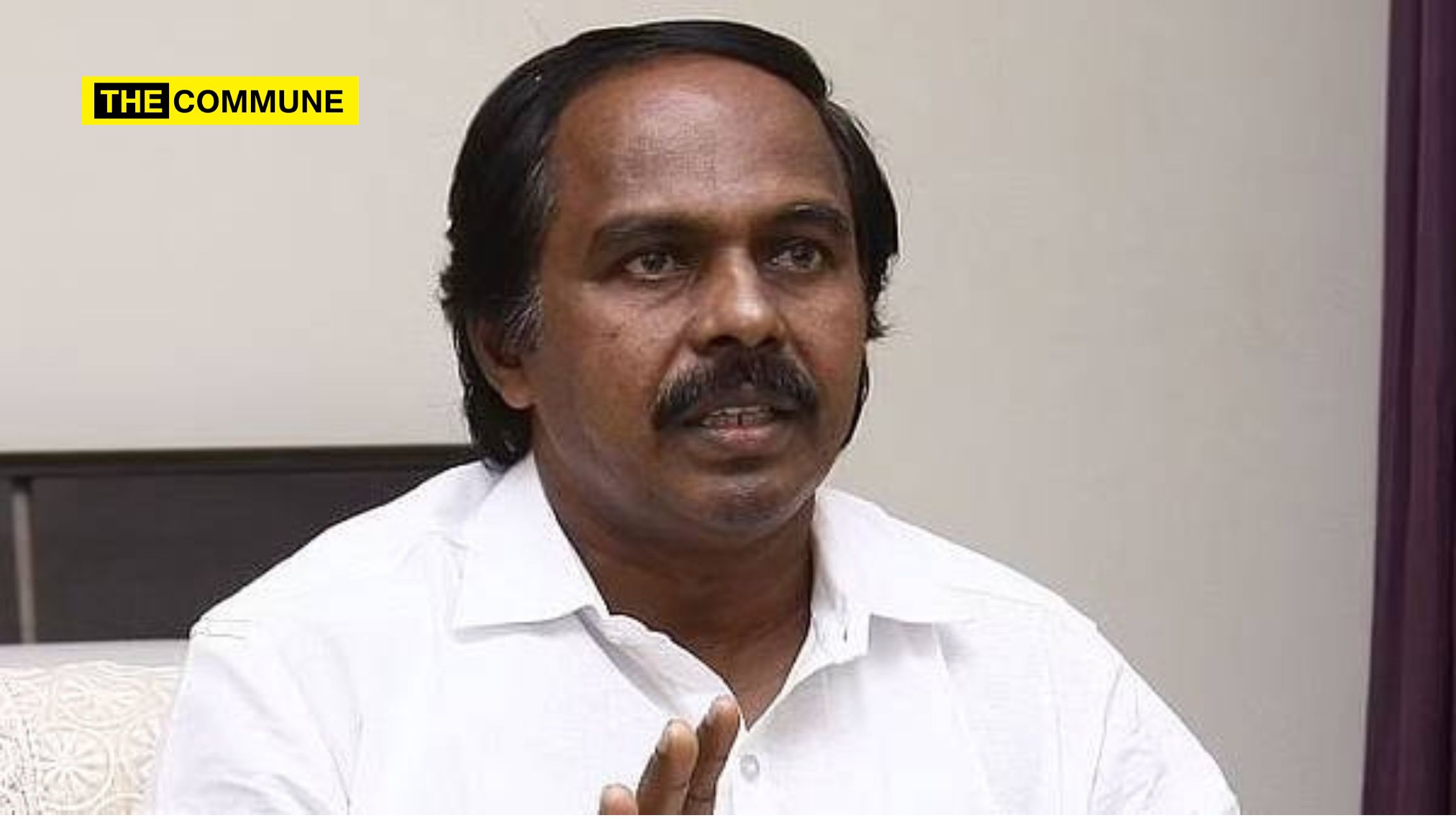
“You Were Still in Your Father’s Komanam”, Says DMK Minister Mano Thangaraj

mano thangaraj

DMK Milk Minister Mano Thangaraj has come under criticism after a video surfaced showing him using offensive language during a public event in Nagercoil in March 2026.

The incident reportedly took place at the Nagaraja Koil maidan, where the minister was participating in a debate conducted by News Tamil 24×7. When he was asked about the details of projects that were brought about by the DMK government in the constituency that would generate jobs, dissatisfied with the response he gave, the audience started making noise.

In response, the minister appeared to lose his temper and made remarks directed at the crowd, which have since gone viral on social media platforms such as X and Instagram. In the video clips circulating online, he is heard saying, “When we were roaming around blowing whistles, you people hadn’t even worn your ‘knicker’ yet… you were still inside your father’s ‘komanam’ (loin cloth).”


View this post on Instagram


A post shared by Hemanth TVK (@hemanth_tvk)

The remark seen as a crude and mocking age-based insult, has drawn criticism for its language and tone.

According to accounts of the event, the disruption began when questions were raised regarding a project in Kanyakumari district, to which the minister allegedly gave an evasive response. This led to sections of the audience raising slogans, prompting the minister’s reaction.


View this post on Instagram


A post shared by Chanakyaa (@chanakyaa_tv)


Subscribe to our channels on WhatsAppTelegram, Instagram and YouTube to get the best stories of the day delivered to you personally.
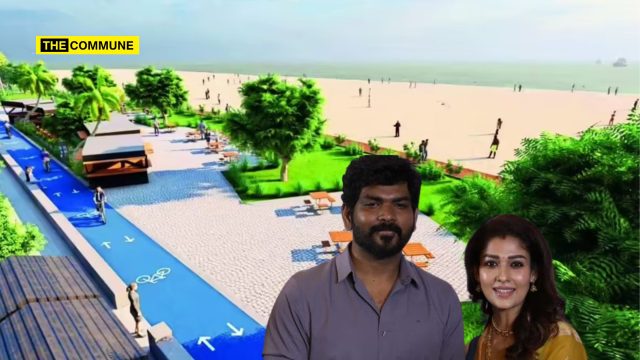
₹2 Crore For ₹40 Crore Land? Did Nayanthara-Vignesh Shivan Get Advance Tip-Off On DMK’s Cycling Track Project?

Allegations linking actor Nayanthara to the DMK government have surfaced following claims regarding a land purchase along Chennai’s East Coast Road (ECR), even as political tensions escalate over remarks made by opposition leaders.

The controversy began after CV Shanmugam of the All India Anna Dravida Munnetra Kazhagam made remarks referencing Nayanthara in a political context. While criticism of the language used has been raised, sections of political commentary have argued that linking the actor to governance decisions is a matter of political scrutiny rather than personal attack.

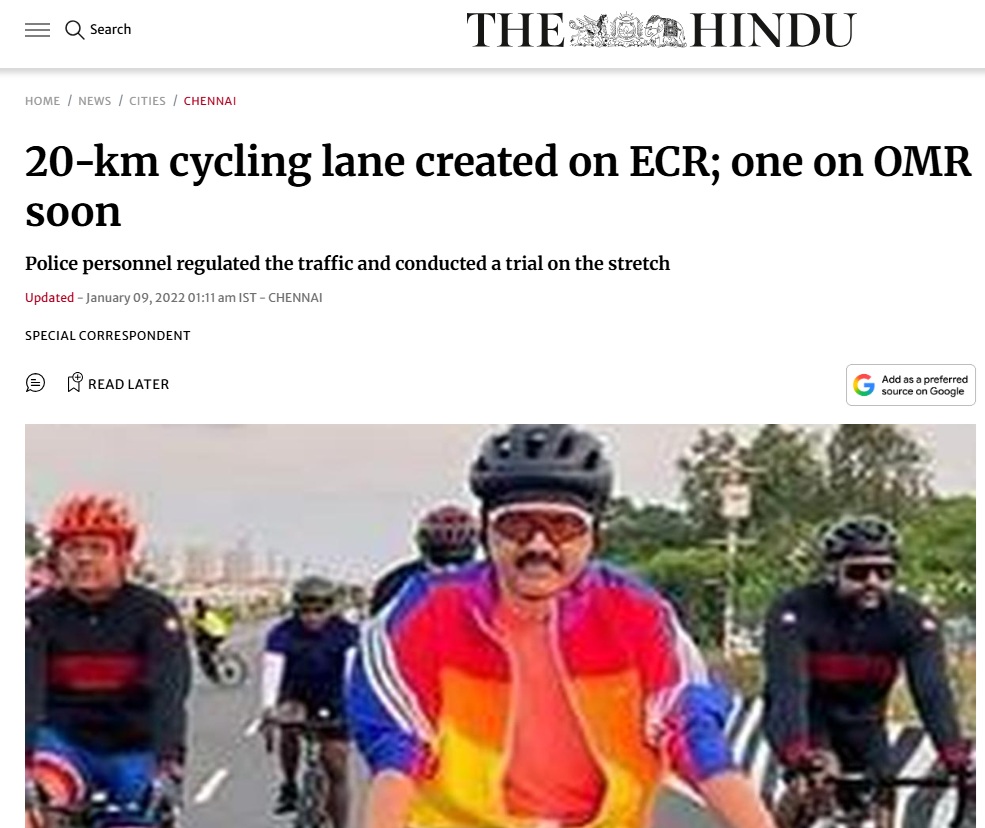
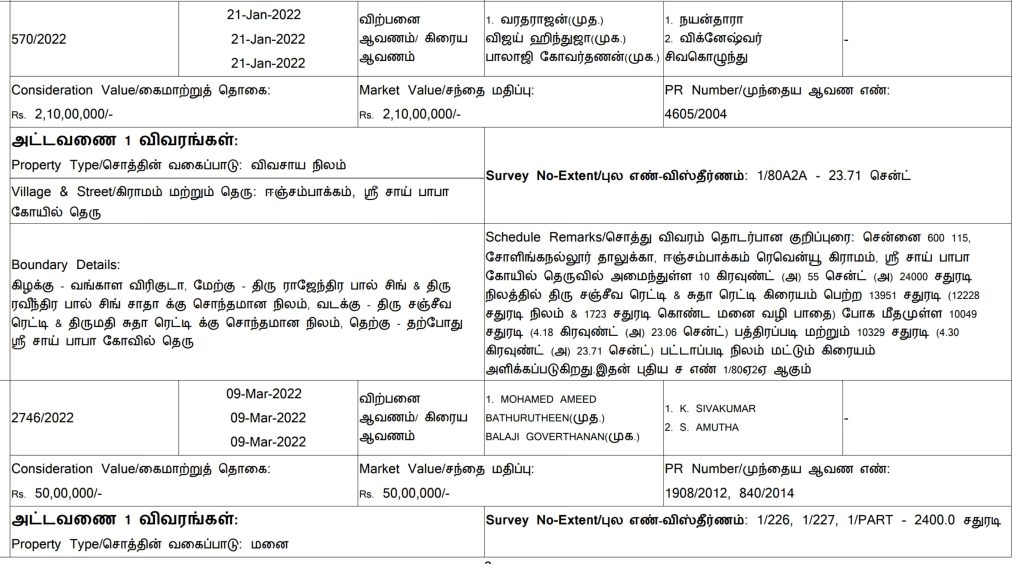
At the centre of the allegations is a real estate transaction along the ECR stretch between Neelankarai and Akkarai, near Injambakkam. According to claims being circulated, Nayanthara and filmmaker Vignesh Shivan (identified in records as Vigneshwar Siva Kolundhu) purchased approximately 50-60 cents of prime beachside land in the area. The purchase is alleged to have taken place about a week before the government finalised and later announced a ₹200-crore cycling track project along the same coastal stretch.

The timing of the purchase raises questions about prior knowledge of the project. It is further claimed that the market value of the land was in the range of ₹30-40 crore, but the transaction was registered at approximately ₹2 crore. Allegations have also been made that the property was acquired without the buyer physically appearing at the Sub-Registrar’s office.

Source: maridhas X handle

Such transactions seem to resemble patterns seen in real estate speculation, where advance knowledge of government policy decisions such as infrastructure projects can lead to significant financial gains, including value appreciation of up to eight or nine times the original cost. One wonders how information regarding a proposed public project could have reached private individuals prior to official announcement.

The allegations are part of a broader political narrative suggesting proximity between certain public figures and the ruling establishment. It is noteworthy how the DMK swiftly issues responses in defence of Nayanthara in recent controversies, contrast to what can be described as silence on other social issues such as the innumerable cases of sexual violence reported in the state.

It is alleged that the current administration disproportionately benefits individuals from the film industry, though no official evidence has been presented to substantiate these assertions.

Subscribe to our channels on WhatsAppTelegram, Instagram and YouTube to get the best stories of the day delivered to you personally.
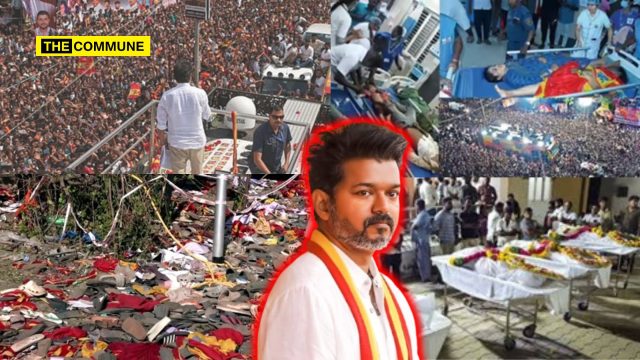
Did TVK Chief Vijay Use Karur Crowd For Jananayagan Shooting? CBI Recovers Deleted Footage In Stampede Probe

"Vijay Fled From Scene Of Occurrence, Party Has No Remorse", Madurai Bench Of Madras High Court Slams TVK For dmk Karur Stampede karur stampede dmk

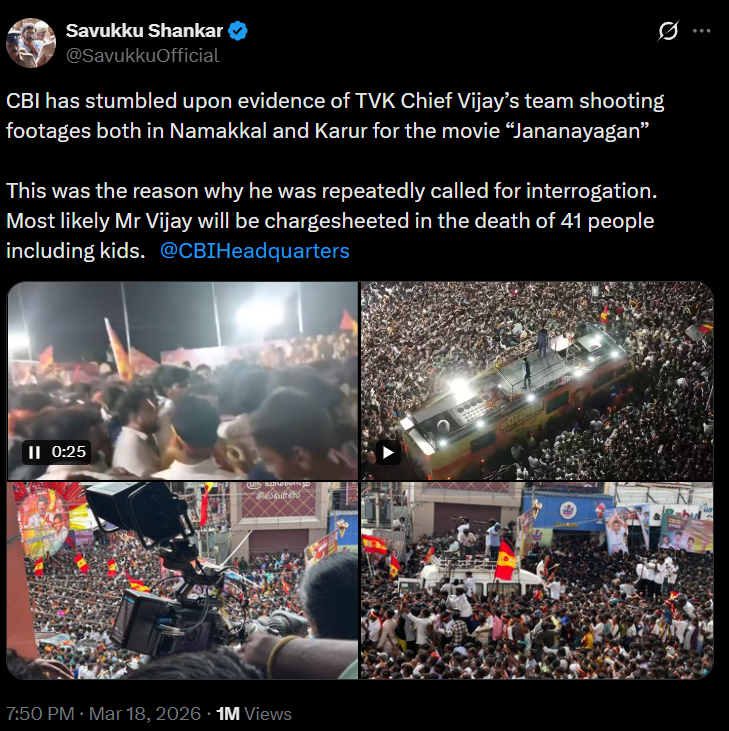
The investigation into the Karur crowd incident, which resulted in the deaths of 41 people, including children, has intensified with a sharp focus on video evidence recorded during the event. The Central Bureau of Investigation is examining multiple layers of footage, as gaps and inconsistencies in the submitted material emerge.

Officials have identified that an extensive camera setup was deployed during the campaign event attended by Vijay. More than a dozen cameras were in operation, including three main-stage broadcast cameras, four handheld ENG units, crane-mounted systems, vehicle-installed cameras, and aerial drone units. While certain footage, primarily content already available publicly has been submitted, several crucial recordings remain unaccounted for.

Investigators are closely analysing footage that captures the movement of the campaign vehicle into densely packed sections of the crowd. Evidence indicates that the vehicle proceeded beyond the designated limit by approximately 25 metres, entering an already congested zone. Visual material suggests that crowd conditions had deteriorated significantly at that point. Despite this, forward movement continued, a decision that is now a key focus of the probe.

Particular attention is being paid to missing footage from the four handheld cameras that reportedly followed the convoy into the crowd. These recordings are considered critical to establishing the exact sequence of events and assessing situational awareness at the time. Additionally, cameras identified within the vehicle during inspection have not yielded any submitted footage, further deepening concerns over missing evidence.

Drone visuals, including aerial shots of the gathering, have been partially recovered by investigators. However, high-angle recordings from specialised equipment, identified as Blackmagic URSA Mini Pro cameras, have not been produced.

Image Source: Maridhas

The absence of these perspectives has limited a complete reconstruction of crowd dynamics during the incident.

The probe has also extended to the intended use of the recorded footage. Investigators are examining whether portions of the material were captured with cinematic purposes, including possible integration into the film Jananayagan. The high-angle camera placement, in particular, mirrors a type of shot visible in the Jananayagan trailer which depicts Vijay’s vehicle moving through a surging crowd. It is alleged that the plan was to incorporate authentic rally crowd footage, depicting masses surging toward the vehicle, directly into Jananayagan, to replicate a similar technique used in Vijay’s earlier film Thalaivaa.

Investigators are also examining technical distinctions between equipment used at the site and standard film-production gear. It has been indicated that cinematographer Sathyan Sooryan typically works with ARRI Alexa systems; however, those cameras were not deployed at the Karur location, reinforcing the assessment that a separate set of cameras was used during the event.

While director H. Vinoth was not present at the location, the investigation is reviewing whether any such footage was considered during post-production processes.

Authorities have further noted that several recordings are reported as deleted, damaged, or missing. These missing segments form a crucial part of the inquiry, particularly in determining whether key evidence was withheld or lost.

The timeline following the incident is also under scrutiny. Despite the scale of the tragedy, comprehensive footage was not released immediately. Instead, only selective visuals have surfaced over time.

The CBI has now questioned Vijay on three separate occasions, pressing him specifically on what footage exists, who ordered deletion or non-disclosure, and why no comprehensive account of events was released to the public in the immediate aftermath of the deaths. Rather than issue a full public accounting in the immediate aftermath, Vijay’s camp maintained near-silence for the better part of 40 days, during which time Vijay was photographed dancing around at the launch event in Malaysia, just days after the tragedy.

With 41 fatalities recorded, the case has raised serious concerns over event management, accountability, and transparency. The CBI continues to expand its investigation, focusing on missing footage, decision-making during the event, and the chain of responsibility. No final determination of culpability has been announced so far.

Subscribe to our channels on WhatsAppTelegram, Instagram and YouTube to get the best stories of the day delivered to you personally.
Leftist-Dravidian Stock Mathur Sathya Arrested Over Complaints Of Sexual Exploitation Of Women

mathur sathya

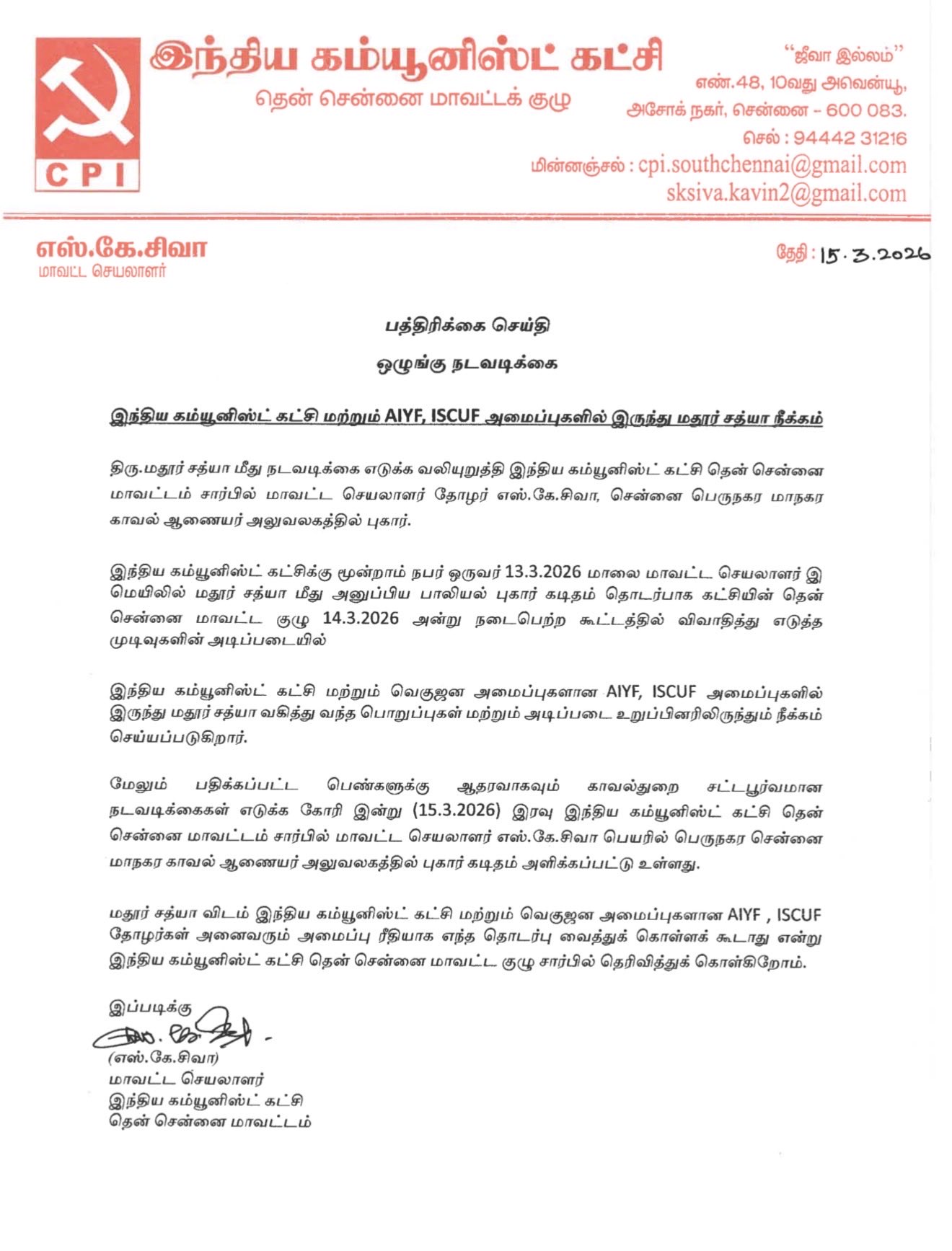
Leftist Dravidian stock ‘activist’ Mathur Sathya, who was recently expelled from the Communist Party of India following allegations of sexual harassment, has been arrested by the Greater Chennai Police, as reported in Times of India.

According to police sources, Sathya was apprehended in Bengaluru on Thursday evening by a special police team. He is currently being brought to Chennai for further inquiry.

The arrest follows action taken by the party earlier this week. On 16 March 2026, the CPI removed Sathya from its primary membership as well as from all affiliated organisations after allegations of sexual harassment surfaced against him.

The party also submitted a formal complaint to the Greater Chennai City Police Commissioner, seeking legal action in support of the women who raised the allegations.

The decision to expel Sathya was taken during a meeting held on 14 March 2026 by the South Chennai district unit of the party. District secretary S K Siva discussed the allegations with party members, following which disciplinary action was initiated.

In an official statement, Siva stated that Sathya had been removed not only from the CPI but also from the All India Youth Federation and the Indian Society for Cultural Cooperation and Friendship.

Sathya, a native of Salem, had previously been involved in protests and grassroots initiatives related to social justice. Further investigation into the case is currently underway.

Subscribe to our channels on WhatsAppTelegram, Instagram and YouTube to get the best stories of the day delivered to you personally.
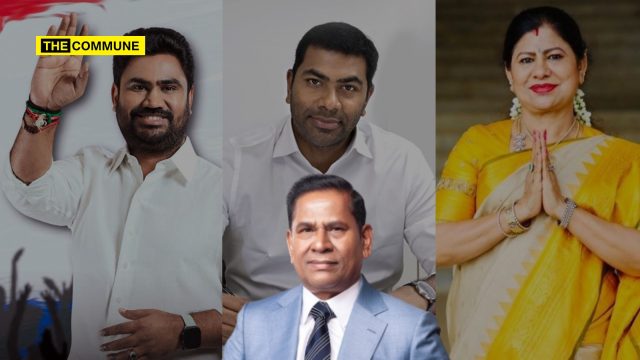
One Family, Many Parties: How The ‘Lottery’ Martin Family Is Diversifying Its Political Portfolio And Splitting The NDA

The ruling National Democratic Alliance (NDA) in Puducherry is facing internal strain amid growing friction over the entry of a new regional outfit linked to the family of lottery baron Santiago Martin, with developments indicating a widening political fault line that could reshape alliance equations.

Chief Minister N. Rangasamy recently travelled to Salem to seek guidance from his spiritual mentor before taking a final call on the alliance’s future, even as he initiated outreach to actor-turned-politician Vijay for a potential electoral understanding with Tamilaga Vettri Kazhagam (TVK). The move comes against the backdrop of mounting unease within the alliance over the Bharatiya Janata Party’s (BJP) push to accommodate Lakshya Jananayaga Katchi (LJK), a party floated in December by Martin’s son, Jose Charles Martin.

Rangasamy is understood to be strongly opposed to the inclusion of LJK in the NDA, signalling discomfort with the growing influence of the Martin family in regional politics. He has also been pressing for clarity on Puducherry’s long-pending statehood demand, an issue he raised during Prime Minister Narendra Modi’s recent visit, but which remains unresolved.

Before taking any final call on the alliance’s future, Rangasamy quietly travelled to Salem to seek counsel from his spiritual mentor, Appa Paithiyam Swamigal – a visit that sources close to the Chief Minister say reflects the gravity of the decision he is now weighing. What makes that decision all the more significant is the other option being actively explored: Rangasamy is reportedly in contact with actor-turned-politician Vijay to explore an electoral understanding with his Tamilaga Vettri Kazhagam in what would be a historic pivot away from the BJP coalition. The two are said to have maintained a warm personal rapport for over two decades – a bond that Vijay himself reinforced at his December 2025 rally in Puducherry, where he invoked the history of Dravidian politics in the Union Territory and signalled a shared ambition for the region.

The Martin Family’s Many Moves

What distinguishes the ongoing political crisis in Puducherry is not merely friction within the National Democratic Alliance (NDA), but the apparent rapid and coordinated manner in which lottery baron Santiago Martin’s family has established a presence across multiple political fronts simultaneously.

In Puducherry, Jose Charles Martin, following differences with the Bharatiya Janata Party (BJP) leadership, launched the Lakshya Jananayaga Katchi (LJK) in December 2025, projecting a governance model inspired by Singapore and positioning himself as the party’s chief ministerial face. Since its launch, LJK has expanded its organisational footprint across 25 of the Union Territory’s 30 constituencies. The party has also intensified its attacks on the incumbent government over alleged irregularities in liquor unit approvals, a move that has further strained Chief Minister N. Rangasamy’s equation with leaders associated with the Martin family.

Political developments in recent weeks have pointed to a visible shift of influence, with individuals linked to the NDA crossing over to LJK. The financial muscle behind LJK has begun visibly fracturing the NDA’s family blocs in Puducherry. In a striking case of a sitting minister’s household crossing the floor, Latha (alias Luthin), wife of BJP Cabinet Minister A. John Kumar, filed her nomination from the Nellithope constituency under the LJK banner – the same seat where her son, sitting BJP MLA Vivilian Richards Johnkumar, had won for the NDA in 2021.


View this post on Instagram


A post shared by VIZHUTHUGAL MEDIA (@vizhuthugalmedia)

John Kumar himself, a former Congress legislator who switched to BJP ahead of the 2021 polls and was rewarded with a cabinet berth in July 2025, represents Kamaraj Nagar. The spectacle of a serving minister’s wife filing against his own party’s alliance in the constituency held by his son underscores how deeply the LJK’s resources and seat-offering strategy are testing NDA loyalties ahead of the 2026 Puducherry assembly election.

Parallel developments in Tamil Nadu have added another layer to the evolving political landscape. Aadhav Arjuna, Martin’s son-in-law, who has previously been associated with the Dravida Munnetra Kazhagam (DMK) and the Viduthalai Chiruthaigal Katchi (VCK), currently serves as General Secretary (Election Campaign Management) of actor Vijay’s Tamilaga Vettri Kazhagam (TVK). His position places him in a senior role within a party that Rangasamy has explored engaging with for a possible electoral understanding.

Meanwhile, Leema Rose, wife of Santiago Martin, resigned in February 2026 from her position as joint general secretary of the Indhiya Jananayaka Katchi (IJK), an NDA ally, citing lack of recognition. It is anticipated that she may align with LJK in the near future, further consolidating the family’s political presence.

These developments seem to be a part of a broader pattern in which the Martin family has transitioned from playing a financial role in electoral politics to assuming direct political participation through multiple channels. Santiago Martin’s company, Future Gaming and Hotel Services, was reported to be the largest purchaser of electoral bonds in India, contributing approximately ₹1,368 crore to various political parties, including the BJP, DMK, and AIADMK.

Earlier, former Puducherry Chief Minister V. Narayanasamy had described LJK as a “B-team” of the BJP. However, current developments suggest that the political positioning of the Martin family operates independently across party lines.

Statehood, Seats, and Silence from Delhi

Alongside the LJK issue, Chief Minister Rangasamy also raised concerns over the lack of clarity on Puducherry’s statehood, a demand he reiterated during Prime Minister Narendra Modi’s recent visit to Karaikal. He is also understood to be dissatisfied with seat-sharing arrangements within the NDA, including allocations related to Yanam, nominated MLA positions, and the Rajya Sabha seat.

In a statement issued on 18 March 2026, Rangasamy indicated that his party had conveyed its position, noted that the BJP was engaged in internal discussions, and stated that no formal communication had been received from the central leadership. He added that a decision on the alliance would be announced in due course, leaving the future of the coalition open-ended.

Senior BJP leaders from Puducherry have travelled to Delhi for consultations with the party’s central leadership, with efforts ongoing to resolve differences and maintain the alliance.

With the NDA’s internal stability under question and parallel outreach to TVK underway, the evolving situation suggests that the balance of power in Puducherry may increasingly be influenced by shifting political alignments. The Martin family’s presence across multiple parties and regions has introduced a new variable into the electoral landscape, with implications that could extend beyond a single alliance or state.

Subscribe to our channels on WhatsAppTelegram, Instagram and YouTube to get the best stories of the day delivered to you personally.
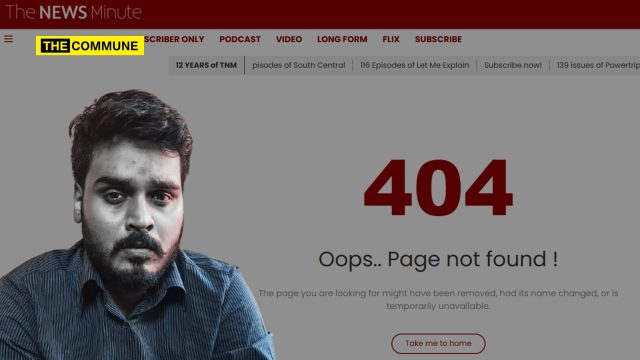
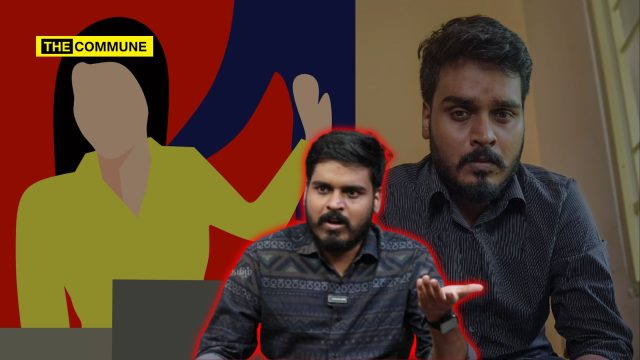
The News Minute Quietly Deletes Hagiographic Article On Leftist-Dravidianist Mathur Sathya After CPI Expels Him For Sexual Exploitation Of Women

In a telling development that exposes the ecosystem of narrative-building within Tamil Nadu’s Left-Dravidian media cult, The News Minute (TNM) quietly deleted an earlier glowing profile of Leftist-Dravidianist Mathur Sathya after the Communist Party of India (CPI) expelled him over serious allegations of sexual exploitation of women.

CPI Expels Mathur Sathya Over Sexual Misconduct Allegations

The CPI officially expelled Mathur Sathya from its primary membership, along with removing him from affiliated organisations such as the All India Youth Federation (AIYF) and the Indian Society for Cultural Cooperation and Friendship (ISCUF), following complaints of sexual harassment and exploitation.

The party has also escalated the matter legally, submitting a complaint to the Greater Chennai Police Commissioner and directing its members to sever all ties with him.

The allegations are not minor or isolated. Reports indicate that multiple women accused Sathya of misconduct, triggering internal deliberations within the party before disciplinary action was taken.

In his defence, Sathya claimed that all his interactions were “consensual” and alleged that he was not given an opportunity to present his side—an argument that has drawn sharp criticism given the nature of the accusations.

From ‘Progressive Voice’ To Political Liability

Until recently, Mathur Sathya was projected by sections of the Leftist and Dravidianist media as a rising intellectual voice—frequently platformed for his commentary on caste, social justice, and Dravidian politics.

He was associated with activist platforms and regularly appeared in debates championing Leftist and Dravidian ideological positions.

This carefully curated image now stands in stark contrast to the serious allegations that led to his expulsion—raising uncomfortable questions about how such figures are elevated within ideological ecosystems without scrutiny.

TNM’s Quiet Cleanup

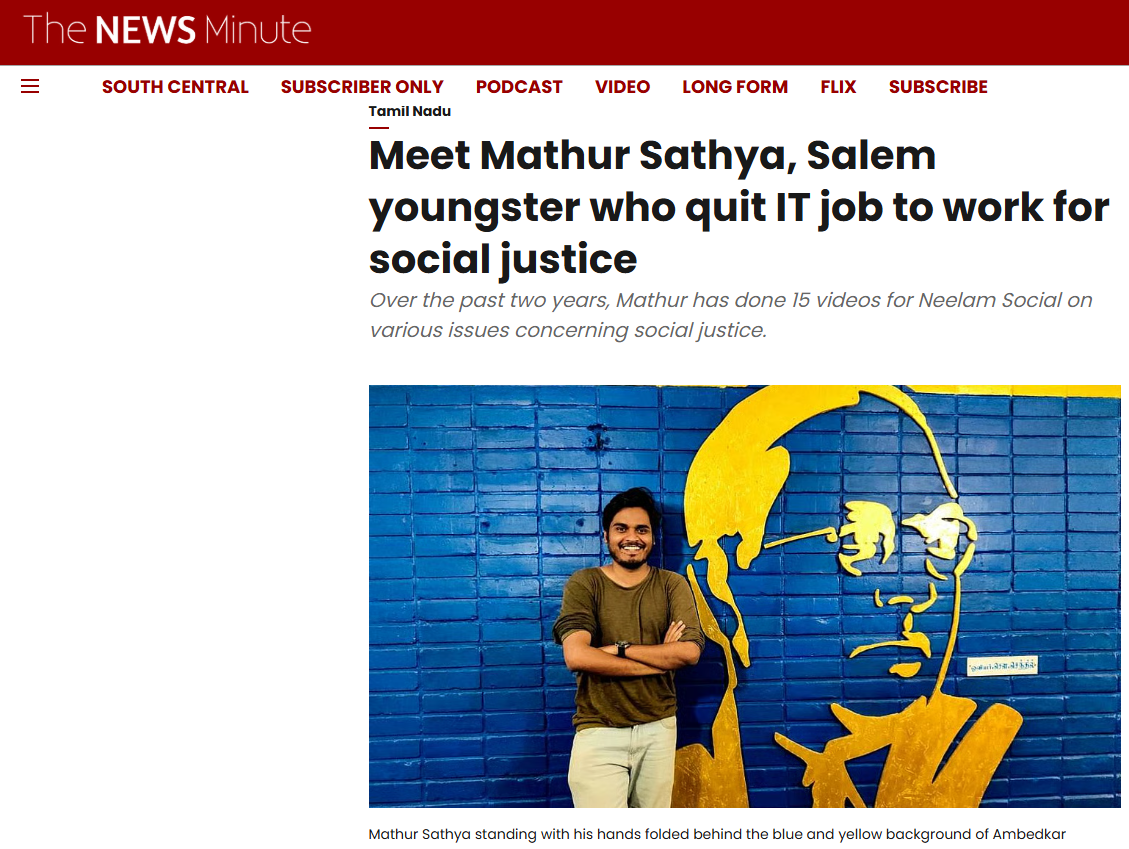
TNM’s earlier coverage of Mathur Sathya was not merely neutral reporting—it veered into outright hagiography. He was portrayed as a grassroots intellectual voice and a champion of social justice, with his views on caste and Dravidian politics amplified without meaningful scrutiny.

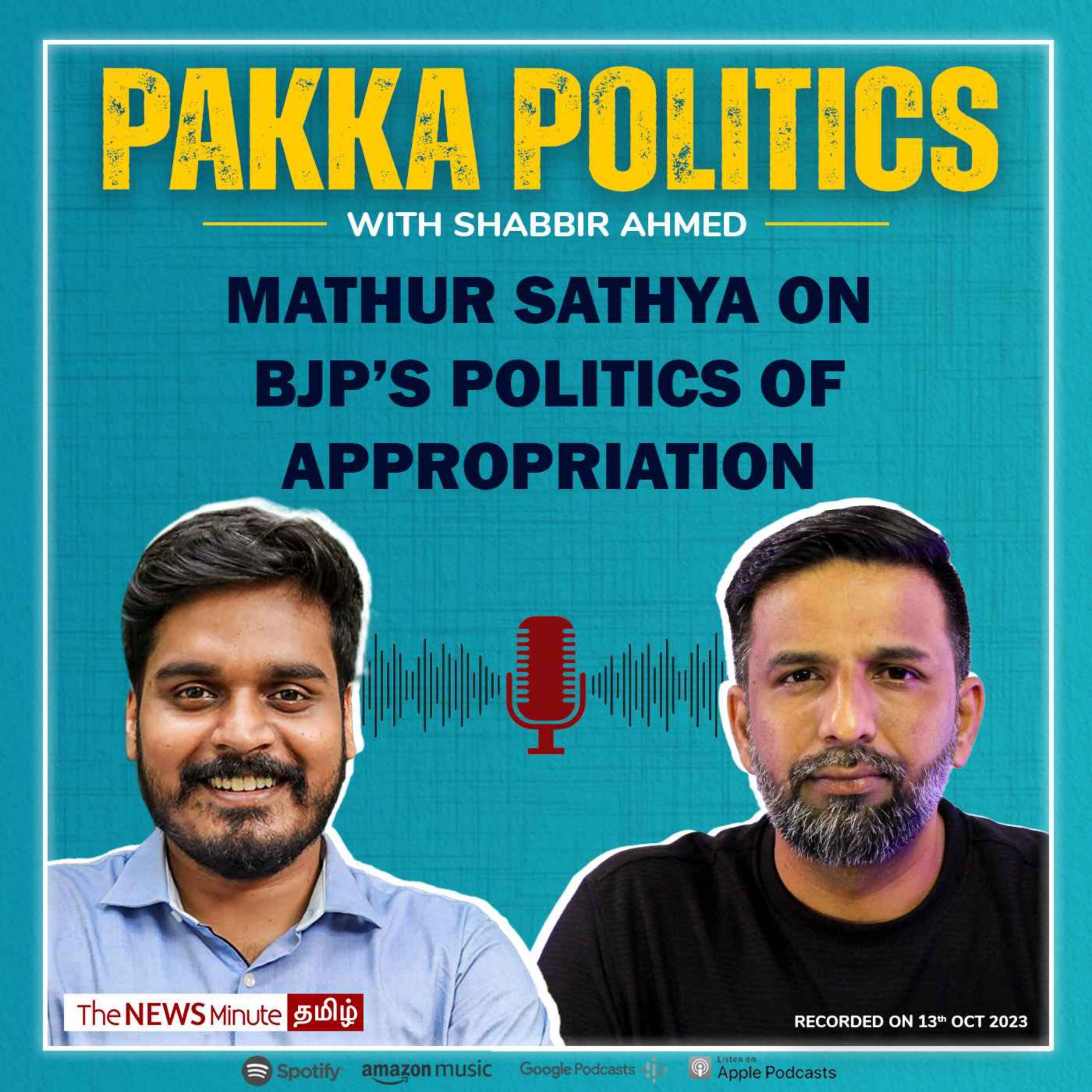
This projection wasn’t limited to a single article—he was also platformed through TNM’s podcast ecosystem, where he was given space to articulate his ideological positions in a largely uncritical setting.

The cumulative effect was the construction of credibility around Sathya as a “progressive” voice. In hindsight, this uncritical amplification raises serious questions about editorial judgment and the ecosystem’s tendency to elevate ideologically aligned figures without adequate due diligence.

Amid the fallout, TNM reportedly deleted an earlier article that had portrayed Sathya in an overtly positive, almost hagiographic light.

The deletion, carried out without editorial acknowledgment, clarification, or transparency, has sparked criticism about selective storytelling and the lack of accountability within sections of the media.

The episode underscores a familiar pattern: individuals aligned with certain ideological narratives are amplified and glorified, only to be quietly erased when controversies emerge.

Subscribe to our channels on WhatsAppTelegram, Instagram and YouTube to get the best stories of the day delivered to you personally.

From Libya To Mizoram: How Mercenary Matthew VanDyke Landed In NIA Custody In India

From Libya To Mizoram How Matthew VanDyke Landed In NIA Custody In India

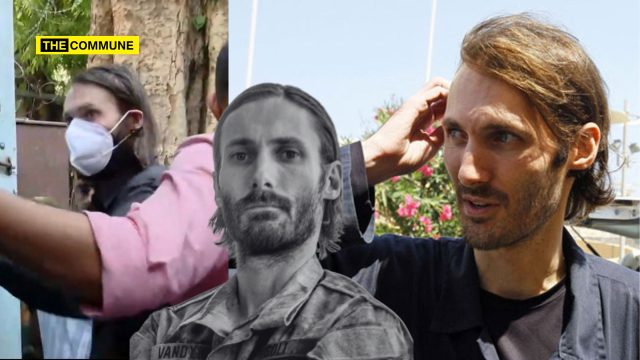
India does not often make the news for catching American mercenaries. It made that news on 13 March 2026, when the National Investigation Agency simultaneously detained foreign nationals at three airports: Kolkata, Lucknow, and Delhi in a single coordinated sweep. The man pulled off a flight at Kolkata by the Bureau of Immigration, then transferred to NIA custody, was a 46-year-old Baltimore native who had spent the better part of his adult life making himself useful in other people’s wars. His name was Matthew Aaron VanDyke.

He was not alone. Six Ukrainian nationals, Hurba Petro, Slyviak Taras, Ivan Sukmanovskyi, Stefanik Marian, Honcharuk Maksim, and Kaminskyi Viktor were detained alongside him. On 16 March 2026, a special NIA court at Patiala House, Delhi sent all seven into eleven days of NIA custody on charges framed under the Unlawful Activities (Prevention) Act, 1967. The case against them, as laid out before the court, runs far deeper than a simple border violation.

According to the NIA, the group entered India on tourist visas, flew to Guwahati, made their way south into Mizoram, a state that foreign nationals cannot enter without Restricted Area Permits and then slipped across into Myanmar. Their mission, the agency alleges: running “pre-scheduled training” for Myanmar-based Ethnic Armed Groups in drone assembly, drone operations, electronic warfare, and jamming technology. They are also accused of smuggling a substantial consignment of European-manufactured drones into Myanmar through Indian territory. The detail that converts this from a foreign policy embarrassment into a direct national security threat is the NIA’s allegation that these armed groups maintain operational ties to proscribed insurgent organisations active in India’s northeast, meaning the training VanDyke’s group conducted may not have been aimed solely at Myanmar’s military junta.

Youngest in the Room, Then the Most Dangerous

VanDyke grew up in Baltimore and took his undergraduate degree in Political Science at the University of Maryland Baltimore County. He then secured admission into the Security Studies programme at Georgetown University’s Edmund A. Walsh School of Foreign Service, reportedly among the youngest candidates accepted into that cohort. His master’s thesis was an analysis of al-Qaeda’s strategic rationale for targeting the United States.

He applied to the CIA after graduation, clearing the analytical assessment, the drug screening, the psychological evaluation, and reaching the stage of meeting the team he would have joined at Langley. The polygraph ended it; his nerves produced inconclusive readings, and the agency declined to proceed. What followed this rejection is, in retrospect, either a tragedy or a farce depending on your sympathies: VanDyke spent a year at the beach, then mounted a Kawasaki KLR650 and pointed it toward North Africa.

Three Years Across the Arab World

The motorcycle journey that began in 2007 took him across Morocco, Mauritania, Tunisia, Libya, Egypt, Jordan, Syria, Turkey, and Iraq over roughly three years. He was travelling as a documentarian, trying to understand a region that his Georgetown thesis had told him Washington fundamentally misread.

Between 2008 and 2010, Iraqi security forces arrested or detained him twenty times. At least once, he and a colleague were hooded, beaten, handcuffed, and accused of running al-Qaeda-linked espionage. They were held in a Baghdad prison with an armed guard standing behind them. Iranian state media identified him as a Jewish American spy. He was neither Jewish nor, officially, a spy. During this same stretch, he also worked as a war correspondent for The Baltimore Examiner, embedding with American military units in Iraq and later at Forward Operating Base Baylough in Afghanistan – one of the most isolated US installations in that war.

Libya: Six Months in a Cell, Then Back to the Front

When the Libyan rebellion broke open in early 2011, VanDyke crossed the border illegally and took up arms with the anti-Gaddafi forces rather than simply filming them. He was quickly ambushed, wounded, and captured. For six months, Gaddafi’s security apparatus held him in solitary confinement across two of the regime’s most feared detention facilities. When rebel advances finally caused the prison system to fracture in August 2011, fellow detainees pried open his cell. He walked out and was installed at the Corinthia Hotel Tripoli as a guest of the National Transitional Council, the rebel government that was by then taking control of the capital. The arc from solitary cell to government guestroom took 72 hours.

His Libyan experiences became the backbone of the documentary Point and Shoot, which won the Best Documentary Award at the 2014 Tribeca Film Festival and brought him coverage in the New York Times, the Washington Post, and the Guardian.

Syria: The Turning Point in His Mission

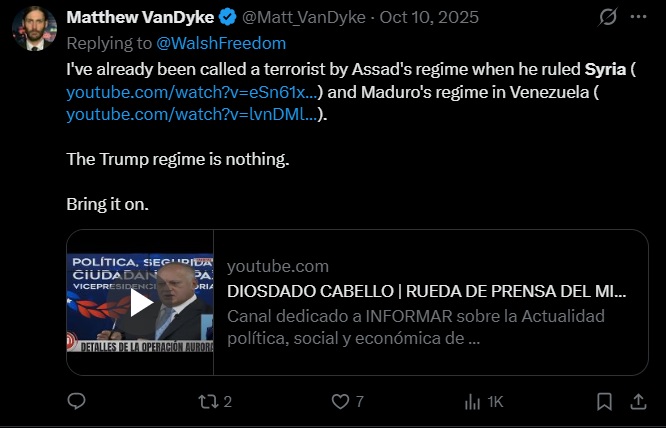
Syria came next, where he documented the civil war while simultaneously advising rebel factions on weapons and tactics. The Assad government responded by designating him a terrorist.

The event that gave structure to everything that came before was the ISIS execution of James Foley in August 2014, followed by that of Steven Sotloff in September 2014 – both journalists, both friends from Libya, both killed on video. VanDyke responded by building an organisation.

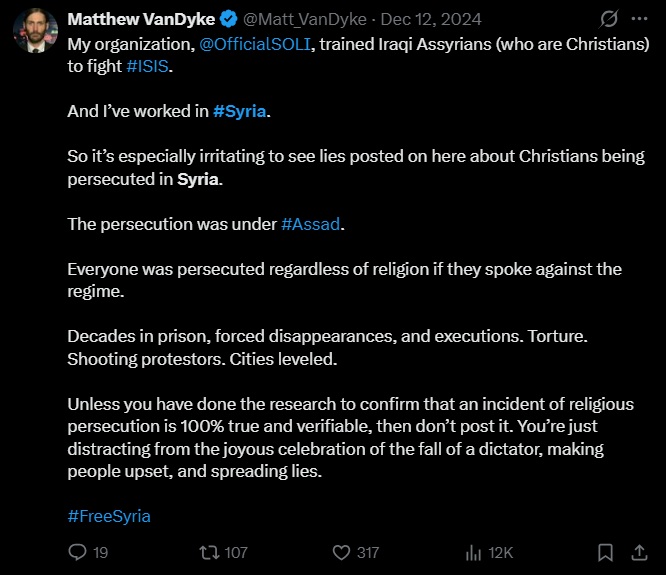
In October 2014, he registered Sons of Liberty International (SOLI) as a 501(c)(3) non-profit in the United States, with a mandate to provide security training, supplies, and consulting at no charge to communities facing terrorists and authoritarian forces. (Wikipedia) Its first operational deployment sent SOLI trainers to work with the Nineveh Plain Protection Units (NPU), an Assyrian Christian militia fighting ISIS in northern Iraq.

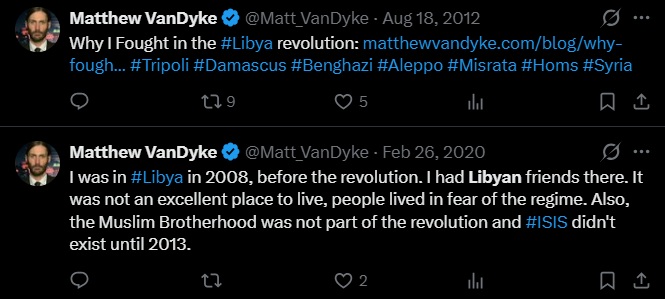
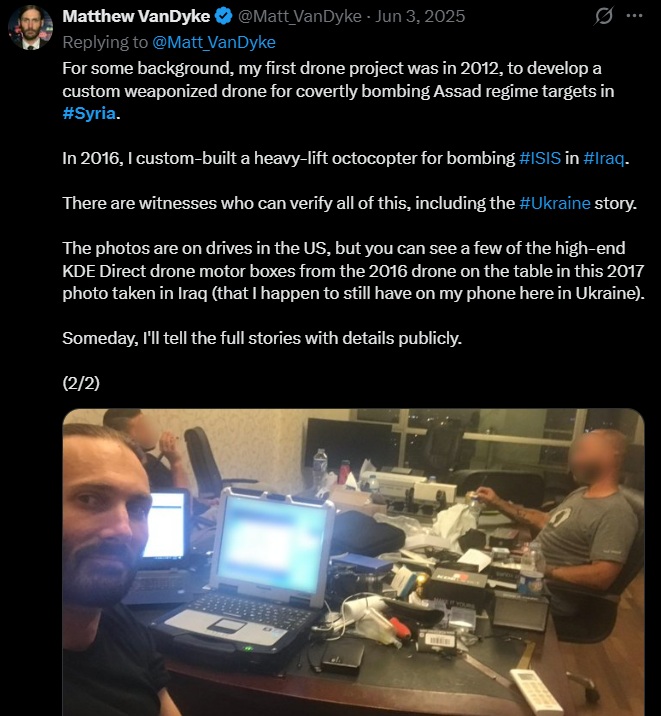
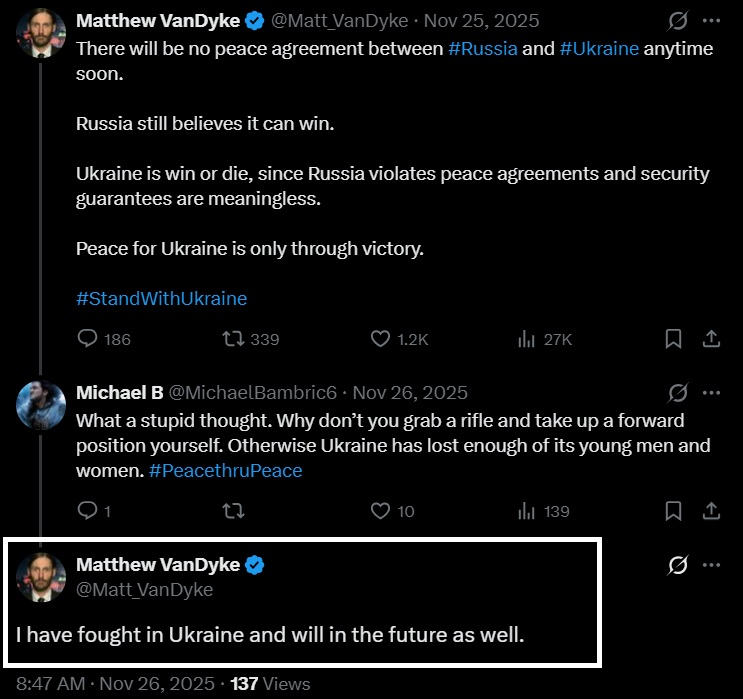
Here are some of his own admissions.

Ukraine: Where the Machine Became Institutional

Russia’s invasion of Ukraine in February 2022 gave SOLI a theatre of operations at a scale the organisation had never previously encountered. By March 2022, VanDyke had moved himself and the organisation to Ukraine – not merely in an advisory capacity, but enlisting in the Armed Forces of Ukraine as a regular combatant.

SOLI simultaneously scaled its institutional presence: frontline tactical instruction for Ukrainian units, battlefield adaptations development, and a structured programme to clear unexploded Russian munitions from recaptured territory.

Myanmar: The Next Theatre of Operations

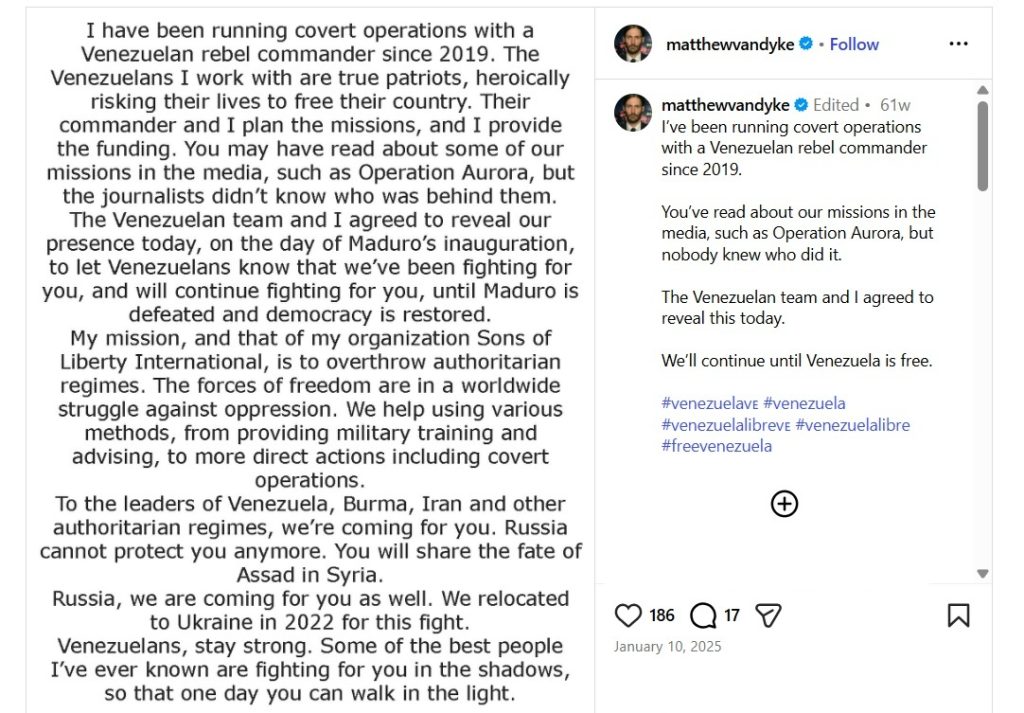
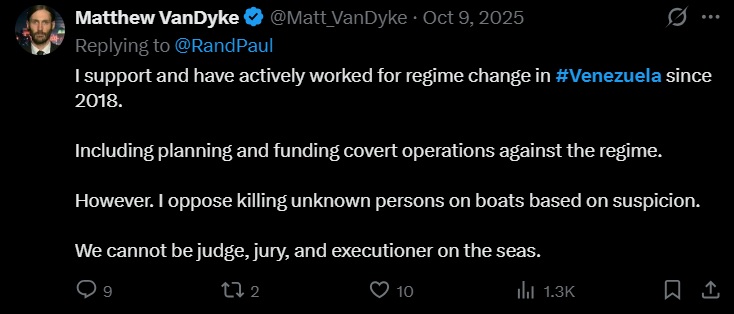
In January 2025, VanDyke posted on X confirming he had been conducting covert operations with a Venezuelan rebel commander since 2019, before expanding the target list explicitly: “To the leaders of Venezuela, Burma, Iran and other authoritarian regimes, we’re coming for you. Russia cannot protect you anymore.” Burma/Myanmar was not rhetorical. The Myanmar military junta of Min Aung Hlaing has been among Russia’s most reliable partners since its 2021 coup, receiving Su-30 fighter jets, Mi-38 helicopters, and surveillance drone platforms from Moscow in exchange for unconditional diplomatic support.

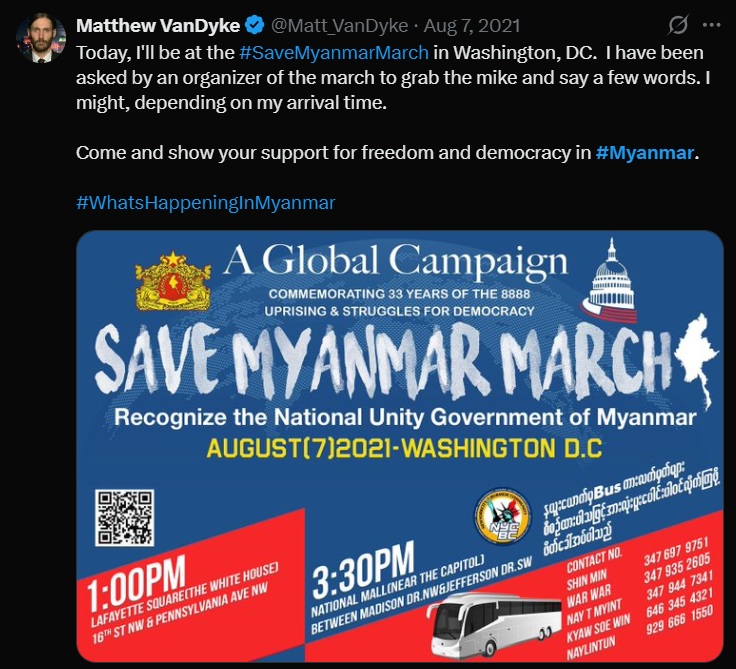
He has been talking about Myanmar since 2021, participating in marches to “Save Myanmar”.

Critically, Mizoram Chief Minister Lalduhoma had already flagged this threat to the Mizoram Assembly in March 2025 – warning that Ukrainian war veterans were entering Myanmar’s Chin State via Mizoram to train rebel groups, and that nearly 2,000 Western visitors had passed through Aizawl in the second half of 2024, almost none visible on city streets. Ukrainian special forces have also been documented fighting Russian-backed Wagner mercenaries in Sudan and Syria as part of Kyiv’s global strategy to stretch Russian resources.

Venezuela: The Covert Operations Template

On 10 January 2025, deliberately timed to coincide with Nicolás Maduro’s disputed inauguration, VanDyke posted simultaneously on his social media handles, revealing six years of previously secret activity in Venezuela: “I’ve been running covert operations with a Venezuelan rebel commander since 2019. You’ve read about our missions in the media, such as Operation Aurora, but nobody knew who did it. The Venezuelan team and I agreed to reveal this today, on the day of Maduro’s inauguration, to let Venezuelans know that we’ve been fighting for you, and will continue fighting for you, until Maduro is defeated and democracy is restored.”

Operation Aurora had been reported in Venezuelan and international media at the time of its execution, but with no attribution – VanDyke’s post was the first public confirmation that he and SOLI were behind it. SOLI’s own website now lists Venezuela as an active mission, openly stating that it had been working to “restore democracy to Venezuela since 2018” and soliciting donor funds to expand future operations against the Maduro government.

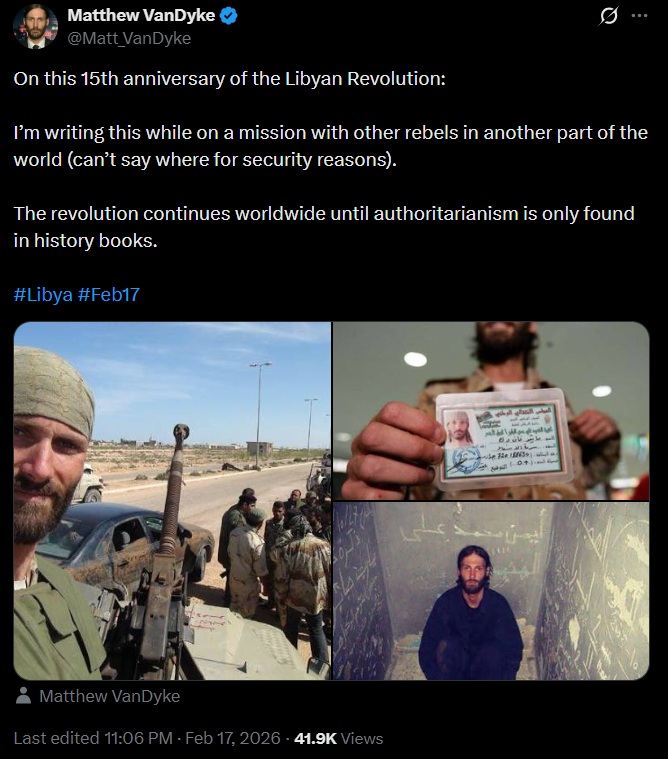
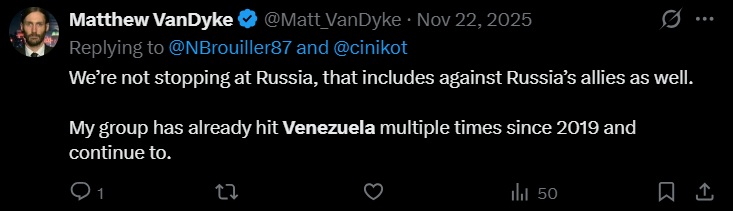
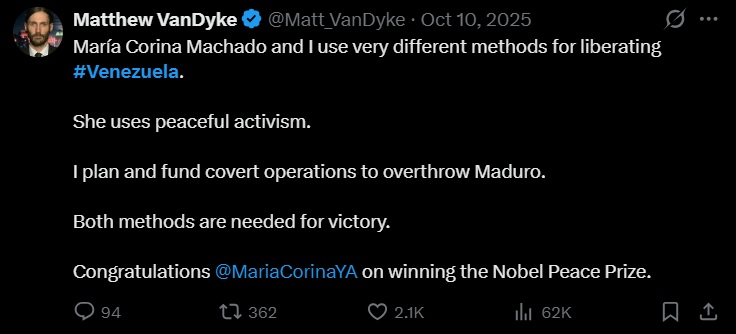
Here are some other posts from VanDyke where he again admitted the Venezuela misision.

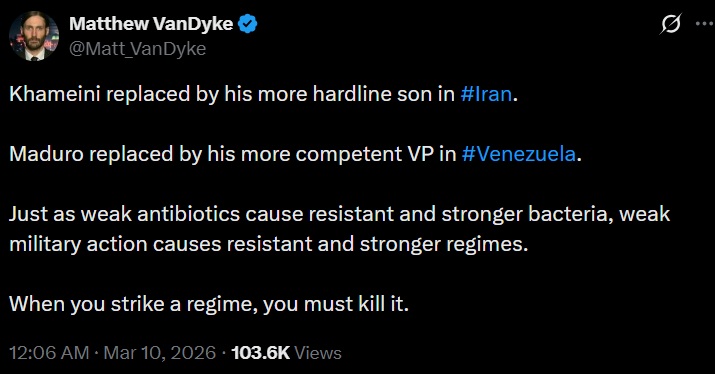
Just weeks before his NIA arrest, VanDyke posted again – this time criticising what he called the “weakness” of American operations in Iran and Venezuela, writing: “Just as weak antibiotics cause resistant, stronger bacteria, weak military action causes resistant, stronger regimes. When you strike a regime, you must kill it.”

The man posting that was, by that point, already operating in Myanmar. The Venezuela chapter matters enormously to the NIA case because it establishes a repeating operational template that predates Myanmar by years: identify a Russian-backed authoritarian regime, build a covert relationship with opposition commanders, fund and plan rebel operations in complete secrecy, and surface only when politically convenient – all while the journalists covering the fallout had no idea who was responsible. Venezuela (2019–2025), Ukraine (2022–present), Myanmar (2025–2026) – each theatre is a Russian ally, each operation follows the same architecture, and VanDyke had named Burma explicitly as a target in his January 2025 confession post, six months before Indian authorities pulled him off a flight at Kolkata airport.

India Pushes Back on Foreign Operatives

The NIA’s arrest does not resolve the question of whether VanDyke is formally a CIA asset. He has denied it himself, even while acknowledging how close he came to official membership. What the pattern of his career does establish is something arguably more consequential than a formal payroll connection: a private individual whose ideological convictions have aligned, across two decades and a dozen conflict zones, with the current strategic preferences of the American national security establishment and who, operating without official cover, provides Washington with the deniability that official operatives cannot.

India’s NIA has placed a border in his path that carried real consequences. He will likely spend the coming weeks in Tihar Jail, waiting for American diplomatic pressure to build. The NIA has eleven days and a case that reaches far beyond one American with a motorcycle and a cause.

A Mercenary or a “Freedom Fighter”?

VanDyke’s career defies easy classification. To supporters, he is a “freedom fighter” aiding oppressed populations. To critics, he represents a new class of ideological mercenaries operating in grey zones of international law.

His profile reflects a recurring pattern: embedding himself in conflicts aligned with Western geopolitical interests, often just outside official state sanction. While there is no public evidence linking him directly to intelligence agencies, his activities frequently overlap with broader strategic objectives associated with NATO and U.S. foreign policy.

VanDyke’s journey from Libya’s battlefields to Ukraine’s trenches and now to India’s custody illustrates a larger shift in modern warfare. Today’s conflicts are no longer confined to nation-states but involve networks of private actors, ideological fighters, and transnational alliances.

For India, the episode is both a warning and a precedent: in an era of globalised conflict, neutrality does not mean vulnerability.

Subscribe to our channels on WhatsAppTelegram, Instagram and YouTube to get the best stories of the day delivered to you personally.
Dravidian Model Poster Boys Accused Of Being Sexual Predators

One of the most famous Dravidianist principles, as quoted by their leader K Veeramani citing their ideologue EV Ramasamy Naicker aka Periyar is ‘Enjoyment Without Responsibility’.

However, the Dravidianist men do not realise that enjoyment for them can be harassment for another.

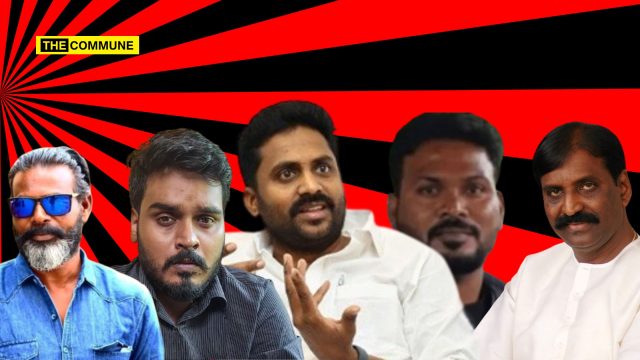
In this post, we take a look at Dravidianist poster boys who have been propped up as intellectuals and leaders but turned out to sexual predators.

Vairamuthu

Known for his lyrics and ‘poetry’ in Tamil cinema, Vairamuthu was accused during the #MeToo movement in 2018 by at least 17 women led by playback singer Chinmayi Sripada who accused him of sexual harassment and assault. His alleged victims report he leveraged his position of absolute power over careers in the Tamil film industry. Chinmayi said she was blacklisted from Tamil voice-over work for speaking up with the industry’s tacit complicity. He denied everything. No FIR was filed. No investigation was ordered. The DMK ecosystem protected him in complete silence.

In 2021, he had penned a song that romanticizes pedophilia. The song is about a school-going girl in love with a grey-haired old ‘poet’ and was filmed with actor Anika Surendran who was 16 years old at that time.

Rajiv Gandhi

A few days ago, alleged chats of DMK leader Rajiv Gandhi were leaked on social media. These came to light after Junior Vikatan reported that one of the reasons for removing DMK leader Rajiv Gandhi from the post of Student Wing Secretary and reassigning him as Joint Secretary in the Propaganda Wing was allegations that he misbehaved with female party cadres.

The report stated that DMK leader Rajiv Gandhi has been sending inappropriate messages to some of the party’s female executives at night via Instagram and Facebook. “Despite their warnings, he did not stop. Following this, the female executives informed the higher-ups about the matter.“, the report said.

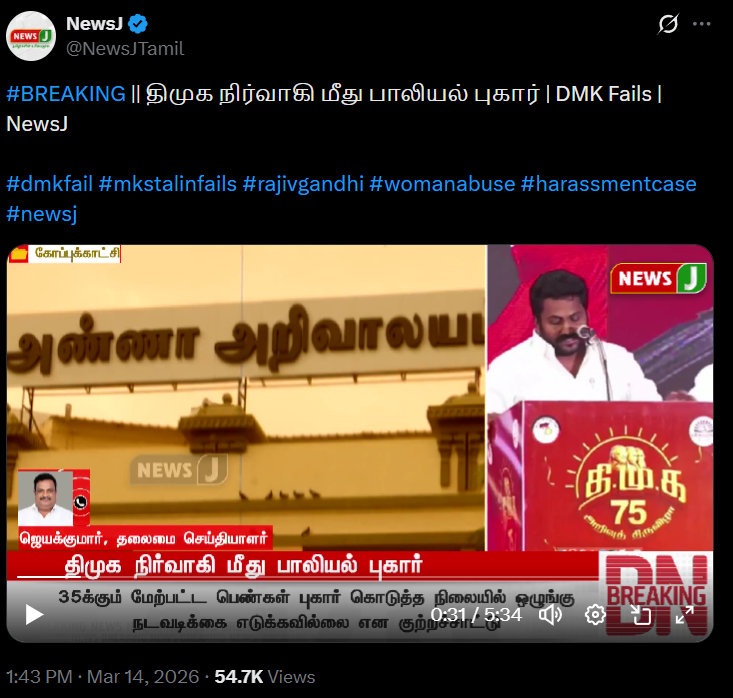
According to a report by News J Tamil, more than 35 women had complained of sexual harassment by DMK leader Rajiv Gandhi when he was the head of Student’s Wing.


Both Junior Vikatan and News J reported that the DMK was forced to act on Rajiv Gandhi and remove him from the post of Student’s Wing Secretary after complaints of sexual harassment. However, this move was seen as an eyewash as he was given another post in the DMK’s propaganda wing.

Leaked Instagram direct messages purportedly involving Rajiv Gandhi, engaging in suggestive and sexually charged conversations with what is alleged to be a female party cadre also did the rounds on social media. The screenshots show Rajiv Gandhi allegedly talking with a married female party executive about France being famous for French kiss and asking her a math question like “What is 23% of 300?” referring to ’69 position’ being ‘his favourite number and position’.

Rajiv Gandhi denied the screenshots doing the rounds as “fabricated” using “Fake Instagram Chat Generator”.

But many on social media vouch for the chat’s authenticity. A report by Minnambalam also notes that they’ve found the complaints against Rajiv Gandhi to be true.

When we spoke to DMK student union executives regarding this, complaints were made to Stalin, Udhayanidhi, and Kanimozhi that some female executives in the student union were under stress. The party leadership investigated these shocking complaints and confirmed that they were true. Information also reached the DMK leadership that some people affected by Rajiv Gandhi are ready to speak openly in public.”Minnambalam report said. 

Zakir Hussain

Zakir Hussain, a Bharatanatyam dancer who became famous for his entry ban at Srirangam temple (celebrated by the Dravidian left as a secularism cause), was appointed by the DMK government as Advisor to all 17 District Government Music Schools under the Arts and Culture Department.​

In February 2022, a woman instructor at the Karur District Government Music School filed a formal complaint stating that during an official inspection visit, Hussain called her alone into the Head Instructor’s office, closed the door, placed his hands on her shoulder and waist, and made inappropriate remarks. Her complaint stated: “I felt suicidal and depressed afterwards.” The Union of Tamil Nadu Arts and Culture Teachers noted complaints from multiple districts, not just Karur. The Tamil Nadu Arts and Culture Department confirmed receipt of the complaint. The DMK government that appointed him did not make any public statement on the outcome of the inquiry.

Mathur Sathya

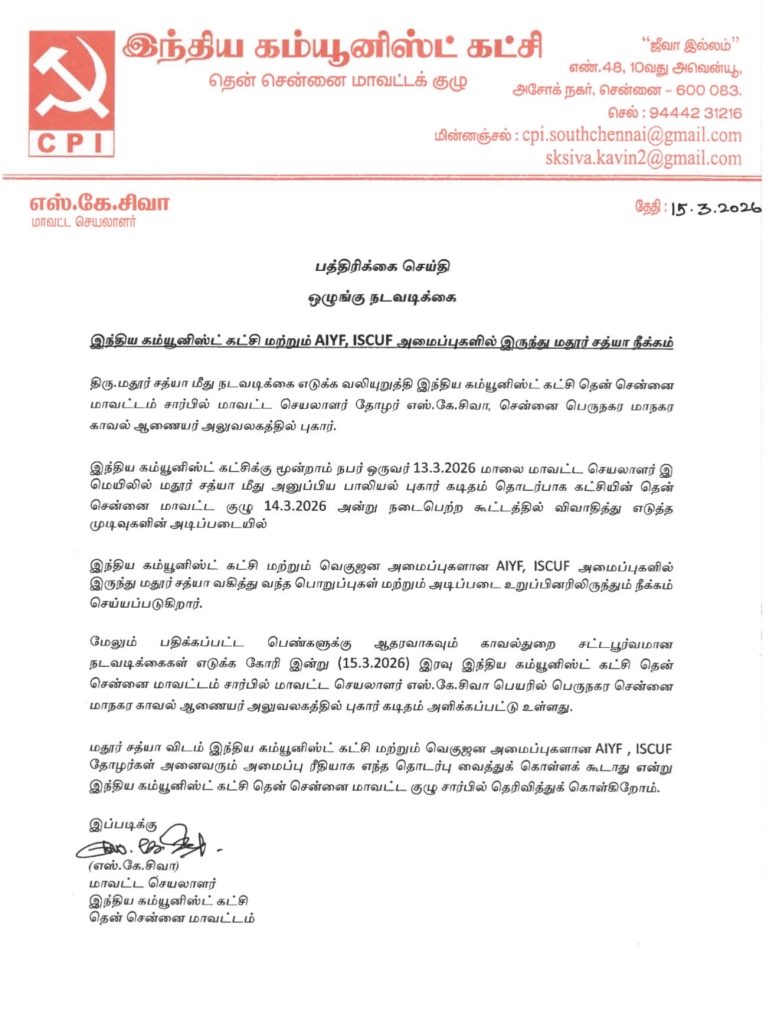
On 15 March 2026, serious allegations of sexual misconduct started being levelled against Tamil Nadu-based activist affiliated with the Communist Party of India by several women.

In a press release, the CPI said that they received numerous complaints regarding Mathur Sathya’s behavior and also stated that a complaint has been filed with the Greater Chennai Police against him by the party’s Chennai district secretary SK. Siva.

The State Executive Committee meeting held on March 14, 2026, carefully examined the complaints and decided to immediately remove him from all positions he held in the party and its affiliated organizations AIYF and ISCUF. Furthermore, the Communist Party of India and its affiliated mass organizations AIYF and ISCUF have expelled Mathur Sathya from primary membership due to the gravity of the complaints received against him and the prima facie evidence that emerged during the inquiry. A complaint has also been filed with the Greater Chennai Police to take action in favour of the victim women.“, the press release stated.

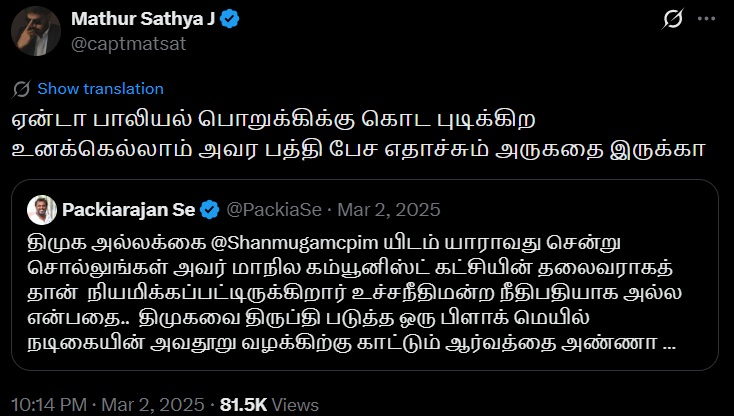
In a social media post, he justified his actions saying that he did it with “explicit consent”.

The same person was propped up as an intellectual by The News Minute and more recently by PEN.

Interestingly, there was a time when he even admonished people for ‘supporting sexual predators’.

‘Periyar’ Saravanan & Lulu Group

In 2022, in an explosive revelation, a woman named Yuma Jaharo, who identified herself as a ‘Periyarist’ dropped a bomb alleging that a massive sex scandal had been happening within their ideological and political circles at the behest of those who claim to be followers of EV Ramaswamy Naicker aka ‘Periyar’.

Thamizhachi Author who is also known as France Thamizhachi gave a series of interviews to various Tamil YouTube channels where she mentioned about the rampant sex scandal and harassment meted out to several women by some of the Periyarist and Dravidianist groups. This gang of Periyarists indulged in creating a sex racket called the ‘Lulu group’.

According to Thamizhachi, a lady named ‘Lulu’ was inducting and inciting ‘sexually unsatisfied’ women (mostly married) to have illicit relationships with other men. They were also forced to send their private pictures in the form of “challenges”.

The main person accused of sexually exploiting the women according to Thamizhachi is ‘Periyar’ Saravanan. ‘Periyar’ Saravanan gets close with the women members of the group and asks them to share pictures of their navel, breasts and so on. Thamizhachi who was already aware of ‘Periyar’ Saravanan’s activities wanted to expose him and started to get close with him. He had allegedly asked Thamizhachi too to indulge in such sexual talks. She had allegedly gathered her evidence against ‘Periyar’ Saravanan’s activities during that time.

Amid the allegations, attention increasingly turned to the role of prominent Dravidian ideologue Suba Veerapandian (Suba Vee). According to activist France Thamizhachi, Suba Vee, who currently serves as Chairperson of the Tamil Nadu government’s Social Justice Monitoring Committee and holds positions in educational bodies, is alleged to have remained silent despite being aware of serious complaints involving exploitation of women. Thamizhachi further stated that there were attempts to “clear” or suppress evidence, with Suba Vee said to be directly or indirectly involved in protecting individuals accused in the case. Notably, Suba Vee has previously taken strong public positions on issues of social justice and women’s rights, including defending figures accused of misconduct. His alleged inaction in this case raises questions about selective activism and credibility within sections of the Dravidian ideological ecosystem.

Now it is not just these celebrities who are involved in such activities. We have a whole bunch of DMK functionaries, those who hold important positions in the party involved in sexual harassment of women.

DMK Youth Wing Functionary Deivaseyal

In May 2025, a 21-year-old college student from Arakkonam accused DMK youth wing functionary Deivaseyal of deception, abuse, and coercion under the pretext of marriage. According to her complaint, Deivaseyal, despite already being married, allegedly lured her into a relationship and conducted a second marriage with her. She claimed that he later began pressuring her into sexual activities involving influential politicians, effectively attempting to groom her for exploitation.

When she resisted, he allegedly subjected her to repeated physical abuse, harassment, and threats, including intimidation against her family. The survivor stated that he assaulted her, damaged her belongings, and continued to stalk and attack her even after she left him. She also alleged that he introduced her to other men and pressured her to engage with them.

The woman further claimed that the sustained abuse drove her to attempt suicide, while Deivaseyal allegedly continued to threaten her with impunity, claiming political protection.

DMK Councillor Who Harassed Flight Attendant

In March 2026, a DMK councillor from Tiruvallur, Prabhakaran, along with his associate Thiagu, was arrested for allegedly sexually harassing a 25-year-old IndiGo air hostess on a Chennai–Delhi flight. According to the complaint, both men, reportedly under the influence of alcohol, behaved inappropriately during boarding. They allegedly addressed the crew member disrespectfully, questioned her personal details, teased her, and slapped her on the back of her thigh while she was performing her duties. The incident was reported to police the same day. After failing to cooperate initially, the duo was arrested and booked under charges related to sexual harassment and outraging modesty.

DMK Functionary & Hockey Coach Harasses Schoolgirls

In August 2020, DMK functionary Shankar, a hockey coach at the Chettinad Women’s Hockey Club, was arrested for sexually harassing two schoolgirls under his training. The sisters from Madurai complained that Shankar repeatedly called them to rooms, harassed them, and threatened to kill them if they spoke out. Based on a complaint from their parents, police arrested Shankar and his assistant Kannan under the POCSO Act. He was the DMK Student Wing Organizer of Sakkottai west.

DMK Man & Anna University Sexual Assault Accused Gnanasekaran

DMK functionary Gnanasekaran, was accused of being a serial sexual offender. He allegedly molested two additional individuals: a temporary female worker in the food department at Anna University and the daughter of a Tehsildar, who has not yet filed a complaint. This is in addition to the primary Anna University sexual harassment case for which he was arrested.

It is further alleged that his arrest was delayed due to interference from his close associate, DMK Circle Secretary Shanmugam. Shanmugam reportedly came to the police station, threatened the officers, and took Gnanasekaran away during an inquiry, with the arrest only occurring the next day due to public protests. Both men are claimed to have worked under a notorious rowdy named ‘Gym’ Ezhumalai and are involved in illicit activities. Additionally, it is alleged that Gnanasekaran’s wife secured a temporary professor position at Anna University through the intervention of a DMK minister, pointing to a high-level cover-up to protect the accused.

DMK Functionary Assaults Woman For 6 Months

In November 2025, DMK Union Secretary Thiruvakkarai Baskaran went absconding after being accused of a horrific six-month-long sexual assault and blackmail. The 35-year-old victim, a married woman with a son, sought his help for construction materials. Baskaran allegedly exploited the situation, sexually assaulting her and recording the act. He then used the video to repeatedly blackmail and threaten her, forcing her to comply with his demands. The victim stated he ruined her life, and a case has been filed at the Kottakuppam All Women Police Station.

DMK Cadre Sexually Harassed Widow

In October 2023, DMK member Prabhu from Dindigul is accused of sexually harassing a vulnerable widow who sought his help. Saroja, a daily-wage worker and mother of a disabled son, contacted Prabhu for assistance due to his party affiliation. Instead of helping, he misused her number to send explicit videos and audio messages and subjected her to indecent video calls. When she blocked him, he threatened to use his political influence to harm her and kill her children if she did not comply with his demands. A complaint has been filed at the Odanchathiram police station.


Subscribe to our channels on WhatsAppTelegram, Instagram and YouTube to get the best stories of the day delivered to you personally.
Bengal’s Long Slide: From Intellectual Capital To Economic Decline

Bengal’s Long Slide: From Intellectual Capital To Economic Decline

A personal memory of Kolkata’s shutdown culture reveals a deeper civilisational crisis and a narrowing window for revival.

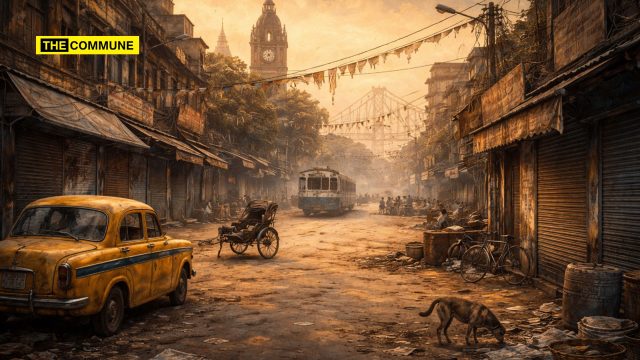
Bengal holds a special place in my heart. It was in Kolkata that I began my professional journey, full of hope and expectation. Yet one of my earliest memories from March-April 2003 remains etched in my mind not for its personal inconvenience, but for what it revealed about the deeper malaise gripping Bengal’s political culture.

The Left Front government had approved a modest 10 per cent hike in bus fares, translating to a mere 25-paise increase. In a surreal display of political theatre, the same Left parties called a strike against their own government. The city came to a grinding halt. Shops were shuttered, transport vanished, and fear of violence kept people indoors. I walked to my office one of the few who did but found no breakfast, no lunch, and only managed a cup of tea late in the evening.

What stayed with me was not hunger. It was the absurdity. A megacity paralysed over 25 paise. And more importantly, the silent suffering of daily wage earners who lost a day’s income not because of market forces or natural calamities, but because politics demanded paralysis.

This memory encapsulates Bengal’s tragedy. A land that once stood at the forefront of India’s intellectual, cultural, and economic awakening gradually succumbed to a political culture that normalised disruption, stagnation, and ideological rigidity.

There was a time when Bengal was synonymous with excellence. The region led what historians call the Bengal Renaissance a period that reshaped India’s intellectual and cultural trajectory. Figures like Swami Vivekananda inspired global spiritual awakening. Rabindranath Tagore redefined literature and became Asia’s first Nobel laureate. Subhas Chandra Bose embodied militant patriotism. Scientists such as Jagadish Chandra Bose, Satyendra Nath Bose, and Prafulla Chandra Ray laid the foundations of modern science. Bankim Chandra Chattopadhyay gave India “Vande Mataram,” a song that stirred a civilisation.

Few regions in world history have produced such a concentration of brilliance in such a short span. Bengal was not just India’s intellectual capital it was among the world’s most vibrant centres of thought.

And yet, the trajectory since then has been one of decline.

The seeds of this decline were sown during colonial rule. The Partition of Bengal fractured society along communal lines, while political violence became normalised as a tool of mobilisation. These were not temporary distortions they became embedded in Bengal’s political DNA.

Independence should have healed these wounds. Instead, post-independence politics deepened them. The Indian National Congress, which governed Bengal in the early decades, failed to dismantle these toxic legacies. Instead, it absorbed elements shaped by pre-partition communal politics, blurring moral lines and institutionalising opportunism.

The real structural decline, however, unfolded under the long rule of the Communist Party of India (Marxist)-led Left Front. From 1977 to 2011, Bengal witnessed one of the longest uninterrupted democratic regimes in the world. What could have been an era of consolidation became one of erosion.

The rise of the Naxalite movement originating in Naxalbari symbolised this shift. Instead of channelling youth into innovation and enterprise, generations were drawn into ideological extremism and violence.

Economically, the consequences were devastating. In the 1950s and early 1960s, West Bengal was among India’s most industrialised regions, and Kolkata stood tall as one of Asia’s premier commercial hubs. But by the 1990s and early 2000s, industrial stagnation had become entrenched.

The numbers tell the story starkly. West Bengal made for 10.5% of the country’s GDP in 1961. By 1977, at the advent of Left rule, this had reduced to 8.8%. By 2011, at the end of Left rule, it had further declined to 6.7%. In 2026, after 15 years of rule by the All India Trinamool Congress, it stands at a mere 5.6%.

Nearly all economic statistics show the same calamity. In terms of per capita income, Bengal was ranked 10th among Indian states in 1977. By 2011, it had slipped to 18th, and by 2026, it stands at 27th.

Industrial output as a share of national output has collapsed from 27% in 1951 to 11% in 1977, to about 5% in 2011, and to a mere 3–3.5 per cent in 2026.

The fiscal picture is equally grim. The debt-to-GDP ratio has risen from roughly 20% in 1977 (around Rs 6,000 crore) to nearly 39% in 2026 (approximately Rs 7.9 lakh crore).

These are not just numbers. They represent lost decades, lost opportunities, and a steady erosion of Bengal’s economic foundations.

Parallel to economic decline was the persistence and amplification of identity politics. The legacy of Direct Action Day and Partition-era mobilisation was never fully dismantled. Instead, successive regimes cultivated vote banks, prioritising electoral arithmetic over governance.

This created a predictable outcome: when economic opportunities shrink and governance weakens, informal power structures rise. Local strongmen, political intermediaries, and patronage networks begin to dominate. Merit is replaced by proximity to power.

When the All India Trinamool Congress, led by Mamata Banerjee, came to power in 2011, there was hope for change. Instead, much of the underlying ecosystem persisted. The instruments of control street power, patronage, and identity mobilisation remained intact.

The result is a state caught in a vicious cycle: economic stagnation fuels political patronage, and patronage entrenches stagnation.

Contrast this with developments in states like Gujarat under Narendra Modi, Uttar Pradesh under Yogi Adityanath, and Assam under Himanta Biswa Sarma where governance reforms, law and order, and infrastructure development have driven economic revival.

Bengal today stands at a similar inflection point.

The stakes are not merely electoral they are civilisational. Will Bengal reclaim its historic role as a hub of ideas and enterprise, or will it continue down a path of decline?

For the Bengali bhadralok, this moment demands introspection. The cost of decades of ideological complacency is now visible in declining incomes, migration of talent, and diminished national relevance.

The geopolitical environment adds urgency. Developments in Bangladesh including rising instability have direct implications for Bengal’s future.

History does not offer endless chances. Bengal once led India’s awakening. Today, it must decide whether it wishes to rediscover that role.

The memory of a shutdown over 25 paise is more than an anecdote it is a warning. A warning of how low expectations can fall when political culture loses its way.

Bengal stands at a crossroads. One path leads to renewal. The other to irreversible decline.

The choice is now.

Dr. Prosenjit Nath is a techie, political analyst, and author.

Subscribe to our channels on WhatsAppTelegram, Instagram and YouTube to get the best stories of the day delivered to you personally.