Home Blog Page 121

₹4 Lakh Crore Loot In 56 Months: AIADMK Submits Corruption Dossier Against DMK Govt To Tamil Nadu Governor

The All India Anna Dravida Munnetra Kazhagam (AIADMK) on Tuesday submitted a detailed corruption dossier to the Governor of Tamil Nadu, alleging that the DMK government had looted the state of more than ₹4 lakh crore over the last 56 months and pushed Tamil Nadu into an unprecedented debt crisis.

A delegation of senior AIADMK leaders, led by party general secretary Edappadi K Palaniswami, met the Governor and demanded a time-bound, court-monitored investigation into what the party described as “systemic corruption and financial plunder” across multiple departments of the state government.

According to the AIADMK, the dossier submitted to the Governor contains department-wise details of alleged corruption, quantified figures of financial loss, and supporting documents. The party alleged that from the very first day of assuming office, the DMK government had functioned “like a private corporate syndicate rather than a democratic administration.”

“For the past 56 months, the DMK family has occupied the corridors of power and indulged in brazen loot running into crores, pushing Tamil Nadu into an unprecedented debt trap. As a responsible opposition, we have placed these facts before the Hon’ble Governor and demanded a comprehensive investigation,” the AIADMK said in a statement

₹4 Lakh Crore Debt, ₹1 Lakh Crore Borrowed Every Year

The AIADMK claimed that under the DMK regime, Tamil Nadu has been pushed into severe financial distress, with the state government borrowing nearly ₹1 lakh crore every year. According to the party, this has increased the overall debt burden by more than ₹4 lakh crore during the last 56 months.

The party alleged that such large-scale borrowing was not driven by development expenditure but was instead a consequence of “reckless mismanagement and corruption”, which it said stood as evidence of the DMK government’s administrative failure

PTR’s Statement Cited

The AIADMK also referred to an earlier statement made by former Finance Minister Palanivel Thiaga Rajan (PTR), claiming that he had publicly admitted that within just one year of the DMK coming to power, ₹30,000 crore had been looted.

According to the AIADMK, the former minister had stated that the money allegedly benefited the Chief Minister’s son and son-in-law. “If this is the scale of corruption in just one year, one can only imagine the magnitude of the loot over 56 months,” the party said.

Department-Wise Allegations of Corruption

As per the dossier submitted to the Governor, the AIADMK alleged large-scale corruption across nearly every major department of the Tamil Nadu government. The party claimed the following amounts had been looted department-wise:

  • Municipal Administration & Drinking Water Supply: ₹64,000 crore
  • Rural Development & Panchayat Raj: ₹60,000 crore
  • Highways & Minor Ports: ₹60,000 crore
  • Electricity Department: ₹55,000 crore
  • Prohibition & Excise: ₹50,000 crore
  • Registration Department: ₹20,000 crore
  • Highways Department: ₹20,000 crore
  • Water Resources Department: ₹17,000 crore
  • Greater Chennai Corporation: ₹10,000 crore
  • Industries Department: ₹8,000 crore
  • School Education Department: ₹5,000 crore
  • Social Welfare Department: ₹5,000 crore
  • Agriculture Department: ₹5,000 crore
  • Health Department: ₹4,000 crore
  • Higher Education Department: ₹1,500 crore
  • Hindu Religious and Charitable Endowments: ₹1,000 crore
  • Adi Dravidar Welfare Department: ₹1,000 crore
  • Environment & Forest Department: ₹750 crore
  • Youth Welfare & Sports Department: ₹500 crore
  • Prisons Department: ₹500 crore
  • Tourism Department: ₹250 crore
  • Milk Development Department: ₹250 crore

Governance Collapse, Investment Flight Alleged

The AIADMK alleged that corruption had become the defining feature of the DMK government, leading to a breakdown of governance and deterioration of law and order in the state.

The party further claimed that industrial investors who once viewed Tamil Nadu as a preferred destination were now shifting investments to neighbouring states due to policy paralysis and rampant corruption under the current regime

Demand for Special Investigation Commission

The AIADMK said it had urged the Governor to constitute a Special Investigation Commission headed by a retired Chief Justice of the Supreme Court to conduct a detailed inquiry into the alleged ₹4 lakh crore scam.

The party demanded that action be initiated not only against DMK ministers but also against government officials who, it claimed, facilitated and enabled corruption.

“The people of Tamil Nadu deserve clean governance. This daylight robbery of public funds cannot go unpunished,” the AIADMK asserted in its submission to the Governor

Subscribe to our channels on WhatsAppTelegram, Instagram and YouTube to get the best stories of the day delivered to you personally.

DMK Vs Congress: DMK MP MM Abdulla Accuses Congress MP Manickam Tagore Of Amplifying RSS Narrative

DMK MP MM Abdulla Calls Congress MP Manickam Tagore A Sanghi

Senior DMK leader and former MP MM Abdulla launched a sharp attack on Congress MP Manickam Tagore, accusing him of echoing an RSS-crafted narrative aimed at destabilising the DMK-led alliance in Tamil Nadu.

Abdulla’s response came after Tagore shared a graphic based on IPDS data on vote shares in Tamil Nadu and accompanied it with a post arguing that while alliances are essential to win elections in the state, it was now “time to discuss share of power, not just share of seats.”

What Tagore Posted

In his post on X, Tagore wrote that alliances were the political reality of Tamil Nadu, that every party had its own vote base, and that no party could win without coalition support. He went on to argue that electoral arithmetic alone was no longer sufficient and that the conversation must now extend to power-sharing arrangements within the alliance.

He wrote, “Who gets the votes?” – What the IPDS data reveals. In Tamil Nadu, alliances are the political reality. Every party has its own base of vote support. I believe this data does not fully reflect the numbers of not just the Congress, but other parties as well. However, one thing is clear: without an alliance, no one can win in Tamil Nadu. At the same time, it is no longer just about power — isn’t it time to also discuss the sharing of power? Time for share of power not only Share of seats.”

Abdulla: This Is an RSS-Created Narrative

Responding strongly, MM Abdulla said that anyone who follows social media closely would know that for over a year, Hindutva-aligned platforms had been persistently pushing the idea of “power sharing” in the Tamil Nadu government.

According to Abdulla, this narrative emerged only after it became clear that the BJP-led alliance had no realistic chance of coming to power in the state. He alleged that the objective was not governance reform but to sow confusion and internal mistrust within the DMK-led alliance, which remains electorally dominant.

Abdulla wrote, “Those who follow social media regularly will know that for the past year, Hindutva-supporting pages have been continuously discussing the possibility of a power-sharing arrangement in the Tamil Nadu government. In the current situation, realizing that their alliance will never come to power in Tamil Nadu, and understanding that this was a planned agenda to create confusion within the strong DMK alliance, alliance leaders like Thol. Thirumavalavan and Professor Khader Mohideen clarified in their interviews that “the sole objective of this alliance is to stand united, drive away the RSS forces, and protect Tamil Nadu.” After this, these discussions almost disappeared from Hindutva social media. Now, Brother Manickam Tagore, “without understanding where and by whom this narrative was created,” is reviving this discussion! All the leaders are acting correctly. All the cadres are looking forward to the election work with great coordination. In this situation, whose interests will be served by Brother Manickam Tagore echoing this “dead” narrative created by the RSS to create confusion among the alliance’s cadres and disrupt their unity!?”

Subscribe to our channels on WhatsAppTelegram, Instagram and YouTube to get the best stories of the day delivered to you personally.
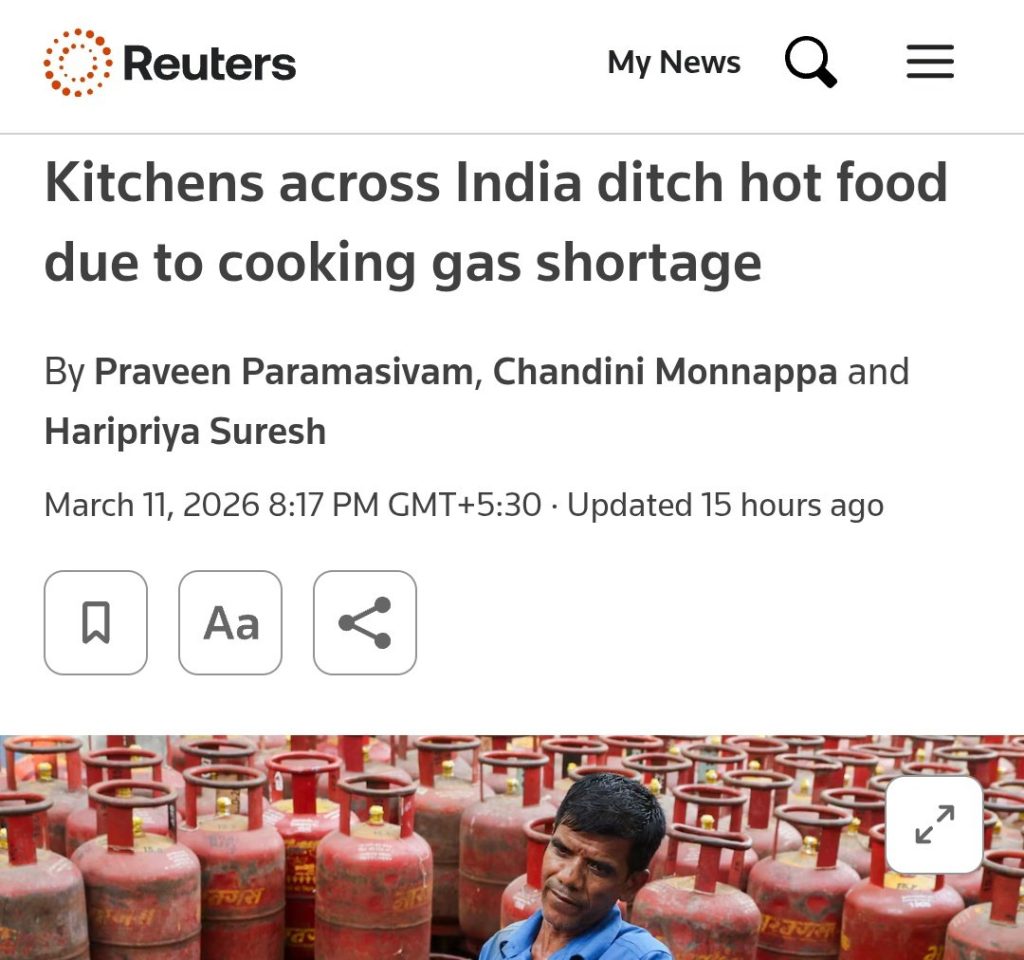
DMK Minister Regupathy Likens Lighting Thiruparankundram Deepam To Funeral In Cremation Ground

DMK Minister Compares Thirupparankundram Deepam To Cremation Ground

Hours after the Madurai Bench of the Madras High Court permitted the lighting of a lamp atop the stone pillar on Thirupparankundram hill, the DMK government signalled its intent to challenge the verdict before the Supreme Court, terming the order legally flawed and historically unfounded.

Speaking to the media, DMK Law Minister S. Regupathy criticised the ruling for allowing what he described as a practice that had never existed earlier, arguing that courts must rely on historical precedent before permitting religious customs at a particular site. Drawing a comparison with burial and cremation grounds, the minister said that customs are location-specific and cannot be shifted or newly introduced merely because a demand is made.

Speaking to the media, the DMK Minister said, “They asked that permission should not be given. But today, the judges, directing that only a few officials from the Hindu Religious and Charitable Endowments Department should go there under the leadership of the District Collector, and imposing restrictions on the general public, have issued an order allowing the lighting of the lamp on the Deepathoon. This order has been given today in violation of the law. Therefore, the Tamil Nadu Government and the Hindu Religious and Charitable Endowments Department are going to file an appeal against it. Generally, if something is to be permitted at a place — if one says a lamp should be lit at a particular spot — the judges should ascertain whether lamps were lit there earlier, whether there is evidence for it, and only based on such evidence should permission be granted.”

He continued, “But no such evidence exists. There was the rule of great leader Kamaraj, the rule of Rajaji, the rule of Puratchi Thalaivar MGR, the rule of Amma Jayalalithaa, the rule of Thalaivar Kalaignar. During all these governments, at no point did anyone come forward with a demand to light a lamp at the Deepathoon.”

Speaking about the issue raised during Jayalalithaa’s regime, he said, “When such a demand arose during Jayalalithaa Amma’s rule, it was opposed and permission was refused. But today, the judges say that since such a request has come before them, they are issuing an order allowing the lighting of the lamp at the pillar on Thirupparankundram hill. As of today, we cannot say anything about the judiciary or cast aspersions on it. However, on the basis that this is an act contrary to law, we have every right to approach the Supreme Court. Tamil culture and tradition must be protected. No one demanded this earlier. Granting permission just because someone has demanded it is completely wrong.”

He further said, “Introducing a practice that never existed earlier, through a court verdict, appears to have an ulterior motive. From our perspective, this is something we oppose entirely and is against the sentiments of the Tamil people.”

When asked about proof that the pillar was a survey stone, he said, “As far as we know, there is no historical proof or record of such a practice for even a hundred years. Was any evidence submitted that it was a Deepathoon? No. The stone was installed during the British period. Since it is on a hilltop, it was placed as a taller stone — that is what we have stated. Even if it existed during the Nayak period, is there any proof that a lamp was lit there — during the Nayak period, the British period, Rajaji’s period, or Kamaraj’s period? Why should the court introduce something today that never existed? That is the question of the Tamil people. There is no evidence whatsoever. There are no proofs that a lamp was ever lit at the Deepathoon. Tamil people will not accept this.”

He further said, “Some sections of people are trying to enter and play politics in this issue. Therefore, we have every right to file a case in the Supreme Court opposing this.”

He added, “The Tamil Nadu Government placed all facts before the court and argued. If something is supposed to happen at a particular place, it happens only at that place. For example, if a cremation ground exists in a village, bodies are cremated only there — not elsewhere. These are customs. Do not change customs. Why should a verdict be issued in a place where no such evidence exists, thereby attempting to create confusion in Tamil Nadu? That is our question.”

He added, “Anyone can make allegations against the government. But if the government had not prevented it that day, the situation would have arisen where people would have gone and lit the lamp. That is why the District Collector and the police imposed Section 144 in time and prevented people from going to the hilltop. The government has the right to protect law and order. If it had been allowed then, it would have become a continuing practice. That practice must not take root. Do not introduce a practice that never existed — that is our demand.”

When asked if lighting a lamp for one hour on one day in a year automatically cause communal riots, he said, “What kind of logic is that? What is the justification for bringing in something that never existed? What justification is there in demanding to light a lamp at a place where there was never such a custom?”

“Definitely there is a political motive. The Bharatiya Janata Party is acting with the objective of creating communal riots in Tamil Nadu in some form. Tamil Nadu people will not allow that. Everyone has the right to practise what they wish, according to custom and culture.”

Subscribe to our channels on WhatsAppTelegram, Instagram and YouTube to get the best stories of the day delivered to you personally.
“Mischievous Submission”: Madras High Court Slams Waqf Board’s Claim Over Thirupparankundram Deepathoon

Thirupparankundram Karthigai Deepam Row: Deepathoon Is On Mosque Adjuncts And Belongs To Us, Waqf Board Submits To Madras High Court

The Madurai Bench of the Madras High Court on Tuesday, 6 January 2026, strongly rebuked the Tamil Nadu Waqf Board for making a “mischievous” claim over the centuries-old stone lamp pillar (Deepathoon) at the centre of the Thirupparankundram hill dispute.

When the court was hearing of a batch of appeals following the December 1 order which permitted Hindus to light the lamp on the Thirupparankundram Hill, the counsel for the Waqf Board surprisingly argued that the lamp pillar belonged to the Waqf – a submission that the court said damaged the Board’s credibility and cast doubt on its offer to mediate.

Court: “Mischievous Submission” Without Locus

In its 170-page verdict, a division bench comprising Justice G Jayachandran and Justice KK Ramakrishnan noted: “For the first time in the course of argument in the intra Court appeals, on behalf of the Waqf a mischievous submission was made that the lamp pillar belongs to Dharga.”

The court added that this claim “had deterred and added yet another reason for the other side to be skeptical about the offer made by the Waqf Board for Court monitoring mediation.”

No Legal Standing

The judges clarified that the Waqf Board had no legal standing in the matter for several reasons:

  • The ‘Sikkandar Dharga’ is not a notified Dharga or mosque under the Waqf Act.
  • The entire Thirupparankundram hill is a protected archaeological site under the Ancient Monuments Act.
  • Under Section 3-D of the Waqf (Amendment) Act, 2025, any Waqf notification is void if the property is a protected monument.

“The Waqf Board, as on date have no locus in this matter,” the court ruled.

Ownership Settled by 1920 Decree

The bench reaffirmed that the lamp pillar is situated within the portion of the hill legally owned by the Arulmigu Subramanian Swamy Temple, as decreed by the civil court in O.S.No.4 of 1920 and later confirmed by the Privy Council.

The judges recorded that the assertion of exclusive ownership over the hill or parts of it by the dargah and the Waqf was a “claim raised intermittently whenever disputes arise,” but one that had “failed to secure judicial affirmation in earlier proceedings.”

“The location of the pillar is in the portion of the hill declared by a competent civil Court as property of the Devasthanam.”

Additionally, the judgement noted that the presence of the Sikkandar dargah, Jain caves, and other later structures did not divest the temple of its larger proprietary and religious rights over the hill. The court pointedly remarked that these structures were “not of contemporaneous origin” and had arisen “much after the hill had attained religious significance for Hindu worship.”

With this observation, the court has dismissed the Waqf’s claim as legally untenable, reaffirmed temple ownership over the Deepathoon, and raised doubts about the Waqf’s neutrality in future mediation efforts.

The pillar will now be used for the Karthigai Deepam lighting under the supervision of the district administration, with no role for the Waqf Board.

Subscribe to our channels on WhatsAppTelegram, Instagram and YouTube to get the best stories of the day delivered to you personally.
DMK Govt To Appeal In Supreme Court Against Madras High Court’s Order Permitting Hindus To Light Deepam Atop Thirupparankundram Hill

The DMK government in Tamil Nadu has decided to approach the Supreme Court to challenge the Madras High Court’s verdict permitting the lighting of the Karthigai Deepam at the ancient stone lamp pillar (Deepathoon) atop Thirupparankundram Hill, just hours after the High Court delivered its sharply worded judgment.

The decision was confirmed by DMK Law Minister S Regupathy, who stated that the State would “definitely” move the apex court against the ruling. His remarks came amid mounting political and legal reactions to the High Court’s observations, which strongly criticised the State for what it described as the politicisation of a religious and cultural issue.

Government Disputes Existence of the Practice

Responding to questions on the High Court’s findings, the Law Minister reiterated the government’s stand that no historical practice of lighting a lamp at the stone pillar exists.

“The government stand is that there is no lighting done in the stone pillar which is situated on the hill,” Regupathy said.

He claimed that public sentiment in Tamil Nadu did not support the assertion that the Deepam was traditionally lit at the site.

“Most of the Tamil people have the same feeling that there is no such previous incident of lighting the lamp at the top of the hill,” he said, adding that only “some people” were now attempting to politicise the issue.

According to the Minister, these demands were being raised not on the basis of tradition, but as part of a political narrative.

“Some of them now want to make politics out of this. They are interfering and saying that they want to light the lamp on top of the hill,” he stated.

High Court’s ‘Scathing Observations’

The government’s move follows a judgment by the Madurai Bench of the Madras High Court, which upheld a single judge’s order allowing the lighting of the Deepam at the Deepathoon. The Division Bench made strong remarks against the State and district administration, rejecting claims of law-and-order threats and calling such apprehensions an “imaginary ghost”.

The High Court also criticised the manner in which the issue was handled, observing that it should not have been allowed to escalate into a politically charged dispute. It noted that permitting the lighting of the lamp on a single day in a year could not reasonably be projected as a threat to public peace.

While upholding the ritual, the court directed that public access and the conduct of the ceremony be regulated in consultation with the Archaeological Survey of India, given that the hill is a protected site.

State Claims Politicisation by ‘Fringe Elements’

Following the verdict, government representatives maintained that the controversy was being fuelled by political groups rather than historical or cultural necessity.

According to the Law Minister and officials quoted after the ruling, surveys and records available with the State allegedly do not show evidence of the Deepam having been lit at the stone pillar in the past. They asserted that claims of an age-old tradition were not supported by official documentation.

“The government has been firm on its stand for the protection of people’s rights and sentiments,” Regupathy said, explaining the rationale behind challenging the High Court order.

Next Legal Battle Moves to Supreme Court

With the State confirming its intention to file an appeal, the dispute over Thirupparankundram is now set to move to the Supreme Court. The High Court verdict, which had emphasised historical continuity, temple rights, and administrative overreach, will now be tested before the apex court.

Until then, the issue remains legally unresolved, with the High Court’s order standing, even as the State seeks to overturn it at the national level.

Subscribe to our channels on WhatsAppTelegram, Instagram and YouTube to get the best stories of the day delivered to you personally.
“Let There Be Light”: From Quoting Bible To Exposing Mischevous Agenda, Here’s How Madras High Court Dismantled DMK Govt’s Arguments In Thirupparankundram Deepam Case

DMK Govt Going To Appeal In Supreme Court Against Madras High Court’s Thirupparankundram Deepam Order

In a sweeping and unusually evocative judgment, the Madurai Bench of the Madras High Court on January 6, 2026, upheld the lighting of the traditional Karthigai Deepam atop Thirupparankundram Hill, opening its common order with a line from the Bible that set the tone for what followed.

“God said, ‘Let there be light’, and there was light.”

Quoting Genesis 1:3, the Division Bench of Justice G. Jayachandran and Justice KK Ramakrishnan framed the dispute not merely as a question of administration or law and order, but as one involving faith, history, religious practice, and the limits of State power.

The judges described the phrase as symbolising “creation, hope, and divine power,” before proceeding to dismantle the objections raised by the Tamil Nadu government and other authorities to the lighting of the Deepam on the hill’s stone lamp pillar, known locally as the Deepathoon.

The judges observed that a dispute which could have been resolved through dialogue had instead been “escalated by some disgruntled elements,” adding pointedly that attempts were made “to demoralize and demean the judiciary with the might of power.”

In a striking passage, the Bench thanked a senior counsel for reminding the court of the maxim Fiat justitia ruat caelum – let justice be done though the heavens fall.

Background: Appeals Against The Single Judge’s Order

The batch of appeals arose from a December 1 order of a single judge directing the Arulmigu Subramania Swamy Temple administration to light the Karthigai Deepam at the Deepathoon situated on top of Thirupparankundram Hill. When the order was not implemented on the festival day, the single judge permitted devotees to light the lamp themselves.

This led to appeals by the State government, police authorities, HR&CE Department, Tamil Nadu Waqf Board, and the Hazarath Sultan Sikkandar Badhusha Avuliya Dargah, all of whom sought to stay or overturn the direction.

They argued that the order would disturb public peace, that it was against Agama Shastra, it would invent a new custom, and that the matter should be decided by a civil court, not a writ court.

A Hill Laden With History, Faith, And Contestation

The court devoted substantial space to documenting the physical, historical, and religious character of Thirupparankundram Hill, underscoring that the dispute could not be understood without appreciating its layered past.

The hill, rising to about 1,050 feet, houses the ancient Subramania Swamy cave temple at its foothills, several Hindu shrines along its slopes, Jain caves with Tamil-Brahmi inscriptions, water springs (sunai), and the Sikkandar Badhusha Dargah at its highest peak. The judges noted that these structures were built in different periods, not contemporaneously, reflecting successive layers of religious presence rather than exclusive ownership.

Drawing from archaeological records, scholarly works, and earlier judicial inspections dating back to the 1920s, the Bench observed that Hindu religious structures predated later Jain and Islamic constructions on the hill. The presence of the Dargah, the court noted, did not fragment the hill into separate entities, rejecting the claim that there were “two hills” belonging to different communities.

“This is one hill consisting of two peaks and few summits at different levels,” the court held, adding that misconceptions about separate hills had no factual basis.

Privy Council, Precedent, And Property Rights

A significant portion of the judgment revisited earlier litigation, particularly the landmark 1931 Privy Council decision in Re Madura, Tiruparankundram Devasthanam vs Alikhan Sahib. Quoting extensively, the Bench recalled how the Privy Council had described the entire hill as sacred, worshipped as Swamimalai or God’s Hill, and treated as part of the temple’s religious domain.

The Privy Council had categorically held that the unoccupied portions of the hill had been in the possession of the Devasthanam “from time immemorial,” and that British authorities themselves had refrained from interfering with temple rights.

By reproducing these findings, the High Court made it clear that the claim of the State or other bodies that the Deepathoon lay outside established Hindu religious usage was untenable.

No Iota Of Doubt

Summarising the past submissions by all the parties involved, judgements made before in the same case, and also noting some other court orders, the court stated, “No one can have even an iota of doubt about the fact that lighting lamp at the hill on the full moon day of Tamil month, Karthigai is a religious usage and
part of Tamil Culture. The said culture and usage is followed throughout the State and even in neighboring States from time immemorial. Therefore we hold that, writ petitions seeking enforcement of a religious practice in protection of
fundamental right deserve to be entertained.”

The court added, “The prime reason to hold so is that the issue touches upon the religious freedom to profess and practice, which is protected under Article 25 (1) and also the freedom of expression protected under Article 19 (1) (a) as well as Article 29
(1) of the Constitution of India, which guarantees citizens of all sections, residing in the territory of India or any part thereof having a distinct language, script or culture of its own, shall have the right to conserve the same.”

The High Court’s Critique Of The State Government

The Division Bench delivered sharp observations on the role and conduct of the Tamil Nadu Government and its district administration:

a) Failure To Uphold Constitutional Duties

“The State, through the District Administration, should have taken this as an opportunity to bridge the difference between these two communities… Unfortunately, due to lack of conviction, all these years the peace meetings have paved way only for widening the mistrust.”

b) Imaginary Threats To Public Order

Perhaps the most scathing passages were reserved for the government’s repeated invocation of public peace.

“It is ridiculous and hard to believe that a mighty State fears that permitting representatives of the Devasthanam to light a lamp on one day in a year would disturb public peace,” the judges remarked.

The court went further, issuing a warning that bordered on an indictment: “Such disturbance can happen only if it is sponsored by the State itself. We pray no State should stoop to that level to achieve its political agenda.”

“The apprehension expressed by the District Administration regarding probability of disturbance to the public peace is nothing but an imaginary ghost created by them for their convenience sake and to put one community against another under suspicion and constant mistrust.”

c) Accusation Of Bias and Inaction

“The Government failure to bring about comity among the two communities but to keep the line of separation is once again exhibited… The State administration had failed to take note of the observations made by the Learned Judge… The State expects the Temple devotees to surrender for existence.”

d) Refusal To Demarcate Boundaries

The Court noted that the Government repeatedly refused to survey and demarcate the Dharga area despite judicial suggestions, thereby perpetuating the conflict.

The “Deepathoon”: A Lamp Pillar, Not A Survey Stone

A major contention was whether the stone pillar was a Deepathoon (lamp pillar) or a British-era survey marker. The Court categorically rejected the survey-stone theory.

“The submission that the Deepathoon is a figment of imagination of the Judge or the devotees is wholly unacceptable,” the court held, noting that the pillar is a visible physical structure supported by records and site inspections.

Visual Evidence: The pillar had a carved design, a rectangular base, and a bowl-shaped top suitable for holding oil and wick.

Historical Records: The Court examined Great Trigonometrical Survey records (1879) and noted that survey markers were simple dots and circles on rock, not ornate pillars.

State’s Contradiction: The Court observed that even the State and HR & CE Department did not consistently claim it was a survey stone, instead calling it a “granite stone” or a “Jain lamp post.”

The court stated, “The stone pillar with provision to light lamp, in Tamil called as ‘Deepathoon’. The location of the pillar is in the portion of the hill declared by a competent civil Court as property of the Devasthanam. The Waqf Board, as on date have no locus in this matter. For the first time in the course of argument in the intra Court appeals, on behalf of the Waqf a mischievous submission was made that the lamp pillar belongs to Dharga. This plea we would say, had deterred and added yet another reason for the other side to be skeptical about the offer made by the Waqf Board for Court monitoring mediation.” 

The court also said, “The Deepathoon is not an ordinary granite stone pillar or survey stone as contended by the appellants. Neither it is Jain lamp pole. The Deepathoon has a cavity carved in such a way to hold the cotton stick and oil. The pillar has always been identified as ‘Deepathoon’ or ‘Seegara thoon’.”

Rejection Of “Agama Shastra” Opposition

The Court dismissed the argument that lighting the lamp elsewhere was against Agama Sastra.

The court stated, “The Deepathoon meant for lighting lamp to the visibility of surrounding villages, is the most appropriate place to light the lamp during Karthigai Deepam festival. In fact, lighting Maha Deepam at the motchadeepam pole, is against Agamasastra. It is always appropriate to light the mahadeepam during Karthigai month at a vantage point visible to nearby villagers as far as possible. Lighting deepam outside the Temple on one of the peaks in the hill is not in violation of any ‘Agamasastra’. It is well settled by judicial pronouncements, that the essential practices and non-essential practices for a religion has to be considered, when faith and belief of worshippers is involved.”

No Textual Evidence: The Government relied on hearsay from Sthanikars but produced no scriptural proof that the lamp must be lit only straight above the sanctum sanctorum.

Precedents From Other Temples: The Court cited Thiruvannamalai and Thiruchirapalli, where lamps are lit on hilltops visible to the public, not aligned with the deity.

Symbolism Of Light: The Court referenced Thirumoolar’s Thirumanthiram, which describes light as the personification of Lord Shiva, reinforcing the spiritual significance of lighting lamps at elevated sites.

Judicial Overreach? No – Restoration Of Custom

The appellants argued the Single Judge exceeded jurisdiction by “inventing a new custom.” The Division Bench firmly disagreed, “The Learned Judge has not invented any new custom… The order impugned is restoration of the custom already in existence.”

The Court highlighted that the 1996 judgment in W.P.No.18884 of 1994 had already permitted the Devasthanam to consider alternate sites for lighting the lamp, subject to a 15-meter buffer from Dharga properties.

Waqf Board And Dargah Claims: Court Finds No Legal Basis

The Tamil Nadu Waqf Board and the Hazarath Sultan Sikkandar Badhusha Avuliya Dargah argued that the stone pillar belonged to the Dargah and that allowing the lighting of the Deepam would interfere with their enjoyment of land allegedly granted to them in 1920.

The Division Bench rejected this claim in clear terms.

“The submission that the stone pillar belongs to the Dargah has not been substantiated by any formidable evidence,” the court held.

The judges noted that mere assertions of ownership, without documentary proof or historical continuity, could not override long-recognised temple rights.

Importantly, the Bench pointed out that this claim only deepened mistrust rather than resolving the dispute: “The plea that the pillar belongs to the Dargah only adds to the scepticism of the other side regarding the mediation process,” the court observed.

The Bench also rejected the argument that the single judge had denied the Dargah an opportunity to present its case.

“We find no merit in the contention that sufficient opportunity was not afforded. The appellants had ample occasion to place their materials before the Court,” it ruled.

Missed Chance For Mediation

Rather than treating the issue as a flashpoint, the Bench said the district administration and Waqf authorities should have facilitated dialogue.

“The administration ought to have taken this as an opportunity to bridge the gap between the communities through mediation,” the court noted.

Instead, it observed, prolonged indecision and inconsistent positions allowed suspicion and tension to fester.

Final Directions: “Only Light, Not Fight”

The Court disposed of all appeals with the following operative directions:

  • The Devasthanam shall light the lamp at the Deepathoon during Karthigai Deepam.
  • No public congregation will be allowed; only a limited team from the Temple, with police and ASI coordination.
  • The District Collector shall supervise the event.
  • All activities must comply with the Ancient Monuments and Archaeological Sites and Remains Act, 1958.
  • The 15-meter buffer is only a safety guideline, not an absolute restriction.

The Court concluded with a hopeful note: “We hope, by implementing the below directions, which can be suitably modified whenever festival of respective community falls, then there will be only light and not any fight.”

Subscribe to our channels on WhatsAppTelegram, Instagram and YouTube to get the best stories of the day delivered to you personally.
Funds Spent, No Works Recorded: What Official Data Shows About DMK MP Kanimozhi’s MPLADS Funds

Using data from the Central government’s MPLADS portal, the X handle Ye Thik Karke Dikhao has highlighted that DMK MP Kanimozhi Karunanidhi’s account shows zero completed works, even as crores of rupees were released for projects across two Lok Sabha terms.

Kanimozhi, the Thoothukudi DMK MP since 2019, is listed as having recommended multiple projects and utilised a significant portion of her MPLADS allocation, with no completed work reflected on the portal.

18th Lok Sabha: Funds Released, No Work Completed

According to data cited by Ye Thik Karke Dikhao from the official MPLADS website, Kanimozhi’s record for the ongoing 18th Lok Sabha is as follows:

  • Allocated limit: ₹9.80 crore
  • Expenditure shown: ₹1.81 crore
  • Works recommended: 41
  • Works completed: 0
Image Source: YTKD X handle

While the portal marks the payment status of projects as “successful”, it shows no photographs, no completion entries, and no ground-level evidence of any work being completed.

Image Source: YTKD X handle

17th Lok Sabha: Five Years, Zero Completed Projects

The same pattern is visible during Kanimozhi’s full five-year tenure in the 17th Lok Sabha (2019–2024):

  • Allocated limit: ₹9.81 crore
  • Expenditure shown: ₹9.21 crore
  • Works recommended: 65
  • Works completed: 0
Image Source: YTKD X handle

Despite over ₹9 crore shown as utilised and payments cleared for all listed projects; the MPLADS portal reflects zero completed works and zero photographs uploaded for the Thoothukudi constituency.

Image Source: YTKD X handle

Payments Cleared, Proof Missing

Across both terms, every listed project under Kanimozhi’s MPLADS account shows “payment successful” on the government portal. However, the absence of uploaded images, completion certificates, or updated work status raises a basic question flagged by the handle: what exactly were the payments released for?

Under MPLADS guidelines, district authorities are responsible for certifying completed works and uploading photographs to the portal. The data, however, shows that this process has not been completed, or not been reflected, for any of the projects attributed to Kanimozhi over nearly six years.

The same handle also exposed DMK MP Dayanidhi Maran for not ulitising MPLADS funds.

Interestingly, the same official MPLADS portal showed several other DMK MPs had their works properly updated, including photographs:

S. Ramalingam (Mayiladuthurai, 2019–2024) utilised ₹10.26 crore out of ₹11.74 crore allocated, completed 55 works, with 98% of photographs uploaded.

S. S. Palanimanickam (Thanjavur, 17th Lok Sabha) completed 23 works, with over 85% photo uploads.

Subscribe to our channels on WhatsAppTelegram, Instagram and YouTube to get the best stories of the day delivered to you personally.

DMK MP Dayanidhi Maran Threatens X Handle For Reporting About “Zero Works Completed” Under His MPLADS Funds

On 2 January 2026, a handle on social media platform X that goes by the name “Ye Thik Karke Dikhao”, an initiative to get authorities to get a task done (civic work mostly), shared a thread on the failures of DMK MP Dayanidhi Maran.

The thread alleged that the DMK MP had not utilised his MPLADS funds and had not fulfilled any developmental works for his constituency. This resulted in Dayanidhi Maran threatening the handle.

Here’s what happened.

Allegations Based on Official MPLADS Data

The post cited data drawn from the official MPLADS portal, questioning the implementation of projects recommended by Maran.

According to the publicly available data:

18th Lok Sabha (2024– )

  • Allocated limit: ₹9.80 crore
  • Expenditure shown: ₹2.07 crore
  • Works recommended: 6
  • Works completed: 0
Image Source: YTKD X handle

17th Lok Sabha (2019–2024)

  • Works recommended: 10
  • Works completed: 0
  • Amount sanctioned: ₹9.81 crore
  • Amount utilised: ₹6.58 crore
Image Source: YTKD X handle

The thread further pointed out that although all projects during the 2019–2024 period showed “payment success” on the portal, there were no photographs, no completion certificates, and no visible ground evidence uploaded to substantiate that any work had been completed.

Based on this, the handle raised questions on whether the projects were ever executed, whether payments were released without work on the ground, and whether the situation reflected administrative failure or possible misuse of public funds.

Maran’s Response and Legal Threat

Following the post gaining traction, Dayanidhi Maran issued a strongly worded response on X, dismissing the claims as fabricated. He stated, “Fake narratives don’t become facts by repetition. The BJP and its fake news ecosystem need to understand this.”

Maran said he had formally written to the Union Ministry, flagging what he described as “errors and misleading presentation” on the MPLADS portal. He claimed that his works and fund utilisation were on record with the district administration and that updates were regularly shared through his social media platforms.

He further asserted that similar allegations had earlier been made by AIADMK leader Edappadi K. Palaniswami, which, according to Maran, resulted in legal action against Palaniswami.

Issuing a direct warning, Maran wrote, “Retract this false tweet and apologise — or be prepared to face the consequences.”

Along with the post, Maran shared a copy of a letter dated 2 January 2026, addressed to Union Minister Rao Inderjit Singh, seeking an “urgent revamp and update” of the MPLADS dashboard and website to ensure accuracy.

Counter-Claim: Portal Works for Other DMK MPs

In response to Maran’s claim that the MPLADS portal was inaccurate or poorly updated, the Khurpench Fact-Check Unit released additional clarifications.

It cited data from the same official MPLADS portal showing that several other DMK MPs had their works properly updated, including photographs:

S. Ramalingam (Mayiladuthurai, 2019–2024) utilised ₹10.26 crore out of ₹11.74 crore allocated, completed 55 works, with 98% of photographs uploaded.

S. S. Palanimanickam (Thanjavur, 17th Lok Sabha) completed 23 works, with over 85% photo uploads.

They argued that if the portal could reflect detailed updates for other DMK MPs, the claim that it was fundamentally unreliable was untenable.

They also pointed out that under MPLADS guidelines, district authorities are responsible for uploading photographs and updating the status of completed works, not the central portal administrators.

Subscribe to our channels on WhatsAppTelegram, Instagram and YouTube to get the best stories of the day delivered to you personally.
“No State Should Stoop To That Level For Political Agenda”: Madras High Court Upholds Justice GR Swaminathan’s Order To Light Deepam Atop Thiruparankundram Hill, Slams DMK Govt 

The Madras High Court (Madurai Bench) on Tuesday (6 January 2026) upheld a single judge’s order directing the lighting of a lamp at the ancient stone pillar (Deepathoon) atop the Thiruparankundram Hills, located near the Hazarath Sultan Sikkandar Badhusha Avuliya Dargah.

A division bench comprising Justice G Jayachandran and Justice KK Ramakrishnan, while pronouncing its judgment, held that the earlier order of the single judge was not hit by the principle of res judicata, as the issue of lighting the lamp had not been conclusively decided in previous rounds of litigation.

No Evidence Against Lighting of Lamp, Court Says

The bench observed that the appellants, including the State government, police authorities, and the Dargah, had failed to place any “formidable evidence” to establish that agama shastras prohibited the lighting of the lamp at the site.

Addressing the repeated claim of a potential law-and-order problem, the court made strong observations, stating, “Ridiculous and hard to believe the fear of mighty state that by allowing representatives of devasthanam to light a lamp at the stone pillar on a particular day in a year will cause disturbance to public peace. Of course, it may happen only if such a disturbance is sponsored by the state itself. We pray no state should stoop to that level to achieve their political agenda.”

The bench further remarked that the submission claiming the pillar belonged to the Dargah had only deepened mistrust, noting, “The submission that pillar belongs to dargah added another reason for the other side to be sceptical about the offer made by the workforce monitoring mediation.”

‘Imaginary Ghost’ of Law and Order

Rejecting the State’s justification, the court said the apprehension of disturbance was unfounded, “Apprehension of law and order was an imaginary ghost created by state authorities for their convenience to put one community against the other under suspicion.”

The bench added that the district administration ought to have treated the dispute as an opportunity to bridge the gap between communities through mediation, rather than escalating tensions.

ASI Clearance Required

Noting that Thirupparankundram Hill is a protected monument, the bench directed that any activity must comply with the Archaeological Survey of India Act. It clarified that the lamp could be lit and the number of persons permitted could be fixed after consultation with the ASI.

Background of the Case

The judgment was delivered in a batch of appeals challenging a December 1 order of a single judge, who had directed the management of the Arulmigu Subramania Swamy Temple to light the Karthigai Deepam at the Deepathoon on top of the hill.

Finding that the order was not complied with on the day of Karthigai Deepam, the single judge, on the same day, permitted the petitioner devotees themselves to go to the hill and light the lamp. However, the Deepam was not lit even then, and contempt proceedings are currently pending.

Appeals by State, Police, Dargah, and Waqf Board

Aggrieved by the single judge’s directions, the State government, police authorities, the Dargah, and the Tamil Nadu Waqf Board approached the division bench.

The State contended that the devotees had no enforceable legal right to seek lighting of the lamp and argued that Article 226 of the Constitution could not be invoked to alter a long-standing custom.

The Advocate General submitted that the writ petition was not a public interest litigation but a private interest litigation, stating that the court’s concern should be limited to the petitioner’s rights and the statutory obligations of the authorities.

The Executive Officer of the Arulmigu Subramania Swamy Temple argued that while a devotee could approach the court to protect an existing right, no such right had been established in this case.

The Hindu Religious and Charitable Endowments (HR&CE) Department informed the court that the decision to light the lamp rested with the devasthanam, adding that the department was willing to consider any application made by the petitioners.

The Dargah submitted that the minority community had been facing difficulty in enjoying the land allotted to it in 1920. It was also argued that the single judge did not grant adequate opportunity to the Dargah to present its case and had allegedly framed a case not pleaded by any party.

The Joint Commissioner of the HR&CE Department contended that the pillar was not originally intended for lighting the Karthigai Deepam, but was used by saints who once resided in the area.

Meanwhile, the Madurai District Collector and the Police Commissioner argued that the Deepathoon itself was a “figment of imagination” of either the devotees or the court and highlighted the practical difficulty of accessing the pillar by climbing steps through the Dargah premises. They maintained that implementation of the single judge’s order would disturb peace in the area.

Rejecting these submissions, the division bench dismissed the appeals and upheld the single judge’s order, subject to compliance with ASI norms.

Source: LiveLaw

Subscribe to our channels on WhatsAppTelegram, Instagram and YouTube to get the best stories of the day delivered to you personally.

Did EPS Signal Openness To AMMK And OPS Joining The NDA?

Did EPS Signal Openness To AMMK And OPS Joining The NDA?

Fresh speculation has emerged in Tamil Nadu’s political circles over whether Edappadi K. Palaniswami (EPS) has indicated openness to allowing both the Amma Makkal Munnetra Kazhagam (AMMK) led by TTV Dhinakaran and the faction led by O. Panneerselvam (OPS) to operate within the National Democratic Alliance (NDA) framework, following back-to-back meetings involving senior BJP and AIADMK leaders in Tiruchirappalli.

The renewed buzz follows a two-day visit to Tiruchirappalli by Amit Shah, during which he was met twice by former AIADMK minister SP Velumani, who is considered a key intermediary from EPS’s camp.

According to reports, Velumani met Amit Shah on behalf of EPS on Sunday, 4 January 2026, and again on Monday (5 January 2026) afternoon after the Union Home Minister concluded his participation in Pongal celebrations. The second meeting reportedly took place at a private hotel, before Shah left for the Tiruchirappalli airport at around 1.15 PM.

The discussions, which lasted for approximately 30 minutes, were attended by senior BJP leaders including Union Minister Piyush Goyal, Tamil Nadu BJP president Nainar Nagendran, and other state-level functionaries.

While no official statement was issued following the meeting, sources said alliance-related matters and seat-sharing were discussed, triggering intense speculation about the future shape of the NDA in Tamil Nadu.

Political observers suggest that the talks may have touched upon whether the NDA in Tamil Nadu could accommodate multiple AIADMK offshoots – specifically AMMK and the OPS-led faction possibly without forcing their merger back into the ADMK.

For the BJP, consolidating anti-DMK forces under the NDA banner remains a central objective ahead of upcoming elections. With AIADMK splits continuing to weaken the opposition space, accommodating multiple regional actors, without forcing immediate unity, could be seen as a pragmatic interim strategy.

As election timelines draw closer, greater clarity is expected -either through formal announcements or visible coordination among NDA constituents.


View this post on Instagram


A post shared by Chanakyaa (@chanakyaa_tv)

Subscribe to our channels on WhatsAppTelegram, Instagram and YouTube to get the best stories of the day delivered to you personally.