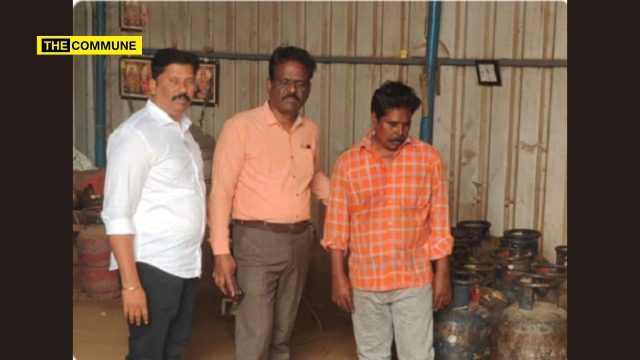
The state of Tamil Nadu under Dravidian Model was rocked by another custodial death just as the news of the Ajith Kumar custodial death case cools down. The 5 years of Dravidian model governance has left law and order in TN in a state of alarm.
Let’s take a look at some the documented incidents of death due to police torture that deserve as much traction as that of the Sathankulam case especially during the DMK regime from 2021 to date.
#1 June 2021 – Murugesan
In June 2021, Murugesan, a fruit stall owner, died after being beaten by police at the Pappanaickenpatti check post. A video circulated on social media showed Special Sub-Inspector Periyasamy thrashing Murugesan with a lathi until he became motionless. Murugesan had engaged in an argument with the police while being penalised for drunk driving. Periyasamy was arrested following a complaint.
#2 July 2021 – Satte Indra prasad
Satte Indira Prasad (45), a cook from Dhanbad in Jharkhand, died after being detained by police in connection with a burglary attempt in Vettaikarankuttai. Residents reportedly caught him late Sunday night while trying to break into a house and handed him over to the police after allegedly assaulting and tying him with a rope. Prasad was taken to the police station in the early hours of Sunday. Police said he collapsed around 7 am while sitting at the station and was rushed to the Somanur Government Hospital, where he died shortly after. Officials denied custodial assault allegations and said a judicial inquiry was ordered into the death.
#3 August 2021 – Sathyanathan/Sathyavanan
Sathyavanan/Sathyanathan, along with Abdul Majeed and Surya from Sirkazhi, was taken to the Thanjavur West Police Station for questioning in connection with a jewellery theft case. During the course of the interrogation, Sathyanathan died while in custody, raising serious concerns about the circumstances of his death.
#4 September 2021 – Manikandan
In Paramathi Vellore, a lorry driver named Manikandan from the Sevalkattu Mangli area of Pandamangalam was arrested by the local police in relation to a sexual complaint. While being questioned, Manikandan suddenly collapsed and lost consciousness. He died shortly after, prompting allegations of custodial abuse.
#5 December 2021 – Manikandan
In Mudukulathur, Ramanathapuram district, a college student named Manikandan was picked up by the police for interrogation. Although he was later released and returned home, he died unexpectedly the following morning. The incident sparked suspicion about the treatment he received during police custody.
#6 January 2022 – Prabhakaran
In January 2022, a physically challenged man named Prabhakaran was locked up for allegedly stealing jewellery. Falling ill in jail, he was rushed to Namakkal Government Hospital and later to Salem Government Hospital, where he died on 11 January 2022. Prabhakaran’s relatives alleged police torture as the cause of death, resulting in the suspension of three police officers.
#7 February 2022 – Sulaiman
A 42-year-old man suspected of stealing a two-wheeler died on Friday evening while in police custody during interrogation, according to officials. The deceased, identified as Sulaiman from Melapalayam, was allegedly caught by the owner of a bike that had been reported stolen from near Tirunelveli Medical College Hospital (TVMCH) a few days earlier. The bike owner spotted Sulaiman riding the stolen vehicle near Tirunelveli Junction and, with the help of friends, intercepted and nabbed him. After reportedly being beaten by the group, Sulaiman was handed over to the TVMCH Police, who had previously registered a case related to the theft. During interrogation, Sulaiman complained of breathing difficulties and was taken to Tirunelveli Medical College Hospital. However, he died en route. Police said Sulaiman had a history of theft and was facing at least 28 criminal cases.
#8 February 2022 – Thadiveeran
Thadiveeran (38) is said to have died at Taluk Police Station, Tirunelveli district in February 2022. Not much details of his death are available.
#9 April 2022 – Vignesh
On 18 April 2022, during a routine night check at Kellys in Chennai, police stopped two youths, Vignesh (25) and Suresh (28), in an auto. The duo, found in possession of ganja and liquor, engaged in a verbal duel with the police. Vignesh later developed health complications, vomited, and had seizures. Despite being rushed to the hospital, he was declared dead. Relatives reported seeing injuries on Vignesh’s body, leading to the suspension of a police sub-inspector, a constable, and a home guard personnel.
#10 April 2022 – Thangamani
In Tiruvannamalai, Thangamani was taken into police custody on 26 April 2022 for an inquiry into illegal liquor sales. Relatives alleged a false case, stating that the police demanded money for their release. The police claimed Thangamani had fits the next day, leading to his hospitalisation and subsequent death during treatment.
#11 June 2022 – Rajasekar
Rajasekar, a 33-year-old resident of Munthiri Thoppu in Tiruvallur district, was brought to the P6 Kodungaiyur police station on 11 June 2022 for an inquiry related to two burglary cases. He was pronounced dead at the Government Stanley Medical College Hospital on 12 June 2022. The autopsy report revealed multiple external injuries, with two injuries occurring approximately 18-24 hours before his death.
#12 June 2022 – Siva Subramanian
In Nagapattinam district, a 44-year-old man named Siva Subramanian, employed at a cycle repair shop, died in judicial custody. Siva and his brother Ganesh were detained after a brawl with Venkatesh, who owed Ganesh ₹95,000. According to the police, Siva suffered seizures while in jail and was taken to Nagapattinam Government Hospital, where he passed away on the evening of 13 June 2022. The police attributed his death to alcohol withdrawal symptoms, dismissing reports of custodial torture.
#13 September 2022 – Thangapandi
Chinnadurai (32) from Sembatti died after being taken into police custody in Aruppukottai, triggering allegations of custodial torture from his family. According to sources, he was first caught by members of the public in MTR Nagar for allegedly trespassing and impersonating a police officer before being handed over to the police. During questioning, officials reportedly learned that he had a history of mental illness and had previously undergone psychiatric treatment. Police later took him into custody again on Tuesday night for further interrogation and admitted him to hospital afterwards, where he died. His relatives protested, alleging police assault and demanding action, a government job for a family member, and a CB-CID probe.
#14 September 2022 – Muruganantham
Muruganantham (44) from Ariyalur district died inside the Samayapuram police station in Tiruchy after being detained on allegations of cellphone theft. He was reportedly caught by members of the public and handed over to the police. On Monday morning, Muruganandham was found hanging in the police station restroom using his waist thread. CCTV footage reviewed by officials reportedly showed that he entered the restroom around 8.45 am and did not return. The incident raised suspicions of a custodial death, and a case was registered under Section 176 of the CrPC. A constable, Ramky, was suspended for alleged negligence. Muruganantham was also facing charges in a previous murder case.
#15 September 2022 – Akash
Akash (21), a resident of Ayanavaram and a history-sheeter, died at Kilpauk Medical College Hospital nearly a week after being detained by Otteri police for questioning. Police said he was picked up on 21 September 2022 in connection with a car window damage case and released the same night. They claimed he later consumed drugs at home, overdosed, and was admitted to the hospital on 22 September 2022, where he died on 29 September 2022. However, Akash’s family alleged he was assaulted in police custody and had visible injuries on his body. A case under Section 176(1)(A) CrPC was registered and a magistrate inquiry ordered into the death.
#16 December 2022 – Gokul Shree
In December 2022, Gokul Shree, a 17-year-old teen, was arrested on December 28 by the Railway Police in Tambaram on suspicion of stealing a battery from a railway station. He was sent to a children correctional facility because he was a minor. On December 31, he was rushed to Chengalpet Government Hospital with complaints of seizures, where he passed away within hours.
The preliminary autopsy report showed that the child was subjected to a physical attack, had severe contusions on his legs, and several external injuries on his body. The child was beaten severely before being killed, and the majority of his injuries were were ante-mortem. The parents, however, were not given access to the complete autopsy report.
On the basis of the postmortem report, six prison officials of the correctional facility were arrested. S Mohan, 30, superintendent of prisons, P Vidyasagar, 33, assistant superintendent of prisons, J H Raj, 29, barber at the juvenile home, prison wardens D Vijayakumar, 30, M Saranraj, and teacher R Chandrababu, 40, were arrested.
#17 June 2023 – Thangasamy
In June 2023, the death of a 26-year-old Scheduled Caste (Pallar community) youth, Thangasamy, who was in the custody of the Puliyangudi police in Tenkasi district died. According to reports, Thangasamy was remanded in judicial custody, but he complained of uneasiness, prompting authorities to transfer him to Tirunelveli Medical College. However, his condition deteriorated, and he subsequently passed away.
According to Code of Criminal Procedure (CrPc) Section 176 (I) of the CrPC, in the event of a person’s death or disappearance in custody or if a woman is raped in custody, the Judicial Magistrate holds the authority to order an inquiry. Section 54 of the CrPC also empowers the Magistrate to appoint a medical petitioner to examine accused individuals under trial. The Indian Penal Code (IPC) in Sections 330 (a) and (b) allows for sentences of up to 7 years for policemen involved in cases of torture.
#18 July 2023 – Vedan
Vedan, a locksmith from Sealnayakkanpatti in Madurai district, died while being taken in for questioning by the police on suspicion. The circumstances surrounding his death raised concerns about the treatment he received during the custody process.
#19 January 2024 – Balakrishnan
In January 2024, Tamil Nadu witnessed another shocking case of alleged custodial death. M. Balakrishnan, a 36-year-old from Srivaikuntam, Thoothukkudi, travelled to Erode on 26 December 2023. The next day, while at a bar in Palayapalayam with friends, he and five others were detained by Erode police. While four were released, Balakrishnan and his friend Prakash were allegedly held in a private lodge and interrogated over an old case. His family claims he was brutally assaulted by police, leading to his hospitalisation on 28 December and eventual death on 2 January 2024 at Perundurai Government Medical College Hospital. His brother, M. Mariyappan, filed a complaint citing custodial torture. Advocate V. Maharajan, representing the family, highlighted severe injuries and alleged evidence tampering. The Madras High Court ordered a fresh post-mortem in Coimbatore on 9 January. A case under CrPC Section 176(1A) was registered at Chennimalai police station.
#20 April 2024 – Karthi
Karthi from Madurai is said to have died by custodial torture in April 2024.
#21 April 2024 – Raja
K. Raja (44), a Dalit resident of Villupuram, allegedly died after being assaulted in police custody at the Villupuram taluk police station in connection with the illegal sale of TASMAC liquor. According to his family, Raja went missing on April 9 and was found in police custody the next morning. They alleged he returned home later that day complaining of severe police assault, gasping for breath before collapsing. He was taken to Villupuram Government Hospital, where doctors declared him dead. His family later buried the body but later approached the Villupuram district court seeking exhumation and an investigation into alleged custodial torture.
#22 April 2024 – Santhakumar
Santhakumar (35) died after being taken into police custody by Sevvapet police in Tiruvallur district. He and several others were arrested from a wedding hall on suspicion of plotting an attack and were taken to the police station for inquiry. Police said that while being taken to court for judicial remand, Santhakumar suddenly collapsed and was rushed to the Tiruvallur Government Hospital, where he was declared dead, reportedly due to cardiac arrest. However, his family alleged he was beaten in custody. Following the incident, Inspector Gunasekaran of Nazarathpet police station, who handled the case, was placed under suspension pending further inquiry.
#23 August 2024 – Arputharaj
In August 2024, Arputharaj (33), an undertrial prisoner, died a day after being remanded to Villupuram sub-jail. Arrested on a non-bailable warrant in an assault case, he reportedly collapsed in jail and was declared dead on arrival at Villupuram Government Hospital. While police claim he fell ill suddenly, his family alleges police assault led to his death. A judicial inquiry and post-mortem have been ordered to determine the cause.
#24 September 2024 – Dravidamani
In September 2024, Dravidamani (40), arrested for illegal liquor sale, died while being taken to Mahatma Gandhi Memorial Government Hospital from Trichy Central Prison after complaining of chest pain. Police claim he collapsed during lunch and died en route to the hospital. Earlier, he was arrested by Jeeyapuram police on 26 September for possessing 66 IMFL bottles and was remanded to judicial custody. His family alleged custodial torture and staged a protest at the hospital, which was later called off after officials promised an investigation. An autopsy was conducted in the presence of a judicial magistrate before the body was handed over to the family
#25 November 2024 – Vignesh
In November 2024, a 36-year-old man named Vignesh, detained during a drug raid, died while being taken to the Pudukkottai Government Medical College Hospital after reportedly falling ill in custody. Police claimed his death was due to health complications during inquiry. He was one of 13 suspects detained after a tip-off. A case under BNSS Section 196 (suspicious death) was registered, and Judicial Magistrate A. Vijayabharathi inspected the body and questioned family members. An x-ray was ordered to check for internal injuries. The body was handed over to the family, while the other detainees were remanded to jail.
#26 February 2025 – Shankar
A 35-year-old history-sheeter, Shankar alias ‘Vettu’ Shankar, with over 40 criminal cases against him, died on 13 February at Karur Government Medical College Hospital while undergoing surgery. He had been arrested on 7 February after allegedly attacking a man with a sickle and sustaining injuries while trying to flee police custody.
Police claim he fractured his leg jumping off a bridge during the arrest. However, JAACT, a human rights group led by Henry Tiphagne, alleges Shankar was held in illegal detention from 6 to 8 February and tortured, leading to his death. They have demanded an independent inquiry and access to CCTV footage to verify the custodial torture claims. A judicial inquiry under Section 196 of the Bharatiya Nagarik Suraksha Sanhita is underway.
#27 April 2025 – Senthil
In April 2025, a youth named Senthil was found dead under suspicious circumstances in the Emanur forest area near Pennagaram, located in Dharmapuri district. Senthil had reportedly been under investigation as a suspect in an elephant poaching case. According to initial reports, he was allegedly taken to the forest area by authorities as part of the probe. However, he was later found dead, and officials claimed he had escaped custody while still in handcuffs a detail that has raised serious questions and fueled public skepticism. Amid mounting pressure and controversy surrounding the circumstances of his death, a CBI-CID inquiry was ordered to conduct an independent and thorough investigation into the incident.
#28 July 2025 – Ajithkumar
The state was rocked by the news of a 27-year-old temple guard, Ajithkumar, employed under Tamil Nadu’s HR&CE Department, having died in police custody on 28 June 2025. Detained by Thirubhuvanam Police over an alleged theft of 80g of gold jewellery from a disabled devotee’s car at Madapuram Kaliamman temple, Ajith was reportedly tortured for 18 hours without any formal legal procedure. Witnesses claim he was beaten with rods, tied to a tree, and forced to drink chilli-laced water. His brother, Naveen, also alleges being beaten to force a false confession. Ajith died at Thirubhuvanam Government Hospital, but the police allegedly moved the body without informing the family. Protests erupted after news of his death spread, with demands for a CBI probe and FIRs against senior officials. Six policemen have been arrested, but critics call this a cover-up, pointing to political interference and a pattern of custodial deaths in the region.
#29 October 2025 – Dinesh
Dinesh Kumar (30) allegedly died in police custody after being taken for questioning by Anna Nagar police in Madurai on October 9. According to his family, police took him from his home early in the morning for inquiry. Hours later, officials informed them that he had drowned in a pond near the Vandiyur outpost while attempting to escape from custody. Suspecting foul play, his mother approached the Madurai Bench of the Madras High Court. The court ordered a CB-CID investigation, directed that the postmortem be conducted according to guidelines, and asked authorities to preserve CCTV footage from the police outpost and surrounding areas.
#30 March 2026 – Akash
Akash Delison (26), arrested in connection with a sickle attack in Manamadurai’s Zion Nagar, died in judicial custody on March 8, 2026, at Madurai Government Rajaji Hospital. Police said he fractured his leg while trying to escape arrest and later developed breathing difficulties in hospital. However, his family rejected this version and alleged that he was brutally assaulted by Manamadurai police during interrogation, including being beaten with stones placed on his legs. They also claimed casteist abuses were used against him. Akash’s family refused to accept the body and demanded action against the police personnel involved, even as the DMK government hadn’t issued a statement.
Below is a list of few more under/unreported custodial deaths from a website Keetru, these deaths follow the same timeframe and pattern:
#31 April 2024 – Jeyakumar
On 16 April 2024, a 60-year-old man identified as Jayakumar from Virudhunagar–Sivakasi died while in judicial custody at Palayamkottai Central Prison.
#32 August 2024 – Baskar
On 22 August 2024, Baskar (39) from Cuddalore–Virudhachalam died while in judicial custody after being admitted to the Cuddalore Government Hospital from Cuddalore Central Prison.
#33 September 2024 – Balakumar
On 14 September 2024, Balakumar (26) from Ramanathapuram allegedly died due to torture at the Uchippuli Police Station in Ramanathapuram.
#34 March 2025 – Shivanaiah
On 21 March 2025, a man identified as Shivanaiah from The Nilgiris allegedly died at Emarald Police Station after reportedly committing suicide, which was said to be linked to a false theft case.
#35 July 2025 – Marimuthu
On 31 July 2025, Marimuthu (48) from Tiruppur reportedly died in connection with the Udumalpet Forest Range Office and Salem Town jurisdiction.
#36 August 2025 – Duraisamy
On 23 August 2025, Duraisamy (65) from Salem died in connection with Salem Town Police Station.
#37 October 2025 – Vinodkumar
On 14 October 2025, Vinodkumar (29) from Tenkasi died while in judicial custody at Palayamkottai Central Prison.
#38 October 2025 – Subin Kumar
On 26 October 2025, Subin Kumar (19) from Perambalur died in judicial custody at the Central Prison in Tiruchy.
#39 February 2026 – Vibhi/Punithan
Vibhi alias Punithan, a youth from Koodameri in Tambaram, allegedly died after being taken into police custody on February 13, 2026. According to human rights activist Henri Tiphagne, he was arrested by plainclothes policemen from his home and later remanded to Puzhal prison after a medical clearance from Chromepet Hospital. Prison authorities reportedly noticed multiple injuries and initially refused to admit him, sending him to Stanley Hospital for treatment. However, he was later taken back to prison. His health reportedly deteriorated on February 18 and he was again shifted to Stanley Hospital, where he died the following day. Tiphagne alleged custodial torture and demanded accountability from police and officials involved.
Subscribe to our channels on WhatsApp, Telegram, Instagram and YouTube to get the best stories of the day delivered to you personally.