Home Blog Page 120

Cyber Scammers Swindle ₹1,000 Crore In Tamil Nadu; Police Launch Crackdown

cyber fraud police tn cyber scammers

Tamil Nadu has witnessed alarming levels of cyber fraud this year, with the public losing nearly Rs 1,010 crore to various scams until July, according to data released by the Tamil Nadu Cyber Crime Wing. Officials said that swift intervention has helped freeze Rs 314 crore of the cheated amount, while Rs 62.4 crore has been returned to victims after obtaining necessary court approvals.

In comparison, cyber fraud losses stood at a staggering Rs 1,673 crore in 2024. Of this, Rs 772 crore was frozen and Rs 84 crore eventually restored to victims. While the rising scale of such crimes highlights the deepening menace of online fraud, authorities maintained that Tamil Nadu continues to be at the forefront nationally in combating cyber threats and preventing people from being fully victimised.

The Cyber Crime Wing has undertaken a series of high-impact operations this year. In a statewide crackdown codenamed ‘Operation Thiraineeku-I’, officers arrested 76 accused in connection with 135 FIRs and 20 Community Service Registers (CSRs) linked to 158 complaints filed through the National Cybercrime Reporting Portal (NCRP).

The total reported loss in these complaints alone was Rs 41.97 crore. Officials said the operation not only brought multiple cybercriminals to justice but also sent out a strong deterrent message to fraudsters targeting people through online loan scams, investment frauds, and phishing.

On a broader scale, Tamil Nadu played a significant role in the Pan-India ‘Operation Hydra’, targeting cyber criminals across state borders. As part of this initiative, seven offenders from Uttarakhand, Jharkhand, Assam, and Delhi, who were involved in high-impact cybercrime networks, were arrested.

These individuals were said to be operating organised fraud syndicates using fake call centres and digital manipulation tactics to siphon off large sums from unsuspecting victims. In another tough measure, the state has detained 18 cyber offenders under the stringent Goondas Act, underscoring its zero-tolerance approach.

Senior officials noted that these actions are intended not only to penalise the guilty but also to safeguard potential victims by dismantling fraud networks before they inflict wider damage. Authorities have urged the public to remain vigilant, avoid sharing personal information online, and report suspicious activity immediately through the NCRP portal or state helplines.

-IANS

Subscribe to our channels on TelegramWhatsApp, and Instagram and get the best stories of the day delivered to you personally.

GenZ Movement Hijacked By Vested Groups After Deadly Clashes In Nepal

nepal gen z protest social media ban insurance gen-z

KP Khanal, one of the GenZ leaders who called for protests against corruption and a ban on social media apps, said that the infiltration of vested groups during the movement resulted in violence that left nearly two dozen people dead in two days.

Even though the movement succeeded in bringing down the widely unpopular government led by Prime Minister KP Sharma Oli, Khanal said he and his volunteer friends were fully against the vandalism and torching of government and private buildings.

Enraged by the killing of the 19 people in police firing on Monday, protestors vandalised important state buildings, including Singh Durbar, the main administrative centre of the government, the president’s office, the Supreme Court building, houses of the top political leaders, including that of Prime Minister Oli, who resigned on Tuesday and the headquarters of major political parties.

Likewise, offices and business outlets of some of the important business houses and corporate bodies were also set on fire, igniting fears among the masses. Kathmandu saw smoke coming out from different parts of the city.

“We were organising a peaceful protest and the crowd became bigger and bigger, and some people from the crowd started to attack the parliamentary building, inviting excessive use of force by police, resulting in the deaths of several people,” he said.

“We have not supported the attacks on the public and private properties on Tuesday, but some vested interest groups might be involved in attacks on those properties in the name of GenZ movement.” Following the fall of the KP Sharma Oli-led government, questions are being asked about the next political course.

Balen Shah, a highly celebrated mayor of Kathmandu Metropolitan City, has emerged as an important face to take a lead in the next political course of the country. “Now your generation needs to lead the nation,” Shah, a highly celebrated mayor of Kathmandu Metropolitan City, wrote on Facebook on Tuesday, addressing GenZ protesters following Prime Minister KP Sharma Oli’s resignation from his post.

“Be ready for this. Be ready to hold talks with the army chief. But also remember, the parliament should be dissolved before such talks with the army are undertaken,” he wrote further, raising questions about whether he played any role in the ongoing GenZ protest.

Rumours in the market on Tuesday were that Shah could be a strong candidate for the next Prime Minister. A former rapper, who was elected as Mayor of the country’s largest and most populous city, Kathmandu, as an independent candidate in 2022, with a landslide. Before the GenZ movement started on Monday, Shah had endorsed the planned protests of the GenZ even though he himself rejected participation, citing his age.

Those born between 1997 and 2012 are considered GenZ. Following the losses of public and private property, the Nepal Army Chief called for calm and dialogue with protestors. But Khanal is not sure whether his team would be invited to the talks. “There are several volunteer groups involved in protests, and I am not aware of who will lead the GenZ delegation,” he said. He said that his group didn’t request that Mayor Shah lead the negotiation with the Nepal Army.

“But getting his support for the movement was important,” he said. With Shah calling for the dissolution of the parliament, the next political course could be explored through a non-constitutional process. “If the parliament is dissolved, a way for a political solution could be found,” said Khanal.

-IANS

Subscribe to our channels on TelegramWhatsApp, and Instagram and get the best stories of the day delivered to you personally.

“Very Good Friend”: Trump Lauds PM Modi, Signals Progress On US-India Trade Talks

What Can India Expect from Donald Trump’s Second Term? trump india tariff pm modi

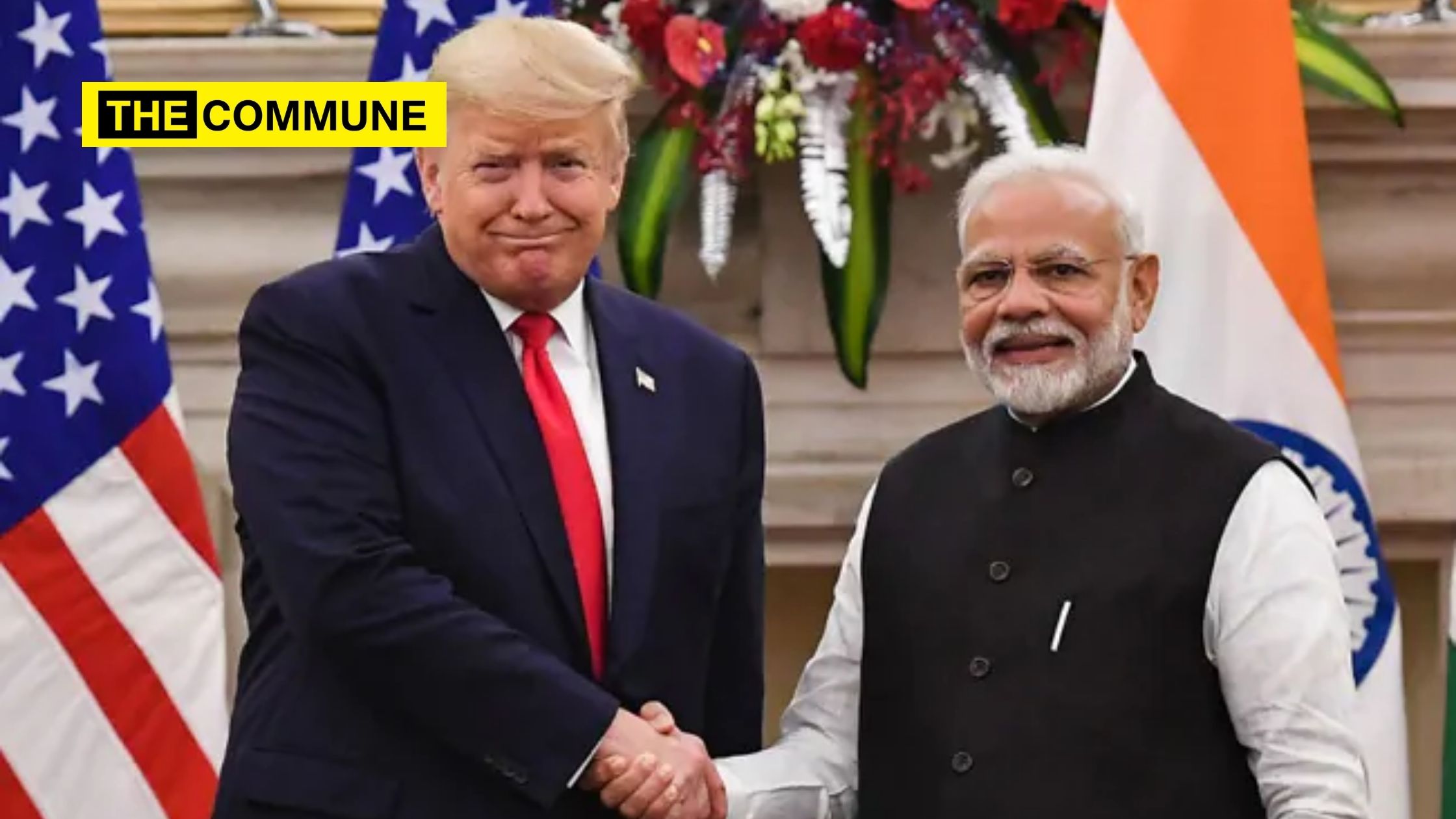
In a significant step toward easing tensions, US President Donald Trump announced that his administration has resumed trade negotiations with India. “I am pleased to announce that India, and the United States of America, are continuing negotiations to address the Trade Barriers between our two Nations,” he posted on Truth Social.

Trump, on Tuesday, also described Prime Minister Narendra Modi as a “very good friend” and said he looks forward to speaking with him “in the upcoming weeks.” “I feel certain that there will be no difficulty in coming to a successful conclusion for both of our great countries,” he added.

Trump’s latest statement follows a recent softening of rhetoric from the US side. Earlier on Friday, during a White House press conference, Trump said, “I’ll always be friends with Prime Minister Modi” and called him a “great Prime Minister.” “India and the United States have a special relationship. There’s nothing to worry about,” Trump noted.

Hours after his comment, PM Modi reciprocated on Saturday by saying that he appreciates and fully reciprocates President Trump’s sentiments. “Deeply appreciate and fully reciprocate President Trump’s sentiments and positive assessment of our ties. India and the US have a very positive and forward-looking Comprehensive and Global Strategic Partnership,” PM Modi wrote on X.

On Monday, Indian Ambassador to the United States Vinay Kwatra also met with US Under Secretary of State for Political Affairs Allison Hooker. Ambassador Kwatra posted a picture of the meeting on X on Tuesday, and said he had a “productive discussion” with Allison Hooker.

“Echoed the sentiments of our leaders. Both sides remain engaged through our ongoing bilateral and Quad initiatives, under the forward-looking India-US Comprehensive Global Strategic Partnership,” he added. On August 27, Trump imposed 50 per cent tariffs on Indian imports to the US, doubling an initial 25 per cent levy as a consequence for India’s continued buying of Russian oil amid the Ukraine conflict.

-IANS

Subscribe to our channels on Telegram, WhatsApp, and Instagram and get the best stories of the day delivered to you personally.


UK To Roll Out Sharia Compliant Interest-Free Loans For Muslim Students

The UK government is preparing to launch one of the world’s first state-backed student loan programs compliant with Islamic finance principles. The initiative, known as Alternative Student Finance (ASF), is expected to become available in late 2026, following the passage of enabling secondary legislation, according to the Department for Education (DfE).

Under this new model, students will not be charged interest on loans—a practice prohibited under Islamic law. Instead, the scheme will function under the principle of Takaful, where pooled contributions support financial aid for current and future students. After graduation, participants will repay the support they received through income-based contributions to the fund.

The ASF will be overseen by an Islamic Finance Supervisory Board (IFSB), with the UK Islamic Finance Council (UKIFC) acting as its secretariat. The initiative aims to accommodate students who refrain from taking conventional loans due to religious restrictions, particularly within the Muslim community.

“Some individuals are unable to access traditional student finance options due to their beliefs, most commonly among Muslims, who avoid interest-based financial products,” the DfE website states.

Controversial Figures and Ideological Concerns

Despite being positioned as an inclusive move, the ASF rollout has drawn criticism over its links to figures and organizations accused of promoting extremist ideologies.

The UK Islamic Finance Council, for instance, is closely tied to the All-Party Parliamentary Group on Islamic and Ethical Finance, which operates from the office of Labour MP Naz Shah a figure previously criticized for past controversial statements, including a 2014 post suggesting the relocation of Israel.

Another associate, Umer Suleman, sits on the UKIFC board and serves as Chief Risk Officer at Wahed UK, an Islamic fintech firm supported by cleric Mufti Ismail Menk, known for inflammatory remarks against the LGBTQ+ community.

Shah has also endorsed The Muslim Vote (TMV) campaign, which in the 2024 general election opposed Labour candidates unwilling to back a ceasefire in Gaza after the Hamas-led October 7 attacks. Critics argue that support for such entities suggests a broader ideological agenda intertwined with the promotion of Sharia-compliant finance.

Islamist Influence and Historical Context

The Muslim Council of Britain (MCB) which has long advocated for Islamic finance—has hailed the ASF as a win. However, the MCB’s own history has raised eyebrows, with its past refusal to participate in Holocaust Memorial Day (2001–2007), support for veiling schoolgirls, and opposition to terror-related bans.

The UKIFC website features M. Iqbal Asaria, described as a pioneer in Islamic finance. Asaria has been linked to domains and organizations associated with radical Islamist groups like Hizb ut-Tahrir and Al Muhajiroun, according to the International Institute for Counter-Terrorism.

Some critics see the ASF as part of a broader normalization of fundamentalist interpretations of Islam within public policy. Tim Dieppe, Head of Public Policy at Christian Concern, questions the government’s endorsement of a “radical interpretation of the Qur’an” through public funding.

“Most Muslims use interest-based finance without issue. Sharia-compliant finance merely disguises interest behind complex legal structures,” Dieppe argues. “Rather than supporting moderation, this policy could foster increased radicalization.”

Academic and Political Criticism

The move comes in the wake of warnings about growing extremism on UK campuses. A report by the Forum for Foreign Relations titled Radicalisation in UK Universities criticized institutions for failing to confront ideological radicalism, citing “institutional naivety or denial.”

Dr. Duane Alexander Miller, an expert on Sharia finance, likened the system to communism: “Appealing in theory, but unworkable in practice.” He added, “If you accept sharia principles for student loans, what’s next? Gender-biased inheritance laws? Non-corporate business structures?”

Islamic scholar Patrick Sookhdeo, in his book Understanding Shari’a Finance, describes it as a form of “economic jihad”—a method to promote Islamist values in secular societies. He notes that several leading Islamic institutions, including Al-Azhar University, have issued fatwas legitimizing interest-based finance, contradicting stricter interpretations.

Longstanding Political Push for Islamic Finance

The UK’s embrace of Islamic finance is not new. In 2014, under then-Prime Minister David Cameron, Britain became the first non-Muslim country to issue Sukuk Islamic bonds worth £200 million. Cameron boasted of the UK’s growing role as a global hub for Islamic finance, a sentiment echoed by former Prime Minister Gordon Brown, who in 2006 declared the UK well-positioned to lead in the sector.

An academic study on the rise of Islamic banking noted the shift in perception over decades—from “no-go area” to “highly sought-after” policy initiative. The industry continues to gain momentum, with support from both political parties and major financial institutions. “Islamic finance is likely to remain a darling of the West for years to come,” researchers concluded.

While proponents frame the ASF as a step toward financial inclusion, critics argue it could legitimize more conservative, and at times, radical interpretations of Islam. The debate raises complex questions about how far secular governments should go in accommodating religious finance, and what consequences may follow when policy intersects with ideology.

(With Inputs From MeForum)

Subscribe to our channels on TelegramWhatsApp, and Instagram and get the best stories of the day delivered to you personally.

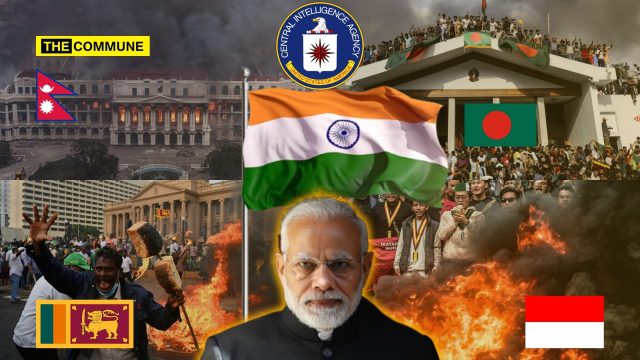
Regime Change Operations In Indian Subcontinent: CIA’S Playbook To Corner Modi’s India?

South Asia has been in near-constant churn over the last three years, with mass youth-led protests toppling governments, forcing prime ministers into exile, and reshaping fragile democracies. The latest upheaval in Nepal, where Gen-Z demonstrators this week that triggered the resignation of Prime Minister K.P. Sharma Oli is only the newest chapter in a regional trend of street power dismantling entrenched regimes.

The protests, which began over a government ban on 26 social media platforms including Facebook, Instagram, WhatsApp, and YouTube, rapidly evolved into broader demands for anti-corruption measures and political accountability.

Sri Lanka: Aragalaya And The Rajapaksas’ Fall

The cycle began in Sri Lanka in 2022, when crippling shortages and runaway inflation drove the island into the worst economic collapse in its history. The Aragalaya (struggle) movement saw hundreds of thousands descend on Colombo, eventually overrunning the presidential palace on 13 July 2022. President Gotabaya Rajapaksa fled the country, and his family dynasty, once synonymous with invincibility, faced its gravest blow.

Although Ranil Wickremesinghe was later elevated to the presidency with Rajapaksa support in parliament, the protests permanently damaged the family’s political capital. The Supreme Court later held the Rajapaksas responsible for economic mismanagement between 2019-2022, a ruling that continues to cast a shadow as Mahinda’s son Namal makes a long-shot bid for the presidency in September 2025.

Bangladesh: From Quotas To Quake In Power

If Sri Lanka exposed the risks of fiscal collapse, Bangladesh in 2024 showed how a single grievance can snowball into revolution. Student protests against the restoration of controversial job quotas exploded into a nationwide anti-government uprising. Brutal crackdowns left more than 300 dead in weeks of violence, before Prime Minister Sheikh Hasina, once celebrated as a pro-democracy icon, resigned and fled to India.

The protests began as an issue-based agitation, but quickly expanded into a mass movement against corruption, dynastic privilege, and shrinking democratic space. For a ruling party that had dominated since 2008, the uprising was a stark reminder of how quickly legitimacy can evaporate once young people decide they have no other avenue of expression.

Indonesia: Deadly Demonstrations Shake Prabowo

The unrest spread further east this year. Indonesia’s protests in August 2025 began over revelations that lawmakers were enjoying lavish housing allowances nearly 10 times Jakarta’s minimum wage. The killing of a 21-year-old motorcycle delivery driver by an armoured police vehicle became the movement’s rallying point.

At least 10 people died in five days of unrest, with protesters torching buildings and even targeting the homes of ministers. President Prabowo Subianto responded with a sweeping cabinet reshuffle, sacking Finance Minister Sri Mulyani Indrawati and four others, while revoking the controversial allowances. The crisis remains his first major stress test as he walks the line between populist optics and authoritarian reflexes.

Nepal: Gen-Z’s Revolt Topples Oli

With today’s developments, Nepal has joined the arc of crisis. Thousands of students, gig workers, and first-time protesters took to Kathmandu’s streets, defying curfews and storming Parliament.

The clashes left at least 19 dead and over 400 injured, forcing two cabinet resignations and finally Prime Minister Oli’s own exit. His office confirmed he had stepped down late Tuesday, while reports suggested he may seek to leave the country. India issued travel advisories, tightened security along the border, and urged peaceful dialogue.

The Pattern Behind The Protests

If you zoom out, a familiar script begins to emerge across South Asia:

It starts with a students’ protest — often sparked by an issue like social media bans, quotas, or economic grievances.

It escalates into violent confrontations — with police clashes, deaths, and rising anger on the streets.

Crowds storm symbols of power — from parliaments to presidential palaces, forcing rulers into hiding or exile.

A proxy leader is elevated — someone palatable to both protesters and entrenched elites, while the fallen strongman quietly exits.

This sequence has replayed in Sri Lanka, Bangladesh, Indonesia, and now Nepal, raising suspicions that these uprisings are not entirely spontaneous.

Could there be a hidden hand? Some analysts whisper about CIA-style playbooks and external actors exploiting youthful rage and hyperconnected movements to destabilize fragile democracies. Whether coincidence or coordination, the “student protest to regime change” cycle has become the region’s new political epidemic.

India In The Middle Of A Cauldron

With Myanmar under military rule, Sri Lanka just got out of a crisis and elected Anura Kumara Disanayaka as their President in 2024, Bangladesh still under the interim chief – Mohammed Yunus and in “transition”, Indonesia convulsed, and Nepal now in turmoil, India finds itself surrounded by volatility. Analysts warn of a “cauldron” in the neighbourhood, one that external powers may exploit.

It is worth recalling that India itself witnessed a massive upheaval during the 2020–21 farmers’ agitation. What began as opposition to the three farm laws soon morphed into a year-long siege at Delhi’s borders. The movement was not just domestic—international celebrities, foreign NGOs, and even Western lawmakers weighed in, amplifying the protests in ways that raised serious questions about external interests seeking to inflame the situation.

When Prime Minister Narendra Modi announced the repeal of the laws in November 2021, he remarked, “Whatever I did, I did for the farmers, and whatever I am doing, I am doing for the country.” His words were widely read as an allusion to the shadow of foreign-backed conspiracies attempting to manufacture unrest and destabilize India from within.

In hindsight, the farmers’ protest fits neatly into the same “playbook” now visible across South Asia — from Colombo to Dhaka, Jakarta to Kathmandu — where student or youth-led agitations are weaponised, escalated into violent confrontations, and then used to unseat entrenched leaders. The difference is that in India, the attempt was blunted before it could spiral into regime change.

Observers suggest that Nepal’s protests may not have been entirely organic. They hint at the involvement of “expert hands” exploiting Gen-Z’s hyperconnectivity, a pattern also observed in Bangladesh and Sri Lanka. The suspicion of foreign orchestration, particularly from Western actors, also cannot be dismissed.

Despite these cascading crises, India’s democracy has absorbed shocks that might have toppled others – even with the daily accusations from the opposition. Yet, none of these have escalated into uncontrollable mass movements.

Analysts attribute this resilience to India’s deeper institutional buffers, wider economic base, and a political culture that still channels contestation through elections also caution that adversaries are probably learning from each protest wave in the neighbourhood, and modular tactics of mobilisation could one day be tested in India.

Subscribe to our channels on TelegramWhatsApp, and Instagram and get the best stories of the day delivered to you personally.

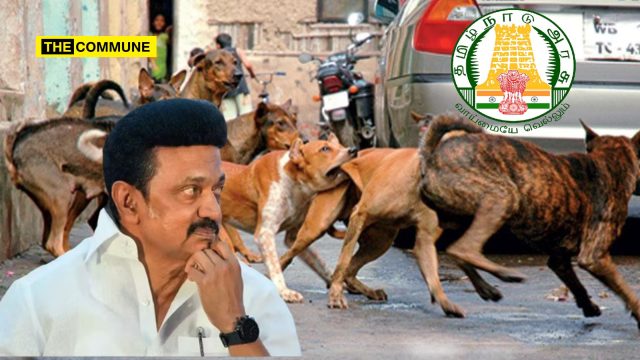
₹20 Crore A Year To Control Stray Dogs In Tamil Nadu, But Bites Keep Rising – Where Did The Money Go?

stray dog tamil nadu

The Tamil Nadu government’s handling of the growing stray dog issue is once again facing criticism, despite an annual allocation of ₹20 crore for the Animal Birth Control (ABC) program aligned with the 2023 national ABC Rules the on-ground results have fallen short of expectations, raising concerns about efficiency and accountability.

While the ABC program is overseen at the state level, its actual implementation lies with local bodies such as the Greater Chennai Corporation (GCC) and other municipalities. The urgency around the issue has grown in light of increasing dog bite incidents over 1.24 lakh cases reported in 2025 so far and a reported 34 rabies-related deaths in 2024. Current estimates suggest there are around 4.4 lakh stray dogs across Tamil Nadu, with Chennai alone accounting for nearly 1.8 lakh.

Budget Allocations Over the Years

2022–23: ₹20 crore was earmarked specifically for animal welfare efforts, focusing on sterilization procedures, anti-rabies vaccinations, and the creation of ABC centers.

2024–25: The allocation remained unchanged at ₹20 crore. During the budget session on 19 February 2024, authorities acknowledged the low sterilization rate in Chennai just 27% and announced plans to scale up the program.

2025–26: Again, ₹20 crore was allocated, with more ambitious targets. The number of ABC centers is set to increase from 18 to 100 statewide, including 10 new centers in Chennai aimed at boosting monthly sterilizations from 20,000 to 50,000. Other measures include mandatory microchipping of pet dogs (approved in January 2025) and fitting stray dogs with QR-coded collars (rolled out in November 2024).

These funds are distributed through the Department of Municipal Administration and Water Supply (MAWS) and the Animal Husbandry Department, with municipal corporations like GCC responsible for execution. Despite Tamil Nadu’s ₹4.12 lakh crore overall budget for 2024–25, the funds for animal welfare form a small, targeted portion, with no clear line-item in the agriculture or general expenditure sections.

Fund Usage: Where Did the Money Go?

While the ₹20 crore has been directed toward operating the ABC program, its execution has been widely criticized for inefficiency, low effectiveness, and bureaucratic delays. Despite the financial commitment, the actual impact has been minimal, with government agencies failing to actively share data or demonstrate results.

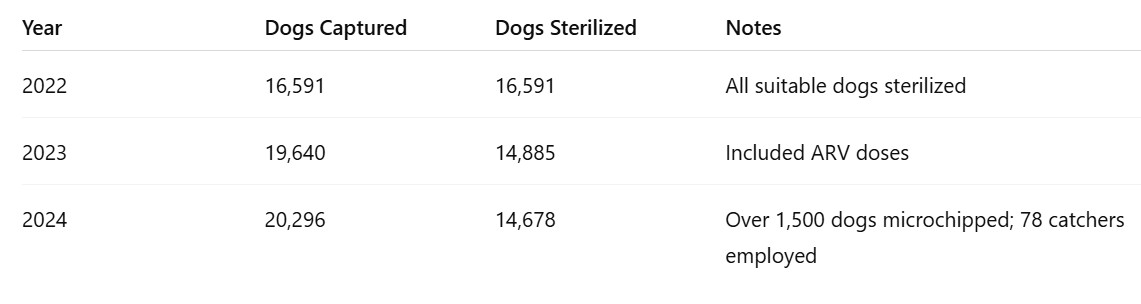
Sterilization and Vaccination Efforts: Chennai’s ABC centers (e.g., Pulianthope, Kannammapettai, Meenambakkam) utilized funds to capture, sterilize, and vaccinate strays:

Other cities like Coimbatore, Vellore, Erode, and Madurai also ran similar operations, often in collaboration with NGOs. For example, in Coimbatore, while ₹1,650 was allotted per sterilization, local authorities only released ₹700 per dog, causing delays.

Infrastructure Development: Funds were used to run 18 ABC centers (as of Jan 2025) and purchase dog-catching vehicles. Chennai had 23 vans in use, with 9 more in the pipeline. Experimental non-surgical sterilization techniques were also funded, in partnership with TANUVAS and a U.S.-based institution.

Surveys and Monitoring: Budget allocations supported population surveys (e.g., Chennai’s 2024 survey conducted with Worldwide Veterinary Services) and rabies awareness drives. Following 34 rabies-related deaths in 2024, vaccination campaigns were expanded.

Human Resources and Logistics: Salaries for dog catchers, veterinarians, and support staff were part of the expenditure. Equipment like nets and transport vehicles were also procured.

Despite consistent funding since 2022, the program has delivered limited outcomes

Rising Population: Congress MP Karti Chidambaram criticized the sharp increase in Chennai’s stray dog count from 58,000 in 2018 to over 1.8 lakh in 2024 blaming poor local implementation. Only 27% of the population had been sterilized by early 2025.

Funding Issues in Coimbatore: Coimbatore’s city corporation came under fire for mismanagement and underpayment to NGOs. Of ₹1,650 allocated per dog, only ₹700 was released from July 2023 onward, halting sterilizations. Reports indicate 27,000 dog bites were treated at the Coimbatore Medical College Hospital in 2023 alone.

Poor Monitoring Elsewhere: Regular surveys are only conducted in a few cities, while others lack proper data. Cities like Madurai reported over 14,130 dog bite incidents in 2024, raising questions about effective fund usage. Public backlash and legal pressure, including observations by the Madras High Court in August 2025, prompted calls for improved shelter infrastructure.

While there is no large-scale evidence of embezzlement or corruption in Tamil Nadu, mismanagement, funding delays, and red tape have severely hampered progress. Many NGOs have been left underfunded, and sterilization targets continue to be missed.

In response to a Supreme Court directive for Delhi-NCR, Tamil Nadu’s Minister for Municipal Administration, KN Nehru, announced plans for new shelters, despite opposition from animal welfare activists who argue it violates ABC Rules 2023 (which prohibit permanent removal of strays). In May 2025, CM MK Stalin ordered a statewide census, mandatory microchipping, and enhanced ABC infrastructure as part of a renewed effort to tackle the issue. But it remains only on paper.

Despite allocating ₹20 crore annually since 2022 for stray dog control, Tamil Nadu’s local bodies have struggled to implement the ABC program effectively. While the funds have supported sterilizations (over 46,000 in Chennai between 2022–2024), infrastructure, and vaccinations, the persistent rise in stray populations and bite incidents indicates a serious gap between policy and practice.

Subscribe to our channels on TelegramWhatsApp, and Instagram and get the best stories of the day delivered to you personally.

Chennai-Based Christian Missionary Organization Caught In Rajasthan’s Conversion Racket Targeting Sikh, Rajput And SC Children

Police investigations into a Christian missionary hostel in Alwar, Rajasthan, have revealed that a Chennai-based organisation, the Friends Missionary Prayer Band (FMPB), was funding and running systematic religious conversion activities under the guise of education.

The hostel, which housed 50 children from Sikh, Rajput and Scheduled Caste families, was raided on 3 September 2025. Two men, Amrit Singh of Ahmedabad and Sonu Raisikh of Ramgarh, were arrested for orchestrating the operation. Officials found that the children were being indoctrinated to abandon their family faiths and embrace Christianity.

Children Taught to Reject Their Faith

Police recovered Bibles, digital material and documents from the premises. Testimonies from children revealed that they were instructed to pray twice daily, chant that “only Jesus is God”, and dismiss their own religious traditions.

One child admitted, “We do not believe in God. Jesus is the only God. We also pray every morning and evening.” Others recounted being told that “only those who worship Jesus will go to heaven, others will burn in hell.”

Investigators also learned that children were taken to a river, where idols were immersed alongside a cross. Afterward, they were told, “Your god just washed away; how will he protect you? Jesus is the only true God.”

Parents and Locals Confirm Indoctrination

Several parents confirmed their children had been placed at the hostel with promises of good education and job opportunities. Many were charged an annual fee of ₹3,000.

Rajendra Singh, a Sikh father, admitted that his son had been at the hostel since 2022 and that he too had abandoned Sikh practices after missionary influence. A neighbour, Pappu, said the hostel had been active for five years and that parents attended weekly “kirtans” at the facility.

Repeat Offender and Wider Network

Police revealed that Amrit Singh had been previously arrested in Sikar in August 2024 for running a similar conversion racket. Despite securing bail, he moved to Alwar and continued operations. Authorities are now examining his bank accounts and funding sources, noting that he was able to send children to expensive schools while claiming to run a hostel for the poor.

The role of FMPB, the Chennai-based missionary body, is central to the case. Investigators confirmed that the Alwar hostel was operated directly under the banner of FMPB. Testimonies from students aged 16–17 stated that the institution’s practices were systematically designed to push them into rejecting their faiths.

FIR and Expanding Probe

An FIR (No. 416/25) has been registered at Udyog Nagar Police Station against Pastor Selvam, a Tamil Nadu native, and 15 others linked to the FMPB network. Two locals have been detained.

SP Sudhir Chaudhary said, “Amrit Singh has been previously involved in a religious conversion case in Sikar. We will now move to get his bail canceled. Strict action will be taken against anyone else found running conversion rackets in the name of education.”

A senior officer has been tasked with leading the probe, which now extends to examining FMPB’s finances, networks across Rajasthan, and possible links to other states.

Denials From Accused

Amrit Singh, himself a Garasiya convert to Christianity, denied the charges during interrogation, claiming: “I am a Hindu myself. I only tell stories from the Bible. Our purpose is to take care of the children.”

Police, however, noted that testimonies and seized material point to a deliberate effort to convert vulnerable children using education as a cover.

(With inputs from Organiser)

Subscribe to our channels on Telegram, WhatsApp, and Instagram and get the best stories of the day delivered to you personally.

1,400-Year-Old Shivalinga Unearthed At Karunkuttai Crematorium In Uthiramerur

crematorium shivalinga

A centuries-old Shivalinga, believed to date back 1,400 years, was recently discovered at the Karunkuttai crematorium in Uthiramerur, located along the road to Kanchipuram.

Though the idol had reportedly been present at the site for many years, it had largely gone unnoticed by the local community. The structure came into the spotlight only after a video surfaced online, showing the ancient Shivalinga within the crematorium grounds. The video quickly caught the attention of devotees and heritage enthusiasts.

Upon visiting the site, several Shaivite devotees identified the structure as an 8-foot-tall Shivalinga, surrounded by more than 10 stone pillars many of which are partially buried in the soil. These features suggested the remains of a mandapa (temple hall), indicating that a significant temple might have once stood at the location.

The devotees then cleaned the statue and offered worship at the site. Kanchi Sivabalan Sivanadiyar, a local Shaivite devotee, commented that the design and craftsmanship of the Shivalinga align with Pallava-era temple architecture. He added that the buried pillars near the statue further support the theory that a Shiva temple once existed at the crematorium.

Sivanadiyar urged the Tamil Nadu government to take immediate steps to protect and relocate the ancient statue to a more appropriate and accessible place where it can be preserved and worshipped properly by the public.

(With inputs from Dinamalar)

Subscribe to our channels on TelegramWhatsApp, and Instagram and get the best stories of the day delivered to you personally.

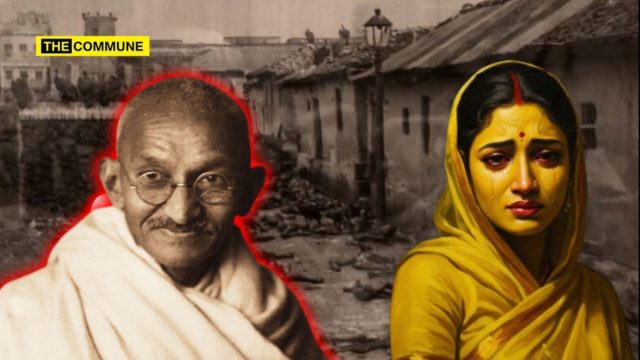
MK Gandhi’s Advice To Hindu Women During 1946 Noakhali Carnage: “They Ought To Learn To Die”

The Bengal Files film has brought to focus some of the dark chapters of Indian history, especially the circumstances around the Direct Action Day. Videos/clippings of the interaction between Gopal Patha and Mahatma Gandhi regarding the 1946 Noakhali genocide of Hindus, women especially, in the film have gone viral. This brings us to the topic of how the attitude of the so-called “father of the nation” was towards Hindu women amid a genocide.

In the scene, Gandhi is shown telling women to embrace death rather than resist sexual assault, advice that is now being widely circulated in the form of archival newspaper clippings and references from Gandhi’s own collected works.

The controversy stems from Gandhi’s statements made during the October 1946 communal violence in Noakhali and Tipperah districts of Bengal, where large-scale killings, forced conversions, rapes, and abductions of Hindus were carried out by Muslim League mobs demanding the creation of Pakistan. According to contemporary records, over one lakh Hindus were affected, with confirmed casualties crossing 285, though some estimates put the number in the thousands.

Faced with reports of women being abducted, raped, and forcibly converted, Gandhi did not call upon Hindu women to resist with arms or to organize for self-defense. Instead, he advised them to consider suicide as a way of preserving their “honour.”

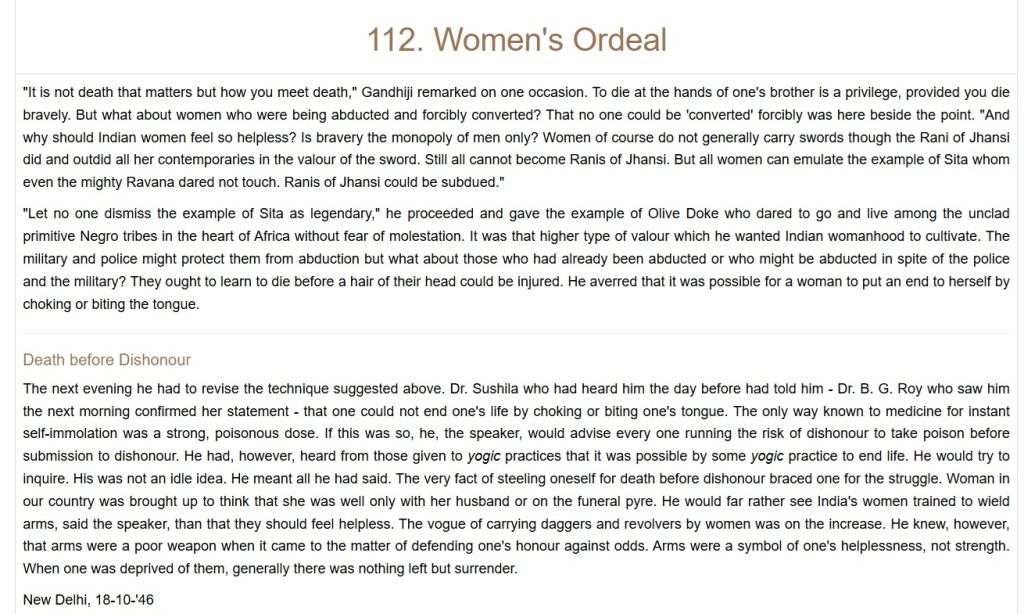
In his collected writings, later published under the title My Non-Violence, Gandhi is quoted as saying: “They ought to learn to die before a hair of their head could be injured… It was possible for a woman to put an end to herself by choking or biting the tongue. The only way known to medicine for instant self-immolation was a strong poisonous dose. If this was so, I would advise every one running the risk of dishonour to take poison before submission to dishonour.”

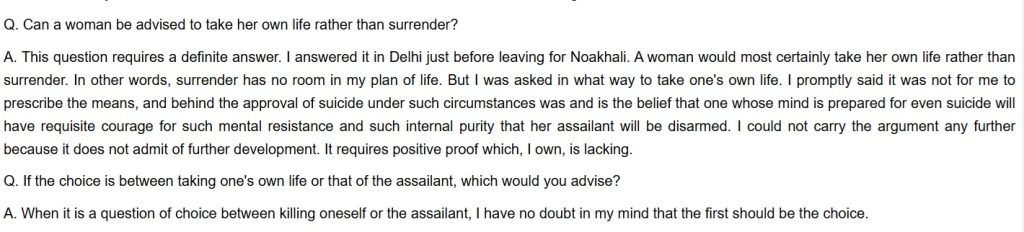
He added that he “meant all he had said” and that “the very fact of steeling oneself for death before dishonour braced one for the struggle.” Gandhi also declared that when it came to choosing between killing oneself or the assailant, he had “no doubt in [his] mind that the first should be the choice.”

From the book My Non-violence by MK Gandhi

International press at the time captured this extraordinary advice. A New York Times report from late October 1946 ran with the headline: “Gandhi Urges Women To Take Poison”, noting that he was counseling Hindu women “running the risk of dishonor” during the Noakhali carnage to kill themselves rather than be violated.

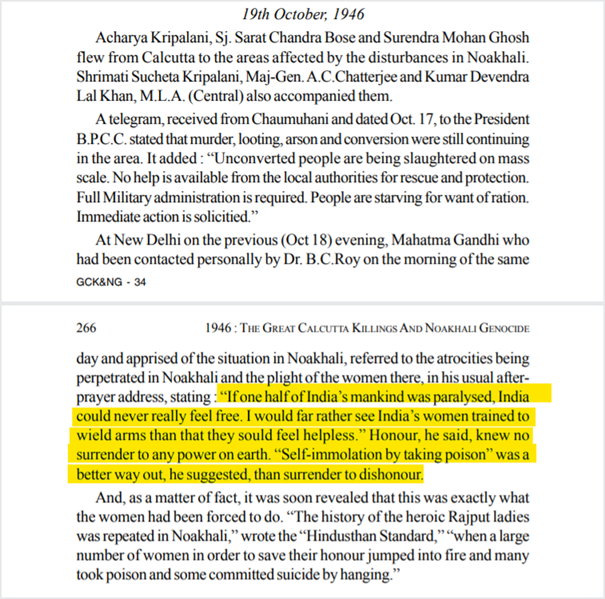
Bengali historian Dinesh Chandra Singha, in his book 1946: The Great Calcutta Killings and Noakhali Genocide, corroborates this, recording Gandhi’s remarks delivered in his evening prayer meetings in Delhi before he set out for Noakhali. Gandhi reportedly told the gathering: “Self-immolation by taking poison was a better way out than surrender to dishonour.”

The book further notes that in some affected villages, Hindu women did in fact commit suicide by poison, fire, or hanging to avoid abduction and forced conversion. The Hindustan Standard at the time compared the tragedy to the Rajput tradition of jauhar — mass self-immolation by women in the face of invading armies.

Dinesh Chandra Singha’s book 1946: The Great Calcutta killings and Noakhali genocide

Critics argue that Gandhi’s stance, while framed in the language of “bravery” and “non-violence,” effectively denied Hindu women the right to resist, fight back, or demand protection. Instead, it reduced them to passive victims whose only “non-violent” option was death.

The resurfacing of these writings has shocked many modern readers, especially given Gandhi’s global reputation as an apostle of peace and justice. Social media commentary in the wake of The Bengal Files has been scathing, with users questioning how the “Father of the Nation” could advocate poison and suicide as a response to systematic sexual violence.

This episode adds to the long list of Gandhi’s controversial positions including his advice to Jews under Hitler to embrace suffering rather than resist, his experiments with chastity, and his appeasement of communal forces in the name of non-violence.

Subscribe to our channels on Telegram, WhatsApp, and Instagram and get the best stories of the day delivered to you personally.
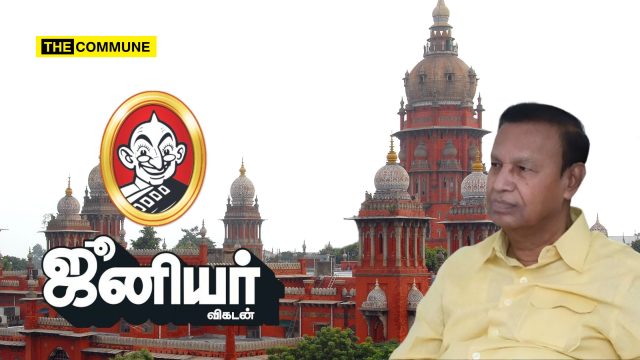
Interim Relief For Junior Vikatan: Madras High Court Stays ₹25 Lakh Defamation Order In DMK MP TR Baalu Case

junior vikatan tr baalu madras high court

On 8 September 2025, a Division Bench of the Madras High Court issued an interim stay on a single judge’s ruling that had directed the Editor, Publisher, and Printer of the Tamil magazine Junior Vikatan to pay ₹25 lakh in damages to Dravida Munnetra Kazhagam (DMK) MP TR Baalu. The compensation was awarded for allegedly attributing to Baalu a speech he never made against Congress leader Rahul Gandhi.

The stay was granted by Justices S.M. Subramaniam and C. Saravanan in response to an appeal filed by the magazine’s legal counsel, N. Ramesh, challenging the earlier judgment delivered on 4 February 2025. That decision had partially allowed a defamation suit filed in 2014, concluding that a 2013 article published by Junior Vikatan was defamatory and malicious in nature.

The single judge had ruled that Baalu was entitled to compensation from Vasan Publications Private Limited and ordered Editor R. Kannan, Publisher K. Ashokan, and Printer S. Madhavan to jointly pay ₹25 lakh within a month. In response, the three had filed a joint appeal contesting the judgment on multiple legal grounds.

Although Baalu’s original defamation suit also referred to a 2012 article, the court held that claim to be time-barred, as it was filed beyond the one-year limitation period prescribed for such cases. The judge focused instead on the 22 December 2013 publication, which allegedly reported that Baalu had made disparaging remarks about Rahul Gandhi during a closed-door DMK general body meeting on 15 December 2013.

After reviewing the material on record and hearing witness testimonies, the single judge concluded that the publication lacked due diligence, had not verified the information, and was published with the intent to damage Baalu’s reputation. The court described the article as being motivated by malice and aimed at tarnishing the image of the former Union Minister.

While Baalu had sought ₹1 crore in damages with 18% annual interest from the date of filing, the court limited the compensation to ₹25 lakh and declined to issue a permanent injunction against future publications on the same subject.

(With Inputs From The Hindu)

Subscribe to our channels on TelegramWhatsApp, and Instagram and get the best stories of the day delivered to you personally.