Home Blog Page 1171

Second phase sea trials for INS Vikrant to be conducted in October, could be commissioned by August 2022

The Indian Navy is all set to conduct the second phase of sea trials in October end for India’s first indigenous aircraft carrier (IAC-1) Vikrant. As per a report in The Hindu, the new aircraft carrier could be handed over to the Indian Navy in April 2022 and commissioned in August 2022.

During the first phase of trials, the navy tested Vikrant’s hull, main propulsion, power generation, and distribution and auxiliary equipment were tested, and the results were “extremely satisfactory” and “..the engine showed 100% performance and some issues which had come up were being addressed,” the report says, citing officials.

Right now the sole aircraft carrier operated by the navy flies the Russian-origin MiG-29K fighters and does not have enough aircraft to operate from both carriers. That is why a ‘request for information’ was issued in 2017 for the procurement of 57 twin-engine carrier fighters.

The Indian Navy is looking at Boeing F/A-18 Super Hornet, Dassault Aviation Rafale and Saab Gripen-E and the trials will first be conducted on the Shore Based Test Facility (SBTF) in Goa and then on the aircraft carrier, the report says, citing officials.

Boeing’s F/A-18 Super Hornet has already demonstrated the ability to take off from a ski-jump in tests conducted in August 2020 at the Patuxent River Naval Air Station in Maryland, demonstrating its compatibility with the Indian Navy’s Short Take-Off But Arrested Recovery (STOBAR) aircraft launch system.

As India looks towards purchasing foreign fighters, under the Atmanirbhar Bharat it is also working on India’s indigenous Twin Engine Carrier-Based Deck Fighter (TEDBF), being designed and developed by the Defence Research and Development Organisation (DRDO) and Aeronautical Development Agency.

A new model of the fighter made a debut at the 2021 Aero India show in Bengaluru. Dr Girish S Deodhare, distinguished scientist and Programme Director (Combat Aircraft) and Director, Aeronautical Development Agency (ADA), said, “From that one of the configuration preferred by the Navy was selected and the PSQRs are final,”.

Click here to subscribe to The Commune on Telegram and get the best stories of the day delivered to you personally.


Modi Govt to launch “Kamdhenu Deepawali 2021” to promote eco friendly alternative to Chinese lights

In order to boost eco-friendly alternative to chemical-based Chinese lights, the government on Sunday (October 3) launched the ‘Kamdhenu Deepawali 2021‘ campaign that will facilitate the manufacture and marketing of more than 100 crore cow-dung-based earthen lamps and Laxmi-Ganesh idols.

Former cabinet minister and former chairman of Rashtriya Kamdhenu Aayog, Vallabhbhai Kathiria, and Fisheries & Animal Husbandry Minister Parshottam Rupala launched the campaign during a webinar.

“Kamdhenu Deepawali is to empower cow owners with economic use of cow dung, cow urine and dairy products such as milks, curd and ghee. More than 300 items can be prepared using Panch Gavya from Cow. This includes Deepawali items such as diyas and lamps, candles, havan samagri, dhoop batti, incense sticks, hard board, wall pieces, Laxmi-Ganesh idols etc. made entirely of cow dung,” a release from the Animal Husbandry Department said.

“Rashtriya Kamdhenu Aayog provided training along with many volunteer organizations across India. This gave rise to large number of cow dung based start-ups. This time the campaign is committed to take the initiative to higher levels. Cow entrepreneurs across India will get benefitted by this campaign. This eco-friendly campaign will also help Gaushalas to become self-sustainable. This will empower Prime Minister’s vision of ‘StartUp India’, ‘Aatmnirbhar Bharat’ too.

Kathiria said, “We have generated interest of farmers, unemployed, Self Help Groups, youth and women entrepreneurs in cow dung based Start Ups through various national campaigns. Result is visible through so many Start-Ups of Panchgavya products today.”

Neeraj Chowdhary a young entrepreneur from Uttarakhand demonstrated during the webinar how to make cow dung-based lamps and Laxmi-Ganesh idols within a minute and exhibited a wide range of cow dung-based products and also talked about the training program that his organization is providing for cow dung-based products.

Rupala informed that he is planning to promote cow-dung-made logs in place of wooden logs during cremation and said the Ministry is working on adding cows in every Krishi Vigyan Kendra (KVK) across India and making them demonstration units as well as a training centres for cow entrepreneurship.

Rupala also suggested, “The way we promote Khadi products around Gandhi Jayanti, in same way we should come up with a designated days around Deepawali when all should be encouraged to buy Gomaya products across India.”

Click here to subscribe to The Commune on Telegram and get the best stories of the day delivered to you personally.

Germany to soon recognize Covaxin

In a significant endorsement for the indigenously developed COVID vaccine, Covaxin, German Ambassador to India, Walter J Lindner on Sunday (October 3) said that his country would take the next step regarding Covaxin as soon as World Health Organization (WHO) would recognise the Bharat Biotech developed the anti-COVID vaccine.  

The envoy himself has taken Serum Institute’s Covishield vaccine and said any Indian who has taken Covishield vaccine is recognised in Germany and the beneficiary will not face any issue.  

When the German ambassador was asked regarding the ongoing India_UK tussle on recognition of the Covishield beneficiary, the envoy told ANI,” No, I don’t know exactly what’s the specification why the UK is not recognising (Covishield), which comes from India. We recognised Covishield weeks ago. I myself administered with Covishield here in a public hospital. And so whoever comes with a Covishield vaccination, doesn’t have to face any restriction.” 

The German envoy was also very categorical when said once the Indian vaccine is WHO, then they will take the next step. “But so far it’s not recognised means that those people who travel with Covaxin would have to come into quarantine. But after a few days, they can get a check and see whether they can leave the quarantine.” 

The German government has not issued new travel rules and said that people who have been vaccinated with Covaxin or any other vaccine that is not recognised would have to produce a Covid-19 negative test report to enter the country.

After India decided to impose reciprocal measures on British nationals, the UK has said it is “continuing to engage” with India on technical cooperation to expand its recognition of vaccine certification. UK nationals arriving in the country from Britain will now have to undergo mandatory quarantine from today (October 4) at home or in the destination address for 10 days after their arrival.

The decision was made after the UK announced new travel rules under which Indian travellers who have been vaccinated by the same  Covishield vaccine, were considered unvaccinated. 

Click here to subscribe to The Commune on Telegram and get the best stories of the day delivered to you personally.

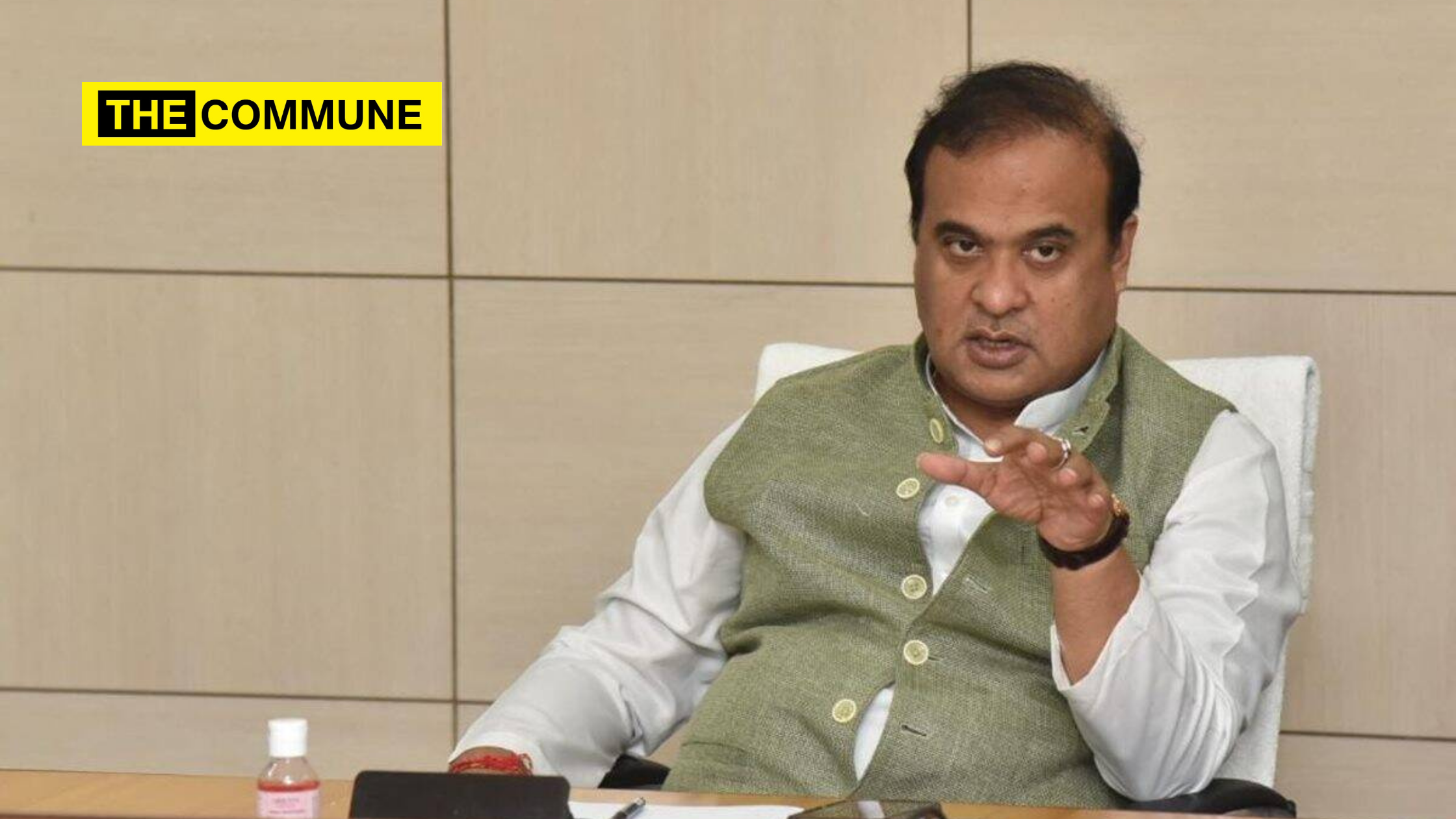
Assam CM warns of illegal immigrants becoming a majority in the state by 2050

Bangladeshi Muslims Infiltrating Tamil Nadu For Jobs, Alleges Assam CM Himanta Biswa Sarma

Assam’s new Chief Minister Himanta Biswa Sarma on Friday (1 October) alledged that illegal settlers have hatched a plan to grab power in the state by 2050, by gradually becoming a majority and dominant community in different Assembly constituencies across the state.

CM Sarma made a startling claim that the land encroachers in Gorukhuti (Sipajhar) in Darrang district, who were evicted from government lands on 20 and 23 September, had a plan to wrest control of the government because Muslim votes are a determining factor in at least 30 to 35 seats out of Assam’s total 126 Assembly seats and that has led to a lot of appeasement politics.

“Not all Assamese Muslims are involved in this plan. This is the thought process of a section of people. They have conspired to make a blueprint to obtain majority in the Assembly constituencies in a phased manner. After becoming the Chief Minister, I have seen various reports and evidence of this blueprint,” Sarma told the media.

“Earlier, when I was not the chief minister, I did not have access to intelligence files. But now I have them and these reports talk about a blueprint to take over constituencies after constituencies,” Sarma said, reports Times of India.

“In the last election, three assembly constituencies — Barkhetri, Batadraba and Mangaldai constituencies — have gone from natives to illegal settlers just by change in demography as laid down in the blueprint,” added Sarma.

Of the  10,000 people evicted in Gorukhuti (Sipajhar) in Darrang district, some 6,000 names were not included in the National Register of Citizens (NRC) published in August 2019. However, Sarma also made it very clear that the government will add the names of those people in the NRC who have been living in Gorukhuti for many years.

Muslims comprise 34.22 per cent of the 3.12 crore population of Assam, of which 4 per cent are indigenous Assamese Muslims and the remaining are mostly Bengali-speaking Muslims.

As per data, out of the 34 districts in Assam, 19 districts have 12 per cent or more Muslim population, and in six districts (out of these 19 districts), the Muslim population constitutes 50 per cent or more.

Click here to subscribe to The Commune on Telegram and get the best stories of the day delivered to you personally.
VCK chief Thol. Thirumavalavan exposes his ignorance on reservation and GST

thirumavalavan antibrahmin rss hindutva hindurashtra sanatana dharma brahmin honour killing

During his interaction with civil service aspirants, Viduthalai Chiruthaigal Katchi (VCK) head Thol. Thirumavalavan peddled misinformation (knowingly/unknowingly) on reservations saying that Forward Castes (FC) enjoy a reservation of 50.5%.

Delivering a ‘lecture’ at Kingmaker’s IAS Academy, Thirumavalavan who is also an MP from Chidambaram constituency says “There is a ceiling of 50% for reservation. In the Central Government, SC-ST get 22.5% reservation (15% for SC and 7.5% for ST) and BC has a reservation of 27% which totals to 49.5%. The rest 50.5% is cornered by FC, which is predominantly Brahmins.”

He also adds that the forward castes are enjoying the benefits of reservation without having to undergo any struggle.

“Without getting thrashed or jailed or shouting at the top of their voice, they are enjoying 50.5% reservation.”, Thirumavalavan says.

Now, they are forcing this 10% reservation for Economically Weaker Section. The hidden agenda behind this is to dilute social justice. That is why we are opposing”, Thirumavalavan further says.

“Your logic may be correct. You are saying that within the SC community only a particular community is enjoying the benefits for several generations. So, what? Let them enjoy. For generations, they’ve been denied their rights. So, let them also enjoy for a few generations. From that, a person who has the potential to protest will rise.”, he says.

This has stirred a debate on social media with many calling out the VCK head’s appalling ignorance on the subject.

It is to be noted that the Indian constitutional provision on reservation allows for 50.5% for open competition from all communities and is not an exclusive reservation granted for forward communities as claimed by Thirumavalavan.

The 10% EWS reservation too is for communities who are marginalized by have been unable to enjoy benefits of reservation.

https://twitter.com/Keyfarqpaindha/status/1444398194394230785

BJP Tamil Nadu President K. Annamalai said that it was unfortunate for someone like Thirumavalavan to blatantly lie about the Constitution written by Dr. Ambedkar.

“Don’t know GST! Don’t understand our reservation policy! Good that TN people are understanding their leader’s better. “, he said.

Here are some of the other netizens calling out the Chidambaram MP’s blatant peddling of misinformation.

Recently, Thirumavalavn exposed his ignorance about GST in an interview where he didn’t even know that the State levies its own GST on products and services.

Click here to subscribe to The Commune on Telegram and get the best stories of the day delivered to you personally.

Rudra Thandavam: Mohan G Has Once Again Proved That He Is A Man With A Spine

Tamil cinema has always had a fascination for retelling ancient epics in contemporary settings. Acclaimed film director Mani Ratnam tried it two times with two different epics – Mahabharata and Ramayana. The Rajinikanth and Mammootty starrer Thalapathy (1991) was based on the Karna-Duryodhana relationship while his Raavanan (2010) was a retelling of the Ramayana from Ravana’s perspective. While Thalapathy is celebrated as a masterpiece even today, Raavanan, which tried to portray Ravana as this great ‘noble’ tribal leader with Sita undergoing Stockholm syndrome, ended up as a shabby work and bombed at the box office.

Even the ultimate Superstar Rajinikanth became a victim of such distortions. The anti-Hindu vitriol, Kaala, directed by Pa. Ranjith portrayed Ravana as the messiah while Rama was shown as the villain. The movie which is hailed among the usual suspects of media and intellectual circles was an utter flop and dented the image of Superstar Rajinikanth.

These two movies are classic examples of what happens when one distorts the very essence of the epic and negates the popular history to peddle a narrative. No doubt Ravana was a great king and an unparalleled devotee of Lord Shiva. But that does not wipe away the fact that he lusted and forced himself on another man’s wife.

Both these two epics have been explored by Tamil filmmakers. But Hinduism is a vast ocean comprising a number of Puranas that remains unexplored. Director Mohan G has taken a step in that direction by atleast introducing the film buffs to Agni Puranam, one of the 18 Puranams of the Hindu faith.

For the uninitiated, Agni Puranam also known as Veera Vanniya Puranam is a Puranic history which talks about the triumph of Veera Rudra Vanniyar over the asura Vatapi. The Vanniyar community of today trace their origins to this Puranam.

This eternal template of the triumph of good over evil forms the premise of Mohan G’s Rudra Thandavam.

But he has retold it using an issue that is of relevance today, ofcourse with his own political philosophy which he is entitled to just like anyone else.

The Social Justice Politics Of Rudra Thandavam

Rudra Thandavam touches on a social issue that no one else will dare talk about – the misuse of legal provisions meant for the protection of Scheduled Caste communities. That is because, it has been established by the gatekeepers of the intellectual and media coterie in Tamil Nadu that a ‘progressive’ film has to be one which shows images of the rabid anti-Hindu bigot E.V. Ramasamy Naicker and Dr. Babasaheb Ambedkar together. Mohan G serves the first blow to them by placing Subramania Bharati and Dr. Ambedkar close to each other both of whom advocated social justice in the truest sense.

Image

Rudra Thandavam makes it clear that legal provisions that exist for establishing social justice should not become instruments of injustice.

The Constitution (Scheduled Castes) Order 1950 states that any person who professes a religion different from Hinduism, Sikhism or Buddhism shall cease to be a member of the Scheduled Caste (SC).

Recently, former Union Law Minister Ravi Shankar Prasad in response to a question in the Rajya Sabha said that as per the Constitution of India and Indian statute, Hindu persons eligible for reservation benefits, like those belonging to Scheduled Castes, cannot avail the same benefits if they convert to Christianity or Islam.

Reviewers from the mainstream establishment say that Mohan G is forcing his ideology down the throat of his audience through many of the dialogues and symbolisms. All that the film does is talk about the truth and rarely do these dialogues and symbolisms seem forced in the movie.

But, even if that is the case, so what? If Pa. Ranjith can, so can Mohan G. If Pa. Ranjith can show the villain praying to Lord Rama, Mohan G has the same creative freedom to show Lord Buddha in the frame of Vatapi Rajan. If Pa. Ranjith can show Jyotirao Phule, Mohan G has the same liberty to show Arthanareesa Varma.

While Pa. Ranjith shoved his hate-filled vitriol down the throat of people, hitchhiking on the Superstar himself, here is Mohan G who doesn’t peddle hate against any community and gives equal spaces for all to have an honest conversation. In fact, the film has two powerful characters who are Dalits, both of whom help a Vanniyar get justice. If this isn’t social justice, what is? For a change, we have someone in the Tamil film industry who is trying to convey the message of true social justice in his movies.

What Rudra Thandavam Does?

Rudra Thandavam calls out the ugly politics done by those who exploit social fault lines through legal loopholes. Mohan G daringly tears apart the faces of those who use Dalits as pawns for their politics. The film is unapologetic and takes sly digs at the likes of Thirumurugan Gandhi to Thirumavalavan who thrive on demeaning Hinduism and leave no stone unturned to cut off Tamil people from their age-old culture by joining hands with Christian missionary forces.

Take a bow Mohan G

The mainstream media both in English and Tamil have already started their campaign to run down on the movie, just like they did for Draupathi which turned out to be a runaway hit despite all the negative rhetoric created around it. The extraordinary response for Rudra Thandavam shows that the content has found resonance among people.

Director Mohan G has clearly won!

Click here to subscribe to The Commune on Telegram and get the best stories of the day delivered to you personally.

Uncle who got converted to Islam in Saudi threatens nephew’s family to convert, arrested

Another Illegal Bangladeshi Infiltrator Arrested From Kolkata Hotel

A Hindu has filed a case against his uncle Mohammad Shalik for assaulting and forcing him and his wife to convert to Islam after his uncle converted twenty-five years ago when he was working in Saudi Arabia.

On Thursday, September 30, Jaunpur police lodged a case against one Mohammad Shalik for assaulting and forcing his brother’s son and daughter-in-law to convert to Islam, and a case was registered under IPC sections 504, 506, and sections 3 and 5(1) of the Uttar Pradesh Prohibition of Unlawful Conversion of Religion Ordinance, 2020, based on the complaint filed by the victim. 

Manita Prajapati is a resident of Majdeeha village in Jaunpur, Uttar Pradesh and Prajapati approached Shah Ganj Kotwali with her written complaint on September 30 and has that her deceased’s father-in-law’s brother has been forcing her and her husband Jitendra Prajapati to convert to Islam.

Mohammad Salik first tried to lure Manita Prajapati and her husband into adopting the religion through inducements but when they refused, he started torturing them mentally and physically and had also assaulted Jitendra Prajati frequently to exert pressure on the family.

According to Manita Prajapati, her husband’s uncle had converted 25 years ago, when he moved to Saudi Arabia and after he returned, he started exerting pressure on his brother Lorik Prajapati to adopt Islam and he refused to convert his religion.

Later when Lorik Prajapati passed away, Salik began to put pressure on his brother’s son and his family and even threatened to grab the entire property and loss of life if they did not listen to him and adopt Islam.

Manita Prajapati finally approached the police with a complaint against Mohammad Salik and the victim alleged that initially, the police did not accept her complaint and refused to take action.

However, after the intervention of the Superintendent of Police, Kotwali police took action, and now a case has been registered under relevant sections of the IPC and the Uttar Pradesh anti-conversion law and the accused was arrested.

Click here to subscribe to The Commune on Telegram and get the best stories of the day delivered to you personally.
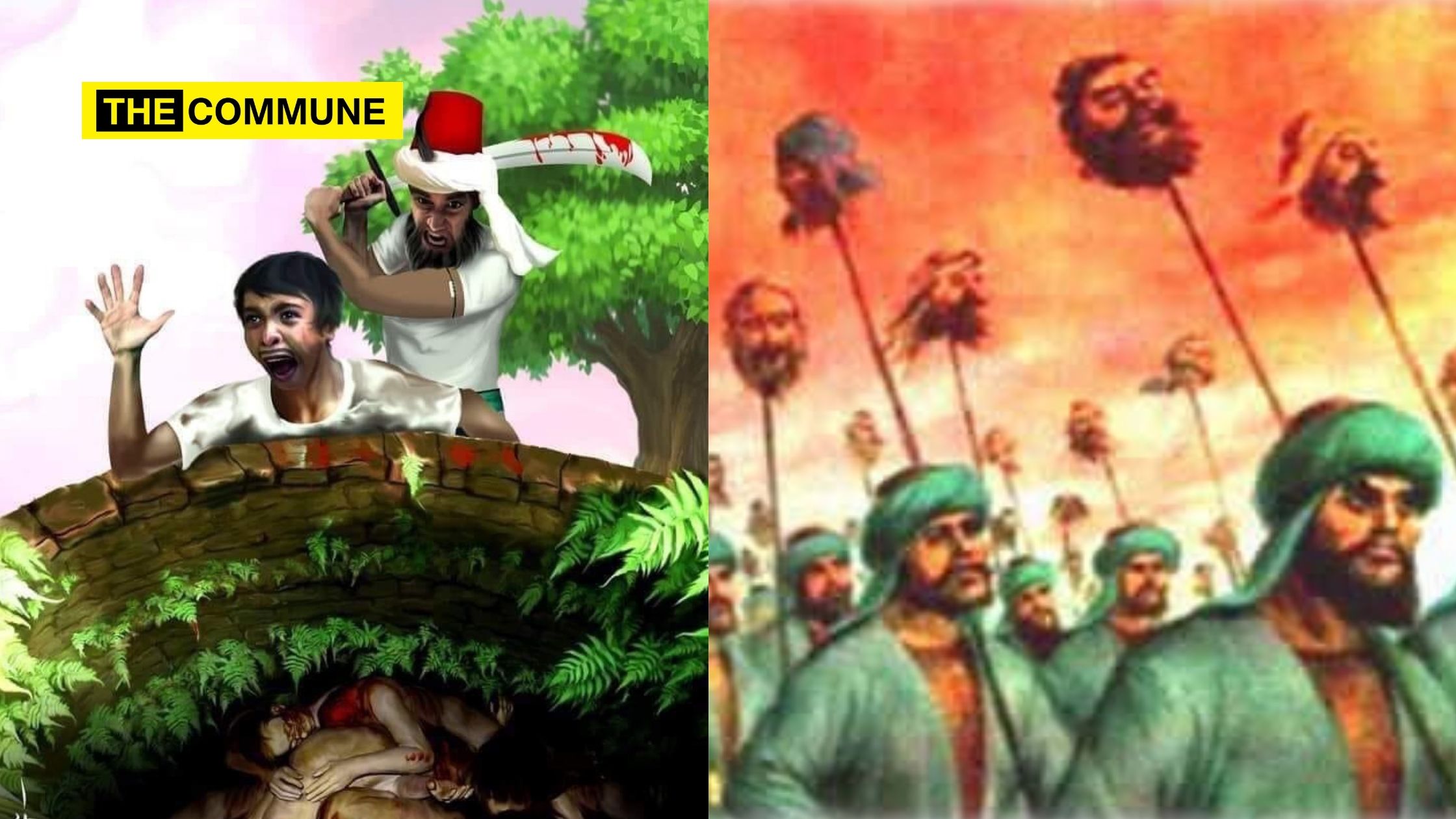
The Communist Paradox of Mappila Rebellion

Foreword – “The article has been written to put the record straight- there has been a sustained effort among the modern researchers to paint the Mappila rebellion of 1921 in Malabar as a peasant struggle or class war. The route to class war becomes easy if it is labelled as a peasant struggle and it has been the modus operandi for Jihad and Genocide in Malabar and adore it with adjectives like Rebellion or Struggle. The Mappila rebellion was directed by the Muslim fanatic clerics, waged as a Jihad and nothing else if we go through the accounts of R H Hitchcock, the Superintendent of Police in south Malabar in 1921.

Hence, it is evident from records that Jihadi texts existed in Malabar from the Portuguese period onwards. This inner stream of Jihad was at work in 1921. It is important to understand this inner meaning to comprehend the true history of the rebellion.”

Abani Mukherjee, a member of the Soviet Communist Party had given a note during the rebellion to Lenin, interpreting it as a class war. Modern European historians like Conrad Wood followed the hint and Indian Marxist historians like K.M. Panicker followed suit. The Muslim fundamentalists and Jihadists became very happy, and theses on the said rebellion flourished. The Muslim gangsters and Islamist clerics of 1921 have become Marxists now. The Marxists in Kerala recognized the act of Jihad as a freedom struggle, betrayed the Hindus, and subsequently rewarded the Jihadists with titles, rewards and pension.

E M S Namboodiripad, who later grew up to be a Marxist ideologue and Chief Minister of Kerala, was then a 12-year-old boy in a bourgeois Nambudiri Brahmin family in 1921. He described the plight of his family during the rebellion, in his autobiography, of which an excerpt reads:

The Mappilas in general in Malabar and our region Valluvanad, in particular, were in a frenzy. We stayed at Elamkulam itself for four or five days after the outbreak began. There were no untoward incidents in those days, in our area. But we had heard that atrocities have been committed in various places. Everyone feared that it is going to happen here too. Hence, to thwart any attempts by the rebels to attack us, we placed Mappila guards at the gate. Reports came that the rebellion, instead of subsiding, was spreading. Bridges were broken, Taluk offices were attacked and the rebels were forcibly taking money and paddy-these were the stories that we heard. It was decided that it was better for the women and children in our family to shift for some days, though the Mana was being guarded well.

– (EMS / Autobiography, p 76-79; translated by Ramachandran)

However, after becoming a Marxist, EMS betrayed the Hindus and in his book, Kerala, Yesterday, Today and Tomorrow, he went on to praise the rioters and the gory deeds through these words –

The local leaders may have organised these Mappila farmers, not for a non-violent noncooperation movement, but violent struggle. It took six months of hard work for the powerful soldiers of British imperialism to repress the revolution. The organised strength of the Mappilas was total. The rebel leader (Variyan Kunnath) Kunjahammad Haji could establish a people’s administration in the areas under Mappila control. The geography of South Malabar enabled them to do, intelligent guerilla warfare; it proved that once driven by frenzy, the Mappila farmers would be able to find ways and strategies to conquer any powerful enemy.

For EMS, the Jihad had become a class war. As the Chief Minister, he gifted the Mappilas, even a district called Malappuram. In the coming years, the Communists betrayed the Hindus once again in 1973, when the CM C Achutha Menon, a former classmate of EMS at St. Thomas College, Trichur recognized the Mappila rebellion as a freedom struggle as per government order going to the extent of sanctioning pension to the perpetrators of the violence. Thus, Hindu victims remained orphaned yet again.

Thus, communism grew in the soil where the Congress betrayed the Hindus in 1921. However, Eranad, the centre of the rebellion, remained with the Muslim League.

B R Ambedkar in his book, Pakistan or the Partition of India, has remarked:

Such is the history of Mr Gandhi’s efforts to bring about Hindu-Muslim unity. What fruits did these efforts bear? To be able to answer this question it is necessary to examine the relationship between the two communities during 1920-40, the years during which Mr Gandhi laboured so hard to bring about Hindu-Muslim unity. The relationship is well described in the Annual Reports on the affairs of India submitted year by year to Parliament by the Government of India under the old Government of India Act. It is on these reports that I have drawn for the facts recorded below:

“Beginning with the year 1920, there occurred in that year in Malabar what is known as the Moplah Rebellion. It was the result of the agitation carried out by two Muslim organizations, the Khuddam-i-Kaba (Servants of the Mecca Shrine) and the Central Khilafat Committee. Agitators preached the doctrine that India under the British Government was Dar-ul-Harab and that the Muslims must fight against it and if they could not, they must carry out the alternative principle of Hijrat. The Moplhas was suddenly carried off their feet by this agitation. The outbreak was essentially a rebellion against the British Government. The aim was to establish the kingdom of Islam by overthrowing the British Government. Knives, swords and spears were secretly manufactured, bands of desperadoes collected for an attack on British authority. On 20th August a severe encounter took place between the Moplahs and the British forces at Tirurangadi. Roads were blocked, telegraph lines cut, and the railway was destroyed in several places. As soon as the administration had been paralysed, the Moplahs declared that Swaraj had been established. A certain Ali Musaliar was proclaimed Raja, Khilafat flags were flown, and Eranad and

Valluvanad were declared Khilafat kingdoms. As a rebellion against the British Government, it was quite understandable. But what baffled most was the treatment accorded by the Moplahs to the Hindus of Malabar. The Hindus were visited by a dire fate at the hands of the Moplahs. Massacres, forcible conversions, desecration of temples, foul outrages upon women, such as ripping open pregnant women, pillage, arson and destruction—in short, all the accompaniments of brutal and unrestrained barbarism, were perpetrated freely by the Moplahs upon the Hindus until troops could be hurried to the task of restoring order through a difficult and extensive tract of the country. This was not a Hindu-Muslim riot. This was just Bartholomew. The number of Hindus who were killed, wounded or converted, is not known. But the number must have been enormous.

It is assumed that Dr Ambedkar had realised that in Malabar, it had been a failed Jihad and the Mappila rebellion aimed to establish the Kingdom of Islam.

Theosophist & one of the well respected people during India’s struggle for freedom during the Satyagraha, Annie Besant, who had presided over the first ‘Reform Conference’ in Malabar in the spring of 1921, also wrote in detail about the planned Jihadi Genocide of Malabar:

The fourfold programme was begun formally on August 1, 1920; Swaraj was to be attained in a year, and on August 1, 1921, the first step was taken in the Malabar Rebellion; the Musalmans (Moplas) of that district after three weeks of preparing weapons, rose over a definite area in revolt, believing, as they had been told, that British Rule had ceased, and they were free.

– The Future of Indian Politics (Theosophical Publishing House, 1922, p. 252).

She adds,

Mr. Gandhi...can he not feel a little sympathy for thousands of women left with only rags, driven from home, for little children born of the flying mothers on roads in refuge camps? The misery is beyond description. Girl wives, pretty and sweet, with eyes half blind with weeping, distraught with terror; women who have seen their husbands hacked to pieces before their eye, in the way “Moplas consider as religious”; old women tottering, whose faces become written with anguish and who cry at a gentle touch…men who have lost all, hopeless, crushed, desperate…Can you conceive of a more ghastly and inhuman crime than the murders of babies and pregnant women?…A pregnant woman carrying 7 months was cut through the abdomen by a rebel and she was seen lying dead on the way with the dead child projecting out of the womb…Another: a baby of six months was snatched away from the breast of his own mother and cut into two pieces… Are these rebels human beings or monsters?

The Nambudiri Sufferings:

Over 700 Nambudiris, men, women and children of all ages and stages have sought refuge from the taluks of Eranad and Calicut and are now under the shelter of the Zamorin Raja of Calicut. Many of them are reported to be staying at Mankavu and Chalapuram palaces. The Illam of Cherukol Nambudiri and the Chelari Madam of Thrikallur Devastanam were looted. Many Illams in the adjoining amsom of Karasseri were also destroyed or looted as also of Kanniparamba and Koorhakol amsoms, where even the houses of Nairs have not been spared. In addition to the above, Parapur, Ugrapur, Pulayakote, Sreekrishnapuram, Chathamangalam, Peruvembra, Koloti and Amritamangalam have suffered seriously.

Flayed Alive

Several recent reports show that between Variyankunnath Kunjahamad Haji and the Chembrasseri Thangal it has been decided that all Hindus residing in villages at the mercy of rebel bands, should be put to death unless they accept Islam. Instances are mentioned in which Hindus had been forced to dig their graves before being butchered. It is also reported that diabolical reprisals are being perpetrated against all persons known or suspected of supplying provisions to the military and police, one report stating that the Chembrasseri Thangal had ordered a Hindu to be flayed alive for supplying troops with milk. In villages like Melattur, Melmuri, Karuvarakundu and Toovur, the extermination of the Hindu population is being systematically carried on, but young women and girls who find favour with rebels, are forcibly carried away. Hundreds of Hindus are daily pouring into Malappuram, Vander, Manjeri, Angadipuram and other places where the presence or the proximity of troops and police officers security but as provisioning of even military is not an easy problem, as many as possible of the unhappy fugitives are being passed on to Calicut, Palghat and elsewhere.

It is evident from the day to day events, that the Mappila revolt was not a class war, but a Jihad waged against both the Hindus and the Christians. There was pan-Islamic interference and Muhammad Ali even spoke of an Afghan invasion of India and there were mysterious characters like the Lawrence of India and Abani Mukherji in the plot. Gandhi had become a hostage of the extreme Islamic elements in the Khilafat. The Communist Party of India has been a by-product of the Khilafat;muhajirs were the founding members of the Indian Communist Party in Tashkent in 1920 and two Khilafatists, Hasrat Mohani and Azad Sobhani were the founding members of the Communist Party at Kanpur in 1925. Thus, it became the inevitable mission of the Communist historians to brand the Mappila rebellion as a class war.

The Mappilas had murdered or captured several Thiyas or Cherumars, who belonged to the lower rungs of the Hindu society. All of the 16 dead in the first genocide in the rebellion that took place in the Nilambur Palace, belonged to the Proletariat. None of the royal family was among the dead; all the Hindus massacred were living in the servants quarters, in the Palace premises. There had been several calls for Jihad in the run-up to the rebellion. Hindu genocide and rapes of Hindu women don’t constitute a class war.

The refugees who had flocked to the camp in Calicut in 1921 gave statements to the authorities, which contained gruesome tales. A Mappila Rebellion Victims Committee was formed and a convention was held in Calicut on 15th and 16th December. The victims or the family members of the Hindu victims wrote to the committee, letters describing their travails. A few of them are as follows:

Thencheeri Parvathy Amma, Malappuram:

Mappilas came to my home, looted and hacked to death, several neighbours. Myself, my father, mother and other family members ran away and lived in the jungle for several days. They murdered my father when he refused to be converted to Islam. We sought refuge in Calicut in the European quarters. After return we could not find the cattle; the house had been dacoited. We found that they had butchered the cattle and forcibly fed the Hindus.

Changaru Maniyanthodi, Thiriyangara house, Oorakam, & Melmuri:

I was captured by Variyankunnath Haji and his gang. I was spared when I agreed to conversion.

Amongst us, Sinkarath Govindan Nair, Kallingalthodiyil Madhavi Amma, and her husband Piriyath Uppankutti Nair refused to be converted; they were taken to Kilanakot, the western slope of Oorakam hill. Their throats were cut, heads severed and thrown into a well.

Velat Raman Nair, Urangatiri, Malappuram:

My grandmother (mother’s mom) had three daughters and a son. Some of them were living at Madisseri in Perakamanna. Myself and some of my sisters lived with our father in Edavanna. My mother’s sisters Lakshmi Amma, Parvathi Amma and her husband Vallu Nair lived with our uncle Sankaran Nair at Eeerngattiri. Many Mappila gangs came and looted the properties in the house. They said my uncle has been summoned by Karat Moideenkutti Haji to Karupath Illam, where he was camping and took him there. There, they told him to get converted. He agreed but said he needs a pass to bring his relatives from Perakamanna and Edavanna, so that they too can join Islam. They were furious and took him to the riverbank, and murdered him. My mother was in full pregnancy at the time of the rebellion. After killing the uncle, Mappilas came, informed me of the murder and asked my mother, sisters and her younger brother to get converted. They had to comply; they got converted and dressed like Muslims. The troops came after some days to Edavanna and we went there. SI Kunjikannan gave us clothes and food.

After the Mappila rebellion, in the year 1921-22 communal jealousy did not subside.

Muharram Celebrations had been attended by serious riots both in Bengal and in Punjab. In Punjab in particular, communal feeling at Multan reached very serious heights, and although the casualty list was comparatively small, a great deal of property damage was done.

The Hindu-Muslim entente had been the notable feature of Indian politics during 1916-1920, but it ended with the nemesis of the Mappila Jihad in Malabar. The alliance between the Khilafatists and Hindu Congress politicians crumbled and there was another spate of communal violence. Dispute over the slaughter of cows or playing of music before mosques arose quite often. The assumptions on which Gandhi sought to unite Hindus and Muslims using the Khilafat proved untenable.

Even the old Mappila outbreaks were fanatic. According to British records, the excitement in the Muslim world over two events outside Malabar aided the spirit of unrest among the Mappilas: The state of Sudan in 1884 and that of Turkey in 1896. Sudan and Yemen are neighbouring countries, divided by the Red Sea. Yemen, of course, was the motherland of the Jihadists Mambram Alavi Thangal and his son Fazal Pookkoya Thangal, religious leaders of the Malabar Mappilas.

Click here to subscribe to The Commune on Telegram and get the best stories of the day delivered to you personally.
Assam Police recover huge amounts of explosives and detonators ahead of Durga Puja festival

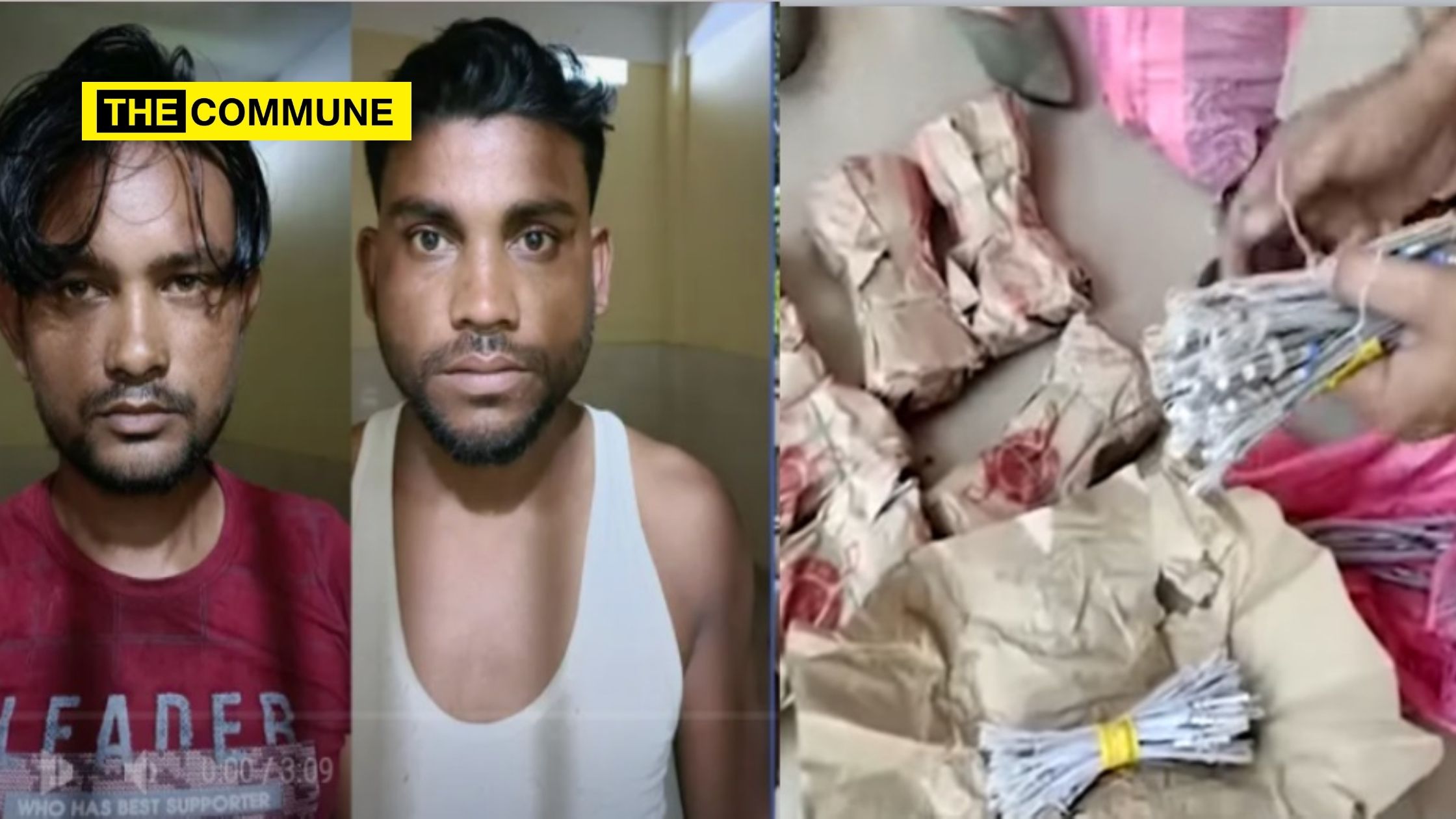
The Assam police on Friday (October 1) intensified its investigation after recovering a huge amount of explosives in Guwahati and arrested two persons, Ainul Ali and Rahim Badshah.

When the police arrested these two men, they found them in possession of huge amounts of gelatin sticks and electronic detonators.

According to the city police, “The Garchuk Police team today at 5:30 AM recovered a huge cache of explosive substances and devices from a Mahindra Bolero pickup van.”

The police stopped a Mahindra Bolero bearing registration number AS-15-AC-4867 that was speeding at Garchuk Chariali and apprehended the driver and another occupant in the vehicle. The police then recovered bags of explosive substances and devices.

As per reports, the police recovered 4660 Gelatin Sticks and 2300Electric Detonators 2300.

The arrested individuals have been identified as Ainal Ali, age 27, and Rahim Badsha. Age 26, both hailing from Bongaigaon. DCP west Guwahati city police Navaneel Mahanta said that the apprehended men couldn’t reveal the details of the explosives.

However, the police were able to ascertain that the explosives were brought from somewhere in Meghalaya but it is still investigating is importing the huge amount of explosives and the reason behind it.

But now the police have a lead on a man named Kader Ali, who they think can reveal the purpose of bringing the explosives. The Assam police intelligence is investigating the terrorism angle now ahead of the Durga Puja festival.

Click here to subscribe to The Commune on Telegram and get the best stories of the day delivered to you personally.
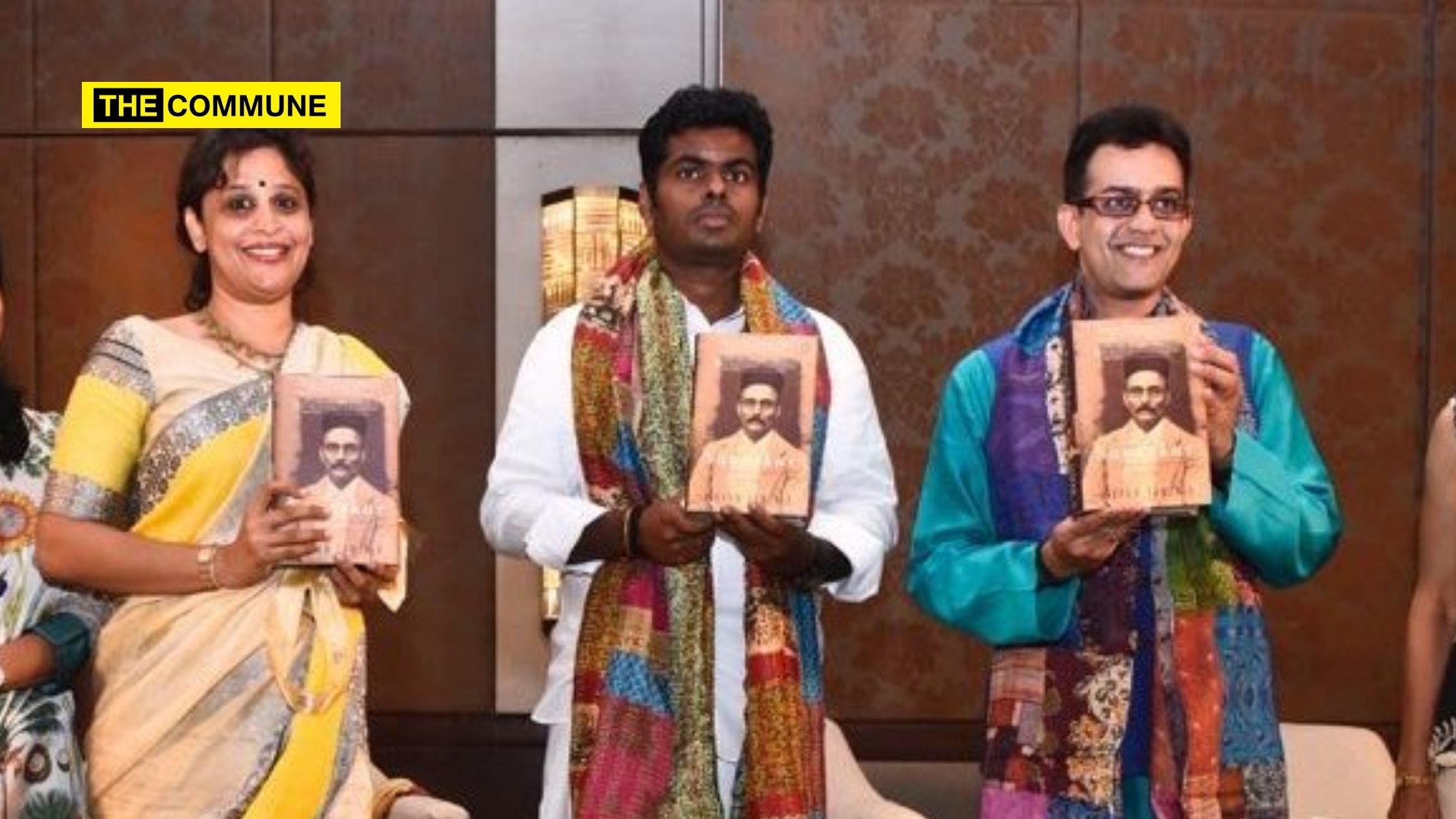
Love him or hate him, but read him: Author Vikram Sampath and BJP TN head Annamalai on Veer Savarkar

At a panel discussion organized by Prabha Khaitan Foundation, Dr. Vikram Sampath, the author of the 2-part magnum opus book on Veer Savarkar said that the man who remains relevant to this day given the ascension of Hindutva political philosophy, remains a persona non-grata in Indian history.

He said that the everyone had every right to admire or hate a person, provided it was informed opinion, rather than calumny or pre-conceived notions against the individual.

Vikram explained in detail how the man who had worked for the reformation of the Hindu society by breaking the barriers of casteism has been demonized and derogated due to the political machinations against him.

He noted Savarkar had been a pioneer in breaking casteism by organizing sacred thread wearing ceremony, inter-caste dining events like Sahabhojan, setting up of temple in Ratnagiri where Dalits were the priests, etc.

He noted that by advocating meritocracy over hereditary authority, he hit at the roots of the ill-effects of casteism.

“He strove to eradicate untouchability, but became a political untouchable; was a persona non grata in Indian history and everyone associated with him paid a heavy price. But, his political relevance is intense in contemporary India and his ideology of Hindutva is on the ascendant” the Vikram said.

Vikram also mentioned that several bookstores had not stocked the first part of the book when it was released and how he faced boycott from the ‘gatekeepers of history’.

Pointing to the dismissal of Hridaynath Mangeshkar (younger brother of renowned singer Lata Mangeshkar) from All India Radio for creating a musical composition based on Veer Savarkar’s poem, Sampath noted how the Congress governments and their leaders ostracised Veer Savarkar and penalised those who did not conform to their vilification.

Vikram Sampath mentioned how Savarkar was maliciously framed in the Gandhi Assassination based on the confession statement of a petty criminal to the police. Quoting Ambedkar’s lawyer on the trial of Savarkar in the Gandhi Assassination, the author said “it’s a fixed match and the highest power ordered to fix him”(a blatant reference to India’s First Prime Minister Jawaharlal Nehru). However, it was also added that leaders after Nehru, including Indira Gandhi had publicly praised Savarkar.

Vikram Sampath also noted the contributions of VVS Iyer, who was the right-hand man for Savarkar during his London days. He pointed out that Savarkar’s biography which is popularly believed to be written by himself under a pseudonym Chitragupta could have been written by  VVS Iyer or C. Rajagopalachari.

Speaking on the occasion, BJP Tamil Nadu President K. Annamalai recalled his visit to the Cellular Jail in Andaman during his Bharat Darshan tour as a young IPS officer. He said that he had the opportunity to visit the cell of Savarkar and which made him realize what solitary confinement and forcing a person away from his loved ones would do.

He said that Savarkar was a man who was way ahead of his times by striving for real social justice through his work while pointing to the pseudo-social justice as propagated by the DMK.

Annamalai said Savarkar has been demonized unfairly noting that even Gandhi and Dr. Ambedkar had supported the cause of Savarkar’s release and pardon.

He also read out a page from the book, that carried the vision that Savarkar had for Independent India (India of Savarkar’s dreams). It referred to a democratic state that was home to different religions, where people of all sects and races lived in equality and there was no domination or deprivation of rights, and people had to discharge their common obligation to the state and how “Hindustan’ would extend from Indus to the seas. It also makes a mention of a country that was self-reliant in food, clothes, shelter, and defence, it emphasized on a foreign policy of neutrality and peaceful and powerful centralized state of Hindustan.

On a final note, Dr. Sampath said that history was a means of recounting horrors of the past and healing the wounds and ensuring that these crimes are committed again. He said that, had the then powers punished the perpetrators of the riots in 1948(against Maharashtrian Brahmins), the 1984 riots (against Sikhs) would not have happened. He connects the unfortunate and gruesome pogrom of Marathi Brahmins after the Gandhi Assassination to the Sikh program after the Indira Gandhi Assassination, both the massacres which were perpetrated by the Congress party and its functionaries.

Vikram Sampath disclosed that his next books will be on Chatrapati Shivaji Maharaj and Tipu Sultan.

Click here to subscribe to The Commune on Telegram and get the best stories of the day delivered to you personally.