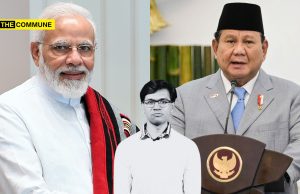
Sun TV Network Limited has moved the Madras High Court seeking modification of an interim injunction obtained by veteran composer Ilaiyaraaja in a John Doe suit filed to protect his personality rights. The matter came up before Justice Senthilkumar Ramamoorthy, who granted time until 21 January 2026 for the composer’s counsel, A. Saravanan, to obtain instructions on the modification applications filed by Sun TV Network and Chennai-based music label Music Masters Audio Video LLP.
The court also extended, until the next date of hearing, the interim injunction earlier granted on 21 November 2025, by Justice N. Senthilkumar. That order restrains all known and unknown entities and individuals from exploiting Ilaiyaraaja’s name, image, photographs, or voice for commercial or personal purposes without his consent.
Ilaiyaraaja had instituted the personality rights suit against a wide array of named platforms and broadcasters, including Amazon, Saavn Media, YouTube, Gaana, Apple Music, Five Star Audio, Sun TV Network, Music Masters, Star Vijay TV, Indian Record Manufacturing Limited, Zee Entertainment, Meta Platforms, Sony Music, and several unknown entities.
In an affidavit filed through counsel Rahul Balaji, Sun TV Network told the court that while the composer’s core claim was “not without any merit,” the blanket nature of the interim injunction was excessive and had a serious adverse impact on the network’s ability to commercially exploit copyrights it had lawfully acquired. The network contended that the injunction, if left unmodified, would prevent it from even creating legitimate compilations of songs composed by Ilaiyaraaja and from giving him due attribution, despite no specific allegation having been levelled against the network in the plaint.
Describing itself as one of Asia’s leading media and entertainment conglomerates, operating 37 television channels and 69 FM radio stations, Sun TV Network stated that it holds broadcast and communication rights over a vast catalogue of Ilaiyaraaja’s compositions. According to the affidavit, the network regularly broadcasts these songs across its television and radio platforms through curated programming such as theme nights and “Ilaiyaraaja Specials,” often scheduled around festivals, weekends, birthdays, or anniversaries of iconic films.
The network further submitted that it consistently provides clear on-air attribution to the composer, identifying him as the creator of the music through programme titles, on-screen graphics, and anchors’ introductions, thereby ensuring due recognition for his work. It argued that such practices advance, rather than infringe, the composer’s right to attribution.
Emphasising the cultural dimension of its broadcasts, Sun TV Network claimed that its platforms had helped expand the reach of Ilaiyaraaja’s music and popularise it among successive generations of the Tamil diaspora worldwide over the past three decades. “Sun TV’s practice of naming him in programme titles and on-air graphics fulfils and furthers the plaintiff’s right to attribution, rather than infringing it,” the affidavit stated.
On this basis, the network urged the High Court to suitably modify the interim injunction so that it does not impede the lawful exploitation of copyrights already acquired by the company. The matter is expected to be taken up again after the composer’s counsel responds to the modification plea.
At a public interaction, DMK Member of Parliament A Raja faced pointed questions from the audience over Chief Minister MK Stalin’s failure to visit Vengaivayal, the Tamil Nadu village where a Dalit settlement’s drinking water tank was contaminated with human waste.
A member of the audience asked Raja, “We ask the social justice question of why PM Modi did not visit Manipur. But our CM Stalin did not visit Vengaivayal, this is social injustice.”
Raja responded by questioning the comparison, asking, “Do you think the severity of Vengaivayal and Manipur issues are same?”
The audience member replied, “Everything is injustice.” When people began clapping in support of this remark, Raja interrupted, saying, “Wait, wait.”
Raja then elaborated on his position, saying, “Do we take the same tablet for blood cancer and headache? This is a good question. We exhausted all things scientifically.”
In what can be seen as a startling revelation, Raja said, “Two theories are there – whether they are same caste or different castes. We do not disagree that it was wrong. But do you know what happened in Manipur? In Manipur, they paraded a woman naked with military in broad daylight and gangraped by 15 people and you are justifying it in Parliament. Governor did not come out, you think all this was happening ordinarily. Sir don’t compare.”
Despite repeated questions on why the Tamil Nadu Chief Minister had not visited Vengaivayal, Raja defended the government’s handling of the case, saying, “What would have happened if he went? We are investigating under CBI, forensic, everything. That is a lone wolf attack. It was a human right violation by putting faeces in a tank.”
He added, “To find that one person we are working. We have kept everything open. We called the caste leaders, we called DPI, we called Viduthalai Chiruthaigal, sir, have we hidden anything?”
Raja continued to emphasise the distinction between the two cases, stating, “But Manipur is a much bigger issue. There the Governor is sitting in office, the police are there, yet nothing came out. Under armed protection they took her away. Are these two of the same?”
He further said, “What I am saying is this: in one case, so many people have died, there is a social conflagration, and the Prime Minister is sitting in Delhi watching it.”
Explaining why he believed the Chief Minister’s visit would not have altered the situation, Raja said, “Here, it is a barbaric act committed by one individual. For that barbarity, investigation is the only solution. The Chief Minister going there cannot say or do anything.”
He added, “If it is a death due to natural calamity, a big accident, a landslide, yes, the CM must go. But by sitting here in the Fort and giving proper directions, can we not find the culprit there? That is what is needed.”
Raja further argued that a visit could escalate tensions, stating, “Otherwise if he goes there, then groups will gather, two sides will clash, and I am asking: why should a whole community be dragged into it?” He concluded, “Each issue has its own remedy. So please do not compare. When you say ‘Manipur’, anger arises. I have not personally seen it.”
During the discussion, the host reframed the audience’s concern, pointing out that in Vengaivayal an entire community was affected, while Raja had repeatedly described it as an act by an individual. She also noted that Viduthalai Chiruthaigal Katchi leader Thol. Thirumavalavan had called for a CBI inquiry to ensure a fair probe.
Responding, Raja said, “Refer it, get it done, until now, what have you been able to do? Have you at least been able to ask, ‘Who has done it, why is it being hidden?’”
He continued, “Let it be Thirumavalavan or any other caste leader, any big political leader – I see them as big political leaders – I am still fighting more for caste issues.”
Raja challenged critics to identify suspects, stating, “Let someone say one thing clearly. Name them. Say, ‘Raja did it’ – we will investigate Raja. Say, ‘Kamaraj did it’ – we will question him.”
He added, “Without naming even one person, how can an investigation start? Please tell me.”
Raja acknowledged the presence of multiple theories, saying, “Only then the problem arises – did they do it within their own community, in the same ‘colony’? That is one theory doing the rounds. But let it be open. We are not hiding it.”
When asked what could be done if the investigation yielded no results, Raja replied, “It is still open. Any day a solution may come.”
He cited unresolved cases across governments, stating, “Take the Ramajayam murder case. Jayalalithaa was the Chief Minister then. She could not solve it. We could not solve it when we were in power.”
Concluding his remarks, Raja said, “You cannot accuse the government alone. Regardless of which political entity is in power… somewhere the chain is missing.”
Anbumani Ramadoss has condemned the arrest and detention of part-time special teachers, who have been staging a protest in Chennai for the past week, on Pongal day, demanding permanent employment and other long-pending benefits.
In a statement issued on Tuesday, Anbumani said police action against the teachers, who were protesting near the Directorate of School Education, was “reprehensible,” especially as they were detained in separate locations despite raising what he described as legitimate demands. Around 12,000 part-time special teachers have been protesting in Chennai since 8 January 2026, seeking regularisation of service and improved pay conditions.
He pointed out that the teachers were appointed over a decade ago with a monthly salary of ₹5,000 and have not been granted permanent status even after 13 years of service. During this period, he said, they have received only a marginal pay increase, which reflects the prolonged neglect of their demands. According to Anbumani, repeated appeals and protests by the teachers had failed to yield results, forcing them to intensify their agitation.
Criticising the handling of the issue by the Dravida Munnetra Kazhagam government, Anbumani said the School Education Minister had attempted to resolve the protest by offering a limited salary hike instead of addressing the core demand of permanent employment. When the teachers declined the offer and continued their protest, police action was taken against them, which he termed an act of repression.
Anbumani further recalled that the DMK had assured permanent employment for part-time teachers in its election manifesto and urged the government to honour that commitment. He also demanded that all disciplinary or retaliatory measures initiated against the protesting teachers be withdrawn immediately, stating that denying their demands amounted to a betrayal of the assurances given to them.
The Supreme Court on Thursday, 15 January 2026, stayed an order of the Madras High Court that had permitted the eviction of Shanmugha Arts, Science, Technology & Research Academy (SASTRA) from government land in Thanjavur, Tamil Nadu, observing that due consideration must be given to the fact that the land in question is being used for the cause of education.
A Bench comprising Justice Surya Kant, Justice Joymalya Bagchi, and Justice Vijay Bishnoi was hearing SASTRA’s challenge to the Madras High Court judgment which had dismissed the university’s plea against a government order rejecting its offer of alternate land for setting up a prison and a subsequent eviction notice issued by the Tahsildar, Thanjavur.
Senior advocates Mukul Rohatgi and C S Vaidyanathan, assisted by advocate Ronak Shankar Agarwal, appearing for SASTRA, argued that the university had made three separate offers of alternate land to the State to facilitate the proposed open-air prison project. They also submitted that the State had attempted to take possession of the land when the campus housed over 5,000 female students, raising serious safety concerns.
Appearing for the State of Tamil Nadu, senior advocate Rakesh Dwivedi contended that if SASTRA’s plea were accepted, it would set a precedent enabling every encroacher on public land to demand that the government accept alternate land instead of enforcing eviction.
Responding to this argument, the Chief Justice observed that the present case stood on a different footing. He noted that the land was being used for education and not for commercial activity. “Had it been a case of a factory or a commercial institution, we could have appreciated that you know – you have already made money out of an illegally encroached land. They (petitioners) are an (educational) institution,” the CJI remarked. He further added, “They are giving you three options; as a State, you should also promote educational institutions. How many States have been able to establish educational institutions?”
In light of these observations, the Court permitted the university to submit a fresh proposal to the State Government. Passing an interim order, the Bench directed maintenance of status quo on the subject land and recorded: “We therefore permit the petitioners to submit a fresh proposal to the State Government with respect to all three options. We expect the State of Tamil Nadu to consider the three options sympathetically and take an appropriate decision by ensuring that no … is caused to the public.”
The Court also indicated that a High-Powered Committee could be constituted to examine the proposals and clarified that, “pending such exercise, the institution shall be allowed to carry out its activities without any hindrances.”
Background of the Dispute
The controversy relates to 31.37 acres of government land in Thirumalaisamuthiram Village, Thanjavur district, which SASTRA is alleged to have encroached upon in 1985. The land had been allotted to the Prison Department for establishing an open-air jail, but the project could not be executed due to the university’s occupation.
Eviction proceedings were initiated under the Tamil Nadu Land Encroachment Act, 1905. A final notice was issued, and the university was given an opportunity to voluntarily remove the superstructures. SASTRA challenged the proceedings through multiple rounds of litigation, including writ petitions, statutory appeals before the Revenue Divisional Officer, review proceedings before the District Revenue Officer, and further appeals before the Special Commissioner and Commissioner of Land Administration, all of which ultimately went against the university.
In earlier writ proceedings, a direction was issued to assign the encroached land to the university, but the State succeeded in appeal, with the Revenue Department being directed to evict SASTRA. The university’s request to offer alternate land in lieu of the encroached area was rejected, and a special leave petition filed before the Supreme Court was dismissed with liberty to seek an appropriate remedy before the competent forum.
Acting on this liberty, SASTRA again approached the State with a representation for alternate land, which was rejected, leading to the issuance of the eviction notice challenged before the Madras High Court. A Division Bench of the High Court, comprising Justices SM Subramaniam and C Kumarappan, upheld the eviction, observing that the issue had been repeatedly litigated and that courts could not interfere with a policy decision of the government by reopening claims of encroachers.
The Supreme Court’s interim stay has now put the eviction on hold, pending reconsideration of SASTRA’s fresh proposals by the State Government.
The Zanskar Buddhist Association (ZBA) has written to the Sub-Divisional Magistrate (SDM) of Zanskar, raising serious concerns over what it described as a growing pattern of forced religious conversions through marriage in the Union Territory of Ladakh and seeking the enactment of a stringent anti-conversion law to preserve communal harmony.
In its letter dated 15 January 2026, the Zanskar Buddhist Association stated that it was alarmed by repeated incidents involving Buddhist girls allegedly being abducted, lured, or coerced into marriage, followed by religious conversion. The association argued that such incidents, if left unaddressed, could disrupt the fragile social balance in the region.
🚨 BIG! Buddhist Association joins Hindus, Sikhs and Christians in expressing concern, issuing an URGENT representation alleging abduction, fraudulent RELIGIOUS CONVERSION and “LOVE JIHAD” targeting Buddhist women. pic.twitter.com/HMf4fkvoY7
The immediate trigger for the letter was the disappearance of a young Buddhist woman, Stanzin Yangdol, from Zanskar. According to the association, Yangdol had been missing for several days, and her parents had informed the ZBA that extensive searches and inquiries among friends and relatives had yielded no information. The association said this had led the family to suspect that she may have been abducted and wrongfully confined against her will.
In its representation to the SDM, the association said it had strong and reasonable grounds to believe that, in multiple cases, marriages involving Buddhist women were being preceded or accompanied by religious conversion carried out through deception, coercion, inducement, or misrepresentation, rather than free and informed consent. It claimed that these incidents appeared to follow a consistent and pre-planned pattern, giving rise to apprehensions of an organised effort to alter the religious identity of women from the Buddhist community.
The ZBA further alleged that such cases involved systematic misinformation, psychological manipulation, and the exploitation of vulnerabilities, effectively cutting victims off from their families and support systems. It maintained that if marriages between Buddhist women and Muslim men were genuinely consensual and free of religious pressure, they could be solemnised under the Special Marriage Act. However, it pointed out that in the cases it had observed, only the religion of the woman was changed, while the men never converted, a pattern it said raised serious questions about voluntariness and legality.
Highlighting demographic changes in recent years, the association noted that even in Leh district, traditionally a Buddhist stronghold, the community had begun to feel a growing sense of vulnerability. It said conversions of Buddhist women following marriages over the past few years had sharpened anxieties within the community and made it more assertive about protecting its customs, traditions, and way of life.
The letter urged the administration to take immediate steps to trace and restore Stanzin Yangdol to her family and to initiate an impartial inquiry into the allegations. It also called for the immediate registration of a First Information Report under relevant provisions of the Bharatiya Nyaya Sanhita, 2023, including Sections 138, 127, 318, 69, and 87, against those allegedly involved.
Beyond the specific case, the association appealed for the enactment of a dedicated anti-conversion or anti-love jihad law in the Union Territory. It argued that such legislation would deter forcible or fraudulent conversions through marriage or allurement and help maintain peaceful coexistence among communities. The ZBA also urged authorities and community leaders to sensitise people against practices that could fuel communal unrest.
The letter warned that failure to act swiftly could escalate tensions on the ground and stressed the need for decisive intervention before the situation deteriorated further. Copies of the representation were sent to senior officials, including the Lieutenant Governor and the UT administration.
The letter was signed by ZBA president Tsering Dorjay, who reiterated that the association’s demands were rooted in concerns over social harmony, legal accountability, and the protection of vulnerable members of the Buddhist community.
A series of crackdowns by local Hindu groups as well as authorities across Bengaluru has brought into sharp focus the scale, organisation, and systemic facilitation of illegal Bangladeshi immigration into the city, exposing failures in identity verification, welfare delivery, and local governance.
‘Mini Bangladesh’ in Anekal Flattened
The most striking case emerged from Gaurenahalli in Anekal, on the outskirts of Bengaluru, where authorities uncovered an illegal settlement of over 600 Bangladeshi immigrants who had been living for nearly two years in what locals described as a “mini Bangladesh”.
Following a media expose, officials launched a large-scale demolition drive, deploying three JCBs to raze over 500 illegally constructed sheds. Investigations revealed the settlement functioned as a fully operational colony, complete with unauthorised electricity connections, forged documents, and access to government welfare schemes.
Authorities found widespread use of fake Aadhaar cards and forged birth certificates, with several documents carrying conflicting birth years for the same individual. These falsified records were allegedly used to tap into state welfare schemes, including the Gruhalakshmi scheme, meant exclusively for eligible residents of Karnataka. Sources also confirmed that weapons, including daggers, were recovered from within the demolished structures.
Though residents initially claimed they hailed from West Bengal and had informed local officials of their presence, document verification established that the papers were entirely fabricated, prompting authorities to clear the settlement and begin repatriation procedures. Officials have stressed that no leniency will be shown in cases involving infiltration and misuse of public resources.
Bettadasanapura–Hebbugodi Belt Under Scanner
Parallel action unfolded in the Bettadasanapura–Hebbugodi area, where demolition drives initiated against illegal constructions led to the arrest of 16 Bangladeshi nationals within the limits of Hebbugodi Police Station.
The breakthrough came after a viral video surfaced during a demolition exercise, showing a woman praising Bangladesh while recording the operation. Police identified her as Sarbana Khathuna, a resident of Podi village in the Bettadasanapura–Hebbugodi belt. Verification revealed she was an illegal immigrant living with a group of undocumented Bangladeshi nationals.
During interrogation, the detainees disclosed that they had paid ₹25,000 to ₹50,000 each to agents who facilitated their illegal entry. According to police, the migrants crossed the Bangladesh border, travelled to Kolkata, and were then transported to Bengaluru by train. Local agents allegedly arranged Aadhaar cards, voter IDs, and, over time, even BPL cards, enabling them to blend into the city’s informal workforce. Sixteen people, including three men, remain in custody.
While Karnataka Police, the State Government, and Central Government remain idle and fail to deport illegal Bangladeshi migrants, brave Hindu youth and leaders in Bengaluru’s Hulimangala-Bettadasanapura area have stepped up voluntarily to demolish their encroachments.
Ground-level investigations by locals across Bettadasanapura, Hebbugodi, Kogilu, and Anekal have exposed a disturbing pattern. Officials conducting the backward classes survey reportedly placed survey stickers on houses later identified as being occupied by Bangladeshi nationals.
‼️Karnataka Govt has even put stickers of the recent backward class survey on their houses!
The fake address on the Aadhaar card is entered by the person himself who did Aadhar!
He doesn’t even have Indian DL but buys a vehicle on loan given by Bajaj Finance!
Aadhaar enrolment operators allegedly entered fake addresses themselves, issued cards after collecting bribes, and enabled migrants to open bank accounts, obtain PAN cards, and even secure vehicle loans worth several lakhs, despite the absence of valid address proof, assets, or Indian driving licences.
🚨Karnataka: Bangladesh illegal immigrant gets – Bank a/c, 4.5L LOAN, voter ID, PAN
2 Aadhaar cards by bribing just ₹1.5k!
His friend sits in Bangladesh & Aadhaar is already issued!
In at least one case, authorities found that a Bangladeshi migrant with no legal identity accessed maternity services, resulting in a child being issued an Indian birth certificate, effectively creating legal status for the next generation while relatives continued to live in Bangladesh with Indian identity documents.
⚠️ Now he has a son born here. The child already got birth certificate at Vani Vila’s Hospital! The father has NO valid Indian ID, yet the system clears everything for the child!
One of his friend is still in Bangladesh but his Aadhar card is already issued here!! pic.twitter.com/2uFzlanDMQ
After social workers from Hindu organisations confronted the illegal Bangladeshis, they kindly request them to leave the country. An illegal is seen translating that in Bangla to his fellow illegal counterparts. Calling it a national security issue, the social workers and activists state that lakhs of illegal migrants are present and warn that continued inaction will allow them to secure Aadhaar, ration cards, and PAN cards. Appealing directly to central leaders, they demanded urgent intervention, including electoral roll revision and an NIA probe, while one activist alleged that he faced multiple FIRs and social media bans for raising the issue but vows to continue.
Hindu Warriors peacefully asked illegal Bangladeshi immigrants to leave Karnataka 🔥🔥
Bangladeshi admits that more than 2 Lakh Bangladeshis are living in Bengaluru illegally 🤡@HMOIndia must deport them all !!
Authorities have clarified that these cases are not isolated. Earlier this month, while probing the rape and murder of a six-year-old girl in Whitefield, police arrested Yusuf Mir (30). He initially claimed to be from West Bengal, producing Aadhaar and voter ID cards. Subsequent checks revealed both documents were fake and that Mir was a Bangladeshi national.
Investigators found that Mir had three wives – two residing in Kolkata and one in Whitefield. Police are now verifying the documents of his associates, including the victim’s parents, after learning that a dispute between families preceded the murder.
Kogilu Layout: Multiple IDs and Welfare Access
Further north, Kogilu Layout has emerged as another flashpoint. A BJP fact-finding committee has alleged that of 252 applicants for government housing schemes in the area, only 26 were locals. Many occupants were found in possession of multiple Aadhaar and voter ID cards, raising suspicions that several were Bangladeshi or Rohingya illegal immigrants.
The issue had earlier sparked political controversy and even a Kerala–Karnataka row over minority rights before being downplayed by the state government. The BJP has now demanded a National Investigation Agency probe, accusing the administration of looking the other way.
A City-Wide Pattern
From Bettadasanapura and Hebbugodi to Whitefield, Kogilu, and Anekal, the unfolding cases point to a systemic collapse rather than isolated lapses. As verification, demolition, and deportation drives expand, the revelations raise serious questions about how hundreds of illegal immigrants managed to live for years in Bengaluru, armed with official documents, welfare benefits, bank loans, and civic recognition without detection.
The crescent flag hoisted by the Sikandar Badusha Dargah as part of its Sandhanakoodu Flag Hoisting festival was removed by government authorities, citing encroachment on temple land.
According to official sources, the crescent flag was hoisted on 21 December 2025 on a Kallathi tree located near the dargah on Thirupparankundram Hill. The issue escalated after complaints were raised alleging that the tree in question stands on land belonging to the temple.
The matter reached the Madurai Bench of the Madras High Court last week, where the court sought an explanation regarding the flag hoisting and directed the authorities to take appropriate action. Following the court’s intervention, the temple administration filed a complaint at the Thirupparankundram Police Station, leading to the registration of a case alleging that the dargah side had hoisted the flag on temple-owned property.
Acting on this, officials from the Revenue Department, the Hindu Religious and Charitable Endowments (HR&CE) Department, and the Police Department jointly removed the flag that had been tied to the Kallathi tree on the hill.
The temple administration has stated that the flag was erected after informing the police, maintaining that due process was followed, as reported in Tamil Hindustan Samachar.
However, the removal has triggered a counterreaction from the dargah administration. Opposing the action, the Thirupparankundram Sikandar Badusha Dargah side has submitted a complaint petition to the office of the Assistant Commissioner of Police, Thirupparankundram, demanding action over what it terms as the unilateral removal of the flag.
Subscribe to our channels on Telegram, WhatsApp, and Instagram and get the best stories of the day delivered to you personally.
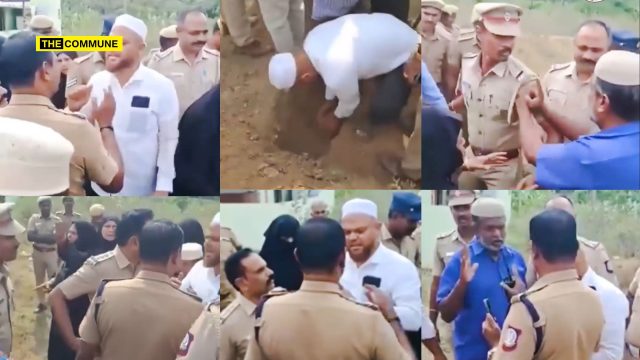
On 10 January 2026, pro-DMK propaganda film Parasakthi, directed by DMK stooge Sudha Kongara was released. If one assumed that the film is a story based on true events, you are wrong. The film is a work of fiction for most part and scanty with the truth.
Kongara seems to have internalised the fiction part of it and is seen spreading the same distortions at interviews, public speeches and what not.
In line with this, she was interviewed by DMK mouthpiece Sun News and in this 40-minute interview too, she spews distorted history, speaks the same separatist language as the DMK and makes anti-central government comments.
Instead of limiting herself to artistic license, Sudha repeatedly makes categorical historical claims that collapse under the most basic scrutiny. Worse, she frames the story as a civilizational clash between “Tamil people” and the “Centre”, carefully stoking anti‑Delhi sentiment under the guise of defending Tamil.
Let us take a close look at what distortions she presents as facts in the interview.
#1 Says Congress Buried History, But She Buried The Martyrs, Projected Karunanidhi As Hero
She claims the history of how the then-CM functioned to suppress the agitation was removed from public eye and that there is nothing in the National as well as British archives, but she herself forgot to mention the true language warriors who gave their life for this struggle. Instead, she glorified Karunanidhi, who was a nobody at that time – he was nowhere close to Annadurai’s circle – it was MGR, Nedunchezhian and others who were in the picture and not otherwise.
Reality
But she chose to project Karunanidhi as a hero.
Parasakthi Fiction
#2 The “Hindi Money Order” Fairy Tale
Sudha’s big claim is that the anti‑Hindi spark began when money orders to students were “suddenly changed into Hindi”, allegedly delaying hostel and exam fees for a month. She says, “The spark started from the Hindi money order issue. Those days, if you had to go to colleges, since there were no colleges in the villages. So, you had to go to the city. When in the city, you had to stay in a hostel. When in the hostel, money comes only by money order. At that time, for the grandfather, grandmother, mother, or father in the villages, mostly they didn’t know how to read or write. Definitely they didn’t know any other language. So, the money orders they sent every month were late. The spark started there. Students were not getting money for mess fees, exam fees. It was late for a whole month because suddenly the money orders were changed into Hindi. Even recently, bank forms changed to Hindi.”
Standard works on the 1965 agitation including those she cites, like A Ramasamy’s Tamilan Thodutha Por and Baladandaiyudham’s Hindi Egathipathiyam – do discuss resentment over Hindi creeping into central forms and signage. But there is no documented evidence that money‑order forms were printed only in Hindi, or remittances to Tamil students were delayed or blocked for a whole month because “everything was changed into Hindi”.
What was, at most, a genuine fear about Hindi creeping into paperwork, is retold by Sudha as an accomplished policy that strangled money flow. She converts anxiety into “fact” – a classic propaganda move.
Interestingly, she says she met Justice Chandru – a Dravidianist, a card-carrying Communist and some of the names she mentions are all DMK Dravidianists to the core – so it raises the question whether a hard-core Dravidianist will be able to give a neutral retelling of events.
She says, “Professor Nannan, he has fought so much for the students. He stood right there in that protest. He was put in jail. If the government hadn’t changed in ’67. He would have been in jail for his whole life. For what? Simply for saying he wants to speak Tamil, for saying don’t impose Hindi. So this is a freedom struggle.”
Do note the over-the-top claims she makes here – Where is the proof that people were jailed just for saying they wanted to speak Tamil? Equating this to a freedom struggle is alluding to secessionism.
Inventing “First Time In World History” Atrocities
Next, Sudha segues to a point where she dramatically claims that during the 1965 anti‑Hindi agitations, it was the “first time in history of the world, a student was shot.” She says she interwove fact and fiction such that no one could tell it apart – “It is interwoven to the point where you don’t know what is fiction and what is real.”
This is demonstrably false. Even a school‑level understanding of world history shows this. Colonial police fired on student protestors in pre‑Independence India and elsewhere decades before 1965. Here are examples:
British colonial police opened fire on student-led or student-involved protests multiple times pre-Independence:
1942 Vidyasagar College protests (Calcutta): On September 10, students led by Sasadhar Ganguly attacked a police van; police fired, killing students in clashes amid Quit India Movement protests.
1922 Chauri Chaura (though not purely students): Police fired on Non-Cooperation Movement protesters (including youth), killing three civilians before the crowd retaliated.
1925 Neemuchana peasant protests: State police fired on protesters against land revenue hikes, which included student agitators in princely states.
Similar incidents are documented in British‑ruled India, Egypt, Russia and other countries long before the Dravidian movement existed. Here is the list.
Egypt under British Occupation: In 1935, during anti-British student protests in Cairo marking “National Independence Day”, thousands of students marched, clashed with police; police fired warning shots and live rounds, killing two students (one in Cairo, one in Tanta) and injuring dozens, including police.
1901-1902 Kiev student strikes: Students from KPI (Kyiv Polytechnic) and universities struck against tsarist educational restrictions; police clashed with marchers, arresting over 100 and injuring participants on 2-3 February 1902.
1905 Bloody Sunday: While worker-led, it involved student radicals; police under Grand Duke Vladimir fired on demonstrators, killing over 100.
By upgrading a tragic but local episode into a never‑before‑seen global atrocity, Sudha converts history into melodrama. The goal is obvious: inflate the victimhood narrative around the 1965 agitation to mythic proportions, unmoored from evidence.
Blurring Fears And Facts On IAS Exams And Railways
Another pair of claims from the interview – “The IAS exams might have been changed to Hindi.” “The advertisement for Railway jobs didn’t come in Tamil papers but only in Hindi papers.”
Yet UPSC exams of the period remained in English with regional‑language options; there was no policy to conduct IAS only in Hindi.
Railway recruitment notices historically appeared in English‑language and several vernacular papers; a deliberate “Hindi‑only” policy for ads in Tamil Nadu is not supported by accessible records.
Here again, fears voiced by agitators 60 years ago are retold as if they were enacted decisions – a subtle but dangerous distortion, because it converts speculative “if this goes on, they will…” rhetoric into retroactive “this is what they did”.
Attempt To Brainwash Young Minds With Separatist Ideas?
She says she wanted to keep it in a palatable, entertaining form so she couldn’t keep it raw. She said, “Saying it very raw is also a thing, then you will get an ‘A’ rating. I desire for children – 13, 14, 15, 16, 17, young minds to see this. That is when their minds are forming.”
So has Sudha accepted that her goal was to brainwash teenagers with false/distorted history?
“North Indian Dialects Are Dead” – Another Casual Falsehood
Sudha goes on to claim that various Hindi‑belt dialects are now “dead, they are gone.” She says, “Now there are so many dialects of Hindi in the North. So many. None of that is there now. They are dead, they are gone. It would have been like that here too. It is a fact that many, many languages are dead. There is no doubt about it. Like that, why do we want the oldest language in the world to die? If you destroy our language, how will we think? What is our future?”
Basic linguistic data contradicts her:
Bhojpuri, Awadhi, Maithili, Braj and others each have millions of active speakers, thriving folk music, films and print cultures. Claiming these languages are “dead” is not a slip of the tongue – it is part of a script: exaggerate “Hindi imperialism” so aggressively that facts become expendable.
“TN Would Have Had No Language Had 1965 Agitation Not Occurred”
Sudha asserts: “If that language struggle hadn’t happened… Tamil Nadu would have been without a language.”
She adds, “We might be speaking in Hindi. Or we might be without jobs. Or we may have been in a small position. Because only if you know a language and are an expert in it can you advance. In such a situation, how many years would it take for us to become experts in it? That’s what is said in our film: it took me 200 years to learn English because I was a slave.”
This flies in the face of the Constitution she claims to defend:
Tamil is in the Eighth Schedule; Part XVII dealt with the Union’s official language, not the abolition of Tamil in Tamil Nadu.
Article 345 explicitly allows states to choose their own official language(s); nothing in the 1965 framework could have legally erased Tamil from use in the state.
In other words, Sudha’s line is not just wrong, it is constitutionally impossible. But by insisting “we would have been without a language,” she reinforces the separatist trope that New Delhi was one step away from linguistically liquidating Tamil society – a paranoid narrative with zero legal basis.
Turning A Multi‑Party Agitation Into A DMK Monopoly
The interviewer confidently declares that, “Everyone who led the student protest comes from a DMK background—most of them.”
Serious documentation of the 1965 agitation shows:
DMK‑linked student fronts were crucial, but
Congress, CPI, SSP, independent student unions and local caste/community outfits also played significant roles across districts.
She says the film shows a student’s viewpoint of Karunanidhi or Annadurai but the fact remains that Karunanidhi was nowhere near Annadurai in those days. (refer image above)
Sudha has not even mentioned the real language warriors or their families. All those who died have been forgotten, all those who were harmed are forgotten to this day – the entire film is nothing but a propaganda piece for the ruling party in Tamil Nadu.
Such statements retrofit history to today’s DMK‑centric political narrative. The student movement becomes a one‑party property, conveniently amplifying the ruling party’s moral capital while erasing others.
Pollachi “Mass Burials” Without A Shred Of Proof
On Pollachi, Sudha goes even further, claiming that: “Many more died there than what they showed… They took them to the Army camp itself and buried them.”
Yet academic histories and contemporary press archives record police firing and deaths in Pollachi, but in single digits, with named victims. None of the standard sources – including Dravidian‑sympathetic writers – document any secret mass graves in an Army camp or wholesale disappearing of bodies.
When asked about how she got the data for Pollachi deaths, she quotes anonymous elders, saying “I went to Pollachi and spoke to people of that age, in their 80s, 70s, what they said was, “We heard it like crackers bursting somewhere far away.” We didn’t know so many were dying or it was happening like this. As it happened, they cleaned it up immediately and left.”
What Sudha presents as a matter‑of‑fact truth is, at best, unverified oral lore dressed up as history. In effect, she accuses the Indian state and Army of a cover‑up without producing any documentary proof – exactly the kind of narrative that fuels long‑term suspicion of national institutions.
Using Tamil Brahmi As Code
In the film, she shows the use of Tamil Brahmi or Tamili as a code language. She says, “Bharathidasan (who wrote these lines) was the greatest revolutionary poet of that time. He was someone who fought for the language. He has written so many. This seemed very apt to me. So we used it.”
Historians have called this claim historically untenable. Tamil Brāhmī was barely known in 1964. While KV Subramanya Iyer conducted pioneering work in the 1930s, it was not pursued systematically. Serious academic focus began only in 1961, when K A Nilakanta Sastri encouraged Iravatham Mahadevan to take up the subject.
Mahadevan published his first major findings only in 1965–66, based on the Pugalur and Mangulam inscriptions. Even then, Tamil Brāhmī did not enter wider academic or public consciousness until the 1990s, when Mahadevan resumed extensive research.
The idea that Tamil Brāhmī was being widely understood,or covertly used as a “code” within government circles in 1964, has no historical basis. This scene exemplifies propaganda-driven storytelling, where symbolism is prioritised over facts.
When propaganda takes centre stage, facts tend to go missing. Tamil Brāhmī was barely known in 1964. Although K. V. Subramanya Iyer had carried out some pioneering work in the 1930s, it was not pursued systematically thereafter. It was only in 1961 that K. A. Nilakanta Sastri… https://t.co/uADqanxGna
The film also has Indira Gandhi’s character in 3 scenes. Sudha claims, “For those three scenes… the one who came as Indira Gandhi also—she spoke exactly like Indira Gandhi. You see, Mrs. Gandhi will talk like this. She will keep her hand like this. She did all that. Her walking, walking fast on that stage. She never had time for anybody. Impatient. She would go like that.”
But in reality, the Indira Gandhi character looked like a joke.
A 1991 film called Maanagara Kaaval had a more dignified looking Indira Gandhi.
Lakshmi playing Indira Gandhi on the right
Anti‑Centre Framing Straight Out Of A Separatist Playbook
Underneath these factual problems lies an unmistakable ideological through‑line. She openly compares her project to The Kashmir Files, positioning Parasakthi as a necessary retelling of “genocide‑like” oppression by the Union.
When asked if she was stirring up something among the public, she says she told the censor, “We must learn from history. If some things happened, if a genocide happened, it should not happen again. That is why I am talking about it.”
Taking the example of Dhurandhar, she says, “Now, you are doing a Dhurandhar, you are taking a film about are you going to war with Pakistan or drop a nuclear bomb on them? We are taking films about freedom, 1947. Then do we take the film so that we should go and fight with them? You have taken The Kashmir Files. Why have you taken The Kashmir Files? A genocide happened. It happened 100%. You are telling that. Now, are you taking it so that two religious factions should fight? No. This happened in history. This must be known to people so that it doesn’t happen again.”
She is wrong about the fact that while Kashmir Files is based on true events and shows the truth, Parasakthi, in her own words, mixes fiction and non-fiction too much.
Parasakthi – A Distorted Diarrhea That Turned Out To Be A Disaster
Parasakthi was marketed as a “textbook” on the language struggle. When the writer‑director herself promotes dramatic myths – “first time in world history,” “Tamil Nadu without a language,” “mass burials in Army camps,” “all leaders DMK,” “Hindi killed all northern dialects” – these narratives will migrate from cinema halls into classrooms, social media and political speeches.
That is precisely how historical memory is captured: not by one slogan, but by thousands of repeated semi‑truths and outright falsities, all pushing citizens to see their own country as an enemy.
Sudha Kongara is entitled to make a political film. What she is not entitled to do is smuggle demonstrably false claims and unproven conspiracy theories into public discourse under the respectable label of “research” and “hidden history”.
Subscribe to our channels on Telegram, WhatsApp, and Instagram and get the best stories of the day delivered to you personally.
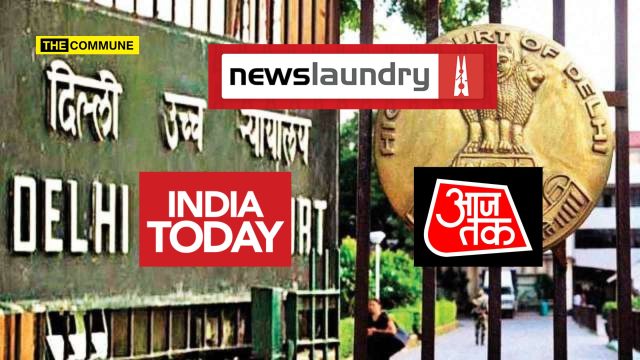
The Kerala Muslim Jamaath has formally demanded the bifurcation of Ernakulam district, citing demographic changes and evolving social conditions in the region. Responding to political remarks on the 2003 Marad ‘riots’, Sayyid Ibrahimul Khaleel Al Bukhari said there was no purpose in revisiting the incident and that it should not be discussed again as it would reopen old wounds. So, what happened in 2003?
A Beach Of Bodies
The night of 2 May 2003, the usually tranquil Marad beach in Kozhikode, Kerala, transformed into a killing ground; it witnessed one of the most brutal and least-discussed communal massacres in post-Independence India. Eight Hindu fishermen belonging to the Mukkuvan community – Chandran, Dasan, Gopalan, Krishnan, Madhavan, Rajesh, Pushparaj, and Santosh, were hacked to death by an armed Muslim mob in a brutal, one-sided attack. One assailant, Muhammad Azhar, was also killed, bringing the death toll to nine.
This was not a spontaneous riot, nor a “clash” between communities. It was, as a judicial commission would later establish, a pre-planned, cold-blooded communal massacre – a jihad executed with chilling precision, whose roots lay in a deep-seated conspiracy involving political parties, fundamentalist organisations, and a compromised state apparatus.
Despite judicial findings, mass convictions, and the recovery of weapons and explosives from a mosque, the incident has for two decades been persistently diluted in public discourse as a “riot” rather than acknowledged for what official records describe: a massacre born of conspiracy, planning, and administrative failure.
A Communally Fragile Coast: Marad Before 2003
Marad is not an anonymous village. It is part of Kerala’s long coastal belt where Hindu Mukkuvan fishing communities lived for generations alongside Muslim settlements. By the late 1990s and early 2000s, however, this belt had become deeply communally polarised, shaped by political mobilisation, economic displacement, and repeated episodes of violence.
Tensions escalated sharply after 3-4 January 2002, when clashes triggered by a trivial dispute over drinking water spiralled into communal violence that left five people dead – three Muslims and two Hindus. That episode, far from being resolved, became the emotional and political fuel for what followed.
The Night Of The Massacre: A Planned Slaughter
On the evening of 2 May 2003, a mob of around 90 Muslim men, armed with swords, choppers, spears, iron pipes, and explosives, assembled at Marad beach. They were not a random crowd. The judicial commission and subsequent criminal investigations revealed a conspiracy hatched over nearly a year, with planning meetings taking place at various locations, including the local Marad Juma Masjid.
The eight Hindu fishermen, unsuspecting, were ambushed and mercilessly hacked to death. Reports from post-mortem examinations would later reveal gruesome mutilation of the victims’ private parts, indicating a savagery intended to terrorise the entire community. The attackers also hurled country-made bombs, though many failed to explode.
From “Retaliation” To Conspiracy
The 2003 killings were repeatedly framed by interested parties as spontaneous retaliation. This claim collapsed under judicial scrutiny.
A one-man judicial inquiry headed by Justice Thomas P Joseph concluded unambiguously that:
The massacre was not spontaneous
It was a one-sided attack on Hindus
It was the result of a larger criminal conspiracy
Islamist organisations and local political actors were actively involved in planning and execution
The commission specifically named activists linked to the Indian Union Muslim League (IUML) and the National Development Front (NDF) as central to the conspiracy, stating it was “quite unlikely” they acted without the knowledge or blessings of their leadership at the local level.
The Mosque As Arsenal And Sanctuary
One of the most damning facts of the Marad case emerged in its immediate aftermath.
Several assailants ran into the Marad Juma Masjid after the killings. When police attempted to enter, they were physically obstructed by a group of local women forming a human barricade. Once officers forced entry, they recovered:
Around 90 country-made bombs
Swords, choppers, spears
Petrol bombs and iron pipes
The commission noted that this stockpile appeared to be a reserve for an even larger massacre, had the police not intervened when they did.
The Conspiracy: Political Patronage And Organised Terror
The Justice Joseph Commission’s findings were damning and explicit. It concluded:
The massacre was a “one-sided attack on the Hindus, without any provocation, by the Muslim fundamentalists/terrorists.”
There was a “larger conspiracy involving Muslim fundamentalists/terrorists and other forces.”
“The IUML activists are actively involved in the planning and execution of the massacre… It is quite unlikely that the IUML activists were thus involved without the blessings of their leadership at least at the local level.”
“The NDF activists are actively involved…” (The NDF later morphed into the Popular Front of India – PFI, which was later banned by GoI).
The commission named local IUML leaders, including PP Moideen Koya and Mayin Haji (Chairman of the Calicut Development Authority), stating they were either involved in the conspiracy or had prior knowledge. It painted a picture of a coordinated operation where a fundamentalist organisation (NDF/PFI) provided the foot-soldiers and ideology, and a mainstream political party (IUML, a perennial ally of both Congress and CPI(M) in Kerala, provided the political cover and local ecosystem.
When IUML representatives were summoned before the commission, they attempted to justify the massacre as mere “retaliation” for the 2002 killings and even tried to deflect blame onto the RSS and BJP, a narrative that found little traction given the one-sided nature of the carnage.
This nexus was further illustrated by the commission’s scrutiny of the administration. It indicted the then Kozhikode District Collector, TO Sooraj Mohamed, stating the “allegation of communalism raised against him cannot be ignored as baseless.” Shockingly, after the mosque was sealed following the recovery of weapons, Collector Sooraj allowed E Ahamed, then an IUMP MP and Union Minister of State for External Affairs, to enter the sealed premises to offer prayers amidst the explosive situation.
The then Assistant Commissioner of Police, M Abdul Raheem, was also severely criticized. His appointment was found to be “shrouded by suspicious circumstances,” and the commission stated that allegations of his links with the forces behind the massacre “cannot be ignored as baseless.”
Trials, Convictions, And Delayed Justice
In January 2009, a special court in Kozhikode delivered its verdict – 63 accused were convicted, 62 were sentenced to life imprisonment, and most were linked to IUML, NDF, and allied groups.
Over the years, further legal proceedings continued. Acquittals were overturned, additional accused were convicted, and even as late as 2021, courts handed down double life sentences to remaining perpetrators, underscoring how prolonged and contested the process of justice has been.
In 2016, bowing to persistent pressure, the CBI registered a fresh FIR to finally investigate the larger conspiracy, foreign links, and funding, specifically naming some IUML leaders.
Relief, Rehabilitation, And Unequal Aftermath
In the immediate aftermath, more than 2,000 Muslim women and children were moved to relief camps amid fears of retaliation. These camps received organised support through mosque networks and Mahal committees.
Hindu victims, by contrast, reported minimal institutional support, relying largely on community organisations. Rehabilitation of Marad itself was stalled for months as displaced residents were unable to return, reflecting the depth of communal fracture the massacre left behind.
The Silenced Narrative And The Larger Pattern
The Marad Massacre reveals a chilling continuum of communal violence in Malabar’s coastal belt. The commission itself linked it to the history of tension in the area. The text also references earlier incidents: the 2002 violence, and going further back, attacks like the one on the Naduvattam Temple during the Ezhunnallippu festival in 1954, and the violence in Payyoli in 1952.
Economically, a silent demographic shift was underway. Historically poor Hindu fishing communities (Mukkuvans) were gradually being displaced by Muslim fishermen buoyed by remittances from the Gulf. The commission even hinted at a plan for the “extermination of 27 families” from the coast, terming it a form of “land jihad,” where the coast was seen as a strategic route for smuggling and terror logistics.
Yet, this bloody history stands in stark contrast to the national media narrative. While the 2002 Gujarat riots remain a constant reference point in national discourse, framed often as state-sponsored pogroms, the Marad massacres of 2002 and 2003 -brutal, pre-meditated, and with clear political and organisational culpability, have been relegated to the footnotes. No prominent intellectuals, activists, or politicians visited the grieving Hindu families in Marad. When social activist Medha Patkar visited Kerala in August 2003, her discussions focused on Gujarat and the Iraq war, not the massacre in Marad.
The Marad Massacre is not a relic of the past. The organisations implicated, the IUML, the PFI (now banned), its political wing SDPI, continue to shape Kerala’s politics and social fabric. The massacre is a grim lesson in how communal violence is manufactured, executed, and memory-managed. It is a testament to the fact that the most dangerous extremism is not that which operates in the shadows, but that which has learned to operate within the system, with political patronage and a guarantee of impunity. In the silence that surrounds Marad, the echoes of the killers’ swords can still be heard.
Subscribe to our channels on Telegram, WhatsApp, and Instagram and get the best stories of the day delivered to you personally.
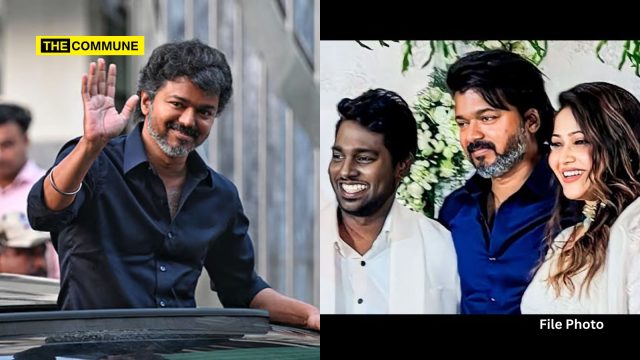
There is a scene in the utter flop film Parasakthi where a police officer tells protesting students “If you have a problem with government, go to Delhi and protest.” to which Atharvaa yells back “Delhi than India va?” (Is only Delhi part of India?).
Now, back to the real world.
After its disastrous outing, the Parasakthi team chose to celebrate Pongal festival in Delhi with Prime Minister Narendra Modi.
Sivakarthikeyan, actor Ravi Mohan, and National Award–winning composer GV Prakash were part of the delegation that paid a courtesy visit ahead of the festivities.
GV Prakash later shared photos from the meeting on social media, calling it a special and unforgettable moment connected to the film. The images quickly spread across Tamil cinema circles, with many fans describing the interaction as a moment of pride for the industry.
In his post, GV Prakash noted that Thiruvaasagam was performed during the Pongal 2026 celebrations in Delhi, in the presence of the Prime Minister, tagging Narendra Modi and BJP leader Murugan.
One photograph that caught particular attention shows Sivakarthikeyan smiling warmly as Prime Minister Modi shakes hands with GV Prakash.
On screen, Delhi is mocked as a distant villain; off screen, it becomes the place to fly to for legitimacy, validation, and photo-ops. The same film that sneers at the idea of taking grievances to the national capital quietly seeks blessings there when it suits the brand.
Subscribe to our channels on Telegram, WhatsApp, and Instagram and get the best stories of the day delivered to you personally.