Home Blog Page 11

Alleged Fact-Checker Mohammed Zubair Targets PM Modi’s ‘4 Million Follower Drop’, Skips Massive Losses For Congress & AAP Leaders As X Purges Bot Accounts

Alleged Fact-Checker & Islamist Mohammed Zubair Claims PM Modi Lost 4 Million Followers on X, Misleads Public By Omitting Platform-Wide Purge Context

A post by alleged fact-checker Mohammed Zubair on Wednesday, 4 December 2025, generated controversy after he highlighted that Prime Minister Narendra Modi had “lost 4 million followers” on X, without initially noting that the platform is conducting a large-scale purge of inactive and bot accounts affecting users globally.

Zubair wrote that Modi “lost 4 million (bots) followers,” and seemed to ignore that this was also the same for other public figures.

According to figures cited in his own thread, several international personalities also saw significant drops:

  • Barack Obama: 11 million
  • Justin Bieber: 18 million
  • Katy Perry: 19 million
  • Virat Kohli: 2 million
  • Arvind Kejriwal: 1.1 million

X has confirmed that the platform is removing “inactive old accounts” as part of a system-wide clean-up.

Post Selectively Framed?

Several social media users accused Zubair of presenting the information in a way that singled out Modi before acknowledging similar drops across the board.

Communications researchers noted that the sequencing of the post, leading with Modi’s follower drop and describing them as “bots”, could mislead readers into assuming that the loss was unique to the Prime Minister or indicative of inflated follower metrics, despite the identical phenomenon occurring globally.

Analysts pointed out that other leaders, celebrities and athletes experienced even larger reductions, illustrating that the purge was platform-wide, not targeted.

X’s Global Purge of Dormant Accounts

The follower drops follow X’s ongoing policy of removing inactive, duplicate and spam-linked accounts to improve platform integrity. The company has carried out similar purges several times over the years, with high-profile accounts often losing millions of followers overnight.

Digital media observers say such clean-ups have no bearing on the popularity or engagement of users and affect accounts uniformly.

Subscribe to our channels on WhatsAppTelegram, Instagram and YouTube to get the best stories of the day delivered to you personally.

Alleged Fact-Checker & Islamist Mohammed Zubair Misleads Public On Thirupparankundram Deepam Row

Even as tensions rose at Thirupparankundram over the non-lighting of the court-mandated Deepathoon lamp, fact-checker Mohammed Zubair triggered fresh controversy by posting what critics say was a misleading “fact-check.” Zubair cited footage of the traditional Uchchipillaiyar lamp to claim the ritual had taken place, despite the High Court’s order applying specifically to the Deepathoon where the Deepam remained unlit.

India Today journo Akshita Nandagopal shared a video of the protests that took place following the non-compliance.

Zubair Shares Broadcast Screenshot, Misleads Public

Amid reports of non-compliance and subsequent protests, Mohammed Zubair shared a screenshot of a Tamil news channel’s post showing the lamp lit at the Uchchipillaiyar Temple in response to India Today journo’s video of the protests. He implied that claims of non-lighting were “fake news” and that the ritual had indeed taken place.

However, critics pointed out that the screenshot Zubair shared depicted the traditional lamp, not the one mandated by the High Court at the Deepathoon. By omitting this distinction, his post suggested that protesters and commentators falsely claimed the ritual was not performed, when in reality they were referring to the court-directed second Deepam at a different location.

Multiple netizens called out his lie that created the impression that Hindu devotees had instigated chaos despite the lamp being lit when the specific Deepathoon lamp remained unlit in violation of the court order.

 Court’s Order vs. Social Media Narrative

The Madras High Court had instructed temple authorities to ensure that the Deepam was lit at the Deepathoon and even stated that if authorities failed to comply, the petitioner and ten others could light the lamp under CISF protection. As the directive was not carried out, devotees demanded enforcement, leading to clashes and the imposition of Section 144 in the area.

Zubair’s post obscured this context and reinforced a narrative suggesting that the protesters acted without basis.

Following Zubair’s post, several legal commentators, journalists and devotees accused him of misleading the public by conflating two separate ritual sites and misrepresenting the core issue that triggered the unrest.

They noted that the High Court’s direction was unambiguous:

  • Lamp at the usual site (Uchchipillaiyar) → Already a tradition
  • Lamp at the Deepathoon → Court-ordered and not performed

By circulating an image of the former, Zubair implied compliance where there was none.

Subscribe to our channels on WhatsAppTelegram, Instagram and YouTube to get the best stories of the day delivered to you personally.

“I’m Giving You A Final Warning, Stay Inside Your House Or Else I’ll Turn Into An Extremist”: Congress Leader Shares Islamist Ahmed Ali (Palani Baba)’s Clip To Threaten Vedic Scholar Dushyanth Sridhar

The Dravidianist ecosystem, which includes the Congress supporters, members and supporters of the DMK, has been trolling and abusing Hindus for wanting to exercise their right to light the Karthigai Deepam at the Deepathoon in Thirupparankundram Hill.

This opposition comes despite having a valid court order, despite having a no objection from the Muslim community – it seems as if only the Dravidianist ecosystem is hell bent on stopping Hindus from carrying out their centuries old rituals.

In this backdrop, a Tamil Nadu Congress leader Dhivya Marunthiah who is also the State Vice-President, OBC of the party, shared a video of Islamist terrorist Ahmed Ali, widely known as Palani Baba, in response to a post by Vedic scholar Dushyanth Sridhar, who had appeared on a News18 debate panel discussing the Karthigai Deepam dispute at Thirupparankundram Hill.

Dushyanth Sridhar’s Remarks on the Deepam Dispute

During the News18 panel, Sridhar criticised the state’s handling of the ongoing Karthigai Deepam controversy, calling the situation one of “injustice.” He highlighted five key points:

Thirupparankundram’s Antiquity: Sridhar described the hill temple as one of Tamil Nadu’s oldest cave temples, revered as a Shiva shrine in the 6th century and later celebrated as a major Murugan sthala in Tamil hymns, including Thiruppugazh.

Historical Architecture: He noted that the temple’s structure is carved into the granite hill, featuring architectural contributions from the Pandyas, Cholas and Nayaks, indicating continuous Hindu patronage.

Madurai Sultanate Period: Sridhar referred to the 14th-century Madurai Sultanate, calling its rulers tyrannical, and questioned how an Islamic structure associated with the last Sultan emerged atop the temple centuries later.

Festival Rights and HC Orders: He explained that the Thirukkarthigai festival historically involves lighting a lamp at the hill’s Deepathoon. After devotees sought relief from the Madras High Court, the court ruled that Hindus had the right to light the lamp. He criticised the HR&CE Department for citing “law and order concerns” to prevent implementation.

Police Blockade: Sridhar said devotees were stopped despite a High Court mandate, arguing that Hindus were unable to assert their traditional rights even after legal affirmation.

Marunthiah reposted Sridhar’s detailed commentary on the historical and religious significance of the Thirupparankundram temple complex, quoting it along with a video in which Palani Baba is seen issuing threats to BJP and Hindu Munnani supporters. The resurfaced clip shows Ali saying: “Today you say you are BJP, Hindu Munnani… I am giving you a final warning. Stay at home and cultivate humanity with love and affection. If you become the agent of a north Indian dog,”

Very conveniently, she did not share the last few seconds of that clip. In that portion, he says, “I tell you once again, I will become an extremist.”

Here is the full clipping.

Palani Baba, who has long been associated with extremist activities in Tamil Nadu, has previously faced allegations relating to radical Islamist mobilisation and has been cited in multiple police dossiers.

Who Is Palani Baba?

Palani Baba, whose real name was Ahmed Ali, was a notorious figure in Tamil Nadu’s history of Islamic terrorism. Born in Pudhu Ayakkudi, a village near Palani in Dindigul district, Ahmed Ali was raised by his maternal uncle after the death of his parents. He became involved in nefarious activities during his college years, causing embarrassment to his family. Ali went on to establish the All India Jihad Committee (AIJC) in 1986, an Islamist fundamentalist organization, and was known for his connections to groups like the All India Milli Council, which was reportedly linked to Saudi-Wahhabi ideologies.

In the late 1980s and early 1990s, Tamil Nadu witnessed the rise of Islamic fundamentalist groups, and Ahmed Ali capitalized on this wave. During MGR’s rule, he became known for his controversial activities, which drew the attention of the DMK under Karunanidhi. The DMK reportedly supported him to oppose MGR, even though Ali’s rhetoric and actions were divisive, including his claims of ties with the LTTE. By 1990, Ali had garnered significant support from the DMK. It is to be noted that Ahmed Ali addressed MGR in singular in whichever public meeting he spoke. Dressed like Yasar Arafat, Ahmed Ali made vitriolic speeches against Hindus and was instrumental in fomenting violence against the Hindus especially in the Coimbatore region.

Ahmed Ali was involved in various killings of Hindus in Coimbatore. In 1990, Israeli intelligence arrested a Palestinian student who was studying in south India. During interrogation it was revealed that there was a possible presence of internationally linked Islamic terror cells in Coimbatore. However, the Israeli warnings were rejected by local police and intelligence. Ali’s involvement in violent acts against Hindus escalated during the early 1990s, and his influence grew further with the formation of Al Ummah, a jihadist group connected to organizations like Lashkar-e-Taiba (LeT) and Pakistan’s ISI. The group was implicated in several bombings, most notably the 1998 Coimbatore bombings, which targeted prominent political figures, including LK Advani and Murli Manohar Joshi.

Despite his ties to DMK and other political entities like the PMK, Ali’s violent actions eventually led to a fallout with his former supporters. He was assassinated on 28 January 1997, outside his home by a group of six people, allegedly in retaliation for his anti-Hindu rhetoric and the killing of two Hindu activists earlier that year. Though his death was surrounded by controversy, including some unsubstantiated claims about personal disputes, his legacy remains one of spreading Islamic extremism in Tamil Nadu during a turbulent time.

Subscribe to our channels on WhatsAppTelegram, Instagram and YouTube to get the best stories of the day delivered to you personally.

DMK Functionaries Allegedly Printed Fake VIP Passes For Tiruvannamalai Karthigai Deepam

DMK Functionaries Allegedly Printed Fake VIP Passes For Thiruvannamalai Karthigai Deepam

Tensions escalated ahead of the Karthigai Deepam festival after members of the BJP’s youth wing alleged that DMK workers had printed and distributed fake VIP passes bearing government seals to gain unauthorised access to restricted zones. The incident occurred as lakhs of devotees converged on the temple town to witness the annual lighting of the Maha Deepam atop Annamalai Hill.

The counterfeit passes were allegedly created for DMK booth agents and party workers. BJP members stated that they intercepted individuals involved in printing and distributing the fake IDs and handed them over to authorities.

Video shared by BJP State Youth Wing President SG Suryah shows several passes purportedly marked with the temple administration and Superintendent of Police office names. In the footage, individuals are questioned about their involvement in printing the IDs, with one admitting to working on ID card preparation inside a temple-administration–linked office.

BJP members alleged that the exposed operation demonstrated misuse of administrative access. “These are passes meant to be used in the office. They were being printed and handed out neatly,” a party worker is heard saying in one of the videos. They also alleged that a temple administration staff member was assisting the printing, claiming that he had been called in by the Joint Commissioner of the HR&CE Department.

Police Action and Political Allegations

Tiruvannamalai police have arrested three individuals in connection with the fake-pass incident. BJP functionaries, however, described the police response as inadequate and alleged that officials were hesitant to pursue action against ruling-party members.

They also questioned why the Joint Commissioner of the HR&CE Department had not met them despite repeated petitions. “Why is the JC refusing to meet us? Whom are they trying to protect?” a BJP youth wing representative asked.

Temple authorities and the HR&CE Department have not yet issued an official clarification on the incident or the role of any staff members named by BJP representatives. Police are continuing their inquiry into the origin of the counterfeit passes and the individuals involved.

 Subscribe to our channels on WhatsAppTelegram, Instagram and YouTube to get the best stories of the day delivered to you personally.

“Aid” Turns Embarrassment: Pakistan Sends Sri Lanka Expired Supplies During Deadly Floods

“Aid” Turns Embarrassment: Pakistan Sends Sri Lanka Expired Supplies During Deadly Floods

Pakistan faced sharp criticism and diplomatic embarrassment on Monday after images emerged showing that part of its relief consignment sent to flood-ravaged Sri Lanka contained expired food and medical items. The incident drew widespread condemnation online and prompted Sri Lankan officials to flag the issue through both informal and official diplomatic channels, sources said.

Pakistan’s official social-media post declaring that it “stands with Sri Lanka today and always” backfired after users pointed out that the aid packets visibly displayed an expiry date of October 2024 (10/2024). Videos and photographs circulating online showed multiple boxes of expired rations arriving in Colombo as part of Islamabad’s assistance to the disaster-hit nation.

According to Sri Lankan relief authorities, the expired goods were detected upon inspection of the consignment, rendering those items unusable at a time when the country is grappling with one of its most severe natural disasters in decades.

This is not the first time Pakistan has faced controversy over relief handling. In 2021, when India routed humanitarian supplies to Afghanistan through Pakistan following the Taliban takeover, consignments reached in a contaminated and damaged condition, according to earlier reports.

Sri Lanka’s Crisis Deepens

Sri Lanka continues to battle catastrophic flooding and landslides triggered by Cyclone Ditwah, which has so far claimed at least 334 lives. Floodwaters remain dangerously high across Colombo, while landslide alerts are active in multiple districts. Thousands of people have been stranded, with visuals showing survivors clinging to rooftops awaiting evacuation.

President Anura Kumara Dissanayake has declared a state of emergency, describing the situation as “the most challenging natural disaster in our history,” and has appealed for urgent global assistance.

India’s Large-Scale Relief Operation

India has launched a major humanitarian effort under Operation Sagar Bandhu, sending 53 tonnes of relief material to Sri Lanka. Two Indian Navy ships delivered 9.5 tonnes of emergency rations in Colombo. Additionally:

Three Indian Air Force aircraft have airlifted 31.5 tonnes of supplies, including tents, tarpaulins, blankets, hygiene kits, ready-to-eat meals, medicines and surgical instruments.

Two BHISHM medical cubes and a five-member technical team have been sent for on-site training.

80 personnel from the National Disaster Response Force (NDRF), including specialised Urban Search and Rescue teams, have been deployed.

Another 12 tonnes of relief material has arrived at Trincomalee on INS Sukanya.

Regional Toll Surpasses 1,200

The disaster across South and Southeast Asia has taken a broader humanitarian turn. Catastrophic flooding and landslides in Indonesia, Sri Lanka and Thailand have resulted in over 1,200 deaths, with more than 800 people missing. Indonesia remains the worst affected, with rescue teams struggling to reach isolated villages after roads and bridges were washed away.

In Sri Lanka’s Kandy region, water supply disruptions have forced residents to rely on bottled water collected from natural springs as more rainfall is forecast.

(Source: NDTV)

Subscribe to our channels on WhatsApp, Telegram, Instagram and YouTube to get the best stories of the day delivered to you personally.

Chennai’s New Wonderla Park Sees Roller Coaster Malfunction Days After Inauguration By CM Stalin; 12 Visitors Rescued

Chennai’s New Wonderla Park Sees Roller Coaster Malfunction Days After Inauguration By CM Stalin; 12 Visitors Rescued

Twelve visitors were left stranded about 30 feet above ground on Tuesday after a roller coaster at the newly inaugurated Wonderla amusement park in Thiruporur malfunctioned following a power disruption. Rescue personnel at the park manually climbed the structure and safely brought the riders down, officials said. Videos recorded by onlookers quickly went viral on social media.

The park, located 56 km south of Chennai, was inaugurated by Chief Minister MK Stalin on 1 December 2025. Spread across 63 acres, Wonderla’s Chennai facility features 43 attractions, including what it describes as India’s first B&M inverted roller coaster.

Following the incident, Wonderla chairman and managing director Arun Chittilappilly released a video apologising for the inconvenience caused to visitors. He said the technical issue had been resolved and that all rides, including the roller coaster, had resumed operation.

Wonderla’s Expansion into Tamil Nadu

Wonderla, one of India’s leading amusement-park operators with existing parks in Kochi, Bengaluru, Hyderabad and Bhubaneswar, has entered Tamil Nadu with its newest project on Old Mahabalipuram Road near Illalur in Chengalpattu district. Built over approximately 65 acres, the project is estimated to have cost around ₹510 crore.

The Chennai park includes a major highlight: a roller coaster designed by internationally renowned manufacturer Bolliger & Mabillard (B&M). Park officials say it is now India’s largest roller coaster and comparable to installations in global cities such as London and New York.

Attractions and Features

The Chennai Wonderla park is expected to house a total of 42 rides, including 16 water-based attractions. A dedicated children’s zone will feature 10 additional rides, taking the total number of rides on the premises to 52. Notable attractions include Mission Interstellar, Roller Coaster, Y-Stream, Wonderla Bump, and Pirate Ship.

After months of speculation, the company confirmed that the Chennai Wonderla Theme Park would open to the public on Tuesday, December 2, 2025. Ticket pricing details are expected to be announced shortly.

The Chengalpattu district administration has stated that all construction and safety-related work for the park has been completed.

(Source: Times of India)

Subscribe to our channels on WhatsAppTelegram, Instagram and YouTube to get the best stories of the day delivered to you personally.
Thirupparankundram Hill Karthigai Deepam Row: Case Filed Against 15 People Including BJP Leader SG Suryah And Hindu Munnani Members After Clashes; Section 144 In Force

Madurai district police have registered a case against 15 individuals, including members of the Hindu Munnani and BJP functionaries, following clashes on Thirupparankundram hill over the lighting of the Karthigai Maha Deepam. The incident unfolded amid a series of rapid legal, administrative and on-ground developments triggered by a Madras High Court order permitting hilltop lighting under CISF protection.

Court Order Sparks Protests

The issue began after a single judge of the Madras High Court’s Madurai Bench, Justice GR Swaminathan, granted permission to light the ceremonial lamp on a specific lamppost at the hilltop near the Sikandar Dargah, apart from the long-standing practice of lighting the Deepam at the Uchipillayar Temple.

Although the temple administration initially prepared arrangements at the hilltop, these were cancelled yesterday morning. The reversal sparked protests from several groups including the Indu Makkal Katchi, Akhil Bharat Hanuman Sena and the South India Forward Bloc.

As the 6 PM deadline set by the court approached, the lamp was lit only at the traditional Uchipillayar Temple site. In response, Justice Swaminathan issued an extraordinary directive allowing the petitioner and ten others to proceed with CISF escort to the designated lamppost at the hilltop to light the Deepam.

Tension Escalates, Section 144 Imposed

Following the order, several Hindu organisations and BJP members assembled, demanding enforcement of the hilltop lighting directive. When protesters attempted to break through police barricades to climb the hill, clashes erupted. Two policemen sustained injuries, prompting a rapid escalation of security measures.

District Collector Praveen Kumar subsequently imposed prohibitory orders under Section 144 of the CrPC across the area. A number of protesters who violated the ban were detained. Before dispersing, some demonstrators lit a fire along the hill path and performed worship rituals on the ground.

FIR Against 15 Individuals

Thirupparankundram police later registered a case against 15 people, including BJP state youth wing secretary SG Suryah. The charges include trespassing, disturbing public peace, and damaging public property; seven IPC sections in total.

Parallel Legal Battles in High Court

Meanwhile, the legal contest intensified at the Madurai Bench of the High Court.

The Additional Chief Public Prosecutor has filed an appeal before the Administrative Judge seeking to quash Justice Swaminathan’s order. The appeal has been admitted and is listed as the first case this morning.

Separately, a petition has been filed on behalf of District Collector Praveen Kumar seeking a stay on the contempt petition filed by original petitioner Rama Ravikumar, while also challenging the single-judge order.

Both matters will be heard today by a division bench comprising Justices Jayachandran and Ramakrishnan.

With Section 144 in force, public and devotees remain barred from accessing the hill, though the temple continues normal darshan and shops in the locality remain open. Police security in and around Thirupparankundram has been significantly increased as legal proceedings continue and tensions on the ground remain high.

(Source: News9)

Subscribe to our channels on WhatsAppTelegram, Instagram and YouTube to get the best stories of the day delivered to you personally.
“State Administration Has Decided To Cock A Snook”, Justice GR Swaminathan Slams DMK Govt For Failing To Comply With Order Allowing Hindus To Light Lamp At Thirupparankundram Hill

State-Administration-Has-Decided-To-Cock-A-Snook-Justice-GR-Swaminathan-Slams-DMK-Govt-Over-Failing-To-Comply-Order-To-Permit-Hindus-To-Light-Lamp-At-Thirupparankundram-Hill.jpg

The Madurai Bench of the Madras High Court on Wednesday permitted a petitioner to light the Karthigai Deepam at the Deepathoon atop Thirupparankundram hill under CISF protection, after sharply criticising temple authorities for failing to comply with its earlier order.

Justice G R Swaminathan issued the direction while hearing a contempt petition filed by Rama Ravikumar of Madurai. The petitioner alleged that although the Karthigai Deepam must traditionally be lit at 6 pm, “no preparatory measure has been taken by the temple authorities for lighting the deepam even until 1 pm.”

Court Confronts Officials Over Delay

When the contempt petition was taken up around 4:30 pm, the judge directed the executive officer of the Subramaniya Swamy Temple and the Madurai city police commissioner to appear before the court through video conference. The matter was then passed over to 5 pm.

At 5 pm, Additional Advocate General J Ravindran appeared for the state and argued that the petition was “premature and deserves to be closed.” The court then passed over the hearing to 6:05 pm.

‘State Administration Has Decided to Cock a Snook’

When the case resumed, the judge noted that while the lamp at the Deepa Mandapam near Uchipillaiyar Temple had been lit at 6 pm, the Deepathoon lamp was not lit, contrary to the court’s specific directions.

“The state administration has decided to cock a snook at this court’s order,” Justice Swaminathan observed. He noted that the Dargha, “which alone could be said to be the aggrieved person,” had not filed any appeal, while the temple’s appeal had been submitted “in a defective format,” resulting in its return by the Registry. This, he remarked, “makes him wonder if it was ruse to disobey the order.”

He emphasised that unless the order was stayed by a Division Bench or the Supreme Court, it remained binding. “I had not ordered the execution of anybody. I had not ordered demolition of any building. No irreversible consequence will ensue if the order of this court is obeyed. On the other hand, defying the order of this court would send a very bad signal. It would encourage the officials to indulge in such conduct in future also. That would sound the death knell for democracy itself,” he said.

Court Invokes Broader Contempt Powers

Citing global judicial precedents on contempt, Justice Swaminathan said that courts are not restricted to issuing punishments alone, but are empowered to ensure obedience by directing that an act be carried out by another person if authorities fail to comply.

Invoking this principle, he permitted the petitioner to light the Deepam at the Deepathoon.

CISF Protection Ordered

The judge directed the Commandant of the CISF unit attached to the Madurai Bench to deploy personnel to protect the petitioner and his 10 associates while implementing the order.

The matter has been posted for reporting compliance on Thursday at 1 pm.

(Source: The New Indian Express)

Subscribe to our channels on WhatsAppTelegram, Instagram and YouTube to get the best stories of the day delivered to you personally.
Thirupparankundram Hill Karthigai Deepam Row: DMK Govt Violates HC Order, ‘Dravidian Model’ Police Stop Devotees, Court Allows Lamp To Be Lit With CISF Protection

Thirupparankundram-Hill-Karthigai-Deepam-Row-DMK-Govt-Violates-HC-Order-‘Dravidian-Model-Police-Stop-Devotees-Court-Allows-Lamp-To-Be-Lit-With-CISF-Protection

In a dramatic escalation, the Madurai Bench of the Madras High Court has taken the extraordinary step of directing Hindu devotees to personally light the sacred Karthigai Deepam at the ancient Deepathoon stone pillar atop Thirupparankundram Hill in Madurai, after the DMK government’s Hindu Religious and Charitable Endowments (HR&CE) Department outright refused to comply with an initial court order. Citing the department’s “non-compliance” and the urgency of the festival—set for today, December 3—the court has further mandated the deployment of Central Industrial Security Force (CISF) personnel to ensure the ritual proceeds without disruption. This ruling underscores a deepening rift over the preservation of Tamil Hindu traditions amid allegations of administrative overreach and appeasement politics under the DMK-led government.

A Sacred Flame Caught In Dravidian Model Appeasement Politics

Thirupparankundram Hill, one of the six abodes of Lord Murugan in Tamil Nadu, is a site of profound spiritual significance for Hindus. At its base lies the revered Arulmigu Subramania Swamy Temple, while the summit hosts the Sikkandar Badhusha Dargah, a Muslim shrine established in the 17th century.

The Karthigai Deepam festival, celebrated during the Tamil month of Karthigai (November-December), symbolizes the triumph of light over darkness and knowledge over ignorance.

Lighting massive oil lamps atop hillocks is a deeply rooted Tamil tradition, referenced in ancient Sangam literature like the Akananuru. For over a century, the Deepam at Thirupparankundram was lit at the Deepathoon, but in recent decades, it has been relegated to a mandapam near the Uchipillaiyar Temple midway up the hill—allegedly to avoid proximity to the dargah, about 50 meters away on a separate peak.

This year’s controversy ignited on November 3, when the temple’s Executive Officer, under HR&CE oversight, issued an order restricting the lighting to the mandapam, citing “law and order concerns” due to the site’s nearness to the dargah.

Devotees, led by Rama Ravikumar, state general secretary of the Hindu Makkal Katchi, challenged this as a dilution of tradition and a failure to assert temple property rights. Multiple writ petitions followed, arguing that the Deepathoon falls squarely within temple-demarcated land and that withholding the ritual risks further encroachments by dargah trustees.

High Court Intervenes: Reprimands HR&CE

On December 1, Justice G.R. Swaminathan of the Madurai Bench delivered a landmark order, allowing the petitions and directing the temple management—itself under HR&CE control—to light the Deepam at the Deepathoon “apart from the usual places” starting this year.

The judge emphasized that “lighting lamps atop hillocks during Karthigai is a deeply rooted Tamil tradition” and that “the very purpose of a Deepathoon is to light a lamp.”

He dismissed objections from the Tamil Nadu Waqf Board and dargah representatives, noting that the site is on a lower peak, outside their demarcated area, and that “by lighting the lamp at Deepathoon… the structure of the Dargah is not in any way affected.”

Justice Swaminathan went further, critiquing the HR&CE for its “lack of vigilance” in protecting temple interests: “The Supreme Court has held that a worshiper is entitled to take action to safeguard the interest of the idol when the trustee fails to discharge his duty.”

He analogized the ritual to a symbolic assertion of ownership, akin to closing temple gates periodically to prevent easement claims, and ordered police protection to enforce compliance.

“With police protection ensured, lighting a lamp—a sacred act—cannot offend anyone’s sensibilities,” the judge concluded.

HR&CE’s Defiance: Appeal And Refusal Spark Crisis

Yet, within hours of the December 1 order, the temple’s Executive Officer filed an urgent appeal to a Division Bench, challenging the directive and seeking a stay.

Critics, including heritage advocate TR Ramesh, labeled this as “fraudulent” interference by the DMK-controlled HR&CE, which administers over 38,000 Hindu temples but has faced accusations of diverting funds and suppressing traditions.

The appeal argued that the single-judge order risked communal tensions, echoing CPI(M) MP Su Venkatesan’s X post branding the Deepam a potential “riot lamp” and accusing “sectarian forces” of exploiting secularism.

By December 2, with the festival eve approaching, the HR&CE’s refusal crystallized. Local authorities, citing the pending appeal, withheld permissions and security arrangements, effectively stonewalling the temple management’s compliance.

Petitioners returned to court, prompting Justice Swaminathan’s stern rebuke on December 3: “Despite vast powers, courts lack the ability to ensure compliance—a judgment has little meaning if it cannot be enforced.”

In a bold pivot, the judge empowered the petitioners themselves to light the Deepam, bypassing the “recalcitrant” HR&CE. To avert any law-and-order fallout, he invoked the rare provision for CISF deployment, directing the Centre to provide “full security” for the ritual.

Hindus Protest

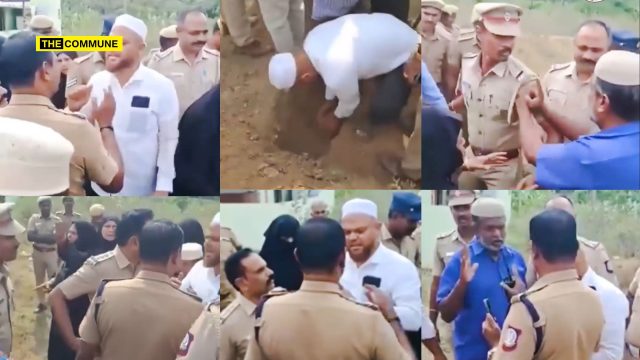
Hindus led by Hindu Munnani have taken to the streets to pushback against the DMK government’s draconian attitude in denying Hindus their fundamental right.

Scuffle broke out between the police and protesting devotees as they attempted to cross the barriers erected.

Section 163 of the Bharatiya Nagarik Suraksha Sanhita (BNSS) has been imposed in Thirupparankundram.

Image

The police at the spot are being grilled with questions by Hindu advocates while they have been taking instructions from above and denying entry to Hindus citing vague reasons.

Image

A Watershed Moment For Hindus In Tamil Nadu

Today’s lighting, if it proceeds under CISF watch, could set a precedent for devotee-led enforcement of religious rights when state machinery falters. It also amplifies calls for HR&CE reforms, with activists demanding audits of temple lands amid encroachment fears. The DMK government, has once again shown its anti-Hindu face which is going to eventually lead to Hindu consolidation.

Subscribe to our channels on WhatsAppTelegram, Instagram and YouTube to get the best stories of the day delivered to you personally.
The Bhasin Files: How The Kashmir Times Promoted Anti-India Agenda For Years

On 20 November 2025, the State Investigation Agency (SIA) of the Jammu & Kashmir Police raided the Kashmir Times office in Jammu for allegedly promoting anti-national activities. During the search, officers recovered around 14 AK-47 cartridges, pistol rounds and three grenade levers. The SIA accused Executive Editor Anuradha Bhasin and the newspaper of participating in a “criminal conspiracy with secessionist and other anti-national entities” operating within and outside Jammu and Kashmir.

This report documents sixteen incidents from 2006–2025 that illustrate how Bhasin and Kashmir Times consistently amplified anti-India narratives, defended ISI-linked actors, legitimised pro-Pakistan positions and normalised Islamist violence, reflecting a long-running pattern of hostile information activity.

#1 SIA Raid on Kashmir Times Office, Ammunition Seized – 20 November 2025

On 20 November 2025, the J&K Police’s State Investigation Agency raided the Kashmir Times office in Jammu for alleged anti-national activity. Officials recovered around 14 AK-47 cartridges, pistol rounds and three grenade levers. An FIR under the Unlawful Activities (Prevention) Act was filed against the organisation, its promoters and Executive Editor Anuradha Bhasin. The SIA alleged a criminal conspiracy between the newspaper and secessionist or anti-national entities operating inside and outside the Union Territory.

#2 Article Downplays Terror, Deflects Pakistan’s Role – 17 November 2025

On 17 November 2025, Anuradha Bhasin published an article titled Inventing an Enemy Within, arguing that criticism of “white-collar terrorism” after the Delhi blast which killed 13 people was being used to promote Islamophobia, particularly because some accused individuals were Muslim doctors.

She also wrote that Pakistan had not been explicitly blamed since India had “learned the hard way” that the world had no appetite for nuclear brinkmanship and Pakistan’s military capability “couldn’t be undermined.” The article shifted focus away from the jihadist nature of the attack.

#3 J&K Government Seizes Banned Book Copies – 5 August 2025

In August 2025, the J&K government banned Anuradha Bhasin’s book A Dismantled State: The Untold Story of Kashmir After Article 370, citing propagation of false, secessionist narratives. The book included claims that the revocation of Article 370 made Kashmir “occupied” and that supporters of “Azadi” viewed the move as confirmation that “the only legal link” with India was broken. Authorities conducted seizures of the book as part of a statewide crackdown on what they described as seditious literature. The episode intensified debate around the political messaging embedded in Bhasin’s writings.

#4. Bhasin Suggests Islamist Attack Was ‘Anticipated Anger’ – 3 May 2025

After the Islamic terror attack in Pahalgam on 22 April 2025, in which Hindus unable to recite the Kalma were executed, Anuradha Bhasin told The Frontline (The Hindu) that the violence was “anticipated” by observers of Kashmir’s situation.

Bhasin said, “For many of us, who have been closely observing Kashmir for years, this is something that could have been easily anticipated. Not exactly in the manner in which it eventually happened, but certainly all of us knew that there could be an explosion of venom.”

She linked the attack to “deepening resentment” post-Article 370. Critics argued that her explanation normalised sectarian killings and framed a targeted jihadi massacre as a predictable “outburst.” The comment was seen as minimising the ideological motivation behind the attack.

#5 Anti-Army Caravan Article Shared; Kashmir Times Uses Pakistan’s PoK Terminology – 4 February 2024

In February 2024, Bhasin shared a Caravan article alleging that the Indian Army tortured and killed civilians. Kashmir Times was simultaneously noted for referring to Pakistan-occupied Jammu & Kashmir as “Pakistan-administered Kashmir” or “PaJK,” and adding qualifiers such as “which India calls PoK.”

Archived link of Caravan article

This terminology mirrored Islamabad’s lexicon. The article was later taken down after government action.

#6 Kashmir Times Publishes Prashant Bhushan’s Article Against SC’s 370 Verdict – 17 December 2023

On 17 December 2023, Kashmir Times carried an article by advocate Prashant Bhushan alleging the Supreme Court had “betrayed” the Constitution by upholding the abrogation of Article 370.

Bhushan publicly linked by critics to narratives around the 2020 Delhi riots attacked the verdict’s reasoning and characterised the court’s stance as enabling central overreach. The newspaper’s decision to publish the article seemed to be part of a pattern of amplifying legal arguments aligned with separatist or anti-government positions on J&K.

#7 Bhasin Calls Article 370 Abrogation a Constitutional Fraud – 9 December 2023

On 9 December 2023, Bhasin published a detailed essay arguing that Article 370 was not a temporary provision and that its abrogation amounted to a political and constitutional “fraud.” She contested the central government’s legal reasoning and dismissed the Supreme Court’s view that Article 370 was transitional.

The essay held that Jammu and Kashmir’s special status should not have been revoked. The piece was another example of using opinion writing to question the legitimacy of India’s constitutional decisions on J&K.

#8 NYT Op-Ed Alleging Repressive Media Climate Under Modi – 8 March 2023

On 8 March 2023, Bhasin wrote a New York Times op-ed titled Modi’s Final Assault on India’s Press Freedom Has Begun.

She accused the government of imposing repressive media controls, intimidating independent outlets and creating an “information vacuum” in J&K. She claimed that Kashmir Times could not survive under the prevailing environment.

The article fully misrepresented the situation by projecting India as suppressing dissent and aligned with foreign commentary echoing Pakistan’s narrative.

#9 Srinagar Office Sealed After Death of Founder Ved Bhasin – 19 October 2020

On 19 October 2020, the J&K administration sealed one of the two government-allotted properties used by Kashmir Times in Srinagar. One property functioned as office space; the other had been allotted as the residence of founder Ved Bhasin, who died in 2015. Authorities stated that the family failed to vacate the property despite notices. Anuradha Bhasin alleged that officials “locked down” the office unlawfully. The dispute highlighted longstanding clashes between the newspaper and the administration over state-allotted accommodations.

#10 Bhasin Moves Supreme Court Against Media Restrictions After 370 Abrogation – 10 August 2019

On 10 August 2019, following the abrogation of Article 370 and the imposition of restrictions in J&K, Anuradha Bhasin approached the Supreme Court challenging curbs on press movement and internet shutdowns.

The case Anuradha Bhasin v. Union of India (2020) led the Court to hold that restrictions must be necessary, proportionate, temporary and publicly notified, with periodic review. The petition became a significant legal test case, though critics argued that her challenge was part of broader anti-abrogation activism.

#11 Ved Bhasin’s Links to ISI Mole Ghulam Nabi Fai – 7 November 2015

After Ved Bhasin’s death in 2015, ISI-linked Kashmiri lobbyist Ghulam Nabi Fai praised him as someone who believed Kashmir should be a separate state.

Fai, later convicted in the U.S. for concealing ISI funding, had longstanding ties with Bhasin, who frequently engaged with his network. Fai described Ved Bhasin as a supporter of positions aligned with Pakistan’s Kashmir narrative.

Image Source: OSINTWa.com X handle

The obituary note revived questions about the newspaper founder’s ideological leanings.

#12 JKLF Remembers Ved Bhasin’s Separatist Positions – 2015

Following Ved Bhasin’s death in 2015, the Jammu and Kashmir Liberation Front (JKLF) and associated networks commemorated him in Pakistan and elsewhere.

The tributes highlighted Ved Bhasin’s sympathy for separatist positions, including support for JKLF founder Maqbool Bhat. These memorial events showed the esteem in which separatist groups held him, reinforcing earlier allegations of his alignment with Pakistan-backed narratives. For critics, this reinforced concerns about the ideological inheritance of Kashmir Times under his daughter Anuradha Bhasin.

#13 Articles Glorifying Afzal Guru and Maqbool Bhat – 14 February 2014

On 10 February 2014, a year after Parliament attack convict Afzal Guru was executed, Anuradha Bhasin wrote in Countercurrents portraying Guru as a victim of Indian injustice and describing him as a “martyr of India’s arrogance.”

She argued that he lacked a fair opportunity to defend himself.

The article also expressed sympathy for separatist leader Maqbool Butt, executed in 1984.

This piece can be seen as overt glorification of convicted terrorists and a continuation of separatist-aligned editorial rhetoric.

#14 Bhasin Defends ISI-Linked Lobbyist Ghulam Nabi Fai – 25 July 2011

On 25 July 2011, after U.S. authorities charged Ghulam Nabi Fai with using ISI funds for anti-India lobbying, Anuradha Bhasin wrote a long article defending him. She downplayed the charges, argued the ISI was “not an outlawed outfit,” and criticised Indian media for exposing his Pakistan-backed operations.

Despite Fai later pleading guilty to concealing ISI funding and being jailed, Bhasin continued associating with his networks.

In 2015 she was featured at the International Kashmir Conference where Fai remained a key figure.

#15 EPW Paper Portraying Security Forces as Oppressors – 10 July 2010

On 10 July 2010, Bhasin published an Economic & Political Weekly paper titled Fuelling Rage in Kashmir. She described Indian security forces as brutal actors responsible for killing Kashmiri youth, referencing the death of a nine-year-old boy. The paper argued that forces responded excessively even to stone-pelting protests and suggested that government “insensitivity” was provoking public anger.

Critics said the article selectively portrayed security responses while ignoring separatist violence.

#16 Participation in ISI-Linked Fai Conferences – 20–21 July 2006

Between 20–21 July 2006, Ved Bhasin and Anuradha Bhasin attended conferences in the U.S. organised by ISI operative Ghulam Nabi Fai and his Kashmir American Council. Attendees included ISI-linked figures such as Ejaz-ul-Haq, along with academics like Angana Chatterji and activist Gautam Navlakha.

Image Source: OSINTWa.com X handle

These events later came under scrutiny after Fai’s conviction for secretly funnelling ISI money into anti-India lobbying. Attendance at these conferences has been cited as early evidence of alignment with Pakistan-backed advocacy networks.

Subscribe to our channels on WhatsApp, Telegram, Instagram and YouTube to get the best stories of the day delivered to you personally.