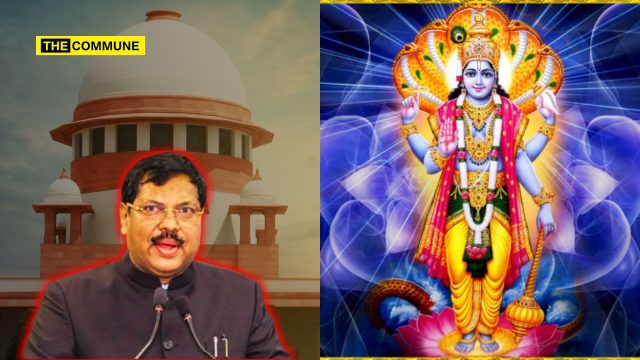
The Supreme Court on Tuesday declined to entertain a plea seeking the restoration of a 7-foot beheaded idol of Lord Vishnu at the Javari temple, part of the Khajuraho group of monuments in Madhya Pradesh. The case was filed under the title Rakesh Dalal v. Union of India.
A Bench comprising Chief Justice of India BR Gavai and Justice Augustine George Masih said that the matter did not fall under the jurisdiction of the Court but under that of the Archaeological Survey of India (ASI).
CJI Gavai, addressing the petitioner, remarked, “Go and ask the deity itself to do something now. You say you are a staunch devotee of Lord Vishnu. So go and pray now. It’s an archaeological site and ASI needs to give permission etc. Sorry.”
Notably, these remarks came from CJI BR Gavai, a Neo-Buddhist whose father had embraced Buddhism alongside Dr. B.R. Ambedkar in 1956.
The plea was filed by Rakesh Dalal, who contended that the idol had been mutilated during Mughal invasions and has remained in that state despite multiple representations made to the government seeking its restoration.
The petition recounted the history of the Khajuraho temples, which were originally built by the Chandravanshi kings, and alleged that both colonial neglect and post-independence inaction had resulted in the idol remaining unrepaired even 77 years after independence.
Dalal further argued that the government’s refusal to restore the idol violated devotees’ fundamental right to worship. The petition highlighted the protests, memoranda, and campaigns regarding the temple, which it said had gone unanswered.
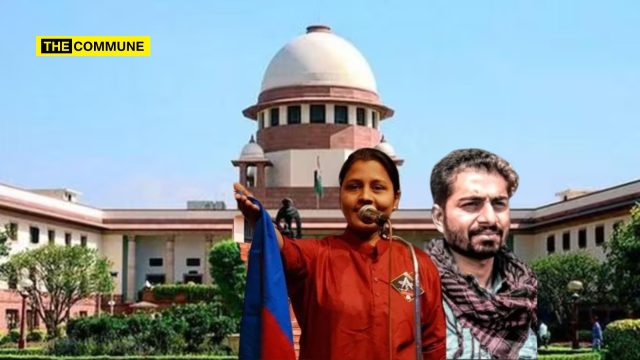
The Supreme Court on Tuesday (16 September 2025) granted interim bail on medical grounds for a period of six weeks to Bhima Koregaon–Elgar Parishad case accused Mahesh Raut, who has been under custody since June 2018 after being arrested under the Unlawful Activities (Prevention) Act, 1967, over alleged Maoist links.
A bench comprising Justice MM Sundresh and Justice Satish Kumar Sharma passed the order after Senior Advocate CU Singh submitted that Raut is suffering from Rheumatoid Arthritis, an autoimmune disorder that attacks the bones and muscles.
Although Additional Solicitor General SV Raju was not present, another counsel appearing on behalf of the National Investigation Agency (NIA) opposed the plea, contending that the allegations against Raut are serious since he is accused of transferring funds to Maoists.
Singh countered by pointing out that Raut was granted bail on merits by the Bombay High Court on 21 September 2023. However, the High Court had stayed its order for a week to allow the NIA to file an appeal. Subsequently, the NIA approached the Supreme Court, where a bench comprising Justice Aniruddha Bose and Justice Bela M Trivedi admitted the appeal and extended the High Court’s one-week stay until 5 October 2023. Since then, the stay has been extended from time to time.
Taking note of the submissions, Justice Sundresh observed that the Court is inclined to grant bail on medical grounds. The bench ordered:
“The applicant is seeking interim bail on medical grounds coupled with the fact that he was actually granted bail, we are inclined to grant medical bail for a period of 6 weeks.”
The plea of co-accused Jyoti Jagtap was also mentioned during the hearing by Senior Advocate Aparna Bhat, who submitted that the case has been pending for the last six to seven years. The bench said it will take up Jagtap’s case in October.
Jagtap, an activist and member of the cultural organisation Kabir Kala Manch, along with 16 others, was accused by the NIA of being responsible for the caste violence at Bhima Koregaon in Pune. According to the Pune Police (and later the NIA), inflammatory speeches at the Elgar Parishad, an event to commemorate the two hundredth anniversary of the Battle of Koregaon Bhima, triggered violent clashes between Maratha and Dalit groups near the village.
Following this, 16 activists, including Jagtap and Raut, were arrested for allegedly conspiring and planning the violence. They were charged under various provisions of the UAPA, based primarily on letters and emails retrieved from their electronic devices.
In February 2022, a special NIA court rejected Jagtap’s bail application, a decision later upheld by the Bombay High Court in October 2022. While dismissing her plea, a division bench of the High Court remarked that the dialogues in Kabir Kala Manch’s plays ridiculing phrases such as ‘Ram Mandir’, ‘Gomutra’, and ‘Acche Din’, which targeted the democratically elected government, incited hatred and indicated a larger conspiracy.
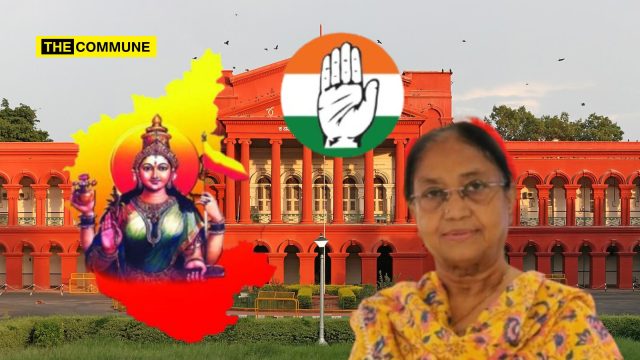
The Karnataka High Court dismissed a batch of petitions challenging the state government’s invitation to Booker Prize winner Banu Mushtaq as the chief guest for the Dasara festival inauguration in Mysuru.
A division bench of Chief Justice Vibhu Bakhru and Justice C M Joshi held that “Participation of a person practicing a particular faith or religion, in celebrations of festivals of other religion does not offend the rights available under the Constitution of India.”
The petitioners had argued that it would be inappropriate for Mushtaq, a non-Hindu, to perform traditional Hindu rituals like lighting the sacred lamp, offering fruits and flowers to the deity, and chanting Vedic prayers, contending that such acts should only be performed by a Hindu.
The court, however, noted that “Undisputedly, respondent No.4 (Banu Mushtaq) is an accomplished author and 2025 Booker Prize winner. She is also a lawyer and a social activist. She has also served in various public offices…”
The bench observed that the petitioners’ right to practice and propagate religion under Article 25 of the Constitution “cannot be said to have been curtailed by merely inviting Mushtaq, an accomplished person.”
The state government, represented by Advocate General Shahi Kiran Shetty, argued that the inauguration is a state-organized function, not a temple-led religious ceremony, and cited a 2016 circular mandating that all temples under the state Religious Endowments Department grant free entry to all, without distinction of caste, community, religion, or gender.
The court agreed with the state’s position, noting that the Dasara festivities are organized by the state annually and have historically invited accomplished individuals from various fields. The decision to invite Mushtaq was made by a committee comprising elected representatives and government officials.
In its conclusion, the bench stated, “We are unable to accept that any legal or constitutional right of the petitioners is violated by extending the invitation to respondent No.4 to inaugurate the State sponsored Dasara festivities. In our view, the extension of invitation to respondent No.4 does not fall foul of any of the values enshrined in the Constitution of India.”
It added that “no right of any religious denomination or any Section thereon has been curtailed or restricted. None of the persons managing any religious denomination have come forward to claim that their right to maintain their institutions for religious and charitable purposes is being violated.”
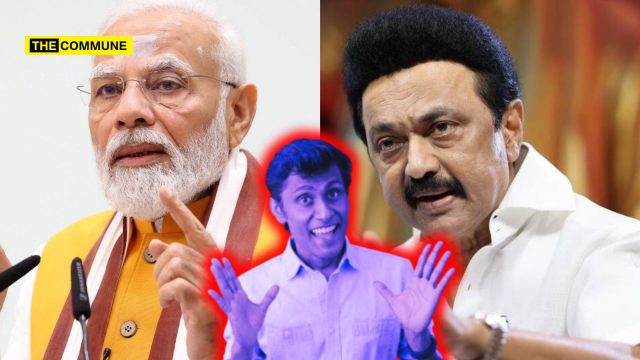
Stand-up comic Alexander, in yet another so-called “comedy performance” Alexperience, has exposed his hypocrisy by targeting Prime Minister Narendra Modi with tired jibes and shallow mockery.
In the video, he says, “You communicate a lot more than all the things you are trying to say. This fundamental of performing arts—have you noticed who consistently delivers a strong performance? In politics I am saying, I have been watching you for 10, 12 years now. It is Ji only, no way you can beat him. Especially in the middle area where the music is really strong, believe me. He is not a singer, at least from what we know so far. This “AI” is slowly changing everything. Everybody is singing.
So, “Ji” is not a singer, but he has kept the raga intact, – “mitroooon” friends! This is how we shout (Ipdi thaan namma katharaooon). Whatever raga you want, it sits beautifully adapt it. Any notation you want to say, any philosophy you want to sell—from the Thirukkural to Star Wars—it fits beautifully in that tune. May the force be with you, mitroooon!
By saying it like this, we will sell everything (ipdi solliye ellathayum vithruvom). Honestly, I’m telling you, music he is very strong. Drama, you don’t even have to ask. Like when I watch him on TV without any subtitles, I clearly understand everything. I don’t understand a single word of Hindi, but he communicates everything through body language, mitroooon! Let’s go around town (oorellam suttharom) if someone says something, we send enforcement and press everyone’s mouth. (Enforcement anupchu ellar vaayayum potharom)
The drama is very strong, I’m telling you. “Ji” is so strong in these two areas—music and drama—it’s so strong in these two areas. Text, it doesn’t matter, man. How does it even matter? He is able to pick up anything on the fly and just figure it out.
Yes teleprompter. I am here, I can hear you, tell me, we’re doing in Tamil today? Good idea. We should keep trying. Okay, Purna noor—what is that? Pura nanuru is Sanga literature, Sangam literature. No no no, get to the point. I told you I don’t have time for rehearsal. Let’s go. Lights on please. Let’s go. Come on, mitroooon! Bharat’s great poet, Kannan Poongun dranar, Tamil poetry, said in Tamil, Yadumureeee Yaavaruuum Keliiiir… What a performance! What a performance! All the performances. I mean, in every performance, from the scenes, let’s get back to the song of the day.”
The comic’s routine included insinuations that the Prime Minister is “selling the country” to industrialists like Ambani and Adani – a tired, baseless trope often parroted by those with no understanding of economic policy or national development. What Alexander fails to acknowledge is that these very industrialists have invested in job creation, infrastructure, and technology, driving growth that benefits millions. Would Alexander ever mock the DMK government’s own cozy ties with industrialists in Tamil Nadu? Unlikely.
Mocking Linguistic Efforts: A Low Blow
Most disgracefully, he even mocked Modi’s attempts at speaking Tamil. Alexander sarcastically referred to his delivery and phrasing. What the comic conveniently ignored is that PM Modi has consistently made efforts to connect with Tamil people in their language – a gesture of respect and inclusion. How many Tamil politicians including Alexander’s beloved DMK figures or comedians have ever attempted to speak in Hindi or other languages to engage with a national audience? The answer is few to none. Yet, Modi’s sincere attempts are mocked, while those who never even try get a free pass. Mocking Modi for trying only reveals the comedian’s arrogance, not wit.
Foreign Trips: Diplomacy Or Punchline?
Alexander also took aim at Modi’s foreign visits, implying they are frivolous or self-serving.
Unlike Rahul Gandhi who disappears often on secret vacations to Vietnam, Myanmar, and Malaysia or MK Stalin who goes on luxurious foreign trips with his entire family, PM Modi’s foreign trips are all about strengthening India’s global diplomacy.
If we’re able to deal with US and Russia at the same measure, it is because of PM Modi’s outreach.
Be it increased foreign investment, and enhanced global standing for India, from G20 leadership to stronger defence and trade partnerships, Modi’s diplomacy has put India on the world stage like never before. But for Alexander, it’s just another punchline; never mind the facts.
Enforcement Agencies
Alexander also took a swipe at the Enforcement Directorate (ED), suggesting it is used as a political tool. While he is quick to point fingers at the central government, he remains conspicuously silent on the rampant corruption and political vendettas within Tamil Nadu. But what is wrong with cracking down on corruption? Should the ED sit quietly while crores of taxpayer money are looted? Or is Alexander upset because some of his political favourites are under the scanner? Would he ever dare to mock MK Stalin’s administration for its misuse of state agencies or its failure to act against corrupt allies? The silence is deafening.
Mocking Ram Mandir
In another video also from Alexperience but said to be deleted, Alexander is seen mocking the 22 January Ram Mandir Pran Prathistha at Ayodhya and PM Modi’s temple visits in the run up to the event.
Alexander takes repeated digs at Prime Minister Narendra Modi and the Ram Mandir pran prathistha. He sarcastically calls Modi “more happening than Lord Ram” during January 2024, suggesting that the Prime Minister overshadowed the temple consecration with his presence and travels. Alexander further ridicules Modi’s packed schedule, joking that he was appearing in multiple places at once “almost like God.” He echoes opposition claims that the consecration was timed for electoral gain, hinting that Modi used the religious event to secure votes. Through these remarks, Alexander trivializes both the spiritual importance of the Ram Mandir and the Prime Minister’s role in the historic occasion.
He is also seen mocking the slogan Jai Shri Ram by saying “Mitroooon Jai Shri Ram Katharooooom” – meaning friends, let’s shout Jai Shri Ram.
Will Alexander Dare Mock MK Stalin?
The question remains: Alexander is bold enough to take cheap shots at Modi, but will he ever have the courage to mock Chief Minister M.K. Stalin? Will he dare question the DMK’s scandals, its freebies-for-votes model, the multiple foreign trips that have yielded zero results or how MK Stalin uses bits of paper to read out his answers/speeches or the endless corruption cases surrounding its ministers? Or does his “comedy” have limits when it comes to local satraps?
Will he have the guts to call out the hate spewed by DMK leaders against Hindus?
Real comedy punches up. Alexander, sadly, chooses to play court jester for the establishment in Tamil Nadu while throwing stones at a leader who has given India global stature. Until he proves otherwise, his “satire” is nothing more than selective cowardice dressed up as humour.
Another Religious Bigot?
Until recently, Alexander’s comedy was never viewed through a religious lens. His humor had a universal charm—whether mimicking a Brahmin uncle at a concert or offering a light take on the story of Ganesh, it never landed offensive. But of late, his performances have shifted toward needless virtue-signalling and selective jabs at PM Modi and the Hindutva cause. This raises an uncomfortable question: is his art now being clouded by religious zeal?
Subscribe to our channels on Telegram, WhatsApp, and Instagram and get the best stories of the day delivered to you personally.
In a major development concerning the use of temple resources in Tamil Nadu, the Supreme Court on 16 September 2025 rejected the DMK government’s plea seeking a stay on the Madras High Court order that had quashed government orders permitting construction of wedding halls using temple funds and properties.
A bench comprising Justices Vikram Nath and Sandeep Mehta made it clear that no interim relief would be granted, effectively halting all ongoing or proposed wedding hall projects financed through temple resources. The matter has now been posted for further hearing in November 2025.
Great news for Hindus from Supreme Court !
TN Govt’s plea to stay the order of the Hon’ble Division Bench quashing the Government Orders allowing Wedding Hall constructions using temple funds and properties
The case has been closely followed by temple activists and devotees, who have argued that temple funds collected through offerings by worshippers should not be diverted for non-religious purposes. Senior counsels Guru Krishnakumar, P. Valliappan, and Haripriya Padmanaban appeared for the petitioners, assisted by Advocate-on-Record Shyamohan Nair.
This ruling comes weeks after the Supreme Court, on 30 August 2025, dismissed a separate plea filed by activist TR Ramesh against the Madras High Court’s decision permitting the state government to lease land belonging to Sri Somanathaswamy Temple in Kolathur for establishing a government arts and science college. The bench of Justices Vikram Nath and Sandeep Mehta had then observed that it was not inclined to interfere with the High Court’s reasoning that the lease was for a benevolent purpose.
The broader issue of temple land and fund usage has triggered political controversy in Tamil Nadu, with the DMK government defending its policies under the Hindu Religious and Charitable Endowments (HR&CE) Department, while opposition parties and Hindu groups allege systematic diversion of temple resources for state projects.
HR&CE Minister P.K. Sekarbabu had welcomed the August order, claiming that the state had consecrated over 3,500 temples since the DMK came to power, with the number expected to reach 4,000 by January 2026.
Subscribe to our channels on Telegram, WhatsApp, and Instagram and get the best stories of the day delivered to you personally.
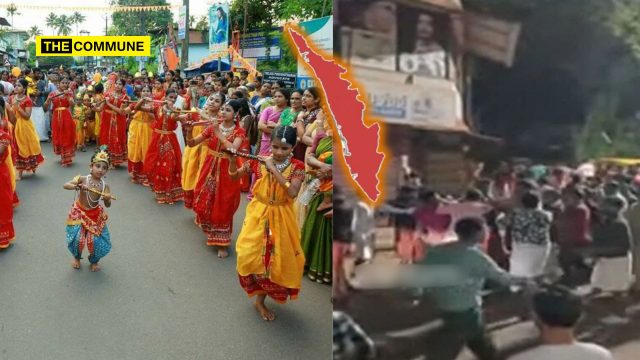
Janmashtami celebrations in Kerala on 14 September 2025 were marred by a series of violent disruptions and alleged attacks by Communist goons, targeting peaceful Shobha Yatras, colourful processions organised by Balagokulam, a children’s cultural movement.
Watch: CPM Workers Allegedly Disrupt Janmashtami Processions, Young Children Caught in Chaos
Young Krishnas and Radhas faced chaos during Kerala’s Janmashtami Shobha Yatras. Read on to know what happened.
In one of the most serious incidents, reported from Narippatta near Kozhikode, a devotional song dedicated to Sri Ram played during a Sri Krishna Jayanti procession provoked a group of alleged CPM workers into violence. According to local reports and visuals circulated on social media, the mob attacked participants, including young children dressed as Krishna and Gopikas, and their parents.
A young girl dressed as a Gopika sustained serious injuries, including a wound to her neck and a torn earlobe, and was treated at a government medical facility. Tableau vehicles accompanying the procession were also vandalised. Eyewitnesses and BJP district officials identified the assailants as local CPM members, including individuals previously accused in criminal cases.
However, as has sadly become routine with Hindu celebrations these days, those opposed to Dharma once again tried to play spoilsport. One such incident was reported from Narippatta, near Kozhikode, where CPM workers allegedly disrupted a yatra.
Despite the intimidation, the children continued their performance, protected by a circle of volunteers who ensured the procession could proceed.
Despite the disruption, the young Radhas and Krishnas were determined not to give up, especially after days of practice and rehearsal. In the video, the children can be seen dancing joyfully, undeterred by the ruckus around them.
A similar attempt to disrupt celebrations occurred in Alappuzha, where CPM workers allegedly waved flags of the Democratic Youth Federation of India (DYFI) featuring Marxist revolutionary Che Guevara in front of the devotees in an apparent act of provocation.
Another incident was reported from Alappuzha, where CPM workers allegedly tried to provoke devotees and disrupt a Shobha Yatra by waving DYFI flags featuring Che Guevara.
In Udumbannoor, a communist group allegedly led by Alphith and Anandu assaulted RSS/BJP karyakartas, destroyed decorations prepared for Sri Krishna Jayanthi, and even attempted to vandalize their vehicles.
In Kerala, this is the reality every RSS/BJP karyakarta faces.🚨🚨
At Udumbannoor, CPM goons led by Alphith & Anandu attacked our workers, destroyed decorations for Sri Krishna Jayanthi, and even tried to vandalize their vehicles.
The Kerala unit of the BJP has strongly condemned the attacks. C. R. Praful Krishna, BJP Kozhikode North District President, demanded the immediate arrest of the perpetrators and questioned the silence of the CPM leadership over what he called “blatant insults against Hindu beliefs.”
Critics point to a recurring pattern where Hindu processions are routinely targeted, often with minimal coverage from mainstream media and a lack of official recognition as communal incidents.
Tensions are rising within the opposition I.N.D.I alliance in Tamil Nadu as state Congress leaders openly demand a larger share of seats and a firm commitment for a role in the government, moving beyond a mere electoral arrangement.
Rajesh Kumar, the President of the Tamil Nadu Congress Legislature Party, stated that the party will not accept being limited to contesting 25 seats again in the upcoming 2026 assembly elections. He emphasized that the Congress expects “due respect” and a clear path to participation in the cabinet and governance, signalling a hardened stance in future negotiations with the ruling Dravida Munnetra Kazhagam (DMK).
“This time, if 25 seats are given to the Congress, it will not be acceptable. We cannot continue to function like in the past,” he declared. He added that the party has communicated its position to the national high command and will insist on being part of a coalition government, not just an electoral ally.
The demand stems from a growing sentiment within the state unit that the party is undervalued. In the last elections, the Congress contested 25 seats as part of the DMK-led alliance and won 18. Many leaders had then expressed discontent, feeling the allocation was insufficient compared to the party’s ground strength and historical presence.
Adding a new dimension to Tamil Nadu’s political calculus is the mention of actor Vijay. Kumar revealed that before launching his political party, Vijay had met with Rahul Gandhi and was inclined to join the Congress. However, due to age restrictions for the desired post of Youth Congress President, the move did not materialize. Kumar noted that Vijay has consistently praised Rahul Gandhi and condemned his arrest, drawing attention to a potential, albeit missed, alignment.
Following the massive crowds at Vijay’s recent public rally in Trichy, a section of Congress leaders is reportedly warming to the idea of a potential alliance with the actor, seeing it as a viable alternative to the current partnership with the DMK.
With Rahul Gandhi slated to tour the state after the Bihar elections, the Congress’s strategy for Tamil Nadu is expected to take a definitive shape, potentially altering the dynamics of the opposition alliance.
The Kerala government has issued strict instructions prohibiting the display of symbols, flags, and decorative hangings of political organisations inside temple premises. The Devaswom Department has directed that temples under the control of Devaswom Boards, as well as those receiving financial assistance from the government, must strictly adhere to the new rules.
The order specifically bans single-colour flags, images of individuals associated with political movements, and any publicity materials that could incite religious or communal rivalry. Officials have emphasized that the restrictions are mandatory during festival seasons to prevent any potential conflict.
Special provisions have been outlined for Thrissur’s Thekkinkadu Maidan, which is occasionally rented for public events. In such cases, flags and hangings will only be allowed outside the temple compound wall, within temple-owned land or buildings, and with prior approval from the Devaswom Commissioner or the Administrative Officer.
To ensure public awareness, the government has instructed that a circular detailing these guidelines be prominently displayed in all affected temples. The move aligns with previous directions issued by the Kerala High Court, underscoring the state’s effort to maintain the sanctity of temple spaces free from political influence.
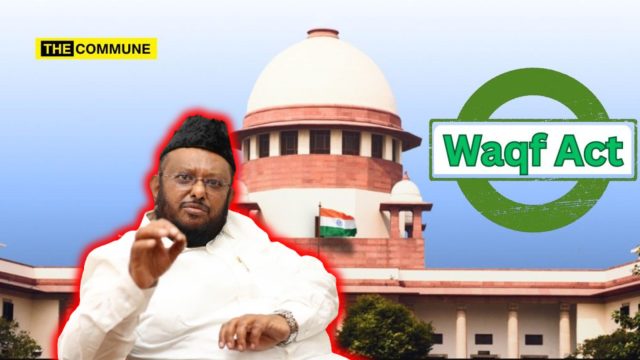
MH Jawahirullah S.M.O., President of the Manidhaneya Makkal Katchi (MMK) and DMK ally, has strongly criticised the interim judgment of the Supreme Court on the Waqf Amendment Act 2025, calling it a “wrong verdict recognising several adverse amendments.”
In a statement, Jawahirullah highlighted that the Court’s order fails to stay numerous provisions that, according to him, violate the fundamental rights of Muslims. He expressed concern over the Court allowing only a limited number of non-Muslims on the Central and State Waqf Boards, calling it “discriminatory.”
While welcoming certain aspects, such as the stay on the rule requiring proof of five years of following Islam for creating a Waqf and protections against confiscation of Waqf properties during legal disputes, he criticised the judgment for leaving significant sections unaddressed. He specifically noted that Sections 104, 107, and 108, which pertain to non-Muslims creating Waqfs, recovery of encroached Waqf properties, and Waqfs of emigrants were omitted from consideration, potentially allowing state governments to appropriate Waqf properties.
Jawahirullah described the interim order as “alarming” and warned that it gives state authorities undue power to define who qualifies as a Muslim eligible to create Waqfs. He called on the Supreme Court to provide full protection to Muslim religious endowments and prevent misuse of state power over Waqf properties.
In a post on his official X handle, he wrote, “Waqf Amendment Act Verdict: Wrong Verdict Recognizing Adverse Amendments
A statement issued by the President of the Humanity People’s Party, Professor M.H. Jawahirullah S.M.O.
The interim judgment given by the Supreme Court in the case related to the Waqf Amendment Act 2025 is a wrong verdict recognising several adverse amendments. This verdict is not in a way that provides complete satisfaction.
There were 44 amendments passed by the Union BJP government in Parliament. (In reality, 115 amendments were made, including 33 additions, 45 substitutions and 37 deletions). These 44 absurd amendments have not been fully taken into account and only a few amendments have been taken into account in this verdict.
Although the Supreme Court has stayed some sections of the Waqf Amendment Act in the Supreme Court verdict, it is very disappointing that several sections that violate the fundamentals of the Constitution have not been given an interim stay.
The Supreme Court in its judgment has stated that a maximum of 4 non-Muslims can be members of the Central Waqf Commission out of 22 members and a maximum of 3 non-Muslims can be members of the State Waqf Boards out of 11 members. This order is discriminatory. When non-Muslims cannot become members of the Hindu Religious Endowments Department or the Sikh Gurudwara Management, it is discriminatory to include non-Muslim members only in the Waqf Board.
The Supreme Court has temporarily stayed the amendment rule that requires a person to prove that he has been following Islam for at least 5 years to make a Waqf. It is welcome that the Supreme Court has said that this rule is not necessary for the creation of a Waqf. But it has not stopped there and has stated that the ban will continue until the state governments formulate rules on who is a Muslim who follows Islam and is eligible to make a Waqf. It gives the state governments the right to define who is a Muslim who follows Islam. This has created a risk that only Muslims who are favored by the state government will be able to make waqf.
What is welcome in the judgment
-The Supreme Court’s judgment that when a dispute arises regarding waqf properties and it is a case in court, they cannot be confiscated or changed in official records until the final judgment is reached is welcome. -The court has also banned the section that said that the right to waqf property should be proven based on the statement of a government official. -It is also welcome to clarify that no government official can personally decide who is eligible to create a waqf. -The Supreme Court has ordered that when an investigation is underway regarding a particular waqf, it will not be considered as a waqf and no waqf property should be confiscated or its records should not be changed until the final judgment is reached.
The court’s interim judgment on waqf by user is very alarming. The Supreme Court’s view is that mosques, which have been in use for centuries, have posed a great danger to burial grounds.
The Supreme Court’s statements in paragraphs 143 to 152 of the interim order have further complicated the issue.
-Section 104, which allowed non-Muslims to make Waqfs -Section 107, which stated that the Limitation Act, 1963, would not apply to the recovery of encroached Waqf properties -Section 108, which contained special provisions regarding Waqf properties of those who had left the country All three sections were deleted in the amendment act. It is very disappointing that the Supreme Court did not mention these three deleted sections in its judgment. The interim judgment did not mention Sections 107 and 108, which will help some anti-Muslim state governments to appropriate Waqf properties until the final judgment is delivered……..”
வக்ப் திருத்தச் சட்டம் தீர்ப்பு: பாதகமான திருத்தங்களை அங்கீகரிக்கும் தவறான தீர்ப்பு
மனிதநேய மக்கள் கட்சியின் தலைவர் பேராசிரியர் எம் எச் ஜவாஹிருல்லா ச.ம.உ. வெளியிடும் அறிக்கை
வக்ப் திருத்தச் சட்டம் 2025 தொடர்பான வழக்கில் உச்சநீதிமன்றம் வழங்கியுள்ள இடைக்காலத் தீர்ப்பு பாதகமான…
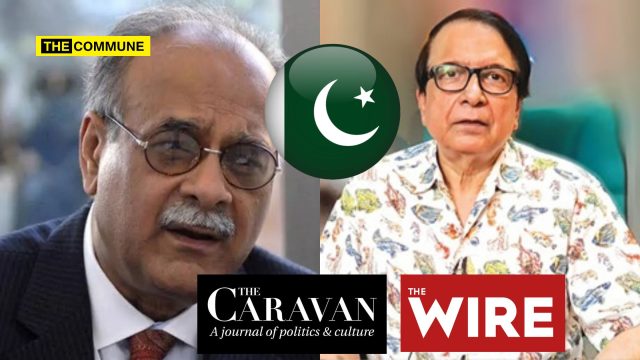
In a shocking admission aired on Pakistan’s Samaa TV, prominent Pakistani journalist Najam Sethi explicitly named several Indian media platforms and individuals whom he credited with advancing narratives favorable to Pakistan’s interests, often at the expense of India’s sovereignty and security.
In the video, now viral online, he says “In India, there are some very powerful things coming out in Caravan magazine. Similarly, in India, there are independent sources that provide challenging analysis. One such source is The Wire; it is something you should look at. There are many independent alternative news sources like this. Among military experts, there is Scott Ritter, who is an American Pentagon and defence analyst. Similarly, in India, there is Pravin Sawhney who does a great job, and he provides very powerful analysis. So, I can name a lot, a lot of sincere people. If you want, I can definitely make a list next time.”
While this is not news to most Indians who are observing the narratives set by the said portals and individuals, this can come as a surprise to those naive followers of the portals.
The Wire
The Wire is a leftist, pro-Congress rag masquerading as a news portal that has been twisting Indian narratives to suit those of the enemies, namely Pakistan. Since its launch in 2015 by Siddharth Varadarajan, The Wire, widely viewed as an ideologically-driven, far-left media outlet—has faced repeated criticism for promoting anti-India and anti-Hindutva. Over the years, it has developed a reputation not for neutral journalism but for pushing agenda-driven content, often laced with exaggeration, misinformation, or selective reporting that aligns with its ideological stance. Critics argue it behaves more like a propaganda platform than an independent news organization.
The Wire subtly distorts original news stories, tweaking language, omitting facts, or selectively quoting sources, to reshape narratives for international consumption. These manipulations are often picked up by sympathetic global outlets, feeding a broader anti-India media ecosystem abroad that damages India’s reputation on the world stage.
The Caravan Magazine
The Caravan magazine is a rabid anti-Hindu and anti-India magazine. The far-left rag has repeatedly indulged in biased reporting, plagiarism, and promoting misleading narratives, particularly against Hindus and Indian authorities. Following the success of the film Rocketry: The Nambi Effect, The Caravan resurfaced its November 2020 article on ISRO scientist S. Nambi Narayanan, reviving baseless espionage allegations despite his full vindication by the CBI, Supreme Court, and National Human Rights Commission. The magazine questioned the integrity of the CBI probe, implied former Prime Minister P.V. Narasimha Rao obstructed it, and cast doubt on Narayanan’s professional competence, ignoring Supreme Court-appointed committee reports and FIRs against 18 Kerala police officers for framing him.
In March 2023, The Caravan was accused of plagiarizing artwork from Netherlands-based artist Ghostly_t for its cover attacking External Affairs Minister Dr S. Jaishankar, which criticized him for opposing George Soros’ alleged interference in India. Initially unresponsive, the magazine later admitted the plagiarism, claiming it had hired freelance artist Samyak Prajapati and was unaware of the copied work, subsequently crediting the original artist.
In August 2023, the rag published a report on Nuh violence in Haryana, portraying Muslims as victims and largely blaming Hindus, particularly Bajrang Dal and VHP activists. The article selectively cited sources and old videos while omitting evidence of rioters attacking temples, police, home guards, and devotees, including the murder of Abhishek and other victims.
Additionally, contributing editor Salil Tripathi downplayed anti-Hindu violence in Bangladesh. He framed attacks on temples, shops, and religious processions as matters only for Bangladeshis, diverted attention with images of Muslims “protecting” temples, and ignored widespread persecution, forced resignations, idol vandalism, and coercion under Jamaat-e-Islami. The Caravan consistently skews narratives, minimizes violence against Hindus, and amplifies leftist propaganda.
Pravin Sawhney
Sawhney is yet another member of the leftist ecosystem who also contributes to The Wire. One example of his glaring pro-Congress leftist stand was seen ahead of the G-20 Tourism Working Group meeting in Srinagar in May 2023. At this time, Pravin Sawhney attempted to create fear and uncertainty about the event. He posted on X questioning the necessity of holding the meeting in Srinagar, claiming that “security forces are all over the place” and that many foreign delegates had not confirmed participation. He further described Kashmir as a “war zone,” echoing narratives propagated by Pakistani propaganda channels. The tweet, which stirred unnecessary alarm, was later deleted.
Sawhney has a history of expressing admiration for Rahul Gandhi and former Pakistani Prime Minister Imran Khan and has praised Gandhi for highlighting issues of “Hindu extremism.” His posts align with separatist and anti-India narratives, such as those propagated by the Hurriyat Conference.
Subscribe to our channels on Telegram, WhatsApp, and Instagram and get the best stories of the day delivered to you personally.