Home Blog Page 1088

P Jeevanandam: A Communist Of Those Times Who Lived A Life Of Principle

Feature Image Courtesy: Vikatan

On this day, in the year 1907, in the Boothappandi village of Kanyakumari district, Tamil Nadu, was born a man who would go on to be associated with communism and socialism, someone who followed the principles of communism, unlike self-proclaimed communists of today.

In this day and age, most Tamilians would probably remember the name Jeevanandam from the film Kaththi. But did you know that the Vyasarpadi Jiva railway station was also named after him?

A Critic Of EVR

Jeevanandam was an open critic of E V Ramasamy Naicker who made it a habit to instigate people against the Tamil Brahmins. There have been videos of members of the Dravida Kazhagam (DK) who claimed that every month they would give an account of how many poonool were cut or how many Shikha (tuft) were removed. 

In response to such behaviour, he said, “It is my humble opinion that cąstẹism in TN has not reduced, but only increased because of EVR’s methods. Cutting someone’s poonool (janẹu) and kudumi (Shikha/tuft) is an act of indecency; Such acts are how viȯlent cȯmmunal activities spread across society. This singling out of a particular community to unleash all hatred upon them will never bring in true societal changes. It is uncivil, uncouth, and despicable.”

He even condemned the actions of cutting janeu/poonool and the Shikha (tuft) by the followers of EVR. He questioned, will doing such things eradicate caste? 

His Political Life

Following India’s independence, in the 1952 Madras Legislative Assembly elections, Jeeva ran as a candidate for the Communist Party and emerged victorious in the Washermanpet constituency, which was located in the industrial working-class hub of North Madras. During his tenure as a Member of the Legislative Assembly, Jeeva advocated for the promotion of education in the Tamil language and lent his support to the linguistic reorganisation of states.

In 1959, he served as the editor of Thamarai, the literary publication associated with the Communist Party of India in Tamil Nadu, which featured contributions from several progressive and youthful writers. He also edited the magazine Janashakthi. 

How He Defended Kamba Ramayanam When It Was Tarnished By Dravidianists 

Jeevanandam, known for his eloquence, literary sensibilities, and talent, made a significant and enduring impact in Tamil Nadu by establishing the Tamil Nadu Art-Literary Federation (Tamil Nadu Kalai Ilakkiya Perumandram) in 1961. This organisation paved the way for numerous progressive art and literary movements in the region.

During a period when rival interpretations posed a threat to the standing of the medieval Tamil poet Kamban’s Ramayanam in the Tamil literary heritage, Jeevanandam staunchly defended it. This was particularly relevant as ideologues of the Dravidian movement, notably EVR, regarded Kamban’s work as a challenge to Tamil literary culture, claiming that it had been influenced by “Aryan Brahmin” culture.

In the 1950s, Jeevanandam adopted a more assertive stance in safeguarding Kamban’s legacy. He wrote extensively and delivered lectures on various literary and public platforms, vigourously defending Kamban against the Dravidian movement’s attempt to discredit him based on racial and cultural grounds. EVR had asserted that Kamban was a “slave of the Aryans (AaryaKooli)”, and the “Self-Respect Movement” even initiated a campaign to burn copies of Kamba Ramayanam in 1943.

Jeevanandam’s detailed lectures on Kamban were presented at the annual meetings of the Karaikudi Kamban Literary Association in 1954 and 1955. He spoke highly of Kamban, considering him an advocate for the cultivating class, and elucidated the humanistic elements in the Tamil rendition of the Ramayanam.

Jeeva is fondly remembered among Tamil literature enthusiasts for his role in popularising the poems of Subramania Bharathi among the Tamil public. He was also referred to as the ‘living Bharathi’ (nadamadum Bharathi) by a writer and critic who was associated with the Progressive Writers Movement in Tamil Nadu. 

In a notable instance, during a debate in the Madras Legislative Assembly in March 1955 concerning the nationalisation of Subramania Bharathi’s works, Jeevanandam appealed to the Assembly Speaker to question the authenticity of the “authorised version” of Bharathi’s poems that was circulating in Tamil Nadu. Jeeva pointed out that the revolutionary poems addressing socialism and criticising caste had been omitted from this “authorised version.” It was Jeevanandam who, for the first time, established the social perspectives of Bharathi’s works.

Simple Living

Jeevanandam lived a modest life, relying on public transportation and residing in a humble hut until his passing. Even when the former Chief Minister Kamaraj extended an offer of government housing, Jeeva declined, citing the millions of people who lacked adequate housing. In an era marked by corruption and mismanagement among the political class, Jeeva’s life serves as a reminder of simplicity, integrity, and a dedication to social transformation.

When he passed away in 1963 at the age of 56, several thousands of people turned up for his funeral in Madras. Tributes and condolence messages poured in tremendously due to the respect he earned from different sections of society. This can be largely attributed to his participation and voicing out for various movements in India, be it the nationalist movements under Gandhi or communist movements, or caste reformation movements. 

Click here to subscribe to The Commune on Telegram and get the best stories of the day delivered to you personally.
From Engineers To Fitness Innovators: Unravelling The Temple Of Strength’s Epic Journey

temple of strength

In this exclusive interview with The Commune, we have the pleasure of talking to Abhinav Kadambi and Krishna Rajaganesan, the co-founders of “Temple of Strength.” Both Abhinav and Krishna bring diverse backgrounds to their partnership, having pursued various fields of study before embarking on their journey to promote holistic strength training. Their shared passion for traditional health and fitness methods led them to establish the “Temple of Strength,” where they aim to democratise and spread knowledge about ancient fitness practices. Here’s a deep dive into their inspiring journey, motivations, and the unique approach they bring to the world of fitness.

The Commune: How did your partnership come to be, given your different backgrounds? What inspired the idea of “Temple of Strength”?

Abhinav: Both Krishna and I are trained engineers and alumni of the same university, SASTRA. Though we didn’t meet on campus, our paths converged through Instagram. I noticed Krishna’s posts about Indian martial arts, particularly wrestling and traditional fitness equipment for health and fitness. Intrigued by his content, I reached out to explore potential collaboration due to our shared interests. Our backgrounds aligned seamlessly – I had studied subjects ranging from biomedical device design to animal behaviour and cognition to cognitive neuroscience research abroad to returning to India to study Samskritam and Shastram traditionally, while Krishna’s exploration spanned marketing, experience at a startup, and martial arts including silambattam (martial art with staffs), Kusthi (Indian Wrestling), Tai Chi, and even animal movement. This serendipitous meeting ignited our shared vision to democratise holistic strength training and make traditional methods accessible to everyone.

Krishna: Our inspiration was rooted in our collective belief that traditional knowledge holds the key to holistic health and fitness. We were determined to make this invaluable heritage accessible to everyone. We aimed to counter the impact of colonial history and external influences that had deterred us from embracing our legacy.

The Commune: What motivated you to establish the “Temple of Strength” and pursue holistic strength training?

Krishna: Our inspiration came from recognising the wealth of knowledge within our cultural heritage that had been sidelined or forgotten. We aimed to bring back these methods, hailing from our ancestors, to address health and fitness needs holistically. Our primary focus is on strength, as it acts as a natural defence against diseases. We believe strength training is more than physical – it extends to the mind and breath, creating a holistic approach. We wanted to empower individuals to take control of their health, using methods that are tried, tested, and rooted in tradition.

The Commune: When was Temple of Strength launched?

Krishna: We conducted beta testing a few months ago through a 48-day Mandala programme. This enabled us to fine-tune our modules and understand how participants responded. The feedback was incredibly positive, and many participants continue to train with us. After a two-month hiatus, we analysed the results, which reaffirmed the effectiveness of our holistic approach.

The Commune: How do you define “democratising holistic strength training”?

Abhinav: At its core, our mission revolves around making traditional health and fitness practices accessible to the public. Our focus on strength is deliberate, as strength acts as a shield against diseases. Holistic strength training extends beyond physical well-being and encompasses mental and emotional strength. By emphasising these facets and incorporating breathwork, we offer a comprehensive approach to training. We aim to make traditional health and fitness practices accessible to everyone. We personalise our modules based on each individual’s Prakriti (constitution) and lifestyle. We distinguish ourselves by tailoring fitness regimens to suit different professions and needs. Unlike standardised gym workouts, we provide holistic education, focusing on both body and mind. We believe in making individuals self-reliant in taking care of their health, enhancing their overall well-being.

Krishna: Holistic fitness addresses the mind, body, and spirit triad. Our training modules draw from diverse martial arts, yoga, and traditional practices like Silambam. The goal is to cultivate physical, emotional, and societal strength while enhancing spiritual growth. Our approach involves understanding an individual’s character, lifestyle, and metabolic activity before customising a fitness programme.

The Commune: What sets Temple of Strength apart from regular gyms and other training methods?

Krishna: Our hybrid modules amalgamate knowledge from various disciplines. We’ve combined martial arts, yoga, and breathwork to create a comprehensive fitness regimen. This amalgamation is something that traditional practices have offered for centuries but is often missing in modern fitness approaches. We provide a systematic and methodical approach to ensure no side effects, considering individual characteristics and needs.

The Commune: Who is your target audience, and who are the ideal students for Temple of Strength?

Abhinav: Our ideal students are children aged 7 or 8 and above, up to any age. We’ve found that children above the age of 7 can comprehend and follow the movements better than children below that age. There is no upper age limit, anyone who is interested in improving their strength can be a student. Recently, we conducted a workshop for a Gurukulam in Ujjain, and the participants, aged 8 to 23, experienced remarkable transformations. We believe anyone seeking strength and holistic health can benefit from our programme.

Krishna: Our modules are tailored to suit specific sets of individuals, like those with sedentary jobs or custom-designed for professional dancers. We especially want to empower women as they play a pivotal role in nurturing healthier families and societies. Our personalised approach and focus on overall well-being set us apart from conventional fitness practices. Our hybrid approach and emphasis on holistic fitness make it adaptable to various lifestyles and age groups.

The Commune: Can you tell us about your training methods and modules?

Krishna: Our modules combine movements from various martial arts, yoga, and breathwork, ensuring a holistic approach. We assess each student’s needs and Prakriti before formulating customised diet charts and fitness regimens. Our classes are conducted both online and offline. We conduct camps where we teach at Gurukulams/vedic schools in person too. Our goal is to impart fitness as a skill, so individuals can sustain a healthy lifestyle, and we do this by focusing on their specific requirements. Our approach is distinctive, as we teach fitness as a skill, rather than a mere routine. We spend time researching and customising our modules to cater to specific audiences. For instance, we took 1.5 months to interview dancers and understand their pain points and requirements to create a specialised module for them. This thorough approach allows us to design effective and impactful fitness modules.

Q: Silambam and Kalari are gaining popularity, how are you promoting Kusthi and what’s its acceptance like?

Krishna: In today’s context, many martial arts are primarily associated with performance, as seen with Silambam. However, traditional training used to entail a mandatory six-month physical strength regimen before even handling the Silambam, known as “Meipaadam” or “Meivazhakkam.” Sadly, this essential practice has been lost to the present generation. Unlike contemporary training solely geared towards performance, we focus on functional strength, improved productivity, and disease prevention. While we might introduce performance-based modules in the future, our current focus is on movement exercises.

The Commune: Do you have women participants?

Krishna: Absolutely, women are an integral part of our student group. We’ve recently developed a module designed specifically for dancers, particularly Bharatanatyam practitioners. We’ve organised workshops, focusing on traditional fitness methods derived from martial arts and yoga. The modules are categorised into three levels to cater to beginners, intermediates, and advanced participants. Our mission is to empower women through targeted fitness training, and we’re exploring specialised courses for pregnant women as well.

The Commune: Do you analyse participants’ lifestyles and habits when they sign up for your course?

Krishna: Absolutely, understanding their “Prakriti” or inherent constitution is pivotal. Once we have a clear picture, we design modules to suit their needs. While attending classes is essential (constituting around 20% of the journey), the real impact—about 80%—happens when students apply what they’ve learned. We engage in regular calls, monitoring their progress and offering assistance. This comprehensive approach allows us to create modules to suit their specific requirements.

The Commune: Do you provide dietary guidelines as well?

Krishna: Yes, we do. Dietary recommendations are based on individual “Prakriti.” For example, individuals with a “Vata” constitution must avoid certain foods, while those with “Pitta” tendencies should steer clear of spicy foods. We provide a structured diet chart that needs to be strictly followed. Our modules consist of three weekly classes, totaling twelve per month. By attending a minimum of nine classes, participants witness improvements—better sleep cycles, enhanced physical sensations, and an overall sense of well-being. The changes become palpable, and students often request to increase exercise intensity based on their evolving journey. 

The Commune: Have your current students previously tried gym workouts, treadmill sessions, or activities like Zumba?

Krishna: Interestingly, our students predominantly come from a yoga background. While yoga primarily addresses the mind, making adaptations to yoga exercises leads to physical changes. Our target audience is individuals who desire a more intense yoga practice and want to avoid gym environments due to discomfort, pain, or body tightness. These individuals are looking for a holistic approach and the convenience of home-based practice.


The Commune: How do you plan to address competition in the fitness industry?

Krishna: We view our approach as an alternative lifestyle rather than a competition. Fitness isn’t merely a lifestyle; bodybuilding is a sport. But even bodybuilders eventually retire, often citing the negative impacts of steroids on their lives. Unfortunately, these stories are often overlooked. Our mission is to provide education and an alternative to the massive fitness industry. 

Consider Vidyut Jamwal, known for his muscular physique. His association with MuscleBlaze supplements limits his Kalari training. In contrast, my 80-year-old guru lifts me with ease, relying on traditional techniques, not diets or supplements.

Our hybrid training combines physical muscle growth with enhanced mental focus, fostering inner calmness. As individuals gain strength, they can focus on meaningful goals, like nurturing strong families. While competition exists, our exercises differ from bodybuilding, requiring unique muscular flexibility for athletic and martial movements. We aim to revive lost ancestral fitness wisdom.

The Commune: Have you encountered any resistance or negative reactions to your ideas?

Krishna: It’s not negativity; rather, it’s a need for clarity. Fitness concepts often require thorough explanation, which takes time. People quickly associate “fitness” with gyms, raising questions about the link between gym culture and actual health. Incidents like cardiac arrests during weightlifting underscore safety concerns. In our approach, personalisation is key. Modules differ for professionals like IT workers or dancers, preventing a one-size-fits-all approach. Templated exercises lack holistic understanding, risking injuries and neglecting individual diversity. Mainstream fitness lacks this holistic view, and gym environments pose hygiene risks too.

The Commune: What are some other positive transformations you’ve observed in your students?

Abhinav: Our success stories reflect profound positive transformations. For instance, a research scholar lost 15 kgs in our 48-day programme, improving mobility and gaining strength. Other students in their 20s and 30s experienced increased muscle mass and stamina. Dancers reported enhanced strength, while school students felt improved stamina and reduced injury risks. We’ve witnessed individuals overcoming back problems and limited mobility, gaining strength and flexibility. Our approach fosters continuous learning, cultivating a movement for individuals to become smarter and stronger. We’ve seen students gain significant improvement in posture, reduction in pain, increased stamina, and better overall well-being. We’ve also observed positive changes in muscle strength and body composition. Our tailor-made approach helps students achieve their fitness goals more effectively. Our transparent approach encourages self-sufficiency after acquiring skills and achieving fitness goals.

The Commune: Do you believe that traditional Indian methods of fitness will gain acceptance and popularity in the future?

Krishna: Undoubtedly, traditional fitness methods will garner acceptance and momentum in the future. This movement is reminiscent of the “organic” revolution in the fitness industry, emphasising the importance of moving away from processed foods. Each gym exercise comes with documented side effects, often undisclosed to the public. I perceive this as a battle akin to naturopathy versus allopathy, representing the clash between strength training and conventional gym culture. The casualties are unsuspecting individuals. Our mission is to steer them away from these pitfalls. Take the example of a rower, a common exercise equipment. People buy it for home use, thinking they’re enhancing their health, but excessive usage can lead to arthritis. Our approach differs – a minimal charge of 3000 rupees, equivalent to two pizzas, offers a wiser investment. Joining us equates to investing in genuine well-being, not just physical fitness, but also mental acuity. Self-prioritisation is the foundation of this journey. Fear of the unknown often holds people back; we aim to eradicate that fear. A mere month of training with us guarantees a remarkable boost in confidence.


Abhinav and Krishna’s journey with the “Temple of Strength” exemplifies their commitment to reviving and promoting traditional fitness methods for holistic well-being. By offering personalised and research-driven modules, they are transforming lives and empowering individuals to prioritise their health and strength through natural and sustainable means. The Commune wishes them the very best in their journey and hope that their efforts continue to positively impact many more individuals as they navigate the path of authentic well-being. Those interested can get in touch with them through their Instagram handles – Abhinav Kadambi & Krishna Rajaganesan


Fayazdeen Strikes Back: Demands PEET For Politicians, Pleads Before Udhayanidhi For Fee Reduction In Colleges Run By DMK & ADMK Politicians

Recently a short video clip of a boy, wherein he reveals that he paid ₹25 lakhs to secure a seat for pursuing an MBBS degree in DMK MP Jagathrakshakan-owned medical college went viral on social media.

Udhayanidhi Stalin At The Fasting Protest

Following the suicides of Jagadeeshwaran and his father allegedly due to failure in NEET, Dravida Munnetra Kazhagam’s Udhayanidhi Stalin, son of Tamil Nadu Chief Minister and the Minister for Youth Welfare and Sports Development, called for a fast to protest against NEET on 20 August 2023.

Speaking at the event, Udhayanidhi Stalin launched a scathing attack on Tamil Nadu Governor, RN Ravi. He questioned the Governor on his role and said, “Who are and what authority do you have to say this? Are you a people’s representative? You are just a postman. Whatever the Chief Minister says, your job is to convey the same to the Union government.” 

He also claimed that the Governor should change his name from RN Ravi to RSS Ravi.

Speech By Student 

At this event, the boy whose video went viral, Fayazuddin also participated. In a speech, he said he had three requests to place before the government.

“I have 3 requests, I don’t know if this is right or wrong but I want to say this. Three things:
Number 1 – Just like how you have an entrance exam – NEET for medical, JEE for engineering, there should be one for all politicians – PEE, Political Entrance Exam.
Like how we are tested for Biology, Physics, and Chemistry, you have one exam to test your Politics, Economics, and Law. Similar to how doctors are important in society, leaders are also important. We have a great leader, Uday Anna here. So our society also deserves great leaders. So we need one for politicians.
Number 2 – Our Honourable CM, I don’t know if I am qualified to ask this but there must be a law that ensures that MPs, MLAs, and all government staff send their children to government schools for education. I don’t know if it is getting delayed to bring a revolution because the ones that died were one Anitha who was the daughter of a labourer or a cameraman’s son Jagadeeshwaran. Maybe if this had happened to an MP or MLA’s children, a revolution may have happened sooner is what I think.
Number 3 – I dont know how to say this but I wanted to convey it anyhow. The deemed university colleges here in the state have the backing of either the ruling DMK or the opposition ADMK members. CM Stalin, ADMK’s EPS, and people like Dr. Anbumoni Ramadass can come together to form a committee to reduce the fee structure in medical colleges is what I request. If a government college can create doctors with fees as low as Rs 30000 per year or maximum 1L.”

In hindsight, when reading through these points put forth by Fayazuddin sound like questions he is asking of the current ruling dispensation. It must be remembered that several medical colleges in Tamil Nadu are run by the members of the ruling DMK. Ministers such as Ponmudi and his sons (one of whom is an MP) came under the ED scanner recently and are alleged to own several educational institutions ranging from an engineering college to a polytechnic under an educational trust.

Netizens hailed the boy for asking pertinent questions and raising the right issues at an event organized by the DMK members.

Click here to subscribe to The Commune on Telegram and get the best stories of the day delivered to you personally.
 

Andhra And Telangana Reignite Resource Allocation & Debt Settlement Disputes As India Celebrates 77th Independence Day

As India celebrated her 77th year of Independence, both Andhra and Telangana continue to haggle over a poorly administered partition/bifurcation deal between the two Telugu states back in 2014. Almost a decade after the separation of Telangana from the undivided Andhra Pradesh, both states continue to fight legal battles over the allocation of resources, developmental projects, and finances across various areas of developmental needs and administrative purposes.

Many ordinary citizens see the division of Telangana from the larger Andhra Pradesh, as a result of the Congress party’s selfish, narrow-minded political goals. While the common men and women of Andhra allege step-motherly treatment in the bifurcation process where many revenue-earning private and public enterprises went to the new state of Telangana, along with the well-developed capital city of Hyderabad. Andhra was left with little to bank on, aside from the lack of committed/allocated funds for the development of a new capital city with administrative offices for its Executive, Legislature, and Judiciary functions.

Telengana Formation

Many claim deception and an unnecessary (avoidable) division of the larger Telugu state, on the political self-goals and whims of the Congress party, then headed by Sonia Gandhi. K Chandrasekhar Rao, current Telangana CM and party president of the Bharat Rashtra Samiti party (BRS), formerly Telangana Rashtra Samiti (TRS), played his cards well, appealing to the short-sighted political goals of party chief, Sonia and fellow congressmen like P Chidambaram. His master stroke helped him pull off an ill-prepared bifurcation process granting separate statehood to Telangana, even as he was quietly planning on distancing himself from the Congress party which helped him achieve his political goal of statehood for the Telangana region of the erstwhile Andhra Pradesh state.

As a result of the bifurcation of the larger state of Andhra Pradesh, Congress lost political favour and clout in both Telangana and Andhra. In both states, it has fared poorly for almost a decade. It is now trying to limp back to the position of a minor player, in time for Telangana’s elections by the end of this year.

K Chandrashekhar Rao’s BRS party and Telangana state’s BJP are engaged in daily political wrestling, with the Congress trying to reinvent its relevance in the available social and political space in Telangana. The party is yet to rebound even after almost a decade, in neighboring Andhra Pradesh, where people are still nursing hurt feelings and resentment over its crucial role in an unfair division of the state. The people from the districts of Andhra helped build Hyderabad into a modern, vibrant, bustling cosmopolitan city, ripe for business.

The people of Telangana participated in this city-building process initiated by the financially-abled people of the Andhra region. The citizens of both states deserve a good start for a new state, starting with a capital city. While Telangana was granted the well-developed Hyderabad city without a sharing of its assets and its revenues with Andhra, Andhra’s citizens continue to lament the lack of the Centre’s financial assistance for a capital city.

What’s Making It Worse?

Petty politics including political vendetta has made things worse. While the previous government headed by N Chandrababu Naidu’s Telugu Desam Party (TDP) drew master plans and allocated land for a grand, symbolic capital city near Vijayawada, the current government headed by Jagan Mohan Reddy’s YRS party has refused to act on Naidu’s vision of a world-class “smart” city already planned for, with several buildings already under construction.

Telangana continues to harp on more assistance for its developmental projects, its farmers, and its underdeveloped regions. Not to be left behind, so does Andhra! While this is a part of the standard playbook for most states in India… it adds up to an additional, unhealthy rivalry between the two Telugu states. The two states fight over everything from water and electricity to revenue, debts owed to each other, and project /funds allocation from the Centre. Many of these arguments are taken to the Supreme Court at the taxpayer’s expense. The State funds utilized for legal battles in Delhi by expensive law firms representing the two states could be better utilized for a developmental project or two!

Sri Krishna Committee

Against the findings and advice of a special committee set up by the Central Government (the Sri Krishna Committee) back in 2010, the Congress party engineered an ill-conceived, ill-planned, ill-intentioned, and hasty division of the then-largest state in Southern India. After comprehensive research into the state of affairs across the former state of the larger, united Andhra Pradesh and extensive consultations with all major stakeholders including social organizations, sections of the public, political parties Etc, the Sri Krishna Committee presented its findings as well as its recommendations on the subject of carving out Telangana from an undivided Andhra Pradesh.

The committee conducted its own independent research and heard grievances from both sides of a strongly contested petition – one demanding a division of the state citing emotional and economic factors, the other citing facts and present-day ground realities, arguing in favour of keeping the state united. After a thorough consideration of all facts and figures, the committee recommended the consideration of two scenarios:
– Keep the state united by the creation of a special, statutorily empowered “Telangana Regional Council” for socio-economic development
and political participation of the Telangana region.
– Separation of state, recommended ONLY in case it is unavoidable and only if this decision can be reached amicably amongst all the three regions (Coastal Andhra/ Seemandhra, Rayalaseema, and Telangana).

The political short-sightedness of the Congress party is clearly to blame for the mess of the hurriedly orchestrated and implemented bifurcation process.

For its selfish, thoughtless, irresponsible action, the Congress has been punished by the electorate in both states and is only recently trying to wiggle out of exile. Will it emerge as a significant player in Telangana’s elections later this year and in Andhra’s elections next year? Popular public opinion is that it may hobble back to some social and political space in Telangana but it has a long way to go in the state of Andhra Pradesh, where it is still seen as a treacherous, opportunistic party that cheated a faithful electorate.

(Shivani is a freelance writer based in Vijayawada)

Click here to subscribe to The Commune on Telegram and get the best stories of the day delivered to you personally.
Leftists, D Stocks, Kamal & Vijay Fans, Supporters Of Congress, DMK, AAP, TMC Suffer Meltdown Over Rajinikanth Falling At Yogi Adityanath’s Feet

On 19 August 2023, Superstar Rajinikanth visited Uttar Pradesh Chief Minister Yogi Adityanath at the latter’s residence in Lucknow. and It was reported that Yogi Adityanath would watch Rajinikanth’s recent blockbuster Jailer with him. However,

During his visit, Rajinikanth bowed and fell at the feet of Yogi Adityanath as a mark of respect, as the Uttar Pradesh Chief Minister is also the Mahant (head priest) of the Gorakhnath Mutt, Gorakhpur.

The video of the Superstar seeking the blessings of Yogi Adityanath had gone viral stoking a controversy.

Fans of the actor and supporters of the BJP commended his gesture hailing Rajinikanth for his simplicity and his down-to-earth attitude.

https://twitter.com/GudumbaCares007/status/1693004263633699187

However, leftists, Dravidian Stockists, fans of ‘actor’ Vijay, supporters of Congress, DMK, AAP and TMC took to abusing the 72-year-old actor.

Dravidian Stockist and self-proclaimed film critic Prashanth Rangaswamy spread canards about the UP Chief Minister saying “This is happening at a time where the UP Muslim population directly accuses the CM of suppressing them in every way possible.”

‘Journalists’ with The News Minute also took to express their anguish.

A fan page of Actor Vijay took abused Rajinikanth with vulgar words in Tamil.

This is what a fan of Kamal Haasan wrote.

One Indian-American Muslim named Amina Kausar called Rajinikanth “spineless actor who supported fascists”.

https://twitter.com/AminaaKausar/status/1692966202354626586

Fan page of Trinamool Congress (TMC) MP Mahua Moitra called the actor a “bootlicker”.

Here are some more tweets from Dravidian Stockists and leftists.

https://twitter.com/Russetlane/status/1692906095461740837

The Superstar will visit Ram Janmabhoomi Temple in Ayodhya on 20 August 2023 and also Kashi Vishwanath.

Click here to subscribe to The Commune on Telegram and get the best stories of the day delivered to you personally.
To NEET, Or Not To NEET, That Is The Question

Many people wonder why is there such a craze for MBBS in Tamil Nadu? So much to the extent of committing suicide? It’s a cultural phenomenon whose existence is easy to recognise and genesis is hard to track. When I was young, I remember seeing a Tamil movie called Gentleman. The story – a student who fails to get MBBS commits suicide by self immolation. His friend, the hero, gets dejected with the system. In Robin Hood style, he does high profile heists, makes a ton of money and builds a free medical college. The movie resonated with the audience. No one wondered, “How strange it is to commit suicide for not getting a seat”. Because it’s not just any seat. It’s MBBS seat. Had the director tried Engineering or Law seat, people would have said “May be the guy was suffering from some other problem”. This was long before NEET. Popular culture, movies, media, have tacitly accepted “NEET suicide” is a term. Politicians don’t help either. The topic is so hard to talk about that even as I type this, it feels like walking on egg shells.

There are at least 3 layers to the NEET debate in Tamil Nadu.

1. Emotion – that determines how one sees the debate

2. Logic – that predicts data from first principles

3. Data – that validates or refutes the logic

Unfortunately much of the debate is stuck in the base layer of emotions.


Why Is There A Resistance To NEET Only In Tamil Nadu?

The answer lies in

1. Gross Enrollment Ratio (GER)

2. Survivorship bias

3. Goodhart’s law

Tamil Nadu has the highest Gross Enrollment Ratio (proportion of eligible students enrolled in educational institutions at each age group) in Higher Education in the country – a whopping 13 % above Kerala, a state that’s well known for literacy. Tamil Nadu’s system is aimed at one thing – to enroll as many eligible students in schools and colleges as it can.

To do this, Tamil Nadu relies on a huge array of welfare initiatives. Tamil Nadu also has the maximum number of government medical seats of any state in the country. Reservation is 69%. What does this GER translate to? Poorer sections of the society genuinely feel they can get into medical colleges. So they dare to dream. The glass ceiling doesn’t exist here. This is why Tamil nadu protests.

Why do other states keep quiet? This is where survivorship bias comes in.

A team was tasked with finding out where to reinforce the allied planes during World War II, to prevent them from being fatally shot by German forces.

Others looked at the planes which returned and suggested that they should fortify the tail, since it was hit most often. Abraham Wald realized the problem – the ones which were hit in the engine, died and got buried in Nazi territory. He realized that the failures held more information than the relative successes. What is unseen is more important than what is seen.

Tamil Nadu students started with a lower pass percentage in NEET partly because, unlike in other states, the poor student is encouraged to write the exam. Who knows – Had he been born poor in another state, he might have considered NEET,an exam for the rich. Or worse, he may not have even reached 12th std. So if we look at only the successes, we will fail to gain the useful information hidden in failures. The ones who never wrote the exams are the failures we can’t see.

You might wonder, “Who is to say, that GER is the main metric we should aim for? What about the quality of those who are already enrolled?”. That brings us to Goodhart’s law.

Goodhart’s law states, “If a metric becomes a target, it ceases to be a good metric”. The reason is the system gets optimized to get that metric right, at the expense of everything else. Tamil Nadu’s socialist educational policy has resulted in the highest GER, while spending three times less than Uttar Pradesh.

At the same time, to level the playing field, the syllabus was initially diluted, relative to CBSE. Whether this trade off really exists and if so is it reasonable, is something you have to answer for yourself. However, unlike engineering, where the market provides valuable feedback for the system in the form of employment, in medicine such feedback is hard. Success of Tamil Nadu students in PG entrance exams is the easiest proxy we have.

Tamil Nadu’s robust public health statistics speaks for its success – but it is an imperfect metric of merit. The bottom line is Tamil Nadu has built a formidable healthcare system from the ground up, taking into account the local sensibilities and needs. The system is designed to keeps students in the schools and colleges, through removal of barriers. The side effect is CBSE/ICSE students were getting a raw deal – since their board exam marks are typically lower. Such a system can be frustrating for the top 5% of students – who desire the flexibility of studying throughout the country as well as the option to study in Tamil Nadu. Nevertheless, for good or bad, Tamil Nadu’s policy is based on providing the maximum benefit to maximum number of people. Is “merit” sacrificed at the altar of populism? It is impossible to say, because “merit” is too hard to define. One thing is sure though- the resistance is not just politically motivated. And Tamil Nadu’s exceptionalism is largely rooted in reality.

Is A Win-Win Situation Possible?

What would have made people welcome NEET in Tamil Nadu?

NEET for private colleges and entry into All India seats of 15%.

In short, poor student who can’t anyway afford private colleges, coaching or study in another state can use the 85% state quota. The ones who want access to private seat, other state seat and students from CBSE/ICSE could use the optional NEET. A NEET for private colleges only would have also solved the merit problem (if cut off is 50% not 50th centile). It could have been win – win. But it’s futile to engage in “what if” scenarios. Whether or not one likes NEET, it’s a reality and the student should prepare accordingly. Media and politicians can help by avoiding false hopes, distractions and lionising suicides.

It’s very hard to score above 620/720 in NEET without coaching. Of course, even with coaching it’s hard – it’s not like you pay a few lakhs fee, put an average student through coaching class, and the coaching institute magically pops out a genius. It’s also true that EVEN a top student without coaching won’t score high REGARDLESS of whether he studies in CBSE/state board. So one option is to make coaching more accessible. How?

1. Coaching in schools itself – can be done by existing teachers or contracted to coaching institutes through a district level bidding process. A public private partnership

2. Incentives to coaching institutes to keep fee low – like tax breaks, house hold rates for electricity etc

3. Disincentives and fee regulation So public OR public private partnership model with carefully calibrated carrots/sticks can be done. None of these require judicial intervention. Where there is a will, there’s a way.

What Should Students Do?

Regardless of the exam, you have to be in the top 5% if you have to get into MBBS if you don’t have money. You have to be the best of the best – if not getting into MBBS is hard. What can you do?

Every medical aspirant should have a clear idea of the NEET marks needed to get into medicine in a govt medical college. Just passing NEET meaningless if a student can’t spend ₹ 25 lakhs per year. Here’s what you should know.

Pass mark – 140/720

Govt college cut off – ~600/720

Most people fall in the 140 to 600 – or the pay zone. These students can get in only with money. This payment track existed before NEET too , in the form of management quota. NEET simply made the previous management quota seats payable in white money over 5 years, instead of upfront and avoided the middle men who made money.

So, students, there are only 3 ways to get into medical college

1. Average marks + more money

2. Good Marks + reservation

3. Better marks than option 2

Don’t listen to any random person who doesn’t know what it takes to get into medicine. Ask seniors who have actually cracked the exam. Do your research. What was last years’ cut off ? – write mock exams. The more you write the better. Check if you CONSISTENTLY score above the cut off needed to get into govt medical college – add a safety margin and aim for it. For example, if last year’s cut off is 620, aim to consistently score above 630 – If you really score below 600 always, then you are not getting into govt medical college. I encourage you to reconsider MBBS.

If a student wrote many mock exams and always scored less than 600 and his parents aren’t rich, and he doesn’t have reservation, then there’s little chance he will get into Medicine. And this will be clear months before the exam – especially for a repeater. So there is absolutely no element of surprise. Such a student should be counselled regarding his bleak chances if he himself doesn’t understand. There’s very little chance that NEET will go away. A student shouldn’t be naive enough to believe local politicians who claim otherwise. Otherwise only disappointment results. So, if you are a student know where you stand. Take stock of how much money your parents can spend. If you don’t have one or more of – money (₹22-25 lakhs per year), – reservation (less useful than money) – more than 600 marks (more the merrier) then you ARE NOT getting into a medical college. It is what it is. Facts don’t care for your feelings and there is no point in getting surprised. Remember there’s no glory in self harm.

In case you insist on pursuing MBBS despite your score being mediocre, you can try Philippines. It’s cheaper (₹5 lakhs per year), quality is good, food and climate are fine and it has the highest pass percentage in FMGE exam This tweet may look like a black pill , but it’s better to face reality than be shielded from it. I have cracked every exam I have written in first attempt – but trust me, there’s an element of LUCK in all exams. It’s not just merit. So inspite of being the best and doing your best, you may lose – don’t worry. You can try again.

Any young student dying is a tragedy – but we must be mindful of what message we inadvertently communicate in the aftermath of such tragedy. Lionising the act of suicide, the portrayal of exam as a monster, or the student as a brave martyr should be avoided. A careless word here, a nonchalant nod there can have devastating effect when amplified in the social media era. Some influential celebrity or politician should give a message of hope. There’s always another chance. Another opportunity to set things right. Despite popular belief, MBBS is just another course. There are innumerable ways to serve the society other than joining MBBS. It’s not worth dying for. No matter what it feels like, darkness is never permanent. It dawns eventually. Neither winter, nor spring is eternal. Such is the law of the universe. Everything will be okay in the end. If it’s not okay, it’s not the end.

This article is based on a series of X threads by Karthik Endocrinologist.

Click here to subscribe to The Commune on Telegram and get the best stories of the day delivered to you personally.
Karthik is an endocrinologist at Sri Ramachandra Medical College, Chennai. 

Bajrang Dal Successfully Addresses Temple Land Encroachment Issue In Kerala

In a recent development, Bajrang Dal has achieved another significant triumph as it played a pivotal role in reclaiming encroached temple property in Kottarakkara, Kerala. The incident unfolded at the “Thiru Aryankavu Koikal Shasta Temple” in Ezhukon.

The contentious matter began when K. Omanakuttan, the local secretary of CPI-M in Ezhukon, constructed a structure on temple land without obtaining proper permissions. Initially, a shed was erected, leading to an objection and subsequent complaint by Bajrang Dal activists. 

In response to the ombudsman’s order for the shed’s demolition, a rapid retaliatory move was witnessed. The local CPM secretary orchestrated the hasty construction of a building using cement bricks within a mere two days.

Both the temple authorities and Bajrang Dal promptly reported this encroachment issue to the district collectorate. Fueled by mounting protests and concerns, officials from the Panchayat took swift action, deploying heavy machinery including a JCB to dismantle the unlawfully erected structure.

The incident highlights a widespread predicament of temple land encroachment, resonating with various such cases across the region. Bajrang Dal members have indicated their intention to escalate the matter legally and pursue legal recourse through the court system.

This occurrence underscores an important lesson for the local community. The incident reaffirms that Hindus often turn to organizations like Bajrang Dal and RSS when confronted with issues related to their religious and cultural heritage. In this specific case, the encroached property of Thiru Aryankavu Koikal Shasta Temple was successfully reclaimed, largely due to the vigilance, objection, and protests spearheaded by Bajrang Dal activists.

Thanks to the concerted efforts and pressure exerted by Bajrang Dal, the Panchayat officials took definitive action to effectively remove the illegally constructed structure, thereby restoring the sanctity of the temple premises.

Click here to subscribe to The Commune on Telegram and get the best stories of the day delivered to you personally.
“Don’t Read From Paper Bit”: Annamalai Lambasts MK Stalin, Lists Out Development Projects Of PM Modi In Rameswaram & Dhanushkodi

Tamil Nadu’s Chief Minister, M.K. Stalin, embarked on an official tour of Madurai and Ramanathapuram districts, where he engaged with local fishermen in the Rameswaram region. Subsequently, he took part in the Fisherman’s Welfare Conference held this morning in Ramanathapuram. During this event, Chief Minister Stalin emphasized the essential contribution of fishermen to the growth of Tamil Nadu, the fifth-largest Indian state in the fishing sector.

Addressing a gathering, CM MK Stalin remarked, “Since the ascent of the BJP to power at the central government, there have been 48 reported instances of assaults on fishermen, resulting in the arrest of 619 fishermen over a span of 9 years. The responsibility for these attacks on Tamil Nadu’s fishermen lies with the BJP administration.”

He went on to express that Narendra Modi has taken no substantial actions for Rameshwaram, highlighting that the 209-crore project aimed at constructing a bridge connecting Rameshwaram and Dhanushkodi, for which the foundation was laid in 2019, remains unfinished.

Amidst this scenario, Tamil Nadu’s BJP President, Annamalai, responded strongly to the statement made by the Chief Minister of Tamil Nadu during the ‘En Mann En Makkal’ yatra.

While delivering a speech at a rally, Annamalai countered, “Just yesterday in Ramanathapuram, MK Stalin claimed that PM Narendra Modi has not upheld his commitment regarding Rameshwaram, particularly concerning the 209-crore project intended to link Rameshwaram and Dhanushkodi with a bridge. The foundation stone for this project was laid by Narendra Modi in 2019. I project will be completed anytime soon.”

He elaborated, “However, I would like to bring to CM Stalin’s attention the cyclone that struck Dhanushkodi in 1964, devastating the livelihoods of the locals, their possessions, and the infrastructure in both Rameshwaram and Dhanushkodi. Following that calamity, Dhanushkodi was left unattended, despite being a place visited by Lord Shiva and Lord Ram. This might be one of the reasons why Dhanushkodi and Rameshwaram were neglected by the DMK. In the wake of the 1964 cyclone, you have assumed power in Tamil Nadu six times, yet no efforts were directed towards the betterment of Rameshwaram and Dhanushkodi. The initiative to lay the foundation stone for a bridge connecting these areas was taken by Narendra Modi.”

Annamalai pointed out, “Even though the road linking Rameshwaram and Dhanushkodi was destroyed in 1964, the DMK has not taken any action to reconstruct it. It was Narendra Modi who allocated 70 crores for the construction of this road when BJP leader Pon Radhakrishnan held a ministerial position. Beyond the road, the central government’s solar power scheme facilitated the provision of electricity to the residents of Dhanushkodi.”

Continuing, he remarked, “Despite your lack of action for Rameshwaram and Dhanushkodi during your tenure in power, you are now attempting to find fault with the accomplishments of Narendra Modi. This is why we urge you not to rely on notes scribbled on a piece of paper while speaking. Refrain from reading others’ scripted words. Instead, lend an ear to the people. Failing to do so may lead you to a dead-end.”

Click here to subscribe to The Commune on Telegram and get the best stories of the day delivered to you personally.
How Prabir Purkayastha & NewsClick Peddled Chinese Propaganda During COVID-19

A clipping of a video of Chinese-funded NewsClick’s founder Prabir Purkayastha has made it to social media channels. Prabir and NewsClick were in the news recently after New York Times brought out the link between China, and the Chinese Communist Party and how various organisations across the world were getting paid for pushing Chinese propaganda.

We did some digging into his past videos on COVID-19 and found the below:

This first video which was shared in March 2020, from the early days of the pandemic, discusses China’s approach to handling the COVID-19 outbreak, in order to “dispel misconceptions about its methods”. In this “report”, Prabir quotes the report presented by Bruce Aylward where he claims that China’s aggressive measures had slowed down the spread of the coronavirus there. Aylward was also notably a part of the WHO-China Joint Commission. 

chinese propaganda
Source: Science

Prabir also claims that China underwent various stages to control the epidemic, adapting policies to the evolving situation. He also claimed that China’s response included rapid identification of the virus, genome sequencing, development and distribution of test kits, a lockdown of Wuhan, centralized quarantine, and community support to control the outbreak effectively.

Titled “How did #China Handle the #COVID-19 Outbreak?”, he keeps repeating that by 31 December 2019, China had notified the WHO of the disease, and they identified it as SARS-CO-V2 in January 2020. “If you look at the period in January, you will see how quickly they moved in after that. One is they were able to identify the genome sequence in about two weeks. Now that’s a very very fast genotyping of the sequence and they were able to upload it on the international database around January 12th or 13th so you have this first genomic sequence of the Wuhan virus as Mr. Trump would like to call it, what the world calls the SARS CoV2 virus was identified within two weeks and within another week, they had already developed test kits because, please remember, without test kits, you can’t test you only have clinical symptoms. Clinical symptoms that are not very dissimilar from the standard flu that you see around you. So the first test kits were available only around June January 21st 22nd or so by which they are able to dispatch these kits into Wuhan. Now this again in three weeks, developing both the genome sequence and the test kits is a major achievement which we must credit the Chinese scientific community.”

He also goes on to explain how centralised quarantine done by Chinese authorities helped to reduce the cases in China and how the protective gear provided by China to its medical staff ensured not one of the 42000 staff got infected. He also talks that these measures brought down the effective reproductive rates of the virus below 1 and that was how the pandemic was controlled in Wuhan. He also praised the People’s Liberation Army (PLA) for providing food and other delivery services to the people who were going to be housebound. He also says “It was all in society all in government effort that really stopped the coronavirus epidemic in China”. He also claimed that “instead of a coercive lock down what you need is a lockdown which is cooperative which allows the people to organize and allows the people also access to basic needs food water supplies of different kinds and unless we are organized as society as government to provide that this kind of lockdowns alone is not going to help” He ends the video by saying “China has shown the way but does the rest of the world understand what has happened and does it have the will to follow it”.

The second video we looked at, was titled “COVID-19 in India” was also shared in June 2020 where he discusses the COVID-19 situation in India with a fellow “journalist”.

In this video, he claims that at that point in time, India had the highest number of COVID-19 cases in Asia and that daily new cases were steadily rising. He said that despite the rising cases, lockdown measures were being eased. At that point, India ranked 7th globally in total cases, with a doubling rate of 14 days. He also shared concerns about the healthcare system’s capacity to handle the increasing cases.

He claimed that the lockdown strategy had not effectively curbed the epidemic’s growth and there was a lack of focus on contact tracing, testing, and isolating positive cases. He criticised the government’s ad hoc and ineffective approach.

He goes on to compare India to other countries like Malaysia where cases were supposedly better handled than India although there was an upsurge. He also claimed that several other countries had started to flatten their curves. He then goes on to praise Kerala which we must remember is a communist-ruled state.

Here’s what he said in the video:

“The three countries whose curves are still rising are Brazil, India, and at the moment Mexico too – but Russia has more or less starting to flatten its curves the US has also started to flatten its curves and the countries which have flattened their curves are Italy, France, Germany, Iran. Now one may say, well you know, India is a relatively poor country but if you look at Malaysia, these figures we have been showing from day one is Malaysia started a little ahead of India and had higher figures for some time. But after that, you can see how well it has been able to flatten the curve and that’s something which is really striking. If we come to the states in India, the only state which has done reasonably well in this period and even now it’s facing an upsurge is Kerala. This recent upsurge in Kerala is, of course, because of a large number of migrants who have come from other states already infected and Kerala is dealing with that at the moment. But even otherwise, if you look at the figures, you will see Kerala is the only state which controls its numbers earlier and is still able to provide that degree of isolation support that we need. ICMR and the Government of India were talking about avoided deaths, I think that’s a bogus concept because you don’t avoid deaths in the long term, you only postpone.”

He said India was not able to cut down infections due to low testing and poor isolation. Apart from Kerala, he said that India as a country was not successful in terms of contact tracing. He said “The Government of India looked upon this as if it’s a law and order problem, not a public health emergency. the government of India’s response to this has been what would be called the police response which is what the colonial administration engaged to put people in camps isolate them lock them down and hope that the epidemic will die by itself”.

It was reported later that Kerala had underreported deaths.

He continues to find fault with the relaxing of the lockdown and allowing people to visit places of worship, saying, 

“If you remove the lockdown relaxing lockdowns as we are doing which we are bound to, but we are also allowing, for instance, places of worship and other places malls to open. So those are the kind of further risk issues that are coming up”.

The video that was shared on Twitter is from a longer video where Prabir is seen discussing the COVID-19 pandemic with a NewsClick “journalist”.

In this video clip, we can see Prabir defending China over the pandemic. Here is a transcript of the entire clipping.

“Right now both Pompeo and the state department and various intelligence agencies in the US are basically saying China did not cooperate, china did not give us ABC, did not give us information, and that is why all of this happened. Now China, if you see had diagnosed that it was a novel coronavirus by around the end of Dec 2019. they informed the who, I think on 31 Dec. On the 1st to the 3rd of Jan, the Chinese equivalent of CDC, the head talked to the director of CDC, Redford, and told him what was happening. In fact, the record says that at that point in time, he was in tears, he knew what was happening. So that was one. The second part of it which they now say is that, well they didn’t really cooperate. Now ok information you claimed you had was insufficient, China locked down Wuhan, it was a complete lockdown of an 11-million city. They locked down 15 suburban areas, other cities near Wuhan, and locked down the entire province of Hubei, they locked down entire industries in China, colleges, malls, cinema halls, and all visible gatherings, all of it was locked down in all of China. So the argument that they did not tell us, doesn’t hold good because actions speak louder than words. here they were taking action, showing how dangerous it was, in their view. So if the rest of the world did not listen, it wasn’t something you can fault them on. 

This video is part of a longer video from May 2020 which is titled “COVID-19: US Blames China to Cover Up Its Own Failures”.

He claims that China with a much larger population than the US controlled the infections much better than the Americans. China has a similar climatic zone as the US and they did much better than the US. The US was trying to make China look guilty and had also said that they should pay for reparations. 

He continued to say that the experience from the SARS epidemic, avian flu, and swine flu gave China the upper hand and introduced mask culture over the last 15-20 years. He claimed that they were better prepared in terms of social practice and medical systems geared to face the pandemic. 

He also claims that even though Pompeo claimed that China didn’t give them the virus, the CDC nowhere claimed that they couldn’t develop test kits because there was no sample. He goes on to speak about the genomic sequence publication dates. He says, “When the genomic sequence was published, it was sent to Nature on the 5th or 7th, NCBI says this was submitted to Nature on the 5th Jan. The entire genome sequence was uploaded to GenBank (a public repository of genome sequences) on 11th or 12th Jan, to Virology, another such public database, and also the Influenza database maintained globally. all of these had the genome sequence. if you take the genome sequence why would you need something else? Because with the genome sequence both the Germans, charite, a very able team, developed a test kit as early as 16 Jan and WHO adopted it. A South Korean company also created a test kit in 3 weeks. CDC never complained about the lack of virus samples.”

These videos serve as evidence of the channel’s establishment with the intent to disseminate Chinese propaganda, particularly during the COVID-19 pandemic. Prabir’s actions closely aligned with the directives of his Chinese handlers, demonstrating his unwavering allegiance and compliance.

At the time of the New York Times expose, some emails exchanged between Neville Roy Singham and Prabir and the Indian counterparts were also made public. Those emails were more concerning the Galwan clash as reported here

Click here to subscribe to The Commune on Telegram and get the best stories of the day delivered to you personally.
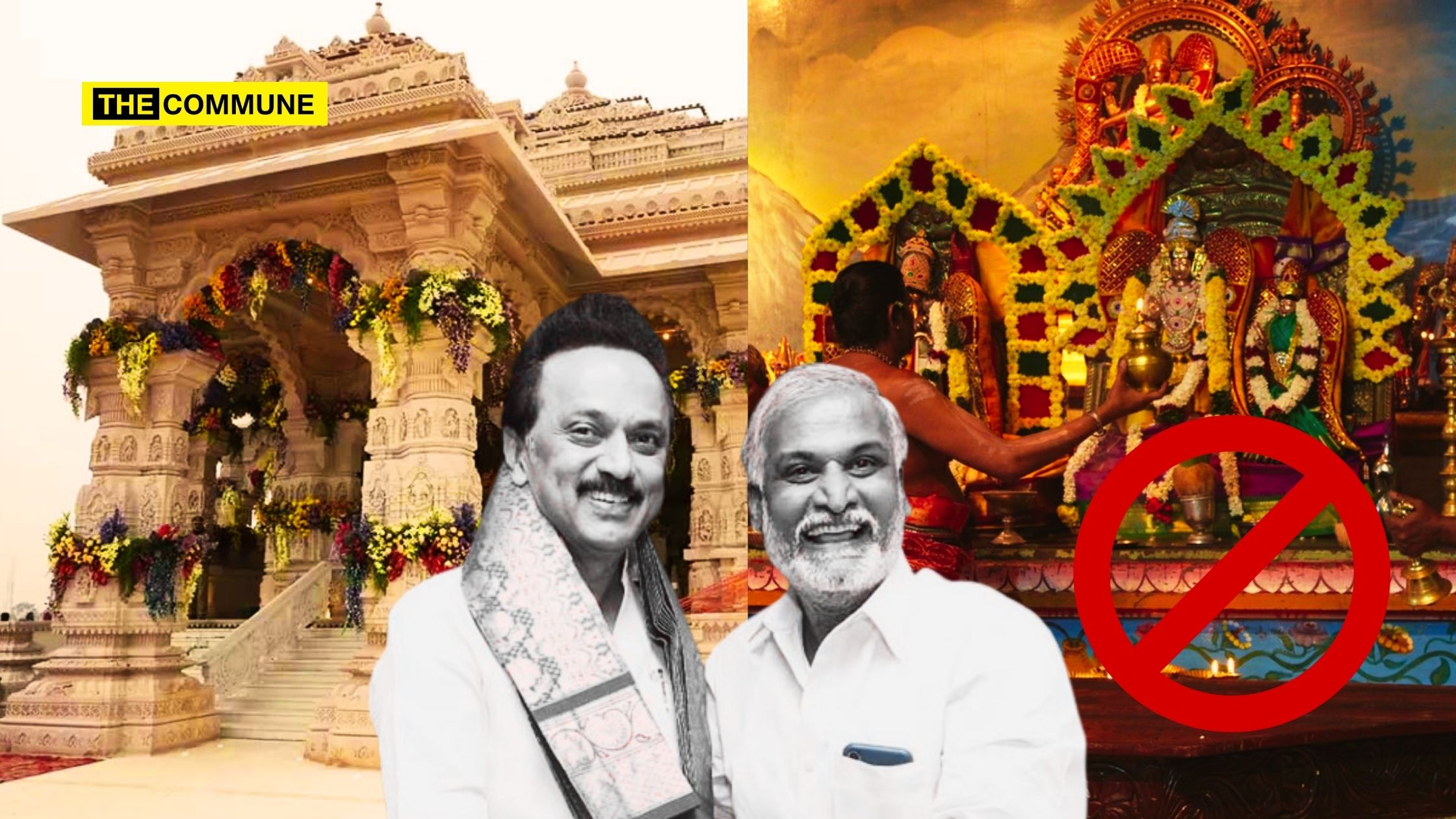
BJP MLA Vanathi Srinivasan Urges Madras HC CJ To Initiate Action Against Wrongdoers In DMK Minister Ponmudi’s Acquittal

Tamil Nadu’s BJP MLA and National President of BJP Mahila Morcha, Vanathi Srinivasan, has posed serious charges concerning Ponmudi’s acquittal in the disproportionate asset case. She has raised doubts regarding the decision to shift the case from Villupuram to Vellore, as well as the swiftness with which the case was deliberated upon in the Vellore Principal Judge’s court.

In a remarkable and unparalleled development, the Madras High Court issued an order on 10 August 2023 that raised concerns about the manner in which District Judge Vellore had rendered a verdict acquitting DMK Minister Ponmudi and his spouse in a disproportionate assets case. Justice Anand Venkatesh utilized his suo motu revision powers to question the validity of transferring the case against the Higher Education Minister.

The 17-page order delivered by Madras High Court Justice N. Anand Venkatesh on August 10 marked an extraordinary occurrence, causing reverberations within the judicial sphere and eliciting unease in the political arena, particularly among those belonging to the ruling party. This instance may perhaps be the first of its kind, where a judge independently undertook a case to scrutinize the legality of a lower court’s decision to close the case.

In a forceful and strongly-worded verdict, Venkatesh vehemently criticized the manner in which the disproportionate assets case involving Higher Education Minister K. Ponmudy and his spouse P. Visalakshi was transferred from Villupuram District Court to Vellore District Court. The case had been registered against Ponmudy in 2002, following allegations of owning assets exceeding his income during his ministerial tenure from 1996 to 2001. The Judge ordered notifications to be issued to Minister Ponmudy, the Directorate of Vigilance and Anti-Corruption (DVAC), the agency that had investigated the case in 2002. The court has scheduled the hearing of the case for September 7.

Justice Venkatesh stated in his order said, “It is evident that when a glaring illegality by a criminal court leads to a significant miscarriage of justice, it becomes the constitutional duty of the High Court to rectify the illegality and uphold the public’s trust in the criminal justice system.” He further emphasized that the narrative presented reveals an “alarming and deliberate effort to manipulate and undermine the criminal justice system. The perplexing and questionable transfer of the case followed by the trial and judgment by the Principal District Judge in Vellore are entirely unlawful and devoid of legal validity.”

In this situation, BJP Coimbatore South MLA Vanathi Srinivasan, in a press release, came down heavily on the way the case was conducted in the Vellore court and raised serious questions on how DMK minister Ponmudi attempted to manipulate the criminal justice system.

In a detailed press release, MLA Vanathi Srinivasan said, “Tamil Nadu Higher Education Minister Mr. K. Ponmudi was the Transport Minister during the last DMK regime of 1996-2001. In 2002, the Directorate of Vigilance and Anti-Corruption (DVAC) registered a case against him, his wife, mother-in-law, and friends for adding assets beyond their income. The Villupuram District Court, which investigated this, acquitted Ponmudi and others in 2004. Though the appeal against Ponmudi was struck down by Madras High Court, Supreme Court gave permission for conducting the trial against DMK Minister Ponmudi.”

The press release added, “In May 2022, the Principal Judge of Villupuram District sent a letter to the Madras High Court seeking permission to conduct the trial on four vacation days to speed up the case. This request was rejected by the Madras High Court on June 7, 2022. Apart from that, it also stayed the investigation in the case until further orders. Subsequently, two High Court judges for the administration of Villupuram District Courts transferred the case to the Vellore District Principal Court. The order was sent to the Chief Justice on July 8, 2022, for approval. On approval, the high court transferred the disproportionate asset case against Ponmudi to the Vellore district court and issued an order on July 12, 2022.”

The press release reads, “Accordingly, the case was transferred to Vellore on July 16, 2022, and was investigated by District Principal Judge Vasantha Leela. The case, which was dragging on for years, picked up speed on June 6, 2023. Until then, those who were seeking adjournment of the case without coming to trial stood in a queue at the Vellore court. Written arguments were filed by the accused on June 23. In four days, after examining 172 witnesses and 381 documents, the Vellore District Magistrate issued a 226-page verdict acquitting everyone including Ponmudi. Following that, she retired on July 30.”

The press release said, “Judge Anand Venkatesh of the Madras High Court, who has taken up suo-motto cognizance of the order of the Vellore court himself, has expressed shock by pointing out the speed of the trial and the judgment in the Vellore court. Justice Anand Venkatesh has express shock over the judgement and called it a “Stage-Managed Judgement”.

MLA Vanathi said, “All of this is truly astonishing. The occurrences surrounding Minister Ponmudi’s case serve as a stark illustration of the lengths to which certain individuals within the DMK can go, not solely confined to matters of systematic corruption, but also extending to evading allegations of corruption. If these circumstances are allowed to persist, the very fabric of justice within the country will be compromised. The current state of affairs will persist until individuals wielding power and financial influence can manipulate justice according to their will. It’s becoming increasingly apparent that the notion of evading accountability by corrupting the public is taking hold. This poses a substantial peril to both the nation and the democratic system. The cornerstone of our democracy lies in the public’s faith in the judiciary, and preserving that trust is imperative. Thus, a thorough examination is warranted, spanning from the suspension of proceedings in the Ponmudi asset accumulation case in the Villupuram District High Court to the subsequent verdict in the Vellore District High Court. Are these actions in accordance with the law? An inquiry, initiated by the Honorable Chief Justice of the Madras High Court, is necessary. Legal consequences should ensue for those found to have acted wrongly or transgressed the law. Otherwise, the alarming prospect arises that corruption could become de facto legal.”

The statement ended by saying, “I make this request not only as BJP National Mahila Morcha president and member of the Coimbatore South Assembly Constituency but also as a lawyer, a law student, and a citizen of this country who has great respect for Indian democracy.”

Click here to subscribe to The Commune on Telegram and get the best stories of the day delivered to you personally.