Home Blog Page 1085

Yoga to be introduced in Saudi Arabia schools as part of sports curriculum

After the kingdom of Saudi Arabia organised its first-ever yoga festival, yoga will now be soon introduced in schools as part of the sports curriculum because of its positive impact on mental and physical health, the president of the Saudi Yoga Committee, Nouf Al-Marwaai, said.

With the cooperation of the Ministry of Education, president Nouf Al-Marwaai said yoga would be introduced in the curriculum because of its multitude of health benefits.

On March 9, an introductory lecture was held that highlighted the cooperation between the SYC (Saudi Yoga Committee) and the Saudi School Sports Federation. 

Many of the participants were school principals and physical education teachers who were part of the lecture to with the aim of mobilizing the strategy from the Ministry of Education and the SYC reported Arab News.

Khalid Jama’an Al-Zahrani, a certified yoga instructor and founder of Ananda Yoga Studio, said, “As I started to dive deep in yoga, I never stopped discovering its incredible benefits as is it a whole and transformative sport that leads its practitioners to a calmer and clearer mind and stronger and healthier physique.”

“Our school system in the Kingdom has always ensured that all its activities are aimed at contributing to the development of the students, from both physical and academic aspects, and I believe that introducing yoga to the Saudi education system is a nourishing and effective move,” Al-Zahrani added.

Nouf Al-Marwaai is the first Saudi Yogacharya and she said there were many plans to expand the scope and objectives of the SYC and there plans that would allow the implementation of yoga in schools on a large scale.

Click here to subscribe to The Commune on Telegram and get the best stories of the day delivered to you personally.


IOC buys 3 million barrels of Russian Ural crude at a discount price, US says it will not be violation of sanctions

The Indian Oil Corporation (IOC) has purchased three million barrels of Russian Urals from energy and commodities trader Vitol making it the first purchase by the Indian refiner company since Russia invaded Ukraine on 24th February.

In late February, the IOC had apparently said it would acquire Russian oil on a delivered basis in order to avoid any complications related to insurance and fixing vessels and the company does not oversee any problems to paying for the cargo as oil as a commodity hasn’t been banned yet and they aren’t dealing with a sanctioned entity either.

However, the good news for India is that this commercial deal is in its favor and it is reported that Vitol sold these cargoes at a discount of $20-$25 a barrel compared to the current crude price dated by Brent.

Meanwhile, the United States has made it very clear that India buying Russian crude oil at discounted price is not a violation of sanctions.

White House Press Secretary Jen Psaki told reporters at her daily news conference on Tuesday (March 15), “I don’t believe India) this would be violating that (sanctions).’ ‘But also think about where you want to stand when history books are written at this moment in time. Support for the Russian leadership is support for an invasion that obviously is having a devastating impact,’,”. 

IOC has also bought two million barrels of Abu Dhabi’s Murban crude in addition to a million barrels each of the Cameroonian Kole along with the Nigerian Forcados and Akpo.

The sanctions imposed by the West on Russia have led to many companies and countries being forced to avoid purchasing oil from Moscow and this action has depressed Russian crude to record discount levels.

Click here to subscribe to The Commune on Telegram and get the best stories of the day delivered to you personally.

‘Hijab not essential religious practice’: Karnataka HC upholds hijab ban

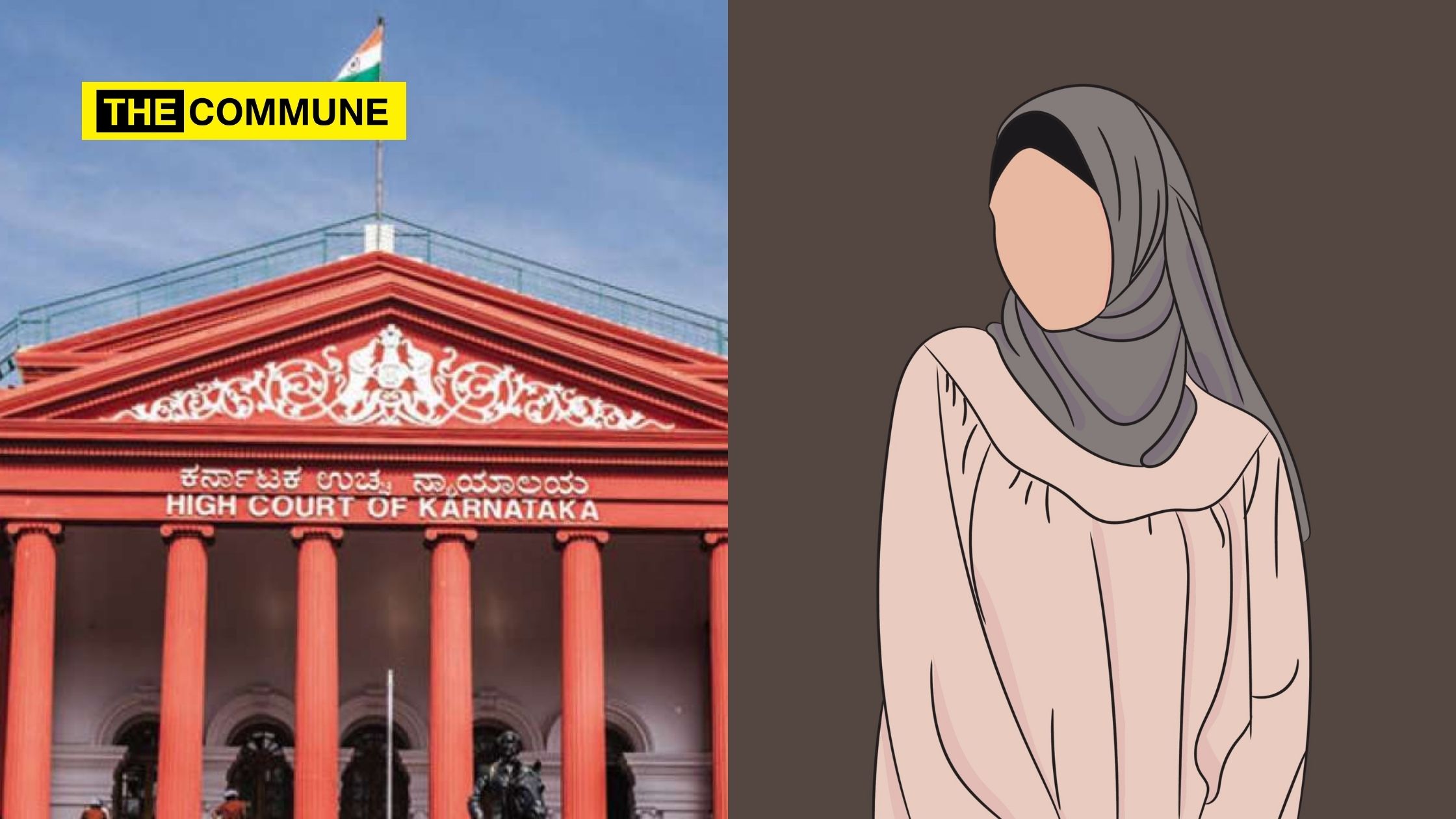
The Karnataka High Court has given its judgment on the Hijab row and has ruled that “Hijab is not an essential religious practice in Islam.” and it is not protected under Article 25 of the constitution.

The court in its ruling states that the prescription of school uniforms by the State is a reasonable restriction of the students’ rights under Article 25 and thus, the Government order issued by the Karnataka government dated February 5 is not violative of their rights.

Chief Justice Ritu Raj Awasthi, who read out the operative portion of the judgment according to Live law, said, “Our answers to the questions are, wearing of Hijab by Muslim women does not form Essential Religious Practice in Islamic faith. Our second answer is prescription of school uniform is only a reasonable restriction, constitutionally permissible which students cannot object to. In view of the above, the government has power to issue the GO of February 5 and no case is made out for its invalidation. No case is made out for the issuance of disciplinary proceedings against respondents and writ of quo warranto is not maintainable. All writ petitions being devoid of merits are dismissed,”.

However, it is clear that this judgment will not go down well with Muslim groups who think the Courts have not right interfere in  Sharia Law” and Islam is above the Indian constitution.

Click here to subscribe to The Commune on Telegram and get the best stories of the day delivered to you personally.
The Kashmir Files Unearths The Genocide That Was Buried Deep By The System

Few people here decide the news narratives that are being set across the country. They discuss a few stories repeatedly using which they are able to set their narratives deep in the minds of the people.

They also focus on not letting the news stories that they do not want the masses to know. They are the ones who decide the academic contents, news narratives and movie stories. The question may now arise as to who they are.

In the film, Prof Radhika Menon tells student Krishna Pandit, “They may run the Government, but we run the system.”. This ecosystem comprising of the political-media-academic establishment had buried the genocide that happened and is now denying the right to justice for the community. If you have a doubt that your thinking ability may also have been affected by the impact of their narratives, then The Kashmir Files is the movie for you.

The movie is based on true events and tells us the blood shed history that no one has ever told before. Exactly 32 years ago, tensions erupted in the Kashmir Valley. Armed with the slogan “Convert, Flee or Die”, the terrorists slaughtered the section of Kashmiri Pandits. The movie revolves around Krishna Pandit and his grandfather Pushkar Pandit, who escaped and lives in the country’s capital. When they fled out of Kashmir, Krishna Pandit was a small child. He has no recollection of what happened then. Krishna’s grandfather tells Krishna that all their family members died in an accident. That was all Krishna knew.

Krishna, who is studying at a reputed university in the capital, once attends a gathering that calls for “Separate Kashmir”. Professor Radhika Menon then exclaimed, “Kashmir has never been an integral part of India.” The Indian Army is persecuting the people of Kashmir. So she speaks of the need to liberate Kashmir from India. Then, Krishna Pandit stood up and said, “The Pandits in Kashmir were slaughtered and so the Pandits left Kashmir.” “That is not true. Kashmir pandits left the valley on their own,” says Professor Radhika Menon. Immediately those in the crowd stop Krishna Pandit from speaking, saying that this is not true and there is no evidence for this. Then Krishna Pandit goes and talks to the professor separately, and then they two become good friends.

Meanwhile, Krishna Pandit’s grandfather Pushkar Pandit was fighting as an individual to abrogate Article 370. At one point, the controversy over Kashmir between the two becomes truly thrilling. Krishna Pandit decides to contest in the students’ elections. One day, Professor Radhika Menon approaches Krishna Pandit and convinces Krishna to raise the “Separate Kashmir” slogan. She also stresses that only by doing so can he win the election. Krishna’s grandfather tells Krishna, “The end of politics is only destruction.” The young Krishna reaches a state of confusion.

Krishna’s grandfather dies. According to his grandfather’s last wish, Krishna goes to Kashmir for the asthi visarjan of his grandfather. Then Krishna meets his grandfather’s friends in the valley. As guided by the professor, Krishna also meets key terrorists who demands separate Kashmir. After these meetings Krishna returns to the capital and speaks at his university political meeting. This movie is all about his vision of Kashmir then.

In the midst of this, Krishna finds answers to his question, was it the Indian Army or the Terrorists that killed his family? In a scene, when Anupam Kher asks a realistic question, “Kashmir pandits never took arms in their hands, then why should this happen to us?”, it leaves the audience numb. There are no words to praise the courage and bravery of the director Vivek Agnihotri, who portrayed the atrocities happened in the valley with the same intensity. Bollywood star Anupam Kher, who was affected by the Kashmir genocide, has been cast in the lead role. I don’t know if he could have played any other character so wonderfully in his lifetime.

The fact that the movie crew has given their full commitment to this film is the main reason for the huge success of the movie. Despite some criticisms on the technically element, the purpose of the movie is not distracted at any point. The movie, which faced innumerable political and religious afflictions, came to the screens and is currently has become the talk of the nation. The fact that it took 32 years for us to know about this genocide itself is a shame of Independent India.


Click here to subscribe to The Commune on Telegram and get the best stories of the day delivered to you personally.

Military Engineering Services uses 3D rapid construction tech to build houses for armed forces

To increase efficiency, the Indian Army’s Military Engineering Services (MES) has constructed two houses within three weeks using 3D Rapid Construction Technology as our armed forces take a step towards digitized construction.

The 3D-printed houses were constructed in the South-Western Air Command in Gandhinagar Gujarat and they are the first-of-its-kind structures in India.

The Army is calling the construction of these 3D printed houses a step towards modern-day rapid construction efforts as it will help the growing accommodation requirements of the families of the members of the Indian armed forces.

“These structures also stand testament for the solidarity of the Indian Armed Forces in fostering home-grown technologies that are focused on indigenization of Defence technologies, as a part of ‘Atmanirbhar Bharat,” the statement read.

The houses have been constructed in collaboration with a Chennai-based private start-up Tvasta and each house possesses a built area of around 700 square feet and has been designed as disaster-resilient structures that are in compliance with Zone-3 earthquake specifications.

The MES had constructed India’s first 3D Printed sanitary blocks with a total built area of about 600 sq ft at Jaisalmer, which kickstarted a new beginning for using 3D printing in Defence applications.

The use of 3D print technology in construction will now ensure that the urgent requirement of housing for defense personnel is met quickly.

Click here to subscribe to The Commune on Telegram and get the best stories of the day delivered to you personally.
Another Kerala youth who joined ISIS dies in suicide attack to kill ‘kafirs’

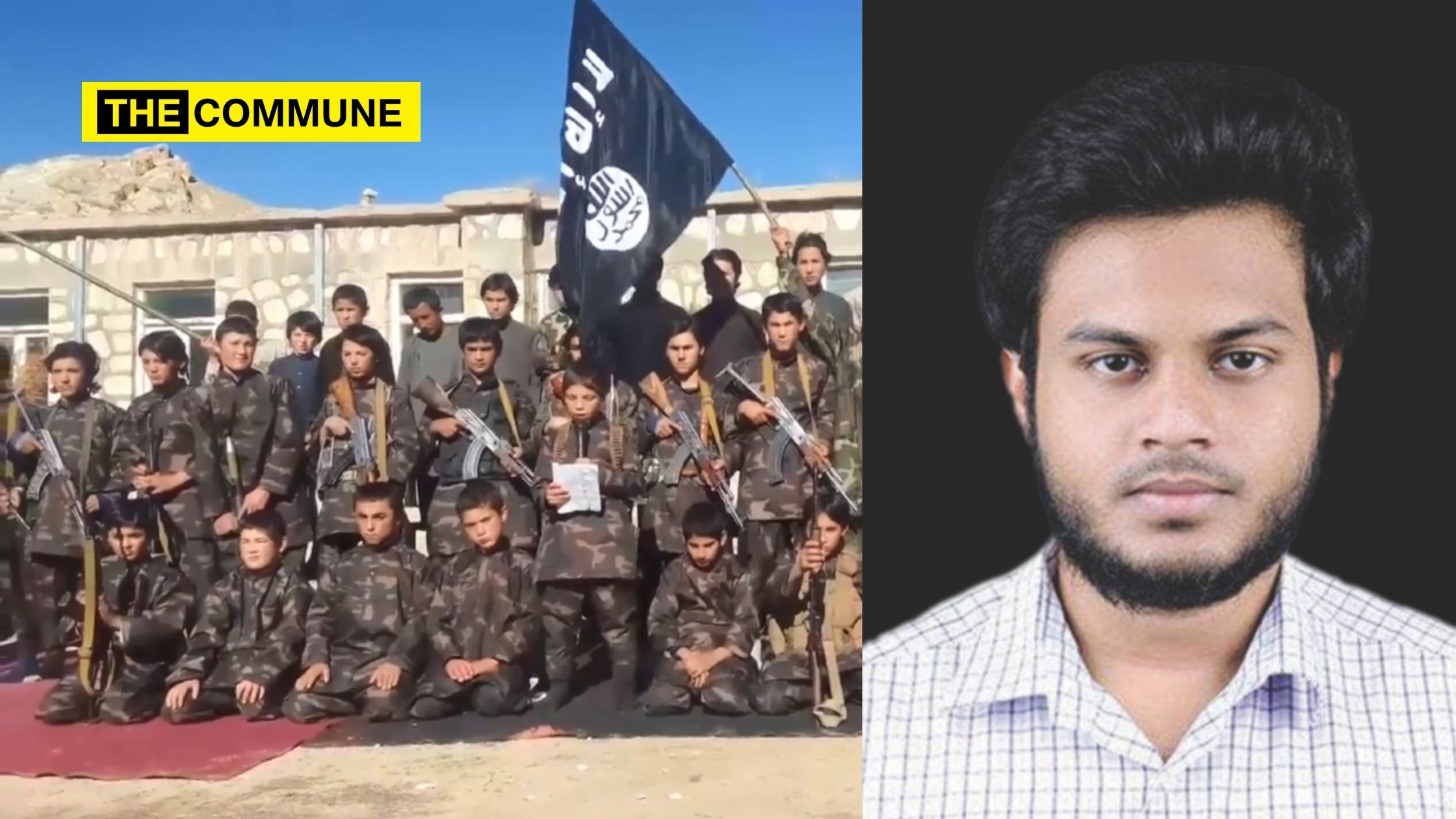
The Indian state of Kerala has the ignoble distinction of having the highest per capita of its Muslim population join the Islamic State of Iraq and Syria (ISIS) and now the terror organisation has confirmed that Najeeb, a 23-year-old engineering graduate from Kerala who had left the country in 2017 to ISIS in Afghanistan, has reportedly died.

His death was announced by the official ISIS mouthpiece, Voice of Khorasan with his picture. However, it did not disclose how and when Najeeb achieved shahadat while fighting for the cause of Islam. The magazine was full of his praise because he had died on his wedding night just like Hanzala Ibn Abi Mair, a follower of Prophet Mohammad.

But the article hinted that Najeeb was used in a suicide mission and that he had gladly volunteered for it. In the Islamic terror magazine, Najeeb was has been identified by his adopted name Najeeb Al Hindi and described as ‘an engineering student from Kerala’.

Najeeb was a resident of Ponmala in the Malappuram district of Kerala and was pursuing M.Tech in Tamil Nadu’s Vellore town.

After the publication of his photo in the ISIS magazine, his family in Kerala has identified him by his photo.

Najeeb went missing in July 2017 and his parents started to look for him and in August filed a missing person complaint with the police.

After some time, he sent a Telegram message to his family and informed them that he had left for Afghanistan to join ISIS’s Afghanistan chapter Islamic State-Khorasan Province (ISKP) and told his family that he was fighting kafirs.

In the Telegram message, he wrote “There is no meaning in living with kafirs and I have escaped from the world of kafirs and The Quran preaches non-believers as kafirs,”.

Click here to subscribe to The Commune on Telegram and get the best stories of the day delivered to you personally.
Four Islamic Jihadists from Bangladesh arrested in Madhya Pradesh

25 Islamist Terrorists Who Prove Education Doesn't Prevent Radicalization jihadi terror

In the Indian state Madhya Pradesh, the state police on Sunday (March 13) arrested four terror suspects from two areas in the state capital Bhopal.

According to the police, a special operation was carried out by the MP Police, and arrested four terrorists belonging to banned Islamic terror outfit Jamat-e-Mujahideen Bangladesh (JMB).

Narottam Mishra who is the State Home Minister said the four suspects have been identified as Fazhar Ali, Md Aqueel, Zahooruddin, and Fazhar Zainul and they are all natives of Bangladesh.

Madhya Pradesh Anti Terrorist Squad and the ATS have submitted a report to DGP Madhya Pradesh Sudhir Saxena.

When these jihadists were arrested, the police recovered incriminating material including like Jihadi literature, electronic gadgets, and suspicious documents (Govt docs like Aadhar, PAN etc) from their possession.

The police and security agencies think the JMB operatives were working on remote-based sleeper cell to be used to channelize anti-national activities.

Click here to subscribe to The Commune on Telegram and get the best stories of the day delivered to you personally.
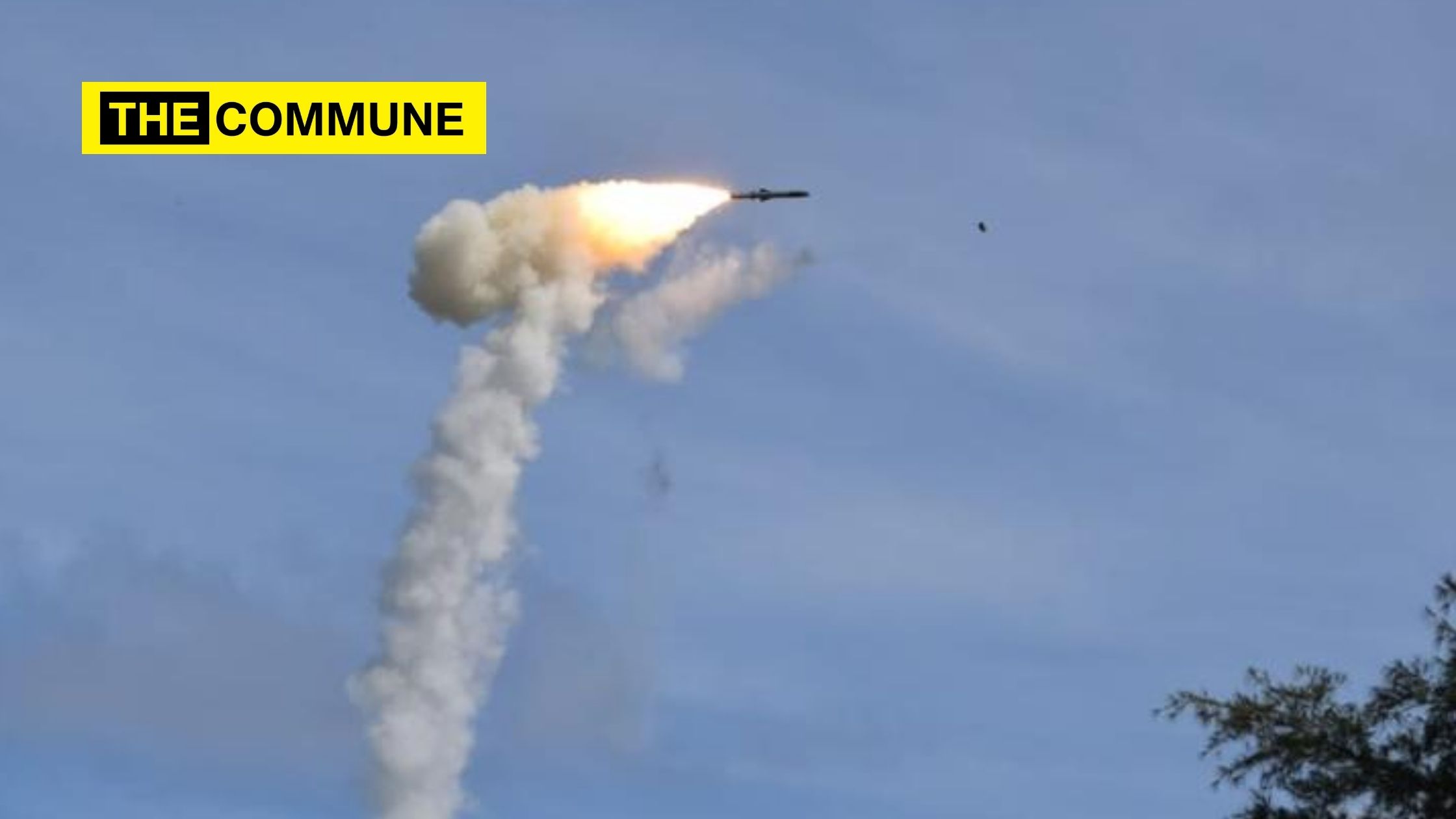
India developing new air-launched version of BrahMos supersonic cruise missile with a range of 800 kms

India is one of the few countries that have the capability to fire missiles from land, sea, and air which is an important defensive and offensive triad and it will receive a boost because India is developing a new air-launched version of the BrahMos supersonic cruise missile that will be capable of hitting enemy targets at more than 800 kms.

There was no doubt with the accuracy of the Brahmos missile but its range was at around 300 kilometers after being launched from a Su-30MKI combat aircraft.

“The range of the BrahMos missile has been increased already and with the advantage of being airborne at high altitudes, the missile can travel a longer distance and can hit targets at 800 kms and beyond,” sources known to ANI said.

However, India has increased the range of its tactical missile recently to destroy targets beyond 500 kms with just an upgrade in its software.

The Indian Air Force (IAF) has equipped around 40 or two squadrons of its Su-30 combat aircraft with the BrahMos cruise missiles and these planes were brought to the northern sector from their home base in Thanjavur during the height of conflict with China.

The IAF also operates a surface to the surface squadron of planes to carry out pin-point attacks against enemy vital installations and military and air bases.

Click here to subscribe to The Commune on Telegram and get the best stories of the day delivered to you personally.
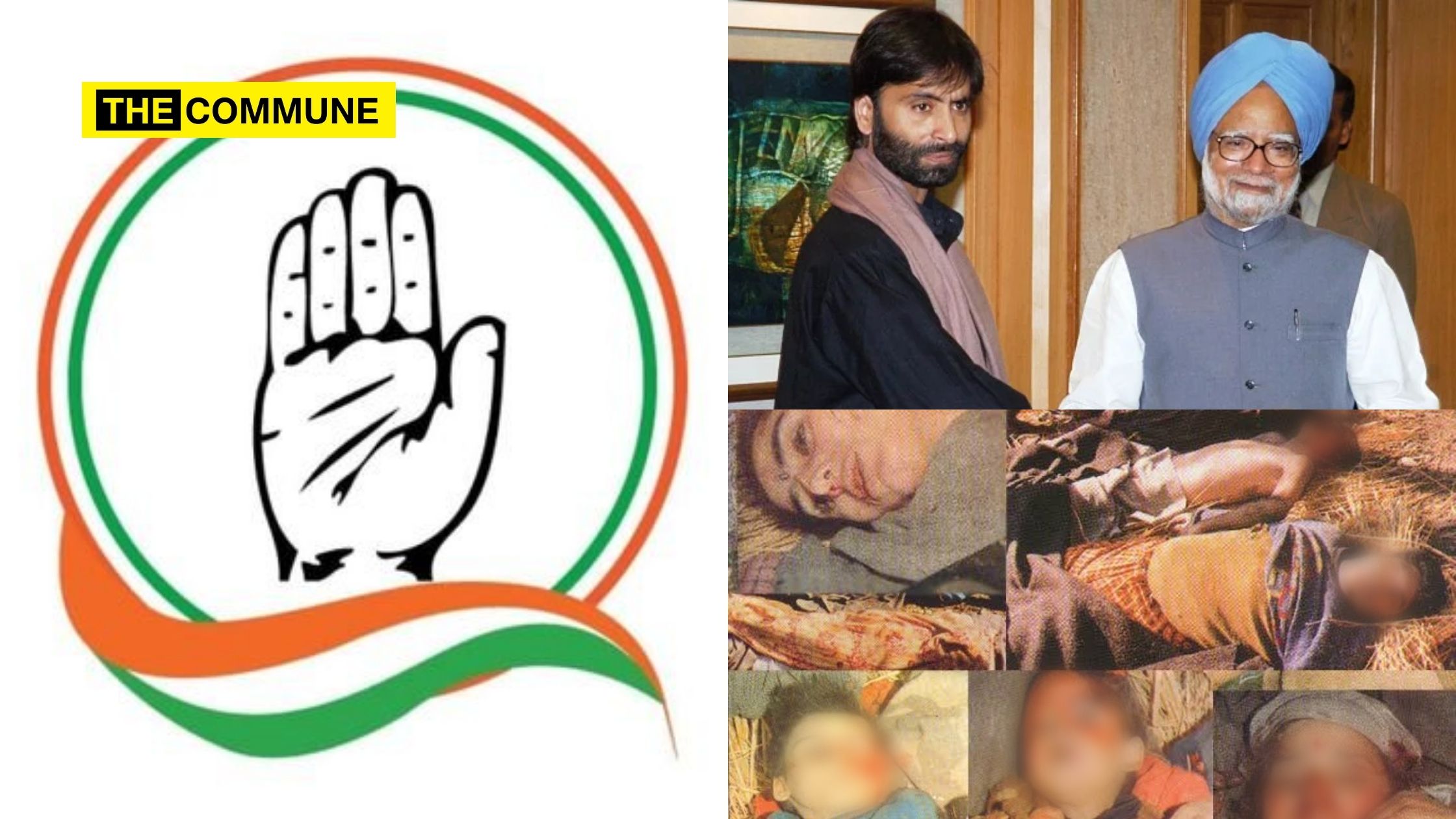
Kerala Congress claims less then 400 people were killed in Kashmiri Hindu genocide, deletes tweet later

The official Twitter account of the Kerala Pradesh Congress Committee had tweeted that less than 399 Kashmiri Pundits were killed in the valley in 1990 which led to the exodus of Hindus. The party also claimed that more than 15,000 Muslims were also killed due to terrorsim.

However, the above tweet is now deleted realising that it was half-truth. The Kerala Congres was trying a false equivalence by saying that not only Hindus but also Muslims were victims, which is true but not in the context of what had transpired in January 1990. 

As usual, the Congress party is trying to discredit the movie The Kashmir Files with its appeasement politics but it is also important that the Congress party did mention terrorism but failed to mention the group or the religion they belonged to.

As the movie got more momentum, efforts are now being made to discredit it because the film accurately shows what actually happened and how the state machinery failed that led to the murder and rape of Hindu men and women.

The Congress party is now in a blame-game mode and instead of acknowledging what injustice had transpired is now trying to blame the BJP and former Prime Minister VP Singh.

The Kerala Congress has also dragged former governor Jagmohan blaming the exodus on him. The tweet reads, “Pandits left the valley en masse under the direction of Governor Jagmohan who was an RSS man. The migration started under the BJP-supported VP Singh government..”


The tweet reads, “BJP-supported VP Singh government came to power in December 1989. Pandits’ migration started the very next month, in January 1990. BJP did nothing and continued supporting VP Singh till November 1990,”.

The Kerala Congress instead writes that it was the, “UPA govt built 5,242 tenements for Pandits in Jammu & provided one-time assistance of Rs 5 lakh to each family in addition to student scholarships, assistance to farmers & welfare schemes worth Rs 1,168.4 crore,”.

The Kashmir Files has now put the Congress on the defense because, it now has to deal with the fact that it invited terrorists to sit and dine with its most senior leadership, including Prime Minister Manmohan Singh. There is a famous photo of Singh with the leader of the JKLK Yaseen Malik who was responsible for killing four Indian Air Force officers.

Click here to subscribe to The Commune on Telegram and get the best stories of the day delivered to you personally.

The Kashmir Files: An honest attempt to bring the pain of Kashmiri Pandits on celluloid

As the credits started to roll, we all got up to leave amid a silence unheard of.

Never in my life, I have experienced such silence at the end of a movie and saw people walking quietly out of a film theater.

No one spoke, the audience walked quietly without pushing one another and it felt like returning home from a funeral.

I felt everyone was thinking and contemplating and that is the effect The Kashmir Files had on the audiences in Bangalore INOX Forum Mall Whitefield and hopefully all over India.

As a student of history, particularly medieval and contemporary history that is never taught to us in our schools and universities, I thought I could prepare myself to watch this movie and nothing would surprise me because, with films, it is very rare when I am surprised.

However, director Vivek Ranjan Agnihotri who wrote this film surprised me as he did not hold any punches when it came to dialogues that one will never hear in any Bollywood film.

Bollywood has a history of justifying the violence of one particular community and it never fails to portray them as victims but in this film, the only victims are the Hindu pundits and Agnihotri ensures all justification of violence against the Hindus of the valley used for the last three decades falls flat.

I am happy I do not have to use the word “allegedly” because the film is mostly historically accurate. However, it was Girija Tickoo who was gang-raped and cut in two halves using a mechanical saw while she was still alive, but for storytelling, I am not going to split hair.

To me, this film is a public service because for thirty-two years the Kashmir Hindu genocide was covered in a veneer of political correctness and now director Vivek Agnihotri has ripped it apart and has successfully managed to explain the true evil and apathy that was bestowed upon the Kashmiri Pundits for the last thirty-two years.

The Kashmir File gives us information on how this genocide was operated and how Islam as a religion was used as markers to target Hindus in the valley and how neighbors became executioners.

The director also brilliantly showcases how men can be fallible and can also be good in the face of evil and judiciously uses creative freedom.

The Kashmir File is a film that makes you feel alone. As an observer of human behavior, what I saw was everyone in the audience watching this film was alone even though they came as a group and everyone watched this movie alone, lost in their own thoughts and I think it will take some time for them to discuss the movie.

The fact is very few people in India know the true story of the plight of the Kashmiri Hindus, particularly in the South of India and as the lights came on, I saw faces full of surprise and agony.

The film is very graphic and for the first time in Indian cinema, I saw brain matter, i.e. in scenes when Hindus were being shot in the head point-blank range there was backspatter on the person standing next shown covered in blood and tissue. But the graphic scenes are warranted because if the scenes of violence are not graphic, this film would be called a documentary.

The Bandipora massacre scene reminded me of the movie Schindler’s List which left a lasting impact on me on how mindlessly cruel man can be.

Director Steven Spielberg was criticised for being too graphic with violence and nudity and I am sure Vivek Agnihotri will also be criticised for his justifiably unrestrained show of violence.

But no one will say a word on violence, sex, and curse words used in the movie Gangs of Wasseypur that glorified brigandage.

The other reason this film reminded me of Schindler’s List was when I saw small children who are not old enough to understand anything were innocently spewing venom against the pundits. It reminded me of that famous scene from Schindler’s List when a small girl standing in the railway station shouts “Goodbye Jews” without knowing what horrible fate awaits them.

I am also mentioning the movie Belfast for some context on how hypocrisy works. This film has been directed by Kenneth Branagh and has received seven nominations at the 94th Academy Awards.

It tells the story of how the majority of protestant Christians turned on their minority Catholic neighbors who prayed to the same god has received worldwide acclaim.

But I am afraid The Kashmir Files will not be received in kindness because it has opened a chapter of our history that some people want to remain closed and the film blatantly showcases the violence Muslims unleashed against their minority Hindu neighbors in Kashmir.

This film is now a “fork in the road”, a deciding moment in the history of Kashmir, and we the people of Bharat are now faced with the task to choose the options presented to us.

Lastly, I want to thank Bollywood director Vidhu Vinod Chopra for making the movie Shikara which most probably spurred Vivek Ranjan Agnihotri to make The Kashmir File.

As a parting gift to Mr Chopra, I want to say “you don’t know nadur and you don’t know Kashmir” and to his wife Anupama Chopra, you no longer have the power to run your parochial and self-servicing narratives.

After the film ended I came home but Pushkar Nath Pandit and the hundreds of thousands of my Kashmiri brothers and sisters are still waiting to go home.

Om Namah Shivaya.

Mata Saraswati Sharda.

This article was originally published in Samvada World and has been republished here with permission.

Click here to subscribe to The Commune on Telegram and get the best stories of the day delivered to you personally.