Home Blog Page 104

Poster Of ‘Ajey: The Untold Story Of A Yogi’ Film Vandalised Outside Chennai Theatre

Poster Of 'Ajey: The Untold Story Of A Yogi' Film Vandalised Outside Chennai Theatre

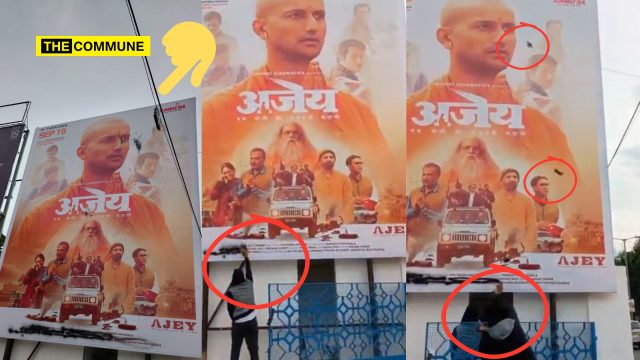
A poster of the film Ajey: The Untold Story of a Yogi, that releases on 19 September 2025 based on the life of Uttar Pradesh Chief Minister Yogi Adityanath, was vandalised earlier this week outside the historic Woodlands Theatre in Chennai.

Eyewitnesses reported that two unidentified individuals were seen defacing the promotional material displayed outside the theatre. The incident has not yet been reported by mainstream media outlets but has drawn attention on social media, where users shared visuals of the damaged poster and condemned the act.

The film, inspired by Shantanu Gupta’s book The Monk Who Became Chief Minister, stars Anant Joshi in the lead role. It traces Adityanath’s journey from a boy in Uttarakhand to a Hindu monk and later the Chief Minister of India’s most populous state.

The movie had earlier faced restrictions abroad, with reports of a ban in Qatar and Saudi Arabia. Many on social media have accused the ruling Dravida Munnetra Kazhagam (DMK) government in Tamil Nadu of fostering an environment of intolerance towards Hindi and Hindu culture, allegations that the state government has denied in the past regarding similar incidents.

The Chennai Police have not yet issued an official statement regarding the incident or confirmed if a formal complaint has been registered.

Subscribe to our channels on Telegram, WhatsApp, and Instagram and get the best stories of the day delivered to you personally.

“Victims Still Waiting”: Calcutta High Court Raps Mamata Banerjee Govt Over Delay In Compensation For Murshidabad Violence

calcutta high court mamata banerjee murshidabad

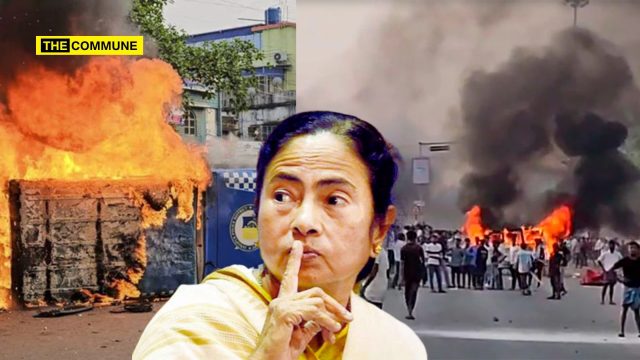
On 17 September 2025, the Calcutta High Court sharply criticized the West Bengal government for its delay in providing compensation to Hindu families affected by the recent anti-Hindu violence in Murshidabad. The unrest, sparked by protests against the Waqf Amendment Bill, caused significant damage, with homes destroyed, businesses looted, and communities left in distress.

During the hearing, the bench expressed deep concern over the slow response to the crisis, highlighting that many Hindu families are still waiting for support months after the violence. Despite widespread destruction, including burned houses and looted shops, the court noted that victims have not yet received meaningful compensation or assistance for their rehabilitation.

The judges demanded that the state government provide a clear timeline for disbursing compensation and a detailed rehabilitation plan for the affected Hindu families. They warned that the continued delay in providing relief could exacerbate the suffering of victims and heighten communal tensions in the already volatile Murshidabad region.

Legal experts have emphasized that the court’s intervention underscores the judiciary’s commitment to safeguarding the rights of communities impacted by targeted violence. The bench reminded the government of its duty to protect the welfare and safety of all citizens, asserting that victims of communal violence should not be left waiting for bureaucratic processes to unfold.

Eyewitness reports and local accounts from Murshidabad paint a troubling picture of the aftermath. Many Hindu families were displaced, with some seeking shelter in relief camps, while others struggled to rebuild their lives without adequate government assistance. The court’s directive is expected to expedite the distribution of compensation and bring relief to these communities.

This action by the Calcutta High Court sends a strong message to the West Bengal government that communal violence, particularly when it targets vulnerable Hindu communities, must be addressed swiftly and effectively. Authorities have been ordered to present a practical plan for immediate compensation and long-term measures to prevent similar incidents in the future.

The violence in Murshidabad, coupled with the court’s decisive stance, has reignited debates on communal harmony, the accountability of the government, and the protection of minority groups in West Bengal, highlighting the pressing need for preventive actions to avert further unrest.

(With Inputs From Hindu Voice)

Subscribe to our channels on TelegramWhatsApp, and Instagram and get the best stories of the day delivered to you personally.

“More Than Sacred”: DMK Stooge Kamal Haasan On MNM–DMK Alliance Ahead Of 2026 Assembly Polls

kamal haasan dmk stalin rajya sabha mnm karur stampede

Kamal Haasan, the leader of Makkal Needhi Maiam (MNM), and now Rajya Sabha MP backed by the DMK, has emphasized that his party’s alliance with the DMK is not just a political partnership but something “more than sacred.” During an advisory meeting on Tamil Nadu and Puducherry’s upcoming assembly elections, which is being held from 18 September to the 21 September 2025 at Raja Annamalaipuram, Chennai, Haasan consulted with district administrators from Chennai on 18 September 2025. In the evening, he continued his discussions with administrators from Kanchipuram and the party’s local branches.

In the coming days, Kamal Haasan will hold consultations in various regions: Coimbatore tomorrow morning, Madurai in the evening, Nellai and Trichy the day after, and finally in Villupuram, Salem, and Puducherry on the 21st. These meetings will involve the party’s state administrators, branch leaders, and MPs, all of whom will meet Haasan to discuss MNM’s strategies and preparations for the elections.

When asked about the popularity of MNM, sources say Kamal Haasan is actively gathering input from the party’s leaders about which constituencies they can contest in the upcoming assembly elections. He is also focusing on strengthening the party’s foundation and improving its organizational structure.

Speaking to the party’s administrators, Haasan stated, “I am not the living Kamaraj. My real name is Parthasarathy.” He went on to quote poet Bharathi, who had advocated for a society without caste divisions and suggested conducting a caste-based census. Haasan also expressed his belief that politics should avoid exploitation and should focus on nationalism.

Haasan further elaborated that leaders should emerge from within the party after him, stressing the importance of continuity. “Some say we’ve joined the DMK, but the DMK itself originated from the Justice Party, and our party’s name also reflects justice. This is not just an alliance, it is something more than sacred,” he remarked. According to Haasan, MNM is the only centrist party in Asia, and the country should avoid being divided into rigid left and right ideologies.

MNM, launched in 2018 as an alternative to the two dominant Dravidian parties, has yet to secure a significant electoral victory. In the 2021 Assembly elections, Haasan contested from Coimbatore South but narrowly lost to the BJP’s Vanathi Srinivasan.

Sources within the party told NDTV that the current focus is on identifying constituencies where MNM can have a stronger presence, based on the 2021 results. They are working to consolidate support in areas where the party already has a base. “We are strategizing to strengthen our position and expand our presence on the ground,” said a party functionary.

Ahead of the 2024 Lok Sabha elections, Haasan announced an alliance with the DMK, calling it crucial to counter the BJP. In recognition of this partnership, the DMK facilitated Haasan’s entry into the Rajya Sabha. These ongoing consultations are seen as essential for MNM as it seeks a meaningful role in the alliance, particularly in the party’s first assembly election as a partner in the ruling front.

(With inputs from Daily Thanthi)

Subscribe to our channels on TelegramWhatsApp, and Instagram and get the best stories of the day delivered to you personally.

Gen-Z Protests Trigger Record NPR 21 Billion Insurance Claims In Nepal

nepal gen z protest social media ban insurance gen-z

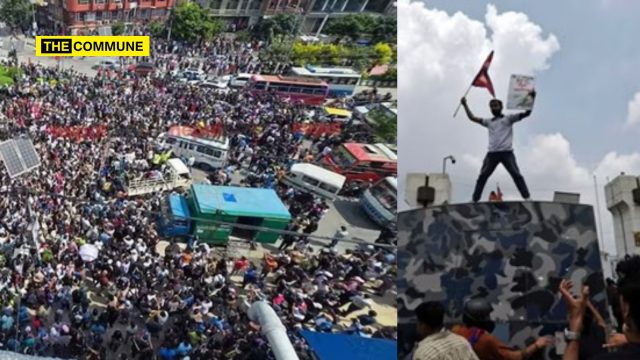
The destruction of properties during the recent Gen-Z protests in Nepal has triggered the largest-ever insurance claims in Nepal’s history from a single incident, with claims reaching close to NPR 21 billion to date.

According to data released by the Nepal Insurance Authority, the regulator of the insurance sector, on Thursday, non-life insurers have received 1,984 claims from insured individuals with claims of NPR 20.7 billion by September 16, which is a record high for damages in a single incident.

With assessments of losses being undergone, the claims are expected to rise further. The claims received by insurers so far is more than the claims during the 2015 earthquake, when claims had reached NPR 16.5 billion. Nepal had also launched an insurance scheme in 2020 to cover the risk of COVID-19, and insurers had received claims exceeding NPR 16 billion, according to the regulator.

The Oriental Insurance Company Limited, a branch of India’s Oriental Insurance, has received the largest amount of claims till September 16, according to the data released by the authority. The company alone has received claims of NPR 5.14 billion across 40 cases.

The bulk of this is said to have come from Hotel Hilton Kathmandu, which suffered one of the heaviest losses during the protests. Siddhartha Premier Insurance and Shikhar Insurance, IGI Prudential Insurance, Sagarmatha Lumbini and Company come into the top five positions in terms of receiving the highest amount of claims.

Some of the major business enterprises alone have reported damages worth over NPR 60 billion, according to an official of the Confederation of Nepalese Industries (CNI), a business body, which is collecting details of damages to the properties of the private sector.

The latest protests saw major properties gutted by fire, including the Hilton Kathmandu Hotel, several outlets of Bhat-Bhateni Supermarket, the largest retail chain of Nepal, the headquarters of Ncell, the private sector telecommunication company, an assembly plant and vehicle showroom of Chaudhary Group, owned by Binod Chaudhary, Nepal’s only billionaire listed by Forbes, among others.

-IANS

Subscribe to our channels on TelegramWhatsApp, and Instagram and get the best stories of the day delivered to you personally.

“Zero Tolerance”: Himanta Biswa Sarma Says 20 Bangladeshi Nationals Pushed Back From Assam Border

Consumption Of Beef Banned In Public Places In Assam. himanta biswa sarma bangladeshi illegal

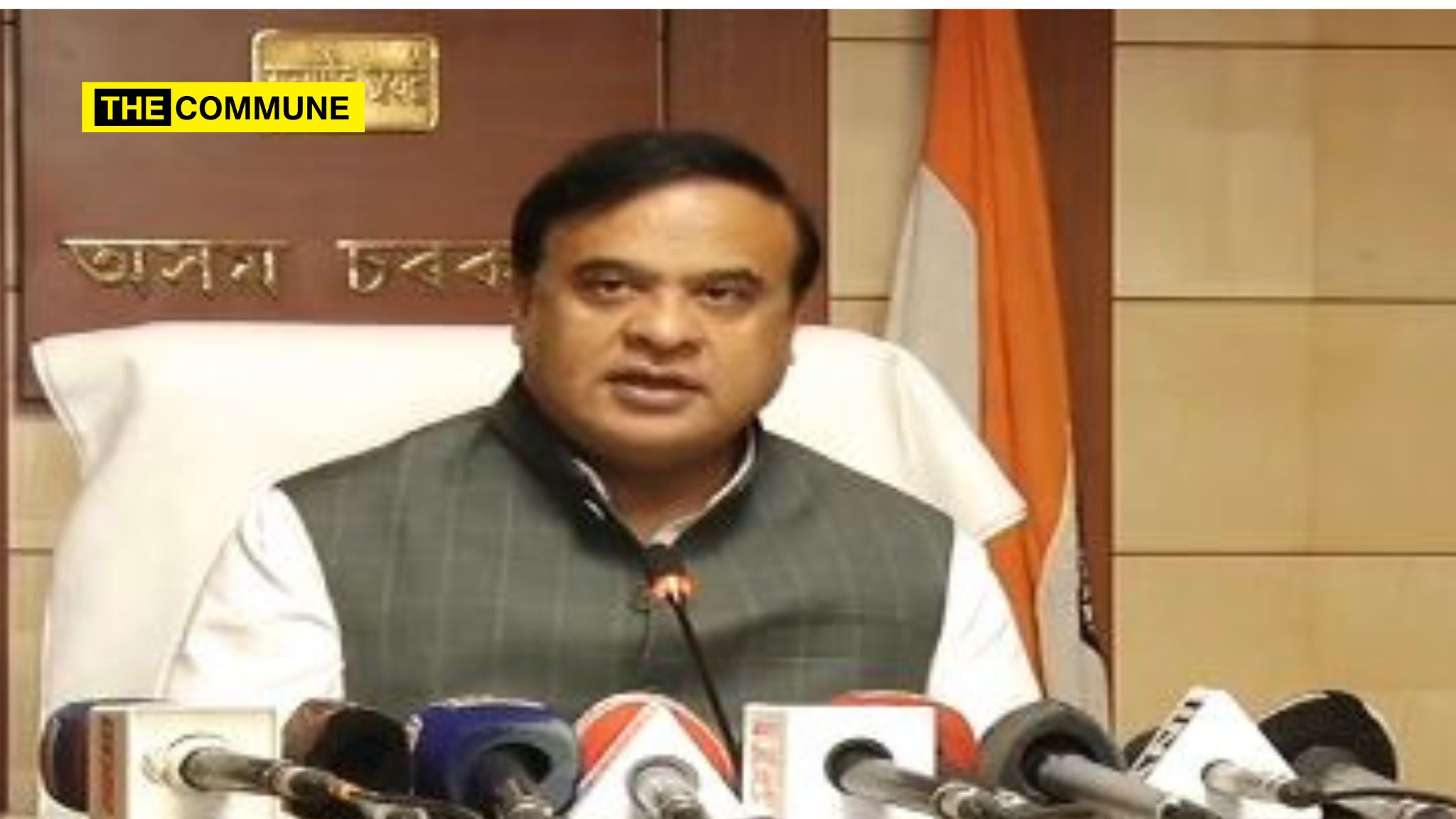
Assam Chief Minister Himanta Biswa Sarma on Thursday said that the security forces have pushed back at least 20 Bangladeshi citizens for illegally crossing the international border to enter the Indian territory.

Taking to X handle, CM Sarma wrote: “Pushed back another set of 20 habitual offenders back to their base in Bangladesh. Our tolerance level to illegal immigrants is ZERO and will continue to be as such.” The state government has taken a strong stand against infiltration from Bangladesh with CM Sarma often issues warning for a looming threat of changing demography in Assam.

He accused the previous Congress governments of providing shelter to Bangladeshi infiltrators and the Chief Minister claimed that Bangladeshi infiltrators have been occupying the land of indigenous people. CM Sarma earlier also asserted that although some of the Bangladeshi infiltrators managed to get Aadhaar cards, they cannot enroll themselves in the voter list.

He said that there is no chance that people cross illegally the international border from Bangladesh and get themselves enrolled in the voter list in Assam because security forces have caught many people who illegally entered Indian territory, and they were pushed back within a few hours.

“Most of the infiltrators were arrested in the morning around 5 a.m., and before 9 a.m. in the morning, they were pushed back to the neighbouring country. In two or three hours, they cannot register themselves in the voter list.”

However, the Chief Minister sees no harm in remaining doubly vigilant in this matter. “We have decided to take a slew of measures against the detection of illegal immigrants from Bangladesh because there might have been possibilities that a few infiltrators could not be arrested by the security personnel,” he added.

The Chief Minister argued that people from Bangladesh come to India as poverty has increased in the neighbouring country after the recent unrest following the departure of the Sheikh Hasina government there. He also claimed that, contrary to conventional apprehension, mainly people who belong to the Muslim community have been trying to cross the border and enter India illegally for the sake of jobs.

-IANS

Subscribe to our channels on TelegramWhatsApp, and Instagram and get the best stories of the day delivered to you personally.

“Rahul Gandhi Came To Save Infiltrators, Not Bihar’s Youth”, Says Union Home Minister Amit Shah

After Haryana Poll Win, Amit Shah Hits Out At Rahul Gandhi For Tarnishing India's Image Abroad

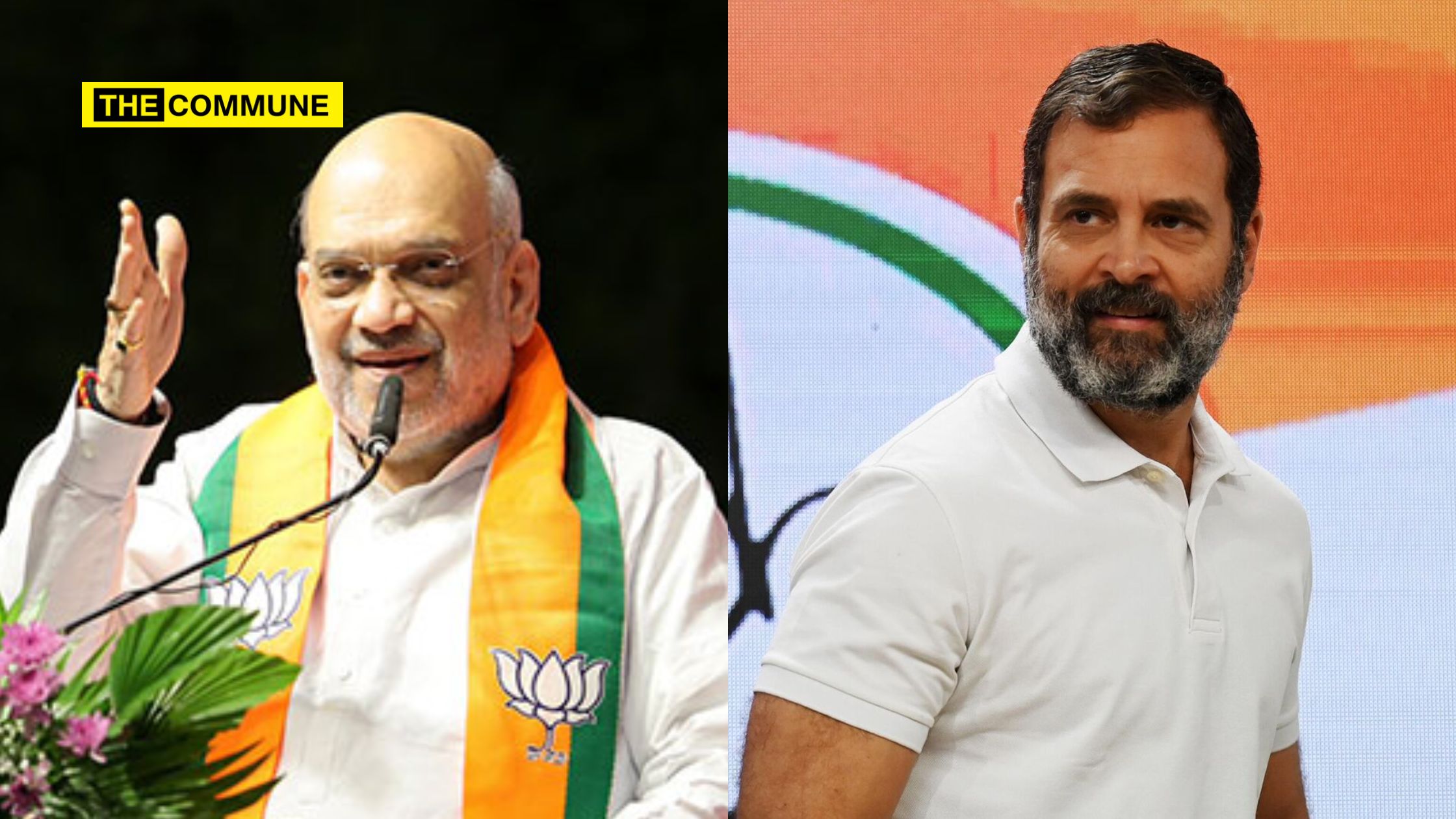
Union Home Minister Amit Shah, on Thursday, launched a sharp attack on Congress leader Rahul Gandhi over his recently concluded Voter Adhikar Yatra and termed it as an infiltrator saving campaign.

“Rahul Gandhi did not come to Bihar on a Voter Adhikar Yatra but on a ‘Save the Infiltrators Yatra’. His tour was not about education, jobs, electricity, or roads for Bihar, but about protecting infiltrators from Bangladesh. It was nothing less than an Infiltrator Rescue Tour,” Union Minister Shah said while addressing Bharatiya Janata Party (BJP) workers at Dehri in Bihar’s Rohtas district.

The Union Minister asked BJP workers to take this message to the people. “Should infiltrators get the right to vote? Should they get free ration, jobs, housing, and Ayushman Bharat medical treatment worth Rs 5 lakh while our country’s youth are left behind?” he asked. Accusing the Opposition of misleading people, Union Minister Shah said, “Rahul Gandhi and company are giving jobs to vote-bank infiltrators instead of our youth. If their (Opposition-led) government is formed by mistake, infiltrators will spread everywhere in Bihar.”

He added that the BJP would never allow the SC/ST/OBC reservation system to be dismantled, saying, “As long as even one BJP MP is in Parliament, reservations will remain protected.” He also praised the Prime Minister’s dedication, noting that Narendra Modi has served as the Chief Minister and Prime Minister for 24 years without taking a single day’s leave.

In an indirect swipe at Rahul Gandhi, he added, “Some leaders cannot sleep if they don’t go abroad every six months. But PM Modi always put the country first, then the party, then the party workers — never his family.” Union Minister Shah also responded to Rashtriya Janata Dal Chief Lalu Prasad Yadav, who had recently questioned Prime Minister Narendra Modi’s work.

“Lalu Prasad Yadav asked what PM Modi has done so far. I want to remind him — between 2004 and 2014, when he was a Union Minister, Bihar received Rs 2.8 lakh crore from the Centre. But from 2014 to 2024, under PM Modi, Bihar has received Rs 9.85 lakh crore,” he said. Admitting that the BJP had underperformed in the Magadh and Shahabad regions in the 2020 Assembly election, Union Minister Shah urged his party workers to ensure a strong poll performance this time.

“We must ensure NDA’s victory in more than 80 per cent of seats here. All workers should pledge that 80 per cent of these seats go to the BJP,” he said. Union Minister Shah addressed BJP workers from Bihar’s Shahabad and Magadh regions in Dehri, where he hailed the achievements of the Narendra Modi government.

“Could you have imagined that a Ram temple would be built in Ayodhya in 11 years? But PM Modi laid the foundation stone and consecrated it with the chants of ‘Jai Shri Ram’. He abolished Article 370, ended triple talaq, introduced the CAA, carried out surgical strikes, air strikes, and Operation Sindoor to destroy terrorists inside Pakistan. He even sent a spacecraft to the Moon’s South Pole and named it ‘Shiv Shakti Point’,” he said.

The Union Home Minister highlighted India’s rise on the global stage, claiming that the Indian economy has grown from 11th to fourth position under PM Modi’s leadership. He also announced that a Sita Mata temple worth Rs 800 crore is being built in Sitamarhi.

“By reducing GST rates, the burden on the kitchens of mothers and sisters has been reduced by 20 per cent. Bihar’s poor have benefited the most, with 81 crore people across India receiving free ration,” he added. Listing the NDA government’s welfare measures, Union Minister Shah said, “As many as 56 crore bank accounts were opened for the poor, 42 crore beneficiaries under Ayushman Bharat, 15 crore households provided tap water, 12 crore homes built toilets, 10 crore homes given gas connections, four crore families given housing, and 1.5 crore citizens became millionaires through entrepreneurship and support schemes.”

He predicted a massive victory for the NDA in the upcoming Assembly polls in Bihar, saying, “This time our majority will be such that the Opposition will be completely marginalised. Tejashwi Yadav will not even dare to contest the next Assembly election.” Directly targeting RJD Chief Lalu Prasad Yadav, Union Minister Shah said, “A government of ransom, kidnapping, and murder can never bring prosperity. Bihar needs a government under Narendra Modi and Nitish Kumar. Only this double-engine government can ensure development.”

The programme was also attended by Deputy Chief Minister Samrat Choudhary, State BJP President Dilip Jaiswal, Ministers Santosh Singh and Prem Kumar, party in-charge Bhikubhai Dalsaniya, former MP Gopal Narayan Singh, and MLC Nivedita Singh, among others.

-IANS

Subscribe to our channels on TelegramWhatsApp, and Instagram and get the best stories of the day delivered to you personally.

Quetta Carnage Shows How Militants Are Weaponised By Pakistan Against Baloch Nationalism

Pakistan: Militants Gun Down 7 Labourers In Balochistan

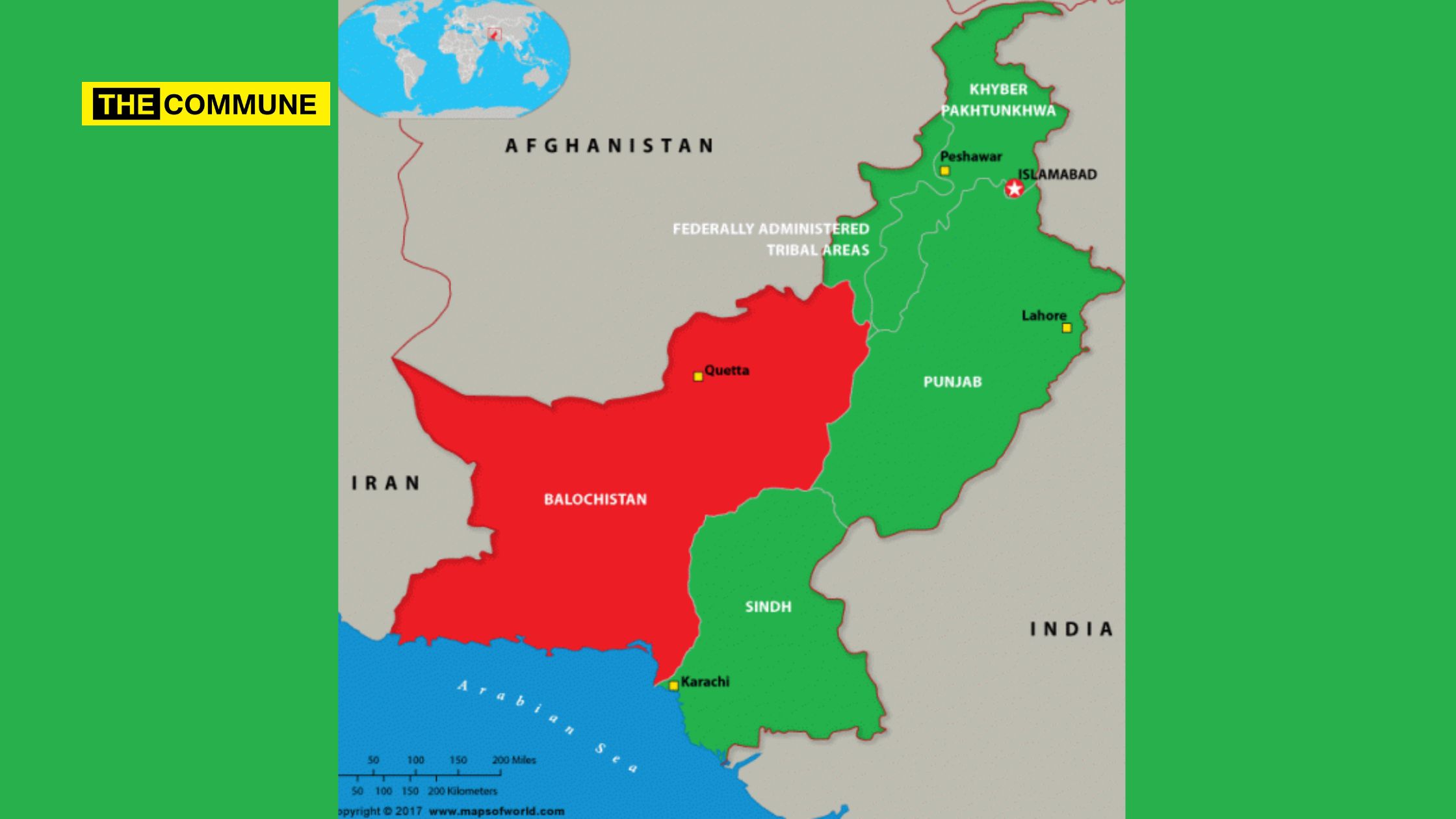
On 2 September 2025, Quetta once again became the stage of brutal violence when a suicide bomber struck a rally of the Balochistan National Party-Mengal (BNP-M), killing at least 14 people and injuring more than 30. The Islamic State Pakistan Province (ISPP), a branch of the so-called Islamic State Khorasan Province (ISKP), immediately claimed responsibility.

For many outside observers, this seemed like yet another tragic terror attack in Pakistan’s most volatile province. But for those who have long tracked the patterns of violence in Balochistan, it represented something far more disturbing: the culmination of years of Pakistani state policy that has deliberately allowed transnational jihadist groups to grow while targeting nationalist voices demanding rights for Baloch people.

The attack was not a random act of terror; it was the product of a strategy that has repeatedly favored militant Islamists over secular, nationalist, and democratic movements. For decades, the Pakistan Army and its intelligence wings have seen Baloch nationalism as a greater threat than extremist religious militancy. The demands of the Baloch people have consistently centered on political autonomy, economic justice, and an end to the exploitation of their land and resources by Islamabad.

Rather than responding with dialogue or reforms, the state has unleashed waves of military operations, enforced disappearances, extrajudicial killings, and a policy of divide-and-rule. In this environment of repression, international jihadist organizations have been given either tacit approval or outright support to act as counterweights against the Baloch struggle.

Groups like ISKP-ISPP thrive precisely because the Pakistani military establishment sees them as useful tools to weaken and delegitimize Baloch nationalist forces. The Quetta bombing of September 2025 was a direct reflection of this cynical calculation. The target was not a military installation or a state office but a political gathering of BNP-M, one of the largest and most moderate nationalist parties in the province.

BNP-M has historically chosen the path of electoral politics, working within Pakistan’s constitutional framework despite systemic discrimination against the Baloch. Yet even this moderate nationalism is intolerable for a military establishment that wishes to crush any sense of Baloch identity or demands for autonomy. By allowing ISKP-ISPP to operate in Balochistan, the Pakistan Army effectively enables attacks against groups like BNP-M while keeping its own hands clean.

The narrative then becomes one of “global terrorism”, not state repression, and the Army continues to claim legitimacy as the sole guarantor of Pakistan’s stability. The historical record is full of evidence pointing to the way Pakistan’s military rulers have used extremist groups as instruments of policy. From the Taliban in Afghanistan to sectarian outfits in Punjab, the Army has consistently backed those who espouse religious fanaticism while treating ethnic nationalists and secular activists as existential enemies.

In Balochistan, this strategy has been devastating. While entire villages are bulldozed in counterinsurgency campaigns and thousands of young men vanish into the dungeons of intelligence agencies, madrassas and extremist outfits are given space to expand. It is therefore no coincidence that ISKP-ISPP was able to establish strongholds in Balochistan despite the heavy presence of the Army and Frontier Corps.

The Pakistani state is quick to crush any sign of Baloch dissent but mysteriously incapable of dismantling the networks of radical jihadists who openly pledge allegiance to ISIS. The BNP-M rally attack illustrates the security vacuum that Pakistan has deliberately cultivated. Quetta is one of the most heavily militarized cities in the country, with checkpoints, intelligence posts, and Army patrols everywhere.

For a suicide bomber to reach a political rally and detonate himself in such an environment shows either colossal incompetence or, more plausibly, complicity. The Army’s history suggests the latter. By enabling jihadists to target Baloch groups, the military establishment ensures that nationalist politics remains delegitimized, associated with violence, and deprived of any safe space to flourish.

Every time ISKP-ISPP strikes in Balochistan, the ultimate beneficiaries are the generals in Rawalpindi, who use the chaos to tighten their grip and deflect international scrutiny from their abuses. The Pakistan Army’s duplicity becomes clearer when one examines its propaganda. On one hand, the military paints itself as fighting terrorism, seeking billions in aid and weapons from foreign powers under the guise of counterterrorism. On the other, it has a long record of nurturing and tolerating terrorist organizations as proxies.

This duality is central to its strategy in Balochistan. When Baloch nationalists organize peaceful rallies or demand a fair share of resources from gas fields and Gwadar port, they are met with bullets and abductions. When jihadist groups target those same nationalists, the state shrugs, hides behind claims of helplessness, and often refuses to investigate meaningfully. Such selective repression is not accidental but systematic policy. The human cost of this policy is immense. Families in Balochistan live under constant fear, not only of Army raids but also of extremist bombings.

Political life is suffocated from both directions. The BNP-M attack is only one in a series of violent incidents where secular or nationalist actors have borne the brunt of terrorist violence while the state looks the other way. Journalists who try to expose these links face censorship, threats, and exile. Human rights activists are silenced under draconian laws.

Meanwhile, the Army continues to present itself as the victim of “foreign conspiracies” while engaging in its own brutal repression at home. The rise of ISKP-ISPP in Pakistan cannot be separated from the Army’s regional games. With the Taliban returning to power in Afghanistan, Pakistan’s military establishment initially celebrated, believing it had regained “strategic depth.”

But that move has backfired, as ISKP has positioned itself as the Taliban’s rival, seeking recruits in Pakistan’s own backyard. Rather than genuinely confronting this threat, the Army seems to have redirected it against the Baloch. In doing so, it not only undermines the Baloch struggle but also exposes the entire region to the dangers of an expanding ISIS affiliate.

This reckless gamble shows how deeply entrenched the Pakistan Army’s hostility toward Baloch nationalism is, that it would risk international terrorism spreading further just to weaken an ethnic movement seeking autonomy. The BNP-M bombing reveals the hollowness of Pakistan’s counterterrorism claims.

If the state cannot protect a peaceful political rally in the heart of Quetta, then what exactly is the purpose of the massive military infrastructure in the province? The answer lies in priorities: the Army is not in Balochistan to protect its people but to control its resources and crush dissent. Gas, copper, gold, and the strategic coastline of Gwadar are what truly matter to Rawalpindi.

The people themselves are expendable, whether they are victims of enforced disappearances by soldiers or bombings by jihadists. The Army’s collaboration—active or passive—with ISKP-ISPP is simply another layer of exploitation against a people who have been treated as colonial subjects within their own land. The international community must recognize this reality. Treating Pakistan solely as a partner in counterterrorism is a dangerous illusion.

The Quetta bombing should be read as a warning that the Pakistan Army’s games with jihadists are far from over. By enabling ISKP-ISPP to target Baloch groups, the Army is exporting instability beyond its borders, as these groups inevitably link up with transnational networks. Allowing this duplicity to go unchecked only emboldens the generals who thrive on perpetual crises.

For the Baloch, however, the message is devastating. Even participation in electoral politics, as BNP-M has attempted, cannot guarantee safety from terror. The Army’s strategy leaves them trapped between the hammer of military repression and the anvil of jihadist violence. This is by design, as it seeks to erode the very possibility of a political solution to the Baloch question. In such an environment, more young Baloch may feel driven to abandon peaceful politics altogether, further fueling conflict.

The real responsibility for this lies not with the victims but with the state that has weaponized extremism for its own survival. The September 2025 attack should therefore not be viewed as an isolated atrocity but as part of a structural pattern of state behavior. The Pakistan Army, far from being the protector of the nation, has become its greatest destabilizer.

By fostering jihadist groups while crushing nationalist ones, it has turned Balochistan into a battleground where the voices of its people are drowned out by explosions and gunfire. Until this militarized policy is confronted, both within Pakistan and internationally, the cycle of violence will continue.

The BNP-M rally bombing is a grim reminder that Pakistan’s generals are not interested in peace, stability, or democracy in Balochistan. Their interest lies in domination, and for that they will collaborate with any force, no matter how extremist, as long as it helps them maintain their grip. The blood spilled in Quetta is therefore not only on the hands of ISKP-ISPP but also on the hands of the Pakistan Army, whose policies created the conditions for this attack.

As long as Rawalpindi views Baloch nationalism as an existential enemy and jihadists as useful instruments, the people of Balochistan will remain trapped in a cycle of state repression and extremist terror. The world must finally call out this dangerous duplicity, for the price of silence is paid in human lives.

-IANS

Subscribe to our channels on TelegramWhatsApp, and Instagram and get the best stories of the day delivered to you personally.

Puducherry Bomb Blast: NIA Arrests Two For Exposing Protected Witnesses

NIA Arrests One Person From Purasaiwakkam, Chennai During Raids Linked To ISIS Recruitment Network puducherry

The NIA on Thursday arrested two accused in the 2023 Villianur bomb blast case after extensive searches in four locations in Puducherry, including the Central Prison of the Union Territory.

The accused, identified as Heram alias Karthi alias TR and Udhayakumar alias Kumar, have been arrested for leaking sensitive information, including the names and other details about protected witnesses, in the case in which a political functionary, Senthil Kumaran, was brutally killed, said an NIA statement.

The NIA on Thursday conducted coordinated searches at Central Prison Kalapet and Yanam Prison, along with two other locations. The NIA teams seized mobile phones, SIM Cards and other incriminating documents, including materials revealing the identities of the protected witnesses. The probe agency said on the fateful evening, at around 9.30 p.m., six bike-borne assailants had hurled a country-made bomb to stun the victim before hacking him to death using machetes and knives in Villianur.

The NIA investigations revealed that the two accused arrested on Thursday had collude with others, including the prime accused Nithyanandam alias Nithi, to obtain and disseminate the names, identities and mobile numbers of the protected witness. Nithi, along with 12 others, was chargesheeted by NIA in the case on September 21, 2023.

While Nithi is currently lodged in Yanam Prison, the other accused are being held in Central Prison, Kalapet, Puducherry. Intelligence inputs received during the course of the investigation recently indicated that Nithi and his associates had illicitly obtained the names and identities of the protected witnesses in the bomb blast and murder case.

The information was allegedly used to threaten and coerce witnesses in an attempt to derail the legal process and obstruct justice. The NIA is continuing with its investigation to uncover the larger criminal conspiracy behind the killing, and to identify others who violated Section 17 of the NIA Act read with Section 44 of the UA(P) Act, 1967 to reveal the identity of the protected witnesses and jeopardise their safety.

-IANS

Subscribe to our channels on Telegram, WhatsApp, and Instagram and get the best stories of the day delivered to you personally.
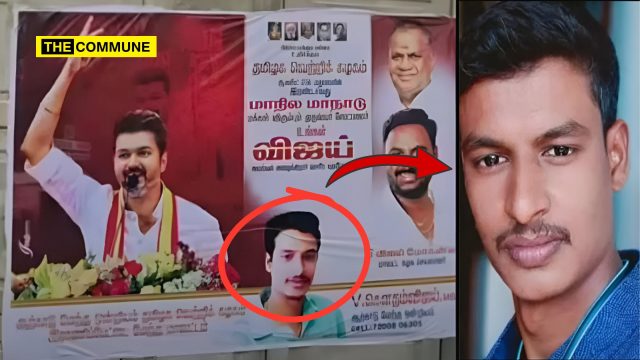
TVK Functionary Held For Robbing Elderly Woman In Tiruvannamalai

tvk robbing

Police in Tiruvannamalai have arrested a Tamilaga Vettri Kazhagam (TVK) functionary accused of robbing jewellery from a 61-year-old woman after deceitfully offering her a lift.

The victim, Malar, from Ondikudisai near Arani, had reportedly sought a ride while walking along the road. The accused stopped and offered her a lift on his two-wheeler. However, midway, he allegedly forced her to get down, snatched her jewellery, and fled the spot.

Following her complaint, police registered a case and reviewed CCTV footage from the area, which led to the identification of the suspect. The accused, Gautham from Ranipet and a TVK party functionary, was subsequently arrested.

(With inputs from Nakkheeran)

Subscribe to our channels on TelegramWhatsApp, and Instagram and get the best stories of the day delivered to you personally.
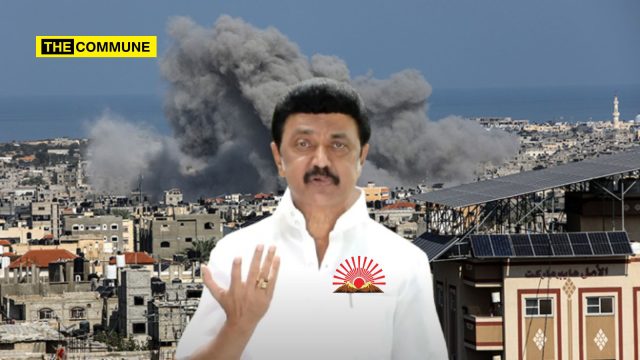
MK Stalin Comments On Gaza Amidst Tamil Nadu Facing Crisis On Every Front

gaza stalin israel

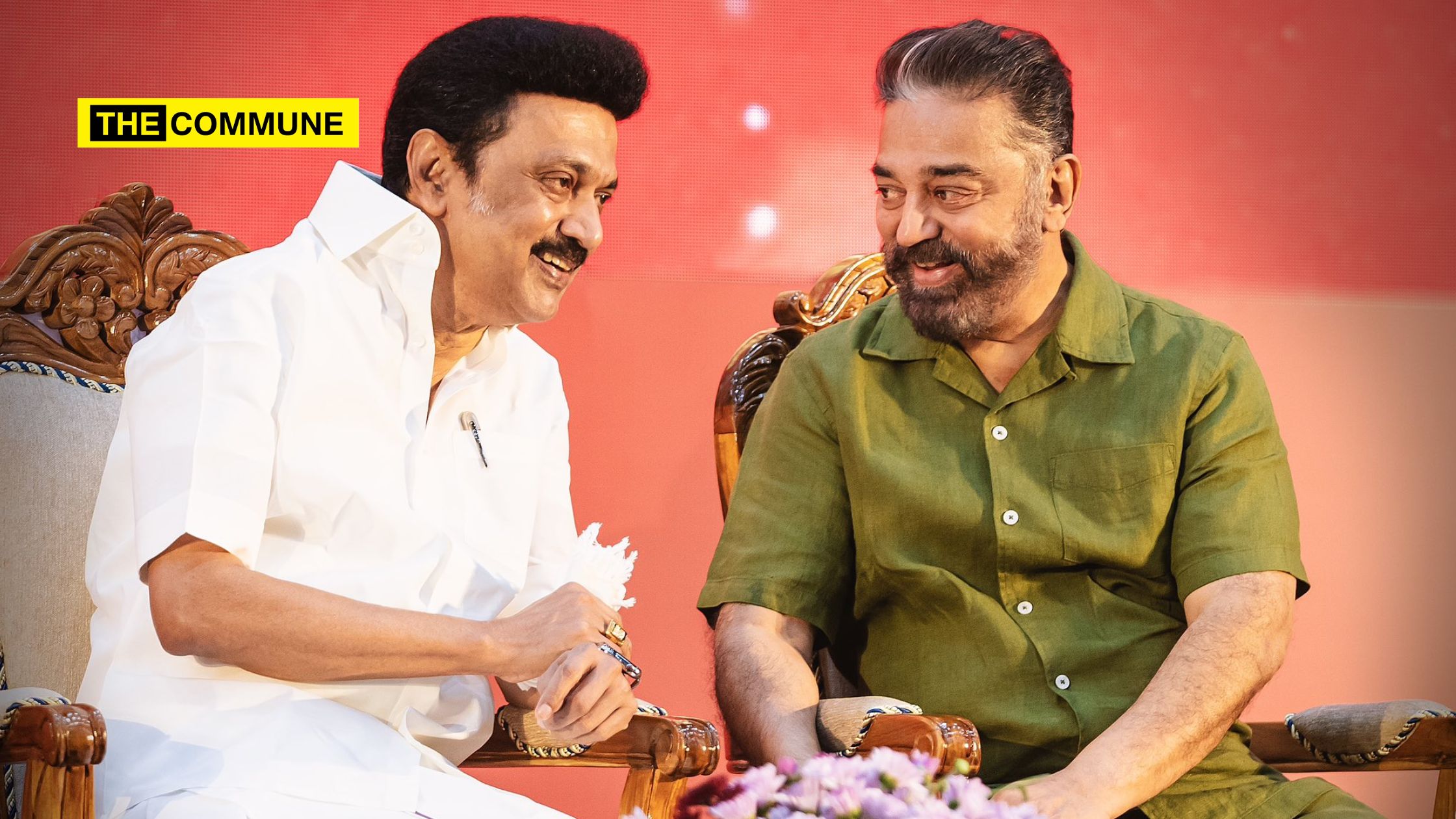
Tamil Nadu Chief Minister M.K. Stalin has voiced alarm over the ongoing conflict in Gaza, highlighting reports that Israeli strikes killed at least 29 Palestinians, including 19 in Gaza City, on 18 September 2025. Through his official X account, Stalin wrote, Gaza is gasping, the world must not look away. I am shaken beyond words by what is unfolding in #Gaza. Every visual is gut wrenching. The cries of infants, the sight of starving children, the bombing of hospitals, and the declaration of genocide by the UN Commission of Inquiry together show the suffering that no human being should ever be subjected to. When innocent lives are being crushed in this way, silence is not an option. Every conscience must rise. India must speak firmly, the world must unite, and we must all act to end this horror now. #StopGazaGenocideNow #Palestine” 

However, Stalin’s show of concern for a global humanitarian crisis drew sharp criticism from opposition leaders, who accused him of turning a blind eye to the mounting law-and-order problems within Tamil Nadu itself. They pointed to the surge in murders, public assaults, and vandalism by drunken miscreants across the state. Example, two incidents of today gained severe attention

Pregnant Woman Attacked In Chennai

One shocking case unfolded in Padi, Chennai, where a pregnant woman was attacked by a gang of six men. Velmurugan, a grocery store owner, was allegedly threatened by the group demanding a monthly supply of groceries worth ₹5,000. When he refused, the gang attempted to stab his eight-months-pregnant wife, Tamil Mathi, injuring her back, head, and ear. The assailants fled after locals rushed in upon hearing her screams. Police have launched an investigation into the incident.

Cars Vandalized In Madurai

In another disturbing incident, residents of Narasingam Ammachiamman Nagar in Madurai woke up to find their cars vandalized by a group of intoxicated youths. The culprits smashed windshields and doors with stones. Othakadai police later arrested three youths Rajasanjay (19), Muthupandi (18), and Ganeshpandian (19) in connection with the attack.

Opposition parties argue that while the Chief Minister finds time to issue statements condemning international conflicts, he appears unwilling or unable to address the growing insecurity, crime, and breakdown of law and order on home soil.

Banned Gutka Sold Openly In Chennai Despite Prohibition

In a shocking incident, video footage has surfaced showing banned products like gutka and pan masala being sold openly in Royapuram, Chennai.

Though the Tamil Nadu government has outlawed gutka and similar substances, and police routinely crack down on smuggling from neighboring states, the footage reveals small packets of the banned items being sold in broad daylight on the steps of a closed shop at Singarath Thottam’s Third Street. The visuals have triggered public outrage, with residents demanding immediate and strict action against those behind the illegal trade.

DMK Town Panchayat President Arrested for Alleged Murder Of Whistleblower

On 11 September 2025, police arrested DMK Samalapuram Town Panchayat president Vinayagam Palanisamy, 60, on charges of murdering a local activist by deliberately ramming his car into the victim’s two-wheeler.

The deceased, Palanisamy (57) of Karugampalayam, was a social activist who had earlier filed a petition with the Tiruppur District Collector opposing a Panchayat road project. His complaint reportedly led to the suspension of the project, creating friction with the Town Panchayat president.

The fatal incident occurred on the evening of 10 September near Karugampalayam Government Primary School along the Samalapuram–Karnampettai Road. The activist was struck from behind, thrown off his bike, and died on the spot. Initially treated as a road accident, the case shifted when Mangalam police traced the vehicle to the Panchayat chief.

Investigators now suspect that Vinayagam Palanisamy, allegedly drunk at the time, intentionally targeted the activist in retaliation for his role in halting the project. The probe is ongoing.

DMK Councilor Arrested For Brewing And Selling Illicit Liquor In Erode

A DMK councillor has been arrested in connection with brewing and selling illicit liquor in Erode district. Police seized 7 liters of liquor and the materials used for distillation during the raid.

The incident came to light after the Erode District Maoist Prevention Unit police received confidential information that liquor was being illegally sold in the Appusamy garden, located in the Kuttaiya Kadu area near Kanchikoil in Perundurai taluka. Acting on the tip-off, police rushed to the spot and found evidence of brewing activity, along with ingredients required for making liquor.

Upon investigation, police identified the person responsible as Suresh Kumar (42), a DMK member from the Pethampalayam area near Kanchikoil. He is currently serving as the third ward councilor of the Pethampalayam Panchayat for the second term and also holds the position of deputy organizer of the Perundurai East Union DMK Youth Wing.

Police revealed that Suresh Kumar was engaged in the brewing and sale of liquor with the assistance of Muthusamy (50), who has been working in his garden for nearly 30 years.

Following this, police conducted searches at the residences of both men early yesterday morning. During the operation, about 7 liters of liquor kept for sale were seized, along with equipment used in distillation. Both Suresh Kumar and Muthusamy were arrested, interrogated, and later produced before the court, which remanded them to judicial custody.

Meanwhile, the Special Cell Police also confirmed receiving intelligence regarding illicit liquor operations in the Kuttaikadu area of Kanchikoil. A thorough search led to the discovery of brewing activities in the Appusamy estate. The arrests and seizure were subsequently handed over to the Erode District Prohibition Enforcement Police for further action.

Untouchability Wall Blocks Dalits’ Access In Tiruvarur

In Valangaiman, Tiruvarur district, a 200-metre wall built across a traditional pathway has sparked outrage among Dalit residents, who allege it is a caste barrier cutting them off from schools, workplaces, and public facilities.

The 10-foot structure, erected three years ago at Kovilpathu, now forces over 1,000 Dalit families including 800 schoolchildren to take a longer route via the main road. Activists call it an “untouchability wall,” accusing dominant caste groups of backing the blockade to exclude Dalits from a new housing layout.

Officials have so far termed it a private land dispute, but local residents demand urgent intervention, warning that their daily lives and livelihoods remain severely disrupted.

Past Instances Of Such “Untouchability Walls” In TN

In Dravidian model Tamil Nadu, the news of such ‘untouchability walls’ is not new. Here are a few:

August 2025: In Muthuladampatti, Karur, a 200-foot-long, 10-foot-high wall was constructed by the Thottia Naicker community on government land (poramboke). Arunthathiyar (SC) residents allege it is a “wall of untouchability” built to block their access to predominantly caste-Hindu areas, despite their complaints to revenue officials. The construction led to protests and peace talks, but no resolution was reached. Caste Hindus claim the wall was for “safety and security” from outsiders.

February 2024: Dalit residents of Sevur, Tiruppur, alleged a one-kilometer wall was built by dominant-caste residents to block a public road, forcing them to take a 2 km detour. The local panchayat president confirmed the wall was illegally built on a common pathway and had issued a demolition notice, which was ignored. The dominant-caste residents’ association denied allegations of untouchability, claiming the wall was for safety and crop protection. The district collector ordered an inspection to verify land records.

July 2021: A 9-foot-high, 150-meter-long wall was built by farm owners in Kalkandar Kottai, Trichy, allegedly to separate their land from a Dalit colony. Protesters, including local CPM members, claimed it was an “untouchability wall” erected because the owners planned to sell the land for real estate and wanted to segregate the community. Local civic officials confirmed no permission was given for the wall and promised to investigate.

Crumbling Education System

Tamil Nadu is facing a critical shortage, with over 1,000 headmaster positions and thousands of teaching roles unfilled in government schools. This lack of teachers has made it increasingly difficult for educators to effectively teach students.

While all government schools fall under the Department of School Education, various wings of the department are responsible for primary and secondary schools. In Tamil Nadu, approximately 25,50,997 students are enrolled in 31,336 primary schools, with around 1,08,537 teachers. In secondary schools, there are 6,218 institutions across the state, with 27,24,256 students and 1,16,863 teachers.

The shortage of teachers and headmasters is creating significant challenges for both educators and students. Despite this, the government has failed to address these vacancies. According to teachers’ unions, more than 1,000 headmaster positions remain vacant in the state’s 37,000 primary, middle, and high schools.

What is even more alarming is the fact that the last recruitment for primary school teachers took place in 2021-2022, filling a mere 14 positions. For secondary schools, 3,043 vacancies were filled in the 2022-2023 academic year. The DMK government, instead of addressing this shortage, has resorted to using temporary staff, allowing the education system to spiral into chaos.

The recent ASER 2024 report highlights a disturbing gap in foundational literacy and numeracy across India, with some states showing significant recovery from pandemic disruptions while others, like Tamil Nadu, are lagging behind in key educational indicators. The report compares the progress of various states, and despite Tamil Nadu’s reputation for educational advancements, it has notably fallen short, particularly in government school performance.

Crumbling Healthcare

Over the past year, multiple cases of medical negligence and facility failures have exposed cracks in what was long thought of as a robust public health system in Tamil Nadu. Many incidents expose the rotten state such as a patient who had to have her arm amputated after an angioplasty at Rajiv Gandhi Government Hospital, and a toddler who died after an amputation in Egmore due to an alleged IV error.

These aren’t isolated tragedies. They suggest systemic gaps in oversight, accountability, and standard of care — especially in government-run hospitals. The frequency of such incidents undermines public trust in institutional healthcare, even as the state claims people still prefer state hospitals due to faith in its legacy.

A second major issue is staffing — both in terms of numbers and specialization. Government data shows substantial shortfalls: over 30% of sanctioned doctor posts remain vacant in many state hospitals; obstetricians and gynaecologists are among the worst hit.

As more beds and services are added under the Dravidian model without matching increase in critical personnel, existing doctors are overstretched. This affects emergency care, maternal services, and reduces ability to respond to complications. The gaps become even more pronounced in rural areas, where specialist access is already weak.

Infrastructure and resource availability paint a similarly worrying picture. In several hospitals, basic facilities are missing or under-prepared: cribs for newborns were unavailable in Kallakurichi Government Maternity Hospital, leading to newborns lying on the floor.

Medicine and supply shortages have also been widely reported — from IV fluids to essential antibiotics. Primary Health Centres often lack the medicines needed for even standard treatments (including snakebite, in some rural PHCs) and injections.

Meanwhile, more than a hundred Urban Health & Wellness Centres (UHWCs) — built and staffed — remain unopened, depriving communities of promised health access.

Lastly, health outcomes — which once were a strong point of the Dravidian model — show signs of reversing or not improving as expected. Maternal mortality ratio (MMR) in Tamil Nadu, while claimed to be one of the lowest nationally, is now reported to be higher when real-time data are used compared to official estimates, pointing to under-reporting or data lags.

Infant mortality has improved in some districts like Coimbatore and in city corporations, yet significant inter-district disparities persist and high newborn healthcare failures continue to be reported.

Together, these suggest that the Dravidian healthcare model is no longer uniformly delivering, particularly for the vulnerable populations. Unless addressed, the model’s strengths may increasingly be believed to belong to the past.

Focus On Your Backyard

Chief Minister Stalin’s impassioned plea for Gaza may resonate internationally, but the daily headlines from Tamil Nadu tell a starkly different story. From brutal attacks on women and rampant vandalism by drunken gangs, to banned substances being sold in broad daylight, to ruling party functionaries themselves accused of murder and illicit liquor trade — law and order in the state is visibly deteriorating. Add to this the grim realities of caste walls, collapsing schools, and a crumbling healthcare system, and the contrast becomes glaring. A government that projects itself as the guardian of social justice and the champion of global humanitarian causes is increasingly being seen as blind to the suffering in its own backyard. For many, the so-called “Dravidian Model” today stands less as a success story, and more as a cautionary tale of rhetoric without results.

Subscribe to our channels on TelegramWhatsApp, and Instagram and get the best stories of the day delivered to you personally.