Home Blog Page 105

Gita, Manusmriti, Vedas: When Courts Quoted Hindu Scriptures To Give Judgements

Between 2020 and 2026, courts across India repeatedly referenced Hindu scriptures such as the Manusmriti, Bhagavad Gita, Vedas, and other classical texts while delivering judgments. These citations appeared across a wide spectrum of cases, ranging from maintenance and rape convictions to labour rights, copyright law, and constitutional interpretation.

Contrary to claims that such references are aberrations, the judicial record shows consistent engagement with Indic philosophical texts to explain moral duty, justice, dignity, and social responsibility.

In this report, we look at 17 instances where Hindu scriptures were expressly cited in judgments or judicial reasoning.

#1 Supreme Court Cites Manusmriti on Maintenance Rights – 14 January 2026 

While deciding a maintenance claim by a widowed daughter-in-law, a Supreme Court bench comprising Justices Pankaj Mithal and SVN Bhatti cited Chapter 8, Verse 389 of the Manusmriti. The Court held that a widowed daughter-in-law has the right to seek maintenance from her father-in-law’s estate. It observed that ancient Hindu legal principles imposing a duty on the head of the family to support women align with the Hindu Adoptions and Maintenance Act, 1956. The Court clarified that moral obligations recognised in classical texts reinforce, rather than contradict, modern statutory law protecting dependent women.

#2 Punjab & Haryana HC Invokes Rajdharma and Gita for Workers’ Rights – 5 January 2026  

Justice Sandeep Moudgil invoked the Bhagavad Gita and the concept of Rajdharma while ruling in favour of long-serving daily wage and contractual workers in Haryana. Allowing 41 connected petitions, the Court held that a welfare state cannot exploit workers by perpetually keeping them in insecure employment. The judgment stressed that governance must uphold justice, compassion, and fairness. Drawing from Indic notions of ruler’s duty, the Court directed the state to regularise workers under applicable policies and grant consequential benefits, including arrears and pay fixation.

#3 Madras HC Rules Gita and Vedanta Are Moral Science
19 December 2025  

Justice GR Swaminathan set aside a Home Ministry order denying FCRA registration to Arsha Vidya Parampara Trust. The Court held that teaching Bhagavad Gita, Vedanta, and Yoga constitutes moral and philosophical education, not religious propagation. The judgment clarified that these texts are integral to Bharatiya civilisation and cannot be narrowly classified as religious instruction under the Foreign Contribution (Regulation) Act. The Court stated that imparting knowledge of the Gita and Vedanta does not make an organisation religious in character for the purposes of FCRA.

#4 Bahraich Court Cites Manusmriti While Awarding Death Penalty – 13 December 2025 

In sentencing the main accused to death in the 2024 Bahraich communal violence murder case, the Sessions Court cited a verse from the Manusmriti to underscore the gravity of the crime. Judge Pawan Kumar Sharma described the offence as socially destabilising and exceptionally brutal. The court used the ancient text to explain the moral necessity of proportionate punishment to uphold civic order and restore public confidence. Life sentences were awarded to nine other accused. The citation was used as ethical reasoning, not as a source of law.

#5 Karnataka HC Quotes Manusmriti to Deny Bail in Rape Case – 27 September 2025  

Justice S Rachaiah denied bail to an accused in the rape and atrocity case involving a 19-year-old tribal woman. The Court cited the Manusmriti verse “Yatra naryastu pujyante…” to emphasise societal respect for women. The judgment held that the seriousness of the offence and its impact on the victim outweighed considerations for bail. The citation was used to underline moral condemnation of crimes against women while affirming that constitutional values demand strict scrutiny in such cases.

#6 Supreme Court Quotes Manusmriti in Incest Rape Conviction – 6 August 2025 

The Supreme Court dismissed a Special Leave Petition challenging the conviction of a father for raping his minor daughter. Upholding the Himachal Pradesh High Court’s judgment, the bench cited the Manusmriti to stress the duty of family members to protect women and children. The Court observed that incestuous sexual violence represents a grave betrayal of trust and dignity. The reference was used to reinforce moral condemnation alongside constitutional principles safeguarding women’s rights.

#7 Sheopur Court Cites Ramcharitmanas, Guru Granth Sahib – 23 July 2025 

While sentencing Deepak Pachauri to death for murdering his adoptive mother, the court referenced teachings from the Ramcharitmanas and Guru Granth Sahib. The judgment highlighted the moral obligation of children to honour parents. The Court stated that disregarding such ethical foundations would undermine adoption systems and societal trust. The scriptures were cited to explain social morality rather than as legal authority, reinforcing the seriousness of matricide.

#8 Supreme Court Judge Calls for Indic Texts in Law Education – 14 April 2025 

Justice Pankaj Mithal urged the inclusion of ancient Indian legal and philosophical texts such as the Vedas, Smritis, Manusmriti, Arthashastra, Ramayana, and Mahabharata in law school curricula. Speaking at a judicial forum, he said these texts contain foundational ideas on justice, equity, and moral reasoning. He proposed courses like “Dharma and Indian Legal Thought,” arguing that understanding Indian jurisprudence requires engagement with indigenous intellectual traditions.

#9 Allahabad HC Calls Tearing Manusmriti a Cognizable Offence – 7 March 2025 

The Allahabad High Court refused to quash an FIR against RJD spokesperson Priyanka Bharti for tearing pages of the Manusmriti on live television. The bench held that the Manusmriti is regarded as a sacred text by a section of society and that tearing it publicly indicated deliberate intent to outrage religious feelings. The Court ruled that the act constituted a cognizable offence under the Bharatiya Nyaya Sanhita.

#10 Orissa HC Quotes Gita to Quash Cheating Case = 7 February 2025 

Justice Sibo Sankar Mishra quashed cheating charges against a man who returned ₹17.72 lakh received due to mistaken identity. The Court cited the Bhagavad Gita to explain that repentance and ethical conduct restore balance. Observing that the accused demonstrated honesty by returning the money, the Court held that criminal prosecution would serve no purpose. The scripture was cited to emphasise moral responsibility and redemption.

#11 Delhi HC References Gita in POCSO Mediation Ruling – 7 March 2024 

Justice Swarana Kanta Sharma cited teachings from the Bhagavad Gita while explaining the roots of mediation in Indian tradition. The Court clarified that while mediation is culturally embedded, offences under the POCSO Act cannot be compromised. The Gita was referenced to explain the philosophical basis of peaceful dispute resolution, not to dilute statutory protections for children.

#12 Jharkhand HC Quotes Vedas, Manusmriti in Maintenance Case – 25 January 2024  

Justice Subhash Chand delivered a 25-page judgment citing the Rigveda, Yajurveda, and Manusmriti while deciding a maintenance dispute. The Court discussed traditional expectations of marital roles and modified the maintenance order by setting aside the wife’s claim while enhancing the son’s maintenance. The judgment also relied on prior Supreme Court rulings regarding family obligations.

#13 Rajasthan HC Invokes Manusmriti for Victim Compensation – 9 January 2024 

The Rajasthan High Court cited the Manusmriti while directing ₹3 lakh compensation for minor rape victims under the Rajasthan Victim Compensation Scheme. The Court held that compensation could apply retrospectively if claims were filed before statutory amendments. It described rape as a dehumanising crime and used the ancient text to underline societal duty toward victims.

#14 Delhi HC Says Gita Cannot Be Copyrighted – 28 September 2023 

Justice Prathiba M. Singh ruled that the Bhagavad Gita and other ancient scriptures are in the public domain and cannot be copyrighted. The Court clarified that while original texts are free for reproduction, adaptations and creative interpretations may qualify for copyright protection.

#15 Gujarat HC Invokes Manusmriti in Minor Abortion Plea – 8 June 2023  

Justice Samir J Dave orally referenced Manusmriti while hearing a plea for termination of a 7-month pregnancy of a 16-year-old rape survivor. The Court directed a medical panel to examine the minor before deciding. The reference was made to discuss historical norms, not as determinative law.

#16 Justice Prathiba Singh on Women’s Status in Scriptures – 11 August 2022 

Speaking at a FICCI conference, Justice Prathiba Singh stated that Indian scriptures, including Manusmriti, accord women a respectable position. She linked cultural values in ancient texts to modern discussions on women’s participation in STEM fields.

#17 Karnataka HC Says Courts Must Act Like Lord Krishna – 8 September 2020 

While dismissing an appeal in a rape case involving a 69-year-old woman, the Karnataka High Court cited the Bhagavad Gita. The bench said courts must act decisively like Lord Krishna to protect dharma and cannot remain mute spectators to injustice. The conviction was upheld.

Subscribe to our channels on TelegramWhatsApp, and Instagram and get the best stories of the day delivered to you personally.
Rani Gaidinliu: The Freedom Fighter India Didn’t Know How To Remember

Born on 26 January 1915, in a remote Rongmei village in the hills of what was then colonial Manipur, Rani Gaidinliu grew up far from the marble halls of empire and closer to the mud, mist, and moral certainties of the Naga highlands. She never learned to read or write, but she learned early how to lead.

Gaidinliu’s world was one where the British Raj appeared not as a distant abstraction but as an intrusive power that taxed huts, forced men into porterage, and interfered with local faith and authority. By the time she was 13, she had joined a revivalist and resistance movement known as Heraka (Pure), led by her cousin Haipou Jadonang. It combined ancestral religious practices with a blunt political demand: that the Nagas, who had governed themselves for generations, should not bow to white rulers who had arrived only yesterday.

Jadonang was arrested in 1931 and hanged after what his followers called a mock trial. His death might have ended the movement. Instead, it handed its leadership to a slight, determined teenage girl. At 16, Gaidinliu took charge of Heraka and did something that unnerved the colonial authorities more than any rifle: she persuaded entire villages to stop paying tax, refuse forced labour, and deny the legitimacy of British rule. The Raj, accustomed to obedience in the hills, suddenly found itself defied by a child.

The British press and parliamentarians branded her “the terror of the North-East”. A manhunt was launched. She slipped across forests and villages in what are now Assam, Nagaland, and Manipur, protected by her people. Eventually, in October 1932, she was captured after a military ruse by the Assam Rifles. After a ten-month trial, she was convicted of murder and attacks on British forces and sentenced to life imprisonment.

Thus began 14 years behind bars, from 1933 to 1947, in jails at Guwahati, Shillong, Aizawl, and Tura. In Shillong, she was kept in a dark cell. Jawaharlal Nehru, touring Assam in 1937 as Congress president, heard of the young rebel and insisted on meeting her. What he found shocked him: a teenage girl who had already sacrificed her youth to an idea. Writing later, he called her “this brave child of her hills” and conferred on her the title by which she would be known ever after: Rani, the Queen of the Nagas.

She was released after independence in 1947, on Nehru’s orders and against the advice of provincial officials who still regarded her as troublesome. Free India didn’t celebrate her as Nehru had predicted. The little it did remember her was uneven and often inconvenient. She was honoured as a freedom fighter, but she refused to fade into ceremonial harmlessness. Instead, she plunged back into the politics of the hills.

Her aim was not separatism but something subtler and more controversial: the unification of the Zeliangrong communities into a single administrative unit within India, and the revival of the Heraka cultural system. This put her at odds with two powerful forces: Naga separatists who wanted independence, and Christian leaders who saw Heraka as pagan and retrograde. In the 1950s and 1960s, as the Naga insurgency intensified under AZ Phizo, Gaidinliu again went underground.

She even created her own parallel administration, the “Zeliangrong Government of Rani Party”, with about a thousand followers, several hundred rifles, and a determination to defend what she saw as her people’s soul. Delhi, under Indira Gandhi, judged that she was not anti-Indian but fiercely nationalist. After years of persuasion, she and her followers surrendered in 1966. Her men were absorbed into the Nagaland Armed Police. She settled in Kohima, where she lived for the next quarter-century.

In later years, she became a national figure of a different sort: touring India, addressing conferences, and insisting that Nagas were not Christian, not all wanted separation, and not all rejected India. She was associated with organisations such as Vanvasi Kalyan Ashram and Vidya Bharti and served as president of the All-India Freedom Fighters Association. The state, which once hunted her, now showered her with honours: the Tamrapatra in 1972, the Padma Bhushan in 1981, and other awards besides.

Rani Gaidinliu was not easy to categorise. She was a rebel who became a loyalist, a mystic who built an army, a nationalist who fought both empire and insurgency. She spoke the language of Dharma as fluently as that of politics. Admirers saw her as the embodiment of courage and integrity; critics saw rigidity and a refusal to adapt. Both were right.

What never wavered was her conviction that identity mattered, and that freedom meant more than a change of rulers. For her, independence was not merely constitutional; it was cultural and spiritual. In that sense, she resembled many of the 20th century’s anti-colonial leaders who refused to separate politics from belief.

She withdrew from public life after the Kuki–Naga conflict in 1992 and returned to her native village. A brief illness carried her off the following year on 17 February 1993. Her funeral in Manipur was conducted with full state honours. The prime minister mourned her. Stamps, ships, and coins would later bear her name.

India, till two decades ago, had a strange habit of celebrating freedom fighters who conformed to certain ‘standards’ and forgetting those who did not fit neat narratives. Rani Gaidinliu did not fit. She was a hill woman who confronted the empire, a teenager who frightened Parliament, someone who proclaimed that the Nagas aren’t Christians, and a nationalist who insisted that the periphery mattered as much as the centre.

Rani Gaidinliu lived by the following shloka from the Bhagavad Gita (18:47)

श्रेयान्स्वधर्मो विगुण: परधर्मात्स्वनुष्ठितात् |
स्वभावनियतं कर्म कुर्वन्नाप्नोति किल्बिषम्

It is better to do one’s own dharma, even though imperfectly, than to do another’s dharma, even though perfectly. By doing one’s innate duties, a person does not incur sin.

Raja Baradwaj is a marketing communications professional who works with a leading technology multinational company. He is an avid reader, history buff, cricket player, writer, and Sanskrit and Dharma Sastra student.

Subscribe to our channels on TelegramWhatsApp, and Instagram and get the best stories of the day delivered to you personally.
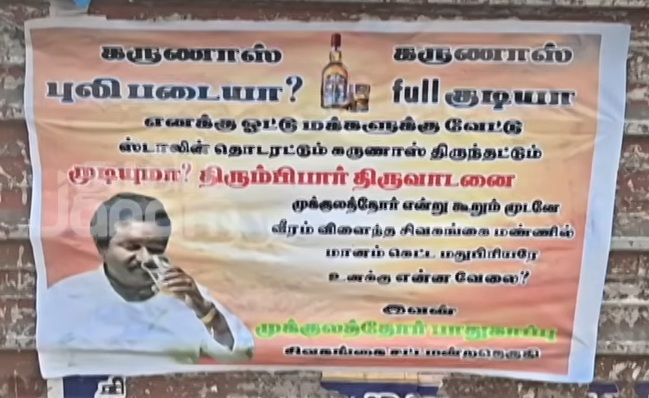
ADMK Trolls Chennai Mayor Priya Rajan’s ‘Masterstroke’ To Quell City’s Mosquito Problem – Cover Drains With Nets!

₹4,000-Crore Storm Drains, Now Covered With Mosquito Nets To 'Prevent Mosquito Breeding'

The AIADMK IT wing has trolled Chennai Mayor Priya Rajan after visuals emerged from Thiruvottiyur showing mosquito nets being tied beneath iron grates placed over stormwater drains by workers of the Greater Chennai Corporation.

In a video circulated widely on social media, the AIADMK IT wing mocked the civic measure by presenting it as an example of administrative absurdity. The video stitched together sarcastic commentary and street reactions, portraying the mosquito nets as a “modern machine to kill bedbugs” and questioning the logic of closing drains with nets while claiming to control mosquitoes. Passersby were shown expressing irritation and disbelief, suggesting that such measures were troubling the public rather than solving the problem.

The controversy arose amid the Corporation’s ongoing stormwater drain project, under which works worth nearly ₹4,000 crore have reportedly been undertaken across Chennai to address rainwater stagnation and urban flooding during the monsoon. In Thiruvottiyur, however, officials were seen fixing mosquito nets under the iron grills covering the drains. It was reported that the intent was to prevent mosquitoes from breeding in stagnant water inside the drains.

The visuals quickly drew public attention. Residents and commuters were seen questioning whether covering drains with nets could obstruct water flow, potentially undermining the very purpose of stormwater infrastructure. Others treated the move with humour, sharing clips and comments online that ridiculed the exercise as an ad hoc and poorly thought-out solution.

Capitalising on the reactions, the All India Anna Dravida Munnetra Kazhagam IT wing amplified the issue, framing it as a symbol of what it described as flawed planning and lack of technical oversight under the DMK-led civic administration – Mayor Priya. The party’s social media posts suggested that instead of systemic mosquito-control measures, the Corporation had resorted to superficial fixes that raised more questions than answers.

Subscribe to our channels on TelegramWhatsApp, and Instagram and get the best stories of the day delivered to you personally.
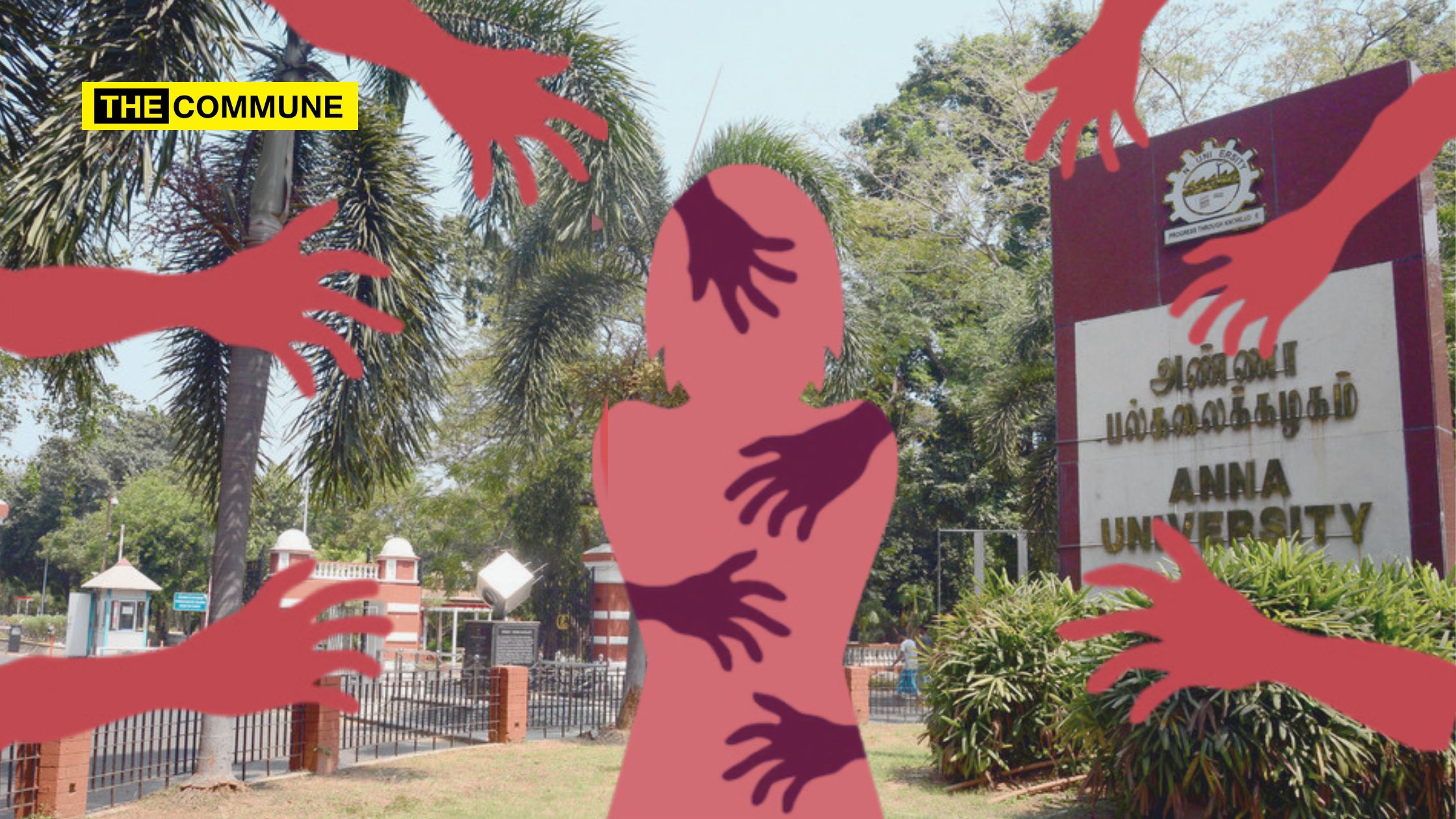
Dravidian Model TN: Ganja-Addicted Youths Brutally Attack Man, Attempt To Kill Him In Coimbatore; Residents Chase Away Attackers

Coimbatore: Ganja-Addicted Youths Brutally Attack Man, Attempt To Kill Him; Residents Chase Away Attackers

An attempted murder involving drug-addicted youths has triggered shock and concern in Coimbatore, where the circulation of narcotics has reportedly been on the rise in recent months, particularly targeting young people.

Coimbatore, a major hub for education, healthcare, industry and IT, has attracted residents from neighbouring districts and States. However, the growing spread of drugs has also led to an increase in violent and unlawful incidents, police sources said.

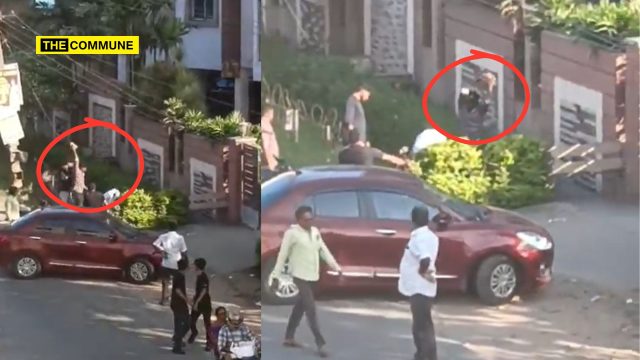
The latest incident occurred on Sunday night (18 December 2026) at Bharathi Nagar in the Ganapathy area, where a clash broke out between two groups of intoxicated youths. The argument quickly escalated into violence, with the groups attacking each other using stones.

During the assault, a youth identified as Vetri suffered severe head injuries and collapsed unconscious in a pool of blood. Even after he lost consciousness, members of the drug-addicted gang allegedly attempted to kill him by lifting and dropping a large stone on his body.

Alarmed residents rushed to the spot, chased away the attackers, and rescued the injured youth. Vetri was rushed to the Coimbatore Government Medical College Hospital, where he is undergoing treatment.

The incident comes amid heightened concern over drug-related crimes in the city. Recently, a college student was sexually assaulted by a drug gang near the Coimbatore airport, further intensifying criticism from across political parties, who have blamed the increasing drug menace for the spike in violent crimes.

Police have launched an investigation into the Ganapathy incident and are working to identify and arrest those involved.

This also comes in the backdrop of the migrant worker attack by ganja-addicted school dropouts in December 2025 in Tiruttani and attack on a man by intoxicated youth in Velachery just a few days ago.

Source: OneIndia Tamil

Subscribe to our channels on TelegramWhatsApp, and Instagram and get the best stories of the day delivered to you personally.
OG Vote Chor? Supreme Court To Hear Long-Pending Plea Alleging Electoral Malpractice In MK Stalin’s 2011 Win

Did MK Stalin Do Vote Chori? Supreme Court To Hear

The Supreme Court is set to take up the final hearing of an appeal challenging the 2011 Tamil Nadu Assembly election victory of Chief Minister MK Stalin from the Kolathur constituency, bringing renewed focus to a long-pending case involving allegations of electoral malpractice.

The case relates to the 2011 Assembly polls, in which Stalin, then the treasurer of the Dravida Munnetra Kazhagam (DMK), defeated former Chennai mayor and AIADMK candidate Saidai Duraisamy by a margin of approximately 2,700–2,800 votes. Following the defeat, Duraisamy filed an election petition alleging corrupt practices, including misuse of government machinery, distribution of money to voters, and expenditure exceeding the limit prescribed by the Election Commission. He sought to have Stalin’s election declared void.

After prolonged proceedings, the Madras High Court dismissed Duraisamy’s petition on 1 June 2017, holding that Stalin’s victory was valid. Duraisamy subsequently filed an appeal before the Supreme Court of India, which was admitted on 18 August 2017. However, despite directions for early listing, the appeal remained pending for several years.

In 2022, Stalin himself sought an early hearing of the appeal. A Bench headed by then Chief Justice NV Ramana took note of submissions by senior advocate Kapil Sibal and advocate Amit Anand Tiwari, who argued that the matter had been pending since 2017 despite relating to the 2011 elections. During that hearing, the Bench reportedly remarked, “You are already elected then what is your problem,” to which Sibal responded that the pendency of allegations of corrupt practices against the sitting Chief Minister warranted an expeditious hearing.

The plea filed at the time stated that the appeal was originally directed to be listed for hearing in January 2018, and later for 20 March 2018, but was not taken up thereafter. It noted that election petitions are required to be heard and decided expeditiously and that continued pendency was causing hardship to the respondent.

The matter is now being heard by a Bench comprising Justices JK Maheshwari and Vijay Bishnoi. The Bench has earlier directed Duraisamy to file a concise note along with relevant documents summarising all materials already on record.

Source: Daily Thanthi

Subscribe to our channels on TelegramWhatsApp, and Instagram and get the best stories of the day delivered to you personally.
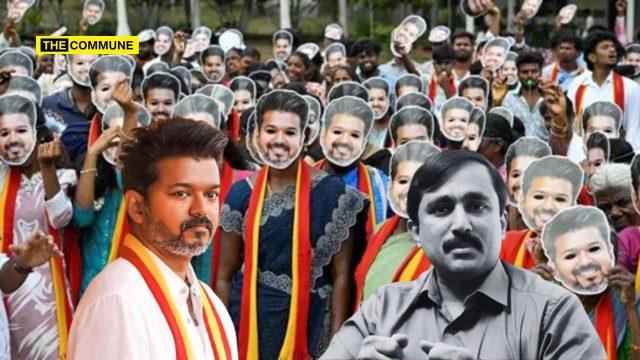
“Whatever It Is, This Is Only A Dispute Between Relatives”, Says AMMK Chief TTV Dhinakaran On Returning To NDA

ttv dhinakaran ammk ops bjp dmk admk nda

Amma Makkal Munnetra Kazhagam (AMMK) general secretary T.T.V. Dhinakaran on Wednesday, 21 January 2026, said the party’s decision to rejoin the National Democratic Alliance (NDA) marked “a new beginning,” not only for the AMMK but for Tamil Nadu as a whole.

Responding to reporters, Dhinakaran said, “Yes. This is not just a new beginning for the Amma Makkal Munnetra Kazhagam; it is a good beginning for Tamil Nadu itself.” He said the party was moving forward to participate in the effort to form a government that the people want. “We are moving forward to participate in the effort to create a good government in Tamil Nadu—one that the people desire. To support that effort and to stand by the attempt to form a good governance, we are now proceeding,” he said.

When asked about differences within the political family and the reasons for rejoining the NDA, Dhinakaran said compromise should not be viewed as weakness. “I’ll say just one thing. Those who make compromises do not get ruined,” he said.

Describing the political disagreements, he added, “Whatever it may be, this is ultimately a dispute among relatives.” He recalled that he had already addressed this issue earlier. “I had already said this in the general council—that among us, even if someone feels another person did not act fairly towards them, we should not allow that to destroy everything,” he said.

Dhinakaran said ego clashes and personal grudges should not come in the way of larger goals. “With the larger objective that we should not sacrifice party welfare and the welfare of Tamil Nadu for the sake of ego or personal grudges, we believe that making compromises will not harm us,” he said.

Referring to former Chief Minister J Jayalalithaa, he said her supporters must unite. “As Amma’s loyal cadres—she who was the unifying force—we will come together as one,” he said.

Stating his party’s position clearly, Dhinakaran said, “To ensure that Amma’s rule returns to Tamil Nadu, that people’s rule returns, that good governance returns, we will stand firmly in support. That is our position.”

Subscribe to our channels on TelegramWhatsApp, and Instagram and get the best stories of the day delivered to you personally.

Fact Check: Did The Justice Party Really Abolish ‘Compulsory Sanskrit’ In Higher Education?

With the Tamil Nadu 2026 elections approaching, a long-standing historical claim has resurfaced in political discourse: that early Dravidian political movements, starting with the Justice Party, heroically abolished an unjust colonial-era mandate that made Sanskrit a prerequisite for higher education, particularly medicine.

This narrative, presented as a cornerstone of the “Dravidian Model” of social justice, is being circulated vigorously on social media and in speeches. However, a detailed examination of historical records and the evolution of the claim itself reveal a story not of a single decisive act, but of a potent political myth that has been refined and amplified over decades.

The Evolving Story: Four Versions of a ‘Historic’ Achievement
The claim has not remained static. It has morphed through several iterations, each adding new layers and specifics:

The Original Speech (1947): Justice Party leader KAP Viswanatham, in a 1947 speech, stated that in the 1920s, the Madras Presidency government planned a law to make Sanskrit compulsory for medical studies. He credited public protests and the Justice Party government under Chief Minister Panagal Raja with forcing the dropping of this proposed law.

The Published Account (1984): Decades later, in his 1984 book எனது நண்பர்கள் (My Friends), Viswanatham shifted the narrative. He stated that the Justice Party had “abolished the injustice” of having Sanskrit as a prerequisite for applying to a medical degree, moving from a thwarted “plan” to an actual abolished “injustice.”

The Anecdotal Expansion (2015): During the Justice Party centenary celebrations, DMK researchers like Wallajah Vallavan popularized a more personal anecdote. They cited a biography of Viswanatham by “Mugam” Mamani which claimed he personally approached Panagal Raja to secure a medical admission for a Justice Party leader’s son who didn’t know Sanskrit. The Raja, in response, is said to have dispensed with the Sanskrit requirement altogether.

The Broadened Mandate (2015-16): Another version that emerged during the centenary claimed Sanskrit was mandatory for all higher education. It specifically cited a Government Order (G.O. 2123, dated 08.12.1925) by Education Minister A. P. Patro, which allegedly allowed people to become “Tamil Pandits” without studying Sanskrit.

These versions collectively build the powerful political memory: that Dravidian forebears fought and dismantled a Sanskrit-centric gatekeeping system imposed on Tamil students.

Fact-Checking the Narrative Against Historical Records

A scrutiny of available administrative reports and government orders tells a different story:

Tamil Medium in Higher Education Existed Earlier: The Madras Administrative Report of 1904 clearly states that Tamil was already a medium of instruction for the Bachelor of Arts (BA) degree. This was two decades before the Justice Party’s rise to power, contradicting the notion that they introduced Tamil into higher education.

The Misrepresented Government Order: The cited G.O. 2123 of 8 December 1925, does not concern Sanskrit or Tamil Pandits. Historical records indicate this order pertained to school fee structures at the Government Madrassa-i-Azam. No G.O. from that date exists on the topic of Sanskrit prerequisites.

The Actual Focus of 1925: The significant educational reform of 1925 was the establishment of the School of Indian Medicine. This was achieved through the efforts of figures like G. Srinivasa Murthy, who convinced the colonial government to allow teaching in vernacular languages (Tamil, Telugu, etc.) for Siddha, Ayurveda, and Unani medicine. The medium of instruction for lower grades was the vernacular, with flexibility for higher grades. This was a victory for Indian systems of medicine and vernacular instruction, not specifically an anti-Sanskrit measure.

The Role of A. P. Patro: Justice Party Education Minister A. P. Patro is celebrated for his work in founding Andhra University and for the promotion of the Telugu language. There is no substantive evidence from his tenure of a sweeping order abolishing a Sanskrit mandate.

Myth-Making Versus Documented History

The persistent narrative of the Justice Party abolishing a compulsory Sanskrit mandate for medical or general higher education appears to be a potent piece of political mythology. The evidence suggests that Tamil was already an established medium of instruction in certain university courses well before the Justice Party’s tenure; that the specific government orders and events cited by proponents of the narrative do not, upon verification, support the claim and that the story has demonstrably evolved over 70 years, growing more specific and dramatic with each retelling.

This episode only highlights how the issue was weaponized for political mobilization. In the arena of identity politics, the streamlined myth often holds more power than the nuanced reality, serving as a foundational parable for Dravidian political ideology.

Baskar is a finance professional having keen interest in current affairs and Indian culture.

Subscribe to our channels on TelegramWhatsApp, and Instagram and get the best stories of the day delivered to you personally.
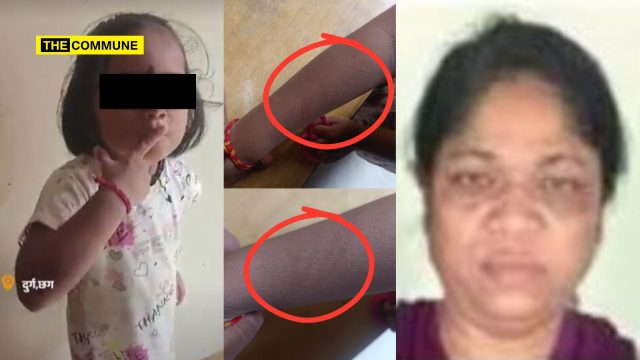
Dravidian Model Engineering: ₹4,000-Crore Storm Drains, Now Covered With Mosquito Nets To ‘Prevent Mosquito Breeding’

A civic measure undertaken by the Greater Chennai Corporation in Thiruvottiyur has drawn public attention and criticism after officials were seen tying mosquito nets under iron grates placed atop stormwater drains.

The development comes amid the Corporation’s ongoing stormwater drain project, under which works worth nearly ₹4,000 crore have been undertaken and completed across Chennai to prevent rainwater stagnation on roads during the monsoon. The project was intended to improve drainage and reduce flooding in low-lying areas.

However, in Thiruvottiyur, Corporation workers were found covering the stormwater drain grates with mosquito nets. Officials reportedly said the step was taken to prevent mosquitoes from breeding in stagnant water inside the drains.

The unusual sight triggered reactions from residents and passersby, many of whom questioned the logic of the measure and mocked it on social media. While some residents laughed off the move, others raised concerns over whether covering drains with nets could obstruct water flow and defeat the purpose of the drainage system.

The issue has since turned comical and controversial, with questions being raised about planning, technical oversight, and the effectiveness of such ad hoc solutions in a city that has invested heavily in storm-water infrastructure.

Corporation officials have not yet issued a detailed clarification on whether the measure is temporary or part of a broader mosquito-control strategy.

Subscribe to our channels on TelegramWhatsApp, and Instagram and get the best stories of the day delivered to you personally.
Madras High Court Dismisses Dargah’s Appeal Against 50-Person Cap For Sandhanakoodu Festival At Thirupparankundram Hill

sandhanakoodu dargah sikkandar dargah 'Very Very Balanced Order': Supreme Court Refuses To Interfere With Madras High Court Curbs On Prayers, Sacrifice At Sikkandar Dargah; Dismisses Appeal

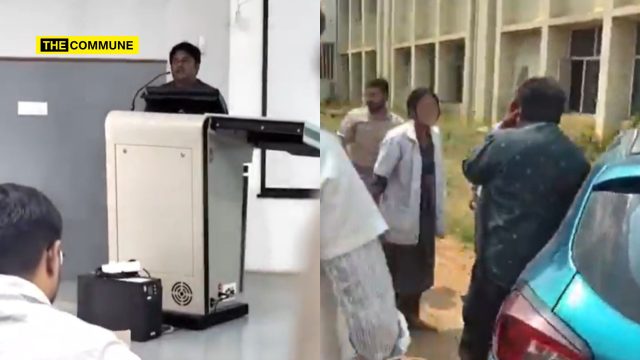
The Madurai Bench of the Madras High Court on Tuesday, 20 January 2026, dismissed an appeal challenging an interim order passed by a single judge restricting participation in the sandalwood pot (Sandhanakoodu) procession during the Thirupparankundram dargah festival to 50 persons.

The appeal was filed against an interim direction issued by Justice S Srimathy while hearing a petition seeking to restrain the conduct of the annual kandoori festival at the well-known Sikandar Badusha Dargah in Thirupparankundram. The single judge had permitted the festival to be held but imposed a condition that only 50 persons should be allowed to take part in the Sandhanakoodu procession, which is a key ritual of the festival.

Aggrieved by this restriction, a person named Osir Khan approached the Madurai Bench in appeal, objecting to the condition and seeking permission for more participants to be allowed in the procession.

Hearing the appeal, the Division Bench observed that the order passed by the single judge was only an interim order and that the main case was still pending adjudication. The Bench said the appellant could raise all his objections and arguments before the single judge at the time of the next hearing and seek appropriate relief.

Holding that the appeal was not maintainable at the present stage, the Division Bench dismissed the appeal petition.

As a result, the interim direction limiting participation in the Sandhanakoodu procession to 50 persons will continue to remain in force.

Source: Indian Express Tamil

Subscribe to our channels on TelegramWhatsApp, and Instagram and get the best stories of the day delivered to you personally.
“No Place In Politics For Those Who Oppose Karthigai Deepam & Deny Existence Of Ram Setu”, BJP Chief Nitin Nabin Says

"No Place In Politics For Those Who Oppose Karthigai Deepam & Deny Existence Of Ram Setu", BJP Chief Nitin Nabin Says

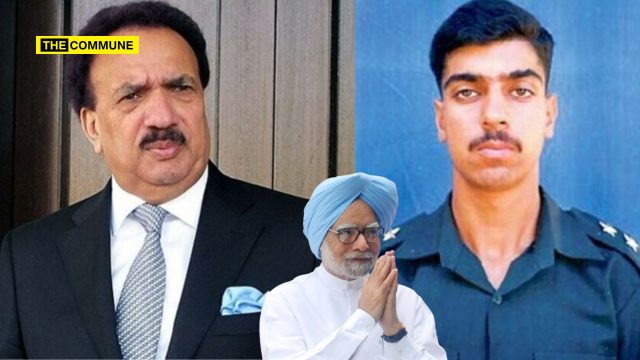
Newly appointed Bharatiya Janata Party (BJP) national president Nitin Nabin on Tuesday, 20 January 2026, asserted that those who deny the existence of Ram Setu and those who oppose the Karthigai Deepam festival should not be allowed space in Indian politics, accusing opposition parties of repeatedly attempting to obstruct religious traditions and cultural practices.

Nabin made the remarks after formally assuming charge as the BJP’s national president at a ceremony attended by Prime Minister Narendra Modi, Union Home Minister Amit Shah, outgoing party president JP Nadda, Union ministers, and senior party office-bearers.

Addressing the gathering after taking charge, Nabin thanked party leaders and workers for entrusting him with the responsibility, describing himself as an ordinary party worker elevated to a high position. He expressed gratitude to the prime minister for what he described as tireless service to the nation and recalled an earlier interaction with Modi in Anand, Gujarat, when he was serving as a national general secretary. Nabin said he had then observed how Modi listened carefully to people and connected deeply with public sentiment.

Nabin said that by assuming office, he was not merely taking up a post but was accepting the party’s ideology, traditions, and responsibilities. He also thanked senior party leaders for their guidance.

Referring to recent developments in Tamil Nadu, Nabin said opposition parties had attempted to prevent the lighting of the Karthigai Deepam on the Thirupparankundram hill. He said this was not an isolated incident and alleged that there had earlier been attempts to initiate impeachment proceedings against a judge. He further referred to opposition reactions when discussions were held on the legacy of Somnath and when festivals were celebrated as symbols of self-respect.

In this context, Nabin said, “In recent times, we have seen how in Tamil Nadu an attempt was made by opposition parties to stop the sacred Karthigai Deepam on a hill. We remember how, not long ago, there was even an attempt to bring impeachment against a judge. Today, when we talk about Somnath and try to celebrate a festival of self-respect, the opposition parties feel troubled. Our view is that the forces which try to stop such traditions need to be defeated. Those who deny the existence of Ram Setu and those who oppose the Karthigai Deepam must not be given any place in the politics of India, and we must strive to ensure this.”

Speaking about upcoming Assembly elections, Nabin said polls would be held in Tamil Nadu, Assam, West Bengal, Kerala, and Puducherry in the coming months. He said demographic changes in these states were being widely discussed and added that shifting population patterns were altering local conditions and posing challenges. However, he said BJP workers would work hard to ensure the party’s victory in all five states.

Source: Dinamalar

Subscribe to our channels on TelegramWhatsApp, and Instagram and get the best stories of the day delivered to you personally.