Home Blog Page 1022

The Wire’s Arfa Claims Of UMass Boston Inviting Her For Guest Lecture Raises Serious Questions

The Wire, already in hot soup for deliberate lies and cover-up of the lies, even after proof of their lie in regards to the ‘Tek Fog’ controversy, is getting bad press again.

Arfa Khanum Sherwani, a Senior Editor with The Wire and an outright Leftist cum Islamist apologist had tweeted about an alleged event supposedly taking place at The University of Massachusetts in Boston, U.S.A (UMass, Boston) on December 5.

She claimed she had been invited to “deliver a lecture” on a subject titled “The downgrading of India’s Democracy and Role of the Press” at 1.00-2.15 pm in Hall no.2120 on December 5, 2022.

Upon checking the US university website for additional information, it was found that no such event was scheduled for the day, time and venue that was mentioned in Arfa Khanum’s tweet. After numerous checks, including a phone call to the university’s office for campus events by Sandeep Neelakanta, the event as described by Arfa, could not be validated.

The university’s official calendar for campus events displayed an event for December 5, scheduled at 1 p.m titled, “Acting Rehearsal”.

This led to further suscipicion, questioning and an informal investigation, which led many to believe that The Wire’s Senior Editor had either lied about the event or it could be a closed room event under the banner of an American university to do their usual India bashing.

Upon further digging around, the findings led to an unsurprising but disturbing piece of information. This alleged event was being sponsored by organizations known for their vicious anti-India, anti-Hindu rhetoric, at times going so far as to sound like, they are clandestine operators of a Pakistani agenda: Indian American Muslim Council (IAMC), Boston South Asia Coalition (BASC) were the sponsors of the event.

The IAMC is a problematic organization with links to Pakistan-based terror groups. It is known for peddling anti-India propaganda at the international arena and also lobbies with US leaders and bodies against Indian interests.

The IAMC had reportedly collected funds for the cause of Rohingya Muslims and used it to pay Fidelis Government Relations (FGR), a US-based lobby firm for getting India blacklisted by the United States Commission on International Religious Freedom (USCIRF).

IAMC’s Sheikh Ubaid is friends with Abdul Malik Mujahid, who headed the Islamic Circle of North America, the US front for Jamaat-e-Islami, Pakistan. It also reportedly has links with banned Islamist organization Student Islamic Movement of India (SIMI) and Pakistan’s Inter-Services Intelligence (ISI).

One wonders why Arfa Khanum Sherwani conveniently omitted, “forgot” to add important sponsor information, to her Twitter post, which had already betrayed the intent of the fake event, by its chosen title. An additional enquiry also found that the university does not have the listed room/hall number (2021, stated in Arfa’s tweet). There is no video recording of the event on the UMass Boston’s YouTube Channel either.

Was there a clandestine anti-India event organized by the anti-Hindu forces, masquerading as a legitimate event on Indian democracy? If yes, this is a clear case of lying, with the intent to propagate anti-India information among the university’s students and staff.

As if lying and fake information were not bad enough, The Wire’s Arfa Khanum, may be guilty of an illegal action – potraying a non-event or fake event/ false event information, as a legitimate, university approved event.

Utilizing an American university’s name, to falsify information and misrepresenting the university, is an offence and against the Law.

It is highly likely, that Arfa and her sponsors had a university room booked by a student, requesting space for a seemingly innocent “acting” related purpose, when in reality, the reserved room/hall would be utilized by a section of the radical, secular, anti-India, anti-Hindu lobby to covertly discuss Indian matters.

All this raises several concerns – DWas this really an event of the UMass Boston University or a private event organized by people associated with the univeristy? If it is the latter, does the UMass Boston University approve of using their name for a private event? If it is indeed a university hosted event, does it endorse the false narratives and claims peddled by Arfa, IAMC and other members of the coteries? How did people like Arfa and her anti-India sponsors manage to book a U.S university’s lecture hall/room under a false pretext? What action can the University and local law enforcement take against falsified information and implying the university’s involvement in an misrepresented, politically motivated event?

The University of Massachusetts Boston should come out and clarify its position.

https://twitter.com/SanUvacha/status/1599922629062037504

Click here to subscribe to The Commune on Telegram and get the best stories of the day delivered to you personally.


Gujarat Elections 2022: What The Results Tell Us

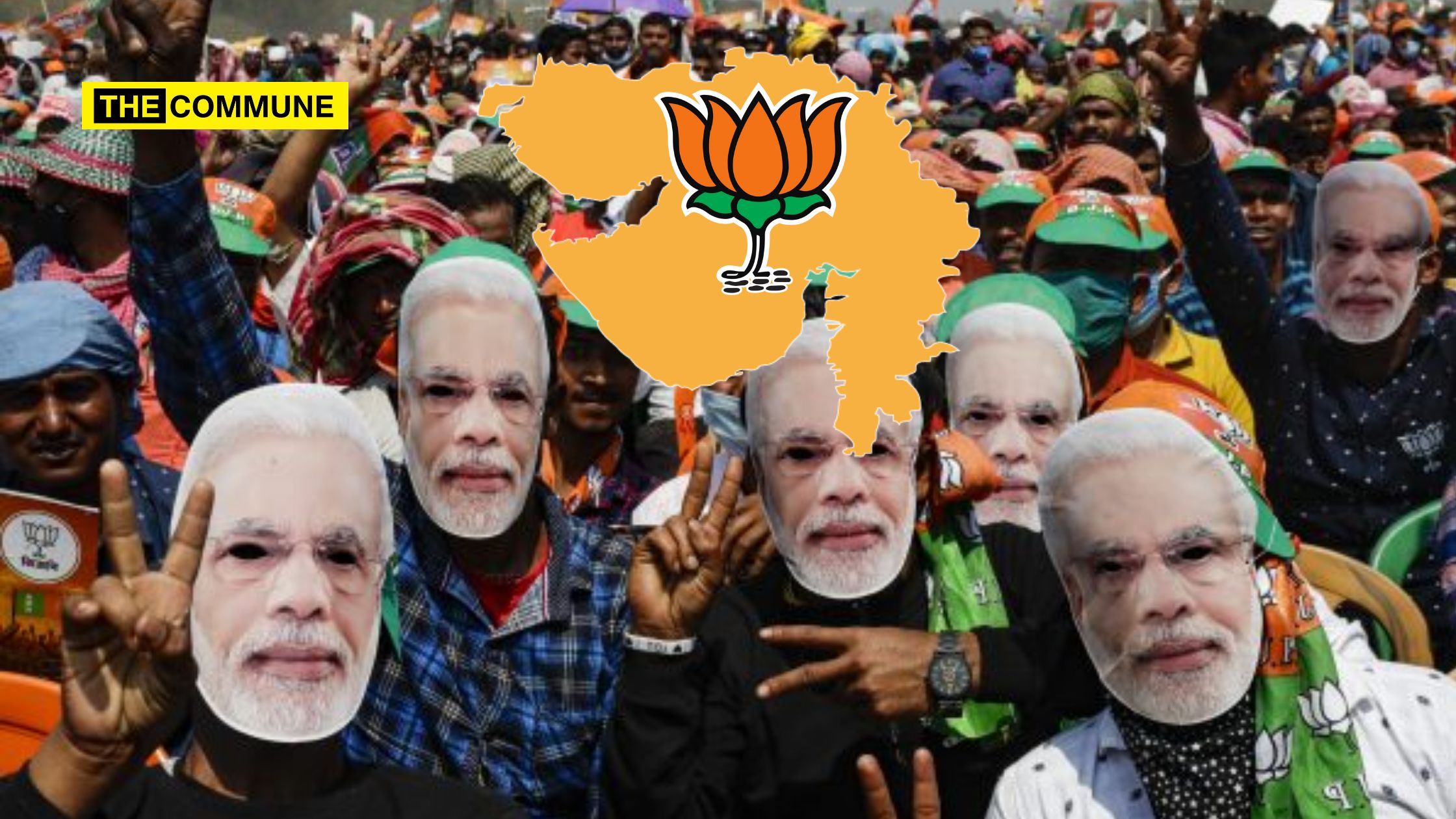
The BJP has registered a record-breaking landslide victory in the 2022 Gujarat Assembly elections. For the first time, the party has won a whooping 156 seats of the 182 seats in the legislative assembly. The party has broken several records in the history of Gujarat by winning for the 7th consecutive term and decimating the opposition parties by making them lose their status as the opposition party.

For the first time, BJP has elevated its performance in the rural areas of Gujarat by almost doubling its tally. There are 98 rural seats and 84 urban seats in the Gujarat assembly. In the 2017 election, Congress performed well in the rural areas by winning 52 seats leaving nearly 40 seats for BJP. But in 2022, BJP wrestled Congress holds by winning 75 rural seats, almost doubling the tally since the last election.

There are various reasons for its significant performance.

The Homecoming Of The Patidars

Patidar Communities account for nearly 20% of Gujarat’s population and this community plays a decisive role in more than 50 seats in Gujarat. In most parts of South Gujarat and Saurashtra, the victory or defeat is decided by Patidars. The community is divided into Leuva Patel (70% of the community) and Kadva Patel (30% of the community). The Saurashtra-Kutch area is completely dominated by Leuva Patel.

In a rural region like the Saurashtra-Kutch region, BJP has doubled the tally from 23 seats in 2017 to 47 seats in 2022, while Congress has been reduced to a mere 3 seats in 2022 from its 30 seats in 2017. This rural vote has contributed to BJP’s victory magnificently. The Congress had won Saurashtra-Kutch’s Patidar-dominated seats of Morbi, Tankara, Dhoraji, and Amreli in 2017. All these areas came to BJP this time.

The major move of the BJP ahead of the 2022 elections was reaching out to Patel community. BJP replaced Vijay Rupani from CM Post with Bhupendra Patel in September 2021 and announced him as CM Candidate for the 2022 election.

BJP brought Hardik Patel, a Patidar quota agitation leader from Congress and fielded him from the Viramgam Assembly seat where he won by a huge margin. Earlier he played a significant role in agitating and leading protests against BJP government before 2017 demanding OBC status for Patidar Community.

Another big move of the BJP which pacified the community was giving a 10% quota in jobs and education to the economically weaker sections who hitherto didn’t have any avenue for state support.

Also, Narendra Modi’s factor and outreach initiatives of BJP lead to a huge swing from Patidars towards BJP. PM Modi did an 18 km road show in Varaccha which has 60% of Patidars votes.

The BJP owes its rise in the state to the Patidars as it is the same Patidar community that brought the BJP to power in Gujarat for the first time in 1995 under Keshubhai Patel.

Vote Split

The Congress has finished second in 118 ACs and third in 39, while the AAP has finished second in 35 and third in 114 seats. Though the vote split is not a key factor behind BJP’s win in Gujarat, it has eroded the Congress’ vote share significantly. The analysis points out that BJP would have won 123 seats if AAP and Congress votes are added at the AC level. The lack of a regional face for Congress is also a major factor in its historic erosion in Gujarat.

Rejection Of Freebies Culture

BJP promised to make Gujarat a $1 trillion economy by maintaining its position in manufacturing, focusing on services and building capacity for new-age industries. BJP promised to set up two seafood parks in South Gujarat and Saurashtra and build India’s first Blue Economy Industrial corridor around this region.

BJP also promised a family card yojana which will enable every family to avail benefits of all state government-run welfare schemes. Shramik credit cards for labourers with collateral-free loans up to ₹2 Lakhs.

BJP has promised to develop a Saurashtra Express Highway grid to provide connectivity with important economic hubs and national highways and also spend ₹1 lakh crore under the Vanbandhu Kalyan Yojana 2.0 for the all-around socio-economic development of tribals. This holistic development model has led to goodwill among the people of the state. BJP is best known for its track record of fulfilling its promises. All these pro-poor welfare promises served as a hope of ray for the people in rural areas of Gujarat.

For decades, Gujarat reeled under drought-like conditions with women walking miles to fetch a pot of water. But the successful raising of the Sardar Sarovar dam and the subsequent measures taken and the fact that water has reached to the dry parts of Gujarat through the SAUNI Yojana has led the people of Gujarat to bequeath their hopes on the BJP.

The fact that the state has remained peaceful which was earlier marred by frequent communal riots has made the people of Gujarat to trust the BJP in maintaining law and order.

To put in a nut shell, the quality of life of Gujarat people has become better over the years without the state having to dole out freebies.

The opposition parties like AAP announced an array of freebie promises in sectors like education, healthcare, and electricity has fallen flat. If there is one big message that the Gujarat people are sending across the nation is that they can’t be wooed by freebies but only good governance.

Click here to subscribe to The Commune on Telegram and get the best stories of the day delivered to you personally.
TN Dialogues 2022: Speakers Galore, Sets The Tone For 2024 Lok Sabha Elections In TN

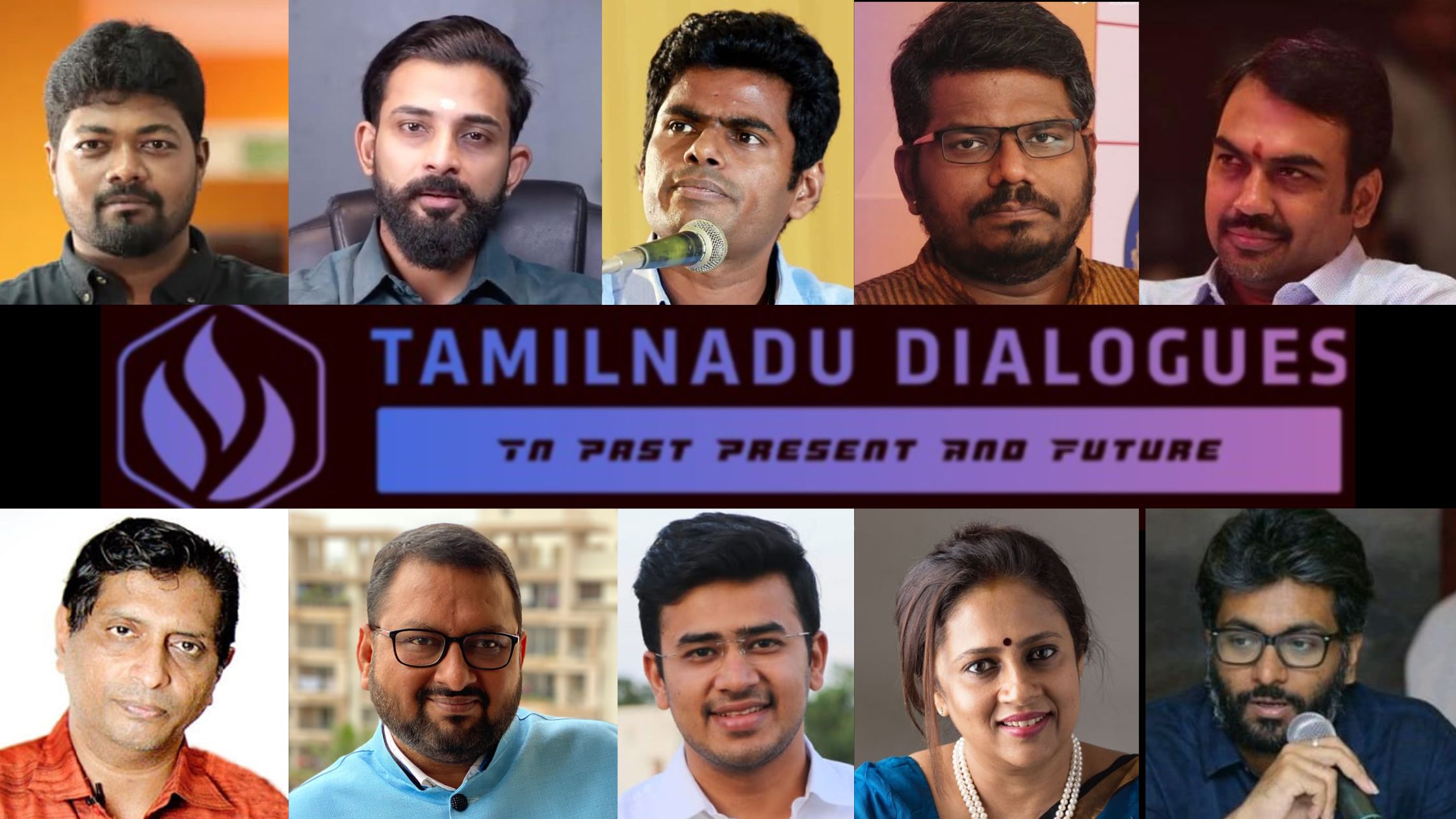
The intellectual and thinker’s cell of the Tamil Nadu BJP hosted the “Tamil Nadu Dialogues 2022” on December 9, 2022 at the Taj Coromandel in Chennai. Despite heavy rains due to cyclone Mandous, the event saw a huge participation with some of the well-known faces addressing the event.

Bengaluru South MP Tejasvi Surya who presided as the chief guest of the event spoke about the cultural linkages linking the lands of Ganga and Kaveri. Tejasvi Surya emphasized on the innate civilizational unity of India and the aspects that has kept India as a civilizational nation for ages.

Senior Journalist Kolahala Srinivas spoke on the impact that the recent Kashi Tamil Sangamam initiative of the Central government has created.

Advocate J Sai Deepak spoke on the origins of Dravidian Exceptionalism and Secessionalist Regionalism and how it is the extension of it that is steering today’s political narratives in Tamil Nadu.

Author Aravindan Neelakandan spoke on the pseudo-rationalism of the Dravidian ideology.

A panel discussion on the rising drug and alcohol abuse, deteriorating quality of education and financial mismanagement was steered by political commentator BR Sreenivasan with YouTuber Karthik Gopinath and Sriram Seshadri as speakers.

There was another panel discussion moderated by political commentator JVC Sreeram with Rajavel Nagarajan, Lakshmi Ramakrishnan and Srikanth as speakers speaking on how Tamil cinema is being used to drive false narratives and the hypocrisy shown by Tamil film personalities.

Senior journalist Rangaraj Pandey spoke on the topic “What has changed? What will change? – Elections 2019 to 2024” in which he gave crucial insights about the electoral performance of difference parties in Tamil Nadu. He said that the NDA alliance has to get a minimum of 16 Lok Sabha seats for them to claim success as the BJP back in 2014 had received 18% vote share without any alliance. Rangaraj Pandey emphasized that only if there is an accommodative coalition comprising of all the factions of the AIADMK, BJP, DMDK, Puthiya Tamilagam, Tamil Manila Congress, a huge victory was possible in the 2024 Lok Sabha elections. He said that a three-way contest might end up beneficial to the DMK which has a formidable alliance.

Speaking last, Tamil Nadu BJP President Annamalai shed light on how the state has been on a path of deceleration when other states like Uttar Pradesh have been witnessing accelerating growth. Annamalai shared data on the revenue generation capacity, number of startups, learning outcomes to substantiate that Tamil Nadu is treading down a dangerous path.

The event was organized by Sehlvi Damodhar, President of the TN BJP’s Thinker’s Cell, and other officer bearers such as Prabhari, Vice Presidents, and State Secretaries of the Thinker’s Cell. The proceedings of the event was curated by The People Tree Network.

Aadhan Tamil, Orey Naadu, Pesu Tamizha Pesu, and The Commune were the media partners for the event.

Click here to subscribe to The Commune on Telegram and get the best stories of the day delivered to you personally.
How TN Govt Schools & Children Are Being Used For Promoting Udhayanidhi Stalin

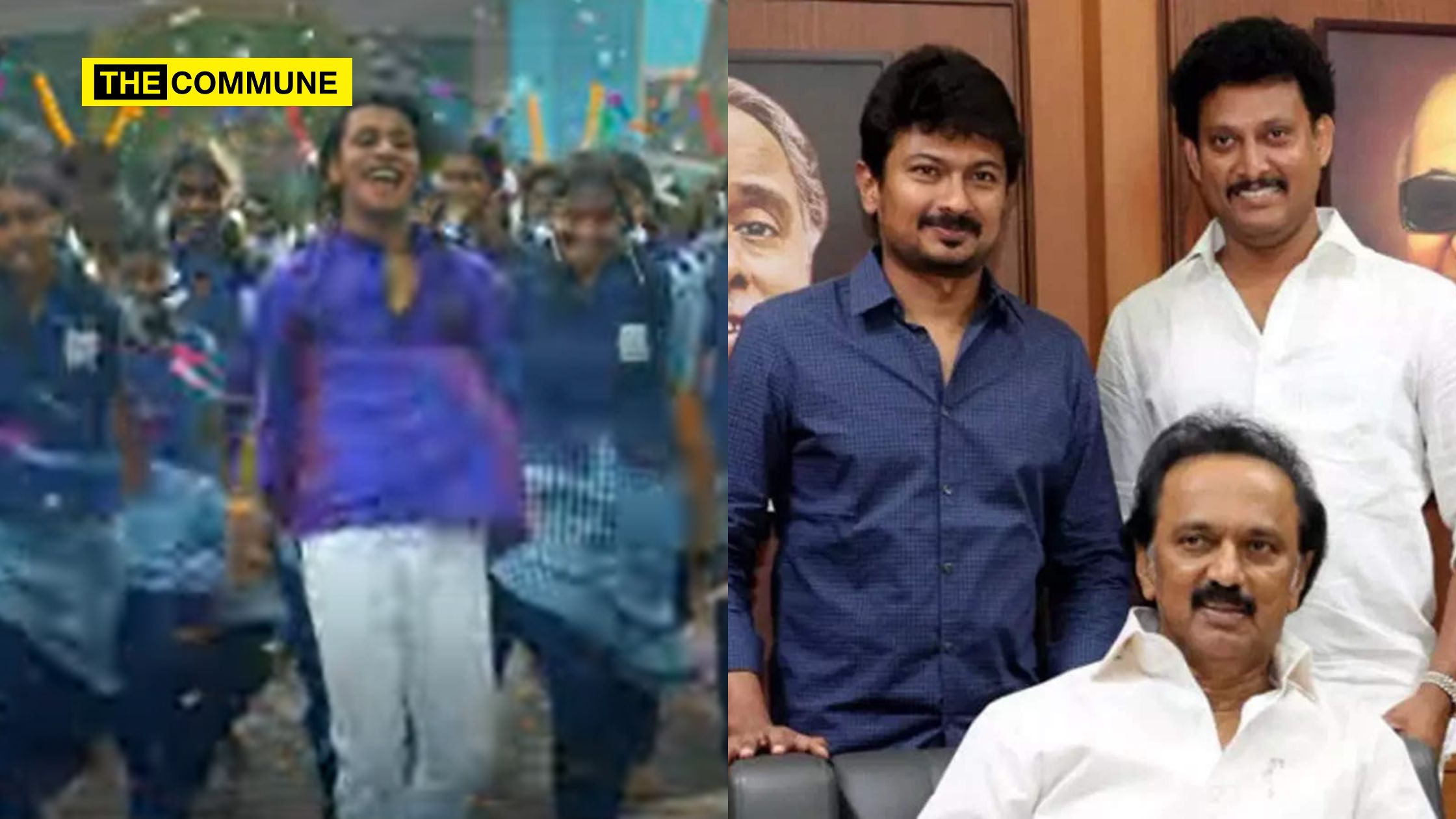
The School Education Department of Tamil Nadu has launched an art festival to foster artistic talent in students with the mentality that classrooms shouldn’t just be places for instruction. Accordingly, Tamil Nadu government schools are currently hosting ‘Kalai Thiruvizha’ (art festival) that is open only to government school students of classes 6 to 12.

These events will begin at the school level and progress to the zone, district, and state levels. Students from various government schools are participating in these competitions and exhibiting their skills.

However, a video of girl school students dancing to a movie-like song released by the Tamil Nadu School Education Department makes one cringe with disgust, with some opposition party members criticizing school education Minister Anbil Mahesh for converting schools into an avenue for cinema.

The song for which the girl students dance includes verses such as “This is the Chief Minister’s dream plan,” comes across as MK Stalin using schoolchildren for self-promotion. Netizens and opposition leaders have condemned this cringe fest saying that having Udayanidhi Stalin fan club president Anbil Mahesh as the school education minister, incidents like is bound to occur, where school students are drive into cinema craze.

Tamil Nadu opposition leader Edappadi K Palaniswami slammed the Tamil Nadu School Education Minister for ignoring students’ needs and promoting his friend Udhayanidhi Stalin. A few weeks ago, he said, “14 types of equipment, including free uniforms, that were supposed to be distributed to government school students in the second week of the school opening have not been distributed. The Minister who is responsible is unconcerned about his department and should hang his head in shame for promoting an individual (Udhayanidhi).”

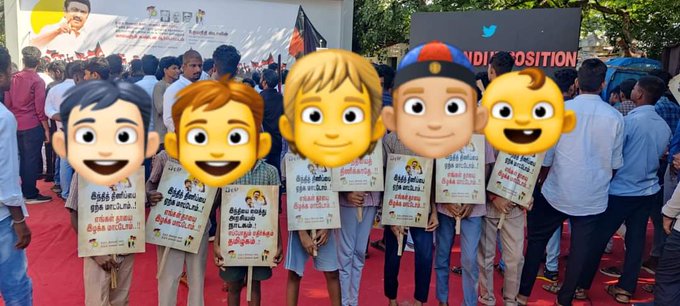
The DMK has been using children for the party’s propaganda and to promote its crown prince Udhayanidhi since it came to power. They even used schoolchildren to paste posters of Udhayanidhi, which was reported in the Tamil daily DinamalarThis alleged incident of using school students to stick posters of Udhayanidhi occurred during his birthday celebrations in Palakkarai, Virudhachalam constituency of Cuddalore district, at Bazar street, Bus Terminals, and other areas.

During Udhayanidhi’s birthday celebration, a video of Minister of Minority Affairs Gingee Mastan was released, in which he was seen distributing money to school students who were taken for the crown prince’s birthday celebration.

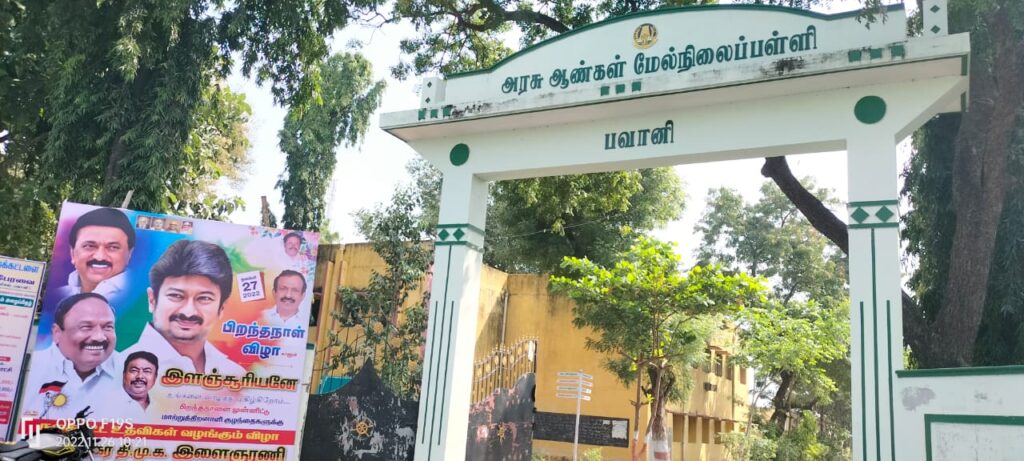
Members of Udhayanidhi’s fan club erected flex banners in front of the government boys’ high school in Bhavani to celebrate his birthday.

In another such incident, during Chief Minister MK Stalin’s visit to Thenkasi on December 8, schoolchildren were made to draw pictures of MK Stalin and his son Udhayanithi and then line up in front of him for display.

DMK Spokesperson Abdul Hameed Sheik Mohamed alias Manushyaputhiran, who is known for his role as the sexologist in the porn film of “Vaazhvin Ragasiyam” that comes as part of the Tamil film “Super Deluxe”, was seen along with school students in uniform during a Udhayanidhi fan club celebrations.

On October 15, the Legal Rights Protection Forum (LRPF) filed a complaint with the NCPCR, seeking action against DMK MLA and film actor Udhayanithi for using school children for a protest against the Centre’s alleged ‘imposition of Hindi’ and the implementation of a national-level common entrance test.


It should be noted that, after being one of the top five states at level II in the Performance Grading Index (PGD) in 2019-20, Tamil Nadu has dropped to level three in 2020-21 due to poor scores in equity, infrastructure, and governance, with the overall score falling from 906 in 2019-20 to 855 in 2020-21.

If the use of schoolchildren for political propaganda and the promotion of film star Udhayanithi continues, Tamil Nadu students’ overall performance in academics will suffer.

Click here to subscribe to The Commune on Telegram and get the best stories of the day delivered to you personally.
Pathetic Extremists Torturing Animals: Why PETA Should Be Kicked Out Of India

PETA and other Animal Rights bodies under scanner, after the demise of “Lakshmi”. Tamil Nadu’s “Jallikattu” case resumes in Supreme Court.

Animal Rights, as with human rights is a good, noble cause. It can be a tough balancing act with a good intention on the one hand and stringent implementation/enforcement on the other. An improper balance regardless of the challenge, can tip the scales too much in either direction and end up with unpleasant results and resistance from humans.

Animal Rights activists are correct that certain elements in human society need to be reprimanded for inhuman, unacceptable treatment of animals. What they need to be careful about is, the tendency to cross a certain line, without substantial evidence and practical solutions, into the sensitive areas of traditional human-animal partnerships in society, developed over thousands of years for purposes of livelihood, cultural or spiritual enrichment.

It is often a fine line between what appears to be bordering on animal “cruelty” and the actual circumstances of the human-animal relationship. Frequent cases of misjudgement of the actual conditions by over-enthusiastic animal activists, can cause mistrust between an Animal Rights group and the common people.

Of late, this has been the case with organizations like the People for the Ethical Treatment of Animals (PETA) and the Animal Welfare Board of India (AWBI).

PETA’s Tryst With Lakshmi

Amongst the most recent controversies courted by PETA is one surrounding a young elephant, Lakshmi in Puducherry. She was a much loved temple elephant, who grew up on the temple premises and reportedly enjoyed a close bond with her mahout since she was five years old.

To cut the story short, the AWBI and PETA were involved in having Lakshmi removed from the temple and moved elsewhere, citing her allegedly ‘injured’ feet from a long, stationary standing positions, while on temple duty. The temple authorities and her mahout had disagreed with the organization’s analysis but she was taken away by them and returned a month later, when it was observed and acknowledged that she was under more physical and emotional distress at her new shelter. In a short while, after the relatively young 32 year old elephant’s return to the temple, to her mahout companion and her familiar temple routine, she reportedly collapsed of a sudden heart failure while on a walk. The temple claimed Lakshmi’s conditions at the ‘shelter’ she was earlier taken to, including a lack of opportunity to walk, were the reasons for massive water retention in her body and a primary cause of her premature death.

Whatever the truth behind the reasons for young Lakshmi’s tragic passing, it was clear that the AWBI and PETA did not have the necessary facilities or ideal physical conditions ready for Lakshmi, when they took her away from her familiar, long-time temple home and surroundings, to a new shelter in unfamiliar surroundings.

Several questions arise. Why didn’t the organization ensure the availability of the right alternative necessary facilities, before removing Lakshmi from the temple? Why didn”t they wait and observe instead of rushing the process of supposedly “rescuing” her ? Why didn’t they have further discussions with the temple and her mahout? While their intent may not have been a bad one per se, their actions belied a sense of over-confidence and a power-wielding, authoritarian attitude towards a problem that could have been resolved amicably, in cooperation with her care takers and within her familiar home, the temple premises. The proposed solution should have been a practical one, something reasonable that would have benefitted both man and animal. The solution could have been one, that resulted in a positive impression of such organizations and improved living conditions for both the animal and its mahout. Instead, the high handedness, arrogance and authoritativeness displayed by the organization, their one-sided argument versus a two-way dialogue, an impractical solution versus a reasonable, practical one to the perceived problem made conditions worse for both animal and man, causing more animosity and suspicion against the motive of both PETA and the AWBI.

PETA: A Terrorist Organization That Attacks Native Culture

It is this type of attitude that has put organizations like PETA and the AWBI on the back foot, defending their decisions against a larger backlash from common people as well as other organizations. PETA International, headquartered in the U.S, the parent body of PETA India, has also come under similar criticisms.

In India, another example of PETA and AWBI’s blanket accusation and an authoritarian attitude towards an animal-human relationship, is their confrontation last year with the dairy company ‘Amul’, an organization with a solid reputation and goodwill, supporting the livelihoods of thousands of farming families. PETA’s provocative suggestion implied that dairy farming was wrong and people ought to switch to plant based “vegan” alternatives like soya milk- an impractical, unreasonable resolution, considering long standing animal husbandry practices, local food habits and culture, farmer livelihoods and the exorbitant, unaffordable costs of the suggested alternative. Proposing a more sensible, practical solution such as, a better diet, healthcare and veterinarian help, larger pastures for grazing, optimal use of dairy products and processes with minimal wastage etc, would have resulted in positive publicity and goodwill of the general public.

Another example from South India is the “Jallikattu” practice of Tamil Nadu, a traditional bull sport in continuance since ancient times and irrevocably tied to local culture and pride. Instead of calling for a dialogue and discussion with all parties involved, inviting suggestions from the public, involving local administrative officials etc, PETA and AWBI filed a case in the Supreme Court. A ban on the sport by the Supreme Court, resulted in large scale protests in the state in 2017, with people suggesting a ban on organizations like PETA. The state government felt compelled to step in, quell the discontent and make provisions in the state’s laws, to allow the sport with certain conditions attached. If PETA had worked with the farmers, the general public, students, local animal welfare groups and local authorities, they may have been able to suggest practical changes to the conduct of the sport, involving less danger and inconvenience to both animal and man rather than demanding a total ban on an annual event of deep rooted cultural significance, in practice for more than two thousand years! The case is still open and currently being argued in the Supreme Court.

Worth noting here, is the widely known Euporean variant of the bull fighting sport, still actively conducted in Spain. By all accounts, the Spanish version is far more dangerous and painful for the animals but PETA International has not yet been able to influence the Spanish government or other European law making organizations, against the sport. Other countries that practice variations of the bull taming/fighting sport are Mexico, France, Portugal, Italy, Cuba, Canada and several South American nations (ex Spanish colonies).

There are important lessons here in India and abroad, for PETA with its extreme position on many issues, rendering it ineffective with most people seeking reasonable, middle-path solutions to man-animal conflicts. What are the repercussions of absolutist, authoritarian accusations and impractical decision making by PETA India and PETA International? More negative publicity rather than a positive one. The Constitution of India and laws in most other nations, protect animals and makes it the responsibility of human societies to properly care for and treat animals. Most educated people in a modern, civil society accept this argument and agree that Animal Rights are important. However, most people including the well educated, become frustrated by unreasonable, impractical, sometimes impossible solutions to animal welfare issues, forcibly imposed on local societies by organizations like PETA.

It may be impossible to have all people on your side but it is possible for PETA to garner support from most people, achieve positive publicity and accomplish good work, if it changes its current attitude from that of confrontation, high handedness, unsubstantiated accusations and unilateral decision-making, to an attitude of dialogue with local people and local administrative bodies, unbiased investigations conducted with socio-economic factors and cultural traditions in mind and a two-way decision making process involving the suggestions and cooperation of the stake holders. Until such a change of attitude becomes visibly clear to Indian and global citizens, PETA will continue to struggle with more negative publicity than positive, more resistance than acceptance, more confrontation than cooperation, more suspicion than trust.

As with PETA India, there’s been vocal criticism of its parent body PETA, in international circles.

PETA Is A Curse For Both Humanity And Animals

It has been criticized for not doing enough towards long term shelter for their rescued animals, trying harder to get them adopted. Instead, PETA shelters take the easier route of euthanizing (putting animals to death ‘humanely’ usually by lethal injection) its rescued animals. According to the latest reports, over 1500 animals (alledgedly over 50% of its sheltered animals) were euthanized by PETA in 2021, causing outrage among people in the US and other animal rights organizations, that do a better job of adoption campaigns.

The self-proclaimed champions of animal rights didn’t even spare the dog of a 9-year-old girl in Virginia, USA. PETA had abducted the girl’s unattended chihuahua and had euthanized it before before the five-day grace period. It later apologized to the girl and paid $49,000 in an attempt to right their wrong.

Of the significant annual donations it receives, citizens wonder why PETA can’t do a better job of spreading awareness, holding discussions with local communities in a non-aggressive manner, asissting local authorities deal with local issues of concern etc.

Shock campaigns, over-the-board advertisements, featuring varying degrees of nudity and/or graphic, disturbing images of maimed, bleeding animals. The list of disquieting advertisements and public stunts, like throwing buckets of ‘blood’ at people wearing clothes/accessories with fur is long, and for some people, simply too disturbing.

PETA takes an unreasonable stand against the use of crates to train dogs with behavioral issues, regardless of widely accepted opinions of dog trainers and pet owners that, crates actually make the dogs feel safe, while they are being trained.

A blanket NO to all Zoos. Getting everyone to stop patronizing zoos is a tough challenge. Instead PETA could insist on better living conditions and stringent quality checks of the zoos, before licensing and periodic checks after licensing, for the duration of the zoo’s existence.

Blanket NO to wild/ feral cat programs, without taking the problems of local people, into consideration. There are tried and tested wild cat rehabilitation programs in western nations, that are deemed reasonable and mostly crurlty-free. What is the alternative? Wild, feral animals are likely to get into
more man-animal conflict, making the situation worse for both animals and humans. PETA’s stand on the subject has been criticized as extreme and impractical.

The comments of Gary Lawrence Francione, a Professor of Law at a U.S university, are reflective of PETA’s flaws, its need to work together with local communities and the need for a practical, reasonable approach to the man-animal conflict.

“PETA is not an animal rights group because of their willingness to work with industries that use animals to achieve incremental change”. Francione says “PETA trivializes the movement with their “Three Stooges” theory of animal rights, making the public think progress is underway, when the changes are only cosmetic. Their campaigns are selected more for media image than content”.

Francione has also criticized PETA for having caused grassroots/local animal-rights groups to close, groups that were essential for the survival of the animal rights movement. He rejects the ‘centrality’ of ‘corporate’ animal charities. Francione mentions that PETA initially set up independent chapters around the United States, but closed them in favor of a top-down, centralized organization, which not only consolidated decision-making power, but also centralized donations with lesser visibility to financial accountability. Now, local animal-rights donations go to PETA, rather than to a local group, which would be more effective in tackling local issues.

Bottom Line: PETA and other animal-rights organizations can defend their mission of animal rights, ill treatment of animals and prevention of cruelty. However, their investigations must be fair and take into account, long standing local practices. They must strive to work through dialogue, awareness-building and cooperation with the regional stake holders rather than impose impractical solutions which will eventual fail. They should make a sincere effort for sustainable alternatives to repetitive problems that will continue to occur, in the absence of a suitable alternative. They must resist their propensity for over exposure and high publicity, at the cost of genuine resolution of issues which are best, not publicized. Last of all but not the least, PETA and its fellow cheer leaders, would do well to remember that every country, culture and tradition, views the human-animal relationship differently and hence, resist the tendency to unnecessarily blow smaller, localized issues into larger, national or international ones. If and when such advice is taken, goodwill, support for its mission and trust in its objectives, will eventually follow! Unless PETA’s current attitude shows visible change over a period of time, its trust deficit with common people will continue to get bigger, with more ordinary citizens not in alignment with PETA’s extreme position on animal welfare issues.

Given its history and its bloody trackrecord, it would serve well for the Government of India to ban the Pathetic Extremists Torturing Animals.

Click here to subscribe to The Commune on Telegram and get the best stories of the day delivered to you personally.
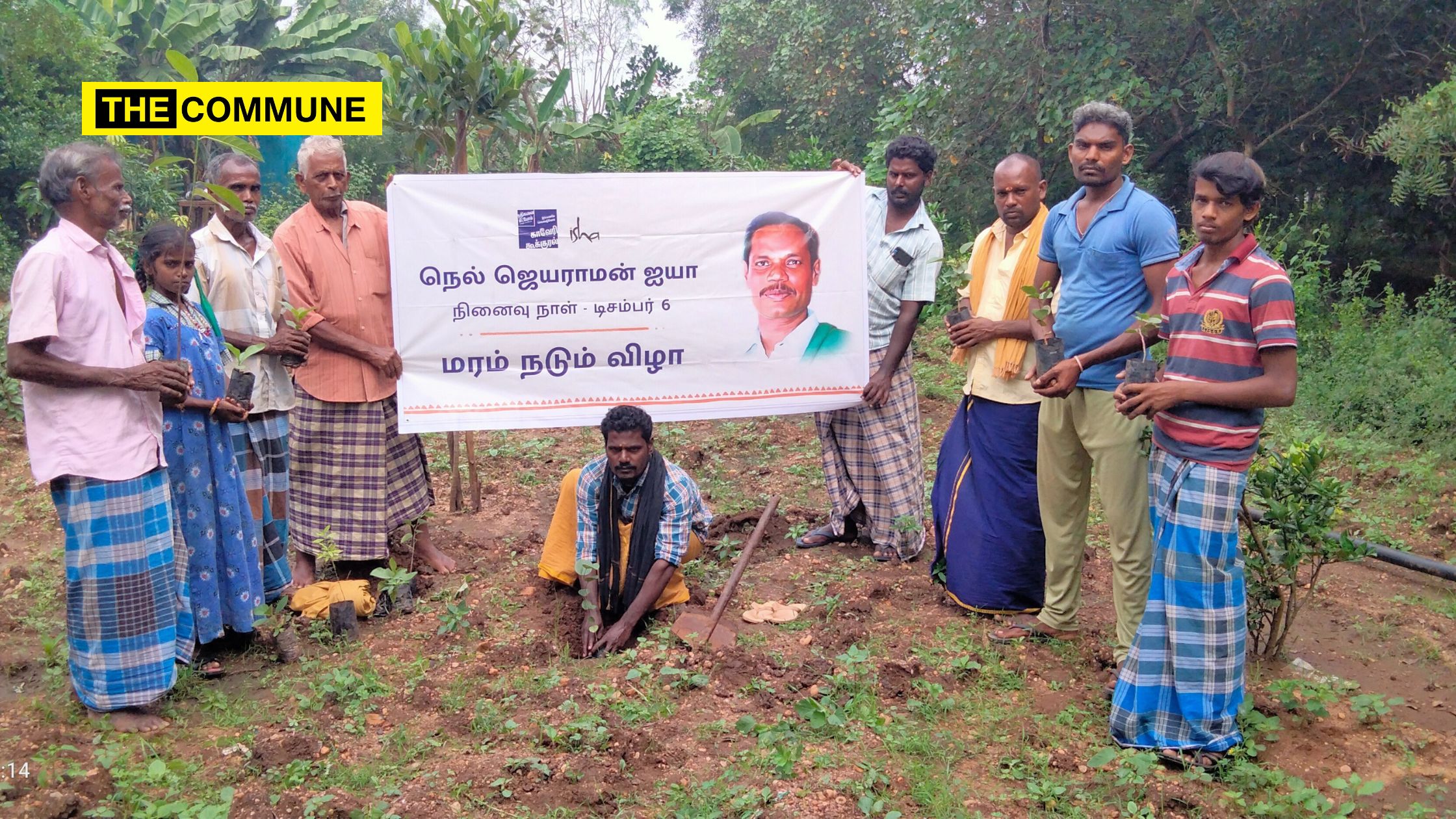
Cauvery Calling Movement Plants 1.5 Lakh Trees On Nel Jayaraman Memorial Day

On the occasion of Thiru Nel Jayaraman Memorial Day, an agriculturalist who dedicated his life to the restoration of traditional rice varieties, 1.5 lakh saplings were planted by the Cauvery Calling Movement. These trees were planted in 36 districts of Tamil Nadu on about 300 acres of land owned by 70 farmers. Cauvery Calling is a campaign to support farmers to plant 242 crore trees and revitalize Cauvery and act as a demonstrable model to Save Soil.

State Field Coordinator of Cauvery Calling Movement Thiru Tamilamaran remembering the contribution said, “Nel Jayaraman sir has participated and supported Isha in various environmental-related events. Whenever he conducted the annual paddy festivals, he started the event by planting saplings. He collaborated with Isha’s Project Green Hands to grow 10,000 timber saplings and distributed them free of cost to the farmers. He had also supported the Rally for Rivers, a movement launched by Sadhguru to revitalize India’s rapidly depleting rivers, and participated in the Rally at Trichy. We are conducting this plantation drive as a way of thanking him for his generous service.”

Isha’s Cauvery Calling Movement started by Sadhguru aims to enable 5.2 million farmers to plant 2.42 billion trees in the Cauvery River Basin in 12 years. Tree-based agriculture is pivotal in saving soil as it promotes healthy soil organisms, sequesters water, prevents soil erosion, and reduces the effects of floods and drought. At the same time, it generates new income sources for the farmers through fruits, fodder, and timber. The movement has planted 4 crore trees in Karnataka and Tamil Nadu in the last two years. This year in Tamil Nadu alone, 66 lakh trees have been planted against the target of one crore trees.

(This is an official press release from Isha Foundation. The Commune was not involved in creating this content.)

Click here to subscribe to The Commune on Telegram and get the best stories of the day delivered to you personally.
614 Electric Locomotives Produced In 2022 Till Nov, 25.3% Growth Compared To Last Year

railways

Indian Railways Production Units i.e. Chittaranjan Locomotive Works (CLW) at Chittaranjan, Banaras Locomotive Works (BLW) at Varanasi, Patiala Locomotive Works (PLW) at Patiala, are on fast track to achieve record production in 2022-23.

With the production of 614 Electric Locomotives in FY 2022-23, till 30th November, Indian Railways has recorded a growth of 25.3% over last year for the same period. Last year, 490 electric locomotives were produced during the same period.

(Published from PIB)

Click here to subscribe to The Commune on Telegram and get the best stories of the day delivered to you personally.
Global Save Soil Policy Handbook For 7 Regions Released. 155 Soil Experts From 31 Countries Join Sadhguru At International Round Table

Addressing the Round Table, Sadhguru urged the scientists and experts from around the world to come up with a simple coherent language for the common people to understand the importance and urgency to Save Soil.

December 7, 2022: Sadhguru and renowned soil experts and scientists from around the world released the much-awaited  Global Save Soil Policy Handbook for 7 regions during an international round table conference to mark World Soil Day. These regions include Africa, Asia, Europe, Latin America and Caribbean, Middle East and Northern Africa, North America and Oceania. These policy books offer practical, scientific policy recommendations that governments can put into action to revitalize the soil in their nation. It also released specific Sustainable Soil Management practices for 193 countries recommending 700 unique ways to improve soil health in every country.

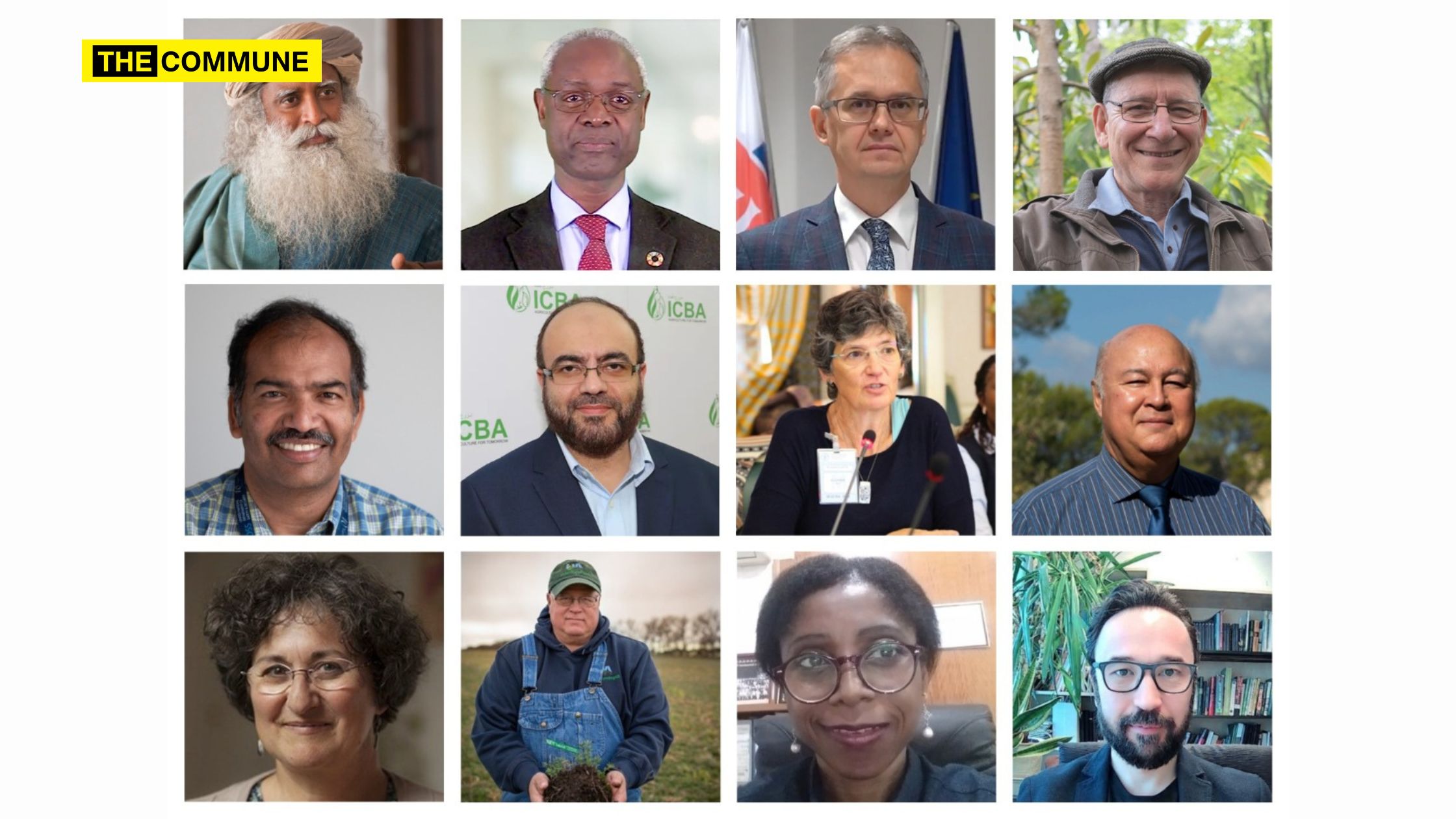
The Round Table was attended by 155 global experts from 31 countries who delved deeper into the strategic goals of the Movement along with Sadhguru. Ibrahim Thiaw, Executive Secretary, UNCCD, Australian agronomist, Tony Rinaudo, famously known as ‘The Forest Maker’, Ing. Martin Kováč, State Secretary of the Ministry of Agriculture and Rural Development of the Slovak Republic also joined virtually. Dr. Muralee Thummarukudy, Director, G20 Global Land Initiative – UNCCD also joined the Round Table.

Addressing the Round Table, Sadhguru urged the scientists and experts to come up with a simple coherent language for the common people to understand the importance and urgency to Save Soil. “For the sake of common people in the world and for the political class, coming out with simple coherent language that they hear loud and clear would make a huge difference.”

Seeing a resounding response to the Save Soil Movement steered by him, Sadhguru expressed his confidence in policy actions by governments around the world, but expressed concern over the pace of implementation. “Without people keeping up their concern for soil in the world, democratically elected governments don’t really move at an appropriate pace. If you don’t make this an election issue, it is not going to get sorted out,” suggested Sadhguru.

The Round Table discussed the strategic goals of the movement in two separate agendas. The first agenda of the Roundtable discussed issues and challenges to raise soil health by increasing Soil Organic Matter. Dr. Muralee Thummarukudy, Director, G20 Global Initiative – UNCCD, observed, “The law (EU soil Strategy) calls for Soil Literacy, which means that people have to know the importance of soil, and this is where the role of people like Sadhguru and the Save Soil Movement is.”

Dr Ahmed H. El-Naggar, International Center for Biosaline Agriculture (ICBA), UAE, Dr. Claire Chenu, Coordinator, European Joint Programme – Soil, Dr Lydie-Stella Koutika, Research Center on Productivity and Sustainability of Industrial Plantations (CRDPI) also shared valuable inputs to revitalize soil.

The second agenda discussed issues and challenges in supporting farmers to improve soil health. Dr Paul Luu, Executive Secretary, 4 per 1,000 Initiative, France, reflected, “Healthy soils are really the basis of all our actions- if we want to combat climate change, to combat desertification, to combat biological diversity erosion and if we want to have food security.”

Gabe Brown, Understanding Ag, Prof Rosa Maria Poch, Chair of Intergovernmental Technical Panel on Soils, Food and Agriculture Organization (FAO) and  Dr Alisher Mirzabaev, Enviro Economist, University of Bonn, Germany contributed to the agenda.

The proceedings from the conference will be compiled and used in various forums to set the agenda to make agricultural soils healthy across the world.

Earlier on Save Soil Day, Sadhguru who is leading the Save Soil Movement kickstarted the global #ScoreforSoil campaign. The campaign, against the backdrop of the Football World Cup, encourages people to put up a video on social media of their best football shot and #ScoreForSoil in support of the Save Soil movement. Many leading global names are joining this global campaign to spread awareness.

The round table was organized by the Save Soil Movement, which was launched by Sadhguru in March this year to bring the world’s attention to save the dying soil. The movement is urging nations to mandate 3-6% organic content in agricultural soils around the world through policy-driven initiatives. Sadhguru, in March, undertook a 100-day, 30,000 km solo bike journey across 27 nations in Europe, Central Asia, Middle East and 11 Indian states. The movement, in a short span of time, has met with resounding success, reaching over 3.91 billion people. 81 nations have committed to frame soil-friendly policies.

(This is an official press release from Isha Foundation. The Commune was not involved in creating this content.)

Click here to subscribe to The Commune on Telegram and get the best stories of the day delivered to you personally.
Gujarat Results: A Trailer Of What Is To Come In 2024

8 December 2022 will be one of the stupendous days for BJP. The party broke its own previous record best of 149 seats in 1985. The vote share shows that the people of Gujarat have showered enormous love and affection on Narendra Modi. They took personal pride in sending their lovable Chief Minister to the center as Prime Minister. Everyone saw Modi as a member of their family and not as just some politician. Such is the connect that Modi enjoys with the Gujaratis and the people from other states that have made Gujarat their home.

Every single exit poll showed BJP winning effortlessly. The well-known anti-Modi journalists were smiling in front of TV cameras when they were announcing the results of the exit polls in their respective channels but they must have had a really hard day digesting this fact.

It was hilarious to see some TV channels from Tamil Nadu going to some parts of Gujarat and interview the Tamil people there. The unanimous answer they got from almost every person they met left them red faced. They could just hear everyone saying that they are very happy with Modi and will vote for BJP.

Their frustration was evident in their anger on the Congress which didn’t even try to put up a fight. Rahul Gandhi chose not to walk much in Gujarat. They took some solace in Kejriwal by attempting to show AAP as the new challenger for BJP.

That also didn’t work as AAP turned out to be a damp squib after so much of media hype in the last month. They had to somehow dent the BJP success story. The Himachal Pradesh results came as a big relief for them. They now could at least say that the Modi factor didn’t work in there and that is the formula to defeat Modi and Modi is not invincible. One has to be really intelligent when one is strategizing against Modi. Otherwise, they will end up being a laughing stock.

Priyanka Gandhi got a lot of credit, obviously, for the Himachal Pradesh victory and some Congress leaders heaped praise. One has to be generous and let them take this credit which was really hard coming, given the dismal performance in Gujarat and Rahul Gandhi’s aimless walkathon that left everyone confused.

BJP could have done a better job in Himachal. Congress finally got one narrative right against BJP around going back to old pension scheme that was noticed by the people. It is another debate whether this is feasible and can be really implemented or not.

Himachal Pradesh loss is a blessing in disguise for BJP as that is going to help them attack the Congress strongly during the 2024 elections.

Anti-Modi journalists also got a shock when BJP didn’t do that badly in the MCD elections in Delhi as they expected. Nevertheless, BJP has to acknowledge the fact that they have to buck up in Delhi. They have to quickly decide on a CM face if they are looking for any chance to wrest Delhi from AAP in the next Assembly elections and give time for that face to register with the public.

Coming back to Gujarat, it was a once in a lifetime performance by Narendra Modi. It was very clear that people of Gujarat voted for him and only him and none other. They clearly rejected the freebies that AAP was offering in the form of free electricity etc. The BJP should take thorough advantage of this excellent gesture of the Gujarat voters and make it an example in the whole of India. Every state in India should do what Gujarat voters did as they believed in hard work and self-respect. They don’t want any party to give anything free to them. They just want an honest and genuine effort towards development and they have seen this in Modi-led BJP. Gujarat election has shown how 2024 election results are going to look like. The trend has been set. India will vote the Gujarat style in 2024. The opposition is in disarray and BJP will again break its prior records in the next Lok Sabha elections and Narendra Modi will sign off his career in style as the most successful Prime Minister that India ever had since Independence.

Click here to subscribe to The Commune on Telegram and get the best stories of the day delivered to you personally.
VCK Cadre Caught In Video While Demanding Money For Thirumavalavan Posters In Karur

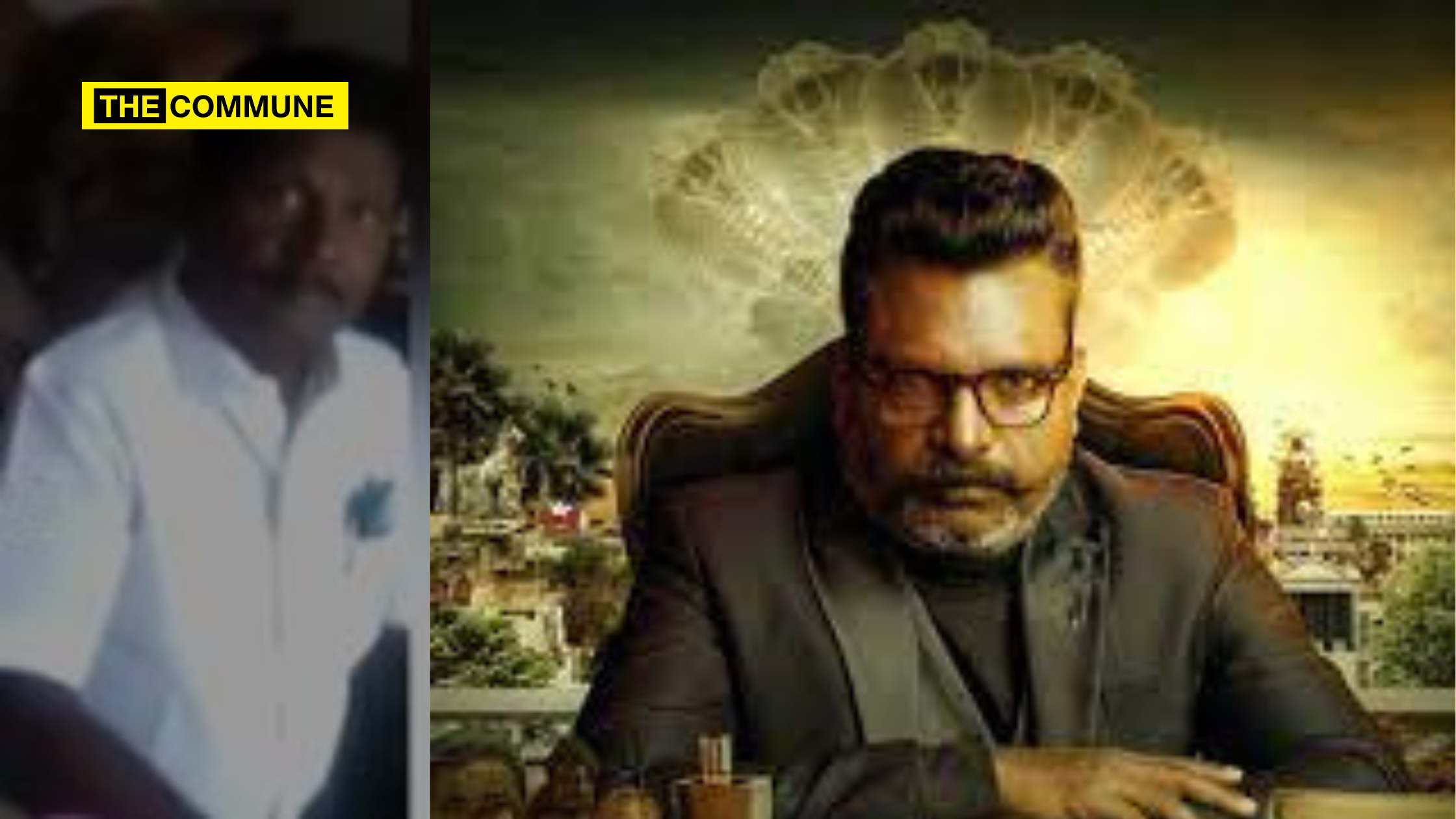
A video of Viduthalai Chiruthaigal Katchi (VCK) cadre demanding money from government ration shop workers in order to buy posters for VCK chief Thirumavalavan has gone viral on social media.

Bhagavalan alias Bhaskaran, the former VCK district secretary, demanded ₹5000 from the ration shop workers of the Amman Nagar ration shop in Kolanthanallur under Karur Corporation for putting up a poster of Thirumavalvan.

When the ration shop employees refused to pay the extortion money, the VCK cadre stormed into the ration shop, walked over the rice spilled on the floor while wearing his shoes, and then sat on the rice bag.

He did not allow the ration shop to function after sitting on the rice bag, preventing the ration shop employee from working and also disturbing the people who were in the ration shop, causing a public nuisance.

He then said,” give me what you have in hand.”

The worker expressed his dissatisfaction with his inability to steal ration shop items like in old times after the implementation of fingerprint scan, saying, “Anna, I do not have anything in hand. Nowadays, it is not like before. After implementation of a fingerprint scan, we are not able to do anything (stealing public goods) like before.”

(with inputs from Samayam Tamil)

Click here to subscribe to The Commune on Telegram and get the best stories of the day delivered to you personally.