Home Blog Page 10

As DMK Govt Prevents Hindus From Lighting Deepam At Thirupparankundram Hill, Muslims Themselves Light A Kuthuvilakku (Traditional Hindu-Style Lamp) Inside Sikandar Dargah

As DMK Govt Prevents Hindus From Lighting Deepam At Thirupparankundram Hill, Muslims Themselves Light A Kuthuvilakku (Traditional Hindu-Style Lamp) Inside Sikandar Dargah

Even as the Dravidian Model DMK government has been preventing Hindus from lighting the Karthigai Deepam at the Deepathoon on Thirupparankundram Hill, videos from the hilltop dargah have emerged showing Muslim devotees lighting a kuthuvilakku, a traditional Hindu-style lamp, inside the Sikandar Dargah as part of their long-standing practice.

According to locals, Muslims visiting the hilltop shrine regularly pour oil into the lamp, light it, and offer prayers, a practice that has reportedly continued for years. This has raised questions among residents and online commentators about why Hindus were barred from lighting a Deepam outside the dargah, especially for a single annual festival, when lamp lighting is already a routine activity inside the dargah premises.

Meanwhile, no reports have surfaced of Muslims attempting to block Hindu Munnani members from lighting the Deepam. There is evidence of a 2005 letter by the Muslims to the District Collector stating that they had no objection to lamps being lit at least 15 metres away from the shrine.

Locals noted that Hindus and Muslims in Madurai traditionally share close social ties, often described as living like “maman–machan” (uncle and nephew), and suggested that the festival could have been celebrated in a spirit of harmony, with Muslims lighting lamps inside the dargah and Hindus lighting the Deepam outside at the designated spot.

Subscribe to our channels on WhatsAppTelegram, Instagram and YouTube to get the best stories of the day delivered to you personally.

“Problem Started When Muslim Brothers Said They’ll Slaughter A Goat And Serve Biryani”: DMK MP Thanga Tamil Selvan On Thiruparankundram Row

"Problem Started When Muslim Brothers Said ‘I’ll Slaughter A Goat And Serve Biryani’: DMK MP Thanga Tamil Selvan On Thiruparankundram Row

DMK MP Thanga Tamil Selvan had said that tensions in Thiruparankundram stemmed from what he described as an attempt to introduce a new and non-traditional practice on Skandar Hill, leading to conflict where none previously existed. His remarks came during the Skandhar Vs Sikandar Malai row triggered by Islamists, in which he discussed the origins of the dispute.

According to the MP, relations between the Piramalai Kallar community and local Muslims had historically been peaceful. He said trouble began only when certain individuals announced plans to conduct animal sacrifice and distribute biryani at the site.

“There is no difference of opinion at all between the Piramalai Kallar community or the Muslims living there. The problem only starts when someone suddenly comes and says, ‘I’ll go there, slaughter a goat, serve biryani and show blood flowing.’ This is an unnecessary issue,” he said.

Tamil Selvan added that Hindu and Muslim residents had lived harmoniously for years and alleged that external groups contributed to the escalation.

“Until now, the respected Muslim elders living there and we have all lived together as one… It is the Hindu Munnani, RSS side starting an argument with the Muslim elders here over an unnecessary issue – that is what I first criticise as a big mistake.”

When asked where he believed the problem originated, he stated: “Our Muslim brothers going there and saying they will offer blood sacrifice and slaughter goats there in that spot – that itself was the first mistake.”

When asked whether the practice of offering animals on the hill was part of the traditional customs, Thanga Tamil Selvan initially denied it. He said it was “not part of the local custom.”

The interviewer pointed out that for nearly 600 years, people in the region had taken hens and chickens as offerings to fulfil vows. Tamil Selvan responded that while such acts might occur occasionally and “naturally,” the dispute arose only because some individuals were now trying to formalise it into a fixed ritual.

He explained: “Yes, it happens naturally. But trying to convert that into a ritual, saying ‘we will change it and do this every day’, that is wrong.”

Tamil Selvan also argued that major sections of the Muslim community did not support such new practices.

“Generally, if you look at the respected Muslim elders… in that faith, they will not worship a grave or dargah as such. Now they are trying to forcibly introduce a new ritual or practice there – that is what we are opposing.”

In January 2025, Ramanathapuram MP and Tamil Nadu Waqf Board chairman Navas Kani triggered controversy after posting photos of people eating non-vegetarian biryani near the entrance of Thirupparankundram Temple Hills, during a visit related to the ongoing dargah dispute. His remarks that cooked meat was permitted and that restrictions would be lifted soon sparked public outrage, with critics accusing him of provoking communal tension.

The incident comes amid weeks of unrest, including attempts by some Muslim groups to take goats and roosters up the hill for sacrifice, repeated police intervention, protests, and Kani’s earlier claim that the hilltop dargah is Waqf property, intensifying Hindu–Muslim tensions.

Subscribe to our channels on WhatsAppTelegram, Instagram and YouTube to get the best stories of the day delivered to you personally.

Madras High Court Directs Dravidian Model HR&CE To Upload Complete Audit Reports Of Major Temples Within Two Weeks

Madras High Court Directs Dravidian Model HR&CE To Upload Complete Audit Reports Of Major Temples Within Two Weeks

The Madras High Court has directed the Hindu Religious and Charitable Endowments (HR&CE) Department to upload the complete audit reports, not summaries, of major temples, including the Palani Dhandayuthapani Temple and the Tiruchendur Subramania Swamy Temple, on its official website within two weeks.

The directive came during the hearing of a petition filed in 2023 by temple activist TR Ramesh, president of the Indic Collective Trust, seeking a court order mandating that annual income-and-expenditure audit reports of all temples in Tamil Nadu be made publicly available on the HR&CE website.

Previous Court Order Recalled

A special bench of Justices R Suresh Kumar and S Saundar had earlier, in August 2025, instructed the HR&CE Department to explain why the accounts of 9,525 temples had not been submitted for audit. The bench had further ordered the department to publish full audit details of major temples such as Palani and Tiruchendur.

HR&CE Claims Compliance; Petitioner Disputes It

When the case was taken up again on Wednesday, Special Pleader Arun Natarajan, appearing for HR&CE, informed the court that:

  • Audit details of 48 major temples for 2023 had been uploaded.
  • Accounts of 1,036 temples had been audited and uploaded on respective temple websites.
  • Summaries of audit details of 541 temples were now available online.

He requested additional time to complete uploading the remaining reports.

However, petitioner TR Ramesh argued that the HR&CE Department was deliberately avoiding full compliance with the court’s earlier order. He said:

  • Only summaries had been uploaded.
  • Full audit reports were being withheld.
  • The department feared that uploading complete details would reveal “irregularities and mistakes” in temple finances.
  • The Director of Audit, Finance Department, had not filed any response, contrary to the court’s mandate.

Court Rejects HR&CE’s Interpretation

After hearing both sides, the bench observed that HR&CE was attempting to give “a new interpretation” to the previous order and reaffirmed that uploading only summaries was not acceptable.

The judges reiterated, “As per the earlier order, the complete audit details of major temples such as Palani and Tiruchendur must be uploaded on the website within two weeks.”

They also directed the HR&CE Commissioner to file a detailed compliance report at the next hearing.

The matter has been adjourned to 18 December 2025.

(Source: Dinamalar)

Subscribe to our channels on WhatsAppTelegram, Instagram and YouTube to get the best stories of the day delivered to you personally.

After Thirupparankundram, DMK Govt Stops Hindus From Lighting Deepam At Dindigul’s Mandu Karuppanasamy Temple; Section 144 Imposed

After Thirupparankundram, DMK Govt Stops Deepam At Dindigul’s Mandu Karuppanasamy Temple; Section 144 Imposed

Over the past few days, entire public attention has been on how the DMK government is hell bent on not permitting Hindus to light the Karthigai Deepam at the Deepathoon on Thirupparankundram Hill. But now, the same government, despite an order, has not permitted Hindus from lighting the deepam at the Mandu Karuppanasamy Temple in Perumal Kovilpatti village in Dindigul.

Tensions escalated in Perumal Kovilpatti near Chinnalappatti after the Karthigai Deepam festival at the Mandu Karuppanasamy Temple once again became the centre of a dispute between Hindu residents and members of the Christian-majority population in the village.

Petitioners representing the Vanniyar Hindu community alleged that their right to worship at the Mandu Karuppanasamy Temple was being obstructed, despite a clear directive from the Madurai Bench of the Madras High Court permitting the conduct of the Karthigai Deepam festival.

Court Granted Permission But Festival Still Blocked

On 2 December 2025, Justice GR Swaminathan allowed the lighting of the Deepam at the locations specified in the petition filed by Siththan Balraj of Perumalkovilpatti. The court recorded that the land fell under the relevant survey number and that the Christian community had no legal claim over it, noting that 21 police cases relating to past disputes had been registered in the area.

The judge stated that he was unable to see how the lighting of the Deepam would “affect the rights of Christians,” and directed the police to ensure that the devotees’ rights were protected.

Section 144 Imposed Instead of Implementing Order

However, shortly after the court order as reported in Vikatan, Dindigul District Collector Saravanan imposed Section 144 prohibitory orders exclusively in Perumal Kovilpatti, citing the possibility of communal tension.

This move effectively prevented the Hindu community from lighting the Deepam as permitted by the High Court.

More than 100 police personnel were deployed on Wednesday, and over 200 on Thursday, with fire service vehicles and ambulances kept on standby. The prohibitory order was extended for a second day as the legal proceedings continued.

IMK Leader Arjun Sampath Alleges Discrimination; Says Hindus Have Become a Minority in Their Own Village

Indu Makkal Katchi leader Arjun Sampath alleged that because the Christian population forms a majority in the village, Hindu religious rights are being curtailed. He stated that the State government was “hesitating to enforce the High Court verdict” due to “vote-bank considerations.”

Collector and SP Summoned in Contempt Case

As the court’s December 2 order was not implemented, a contempt petition was filed by village resident Siththan Balraj. He had earlier sought reopening of the Mandu Karuppannasamy Temple, permission to conduct daily poojas, and approval to conduct the Karthigai Deepam festival in front of the Kaaliamman and Karuppannasamy temples.

The High Court had stated that the land in question fell under a specific survey number, that 21 police cases had been registered due to disputes between Hindus and Christians, and that the Christian community had no rights over the land mentioned in the petition. The judge added that he did not see how the lighting of the Deepam would affect Christian residents.

On Wednesday, Justice GR Swaminathan directed Collector Saravanan and SP Pradeep to personally appear at 3:15 p.m.

Courtroom Exchange

During the hearing, the judge asked whether the authorities could implement the order and instructed that the prohibitory order be withdrawn.

The Collector said the prohibitory order was imposed based on the ground situation. Government counsel cited concerns of communal tension and said an appeal was being prepared.

The petitioner’s counsel argued that security forces could be deployed if law-and-order concerns existed and accused the State of failing to implement the court’s direction.

Government counsel objected to the petitioner’s remarks and insisted they had a right to argue on behalf of officials.

The judge clarified that the court had the authority to question officials and recorded the Collector’s statement that the prohibitory order could not be withdrawn.

Evening Order

At 6:05 p.m., Justice Swaminathan adjourned the matter, issued notices to the Collector and other officials, and dispensed with their further personal appearance.

Current Status

The Karthigai Deepam has not been allowed in Perumal Kovilpatti despite the earlier High Court order. Section 144 remains in force, extended for a second day. Heavy police presence continues in the village.

(Source: Dinamalar)

Subscribe to our channels on WhatsAppTelegram, Instagram and YouTube to get the best stories of the day delivered to you personally.

DMK Govt Moves Supreme Court Against Madras High Court Order That Allowed Hindus To Light Deepam Atop Thirupparankundram Hill

Thirupparankundram-Hill-Karthigai-Deepam-Row-DMK-Govt-Violates-HC-Order-‘Dravidian-Model-Police-Stop-Devotees-Court-Allows-Lamp-To-Be-Lit-With-CISF-Protection

The DMK government in Tamil Nadu on Thursday, 4 December 2025, filed a Special Leave Petition (SLP) before the Supreme Court challenging the Madras High Court’s order quashing the prohibitory order issued by the Madurai District Collector in the Thirupparankundram region.

The Collector had invoked prohibitory measures after clashes reportedly broke out during the implementation of a High Court directive issued on Wednesday, which permitted devotees to visit the temple and light lamps at the Deepathoon (stone pillar).

Government sources told The New Indian Express that the State would seek an urgent hearing on Friday, 5 December 2025. However, according to the Supreme Court causelist available until 10:50 p.m. Thursday, the matter is not listed for Friday.

A lawyer associated with the case, who did not wish to be named, described the issue as “highly sensitive” and declined to share further details. The lawyer said, “Please wait until Friday at 10:30 a.m.”

Earlier on Thursday, Justice GR Swaminathan of the Madurai Bench quashed the State government’s prohibitory order, holding that it had been issued solely to circumvent the implementation of the court’s directive. The Bench also directed the Madurai City Commissioner of Police to provide protection for devotees lighting lamps at the Deepathoon located on the lower hilltop.

The State has now approached the apex court seeking to challenge the 4 December 2025 judgment.

(Source: The New Indian Express)

Subscribe to our channels on WhatsApp, Telegram, Instagram and YouTube to get the best stories of the day delivered to you personally.

“Death Knell Of Democracy”: Madras High Court Slams DMK Govt, Collector And Police Commissioner For Brazenly Defying Court Order In Thirupparankundram Karthigai Deepam Case

State-Administration-Has-Decided-To-Cock-A-Snook-Justice-GR-Swaminathan-Slams-DMK-Govt-Over-Failing-To-Comply-Order-To-Permit-Hindus-To-Light-Lamp-At-Thirupparankundram-Hill.jpg

In an extraordinary and unprecedented judicial dressing-down, the Madras High Court’s Madurai Bench has exposed the DMK government’s blatant contempt for the rule of law, constitutional propriety, and Hindu religious rights. Justice G.R. Swaminathan’s order reads like a charge-sheet against a State administration that deliberately chose confrontation over compliance, and political arrogance over constitutional duty.

The case revolved around a simple issue: allowing devotees to light the sacred Karthigai Deepam at the Deepathoon of Thirupparankundram Hill. On 01.12.2025, the Court had clearly and unequivocally allowed devotees to perform the ritual. Yet the DMK administration, instead of complying, went into sabotage mode.

Despite receiving a copy of the order “immediately” and despite the event being scheduled for 6 PM on 03.12.2025, the State machinery did nothing to honour the Court’s direction. As the judge observed, the authorities “remained inactive,” thereby defying the order of this Court

When devotees approached the Court stating the order was about to be breached, Justice Swaminathan noted that “it was obvious that contempt had been committed.” He reminded the DMK administration that neither rank nor position places anyone above the law. Citing the Supreme Court’s recent judgment, he reiterated that “Disobedience… attacks the very foundation of the rule of law… no one, howsoever high they may be, may think they are above the law.”

DMK Govt Tried To Sabotage Court Order 

After the Court permitted the petitioners to climb the hill with CISF protection to light the Deepam, what happened next is nothing short of a constitutional horror story.

When the devotees and CISF team reached the foothill, Madurai Police Commissioner J. Loganathan, IPS physically blocked them — openly declaring that he “was not in a position to respect the order of this Court” because of a prohibitory order issued by the District Collector a day earlier under Section 163 of BNSS.

This was not law enforcement.
This was law sabotage.

The Court minced no words: it declared that the Collector’s order was passed “only to nullify the directions given by this Court” and to give the police “a convenient reason to defy” the judicial mandate.

The judge invoked Article 261 of the Constitution, which mandates nationwide enforceability of judicial orders, making the police duty-bound to assist — not obstruct. “They cannot defy for any reason whatsoever,” the order stresses.

“Sound The Death Knell Of Democracy”

In a damning indictment, even the Division Bench dismissed the appeal filed by the Collector and Commissioner, calling it an attempt “with ulterior motive to preempt contempt action.”

Justice Swaminathan’s words reflect the gravity of the situation created by the DMK government:

The State administration “has decided to cock a snook at this Court’s order”

Defying the judiciary would “sound the death knell of democracy itself”

Officers cannot choose to obey or ignore court orders; doing so would “lead to anarchy” and must be “nipped in the bud”

In a striking historical reference, the judge compared the situation to the U.S. civil rights era, noting how President Eisenhower deployed the military when federal police refused to enforce desegregation orders — urging the Madurai Police Commissioner to “take inspiration.”

Court Quashes DMK Govt’s Prohibitory Order

Calling the District Magistrate’s order unconstitutional, impermissible, and void, the Court quashed it outright.

Then, in a direct command issued in the presence of the Police Commissioner over video conference, the Court ordered the police to give “fullest protection” to the devotees to climb the hill and light the Deepam — warning that “harsh consequences will ensue” if the DMK administration again disobeys.

Subscribe to our channels on WhatsAppTelegram, Instagram and YouTube to get the best stories of the day delivered to you personally.
Madras High Court Madurai Bench Pulls Up Officials Over Non-Compliance in Thirupparankundram Deepam Case, Quashes Section 144 Order; Directs Police To Ensure Lamp Is Lit At Deepathoon

Madras High Court Madurai Bench Allows Karthigai Deepam To Be Lit At The Original Spot At Thirupparankundram Hill

The Madras High Court’s Madurai Bench on Thursday, 4 December 2025, took serious exception to the conduct of the Thirupparankundram temple’s Executive Officer and the Madurai District Collector after they failed to appear before the court during the hearing of a contempt petition related to the non-lighting of the court-mandated Karthigai Deepam at the Deepathoon atop Thirupparankundram Hill.

The matter was heard by Justice GR Swaminathan, who earlier had permitted the petitioner and ten others to light the Deepam under CISF protection after the temple administration failed to comply with his December 1 order.

“You were blessed by the order”

At the start of the hearing, Senior Advocate N. Jothi submitted, “We’ve suffered the court’s order.”

Justice Swaminathan replied in lighter vein: “You did not suffer with the order. You were blessed by the order.”

Court Warns of Harsher Order if Officials Fail to Appear

Expressing displeasure over the absence of the Executive Officer and District Collector, the judge said: “I’ll reassemble at 5:30 p.m. If they do not appear (through VC) by then, I’ll pass a harsher order.”

When the bench reconvened, Madurai City Police Commissioner appeared via video conference.

Court Confronts Police Commissioner

Justice Swaminathan questioned him directly:
“I’m posing a direct question to you. What do you do when there’s a court order?”

The Commissioner responded that he had the “highest regard for the court” but explained that a huge crowd, destruction of barricades, and a resulting law-and-order situation had necessitated the promulgation of a Section 144 order.

The judge then inquired about the exact time at which the Commissioner wrote to the District Collector seeking imposition of Section 144.

State Government’s Arguments

Additional Advocate General (AAG) Veera Kathiravan denied deliberate disobedience: “We never intended to disobey the court order. We know the order has come, but the LPA is permitted.”

AAG J. Ravindran urged the court to wait for the writ appeal scheduled for the next day: “At this stage, I don’t want to go into the merits. My only request is that tomorrow writ appeal is coming. Let us wait for the appeal.”

Court Recaps Events & Criticises Police Action

In delivering the order, Justice Swaminathan recalled that his direction from the previous day had allowed the petitioner and CISF to go ahead with the lighting of the Deepam. However:

The Commissioner restrained the petitioners and CISF from proceeding.

He informed them that due to Section 144, he was “not in a position to respect the order of court.”

CISF personnel then returned, and the petitioners were prevented from lighting the Deepam despite explicit permission.

Division Bench Appeal Dismissed

The court recorded that the State’s appeal to the Division Bench had been dismissed earlier in the day through a detailed order, meaning the single judge’s directions continued to remain operative.

Court Quashes Section 144 Order

Justice Swaminathan observed that the Commissioner appeared to believe he ranked above the High Court, remarking: “The Commissioner may think he is superior in ranking than HC judge.”

He added that the Commissioner attempted to justify his actions by citing the District Magistrate’s Section 144 order.

The judge reiterated that “constitutional court’s order can be set aside only in manner known to law. As long as it’s standing, it has to be obeyed by all officers.”

Finding that the Section 144 order had been invoked only to obstruct implementation of the High Court’s directions, the judge quashed it.

Court Directs Police to Ensure Lamp Is Lit Today

Justice Swaminathan concluded by directing the Madurai City Police Commissioner to:

  • Provide police protection,
  • Allow devotees to light the Deepam at the Deepathoon today,
  • And warned that strict action would follow if the order was not complied with.

The hearing was then brought to a close.

Source: LiveLaw

Subscribe to our channels on WhatsAppTelegram, Instagram and YouTube to get the best stories of the day delivered to you personally.
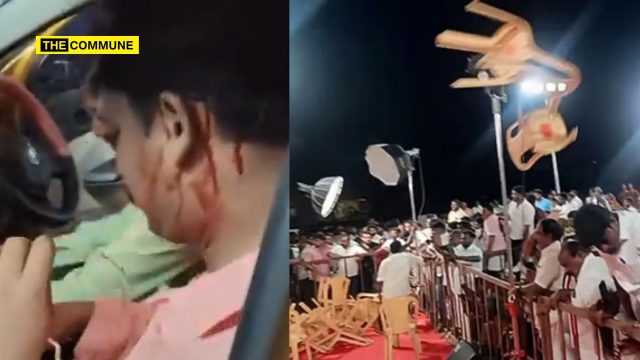
TN SIR Review Shows Over 24 Lakh Deceased Voters, 84.91 Lakh Uncollectable Voter Forms

TN SIR Review Shows 24 Lakh Deceased Voters, 84.91 Lakh Uncollectable Voter Forms

With only eight days left for the enumeration phase of Tamil Nadu’s Special Intensive Revision (SIR) of electoral rolls to conclude, as many as 84.91 lakh voter forms have been classified as “uncollectable”, raising concerns that these names may be removed from the draft electoral rolls scheduled for publication on 16 December 2025.

According to data accessed on Wednesday morning, the uncollectable category currently accounts for 13.24% of the State’s 6.41 crore electorate.

Breakdown of the 84.91 Lakh Uncollectable Forms

  • Permanently Shifted: 44.22 lakh
  • Deceased: 26.18 lakh (as per TNIE report)
  • Absent: 10.73 lakh
  • Already Enrolled (Duplicate): 3.5 lakh

These figures remain provisional and are subject to revision.

CEO Clarifies Process Still Ongoing

In a statement on Wednesday evening, the Chief Electoral Officer’s (CEO) office stressed that the SIR exercise is still underway and that the list of uncollectable entries is being shared with Booth Level Agents (BLAs) of political parties for scrutiny before preparing the draft rolls. The final classification of uncollectable forms will be completed only after December 11, the last day of the enumeration phase.

Officials reiterated that deletions would be finalised only after due verification and that any eligible voter omitted from the draft roll may file claims or objections from December 16 to mid-January 2026.

Wide Variation Across Districts

SIR data revealed significant district-level variations:

  • Ariyalur recorded the lowest uncollectable share: 4.3% (23,000 of 5.31 lakh voters)
  • Chennai recorded the highest: 31.78% (12.73 lakh of 40.05 lakh voters) — nearly one in three electors
  • Chengalpattu followed with 20.7% uncollectable forms (5.78 lakh)

Officials attributed Chennai’s high “Permanently Shifted” numbers to rapid urbanisation and residential mobility.

Digitisation Figures: Clarifying Confusion

The Election Commission of India (ECI) had earlier stated that Tamil Nadu achieved:

  • 99.45% distribution of SIR forms (6.38 crore)
  • 94.32% digitisation of forms (6.05 crore)

However, a detailed internal report accessed Wednesday showed that actual digitisation of returned forms stands at 82.57% (5.29 crore), excluding uncollectable forms. When uncollectable forms are included in the EC’s category of “digitised”, the percentage becomes 95.81%.

Officials confirmed that the 82.57% figure represents voters whose forms were returned and digitised, meaning their names are expected to appear on the draft rolls unless removed during AERO/ERO verification — a scenario described as “highly unlikely.”

Statewide Picture: 59 Lakh Names Set for Deletion, 24 Lakh Deceased Identified

Parallel ECI data as of 29 November 2025 (10 p.m.) showed that:

  • 58.91 lakh voters did not return their enumeration forms (9.19% of total electorate)
  • 23.83 lakh among them were identified as deceased

Overall, around 59 lakh names may be deleted for reasons including death, untraceability, duplicate entry, and permanent shifting.

At a recent press briefing, Chief Electoral Officer Archana Patnaik confirmed that deletions would be carried out under five categories:

  1. Death
  2. Untraceable
  3. Permanently Shifted
  4. Duplicate Entry
  5. Other Reasons

Constituency-Level Impact: Chennai Worst Hit

Chennai’s 16 constituencies could see 5.72 lakh voters removed from the rolls:

  • 1.29 lakh deceased
  • 4.12 lakh permanently shifted
  • 10,614 duplicate entries
  • Other major districts with high unreturned forms:
  • Chengalpattu: 4.39 lakh
  • Tiruvallur: 3.36 lakh

Highest Impact Constituencies

Pallavaram (Chengalpattu): 1.43 lakh of 4.44 lakh voters failed to submit forms

Chepauk–Tiruvallikeni (DMK Minister Udhayanidhi Stalin’s constituency): 72,950 unsubmitted forms

SIR Drive: 68,470 BLOs on the Ground

The Special Intensive Revision began on November 4 with a workforce of 68,470 Booth Level Officers conducting door-to-door enumeration. The draft electoral roll will be released on December 16, after which citizens may raise objections or seek restoration until 15 January 2026.

Officials emphasised that the current numbers would continue to change until the enumeration deadline, and the final voter count will only be known once the draft roll is published.

(Source: DTNext & The New Indian Express)

Subscribe to our channels on WhatsAppTelegram, Instagram and YouTube to get the best stories of the day delivered to you personally.
“Deliberate Disobediance, Manipulated Records, State Has Miserably Failed To Protect Hindu Rights”: Madras High Court Rips Apart DMK Govt’s Abuse Of Power In Thirupparankundram Karthigai Deepam Case

Thirupparankundram-Hill-Karthigai-Deepam-Row-DMK-Govt-Violates-HC-Order-‘Dravidian-Model-Police-Stop-Devotees-Court-Allows-Lamp-To-Be-Lit-With-CISF-Protection

In a scathing rebuke that exposes the DMK government’s blatant disregard for judicial authority and Hindu traditions, the Madras High Court on Thursday dismissed the state’s desperate appeal against a single judge’s order permitting devotees to light the sacred Karthigai Deepam at the iconic stone pillar atop Thirupparankundram hill. The division bench’s verdict not only upholds the age-old ritual but also lays bare the Stalin administration’s incompetence in upholding constitutional duties, fueling what critics are calling a manufactured communal crisis.

The controversy, simmering for days in the shadow of the revered Subramaniya Swamy Temple, erupted into chaos as devotees, emboldened by the court’s directive, clashed with heavily barricaded police forces. Eyewitnesses reported stones being hurled, barricades torn down, and scuffles breaking out near the hillock, where a centuries-old Sufi dargah stands adjacent to the contested lamp post.

Prohibitory orders under Section 144 were clamped down, effectively turning the sacred site into a fortress of state overreach, preventing even token worship. This aggressive posturing by the DMK-led police—deploying lathis and additional forces—has only escalated tensions, transforming a simple act of devotion into a flashpoint for unrest.

What began as a humble petition seeking permission for the Karthigai Deepam ritual—a beacon of light symbolizing the triumph of good over evil in Tamil Hindu lore—has been hijacked by the DMK’s appeasement playbook. The single judge’s order on December 3 was crystal clear: allow a small group of devotees to light the lamp under the protection of the Central Industrial Security Force (CISF), ensuring no disruption to the fragile communal harmony.

Yet, in a brazen act of defiance, the Tamil Nadu government rushed to the division bench, arguing that the ritual would “provoke” tensions near the dargah. The bench, comprising Justices S.M. Subramaniam and C. Kumarappan, saw through the charade, dismissing the appeal with a withering observation: “The situation has arisen in which the State Police [are] unable to carry the constitutional mandate.”

State “Consciously Disregarded” Order, Failed In Constitutional Duty

The bench recorded that despite a clear order on 01.12.2025 directing the temple management to light the Deepam at the designated stone pillar, the authorities took no steps to comply, forcing the petitioner to rush with an urgent contempt plea.

Shockingly, even at 5 PM on Karthigai Deepam day, when the ritual had to be performed by 6 PM, no arrangements had been made by the HR&CE authorities. The Executive Officer of the temple flatly told the petitioner that the court order would not be followed.

The judges observed:

“The State… has miserably failed by not protecting the fundamental rights of the Hindus and by deliberate disobedience of the judicial order.”

DMK Govt Attempted To Block Deepam Using Section 163 Of BNSS (Old Section – 144 CRPC)

Perhaps the most damning part of the judgment is the exposure of a clumsy last-minute attempt by the District Collector to sabotage the ritual by imposing a prohibitory order — conveniently timed at exactly 6:00 PM, the Deepam lighting time.

The court examined the file and noted shocking discrepancies:

The Collector passed a Section 163 BNSS order just before the ritual.

The file contained loose sheets, raising suspicion of manipulation.

The order specifically exempted religious ceremonies, making its application to Deepam blatantly illegal.

The judges remarked:

“It is very obvious that the Section 163 order is either passed prior to the judicial order or the records are manipulated after this Court called for the file.”

State Police Refused Protection, High Court Had To Deploy CISF

In an unprecedented move, the High Court had to request CISF personnel to escort the petitioner because the State Police simply refused to follow the Court’s directions.

The bench justified CISF intervention, stating:

“If the State machinery disobeys the Court order and refuses protection, the Court cannot stand helpless.”

This is a damning indictment of the DMK government’s law enforcement apparatus — the Court effectively ruled that the Tamil Nadu Police failed in their constitutional duty and obstructed a lawful Hindu religious practice.

DMK Govt’s Appeal Dismissed As A “Preemptive Move” To Escape Contempt

The judges made an extraordinary observation:

The appeal itself was filed merely as a “pre-emptive step” to escape contempt action.

The bench repeatedly stressed that:

The Government had no intention to obey the order.

The officials’ conduct was willfully defiant.

The administration acted at the behest of “vested interests” opposing the Hindu ritual.

A Humiliating Moment For DMK’s HR&CE Policies

This judgment is a massive embarrassment for the DMK’s HR&CE Department, exposing: state-sponsored obstruction of Hindu rituals, manipulation of records, use of law-and-order tools to suppress religious rights and open defiance of High Court orders

The bench finally delivered a resounding blow:

“This appeal, filed with ulterior motive to preempt contempt action, is liable to be dismissed.”

Court Upholds Hindu Rights, Slams DMK’s Abuse Of Power

The High Court has made it abundantly clear:

The right to light the Karthigai Deepam at Deepa Thoon is protected under Articles 25 & 26.

The DMK administration acted against constitutional duties.

The Collector and Police Commissioner engaged in deliberate obstruction, not legitimate governance.

This is not merely a legal setback — it is a historic judicial reprimand exposing how far the DMK government was willing to go to prevent Hindus from observing a centuries-old tradition.

The fallout from this fiasco is already rippling across Madurai. With Karthigai Deepam just days away, the hilltop—once a symbol of shared reverence—now bristles with checkpoints and resentment. Reports of injuries among devotees and viral videos of police excesses have ignited social media outrage, with hashtags like #DMKFails and #SaveThirupparankundram trending nationwide.

As the court mandates the lamp be lit under heavy security, one can’t help but question: How low will the DMK stoop to dim the flames of tradition?This episode is a clarion call for accountability. Governor R.N. Ravi must intervene to ensure compliance, and the Election Commission should scrutinize the DMK’s communal maneuvering ahead of future polls. Tamil Nadu’s Hindus deserve better than a government that treats their faith as a political football. Until the Deepam flickers atop the hill tonight, the shadow of Stalin’s shortsightedness will linger—a dark blot on Dravidian “progressivism.”

Subscribe to our channels on WhatsAppTelegram, Instagram and YouTube to get the best stories of the day delivered to you personally.
TN Govt Doctor Labels Hindu Devotees Protesting For Thirupparankundram Deepam Lighting As ‘Sanghi Terrorists’

TN Govt Doctor Labels Hindu Devotees Protesting For Thiruparankundram Deepam Lighting As 'Sanghi Terrorists

A Tamil Nadu government doctor has triggered widespread outrage after publicly describing Hindu devotees and protesters at Thirupparankundram as “Sanghi terrorists,” accusing them of attempting to “do a Babri Masjid” near a local Dargah during the Karthigai Deepam celebrations.

Dr. Jaison Philip, an MS, MCh surgeon, posted the remarks on X (formerly Twitter), where he claimed that those demanding the lighting of the Deepam at the Deepathoon, as directed by the Madras High Court, were “terrorists” attempting to provoke communal unrest. His comments referred to the events of December 3, when protests erupted after the temple administration failed to comply with the Court’s order to light the lamp at the ancient stone pillar in addition to the traditional site.

In his post, Dr. Philip wrote, “Sanghi terrorists had tried to do a Babri Masjid in peaceful Tamilnadu yesterday, at Thirupparankundram. The terrorists tried to light a Deepam near a Muslim Durgah… The secular Govt of the Honourable CM Mr. M.K. Stalin acted with great sagacity and administrative acumen, & averted the terrorist plot to instigate Hindu–Muslim riots.”

He further praised the district administration for ensuring that the lamp was lit only at the traditional Uchipillaiyar Temple site, writing that “bloodshed and huge riots were averted.”

The remarks drew sharp criticism from social media users, legal observers, and Hindu devotional groups, who accused the doctor, who is employed under the Tamil Nadu government, of defaming peaceful devotees and falsely framing a centuries-old ritual as an extremist act.

Critics noted that the High Court had explicitly permitted the Deepam to be lit at the Deepathoon based on historical precedent and after the nearby Dargah had expressed no objection to the ritual. The controversy arose only after the temple administration failed to execute the court order, leading to clashes with police.

Many netizens questioned how a state-employed medical professional could publicly label Hindu citizens as “terrorists,” especially when they were seeking enforcement of a judicial directive.

The Thirupparankundram Deepam issue exploded into statewide debate after the Madras High Court ruled that the lamp must be lit at both the traditional temple site and the Deepathoon stone pillar. Devotees stated that the HR&CE Department and local police blocked compliance, citing law-and-order concerns.

Following the non-compliance, protests broke out at the hill, Section 144 was imposed, and police arrested several participants.

Subscribe to our channels on WhatsAppTelegram, Instagram and YouTube to get the best stories of the day delivered to you personally.