Joseph Vijay was sworn in as the Chief Minister of Tamil Nadu on 10 May 2026. Immediately after the swearing in, he executed the ‘first signature’ – signalling the fulfilment of a promise made during the election campaign through the manifesto.
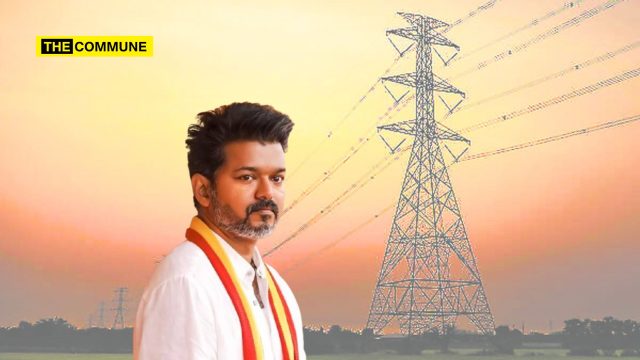
One of Chief Minister Joseph Vijay’s first signatures after taking office in Tamil Nadu was an order granting 200 units of free electricity to domestic consumers. But the benefit, as implemented, applies on a bimonthly basis and is available only to households whose total consumption does not exceed 500 units during that two-month billing cycle.
What did TVK promise?
200 units of electricity free every month to all eligible households.
What did TVK deliver?
200 units of electricity for 2 months upto 500 units of bimonthly consumption. 🤷♂️ pic.twitter.com/ER7vHf5bUj
— Krishna Kumar Murugan (@ikkmurugan) May 10, 2026
During the election campaign, however, TVK’s manifesto and campaign messaging prominently highlighted the promise of “200 units free” electricity for households. Several campaign materials and public descriptions framed the announcement as a monthly benefit, leading many voters to interpret the promise as 200 free units every month.
That distinction has now become the centre of the controversy. Yes, it was mentioned that only eligible people will be given this benefit.
A promise understood as “200 units free every month” implies a significantly larger subsidy over a two-month period than a scheme granting 200 free units only once per billing cycle.
Because electricity bills in Tamil Nadu are generally issued every two months, opponents say the difference between “monthly” and “bimonthly” is not merely technical but fundamentally changes the value of the scheme.
The structure of the scheme excludes a significant section of middle-class households, particularly families using appliances such as refrigerators, washing machines, and air conditioners, whose consumption could easily exceed the 500-unit bi-monthly ceiling.
The government has maintained that the scheme is aimed at reducing the burden of rising living costs and inflation on ordinary households. The order above also estimated that the subsidy would impose a significant annual financial burden on the state exchequer.
Still, the issue has quickly evolved into one of the first major political controversies facing the new TVK government, with the party being accused of using expansive campaign messaging while implementing a more restricted version after assuming power.
The dispute is not simply about electricity billing terminology, but about whether the promise presented to voters during the election campaign matches the benefit ultimately delivered after the formation of the government.
Subscribe to our channels on WhatsApp, Telegram, Instagram and YouTube to get the best stories of the day delivered to you personally.