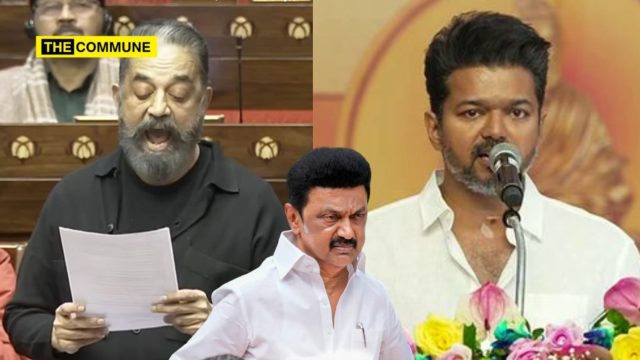
Makkal Needhi Maiam was not born as a DMK ally. It was born as a rejection of DMK. Kamal Haasan launched his party in 2018 explicitly positioning it as an alternative to the entrenched Dravidian establishment – DMK and AIADMK both. He called both parties corrupt, dynastic, and exhausted. His voters believed him. His volunteers gave years of their lives to that promise.
On 24 March 2026, that promise officially died – not with a bang, but with a press statement announcing “unconditional support” to the very party MNM was created to oppose.
இது தியாகம் அல்ல; கடமை.
சுய நலம் அல்ல; பொறுமை.@mkstalin @Udhaystalin @maiamofficial pic.twitter.com/V19889YYlg— Kamal Haasan (@ikamalhaasan) March 24, 2026
The Trajectory of Capitulation
The surrender did not happen overnight. It happened in carefully managed stages. First came the 2024 Lok Sabha alliance – Kamal justified it as a tactical necessity to fight the BJP. Then came the Rajya Sabha nomination in 2025 – the DMK rewarded Kamal personally with a parliamentary seat, using its legislative majority to push him into the Upper House. That was the moment MNM’s independence ended, even if no one said it out loud.
With a comfortable seat in Parliament secured, Kamal had no incentive left to fight for his party’s organisational survival. When the DMK offered a humiliating two to three seats, with the added insult of demanding MNM contest under the DMK’s own symbol, erasing the “battery torch” entirely, Kamal did not walk out. He folded. He then dressed up the surrender in the language of sacrifice: “This is not a protest. This is my duty.” MK Stalin, delighted, called it “magnanimous” and asked Kamal to campaign across Tamil Nadu for DMK candidates, with no formal agreement and zero electoral return.
அன்பும் பண்பும் கொண்ட எனது நண்பரும் @MaiamOfficial தலைவருமான திரு. @ikamalhaasan அவர்கள் இன்று அண்ணா அறிவாலயத்தில் என்னைச் சந்தித்து, நடைபெற இருக்கும் சட்டமன்றத் தேர்தலில் நேரடியாகப் போட்டியிடவில்லை என்றும், திராவிட முன்னேற்றக் கழகத்தின் தலைமையிலான கூட்டணியின் வேட்பாளர்களை… https://t.co/bsCxEIUlqG pic.twitter.com/1jJFuiCmpL
— M.K.Stalin – தமிழ்நாட்டை தலைகுனிய விடமாட்டேன் (@mkstalin) March 24, 2026
MNM’s thousands of volunteers, who marched under that battery torch through rain and sun across Tamil Nadu for eight years, will find no candidate of their party on the ballot on April 23. Their leader got his Rajya Sabha seat. They got nothing.
The Rhetoric Was Always the Same
Here is what Kamal Haasan said when he launched MNM in 2018: both Dravidian parties are corrupt, dynasty has destroyed Tamil politics, Tamil Nadu deserves a genuine third alternative. The crowds cheered. The cameras rolled. Political analysts called it a potential disruption.
Here is what Vijay has been saying since TVK’s launch: the DMK government is an “Ulta Model,” Stalin’s real friends are “bribe and corruption,” Tamil Nadu needs an “ethical politics” and a clean alternative to the dynastic establishment. The crowds cheer. The cameras roll. Political analysts call it a potential disruption.
The scripts are identical. The energy is identical. The promises are identical. And if Kamal’s trajectory teaches anything, the destination may be identical too. Sharp rhetoric at the start is not proof of long-term independence – Kamal Haasan proved that as conclusively as any politician in recent Tamil history.
The DMK’s Proven Playbook
The DMK does not destroy its challengers. It absorbs them. The method is patient, structured, and almost elegant in its consistency.
Step one: Allow the challenger to build a base. Do not harass them early – ignore them, treat them like waste, let them gather anti-establishment energy.
Step two: Wait for the first electoral disappointment, which first-past-the-post mathematics virtually guarantees for any new party.
Step three: Offer the leader a prestigious personal accommodation, a Rajya Sabha seat, a cabinet berth, a symbolic role that separates his personal interests from his party’s survival.
Step four: Watch the movement dissolve into a campaign vehicle.
Kamal Haasan went through every single step of this cycle. He was never seriously obstructed. He was never subjected to the kind of sustained political and administrative harassment that the DMK has historically deployed against genuine threats. He was given space and then, at the right moment, given a seat.
The B Team Question
Which brings us to TVK and a question that Tamil Nadu’s political commentariat has been reluctant to ask plainly: was Tamilaga Vettri Kazhagam ever truly independent of DMK influence to begin with?
The circumstantial evidence demands serious scrutiny. TVK deliberately chose not to contest a single by-election before 2026, skipping bypoll after bypoll, announcing it would wait for the Assembly elections. That decision denied the party an early test of its real electoral strength. When the 2026 results come in, and if TVK’s vote share does not translate into seats, which is entirely plausible given first-past-the-post arithmetic, the DMK will be watching. And it knows exactly which lever to pull.
TVK has also systematically positioned itself to only ever damage the anti-DMK coalition. It has ruled out any alliance with the AIADMK-BJP bloc, declared it will never have a “hidden tie-up with BJP,” and is contesting all 234 seats alone. In a first-past-the-post system, a party that splits the opposition vote across 234 constituencies and wins few seats does not hurt the DMK – it helps it. Every vote TVK takes from the AIADMK alliance is a vote the DMK does not need to win.
Whether this is by conscious coordination or by structural alignment of interests is almost beside the point. The functional outcome of a TVK that fights hard, loses, and consolidates nobody – is identical to what a B team would be engineered to produce. And when the losses arrive, the Rajya Sabha seat will already be on the table.
Invoking MGR and Jayalalithaa
Both Kamal and Vijay have invoked MGR and Jayalalithaa to legitimise their political journeys. This invocation is not tribute – it is appropriation.
MGR spent over two decades as a disciplined party worker inside the DMK before he was expelled. He did not leave on his own terms – he was thrown out. When he built the AIADMK, he built it in direct, uncompromising opposition to the DMK and kept it there until his last breath. He never went back. He never made peace with the party that expelled him. He governed Tamil Nadu for over a decade and died in office, having never traded his party’s independence for personal comfort.
Jayalalithaa faced criminal cases, political humiliation, a prison sentence and came back. Twice. Her entire political identity was defined by opposition to the DMK. She never once sought accommodation from them. Every setback hardened her resolve rather than softening her principles.
Both MGR and Jayalalithaa were opposed to the DMK and remained opposed, through every adversity, every temptation, every political crisis. That is precisely why Tamil Nadu remembers them. Their legacy was built on consistency of principle under pressure, not philosophical speeches about sacrifice delivered while collecting a Rajya Sabha seat.
Kamal Haasan invoked their legacy, accepted a Rajya Sabha seat from the DMK, and is now campaigning for Udhayanidhi Stalin’s coronation. Vijay invokes the same legacy while building a party that may be structurally designed to serve the same establishment it claims to challenge.
MGR and Jayalalithaa opposed the DMK and stayed true. That is why they are remembered. The actors who follow them have delivered better performances – but far worse politics.
Subscribe to our channels on WhatsApp, Telegram, Instagram and YouTube to get the best stories of the day delivered to you personally.