For a long time, Kollywood behaved as if the Tamil audience was a lab rat: keep feeding it “message cinema”, sprinkle some Dravidianist ideology, sloganeering, add a few star cameos, and the box office would somehow cooperate.
For years, the audience also lapped up the garbage that was doled out in the name of ‘pure art’ and ‘absolute cinema’ and what not.
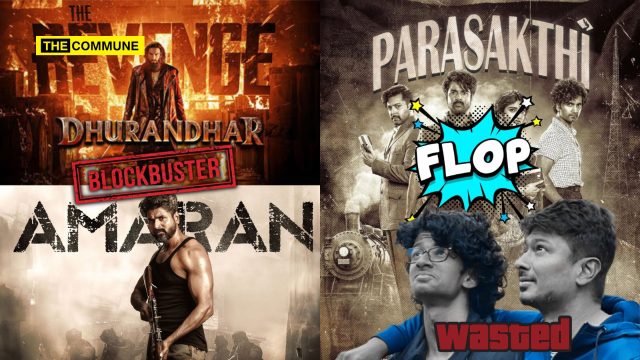
In 2024–26, the audience finally flipped the table. The clearest proof is how the same audience reacted to nationalistic films like Amaran and Dhurandhar, and how they have trashed Dravidianist ideology propagating films like Parasakthi.
Let us take a look at Amaran. The film was a biopic based on the life of martyred army hero Mukund Varadarajan. The Tamil audience that has been starved for such nationalistic films, films on real heroes lapped it up like crazy.
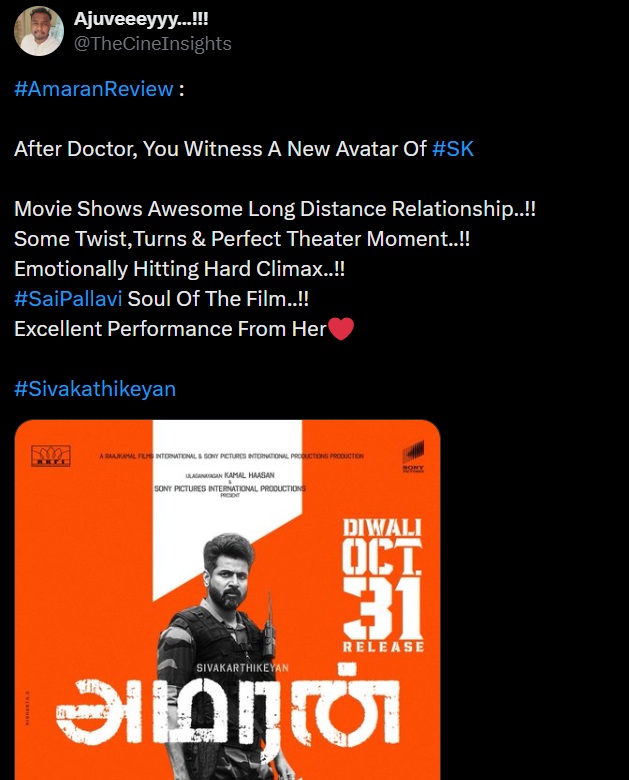
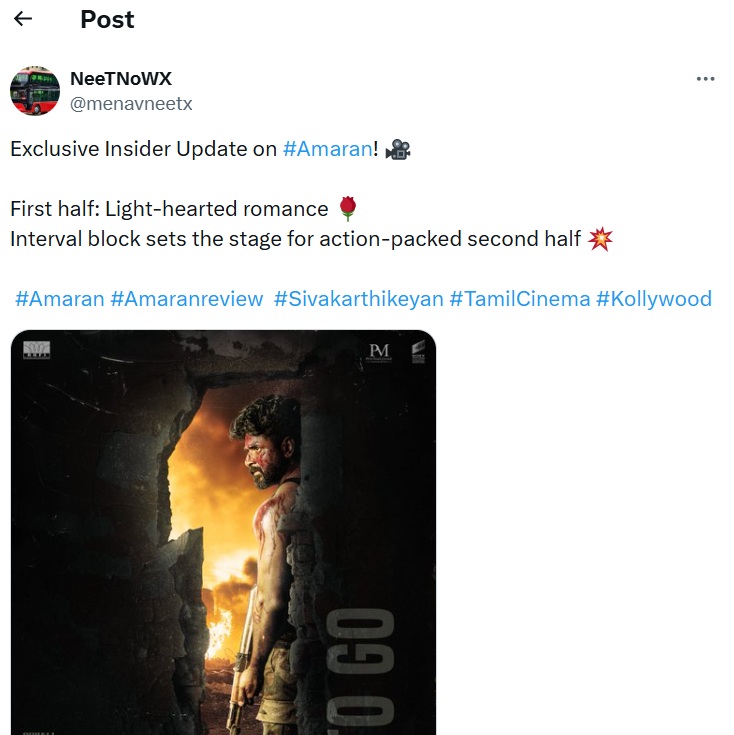
Fans of Sivakarthikeyan thoroughly enjoyed him in this avatar where he played Major Mukund Varadarajan. Here are some reactions.
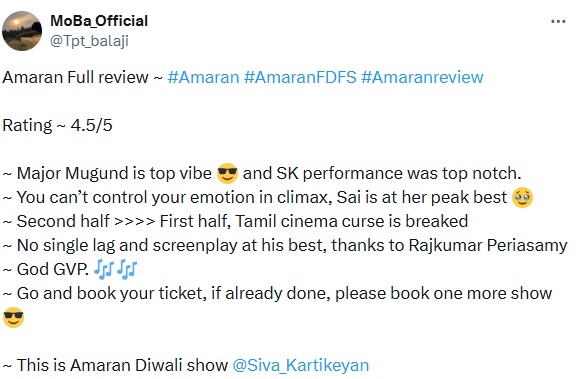
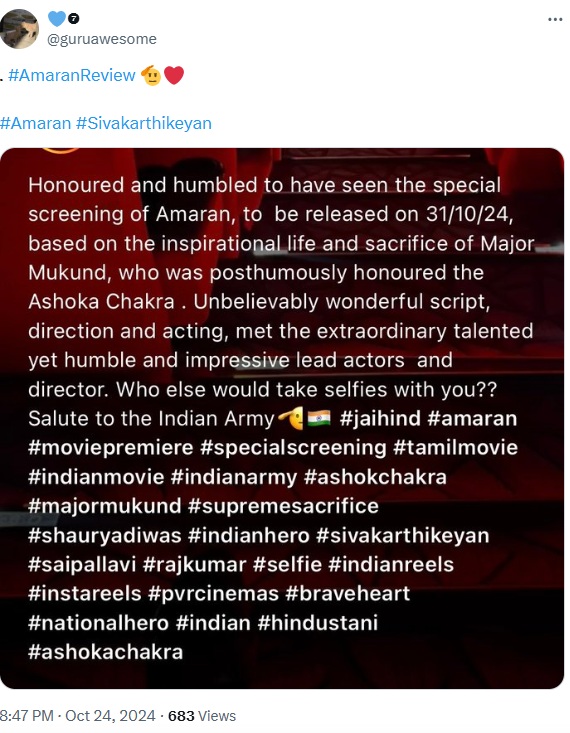
While the film did have its shortcomings, it seemed to be a start in the right direction.
A year later, Dhurandhar was released – December 2025. Since it was a Hindi film, like with the rest of the country, there was no promotional activity, and purely through word-of-mouth, Tamil audiences cheered Dhurandhar too.
Come January 2026 and the Dravidianist ‘Parasakthi’ was released.
It faced a sharp and decisive rejection from audiences, turning from a heavily promoted Pongal release into a rapid box-office failure within days. After a fan-driven opening weekend, the film collapsed on its first Monday, with collections crashing nearly 70–80% from ₹10.1 crore on Sunday to around ₹3 crore, with some trade estimates placing it even lower. Its three-day India net stood at just ₹25–26 crore, far below expectations for a big-budget release.
Theatres across Tamil Nadu reported poor occupancy of around 18%, with empty screens and cancelled shows indicating a complete lack of audience “hold.” Negative word-of-mouth, citing a “preachy,” slow narrative and weak engagement further accelerated the decline. The film failed to attract family audiences and neutral viewers, relying only on an initial fan rush. What was projected as a prestige film has instead become a case study in how hype fails without audience acceptance.
And now in March 2026, we saw Dhurandhar 2. Tamil audiences are enjoying it even more – to the point of recommending people to watch it in Hindi for maximum impact!
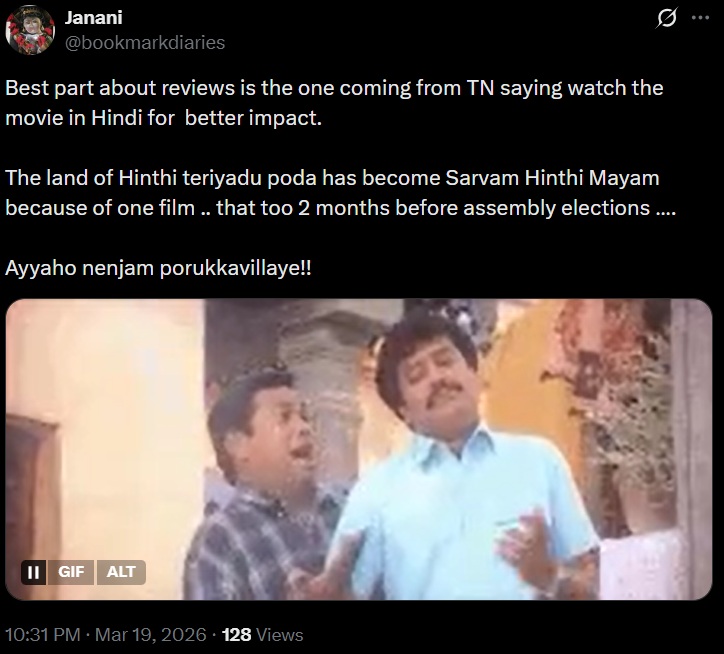
Viewer reviews as they leave the cinema halls in Tamil Nadu have all been praiseworthy of the film, as it should be.
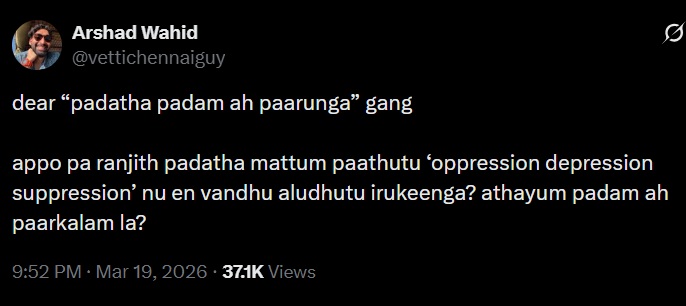
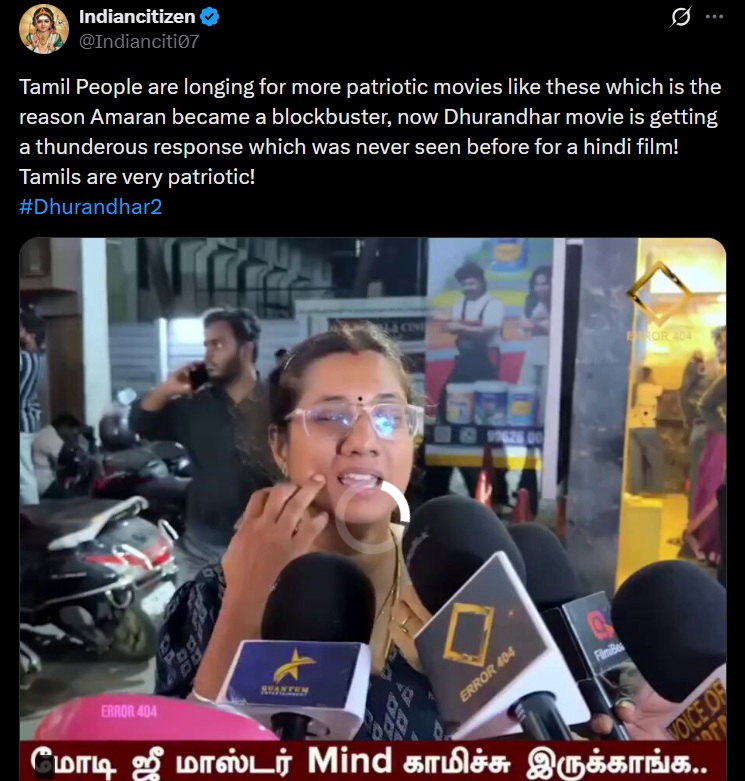
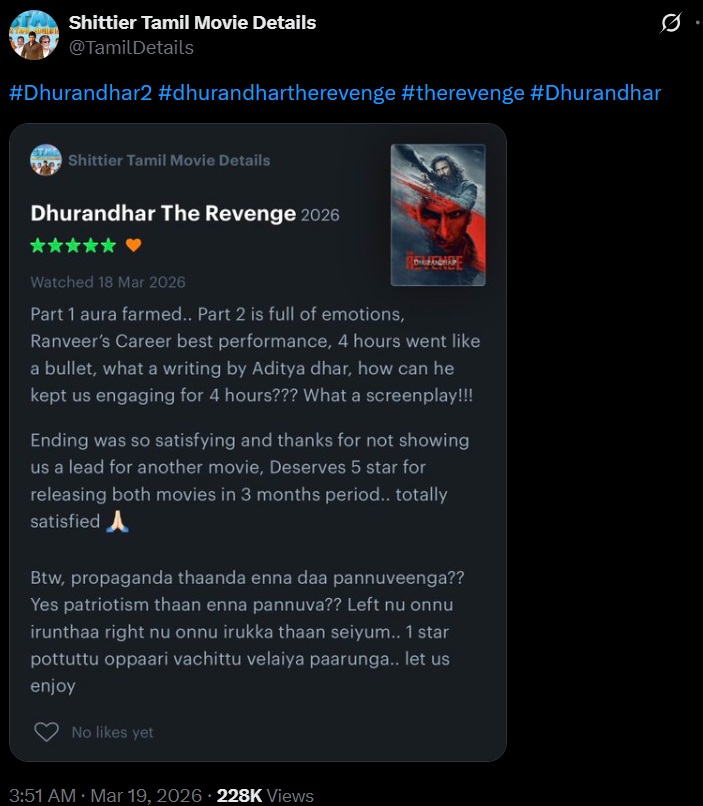
It is noteworthy that audiences were in fact cheering for most of the scenes, that one can never come across in non ‘mass’ films – especially when PM Modi appears on the screen.
That’s the real story here. Tamil audiences are not suddenly “right wing” because they liked Amaran and Dhurandhar, nor are they “ignorant masses” because they rejected Parasakthi. They are simply done subsidising lazy, agenda-driven filmmaking. They have lived through a decade of Kollywood using the theatre as a classroom – anti-this, pro-that, lecture after lecture, with craft as an afterthought. Now they have seen what it feels like when someone spends the same money and time on story, staging and performance instead.
So yes, the Tamil audience is celebrating Amaran and Dhurandhar – not out of blind nationalism, but because those films deliver what Kollywood has been refusing to deliver: story, craft, emotional clarity, respect for the viewer. And it is trashing films like Parasakthi because people are done paying to be lectured and bored in the same sitting.
If Kollywood still pretends this is “confused audience taste” or fan wars, that’s its problem. The viewers have already moved on.
Subscribe to our channels on WhatsApp, Telegram, Instagram and YouTube to get the best stories of the day delivered to you personally.