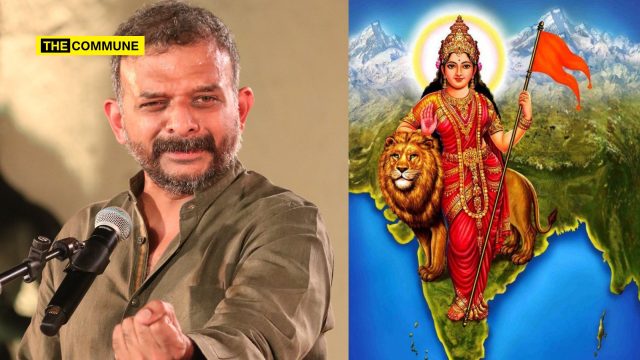
The Supreme Court on Tuesday, 22 September 2026, sought the response of the Union Government on a writ petition filed by woke leftist Carnatic musician TM Krishna challenging the constitutional validity of the 2026 amendment to the Prevention of Insults to National Honour Act, 1971, which extends penal protection to the National Song, Vande Mataram, as reported in LiveLaw.
The petition also challenges directions issued by the Ministry of Home Affairs (MHA) mandating the singing of all six stanzas of Vande Mataram at official functions.
A bench comprising Chief Justice of India Surya Kant, Justice Joymalya Bagchi and Justice V Mohana heard the petition.
During the hearing, the bench orally observed that it was not within the remit of the Court to decide what the “National Song” is. However, the Court said it would examine whether the right of a conscientious objector to not sing it, as recognised in the Supreme Court’s judgment in the “Bijoe Emmanuel” case, is protected.
The bench said it expected the precedent in ‘Bijoe Emmanuel’ to be followed and that a person who does not sing the National Song for religious reasons would not be subjected to penal consequences.
The challenge centres on the last four of the six stanzas of Vande Mataram. Krishna contends that these stanzas contain explicit references to Hindu deities including Durga, Lakshmi and Saraswati and that compelling citizens to sing them amounts to compelled religious and ideological affirmation, contrary to the secular character of the Constitution.
The petition argues that the impugned measures violate the constitutional principle of secularism, which is a basic feature of the Constitution.
Senior Advocate Dr S Muralidhar, appearing for Krishna, submitted that the amendment had not defined what the “National Song” was and that the ambiguity could lead to misuse. He further submitted that the Office Memorandum issued by the MHA had not been gazetted.
Justice Bagchi, at this point, pointed out that the American National Anthem uses the words “In God we Trust”, though the USA is cited as a model of positive secularism.
Solicitor General of India Tushar Mehta then interjected to express disapproval of the petition, saying that “secularism cannot be this narrow”.
Muralidhar pointed out that the amendment had not defined what the “National Song” was.
Justice Bagchi replied that customarily, it had been understood as “Vande Mataram”.
“With the two stanzas,” Muralidhar responded quickly.
The senior counsel added that the understanding regarding “Vande Mataram” had been abruptly changed by the Government through an Office Memorandum. He further submitted that the amendment had been passed hastily without building any national consensus.
The Solicitor General at this point commented that “law making cannot be as per Naxalites idea”.
Muralidhar took strong objection to the “Naxalite” remark and demanded that the Solicitor General withdraw it, saying that such a comment did not behove a law officer.
The Solicitor General, however, maintained that he was referring to those who were not respecting the law-making process.
The Solicitor General also urged the bench not to issue notice on the petition, saying that it would “sensationalise” the issue, and asked the petitioner to serve a copy to him instead.
While asking the Union Government to put in its response, Justice Bagchi said, “Mr. Solicitor, we are not inclined to issue notice. But, we would expect that the law of the land, as declared by this Court in Bijoe Emmanuel, will govern the Act. What is the national song is not in dispute. The declaration of law in Bijoe Emmanuel is not yet questioned. It is for the democratic state to decide what is the national song, whether two stanza or four stanza. But nobody who feels an infraction of Art. 25, 26 rights or a conscientious objector would be subjected to [penal consequences]. It’s not the remit of the court to second-guess what is the national sentiments or aspiration associated with Vande Mataram. It is for the state. It is for a conscientious objector not to decide one or all stanzas, and [State is] not going to subject him to criminal consequences.”
After the hearing was over, Muralidhar again raised his objection to the Solicitor General’s remark and demanded that he retract it.
The Solicitor General refused, saying that he was not apologetic about it.
“I can repeat what I said. One has to go by law. I am not sorry about what I said. I said that is the constitutional way, not what the Naxalite wants. And I am not sorry about it,” the Solicitor General said.
Muralidhar said that the Solicitor General was “playing to the gallery” and that his conduct did not suit a law officer.
The bench did not intervene, except for saying that it was not taking note of the comments.
Challenge To Criminalisation
The petition has been filed under Article 32 and challenges Section 3 of the Prevention of Insults to National Honour Act, 1971, as amended by the Prevention of Insults to National Honour (Amendment) Act, 2026, read with the MHA orders dated January 28, 2026 and July 9, 2026.
The 2026 amendment substituted Section 3 of the 1971 Act to provide that a person who intentionally prevents the singing of the National Anthem or National Song, or causes disturbance to an assembly engaged in such singing, can face imprisonment of up to three years, fine, or both.
Krishna argues that the MHA’s orders, when read with the amended penal provision, go beyond merely prescribing protocol for national functions.
According to the petition, the January 28 and July 9 orders prescribe the complete six-stanza version as the “official version” and provide for its mass singing at specified governmental, ceremonial and cultural occasions.
Where Vande Mataram and Jana Gana Mana are both sung or played, the National Song is to precede the National Anthem.
The plea argues that the combination of these directions with criminal liability effectively compels the rendition of the six-stanza composition.
Krishna specifically contends that the expression “disturbance” in the amended Section 3 is vague and overbroad and could have a chilling effect on scholarly criticism, artistic expression and teaching concerning the historical and textual content of Vande Mataram.
Reliance On ‘Bijoe Emmanuel’
The petitioner places extensive reliance on the Supreme Court’s 1986 judgment in Bijoe Emmanuel v. State of Kerala, where the Court protected schoolchildren who conscientiously declined to sing the National Anthem.
Krishna argues that the principle protecting freedom of conscience recognised in Bijoe Emmanuel applies to his objection to being compelled to render stanzas that invoke Hindu deities.
The petition contends that Article 25(1) protects freedom of conscience and that the genuineness of a conscientious objection, rather than its theological correctness, is the relevant inquiry.
The petition further argues that the amendment violates Article 19(1)(a) by compelling citizens to participate in what it describes as an ideological and devotional ceremony.
TM Krishna Gives ‘Historical’ Reasons For Not Adopting The Full Song
Krishna’s petition refers to the historical context for adopting only the first two stanzas of Vande Mataram.
It states that Vande Mataram was first published as a poem in 1875 and was subsequently incorporated into Bankim Chandra Chattopadhyay’s Anandamath.
According to the petition, the first two stanzas were composed as a standalone song, while the later four were added when the song was incorporated into the novel.
The plea further points to the Indian National Congress’ 1937 decision to limit the singing of Vande Mataram at national gatherings to the first two stanzas following objections from Muslim members over the deity-invoking portions.
Stalwarts of the freedom movement such as Rajendra Prasad, Subhas Chandra Bose, Jawaharlal Nehru and Rabindranath Tagore endorsed this arrangement.
‘Vande Mataram’ Was Never Formally Adopted As National Song, Plea Says
According to the plea, Jana Gana Mana was formally adopted by the Constituent Assembly on January 24, 1950 and is expressly referred to in Article 51A(a), which requires citizens to respect the National Flag and National Anthem.
Vande Mataram, on the other hand, was not formally adopted by the Constituent Assembly as the “National Song”, is not mentioned in Article 51A(a), and was not included within the statutory protection under the 1971 Act for more than five decades.
The petition refers to the statement made by Constituent Assembly President Dr Rajendra Prasad on January 24, 1950 that Vande Mataram would be honoured equally with Jana Gana Mana and have equal status with it.
It argues, however, that this did not disturb the earlier practice of limiting public rendition to the first two stanzas.
Challenge Under Articles 14, 15 And 21
Krishna alleges that the amendment is manifestly arbitrary under Article 14 because it reverses the historical accommodation concerning the use of the later stanzas and imposes criminal consequences without providing an exemption for conscientious objection.
Under Article 15(1), the petition alleges indirect discrimination on the ground of religion, arguing that the references to Hindu deities impose a different burden on the conscience of non-Hindu citizens.
The plea also invokes Article 21, contending that criminalising non-participation or conduct deemed to constitute disturbance disproportionately interferes with personal liberty, dignity and autonomy.
Distinguishes Earlier Supreme Court Challenge
The petition acknowledges that the Supreme Court had earlier declined to entertain a challenge to the January 2026 MHA order in Muhammed Sayeed Noori v. Union of India on March 25, 2026, on the ground that there was no penal sanction prescribed for not singing it.
Krishna contends that the legal position has materially changed following enactment of the 2026 amendment, because the amendment introduced the criminal sanction that was absent when Noori was considered.
Subscribe to our channels on WhatsApp, Telegram, Instagram and YouTube to get the best stories of the day delivered to you personally.