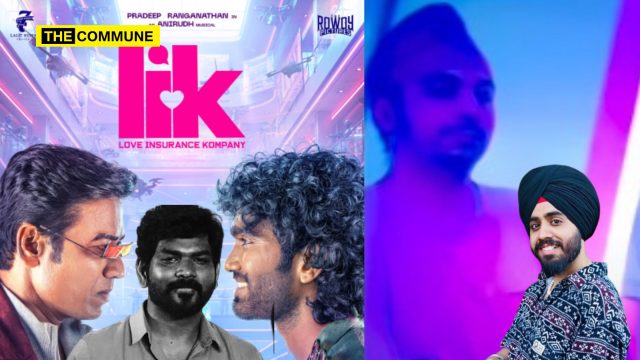
A viral video by Amanjot, a Sikh-Punjabi Instagram influencer known for his Tamil-language content, has sparked fresh conversation around a scene in the recently released Tamil film directed by Nayanthara’s husband Vignesh Shivan – LIK, in which a Singh character’s turban is pulled off during a confrontation sequence, played for laughs in theatres.
The film also features Pradeep Ranganathan who acted in the film Dude which glorified adultery and deranged moral decay.
What the Scene Shows
In the second half of LIK, antagonist SJ Suryah’s character gets into an argument with a staff member. The staff member is portrayed as a Singh character. During the altercation, the character is shoved, falls to the ground, and his turban is pulled off, his hair exposed, before he scrambles to cover himself again. Amanjot says that when this scene played in the theatre, the audience laughed. He and his cousins did not.
“Flat. We watched it and thought – what is this? Why was this done? What is the relevance?” Amanjot said in his video, posted on Instagram. “To show SJ Suryah as powerful? As a villain? They could have hit any other character. Or if they wanted the Singh character, they could have hit him on the face, on the shoulder. Why did they have to touch the turban?”
Why the Turban Is Not a Prop
Amanjot then played a clip from a Punjabi film showing a foreigner being confronted aggressively after touching a Sikh man’s turban to illustrate the gravity of what LIK’s scene had casually dismissed as comedy material.
“You must not touch a Punjabi’s head. That’s the simple take. No matter the place, no matter who the employer is, this is sentiment. This is our identity, our faith, our beliefs as a Punjabi, as a Sardar,” he said.
The dastar, the Sikh turban, is not merely an accessory. It is a deeply sacred article of faith, representing honour, self-respect, and spiritual commitment. Having it forcibly removed is considered one of the gravest humiliations a Sikh person can experience.
“We Are in 2026, Not The 90s”
What makes Amanjot’s critique particularly pointed is his reference to the long history of Sardar stereotyping in Indian cinema and the slow, hard-won progress made in moving away from it.
“We were slowly moving away from those stereotypes, the ‘Balle Balle’, ‘Ae Shawa Shawa’, those typical portrayals. But now they are doing this again, just for the sake of laughter. It’s not funny, brother. It’s not funny,” he said.
His frustration is directed not just at the director, but at the broader filmmaking system. “If you don’t know anything about a community, first learn about them. Then create the scene,” he said, adding a direct appeal: “This is my humble request to all directors and casting directors, if you are casting a Singh character in any Tamil, Hindi, or Malayalam film, please do not cross the line of their beliefs and faith”.
View this post on Instagram
Subscribe to our channels on WhatsApp, Telegram, Instagram and YouTube to get the best stories of the day delivered to you personally.