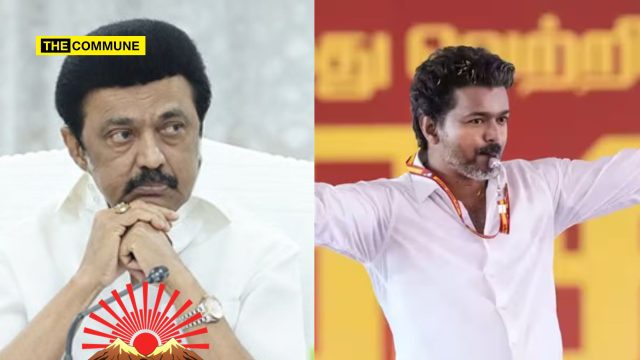
A growing disconnect with grassroots workers, increasing dependence on poll strategy agencies, and a failure to accurately gauge the scale of support for Joseph Vijay and the TVK were among the key reasons identified for the DMK’s defeat in the recent Assembly elections, according to reports submitted by party-appointed review committees, as reported in Times of India.
The findings emerged from 19 committees, each comprising two members, that were constituted on 16 May 2026 to assess the causes behind the party’s electoral setback. The committees reportedly travelled across Tamil Nadu, interacted with party cadres and members of the public, and subsequently submitted their findings to former Chief Minister MK Stalin.
According to committee members, a significant portion of the feedback centered on the rapid rise of the TVK and the growing popularity of its leader among key voter segments. The reports reportedly stated that party cadres had repeatedly warned senior leaders and district secretaries about Vijay’s increasing appeal, particularly among women and young voters in urban areas. However, those warnings were allegedly not taken seriously by the party leadership.
One committee member was quoted as saying that many functionaries at the grassroots level had sensed Vijay’s growing popularity and conveyed their concerns to senior leaders, but the changing political mood was underestimated.
The committees also reportedly highlighted shortcomings in the party’s social media outreach efforts, which were said to have failed to effectively counter the growing influence of the TVK among younger voters.
Among the more surprising observations in the reports was the impact of the Kalaignar Magalir Urimai Thittam. While the scheme benefited lakhs of women across the state, committee members reportedly found that a considerable number of women who had applied for the scheme but were not selected had developed resentment towards the DMK.
A senior party leader reportedly informed the committees that those excluded from the scheme despite applying had turned against the party. The leader further claimed that nearly 40 per cent of women who benefited from the scheme had ultimately not voted for the DMK.
The reports also pointed to a broader disconnect between the party organisation and its support base. Committee members reportedly stated that while the government’s functioning had become more transparent and bureaucrat-driven, the party itself had lost touch with ordinary people.
According to the findings, the DMK’s governance-focused approach had weakened its grassroots organisational network. Welfare programmes were reportedly projected primarily as government initiatives administered by officials, reducing the visibility and influence of local party functionaries.
One panel member reportedly stated that recommendations made by local party workers regarding beneficiaries under various welfare schemes were often overlooked. As a result, the party was unable to build a loyal voter base despite implementing welfare measures on a large scale.
Another recurring criticism raised in the reports concerned the growing dependence on both external and in-house agencies to assess public opinion and oversee the implementation of welfare schemes. Several cadres reportedly expressed frustration that party workers who interacted with voters daily were no longer being trusted or consulted adequately.
Committee members also reported concerns regarding the growing influence of individuals close to Stalin and their direct involvement in party affairs. According to feedback gathered from cadres, such interventions had reportedly created friction in certain regions and contributed to organisational dissatisfaction.
Sources said Stalin assured committee members that the findings would be carefully examined and that appropriate steps would be taken to address the shortcomings and organisational issues highlighted in the reports.
This is what happens when bureaucrats, instead of political leaders, are permitted to dominate both the party and the government.
The officials who once wielded immense influence over key government decisions have smoothly transitioned into comfortable roles in the new… pic.twitter.com/3TIDVkWEhL
— Savukku Shankar (@SavukkuOfficial) June 12, 2026
Subscribe to our channels on WhatsApp, Telegram, Instagram and YouTube to get the best stories of the day delivered to you personally.