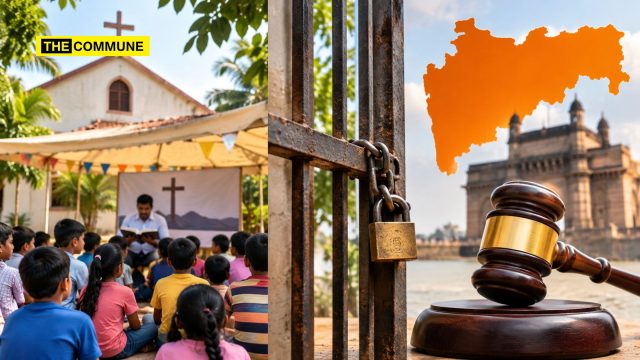
Maharashtra’s new anti-conversion law appears to be having a deterrent effect on church activities that bring children from different religious backgrounds into Christian religious programmes. Several churches have reportedly cancelled or restricted their Vacation Bible School camps this Diwali, with some now allowing only Christian children to participate, as reported in Premier Christian News.
A report by The Indian Express says the restrictions follow the Maharashtra Freedom of Religion Act, which came into force on 28 August. The law prohibits religious conversions through force, fraud, coercion or broadly defined forms of “allurement”. It also places the burden of proving that a conversion was voluntary on those facilitating it.
Vacation Bible School programmes are typically organised during school holidays for children aged between five and 15. They feature Bible stories, songs, games and other religious activities, and have traditionally been attended by children from different religious backgrounds. However, amid the new legal provisions, some churches have decided to exclude non-Christian children, while others have called off their camps altogether.
The change reflects growing caution among church organisers over activities that could invite allegations of religious inducement or unlawful conversion. Churches that are proceeding with the programmes are reportedly introducing additional safeguards, including registration procedures, banners, CCTV cameras and participation fees of ₹50 or ₹100. These measures are intended to establish that parents have voluntarily sent their children to the camps.
The law’s impact comes against the backdrop of repeated disruptions at Christian prayer meetings around Mumbai. Members of Hindu organisations such as Bajrang Dal and Vishwa Hindu Parishad have routinely confronted gatherings, alleging that conversions were taking place.
According to The Indian Express, five such incidents between April and July resulted in nine police complaints, seven of which were filed against organisers and worshippers.
Under the Maharashtra law, conversion through force, fraud, coercion or allurement can attract imprisonment of up to seven years. The offence is non-bailable. Those intending to change their religion are also required to provide 60 days’ prior notice to the authorities. The law further requires those facilitating a conversion to establish that it was voluntary.
Chief Minister Devendra Fadnavis has maintained that the legislation is not directed against any particular religion, but is intended to prevent conversions through force, fraud or inducement.
Maharashtra is among at least 12 Indian states that have enacted laws regulating religious conversions. Supporters argue that such legislation protects vulnerable individuals, particularly in rural and tribal communities, from coercion and exploitation.
The US Commission on International Religious Freedom, however, has raised concerns that these laws have disproportionately affected Christians and Muslims, particularly because terms such as “allurement” are open to broad interpretation. A challenge to the constitutionality of anti-conversion laws has also been pending before the Supreme Court since 2020.
The restrictions on Bible camps illustrate how the new law is prompting churches to reconsider activities involving children from other faiths. While the legislation does not prohibit religious instruction or voluntary religious participation, its provisions have made organisers more cautious about programmes that could attract allegations of inducement or conversion.
Subscribe to our channels on WhatsApp, Telegram, Instagram and YouTube to get the best stories of the day delivered to you personally.