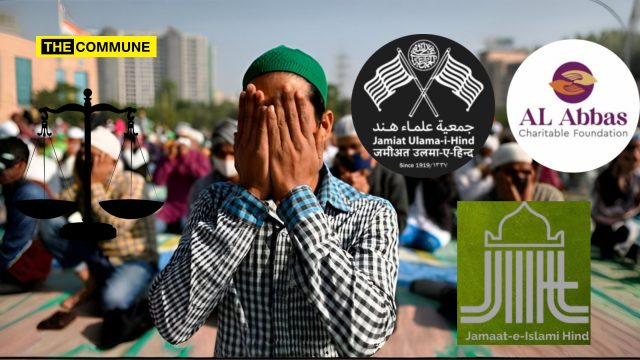
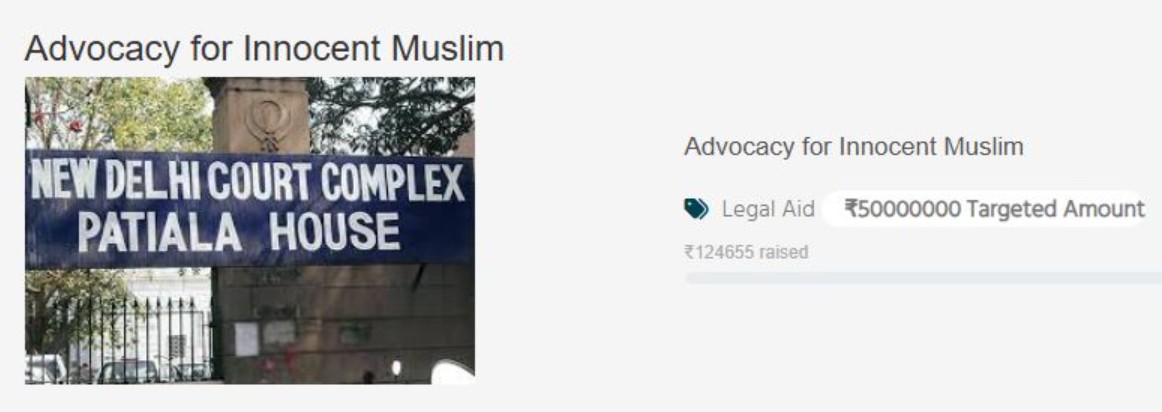
In India, it is striking to see how the Muslim community, considered a “minority”, has access to what may be one of the most well-structured and far-reaching legal aid ecosystems in the world. Whether it’s a person accused in a high-profile bomb blast case or someone entangled in a minor legal issue, legal assistance is readily available completely free of cost through a deeply rooted and organized support system.
Let us take a look at a few examples.
21 July 2025: The Bombay High Court acquitted all 12 individuals convicted in the 2006 Mumbai train bombings after they spent nearly 20 years behind bars. The court sharply criticized the reliance on questionable witnesses and allegedly fabricated evidence.
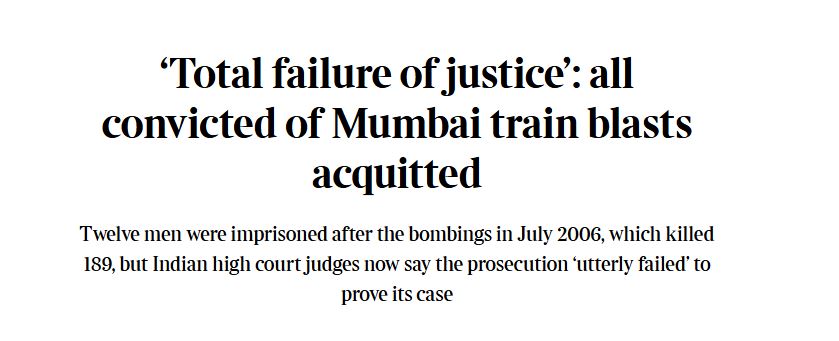
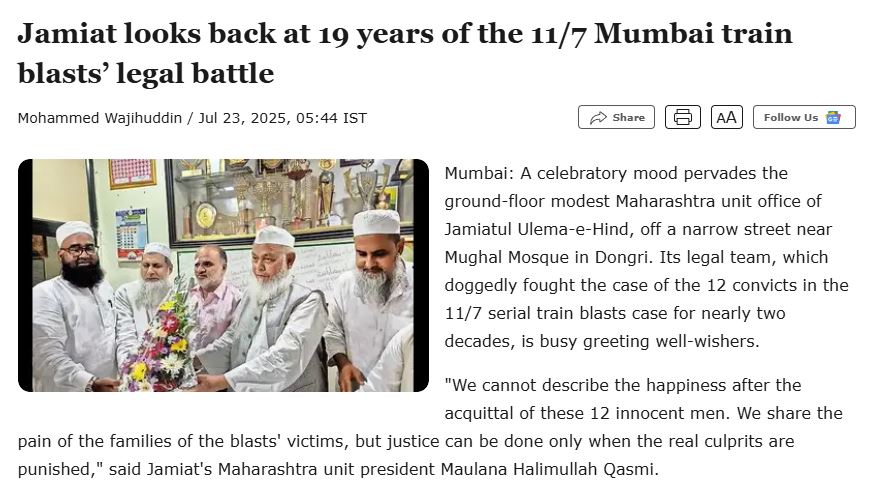
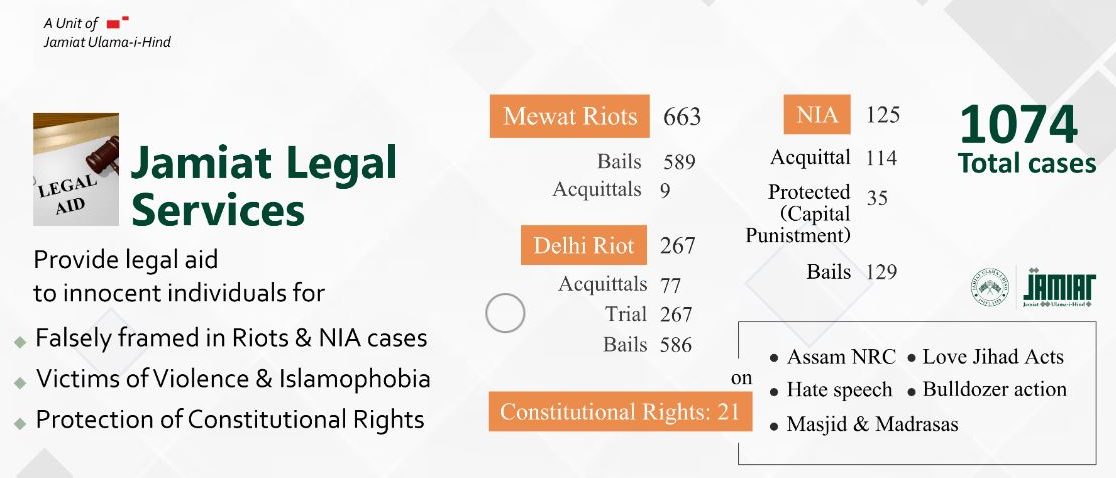
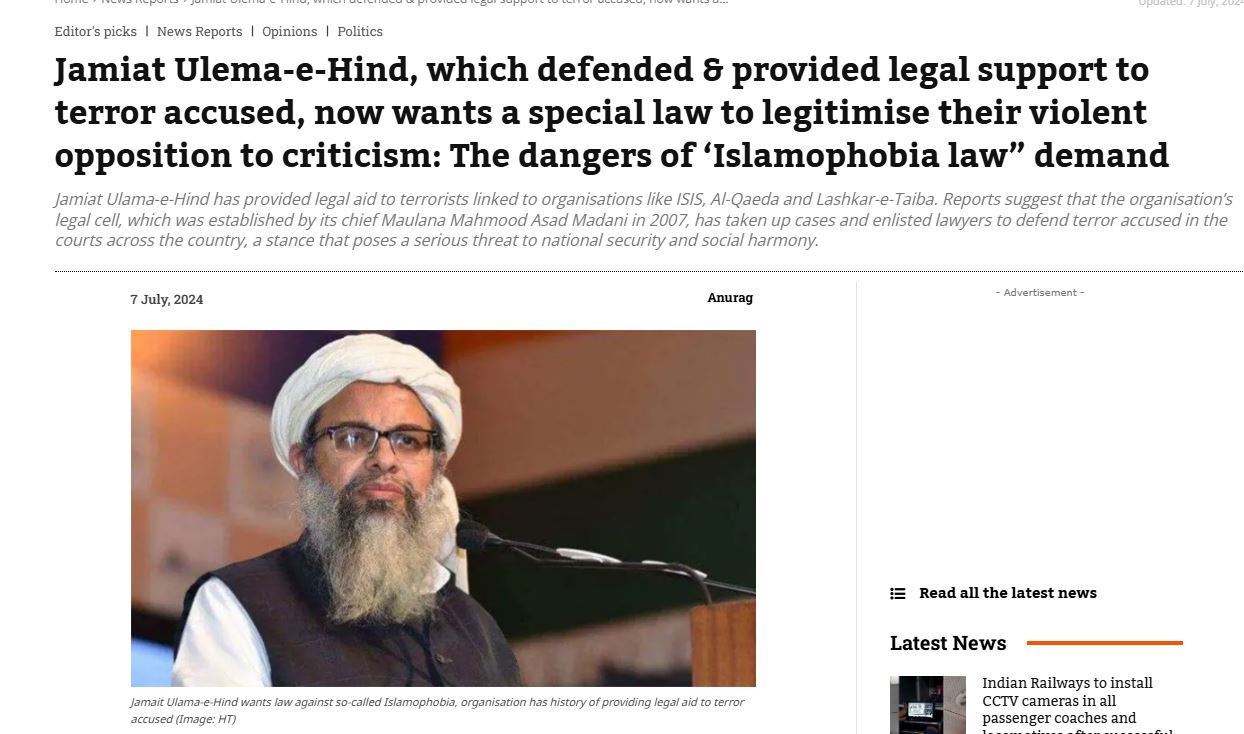
In both landmark cases, Jamiat Ulama-e-Hind (JUH) played a key legal role. Following the Jaipur acquittals, JUH publicly praised the judgment, while its Maharashtra unit reflected on a decades-long legal struggle in the Mumbai case. The organization reported that since the 2000s, it has helped secure over 306 acquittals and 227 bail orders for Muslim accused.
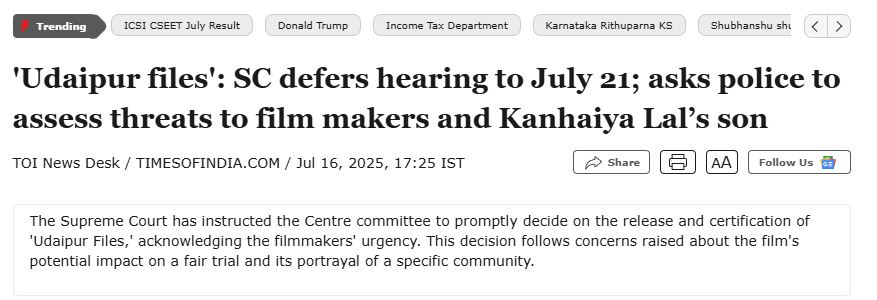
10 July 2025: The Delhi High Court, in a case influenced by JUH president Maulana Arshad Madani, placed an interim stay on the release of the film Udaipur Files: Kanhaiya Lal Tailor Murder, citing concerns that it could disturb communal harmony. The move came just one day before the film’s release.
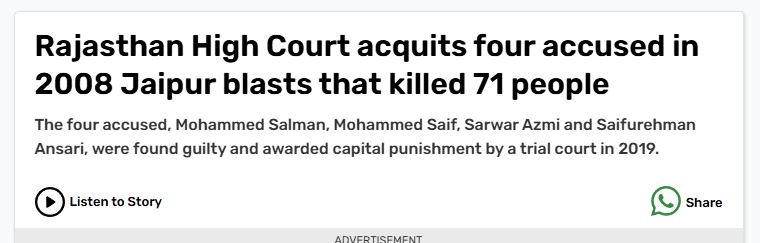
March 2023: Similarly, the Rajasthan High Court overturned the convictions of four individuals who had been on death row for the 2008 Jaipur serial bombings a tragedy that claimed 71 lives and injured 180. The court’s decision sparked widespread debate over flawed investigations and the broader implications of justice delayed.
Inside the Muslim Legal Aid Network: Key Organizations
1. Jamiat Ulama-e-Hind (JUH)
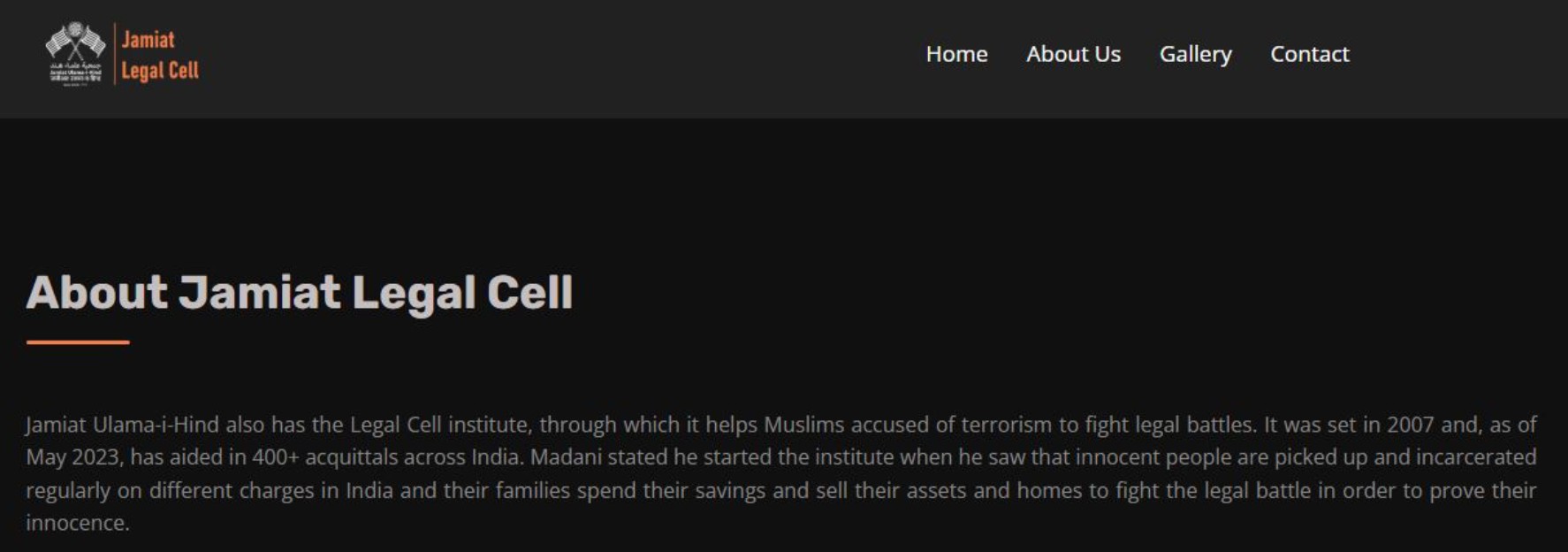
Founded in 1919 and split into factions in 2008, the main wing is currently led by Arshad Madani. JUH’s legal wing, launched in 2007, is dedicated to defending Muslims in terrorism-related cases. By 2019, it had helped achieve 192 acquittals nationwide.
Notable Figures:
- Gulzar Azmi: Played a pivotal role in organizing legal teams across Indian states and guided over 500 accused, including 75 who were facing the death penalty.
- Shahid Azmi: A prominent defense lawyer known for securing high-profile acquittals in cases like the 2002 Ghatkopar blasts, the 7/11 Mumbai train blasts, and the Malegaon case. He worked closely with JUH until his assassination in 2010.
Strengths:
- Nationwide network of legal teams
- Active legal cells in nearly every Indian state
- Annual scholarships for 25–30 law students
- Training programs for aspiring Muslim lawyers to serve the community post-graduation
Funding Sources:
- Halal certification fees: A major revenue stream, as JUH issues certification to manufacturers and uses the proceeds to fund legal aid
- Zakat (charity): Community-donated religious funds are also a core support channel
2. Jamaat-e-Islami Hind (JIH)
While JUH tackles large and complex terror cases, JIH manages grassroots legal issues ranging from FIRs to public interest litigations. It’s often described as having a presence in almost every municipal ward in India.

For any Muslim individual facing legal trouble, local JIH offices offer immediate, cost-free legal support upon submission of a simple form.
Funding:
- Member contributions
- Zakat donations
- Other localized community-driven sources
3. Al Abbas Charitable Foundation
Headed by advocate Abid Abbas Sayyed, this organization focuses on legal aid in areas like communal violence, interfaith marriage cases, and public rights. In addition to legal assistance, it also works in education and healthcare. Funding comes from a mix of donations, zakat, and charitable grants.
Delhi Riots Context:
In the aftermath of the 2020 Delhi riots, most of the Muslim accused managed to secure bail, whereas many Hindu accused remain incarcerated. Though courts faced backlash, these outcomes were largely shaped by strong legal advocacy and well-prepared defense a testament to the efficacy of the Muslim legal aid structure.
While critics argue that this system tilts the legal balance and manipulates high-profile cases, supporters view it as an essential tool to protect innocent Muslims from wrongful prosecution. What remains clear is that India’s Muslim legal aid ecosystem has become an increasingly powerful and influential force both in courtrooms and within the broader community. Its reach, resources, and legal victories continue to expand.
(This article is based on an X Thread By The Chronology)
Subscribe to our channels on Telegram, WhatsApp, and Instagram and get the best stories of the day delivered to you personally.