
Home Blog Page 962

‘Rāmāyaṇaṁ’ by Dushyanth Sridhar – A Critical Review
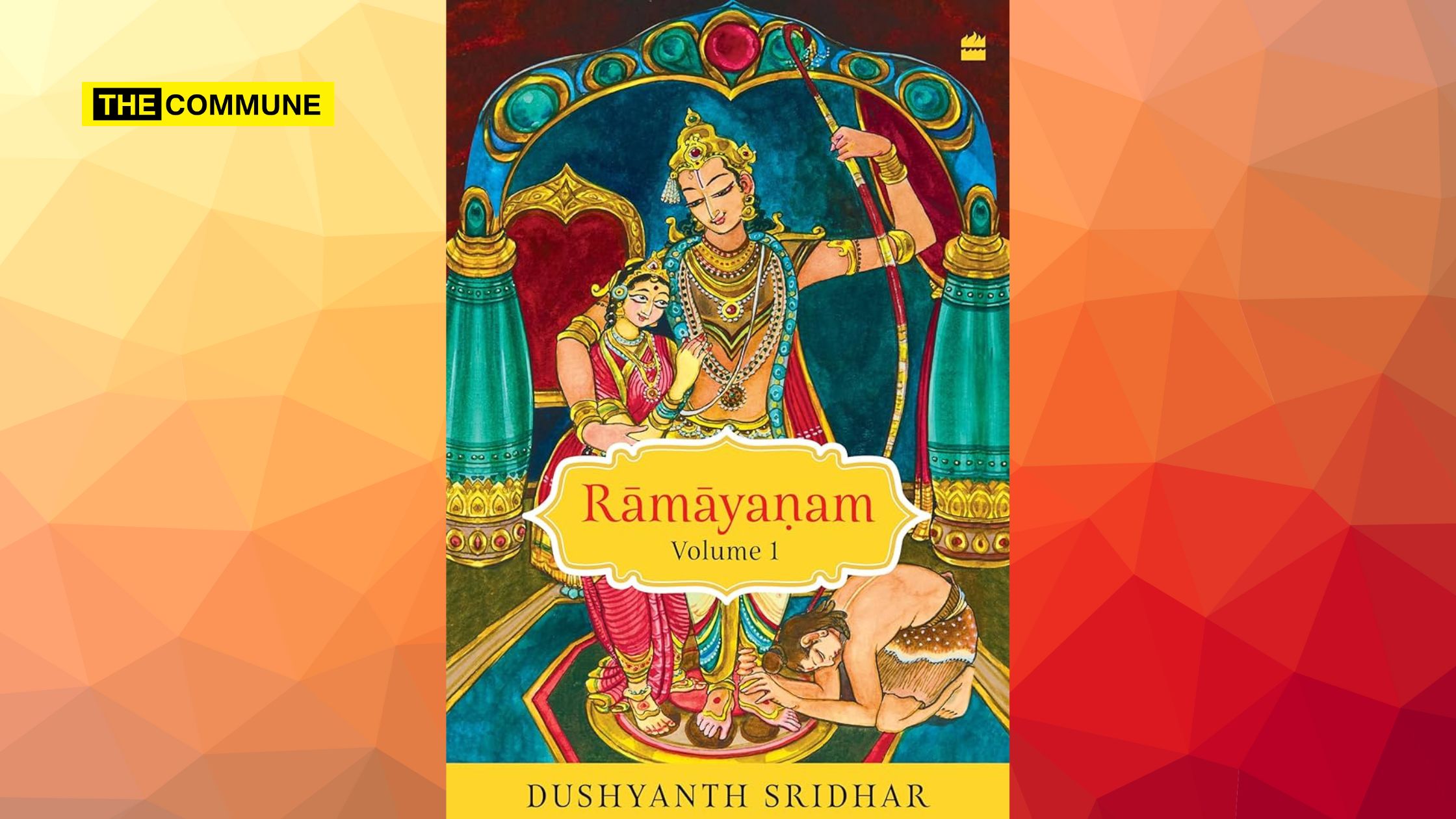
Cover page of Dushyanth Sridhar's Rāmāyaṇaṁ
Reviewing Rāmāyaṇaṁ, the much-awaited retelling by Dushyanth Sridhar.

As a believer in the timeless wisdom of the Ramayana, I recently had the pleasure of getting a copy of ‘Rāmāyaṇaṁ – Volume 1’, the latest literary endeavour by celebrated speaker Dushyanth Sridhar. This much-anticipated book has generated significant buzz since its announcement, and I was eager to delve into its pages and share my thoughts on this insightful work.

Bharatha, the land of Sanatana Dharma, worships the itihasas equal to the Paramatma, for it provides the path towards Dharma. From time immemorial, the Ramayana, or Rāmāyaṇaṁ as it is called in some languages, has held a very high place in the hearts and temples of this divine land. The legendary life of Sri Rama inspires generations even today with lessons on life, Satya, and Dharma. Sri Rama’s Prāṇa Pratiṣṭhā has reinvigorated this blessed land and infused new energy into the general populace.

In the preface of Dushyanth Sridhar’s ‘Rāmāyaṇaṁ’, the author quotes multiple references like Adhyatama, Adbhuta, Ananda Ramayana, various Puranas, and commentaries from various Acharyas. The list cited in the preface is quite exhaustive and overwhelming. However, the author does make a specific claim. Quoting from the book, “Interesting aspects of the above works have been incorporated in this book in a way that there is no digression from Valmiki’s text”. This review will be based on this tenet, i.e. what is the augmented information compared to the original Valmiki Ramayana, and how does it aid the overall reading experience, especially of an English reader with no background on Itihasas and Puranas?

‘Rāmāyaṇaṁ’ starts from the Uttara Kanda, where Sita is enjoying her pregnancy with Sri Rama just before the catastrophe occurs in the form of her exile into the woods. Valmiki’s background story is also provided to set the context for the following narrative. Ramayana is shown to be composed by Valmiki in consultation or discussion with Narada. The dialogue between Valmiki and Narada is a recurring feature of this book. Many portions of the book are explained in dialogues. The book describes the events leading up to the birth of Sri Rama and his illustrious brothers, along with a background story of Shanta & Rishyashringa. The feats of Sri Rama and Lakshmana during his time with Vishwamitra, followed by Sita – Sri Rama vivaha, form the book’s next part. The book captures the events leading up to his exile, Dasaratha’s death, and ends with Bharatha carrying ‘padukas’ back to Ayodhya. From a classical point of view, it captures the complete essence of Bala Kanda and Ayodhya Kanda, along with a backdrop story from Uttara Kanda.

In the following few sections, I try to capture the book’s standout features and underwhelming aspects.

Standout Features in Rāmāyaṇaṁ

From the onset, there are some standout features of the book. The author has consciously utilised Samskruta words like Rakṣaka, Candra, Candana, etc. This makes the reading much more authentic, though it may differ slightly for those unfamiliar with IAST terminologies. However, it should be noted that many terminologies are quoted without a translation or meaning, leaving the reader in a conundrum. For example, the word “prappati” is used extensively throughout the book. However, the meaning or definition of this word isn’t explained for the reader to comprehend the overall significance or establish the context.

While the use of Samskruta words is excellent, the proximity of a few words like rakṣaka and rākṣasa could easily be missed, if not read closely. Perhaps the anglicised version or the meanings may have helped better in these situations.

The illustrations by Keshav are masterful and a delight to look at. In fact, they are one of the better parts of this book. The inscriptions and illustrations of carvings from temples are yet other standouts. This department’s research depth is exemplary and needs to be lauded. The reading experience could have been augmented by translating the Samskruta verses from these inscriptions. The missing translations could be a put-off to those not familiar with Samskruta.

Shortcomings in Rāmāyaṇaṁ

I had very high expectations about this book, but unfortunately, there were a few shortcomings. Initially, I had planned to provide a detailed explanation for each of the specific instances. Still, I fear that the same would make this review a very lengthy one and perhaps deter the reader from reading. Possibly, it merits a separate specific discussion where the focus would primarily be on the reviewer’s differences with the author’s version. However, I will capture the most critical, underwhelming aspects of the book.

Ramayana Dates

There has been a fair bit of controversy in the social media world about the dates of Ramayana being set around 5100 BC. Skanda Purana – Prabhasa Kanda clearly outlines that Sri Rama was born in the 24th Chatur Yuga, which would put the time quite a long way back and not anywhere close to 5100 BC.

caturvinśē yugē rāmō vasiṣṭhēna purōdhasā
saptamō rāvaṇasyārthē jajñē daśarathātmajaḥ

I feel the book’s divinity wouldn’t have been lost if the dates were not included. However, by introducing the dates, unnecessary confusion and diversion of attention are created in the readers’ minds, which certainly should have been avoided.

Divergences From Valmiki Ramayana

The author has introduced many stories and anecdotes from Srimad Bhagavatha Purana as part of the narrative/dialogue between various epic characters in Rāmāyaṇaṁ. These stories are not part of the traditional telling of Valmiki Ramayana, and hence, the book would have benefitted from references that inspired these additions to the flow. Many stories of the original Valmiki Ramayana are condensed into the flow while making space for additions from other sources like Bhagavatham.

In one of the earlier chapters, it is quoted that Sri Rama implored Brahma to capture his biography to be written in verse. I presume this could be coming from Adhyatma Ramayana, but the author doesn’t clarify the source of such differences. Such instances leave the reader in a state of confusion, which I believe is a downfall of this book.

In the chapter on “Vishwamitra’s tutelage”, the author quotes Vishwamitra waking up Sri Rama by saying that Kausalya is fortunate to have a son as illustrious as Rama and ordains him to perform the daily duties. However, a very critical point was missed in this context. The verse from Bala Kanda, sarga 23 is as below:

कौसल्या सुप्रजा राम पूर्वा संध्या प्रवर्तते |
उत्तिष्ठ नरशार्दूल कर्तव्यं दैवमाह्निकम् ||

This verse is the opening line of the very famous Sri Venkateshwara Suprabhatham, a common morning prayer in Hindu households. I am quite surprised and shocked that the author missed adding this reference.

Sampradaya Views

In the narrative, there are many references where the author tries to promulgate the views of a specific sampradaya, with deft statements like Shiva, a Bhakta of Narayana, or Shiva realising Narayana through his inner eye. When the author claimed that this version of Ramayana is close to the original, it should have been written equanimous with no biases or specific views of a particular sampradaya. If this was the objective, the author should have called out the same. By introducing these nuanced references, the author may diverge from his stated goals. One shouldn’t forget the timeless wisdom of Yajurveda, i.e. Shiva and Vishnu are the same, and those who try to find differences don’t truly understand them.

शिवाय विष्णु रूपाय शिव रूपाय विष्णवे |
शिवस्य हृदयं विष्णुं विष्णोश्च हृदयं शिवः ||
यथा शिवमयो विष्णुरेवं विष्णुमयः शिवः |
यथाsन्तरम् न पश्यामि तथा में स्वस्तिरायुषि|
यथाsन्तरं न भेदा: स्यु: शिवराघवयोस्तथा||

Language of Rāmāyaṇaṁ

Our itihasas often describe unconventional births and procreation methods among kings and Rsis. These practices of yore require delicate phrasing to maintain their dignity. Unfortunately, the author’s choice of words in certain instances is less than ideal.

For example, when describing Kalmashapada’s inability to have a son and his request to Vasishta, the author uses rather a blunt language, stating, “Vasishta impregnated Madayanti”. This story could have been dealt with better narration when compared with other books on the same topic. This can significantly affect the reader’s experience.

The author’s tendency to explicitly describe intimate acts is also somewhat surprising. Although coitus is undeniably an integral part of human evolution, using overly direct terminology such as “ejaculation of retas” can be off-putting to some readers. A more nuanced approach would have been more appropriate for discussing these sensitive topics.

Ambiguous References

Throughout the book, there are many instances where Rama and Sita are made self-aware or identified with Narayana and Lakshmi. This is extended to the brothers of Rama, who are identified with Sudarshana, Adi Sesha, and Shanku. I presume these references are mainly derived from Adhyatama Ramayana, where Sri Rama’s divinity is established, and Sri Rama is self-aware.

Towards the end of the book, i.e. culminating parts of Ayodhya Kanda where Rama counters the philosophical tenets of Jabali, the author introduces the reader to Buddha and Baudhas. In Ayodhya Kanda, Sarga 109, various instances of the terms “Buddhyaya” or “Buddhim” are present, which pertain to intelligence or somewhat misleading aspects of the same. However, it was a bit shocking to read the concept of Buddha in the flow of Ramayana. Perhaps the author could have included references from where these sections are derived.

Possible Political Inclinations?

If one looks at the overall construct of the book, one can’t help but observe a recurring pattern throughout the book. Most of the inscriptions quoted are from Tamil Nadu. The verses quoted from inscriptions are also from Tamil Nadu. There are multiple references to Dravida desha or Dravidian women throughout the book. The pinnacle of this undercurrent comes in the context of Gajendra Moksha, where the author establishes the story of Rsi Agastya but extends the same to the establishment of Tamil language, Dravida desha being called Tamilakam and the grammatical treatise, Agattiyam.

While the author can establish their views and extend the narrative as deemed fit, the above doesn’t augur in the context of the stated objective of being an amplified version of Valmiki Ramayana. These casual references inserted into the narrative reeks of a more political motive of establishing the deep connection of Tamil Nadu with Ramayanam. While this is a noble objective, the same should have been stated clearly in the preface rather than the nuanced positioning within the epic.

Conclusion

Rāmāyaṇaṁ had set very high expectations based on the high-profile launch and the author’s celebrity status. The divergences could have been explained better with adequate and informative references.

References:
Srimad Valmiki Ramayana – Gita Press
The Valmiki Ramayana (Critical Edition) – Bibek Debroy
http://valmikiramayan.pcriot.com/
Srimad Bhagwatham – Gita Press
Sanskrit Ramayana other than Valmiki’s – Dr. V. Raghavan
The Ramayana in Classical Sanskrit & Prakrt Mahakavya Literature – Dr. V. Raghavan
Skanda Purana – Sri Jayachamarajendra Grantaratnamala series

Gee Vee is an engineer and avid fan of itihasas, puranas and books.

Response to the review from Dushyanth Sridhar is as below:

On Ramayana Dates

The paragraph about the Ramayana dates that the reviewer has written. As such, I have not discussed anything about the yugas, the duration of every yuga, Chaturyuga, etc in the text of my book, nowhere it has been discussed. Nor have I criticized the version of the Puranas or the Itihasas and upheld the research Jayashree Saranathan has done research which is much better than the Puranas. I have quoted Jayashree’s name stating she is the one who has given the dates. Her dates have been mentioned in the footnotes, that’s all. The concept of a Chaturyuga especially the number of years 43 lakh 20,000 years being the Chaturyuga, the 24th Chaturyuga where the Ramayana happened is different.

All this is not found in Valmiki Ramayanam itself. From Bala Kandam to Uttara Kandam, there is no mention of it. It is found in a Purana and between itihasas and Puranas, itihasas are given more respect than the Puranas. When I say more respect, more authentic because they are regarded as direct history or recording. So nowhere in the Ramayanam itself, there is a discussion of the 24th Chaturyuga, where the Chatur Yuga being 43 lakh 20,000 years, nothing of that sort, it comes only in the Purana. I have not analyzed the dates or anything of that sort. In fact, in one of the paragraphs within the text of the book, I mentioned that I think it’s Lakshmana vakyam towards Rama, Rama now we are living in the times of Treta, but your administration makes me feel that there is more than Dharma in it like the Krita Yuga. So I’ve clearly mentioned this as Treta, this as Krita, and all of that in the text. Because I’ve mentioned clearly that we are living during the times of Treta Yuga, Rama, but you make us feel as if we are living in the times of Krita Yoga, because this has been extracted from a line of Vedanta Deshika’s Raghuveera Gadyam which says “Tretayuga pravarthitha Karta yuga vritthantha.”

On Venkatesa Suprabhatam verse

With respect to the verse “Kausalya Supraja Ramapurava Sandhya Pravathathe”, this is a verse from Valmiki Ramayana where Vishwamitra wakes up Rama in the early hours of the morning. So the reviewer asks why didn’t I make reference to Venkatesha Suprabhatam. There is no need. The Venkatesha Suprabhatam of the 14th century where Prativaadhi Bhayangara Mannan imports the verse from Valmiki Ramayana – Kausalya Supraja Rama and from the next verse only he starts composing which is “Uttishtottiṣṭha gōvinda uttiṣṭha garuḍadhvaja”. So, I don’t think there is any need to add the reference of Venkatesha Suprabhatam anywhere in the book, because I don’t pick up any verse from Venkatesha Suprabhatam. This verse is from Valmiki Ramayana. And the comment whatever I’ve written is explaining those lines is from the commentator Periyavachan Pillai’s commentary of the 13th century and Govinda Raja’s commentary of the Bhushana.

Rama and Sita as Narayana and Mahalakshmi

The original Valmiki Ramayanam has six commentaries and one of the largest of the six and probably the grandest is Govinda Raja’s commentary called Bhushana. Nagesha Bhatta’s commentary Thilaka is good but it is not as big and as deep as Govinda Raja’s. So there, Govinda Raja makes very clear references to Rama as the avatar of Narayana. Narayana akhilaheya pratyaneekatharaha samastha kalyana gunatmakaha, jagatchakshuhu, So he calls him the one who controls all the functions of the world, the one who is the Antaryami or all Devatas. So I’ve used that particular line stating that Narayana who is the Antaryami of all, thereby even when Shiva’s made reference, I have used that. So it is conforming to the commentary of Govinda Raja.

Within Valmiki’s original Ramayanam itself (Yuddha Kandam), there are multiple open and hidden references to Rama and Sita as Lakshmi and Narayana. When Mandodari praises Rama,

व्यक्तमेष महायोगी परमात्मा सनातनः |

अनादिमध्यनिधनो महतः परमो महान् ||

तमसः परमो धाता शङ्खचक्रगदाधरः |

श्रीवत्सवक्षा नित्यश्रीरजय्यः शाश्वतो ध्रुवः ||

She says that I see you as Paramatma holding Shanka Chakra as Narayana who has got Mahalakshmi on his chest. And when looking at Jatayu, he says “Gachcha lokaanuktamaan”. I grant you Moksham, go to that place from which there is no return Jatayu, which is Mokshapradattvam. So, all these have been taken into verses by Kuresha in the 11th century in his work called Atimaanushasthavam where he says,
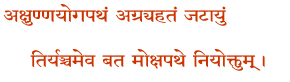
He clearly talks about the Moksha granting status and calls Rama as Narayana. So Valmiki in many instances, has given subtle references to their Parathvam.

Valmiki Ramayana inspiration

I have mentioned in the book flap in the front blurb as well as in the preface that I have completely been inspired by Valmiki his commentators, and many other works, and I had to use that little right of being the author of this book, to use some creativity to stitch those ends. 

Dravida/Tamil

Coming to the word Dravida Draavida, please note that in Ayodhya Kandam, Aranya Kandam also, when Lakshmana sees a branch full of flowers, Rama refers to them and states these are carrying so many flowers, like the women from the south of India (Dakshinayaam), who have flowers on their heads. So, there is a clear reference to the South Indian culture.

Gajendra Moksham Reference

This instance involves Agastya who was in the south of India, and Bhagavatham, we have a clear reference that it happened by the banks of river Tamirabharani. The word Dravida comes in Bhagavatham as well (Utpanna dravidesaaham) and Vedanta Desika has written Dramidopanishad Tat Parya Ratnavali. So Dravida Shishu says Adishankara. So the word Dravida Dramila Draavida has been in vogue in the Samskruta literature.

Even in Ramayanam, Sindhudouveeraaha Draavidaha, I remember this verse where the word Draavida comes. So, this word has been there. The word Tamizh may not explicitly occur in any of the granthas because that is the name given locally to this language. But I had to introduce that because in Sundarakandam when Hanuman says, “Instead of Samskrutham, I will talk to her in a Madura Basha”, many of the Acharyas in the south of India interpret that to be Tamizh. So, Tamizh must have existed then. And also Tamizh must have been a language completely soaked in Bhakti. Because Bhagavatam says “Utpanna dravidesaaham”, Bhakti grew and was born in the state of Dravida, which means where Tamizh is spoken and around that period Tamizh must have also come up.

Subscribe to our channels on TelegramWhatsApp, and Instagram and get the best stories of the day delivered to you personally.
Subscribe to our channels on TelegramWhatsApp, and Instagram and get the best stories of the day delivered to you personally.
TNM’s Dhanya Rajendran Glorifies Paedophile As “PhD Scholar”

TNM's Dhanya Rajendran extolls convicted paedophile.
TNM tried to humanize a convicted paedophile.

The propaganda efforts of The News Minute (TNM), a digital news outlet, and its journalists for misleading narrative-building in Tamil Nadu seem to know no bounds, even if it involves humanizing a convicted paedophile. In a classic display of opportunism, Dhanya Rajendran, the Editor-in-Chief of TNM, glorified a convicted paedophile or Child Sexual Abuser (CSA) who possessed Child sexual abuse material (CSAM) as a “PhD Scholar” and “Organic Farmer,” presenting a highly embellished image, as though the abuser were an activist fighting for a cause.

Dhanya Rajendran, on her official X account, glorified the paedophile as “A 36-year-old PhD scholar and an organic farmer from Thanjavur was sentenced to life for child sexual assault & distributing CSAM.

But that’s not all. TNM also held responsible Google and the dating app ‘Grindr’ for reporting the possession of CSAM and tipping off the CBI in India. This shameful false attribution of crime and misleading propaganda misrepresents the case’s timeline and facts. While Google indeed has the technology to flag such issues, the paedophile was already under the radar of the CBI.

CBI Investigations to Combat Child Sexual Abuse

Since 2022, the CBI has already contributed to Interpol’s ICSE database and carried out significant operations like Operation CARBON and Operation MEGHCHAKRA to combat online child sexual exploitation. The CBI’s investigation, which traced the CSAM to Thanjavur District, was part of this broader effort. The CBI had accessed the ICSE database, which India had recently joined, and conducted searches that uncovered incriminating electronic evidence at the accused man’s premises.

However, TNM, which is known to be a fervent leftist and Dravidianist propaganda outlet, has peddled this news as if an “organic farmer” and “PhD scholar” was arrested. In this case, they did not find the minor victims abused by the paedophile worthy of justice

Who Is Child Sexual Abuser/Paedophile Victor James Raja?

Victor James Raja (35), hailing from Thanjavur district, has been sentenced to life imprisonment by a special court under the POCSO Act for sexually assaulting children and sharing child pornography online.

Victor James Raja, who hails from Poondi Thoppu, has reportedly completed his M.Com and pursued a PhD in ecotourism. In a video published by Pasumai Vikatan of the Vikatan Group, they described him as afarmerwho creates awareness about organic farming while pursuing his doctorate.

According to reports, Victor forced minor boys and girls from his place to perform sexual acts and recorded the same. Raja allegedly engaged in regular sexual exploitation of boys and girls between the ages of five and eighteen for approximately two years. Penetrative sexual assaults, digital recordings of sexual abuse, criminal intimidation of minor victims, and pressuring and inciting minor victims to engage in sexual activity with both the accused and other minor victims were among the acts of sexual exploitation. Additionally, the accused was using the kids (victims) to record porn. 

Investigations into the case

The Interpol’s child sexual exploitation database contained several items related to child sexual abuse, including pictures and videos. The officials identified Victor James Raja through technical and forensic analysis. On 7 March 2023, they filed a case against him under the Information Technology Act of 2000 and the POCSO Act of 2012. The date of his arrest was 16 March 2023.

For sexual assault, penetrative sexual assault, aggravated penetrative sexual assault, using the child for pornographic purposes and abetment under the POSCO Act, rape of girls under the age of twelve, criminal intimidation, and publishing or transmitting of material depicting children in sexually explicit act in electronic form under the Information Technology Act, the CBI filed a chargesheet against Raja on 13 May 2023, before the Special Court for Exclusive Trial of Cases under POCSO Act, Thanjavur.

During the trial, officials questioned 34 witnesses and reviewed numerous documents and other evidence. Judge Sundarraj investigated the case and sentenced Victor James Raja to life imprisonment along with a fine of ₹6.54 lakh and suggested the government provide relief of ₹4 lakh each to the three affected boys and girls.

Subscribe to our channels on TelegramWhatsApp, and Instagram and get the best stories of the day delivered to you personally. 
Faith Or Logic? The Debate Over Ramayana Date

Don’t argue with an idiot. They will drag you down to their level and beat you with experience!

There are lot of discussions going on about the time frame of Sri Rama‘s history, one group consisting mainly of orthodox scholars putting it firmly several millions of years back while a few modern intellectuals asserting that it cannot be earlier than seven millennia. This dichotomy is described as difference between ‘Faith’ and Logic’. Now, let us carefully delve deeper into those two words so that a distinct view emerges on the debate over Ramayana date from such a dissertation.

It will be quite surprising to note that in our Sanathana Dharma parlance, the word ‘Faith’ or its synonyms like ‘Belief’, ‘Trust’ etc. are all discordant expressions. In religious matters what we possess is only ‘Knowledge’, that is all. The ‘we’ in the previous sentence represents an ordinary ‘Bharatiya’ unsullied by the nonsensical western educational doctrines. Let us probe into that word ‘Knowledge’ further.

In Sanatana Dharma epistemology knowledge is obtained through several means, called, ‘Pramanas’. Pramana, is the means by which one obtains accurate and valid knowledge about the entire universe. The study of Pramana Shastra is vast but let us confine only to three of them at present – ‘Pratyaksha’, ‘Anumana’ and ‘Shabda’.

‘Pratyaksha’ is knowledge obtained through our senses. ‘Anumana’ is inference based on earlier ‘Pratyaksha’. ‘Shabda’ is our scriptures, mainly Vedas.

For instance, the knowledge that ‘I have ten fingers’ is obtained by the sense of sight. The significant phrase is that it is not, ‘I believe I have ten fingers’. It is ‘I know that I have ten fingers’. The reason is ‘Pratyaksha Pramanam’.

When we see smoke behind a mountain, we infer that there is fire although we do not directly see the fire. Since we had seen the connection between fire and smoke earlier, we infer that knowledge. It is ‘Anumana Pramanam’. But, both of those Pramanas can quite often be wrong also, since the scope of our senses are awfully minimal.

We see that the sun travels from east to west but it is the earth that is doing the travel round the sun! Therefore, when there is a divergence between that knowledge and what is declared in the scriptures, we take it [or rather, prudence demands that we have to take it] that ‘Shabda’ is the ultimate authority.

‘Shabda’ knowledge is bequeathed to us by our rishis through their occult powers. It is a wonderful blessing that in our ‘Bharatvarsh’ one need not study even an alphabet of those scriptures to obtain that knowledge.

It is absolutely automatic, effortless, ingrained in their blood, in their nerves in their tradition. An illiterate farmer in the remotest village of our nation looks at the sun in the morning, immediately perceives the knowledge of Sun god and raises his hands soliciting benediction whereas the so called contaminated ‘literacy’ has unfortunately reduced that divine depiction into a lifeless inorganic revolving mass of extreme heat. Who is telling that innocent villager that sun, moon, stars. trees. rivers animals etc. are all divine representations? That precious ‘knowledge’ is inherent in him from his embryonic stage. Here there is no room for those confusing terms like ‘Faith’ etc. Knowledge is permanent, perpetual, perdurable while faith is temporary, fickle, fluctuating.

Unfortunately, an inferiority complex gets indelibly imprinted in our psyche once we get afflicted with the vicious, venomous virus of Macaulay education as a result of which, for every statement of our Shastras we seek endorsement from the west and shamelessly exhibit their certificate as proof. As long as we continue with this loathsome tendency, we can never be a true Bharatiya. It is regrettable to note that all our ancient guidelines on all aspects of life, nature, medicine etc. are only now being discovered by them one by one. The earlier we realize the enormity of our inherent potency vis-a-vis the elementary nature in which the west are still pathetically groping in, the better for us.

Coming to the other term, ‘Logic’ which our modern rationalists proudly boast of, while we dissect the origin of that knowledge on which they depend on for establishing their premise, we can locate lot of loopholes. Visual evidences, stone carvings, historical locations, astrological/astronomical data are all subject to debates, different derivations and not infrequently diametrically opposite denouements. The western scholars have been altering their views quite often over a period of time as a consequence of which all the theories like Darvin’s, Dalton’s, Einstein’s, Aryan invasion etc. are all either completely invalidated or modified beyond recognition and the day is not far off when what is asserted now as authentic truths will be buried into dust at a later date. The reason is simple. All the ultra modern contrivances, computer devices, artificial intelligence resources and any future gizmos are all limited in their facilities and faculties inasmuch, as all the inputs fed into them are only through human brains which are limited to the extent and efficacy of knowledge obtained through the senses.

We in Bharatam are indeed blessed. We inherited an infinite ocean of knowledge from our rishis, were fabulously rich in knowledge from time immemorial and were leading an exemplary social life whereas our occidental counterparts were living a nomadic, barbaric life with practically zero knowledge or even negative one. They sweated, strived and struggled to gain rudiments of living much later and that too through stolen resources from the oriental regions.

Unfortunately when they entered our nation and started ruling, they discovered to their dismay and dudgeon that the natives are equipped with enviable wealth of knowledge passed down from their progenitors. They started their wicked game of belittling our ancient wisdom, erasing all such materials and instead planting their defective curriculum to which till date we have sadly succumbed.

It is a noteworthy attempt to juxtapose our historical epics to fit in the framework of Pratyaksha Pramanam and Anumana Pramanam. However, the inquisitive modern youth they are attempting to convince will not be satisfied with just a single question about the date but will pursue further inquiries, such as ‘How can a monkey lift a mountain and fly across a country?’ or ‘How can a human being single-handedly kill 14,000 enemies?’. The learned attempting to breach the minds of logical learners will then find themselves in a complex situation with no easy answers.

The present debate over Ramayana date is a result of such diametrically opposite stance of the two sides. But there is no need to deride one over the other. When ego enters the scene, proper sense of judgement and and seeking of true knowledge will inevitably become causalities.

‘Never the Twain Shall Meet’. – Rudyard Kipling.

Parasuram Sharma is a retired bank officer and an octogenarian whose interests include Sanathana Dharmam, Samskritam, history and politics.

Subscribe to our channels on TelegramWhatsApp, and Instagram and get the best stories of the day delivered to you personally.
CM Stalin Licks Restaurant Food With Hand During “Inspection”, Flicks Remains Back Into Vessel

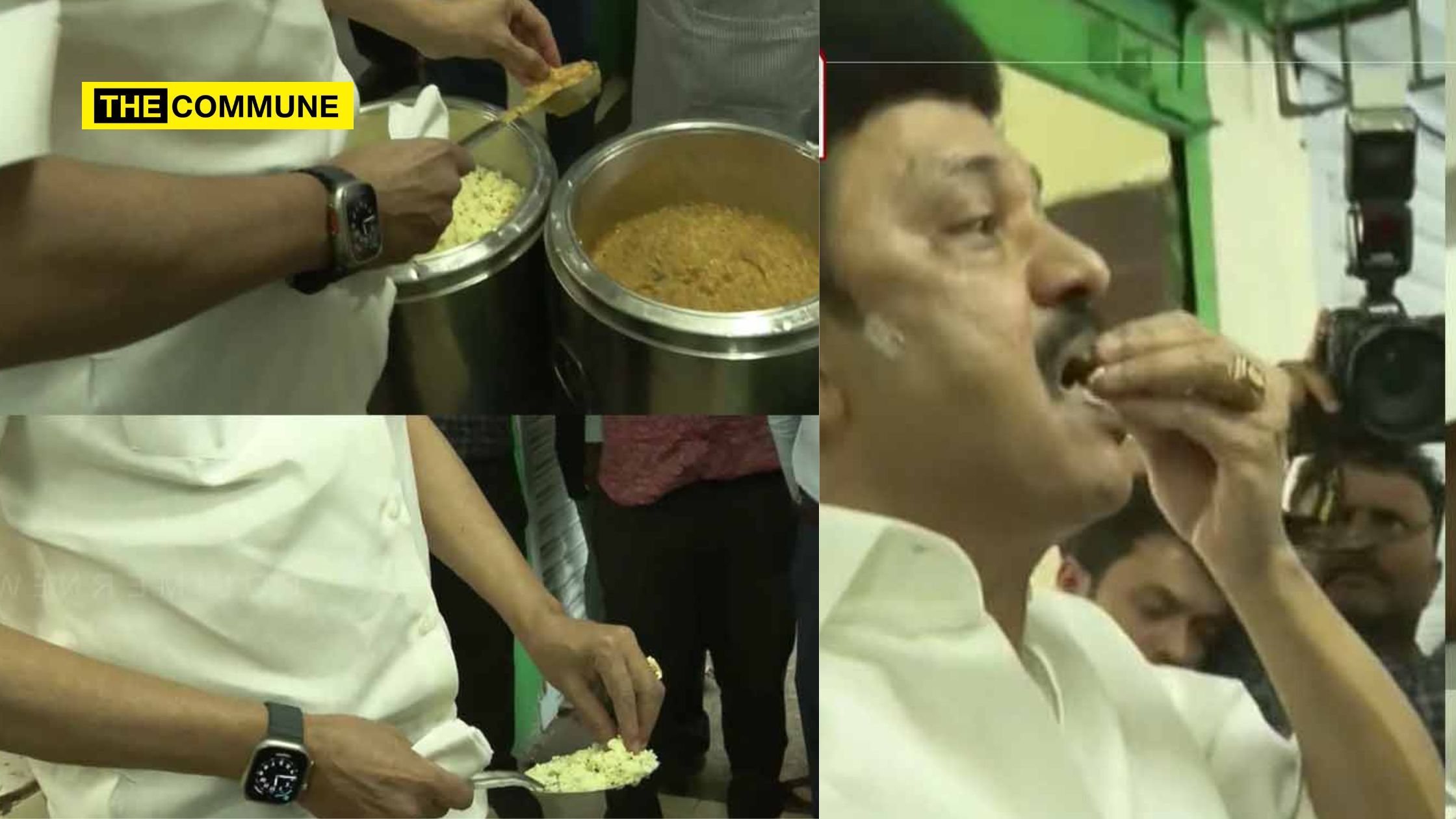
Netizens were disgusted by a video showing Chief Minister Stalin eating Sambar Rice with his hand and discarding the remaining food in the same serving vessel at an Amma Unavagam restaurant in Chennai.

After approving the allocation of ₹21 crore for the improvement of Amma Unavagam (restaurants) across Chennai, Chief Minister MK Stalin inspected one of these restaurants in Teynampet on July 19, 2024.

After returning to his residence in Teynampet from the Chennai Chief Secretariat, Chief Minister M.K. Stalin conducted a surprise inspection at an Amma restaurant near S.I.E.T. college. During the visit, he sampled the food to assess its quality. He engaged with the restaurant staff to discuss its operations and subsequently inquired about the standards of food quality and quantity. The inspection, attended by the new Chennai Corporation Commissioner Kumara Gurubaran, led Chief Minister M.K. Stalin to issue directives for the continued efficient functioning of Amma restaurants.

He emphasised the importance of maintaining cleanliness in the kitchen and canteen areas, as well as ensuring the preparation and serving of high-quality food for the benefit of the underprivileged.

During the inspection, Chief Minister Stalin attracted attention when he sampled the Sambar Rice by taking a portion in his hand and tasting it, then disposing of the remaining food from his hand into the same basin where the food was taken. When this incident was reported in the news, netizens criticized him severely, questioning the appropriateness of his actions. They asked whether it was acceptable for him to taste the food with his hands and then discard the rest onto the food meant for others.

https://twitter.com/Bakthan_TVK/status/1814226220965380296

Amma Unavagam or Amma Canteen – the flagship project of the then Chief Minister of Tamil Nadu J Jayalalithaa seems to be dying a slow death ever since the Dravida Munnetra Kazhagam (DMK) government came to power. The canteens that once flourished are now faced with declining income projections, budget inconsistencies, and difficulties in managing expenditures, particularly in terms of compensating the staff. Despite the Corporation’s claim of possessing a surplus of ₹315 crore in its capital account, this revelation has sparked discussions among netizens on social media and stirred concerns among the city’s residents.

Subscribe to our channels on TelegramWhatsApp, and Instagram and get the best stories of the day delivered to you personally.
“STEM Has Been Used To Advance Imperial Powers Like Israel”: IIT-M Student Goes Woke During Convocation Speech

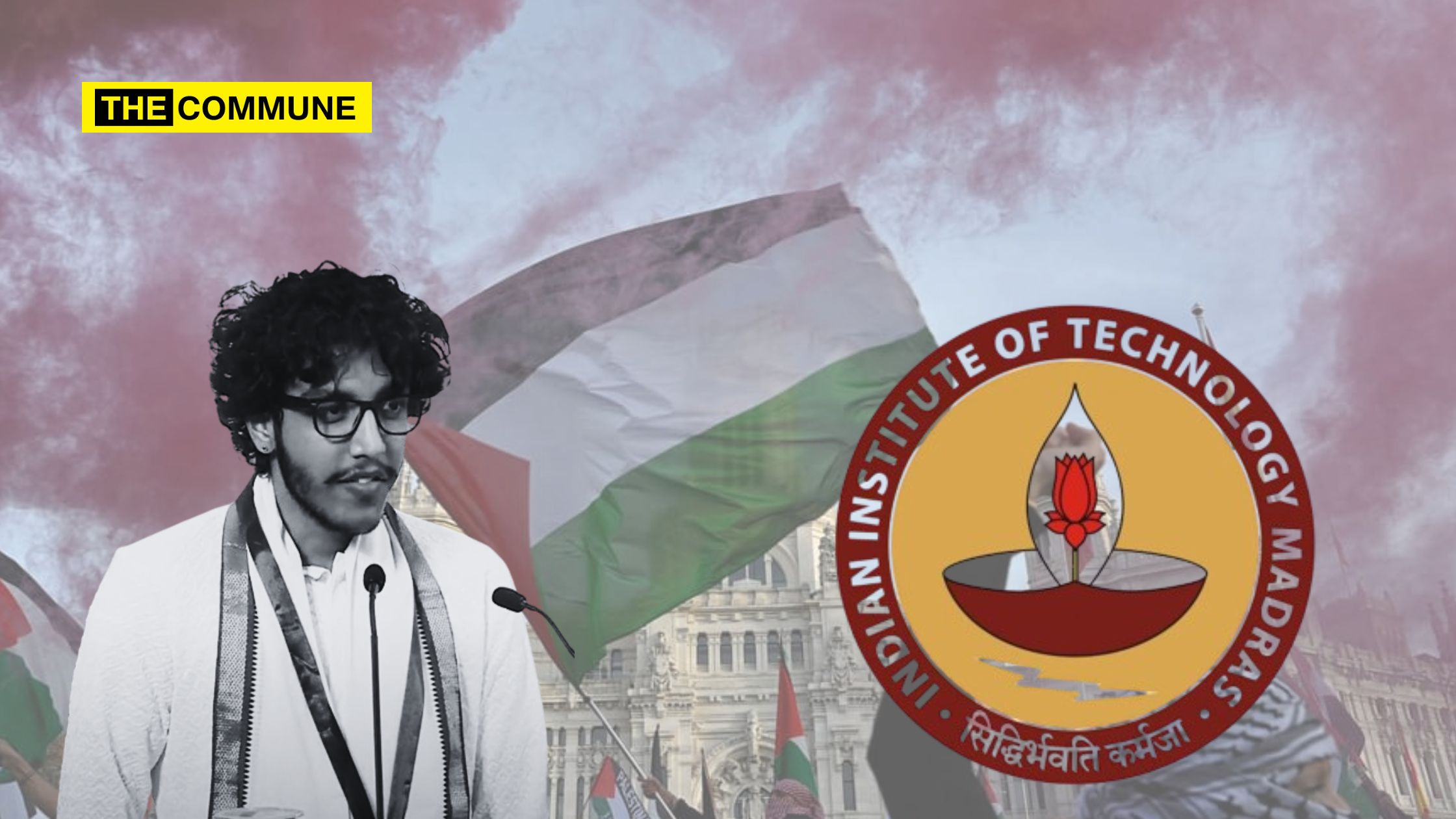
Wokeness appears to be infiltrating India’s premier tech institutions, as seen at the recent IIT-Madras convocation ceremony. A top mechanical engineering student used his award-acceptance speech to claim STEM fields, alleging they were being exploited to serve imperial powers like Israel. His anti-Semitic remarks have sparked concerns about the ideologies influencing young minds in such esteemed institutions.

IIT-M Convocation

The Indian Institute of Technology Madras (IIT-M) celebrated its 61st convocation on 19 July 2024 at its campus in Chennai, Tamil Nadu. This year, 3,016 degrees were awarded, including Joint and Dual Degrees. A total of 444 PhDs were conferred, encompassing PhDs, joint degree PhDs with foreign institutions, and dual degree PhDs.

Degrees were awarded to 2,636 graduates, including 764 BTechs (27 with Honours), 277 Dual-Degree BTech and MTech, 481 MTech, 151 MSc, 42 MA, 50 Executive MBA, 84 MBA, 236 MS, and 107 Web-enabled MTech for executives. Among the PhD recipients, seven joint degrees were awarded to universities in countries like Australia, Singapore, France, and Germany.

The Chief Guest, Dr. Brian K. Kobilka, Nobel Laureate in Chemistry (2012), addressed the convocation. Dr. Pawan Goenka, Chairman of the Board of Governors, IIT Madras, presided over the event with Prof. V. Kamakoti, Director, IIT Madras, faculty, staff, and students.

In his speech, Dr Kobilka congratulated the graduates and emphasised that his success was due to hard work, persistence, luck, and support from family, friends, and colleagues. He shared five key factors contributing to his career: finding his passion, having mentors, recognising and leveraging his strengths and weaknesses, maintaining a work-life balance, and learning from failures.

Dr. Kobilka highlighted his 21-year journey to obtaining structures of G-protein-coupled receptors in active/inactive states, which ultimately led to his Nobel Prize. He reflected on the many lessons learned from his failed experiments during this period.

Dhananjay Balakrishnan

At this time, Dhananjay Balakrishnan, a student from the Mechanical Engineering department, was awarded the Governor’s Prize for the best overall proficiency in curricular and extracurricular activities in Dual Degree.

In his acceptance speech for the award at the IIT-M convocation ceremony, Balakrishnan, who pursued an interdisciplinary dual degree in mechanical engineering and data science, made a statement that would remind us of Ashoka University’s convocation. He said he would be doing great injustice to himself and what he believes in.

He said, This is a call for action. There is a mass genocide going on in Palestine. People are dying in vast numbers and there is no visible end in sight. Why should we be bothered by this you ask? Because STEM as a field in itself has historically been used to advance the ulterior motives of the imperial powers such as Israel. As engineering students, we work very hard to get top-level jobs at tech giants which offer very lucrative pays and great benefits. However, these tech giants control various aspects of our lives today as you know better than anyone. Many of these prestigious companies are also directly and indirectly implicated in the war against Palestine by providing the state of Israel with technology, technology that is used to kill.”

He further said,There are no easy solutions and I don’t have all the answers but I do know this. As engineers graduating into the real world, it is our job to be aware of the consequences of the work we do and also to interrogate our own position in these complex systems of power imbalance. I hope that we can incorporate this awareness more into our daily lives attempting to understand what we can do to liberate the oppressed on lines of caste, class, creed, and gender. I believe that is the first step to curb the never-ending cycle of suffering.”

It was assumed that IITs are not as woke as other universities like JNU, Ashoka, or Jamia Milia Islamia. However, this instance indicates that wokeness has seeped into IITs, the very roots , especially IIT Madras, in the STEM field.

(with inputs from Indian Express)

Subscribe to our channels on TelegramWhatsApp, and Instagram and get the best stories of the day delivered to you personally.
“The Very Mountain Is Lord Shiva,” Says Madras High Court, Initiates Probe Into Tiruvannamalai Hill Girivalam Path Encroachments

HC tells TN govt to clear illegal encroachments from Tiruvannamalai Girivalam Hill And Thamarai Kulam tiruvannamalai madras high court arunachala hill

The Madras High Court has formed a committee to investigate reported encroachments on the Tiruvannamalai Girivalam path and instructed it to provide a comprehensive report.

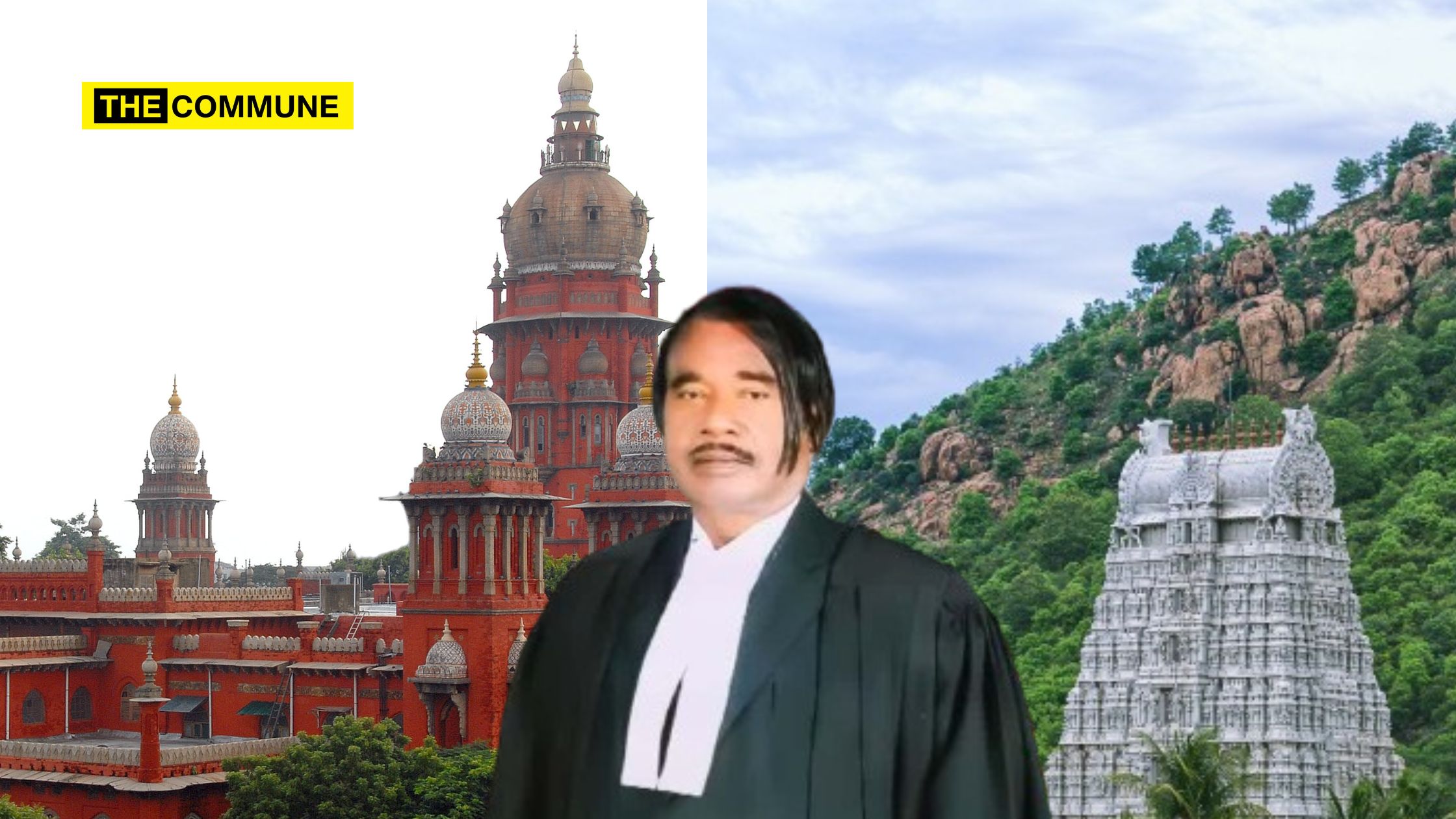
Advocate Elephant Rajendran filed a petition to address encroachments on the sacred Arunachaleswarar hills in Tiruvannamalai town. The Court criticized the Forest and Revenue Departments of the Tamil Nadu government for permitting these encroachments, noting that The very Mountain is Lord Siva.

This marks Advocate Elephant Rajendran’s second Public Interest Litigation (PIL) concerning the temple town of Tiruvannamalai; the first addressed the disappearance and encroachment of 32 ponds in the area.

A division bench comprising Acting Chief Justice R Mahadevan and Mohammad Shaffiq heard the PIL and appointed a committee chaired by the Tiruvannamalai district collector. This committee, which includes representatives from the district revenue, forest departments, and corporation commissioner, aims to investigate encroachments along the slopes of the 718-acre sacred Tiruvannamalai hills Girivalam path.

The petitioner highlighted illegal constructions on the hill’s slopes, obstructing the traditional flow of rainwater through several streams that feed tanks in Tiruvannamalai. Specific concerns included houses and infrastructure encroaching up to 400 feet along the hill’s slopes, including lavatories, bathrooms, and septic tanks.

In response to the seriousness of the allegations and the hill’s sanctity, the bench tasked the committee with submitting a report within 15 days after visiting the site. The Court scheduled the next hearing for 30 July 2024, expecting the committee’s findings by then.

(With Inputs From DT Next)

Subscribe to our channels on TelegramWhatsApp, and Instagram and get the best stories of the day delivered to you personally.
Dear Tamil Nadu People, The Cost Of Free Power Is Costlier Than You Think, Be Ready To Pay For It

Tamil Nadu SC Family Denied Electricity For 9 Years Due To Caste-Based Discrimination

Most Indians diligently pay their electricity bills on time, yet state governments owe staggering sums to power distribution companies (discoms), which are drowning in debt. According to a recent report, Indian states and union territories (UTs) collectively owe over ₹1 trillion to power generation companies (gencos) and ₹1.3 trillion to discoms. In states like Tamil Nadu, discoms are heavily indebted, owing several thousand crores to power generation companies.  A 2022 report states that Tamil Nadu discoms have the highest outstanding dues of ₹22,756 crore to gencos.

What’s the reason for this predicament?

The root cause lies in how political parties like the DMK and ADMK have made electricity into a political product. While industries bear the burden of higher power costs, free electricity for farmers and households up to a few hundred units are often included in poll promises.

This severely strains the financial health of state power distribution companies, burdening the exchequer with massive deficits and ultimately leading to poor electricity services.

The Tamil Nadu government’s decision to hike electricity tariffs by over 4% which has resulted in a lot of criticism from all quarters of society, should be seen in this light. To add to this, the policy of the government to bill consumers on a bi-monthly basis will cause a huge burden on the pockets of the middle class and small and medium-sized industries.

The impact is evident in regions like Coimbatore and Tiruppur, where power looms and small industries are shutting down due to exorbitant power bills and frequent outages.

The government has hiked the electricity prices to address budget deficits, but the repercussions of this measure can be multifaceted and far-reaching, often negatively impacting the economy in several significant ways. Here is how this move will affect the economy.

Increased Production Costs and Inflation

The immediate consequence of rising electricity tariffs is a surge in production costs across various sectors, including manufacturing, processing, and services. These increased operational expenses often lead businesses to raise prices for goods and services, triggering cost-push inflation. As a result, consumers face higher prices for essentials like food, clothing, and transportation, which reduces their purchasing power and leaves them with less disposable income for non-essential expenditures.

Strain on Consumers and MSMEs

The ripple effect of higher electricity costs extends to households, where increased utility bills reduce disposable income. Consumers are forced to tighten their belts, cutting back on discretionary spending and thereby reducing aggregate demand. This drop in consumer spending can lead to slower economic activity and potentially dampen business profitability.

Small and medium-sized enterprises (SMEs), which generally operate on narrower profit margins, are particularly vulnerable to cost increases. Unlike larger corporations, SMEs may struggle to absorb higher energy costs, risking closures or layoffs. This not only impacts individual businesses but also the broader job market and local economies reliant on these enterprises.

Investment Deterrence 

The increased cost of electricity can deter investment, especially in energy-intensive industries. With higher operational costs, investors may shy away from regions with steep energy prices, stalling economic growth and job creation. The relocation of businesses to areas with more favorable energy costs could further exacerbate regional economic disparities.

Supply Chain Strain 

The ripple effect of higher electricity costs extends through the supply chain. Suppliers and distributors experience elevated costs for logistics and raw materials, which further exacerbates price increases. This strain on the supply chain can lead to a cycle of rising costs and diminished economic activity.

Regional Disparities and Social Inequality

The impact of increased tariffs is not uniform across regions. Rural or less developed areas, which often face higher energy costs due to lower infrastructure investment, can experience more severe economic strain compared to urban centers. This disparity can exacerbate regional inequalities, as poorer areas struggle more to cope with the rising costs.

Furthermore, higher electricity tariffs disproportionately affect low-income households, who spend a larger share of their income on utilities. Without targeted support measures or subsidies, these households could face increased poverty and social inequality.

Whether the state government will push for a move towards solar energy or roll back the price hikes or at least implement the monthly billing system is something that we must wait and watch. But given the history of the DMK government, especially over the past 3 years, none of this might happen. The burden is solely for the common man to bear while the governments cry hoarse and spread fake news about the central government’s policies that have “led” to the policy decision of the Tamil Nadu state government.

It is crucial for people to understand that what appears as a free benefit today will eventually cost much more in the long run.

Subscribe to our channels on TelegramWhatsApp, and Instagram and get the best stories of the day delivered to you personally.
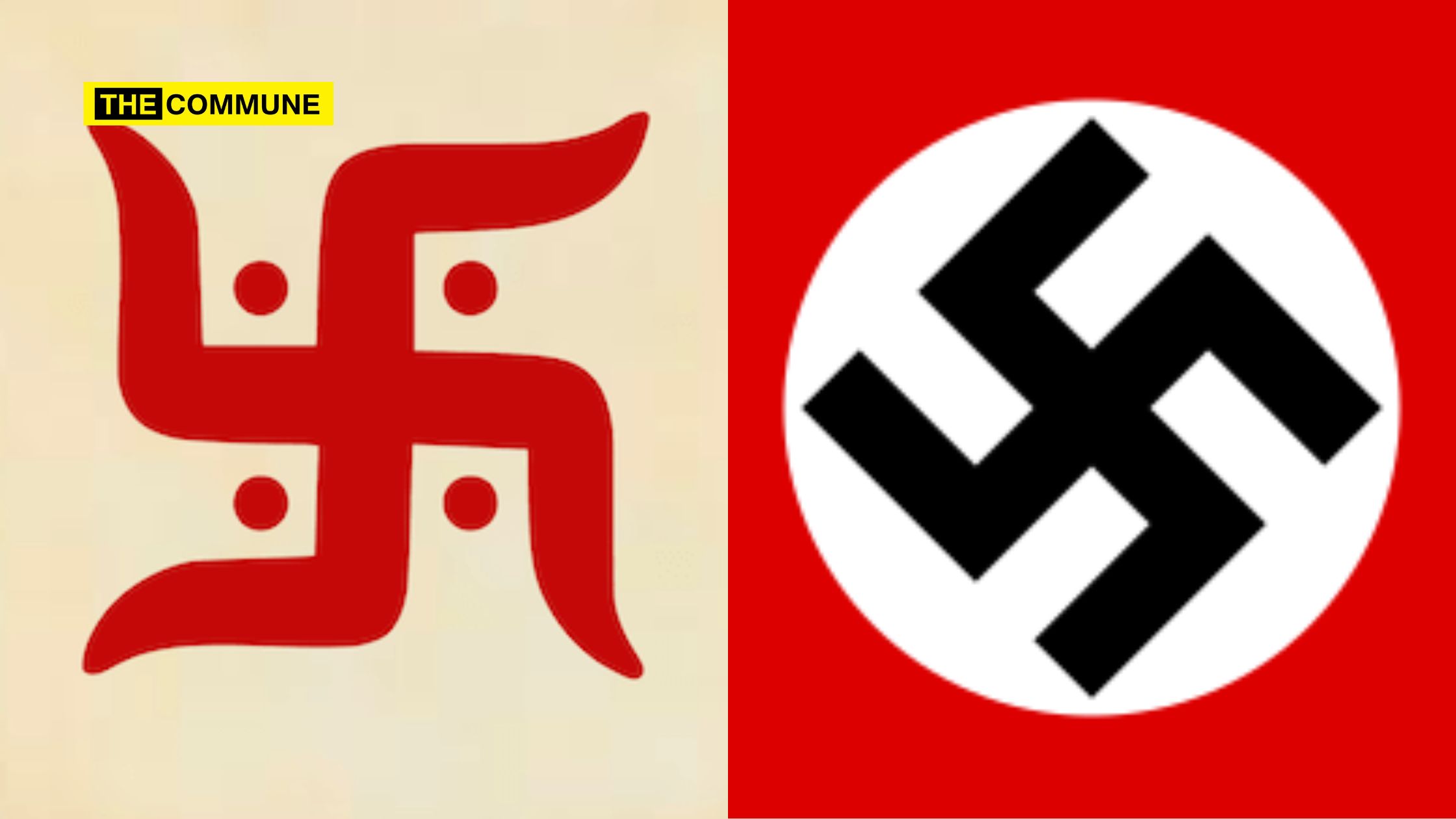
Major Victory For Hindus As Oregon Department of Education Recognizes Distinction Between Swastika And Nazi Hakenkreuz

In a significant achievement for Hindus in the United States, the Oregon Department of Education has officially recognised the difference between the auspicious symbol ‘Swastika’ and the Nazi Hakenkreuz.

This decision represents “a significant step forward in preserving the sanctity of our symbols for future generations,” according to the Hindu American Foundation (HAF), a US advocacy group, in a post on X on Thursday (18 July 2024).

A Historic Win for Our Community! Thanks to the tireless advocacy of our supporters in Oregon, the Oregon Department of Education has officially recognised the distinction between the Nazi hakenkreuz and our sacred swastika. This monumental decision marks a significant step forward in preserving the sanctity of our symbols for future generations. This victory wouldn’t have been possible without your unwavering support and dedication. Let’s continue to educate and spread awareness about the true meaning of our sacred swastika,” the HAF stated.

The Oregon Education Department explained that while the hooked cross image is commonly called a ‘swastika’, the correct term for the Nazi and Neo-Nazi symbol is ‘hakenkreuz’, the German word for ‘hooked cross’.

” ‘Swastika’ is a Sanskrit word symbolizing auspiciousness and elements of the natural world in many religions and cultures, including Hinduism, Buddhism, Judaism, Jainism, and some Native American traditions,” the department added.

They further clarified that the Swastika’s association “with racism and the Holocaust was a corruption by the Nazi party. Neo-Nazi use of this symbol is intended to intimidate specific communities.”

Subscribe to our channels on TelegramWhatsApp, and Instagram and get the best stories of the day delivered to you personally.
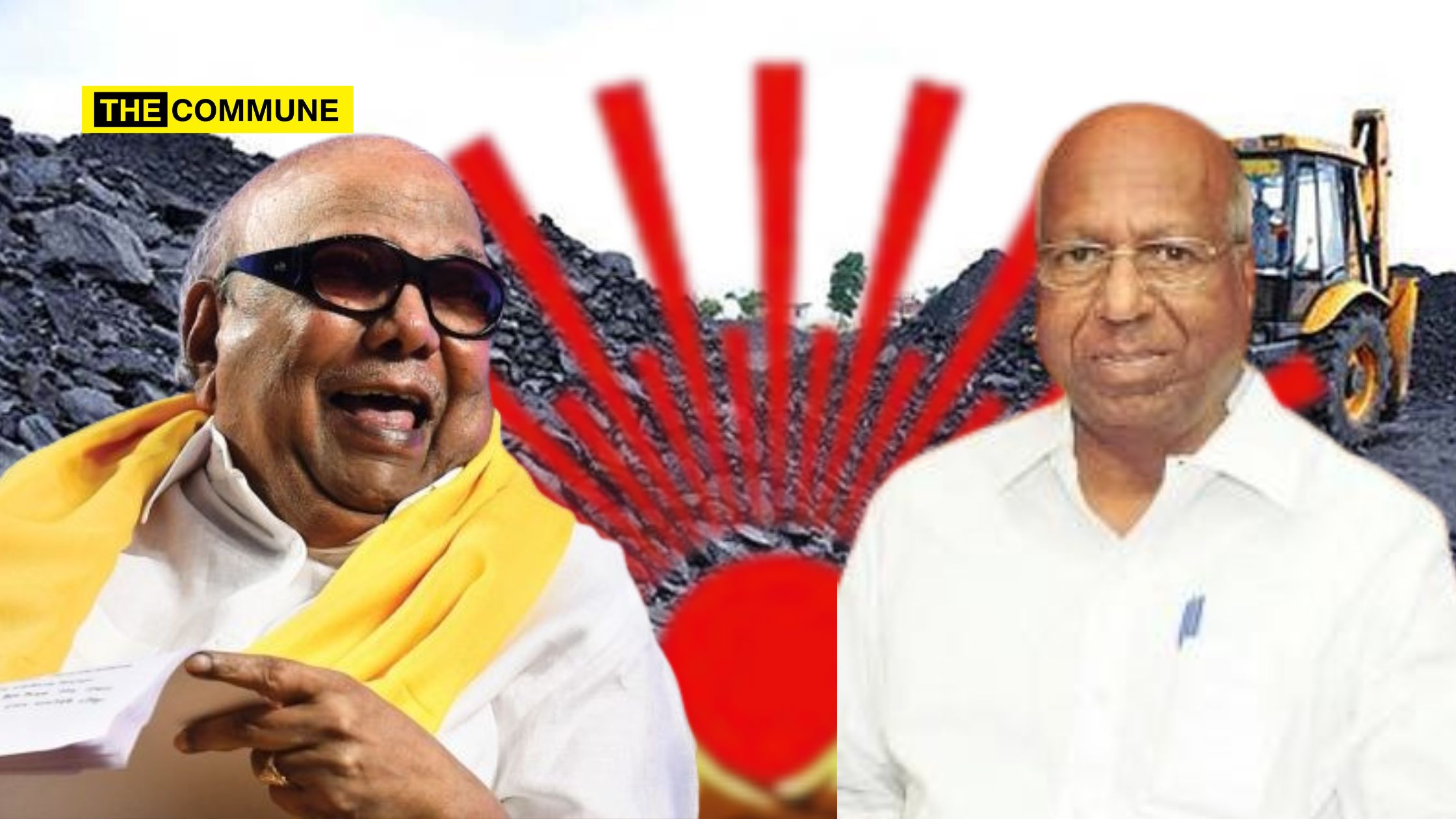
The Coal Scam Of DMK That No One Talks About

In Tamil Nadu, the ruling DMK, led by MK Stalin, is facing strong criticism from the public, political commentators, and other parties due to a significant increase in the overall cost of living in the state. Since assuming power in 2021, the DMK government has consistently hiked property taxes, electricity tariffs, drinking water charges, milk prices, and bond registration fees.

Critics argue that these price hikes are directly impacting the middle class and small to medium-sized industries, severely affecting their production capabilities. They also contend that such increases are driving businesses to neighboring states where costs are lower, thereby benefiting those regions economically. This reminds us of the dark days in Tamil Nadu when significant maladministration, corruption, and rampant scams plagued the state.

Devastating Maladministration During The DMK Regime From 2006 To 2011

During the DMK rule in Tamil Nadu from 2006 to 2011 under the leadership of Karunanidhi, the industrial sector suffered significant economic losses due to reduced profits. Arcot N. Veeraswami, serving as Electricity Minister during this period, faced criticism from industrialists who blamed the state government for not providing necessary infrastructure despite repeated requests.

Have you heard of a “power holiday“? Back in 2008, the Tamil Nadu Electricity Board (TNEB) suggested a mandatory two-day power shutdown for both heavy and light industries because of the severe power shortage in the state. This situation arose during the DMK administration, causing significant administrative challenges. As a result of these measures, the IT industry had to resort to using diesel and biomass to generate power, which cost around ₹7-7.50 per unit. Additionally, the government had already implemented an 8-hour daily power cut across the state.

Over the years, Tamil Nadu’s increase in installed power generation capacity was a mere 483 MW, contrasting sharply with neighboring Karnataka and Andhra Pradesh, which boosted their capacities by more than 2,000 MW each. This disparity underscores Tamil Nadu’s flawed policy approach, especially in light of escalating industrial and residential demand, which surged from 6,000 MW in 2001 to 10,000 MW by 2010.

Critics argue that the DMK’s policies during this period were myopic, focusing on short-term gains such as providing free electricity to agricultural connections and weavers to secure a large voting bloc of 4 lakh weavers, rather than addressing long-term infrastructure needs.

R. Sivaram, the executive director of Royal Classic Mills Pvt. Ltd. at the time, lamented that their companies were compelled to rely on costly power from captive generation units, which charged ₹9 per unit compared to the ₹4.50 per unit offered by the Tamil Nadu Electricity Board. Despite Tamil Nadu boasting an installed generating capacity of 10,098MW against a peak demand of 8,800MW, the actual available power stood at only 7,500MW, pointing to a deliberate shortfall that burdened industries. The state government enforced power cuts lasting at least four hours daily, attributing the deficit to a shortfall of 1,500MW from wind energy sources and 1,000MW from the central pool.

State electricity minister Arcot N. Veerasamy acknowledged that despite a 4,000MW increase in power demand over the last decade, capacity had only increased by 531MW. According to industry sources like the Confederation of Indian Industry and the Southern India Mills Association, new industries and the textile sector, in particular, suffered annual losses amounting to ₹1,000 crore due to underutilization caused by frequent shutdowns owing to power shortages.

Producers in the wind energy sector argued that the situation could have been mitigated if the government had established adequate infrastructure for the transmission and distribution of the generated power from windmills. Tamil Nadu’s wind power generation capacity was 3,686MW, with significant generation occurring between May and October when south-west winds prevailed. K. Kasthurirangaian, vice-chairman of the Indian Wind Power Association, criticized the state utility for failing to install sufficient transmission lines, resulting in the loss of between 800MW and 1,000MW of wind power during peak seasons. He suggested that surplus power could have been supplied to other states during summer and received back during periods of scarcity.

The Coal Scam No One Talks About

We all have heard of coal scams across the country. However, there is one coal scam that happened in Tamil Nadu in the DMK regime, that no one talks about.

In 2010, AIADMK general secretary Jayalalithaa accused the Tamil Nadu Electricity Board (TNEB) of incurring substantial losses due to the import of low-calorific value coal from Indonesia at a higher cost. She stated that the TNEB was importing over 6 million tonnes of low-calorific coal annually from Indonesia, priced at $120 per tonne, whereas coal of high-calorific value from the same source had a Free On Board (FOB) value of only $65 per tonne. Including shipping and freight charges of $20, the total landed cost of high-calorific coal was $85 per tonne. She pointed out that coal from South Africa was even cheaper.

Jayalalithaa calculated the loss to the TNEB at ₹1,575 per tonne in Indian rupee terms. With annual imports exceeding 6 million tonnes at ports like Tuticorin and Ennore, she estimated that the excess expenditure incurred by the TNEB due to the higher-priced coal amounted to ₹1,000 crore per year, contributing significantly to the Board’s financial losses amidst a severe power crisis in the state.

Accusing Electricity Minister Arcot N. Veeraswami and officials of providing contradictory statements regarding the state’s power crisis, Jayalalithaa criticized the lack of concerted efforts to address resource augmentation. She highlighted instances where officials gave conflicting timelines for power cuts, exacerbating public confusion and dissatisfaction.

Jayalalithaa further alleged that the TNEB’s financial woes were compounded by a suspected scam involving the importation of coal at inflated prices, facilitated by business ties between a consortium in Indonesia and the ruling DMK regime. She claimed insider knowledge which suggested that the TNEB was being exploited for financial gains under the stewardship of Minister Veerasamy, accusing the department of being involved in money laundering activities to the detriment of both the Board’s finances and the public interest.

Subscribe to our channels on TelegramWhatsApp, and Instagram and get the best stories of the day delivered to you personally.
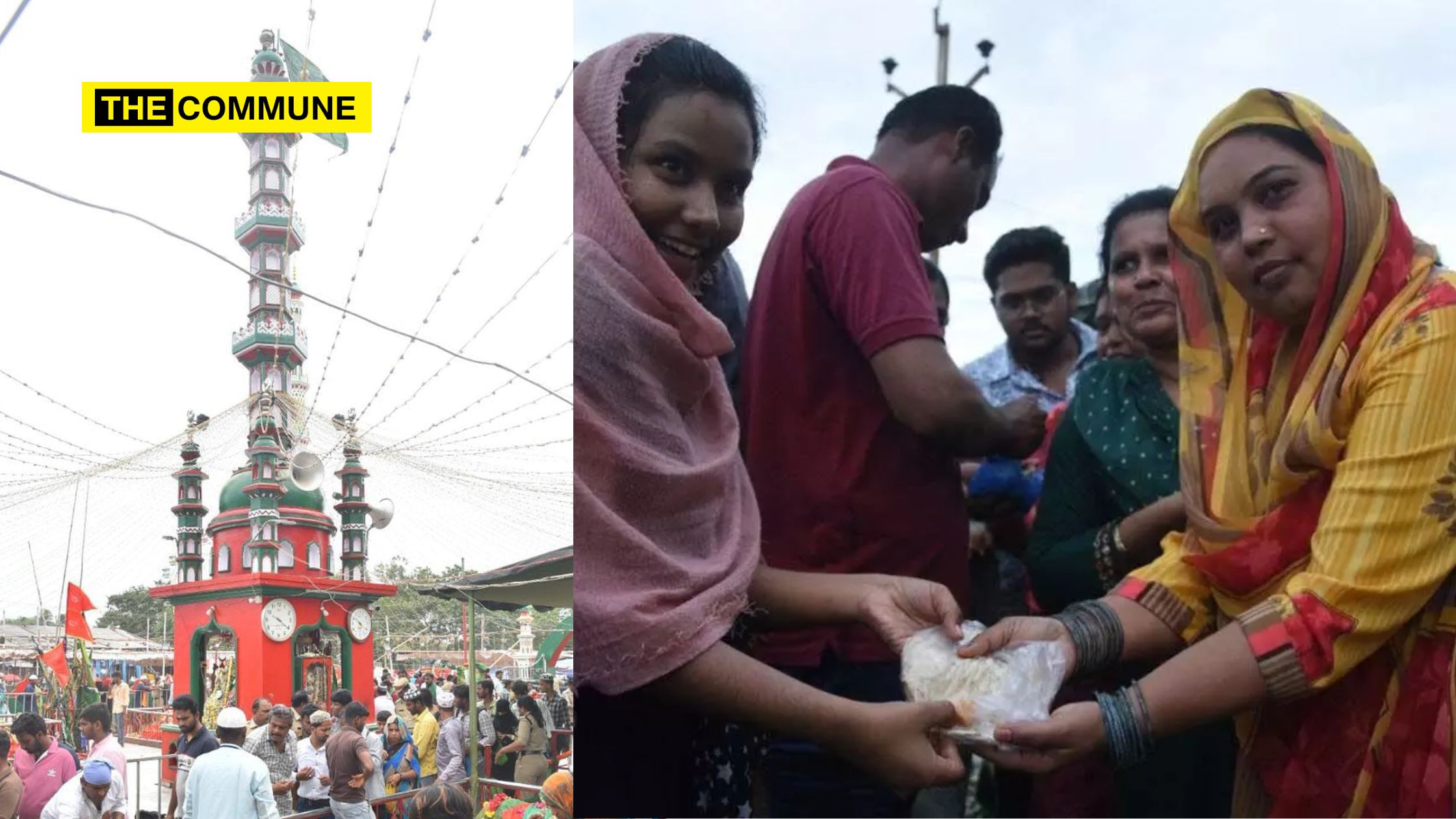
Bara Shaheed Dargah: Unraveling The Myths And True History Behind Nellore’s Roti Festival

During the Islamic invasions across various parts of the country, the deaths of invaders were often documented as acts of martyrdom. In their memory, tombs were frequently converted into mosques. Sometimes, existing temples were transformed into mosques, or new structures were built to assert dominance. One such structure is the Bara Shaheed Dargah in Nellore.

Despite the lack of authentic references or historical evidence, popular stories often glorify the Muslim invaders. The Bara Shaheed Dargah, situated beside a lake in Nellore town of Andhra Pradesh, gains significant attention annually following the Muharram festival. This coincides with the celebration of ‘Rottela Panduga,’ a popular event where ‘Rotella’ (the Telugu plural of ‘Roti’) plays a central role. The Muslim lobby successfully convinced the then-Andhra Pradesh government in 2015 to declare it a state festival. Since then, the event has drawn lakhs of Muslims and non-Muslims not only from Andhra Pradesh but also from Tamil Nadu, Karnataka, and other states.

However, a definitive history directly related to the Bara Shaheed Dargah, where this Rottela Panduga takes place, has not yet been found. Some alternative stories are currently being promoted locally, raising doubts about the authenticity of the actual history of Bara Shaheed Dargah.

According to local folklore, the origin of Bara Shaheed Dargah is steeped in legend. One account suggests that twelve Islamic preachers from Turkey arrived in India to spread Islam through Tablighi (Da’wah-proselytizing). Their journey brought them to Gandhavaram, where they faced resistance from the locals. This resistance escalated into a battle, resulting in the death of the twelve Islamists. The current dargah stands as a memorial at the site where they were killed.

Another version suggests that during the Carnatic Wars in 1751, the Nawab of Arcot enlisted a regiment from Turkey to aid in the conflict against the British. Among these soldiers were twelve deeply religious individuals, performing Namaz five times daily and observing all tenets of their Islamic faith. Although their regiment emerged victorious, twelve Islamists were beheaded by opposing forces during the battle at Gandavaram, situated 15 km from Nellore. Their headless bodies were returned to Nellore atop the very horses they rode into battle, and they were laid to rest at the site where the present-day Dargah stands. To commemorate their sacrifice, a Dargah was built in the area, which became known as Bara Shaheed Dargah in honor of the twelve martyrs.

Therefore, the shrine is named ‘Bara Shaheed Dargah,’ where ‘Bara’ signifies twelve and ‘Shaheed’ denotes martyrs. According to local lore, the reputation of the twelve soldiers as miracle workers grew when the Nawab of Arcot’s wife reportedly recovered from a serious illness after praying at their tombs.

‘Rot Festival’ Or ‘Rottela Panduga’

Since the Dargah was built, Muslims have gathered there on ‘Moharram’ and shared rotis with each other the following day. Soon, a tradition emerged that distributing rotis at the Dargah was believed to bring blessings to both the giver and the recipient.

As a gesture of reverence, the queen, accompanied by the Nawab, distributed rotis among the local Muslims and subsequently to the local non-Muslims. Since then, Muslims have gathered at the Dargah on the 12th day of the Muharram month to continue the tradition of sharing rotis. The exchange of these rotis occurs at Nellore tank, also known as ‘Swarnala Cheruvu’, situated near the Dargah.

Slowly, Hindus began attending the Dargah, believing it to be a sacred place and hoping that offering food there would bring them luck as well. The story of the Dargah’s purported blessings became widely popular. Unaware of the Islamic invaders’ history and its implications, Hindus joined in these rituals, anticipating that it might bring them good fortune. In recent decades, this belief was heavily publicized, attracting a large number of people from nearby areas.

Capitalizing on this food-sharing activity, roti vendors with motives of huge profits started innovative and customized methods by branding the rotis according to the devotees’ wishes. Rotis are named Sowbhagya (good fortune) roti, Vidya (education) roti, Udyoga (employment) roti, Vivaha (marriage) roti, Santana (children) roti, Dhana (money) roti, and even Visa roti.

Shia Origins Of Bara Shaheed Dargah

The Roti festival, observed the day after the Muharram festival, along with the historical association of Arcot Nawabs with the shrine and the tradition surrounding the death of 12 Shia Muslims, strongly suggests the Shia origins of this shrine. The Arcot Nawabs represented three distinct lineages: Zulfikar Khan and Daud Khan Panni, who were initially appointed by Aurangzeb, followed by the Nawayati Nawabs. In the 1740s, the Wallajah line of Nawabs emerged. The early Nawabs adhered to the Shia branch of Islam, while the later Nawabs followed Sunni Islam.

History Of Muharram

The Battle of Karbala occurred on 10 October 680 CE (10 Muharram, 61 AH in the Islamic calendar). It was fought between the forces of the second Umayyad Caliph, Yazid I, and a small army led by Husayn ibn Ali, the grandson of the Islamic Prophet Muhammad, at Karbala in present-day Iraq.

After the battle, the family members of Imam Husayn were taken as prisoners of war. They were shackled and forced to march barefoot from Kufa to Damascus. During this arduous journey, several young children died due to the harsh conditions and ill-treatment. The captives were paraded through various towns, facing humiliation and assault from onlookers. Yazid ordered the city to be decorated, and jubilant crowds gathered to celebrate the capture of the prisoners. In Damascus, the heads of Imam Husayn and his companions were publicly displayed and subjected to further humiliation. The family of Imam Husayn was paraded through the marketplace, where some historians report that bystanders attacked them with stones, rubbish, and even hot water. This episode is considered one of the most tragic chapters in Islamic history, given the profound respect for the Prophet Muhammad’s (SAW) family.

A memorial to the 12 martyrs of Shia Islam was constructed at the Umayyad Mosque in Damascus, Syria. Inside the memorial, cloth bundles representing the heads of the martyrs are displayed. The beheading of the martyrs of Karbala and the subsequent transportation of their severed heads to Damascus in 680 CE has inspired local folklore surrounding the Bara Shaheed Dargah in Nellore, Andhra Pradesh. The story of the martyrs’ heads falling at the present location echoes the events following the Battle of Karbala.

12 Martyrs’ Memorial In Damascus – Niche For Imam Hussain’s Head In Mosque

The exchange of a special type of biscuit called ‘Rot’ during Muharram is a longstanding tradition in the Indian subcontinent. This custom has evolved into the festival known as ‘Rottela Panduga’. The practice of exchanging ‘Rot’ by devout Muslims during Muharram underscores the connection between the legend of the Bara Shaheed Dargah and the Battle of Karbala, particularly the beheading of the martyrs. The celebration of ‘Rottela Panduga’ a day after the Muharram mourning period indicates an attempt to link local events with the Battle of Karbala and the martyrdom of the 12 Shia martyrs, despite the absence of documented historical evidence.

(This article was originally published in Dakshinapatha and republished in Arise Bharat)

Subscribe to our channels on TelegramWhatsApp, and Instagram and get the best stories of the day delivered to you personally.