Home Blog Page 947

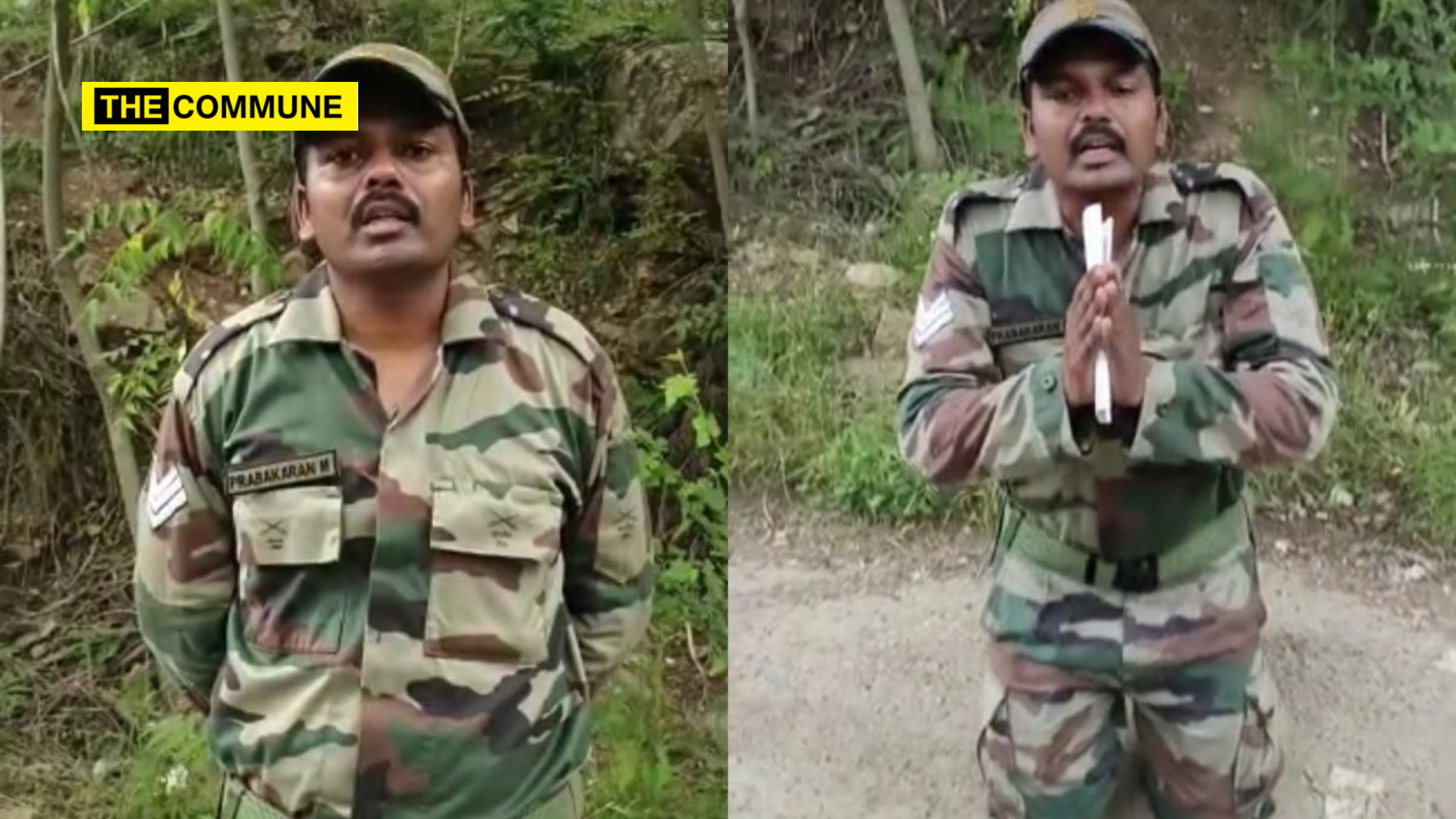
Army Havildar’s Wife Subjected to Brutal Assault and Indecent Exposure in Tiruvannamalai, Plea for TN DGP’s Urgent Intervention Goes Viral

A shocking incident unfolded in Tiruvannamalai district as the wife and brother of an Army Havildar were brutally attacked by local goons who illegally evicted their rented shop. In a video plea addressed to the Tamil Nadu Director General of Police (DGP), the Havildar appealed for immediate action against the perpetrators responsible for ransacking the shop and assaulting his family members. In a show of solidarity, Tamil Nadu BJP President Annamalai assured the Havildar of the party’s support in seeking justice.

The Army Havildar, Prabarakan, hails from Padavedu village near Arani in the Tiruvannamalai district. His wife, Keerthi, was running a fancy store after renting a shop owned by Ramu from Gunnathur village, situated opposite Padavedu Sri Renukampal Temple. However, the business arrangement took a distressing turn when Ramu forcibly evicted Keerthi, disregarding their prior agreement.

It is alleged that Keerthi requested Ramu to return the substantial sum of ₹16 lakhs that had been paid for the shop. However, Ramu, accompanied by his supporters, arrived at the shop yesterday, ransacked the fancy store and threw all her items outside the shop.

The situation escalated further when Keerthi’s brother attempted to defend his sister’s rights and confront the goons who were unlawfully vacating the shop. However, the goons targeted both Keerthi and her brother, causing them physical harm and significant distress.

In response to the appalling incident, the Army Havildar released a video appeal, urging the Tamil Nadu DGP to take swift action against those responsible for the assault on his family and the wanton destruction of the shop.

A case has been registered at the Chandavasal Police Station, with both parties filing mutual complaints. The police have initiated an investigation into the matter, striving to identify and apprehend the culprits involved in the unlawful eviction and subsequent attack. Furthermore, reports indicate that the shop in question is not actually owned by Ramu but by the HR&CE department.

In a video addressed to Tamil Nadu DGP Sylendra Babu, Havildar Prabhakaran said, “I’m Havildar Prabhakaran, and I work in Kashmir. I am from the Thiruvannamalai district’s Polur Thaluka. I’m making this video to inform you that on 10.6.2023 more than 120 people ransacked my wife’s shop in Padavedu village, Tiruvannamalai district. The land is owned by the HR&CE department. However, they vacated the shop by unleashing violence on my wife. She is now in the hospital. She is no longer safe because I am working here. I filed a complaint with Tiruvannamalai district SP Karthikeyan, and my senior officers also spoke with him. He assured us of the support. Though we made complaints to the local police, there was no response. I request you (DGP) to save my wife. My wife was brutally attacked, and she was subjected to the degrading act of being partially unclothed. I humbly beseech you to intervene urgently and take all necessary measures to safeguard the well-being and security of my wife and our entire family.”

The plea for justice and safety has garnered attention and support from various quarters, including Tamil Nadu BJP President Annamalai, who reached out to the Havildar and assured him of the party’s backing in seeking justice. Annamalai said, “Had a telephonic conversation with the Havildar, who is bravely serving our country in Kashmir, and his wife, based out of Tiruvannamalai. Truly gutted to hear her story & I felt ashamed that this had happened to her on our Tamil soil! Our party people are rushing to attend to her now, who is admitted to a hospital in Vellore. BJP Tamil Nadu will stand with her & our Havildar’s family in getting justice for her.”

(with inputs from News18 Tamil)

Click here to subscribe to The Commune on Telegram and get the best stories of the day delivered to you personally.

 

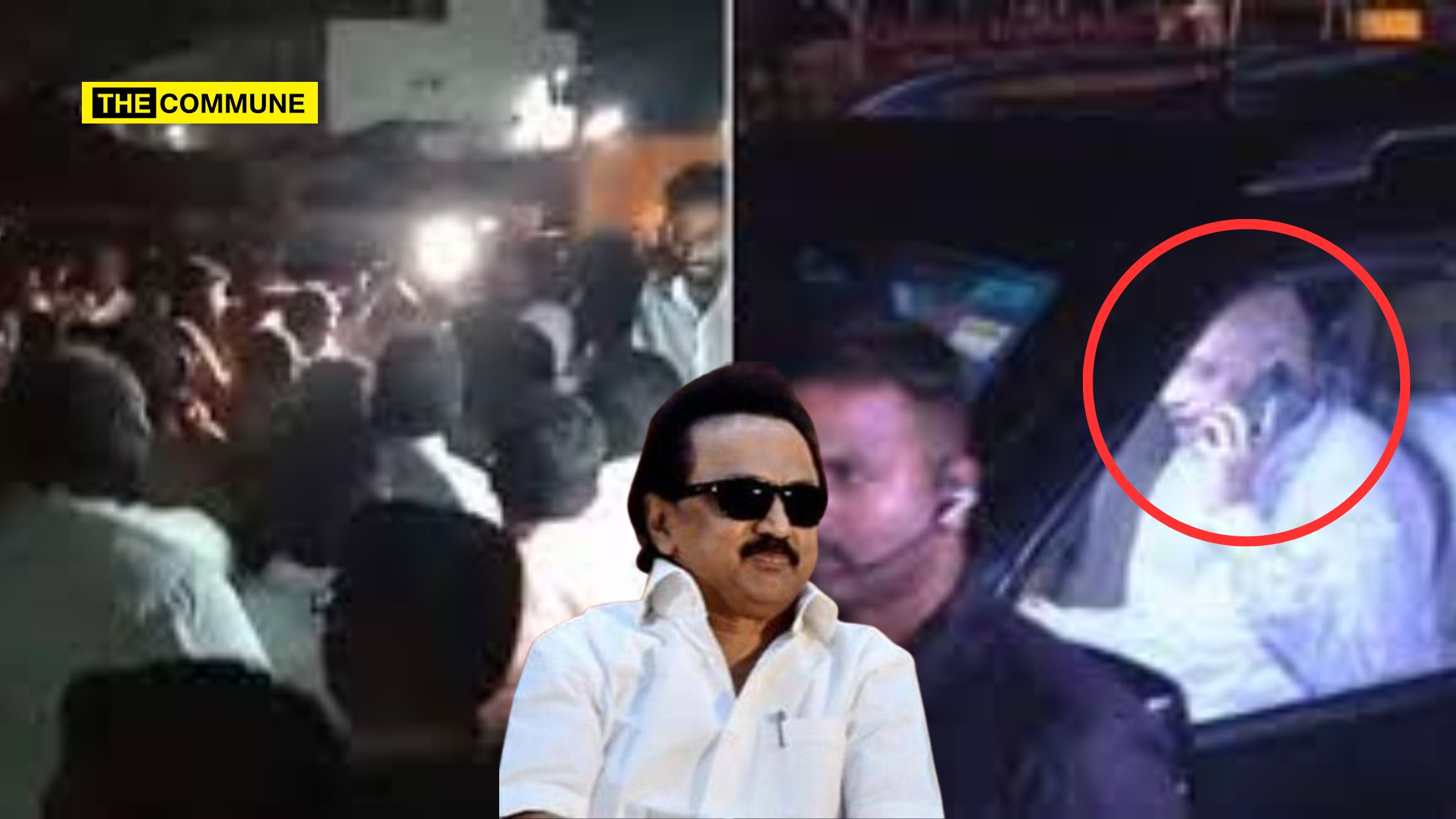
Power Cut During Union Home Minister Amit Shah’s Chennai Visit Sparks Outrage and Raises Security Concerns

A power cut occurred at Chennai Airport just as the Union Home Minister, Shri Amit Shah, arrived, leading to a wave of condemnation from BJP leaders. The incident has raised concerns over the state government’s ability to ensure the security of high-profile dignitaries.

BJP Coimbatore South MLA, along with other party leaders, expressed their strong disapproval of the power cut that coincided with Shri Amit Shah’s visit. The Union Home Minister, known for his high-security requirements, was left exposed due to the unexpected power outage.

The incident is being viewed as a serious security lapse by the state government, as Amit Shah’s safety is of utmost importance. The sudden disruption in power supply during the arrival of such a prominent personality highlights the need for a thorough investigation to determine the cause and any potential underlying motives.

This incident should be analyzed in the context of recent controversies involving DMK leaders, some of whom have made inflammatory statements against senior BJP members. The call for the killing of BJP leaders by DMK representatives has created a tense political environment.

Just months after being suspended for his abusive and threatening statements against Tamil Nadu Governor RN Ravi, DMK stage speaker Shivaji Krishnamoorthy has been reinstated by the party. This decision has raised eyebrows, considering his explicit verbal assault and the threats he made using terrorist references.

In January 2023, Krishnamoorthy’s derogatory comments targeted the Tamil Nadu Governor, stating, “You (Governor) have taken an oath on the constitution written by Ambedkar. If you are not mentioning his name in your speech, then you go to Kashmir. We’ll send a terrorist to shoot and kill you, La**de K* B*l.”

Furthermore, the late Nellai Kannan, another DMK sympathizer, made controversial remarks calling for the killing of Prime Minister Narendra Modi and Union Home Minister Amit Shah during a public gathering. Addressing a crowd of Muslims, Kannan made inappropriate jokes about harming the Prime Minister and referred to him using derogatory language.

“I thought you will “Finish Off” (read kill) PM Narendra Modi & Amit Shah, but you have not..” Nellai Kannan says, addressing a gathering of Muslims seated amongst Muslim leaders. Nellai Kannan had said that Home Minister Amit Shah was acting as the brain behind PM Modi and that if his story was ‘finished’, that of the PM would also be over too. He also uses names and calls the Prime Minister a ‘fraud’ and a ‘dog’.

Shockingly, despite these inflammatory statements, the DMK government in Tamil Nadu announced an award for writer Nellai Kannan a year later, commending his contributions to the development of the Tamil language. This decision has drawn criticism from various quarters, questioning the party’s stance on promoting individuals who propagate violence and hatred.

It is worth noting that during Prime Minister Narendra Modi’s visit to Chennai on April 9th, an incident occurred involving DMK minister Ponmudi and I Periyasamy, which resulted in a breach of security protocols. Specifically, they gained unauthorized access to the special route that is designated exclusively for the Prime Minister’s use.

Given this backdrop, the power cut during Union Home Minister Amit Shah’s visit to Chennai raises serious concerns about the state government’s commitment to security. Reacting to the incident, BJP MLA Vanathi Srinivasan expressed her dismay, emphasizing the need for a thorough investigation. She asserted that the power cutoff appeared planned and deliberate, urging the DMK government to take responsibility for the incident.

The power cut incident serves as a stark reminder that the security of high-profile dignitaries must be upheld at all costs. The incident’s circumstances and potential motives warrant a comprehensive inquiry, ensuring that the responsible parties are held accountable for any security lapses.

Click here to subscribe to The Commune on Telegram and get the best stories of the day delivered to you personally.
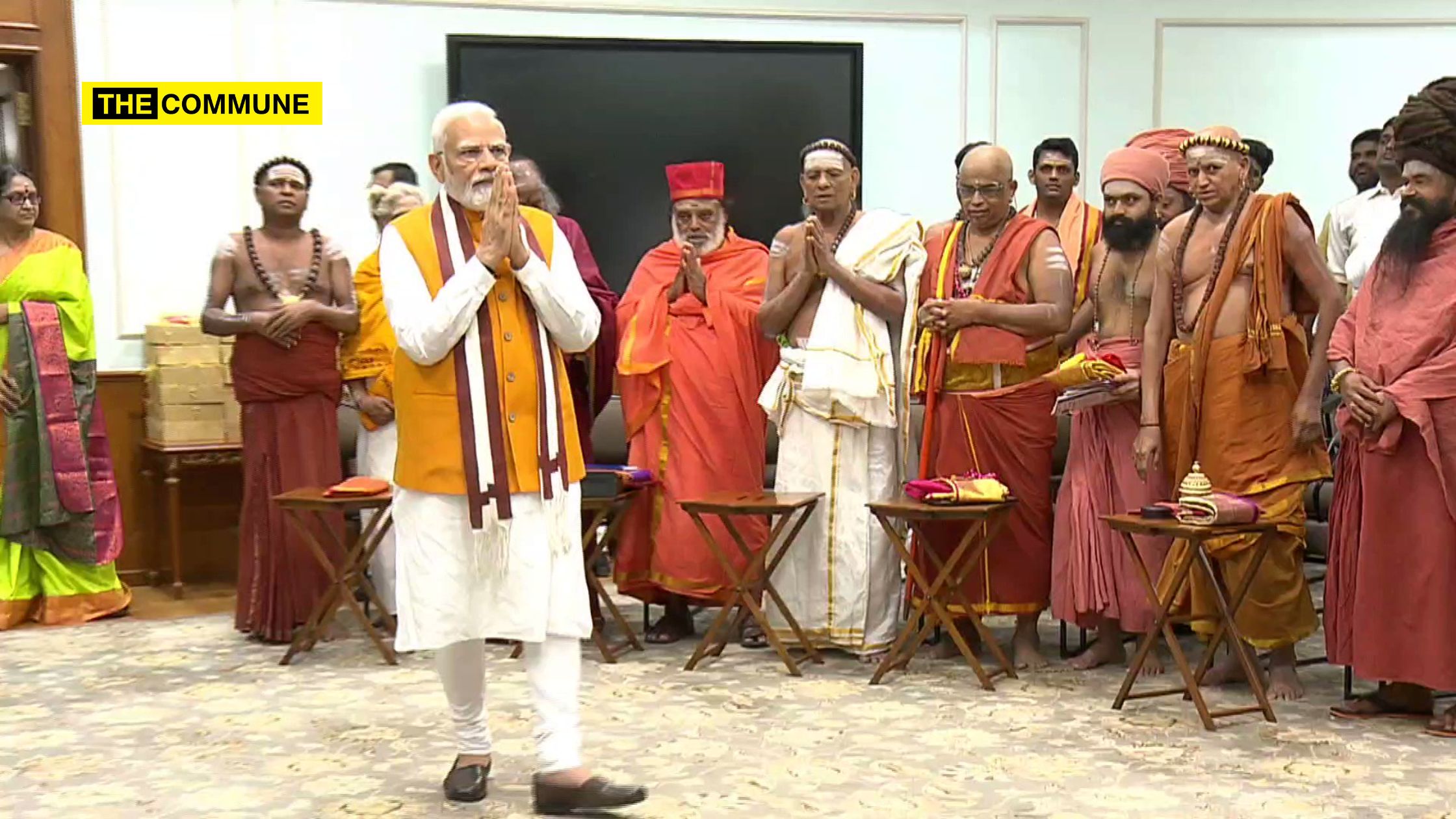
Here’s What PM Modi Said In His Interaction With Tamil Hindu Adheenams Before The Sengol Ceremony

A day before the inauguration of the New Parliament building, Prime Minister Narendra Modi met the Adheenams at his residence and took their blessings.

The Adheenams handed him special gifts including ‘Sengols’ and chanted verses from the Thirumurais.

PM Modi extended his greetings in Tamil and expressed his gratitude towards the esteemed sages, acknowledging their presence at his residence. He considered himself fortunate to have the opportunity to witness such devoted followers of Lord Shiva congregated together. The Prime Minister expressed his delight at their upcoming participation in the inauguration of the new parliament house, where they would personally bestow their blessings.

PM Modi acknowledged the significant role played by Tamil Nadu in India’s struggle for independence. He mentioned notable historical figures such as Veeramangai Velu Nachiyar, the Maruthu brothers, Subramaniya Bharathi, and the Tamils who joined hands with Netaji Subash Chandra Bose. Tamil Nadu has always been a stronghold of Indian nationalism, and its people have consistently demonstrated a spirit of service and welfare towards Mother India. However, PM Modi lamented the unfortunate lack of recognition for Tamil people’s contribution to India’s independence and emphasized that the BJP has now brought this issue to the forefront.

The Prime Minister stated that people across the country are becoming increasingly aware of the mistreatment faced by Tamil Nadu. He referred to Tamil Nadu as a symbol of rich Tamil tradition and unity.

“Respected seers, the revered tradition of Aadheenam serves as an inspiration and embodies the essence of true sattvic energy. All of you are followers of this sattvic tradition, and it is an honor to have your presence here.”, PM Modi said.

“During the time of independence, there were various traditions in the country regarding the transfer of power, and this raised questions. However, during that time, under the guidance of Rajaji and Aadheenam, we discovered a righteous path rooted in our ancient Tamil culture. This path involved the transfer of power through Sengol, a practice deeply ingrained in Tamil tradition. Sengol was bestowed upon the ruler as a symbol indicating their responsibility for the welfare of the country and their unwavering commitment to duty. To signify the transfer of power, a special Sengol was crafted by the revered Thiruvaaduthurai Aadheenam in 1947. Even today, photographs from that era remind us of the profound and intimate connection between Tamil culture and India’s journey as a modern democracy.”, he said.

PM Modi further added “Now, the story of these deep ties has once again resurfaced from the buried pages of history, shedding light on the events of that time. It also helps us understand the fate of this significant symbol of the transfer of power. Dear fellow citizens, I also want to extend my heartfelt tribute to the vision of Rajaji and various Aadheenams. The Sengol of Aadheenam played a crucial role in liberating India from the shackles of centuries-long slavery right at the moment of independence. It beautifully connected the pre-colonial era with the dawn of independent India. Hence, this sacred Sengol holds immense importance not only as a symbol of the 1947 power transition, but also as a representation of our collective journey towards freedom.”

“Furthermore, the significance of this sacred Sengol lies not only in its representation of the power transition but also in its connection between the future of independent India and the glorious traditions of pre-colonial India. It would have been ideal if this Sengol had received the respect and pride it deserved after independence. Unfortunately, it was merely placed for exhibition as a walking stick in Anand Bhawan, Prayagraj. However, our government, as your humble servant, has taken the initiative to retrieve the Sengol from Anand Bhawan. Today, we have the opportunity to revive that initial moment of independence by placing the Sengol in the new parliament house. The Sengol is now getting its rightful place. I am delighted to announce that this symbol of India’s great tradition, the Sengol, will be installed in the new parliament house. It will serve as a reminder for all of us to walk the path of duty and remain accountable to the people.”, PM Modi said.

“The essence of ‘Ek Bharat Shreshtha Bharat’ in your philosophy reflects the unity and integrity of India itself. This unity is evident in the names of many Aadheenams associated with your tradition, some of which include the term “Kailash.” Although the sacred mountain of Kailash is located far away in the Himalayas and distant from Tamil Nadu, it holds a special place in your hearts. It is believed that Tirumular, a renowned sage of Shaivism, came from Mount Kailash to Tamil Nadu to spread the teachings of Shaivism. Even today, verses from his composition, Thirumanthiram, are recited in devotion to Lord Shiva.” PM Modi said.

“Great sages such as Appar, Sambandhar, Sundarar, and Manickavasagar have mentioned pilgrimage sites like Ujjain, Kedarnath, and Gaurikund in their writings. Personally, as the Member of Parliament from Kashi, the city of Mahadev (Lord Shiva), I would like to discuss Kashi today. Swami Kumaragurupara of Dharmapuram Aadheenam, hailing from Tamil Nadu, had journeyed to Kashi and established the Kedareshwar Temple at Kedar Ghat in Varanasi (Banaras). The Kashi Mutt in Thiruppanandhal, Tamil Nadu, is also named after Kashi. It is believed that the Kashi Mutt of Thiruppanandhal used to provide banking services to pilgrims. Pilgrims would deposit money in the Kashi Mutt in Tamil Nadu and could later withdraw it by presenting the corresponding certificate in Kashi.”, PM Modi said.

PM Modi further said “In this manner, the followers of Shaiva Siddhanta not only spread Shaivism but also fostered closer connections among us. Respected seers, it is due to the pivotal role played by esteemed traditions like Aadheenam that the culture of Tamil Nadu remains vibrant and prosperous, even after enduring centuries of slavery. While the sages have undoubtedly kept this tradition alive, credit is also due to those who have been exploited and deprived but have protected and carried it forward. Your institutions hold a glorious history of contributing to the nation, and now is the time to build upon that history, draw inspiration from it, and work for future generations.”

“Respected seers, the country has set ambitious goals for the next 25 years. Our objective is to build a strong, self-reliant, and inclusive developed India by the time we celebrate 100 years of independence. Countless countrymen have rediscovered the significant role you played in 1947. Today, as the nation moves forward with these ambitious goals for 2047, your role has become even more critical. Your organizations have consistently embodied the values of service and have served as a remarkable example of fostering connections among people. The more united India becomes, the stronger it will be. It is why those who hinder our progress and pose challenges will attempt to undermine our unity. Thus, I express my heartfelt gratitude to all of you and salute your invaluable contributions. Your presence here at the inauguration of the new parliament house and your blessings make us feel incredibly fortunate, and I cannot thank you enough for it. Once again, I salute you all.” PM Modi said.

Click here to subscribe to The Commune on Telegram and get the best stories of the day delivered to you personally.
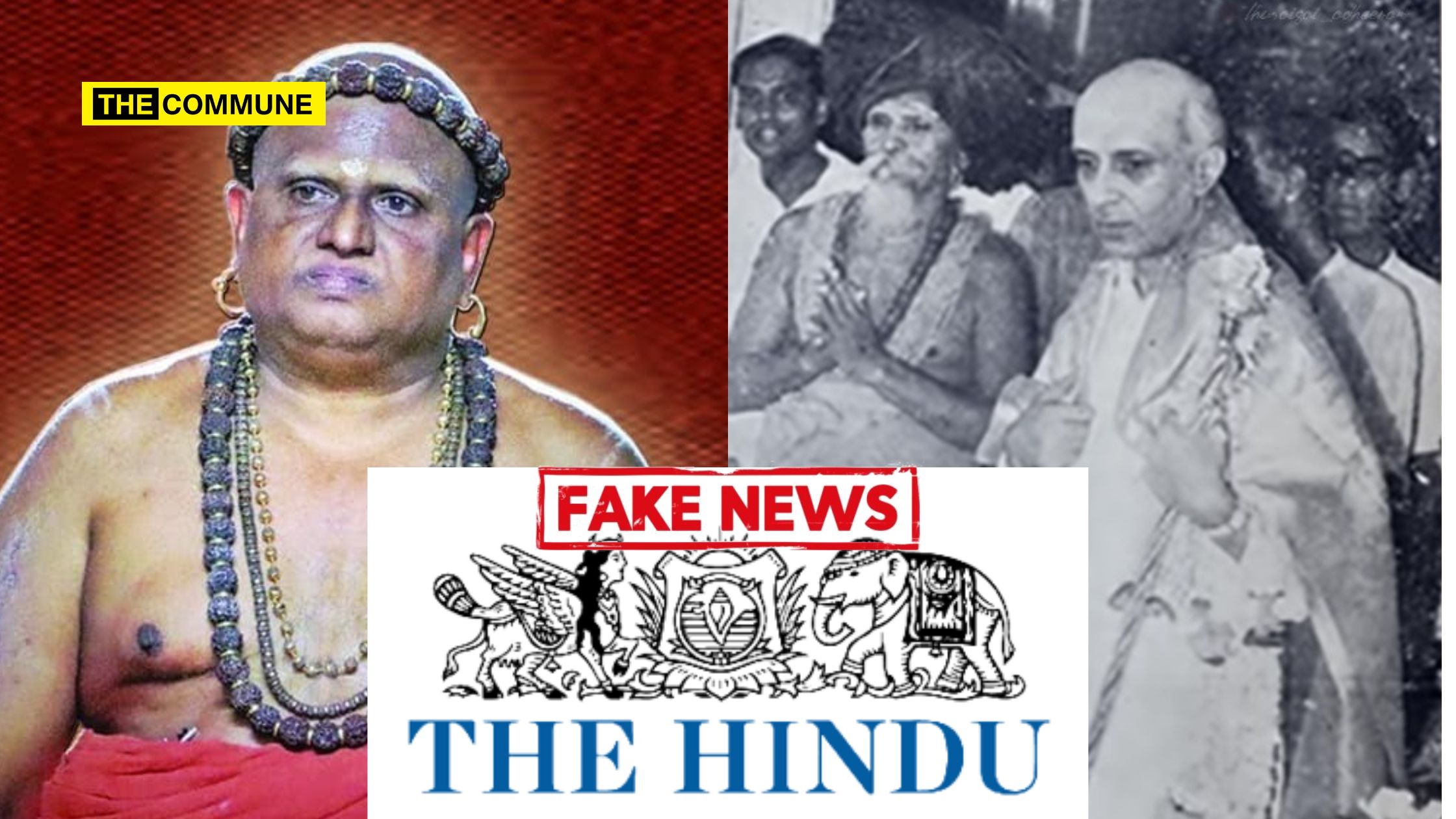
“Mischievous Distortion Of Truth”: Thiruvavaduthurai Adheenam Denounces The Hindu’s Report On Sengol

The Thiruvavaduthurai Adheenam has come down heavy on The Hindu newspaper for misquoting the pontiff head and spreading misinformation about the Sengol being a symbolic transfer of power.

On 8 June 2023, The Hindu had published an article titled “Not clear if Sengol was presented to Mountbatten, says Thiruvavaduthurai Adheenam head” in which the Adheenam pontiff was quoted saying “What was the use in giving the Sengol to Lord Mountbatten? He was after all leaving India by handing all powers.”

In the article, it was asserted that there is a lack of evidence to support the involvement of Mountbatten and Rajaji in the transfer of power during the sengol event.

The report further said that the Adheenam head agreed when it was pointed out that there was no evidence that the sceptre was regarded as a symbol of “transfer of power”.

This report became a fodder for the Congress to unleash yet another attack on the Modi Government for celebrating the Sengol.

Senior Congress leader Jairam Ramesh claimed that the sengol, symbolizing the transfer of power from the British to India’s first Prime Minister Jawaharlal Nehru, has been debunked.

In response to the continuous allegations made by The Hindu, on 9 June 2023 the Thiruvaduthurai Aadheenam has issued a strong statement denouncing the spread of misinformation regarding the historic event of the Sengol being handed over to Mountbatten before reaching Nehru. The Aadheenam said that it was deeply concerned by the venomous narrative being propagated and sought to set the record straight and clarify the facts surrounding the incident.

Thiruvaduthurai Aadheenam expressed dissatisfaction and claimed that the news article published in The Hindu was filled with malicious intent.

According to Aadheenam, this news article deviated from the actual historical events and deliberately twisted the words of Aadheenam during an unannounced meeting with a reporter after the morning pooja.

The Thiruvadhuthurai Aadheenam expressed pride in its significant role in the Sengol ceremony that took place in 1947. A group from Thiruvadhuthurai traveled to Delhi with the sengol after accepting an invitation. The Adheenam categorically stated that the Sengol was presented to Mountbatten and subsequently purified with Ganga water and handed over to Jawaharlal Nehru. Ultimately, the Sengol reached the hands of Nehru, which was what the Adheenam had said to The Hindu reporter when specifically asked if it was presented to Mountbatten.

The Adheenam in its statement condemning the The Hindu’s distortion of the pontiff’s statement said that the recently published history of Thiruvadhuthurai Aadheenam contains a chapter titled “The Greatness of sengol,” which provides detailed information about the event. According to the Adheenam, this chapter also confirms that the Sengol was presented to Mountbatten after which it was ritualistically purified and presented to Nehru.

“In relation to this, Thiru Maasilaamani Pillai, the personal assistant of the 20th Head Pontiff, who is currently 96 years old, has provided a clear explanation of the sequence of events. He serves as a living witness to the sengol event that took place in 1947. Thiru Maasilaamani Pillai has shared his personal memories of the sengol event, noting that it occurred due to the interest of Thiru Chakravarthy Rajagopalachari. He also mentioned that the Madras Collector personally visited Aadheenam during 1947 and actively participated in the preparations for the Sengol event. It is worth mentioning that Thiru Maasilaamani Pillai revealed these details long before The Hindu’s news article was published.”, the Adheenam said in the statement.

The Aadheenam expressed deep disappointment with the media outlets distorting the truth adding that it greatly affects their sentiments.

“The absence of photographic evidence of Mountbatten with the Sengol can be attributed to the fact that the Aadheenam did not have cameras in their possession at that time. Nevertheless, the Aadheenam’s team diligently fulfilled their duties and ensured the recitation of Tamil Thirumurais (holy scriptures). They returned to the Aadheenam and provided a detailed account of the event. Over time, this event has been documented in various media sources.”, the Adheenam further added.

The act of The Hindu publishing news without substantial evidence and attempting to tarnish the reputation of Thiruvaduthurai aadheenam has faced strong criticism from numerous political commentators including S Gurumurthy.

He tweeted that, “It is depressing that The Hindu has ended up abetting the Congress which had destroyed all evidence on sengol & destroyed the identity of the sengol itself to erase the history of 14/8/1947 instead of asking the congress why it suppressed the sengol”

Notably, Senior journalist Malini Parthasarathy had recently announced her departure as the Chairperson of The Hindu Group Publishing and also resigned from the Board of The Hindu Group Publishing Private Limited (THGPPL). In explaining her decision, she cited the diminishing space for her editorial perspectives and concerns about ideological bias as the primary factors influencing her departure. There have been allegations that The Hindu has been involved in disseminating false information without adequate verification or supporting evidence.

Click here to subscribe to The Commune on Telegram and get the best stories of the day delivered to you personally.
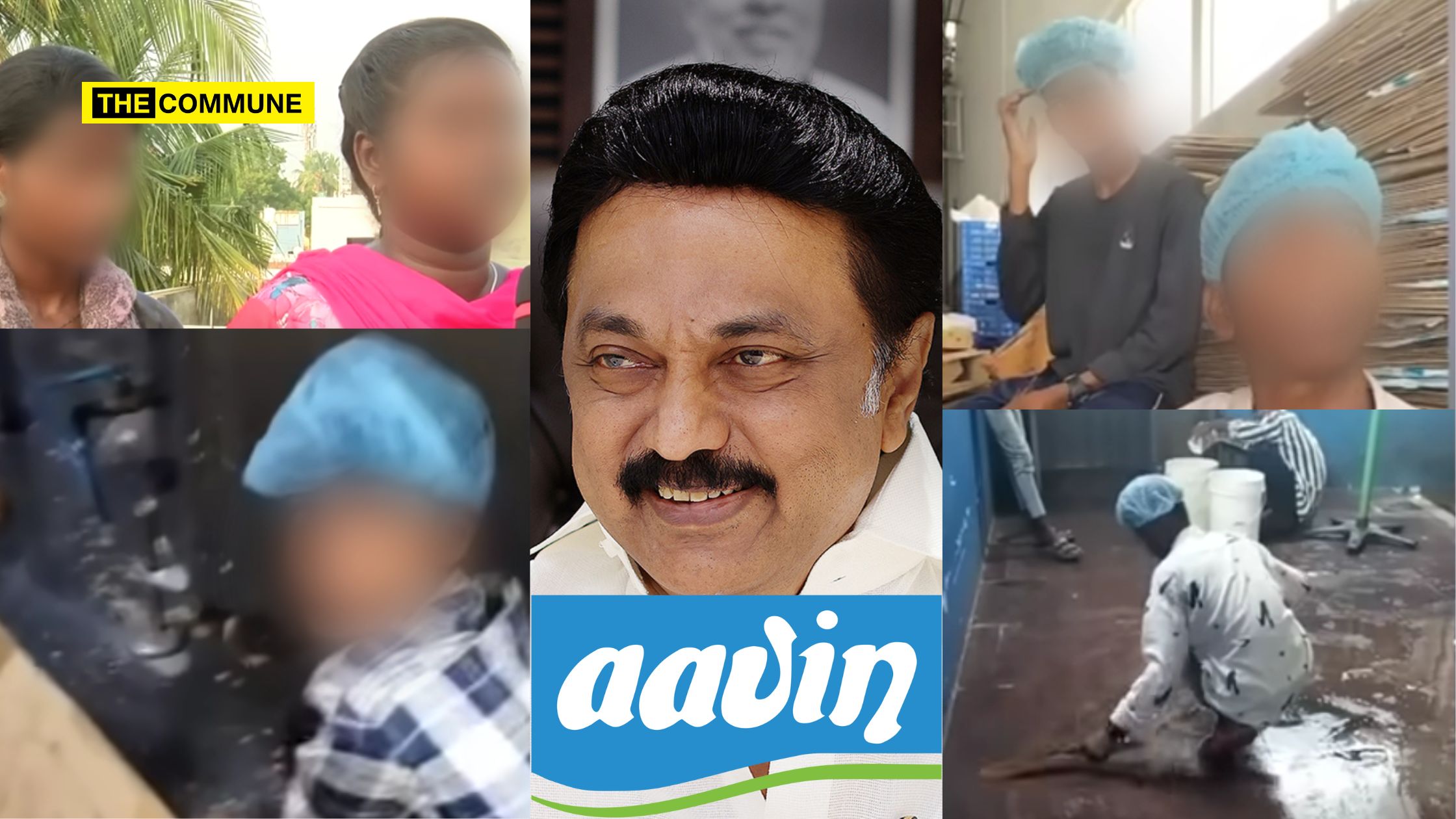
Aavin Child Labour Issue: TN CM MK Stalin Lies Through His Teeth Calling Evidences “Fake”, Videos Show Children Sweeping & Cleaning

There have been reports with indisputable evidence of Tamil Nadu state-owned milk cooperative Aavin employing children as young as 16 years as workers.

These children can be seen sweeping, cleaning, doing packaging work and other hard physical labour at the Aavin factory located in Chennai.

The issue came to light after it was reported that the children were not paid their due compensation.

Testimonies from the children reveal that they were employed as labourers as recently as April 2023. The affected children, some as young as 16 years old and studying in the tenth and eleventh grades, have come forward to provide evidence that they were forced to work at Aavin. They were allegedly made to work for 8 hours and sometimes over time for which remuneration were not paid.

“Nobody can stand near that freezer for even a minute. But we stood for more than half an hour and one hour. What are they going to get by saving that money? How will they be able to digest it?”, a 16-year-old boy laments.

They highlighted that they decided to work since they needed money to purchase clothes for school, indicating dire financial circumstances. The lack of salaries received by these young workers has further exacerbated the situation.

It has been alleged that DGM Rajasekhar told one of the boy to bring in more boys like him to work. The boy apparently asked whether boys of his age (less than 18 years) are eligible to take up the job to which the DGM allegedly said that he would take care of it no matter whichever official asks about it.

This boy brought 20 more like him who he says were involved in ice-cream making. Rajasekhar told the boy to bring more boys and around 50 more children studying class 10, 11 and 12 were brought to work. The 50 includes several girl children as seen from the attendance register pictures released to the media by the children. One of the boys who worked there said in an interview that every government staff employed in that Aavin factory knew that they were underage for the work.

Rajasekhar reportedly forced them to sweep, clean and made them work for more than 8 hours and threatened to not pay them if they disobeyed his orders. Another person who has been named by one of the affected boys for ill treatment is Shanumgasundaram.

The DMK Minister in charge of Milk and Dairy Development of Tamil Nadu, Mano Thangaraj, has continuously denied the allegations, despite mounting evidence to the contrary. He has questioned the authenticity of the records and the credibility of the children’s testimonies. The denial by the DMK Minister has shocked the children as they feel they’ve been left in lurch.

Following suit, when Tamil Nadu Chief Minister MK Stalin was confronted with the question during a press meet he vehemently denied it calling all the evidences as “fake”.

When a reporter asked about media reports of Aavin using children as labourers, CM Stalin who can be seen visibly tensed lied through the teeth saying “It is fake news. That day itself the Minister denied it. It is a planned fake propaganda. The evidences are all fake and are not real.”

It is noteworthy to mention that CM Stalin has relied on his Minister’s denial to deem the reports about the issue as fake.

Despite the mounting evidence of Aavin engaging school going children as labourers, the Dravidian Stockist media have look the other way.

Leftist and Dravidian Stockist outlets like The News Minute have not even reported about the incident.

Critics of the DMK argue that had this matter happened under the AIADMK’s watch, it would’ve been made a matter of prime time debate.


China’s Forced Land Seizures For Dam Construction In Tibet Raises Alarms, Threat To Cultural Identity Of Tibetans Feared

Ongoing concerns continue to arise regarding the situation in Tibet, as reports indicate that Chinese authorities are forcibly confiscating property from Tibetan farmers in Rebgong County, Qinghai Province, under the pretext of constructing a hydropower dam. According to information from Tibet Press, local residents have been warned to cooperate and relinquish their land, with the threat of compensation being withheld for those who refuse. The order, issued on May 23, 2023, by the Langya village authorities, required seven villages in the area to relocate within ten days to facilitate the first phase of construction. This dam is a key project outlined in China’s 13th Five-Year Plan and is estimated to cover an area of 4.58 million square meters, with a construction cost of 245 million yuan.

Rebgong, also known as Tongren in Chinese, is a Tibetan-populated region in Qinghai province, situated in Malho (Huangnan). The affected area includes Tibetan settlements such as Shu-Ong-Kye, Shu-Ong-Nyi-tha, Langya, Malpa-Jam, Malpa-Kharnang-Kharshi, and Malpa-Chauwo. It is anticipated that the reservoir development will commence soon, compelling peasants to seek temporary employment in towns and cities if their properties are seized by local officials, as reported by Tibet Press.

The forced relocation of Tibetan nomads and farmers to urban areas, alongside the influx of Han Chinese settlers into Tibet, are part of China’s broader efforts to assimilate Tibetan minorities into the dominant Han Chinese culture. Infrastructure and development projects undertaken by Chinese companies in Tibet have resulted in frequent clashes with local Tibetans, who accuse them of improper land confiscation and disruption of their lives, as stated by Tibet Press.

These issues trace back to China’s invasion of Tibet in 1951, which has led to a continuous deterioration of Tibetan lives. Since the 2008 protests, more than 150 Tibetan monks have self-immolated, and numerous Tibetans have suffered torture, mistreatment, and death due to Chinese state repression. The erasure of Tibetan culture and ethnic identity by China is an ongoing systematic process. Relatives of Tibetan protestors are routinely subjected to harassment, imprisonment, denial of political and medical rights, and even death if perceived as a threat. The treatment of nomadic herders in Tibet has been particularly harsh, with over a million forced to leave the grasslands under the pretense of environmental protection, as reported by Tibet Press.

China’s tight grip on Tibet extends to political re-education camps and the suppression of any social activism, aiming to dismantle traditional leadership at the grassroots level. Tibetans associated with dissidents face severe consequences, including the loss of political rights, restricted access to jobs and healthcare, and constant surveillance facilitated by an extensive database. China’s United Front Works Department plays a significant role in subverting opposition both within China and overseas, using tactics such as misleading ethnic minorities about their right to self-determination and establishing government-sponsored NGOs to portray a positive image of China’s human rights record.

China’s attempts to manipulate international organizations, including the United Nations, have raised concerns. Chinese NGOs have reportedly falsified data in UN committees to defend China’s actions and human rights violations. The absence of the rule of law in China is evident through incidents like the crackdown on lawyers and the handling of the Covid-19 pandemic. UN reports have highlighted the separation of nearly one million Tibetan children from their families and their forced enrollment in residential schools, where they are subjected to Mandarin education, CCP ideology, and the erasure of Tibetan identity and culture.

The intentions of the Chinese Communist Party in Tibet are clear—they aim to Sinicize the region and its people, posing a significant threat to the Tibetan identity. It is crucial for Tibetans worldwide to unite and support their compatriots in Tibet to prevent the assimilation of Tibetan culture into Han China before it becomes irreversible.

Click here to subscribe to The Commune on Telegram and get the best stories of the day delivered to you personally.
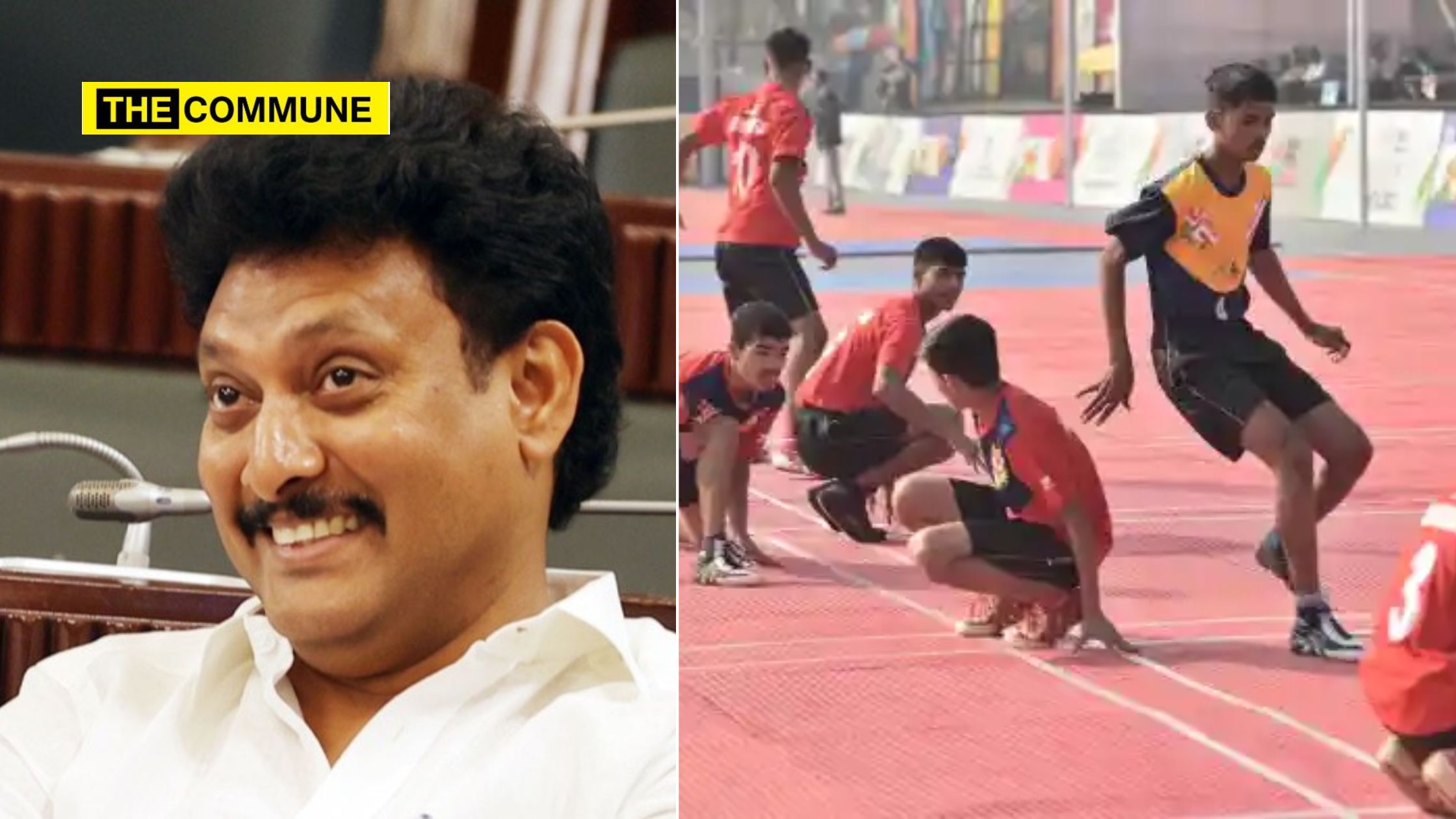
TN Students Lose Chance To Participate In National Sports Competition, Opposition Blames DMK Govt’s Negligence

The  All India Schools Sports Association organizes annual national sports competitions, featuring a range of athletic disciplines such as swimming, basketball, and wrestling. Each year, state governments across India select talented students to represent their respective regions in the prestigious national sports event. The latest edition of the games commenced on 6 June 2023 Delhi and is scheduled to continue until the 12 June 2023.

Unfortunately, the national sports event will see no student from Tamil Nadu participate as their names were not sent by the concerned authorities. 247 students across Tamil Nadu who were to participate have been excluded from the games.

This has sparked controversy and raised concerns about the lackadaisical attitude of the Tamil Nadu School Education Department which comes under DMK Minister Anbil Mahesh Poyyamozhi.

The School Education Department, has shifted blame saying that they were not given enough time to look into the matter. However, the circular was reportedly sent to the Principal Inspector of Physical Education on 11 May 2023.

DMK Minister Anbil Mahesh has acknowledged the issue and said that a “suitable explanation” would be provided.

There were allegations that the State Principal Physical Education Inspector, Gopalakrishnan, failed to bring the letter requesting student participation to the attention of higher officials in the School Education Department. He has now been been suspended.

Opposition leaders have strongly condemned the incompetence and the laxity of the DMK government on the matter.

Tamil Nadu BJP President K. Annamalai expressed his disappointment on Twitter, stating that school students from Tamil Nadu have been deprived of the chance to participate in national-level competitions. He criticized the complacency of the school education department for not selecting Tamil Nadu students to represent in the national games

On 9 June 2023, he tweeted that, “School students from Tamil Nadu have lost the opportunity to participate in national level competitions as they have not been selected for the national games for school children. The complacency of the school education department in not selecting the Tamil Nadu school students’ team, while Puducherry participating at the national level is highly condemnable.”

He further condemned the government saying “Due to the negligence of the School Education Department of Tamil Nadu, the school students of Tamil Nadu have been neglected.”

Amma Makkal Munnetra Kazhagam (AMMK) leader TTV Dhinakaran too lashed out at the DMK government for the fiasco.

“It is said that the students who participate in national sports competitions and get prizes will get extra marks for reservation in higher education. But the students are suffering due to the negligence of the school education department.”, Dhinakaran in his statement said.


Though the issue comes under the ambit of the School Education Department helmed by DMK Minister Anbil Mahesh Poyyamozhi, it is noteworthy to mention that Tamil Nadu Chief Minister MK Stalin’s son Udhayanidhi Stalin is the Minister for Youth Welfare and Sports Development.

Click here to subscribe to The Commune on Telegram and get the best stories of the day delivered to you personally.
Ard-I-Hind: The Iraq Territory Conquered By Chalukyas And Pratiharas

This article was originally published in Bharat Voice and has been republished here with permission. 

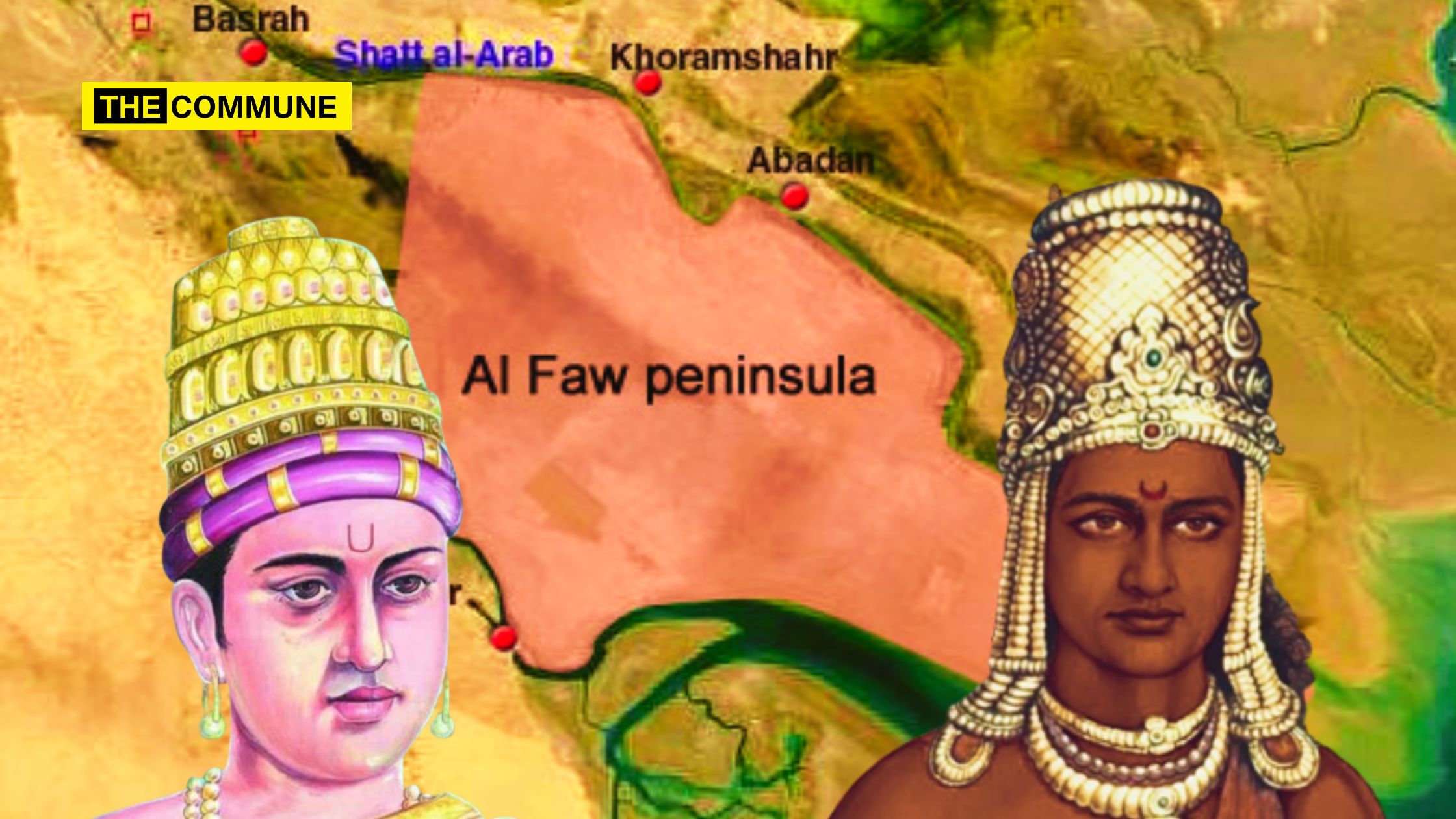
If we may start by asking an intriguing question: What is common between Chalukya Pulakeshin II, Pratihara Nagabhata II and the former American president George W Bush? The answer is  – the “Al Faw Peninsula” of Iraq. This peninsula is the only outlet to the sea to modern Iraq and has historically been one of the most coveted and strategic regions of the world. The control over Al-Faw decided control over the Middle East.

Around 1400 years ago, Islam was established in the Arabian desert. In the early 7th century, conflict loomed between the mighty Sassanian empire of Persia and the newly set up First caliphate of Islamic history – the Rashidun. One of the first regions outside Arabia, the Caliphate focused on conquering was the Al Faw peninsula. The Peninsula remained hotly contested down the centuries. In the 20th century, The Peninsula was bitterly contested in the Iran-Iraq war of the 1980’s due to its strategic location bordering on the disputed Shatt al-Arab waterway. Large scale battles were witnessed during this time. The Iranian Pasadaran (Revolutionary Guard) led an offensive that captured the peninsula in February 1986. In April 1988, a massive counteroffensive by the Iraqi army which involved allegations of use of sarin gas recaptured the peninsula after 35 hours of bloody fighting. This was such a great achievement that Saddam Hussein, the then ruler of Iraq declared the day of victory as a national holiday.

The Al Faw was also a key objective of the American invasions of Iraq later. During the 1991 Gulf War, the Western allied forces bombarded the Al Faw Peninsula to shut down all Iraqi shipping and access to the sea. Later during the 2003 invasion of Iraq under “Operation Enduring Freedom”, under the aegis of POTUS George W Bush, the British 3 commando brigade and US SEAL team 8 led two fierce offensives to the Umm Qasr port and the Mina Al Bakr Oil terminals in the peninsula. Fierce fighting ensued for days before the Iraqi forces were put down. An Anglo-American camp called Camp Driftwood was established here.

The reason for the bloody battles of control throughout history has been many fold. The Al Faw Peninsula lies at the head of the Persian Gulf. It provides the easiest access to the sea from the key agricultural and commercial centers of the ancient Mesopotamian region. It houses the largest ports in the region which were crucial for trade between Europe and the East. In modern times it has multiple Oil terminals and plays a key role in the Global Oil trade.

But other than all these reasons, there is another important reason. The Peninsula is in the immediate vicinity of one of the most historic and greatest commercial centers of the Middle East – Basra. Basra, a metropolis of over 1.4 million inhabitants is present day Iraq’s economic capital and one of the most prominent cities in Islamic history. It is the principal city of the Basra Governorate which is home to Iraq’s ports and will soon house one of the largest sea-port complexes in the world under the Grand Faw project. Modern Basra lies at the banks of the Shatt al-Arab, a waterway connecting the Persian Gulf with the confluence of the Tigris and the Euphrates – the great rivers of Middle Eastern civilization. The old historic quarter of Basra is today one of the suburbs of the ever-expanding city and its first settlements lay 15 kms inland from the Shatt Al-Arab.

Given all this history, It may seem surprising to many in Bharat today that this Peninsula was called “Ard-i-Hind” or “Land of India” at the dawn of Islamic history. The city of Basra was established, as per early Arabic records, due to the express intention of providing protection against attacks in Iraq or the navy of Al-Hind or Bharat.

Al-Faw Of Iraq Or “Ard-I-Hind” (Land Of India)

Multiple early Arabic records including a letter from Caliph Umar to Utba Ibn Ghazwan refer to Al-Faw peninsula as “Ard-i-Hind” or “Land of India”. There are various theories on the reason for this by present-day historians. But the most logical and corroborated reason is that due to massive ancient Indian economic influence, merchants from Bharat had established a colony along with their culture in this peninsula in order to facilitate East-West trade routed through or originating from the subcontinent.

It was this “pravasi bharatiya” diaspora that was at severe risk from the marching contingents of the Rashidun Caliphate and the nervous Sassanian wardens in the first half of the 7th century. From Arabic, Pehlevi and Indian records between 7th and 10th centuries, we can piece together a narrative of these tense years. The merchants appealed to help to the most powerful ruler of Bharatvarsha at that time: Satyashraya Pulakeshin Parameshwara of the Vatapi Chalukya dynasty. The emperor of Bharat dispatched a naval fleet to protect the Indians of Al Faw.

Chalukya Pulakeshin’s Exploits In Iraq

In year 12 of the Islamic calendar, the Caliphate general Khalid Ibn Al -Walid witnessed the garrison of the port of Al-Ubulla in the peninsula being under attack from the sea by “navy of Al-Hind”. The Chalukyan naval intervention was so effective that three years later around 636 CE, Caliph Umar (as recorded by Al-Tabari), was afraid of Naval attacks of the “King of Al-Hind”. Tabari mentions the name of the “King of Al Hind” in another account dated just a few years earlier as “Furumisha”. The latter is translated as either “Parameshwara” or “Pulakeshin”. Either way, both names refer to the same contemporary Chalukyan monarch- Pulakeshin II or Immadi Pulakeshin.

The fierce naval attacks of the Chalukyas of Bharat to protect the Indian diaspora forced the Arabs to retreat nearly 80 kms inland. So frightened were they by the Indian navy that they also retreated 15 kms away from the closest waterbody to set up their main garrison. Caliph Umar, as per Arabic accounts, expressly told his commanders to build a fortified city – Basra- to protect Iraq from an allied Indian-Umani invasion.

It appears from Arabic records, that Pulakeshin attempted forming a unique non-Abrahamic alliance between Persia, Uman and Bharat against the Caliphate’s advance. Unfortunately, the military intervention of Bharat in Iraq ended in a few years due to the reverses to the Chalukya emperor at the hand of the Pallavas in Bharat. Subcontinental politics diverted attention and resources away from the overseas conflict. Yet the fact remains that the only world power which remained undefeated at the hands of the Rashidun Caliphate in its palmiest years were the Chalukyas of Bharat.

Inspired By Ramayana, The Pratiharas Strike In Al Faw

The legacy of the Chalukyas was picked up nearly two centuries later by another great dynasty of Bharat – the Gurjara-Pratiharas. With his capital at Kanyakubja or Kannuaj, Pratihara Nagabhata II resolved to deter invasions from Arab forces in Sindh by launching a counter offensive. To cut supply lines between Iraq, Arabia and Iran to the Arab positions in Sindh, a daring plan was worked out. As per a Sanskrit inscription – the Gopadri prashasti – the plan was inspired by the Ramayana. Just like Lord Rama led the Vanaras across the Oceans to wipe out Adharma, the Pratihara naval fleets under crown prince Ramabhadra would cross the oceans to set fire to the Lanka of their enemies.

The Pratihara offensive involved naval guerrilla raids on key ports of the Persian Gulf comprising sites in modern day UAE, Oman, Iraq and Iran. Their most lethal strike was in the Al Faw peninsula and we have a telling Arabic eye witness account in the siras of Ibadi missionaries from Basra dated to c 815-816 CE.

The Pratihara offensive achieved its objective and paralyzed sea lanes of the Arabs. Consequently, isolated from their home bases, the Arabs in Eastern Sindh were overrun and the region annexed to the Pratihara empire.

An “Ard-i-Hind” Cultural Complex In Modern Iraq?

The ruthless alien invasions of Bharat from the 11th century CE, pushed most Indian dynasties into the defensive with respect to the Western theater. A war of resistance had to be fought for existence and this diverted the focus away from overseas conquests. That heroic resistance led to the preservation of the ancient Sanatana Dharma.

Today as we look back at the glorious periods of Indian victories and influence in the Al Faw peninsula of Iraq, we may well ask the question – is it possible that we can revive the memory of these age-old ties? For example, can we under “Project Mausam” set up an “Ard-i-Hind” cultural complex in the Al Faw peninsula? The complex could house a museum highlighting the ancient trade and cultural contacts between Bharat and the Middle East and the role played by the Indian merchant colonies of Iraq. It could house various cultural and educational events and courses on Bhartiya culture. Finally, it could house massive statues of Satyashraya Pulakeshin Parameswahra, Pratihara Nagabhata II and Ramabhadra – the great Chakravartis of Bharat who are intimately associated with this historic strategic peninsula thousands of kms away from the Indian coast.

Full details on the Conquests of the Chalukyas and Pratiharas in Al Faw Peninsula, Iraq are contained in the book – “Bharat’s Military Conquests in Foreign Lands” – written by the same author: Venkatesh Rangan. The book is available at https://subbupublications.com

Venkatesh Rangan is a Finance executive by profession with passion for historical research in Bharat’s rich civilizational history. He has authored two books, has been a speaker in conferences/seminars organized by the Maritime history society, Indology foundation, Herars Institute, Western Ghats Literary Festival, etc. His interest includes ancient science and literature of Bharat, political history of the Gupta empire, Maratha empire and military history of ancient and medieval Hindu powers

Click here to subscribe to The Commune on Telegram and get the best stories of the day delivered to you personally.
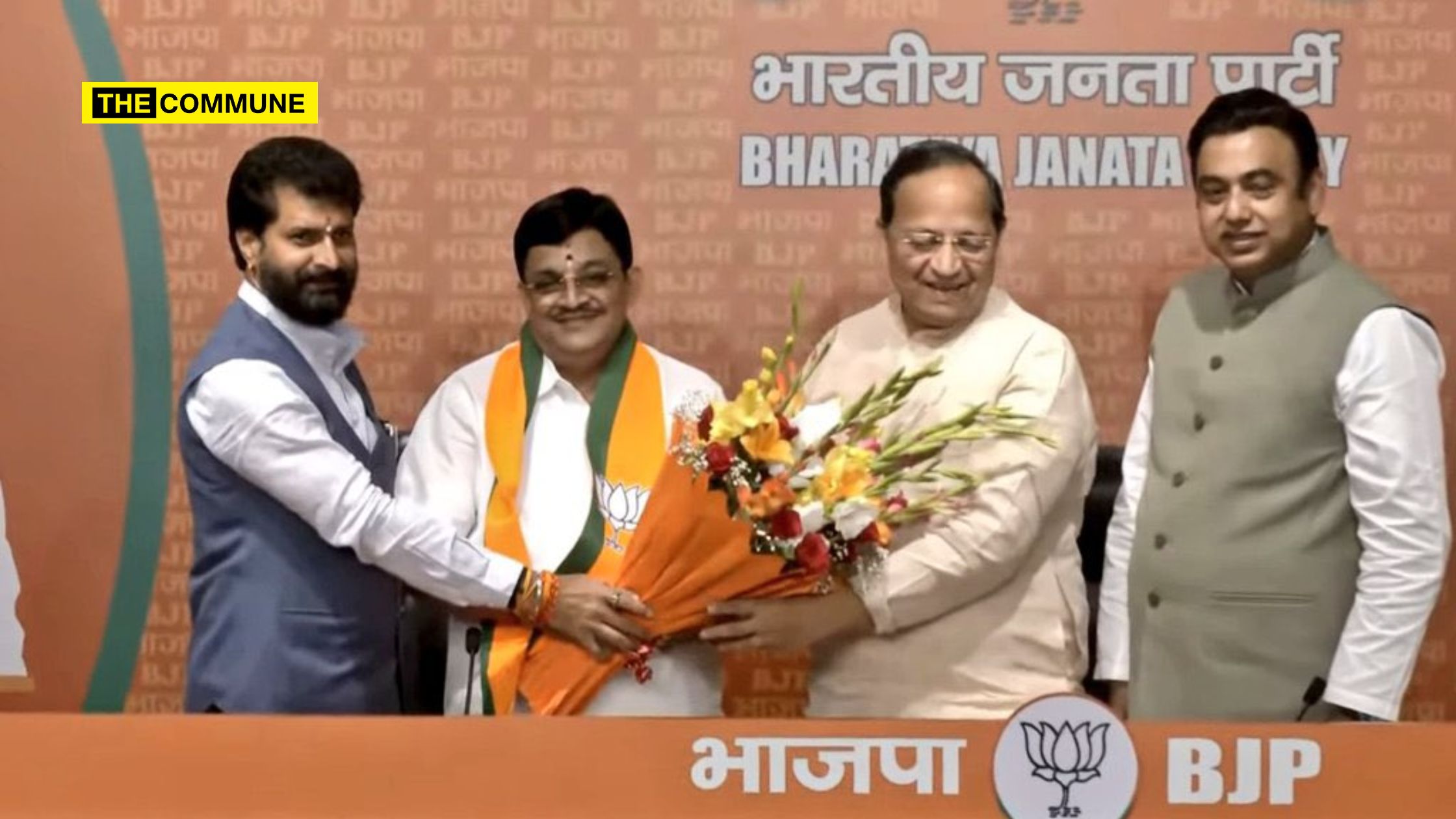
Former AIADMK Leader Maitreyan Returns To BJP

Former AIADMK leader and Ex-Rajya Sabha MP Dr. V. Maitreyan joined the BJP on 9 June 2023 at the party’s headquarters in Delhi.

Maitreyan, was born on 21 November 1955, into a Vadagalai Iyengar family. He  had his early education in Madras and successfully completed his medical degree at the Government Medical College, Nagpur.

After graduating, he pursued further specialization in Medical Oncology, obtaining an M.D. from the Madras Medical College and a D.M. from the Cancer Institute, Madras University.

Throughout his youth, Maitreyan was actively with the Rashtriya Swayamsevak Sangh (RSS). In 1991, he assumed the role of an executive member in the Tamil Nadu unit of the Bharatiya Janata Party (BJP). He held various significant positions within the BJP’s Tamil Nadu unit, serving as General Secretary from 1995 to 1997, Vice President from 1997 to 1999, and eventually becoming President from 1999 to 2000. However, in 2000, he made the decision to resign from the BJP and instead joined the All India Anna Dravida Munnetra Kazhagam (AIADMK). His membership in the AIADMK was terminated in 2022.

Click here to subscribe to The Commune on Telegram and get the best stories of the day delivered to you personally.
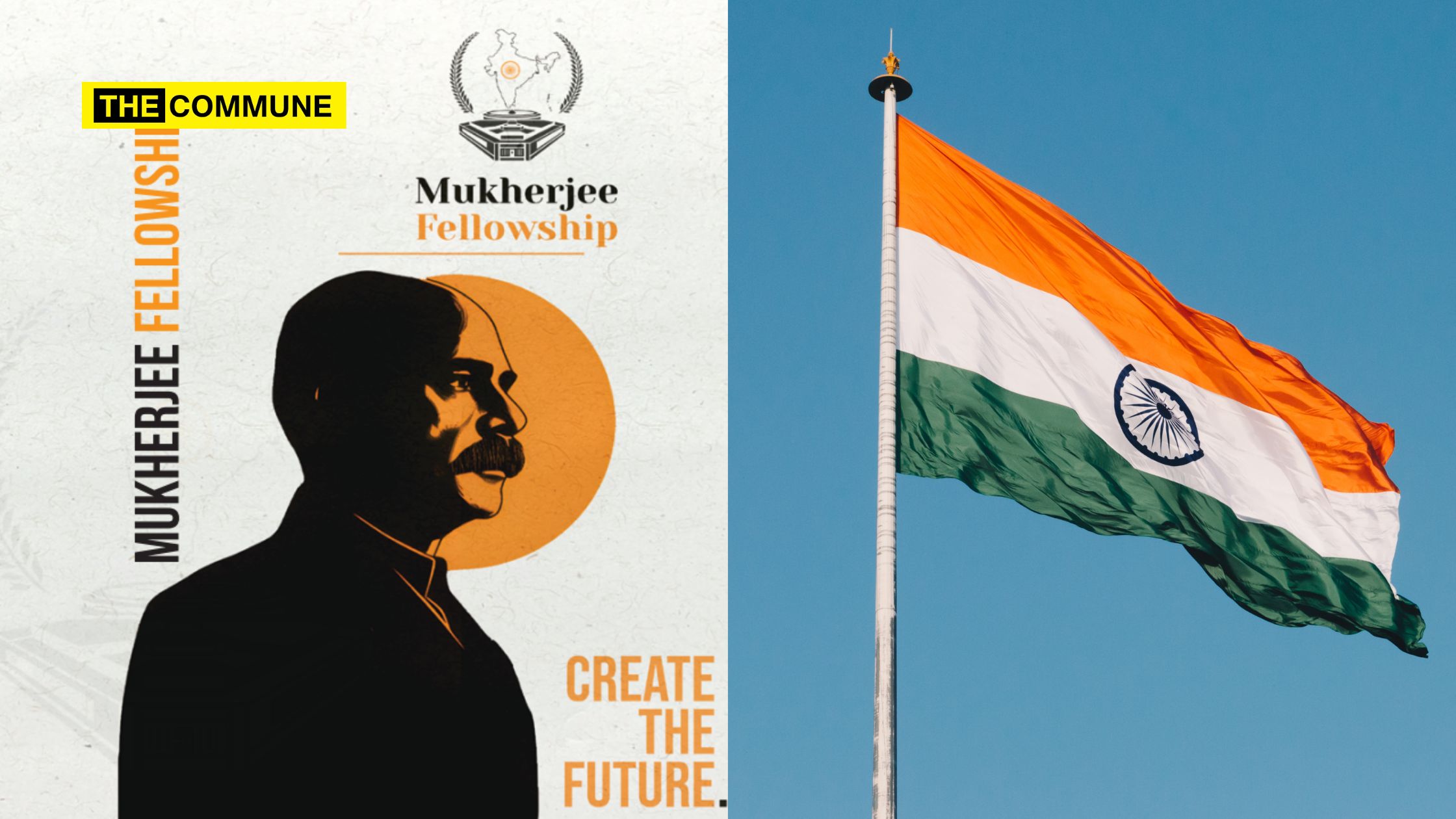
Mukherjee Fellowship: Opportunity To Work In Policy, Politics, And Governance!

Are you a student or a young professional with a burning passion for policy, politics, and governance? Then this is just for you. The Mukherjee Fellowship is a highly coveted year-long program that goes beyond conventional learning. It aims to equip young professionals with the necessary skills, firsthand experience, and an in-depth understanding of the intricate dynamics of policymaking and active politics. Through close collaboration with eminent elected representatives and administrators in India, Fellows will actively contribute to the policy-making process, making a tangible impact on the nation’s governance landscape.
During the fellowship, participants will be immersed in an environment that fosters personal and professional growth. They will gain unparalleled hands-on experience, witnessing the inner workings of policymaking and actively engaging in shaping the nation’s future. From vibrant discussions with industry experts to navigating the complexities of governance, Fellows will develop a comprehensive skill set essential for success in the realm of public service.

What Is The Fellowship About?

This immersive year-long program is tailored to ignite the passion of young professionals in the fascinating realms of policy, politics, and governance. Picture yourself working alongside esteemed elected representatives and administrators, actively shaping the policy landscape of India. Gain unparalleled hands-on experience and witness the inner workings of the policymaking process firsthand. Brace yourself for an adventure that will expand your horizons, challenge your perspectives, and equip you with the essential skills to thrive in this dynamic field. Get ready to make a real impact and forge connections that will last a lifetime. The Politics, Politics, and Governance Fellowship is your ticket to a future of limitless possibilities!

Who Is It For?

Final-year students and graduates from any field.

What Is The Duration Of The Mukherjee Fellowship?

The Mukherjee Fellowship extends over a period of 12 months providing you with an immersive and in-depth experience in policy, politics, and governance.

What Are Some Of The Perks And Benefits Of The Fellowship?

  • Stipend of ₹50,000 per month
  • Upon completion of the Fellowship, Fellows will receive a course completion certificate from PPGF
  • Fellows can also receive recommendation letters from their chosen respective representatives after the completion of their Fellowship.

What Are The Career Opportunities Available Upon Completion Of The Fellowship?

  • Long-term positions in the office of their assigned leader.
  • Placement support in the corporate and policy consulting sectors.
  • Possible accommodation in various semi-government positions (OSDs among others) across the nation.
  • Academic support to enable admissions to top institutions in India and abroad.

What Are The Core Objectives Of The Fellowship?

By participating in the Mukherjee Fellowship, young professionals can expect the following:

  • Equip young professionals with the basic tools to work with elected representatives and administrators.
  • Impart the experience of working with premier elected representatives on policy-making and governance.
  • Prepare professionals to lead policy research institutions and offices of public representatives in the country

What Is The Structure Of The Mukherjee Fellowship?

The Fellowship is divided into 2 Modules:

A: Theoretical Learning Module

A one-and-half-month training module consisting of curated 7-submodules, the theoretical module aims to intensively and rigorously build the Fellows’ knowledge of politics and society. The 7 submodules will be:
◦ Understanding Democracy
◦ Economics in Policy Making
◦ Essentials of Documentation
◦ Understanding Caste and Indian Society
◦ Understanding Indian History
◦ Understanding the Constitution
◦ Modes of Political Intelligence

B: Experiential Learning Module

On successful completion of the Theoretical Learning Module, Fellows will be deputed to senior political leaders, where they will be guided to
◦ Providing inputs for bills under discussion, parliamentary questions, and general policy discussions
◦ Providing background research for conferences, speeches, etc
◦ Policy Formulation
◦ Social media and communications management
◦ Political campaign management
◦ Liaising with other consultants from across the industry

What Is The Admission Procedure?

Candidates will be admitted over three rounds.

  • Application round – Where the applicant is expected to apply to the program on https://mukherjee.ppgf.in/ with a statement of purpose.
  • Questionnaire round- Where the applicant is expected to answer a series of questions on policy and political issues in an essay format.
  • Personal interview round- A remote interview with the management committee.

Important Dates

10 June 2023- Final deadline for application to the Mukherjee Fellowship.
1 July 2023- Commencement of the Theoretical Learning Module.
15 August 2023- Commencement of the Experiential Learning Module.
30 June 2024- End of the Experiential Learning Module.

For more information, visit https://mukherjee.ppgf.in/

Click here to subscribe to The Commune on Telegram and get the best stories of the day delivered to you personally.